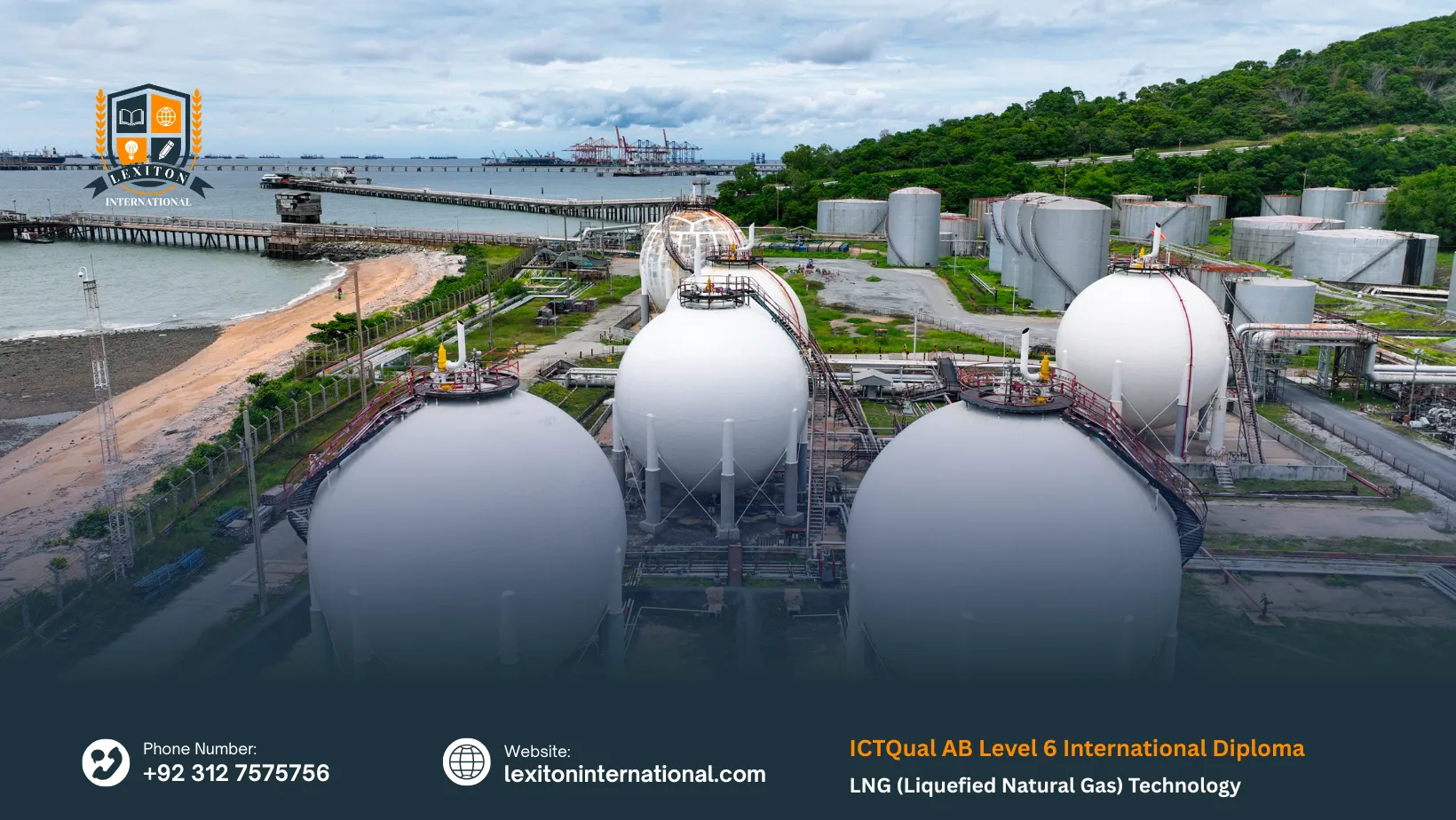
The ICTQual AB Level 6 International Diploma in LNG (Liquefied Natural Gas) Technology is an advanced qualification designed to provide a detailed understanding of LNG production, processing, storage, and transportation systems. With the growing global focus on cleaner and more efficient energy sources, LNG plays a crucial role in the modern energy landscape as a lower-carbon fuel option widely used across international markets.
The programme covers key theoretical areas such as LNG plant design concepts, liquefaction and regasification processes, cryogenic storage principles, safety frameworks, risk management, and environmental considerations. It also explores the structure of the global LNG supply chain, from natural gas production through to distribution networks, helping learners understand how LNG supports energy security and global trade.
This qualification develops strong technical knowledge and analytical understanding of LNG systems and industry operations. It enhances the ability to interpret complex energy processes and understand international LNG frameworks. As a result, it provides valuable insight into one of the most important and rapidly evolving sectors of the global energy industry.
- Age Requirement: Learners should ideally be 18 years or old.
- Educational Background: A secondary school qualification is required as a minimum. However, preference is given to candidates with academic or professional backgrounds in engineering, chemical sciences, energy management, industrial operations, or related technical fields.
- Work Experience: While not mandatory, prior experience in oil and gas, refinery operations, LNG facilities, or energy-related industries is highly beneficial. Candidates who have worked in areas such as process engineering, petrochemical operations, or industrial safety systems will be able to connect theory with practice more effectively.
- English Language Proficiency: Since the course involves technical documentation, case studies, and assessments, learners should have a good command of spoken and written English.
Mandatory Units
Year 1 – Foundation in LNG Technology
Year 2 – Intermediate LNG Technology
Year 3 – Advanced LNG Technology
Skills You Will Gain
Learning Outcomes for the ICTQual AB Level 6 International Diploma in LNG (Liquefied Natural Gas) Technology:
Year 1 – Foundation in LNG Technology
Principles of Chemical and Process Engineering
- Understand fundamental chemical and process engineering principles applied in LNG operations.
- Analyse material and energy balances within LNG processes.
- Apply engineering concepts to basic LNG plant operations.
Introduction to Liquefied Natural Gas (LNG)
- Comprehend the LNG industry structure, workflow, and applications.
- Identify key LNG processes and technologies.
- Explain the stages of natural gas liquefaction and utilisation.
Natural Gas Properties and Analysis
- Examine physical and chemical properties of natural gas.
- Conduct laboratory analysis to characterise gas composition.
- Interpret analytical data for operational and process decisions.
LNG Production Processes Overview
- Identify key LNG production processes and their interconnections.
- Understand operational principles for each production unit.
- Recognise the role of production processes in overall plant efficiency.
Cryogenic Principles and Applications
- Understand cryogenic science and low-temperature technology in LNG.
- Apply cryogenic principles to liquefaction and storage operations.
- Analyse the impact of temperature and pressure on LNG processes.
Heat and Mass Transfer in LNG Systems
- Understand heat and mass transfer fundamentals in LNG processes.
- Apply principles to process equipment and energy systems.
- Solve basic engineering problems related to thermal and material flows.
Introduction to LNG Plant Equipment and Technology
- Identify major LNG plant equipment and technology applications.
- Understand operational roles of compressors, heat exchangers, and pumps.
- Apply knowledge of equipment function to basic plant operations.
Process Instrumentation and Control Basics
- Recognise common instrumentation and control systems in LNG plants.
- Understand basic control loops for process stability.
- Apply monitoring techniques to maintain operational efficiency.
Health, Safety, and Environmental Awareness
- Identify hazards in LNG production and storage operations.
- Apply safety regulations, risk mitigation, and emergency procedures.
- Promote environmentally responsible practices in LNG facilities.
Industrial Laboratory Techniques
- Conduct laboratory tests for LNG and associated processes.
- Apply standard procedures for sample collection, handling, and analysis.
- Use laboratory data to inform process optimisation.
Technical Report Writing
- Develop professional report writing skills for LNG operations.
- Communicate operational, analytical, and experimental results clearly.
- Apply correct formatting, referencing, and scientific structure.
Introduction to LNG Simulation Software
- Gain basic proficiency in LNG process simulation tools.
- Model simple LNG processes to predict operational outcomes.
- Use simulation results to support decision-making and process analysis.
Year 2 – Intermediate LNG Technology
Advanced LNG Liquefaction Processes
- Apply advanced liquefaction techniques for efficient natural gas processing.
- Analyse process parameters to optimise output and energy consumption.
- Identify and resolve operational challenges in liquefaction units.
Gas Pretreatment and Sweetening Techniques
- Understand methods for gas purification, removing impurities and contaminants.
- Monitor and optimise sweetening processes to meet quality standards.
- Apply knowledge to maintain safe and efficient plant operations.
Refrigeration Cycles and Cryogenic Operations
- Understand refrigeration cycle principles in LNG liquefaction.
- Analyse cryogenic system performance for energy efficiency.
- Optimise operational parameters to maintain process stability.
Process Control and Automation in LNG Plants
- Implement advanced control strategies in LNG operations.
- Use automation systems to enhance efficiency and reduce operational risk.
- Analyse process data for continuous improvement.
Energy Management and Efficiency in LNG Operations
- Identify energy consumption patterns in LNG plants.
- Apply strategies to reduce waste and improve operational efficiency.
- Monitor and optimise energy usage across the facility.
LNG Storage and Tank Design
- Understand LNG storage principles and tank design specifications.
- Analyse thermal insulation and containment requirements.
- Apply safety measures and operational standards for storage systems.
Process Safety Management and Hazard Analysis
- Apply safety management systems in LNG operations.
- Conduct hazard identification, risk assessments, and mitigation strategies.
- Promote a culture of safety and compliance in operational teams.
LNG Transportation and Pipeline Technology
- Understand LNG transportation methods, including pipelines and LNG carriers.
- Analyse logistics and safety requirements for transportation.
- Apply knowledge to ensure safe and efficient distribution.
Quality Control and Assurance in LNG Production
- Implement quality standards and inspection procedures.
- Analyse product specifications to ensure compliance.
- Apply corrective actions to maintain consistent quality.
Environmental Management and Sustainability
- Identify environmental impacts of LNG operations.
- Implement sustainable practices and regulatory compliance.
- Promote environmental stewardship and energy efficiency.
LNG Blending and Product Optimisation
- Understand LNG blending techniques for different applications.
- Analyse product quality and compatibility.
- Apply optimisation strategies to meet specifications and market requirements.
Data Analysis and Technical Communication
- Interpret process and operational data effectively.
- Develop technical reports, presentations, and documentation.
- Use data insights to improve operational performance and decision-making.
Year 3 – Advanced LNG Technology
Advanced LNG Plant Optimisation and Troubleshooting
- Apply advanced techniques to optimise LNG plant performance.
- Identify operational bottlenecks and implement solutions.
- Enhance efficiency, safety, and product quality through systematic analysis.
LNG Project Management and Planning
- Plan and manage LNG projects from concept to execution.
- Allocate resources, manage timelines, and mitigate risks.
- Evaluate project outcomes and implement best practices.
Advanced Cryogenic Engineering and Heat Exchangers
- Analyse cryogenic system design and heat exchanger performance.
- Optimise heat transfer efficiency in low-temperature operations.
- Troubleshoot cryogenic equipment issues for operational stability.
LNG Process Simulation and Modelling
- Use advanced simulation tools for process design and optimisation.
- Model complex LNG operations to predict plant performance.
- Apply simulations to support strategic decision-making.
Corrosion, Maintenance, and Reliability in LNG Systems
- Understand causes and prevention of corrosion in cryogenic systems.
- Develop maintenance strategies to enhance equipment longevity.
- Ensure reliability and safety through inspection and repair protocols.
Energy Transition and Cleaner LNG Technologies
- Evaluate sustainable technologies and low-emission practices.
- Apply cleaner energy solutions to reduce environmental impact.
- Analyse integration of renewable technologies in LNG operations.
Risk Assessment and Emergency Response
- Conduct comprehensive risk assessments for LNG processes.
- Develop emergency response and contingency plans.
- Apply mitigation strategies to ensure operational safety.
Advanced Laboratory Techniques and Process Testing
- Perform high-level laboratory analyses for LNG operations.
- Apply testing results to refine process parameters.
- Ensure laboratory data informs operational and strategic decisions.
Supply Chain and Logistics in LNG Operations
- Analyse supply chain processes for LNG feedstock and products.
- Optimise logistics, storage, and distribution strategies.
- Integrate operational planning with supply chain management.
Capstone Project in LNG Technology
- Conduct an in-depth project integrating knowledge from all units.
- Solve real-world LNG operational challenges using analytical and practical skills.
- Present findings and recommendations professionally.
Professional Development and Leadership in Energy
- Develop leadership, communication, and management skills.
- Enhance teamwork, decision-making, and strategic thinking.
- Prepare for senior roles in operational and technical management.
Strategic Decision-Making in LNG Plant Management
- Apply analytical and strategic tools for operational decision-making.
- Evaluate operational, financial, and environmental factors.
- Implement strategies for long-term efficiency, safety, and sustainability.
The ICTQual AB Level 6 International Diploma in LNG (Liquefied Natural Gas) Technology is designed for individuals who want to build specialised knowledge in LNG production, processing, storage, and transportation. It is ideal for learners who aim to develop a strong technical foundation in one of the fastest-growing sectors of the global energy industry.
Who Is This Course For
- Learners who want to start a career in LNG operations and gas processing industries.
- Individuals interested in understanding how natural gas is converted into liquefied natural gas for global transport.
- Aspiring engineers seeking practical knowledge of LNG systems and technologies.
- Technicians working in oil and gas who want to upgrade their expertise in gas processing.
- Professionals aiming to move into LNG production, storage, or export operations.
- Individuals interested in cryogenic systems, LNG plants, and energy infrastructure.
- Candidates seeking opportunities in offshore LNG terminals and processing facilities.
- Learners who want to develop strong technical and analytical skills in gas technology.
- Workers from energy or industrial sectors planning to transition into LNG operations.
- Anyone passionate about clean energy technologies and the future of global gas supply chains.
The ICTQual AB Level 6 International Diploma in LNG (Liquefied Natural Gas) Technology strengthens your position in the global energy sector by developing advanced technical understanding of LNG systems, operations, and infrastructure. It prepares you for high-demand roles where precision, safety, and expertise in gas processing are essential.
Future Progression
- Contribute to liquefaction and regasification processes in advanced energy systems.
- Support offshore and onshore LNG terminal operations across global energy projects.
- Work in cryogenic systems handling storage and transport of liquefied natural gas.
- Build opportunities in LNG production, monitoring, and process control environments.
- Join energy companies involved in gas export, import, and distribution networks.
- Take responsibility for assisting with safe and efficient LNG facility operations.
- Strengthen eligibility for technical roles in global oil, gas, and energy organisations.
- Develop recognition for working in clean energy and large-scale gas infrastructure projects.
- Position yourself for a strong presence in a rapidly growing and critical energy sector worldwide.
Curious About This Course?