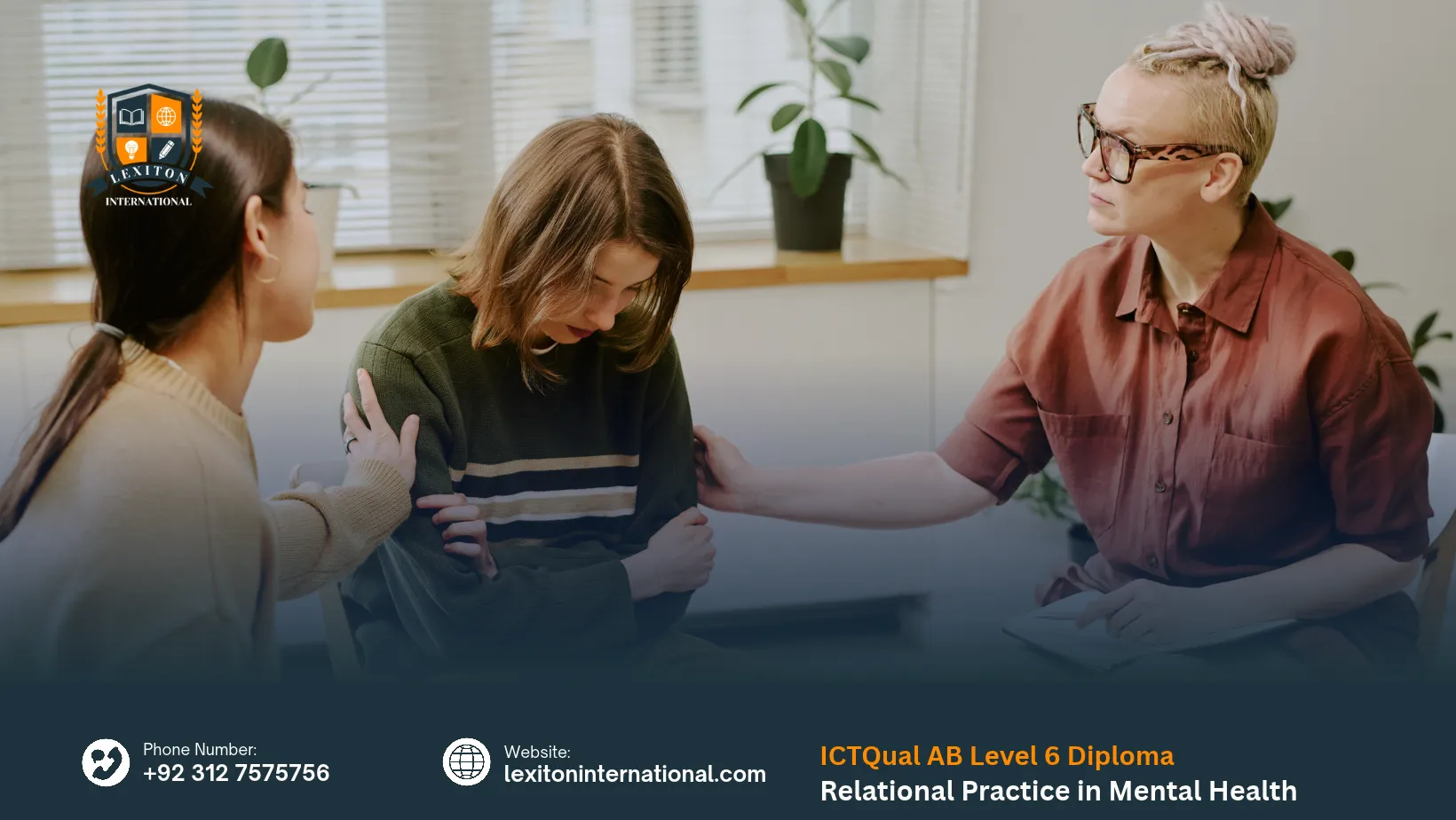
The ICTQual AB Level 6 Diploma in Relational Practice in Mental Health is a professional qualification designed to develop advanced knowledge and practical skills in relationship-centred mental health support. The course focuses on the importance of therapeutic relationships, effective communication, emotional understanding and interpersonal connections in promoting mental health and psychological well-being.
This Level 6 Diploma in Relational Practice in Mental Health helps Learners understand how relationships influence emotional well-being, recovery and personal development. Learners explore relational approaches, professional boundaries, active listening, empathy and ethical practice to support individuals experiencing mental health challenges. The qualification also emphasises person-centred approaches that recognise individual needs, experiences and circumstances.
Suitable for professionals working or aspiring to work in mental health, counselling support, health and social care, community services and related settings, this qualification supports the development of advanced interpersonal and reflective practice skills. Learners gain knowledge relevant to building trust, maintaining supportive relationships and responding appropriately to diverse mental health needs.
By completing the ICTQual AB Level 6 Diploma in Relational Practice in Mental Health, Learners can strengthen their professional understanding of relationship-based support and enhance their contribution to mental health services. This qualification may support career development in relevant care and support settings, subject to employers’ requirements, professional registration rules and the Learner’s existing experience.
To enrol on the ICTQual AB Level 6 Diploma in Relational Practice in Mental Health, Learners should meet the following entry requirements to support successful learning and professional development in relationship-centred mental health practice.
- Age: Learners should normally be at least 18 years old at the time of enrolment.
- Educational Background: Learners should preferably hold a relevant Level 5 qualification or an equivalent qualification in mental health, counselling, psychology, health and social care, social work, or a related field.
- Experience: Previous experience in mental health services, counselling support, healthcare, social care, community support, or a related professional setting is beneficial.
- English Language: Learners should have a sufficient level of English reading, writing, speaking and comprehension skills to understand course materials, participate in learning activities and complete assessments.
Mandatory Units
- Critical Evaluation of Relational Theories and Evidence in Mental Health Practice
- Advanced Therapeutic Relationships, Power Dynamics and Ethical Decision-Making
- Leading Trauma-Informed, Recovery-Oriented and Person-Centred Mental Health Practice
- Managing Complex Relational Risks, Safeguarding and Interprofessional Conflict
- Leadership, Supervision and Workforce Development in Relational Mental Health Practice
- Evaluating Service Quality, Relational Outcomes and Continuous Improvement in Mental Health Care
Skills You Will Gain
Critical Evaluation of Relational Theories and Evidence in Mental Health Practice
- Analyse major relational theories and their relevance to contemporary mental health practice.
- Evaluate research evidence supporting relationship-centred approaches in mental health care.
- Critically examine how professional relationships influence recovery, engagement, and individual wellbeing.
- Apply evidence-informed relational principles to improve mental health support and professional decision-making.
Advanced Therapeutic Relationships, Power Dynamics and Ethical Decision-Making
- Evaluate advanced therapeutic relationship approaches in complex mental health support situations.
- Analyse power imbalances, professional authority, and their effects on individual autonomy.
- Critically assess ethical dilemmas involving consent, trust, confidentiality, and professional responsibility.
- Develop ethical strategies that promote equality, empowerment, dignity, and respectful professional relationships.
Leading Trauma-Informed, Recovery-Oriented and Person-Centred Mental Health Practice
- Evaluate trauma-informed principles and their application to complex mental health support needs.
- Lead recovery-oriented approaches that promote hope, resilience, independence, and individual choice.
- Integrate person-centred care principles into mental health support planning and delivery.
- Develop inclusive practice strategies that recognise cultural differences, personal experiences, and individual recovery goals.
Managing Complex Relational Risks, Safeguarding and Interprofessional Conflict
- Analyse complex relational risks that may affect safety, trust, and professional mental health support.
- Evaluate safeguarding procedures for responding to abuse, neglect, exploitation, and identified risks.
- Develop strategies for resolving interprofessional conflict while maintaining ethical standards.
- Apply risk-management and communication approaches that promote safe, coordinated, and person-centred care.
Leadership, Supervision and Workforce Development in Relational Mental Health Practice
- Evaluate leadership approaches that strengthen relational practice across mental health services.
- Develop supervision strategies that improve professional accountability, reflective learning, and staff competence.
- Analyse workforce development needs relating to communication, empathy, safeguarding, and ethical practice.
- Lead initiatives that promote collaborative working, continuous professional development, and relationship-centred care.
Evaluating Service Quality, Relational Outcomes and Continuous Improvement in Mental Health Care
- Evaluate service quality using indicators relevant to therapeutic relationships and person-centred mental health support.
- Analyse feedback, service data, and individual experiences to identify areas for improvement.
- Develop quality improvement strategies that strengthen trust, communication, safety, and recovery outcomes.
- Monitor improvement initiatives to support accountable, evidence-informed, and sustainable mental health care.
Who is This Course For?
The ICTQual AB Level 6 Diploma in Relational Practice in Mental Health is designed for individuals who want to develop advanced knowledge of relationship-centred mental health support, effective communication and person-centred practice. It is suitable for professionals seeking to enhance their interpersonal skills and understanding of mental health and emotional well-being.
This course is particularly suitable for:
- Mental Health Support Workers who want to improve their relationship-building and support skills.
- Counselling and Well-being Practitioners seeking to strengthen their understanding of empathy, therapeutic relationships and professional boundaries.
- Health and Social Care Professionals who want to apply relational approaches in their practice.
- Community Support Workers supporting individuals with diverse mental health needs.
- Social Workers and Care Practitioners aiming to improve person-centred support and professional communication.
- Psychology and Mental Health Graduates seeking further knowledge of relational practice and emotional well-being.
- Mental Health Team Leaders and Supervisors who want to promote effective communication and relationship-based support.
- Career Changers interested in developing knowledge relevant to mental health and social care.
This Level 6 Diploma is suitable for Learners seeking professional development, subject to the qualification’s entry requirements and the requirements of their intended roles.
Future Progression
After completing the ICTQual AB Level 6 Diploma in Relational Practice in Mental Health, Learners can explore opportunities for further professional development, advanced learning and career progression in mental health, counselling support and health and social care. Potential progression routes include:
- Advanced Mental Health Qualifications: Progress to relevant Level 7 qualifications in mental health, psychological well-being, leadership or health and social care, subject to entry requirements.
- Mental Health Support Roles: Develop professional opportunities in mental health support services, community care organisations and well-being programmes, depending on experience and employer requirements.
- Counselling and Therapeutic Support: Explore further training in counselling skills, therapeutic communication and relationship-centred approaches, where additional qualifications are required.
- Health and Social Care Career Development: Strengthen existing knowledge and pursue progression towards senior support or specialist care roles.
- Community Mental Health Services: Explore opportunities to contribute to community-based mental health initiatives, recovery support and person-centred care services.
- Leadership and Management: Undertake further learning in health and social care leadership, service coordination or team supervision to prepare for relevant supervisory responsibilities.
- Professional Development and Specialisation: Develop expertise in reflective practice, ethical decision-making, interpersonal communication and relationship-based mental health support.
- Further Academic Study: Consider relevant higher-level study in mental health, counselling, psychology or social care, subject to the receiving institution’s admission criteria.
Curious About This Course?