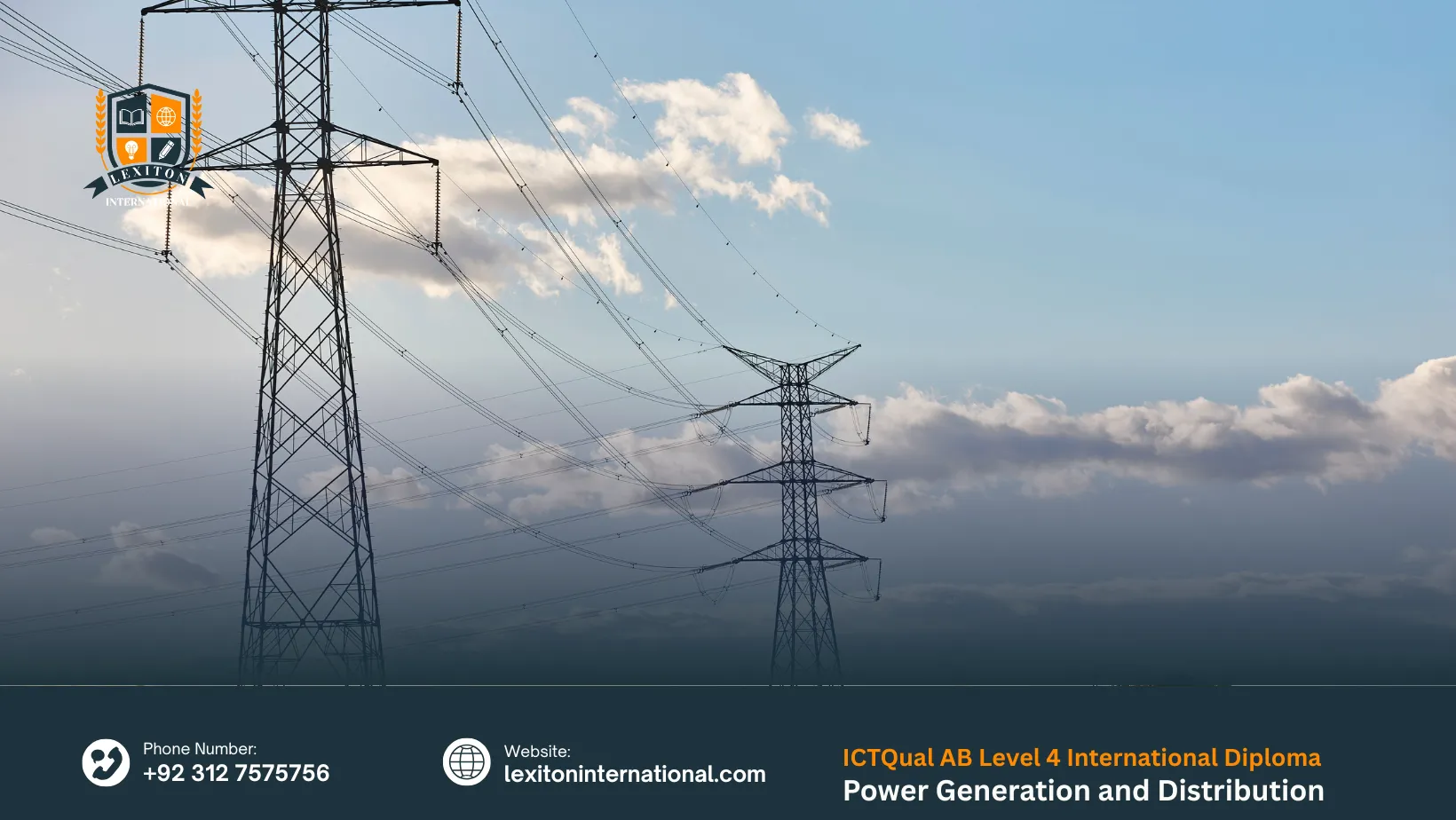
The ICTQual AB Level 4 International Diploma in Power Generation and Distribution is a specialized qualification designed to provide learners with advanced knowledge of how electricity is generated, transmitted, and distributed across industries and communities. With the global demand for reliable and sustainable energy increasing, this diploma equips learners with the technical expertise and practical understanding required to manage modern power systems effectively.
The program covers a wide range of topics, including conventional and renewable power generation methods, grid operations, safety standards, environmental considerations, and the integration of smart technologies. Learners will gain insights into both traditional and emerging energy systems, ensuring they are prepared to meet the challenges of the evolving energy sector. By combining theoretical knowledge with practical applications, the course ensures graduates are capable of contributing to efficient, safe, and sustainable energy distribution.
This diploma is ideal for individuals seeking to build or advance their careers in the power and energy sector. It is particularly suited for engineers, technicians, safety officers, and professionals working in utilities, renewable energy projects, or industrial operations. With a curriculum aligned to international standards, the ICTQual AB Level 4 International Diploma in Power Generation and Distribution provides learners with the skills to support global energy needs while promoting sustainability and innovation.
- Age Requirement: Applicants should ideally be 18 years or older at the time of enrollment.
- Educational Background: A secondary school qualification or equivalent is required for entry. Preference is given to learners with science, maths, engineering, or environmental studies background.
- Work Experience: No prior work experience is required for this diploma. However, exposure to technical or energy-related environments is an added advantage.
- English Language Proficiency: Learners must have a good command of English reading and writing skills. This is essential for understanding course materials and completing assessments effectively.
Mandatory Units
Year 1 – Foundation and Core Knowledge
Skills You Will Gain
Learning Outcomes for the ICTQual AB Level 4 International Diploma in Power Generation and Distribution:
Year 1 – Foundation and Core Knowledge
Introduction to Power Generation and Distribution
- Understand the fundamentals of power generation and distribution systems.
- Identify the main types of power plants and their operational principles.
- Analyse the role of electricity in modern industrial and residential applications.
- Recognise industry standards and regulatory requirements in power systems.
- Evaluate challenges and opportunities within the global energy sector.
Conventional Power Generation Systems
- Understand the operation of thermal, hydro, and nuclear power plants.
- Analyse efficiency, capacity, and performance metrics of conventional systems.
- Apply operational procedures for effective power plant management.
- Identify environmental and safety considerations in conventional power generation.
- Evaluate methods for optimising output and reducing operational costs.
Renewable Energy Integration in Power Systems
- Understand principles of solar, wind, hydro, and bioenergy systems.
- Assess techniques for integrating renewable energy into existing power grids.
- Analyse challenges of intermittency and variability in renewable generation.
- Apply strategies for maximising renewable energy efficiency.
- Evaluate policy, regulatory, and sustainability considerations in renewable integration.
Electrical Distribution Networks
- Understand the design and operation of electrical distribution systems.
- Analyse network configurations, load flow, and voltage regulation.
- Identify maintenance requirements for distribution infrastructure.
- Apply fault detection and troubleshooting techniques.
- Evaluate the role of smart grids and modern distribution technologies.
Power Plant Operations and Maintenance
- Understand operational procedures in power generation facilities.
- Apply maintenance schedules and preventive techniques for reliability.
- Analyse operational data to identify inefficiencies or performance issues.
- Implement safety and quality standards during operations.
- Evaluate strategies for improving plant performance and reducing downtime.
Energy Storage and Grid Management
- Understand different types of energy storage systems and their applications.
- Analyse grid management strategies for balancing supply and demand.
- Apply storage solutions to improve energy reliability and efficiency.
- Recognise challenges of integrating storage with renewable energy.
- Evaluate technological advances in energy storage and smart grid solutions.
Instrumentation and Control Systems in Power Generation
- Understand instrumentation used in power plants for monitoring and control.
- Analyse the role of control systems in safe and efficient plant operation.
- Apply measurement, calibration, and diagnostic techniques.
- Identify potential operational faults and troubleshooting methods.
- Evaluate digital tools and automation in modern power generation systems.
Safety Management and Risk Assessment
- Understand occupational health and safety standards in power generation.
- Identify potential hazards in power plants and distribution networks.
- Apply risk assessment and mitigation techniques.
- Implement emergency response and safety protocols.
- Evaluate continuous improvement strategies to enhance workplace safety.
Energy Efficiency and Sustainable Practices
- Understand principles of energy efficiency in generation and distribution.
- Analyse methods to reduce energy loss and improve system performance.
- Apply sustainable practices in power generation and operational processes.
- Recognise environmental impact and regulatory compliance requirements.
- Evaluate strategies for promoting green energy initiatives and sustainability.
Project Management in Power Generation
- Understand project planning, scheduling, and resource allocation.
- Apply project management tools and techniques for energy projects.
- Analyse risks and develop mitigation strategies in project execution.
- Coordinate multi-disciplinary teams to achieve project objectives.
- Evaluate project outcomes and continuous improvement for future initiatives.
Technical Troubleshooting and Fault Analysis
- Understand common faults in power generation and distribution systems.
- Apply diagnostic techniques to identify and resolve operational issues.
- Analyse system performance data to prevent recurrent faults.
- Implement corrective and preventive maintenance procedures.
- Evaluate case studies to develop problem-solving skills in real-world scenarios.
Professional Skills and Career Development
- Develop effective communication and teamwork skills for professional settings.
- Enhance problem-solving, analytical, and decision-making abilities.
- Plan career progression in the power generation and distribution sector.
- Apply ethical, legal, and professional standards in workplace activities.
- Build confidence in managing projects, technical operations, and industry relationships.
The ICTQual AB Level 4 International Diploma in Power Generation and Distribution is designed for individuals who want to understand how electrical power is produced, managed, and delivered to homes, industries, and cities. It is ideal for learners who want to build a strong technical foundation in the global energy and power sector.
Who Is This Course For
- Learners who want to start a career in power generation and electrical distribution systems.
- Individuals interested in how electricity is produced in power plants and delivered through grids.
- Aspiring technicians aiming to work in electrical utilities and energy infrastructure projects.
- Students from science or engineering backgrounds planning to enter the power sector.
- Workers seeking to shift into electrical, energy, or utility-based industries.
- Individuals interested in transmission lines, substations, and grid operations.
- Candidates looking for entry-level roles in energy companies and power plants.
- Learners who want to develop practical knowledge of electrical systems and safety basics.
- People interested in renewable energy integration within modern power networks.
- Anyone motivated to build a career in a stable and essential energy industry.
The ICTQual AB Level 4 International Diploma in Power Generation and Distribution builds essential technical readiness for the electrical power sector by developing a clear understanding of generation systems, transmission networks, and distribution processes. It prepares learners for practical roles in an industry that powers every aspect of modern life.
Future Progression
- Step into entry-level roles supporting power plant operations and energy production systems.
- Contribute to the maintenance and monitoring of electrical transmission and distribution networks.
- Assist in ensuring stable and uninterrupted electricity supply across grid systems.
- Work alongside technical teams in substations and utility service environments.
- Support routine inspection and operational checks of electrical infrastructure.
- Build opportunities in national and international power and utility companies.
- Participate in system monitoring and basic fault identification activities.
- Strengthen eligibility for junior technical roles in the energy and power sector.
- Develop recognition for supporting critical electricity infrastructure operations.
- Position yourself within a vital industry that drives global development and connectivity.
Curious About This Course?