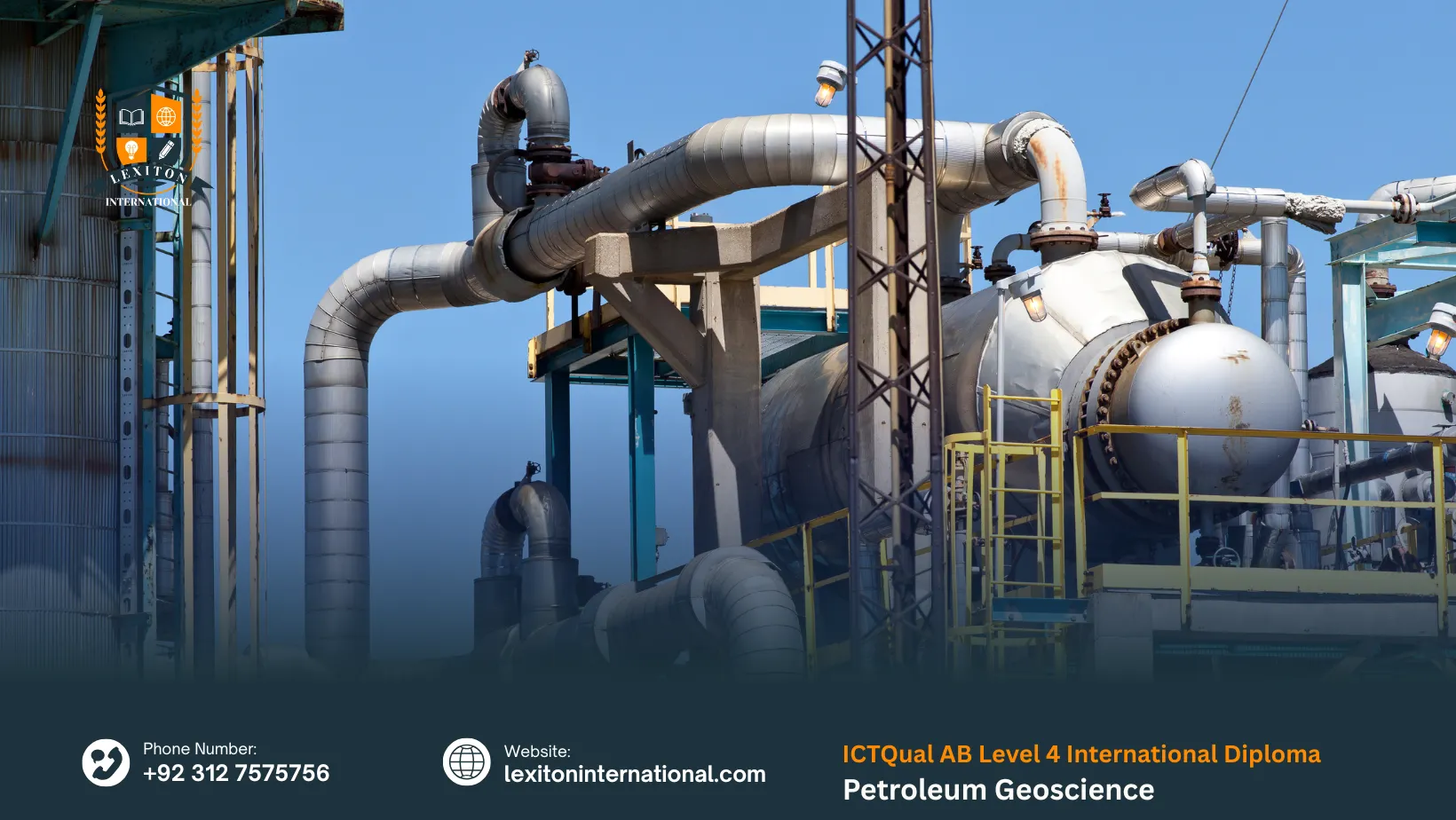
The ICTQual AB Level 4 International Diploma in Petroleum Geoscience is a foundational qualification that introduces learners to the essential principles of geology and their application in the exploration and production of hydrocarbons. Petroleum geoscience is at the heart of the oil and gas industry, as it provides the scientific basis for locating, evaluating, and developing energy resources. This diploma is designed to give learners a strong grounding in geological processes, rock formations, and basin evolution, while also equipping them with the ability to apply this knowledge to petroleum systems. By combining theoretical learning with practical insights, the program ensures that learners understand how geoscience underpins every stage of petroleum exploration and production.
The program covers a wide range of core topics, including sedimentology, stratigraphy, structural geology, reservoir characterization, and basin analysis. Learners will also be introduced to geophysical methods such as seismic interpretation, mapping, and subsurface modeling, which are critical tools in modern petroleum exploration. Emphasis is placed on developing analytical and observational skills, enabling learners to interpret geological data, assess reservoir potential, and contribute to exploration decision-making. In addition, the course highlights the importance of health, safety, and environmental considerations, ensuring that learners appreciate the role of sustainable practices in petroleum geoscience. Through case studies, applied exercises, and industry-relevant examples, learners gain a practical understanding of how geoscience knowledge is applied in real-world exploration and production projects.
Graduates of this diploma will be well-prepared for entry-level roles such as geoscience assistants, exploration technicians, or junior data analysts within oil and gas companies, service providers, and consultancies. The qualification also provides a clear academic progression pathway, serving as a stepping stone to higher-level diplomas or undergraduate programs in petroleum geology, geophysics, or energy resource management. By completing this program, learners not only gain a recognized international credential but also position themselves for long-term career growth in one of the most dynamic and globally significant industries. With the increasing demand for skilled professionals who can balance energy exploration with environmental responsibility, this diploma offers learners the opportunity to build a career that is both impactful and future-focused.
To ensure learners are fully prepared to succeed in the ICTQual AB Level 4 International Diploma in Petroleum Geoscience, applicants are expected to meet the following entry requirements. These criteria are designed to provide learners with the foundational knowledge, skills, and maturity necessary to engage with the technical and applied aspects of the program.
- Age Requirement Applicants should ideally be 18 years or older at the time of enrollment. The course involves technical concepts, applied learning, and project-based assessments that require maturity, responsibility, and independent study skills.
- Educational Background A secondary school qualification (or equivalent) is required. Preference is given to candidates with a background in science, mathematics, geography, or environmental studies, as these subjects provide the analytical and observational skills needed for geoscience. Candidates with vocational or technical diplomas in related fields are also encouraged to apply.
- Work Experience Work experience is not mandatory at this level. However, prior exposure to geology, mapping, surveying, or industrial environments is considered an advantage. Learners with such experience will find it easier to connect theoretical knowledge with practical applications.
- English Language Proficiency Since the course is delivered in English, learners must demonstrate a good command of spoken and written English. This ensures they can engage with technical manuals, geological case studies, and project documentation, as well as participate effectively in discussions and assessments.
- Professional Interest Applicants should demonstrate a genuine interest in petroleum geoscience, geology, and energy resources. The course is designed for individuals aiming to progress into technical, operational, or support roles within the oil and gas sector, with a focus on exploration and reservoir evaluation.
Mandatory Units
This qualification, the ICTQual AB Level 4 International Diploma in Petroleum Geoscience, consists of 12 mandatory units.
Year 1 – Foundation and Core Knowledge
- Introduction to Petroleum Geoscience
- Fundamentals of Sedimentology and Stratigraphy
- Petroleum Reservoirs and Rock Properties
- Petroleum Geology and Basin Analysis
- Seismic Interpretation and Subsurface Mapping
- Well Logging and Formation Evaluation
- Drilling and Production Geoscience Principles
- Petroleum Exploration Techniques
- Reservoir Characterisation and Modelling
- Health, Safety, and Environmental Management in Petroleum Operations
- Digital Tools and Geoscience Software Applications
- Professional Practice and Future Trends in Petroleum Geoscience
Learning Outcomes for the ICTQual AB Level 4 International Diploma in Petroleum Geoscience:
Year 1 – Foundation and Core Knowledge
Introduction to Petroleum Geoscience
- Understand the fundamental concepts of petroleum geoscience and its role in the oil and gas industry.
- Identify different types of hydrocarbon resources and their global significance.
- Recognise the processes of petroleum formation, migration, and accumulation.
- Explain the exploration and production lifecycle in the petroleum sector.
- Develop foundational analytical skills for interpreting geological data.
Fundamentals of Sedimentology and Stratigraphy
- Understand sedimentary rock formation processes and depositional environments.
- Analyse stratigraphic sequences and their relevance to petroleum reservoirs.
- Apply sedimentology principles to reservoir characterisation.
- Interpret stratigraphic logs and diagrams for subsurface evaluation.
- Develop skills to integrate stratigraphy data into exploration workflows.
Petroleum Reservoirs and Rock Properties
- Understand the physical and chemical properties of reservoir rocks.
- Analyse porosity, permeability, and fluid saturation in petroleum reservoirs.
- Evaluate reservoir quality and potential hydrocarbon productivity.
- Interpret core samples and well log data effectively.
- Develop practical skills in reservoir characterisation for decision-making.
Petroleum Geology and Basin Analysis
- Understand geological processes influencing hydrocarbon accumulation.
- Analyse sedimentary basins and their petroleum potential.
- Interpret structural features affecting reservoir formation and exploration.
- Apply basin modelling techniques to predict resource distribution.
- Develop critical thinking skills for exploration planning.
Seismic Interpretation and Subsurface Mapping
- Understand the principles of seismic data acquisition and processing.
- Analyse seismic sections to identify geological structures and traps.
- Integrate seismic data with geological models for subsurface mapping.
- Apply seismic interpretation techniques for reservoir evaluation.
- Develop practical skills in geophysical data analysis.
Well Logging and Formation Evaluation
- Understand different well logging methods and their applications.
- Interpret log data to assess formation properties and reservoir potential.
- Analyse porosity, permeability, and hydrocarbon saturation from logs.
- Apply well logging results to drilling and production decisions.
- Develop technical skills in formation evaluation.
Drilling and Production Geoscience Principles
- Understand drilling processes and well design considerations.
- Analyse the role of geoscience in production optimisation.
- Interpret subsurface data to support drilling operations.
- Evaluate drilling risks and reservoir management strategies.
- Develop problem-solving skills in production-related geoscience.
Petroleum Exploration Techniques
- Understand the methodologies used in petroleum exploration.
- Analyse geological, geophysical, and geochemical exploration data.
- Apply exploration techniques to identify prospective hydrocarbon zones.
- Evaluate exploration project risks and uncertainties.
- Develop practical decision-making skills for exploration planning.
Reservoir Characterisation and Modelling
- Understand reservoir heterogeneity and factors influencing productivity.
- Analyse reservoir simulation models for fluid flow and pressure behaviour.
- Apply software tools for reservoir characterisation and modelling.
- Integrate geological, geophysical, and petrophysical data into models.
- Develop skills for reservoir management and production forecasting.
Health, Safety, and Environmental Management in Petroleum Operations
- Understand key safety standards and regulatory frameworks in petroleum operations.
- Analyse environmental risks and implement mitigation strategies.
- Apply health and safety procedures in field and operational contexts.
- Develop awareness of sustainable practices in petroleum geoscience.
- Promote a safety-focused and environmentally responsible work culture.
Digital Tools and Geoscience Software Applications
- Understand digital tools used in geoscience and petroleum engineering.
- Apply software for data analysis, reservoir modelling, and mapping.
- Integrate digital simulations into exploration and production planning.
- Develop technical competency in using industry-standard software.
- Enhance efficiency and accuracy in geoscience decision-making.
Professional Practice and Future Trends in Petroleum Geoscience
- Understand ethical, professional, and regulatory standards in petroleum geoscience.
- Analyse emerging technologies and trends impacting the oil and gas industry.
- Develop communication, teamwork, and project management skills.
- Apply knowledge to real-world petroleum geoscience projects.
- Prepare for continuous professional development and career advancement in the sector.
The ICTQual AB Level 4 International Diploma in Petroleum Geoscience is designed for individuals who are eager to build a strong foundation in petroleum geology and its applications in the oil and gas industry. It is best suited for learners who are motivated to explore the science behind hydrocarbon exploration and are committed to developing the technical and analytical skills required in this field.
Industry Starters
- School leavers who want to begin a career in petroleum geology and geoscience
- Individuals with little or no prior industry experience but strong motivation to learn
- Learners seeking an internationally recognized entry-level qualification
- Candidates preparing for apprenticeships, internships, or field-based training
- Aspiring professionals aiming to build a strong foundation for future studies and career growth in the oil and gas sector
Technical Learners and Graduates
- College or diploma graduates in science, geography, or engineering studies
- Learners with exposure to geology, mapping, or environmental sciences
- Students aiming to bridge academic knowledge with practical petroleum applications
- Individuals planning to specialize further in petroleum or energy studies
- Aspiring professionals looking to gain industry-relevant skills and enhance employability
Early-Career Professionals
- Junior technicians or assistants in oil and gas companies
- Professionals in related industries looking to formalize their knowledge
- Staff aiming to progress into technical or supervisory roles
- Individuals seeking to enhance employability with a recognized qualification
- Early-career professionals wanting to strengthen their expertise and build a pathway toward long-term growth in petroleum geoscience
International Learners
- Learners seeking globally recognized petroleum geoscience qualifications
- Candidates preparing for overseas assignments in exploration projects
- Professionals aiming to work in multinational oil and gas corporations
- Students looking to strengthen their global employability in energy markets
- Individuals aspiring to build international careers by aligning their skills with global industry standards
Exploration and Sustainability Enthusiasts
- Learners interested in geological mapping and exploration techniques
- Individuals motivated to contribute to responsible resource management
- Candidates aiming to specialize in reservoir evaluation and basin analysis
- Professionals seeking to align careers with global energy transition goals
- Students aspiring to develop expertise in sustainable exploration and innovative geoscience practices
In essence, this diploma is ideally suited for learners who are passionate about the field of petroleum geoscience and who wish to gain a solid foundation in the scientific principles that underpin oil and gas exploration. It is designed for individuals who are eager to understand the geological processes that shape petroleum systems, develop the ability to interpret subsurface data, and apply this knowledge to real-world exploration and production challenges.
Completing the ICTQual AB Level 4 International Diploma in Petroleum Geoscience opens a wide range of academic and career progression opportunities. Learners can advance to higher-level qualifications, pursue specialized certifications, or step into entry-level technical roles within the oil and gas sector.
Academic Progression
- Progress to Level 5 Diplomas in Petroleum Geoscience, Geophysics, or Energy Studies
- Pursue specialized certifications in seismic interpretation, reservoir studies, or exploration methods
- Build a foundation for advanced research and technical training
Career Opportunities
- Step into entry-level roles such as Geoscience Assistant or Exploration Technician
- Work as a Junior Data Analyst in petroleum exploration projects
- Support reservoir evaluation and mapping teams
- Gain practical experience in oil and gas service companies
- Build a foundation for progression into advanced technical or supervisory positions in petroleum geoscience
Global Opportunities
- Work with multinational oil and gas corporations and exploration contractors
- Pursue opportunities in offshore and onshore exploration projects worldwide
- Strengthen employability in high-demand global energy markets
- Prepare for international assignments in petroleum operations
- Build a globally competitive career by aligning skills with international industry standards and practices
Professional Development
- Apply for memberships in geological and petroleum associations
- Develop teamwork and technical communication skills
- Prepare for supervisory roles through continuous learning
- Use the diploma as a foundation for lifelong professional growth
Exploration and Innovation Pathways
- Explore opportunities in advanced exploration technologies
- Contribute to innovation in reservoir characterization and mapping
- Align career growth with global energy transition goals
- Build expertise in sustainable resource management
Ultimately, the ICTQual AB Level 4 International Diploma in Petroleum Geoscience is far more than just a qualification—it is a comprehensive career pathway that equips learners with the knowledge, skills, and confidence to thrive in one of the most vital sectors of the global energy industry. By completing this program, learners not only gain a solid academic foundation in geological principles and petroleum exploration techniques but also develop the practical competencies needed to contribute meaningfully to real-world projects.
Curious About This Course?