CPCAB Level 2 Certificate in Counselling Skills (CSK-L2)
The CPCAB Level 2 Certificate in Counselling Skills (CSK-L2) is an introductory professional certification designed to develop essential knowledge and practical skills in counselling principles, communication techniques, active listening, interpersonal relationships and supportive practice. With a Guided Learning Hours (GLH) of 90, a Total Qualification Time (TQT) of 170 hours and a credit value of 17, the certification provides learners with an understanding of effective counselling approaches, ethical principles, confidentiality, empathy and professional boundaries. It equips learners with the foundational skills to communicate effectively, understand individual needs, build supportive relationships and apply appropriate counselling techniques in personal, educational, community and workplace settings.
Awarding Body:
CPCAB
500/7938/4
Qualification number
Level: Level 2
Duration: 2 to 6 months
Units: 7 Learning Outcomes
Credits: 17
Assessment: Coursework
Study Mode: Online
Lexiton International is apporved training centre of CPCAB.
CPCAB Level 2 Certificate in Counselling Skills (CSK-L2)
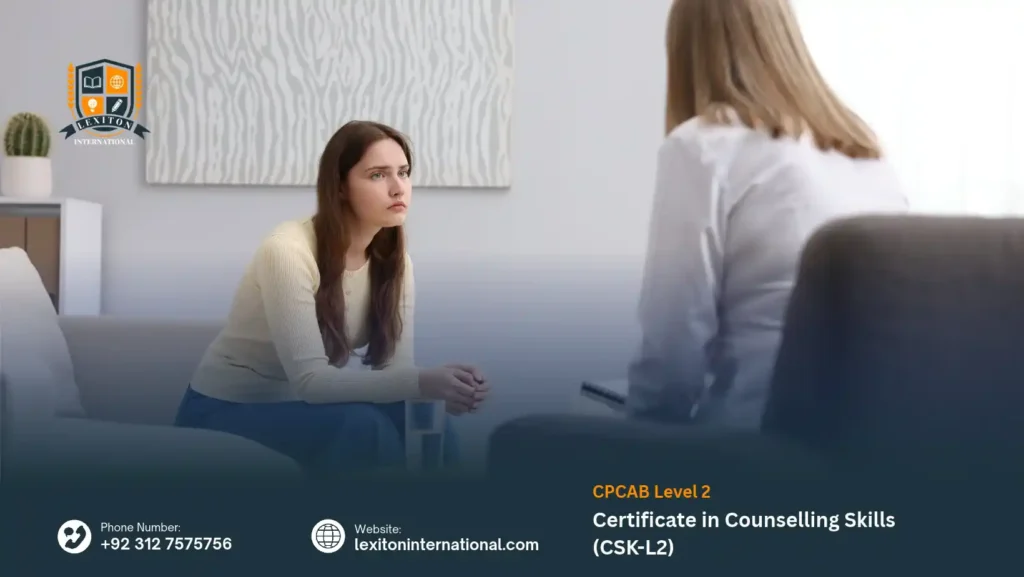
The CPCAB Level 2 Certificate in Counselling Skills (CSK-L2) is a professionally structured certification designed to introduce learners to the fundamental principles, techniques and practices of effective counselling. It provides a foundation in counselling communication, active listening, empathy, interpersonal relationships and supportive interaction, helping learners understand how to communicate sensitively and respond appropriately to the needs, feelings and experiences of others. The course explores essential counselling concepts, including building trust, maintaining confidentiality, demonstrating respect, understanding personal boundaries and developing non-judgemental attitudes.
Through the Level 2 Certificate in Counselling Skills, learners develop an understanding of how counselling skills can be applied in everyday situations, educational environments, community settings and professional workplaces. It focuses on strengthening interpersonal communication, recognising individual differences, understanding emotional responses and creating supportive relationships through appropriate listening and questioning techniques. Learners also gain awareness of ethical considerations and the importance of recognising situations that require referral to qualified counselling professionals.
This certification is suitable for individuals interested in developing counselling skills for personal development, workplace communication, voluntary activities or progression towards further training in counselling and related disciplines. Whether learners are exploring counselling for the first time or seeking to improve their ability to support others, the Level 2 Certificate in Counselling Skills provides a valuable foundation for understanding effective helping relationships and responsible communication.
Apply or Aask a Question
Our admissions team replies within 24 hours.
Study Units
7 units
Credits
17
Duration
2 to 6 months
Claim Your Spot
Entry requirements
Age: 18 years or above
Education: No formal academic qualifications are required.
Experience: Previous counselling or professional experience is not necessary.
English: Learners should have sufficient English reading, writing and communication skills to understand course materials and complete assessments.
Not sure if you qualify? Send us your highest qualification and CV and our admissions team will confirm your eligibility before you apply.
Who is this course for?
Course structure & Study units
On successful completion of CPCAB Level 2 Certificate in Counselling Skills (CSK-L2), Learners will have developed knowledge and awareness across seven core areas.
Study Key Areas
Course Benefits
The Level 2 Certificate in Counselling Skills (CSK-L2) develops essential counselling knowledge, active listening, empathy and effective communication skills. It introduces learners to ethical practices, confidentiality and professional boundaries, building confidence in supporting others. The certification also provides a foundation for further learning and development in counselling, healthcare, education, social care and community support.
Key Benefits
- Develop Counselling Skills: Understand fundamental counselling principles, techniques and approaches used in supportive interactions.
- Improve Communication: Strengthen active listening, questioning and interpersonal communication skills.
- Build Empathy and Understanding: Develop the ability to recognise individual feelings, perspectives and emotional needs.
- Understand Ethical Practices: Gain awareness of confidentiality, professional boundaries, respect and responsible counselling behaviour.
- Strengthen Personal Development: Improve self-awareness, emotional understanding and confidence when communicating with others.
- Support Others Effectively: Develop foundational skills for creating positive and supportive relationships in personal and professional environments.
- Enhance Career Opportunities: Build relevant knowledge for roles in community support, education, healthcare, social care and people-focused services.
- Support Further Progression: Establish a foundation for further learning and professional development in counselling and related disciplines.
Future Progression Opportunities
Successful completion of the Level 2 Certificate in Counselling Skills (CSK-L2) can provide a foundation for further training, personal development and progression into counselling-related learning and supportive professional roles. It helps learners develop essential communication, listening and interpersonal skills that are valuable across healthcare, education, social care and community support environments.
Academic Progression
- Progress to Level 3 Certificate or Diploma in Counselling Skills, subject to entry requirements.
- Explore further training in counselling, psychotherapy and related disciplines.
- Continue learning in psychology, mental health awareness and social care.
- Develop additional knowledge through professional counselling and communication programmes.
Career Progression
- Counselling Support Assistant
- Community Support Worker
- Healthcare Support Worker
- Social Care Assistant
- Student Support Assistant
- Wellbeing Support Assistant
- Volunteer Support Worker
- Pastoral Support Assistant
Professional Development
- Develop advanced active listening and interpersonal communication skills.
- Build confidence in supporting individuals facing personal challenges.
- Strengthen understanding of ethical counselling practices and professional boundaries.
- Develop skills relevant to community, educational and social care environments.
- Prepare for further training towards professional counselling practice.
Note: Progression into professional counselling roles requires appropriate further training, recognised professional certification and compliance with relevant professional and regulatory requirements. Academic admission and career opportunities are subject to individual institution and employer requirements.ments, relevant experience and eligibility criteria.