
What Is CMI? Complete Guide to CMI Qualifications
CMI stands for the Chartered Management Institute, a professional organisation dedicated to developing effective management and leadership practice. CMI provides management and leadership qualifications designed for professionals at different stages of their careers, from people preparing for their first management responsibilities to experienced managers and senior leaders.
CMI qualifications can help learners develop knowledge and skills in areas such as leadership, people management, strategic thinking, decision-making, communication, performance management and organisational development.
Choosing the right CMI qualification depends on several factors, including your current experience, professional responsibilities, career objectives and the type of management or leadership capability you want to develop.
This complete guide explains what CMI is, what CMI qualifications are, how CMI qualification levels work, the difference between Awards, Certificates and Diplomas, the benefits of CMI qualifications, assessment methods, online study options, career relevance and how to choose the right CMI qualification.

What Is CMI?
CMI stands for the Chartered Management Institute, a professional organisation focused on developing effective management and leadership practice. It supports managers, aspiring leaders and organisations through professional development resources, management and leadership qualifications, membership opportunities and professional recognition.
CMI qualifications are designed to help professionals build the knowledge, skills and confidence needed to manage people, lead teams and contribute effectively to organisational performance.
Rather than taking a one-size-fits-all approach, CMI provides qualifications across different levels. This allows learners to consider programmes that align with their existing experience, professional responsibilities and development objectives.
For professionals beginning their management journey, CMI learning can provide an introduction to essential management principles. For practising managers, it can help strengthen capabilities in areas such as leadership, communication, performance management, decision-making and team development.
At more advanced levels, CMI qualifications can focus on areas such as strategic management, organisational performance, strategic decision-making and leadership responsibility.
The practical nature of management development can also help learners connect what they study with real workplace situations. Managers can reflect on challenges, evaluate management approaches and consider how to improve the way they lead people, manage resources and support organisational objectives.

What Does CMI Stand For?
CMI stands for Chartered Management Institute.
The organisation is commonly referred to as CMI. When researching management and leadership development, you may encounter terms such as:
- CMI qualifications
- CMI management qualifications
- CMI leadership qualifications
- CMI Level 3
- CMI Level 5
- CMI Level 7
- Chartered Management Institute qualifications
- CMI management and leadership
These terms relate to different aspects of management and leadership development associated with CMI.
What Does the Chartered Management Institute Do?
CMI focuses specifically on management and leadership development.
Its work includes supporting professional managers and leaders through qualifications, professional development resources, management standards and other development opportunities.
For learners, an important feature is the availability of qualifications covering different stages of management responsibility.
This means a professional who is new to management may have different learning needs from an experienced manager or senior strategic leader. The appropriate qualification should therefore be selected according to the learner’s experience, responsibilities and development goals.
Who Can Benefit From CMI Qualifications?
CMI qualifications can benefit professionals at different stages of their management and leadership journey. They are not limited to people who already have a formal management title and can also be relevant to professionals preparing to take on responsibility for people, projects, operations or organisational performance.
The most suitable CMI qualification depends on your current experience, professional responsibilities and development objectives.
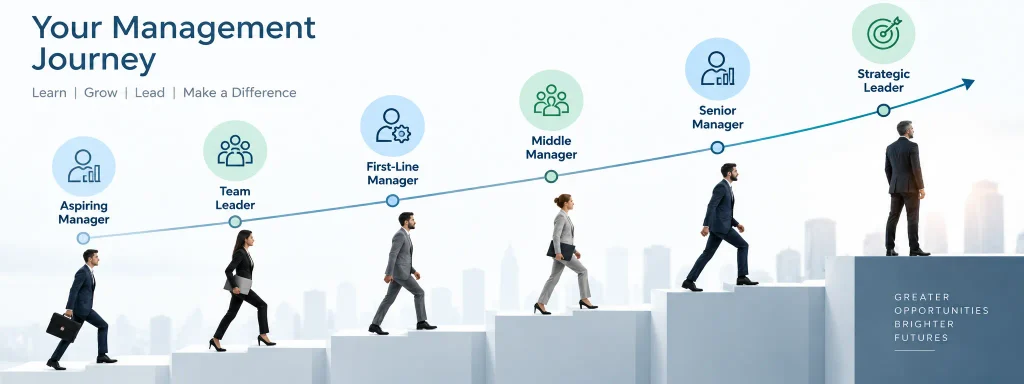
Aspiring Managers
Professionals preparing to move into management can use structured management learning to develop an understanding of effective management and leadership.
They may want to develop knowledge of:
- Management fundamentals
- Workplace communication
- Delegation
- Team motivation
- Setting objectives
- Performance management
- Leadership responsibilities
Team Leaders and Supervisors
Team leaders and supervisors often coordinate employees and contribute directly to day-to-day team performance.
CMI learning can help them develop skills in:
- Team communication
- Employee support
- Delegation
- Constructive feedback
- Team motivation
- Problem-solving
- Day-to-day team coordination
First-Line Managers
First-line managers often translate organisational expectations into practical team activities.
Relevant management development may help them:
- Manage people more effectively
- Set and monitor team objectives
- Improve team performance
- Strengthen leadership skills
- Address workplace problems
- Communicate expectations clearly
- Build accountability within teams
Middle Managers
Middle managers often balance team leadership with wider operational and organisational responsibilities.
They may benefit from development in areas such as:
- Managing larger or multiple teams
- Improving operational performance
- Making informed management decisions
- Managing resources
- Supporting organisational change
- Developing employees
- Connecting team objectives with organisational priorities
Department and Operations Managers
Managers responsible for departments or operational functions need to balance people, processes, resources and organisational performance.
Management learning can help them explore:
- Operational planning
- Resource management
- Performance improvement
- Team development
- Operational problem-solving
- Continuous improvement
- Alignment between operational activities and organisational objectives
Project and Programme Managers
Project and programme managers coordinate people, resources, deadlines and organisational priorities. Alongside technical project knowledge, effective leadership and communication are important.
CMI management and leadership learning can complement their professional experience by supporting development in:
- Project team leadership
- Stakeholder communication
- Decision-making
- Conflict management
- Delegation
- Team performance
- Leading people through change
Experienced Managers
Experienced managers may use CMI qualifications to strengthen, evaluate or expand their existing management capabilities.
Structured learning can help them:
- Review established management practices
- Explore different leadership approaches
- Strengthen professional knowledge
- Improve decision-making
- Address complex workplace challenges
- Reflect on leadership effectiveness
- Prepare for broader management responsibilities
Senior Managers and Strategic Leaders
Senior managers and strategic leaders make decisions that can influence wider organisational performance.
Advanced management and leadership development can support their understanding of:
- Strategic thinking
- Organisational leadership
- Strategic decision-making
- Organisational change
- Business performance
- Long-term organisational objectives
- Complex organisational challenges
Professionals Preparing for Greater Responsibility
CMI qualifications can also be relevant to professionals preparing to take on greater management or leadership responsibilities.
This may include professionals who are:
- Preparing for a first management position
- Moving from technical work into management
- Preparing to manage a new team
- Developing leadership confidence
- Taking on wider operational responsibilities
- Preparing for broader organisational responsibilities
What Are CMI Qualifications?
CMI qualifications are management and leadership qualifications designed to develop knowledge, skills and understanding relevant to professional management practice.
Management and leadership qualifications can connect structured learning with practical workplace responsibilities rather than focusing exclusively on theoretical concepts.
Depending on the qualification and level, learners may study areas such as:
- Leadership
- Management practice
- People management
- Team leadership
- Performance management
- Strategic management
- Organisational development
- Communication
- Decision-making
- Change management
- Project management
- Resource management
- Professional development
Find the Right CMI Qualification for You
From entry-level management development to advanced leadership, explore the full range of CMI qualifications available through our CMI Approved Centre and choose the right pathway for your professional goals.
The exact content depends on the individual qualification, level, units and pathway.
How Do CMI Qualifications Support Management Development?
Effective management involves more than holding a management title. Managers need to communicate expectations, manage performance, make decisions, solve problems, support employees and contribute to organisational objectives.
A structured management qualification can help learners examine these responsibilities systematically.
For example, management practice may involve the ability to:
- Set clear objectives.
- Communicate expectations.
- Allocate resources.
- Manage individual and team performance.
- Identify development needs.
- Respond to workplace challenges.
- Make evidence-informed decisions.
- Support organisational or operational change.
- Evaluate outcomes.
- Improve management practice.
The value of management learning can increase when learners connect these concepts with genuine workplace situations.
CMI Qualification Levels Explained
One of the most common questions prospective learners ask is:
“Which CMI level should I choose?”
CMI qualifications are available across different levels, with each level generally reflecting different stages of management knowledge, responsibility and professional development.
The appropriate level should not be selected simply because it has a higher number. Your existing experience, management responsibilities and learning objectives should also be considered.
The exact qualification title, units, entry requirements and availability can vary, so always check the current specification for the specific qualification you intend to study.
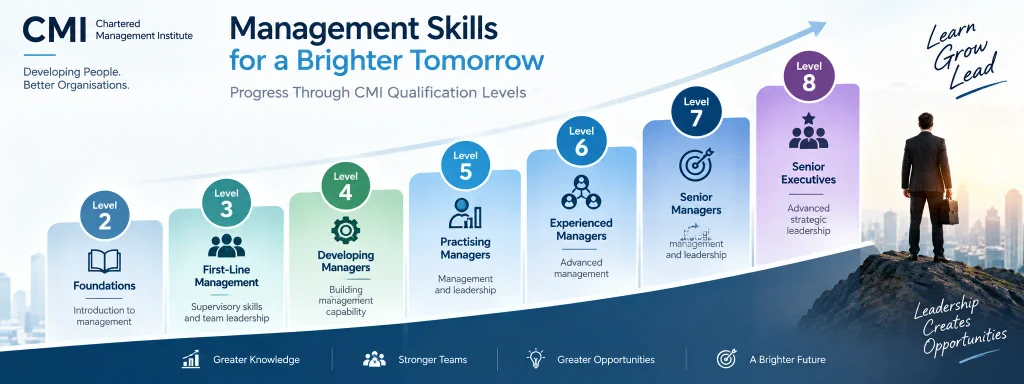
CMI Level 2
CMI Level 2 qualifications can provide an introduction to management and leadership concepts.
They may be relevant to individuals who are beginning to explore management responsibilities or developing basic workplace management and team skills.
Typical areas may include:
- Introduction to management
- Teamworking
- Communication
- Basic leadership concepts
- Supporting workplace performance
- Understanding management responsibilities
CMI Level 3
CMI Level 3 qualifications are generally associated with first-line management and supervisory responsibilities.
They may be suitable for professionals who:
- Are preparing for their first management role
- Supervise employees
- Lead small teams
- Have day-to-day operational responsibilities
- Want to strengthen their management knowledge
Relevant learning may include team leadership, communication, performance and managing people.
CMI Level 4
CMI Level 4 qualifications can support developing managers who want to strengthen their management capability.
They may be relevant to professionals who have moved beyond basic supervisory responsibilities and are developing broader management responsibilities.
Depending on the specific qualification, areas of learning may include:
- Management practice
- Leadership
- Team performance
- Resource management
- Communication
- Operational effectiveness
- Professional development
CMI Level 5
CMI Level 5 is generally relevant to practising and middle managers who want to develop their management and leadership capability.
It can be suitable for professionals with responsibility for teams, departments, projects, resources or operational performance.
A Level 5 programme may cover areas such as:
- Management and leadership
- Strategic awareness
- People management
- Performance management
- Organisational improvement
- Decision-making
- Communication
- Change
- Professional management practice
For professionals already managing people or operations, Level 5 can provide structured opportunities to strengthen management knowledge and capability.
CMI Level 6
CMI Level 6 qualifications are aimed at a more advanced stage of management and leadership development.
They can be relevant to experienced managers with broader responsibilities who want to develop advanced professional management capabilities.
Depending on the qualification, areas of focus may include:
- Advanced management
- Leadership
- Strategic thinking
- Organisational performance
- Business improvement
- Change
- Resource management
- Leadership decision-making
The exact content depends on the qualification and units selected.
CMI Level 7
CMI Level 7 qualifications focus strongly on strategic management and leadership and can be relevant to senior managers and experienced leaders.
At this level, learners may examine how leadership and management decisions influence wider organisational performance.
Topics may include:
- Strategic leadership
- Strategic management
- Organisational strategy
- Change leadership
- Business performance
- Leadership decision-making
- Organisational development
- Strategic planning
CMI Level 7 can therefore be particularly relevant to professionals working at senior management or strategic leadership level.
CMI Level 8
Level 8 represents an advanced stage of management and leadership development and may be relevant to senior executives and professionals with significant organisational responsibilities.
Study at this level may focus on:
- Strategic direction
- Organisational leadership
- Complex organisational challenges
- Advanced strategic thinking
- Senior leadership responsibilities
The specific qualification title, content and eligibility requirements should always be checked against the current qualification specification.
CMI Qualification Levels at a Glance
| CMI Level | Typical Professional Stage | General Focus |
|---|---|---|
| Level 2 | Early-stage learners | Introduction to management |
| Level 3 | First-line managers | Supervisory management and team leadership |
| Level 4 | Developing managers | Management capability |
| Level 5 | Practising and middle managers | Management and leadership |
| Level 6 | Experienced managers | Advanced management |
| Level 7 | Senior managers | Strategic management and leadership |
| Level 8 | Senior executives | Advanced strategic leadership |
This table is a general guide. The specific qualification specification should always be reviewed before enrolment.
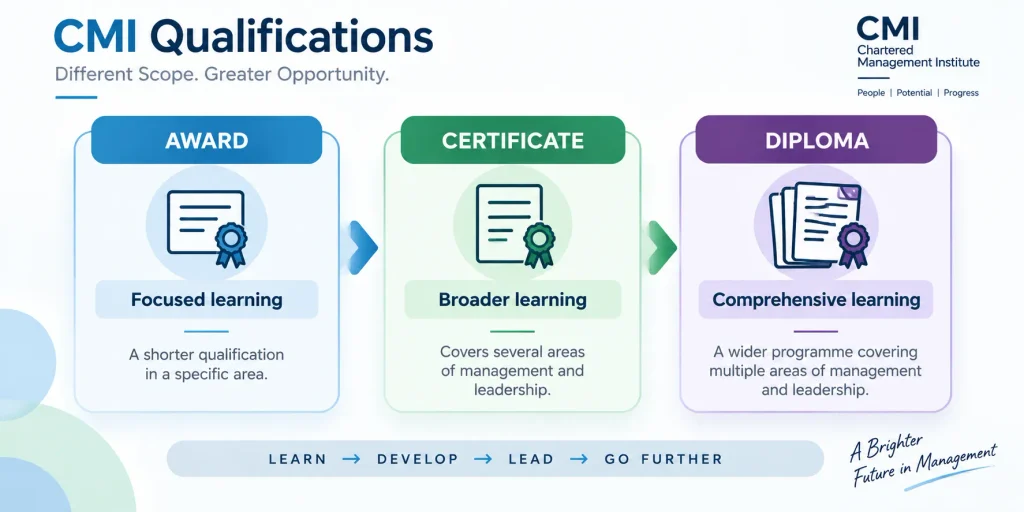
CMI Award vs Certificate vs Diploma
Another common question is the difference between a CMI Award, Certificate and Diploma.
These terms generally describe different scopes or sizes of qualification rather than three completely separate qualification levels.
What Is a CMI Award?
A CMI Award is typically a shorter qualification focused on a specific area of management or leadership knowledge.
It may be suitable for learners who want focused development in a particular subject without undertaking a larger qualification.
What Is a CMI Certificate?
A CMI Certificate generally provides broader coverage than a focused Award.
It can allow learners to explore several areas of management and leadership while remaining more focused than a larger Diploma.
What Is a CMI Diploma?
A CMI Diploma generally involves a broader programme of study and assessment.
It may cover several areas of management and leadership and provide a more comprehensive learning experience.
The exact size, units, credits and assessment requirements depend on the specific qualification.
CMI Award vs Certificate vs Diploma: What Is the Difference?
| Qualification Type | General Purpose | General Scope |
|---|---|---|
| Award | Focused development | Specific area or smaller scope |
| Certificate | Broader development | Several areas or units |
| Diploma | Comprehensive development | Wider management and leadership coverage |
The right option depends on your professional objectives, available study time, responsibilities and the specific qualification specification.
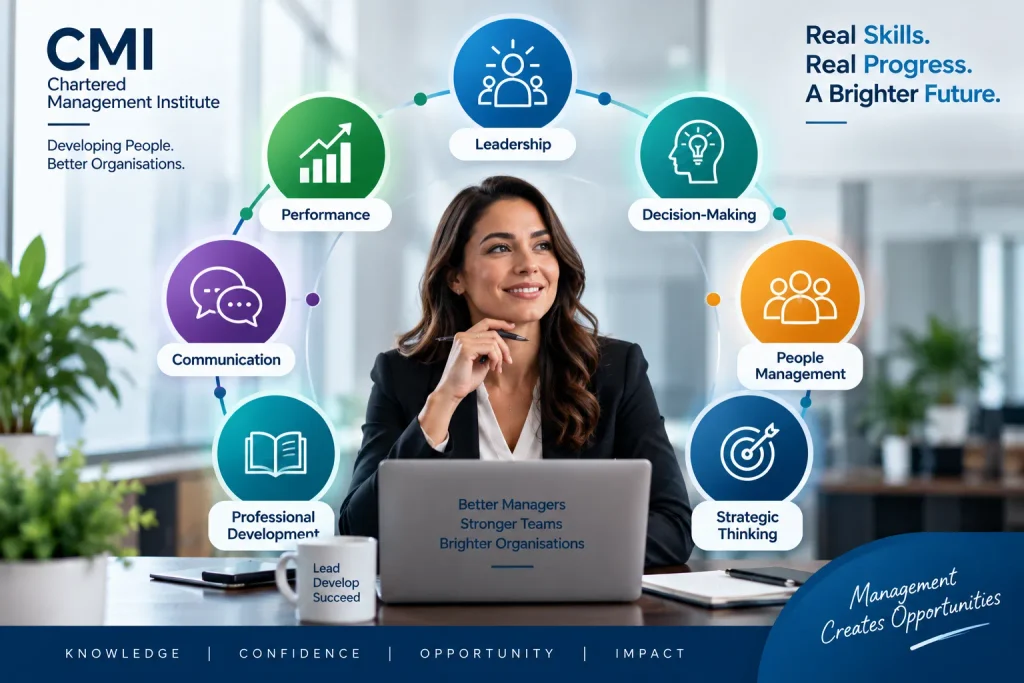
What Are the Benefits of CMI Qualifications?
CMI qualifications can support professionals who want to develop their management and leadership capability through structured learning.
Develop Practical Management Knowledge
Managers deal with people, resources, performance, deadlines, operational issues and organisational priorities.
Structured management learning can help professionals understand management concepts and consider how they can be applied to workplace situations.
Strengthen Leadership Capability
Effective leadership involves creating direction, influencing people, building trust and supporting performance.
Management and leadership learning can provide frameworks for examining leadership behaviours and approaches.
Improve Decision-Making
Managers regularly make decisions involving people, resources, priorities, risks and organisational objectives.
Structured learning can help professionals examine decision-making approaches and evaluate workplace situations more systematically.
Develop People Management Skills
Managing people is a central responsibility for many managers.
Relevant areas may include:
- Communication
- Motivation
- Delegation
- Feedback
- Performance
- Conflict management
- Coaching
- Employee development
Support Performance Management
Managers need to establish expectations, monitor performance and respond constructively when performance does not meet requirements.
Management learning can help professionals understand performance management processes and develop more consistent approaches.
Build Strategic Awareness
As management responsibilities increase, professionals often need to consider broader organisational priorities rather than focusing only on day-to-day activities.
Advanced management and leadership learning can help learners examine strategic thinking, organisational performance and leadership decisions.
Demonstrate Commitment to Professional Development
Completing a management qualification can provide evidence of structured learning and a commitment to professional management development.
However, formal qualifications should complement practical workplace experience rather than being viewed as a replacement for professional competence.
Are CMI Qualifications Recognised?
CMI is a well-established professional organisation specialising in management and leadership, and its qualifications are designed to support professional management and leadership development.
However, the word “recognised” can have different meanings depending on the context. Learners should therefore examine the status and arrangements of the specific qualification they are considering.
When evaluating a CMI qualification, consider:
- Professional recognition: CMI is an established professional body associated with management and leadership practice.
- Qualification status: Check the exact qualification specification and awarding arrangements.
- Accreditation: Where applicable, review the accreditation or regulatory information attached to the specific qualification.
- Employer relevance: Consider whether the qualification content aligns with the management skills valued in your industry.
- Professional membership: Completing a qualification and holding CMI membership are separate matters.
- International considerations: If you intend to use the qualification internationally, check how the specific qualification is understood in your target country or professional sector.
Before enrolling, verify the exact qualification title, level, awarding arrangements and accreditation details with the provider and relevant official sources.
Why Does Recognition Matter?
Recognition can give learners greater confidence that a qualification has a clear purpose and credible structure.
When comparing management qualifications, consider:
- Awarding organisation
- Qualification level
- Qualification title
- Accreditation or regulatory information, where applicable
- Assessment requirements
- Provider status
- Course content
- Professional relevance
This approach helps you evaluate a qualification based on its actual characteristics rather than relying only on its title.
How to Choose the Right CMI Qualification
Choosing a CMI qualification should begin with your current professional position and development objectives, rather than simply selecting the highest available level.
Consider Your Current Experience
Ask yourself:
- Are you new to management?
- Do you supervise a team?
- Are you a first-line manager?
- Are you a middle manager?
- Do you manage a department or function?
- Are you involved in strategic decisions?
Your answers can help you identify the type and level of management development that may be most relevant.
Consider Your Career Goals
Think about the responsibilities you currently have and the type of management role you want to develop towards.
Someone preparing for their first management position will usually have different learning needs from a senior manager involved in organisational strategy.
Choose the Appropriate Level
A suitable qualification should be relevant to your current experience while giving you opportunities to develop.
Selecting a qualification simply because it has a higher level does not necessarily make it the best choice.
Consider Award, Certificate or Diploma
Think about whether you need:
- Focused learning in one management area
- Broader learning across several subjects
- Comprehensive management and leadership development
This can help you determine which qualification format is most appropriate.
Consider Study Flexibility
Working professionals often need learning that fits around employment and other responsibilities.
Before enrolling, consider:
- Online or classroom delivery
- Study schedule
- Assessment deadlines
- Learner support
- Course duration
- Learning resources
Review the Qualification Content
Two qualifications at a similar level may have different units and learning outcomes.
Always review the actual qualification content before deciding whether a programme is suitable.
CMI Level 3 vs Level 5 vs Level 7
The difference between CMI Level 3, Level 5 and Level 7 is particularly important for learners deciding which qualification may fit their professional stage.
CMI Level 3
CMI Level 3 is generally associated with first-line management and supervisory development.
It may suit professionals who:
- Supervise employees
- Lead small teams
- Are entering management
- Want to develop foundational management knowledge
CMI Level 5
CMI Level 5 is generally associated with practising and middle managers developing broader management and leadership capability.
It may suit professionals who:
- Manage teams
- Have operational responsibilities
- Work at middle-management level
- Want to strengthen management and leadership expertise
CMI Level 7
CMI Level 7 focuses more strongly on strategic management and leadership.
It may be relevant to professionals who:
- Hold senior management responsibilities
- Contribute to organisational strategy
- Lead significant functions
- Make strategic decisions
- Manage organisational change
Which CMI Level Should You Choose?
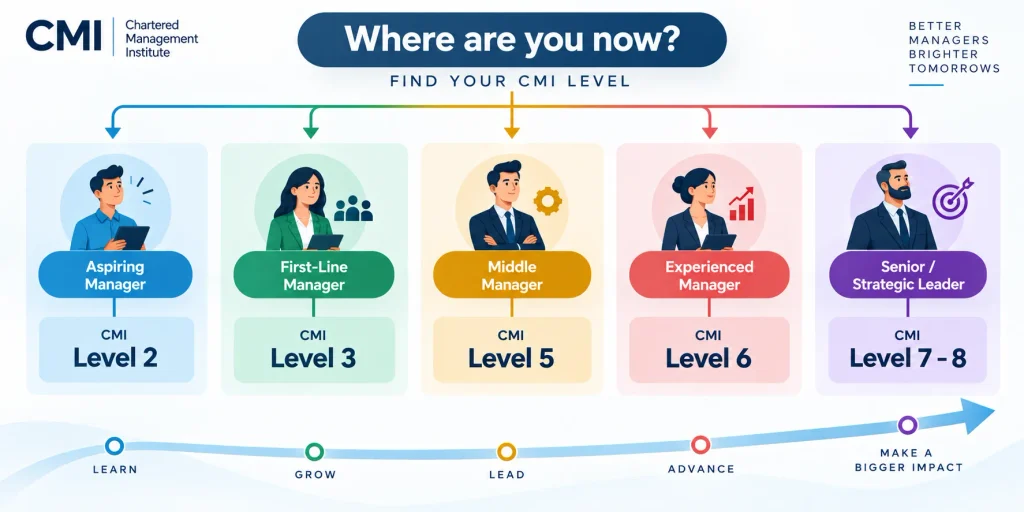
A simple general guide is:
- Aspiring or first-line manager → Level 3 may be relevant
- Practising or middle manager → Level 5 may be relevant
- Senior or strategic leader → Level 7 may be relevant
This is a general guide rather than a substitute for checking the requirements and content of the specific qualification.
What Is CMI Level 5?
CMI Level 5 is generally associated with practising managers and professionals developing their management and leadership capabilities.
It can be relevant to managers with responsibilities for teams, operations, resources or workplace performance.
Depending on the specific qualification, Level 5 learning may explore:
- Leadership
- Management practice
- Performance
- People management
- Organisational improvement
- Decision-making
- Change
- Professional development
Who Is CMI Level 5 For?
CMI Level 5 may be suitable for professionals who:
- Already manage employees
- Lead teams
- Manage operational activities
- Have responsibility for workplace performance
- Want to strengthen their management knowledge
The suitability of a specific Level 5 programme should be assessed by reviewing its entry requirements, units and learning outcomes.
What Is CMI Level 7?
CMI Level 7 focuses on advanced management and strategic leadership.
It can be particularly relevant to senior managers and experienced leaders who need to consider organisational issues from a strategic perspective.
Strategic leadership can involve questions such as:
- Where is the organisation heading?
- How should strategy be implemented?
- How can organisational performance improve?
- How should leaders respond to change?
- How can resources support strategic objectives?
- How can leadership decisions contribute to organisational value?
Who Is CMI Level 7 For?
CMI Level 7 may be relevant to:
- Senior managers
- Department heads
- Strategic leaders
- Experienced management professionals
- Leaders with significant organisational responsibilities
The exact suitability depends on the specific qualification and the learner’s professional background.
How Are CMI Qualifications Assessed?
Assessment methods depend on the specific CMI qualification and the units being studied.
Management and leadership qualifications may use assessments that allow learners to demonstrate their understanding and application of management concepts.
Depending on the programme, assessment may include:
- Written assignments
- Reports
- Management plans
- Reflective activities
- Case studies
- Workplace-based evidence
- Presentations
- Other structured assessment activities
The exact assessment approach should always be confirmed from the specific qualification specification and provider.
Are CMI Qualifications Exam-Based?
Not every CMI qualification follows the same assessment model.
Some programmes may rely substantially on assignments and applied management activities rather than traditional closed-book examinations.
This can allow working professionals to connect management concepts with practical workplace situations.
However, learners should always confirm the assessment requirements of their specific programme before enrolling.
Can You Study CMI Qualifications Online?
CMI qualifications may be available through online learning providers, depending on the qualification and delivery arrangements.
Online study can be attractive to working professionals because it can provide greater flexibility than traditional classroom learning.
Benefits of Online CMI Study
Online learning may offer:
- Flexible study schedules
- Remote access to learning materials
- Convenience for working professionals
- Reduced travel requirements
- Access to digital learning resources
- Greater control over study planning
However, the quality and structure of online delivery can vary between providers.
What Should You Look For in an Online CMI Course?
Before enrolling, check:
- Qualification title
- CMI level
- Qualification specification
- Provider status
- Assessment method
- Learning materials
- Tutor or learner support
- Course duration
- Assignment support
- Total fees
- Certification arrangements
Avoid choosing an online course based solely on price. Consider the overall quality, support and suitability of the programme.
How Long Does a CMI Qualification Take?
There is no single completion period that applies to every CMI qualification.
The time required can depend on:
- Qualification size
- Qualification level
- Number of units
- Study mode
- Learner experience
- Assessment requirements
- Provider schedule
- Individual study availability
An Award may involve a smaller scope of study than a broader Certificate or Diploma, while larger qualifications generally involve more learning and assessment.
Working professionals should consider the overall workload, assessment requirements and available study time rather than looking only at the advertised duration.
What Careers Can CMI Qualifications Support?
CMI qualifications focus on management and leadership development, making them relevant to a range of management-related career areas.
Depending on experience, skills and employer requirements, relevant career areas may include:
- Team leadership
- First-line management
- Operations management
- Department management
- Project management
- People management
- Business management
- Senior management
- Strategic leadership
A qualification does not guarantee a particular job, salary or promotion. Career outcomes also depend on professional experience, practical skills, employer requirements and individual performance.
The strongest approach is to combine formal management learning with practical workplace experience.
CMI vs Other Management Qualifications
When choosing a management qualification, it is useful to compare different organisations and programmes rather than selecting a course based only on its name.
Consider:
- Which organisation awards the qualification?
- What level is the qualification?
- What subjects does it cover?
- Is it appropriate for your experience?
- How is it assessed?
- Is the content professionally relevant?
- What learner support is provided?
- Does it align with your career objectives?
CMI is one established option within the management and leadership development landscape. The right choice depends on the individual learner and the specific qualification being considered.
How to Compare CMI Qualifications Before Enrolling
Before choosing a CMI course, use this checklist to make a more informed decision.
1. Check the Qualification Level
Make sure the level is appropriate for your current management experience and professional development needs.
2. Review the Units
Do not select a qualification based only on its title.
Read the units, learning outcomes and subject areas to determine whether they match your objectives.
3. Understand the Assessment
Find out how the programme is assessed and whether you understand the expected assignments, activities or evidence requirements.
4. Check the Provider
Research the organisation delivering the programme and understand its relationship with the qualification and CMI.
5. Confirm the Qualification Details
Check:
- Exact qualification title
- Level
- Units
- Credits, where applicable
- Assessment requirements
- Certification arrangements
6. Consider Your Available Time
Make sure you can realistically manage the learning and assessment workload alongside your professional and personal commitments.
7. Evaluate Overall Value
Consider the complete learning experience, including course content, support, resources, assessment guidance and certification—not simply the lowest course price.
Conclusion
CMI qualifications provide a structured approach to management and leadership development for professionals at different stages of their careers. From aspiring and first-line managers to practising managers and senior leaders, learners can explore qualifications that align with their responsibilities and professional development objectives.
The right CMI qualification should not simply be the highest level available. Instead, consider your current management experience, professional responsibilities, learning objectives and future career direction.
Before enrolling, compare the qualification level, course content, assessment approach, provider arrangements, support and certification details. Understanding these factors can help you choose a programme that is relevant to your professional needs.
If you are ready to strengthen your management and leadership capabilities, explore the CMI qualifications available on our website and identify the programme that best aligns with your professional goals.
Frequently Asked Questions About CMI
What Is CMI Membership?
CMI membership is designed to connect management professionals with professional resources, development opportunities and the wider management community.
Membership and qualifications are related but are not the same thing. Completing a CMI qualification does not automatically mean that a learner has the same membership status or professional designation as a CMI member.
What Is a Chartered Manager?
A Chartered Manager is a professional management designation associated with CMI that recognises management and leadership capability.
Chartered Manager status focuses on demonstrating professional competence and effective management practice rather than simply completing a qualification.
Can CMI Qualifications Help With Professional Recognition?
CMI qualifications can contribute to a professional development journey by providing structured evidence of management and leadership learning.
Professionals seeking a specific designation should distinguish between completing a qualification and meeting the separate requirements associated with professional recognition or membership.
Can Employers Use CMI Qualifications for Manager Development?
Organisations can incorporate management qualifications into structured manager-development programmes.
CMI-based learning can complement:
- Internal leadership programmes
- Coaching
- Mentoring
- Workplace training
- Practical management experience
This can help organisations take a structured approach to developing management capability.
Can CMI Qualifications Be Useful for Self-Employed Managers and Business Owners?
Yes. Business owners and self-employed professionals who manage employees, contractors or business operations can use management learning to strengthen capabilities such as:
- Delegation
- Leadership
- Performance management
- Communication
- Decision-making
- Operational management
Can International Learners Study CMI Qualifications?
CMI qualifications may be available internationally through appropriate delivery arrangements.
International learners should check whether the specific qualification and provider are available in their country and whether any local requirements apply.