LICQual Pharmacy Certificate for Developing Countries
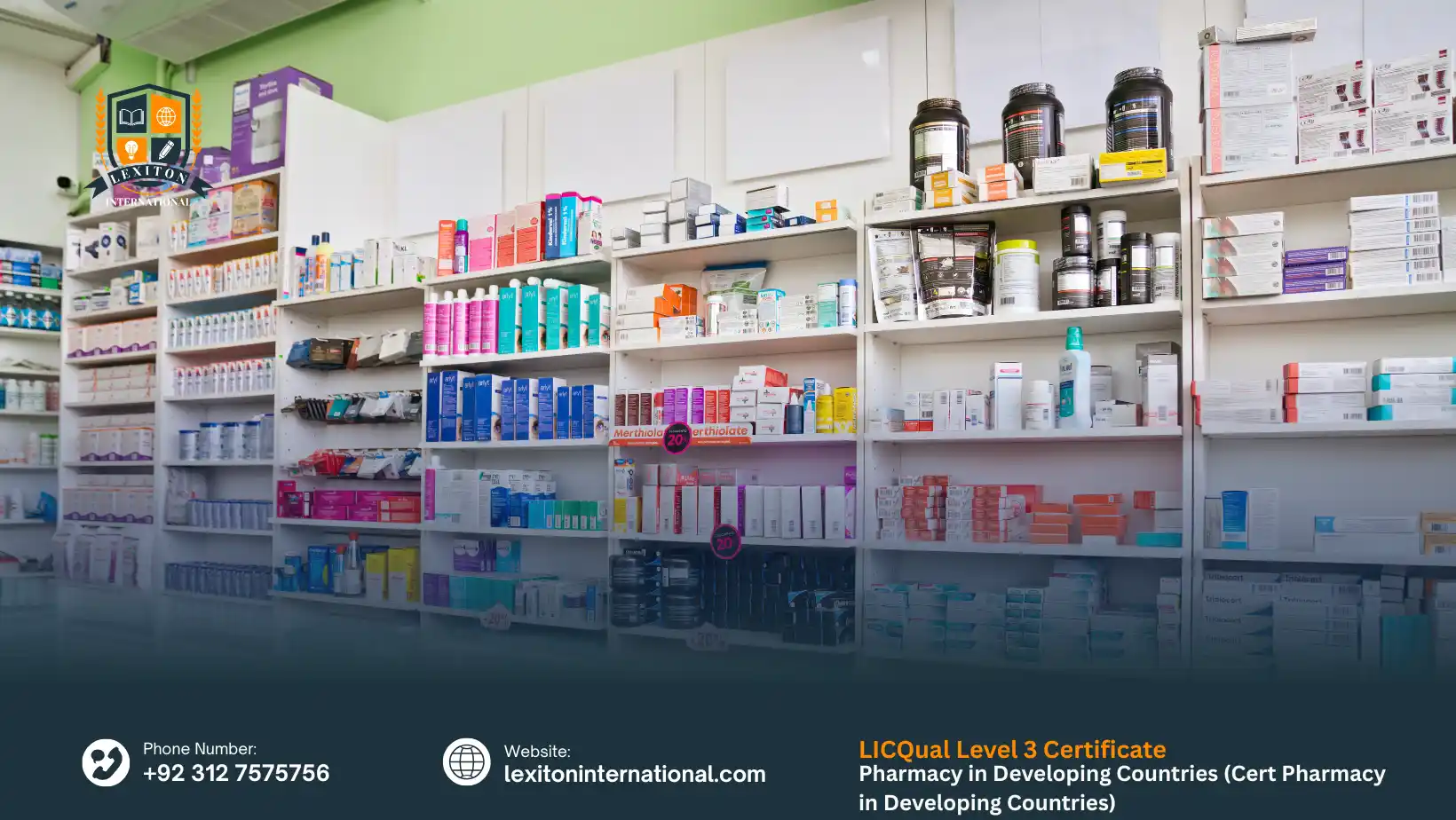
Boost your knowledge and skills with the LICQual Level 3 Certificate in Pharmacy in Developing Countries, a practical course for anyone interested in pharmacy and healthcare in low-resource settings. This course helps you understand how pharmacies work, how medicines are managed, and the healthcare challenges faced in developing countries. You will learn skills that can improve patient care and make pharmacy operations more efficient.
The course covers important topics like managing medicine supplies, following pharmacy rules, supporting community health, and understanding local healthcare needs. You will also learn how to handle common challenges such as limited resources, poor access to medicines, and effective medicine distribution. Through practical exercises and real-life examples, you will gain the confidence to solve problems and make informed decisions in real-world healthcare situations.
After completing the LICQual Level 3 Certificate in Pharmacy in Developing Countries, you will receive a recognized qualification that can help you grow your career in pharmacy, healthcare, or public health. This course prepares you for jobs in hospitals, clinics, NGOs, and community health programs. It gives you the knowledge and practical skills to work effectively and make a positive impact on healthcare in developing countries.
- Age Requirements: Applicants must be 18 years or above at the time of enrollment.
- Professional Experience: No prior work experience is needed. However, experience in healthcare or pharmacy can be an added advantage.
- Educational Background: Completion of secondary school or an equivalent qualification is needed. Basic knowledge of science is helpful but not mandatory.
- English Language Proficiency: Learners must have good written and spoken English skills to engage effectively with course materials, reporting tasks, and communication in industrial settings.
Mandatory Units
Skills You Will Gain
Unit 1: Introduction to Pharmacy in Developing Countries
By the end of this unit, learners will be able to:
- Explain the role and importance of pharmacy services in developing countries.
- Identify common healthcare challenges affecting pharmacy practice in resource-limited settings.
- Analyse the impact of social, economic, and cultural factors on access to medicines.
- Evaluate strategies to strengthen pharmacy systems in developing healthcare contexts.
Unit 2: Essential Medicines and Access to Healthcare
By the end of this unit, learners will be able to:
- Define the concept of essential medicines and their significance in global health.
- Assess barriers to equitable access to medicines in developing countries.
- Recommend strategies to improve the availability and affordability of essential drugs.
- Apply principles of rational medicine use to healthcare settings.
Unit 3: Pharmaceutical Supply Chain and Logistics
By the end of this unit, learners will be able to:
- Describe key stages in the pharmaceutical supply chain, from procurement to distribution.
- Evaluate challenges in medicine supply and storage in resource-limited environments.
- Apply techniques to improve supply chain efficiency and reduce shortages.
- Demonstrate awareness of sustainable logistics practices for medicine distribution.
Unit 4: Public Health and Community Pharmacy
By the end of this unit, learners will be able to:
- Explain the contribution of pharmacists to community health and preventive care.
- Assess the role of pharmacy in managing communicable and non-communicable diseases.
- Design community-based pharmacy interventions to promote health awareness.
- Apply principles of patient counselling and education in a community pharmacy setting.
Unit 5: Regulatory Frameworks and Quality Assurance
By the end of this unit, learners will be able to:
- Identify international and national regulatory requirements for pharmaceuticals.
- Apply quality assurance practices to ensure medicine safety and effectiveness.
- Analyse ethical considerations in pharmacy practice within developing countries.
- Evaluate the impact of regulatory compliance on public trust and patient safety.
Unit 6: Applied Project in Pharmacy for Developing Countries
By the end of this unit, learners will be able to:
- Plan and design a project addressing a specific pharmacy challenge in a developing country context.
- Apply problem-solving and analytical skills to real-world or simulated scenarios.
- Use evidence-based approaches to propose innovative solutions in pharmacy practice.
- Present project findings in a professional format, demonstrating applied knowledge and skills.
The LICQual Level 3 Certificate in Pharmacy in Developing Countries is designed for anyone who wants to gain practical skills in pharmacy and healthcare, especially in low-resource settings. This course is suitable for beginners as well as professionals who want to strengthen their knowledge and make a real impact in developing countries.
Who Is This Course For?
- Individuals working in pharmacies, clinics, or healthcare facilities who want to improve their practical skills.
- Students or recent graduates interested in pharmacy, healthcare, or public health.
- Professionals aiming to understand medicine supply and management in developing regions.
- Anyone looking to address healthcare challenges and improve patient care effectively.
- People seeking to advance their career in pharmacy, public health, or healthcare management.
- Learners preparing for further studies or specialized roles in global healthcare or pharmacy analytics.
By completing this course, you will gain the knowledge and practical skills to work confidently in pharmacy and healthcare settings in developing countries. It equips you to make informed decisions, improve medicine management, and contribute to better healthcare outcomes while boosting your professional profile.
Completing the LICQual Level 3 Certificate in Pharmacy in Developing Countries provides a strong foundation for advancing your career in pharmacy, healthcare, and public health. This course equips you with practical skills and knowledge that can help you take the next steps professionally.
Future Progression
- Progress to higher-level qualifications such as advanced certificates or diplomas in pharmacy, healthcare management, or global health.
- Explore career opportunities in hospitals, clinics, pharmacies, NGOs, and community health programs.
- Move into supervisory or management roles, including pharmacy supervisor, healthcare coordinator, or data analyst.
- Specialize in areas such as medicine supply management, patient care programs, or healthcare project management.
- Gain practical, in-demand skills that are valued by employers in the pharmacy and healthcare sectors.
- Increase your confidence and professional credibility to work effectively in developing countries and make a real impact.
By completing this course, you not only enhance your skills and knowledge but also create a pathway for long-term career growth. It prepares you to take on advanced roles, specialize in key areas, and make a meaningful difference in healthcare services in developing regions.
Curious About This Course?