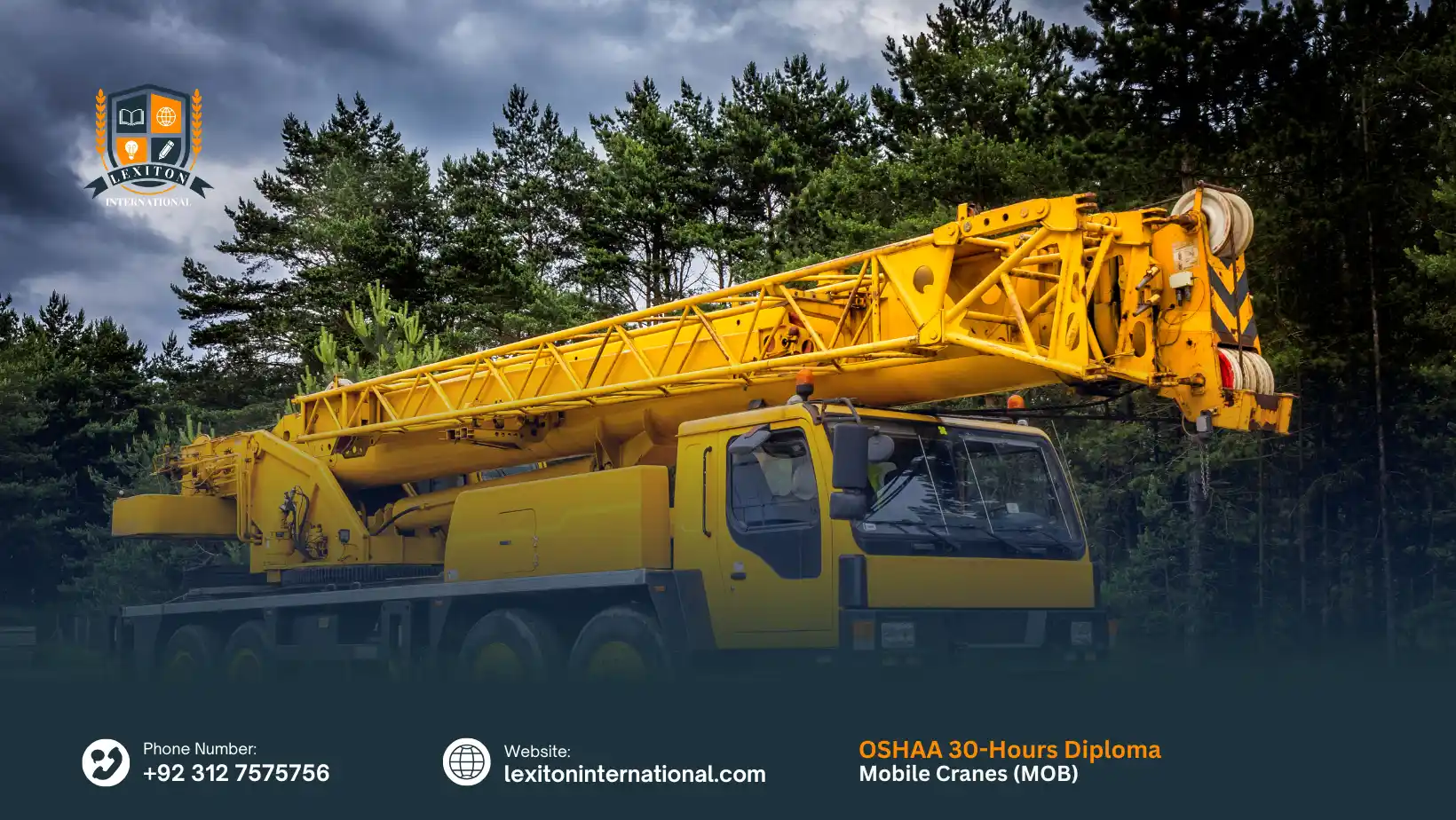
The OSHA 30-Hours Diploma in Mobile Cranes (MOB) is a specialized training program designed to equip operators, supervisors, and construction professionals with advanced skills in safely operating mobile cranes. With construction projects becoming larger and more complex, handling mobile cranes requires not only technical expertise but also comprehensive safety awareness. This diploma focuses on reducing risks associated with lifting operations, ensuring that professionals understand both operational procedures and safety regulations before stepping onto an active site.
Mobile cranes are critical for modern construction, industrial, and infrastructure projects, but they also present some of the highest workplace hazards. Accidents involving crane operations can lead to severe injuries, property damage, or project delays. The OSHA 30-Hours Diploma in Mobile Cranes (MOB) provides the knowledge and practical insight to minimize these risks, giving professionals the confidence to plan lifts, communicate effectively with teams, and comply with legal and safety standards.
Developed under guidance from the Occupational Safety and Health Administration, this course emphasizes real-world applications, regulatory compliance, and advanced crane operation skills. Completing the OSHA 30-Hours Diploma in Mobile Cranes (MOB) enhances professional credibility, promotes safer worksites, and prepares learners for leadership roles in crane operation and management within construction environments.
- Age Requirement: Applicants must be at least 18 years old to ensure maturity, responsibility, and readiness for professional-level safety training responsibilities.
- Professional Experience: Prior experience in construction, heavy machinery, or crane operation is highly beneficial.
- Educational Background: A high school diploma or vocational equivalent is required to handle the advanced load chart calculations and physics involved.
- Language Proficiency: Participants should have a good command of English to communicate effectively, deliver training sessions, and understand course materials.
Mandatory Units
Skills You Will Gain
Introduction to Mobile Cranes and Safety Regulations (3 hours)
- Understand the purpose and operational scope of mobile cranes in various industries
- Identify key international and regional crane safety standards, including OSHA regulations
- Recognize the importance of compliance and legal responsibilities in crane operations
Types of Mobile Cranes and Their Applications (3 hours)
- Differentiate between major types of mobile cranes (e.g., truck-mounted, rough terrain, crawler)
- Match crane types to appropriate applications and environmental conditions
- Understand limitations and capabilities of each crane type
Crane Components and Mechanical Systems (5 hours)
- Identify main structural and mechanical components of mobile cranes
- Understand the function of hydraulic, hoisting, slewing, and braking systems
- Recognize signs of wear, malfunction, or failure in critical components
Load Charts and Lifting Capacities (3 hours)
- Interpret crane load charts accurately for safe lifting operations
- Calculate lifting capacity based on boom length, radius, and counterweight
- Understand how environmental conditions affect crane performance and load ratings
Rigging Principles and Sling Selection (3 hours)
- Understand the fundamentals of rigging and load balance
- Select appropriate slings, shackles, and hardware for different loads
- Apply safe rigging practices to prevent load shifts, failures, or accidents
Site Preparation and Crane Setup (3 hours)
- Assess ground conditions and select suitable crane positioning
- Understand the importance of outriggers, cribbing, and leveling
- Identify environmental and structural hazards during setup
Crane Operation Procedures and Controls (3 hours)
- Operate crane controls with precision and safety awareness
- Follow standard operating procedures (SOPs) for lifting, moving, and setting loads
- Identify and respond to abnormal crane behavior during operation
Hazard Identification and Risk Management (3 hours)
- Conduct hazard assessments related to crane operations and lifting zones
- Implement risk control measures and safety protocols
- Apply principles of proactive risk management to prevent incidents
Communication, Signaling, and Personnel Roles (2 hours)
- Understand the importance of clear communication in crane operations
- Identify standard hand signals and communication protocols
- Define roles and responsibilities of signalers, riggers, and operators
Emergency Response and Incident Prevention (2 hours)
- Develop site-specific emergency plans and reporting protocols.
- Recognize potential emergency scenarios involving mobile cranes
- Apply proper response procedures in case of equipment failure or accidents
This course is ideal for construction professionals and machinery operators who want to gain specialized skills in mobile crane operations while maintaining high safety standards. The OSHA 30-Hours Diploma in Mobile Cranes (MOB) is perfect for learners who want to reduce operational risks, improve team communication, and enhance project efficiency.
Who Is This Course For
- Mobile crane operators seeking certification
- Construction site supervisors overseeing lifting operations
- Engineers working with heavy equipment
- Project managers coordinating crane usage
- Safety officers responsible for site compliance
- Maintenance personnel involved with cranes
- Contractors and subcontractors managing lifting teams
- Professionals aiming to prevent accidents and operational delays
Completing the OSHA 30-Hours Diploma in Mobile Cranes (MOB) strengthens operational competence and prepares professionals for higher responsibility in crane-related tasks. Learners develop advanced hazard recognition, planning, and communication skills crucial for complex lifts.
Future Progression
- Supervising mobile crane operations on large sites
- Supporting safe and compliant lifting procedures
- Participating in project planning and risk assessments
- Training or mentoring junior operators
- Implementing safety protocols and incident prevention
- Enhancing employability for regulated projects
- Improving leadership skills within machinery operations
- Progressing to advanced crane or heavy equipment courses
Curious About This Course?