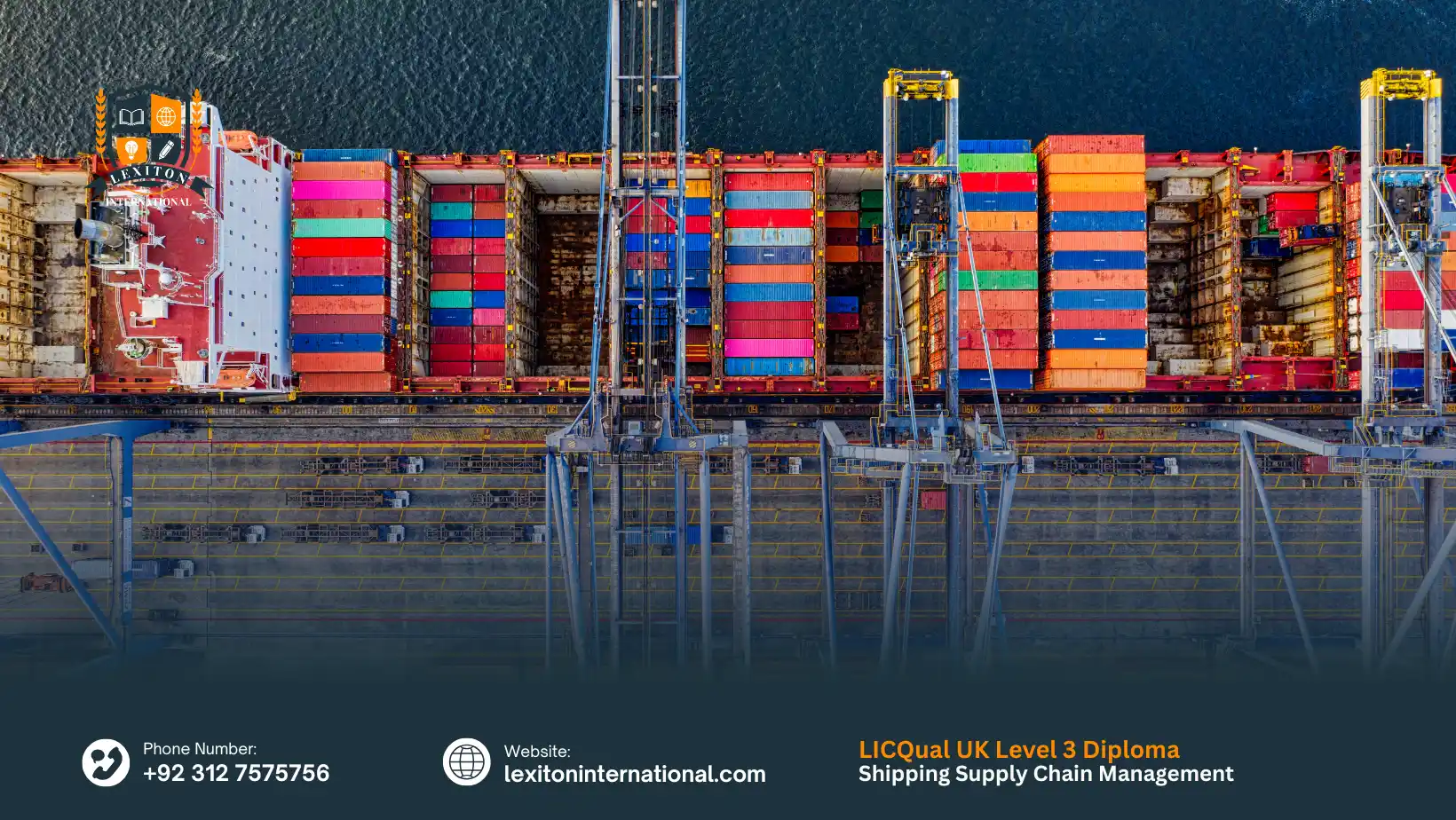
Level 3 Shipping Supply Chain Management Diploma UK
Shipping and supply chain operations are the backbone of global trade, ensuring goods move efficiently across borders, ports, and markets. As international commerce grows more complex, organizations increasingly rely on skilled professionals who understand shipping processes, logistics coordination, and supply chain flow. The LICQual UK Level 3 Diploma in Shipping Supply Chain Management introduces learners to the core principles that support smooth and reliable shipping operations.
Modern shipping supply chains face constant pressure from rising costs, regulatory requirements, and operational disruptions. The LICQual UK Level 3 Diploma in Shipping Supply Chain Management highlights the importance of structured planning, accurate documentation, and effective coordination between suppliers, carriers, and ports. This qualification focuses on building a strong operational foundation, helping learners understand how shipping decisions impact timelines, costs, and customer satisfaction.
For individuals entering or progressing within logistics and shipping roles, practical knowledge is essential. The LICQual UK Level 3 Diploma in Shipping Supply Chain Management provides industry-relevant insight that supports confident participation in day-to-day shipping activities while preparing learners to adapt to evolving supply chain demands in a competitive global environment.
- Age Requirements: Applicants must be 18 years or above at the time of enrollment.
- Professional Experience: No prior industry experience is mandatory, making this an ideal path for career starters.
- Educational Background: A High School Diploma or a Level 2 qualification in a relevant field (Business or Science) is preferred.
- English Language Proficiency: Learners must have good written and spoken English skills to engage effectively with course materials, reporting tasks, and communication in industrial settings.
Mandatory Units
Skills You Will Gain
Unit 1: Fundamentals of Shipping and Supply Chain
By the end of this unit, learners will be able to:
- Explain the role of shipping and supply chains in supporting global trade.
- Identify key stakeholders in international shipping and logistics networks.
- Demonstrate understanding of Incoterms and their impact on trade contracts.
- Apply basic supply chain concepts to real‑world shipping operations.
- Evaluate how shipping supports efficiency and competitiveness in global commerce.
- Recognize the importance of sustainability in modern supply chain practices.
Unit 2: Shipping Documentation and Trade Compliance
By the end of this unit, learners will be able to:
- Demonstrate knowledge of essential shipping documents such as bills of lading and letters of credit.
- Apply compliance standards to ensure accuracy in trade documentation.
- Explain the role of customs regulations and international trade laws.
- Evaluate the importance of documentation in reducing trade disputes.
- Recognize risks associated with incomplete or inaccurate shipping paperwork.
- Strengthen practical skills in preparing and reviewing trade documents.
Unit 3: Cargo Handling and Port Operations Basics
By the end of this unit, learners will be able to:
- Identify the main processes in port operations and cargo handling.
- Apply basic logistics principles to improve cargo flow efficiency.
- Demonstrate understanding of multimodal transport systems in shipping.
- Evaluate the impact of cargo handling on supply chain performance.
- Recognize international safety standards in cargo operations.
- Recommend strategies to improve efficiency in shipping operations.
Unit 4: Introduction to Marine Insurance and Risk
By the end of this unit, learners will be able to:
- Explain the principles of marine insurance and its role in trade.
- Identify different types of marine insurance policies and coverage.
- Apply risk assessment techniques to shipping and cargo operations.
- Demonstrate knowledge of claims handling and settlement procedures.
- Evaluate the importance of insurance in protecting shipping assets.
- Recognize international conventions governing marine insurance practices.
Unit 5: Supply Chain Logistics and Inventory Management
By the end of this unit, learners will be able to:
- Explain the role of logistics in global shipping and supply chain management.
- Apply inventory management techniques to improve efficiency and reduce costs.
- Demonstrate knowledge of warehousing, distribution, and stock control systems.
- Evaluate the impact of logistics decisions on supply chain performance.
- Recognize the importance of technology in modern logistics and inventory control.
- Recommend strategies for sustainable and cost‑effective supply chain management.
Unit 6: Professional Communication in Shipping Operations
By the end of this unit, learners will be able to:
- Demonstrate effective communication with clients, customs, and trade partners.
- Apply professional writing skills to shipping and trade documentation.
- Use negotiation and problem‑solving skills in trade and shipping contexts.
- Evaluate the importance of cultural awareness in international communication.
- Develop strategies to build trust and credibility in global trade.
- Recognize the role of communication in supporting trade and shipping decisions.
This qualification is designed for individuals who want to build a strong operational understanding of shipping and supply chain activities. The LICQual UK Level 3 Diploma in Shipping Supply Chain Management supports learners aiming to develop practical skills for entry-level and junior roles.
Who Is This Course For?
- Beginners entering the shipping and logistics industry
- Supply chain assistants and junior logistics staff
- Port, warehouse, and freight support personnel
- Individuals seeking structured shipping knowledge
- Professionals moving from general logistics into shipping roles
- Learners aiming to improve coordination and documentation skills
Completing the LICQual UK Level 3 Diploma in Shipping Supply Chain Management provides the perfect springboard for various operational and administrative roles in the maritime sector.
Future Progression
- Advancement to senior support or supervisory positions
- Progression into shipping coordination and logistics operations roles
- Specialization in freight forwarding or port operations
- Movement into supply chain planning and scheduling roles
- Eligibility for higher-level professional shipping qualifications
- Expanded responsibilities within logistics and distribution team.
Curious About This Course?