ICTQual Level 3 Award in Oral Hygiene for Dogs
Dental health is one of the most overlooked aspects of canine care, yet it plays a vital role in a dog’s overall well‑being. Poor oral hygiene can lead to pain, infections, and long‑term health complications that affect quality of life. Preventative care is not just about avoiding costly treatments it is about ensuring dogs live healthier, happier lives.
The ICTQual Level 3 Award in Preventative Canine Dental Care and Oral Hygiene highlights the importance of proactive dental management. With growing awareness of animal welfare, pet owners and professionals are recognizing that oral health is as critical as nutrition and exercise. This qualification emphasizes the skills needed to identify early signs of dental issues, apply preventative techniques, and promote responsible canine care.
By mastering preventative dental care, learners contribute to reducing suffering, improving longevity, and building trust with clients who value responsible animal health practices. The ICTQual Level 3 Award in Preventative Canine Dental Care and Oral Hygiene is more than training it is a commitment to safeguarding canine welfare through knowledge, skill, and professional responsibility.
- Age Requirements: Learners must be at least 16 years or older at the time of enrollment.
- Professional Experience: Prior exposure to working with animals such as in veterinary practices, shelters, or pet services—is beneficial, though not mandatory.
- Educational Background: A basic qualification in animal care, veterinary support, or a related field is preferred.
- English Language Proficiency: Learners must have a good command of English to engage with course materials, assessments, and technical documentation effectively.
Mandatory Units
Learning Outcomes for the ICTQual Level 3 Award in Preventative Canine Dental Care and Oral Hygiene :
Principles of Canine Oral Anatomy and Dental Health
- Identify the structure and function of canine teeth, gums, and oral cavity.
- Distinguish between different types of teeth (incisors, canines, premolars, molars) and their roles.
- Explain the stages of dental development from puppyhood to adulthood.
- Recognise common dental and oral health issues such as plaque, tartar, gingivitis, and periodontal disease.
- Understand the relationship between oral health and overall canine wellbeing.
- Describe how diet, age, and breed influence oral health.
- Apply correct terminology when discussing canine oral anatomy with professionals and owners.
- Assess the impact of poor oral hygiene on long‑term canine health outcomes.
Preventative Canine Dental Care Techniques and Hygiene Practices
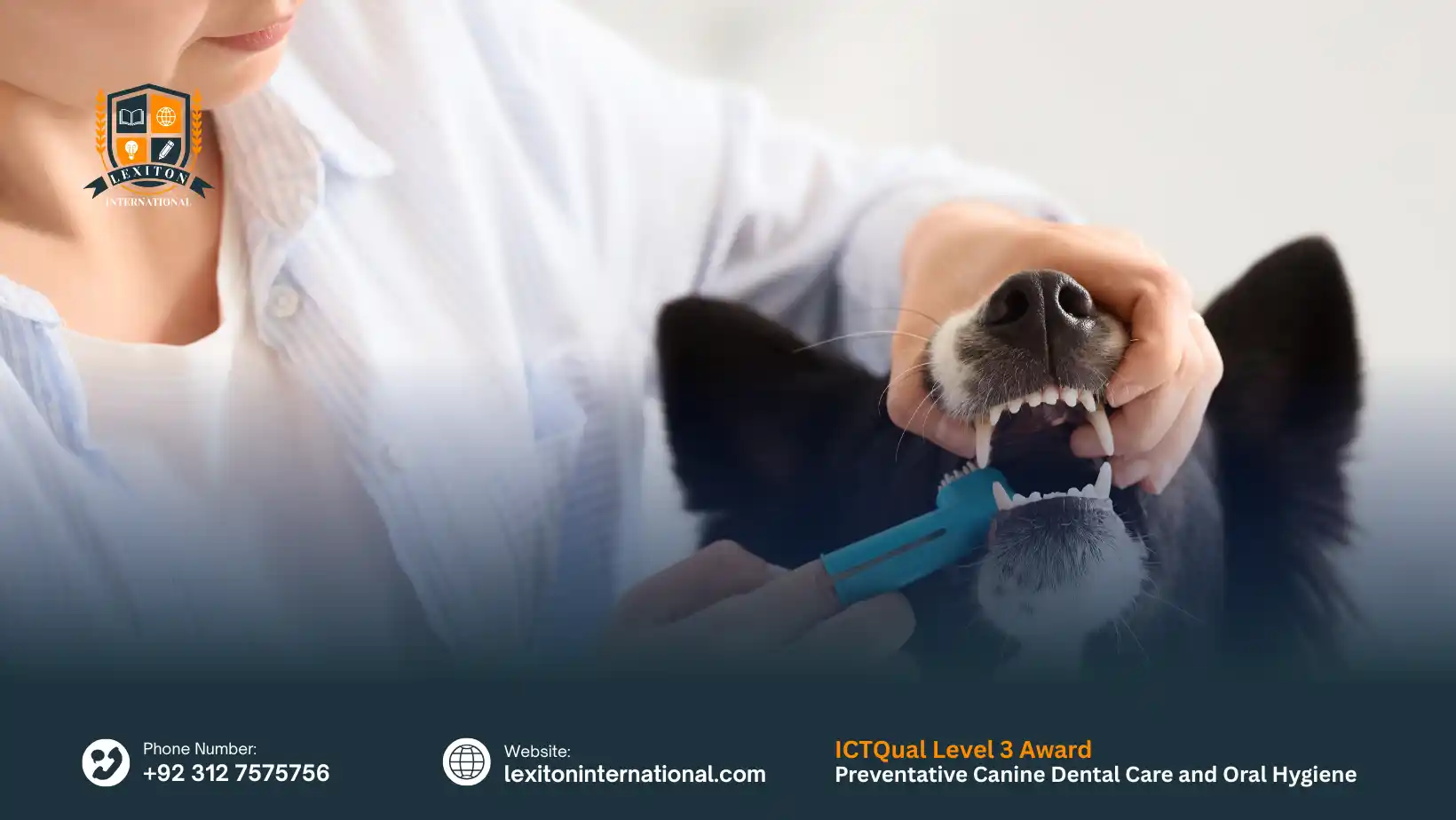
- Demonstrate safe, non‑invasive methods of plaque control and oral hygiene.
- Apply appropriate brushing techniques and select suitable canine dental products.
- Recognise early signs of oral disease and advise owners on preventive measures.
- Incorporate oral hygiene routines into grooming or welfare services.
- Educate owners on the importance of regular dental care and monitoring.
- Maintain hygiene standards when handling canine oral care tools and equipment.
- Adapt preventive techniques to suit different breeds, ages, and temperaments.
- Record and report observations of oral health concerns to veterinary professionals.
Professional Standards, Welfare, and Legal Framework in Canine Dental Care
- Understand the boundaries of professional practice under the Veterinary Surgeons Act 1966.
- Recognise which dental procedures are legally restricted to veterinary surgeons.
- Apply ethical principles when delivering preventative oral hygiene services.
- Promote welfare by ensuring all practices are humane, safe, and stress‑free for dogs.
- Communicate clearly with owners about the scope and limitations of preventative care.
- Maintain accurate records of oral hygiene practices and observations.
- Uphold professional standards in client service, confidentiality, and animal welfare.
- Reflect on personal responsibility and continuous professional development in canine dental care.
The ICTQual Level 3 Award in Preventative Canine Dental Care and Oral Hygiene is designed for individuals who want to gain practical skills and meet professional standards in canine oral health. It is ideal for those seeking to enhance their expertise, solve real‑world challenges, and contribute to animal welfare.
Who Is this for
- Dog owners who want to protect their pets’ dental health
- Veterinary assistants expanding their practical skill set
- Animal welfare officers ensuring safety and compliance
- Dog trainers adding value to their professional services
- Pet groomers seeking to handle oral hygiene responsibly
- Kennel and shelter staff managing dogs in group environments
- Working dog handlers in security, police, or rescue services
- Aspiring animal care professionals entering the canine welfare sector
Completing the ICTQual Level 3 Award in Preventative Canine Dental Care and Oral Hygiene equips learners with the confidence and credibility to advance in the animal care industry. This qualification opens opportunities to specialize further, take on greater responsibilities, and contribute to professional standards in canine welfare.
Future Progression
- Progression into senior roles in veterinary practices and clinics
- Opportunities to work with animal shelters and welfare organizations
- Enhanced prospects in dog training, grooming, and pet care services
- Ability to support working dog units in rescue, security, and service roles
- Expanded opportunities for pet service providers to diversify offerings
- Recognition as a trusted professional in canine oral health and welfare
- Potential to transition into training or mentoring roles within the sector
- Strengthened credibility for global opportunities in animal care industries
Curious About This Course?
Claim Your Spot
Curious About This Course?