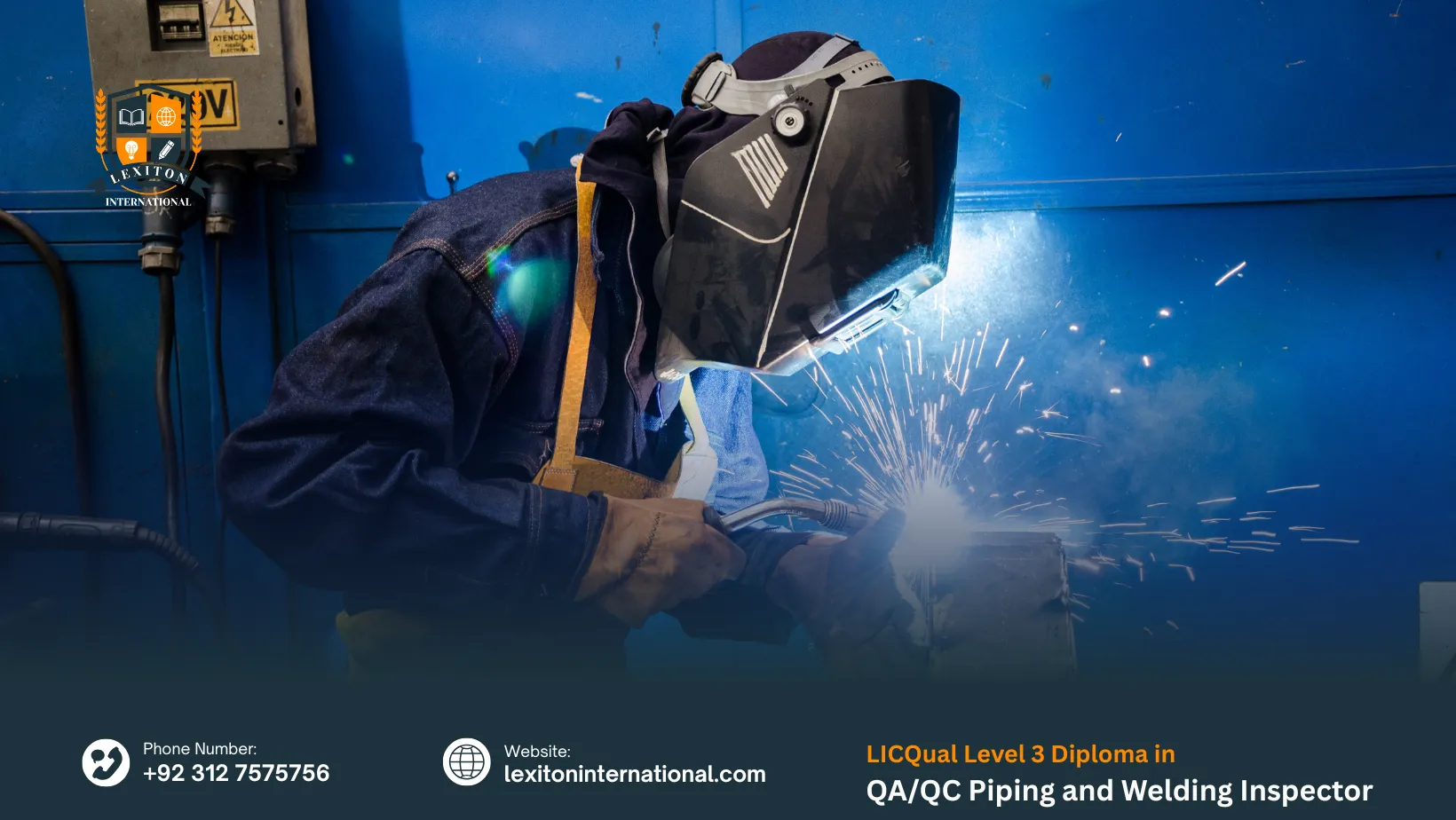
The LICQual Level 3 Diploma in QA/QC Piping and Welding Inspector is a professional qualification designed to prepare learners for inspection and quality control roles in piping and welding operations. It provides the essential knowledge and skills needed to evaluate, verify, and ensure compliance with international standards in fabrication and construction projects. Learners gain confidence in applying QA/QC principles, understanding welding processes, and inspecting piping systems, making them valuable contributors to industries such as oil and gas, construction, manufacturing, and power generation.
The course offers a detailed overview of QA/QC practices, covering welding techniques, piping components, defect identification, visual inspection, and non-destructive testing methods. Learners also study metallurgy, fabrication procedures, and international codes and standards such as ASME, API, AWS, and ISO. Practical training ensures participants can apply theoretical knowledge to real-world scenarios, including the inspection of pipelines, pressure vessels, and structural welds. This balance of theory and practice equips learners with the technical expertise and professional responsibility required in industrial projects.
Throughout the program, learners engage in structured modules, case studies, and hands-on exercises that emphasize accuracy, compliance, and documentation. The diploma highlights the importance of precision and adherence to standards, ensuring graduates are capable of performing inspections that meet client and regulatory expectations. With its blend of technical knowledge and applied skills, the LICQual Level 3 Diploma in QA/QC Piping and Welding Inspector provides a strong foundation for individuals aiming to build a career in inspection and quality control across global industries.
To ensure learners are prepared for the technical and professional demands of this diploma, specific entry requirements have been outlined.
- Age Requirements: Applicants must be at least 18 years old at the time of enrollment, ensuring maturity and readiness for technical study.
- Qualification Requirements: A Level 2 Certificate or equivalent qualification in engineering, welding, or a related technical field is required.
- Professional Experience: Candidates should ideally have one to two years of relevant workshop or industry experience to demonstrate practical understanding.
- Educational Background: A basic foundation in mathematics, physics, or applied sciences is necessary to support inspection and QA/QC concepts.
- English Language Proficiency: Learners must have good written and spoken English skills to engage effectively with course materials, reporting tasks, and communication in industrial settings.
- Technical Aptitude: Applicants should possess basic computer literacy and familiarity with engineering drawings or inspection tools to support practical learning activities.
Mandatory Units
By the end of this course, learners will have developed a solid foundation in QA/QC principles, piping systems, welding processes, inspection techniques, and international standards. They will be able to apply theoretical knowledge and practical skills to ensure compliance, safety, and quality in industrial projects across diverse sectors.
Principles of Quality Assurance and Quality Control
- Understand the fundamental concepts, objectives, and scope of QA and QC in engineering projects.
- Identify the roles, responsibilities, and ethical obligations of QA/QC inspectors in industrial environments.
- Explain the importance of quality systems, including ISO 9001, and their role in compliance.
- Demonstrate knowledge of ethical practices, accurate reporting, and professional accountability.
- Recognize how QA/QC systems contribute to efficiency, safety, and client satisfaction.
Piping Materials, Components, and Fabrication Techniques
- Recognize different types of piping materials and their industrial applications.
- Identify common piping components such as valves, flanges, gaskets, and fittings.
- Understand fabrication processes including cutting, welding, bending, and assembly.
- Interpret piping drawings, isometric diagrams, and spool fabrication layouts.
- Appreciate the importance of proper material selection and fabrication accuracy in piping systems.
Welding Fundamentals and Procedures
- Describe various welding processes such as SMAW, GTAW, and GMAW, and their applications.
- Read and interpret welding symbols, joint types, and positions used in fabrication.
- Explain the purpose, structure, and requirements of WPS (Welding Procedure Specification) and PQR (Procedure Qualification Record).
- Identify welding consumables and match them to appropriate procedures and materials.
- Understand how welding procedures ensure consistency, safety, and compliance in projects.
Visual Inspection of Welds and Surface Defects
- Perform basic visual inspection tasks on welds and surfaces using standard techniques.
- Identify common welding defects such as cracks, porosity, undercut, and incomplete fusion.
- Use inspection tools and equipment effectively to evaluate weld quality.
- Apply acceptance criteria based on international standards to determine compliance.
- Record and report inspection findings clearly and accurately for corrective action.
International Codes, Standards, and Specifications
- Identify and understand key industry codes such as ASME, AWS, API, and ISO.
- Explain the role of standards in ensuring compliance, safety, and reliability.
- Apply basic code requirements during inspection, fabrication, and welding activities.
- Interpret technical standards and reference relevant sections for QA/QC tasks.
- Recognize the importance of regulatory compliance in maintaining industry credibility.
QA/QC Documentation and Reporting Practices
- Complete standard QA/QC documents, inspection reports, and compliance records.
- Understand the use and structure of ITPs (Inspection Test Plans), MTCs (Material Test Certificates), and WPS records.
- Demonstrate the ability to track and document welding, fabrication, and inspection activities.
- Communicate findings effectively with engineering teams, site supervisors, and project managers.
- Appreciate the importance of accurate documentation in maintaining transparency and accountability.
By completing this diploma, learners will be equipped with the technical knowledge, inspection skills, and professional awareness required to perform QA/QC duties effectively. They will be able to contribute to the safe, efficient, and compliant execution of piping and welding projects, ensuring high standards of quality across diverse industrial environments.
This diploma is designed for individuals who are motivated to build a career in inspection and quality control within piping and welding industries. The ideal learner demonstrates technical curiosity, practical aptitude, and professional commitment, ensuring they can thrive in both classroom and industrial environments.
Academic Readiness
- Possesses a basic foundation in mathematics, physics, or applied sciences.
- Demonstrates the ability to understand technical concepts and apply them practically.
- Shows interest in engineering drawings, codes, and standards.
- Has prior exposure to technical or vocational studies.
- Displays a willingness to engage with structured coursework and industry-focused training.
Professional Orientation
- Brings relevant workshop or industry experience to enrich learning.
- Understands the importance of safety, compliance, and professional standards.
- Shows interest in applying QA/QC knowledge to real-world projects.
- Values teamwork and collaboration in technical environments.
- Demonstrates adaptability to evolving inspection technologies and practices.
Technical Aptitude
- Comfortable using basic inspection tools and equipment.
- Shows curiosity about piping systems, welding processes, and fabrication methods.
- Possesses practical skills in handling simple engineering tasks.
- Demonstrates logical thinking and precision in technical work.
- Willing to develop advanced competencies in inspection and reporting.
Personal Attributes
- Highly motivated to pursue a career in QA/QC inspection.
- Displays resilience and determination when faced with technical challenges.
- Values ethical responsibility and professional integrity.
- Demonstrates effective communication skills, both written and verbal.
- Maintains discipline, time management, and a proactive learning attitude.
Commitment to Learning
- Prepared to dedicate time and effort to structured study and skill development.
- Engages actively in both theoretical and practical aspects of the program.
- Willing to participate in projects, case studies, and applied training.
- Seeks continuous improvement through feedback and reflection.
- Demonstrates consistency in meeting deadlines and academic requirements.
Global and Industry Mindset
- Understands the importance of QA/QC in global engineering projects.
- Shows awareness of international standards and compliance requirements.
- Values innovation that supports safety and reliability.
- Demonstrates openness to diverse perspectives and industry practices.
- Seeks to contribute positively to industrial sectors through responsible inspection.
The ideal learner for this diploma is someone who combines technical curiosity, professional commitment, and a passion for quality assurance. By embodying these qualities, learners will maximize the benefits of the program and position themselves as capable, forward-thinking professionals in the QA/QC sector.
Completing this diploma opens diverse pathways for learners to advance their careers, enhance their technical expertise, and pursue specialized qualifications. The progression opportunities are designed to strengthen professional standing, expand industry knowledge, and support continuous growth in inspection and quality control.
Advanced Professional Certifications
- Learners can pursue specialized certifications in welding inspection, piping inspection, or non-destructive testing.
- Professional recognition through certifications enhances credibility in inspection roles.
- Industry-focused credentials allow learners to demonstrate compliance with international standards.
- Certifications provide opportunities to specialize in areas such as safety inspection or fabrication QA/QC.
- Continuous certification ensures learners remain updated with evolving technologies.
Higher-Level Diplomas
- Progression to Level 4 or Level 5 Diplomas in QA/QC or related fields is possible.
- Advanced diplomas provide deeper expertise in inspection and technical leadership.
- Learners gain the ability to manage complex QA/QC projects and teams.
- Diplomas at higher levels strengthen career pathways into supervisory roles.
- Specialized diplomas allow learners to focus on niche areas such as advanced welding or piping design.
Industry-Specific Training Programs
- Learners can engage in structured training programs tailored to oil and gas, construction, or manufacturing sectors.
- Industry training enhances hands-on skills and practical application of knowledge.
- Programs often align with employer requirements, improving career opportunities.
- Training supports adaptability to new technologies and industry practices.
- Specialized modules allow learners to refine expertise in targeted QA/QC areas.
Professional Memberships and Licenses
- Learners may apply for membership in recognized inspection or engineering institutions.
- Professional memberships provide networking opportunities and industry recognition.
- Licenses or registrations enhance credibility and compliance with regulatory standards.
- Memberships often include access to resources, events, and professional development.
- Active participation in professional bodies supports career advancement and visibility.
Career Pathway Development
- Learners can progress into supervisory or inspector roles within piping and welding projects.
- Opportunities exist in industries such as oil and gas, construction, and power generation.
- Career development includes roles in inspection, monitoring, and compliance.
- Learners may advance into consultancy positions, offering expertise to organizations.
- Progression supports long-term stability and growth in technical and leadership roles.
Continuous Learning and Skill Enhancement
- Learners can pursue short courses in emerging technologies like advanced NDT methods or welding automation.
- Continuous learning ensures adaptability to industry changes.
- Skill enhancement programs strengthen practical expertise in specialized tools and software.
- Ongoing training supports innovation and competitiveness in the workplace.
- Lifelong learning fosters resilience and professional growth in dynamic industries.
The LICQual Level 3 Diploma in QA/QC Piping and Welding Inspector provides a strong foundation for learners to progress into advanced diplomas, certifications, and professional pathways. With opportunities for specialization, industry recognition, and continuous skill development, graduates are well-positioned to thrive as competent, innovative, and future-ready professionals in the QA/QC sector.
Curious About This Course?