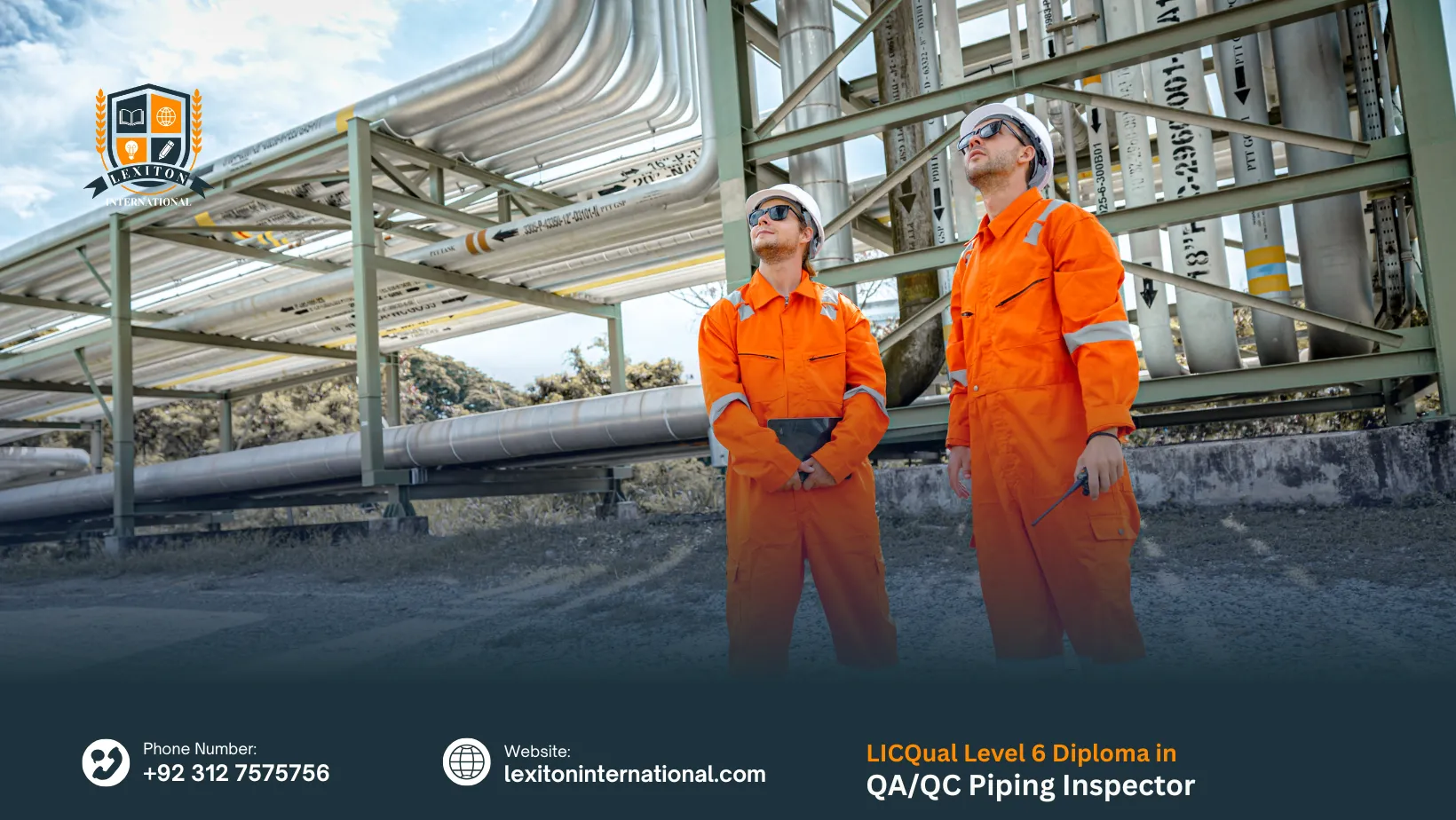
The LICQual Level 6 Diploma in QA/QC Piping Inspector is a highly advanced qualification designed to equip learners with the expertise required to manage and oversee complex inspection and quality assurance processes in piping systems. This program is tailored for professionals aiming to take on senior responsibilities in industries such as oil and gas, petrochemicals, construction, and manufacturing, where piping systems are critical to safety, reliability, and operational success. Learners are guided through advanced inspection strategies, quality management frameworks, and international compliance standards, ensuring they develop the competence to lead QA/QC teams and deliver high-quality outcomes in demanding industrial projects.
The course provides a comprehensive overview of advanced piping inspection practices, focusing on material specifications, fabrication processes, welding audits, and non-destructive testing methods. Learners explore international codes and standards such as ASME, API, ASTM, and ISO, applying them to real-world inspection scenarios. Emphasis is placed on risk-based inspection, failure analysis, and the integration of modern technologies into inspection processes, enabling learners to identify potential risks, propose corrective measures, and ensure compliance with global industry requirements. Practical elements of the program include site-based inspections, documentation management, and quality audits, ensuring learners can apply theoretical knowledge effectively in complex industrial environments.
In addition, the diploma highlights leadership and management skills within QA/QC roles, preparing learners to coordinate inspection activities across multidisciplinary teams. Learners gain expertise in planning inspection strategies, managing quality documentation, and advising stakeholders on compliance and regulatory frameworks. The program also reinforces the importance of safety procedures and accountability, ensuring that graduates are capable of maintaining integrity, reliability, and efficiency in piping systems. By combining advanced technical knowledge with practical application, the course positions learners as highly skilled professionals ready to take on senior inspection and quality assurance responsibilities.
To enroll in the LICQual Level 6 Diploma in QA/QC Piping Inspector, learners must meet specific entry requirements that ensure readiness for the advanced technical and managerial aspects of the program. These requirements balance age, education, and professional experience to support successful participation.
- Age Requirements: Applicants must be at least 21 years old, demonstrating maturity and readiness for advanced vocational training.
- Qualification Requirements: A prior diploma or equivalent qualification in engineering, construction, or a related technical field is required.
- Professional Experience: At least three years of relevant work experience in piping, welding, or inspection roles is expected.
- Educational Background: Candidates should have a strong foundation in mathematics, science, or technical studies to support advanced inspection principles.
- Language Proficiency: Learners must have a good command of English to interpret technical documentation and communicate effectively in QA/QC tasks.
- Health and Safety Awareness: Applicants should demonstrate knowledge of workplace safety practices, ensuring they can apply inspection skills responsibly in industrial settings.
Mandatory Units
By completing these study units, learners will gain advanced technical knowledge, practical skills, and industry‑aligned competencies that prepare them for professional roles in engineering, construction, and quality assurance.
Advanced Piping Design, Materials, and Specifications
- Apply advanced principles of piping design to complex industrial projects.
- Select appropriate materials based on mechanical properties, environmental conditions, and industry requirements.
- Interpret and develop piping specifications that align with project standards.
- Evaluate design efficiency, safety, and cost‑effectiveness in piping systems.
International Standards and Regulatory Compliance
- Demonstrate knowledge of international codes and standards governing engineering practices.
- Apply regulatory compliance requirements to project planning and execution.
- Assess the impact of global standards on local industry operations.
- Ensure documentation and procedures meet international audit and certification requirements.
Welding Engineering and Procedure Qualification
- Understand advanced welding processes and their applications in industrial projects.
- Develop and qualify welding procedures according to recognized standards.
- Evaluate weld quality through mechanical testing and inspection methods.
- Apply safety and quality assurance practices in welding operations.
Advanced Non-Destructive Testing (NDT) Methods
- Identify and apply advanced NDT techniques such as ultrasonic, radiographic, and magnetic particle testing.
- Interpret NDT results to assess material integrity and detect defects.
- Integrate NDT methods into quality assurance frameworks.
- Ensure compliance with industry standards for inspection and reporting.
QA/QC Management Systems and Inspection Planning
- Design and implement QA/QC systems for engineering projects.
- Develop inspection plans that align with project specifications and safety requirements.
- Monitor and evaluate quality performance using industry benchmarks.
- Apply corrective and preventive actions to maintain compliance and efficiency.
Pressure Testing, Commissioning, and Mechanical Completion
- Conduct pressure testing procedures to verify system integrity.
- Plan and execute commissioning activities for mechanical systems.
- Document mechanical completion processes in line with project standards.
- Ensure safe handover of systems through rigorous testing and validation.
The ideal learner for the LICQual Level 6 Diploma in QA/QC Piping Inspector is someone who demonstrates advanced technical knowledge, professional maturity, and a strong commitment to quality assurance in industrial piping systems. This learner profile reflects the skills, background, and mindset required to succeed in senior inspection roles.
Professional Background
- Experienced professionals working in oil and gas, petrochemicals, construction, or manufacturing industries.
- Individuals with prior exposure to QA/QC inspection, welding audits, or fabrication monitoring.
- Those already engaged in supervisory or mid-level inspection roles seeking advancement.
- Professionals aiming to strengthen their credibility with globally recognized certification.
- Candidates with practical knowledge of safety and compliance in industrial projects.
Educational Foundation
- Holders of a diploma or equivalent qualification in engineering, construction, or technical studies.
- Learners with a strong foundation in mathematics and science to support advanced inspection analysis.
- Ability to interpret complex technical drawings, specifications, and industry documentation.
- Familiarity with international codes and standards such as ASME, API, ASTM, and ISO.
- Readiness to engage with advanced vocational training and leadership-focused content.
Skills and Competencies
- Advanced analytical skills for evaluating inspection data and identifying risks.
- Strong leadership and team coordination abilities in QA/QC environments.
- Expertise in applying non-destructive testing methods and interpreting results.
- Ability to design and implement inspection strategies aligned with project objectives.
- Competence in preparing detailed reports and advising stakeholders on compliance.
Personal Attributes
- Demonstrates maturity, discipline, and professional integrity in inspection roles.
- Motivated to uphold safety, reliability, and quality standards in complex projects.
- Adaptable to diverse work environments and inspection challenges.
- Committed to continuous professional development and industry best practices.
- Displays resilience and focus under demanding project conditions.
Career Aspirations
- Seeks advancement into senior QA/QC management or lead inspector roles.
- Interested in contributing to large-scale industrial projects with high safety standards.
- Aims to build international recognition through advanced vocational qualifications.
- Motivated to enhance employability in global industries.
- Focused on long-term career growth in inspection and quality assurance leadership.
By meeting these characteristics, the ideal learner is well-positioned to gain maximum benefit from the program and emerge as a highly competent QA/QC Piping Inspector at senior levels.
Completing the LICQual Level 6 Diploma in QA/QC Piping Inspector opens pathways for learners to advance their careers through specialized certifications, higher-level diplomas, and industry-recognized qualifications. This progression ensures learners remain competitive and adaptable in evolving industrial environments.
Advanced Diplomas
- Progression to Level 7 Diplomas in Quality Assurance or Engineering Inspection.
- Specialized diplomas in Oil and Gas Quality Management.
- Advanced vocational diplomas in Industrial Safety and Risk Management.
- Diplomas focusing on Welding Inspection and Fabrication Quality Control.
- Higher-level qualifications in Project Quality Leadership.
Specialized Certifications
- International certifications in advanced Non-Destructive Testing (NDT) methods.
- Certification in Risk-Based Inspection (RBI) practices.
- Welding Inspector certifications aligned with ASME or API standards.
- ISO-based certifications in Quality Management Systems.
- Industry-specific compliance certifications for oil, gas, and construction sectors.
Professional Development Pathways
- Opportunities to lead QA/QC teams in large-scale industrial projects.
- Roles in inspection planning, quality audit management, and compliance oversight.
- Expansion into consultancy services for industrial inspection and quality assurance.
- Supervisory positions in fabrication and construction quality control.
- Engagement in international projects requiring advanced inspection expertise.
Industry Recognition
- Enhanced credibility with employers across oil and gas, construction, and manufacturing.
- Recognition as a qualified professional capable of managing complex inspection tasks.
- Increased employability in global markets with high demand for QA/QC inspectors.
- Access to senior-level opportunities in inspection and quality assurance.
- Alignment with international standards and frameworks for career mobility.
Continuous Learning Opportunities
- Participation in workshops and seminars on advanced inspection technologies.
- Engagement in refresher courses to stay updated with evolving standards.
- Access to industry networks and professional associations.
- Opportunities to mentor junior inspectors and share expertise.
- Development of leadership skills through advanced vocational programs.
By completing this diploma, learners secure a strong foundation for career advancement, enabling them to pursue specialized diplomas, certifications, and professional recognition that reinforce their role as trusted experts in QA/QC piping inspection and quality management.
Curious About This Course?