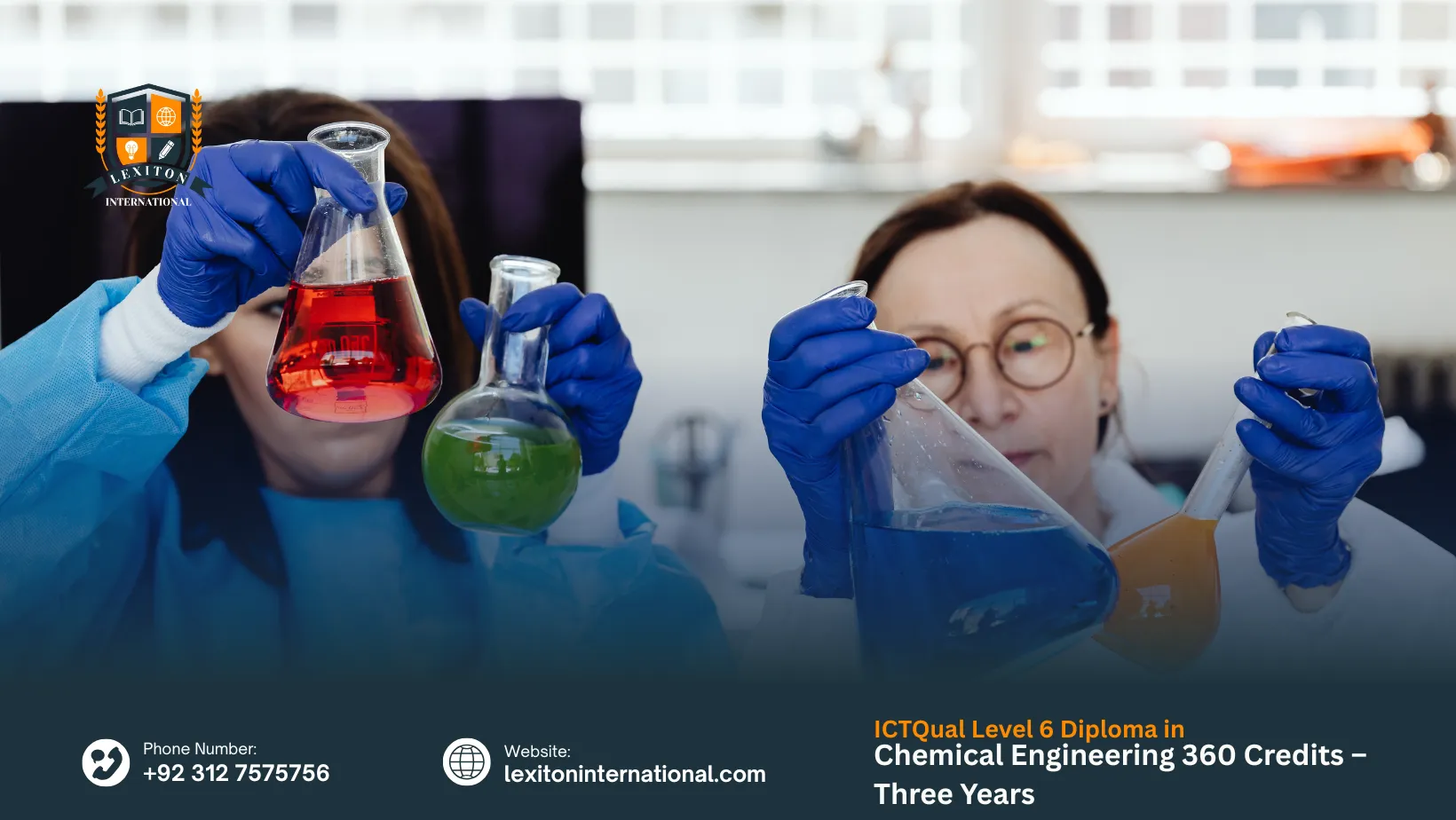
The ICTQual Level 6 Diploma in Chemical Engineering (360 Credits – Three Years) is a comprehensive qualification designed to provide learners with advanced knowledge and practical expertise in chemical processes, industrial operations, and safety management. This program emphasizes the integration of scientific principles with engineering applications, ensuring learners develop the competence to design, analyze, and optimize chemical systems across diverse industries. With a strong focus on professional responsibility, innovation, and applied learning, the diploma prepares individuals to meet the growing demand for skilled chemical engineers in manufacturing, energy, pharmaceuticals, and environmental sectors.
Over the course of three years, learners will engage with a wide range of modules covering chemical reaction engineering, process design, thermodynamics, fluid mechanics, and industrial safety. The curriculum is carefully structured to balance theoretical knowledge with practical application, enabling learners to analyze chemical processes, design production systems, and implement effective control measures. Learners will also explore advanced topics such as environmental engineering, sustainable chemical practices, and process optimization, ensuring they are well-prepared to address modern challenges in chemical engineering. Case studies, simulations, and applied projects form a core part of the learning experience, allowing participants to develop problem-solving skills and apply their knowledge to real-world scenarios.
The final year emphasizes professional practice, leadership, and innovation, guiding learners to take on supervisory and managerial responsibilities in chemical engineering. Through advanced modules and a capstone project, learners will demonstrate their ability to integrate chemical engineering principles into complex industrial environments, ensuring compliance with international standards and promoting sustainable practices. By completing this diploma, learners will gain the technical depth, practical skills, and professional recognition needed to contribute effectively to chemical engineering projects and industrial operations worldwide.
Entry into the ICTQual Level 6 Diploma in Chemical Engineering requires learners to meet specific criteria that ensure readiness for advanced vocational study. These requirements balance academic background, professional experience, and personal attributes to support successful progression throughout the three-year program.
- Age Requirements: Learners must be at least 19 years old at the time of enrollment.
- Qualification Requirements: Applicants should hold a Level 5 Diploma or equivalent qualification in engineering, chemistry, or a related technical discipline.
- Professional Experience: A minimum of two years of relevant industry experience in chemical engineering, manufacturing, or technical roles is preferred.
- Educational Background: Candidates should demonstrate prior learning in science, mathematics, or technical subjects to support their understanding of chemical engineering concepts.
- English Language Proficiency: Learners must have a good command of English to engage with course materials, assessments, and technical documentation effectively.
- Technical Aptitude Assessment: Applicants may be required to complete a short aptitude test or interview to demonstrate their suitability for the program.
Mandatory Units
Year 1: Foundation of Chemical Engineering
Year 2: Advanced Chemical Engineering Concepts
Year 3: Specialization and Industry Application
The ICTQual Level 6 Diploma in Chemical Engineering provides learners with a structured pathway to develop advanced knowledge, technical expertise, and professional skills. Across three years, the program builds a strong foundation, introduces advanced engineering concepts, and culminates in specialized industry applications. Below are the detailed learning outcomes for each study unit.
Year 1: Foundation of Chemical Engineering
Introduction to Chemical Engineering
- Understand the fundamental concepts, scope, and applications of chemical engineering.
- Recognize the role of chemical engineers in industry and society.
- Explore the ethical responsibilities and professional standards of chemical engineers.
- Appreciate the importance of chemical engineering in addressing global challenges.
Basic Thermodynamics
- Apply the laws of thermodynamics to chemical processes and energy systems.
- Analyze energy balances in closed and open systems.
- Understand phase changes and thermodynamic properties of substances.
- Relate thermodynamics to industrial chemical processes.
Mathematics for Chemical Engineers
- Solve engineering problems using differential equations and linear algebra.
- Apply mathematical modeling to chemical engineering systems.
- Use statistical methods for analyzing engineering data.
- Develop problem-solving skills through applied mathematics.
Fluid Mechanics
- Understand the behavior of fluids in laminar and turbulent flow regimes.
- Apply fluid mechanics principles to pipelines, pumps, and reactors.
- Analyze pressure drops, flow rates, and energy losses in systems.
- Solve real-world problems involving fluid transport and processing.
Material and Energy Balances
- Apply material and energy balance equations to chemical processes.
- Solve problems involving multi-phase systems and chemical reactions.
- Understand conservation laws in chemical engineering.
- Use balances to design and optimize chemical processes.
Introduction to Process Control
- Understand basic concepts of process control and instrumentation.
- Apply control strategies to simple chemical processes.
- Recognize the importance of feedback and feedforward control.
- Explore the role of process control in maintaining safety and efficiency.
Chemistry for Chemical Engineers
- Apply principles of general and organic chemistry to engineering contexts.
- Understand chemical reactions and kinetics in industrial applications.
- Relate molecular structures to chemical properties and behavior.
- Explore the role of chemistry in designing industrial processes.
Introduction to Reaction Engineering
- Understand the principles of chemical reaction engineering.
- Design and analyze simple chemical reactors.
- Explore reaction kinetics and rate laws.
- Apply reaction engineering to industrial-scale processes.
Engineering Drawing and CAD
- Develop technical drawings using engineering drawing standards.
- Utilize CAD software for process design and visualization.
- Interpret engineering schematics and diagrams.
- Apply drawing skills to communicate engineering designs effectively.
Professional Skills Development
- Develop effective communication skills in professional engineering contexts.
- Demonstrate teamwork and leadership in group projects.
- Apply problem-solving strategies to engineering challenges.
- Build confidence in presenting technical information.
Heat and Mass Transfer Fundamentals
- Apply principles of conduction, convection, and diffusion.
- Solve problems involving heat and mass transfer in chemical processes.
- Understand the role of transfer phenomena in industrial systems.
- Relate transfer fundamentals to reactor and equipment design.
Chemical Engineering Principles
- Understand conservation laws and reaction kinetics.
- Apply chemical engineering principles to solve practical problems.
- Explore the integration of theory with industrial applications.
- Build a foundation for advanced chemical engineering concepts.
Year 2: Advanced Chemical Engineering Concepts
Advanced Thermodynamics
- Apply advanced thermodynamic principles to complex chemical processes.
- Solve problems involving non-ideal mixtures and phase equilibria.
- Analyze chemical potential and fugacity in engineering systems.
- Relate advanced thermodynamics to industrial applications.
Heat Transfer
- Analyze and design heat exchangers for industrial use.
- Apply heat transfer principles to reactors and process equipment.
- Understand conduction, convection, and radiation in engineering contexts.
- Evaluate efficiency of heat transfer systems.
Mass Transfer Operations
- Understand operations such as distillation, absorption, and filtration.
- Apply mass transfer principles to industrial separation processes.
- Analyze diffusion and interphase mass transfer.
- Design unit operations for chemical industries.
Chemical Process Design
- Design chemical processes integrating material, energy, and safety considerations.
- Develop process flow diagrams and select appropriate equipment.
- Apply optimization techniques to process design.
- Evaluate economic and environmental impacts of processes.
Industrial Chemistry
- Apply chemical principles to industrial-scale processes.
- Analyze industrial chemical reactions and their economic implications.
- Explore production of chemicals, fuels, and materials.
- Relate chemistry to innovation in industrial applications.
Process Systems Engineering
- Apply systems thinking to chemical process design.
- Use simulation and optimization software for process performance.
- Integrate multiple unit operations into complete systems.
- Evaluate efficiency and reliability of process systems.
Fluid Dynamics and Flow Systems
- Understand fluid behavior in laminar and turbulent regimes.
- Apply fluid dynamics to design pipelines, pumps, and reactors.
- Analyze flow rates, pressure drops, and energy losses.
- Solve engineering problems involving fluid transport.
Reaction Engineering
- Design and optimize reactors for industrial-scale applications.
- Analyze kinetics and reactor performance.
- Apply models to predict reactor behavior.
- Solve complex problems in reaction engineering.
Environmental Engineering
- Understand environmental impacts of chemical processes.
- Develop strategies to minimize waste and pollution.
- Apply sustainable practices in chemical industries.
- Integrate environmental considerations into process design.
Process Control and Automation
- Apply control theory to chemical process systems.
- Implement automation strategies in industrial processes.
- Use instrumentation to monitor and control operations.
- Enhance efficiency and safety through automation.
Process Modeling and Simulation
- Use modeling tools to predict chemical process behavior.
- Develop dynamic models for process analysis.
- Apply simulation for optimization and design.
- Evaluate accuracy and reliability of models.
Engineering Materials
- Understand properties and applications of engineering materials.
- Select materials based on chemical, mechanical, and thermal properties.
- Apply materials science to equipment design.
- Explore innovations in material development for chemical engineering.
Year 3: Specialization and Industry Application
Advanced Process Control
- Apply advanced control strategies to optimize chemical processes.
- Design and implement control systems in industrial settings.
- Analyze performance of advanced control techniques.
- Integrate control systems with automation technologies.
Process Safety and Risk Management
- Understand principles of process safety and risk assessment.
- Develop strategies to prevent accidents in chemical plants.
- Apply risk management frameworks to industrial operations.
- Promote safety culture and compliance in workplaces.
Chemical Plant Design
- Design and optimize large-scale chemical plants.
- Develop detailed engineering designs for plant operations.
- Integrate economic, environmental, and safety considerations.
- Apply project management principles to plant design.
Sustainable Chemical Engineering
- Apply sustainable principles to reduce environmental impact.
- Develop strategies for energy efficiency and waste reduction.
- Promote eco-friendly practices in chemical industries.
- Integrate sustainability into process design.
Separation Technology
- Understand separation technologies such as distillation and membrane processes.
- Design separation systems for industrial applications.
- Apply principles of mass transfer to separation operations.
- Evaluate efficiency and effectiveness of separation methods.
Computational Fluid Dynamics (CFD)
- Apply CFD tools to model fluid flow in chemical systems.
- Use simulations for optimization and design.
- Analyze complex flow patterns in reactors and equipment.
- Integrate CFD into process development.
Advanced Materials Science
- Understand properties of advanced materials in chemical engineering.
- Design and select materials for innovative solutions.
- Apply materials science to specialized equipment.
- Explore new materials for sustainable engineering.
Process Optimization
- Apply optimization techniques to improve efficiency.
- Use data-driven methods for process performance.
- Evaluate cost-effectiveness of chemical processes.
- Integrate optimization into industrial operations.
Industrial Placement / Internship
- Gain practical experience in chemical engineering industries.
- Apply academic knowledge to real-world problems.
- Develop professional skills in workplace settings.
- Build industry connections and career readiness.
Capstone Project
- Apply knowledge and skills to a comprehensive project.
- Demonstrate problem-solving and design abilities.
- Conduct research and present professional findings.
- Showcase innovation and technical competence.
Project Management for Chemical Engineers
- Develop project management skills for engineering projects.
- Plan, execute, and evaluate projects effectively.
- Manage resources, time, and budgets.
- Apply leadership in project contexts.
Biochemical Engineering
- Apply chemical engineering principles to biological processes.
- Design systems for bio-based products and energy.
- Optimize biochemical production processes.
- Explore innovations in biotechnology and bioengineering.
The ICTQual Level 6 Diploma in Chemical Engineering is designed for individuals who are motivated to develop advanced technical knowledge, practical skills, and professional competence in chemical engineering. The ideal learner demonstrates curiosity, discipline, and a commitment to applying engineering principles responsibly in industrial contexts.
Technical Aptitude and Interest
- Strong interest in chemical processes, industrial operations, and engineering solutions
- Ability to analyze problems and apply scientific principles effectively
- Curiosity about modern technologies and sustainable chemical practices
- Comfort with mathematics, chemistry, and physics as core subjects
- Desire to apply theoretical knowledge to practical engineering challenges
Professional Mindset and Discipline
- Commitment to professional standards and workplace safety protocols
- Awareness of compliance and regulatory responsibilities in chemical industries
- Reliability, punctuality, and discipline in both academic and workplace settings
- Value placed on teamwork and collaboration in engineering projects
- Adaptability to structured vocational learning and industry‑focused training
Communication and Collaboration Skills
- Clear communication in both written and verbal formats
- Ability to prepare technical reports and presentations effectively
- Confidence in presenting engineering solutions to teams and stakeholders
- Active listening and constructive response to feedback
- Building positive relationships with colleagues and industry professionals
Commitment to Learning and Growth
- Motivation to complete a structured three‑year program successfully
- Desire for continuous improvement in technical and professional skills
- Openness to learning new technologies and adapting to industry changes
- Balance of practical training with theoretical knowledge
- Drive to achieve recognized professional standards in chemical engineering
Ethical and Responsible Approach
- Understanding of ethical responsibilities in chemical engineering practice
- Respect for environmental sustainability and workplace safety
- Integrity and honesty in academic and professional tasks
- Accountability for decisions and actions in engineering projects
- Dedication to promoting safe and sustainable industrial practices
The ideal learner is someone who blends technical skills, professional discipline, and ethical responsibility, making them well‑prepared to succeed in chemical engineering roles and contribute meaningfully to industry.
Completing the ICTQual Level 6 Diploma in Chemical Engineering opens pathways for learners to advance their careers through specialized diplomas, certifications, and professional recognition. This ensures they remain competitive and adaptable in the evolving chemical and industrial sectors.
Advanced Diplomas and Certifications
- Progress into Level 7 Diplomas in Chemical Engineering or Process Engineering
- Pursue certifications in advanced reaction engineering and process safety
- Gain specialized diplomas in environmental chemical engineering or sustainable practices
- Explore advanced qualifications in biochemical engineering and industrial chemistry
- Achieve recognition through industry‑accredited certifications
Professional Development Opportunities
- Enhance leadership skills through project management certifications
- Build expertise in chemical plant design and optimization
- Strengthen technical knowledge with advanced process control certifications
- Develop proficiency in computational fluid dynamics (CFD) applications
- Pursue professional memberships with chemical engineering institutions
Specialized Technical Training
- Undertake certifications in separation technologies and mass transfer operations
- Advance skills in thermodynamics and energy efficiency systems
- Gain training in chemical process modeling and simulation
- Specialize in hazardous materials management and chemical safety
- Explore certifications in industrial hygiene and environmental monitoring
Industry‑Focused Pathways
- Progress into certifications tailored to chemical plant safety and risk management
- Pursue qualifications in sustainable chemical engineering practices
- Gain recognition in industrial chemistry and applied materials certifications
- Develop expertise in process optimization and efficiency improvement
- Strengthen skills in chemical process auditing and compliance systems
Leadership and Strategic Growth
- Pursue certifications in safety leadership and team management
- Build credentials for managing chemical engineering projects
- Gain recognition in strategic process management programs
- Explore consultancy certifications in chemical engineering and safety
- Enhance professional standing through leadership‑focused industry programs
The future progression of this diploma ensures learners can expand their expertise, gain specialized recognition, and strengthen their professional standing through advanced diplomas and certifications aligned with industry demands.
Curious About This Course?