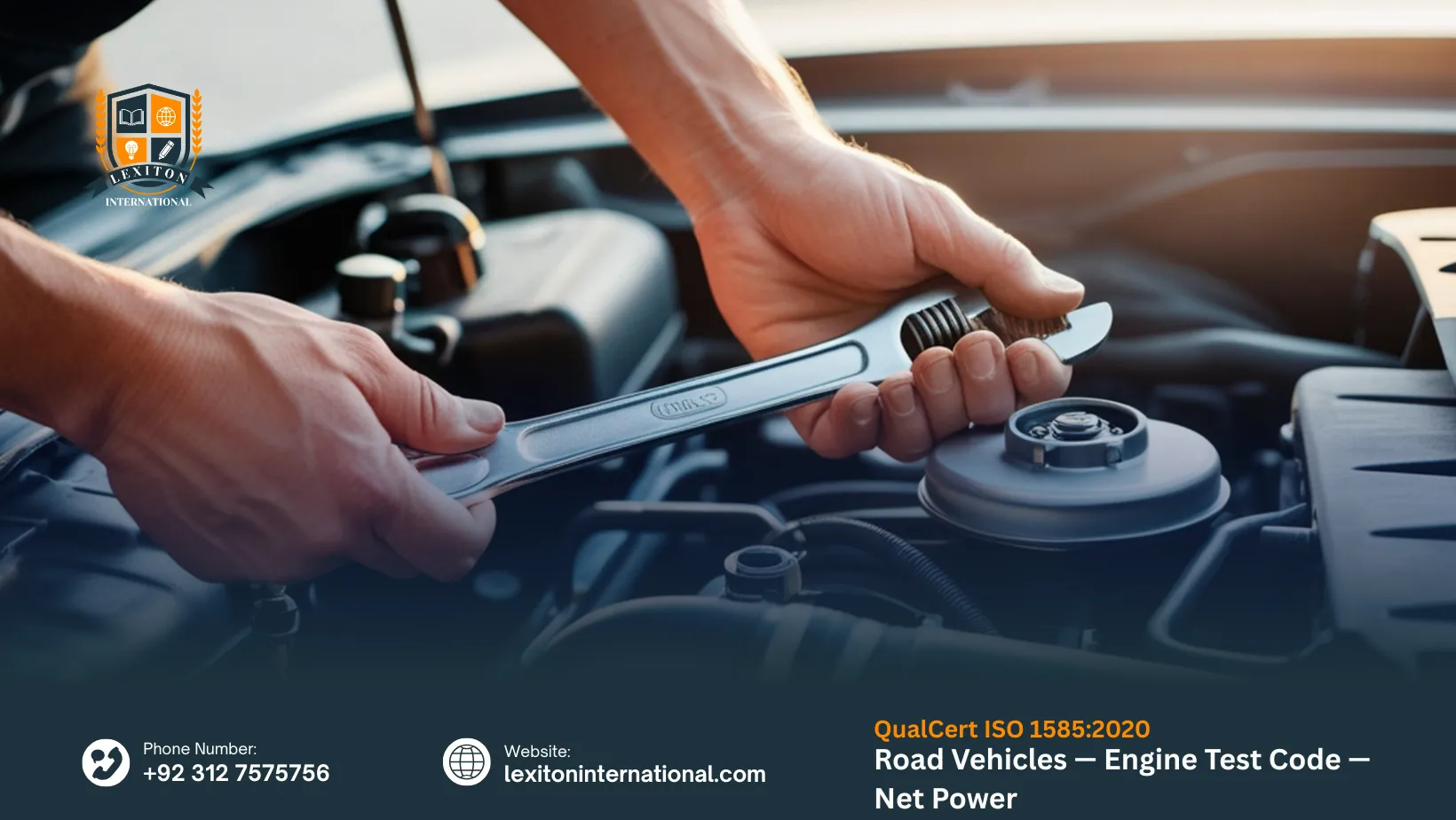
The QualCert ISO 1585:2020 Road Vehicles — Engine Test Code — Net Power course is designed to provide learners with a comprehensive understanding of the standardized procedures used to measure the net power of internal combustion engines in road vehicles. This training introduces participants to the principles behind ISO 1585:2020, focusing on the importance of accuracy, consistency, and compliance in engine testing. By engaging with this course, learners will gain valuable insights into how international standards shape the automotive industry, ensuring that vehicles meet performance expectations while adhering to regulatory requirements. It is particularly suited for professionals who wish to strengthen their technical knowledge and practical skills in engine testing and certification processes.
The course explores the detailed framework of ISO 1585:2020, covering the methodologies, equipment specifications, and environmental conditions required for reliable engine power measurement. Participants will learn how to apply the test code in real-world scenarios, interpret results, and understand the implications of standardized testing on vehicle design and performance. Special emphasis is placed on the role of net power determination in ensuring transparency for manufacturers, regulators, and consumers alike. Through structured modules, learners will be guided step by step in mastering the technical aspects of the standard, while also appreciating its broader impact on safety, efficiency, and innovation in the automotive sector.
In addition, the program highlights practical applications and case studies that demonstrate how ISO 1585:2020 is implemented across different vehicle categories and testing environments. Learners will explore the challenges faced during engine testing, such as variations in fuel quality, atmospheric conditions, and mechanical configurations, and how the standard addresses these issues to maintain uniformity. By the end of the course, participants will be equipped with both theoretical knowledge and practical competence, enabling them to contribute effectively to quality assurance, compliance, and performance evaluation in the automotive industry.
To enroll in this course, participants are expected to meet certain entry requirements that ensure they are prepared to engage with the technical content and benefit fully from the training. These requirements are designed to balance accessibility with the need for a solid foundation in relevant knowledge and skills.
- Age Requirements: Learners must be at least 18 years old to ensure maturity and readiness for technical training.
- Qualification Requirements: A minimum of a high school diploma or equivalent is required to demonstrate basic academic competence.
- Professional Experience: At least one year of experience in automotive, mechanical, or engineering-related fields is recommended for practical understanding.
- Educational Background: A background in science, engineering, or technology subjects is preferred to support comprehension of technical concepts.
- Technical Aptitude: Participants should have basic familiarity with mechanical systems and measurement tools to follow practical exercises effectively.
- Language Proficiency: Learners must possess good command of English to understand course materials, technical terminology, and assessments clearly.
Mandatory Units
This course is designed to equip learners with a thorough understanding of ISO 1585:2020 standards, focusing on engine testing, measurement techniques, performance analysis, emission compliance, and quality assurance. By progressing through each unit, participants will gain both theoretical knowledge and practical skills essential for applying standardized procedures in the automotive industry.
1. Introduction to Engine Testing Standards
- Understand the purpose, scope, and objectives of ISO 1585:2020 in measuring engine net power.
- Explain the historical evolution and global significance of standardized engine testing practices.
- Differentiate between net power, gross power, and brake power tests, identifying their specific applications.
- Interpret key terminologies, definitions, and documentation used in engine testing protocols.
- Recognize the importance of harmonization in international standards for industry-wide consistency.
2. Test Procedures and Measurement Techniques
- Outline the step-by-step procedures required for conducting standardized engine tests under ISO 1585:2020.
- Set up controlled testing environments with appropriate instrumentation, sensors, and calibration methods.
- Accurately measure critical parameters such as torque, RPM, fuel consumption, and airflow.
- Assess the impact of ambient conditions including temperature, pressure, and humidity on test outcomes.
- Apply correction factors to ensure reliability and comparability of test results across varying conditions.
3. Power and Performance Analysis in Vehicles
- Calculate net power output and interpret performance curves for internal combustion engines.
- Analyze power versus torque graphs and efficiency maps to evaluate engine behavior.
- Compare theoretical predictions with actual performance data under different load scenarios.
- Relate performance metrics to vehicle dynamics such as acceleration, fuel efficiency, and drivability.
- Identify factors influencing deviations between expected and observed performance outcomes.
4. Emission Control and Compliance Testing
- Identify key pollutants such as CO, NOx, HC, and particulate matter, along with their environmental impacts.
- Conduct emission testing using regulated procedures and certified equipment.
- Understand the role of catalytic converters, particulate filters, and other after-treatment technologies.
- Ensure compliance with international and regional emission standards including Euro 6 and EPA Tier levels.
- Evaluate the effectiveness of emission reduction strategies in modern vehicle systems.
5. Quality Assurance in Engine Performance Testing
- Apply quality assurance protocols to maintain accuracy, repeatability, and reliability in testing.
- Calibrate instruments and verify data integrity in accordance with ISO and laboratory standards.
- Implement audit trails, traceability measures, and certification processes for testing activities.
- Prepare structured technical documentation and reports suitable for audits and regulatory reviews.
- Recognize the importance of continuous improvement in testing methodologies and compliance practices.
6. Advanced Data Acquisition and Interpretation in Engine Testing
- Configure advanced data acquisition systems for high-resolution and real-time engine testing.
- Collect, filter, and process large volumes of test data using specialized software tools.
- Analyze datasets to identify performance trends, anomalies, and optimization opportunities.
- Present findings in structured reports tailored for engineering teams and regulatory authorities.
- Integrate digital technologies and analytics to enhance decision-making in engine performance evaluation.
Upon successful completion of this course, learners will possess a comprehensive understanding of ISO 1585:2020 standards, enabling them to conduct precise engine tests, ensure compliance with global regulations, and contribute to the advancement of quality and performance in the automotive industry.
This course is designed for individuals who have a keen interest in automotive engineering, testing standards, and compliance practices.
Technical Enthusiasts
- Strong interest in automotive systems and internal combustion engines
- Enjoy working with mechanical components and understanding their functions
- Curious about international standards shaping industry practices
- Seek practical skills in measurement and testing procedures
- Value precision, accuracy, and compliance in technical work
Industry Professionals
- Already working in automotive, mechanical, or engineering-related fields
- Looking to enhance knowledge of standardized testing protocols
- Interested in applying ISO standards in real-world scenarios
- Aim to strengthen roles in compliance, certification, or quality assurance
- Want to broaden expertise to remain competitive in the sector
Learners with Analytical Skills
- Comfortable interpreting technical data and performance graphs
- Capable of analyzing results to identify trends and anomalies
- Interested in connecting theory with practical applications
- Able to evaluate metrics against industry benchmarks
- Motivated to use data-driven insights for decision-making
Environmentally Conscious Learners
- Aware of emission control and environmental compliance importance
- Interested in emission reduction technologies
- Motivated to contribute to sustainable automotive practices
- Seek balance between performance and environmental responsibility
- Value compliance with global emission standards
Learners Focused on Quality Assurance
- Appreciate repeatability and accuracy in testing
- Interested in calibration, traceability, and audit processes
- Motivated to prepare compliant documentation and reports
- Seek to uphold high standards in laboratory environments
- Value continuous improvement in methodologies
Tech-Savvy Learners
- Comfortable with advanced data acquisition systems and software tools
- Interested in processing large datasets for performance evaluation
- Motivated to integrate digital technologies into testing practices
- Seek to present structured insights for engineering and regulatory review
- Value innovation and modernization in automotive testing
The ideal learner blends technical knowledge, analytical ability, and a commitment to compliance, ensuring meaningful contributions to the automotive industry.
Completing QualCert ISO 1585:2020 Road Vehicles — Engine Test Code — Net Power opens pathways for learners to advance their expertise in specialized areas of automotive testing, compliance, and certification.
Advanced Automotive Testing Diplomas
- Opportunities to pursue diplomas in advanced vehicle performance testing
- Focus on hybrid and electric vehicle testing methods
- Gain deeper knowledge of advanced measurement techniques
- Learn evolving standards for modern automotive technologies
- Strengthen career prospects in testing and certification roles
Certifications in Emission Control
- Progress to certifications in emission testing and compliance
- Learn advanced pollutant measurement and reduction technologies
- Gain expertise in international emission standards
- Develop skills in managing compliance audits and reporting
- Enhance credibility in environmental testing roles
Quality Assurance and Compliance Diplomas
- Pursue diplomas in quality assurance
- Learn advanced calibration and traceability techniques
- Gain expertise in preparing technical documentation for audits
- Understand global compliance frameworks in depth
- Strengthen roles in certification and regulatory compliance
Data Acquisition and Analysis Certifications
- Advance to certifications in automotive data acquisition systems
- Handle high-resolution datasets for performance evaluation
- Gain expertise in real-time data processing software tools
- Develop skills in predictive analysis and anomaly detection
- Present structured insights for decision-making
Specialized Engine Testing Diplomas
- Focus on diplomas in specialized engine testing methodologies
- Learn advanced procedures for different engine types
- Apply ISO standards to diverse testing scenarios
- Understand testing’s role in innovation and design
- Strengthen technical competence in performance evaluation
International Automotive Standards Certifications
- Progress to certifications covering multiple ISO standards
- Gain expertise in harmonizing practices across global frameworks
- Apply standards in multinational automotive projects
- Manage compliance across diverse regions
- Enhance opportunities in international automotive organizations
Future progression allows learners to specialize further through diplomas and certifications, keeping them at the forefront of automotive testing and compliance.
Curious About This Course?