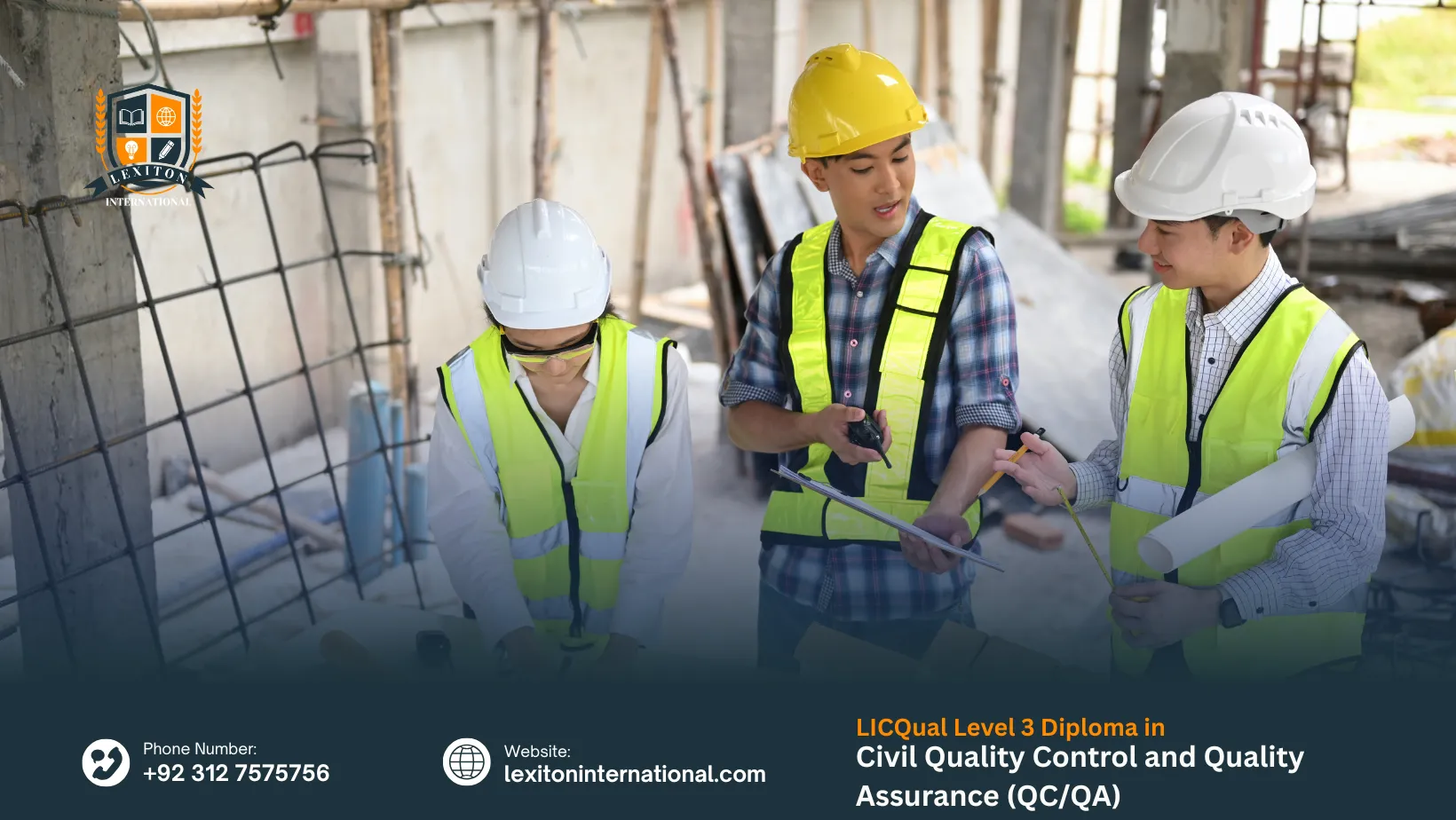
The LICQual Level 3 Diploma in Civil Quality Control and Quality Assurance (QC/QA) is designed to provide learners with a strong foundation in the principles, practices, and applications of quality management within civil engineering projects. This program introduces participants to the essential concepts of inspection, testing, and assurance processes that are critical for ensuring safety, reliability, and compliance in construction and infrastructure development. By combining theoretical knowledge with practical applications, the diploma equips learners to understand the role of quality systems in civil engineering, preparing them to contribute effectively to project success, organizational performance, and industry standards.
The course is structured to cover a wide range of topics that form the backbone of civil QC/QA practices. Learners will explore the fundamentals of quality control in construction materials, site inspections, and testing procedures, alongside the application of quality assurance frameworks tailored to civil engineering. Emphasis is placed on understanding national and international standards, regulatory compliance, and the role of quality assurance in preventing defects and ensuring operational safety. Through guided learning hours, participants will gain exposure to practical case studies and industry-relevant scenarios, enabling them to apply theoretical knowledge to real-world contexts.
With its comprehensive design, the diploma provides learners with both technical and managerial perspectives on civil quality assurance. Participants will develop analytical skills to evaluate construction processes, communication skills to document and report findings, and leadership qualities to implement quality control measures effectively. The structured learning approach ensures that graduates are capable of contributing to organizational success by upholding quality standards, enhancing safety, and driving efficiency in civil engineering projects. By the end of the program, learners will have acquired the confidence and competence to apply quality assurance principles across a wide range of civil engineering and infrastructure applications.
To enroll in the LICQual Level 3 Diploma in Civil Quality Control and Quality Assurance (QC/QA), learners are required to meet specific entry requirements that ensure they are prepared for both the academic and practical aspects of the program.
- Age Requirements: Applicants must be at least 18 years old at the time of enrollment to ensure maturity and readiness for technical study.
- Qualification Requirements: Learners should hold a Level 2 diploma or equivalent qualification in civil engineering, construction, or a related technical discipline.
- Professional Experience: While not mandatory, prior exposure to construction projects, site inspections, or quality-related tasks is preferred for better understanding.
- Educational Background: Candidates should have a basic academic foundation in science, mathematics, or technical subjects relevant to civil engineering.
- Language Proficiency Requirement: Applicants must have a good command of English to engage effectively with course materials, assessments, and technical documentation.
- Technical Skills Requirement: Basic computer literacy and familiarity with construction tools or software are required to support learning activities and practical tasks.
Mandatory Units
By completing the LICQual Level 3 Diploma in Civil Quality Control and Quality Assurance (QC/QA), participants will gain the essential knowledge, technical skills, and practical competencies required to uphold quality standards in civil engineering projects. Learners will be prepared to contribute effectively to construction processes, compliance frameworks, and organizational success through structured training across six key units.
Introduction to Quality Control and Assurance in Civil Engineering
- Define the concepts of quality control (QC) and quality assurance (QA) in civil engineering projects.
- Explain the importance of maintaining quality standards and their impact on safety, efficiency, and project success.
- Differentiate between the roles and responsibilities of QC and QA within construction environments.
- Identify key stakeholders such as engineers, inspectors, and regulators involved in the quality management process.
- Apply foundational QC/QA principles to basic civil engineering scenarios.
Construction Standards and Regulatory Compliance
- Identify major construction standards and codes relevant to civil engineering projects.
- Evaluate the importance of regulatory compliance in ensuring safe, sustainable, and legally sound construction practices.
- Apply legal and regulatory frameworks to assess compliance in real-world civil engineering scenarios.
- Discuss the implications of non-compliance, including safety risks, financial losses, and project delays.
- Demonstrate awareness of international and national standards that guide civil engineering quality.
Quality Control Processes and Tools
- Describe the steps involved in designing and implementing effective quality control processes.
- Identify common tools and techniques such as checklists, control charts, and inspection plans.
- Analyze case studies to recommend appropriate quality control measures for different stages of construction.
- Evaluate the effectiveness of QC processes using industry-standard performance metrics.
- Apply structured QC tools to monitor and improve construction workflows.
Material Testing and Inspection
- Explain the principles and methods of testing construction materials such as concrete, steel, and aggregates.
- Perform standard testing procedures to assess material quality, durability, and suitability for use.
- Interpret testing results to identify defects, weaknesses, or non-conformance issues.
- Demonstrate competency in inspection protocols, documentation, and reporting for material quality assurance.
- Apply inspection findings to improve material selection and construction practices.
Risk Management in Quality Assurance
- Identify potential risks that can affect quality assurance in civil engineering projects.
- Develop practical risk mitigation strategies to address identified quality risks effectively.
- Evaluate the role of continuous monitoring and auditing in managing quality-related risks.
- Assess the impact of risk management practices on overall project quality, safety, and delivery timelines.
- Apply structured risk assessment tools to strengthen quality assurance systems.
Project Documentation and Reporting
- Describe the essential components of quality-related documentation such as inspection reports and non-conformance records.
- Develop accurate and comprehensive reports to communicate quality assurance activities clearly.
- Utilize industry-standard software and tools for documentation and reporting in civil engineering projects.
- Review and improve documentation practices to ensure accountability and compliance with standards.
- Apply documentation skills to support continuous improvement and organizational learning.
The ideal learner for the LICQual Level 3 Diploma in Civil Quality Control and Quality Assurance (QC/QA) is someone who demonstrates technical curiosity, professional commitment, and readiness to build a career in civil quality management.
Professional Background
- Individuals working in civil engineering, construction, or infrastructure projects.
- Technicians or junior engineers seeking to enhance their expertise in quality assurance.
- Professionals involved in site inspections, material testing, or compliance tasks.
- Candidates with prior exposure to construction workflows and safety practices.
- Learners aiming to transition into specialized civil quality control roles.
Academic Readiness
- Learners holding a Level 2 diploma or equivalent qualification in civil or technical fields.
- Those with a basic understanding of science, mathematics, or applied technology.
- Candidates capable of engaging with structured study and technical concepts.
- Individuals prepared to balance theoretical learning with practical application.
- Learners motivated to expand their knowledge of civil standards and regulations.
Skills and Competencies
- Ability to use basic civil engineering tools and testing instruments effectively.
- Strong problem-solving skills to identify and address construction quality issues.
- Competence in documenting inspection findings and preparing reports.
- Analytical skills to evaluate compliance with standards and regulations.
- Communication skills to collaborate with teams and share quality-related insights.
Personal Attributes
- Commitment to safety and adherence to compliance requirements.
- Attention to detail in identifying defects and irregularities.
- Motivation to learn and apply new techniques in civil QA/QC.
- Adaptability to evolving industry practices and technologies.
- Professional responsibility in maintaining high-quality standards.
Industry Alignment
- Learners aiming to work in industries such as construction, infrastructure, energy, or utilities.
- Professionals seeking recognition in civil quality assurance roles.
- Individuals interested in contributing to safe and reliable civil engineering operations.
- Candidates motivated to meet customer and organizational expectations through quality practices.
- Learners aspiring to strengthen their career prospects in technical and compliance-focused environments.
By meeting these characteristics, the ideal learner will be well-prepared to succeed in this diploma and apply its outcomes effectively in professional contexts.
Completion of the LICQual Level 3 Diploma in Civil Quality Control and Quality Assurance (QC/QA) provides learners with opportunities to advance their careers, pursue specialized certifications, and strengthen their professional standing. The progression pathways are designed to enhance technical expertise, broaden industry recognition, and support growth in civil quality management.
Career Advancement
- Opportunities to move into civil inspection and testing roles.
- Eligibility for supervisory positions in construction quality and compliance.
- Enhanced credibility in industries requiring strict quality assurance standards.
- Ability to contribute to organizational safety and reliability initiatives.
- Recognition as a skilled professional in civil QA/QC practices.
Professional Certifications
- Pathways to certifications in civil safety and compliance auditing.
- Opportunities to pursue specialized certifications in quality management.
- Eligibility for advanced diplomas in civil inspection and risk management.
- Recognition through industry-specific civil QA/QC credentials.
- Strengthened portfolio with internationally recognized certifications.
Industry Opportunities
- Expanded roles in construction, infrastructure, energy, and utilities sectors.
- Ability to work on projects requiring compliance with national and international standards.
- Opportunities to contribute to organizations focused on civil reliability and safety.
- Enhanced employability in industries emphasizing continuous improvement.
- Access to consultancy roles in civil quality assurance.
Leadership Development
- Potential to lead inspection teams or civil QA/QC departments.
- Opportunities to design and implement organizational quality strategies.
- Ability to mentor junior technicians and engineers in quality practices.
- Development of leadership skills through applied quality management.
- Recognition as a key contributor to organizational excellence.
Specialized Diplomas
- Progression into advanced diplomas in civil inspection and testing.
- Opportunities to pursue diplomas in industrial risk management and compliance.
- Eligibility for certifications in international civil standards and auditing.
- Pathways to specialized training in advanced civil testing technologies.
- Recognition through diplomas that enhance global employability.
Global Recognition
- Strengthened professional profile aligned with international civil standards.
- Opportunities to work in multinational organizations requiring quality expertise.
- Enhanced credibility in global markets through compliance knowledge.
- Ability to contribute to projects across diverse industrial contexts.
- Recognition as a professional capable of meeting international quality benchmarks.
By completing this diploma, learners will not only solidify their expertise in civil QC/QA but also unlock progression opportunities that expand their career horizons, strengthen their professional identity, and align them with international industry standards.
Curious About This Course?