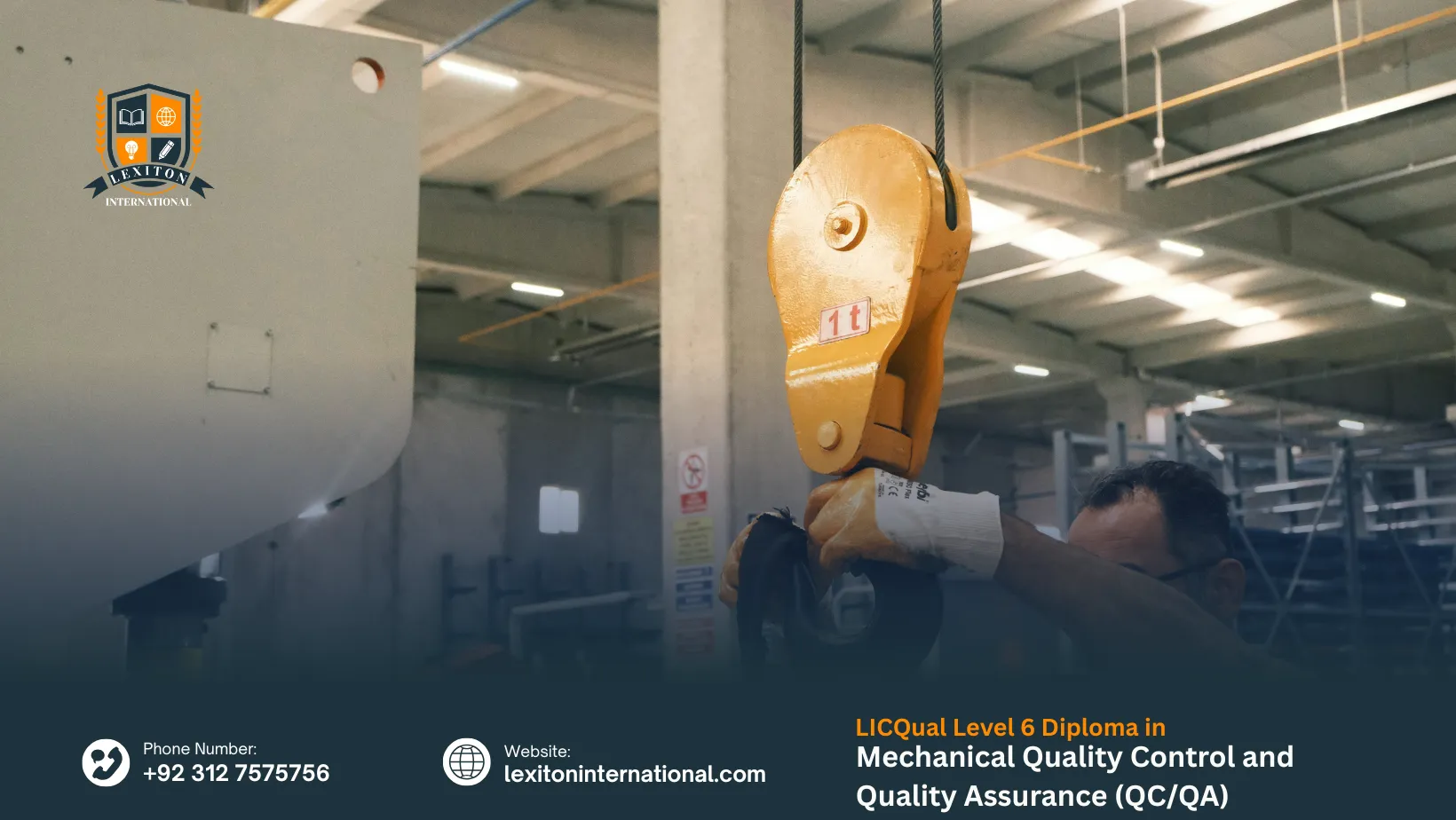
The LICQual Level 6 Diploma in Mechanical Quality Control and Quality Assurance (QC/QA) is designed to provide learners with advanced knowledge and practical expertise in the principles, methodologies, and applications of mechanical quality systems. This program emphasizes the integration of quality control and assurance practices within mechanical engineering and industrial environments, preparing learners to meet the rigorous demands of modern industries. By focusing on both theoretical foundations and applied techniques, the diploma equips participants with the ability to evaluate, implement, and sustain quality standards that enhance efficiency, safety, and compliance. Learners are guided through a structured pathway that develops their analytical, technical, and managerial skills, enabling them to contribute effectively to organizational success and continuous improvement initiatives.
The course is structured into a total of 6 units, carrying 120 credits, with a Guided Learning Hours (GLH) allocation of 480. Each unit is carefully designed to cover critical aspects of mechanical quality control and assurance, ranging from advanced inspection methods and testing procedures to the implementation of quality management systems and compliance with international standards. The program ensures that learners gain a comprehensive understanding of mechanical processes, defect analysis, preventive measures, and the role of quality assurance in maintaining operational excellence. Through this structured approach, participants are encouraged to develop a strong command of both technical and managerial dimensions of QC/QA, ensuring they are well-prepared to address complex challenges in diverse mechanical and industrial contexts.
The overall learning experience is enriched by a balance of theoretical instruction, applied case studies, and practical engagement with industry-relevant scenarios. With 480 GLH, learners are provided ample opportunity to immerse themselves in detailed study, collaborative learning, and critical evaluation of real-world practices. The diploma emphasizes not only the mastery of technical skills but also the development of strategic thinking and problem-solving abilities, which are essential for maintaining high-quality standards in mechanical operations. By the end of the program, participants will have acquired the confidence and competence to uphold quality assurance principles, drive continuous improvement, and contribute meaningfully to organizational performance in mechanical engineering and related industries.
To enroll in the LICQual Level 6 Diploma in Mechanical Quality Control and Quality Assurance (QC/QA), learners are expected to meet specific entry requirements that ensure readiness for advanced study. These criteria are designed to balance academic background, professional experience, and personal capability, enabling participants to fully benefit from the program’s rigorous and practical learning approach.
- Age Requirements: Applicants must be at least 19 years old at the time of enrollment to ensure maturity and readiness for advanced-level study.
- Qualification Requirements: Learners should hold a Level 5 diploma or equivalent qualification in engineering, technology, or a related discipline.
- Professional Experience: A minimum of two years of relevant industry experience in mechanical engineering, quality control, or assurance roles is preferred.
- Educational Background: Candidates should demonstrate prior academic exposure to technical subjects such as mechanical systems, industrial processes, or applied sciences.
- Language Proficiency Requirement: Applicants must have a good command of English to engage effectively with course materials, assessments, and technical documentation.
- Technical Skills Requirement: Basic computer literacy and familiarity with engineering software or quality management tools are required to support learning activities.
Mandatory Units
Upon successful completion of the LICQual Level 6 Diploma in Mechanical Quality Control and Quality Assurance (QC/QA), learners will acquire advanced knowledge, technical expertise, and practical skills that enable them to uphold quality standards, strengthen mechanical processes, and contribute to organizational excellence. The following learning outcomes outline the competencies that participants will develop across the six core units of the program:
1. Quality Management Systems (QMS) in Mechanical Engineering
- Gain a comprehensive understanding of the principles, frameworks, and objectives of QMS in mechanical engineering.
- Evaluate the application of recognized standards such as ISO 9001 to ensure product quality and operational reliability.
- Analyze how QMS practices can be integrated into mechanical engineering projects to meet customer expectations and regulatory requirements.
- Design tailored quality management strategies that align with mechanical processes and manufacturing workflows.
- Implement monitoring, auditing, and feedback mechanisms to drive continuous improvement in QMS performance.
2. Mechanical Testing and Evaluation Methods
- Understand the objectives and methodologies of destructive and non-destructive mechanical testing techniques.
- Demonstrate proficiency in conducting tests such as tensile, hardness, and fatigue, and accurately interpret results.
- Analyze test data to assess material properties, performance characteristics, and suitability for specific engineering applications.
- Evaluate the effectiveness of testing methods in detecting defects and ensuring product reliability.
- Apply advanced testing technologies to enhance mechanical system design, safety, and functionality.
3. Failure Analysis and Root Cause Investigation
- Understand the principles and structured methodologies of failure analysis in mechanical systems and components.
- Identify and classify common failure modes such as fatigue, corrosion, wear, and thermal stress.
- Apply root cause analysis techniques, including Fishbone Diagrams and Fault Tree Analysis, to diagnose failures.
- Evaluate the impact of failure causes on system performance, safety, and operational continuity.
- Develop corrective and preventive measures to minimize recurrence and strengthen system reliability.
4. Risk Management and Quality Control Strategies
- Understand the principles of risk assessment and quality control in mechanical engineering environments.
- Identify operational, safety, and environmental risks associated with mechanical systems and processes.
- Analyze and prioritize risks using structured tools such as FMEA and risk matrices.
- Design and implement quality control measures to mitigate risks and ensure compliance with standards.
- Evaluate the effectiveness of risk management strategies in improving mechanical performance and organizational resilience.
5. Advanced Quality Assurance and Process Improvement
- Understand the role of advanced QA techniques in enhancing mechanical engineering projects.
- Apply statistical tools such as Six Sigma and Statistical Process Control (SPC) to monitor efficiency and quality.
- Analyze process performance data to identify inefficiencies and opportunities for improvement.
- Develop and implement continuous improvement strategies, including lean manufacturing and agile practices.
- Evaluate the impact of QA initiatives on productivity, cost-effectiveness, and customer satisfaction.
6. International Standards and Regulatory Compliance in Mechanical Engineering
- Understand the scope and application of international standards such as ISO 14001 and ASME codes.
- Analyze regulatory requirements and their implications for compliance in mechanical engineering projects.
- Demonstrate knowledge of certification processes for mechanical products and systems under global standards.
- Evaluate the risks and consequences of non-compliance in mechanical operations.
- Apply compliance frameworks to ensure adherence to safety, environmental, and operational standards.
By completing this diploma, learners will be equipped with the advanced skills and professional competencies required to uphold mechanical quality control and assurance practices at an international level.
The ideal learner for the LICQual Level 6 Diploma in Mechanical Quality Control and Quality Assurance (QC/QA) is someone who demonstrates a strong technical foundation, professional maturity, and a commitment to advancing quality standards in mechanical engineering. This program is best suited for individuals who combine academic readiness with practical experience and a clear vision for contributing to organizational excellence.
Professional Background
- Individuals with prior exposure to mechanical engineering, manufacturing, or industrial operations.
- Professionals already working in quality control or assurance roles seeking advanced expertise.
- Supervisors or team leaders responsible for maintaining mechanical system reliability.
- Engineers or technicians aiming to strengthen their knowledge of international quality standards.
- Candidates with practical involvement in inspection, testing, or compliance processes.
Academic Readiness
- Learners holding a Level 5 diploma or equivalent qualification in engineering or technology.
- Those with a solid understanding of mechanical systems, industrial processes, or applied sciences.
- Candidates capable of engaging with advanced technical concepts and analytical frameworks.
- Individuals prepared to undertake structured study across six comprehensive units.
- Learners with the ability to balance theoretical learning with practical application.
Skills and Competencies
- Strong analytical and problem-solving abilities to evaluate mechanical quality challenges.
- Effective communication skills for reporting, documentation, and collaboration.
- Technical proficiency in mechanical testing, inspection, and compliance tools.
- Ability to apply structured methodologies such as QMS, RCA, and risk management.
- Competence in using digital tools and engineering software to support quality assurance.
Personal Attributes
- Commitment to continuous improvement and professional development.
- Attention to detail and precision in mechanical processes and quality standards.
- Leadership qualities to guide teams in implementing quality control measures.
- Adaptability to changing industry requirements and international compliance frameworks.
- Motivation to contribute to organizational success through quality-driven practices.
Industry Alignment
- Learners aiming to work in industries such as manufacturing, automotive, energy, or construction.
- Professionals seeking to align their expertise with global mechanical engineering standards.
- Individuals interested in enhancing safety, reliability, and efficiency in mechanical operations.
- Candidates motivated to meet customer expectations through quality assurance practices.
- Learners aspiring to hold responsible positions in mechanical quality management.
By meeting these characteristics, the ideal learner will be well-positioned to maximize the benefits of this diploma and apply its outcomes effectively in professional contexts.
Completion of the LICQual Level 6 Diploma in Mechanical Quality Control and Quality Assurance (QC/QA) opens pathways for learners to advance their careers, enhance their professional standing, and pursue specialized certifications. The progression opportunities are designed to strengthen technical expertise, broaden industry recognition, and support leadership roles in mechanical quality management.
Career Advancement
- Opportunities to move into senior quality assurance or quality control positions.
- Eligibility for supervisory or managerial roles in mechanical engineering projects.
- Enhanced credibility in industries requiring strict compliance and quality standards.
- Ability to lead inspection, testing, and compliance teams effectively.
- Recognition as a skilled professional capable of driving organizational improvement.
Professional Certifications
- Pathways to specialized certifications in quality management systems.
- Eligibility for advanced diplomas in occupational safety, risk management, or compliance.
- Opportunities to pursue certifications in Six Sigma, Lean Manufacturing, or SPC.
- Recognition through industry-specific quality assurance credentials.
- Strengthened portfolio with internationally recognized certifications.
Industry Opportunities
- Expanded roles in manufacturing, automotive, aerospace, and energy sectors.
- Ability to contribute to international projects requiring compliance with global standards.
- Opportunities to work with organizations focused on mechanical reliability and safety.
- Enhanced employability in industries emphasizing continuous improvement.
- Access to consultancy roles in mechanical quality assurance.
Leadership Development
- Potential to lead quality assurance departments or mechanical engineering teams.
- Opportunities to design and implement organizational quality strategies.
- Ability to mentor junior engineers and technicians in quality practices.
- Development of leadership skills through applied quality management.
- Recognition as a key contributor to organizational excellence.
Specialized Diplomas
- Progression into advanced diplomas in mechanical inspection and testing.
- Opportunities to pursue diplomas in risk management and compliance.
- Eligibility for certifications in international mechanical standards and auditing.
- Pathways to specialized training in advanced mechanical testing technologies.
- Recognition through diplomas that enhance global employability.
Global Recognition
- Strengthened professional profile aligned with international mechanical standards.
- Opportunities to work in multinational organizations requiring quality expertise.
- Enhanced credibility in global markets through compliance knowledge.
- Ability to contribute to projects across diverse industrial contexts.
- Recognition as a professional capable of meeting international quality benchmarks.
By completing this diploma, learners will not only solidify their expertise in mechanical QC/QA but also unlock progression opportunities that expand their career horizons, strengthen their professional identity, and align them with international industry standards.
Curious About This Course?