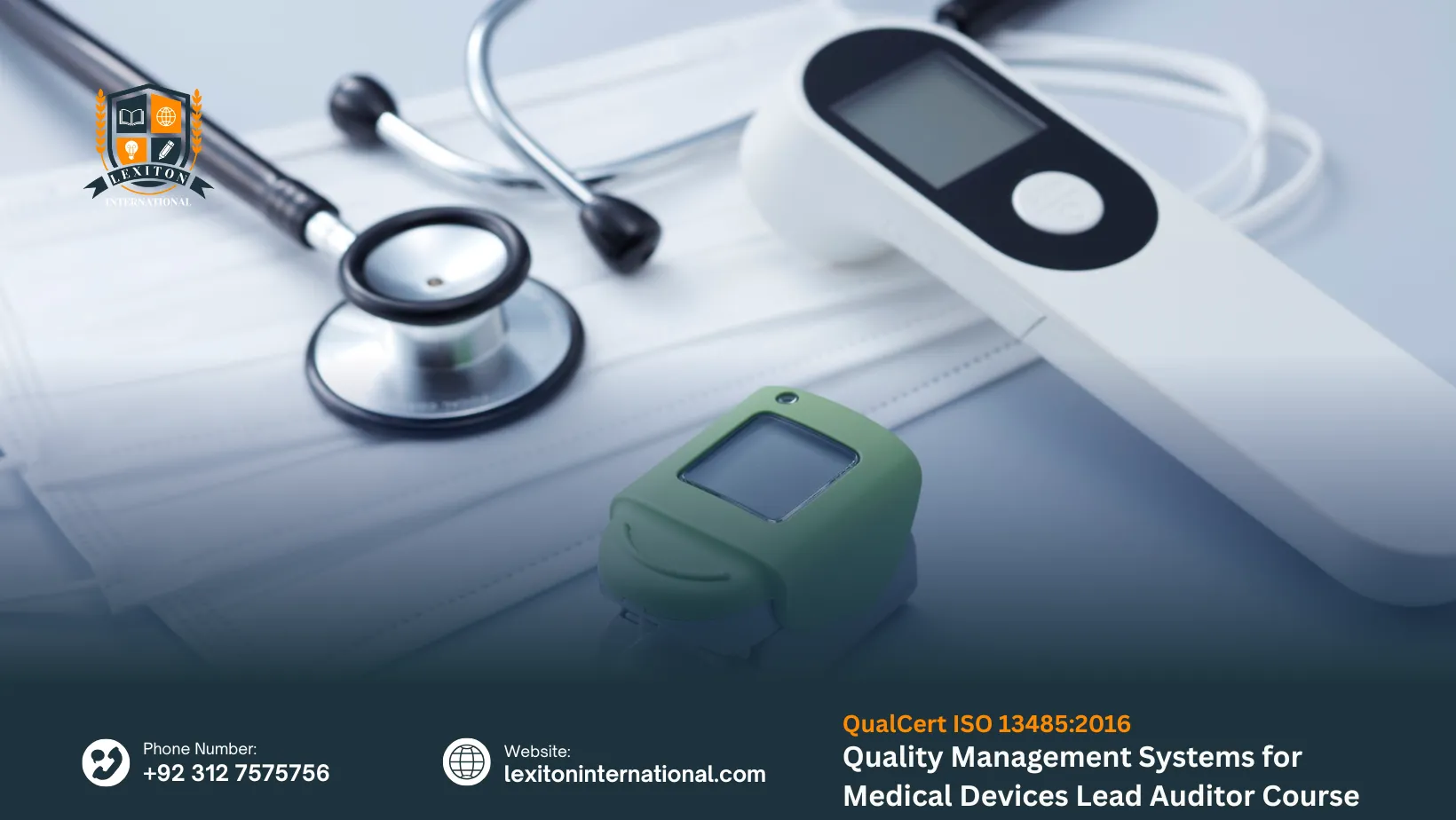
The QualCert ISO 13485:2016 – Quality Management Systems for Medical Devices Lead Auditor Course is designed to provide professionals with the advanced knowledge and skills required to lead and manage audits within the medical device industry. This program introduces learners to the principles of ISO 13485:2016, focusing on the unique requirements of quality management systems in medical device manufacturing and distribution. Participants are guided through practical scenarios, case studies, and structured methodologies that highlight the importance of compliance, risk management, and continual improvement. By the end of the course, learners will be equipped to take on leadership roles in audit teams, ensuring organizations meet international standards and deliver safe, effective medical devices to the market.
The QualCert ISO 13485:2016 – Quality Management Systems for Medical Devices Lead Auditor Course offers a structured and comprehensive learning pathway that reflects its professional depth and rigor. The program is awarded 30 credits, requiring a Total Qualification Time (TQT) of 180 hours, which ensures learners dedicate sufficient effort to mastering both theoretical and practical aspects of auditing. Out of this, 120 Guided Learning Hours (GLH) are provided, allowing participants to benefit from direct instruction, interactive sessions, and practical guidance from experienced trainers. This balance between guided learning and independent study ensures that learners not only acquire knowledge but also develop the confidence to apply it effectively in real-world auditing scenarios.
The course structure emphasizes a blend of classroom-based instruction, case studies, and practical exercises tailored to the medical device industry. Learners are guided through ISO 13485:2016 requirements, audit planning, evidence collection, and reporting, with a strong focus on regulatory compliance and risk-based thinking. The allocation of credits and hours ensures a well-paced curriculum that supports progressive learning, enabling participants to build technical proficiency while strengthening leadership and communication skills. By dedicating significant time to guided learning, the program ensures that learners receive expert support while also encouraging independent study to reinforce knowledge and practical application.
To ensure learners are well-prepared to succeed in the QualCert ISO 13485:2016 – Quality Management Systems for Medical Devices Lead Auditor Course, specific entry requirements have been established. These criteria are designed to maintain the professional standard of the program and ensure participants have the necessary background, skills, and commitment to benefit fully from the training.
- Age Requirements: Applicants must be at least 21 years old, ensuring maturity and readiness for professional-level responsibilities in auditing.
- Qualification Requirements: A minimum of a recognized diploma or equivalent qualification is required to demonstrate foundational academic capability.
- Professional Experience: At least two years of relevant work experience in quality management, auditing, compliance, or medical device-related roles is expected.
- Educational Background: Learners should have prior education in business, engineering, healthcare, or management fields to support comprehension of ISO 13485 principles.
- Language Proficiency Requirement: Candidates must possess good written and spoken English skills to effectively participate in discussions, assessments, and reporting tasks.
- Commitment to Professional Standards: Applicants should demonstrate a willingness to adhere to ethical auditing practices and maintain impartiality throughout their professional work.
Mandatory Units
This course is designed to provide learners with the essential knowledge, technical expertise, and leadership skills required to conduct and lead audits in the medical device industry. Each unit builds progressively to ensure participants gain both theoretical understanding and practical application, enabling them to deliver audits that strengthen compliance, enhance product quality, and support patient safety.
Introduction to Quality Management Systems (QMS)
- Understand the fundamental principles of quality management and their relevance to medical device organizations.
- Explain the purpose and benefits of implementing an effective ISO 13485:2016 QMS.
- Recognize how QMS supports organizational performance, regulatory compliance, and customer satisfaction.
- Relate QMS principles to risk management and continual improvement strategies.
- Apply QMS concepts to real-world medical device industry scenarios.
ISO 13485:2016 Standard and Requirements
- Identify and interpret key clauses of ISO 13485:2016 and their application in medical device manufacturing.
- Demonstrate knowledge of international regulatory requirements such as FDA and EU MDR.
- Understand how ISO 13485 integrates with regulatory frameworks to ensure product safety and effectiveness.
- Apply standard requirements to evaluate organizational processes and documentation.
- Recognize the importance of compliance in maintaining global market credibility.
Audit Fundamentals and Principles
- Explain the principles of auditing, including integrity, fair presentation, confidentiality, and due professional care.
- Recognize the role of an ISO 13485 lead auditor in ensuring compliance and continual improvement.
- Apply ethical considerations to maintain impartiality and professionalism during audits.
- Distinguish between different types of audits and their objectives in the medical device sector.
- Demonstrate how auditing principles contribute to organizational trust and accountability.
Audit Planning and Preparation
- Develop a comprehensive audit plan, including objectives, scope, and criteria for ISO 13485 audits.
- Apply risk-based thinking to prioritize critical areas within medical device QMS.
- Prepare audit checklists and documentation aligned with ISO 13485 requirements.
- Coordinate effectively with auditees and stakeholders to ensure smooth audit preparation.
- Establish clear timelines and resource allocation for efficient audit execution.
Conducting an ISO 13485:2016 Audit
- Perform on-site and remote audits using recognized auditing techniques.
- Conduct interviews, observations, and document reviews to gather objective evidence.
- Assess compliance with ISO 13485:2016 requirements and identify opportunities for improvement.
- Work collaboratively within audit teams, understanding distinct roles and responsibilities.
- Maintain professionalism and manage audit logistics effectively during fieldwork.
Non-Conformity Identification and Reporting
- Detect and document non-conformities using standardized methods and reporting structures.
- Classify non-conformities according to severity and impact on organizational performance.
- Provide corrective and preventive action (CAPA) recommendations to enhance QMS compliance.
- Communicate findings clearly and constructively to management and stakeholders.
- Ensure audit reports contribute to continual improvement and regulatory adherence.
The ideal learner for this course is a professional who demonstrates maturity, commitment to quality, and the ability to apply auditing practices in the medical device industry. This profile ensures participants can fully benefit from the training and contribute meaningfully to organizational compliance and patient safety.
Professional Background
- Individuals working in quality assurance, compliance, or auditing roles within medical device organizations
- Professionals engaged in manufacturing, engineering, or healthcare-related industries
- Team leaders or supervisors responsible for monitoring quality processes and regulatory adherence
- Employees tasked with maintaining or improving quality management systems
- Consultants supporting organizations in achieving ISO 13485 compliance
Educational Readiness
- Learners with prior education in business, engineering, healthcare, or management fields
- Those familiar with organizational processes and documentation practices
- Candidates with analytical skills to interpret standards and regulatory requirements
- Individuals comfortable with structured learning and technical content
- Participants with strong communication and reporting abilities
Workplace Competence
- Professionals experienced in problem-solving and decision-making in regulated environments
- Individuals accustomed to working with diverse teams and stakeholders
- Learners who can manage responsibilities under deadlines and compliance pressures
- Those with exposure to audits, inspections, or regulatory reviews
- Employees motivated to enhance organizational credibility and product safety
Personal Attributes
- Learners with integrity, impartiality, and ethical commitment to auditing practices
- Individuals who value accuracy and detail in professional tasks
- Candidates with curiosity and willingness to learn new industry practices
- Professionals who demonstrate leadership potential and initiative
- Those adaptable to evolving regulatory and industry standards
Career Aspirations
- Individuals aiming to lead internal and external audit teams in the medical device sector
- Professionals seeking recognition as competent lead auditors in ISO 13485
- Candidates motivated to strengthen organizational compliance and patient safety
- Learners aspiring to contribute to continual improvement initiatives
- Employees wishing to expand their professional credibility in global markets
Commitment to Learning
- Learners prepared to dedicate time and effort to structured training
- Candidates motivated to apply knowledge directly in workplace audits
- Professionals open to constructive feedback and skill development
- Those committed to maintaining high standards of professional practice
The ideal learner is a motivated professional who combines technical knowledge, workplace experience, and ethical commitment, ensuring they can excel as lead auditors and contribute to organizational success in the medical device industry.
Completing QualCert ISO 13485:2016 – Quality Management Systems for Medical Devices Lead Auditor Course opens pathways for learners to advance their professional standing, expand their expertise, and pursue specialized certifications and diplomas that strengthen their role in medical device quality management and auditing.
Professional Advancement
- Opportunities to take on leadership roles in audit teams and compliance departments
- Enhanced credibility in organizational quality assurance and regulatory adherence
- Recognition as a skilled professional in ISO 13485 auditing
- Ability to contribute to strategic decision-making processes in medical device organizations
- Increased potential for career growth in regulated industries
Specialized Certifications
- Eligibility to pursue certifications in ISO 14001 Environmental Management auditing
- Opportunities to expand into ISO 45001 Occupational Health and Safety auditing
- Pathways to certifications in ISO 22000 Food Safety Management auditing
- Ability to specialize in ISO 27001 Information Security auditing for healthcare data
- Recognition through sector-specific quality certifications in medical devices
Further Diplomas
- Progression into diplomas focused on risk management and compliance in healthcare
- Opportunities to undertake diplomas in management systems
- Expansion into diplomas covering integrated management systems for regulated industries
- Pathways to diplomas in supply chain quality assurance for medical devices
- Specialized diplomas in regulatory affairs and product safety
Industry Opportunities
- Ability to work across medical device manufacturing, engineering, and healthcare sectors
- Opportunities to support organizations in meeting international regulatory requirements
- Engagement in consultancy roles for ISO 13485 implementation and compliance
- Potential to contribute to international quality management projects in healthcare
- Recognition as a trusted professional in competitive and regulated markets
Skill Development
- Strengthening leadership and communication skills for audit management
- Expanding analytical and problem-solving capabilities in regulated environments
- Enhancing ability to manage audit logistics and reporting effectively
- Building expertise in continual improvement strategies for medical device QMS
- Developing adaptability to evolving industry and regulatory standards
Global Recognition
- Opportunities to work with multinational medical device organizations
- Ability to contribute to global quality management initiatives in healthcare
- Recognition as a professional aligned with international standards and regulations
- Potential to engage in cross-border auditing projects and compliance programs
- Strengthened professional profile in global healthcare and medical device markets
Future progression from this course empowers learners to expand their professional scope, pursue specialized certifications and diplomas, and establish themselves as credible leaders in medical device quality management and auditing practices.
Curious About This Course?