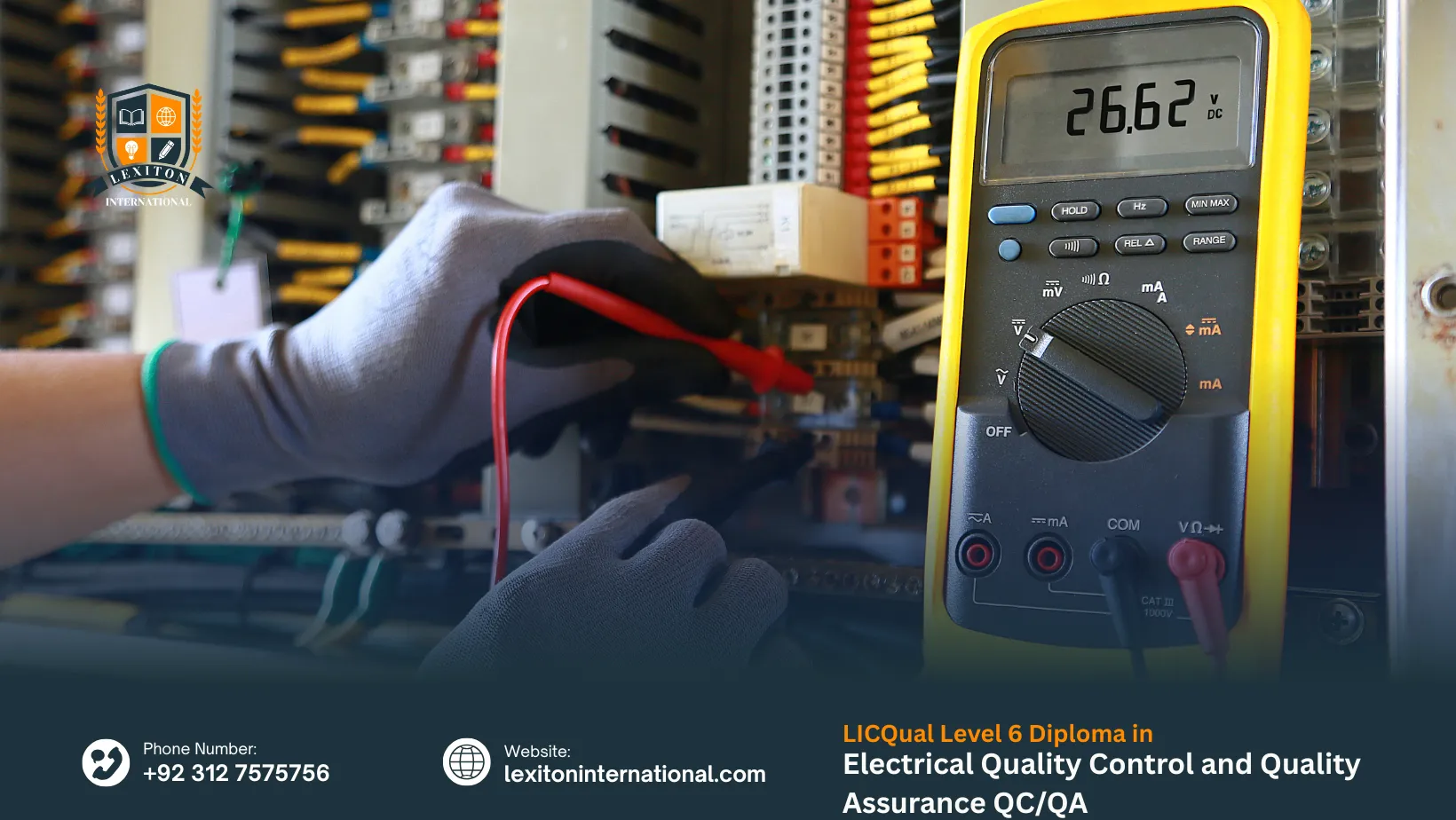
The LICQual Level 6 Diploma in Electrical Quality Control and Quality Assurance (QC/QA) is designed to provide advanced knowledge and professional expertise in managing, monitoring, and improving quality standards within electrical engineering projects. This course introduces learners to the principles of quality assurance, inspection methodologies, compliance frameworks, and international standards that govern electrical systems. It emphasizes the importance of precision, safety, and accountability in ensuring that electrical installations and processes meet the highest industry benchmarks. Learners will gain both theoretical understanding and practical insights into how quality control systems are implemented and maintained across diverse electrical environments.
The course overview highlights the depth and breadth of this diploma, focusing on equipping learners with the skills to evaluate electrical systems, identify risks, and implement corrective measures that align with organizational and regulatory requirements. Participants will explore advanced topics such as quality auditing, documentation control, testing procedures, and performance evaluation. The program also integrates modern approaches to quality management, including the use of digital tools, data-driven decision-making, and continuous improvement strategies, ensuring learners are prepared to meet the evolving demands of the electrical industry.
In addition, the diploma provides a structured pathway for professionals aiming to advance their careers in electrical quality assurance. It is tailored for individuals seeking leadership roles in inspection, compliance, and project management. By completing this program, learners will not only enhance their technical expertise but also develop the critical thinking and problem-solving skills required to oversee complex electrical projects with confidence. The course is internationally recognized, making it a valuable qualification for professionals aspiring to work in diverse industrial sectors where quality assurance is a cornerstone of success.
To enroll in the LICQual Level 6 Diploma in Electrical Quality Control and Quality Assurance (QC/QA), applicants must meet the following entry requirements to ensure readiness for advanced study and professional responsibilities.
- Age Requirements: Learners must be at least 21 years old at the time of enrollment to demonstrate maturity and readiness for advanced professional study.
- Qualification Requirements: A minimum of a Level 5 qualification or equivalent in electrical engineering, quality management, or a related discipline is required.
- Professional Experience: Applicants should have at least 2–3 years of relevant work experience in electrical engineering, inspection, or quality assurance roles.
- Educational Background: A strong educational foundation in mathematics, science, or engineering is necessary to understand technical concepts and quality systems.
- Access to Workplace/Projects: Learners must have access to an electrical workplace or project environment where they can apply quality control and assurance practices.
- Technical and Analytical Skills: Applicants should possess strong analytical, problem-solving, and technical skills to evaluate electrical systems and manage quality processes effectively.
Mandatory Units
By the end of this course, learners will be able to demonstrate advanced knowledge and practical expertise in electrical quality control and assurance, applying international standards, risk management strategies, and continuous improvement practices to ensure safety, compliance, and efficiency in electrical engineering projects.
Advanced Quality Management Systems in Electrical Engineering
- Understand the principles, components, and structure of advanced quality management systems (QMS) in electrical engineering.
- Evaluate the role of QMS in ensuring compliance with industry standards, regulations, and organizational requirements.
- Design and implement quality control measures within electrical projects to enhance performance, safety, and reliability.
- Assess the effectiveness of QMS frameworks such as ISO 9001 in the electrical engineering context.
- Apply monitoring tools and techniques to maintain and improve quality standards across electrical systems and processes.
International Standards and Regulatory Compliance for Electrical Systems
- Understand the international standards governing electrical systems, including IEC and ISO frameworks, and their global implications.
- Analyze regulatory requirements for electrical systems across different regions, industries, and applications.
- Demonstrate knowledge of compliance processes and documentation for electrical systems in line with national and international standards.
- Evaluate the impact of non-compliance on safety, performance, operational efficiency, and organizational reputation.
- Apply regulatory guidelines to ensure electrical systems meet safety, environmental, and technical standards consistently.
Electrical Testing, Inspection, and Performance Evaluation
- Understand the principles of electrical testing and inspection methods for systems, components, and installations.
- Apply functional, performance, and diagnostic testing methods to evaluate electrical systems effectively.
- Analyze test results to assess performance and ensure compliance with international standards.
- Implement inspection techniques to guarantee safety, quality, and reliability in electrical systems.
- Identify performance issues through systematic testing and propose corrective solutions for improvement.
Risk Management and Safety in Electrical Quality Control
- Understand the principles of risk management, including hazard identification and structured risk assessment in electrical systems.
- Analyze potential safety risks and recommend effective mitigation strategies to reduce hazards.
- Apply risk management frameworks such as FMEA and Fault Tree Analysis to evaluate safety and quality in projects.
- Evaluate the effectiveness of safety protocols and standards in managing electrical system risks.
- Implement proactive safety measures to improve outcomes and ensure compliance with quality control processes.
Root Cause Analysis (RCA) and Corrective Actions in Electrical Systems
- Understand the concept, methodology, and importance of Root Cause Analysis (RCA) in electrical systems.
- Apply RCA techniques such as Fishbone Diagrams and the 5 Whys to identify underlying causes of failures or inefficiencies.
- Evaluate the impact of root causes on system performance, safety, and reliability.
- Design corrective actions based on RCA findings to address issues and prevent recurrence.
- Monitor and evaluate corrective actions to ensure continuous improvement in electrical systems.
Performance Monitoring and Continuous Improvement in Electrical Systems
- Understand the principles of performance monitoring and continuous improvement in electrical engineering.
- Apply performance metrics and indicators to assess efficiency, reliability, and effectiveness of electrical systems.
- Evaluate monitoring tools and techniques such as SCADA systems and data logging to track performance.
- Design strategies for continuous improvement to optimize electrical system performance and sustainability.
- Assess the long-term impact of continuous improvement initiatives on reliability, efficiency, and organizational success.
By the end of this course, learners will be able to integrate advanced quality management systems, international standards, testing methods, risk management, RCA techniques, and continuous improvement strategies to ensure excellence in electrical quality control and assurance, positioning themselves as leaders in the field.
The ideal learner for the LICQual Level 6 Diploma in Electrical Quality Control and Quality Assurance (QC/QA) is a professional who demonstrates technical expertise, leadership potential, and a commitment to maintaining high standards in electrical engineering and quality management.
Professional Attributes
- Demonstrates integrity, responsibility, and accountability in professional practice
- Possesses strong leadership qualities and the ability to manage teams effectively
- Shows confidence in decision-making and problem-solving within complex electrical projects
- Maintains professionalism in handling sensitive information and compliance documentation
- Displays adaptability and resilience in diverse engineering and quality assurance environments
Educational Background
- Holds a Level 5 qualification or equivalent in electrical engineering or a related discipline
- Has a solid foundation in mathematics, science, and engineering principles
- Demonstrates proficiency in technical concepts and analytical thinking
- Shows readiness to engage with advanced theories and practical applications in quality assurance
- Possesses the ability to integrate academic knowledge with workplace practices
Work Experience and Exposure
- Has at least 2–3 years of relevant experience in electrical engineering, inspection, or quality assurance
- Understands the dynamics of workplace performance and industry standards
- Demonstrates familiarity with electrical systems, testing procedures, and project management
- Possesses practical insight into occupational competence and workplace challenges
- Shows readiness to apply advanced quality control methods in real-world environments
Personal Skills and Competencies
- Exhibits strong organizational and time-management skills for managing projects and audits
- Demonstrates analytical skills to evaluate electrical systems and identify areas for improvement
- Possesses effective communication and interpersonal skills for engaging with teams and stakeholders
- Shows adaptability to different project environments and regulatory frameworks
- Maintains focus and resilience in managing quality assurance responsibilities
Motivation and Career Goals
- Aspires to advance into senior roles in electrical quality assurance and project management
- Seeks to enhance professional credibility and career opportunities in engineering and quality control
- Demonstrates enthusiasm for supporting organizational success through quality assurance practices
- Shows commitment to continuous professional development and lifelong learning
- Aligns career goals with international standards and industry requirements
The ideal learner is someone who combines technical expertise, professional maturity, and a passion for quality assurance, ensuring they can successfully complete the diploma and contribute meaningfully to organizational excellence in electrical engineering.
Completing the LICQual Level 6 Diploma in Electrical Quality Control and Quality Assurance opens diverse opportunities for learners to advance their careers, pursue higher education, and contribute meaningfully to the electrical engineering and quality management sectors. The qualification provides a strong platform for professional growth, leadership roles, and specialized pathways in both local and international industries.
Career Advancement in Electrical Quality Assurance
- Opportunities to move into senior QC/QA inspector roles within large-scale electrical projects.
- Eligibility for supervisory and managerial positions overseeing compliance and inspection teams.
- Enhanced credibility for consultancy work in quality assurance and auditing services.
- Ability to lead quality control departments in manufacturing, construction, and energy sectors.
- Recognition as a qualified professional capable of ensuring adherence to international standards.
Pathways to Higher Education
- Progression to advanced diplomas or postgraduate programs in engineering and quality management.
- Access to specialized courses in electrical safety, project management, and compliance systems.
- Opportunities to pursue research-based qualifications focusing on innovation in electrical quality.
- Strengthened academic profile for entry into international universities and institutions.
Industry-Specific Opportunities
- Employment prospects in power generation, transmission, and distribution companies.
- Roles in construction firms managing electrical installations and compliance audits.
- Opportunities in oil, gas, and energy industries where electrical quality assurance is critical.
- Engagement with manufacturing industries requiring strict inspection and testing protocols.
- Potential to work with international contractors and organizations on global projects.
Professional Development and Certifications
- Access to advanced professional certifications in quality management and auditing.
- Opportunities to attend industry workshops, seminars, and conferences for continuous learning.
- Development of specialized skills in digital quality control systems and modern inspection tools.
- Recognition by professional bodies for career progression and networking opportunities.
- Strengthened portfolio for applying to international quality assurance associations.
Leadership and Consultancy Roles
- Ability to establish independent consultancy services in electrical quality assurance.
- Opportunities to mentor and train junior engineers and inspectors in QC/QA practices.
- Leadership roles in developing organizational quality policies and compliance strategies.
- Capacity to contribute to policy-making and standard-setting in electrical industries.
- Potential to influence industry practices through expertise and professional authority.
Global Opportunities
- Increased employability in international markets where quality assurance is highly valued.
- Opportunities to work on multinational projects requiring advanced QC/QA expertise.
- Recognition of qualification across diverse industrial sectors worldwide.
- Pathway to long-term career stability and growth in international organizations.
The LICQual Level 6 Diploma in Electrical Quality Control and Quality Assurance is not just a qualification—it is a gateway to professional excellence, leadership, and global recognition. Learners who complete this program will be equipped with the knowledge, skills, and credibility to progress confidently into advanced roles, higher education, and international opportunities, ensuring a successful and impactful career in the electrical industry.
Curious About This Course?