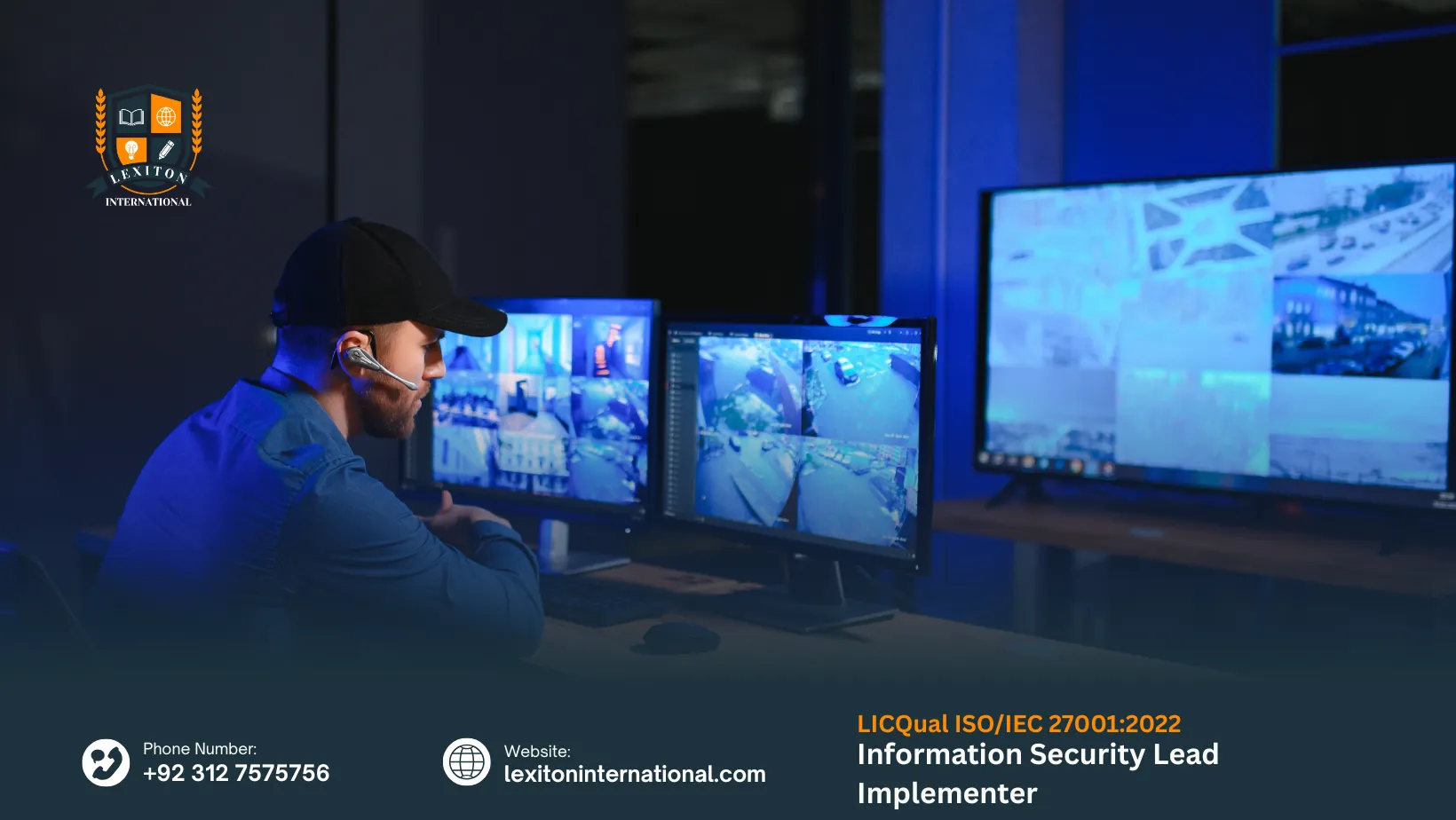
The LICQual ISO/IEC 27001:2022 Information Security Lead Implementer course is designed to provide professionals with the advanced knowledge and practical expertise required to establish, implement, and manage information security management systems (ISMS) in alignment with international standards. This program emphasizes the principles of confidentiality, integrity, and availability of information, ensuring participants gain the skills to lead implementation projects effectively. Learners will be guided through the essential requirements of ISO/IEC 27001:2022, with a focus on both technical and managerial aspects, preparing them to drive compliance, risk management, and continual improvement within organizations.
This course offers a comprehensive exploration of ISO/IEC 27001:2022, covering its structural framework, documentation requirements, and operational processes that underpin effective information security. Participants will learn how to interpret and apply the standard’s clauses, including risk assessment, control implementation, resource allocation, and monitoring of ISMS performance. The training emphasizes practical application, enabling learners to identify vulnerabilities, design corrective actions, and implement robust systems that meet both regulatory and organizational expectations. By the end of this section, learners will have a clear understanding of how to align information security practices with international best practices, ensuring resilience against threats and credibility in safeguarding sensitive data.
Beyond technical compliance, the course highlights leadership and strategic implementation skills essential for information security managers and compliance professionals. Learners will explore risk-based thinking, continual improvement strategies, and stakeholder communication techniques to foster a culture of security awareness and accountability. Case studies, interactive sessions, and real-world examples will be integrated to strengthen decision-making and problem-solving abilities. This holistic approach ensures that graduates of the program are not only proficient in the technical requirements of ISO/IEC 27001:2022 but also capable of leading teams, managing audits, and sustaining long-term organizational excellence in information security management.
To enroll in the LICQual ISO/IEC 27001:2022 Information Security Lead Implementer course, candidates must meet specific eligibility criteria to ensure they are prepared for the advanced level of study. The following requirements apply:
- Age Requirements: Candidates must be at least 21 years old to demonstrate maturity and readiness for professional-level training.
- Qualification Requirements: A minimum of a diploma or bachelor’s degree in information technology, computer science, engineering, or a related discipline is required.
- Professional Experience: At least two years of work experience in IT, cybersecurity, risk management, or compliance is expected.
- Educational Background: Learners should have a foundational understanding of information systems, security principles, or organizational risk management.
Mandatory Units
By the end of this course, learners will have developed the knowledge, skills, and confidence to lead the implementation of ISO 13485:2016 in medical device organizations. Each unit is carefully designed to strengthen technical expertise, managerial competence, and regulatory awareness, ensuring participants can apply the standard effectively to achieve compliance, product safety, and continual improvement.
Introduction to ISO 13485: Purpose, Scope, and Structure
- Understand the purpose and benefits of implementing ISO 13485, including its role in patient safety and regulatory compliance.
- Identify the structure, framework, and key clauses of the ISO 13485 standard to build a strong foundation for implementation.
- Comprehend the scope of the standard and how it applies across medical device manufacturing, design, and service provision.
- Explore the global relevance of ISO 13485 and its alignment with international regulatory requirements.
- Recognize how ISO 13485 integrates with other quality management systems to enhance organizational credibility.
Management Requirements
- Recognize the management responsibilities outlined in ISO 13485, including leadership commitment and accountability.
- Understand the importance of organizational structure in maintaining an effective quality management system (QMS).
- Develop knowledge of documentation, record-keeping, and resource management practices required for compliance.
- Learn how to establish clear roles, responsibilities, and communication channels within the organization.
- Explore strategies for conducting management reviews to evaluate performance and drive continual improvement.
Risk Management
- Understand the principles of risk management in medical device manufacturing and their impact on patient safety.
- Implement risk assessment, risk control, and risk communication processes in line with ISO 14971.
- Develop risk management strategies for design, production, and post-market activities to minimize hazards.
- Learn how to document and monitor risk management processes effectively for compliance and traceability.
- Recognize the importance of proactive risk management in maintaining product quality and regulatory approval.
Design and Development
- Learn to establish and manage design and development processes that meet ISO 13485 requirements.
- Understand the requirements for design inputs, outputs, and the need for verification and validation.
- Gain insight into managing design changes while ensuring compliance throughout product development.
- Explore methods for documenting design processes to demonstrate conformity and traceability.
- Recognize the importance of integrating risk-based thinking into design and development activities.
Production and Service Provision
- Understand the processes involved in the production and service provision of medical devices.
- Learn how to control production processes, validate procedures, and manage nonconforming products effectively.
- Develop strategies to ensure products consistently meet quality and regulatory standards throughout the production cycle.
- Explore techniques for monitoring suppliers and outsourced processes to maintain compliance.
- Recognize the importance of maintaining process efficiency while ensuring product safety and reliability.
Post-Market Surveillance
- Learn how to implement post-market surveillance processes to monitor medical device performance after release.
- Develop systems for complaint handling, vigilance reporting, and corrective actions in line with regulatory requirements.
- Understand the importance of continuous improvement in response to post-market feedback.
- Explore methods for analyzing post-market data to identify trends and potential risks.
- Recognize how effective post-market surveillance supports customer trust and regulatory compliance.
By completing this course, learners will be able to confidently implement ISO 13485:2016, ensuring their organizations achieve compliance, maintain product safety, and foster a culture of continual improvement in medical device quality management systems.
The ideal learner for this course is a professional who demonstrates technical competence, analytical thinking, and a strong commitment to safeguarding organizational information assets. This program is tailored for individuals who aspire to lead implementation projects and ensure compliance with ISO/IEC 27001:2022.
Professional Background
- Works in IT, cybersecurity, risk management, or compliance roles
- Has prior exposure to information systems or organizational security practices
- Engaged in roles requiring confidentiality, integrity, and availability of data
- Familiar with regulatory frameworks or accreditation processes in technical industries
- Interested in advancing into leadership or implementation positions
Educational Foundation
- Holds a diploma or degree in computer science, information technology, engineering, or a related discipline
- Possesses a solid understanding of information systems and security principles
- Comfortable with structured learning and technical documentation
- Demonstrates analytical thinking and problem-solving skills
- Seeks to expand knowledge of international standards and compliance practices
Skills and Competencies
- Strong organizational and project management abilities
- Effective communication and reporting skills for technical and regulatory contexts
- Ability to interpret and apply ISO/IEC 27001 requirements in practical scenarios
- Competence in handling documentation, audits, and compliance records
- Capacity to lead teams and coordinate information security initiatives
Personal Attributes
- Detail-oriented and methodical in approach to tasks
- Committed to professional ethics and organizational accountability
- Motivated to achieve compliance and accreditation goals
- Open to continuous learning and improvement
- Demonstrates leadership potential and resilience under pressure
Career Aspirations
- Aspires to become a lead implementer or information security manager
- Seeks recognition in regulatory compliance and accreditation fields
- Interested in building credibility within IT and technical industries
- Aims to contribute to organizational excellence and customer trust
- Plans to pursue advanced qualifications or consultancy roles in information security
The ideal learner is someone who blends technical expertise with leadership ambition, ready to take responsibility for implementing ISO/IEC 27001:2022 and driving excellence in information security management systems.
Completion of LICQual ISO/IEC 27001:2022 Information Security Lead Implementer opens multiple pathways for career advancement, professional recognition, and further specialization. Learners will be well-positioned to pursue higher-level opportunities in information security management, regulatory compliance, and international accreditation.
Career Advancement
- Progress into senior management roles in IT and cybersecurity organizations
- Take on responsibilities as a lead implementer or compliance officer
- Secure positions in regulatory agencies or accreditation bodies
- Enhance employability in industries requiring strict information security standards
- Gain recognition as a trusted professional in information security compliance
Professional Development
- Build expertise in information security systems and continual improvement strategies
- Strengthen leadership and decision-making capabilities in technical environments
- Expand professional networks within IT and compliance communities
- Develop confidence in managing audits and regulatory inspections
- Position oneself for consultancy or advisory roles in information security
Academic Pathways
- Pursue advanced diplomas or postgraduate studies in cybersecurity, risk management, or compliance
- Explore specialized certifications in information security and accreditation
- Engage in research projects related to data protection and information systems
- Contribute to academic publications or industry guidelines on ISO/IEC 27001
- Prepare for teaching or training roles in technical and IT education
Industry Opportunities
- Work across diverse sectors such as finance, healthcare, telecommunications, and government
- Support organizations in achieving international accreditation and regulatory approval
- Lead projects that enhance data security, reliability, and customer trust
- Participate in global initiatives for standardization and compliance in information security
- Contribute to innovation in cybersecurity practices and technologies
Long-Term Growth
- Establish oneself as an industry expert in ISO/IEC 27001 implementation
- Build a career in consultancy, offering guidance to multiple organizations
- Gain opportunities to represent organizations in international forums and conferences
- Develop a reputation for excellence in information security management systems
- Achieve long-term professional stability and recognition in IT and compliance industries
This course serves as a gateway to higher-level professional achievements, enabling learners to progress confidently into leadership, consultancy, and advanced academic or industry roles while contributing to global standards of information security and organizational resilience.
Curious About This Course?