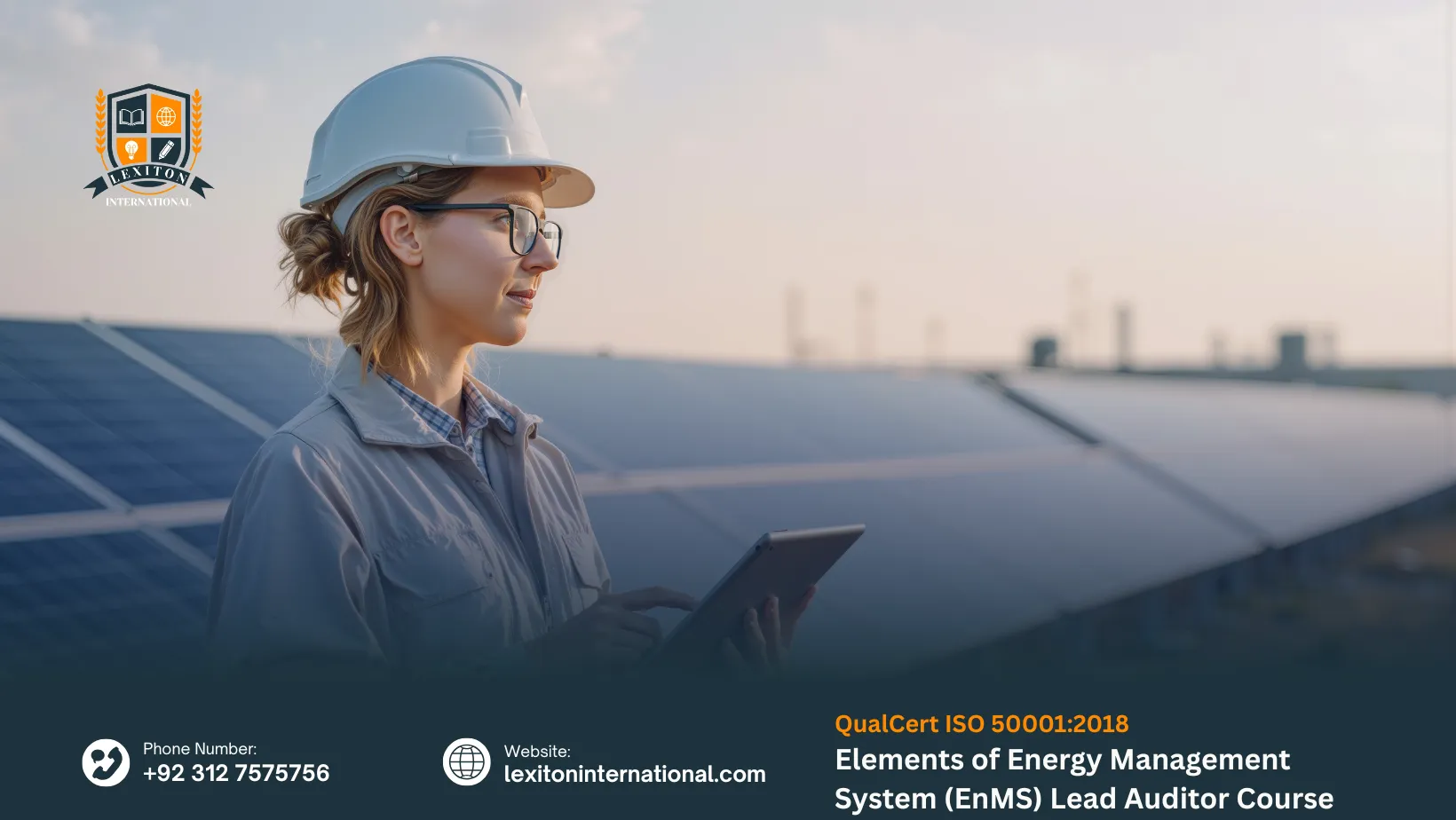
The QualCert ISO 50001:2018 – Elements of Energy Management System (EnMS) Lead Auditor Course is designed to equip learners with the essential knowledge and auditing skills required to evaluate and lead energy management system audits in line with ISO 50001:2018. As organizations worldwide strive to improve energy efficiency, reduce environmental impact, and align with sustainability goals, this course provides a comprehensive foundation for professionals to understand the requirements of ISO 50001 and the role of lead auditors in ensuring compliance. Learners will gain insights into the principles of energy management, the structure of the standard, and the auditing methodologies that support continual improvement and organizational resilience.
This course offers a detailed exploration of ISO 50001:2018, focusing on its framework, requirements, and practical application in diverse organizational contexts. Participants will study the fundamental elements of energy management systems, including policy development, planning, operational control, performance evaluation, and continual improvement. The program emphasizes the importance of integrating energy management into organizational strategy, highlighting how effective systems can reduce costs, enhance sustainability, and meet regulatory obligations. Learners will also explore the role of auditors in assessing compliance, identifying risks, and recommending improvements, ensuring that organizations can achieve measurable energy performance outcomes.
Beyond theoretical knowledge, the course emphasizes practical auditing skills, preparing learners to lead audits with confidence and professionalism. Through case studies, role‑plays, and structured exercises, participants will develop competencies in audit planning, conducting interviews, gathering evidence, and reporting findings. The program also addresses the interpersonal and leadership skills required of lead auditors, including communication, ethical responsibility, and stakeholder engagement. By the end of the course, learners will be able to apply ISO 50001:2018 requirements effectively, lead energy management system audits, and contribute to organizational sustainability and compliance with international standards.
To enroll in the QualCert ISO 50001:2018 – Elements of Energy Management System (EnMS) Lead Auditor Course, applicants must meet the following criteria:
- Age Requirement: Minimum age of 21 years at the time of enrollment.
- Qualification Requirement: A recognized diploma or degree in engineering, environmental science, management, or a related discipline.
- Professional Experience: At least 2 years of work experience in energy management, auditing, compliance, or related operational roles.
- Educational Background: Foundational knowledge of management systems, organizational processes, or sustainability principles is recommended.
Mandatory Units
By the end of this course, learners will have developed a comprehensive understanding of ISO 50001:2018 requirements and the skills necessary to plan, conduct, and lead energy management system audits. They will be able to apply risk-based thinking, evaluate compliance, and promote continual improvement, ensuring organizations achieve measurable energy performance outcomes.
Understanding ISO 50001:2018 and Energy Management System Requirements
- Interpret the structure, clauses, and intent of ISO 50001:2018 in organizational contexts.
- Explain the concepts of energy performance indicators (EnPIs), energy baselines, and measurable energy objectives.
- Identify essential documentation, records, and processes required for a compliant energy management system (EnMS).
- Understand the continual improvement cycle within ISO 50001 and how it drives energy efficiency.
- Relate ISO 50001 requirements to organizational sustainability and operational excellence.
Risk-Based Thinking and Strategic Energy Planning
- Apply risk-based thinking to assess energy use, efficiency, and operational controls.
- Develop strategic energy plans that balance performance improvement with risk management.
- Evaluate legal, regulatory, and compliance requirements affecting energy management systems.
- Support the setting of measurable energy objectives, targets, and action plans.
- Integrate risk-based energy planning into broader organizational strategies.
Planning and Conducting EnMS Audits (ISO 19011:2018 Aligned)
- Plan internal and external energy management system audits using ISO 19011 guidelines.
- Define audit scope, objectives, and criteria relevant to ISO 50001:2018 requirements.
- Organize audit resources, schedules, and timelines in line with best practices.
- Conduct effective opening and closing meetings, ensuring clear communication with auditees.
- Apply structured methodologies to ensure audits are consistent and objective.
Audit Tools, Techniques, and Evidence Gathering
- Apply appropriate auditing techniques, including interviews, observations, and sampling.
- Collect and validate objective evidence to assess conformity with ISO 50001 requirements.
- Document audit findings accurately and in compliance with recognized auditing standards.
- Ensure audit traceability and consistency using structured audit tools.
- Utilize technology and digital tools to enhance evidence gathering and reporting.
Audit Reporting, Non-Conformance, and Corrective Action Processes (CAPA)
- Prepare structured, evidence-based audit reports that clearly present findings and conclusions.
- Identify and classify non-conformities according to severity, impact, and organizational risk.
- Develop corrective action plans and follow-up procedures to ensure closure of non-conformities.
- Monitor the effectiveness of corrective and preventive actions using audit data.
- Support organizations in embedding CAPA processes into continual improvement frameworks.
Auditor Roles, Ethical Conduct, and Continuous Improvement in EnMS
- Demonstrate professionalism, objectivity, and integrity throughout the audit process.
- Uphold ethical principles when handling sensitive energy data and operational practices.
- Lead audit teams effectively, ensuring collaboration, communication, and conflict resolution.
- Promote and support a culture of continuous energy performance improvement.
- Encourage organizational accountability and transparency in energy management practices.
Collectively, these learning outcomes ensure that participants not only gain technical knowledge of ISO 50001:2018 but also acquire the practical auditing skills and ethical competencies required of lead auditors. Graduates of this program will be well-prepared to drive energy efficiency, support compliance, and contribute to sustainable organizational growth.
The ideal learner for QualCert ISO 50001:2018 – Elements of Energy Management System (EnMS) Lead Auditor Course is a motivated professional who seeks to strengthen their expertise in energy management systems, auditing practices, and organizational sustainability.
Professional Background and Experience
- Individuals working in energy management, engineering, compliance, or operational roles
- Professionals with exposure to organizational processes and resource efficiency initiatives
- Those engaged in utilities, manufacturing, infrastructure, or service industries
- Employees aiming to enhance their auditing and compliance knowledge
- Practitioners committed to supporting organizational sustainability goals
Educational and Knowledge Base
- Learners with a diploma or degree in engineering, environmental science, or management
- Basic understanding of management systems and organizational processes
- Familiarity with energy efficiency concepts and sustainability principles
- Awareness of regulatory and compliance frameworks related to energy use
- Interest in applying international standards to professional practice
Skills and Competencies
- Strong analytical and problem-solving abilities
- Effective communication and stakeholder engagement skills
- Capacity to interpret data and apply evidence-based decisions
- Ability to plan, organize, and lead structured audits
- Commitment to continual improvement and professional growth
Personal Attributes
- Motivation to learn and apply structured frameworks
- Adaptability to evolving organizational and industry needs
- Integrity and accountability in professional practice
- Attention to detail and methodical approach to auditing tasks
- Enthusiasm for contributing to organizational energy performance improvement
Career Aspirations
- Desire to advance into lead auditor or compliance roles
- Interest in supporting organizational sustainability initiatives
- Ambition to contribute to leadership and policy development
- Goal of enhancing career prospects through recognized training
- Commitment to building credibility in professional auditing practice
Learners who embody these qualities will maximize the benefits of the program and position themselves as effective lead auditors, capable of driving energy efficiency and compliance within their organizations.
Completion of this course opens multiple pathways for learners to advance academically, professionally, and within industry, building on their foundational knowledge of ISO 50001:2018 and auditing practices.
Advanced Learning Opportunities
- Enrollment in advanced energy management and auditing courses
- Specialized training in energy managemen and lifecycle optimization
- Study of integrated management systems across multiple ISO standards
- Participation in workshops on sustainability and compliance systems
- Sector-specific programs in energy efficiency and resource management
Professional Development
- Progression into supervisory or managerial roles in energy management
- Enhanced credibility in auditing and compliance functions
- Opportunities to lead organizational improvement initiatives
- Development of cross-functional expertise in operations and strategy
- Recognition as a contributor to organizational sustainability
Industry Applications
- Application of ISO 50001 principles in utilities, transport, and manufacturing
- Contribution to infrastructure projects and long-term energy planning
- Support for organizational resilience and risk mitigation
- Integration of energy management practices into daily operations
- Strengthening organizational competitiveness in global markets
Cross-Standard Integration
- Expansion into ISO 9001 quality management systems
- Application of ISO 14001 environmental management principles
- Alignment with ISO 45001 occupational health and safety frameworks
- Development of integrated management system expertise
- Contribution to holistic organizational governance
Career Pathways
- Advancement into lead auditor and consultancy roles
- Opportunities in compliance, auditing, and system evaluation
- Leadership positions in operations and resource management
- Engagement in sustainability and corporate governance initiatives
- Pathways to international career opportunities in energy management
This progression empowers learners to expand their expertise, assume greater responsibilities, and align their careers with global standards, positioning them as valuable assets to their organizations and the wider professional community.
Curious About This Course?