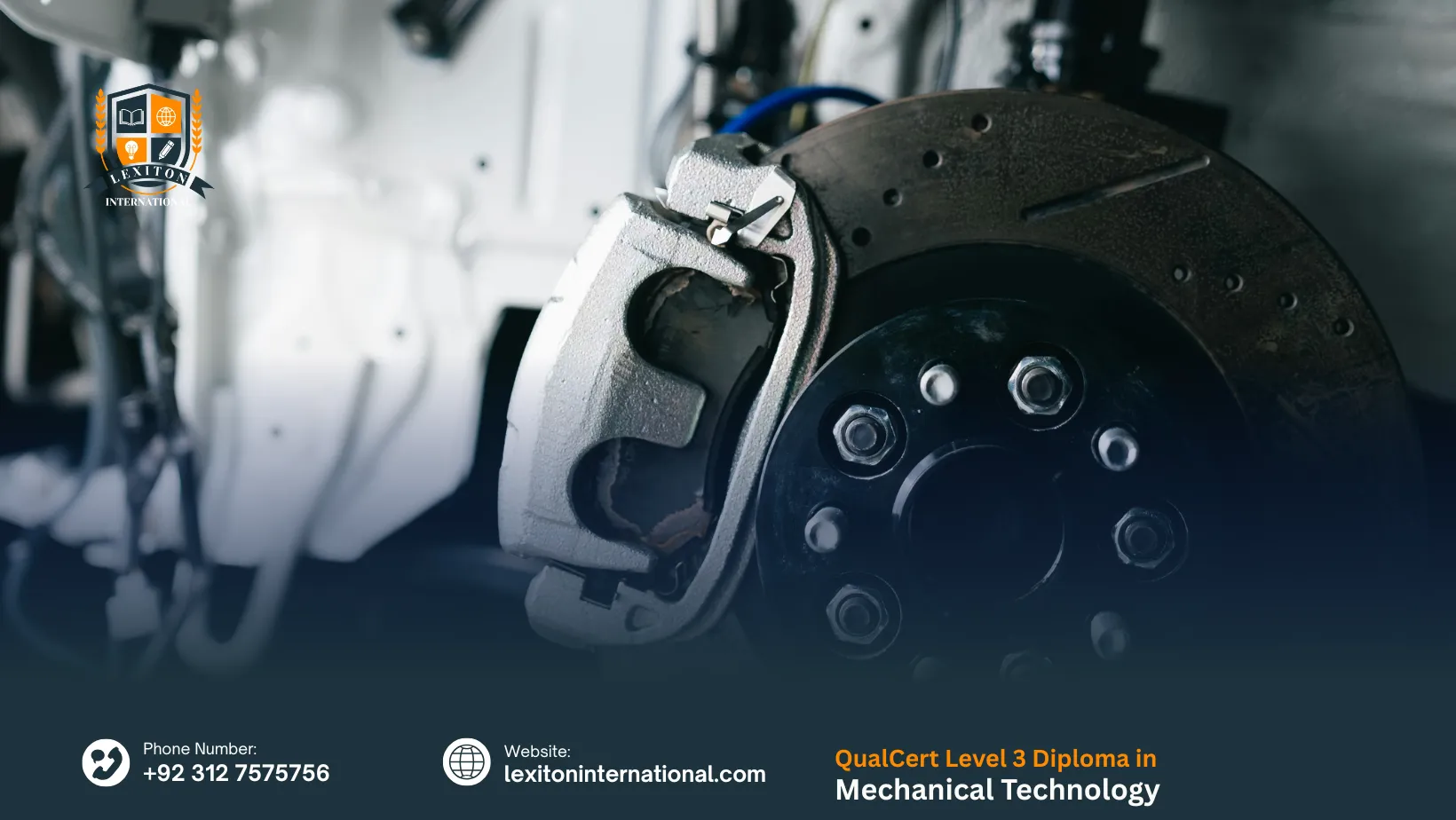
The QualCert Level 3 Diploma in Mechanical Technology is a comprehensive qualification designed to provide learners with the essential knowledge, technical skills, and practical experience required to succeed in mechanical and industrial environments. This program emphasizes both theoretical foundations and applied learning, ensuring that learners develop the ability to analyze, design, and maintain mechanical systems with confidence. By combining academic rigor with hands-on training, the diploma prepares individuals to meet the demands of modern industries and equips them with the competencies needed for career progression or advanced study.
The diploma covers a wide spectrum of mechanical technology topics, including engineering principles, materials science, mechanical systems, manufacturing processes, and applied mathematics. Learners will gain exposure to industry-standard practices and tools, enabling them to understand how mechanical systems operate and how to optimize their performance. Practical workshops, case studies, and project-based learning are integrated into the curriculum to ensure that learners can apply theoretical concepts to real-world engineering challenges. This balance of classroom learning and practical application makes the program highly relevant to current industry needs.
Beyond technical knowledge, the course also emphasizes professional development, workplace safety, and problem-solving skills, preparing learners for diverse roles in mechanical technology. Graduates will be well-positioned to enter employment in mechanical engineering, manufacturing, maintenance, or related fields, or to continue their studies at higher levels. The qualification is structured to support adaptability, lifelong learning, and progression, ensuring that learners are not only competent in mechanical technology but also capable of contributing meaningfully to evolving industrial and technological landscapes.
To ensure learners are prepared for the academic and professional demands of the QualCert Level 3 Diploma in Mechanical Technology, applicants must meet the following entry requirements. These criteria are designed to support successful participation and progression within the program.
- Age Requirements: Applicants must be at least 18 years old at the time of enrollment to ensure maturity and readiness for professional-level study.
- Qualification Requirements: A minimum of secondary school completion or equivalent qualification is required, with preference given to candidates who have studied science or technical subjects.
- Professional Experience: While prior work experience is not mandatory, applicants with exposure to engineering, manufacturing, or technical environments will be considered favorably.
- Educational Background: Candidates should demonstrate a solid foundation in mathematics and science, as these subjects are critical for understanding mechanical technology concepts.
- English Language Proficiency: Learners must have a good command of English to engage with course materials, assessments, and technical documentation effectively.
- Commitment to Learning: Applicants should show evidence of motivation, discipline, and the ability to manage independent study alongside practical training.
Mandatory Units
Upon successful completion of the QualCert Level 3 Diploma in Mechanical Technology, students will have:
Advanced Manufacturing Techniques
- Understand the principles of advanced manufacturing methods and technologies.
- Gain proficiency in using modern manufacturing processes such as additive manufacturing, precision machining, and laser cutting.
- Evaluate the role of automation and computer numerical control (CNC) in enhancing manufacturing efficiency.
- Develop the ability to assess material properties and select the appropriate manufacturing technique for different products.
- Learn how to optimize production processes to improve quality and reduce costs.
Mechanics of Machines
- Understand the fundamental principles of machine mechanics, including motion, forces, and energy.
- Analyze the behavior of mechanical systems and their components under different loads and conditions.
- Apply principles of kinematics and dynamics to design and troubleshoot machinery.
- Learn how to evaluate the efficiency of mechanical systems and propose improvements.
- Gain the ability to use simulation tools for modeling mechanical systems and analyzing their performance.
Thermal Systems & Refrigeration
- Understand the fundamental principles of thermodynamics as they apply to thermal systems and refrigeration.
- Learn how to design and optimize heating, cooling, and ventilation systems.
- Gain practical knowledge of refrigeration cycles, heat exchangers, and cooling technologies.
- Analyze the efficiency and environmental impact of different thermal systems.
- Develop the ability to troubleshoot common problems in thermal and refrigeration systems.
Robotics & Automation
- Gain knowledge of robotics systems, including sensors, actuators, and control systems.
- Understand the principles behind automation technologies and their integration into industrial processes.
- Learn how to program and operate industrial robots for various tasks such as assembly, welding, and material handling.
- Evaluate the benefits and challenges of automation in modern manufacturing environments.
- Develop the ability to design and implement robotic solutions to improve productivity and safety.
Mechatronics Fundamentals
- Understand the interdisciplinary nature of mechatronics, combining mechanical engineering, electronics, and computer science.
- Learn how to design and integrate mechanical, electrical, and software components in mechatronic systems.
- Gain practical experience in controlling and automating mechanical systems through embedded systems and sensors.
- Develop problem-solving skills for diagnosing and troubleshooting mechatronic systems.
- Understand the applications of mechatronics in industries such as manufacturing, robotics, and automotive engineering.
Project Management & Engineering Economics
- Learn the key principles of project management, including planning, scheduling, and resource management.
- Understand the application of engineering economics to assess project feasibility and financial implications.
- Develop skills to manage engineering projects effectively, ensuring timelines, budgets, and quality standards are met.
- Learn to evaluate the cost-benefit analysis of engineering projects and make informed financial decisions.
- Gain the ability to manage teams and communicate effectively with stakeholders throughout the project lifecycle.
The ideal learner for the QualCert Level 3 Diploma in Mechanical Technology is someone who demonstrates curiosity, discipline, and a strong commitment to developing technical expertise. This profile highlights the qualities, skills, and attitudes that will enable learners to succeed in the program and beyond.
Academic Readiness
- Possesses a solid foundation in mathematics and science, particularly physics and applied mechanics
- Demonstrates analytical thinking and the ability to solve complex technical problems
- Shows interest in mechanical principles and their practical applications
- Capable of understanding theoretical concepts and applying them to real-world scenarios
- Prepared to engage with structured coursework and independent study
Technical Aptitude
- Comfortable working with engineering tools, equipment, and software applications
- Displays practical skills in handling mechanical systems and components
- Willing to learn advanced techniques such as simulation, modeling, and design analysis
- Demonstrates precision and attention to detail in technical tasks
- Shows adaptability in applying mechanical knowledge to diverse industries
Professional Attitude
- Maintains discipline, punctuality, and responsibility in academic and practical settings
- Demonstrates teamwork and collaboration skills in group projects
- Communicates effectively in technical and professional contexts
- Shows respect for safety standards and ethical practices in engineering
- Exhibits motivation to pursue continuous learning and professional growth
Personal Attributes
- Curious and eager to explore new technologies and innovations
- Resilient in overcoming challenges and problem-solving under pressure
- Organized in managing time, assignments, and project deadlines
- Creative in approaching design and engineering solutions
- Committed to achieving long-term career goals in mechanical technology
Career Orientation
- Interested in pursuing roles in mechanical engineering, manufacturing, or product development
- Seeks opportunities to apply knowledge in industries such as automotive, aerospace, or energy
- Motivated to progress toward higher-level qualifications in engineering
- Values practical experience and industry relevance in training
- Aspires to contribute meaningfully to technological advancement and innovation
The ideal learner is someone who combines academic readiness, technical aptitude, and professional commitment, ensuring they can fully benefit from the diploma and prepare for a successful career in mechanical technology.
The QualCert Level 3 Diploma in Mechanical Technology provides learners with a strong foundation for career advancement and further study. Successful graduates can pursue multiple pathways, ranging from higher education to specialized industry roles.
Higher Education Pathways
- Progression to Level 4 and Level 5 diplomas in engineering disciplines
- Entry into undergraduate programs in mechanical or industrial engineering
- Opportunities to specialize in areas such as robotics, mechatronics, or renewable energy systems
- Preparation for certifications in engineering management or research
Professional Career Opportunities
- Employment in mechanical engineering roles across manufacturing, automotive, and aerospace sectors
- Opportunities in maintenance, design, and production engineering positions
- Roles in energy, power generation, and industrial plant operations
- Entry into technical consultancy or engineering support services
- Pathways into supervisory or junior management positions in engineering firms
Technical Specialization
- Development of expertise in computational fluid dynamics, finite element analysis, or thermodynamics
- Specialization in product design, prototyping, and industrial development
- Opportunities to focus on advanced manufacturing technologies and automation
- Skills enhancement in simulation, modeling, and engineering software applications
- Ability to contribute to innovation in mechanical systems and product performance
Industry Engagement
- Participation in internships, apprenticeships, or industry placements
- Collaboration with engineering firms on real-world projects
- Opportunities to engage with professional engineering associations and networks
- Exposure to industry standards, regulations, and best practices
- Development of professional portfolios showcasing technical competencies
Lifelong Learning and Development
- Continuous professional development through short courses and certifications
- Opportunities to attend workshops, seminars, and technical training programs
- Engagement in research, innovation, and emerging technologies
- Building leadership and project management skills for career advancement
- Commitment to adapting to evolving industry demands and global engineering trends
Future progression from this diploma opens diverse pathways for learners, enabling them to advance academically, professionally, and technically. Graduates will be well-prepared to
Curious About This Course?