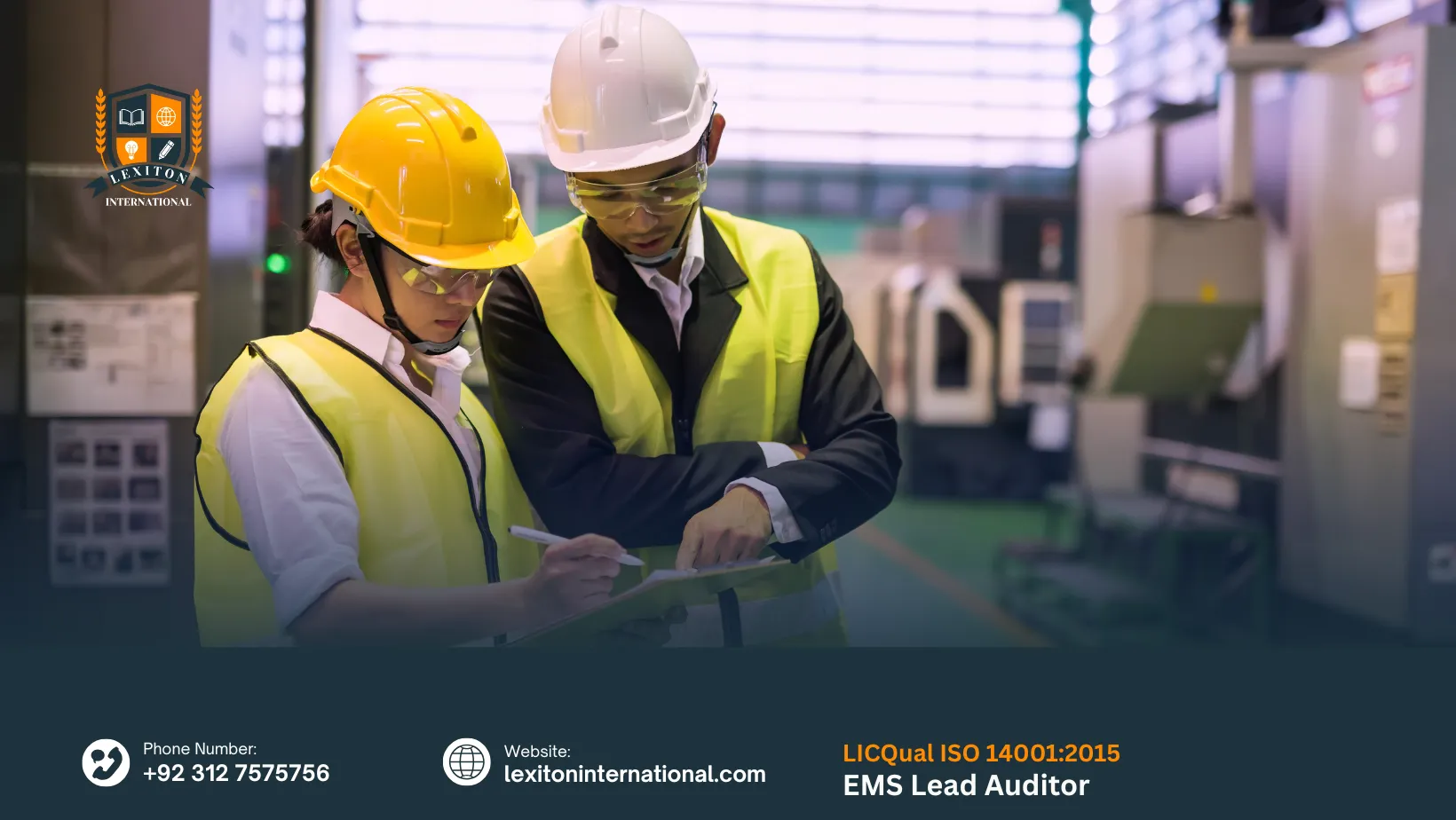
The LICQual ISO 14001:2015 EMS Lead Auditor course is a globally recognised qualification designed for professionals who want to develop expertise in environmental management system auditing. It focuses on ISO 14001:2015 standards, which help organisations reduce their environmental impact, improve sustainability practices, and ensure compliance with international environmental regulations. This programme is ideal for individuals who want to play a key role in promoting environmental responsibility within organisations.
The course covers essential areas such as environmental management principles, audit planning and execution, compliance evaluation, risk assessment, and continuous improvement processes. Learners gain a clear understanding of how Environmental Management Systems (EMS) are implemented and maintained in different industries. It also explores how audits are conducted to assess environmental performance and ensure alignment with global sustainability standards.
By completing this qualification, learners develop strong auditing skills, analytical thinking, and a deep understanding of environmental compliance frameworks. It prepares individuals to evaluate organisational environmental practices with confidence and accuracy. As sustainability becomes a global priority, this certification provides valuable recognition for those aiming to contribute to environmentally responsible business operations and sustainable industrial development.
- Age Requirement: Applicants should normally be 18 years of age or older at the time of enrollment.
- Educational Background A minimum of secondary education or equivalent is required. A background in environmental science, engineering, or management is beneficial but not mandatory.
- Work Experience: Basic knowledge of environmental management or workplace systems is recommended. Prior experience in audits or compliance roles is an added advantage.
- English Language Proficiency: Learners must have good English reading and writing skills. This is essential for understanding ISO standards, audit documentation, and assessments.
Mandatory Units
Skills You Will Gain
By the end of this course, learners will be able to:
Introduction to Environmental Management Systems (EMS) and ISO 14001:2015
- Demonstrate understanding of the core principles of Environmental Management Systems (EMS)
- Identify ISO 14001:2015 structure and key requirements
- Explain the importance of ISO 14001:2015 in improving environmental performance
- Understand how EMS supports organizational sustainability goals
- Recognize the role of environmental responsibility in business operations
Environmental Context and Organizational Requirements
- Analyze environmental factors affecting organizational operations
- Understand stakeholder needs and expectations in EMS development
- Identify legal and regulatory compliance requirements
- Evaluate environmental risks and opportunities
- Understand how external and internal factors influence EMS planning
Planning and Implementing an EMS
- Apply ISO 14001:2015 principles in EMS planning and design
- Develop environmental objectives aligned with organizational goals
- Integrate risk-based thinking into environmental planning
- Define environmental policy, roles, and responsibilities
- Support effective implementation of environmental management systems
Audit Principles and Methodology
- Understand key auditing principles and ISO standards
- Plan and prepare environmental management system audits
- Apply ethical and professional auditing practices
- Use interviews, documentation, and evidence collection techniques
- Ensure audits are conducted systematically and effectively
Conducting Internal and External EMS Audits
- Conduct internal and external EMS audits based on ISO 14001:2015
- Assess compliance of environmental systems with ISO standards
- Identify gaps and areas for improvement in EMS performance
- Document audit findings clearly and accurately
- Communicate audit results to relevant stakeholders effectively
Corrective Actions, Non-Conformities, and Reporting
- Identify non-conformities during environmental audits
- Recommend corrective and preventive actions
- Track and monitor resolution of non-conformities
- Prepare structured audit reports with clear findings
- Support continuous improvement of environmental management systems
The LICQual ISO 14001:2015 EMS Lead Auditor course is designed for learners who are motivated to build strong expertise in environmental management, compliance, and auditing practices. It suits individuals who are committed to sustainability and want to develop professional skills in environmental responsibility and organizational improvement.
Who Is This Course For
- Passionate about sustainability and environmental protection
- Interested in improving environmental performance in organizations
- Motivated to work with ISO 14001:2015 environmental standards
- Keen to reduce environmental risks and ensure compliance
- Strong interest in auditing, inspection, and quality systems
- Analytical mindset with attention to detail and problem-solving skills
- Ability to evaluate processes and identify non-conformities
- Interest in structured systems and regulatory frameworks
- Willingness to engage in continuous learning and improvement
- Motivated to apply environmental management principles in real-world contexts
The LICQual ISO 14001:2015 EMS Lead Auditor course equips learners with strong environmental auditing knowledge and compliance skills that are highly valued across industries. It helps build professional competence in sustainability, environmental management systems, and organizational compliance practices.
Future Progression
- Opportunities to work as Environmental Auditor or EMS Specialist
- Roles in compliance, sustainability, and risk management departments
- Positions in manufacturing, construction, energy, and industrial sectors
- Employment in environmental consultancy and auditing firms
- Roles supporting corporate environmental responsibility programs
- Work in government environmental and regulatory bodies
- Opportunities in NGOs focused on sustainability and climate action
- Positions in multinational organizations with ESG commitments
- Roles in environmental monitoring and reporting functions
- Participation in organizational sustainability and compliance initiatives
Curious About This Course?