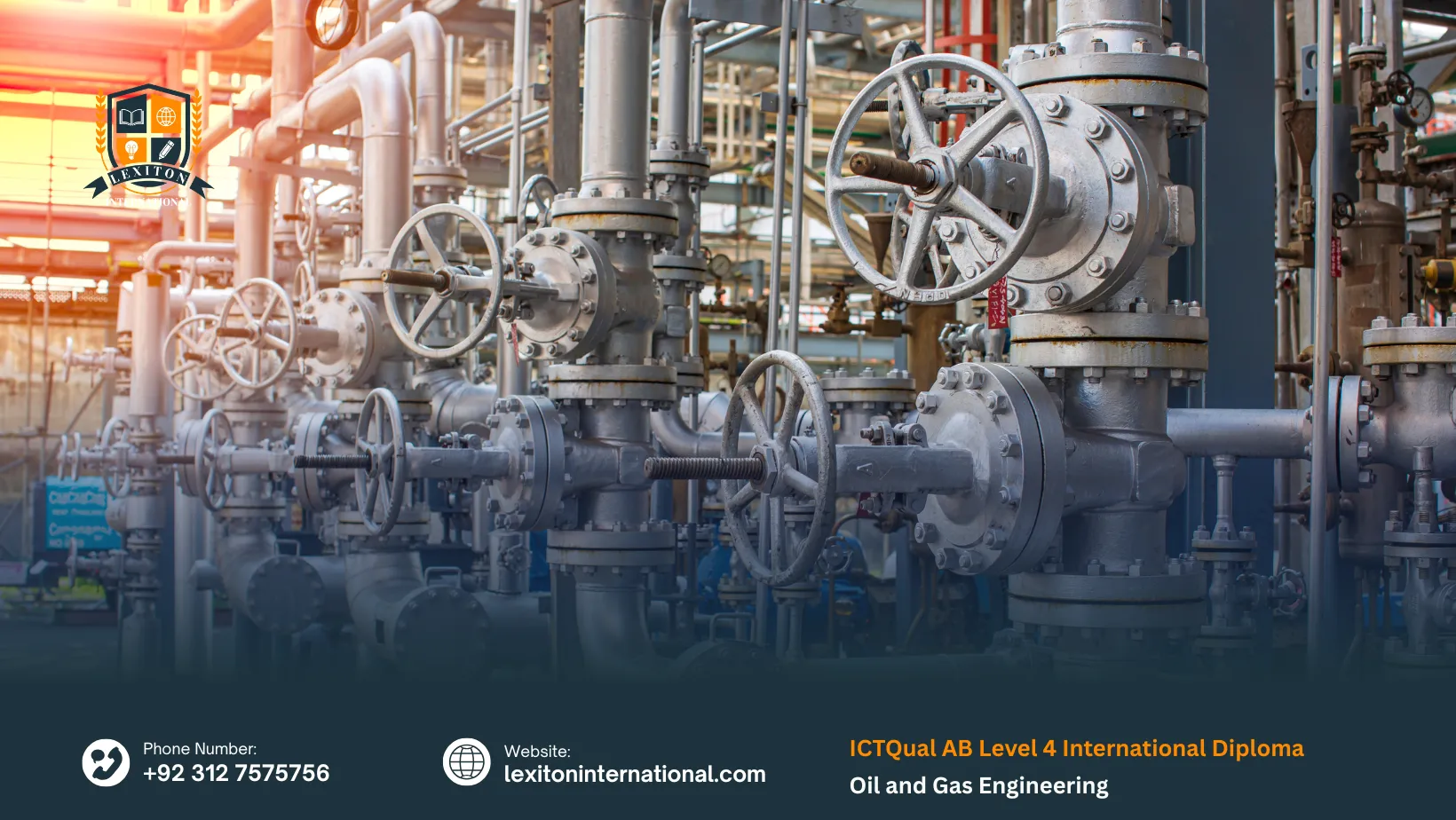
The ICTQual AB Level 4 International Diploma in Oil and Gas Engineering is a professionally designed qualification that introduces learners to the fundamental principles of the global oil and gas industry. It provides a clear understanding of how energy resources are explored, extracted, processed, and managed to meet the world’s growing demand for fuel and industrial materials. This programme is ideal for individuals who want to build a strong foundation in one of the most important sectors of the global economy.
The course covers essential areas such as drilling fundamentals, petroleum exploration, production systems, refinery basics, and oilfield operations. Learners also gain insight into equipment used in the industry, safety practices, and environmental considerations. The programme is structured to develop both technical awareness and industry understanding, helping learners connect theoretical concepts with real-world oil and gas processes.
By completing this diploma, learners develop the confidence to understand how complex energy systems operate within the oil and gas sector. It enhances analytical thinking and technical comprehension, enabling individuals to interpret industry processes and operational challenges effectively. As global energy demand continues to grow, this qualification provides valuable knowledge for those interested in entering a vital and dynamic industry.
- Age Requirement: Applicants should ideally be 18 years or older at the time of enrollment.
- Educational Background: A secondary school qualification (or equivalent) is required. Preference is given to candidates with a background in science, mathematics, or engineering-related subjects, as these provide the analytical foundation needed for technical studies.
- Work Experience: Work experience is not mandatory at this level. However, candidates with prior exposure to industrial, mechanical, or technical environments will find the course especially relevant and easier to contextualize.
- English Language Proficiency: Since the course is delivered in English, learners must demonstrate a good command of spoken and written English to engage with technical content, case studies, and assessments.
Mandatory Units
Year 1 – Foundation and Core Knowledge
- Introduction to Oil and Gas Engineering
- Fundamentals of Petroleum Geology
- Drilling Engineering and Well Operations
- Reservoir Engineering Principles
- Production Technology and Processes
- Oil and Gas Exploration Methods
- Offshore Engineering and Subsea Systems
- Health, Safety, and Environmental Management in Oil and Gas
- Pipeline Engineering and Transportation Systems
- Energy Economics and Project Management in Oil and Gas
- Digital Technologies in Oil and Gas Operations
- Professional Practice and Future Trends in Energy Engineering
Skills You Will Gain
Learning Outcomes for the ICTQual AB Level 4 International Diploma in Oil and Gas Engineering:
Year 1 – Foundation and Core Knowledge
Introduction to Oil and Gas Engineering
- Understand the structure, scope, and global significance of the oil and gas industry.
- Identify key stages in the oil and gas value chain from exploration to distribution.
- Recognise the role of engineers and technicians in upstream, midstream, and downstream sectors.
- Demonstrate awareness of current challenges in the industry, including energy transition.
- Apply basic engineering concepts relevant to oil and gas operations.
Fundamentals of Petroleum Geology
- Explain the formation and characteristics of petroleum reservoirs.
- Interpret geological data to identify potential oil and gas deposits.
- Understand the role of rock and fluid properties in hydrocarbon exploration.
- Assess the geological factors influencing drilling and extraction.
- Apply geological knowledge to predict reservoir performance.
Drilling Engineering and Well Operations
- Describe the principles of drilling systems and well design.
- Identify different types of drilling rigs and their applications.
- Understand drilling fluids and their role in well operations.
- Evaluate safety measures and risk management in drilling activities.
- Apply basic calculations related to drilling performance.
Reservoir Engineering Principles
- Define key concepts such as porosity, permeability, and fluid flow.
- Understand methods of estimating reservoir size and production potential.
- Evaluate techniques for enhanced oil recovery.
- Apply material balance equations in reservoir studies.
- Analyse reservoir behaviour under different extraction conditions.
Production Technology and Processes
- Explain surface production facilities and separation processes.
- Understand artificial lift systems and their applications.
- Evaluate methods of optimising oil and gas production.
- Demonstrate knowledge of well testing and monitoring processes.
- Apply safety and efficiency practices in production operations.
Oil and Gas Exploration Methods
- Identify exploration techniques including seismic surveys and remote sensing.
- Understand the role of geophysical and geochemical methods in exploration.
- Evaluate the use of exploration data for decision-making.
- Apply basic principles of mapping and data interpretation.
- Recognise the challenges and limitations of exploration methods.
Offshore Engineering and Subsea Systems
- Understand the design and construction of offshore platforms.
- Evaluate subsea production systems and pipeline installations.
- Assess environmental and operational challenges in offshore engineering.
- Apply safety and risk management practices in offshore operations.
- Explore new technologies in offshore oil and gas development.
Health, Safety, and Environmental Management in Oil and Gas
- Understand international safety standards and regulations.
- Identify common risks and hazards in oil and gas operations.
- Apply risk assessment and mitigation strategies.
- Evaluate environmental protection measures in oil and gas projects.
- Demonstrate awareness of sustainable practices in the energy industry.
Pipeline Engineering and Transportation Systems
- Explain the design and operation of pipeline networks.
- Understand materials and technologies used in pipeline construction.
- Apply safety protocols for pipeline integrity and maintenance.
- Analyse transportation methods for oil, gas, and refined products.
- Evaluate challenges related to long-distance and offshore pipelines.
Energy Economics and Project Management in Oil and Gas
- Understand the economic principles governing oil and gas markets.
- Evaluate project feasibility and cost estimation in energy projects.
- Apply project management tools for scheduling and resource allocation.
- Analyse risks and uncertainties in oil and gas investments.
- Demonstrate knowledge of global energy demand and supply trends.
Digital Technologies in Oil and Gas Operations
- Explore the role of digitalisation and automation in oil and gas.
- Understand the application of AI, IoT, and big data in energy operations.
- Evaluate digital twins and predictive maintenance in engineering.
- Apply knowledge of cyber security in oil and gas systems.
- Recognise how digital innovation improves efficiency and safety.
Professional Practice and Future Trends in Energy Engineering
- Demonstrate awareness of ethical and legal responsibilities in oil and gas.
- Understand professional codes of conduct in engineering practice.
- Explore emerging trends such as renewable integration and energy transition.
- Recognise the importance of lifelong learning in the energy sector.
The ICTQual AB Level 4 International Diploma in Oil and Gas Engineering is designed for individuals who want to build a solid entry-level understanding of the oil and gas industry and develop the technical confidence needed for field and operational roles. It is ideal for learners aiming to step into one of the world’s most important and high-demand energy sectors.
Who Is This Course For
- Learners who want to start a career in the oil and gas engineering industry.
- Individuals interested in understanding basic oilfield operations and energy systems.
- Aspiring technicians looking to build foundational knowledge in drilling and production.
- Students from technical or science backgrounds planning to enter the energy sector.
- Workers aiming to shift into oil and gas or industrial engineering fields.
- Individuals interested in how oil, gas, and energy resources are explored and processed.
- Candidates seeking entry-level opportunities in global energy companies.
- Learners who want to develop practical, hands-on engineering awareness.
- People interested in offshore rigs, refineries, and energy production environments.
- Anyone motivated to build a long-term career in the oil and gas industry.
The ICTQual AB Level 4 International Diploma in Oil and Gas Engineering builds your initial industry readiness by developing essential understanding of oilfield systems, energy operations, and basic engineering practices. It prepares you for entry-level participation in a global sector where practical awareness, safety, and technical discipline are highly valued.
Future Progression
- Step into assistant-level roles in oil and gas operations and field services.
- Support basic drilling, production, and maintenance activities on energy sites.
- Contribute to day-to-day operations in onshore and offshore environments.
- Work alongside technical teams in refineries and oilfield facilities.
- Assist in monitoring equipment performance and operational safety checks.
- Build opportunities in entry-level positions within energy service companies.
- Participate in routine industrial and field support tasks under supervision.
- Strengthen eligibility for junior technical roles in the oil and gas sector.
- Develop recognition for supporting essential energy production activities.
- Position yourself at the starting point of a globally important and high-demand industry.
Curious About This Course?