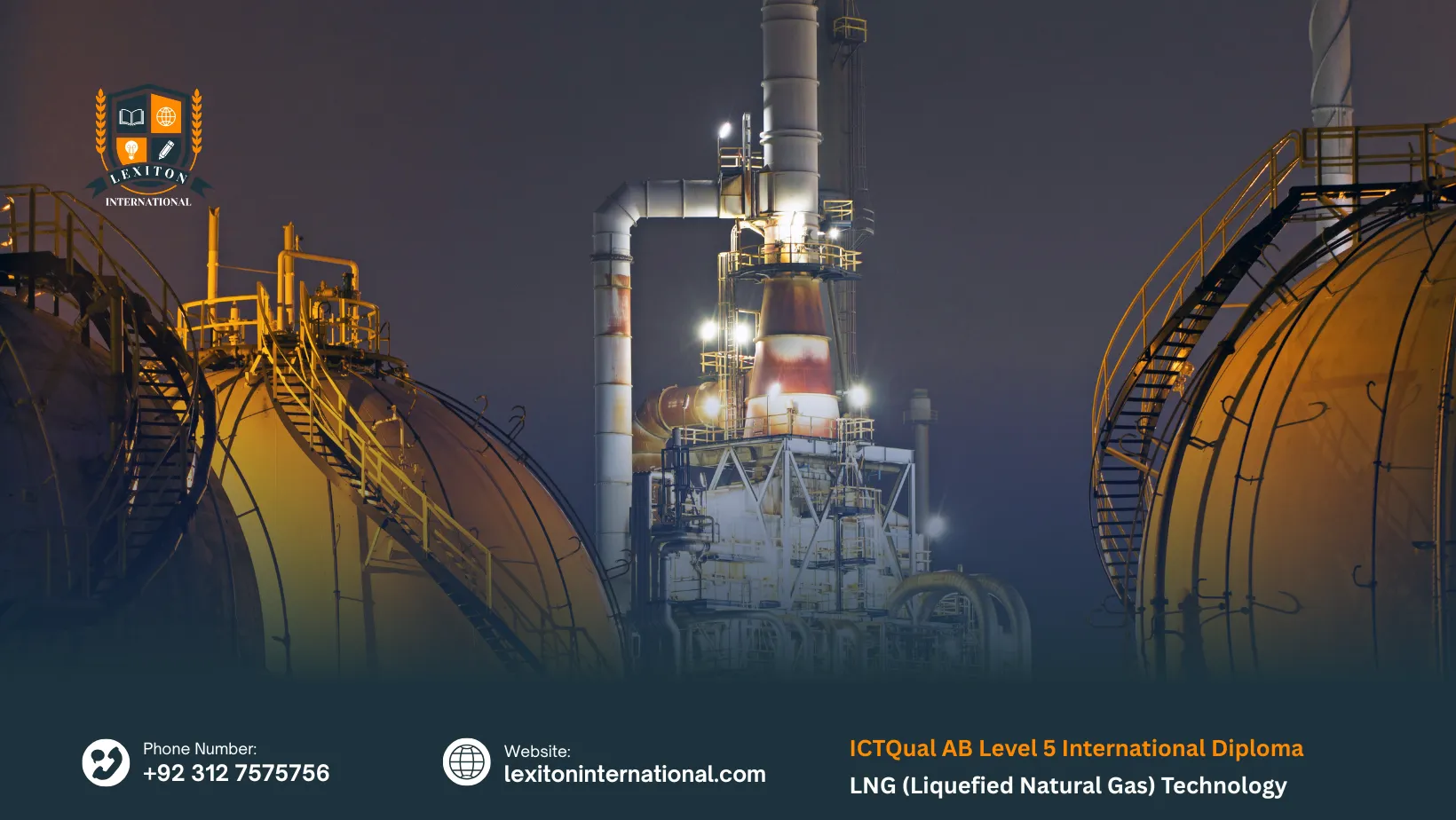
The ICTQual AB Level 5 International Diploma in LNG (Liquefied Natural Gas) Technology is a specialised qualification designed to develop a strong understanding of LNG systems and their role in the global energy industry. It focuses on how natural gas is processed, liquefied, stored, and transported across international markets to meet rising energy demands. This programme is ideal for learners who want to build advanced knowledge in one of the fastest-growing sectors of the energy field.
The course covers key areas such as LNG production processes, cryogenic technology, liquefaction and regasification systems, storage and transportation methods, and LNG plant operations. Learners also explore safety management, operational control, and environmental considerations within LNG facilities. The programme is structured to provide clear insight into how LNG fits into the global energy supply chain and supports international energy security.
By completing this diploma, learners develop strong analytical thinking and technical understanding of LNG technology and systems. It enhances the ability to interpret complex energy processes and understand how LNG operations are managed across different stages. As LNG continues to play a major role in global energy transition and supply, this qualification provides valuable insight into a critical and rapidly evolving industry.
- Age Requirement: Applicants should ideally be 18 years or older at the time of enrollment.
- Educational Background: A secondary school qualification or equivalent is recommended to support understanding of LNG technology and energy concepts.
- Work Experience: No prior LNG industry experience is required, although background in engineering, science, or energy-related fields is an advantage.
- English Language Proficiency: Learners should have a good command of English to understand technical terminology, course materials, and assessments effectively.
Mandatory Units
Year 1 – Foundation in LNG Technology
Year 2 – Advanced LNG Technology and Applications
Skills You Will Gain
Learning Outcomes for the ICTQual AB Level 5 International Diploma in LNG (Liquefied Natural Gas) Technology:
Year 1 – Foundation in LNG Technology (12 Units)
Introduction to LNG and Global Energy Markets
- Understand the role of LNG within the global energy supply chain.
- Analyse trends in international LNG trade and consumption.
- Identify the economic, political, and environmental drivers of LNG (Liquefied Natural Gas) Technology demand.
- Evaluate how LNG contributes to energy security and transition strategies.
Fundamentals of Oil, Gas, and LNG Operations
- Gain knowledge of the upstream, midstream, and downstream energy sectors.
- Explain the core principles of oil, gas, and LNG production.
- Recognise key processes involved in extraction, processing, and distribution.
- Assess the interrelationship between LNG and conventional hydrocarbon industries.
Applied Chemistry for LNG Processes
- Apply principles of organic and inorganic chemistry to LNG production.
- Understand chemical reactions and bonding in cryogenic systems.
- Explore the role of catalysts and separation techniques in LNG operations.
- Evaluate chemical properties of hydrocarbons and their impact on LNG processing.
Thermodynamics and Fluid Mechanics in LNG Systems
- Apply thermodynamic laws to LNG liquefaction and regasification.
- Analyse fluid behaviour in pipelines and storage systems.
- Understand energy balances and efficiency calculations in LNG (Liquefied Natural Gas) Technology operations.
- Solve engineering problems related to heat transfer and cryogenics.
Engineering Mathematics and Technical Applications
- Apply algebra, calculus, and statistics to solve LNG-related problems.
- Use mathematical models for process optimisation and system design.
- Interpret engineering data through graphical and numerical analysis.
- Strengthen quantitative reasoning for LNG technology applications.
Process Plant Design and Operations
- Understand the design principles of LNG plants and facilities.
- Analyse key components, layouts, and flow processes.
- Evaluate safety and efficiency considerations in plant operations.
- Apply practical approaches to monitoring and maintaining LNG plants.
Health, Safety, and Environmental Management in Energy Industries
- Apply global HSE standards to LNG operations.
- Recognise hazards and implement risk control measures.
- Understand the impact of LNG operations on the environment.
- Promote a culture of safety and sustainability in the workplace.
Instrumentation, Control, and Monitoring Systems
- Understand instrumentation used in LNG plants.
- Apply control system principles for process stability.
- Evaluate real-time monitoring tools for LNG operations.
- Interpret instrumentation data to optimise plant performance.
Marine Transport and LNG Shipping Basics
- Understand LNG shipping operations and vessel types.
- Explore LNG loading, unloading, and storage procedures.
- Recognise international maritime regulations for LNG transport.
- Assess safety and environmental considerations in LNG shipping.
Energy Economics and Sustainable Practices
- Understand energy market pricing and cost structures.
- Evaluate the economics of LNG projects and investments.
- Explore renewable energy integration with LNG systems.
- Apply sustainable practices to reduce environmental impact.
Information Technology for Energy Sector Applications
- Apply IT tools for data management and analysis in LNG industry.
- Understand the role of digitalisation and automation in energy industries.
- Use software for process simulation and monitoring.
- Explore cybersecurity and data protection in LNG operations.
Academic and Professional Skills for Energy Engineers
- Develop research, writing, and presentation skills.
- Strengthen teamwork and problem-solving abilities.
- Apply critical thinking to energy-related case studies.
- Build professional ethics and employability skills.
Year 2 – Advanced LNG Technology and Applications (12 Units)
Advanced LNG Processing and Liquefaction Technologies
- Understand advanced liquefaction processes and cycles.
- Evaluate efficiency and optimisation of LNG technologies.
- Analyse innovations in LNG production systems.
- Apply advanced knowledge to solve processing challenges.
Cryogenic Engineering and Storage Systems
- Understand cryogenic principles in LNG storage and handling.
- Evaluate design and safety features of cryogenic tanks.
- Analyse thermal insulation and materials for storage systems.
- Apply safety measures in cryogenic operations.
Pipeline Engineering and Gas Transmission Systems
- Understand the design and construction of gas pipelines.
- Evaluate fluid dynamics in long-distance LNG transport.
- Apply maintenance and monitoring practices for pipelines.
- Assess environmental and safety aspects of pipeline operations.
Advanced Marine Transport and LNG Carrier Operations
- Analyse LNG carrier technologies and storage systems.
- Understand advanced loading and unloading procedures.
- Evaluate LNG shipping logistics and route optimisation.
- Apply international regulations to carrier operations.
Risk Assessment and Emergency Management in LNG Facilities
- Conduct hazard identification and risk assessments.
- Understand emergency response planning in LNG plants.
- Apply safety protocols for accident prevention.
- Evaluate case studies of incidents in LNG facilities.
Global LNG Trade, Contracts, and Supply Chain Management
- Understand international LNG trade frameworks.
- Analyse LNG pricing models and contractual agreements.
- Evaluate global supply chain logistics and risks.
- Apply strategies for effective LNG trade and distribution.
Renewable Energy Integration with LNG Systems
- Understand the role of LNG in energy transition.
- Explore LNG and renewable energy hybrid solutions.
- Evaluate carbon reduction strategies in LNG industries.
- Apply sustainability measures to LNG facilities.
Advanced Process Simulation and Modelling for LNG Plants
- Use advanced software for LNG plant simulation.
- Model thermodynamic and fluid processes.
- Analyse performance and efficiency improvements.
- Apply modelling for risk and cost optimisation.
Intercultural Communication and Global Workforce Management
- Understand cultural diversity in the energy sector.
- Apply effective communication strategies in global teams.
- Analyse case studies of intercultural management in LNG projects.
- Build leadership skills for international collaboration.
Project Management in Oil, Gas, and LNG Industries
- Apply project planning and scheduling techniques.
- Manage resources, budgets, and risks in LNG projects.
- Understand stakeholder management in large-scale projects.
- Evaluate project success using international standards.
Research Methods in Energy Technology
- Understand qualitative and quantitative research methods.
- Apply research tools to energy-related investigations.
- Develop proposals and analyse data effectively.
- Evaluate ethical considerations in energy research.
Capstone Project / Industry-Based Dissertation
- Conduct independent research on an LNG-related topic.
- Apply theoretical and practical knowledge to real-world issues.
- Develop problem-solving and analytical skills.
- Present findings in a professional and academically rigorous format.
The ICTQual AB Level 5 International Diploma in LNG (Liquefied Natural Gas) Technology is designed for individuals who want to build practical skills and technical understanding of LNG systems, processing, and global gas operations. It is ideal for learners aiming to enter one of the fastest-growing sectors of the energy industry.
Who Is This Course For
- Learners who want to start a career in LNG operations and gas processing facilities.
- Individuals interested in how natural gas is liquefied, stored, and transported globally.
- Aspiring engineers seeking foundational knowledge of LNG systems and cryogenic technology.
- Technicians working in energy or industrial sectors who want to upgrade their gas industry skills.
- Professionals aiming to move into LNG production, terminals, or export operations.
- Individuals interested in offshore and onshore LNG infrastructure and plant systems.
- Candidates seeking entry-level roles in global oil, gas, and energy companies.
- Learners who want to develop strong technical and analytical skills in gas technology.
- Workers from mechanical or industrial backgrounds planning to transition into LNG careers.
- Anyone passionate about clean energy systems and the future of global gas supply.
The ICTQual AB Level 5 International Diploma in LNG (Liquefied Natural Gas) Technology strengthens your technical readiness for the global gas industry by developing practical knowledge of LNG systems, cryogenic processes, and energy infrastructure. It prepares you for active roles in a high-demand sector where safety, precision, and operational efficiency are essential.
Future Progression
- Step into LNG plant support roles within gas processing and energy facilities.
- Contribute to liquefaction and regasification operations in global LNG projects.
- Work in terminal operations handling storage and distribution of LNG products.
- Support offshore and onshore LNG infrastructure and system management activities.
- Build opportunities in gas processing plants and energy export terminals.
- Join international energy companies involved in LNG supply chains and operations.
- Take part in monitoring equipment performance and operational safety systems.
- Strengthen eligibility for technical roles in oil, gas, and LNG industries worldwide.
- Develop recognition for supporting clean energy transition through natural gas technologies.
Curious About This Course?