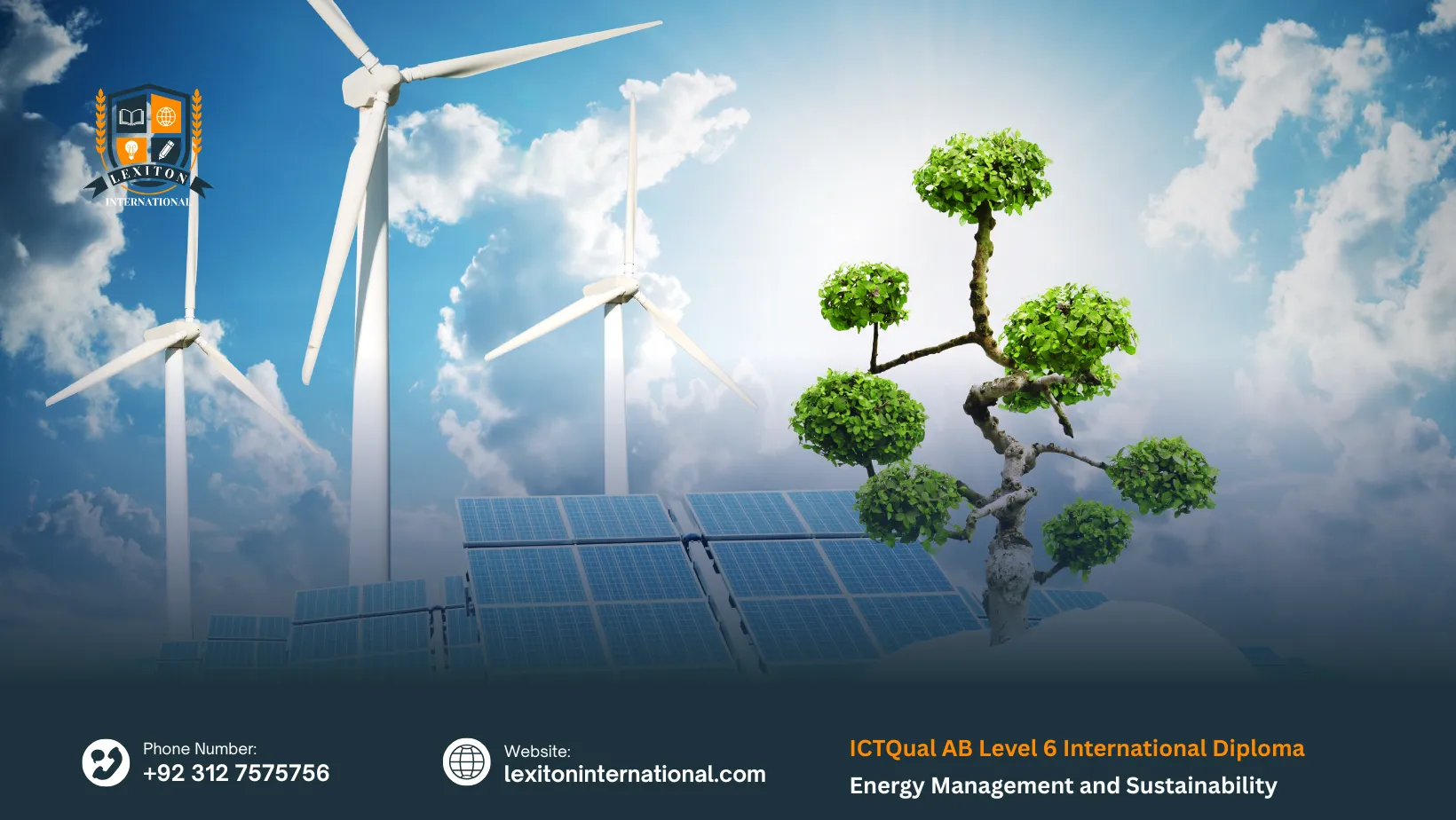
The ICTQual AB Level 6 International Diploma in Energy Management and Sustainability is an advanced qualification designed to provide learners with the knowledge and skills required to lead energy efficiency initiatives, implement sustainable practices, and manage energy systems effectively. With the global shift toward renewable energy and sustainable development, this diploma equips learners with the expertise to address modern energy challenges while aligning with international environmental standards.
The program covers a wide range of topics, including energy efficiency strategies, renewable energy integration, sustainable development frameworks, environmental compliance, and energy auditing. Learners will gain both technical and managerial insights, enabling them to design, implement, and evaluate energy management systems that reduce costs, improve efficiency, and minimize environmental impact. By combining theory with practical applications, the course ensures participants are prepared to contribute meaningfully to organizational and global sustainability goals.
Graduates of this diploma will be well-positioned for leadership roles in energy management, sustainability consultancy, environmental compliance, and corporate social responsibility. The qualification is internationally recognized, making it an excellent choice for professionals seeking to advance their careers in the energy, environmental, and sustainability sectors while contributing to a greener future.
- Age Requirement: Learners should ideally be 18 years or older, as the course involves advanced technical concepts, project management, and leadership responsibilities.
- Educational Background: A secondary school qualification is required. Preference is given to candidates with backgrounds in engineering, environmental sciences, energy management, or related technical fields.
- Work Experience: Prior experience in energy, environmental management, or sustainability-related industries is beneficial but not mandatory. Candidates with exposure to renewable energy projects, energy auditing, or corporate sustainability initiatives will find the course especially relevant.
- English Language Proficiency: Learners should have a good command of spoken and written English to understand technical content, participate in discussions, and complete assessments effectively.
Mandatory Units
Year 1 – Foundation in Energy Management & Sustainability
- Principles of Energy Systems
- Introduction to Sustainability Concepts
- Energy Auditing Fundamentals
- Environmental Science and Climate Principles
- Energy Conversion and Efficiency Basics
- Renewable Energy Overview
- Health, Safety, and Environmental Awareness
- Energy Measurement and Instrumentation
- Laboratory Techniques in Energy Systems
- Technical Report Writing
- Introduction to Energy Simulation Software
- Fundamentals of Carbon Management
Year 2 – Intermediate Energy Management & Sustainability
- Advanced Energy Auditing Techniques
- Sustainable Energy Technologies
- Energy Management Systems (EnMS)
- Environmental Impact Assessment and Compliance
- Energy Efficiency Optimisation Strategies
- Carbon Reduction and Climate Mitigation Practices
- Smart Grids and Energy Distribution
- Process Control and Automation in Energy Systems
- Project Planning and Technical Communication
- Quality Control and Assurance in Energy Projects
- Data Analysis and Monitoring for Sustainability
- Energy Policy, Regulations, and Standards
Year 3 – Advanced Energy Management & Sustainability
- Strategic Energy Management and Optimisation
- Energy Project Management and Leadership
- Emerging Technologies in Renewable and Sustainable Energy
- Energy Storage and Grid Integration
- Sustainability Reporting and Corporate Responsibility
- Risk Assessment and Hazard Analysis in Energy Projects
- Advanced Laboratory Techniques and Field Testing
- Carbon Accounting and Life Cycle Assessment
- Supply Chain and Logistics in Sustainable Energy
- Capstone Project in Energy Management & Sustainability
- Professional Development and Leadership in Energy
- Strategic Decision-Making for Energy Efficiency
Skills You Will Gain
Learning Outcomes for the ICTQual AB Level 6 International Diploma in Energy Management & Sustainability:
Year 1 – Foundation in Energy Management & Sustainability
Principles of Energy Systems
- Understand the fundamentals of energy systems and their operational principles.
- Analyse energy generation, conversion, and distribution processes.
- Evaluate system efficiency and performance metrics.
Introduction to Sustainability Concepts
- Comprehend the principles of sustainable development and environmental stewardship.
- Explore strategies to integrate sustainability into energy projects.
- Understand global sustainability challenges and solutions.
Energy Auditing Fundamentals
- Learn the methodology for conducting energy audits in industrial and commercial settings.
- Identify energy losses and inefficiencies in systems.
- Develop basic recommendations for energy optimisation.
Environmental Science and Climate Principles
- Understand key environmental processes and climate science fundamentals.
- Analyse human impacts on ecosystems and energy systems.
- Apply scientific principles to sustainable energy planning.
Energy Conversion and Efficiency Basics
- Comprehend the fundamentals of energy conversion processes.
- Evaluate system efficiency and energy loss reduction methods.
- Apply efficiency principles in practical energy systems.
Renewable Energy Overview
- Understand types of renewable energy sources and their applications.
- Analyse benefits and limitations of solar, wind, hydro, and biomass energy.
- Assess the integration of renewables into existing systems.
Health, Safety, and Environmental Awareness
- Identify potential hazards in energy systems and project environments.
- Implement safety protocols and risk mitigation strategies.
- Promote environmentally responsible practices in energy operations.
Energy Measurement and Instrumentation
- Learn methods to measure energy consumption and system performance.
- Use instrumentation and monitoring tools effectively.
- Analyse measurement data for system optimisation.
Laboratory Techniques in Energy Systems
- Conduct experiments on energy systems to validate theoretical knowledge.
- Collect and analyse experimental data for reporting.
- Apply laboratory findings to improve operational efficiency.
Technical Report Writing
- Develop skills in producing professional technical documentation.
- Communicate data, analysis, and recommendations clearly.
- Apply standard formatting, referencing, and technical writing conventions.
Introduction to Energy Simulation Software
- Gain basic proficiency in energy simulation and modelling tools.
- Model energy systems to predict performance and efficiency.
- Use simulations to support operational decision-making.
Fundamentals of Carbon Management
- Understand the principles of carbon accounting and emissions monitoring.
- Learn techniques to reduce carbon footprint in energy systems.
- Evaluate strategies for compliance with environmental regulations.
Year 2 – Intermediate Energy Management & Sustainability
Advanced Energy Auditing Techniques
- Conduct detailed energy audits using advanced methodologies.
- Identify optimisation opportunities across complex energy systems.
- Develop actionable recommendations for energy efficiency improvements.
Sustainable Energy Technologies
- Analyse innovative technologies for sustainable energy production.
- Evaluate the technical, economic, and environmental feasibility of solutions.
- Explore integration of emerging technologies into existing systems.
Energy Management Systems (EnMS)
- Understand the framework and implementation of EnMS.
- Monitor, control, and optimise organisational energy use.
- Apply standards and best practices for effective energy management.
Environmental Impact Assessment and Compliance
- Conduct environmental impact assessments for energy projects.
- Identify legal and regulatory requirements for compliance.
- Recommend mitigation strategies to reduce environmental impacts.
Energy Efficiency Optimisation Strategies
- Develop strategies to improve energy efficiency in various sectors.
- Implement process and system optimisation techniques.
- Monitor and evaluate the effectiveness of efficiency measures.
Carbon Reduction and Climate Mitigation Practices
- Analyse carbon emission sources and reduction strategies.
- Implement climate mitigation plans in energy operations.
- Evaluate progress towards sustainability and carbon reduction goals.
Smart Grids and Energy Distribution
- Understand the principles of smart grid technology and modern distribution networks.
- Analyse methods to improve reliability, efficiency, and integration of renewables.
- Implement monitoring and control strategies for smart grids.
Process Control and Automation in Energy Systems
- Apply automation technologies to optimise energy systems.
- Monitor and adjust processes to maintain operational efficiency.
- Use SCADA and control systems to support energy management.
Project Planning and Technical Communication
- Develop skills for planning and managing energy-related projects.
- Communicate technical information effectively to stakeholders.
- Apply project management principles to energy operations.
Quality Control and Assurance in Energy Projects
- Implement quality management systems in energy and sustainability projects.
- Monitor compliance with standards and regulations.
- Conduct inspections and audits to ensure operational reliability.
Data Analysis and Monitoring for Sustainability
- Analyse energy consumption and performance data.
- Use monitoring tools to support decision-making and reporting.
- Identify trends and opportunities for system optimisation.
Energy Policy, Regulations, and Standards
- Understand national and international energy policies and regulations.
- Apply standards and compliance frameworks in energy projects.
- Evaluate the impact of policy on energy management and sustainability initiatives.
Year 3 – Advanced Energy Management & Sustainability
Strategic Energy Management and Optimisation
- Develop strategies for optimising energy use across organisations.
- Analyse operational and financial factors in energy management.
- Implement initiatives for long-term efficiency and sustainability.
Energy Project Management and Leadership
- Lead energy projects from planning to execution.
- Allocate resources, manage teams, and monitor project outcomes.
- Ensure projects meet technical, financial, and sustainability objectives.
Emerging Technologies in Renewable and Sustainable Energy
- Explore cutting-edge technologies in solar, wind, and other renewable sectors.
- Evaluate integration potential and operational benefits.
- Analyse environmental and economic impacts of emerging solutions.
Energy Storage and Grid Integration
- Understand advanced energy storage solutions and applications.
- Optimise integration of storage with generation and distribution systems.
- Improve grid stability and system reliability through storage solutions.
Sustainability Reporting and Corporate Responsibility
- Prepare sustainability reports in line with international standards.
- Assess organisational environmental performance and carbon footprint.
- Develop strategies for corporate responsibility and stakeholder engagement.
Risk Assessment and Hazard Analysis in Energy Projects
- Conduct risk assessments for energy operations and projects.
- Identify hazards and develop mitigation strategies.
- Ensure compliance with health, safety, and environmental standards.
Advanced Laboratory Techniques and Field Testing
- Perform advanced experiments and field tests in energy systems.
- Collect, analyse, and interpret data to inform decision-making.
- Apply findings to optimise operations and improve sustainability.
Carbon Accounting and Life Cycle Assessment
- Conduct carbon accounting and evaluate emissions across energy projects.
- Perform life cycle assessments for products and processes.
- Recommend strategies for carbon reduction and environmental impact mitigation.
Supply Chain and Logistics in Sustainable Energy
- Manage procurement, storage, and distribution of energy resources.
- Optimise supply chains for efficiency, cost-effectiveness, and sustainability.
- Integrate logistics planning with energy management operations.
Capstone Project in Energy Management & Sustainability
- Undertake a comprehensive project integrating knowledge from all units.
- Solve real-world energy management and sustainability challenges.
- Present findings, recommendations, and solutions professionally.
Professional Development and Leadership in Energy
- Develop leadership, teamwork, and strategic decision-making skills.
- Enhance professional communication and project oversight capabilities.
- Prepare for senior operational, managerial, or consultancy roles.
Strategic Decision-Making for Energy Efficiency
- Apply analytical frameworks for informed energy decisions.
- Consider operational, financial, and environmental factors in strategy.
- Implement long-term initiatives for sustainable and efficient energy systems.
The ICTQual AB Level 6 International Diploma in Energy Management and Sustainability is designed for individuals who want to take an active role in improving energy efficiency and driving sustainable practices across industries. It is ideal for learners who are passionate about reducing environmental impact while supporting smarter and more responsible energy use.
Who Is This Course For
- Learners who want to start a career in energy management and sustainability sectors.
- Individuals interested in reducing energy consumption and improving efficiency in organisations.
- Aspiring professionals aiming to work in environmental, sustainability, or energy consultancy roles.
- Engineers and technicians looking to shift toward green energy and sustainability-focused careers.
- Professionals seeking to implement energy-saving strategies within industrial or commercial environments.
- Individuals interested in climate change solutions, carbon reduction, and sustainable development.
- Candidates aiming for roles in corporate sustainability and environmental compliance departments.
- Learners who want to develop strong analytical and energy auditing skills.
- Workers from engineering or industrial backgrounds planning to move into sustainability roles.
- Anyone passionate about creating a more efficient, responsible, and environmentally friendly future.
The ICTQual AB Level 6 International Diploma in Energy Management and Sustainability enhances your professional capability to work in energy efficiency and environmental improvement roles across modern industries. It equips you with practical understanding of sustainable systems, helping organisations reduce energy waste and adopt greener practices.
Future Progression
- Enter roles focused on improving energy performance in commercial and industrial environments.
- Support organisations in identifying and reducing unnecessary energy consumption.
- Work in sustainability teams developing eco-friendly operational strategies.
- Contribute to carbon reduction and environmental impact control initiatives.
- Assist in implementing energy-efficient systems across buildings and facilities.
- Join consultancy projects focused on sustainable development and resource optimisation.
- Monitor energy usage data to support smarter decision-making in organisations.
- Build opportunities in environmental compliance and green reporting functions.
- Play a role in promoting responsible energy use within modern business operations.
- Position yourself within a rapidly expanding global sector focused on sustainability and climate responsibility.
Curious About This Course?