- Age Requirement: Learners should ideally be 18 years or older, as the course involves practical exercises, equipment handling, and risk-based decision-making in potentially hazardous settings.
- Educational Background: No formal academic qualifications are required; however, a basic understanding of workplace safety or prior experience in construction, maintenance, or industrial operations is beneficial. The course is suitable for both experienced professionals and those transitioning into roles that involve working at height.
- Experience: No formal experience is required, although prior exposure to construction, maintenance, or industrial work is beneficial.
- English Language Proficiency: Learners should have a good command of spoken and written English to follow safety instructions, interpret technical documentation, and complete assessments effectively.
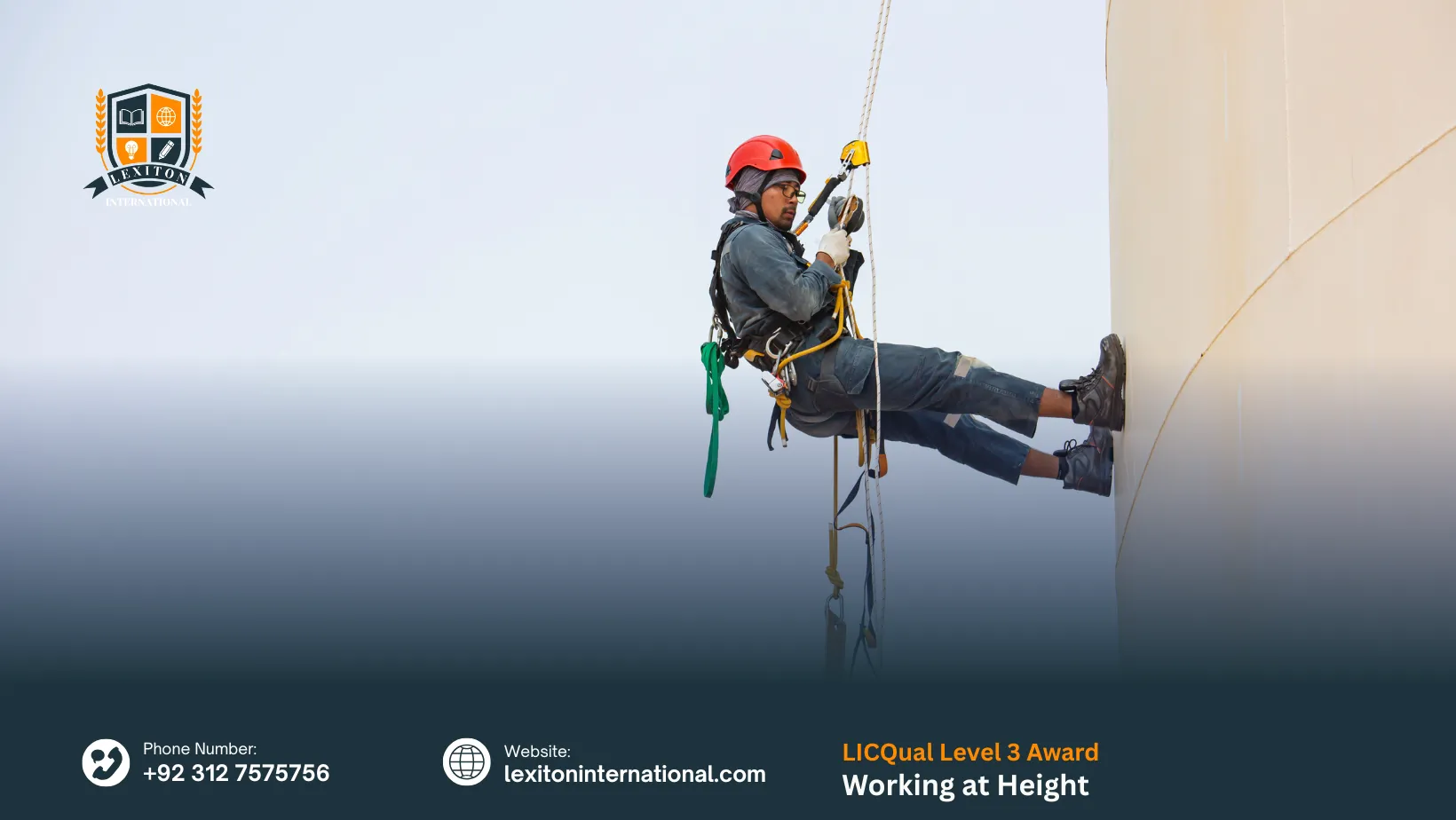
The LICQual Level 3 Award in Working at Height is a specialized qualification designed for individuals who work in elevated environments where safety awareness and risk control are essential. It focuses on developing a clear understanding of safe working practices, hazard recognition, and compliance with international safety standards in height-related operations.
The course covers key areas such as working at height regulations, fall prevention principles, access equipment awareness, and inspection of safety systems. Learners also study emergency response procedures, rescue planning concepts, and responsibilities of personnel working in elevated positions. It builds strong awareness of how risks are managed and controlled in height-related work environments.
This qualification is suitable for professionals in construction, maintenance, telecommunications, and industrial sectors where working at height is part of operational duties. It strengthens safety knowledge and improves understanding of workplace responsibilities in high-risk environments. The LICQual Level 3 Award in Working at Height is widely valued for enhancing safety awareness and professional competence in elevated work settings.
Mandatory Units
Skills You Will Gain
By the end of this course,applicants will be able to:
1. Planning and Supervising Work at Height Activities
- Develop comprehensive work plans for height-related activities, incorporating safety controls and operational needs.
- Allocate resources and coordinate teams effectively to ensure safe execution of height tasks.
- Monitor and supervise work at height to ensure compliance with safety protocols and timelines.
- Evaluate the effectiveness of work plans and make adjustments to improve safety and efficiency.
2. Legal Compliance and Industry Standards
- Interpret relevant legislation, regulations, and industry standards relating to work at height.
- Ensure organizational policies and procedures align with legal requirements.
- Assess the implications of non-compliance for individuals and employers.
- Promote adherence to national and international safety standards within the workplace.
3. Advanced Risk Assessment and Method Statements
- Conduct detailed risk assessments for complex height-related operations.
- Develop and implement robust method statements to support safe working procedures.
- Apply the hierarchy of control to eliminate or reduce height-related hazards.
- Review and update assessments and method statements to reflect changing conditions or findings.
4. Supervising Use of MEWPs, Scaffolds, and Complex Equipment
- Evaluate the suitability and safe application of MEWPs, scaffolding, and specialized equipment.
- Supervise the correct setup, use, and dismantling of height access equipment.
- Ensure operators are trained, competent, and adhere to safety requirements.
- Identify equipment faults and ensure appropriate inspection and maintenance procedures are followed.
5. Investigating Incidents and Implementing Preventative Measures
- Lead thorough investigations into work at height incidents and near misses.
- Apply root cause analysis techniques to identify contributing factors.
- Develop and recommend corrective and preventive actions to mitigate future risks.
- Communicate investigation findings effectively to relevant stakeholders.
6. Leadership in Height Safety and Promoting a Positive Safety Culture
- Demonstrate leadership behaviors that reinforce a strong commitment to height safety.
- Engage and motivate teams to prioritize safe working practices.
- Implement strategies that embed a proactive safety culture within the organization.
- Monitor and evaluate the impact of leadership on workforce safety attitudes and behaviors.
The LICQual Level 3 Award in Working at Height is designed for individuals who regularly work in elevated environments and need strong safety awareness and operational understanding. It is suitable for professionals across multiple industries where height-related tasks require strict safety compliance and responsible working practices.
Who Is This Course For
- Construction and infrastructure workers involved in building, roofing, and structural maintenance activities
- Site operatives using ladders, scaffolds, and elevated work platforms in daily operations
- Technicians installing, inspecting, or maintaining structures at height such as towers and bridges
- Industrial and maintenance staff working on machinery, factories, or overhead systems
- Safety officers and supervisors enforcing workplace safety and fall protection measures
- Site managers responsible for risk assessment and safe system implementation
- Telecom, energy, and utility workers operating on towers, power lines, or wind turbines
- Engineers and technicians working in high-access or restricted elevated environments
- Workers involved in cleaning, painting, or inspection of tall structures
- Individuals aiming to strengthen safety awareness in height-related job roles
The LICQual Level 3 Award in Working at Height strengthens professional competence in managing elevated work environments with a strong focus on safety awareness, risk control, and operational responsibility. It enhances employability in safety-critical industries where height-related tasks require strict compliance and advanced understanding.
Future Progression
- Progress into advanced occupational health and safety qualifications at higher levels
- Develop expertise in fall protection systems, rescue planning, and emergency procedures
- Gain specialized certifications in scaffolding, rope access, and confined space safety
- Strengthen understanding of safety auditing and compliance monitoring systems
- Build capability to work in high-risk sectors such as oil and gas, construction, and energy
- Apply skills in infrastructure, telecom, aviation, and offshore industries
- Move into supervisory roles overseeing teams working at height
- Support safety inspections, hazard control, and workplace risk management
- Enhance ability to train and guide workers in safe working-at-height practices
- Establish strong competence for roles in safety coordination and site leadership
Curious About This Course?