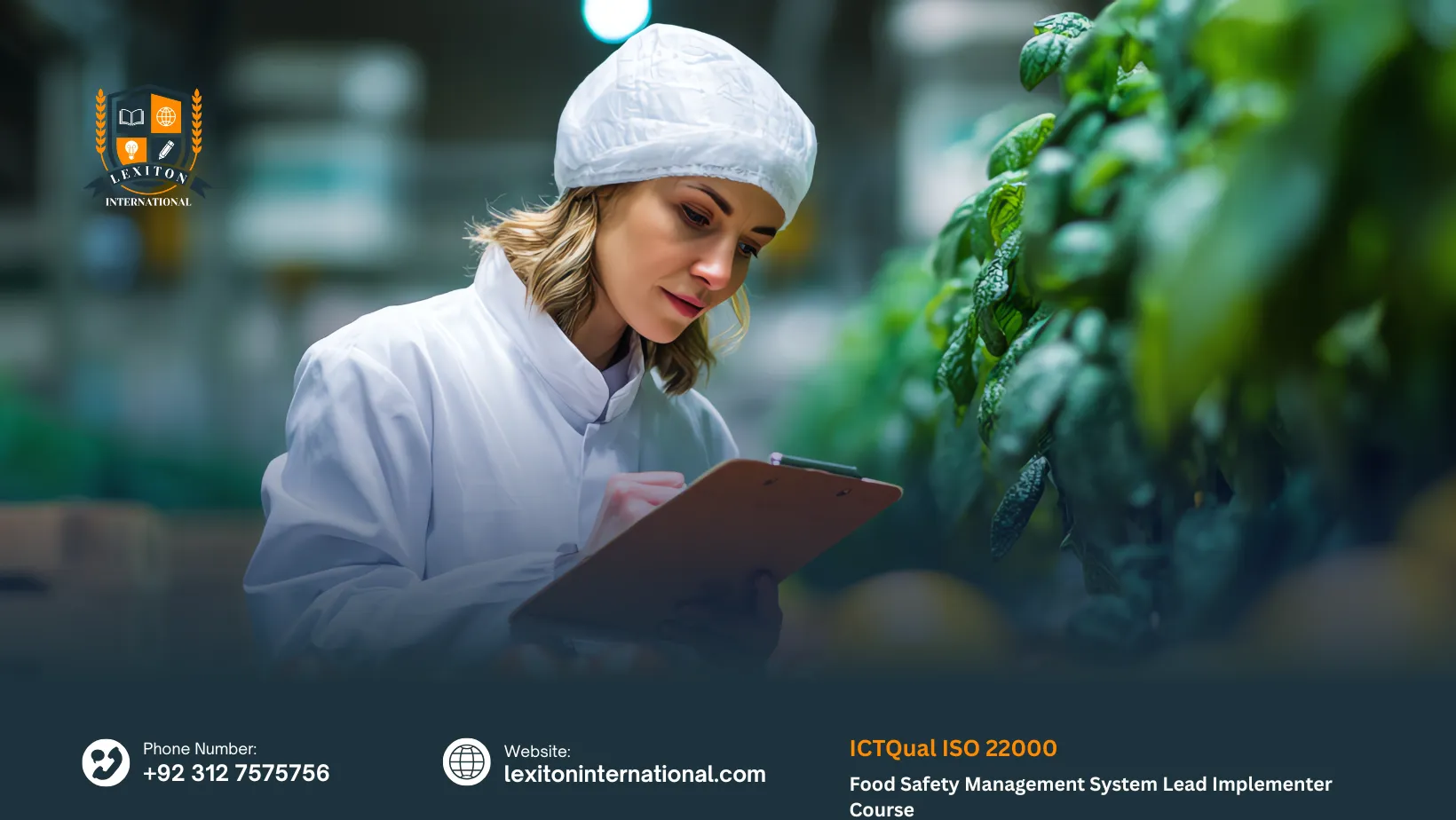
The ICTQual ISO 22000 Food Safety Management System Lead Implementer Course is a comprehensive training program designed for professionals who aim to lead the implementation of ISO 22000:2018 standards within food-related organizations. As global food safety regulations become increasingly stringent, this course equips learners with the tools to establish, manage, and maintain a robust Food Safety Management System (FSMS) that meets international compliance requirements.
Participants gain in-depth knowledge of ISO 22000 principles, including risk management, operational controls, performance evaluation, and continual improvement. The course blends theoretical instruction with practical exercises, enabling learners to apply ISO 22000 frameworks to real-world food safety challenges. It also emphasizes leadership, planning, and documentation skills essential for successful system implementation.
By the end of the program, learners will be capable of guiding organizations through the full lifecycle of FSMS development from initial planning to certification readiness. This qualification enhances professional credibility, supports career advancement, and contributes to safer food production and handling practices across the supply chain.
- Age Requirement: Learners should ideally be 18 years or older, as the course involves strategic planning, technical documentation, and leadership responsibilities.
- Educational Background: A secondary school qualification is required. Preference is given to candidates with backgrounds in food science, microbiology, public health, or quality assurance.
- Work Experience: Prior experience in food production, safety auditing, or quality control is beneficial but not mandatory. Candidates with exposure to ISO standards or HACCP systems will find the course especially relevant.
- English Language Proficiency: Learners should have a good command of spoken and written English to understand technical content, participate in discussions, and complete assessments effectively.
Mandatory Units
Skills You Will Gain
Learning Outcomes for the Study Units:
Introduction to Food Safety Management Systems
- Understand the fundamental concepts and principles of food safety management systems.
- Recognize the significance of implementing effective food safety management systems in various food-related industries.
- Gain familiarity with the ISO 22000 standard and its role in ensuring food safety throughout the supply chain.
Understanding ISO 22000 Requirements
- Familiarize oneself with the key clauses and requirements of the ISO 22000 standard.
- Interpret and apply the principles of HACCP (Hazard Analysis and Critical Control Points) within the context of ISO 22000.
- Identify and comprehend the prerequisites programs (PRPs) and operational prerequisite programs (OPRPs) mandated by ISO 22000.
Food Safety Hazards and Risk Assessment
- Identify potential food safety hazards that may arise at various stages of the food chain.
- Apply risk assessment methodologies to evaluate and prioritize food safety risks.
- Develop strategies for effectively managing and mitigating food safety hazards in accordance with ISO 22000 requirements.
Developing a Food Safety Management System
- Develop a comprehensive framework for a food safety management system aligned with ISO 22000 standards.
- Establish procedures for effective communication, emergency preparedness, and response within the FSMS.
- Implement control measures to prevent and mitigate food safety hazards identified during risk assessment.
Implementation and Operational Planning
- Plan and schedule the implementation process of the FSMS within an organization.
- Allocate resources and responsibilities effectively to ensure successful implementation.
- Set SMART (Specific, Measurable, Achievable, Relevant, Time-bound) objectives and targets for the FSMS.
Monitoring and Measurement of Food Safety Performance
- Develop procedures for monitoring and measuring food safety performance within the FSMS.
- Establish criteria for evaluating the effectiveness of control measures and compliance with ISO 22000 requirements.
- Conduct internal audits and management reviews to assess the performance of the FSMS and identify areas for improvement.
Continual Improvement and Corrective Actions
- Implement corrective actions to address non-conformities and improve the effectiveness of the FSMS.
- Establish processes for continual improvement, including the identification of opportunities for enhancement.
- Document and communicate improvements made to the FSMS to stakeholders within the organization.
Legal and Regulatory Compliance
- Understand the legal and regulatory requirements related to food safety applicable to the organization.
- Ensure compliance with relevant legislation, standards, and regulations governing food safety.
- Prepare for and manage regulatory inspections and audits effectively.
Documentation and Record-keeping
- Develop and maintain documentation procedures for the FSMS, including policies, procedures, and work instructions.
- Establish systems for record-keeping to ensure accurate documentation of food safety activities and processes.
- Implement document control measures to manage revisions and updates to FSMS documentation.
Communication and Training
- Establish effective communication channels for internal and external stakeholders regarding food safety requirements and procedures.
- Develop and deliver training programs to raise awareness and ensure competency in food safety practices among employees.
- Manage communication during emergencies, incidents, and product recalls to minimize risks and maintain consumer confidence.
The ICTQual ISO 22000 Food Safety Management System Lead Implementer Course is ideal for professionals who want to develop practical food safety management skills and gain the knowledge needed to implement, manage, and improve ISO 22000 systems within an organisation. This course supports career growth while helping businesses maintain high standards of food safety, compliance, and consumer protection.
Who Is This Course For
- Food Safety Managers responsible for developing and maintaining food safety systems.
- Quality Assurance and Quality Control professionals working in the food industry.
- Food Production Supervisors and Team Leaders overseeing food safety practices.
- HACCP Team Members who want to strengthen their food safety management knowledge.
- Internal Auditors looking to expand their expertise in ISO 22000 implementation.
- Food Industry Consultants supporting organisations with food safety compliance.
- Business Owners and Managers operating food manufacturing, processing, catering, or retail facilities.
- Compliance Officers responsible for meeting food safety regulations and industry requirements.
- Professionals seeking career progression in food safety, quality management, or operational leadership roles.
- Individuals interested in gaining an internationally recognised food safety management qualification.
Completing the ICTQual ISO 22000 Food Safety Management System Lead Implementer Course can open the door to a wide range of professional and leadership opportunities within the global food industry. The knowledge and practical skills gained through this qualification can help learners advance into senior positions, lead food safety initiatives, and contribute to continuous improvement across food supply chains.
Future Progression
- Advance into leadership roles responsible for managing food safety programmes and compliance activities.
- Take on greater responsibility for implementing and maintaining effective food safety management systems.
- Improve your ability to lead food safety teams, coordinate audits, and drive continuous improvement initiatives.
- Increase your value to employers by demonstrating expertise in internationally recognised food safety practices.
- Support organisations in reducing food safety risks, protecting consumers, and strengthening brand reputation.
- Contribute to achieving regulatory compliance and meeting customer food safety requirements with confidence.
- Play a key role in improving operational efficiency, product quality, and risk management processes.
- Expand career opportunities across food manufacturing, food processing, hospitality, catering, retail, and distribution sectors.
- Gain the credibility to support organisational decision-making on food safety, quality, and compliance matters.
- Build a rewarding career in an industry where skilled food safety professionals are increasingly sought after worldwide.
Curious About This Course?