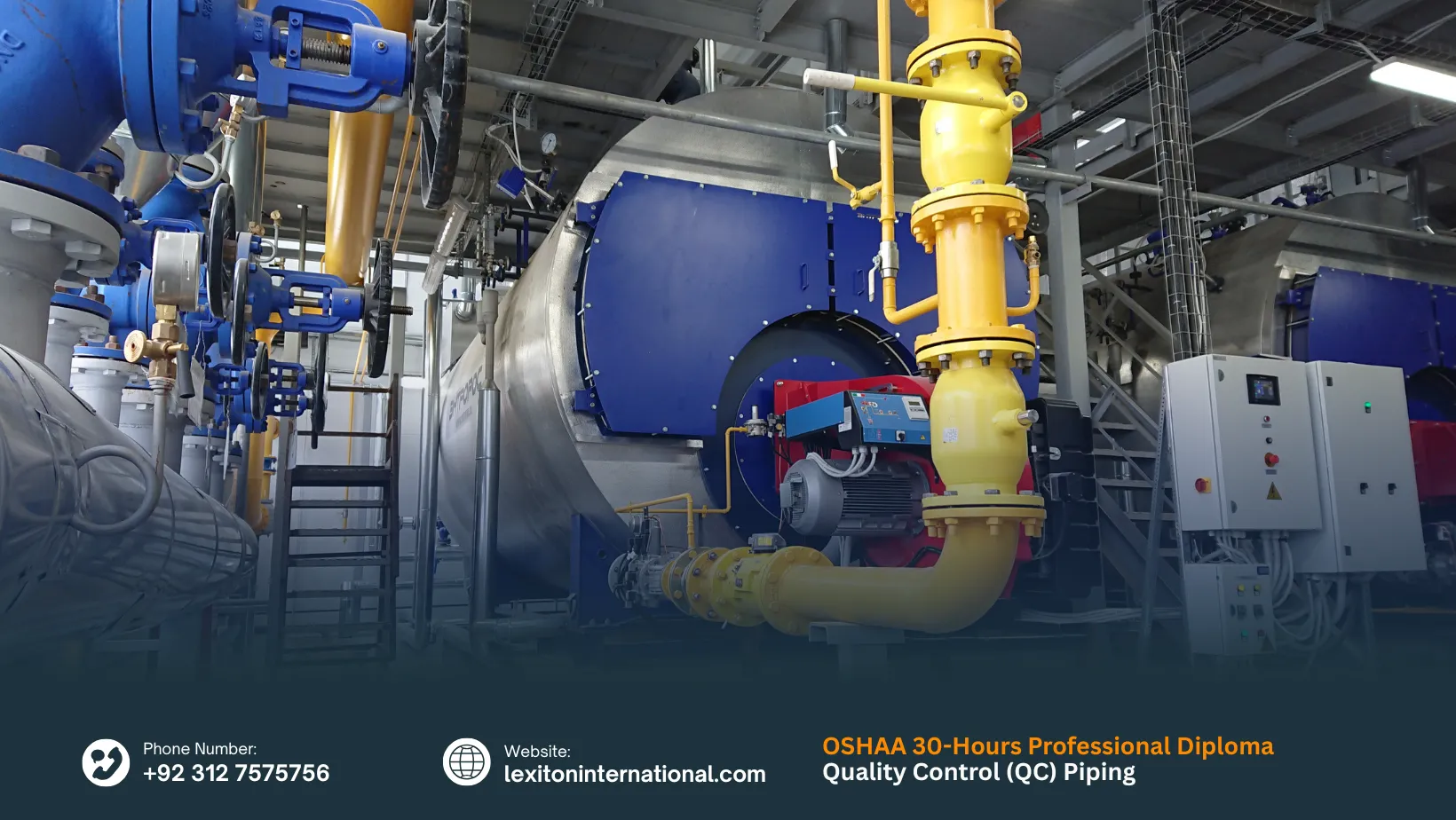
Quality control is a critical part of every successful piping project, ensuring that piping systems are manufactured, installed, tested, and maintained in accordance with recognised industry standards. The OSHAA 30-Hours Professional Diploma in Quality Control (QC) Piping is designed for individuals who want to develop practical knowledge of piping inspection, quality assurance processes, material verification, documentation, and compliance requirements used across the oil and gas, petrochemical, power generation, construction, and manufacturing industries. As global demand for reliable and safe industrial infrastructure continues to grow, skilled QC piping professionals play a vital role in delivering projects that meet technical specifications, safety regulations, and client expectations.
This professional diploma provides learners with a comprehensive understanding of quality control principles applied to piping systems throughout the project lifecycle. Participants gain knowledge of piping materials, welding inspections, dimensional verification, non-destructive testing (NDT) awareness, pressure testing, inspection procedures, quality documentation, and international codes and standards. The course combines theoretical concepts with practical industry applications, enabling learners to understand inspection processes, identify quality issues, and contribute to effective quality management within engineering projects.
The OSHAA 30-Hours Professional Diploma in Quality Control (QC) Piping is ideal for aspiring and experienced professionals seeking recognised industry knowledge that supports career growth in quality control and piping inspection. Developed to meet modern industrial requirements, this diploma equips learners with job-relevant skills that employers value across engineering, fabrication, construction, and industrial maintenance sectors. Its practical, industry-focused approach helps learners build confidence, improve workplace performance, and contribute to delivering safe, compliant, and high-quality piping systems in demanding industrial environments.
- Age Requirement: Learners must be at least 18 years old at the time of enrolment for this course.
- Professional Experience: No prior work experience is mandatory.
- Educational Background: A minimum of a Level 2 qualification is recommended.
- Language Proficiency:Learners should possess a good command of English.
Mandatory Units
Skills You Will Gain
Introduction to Quality Control in Piping Systems (2 Hours)
- Understand the fundamentals of quality control and its importance in piping systems
- Identify key roles and responsibilities in a quality control framework
- Recognise the impact of quality control on operational efficiency and safety
- Gain awareness of typical challenges and solutions in QC processes
Piping Materials, Components, and Fabrication Processes (3 Hours)
- Identify common piping materials and their applications in industry
- Understand the function of piping components such as valves, fittings, and flanges
- Explain the basic principles of fabrication methods including cutting, bending, and welding
- Recognise how material selection affects quality and system integrity
International Standards and Codes: ASME, API, ISO (4 Hours)
- Understand the purpose and scope of key piping standards and codes
- Identify relevant sections of ASME, API, and ISO standards for quality control
- Apply standardised practices in evaluating piping system compliance
- Interpret and integrate codes into inspection and documentation procedures
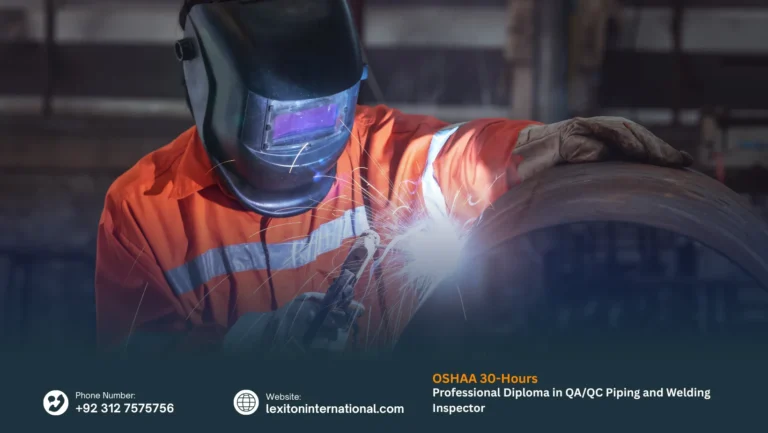
Welding Procedures and Joint Integrity (6 Hours)
- Understand various welding techniques used in piping fabrication
- Interpret welding procedure specifications (WPS) and procedure qualification records (PQR)
- Identify potential welding defects and their implications on system safety
- Assess joint integrity using visual and standard testing methods
Piping Isometrics and Technical Drawing Interpretation (5 Hours)
- Read and interpret piping isometric drawings and process flow diagrams
- Understand symbols, annotations, and line classifications used in piping schematics
- Translate technical drawings into practical inspection checklists
- Evaluate design requirements against installed systems
Non-Destructive Testing (NDT) Methods and Applications (4 Hours)
- Understand the principles of NDT and its role in quality assurance
- Identify common NDT techniques including ultrasonic, radiographic, magnetic particle, and dye penetrant testing
- Determine appropriate NDT methods for specific inspection tasks
- Interpret NDT results for defect detection and compliance reporting
Inspection Techniques and Common Defect Identification (3 Hours)
- Apply structured inspection methods across piping fabrication and installation stages
- Identify common defects such as corrosion, cracks, misalignment, and weld discontinuities
- Use inspection tools and gauges effectively in field applications
- Develop practical approaches to defect classification and reporting
Documentation: WPS, PQR, Test Reports, and Compliance Records (3 Hours)
- Understand the purpose and structure of key quality control documents
- Accurately complete and verify inspection and testing records
- Maintain compliance through correct documentation practices
- Support audit readiness through systematic record keeping and data management
The OSHAA 30-Hours Professional Diploma in Quality Control (QC) Piping is designed for individuals who want to strengthen their knowledge of piping quality control, inspection procedures, and industry compliance. Whether you are entering the engineering sector or enhancing your existing technical expertise, this course provides practical, workplace-focused knowledge that is valued across industrial projects worldwide.
Who Is This Course For
- Individuals seeking a solid foundation in Quality Control (QC) Piping and inspection practices.
- Piping, mechanical, and civil engineering professionals.
- Welding inspectors, fabrication personnel, and piping technicians.
- QA/QC professionals in construction and industrial sectors.
- Site supervisors and project coordinators overseeing piping quality.
- Professionals in the oil and gas, petrochemical, power, construction, and manufacturing industries.
- Maintenance personnel involved in piping inspection and system integrity.
- Contractors responsible for piping fabrication, installation, and testing.
- Individuals requiring knowledge of piping quality standards, inspection, and compliance.
- Anyone looking to develop practical skills in QC Piping for industrial applications.
Completing the OSHAA 30-Hours Professional Diploma in Quality Control (QC) Piping helps learners build practical knowledge that is valued across engineering, construction, and industrial sectors. The skills gained can support a wide range of quality control and inspection responsibilities in projects involving piping systems, fabrication, installation, and maintenance while aligning with recognised industry practices and compliance requirements.
Future Progression
- QC Piping Inspector
- Piping Quality Control Technician
- QA/QC Assistant
- Piping Inspection Technician
- Mechanical QA/QC Technician
- Welding and Fabrication Inspector
- Piping Construction Supervisor
- Industrial Maintenance Technician
- Quality Documentation and Compliance Coordinator
- Site Quality Inspector for oil and gas, petrochemical, power generation, and construction projects
Curious About This Course?