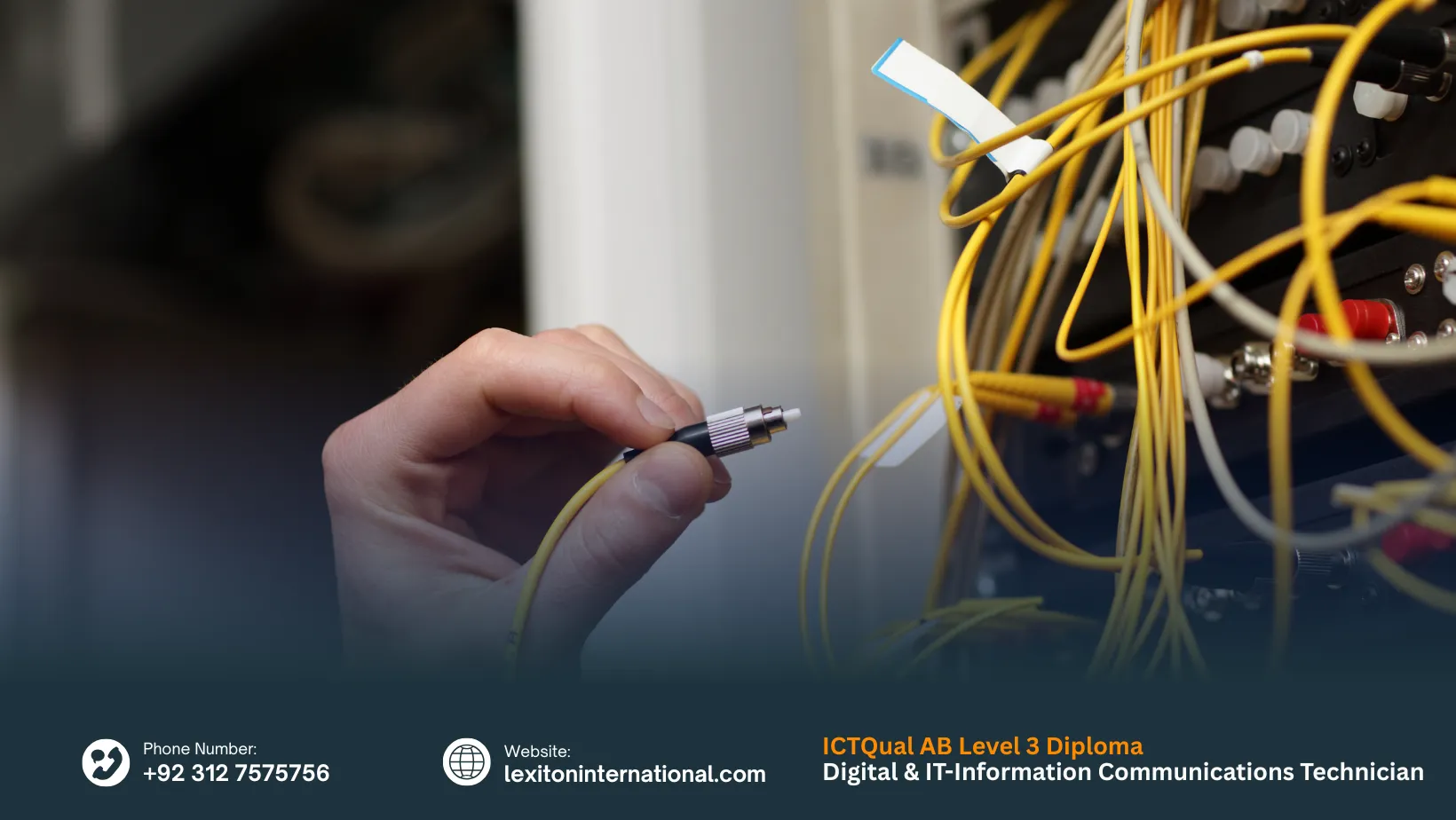
The ICTQual AB Level 3 Diploma in Digital & IT-Information Communications Technician is a professional qualification designed to develop practical knowledge of information and communication technologies (ICT), digital infrastructure, networking, communication systems, and technical support used across modern organisations. As businesses become increasingly dependent on connected technologies and digital communication, the demand for skilled information communications technicians continues to grow across public and private sectors. This diploma provides learners with a solid understanding of how communication technologies, computer networks, and digital systems work together to support efficient, secure, and reliable business operations.
Modern organisations rely on robust communication networks to enable collaboration, data sharing, cloud services, remote connectivity, and business continuity. This qualification explores key areas including network fundamentals, communication technologies, computer hardware, operating systems, digital infrastructure, technical troubleshooting, cybersecurity awareness, system configuration, and IT support. Learners develop an understanding of how to maintain communication systems, resolve technical issues, support network performance, and apply industry-recognised practices that improve operational efficiency and service reliability across technology-driven environments.
By combining essential ICT principles with practical workplace applications, the diploma develops industry-relevant knowledge of digital communication systems, network support, technical services, and information technology operations. It strengthens learners’ understanding of managing digital infrastructure, supporting users, maintaining secure communication networks, and delivering effective IT solutions. The knowledge gained reflects current industry practices used across business, healthcare, education, finance, telecommunications, manufacturing, and government sectors, making the qualification highly relevant for today’s rapidly evolving digital landscape.
- Age Requirement: Learners must be at least 18 years old at the time of enrolment for this course.
- Professional Experience: Previous work experience is not mandatory.
- Educational Background: A Level 2 qualification or an equivalent education is recommended.
- Language Proficiency: Good standard of English language ability.
Mandatory Units
Skills You Will Gain
Learning Outcomes for the Study Units:
1. Working in the IT and Communications Sector
- Understand the structure, functions, and career opportunities within the digital communications industry.
- Demonstrate professional behaviour and effective communication in workplace settings.
- Apply workplace health and safety practices in IT and telecom environments.
- Recognise ethical, legal, and regulatory standards relevant to the IT and communications sector.
2. Installing and Maintaining Network Systems
- Identify the key components and configurations of network systems.
- Install, connect, and test hardware and cabling used in IT networks.
- Perform maintenance tasks to ensure optimal network performance.
- Document network configurations and report installation activities.
3. Configuring and Supporting Digital Communication Devices
- Configure routers, switches, mobile devices, and VoIP systems.
- Apply standard protocols and settings for digital communication.
- Provide technical support for hardware and software used in communication systems.
- Troubleshoot and resolve basic configuration issues.
4. Diagnosing and Resolving IT & Connectivity Issues
- Detect and diagnose faults in digital systems and connectivity.
- Apply logical troubleshooting methods to resolve issues.
- Use diagnostic tools to identify hardware and software problems.
- Document problems, solutions, and escalation procedures accurately.
5. Digital Security and Data Protection in Communications
- Understand the risks and threats to data and digital communication systems.
- Apply data protection principles in line with legal and organisational standards.
- Implement basic cybersecurity measures within communication networks.
- Monitor systems for potential breaches and vulnerabilities.
6. Supporting End-Users in Digital and Telecom Environments
- Deliver responsive technical support to internal and external users.
- Communicate clearly and professionally when resolving support queries.
- Follow escalation protocols for unresolved or complex issues.
- Provide guidance on the use of digital and communication technologies.
Reliable communication networks and digital infrastructure are essential for modern organisations, making skilled ICT professionals valuable across every industry. This qualification is designed for learners who want to develop practical knowledge of information and communication technologies (ICT), networking, digital infrastructure, technical support, and communication systems used in today’s connected workplaces. It provides an understanding of the core technologies that enable secure, efficient, and reliable digital communication.
Who Is This Course For
- Learners developing knowledge of ICT systems, networking, and digital communications.
- IT support personnel strengthening technical support and communication technology skills.
- Network support staff involved in connectivity, configuration, and system maintenance.
- Technical professionals working with digital infrastructure and communication networks.
- Individuals supporting computer systems, operating systems, and business technology.
- Professionals improving knowledge of cybersecurity awareness and network reliability.
- Teams responsible for maintaining communication systems and digital services.
- Learners interested in cloud technologies, network operations, and technical troubleshooting.
- Personnel supporting enterprise IT infrastructure and digital communication solutions.
- Individuals seeking practical knowledge of modern ICT operations and information communication systems.
Completing the ICTQual AB Level 3 Diploma in Digital & IT–Information Communications Technician equips learners with practical knowledge of information and communication technologies, networking, digital infrastructure, technical support, and communication systems. The knowledge gained can be applied across technology driven workplaces to support secure communication, reliable network performance, and efficient digital operations. Learners develop competencies that contribute to maintaining modern ICT environments and delivering effective technical support.
Future Progression
- Apply ICT principles to support digital communication and network operations.
- Configure, maintain, and troubleshoot computer systems and communication technologies.
- Support network connectivity, digital infrastructure, and business IT services.
- Manage technical documentation, system records, and ICT support processes.
- Apply cybersecurity awareness to help protect digital systems and communications.
- Support cloud technologies, operating systems, and enterprise communication platforms.
- Collaborate with IT and network teams to improve service reliability and system performance.
- Contribute to efficient digital operations through practical technical support and communication solutions.
- Strengthen professional capability in ICT services, network support, and information communication technologies.
- Apply ICT knowledge across business, healthcare, education, finance, telecommunications, and public sector organisations.
Curious About This Course?