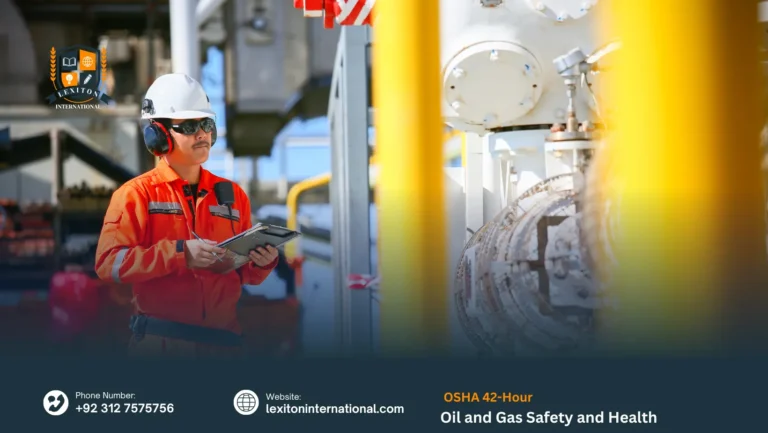
The OSHA 132-Hour Oil and Gas Safety and Health course is a comprehensive program designed to equip learners with the knowledge, skills, and competencies required to maintain a safe and healthy working environment in the oil and gas industry. This course emphasizes the importance of compliance with OSHA standards, hazard recognition, risk assessment, and the implementation of effective safety protocols. By combining theoretical understanding with practical applications, learners gain the expertise needed to prevent workplace accidents, reduce risks, and ensure operational safety across all areas of oil and gas operations.
The course covers a wide range of safety and health topics including hazard communication, personal protective equipment (PPE), fire prevention, emergency response, environmental protection, and industrial hygiene. Participants will learn to identify potential hazards, conduct safety audits, and implement corrective measures in line with OSHA regulations. The program also focuses on leadership in safety management, enabling learners to foster a culture of safety within teams and organizations while promoting compliance with national and international safety standards.
Upon completion, learners will be prepared to contribute effectively to workplace safety initiatives, perform risk assessments, and implement safety programs in oil and gas facilities, including drilling sites, refineries, and production plants. This course provides a solid foundation for career advancement in health, safety, and environmental (HSE) roles, as well as the potential to pursue advanced certifications or specialized training in industrial safety. Graduates leave with the confidence and expertise to minimize hazards, protect personnel, and ensure regulatory compliance within complex oil and gas operations.
- Age Requirement: Learners should typically be 18 years or older, as the course involves advanced health and safety concepts designed for professional settings.
- Educational Background: A minimum of a high school diploma (or equivalent) is required. Learners with vocational or technical training in oil and gas, engineering, or industrial safety are preferred.
- Work Experience: Candidates with 1–2 years of experience in oil and gas operations, industrial safety, or related sectors may be better prepared to apply course concepts practically.
- English Language Proficiency: Non-native English speakers must have an IELTS score of 5.5, CEFR Level B2, or equivalent, to ensure full comprehension of safety protocols and technical terminology.
Mandatory Units
Skills You Will Gain
The OSHA 132-Hour Oil and Gas Safety and Health course is designed to provide learners with advanced knowledge and practical skills in occupational safety, hazard management, and regulatory compliance within the oil and gas industry. This intensive program equips participants to identify risks, implement safety protocols, and foster a strong safety culture, ensuring the protection of personnel, assets, and the environment in complex industrial settings.
Understand Advanced OSHA Regulations and Standards
- Explain advanced OSHA regulations and standards applicable to oil and gas operations
- Interpret legal and regulatory requirements to ensure workplace compliance
- Analyze safety policies and procedures in accordance with OSHA guidelines
- Evaluate the impact of OSHA standards on operational practices and employee safety
- Apply OSHA standards to develop and maintain effective health and safety programs
Advanced Hazard Identification and Risk Assessment
- Identify and categorize hazards specific to oil and gas workplaces
- Conduct comprehensive risk assessments for industrial processes and operations
- Evaluate potential consequences and likelihood of hazards impacting safety
- Develop strategies to mitigate or eliminate workplace risks
- Implement monitoring systems to continuously assess and manage hazards
Process Safety Management (PSM)
- Explain the principles and components of Process Safety Management in oil and gas facilities
- Analyze process hazards and evaluate control measures to prevent incidents
- Develop and implement safety procedures for complex industrial processes
- Assess process systems for compliance with PSM standards
- Apply best practices for maintaining safe operational processes and reducing risk
Emergency Preparedness and Response Planning
- Develop emergency response plans for oil and gas operations
- Identify potential emergency scenarios and establish appropriate response protocols
- Conduct drills and simulations to prepare teams for emergency situations
- Evaluate the effectiveness of emergency response strategies and revise plans accordingly
- Ensure coordination with regulatory agencies and emergency services during incidents
Health and Environmental Hazards
- Identify occupational health risks associated with oil and gas operations
- Assess environmental hazards and their impact on personnel and surrounding communities
- Develop strategies to control exposure to chemical, physical, and biological hazards
- Apply environmental protection practices in compliance with regulatory standards
- Monitor workplace conditions to ensure the health and safety of employees
Leadership and Safety Culture
- Promote a culture of safety within the organization and across teams
- Develop leadership skills to manage safety programs effectively
- Encourage employee engagement and participation in safety initiatives
- Implement strategies to reinforce safe practices and accountability
- Evaluate the effectiveness of leadership approaches in fostering a safety-conscious environment
Advanced Personal Protective Equipment (PPE)
- Identify appropriate PPE for specific hazards in oil and gas operations
- Demonstrate correct selection, use, and maintenance of PPE
- Evaluate the effectiveness of PPE in mitigating workplace risks
- Train personnel on proper PPE practices and compliance requirements
- Integrate PPE protocols into broader safety management systems
Safety Training and Education
- Design and deliver safety training programs for diverse workplace audiences
- Evaluate the effectiveness of training initiatives in promoting safe practices
- Incorporate adult learning principles into health and safety education
- Develop instructional materials and assessment tools for safety training
- Promote continuous learning and awareness of updated safety standards
Contractor and Vendor Safety Management
- Assess safety practices and compliance of contractors and vendors
- Develop safety agreements and contracts that meet regulatory requirements
- Monitor contractor performance and enforce safety standards on-site
- Conduct safety audits and inspections for third-party personnel
- Implement corrective actions to address non-compliance or hazards
Regulatory Compliance and Auditing
- Conduct comprehensive audits to ensure compliance with OSHA and other regulations
- Analyze safety records, reports, and operational data for regulatory adherence
- Identify gaps in compliance and develop corrective action plans
- Evaluate organizational safety systems against legal and industry standards
- Prepare documentation and reports for regulatory authorities and internal review
The OSHA 132-Hour Oil and Gas Safety and Health course is designed for individuals who want to develop strong expertise in workplace safety, hazard control, and regulatory compliance within the oil and gas industry. It provides practical knowledge to improve safety performance, reduce risks, and ensure safe operations in high-risk environments.
Who Is This Course For
- Aspiring health and safety professionals entering the oil and gas industry
- Workers in drilling, production, refining, and field operations environments
- Technicians and engineers aiming to improve safety awareness and compliance skills
- Site supervisors and team leaders responsible for workforce safety management
- Safety consultants and auditors working with oil and gas companies
- Individuals involved in risk assessment, hazard identification, and emergency planning
- Career changers entering occupational health, safety, and industrial sectors
- Professionals focused on OSHA standards and industrial safety systems
- Workers aiming to improve PPE usage and emergency response readiness
- Lifelong learners committed to workplace safety improvement and best practices
The OSHA 132-Hour Oil and Gas Safety and Health course equips learners with advanced knowledge of workplace safety, hazard control, and regulatory compliance in high-risk oil and gas environments. It prepares individuals to work confidently in safety-focused roles and support safer industrial operations.
Future Progression
- Begin roles as HSE Assistant, Safety Officer, or Safety Coordinator in oil and gas projects
- Work in field operations supporting hazard control, PPE compliance, and site inspections
- Assist senior safety teams in implementing OSHA-based safety procedures
- Gain practical experience in risk assessment, emergency response, and incident prevention
- Advance into supervisory positions such as HSE Supervisor or Safety Engineer
- Specialize in process safety, contractor safety, or environmental compliance management
- Lead workplace safety audits, inspections, and compliance monitoring activities
- Manage safety programs across drilling, refining, and production environments
- Contribute to reducing workplace accidents and improving operational safety systems
- Build strong expertise in industrial safety practices and risk reduction strategies
Curious About This Course?