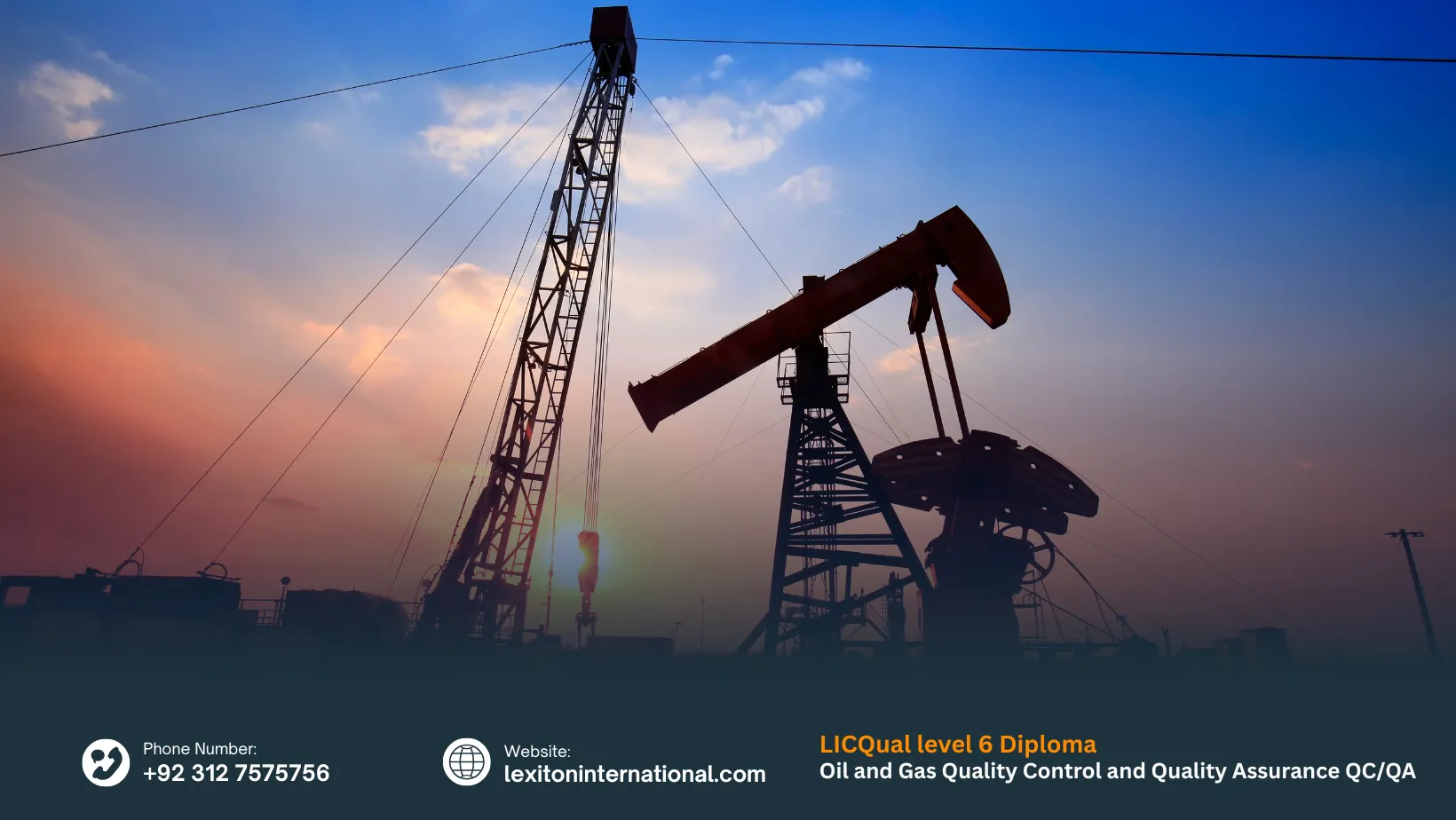
The LICQual Level 6 Diploma in Oil and Gas Quality Control and Quality Assurance (QC/QA) is an internationally recognised qualification designed to develop advanced knowledge and practical expertise in quality management within the oil and gas industry. The programme provides a comprehensive understanding of quality assurance principles, quality control procedures, inspection techniques, auditing practices, and regulatory compliance required to maintain high standards throughout upstream, midstream, and downstream operations. Aligned with international industry requirements, this diploma equips learners with the competencies needed to support safe, efficient, and reliable oil and gas projects while ensuring compliance with recognised quality standards.
The curriculum covers key aspects of oil and gas quality management, including quality management systems (QMS), welding inspection, material inspection, non-destructive testing (NDT) awareness, quality documentation, process control, risk management, supplier quality assurance, and quality auditing. Learners develop the technical knowledge required to monitor quality throughout engineering, procurement, construction, commissioning, and maintenance activities. By integrating internationally accepted QA/QC methodologies with practical industry applications, the qualification supports effective quality planning, defect prevention, and continual improvement across oil and gas operations.
The LICQual Level 6 Diploma in Oil and Gas Quality Control and Quality Assurance (QC/QA) reflects current global industry practices and prepares professionals to contribute to quality excellence in demanding industrial environments. The qualification strengthens expertise in inspection, compliance, quality assurance, and operational quality management, making it highly relevant for organisations involved in oil and gas exploration, refining, petrochemical processing, pipeline projects, offshore operations, and energy infrastructure. Its internationally aligned curriculum supports consistent quality performance, regulatory compliance, and operational reliability across the global oil and gas sector.
- Age Requirements: Applicants must be 18 years or above at the time of enrollment.
- Professional Experience: Previous experience in related industries is recommended.
- Educational Background:Applicants should hold a Level 5 qualification or equivalent in related field.
- English Language Proficiency: Learners should have a good command of the English language.
Mandatory Units
Skills You Will Gain
1. Advanced Principles of Quality Control and Assurance in Oil and Gas
By the end of this unit, learners will be able to:
- Explain the advanced concepts and functions of QC and QA in upstream, midstream, and downstream oil and gas operations.
- Apply relevant international quality standards (ISO 9001, API Spec Q1, ASME, ASTM) in real-world industry scenarios.
- Develop quality control plans, inspection test plans (ITPs), and associated documentation for oil and gas projects.
- Demonstrate professional ethics and accountability in QC/QA roles within the oil and gas sector.
2. Advanced Inspection and Non-Destructive Testing (NDT) Techniques
By the end of this unit, learners will be able to:
- Identify and select appropriate NDT methods (UT, RT, MT, PT, VT, ET) for different oil and gas applications.
- Perform and interpret NDT results in compliance with ASNT, ISO 9712, and other industry-specific standards.
- Evaluate the integrity of materials, welds, and components in pipelines, vessels, and structural systems.
- Document inspection findings and recommend corrective actions for non-conformities.
3. Welding Quality Control, Metallurgy, and Material Integrity
By the end of this unit, learners will be able to:
- Prepare and review Welding Procedure Specifications (WPS) and Procedure Qualification Records (PQR) according to industry standards.
- Assess welder qualifications and ensure compliance with approved procedures.
- Analyse metallurgical properties of carbon steel, stainless steel, and alloy materials in oil and gas operations.
- Identify, evaluate, and prevent welding defects to maintain structural integrity in critical environments.
4. Piping Systems, Pressure Vessels, and Structural Fabrication QA/QC
By the end of this unit, learners will be able to:
- Apply ASME B31.3, API 650, API 1104, and other relevant standards to piping and structural fabrication projects.
- Conduct inspections for piping systems, pressure vessels, and offshore structural components.
- Perform hydrostatic, pneumatic, and leak testing procedures to verify system integrity.
- Maintain accurate quality documentation and ensure traceability for fabricated components.
5. Integration of Quality Assurance with Health, Safety, and Environmental (HSE) Standards
By the end of this unit, learners will be able to:
- Integrate QC/QA processes with HSE management systems (ISO 45001, ISO 14001) in oil and gas projects.
- Conduct risk assessments and develop hazard mitigation strategies for inspection and testing operations.
- Apply environmental protection measures in quality control processes.
- Perform root cause analysis and implement corrective and preventive action (CAPA) plans.
6. Project Quality Management, Supplier Auditing, and Continuous Improvement
By the end of this unit, learners will be able to:
- Plan and implement quality management systems in EPC (Engineering, Procurement, and Construction) projects.
- Conduct supplier qualification assessments and vendor inspections to ensure compliance.
- Execute internal and external audits according to industry best practices.
- Apply Six Sigma, Lean, and other continuous improvement tools to enhance QC/QA performance in oil and gas operations.
The LICQual Level 6 Diploma in Oil and Gas Quality Control and Quality Assurance (QC/QA) is suitable for individuals who want to strengthen their knowledge of quality management, inspection techniques, auditing, and compliance within the oil and gas industry. The programme provides practical understanding of internationally recognised QA/QC standards, helping learners develop the expertise required to support quality-driven operations across upstream, midstream, and downstream sectors.
Who Is This Course For?
- Individuals interested in developing expertise in Oil and Gas QA/QC.
- Those looking to understand international quality management standards used in the oil and gas industry.
- Professionals seeking practical knowledge of quality assurance, quality control, and inspection processes.
- Personnel involved in engineering, construction, fabrication, or maintenance projects.
- Individuals wanting to improve their understanding of quality documentation, auditing, and compliance.
- Those working with pipelines, refineries, petrochemical plants, or offshore operations.
- Professionals aiming to strengthen their knowledge of Quality Management Systems (QMS) and industry best practices.
- Individuals involved in material inspection, welding quality, and process quality control.
- Those wishing to enhance their technical understanding of quality requirements in oil and gas projects.
- Anyone looking to build internationally relevant Oil and Gas QA/QC knowledge applicable across the global energy sector.
The LICQual Level 6 Diploma in Oil and Gas Quality Control and Quality Assurance (QC/QA) strengthens professional expertise in quality management, inspection, auditing, and regulatory compliance within the global oil and gas industry. The qualification supports professional growth by enhancing technical competencies, improving operational quality practices, and preparing learners to contribute effectively to complex engineering and energy projects. Its internationally aligned curriculum reflects current QA/QC standards and industry best practices.
Future Progression
- Progress into senior Quality Assurance (QA) and Quality Control (QC) responsibilities.
- Lead quality inspection, auditing, and compliance activities on oil and gas projects.
- Support the implementation and continuous improvement of Quality Management Systems (QMS).
- Manage quality documentation, inspection records, and project quality reporting.
- Oversee supplier quality assurance and material inspection processes.
- Contribute to quality planning, risk management, and operational excellence initiatives.
- Expand opportunities across upstream, midstream, downstream, petrochemical, and refinery operations.
- Strengthen expertise in engineering, procurement, construction, and commissioning (EPC) quality management.
- Apply internationally recognised QA/QC practices across global energy and infrastructure projects.
- Build professional credibility for leadership responsibilities in quality management and project quality assurance.
Curious About This Course?