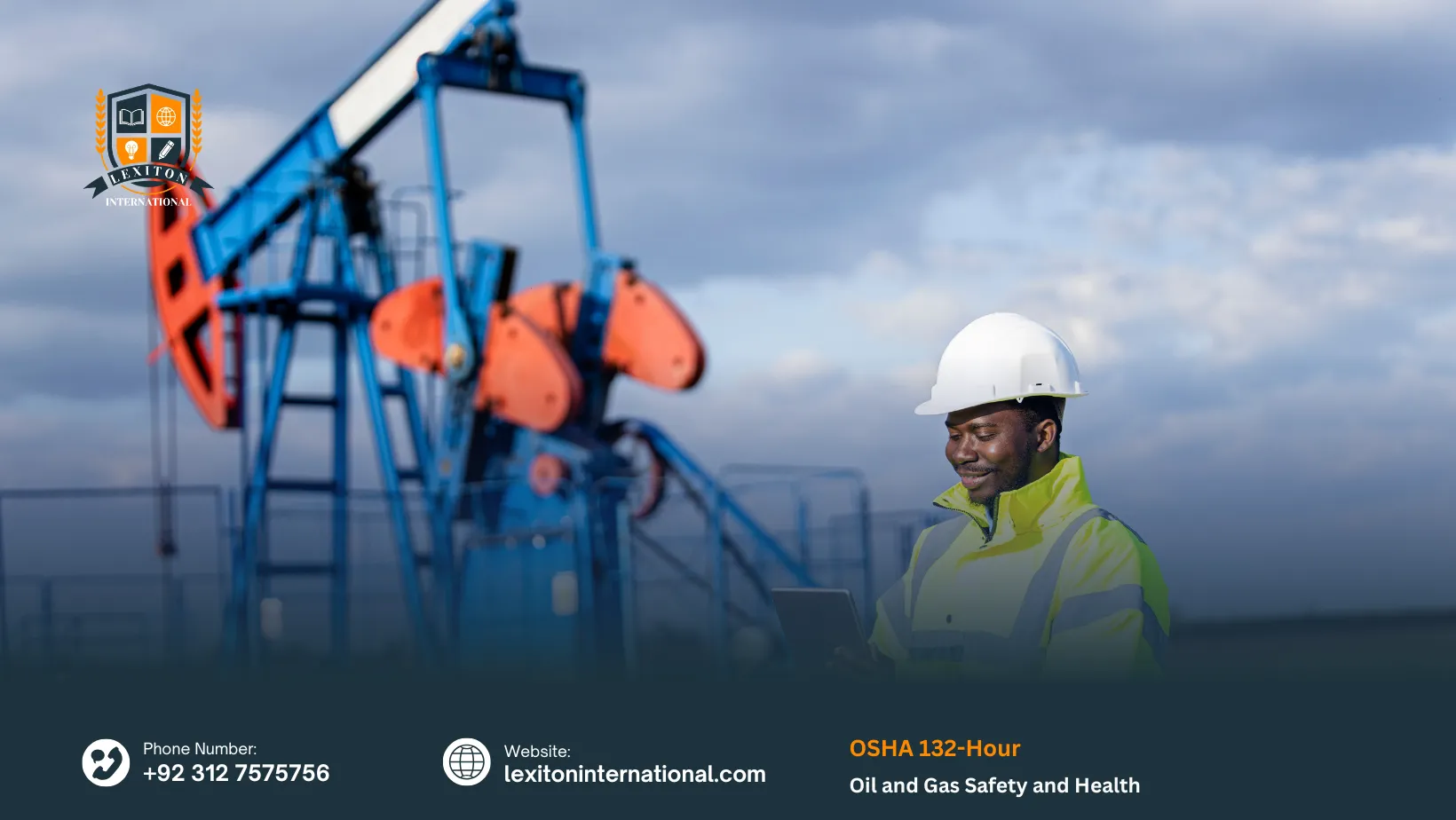
OSHA 132-Hour Oil and Gas Safety and Health Course
The OSHA 132-Hour Oil and Gas Safety and Health course is a professional training program designed to help learners understand essential safety practices in the oil and gas industry. This course focuses on workplace safety standards, hazard awareness, and risk prevention in high-risk oilfield environments. It is ideal for individuals who want to build strong safety knowledge and work safely in oil and gas operations.
This training programme covers important topics such as occupational health and safety regulations, hazard identification, risk assessment, emergency response procedures, fire safety, confined space awareness, and safe handling of equipment. Learners also gain knowledge of personal protective equipment (PPE), accident prevention methods, and industry best practices. The course is designed to improve safety awareness and help learners understand how to reduce risks in oil and gas workplaces.
The OSHA 132-Hour Oil and Gas Safety and Health course is suitable for individuals working or planning to work in oil and gas, construction, drilling, refining, and industrial sectors. It is ideal for both beginners and experienced workers who want to enhance their safety skills. By completing this qualification, learners can improve job opportunities, strengthen workplace safety knowledge, and contribute to safer working environments in high-risk industries.
- Age Requirement: Learners must be at least 18 years or older at the time of enrollment.
- Educational Background: No formal qualifications are required, but basic secondary education is recommended for understanding safety concepts.
- Experience: No prior experience is needed, although exposure to industrial or oil and gas environments is an advantage.
- Language Proficiency: Learners must have good written and spoken English skills to engage effectively with course materials, reporting tasks, and communication in industrial settings..
Mandatory Unit
Skills You Will Gain
1. Understand Advanced OSHA Regulations and Standards
- Interpret and apply advanced OSHA regulations specific to oil and gas operations, ensuring comprehensive compliance.
- Explain the legal implications and organizational consequences of non-compliance with OSHA standards.
- Implement strategies to remain current with evolving regulations and integrate them into daily workplace practices.
2. Advanced Hazard Identification and Risk Assessment
- Utilize advanced tools and methodologies to identify potential hazards in drilling, refining, pipeline, and offshore environments.
- Conduct detailed risk assessments to prioritize hazards based on severity and likelihood of occurrence.
- Develop and implement proactive risk management strategies to mitigate workplace risks effectively.
3. Process Safety Management (PSM)
- Implement and maintain OSHA-compliant PSM systems in line with 29 CFR 1910.119.
- Conduct process hazard analyses (PHAs) and manage change processes to reduce the risk of major chemical incidents.
- Monitor and evaluate the effectiveness of PSM systems through audits, inspections, and continuous improvement measures.
4. Emergency Preparedness and Response Planning
- Develop and implement comprehensive emergency action plans tailored to diverse workplace scenarios.
- Conduct regular drills and simulations to prepare employees for fires, chemical releases, and other emergencies.
- Evaluate response effectiveness through post-incident analysis and feedback mechanisms.
5. Health and Environmental Hazards
- Identify and assess workplace health hazards including chemical exposures, ergonomic risks, and environmental impacts.
- Apply preventive measures and engineering controls to protect worker well-being.
- Monitor environmental conditions and adopt sustainability practices to minimize ecological footprint.
6. Leadership and Safety Culture
- Promote safety awareness and accountability across all levels of the organization.
- Demonstrate leadership in fostering a culture of safety and continuous improvement.
- Strengthen communication strategies that support effective safety management.
7. Advanced Personal Protective Equipment (PPE)
- Select appropriate PPE for specific workplace hazards and operational tasks.
- Train employees on correct usage, maintenance, and storage of PPE to ensure compliance and effectiveness.
- Conduct inspections and evaluations to assess the adequacy and condition of PPE provided to workers.
8. Safety Training and Education
- Design and deliver advanced safety training tailored to different employee groups and job roles.
- Measure training effectiveness through performance evaluations and feedback systems.
- Continuously improve training programs to meet evolving OSHA standards and organizational needs.
9. Contractor and Vendor Safety Management
- Establish and enforce strict safety requirements for contractors and vendors working in oil and gas operations.
- Monitor compliance with OSHA regulations and hold contractors accountable for performance.
- Conduct safety audits of contractor activities to ensure alignment with organizational safety objectives.
10. Regulatory Compliance and Auditing
- Conduct audits and inspections to assess compliance with OSHA regulations and global industry standards.
- Implement corrective actions and process improvements based on audit findings.
- Maintain accurate documentation to demonstrate compliance and support regulatory inspections.
The OSHA 132-Hour Oil and Gas Safety and Health course is designed for individuals who want to build strong safety knowledge and work in high-risk oil and gas environments. It is suitable for learners aiming to understand industry safety standards, hazard control, and emergency response procedures in oilfield and industrial operations.
Who Is This Course For
- Oil and gas field workers and technicians
- Drilling, refinery, and pipeline staff
- Construction workers in energy sector projects
- Industrial maintenance and operational staff
- Health and safety assistants and site safety officers
- Beginners entering oil and gas industry roles
- Supervisors responsible for workplace safety compliance
- Anyone seeking oil and gas safety training certification
The OSHA 132-Hour Oil and Gas Safety and Health course provides a strong foundation for learners to progress into advanced safety, technical, and supervisory roles within the energy sector. It helps develop essential knowledge required for managing safety in high-risk oil and gas environments.
Future Progression
- Progress to advanced oil and gas safety and HSE certifications
- Move into Safety Officer or HSE Supervisor roles in industry
- Develop skills for Oilfield Safety Inspector or Site Safety Coordinator positions
- Advance into drilling, refinery, and industrial safety management roles
- Specialise in risk assessment, emergency response, and hazard control
- Progress toward international safety and compliance qualifications
- Enhance opportunities in energy sector safety leadership roles
- Build a pathway toward senior health and safety management careers
Curious About This Course?