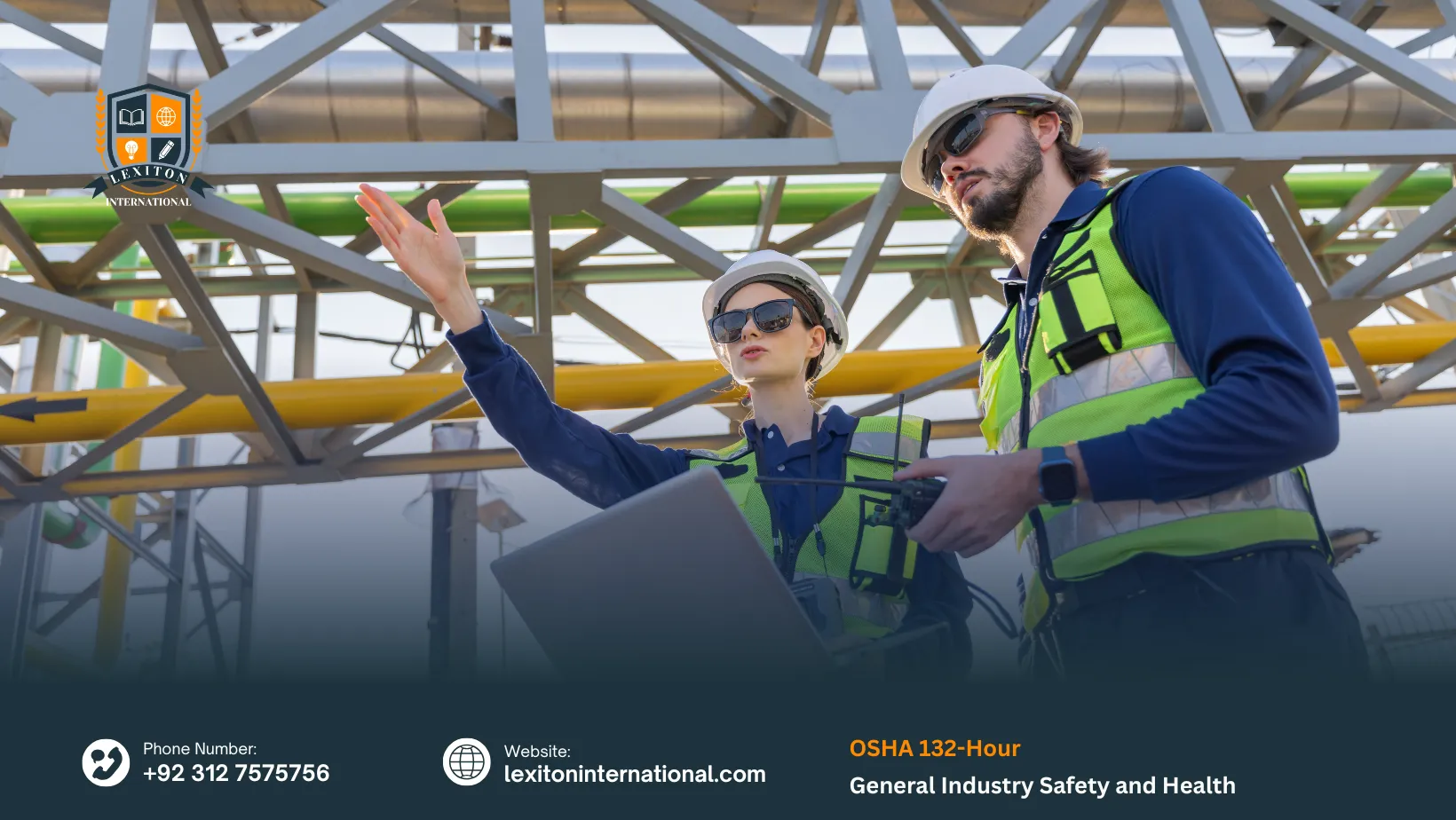
OSHA 132-Hour General Industry Safety Course
Workplace safety and health in general industry focus on protecting workers from hazards, accidents, and health risks in industrial and occupational environments. It includes identifying risks, following safety procedures, and ensuring safe working conditions in workplaces such as factories, warehouses, manufacturing units, and service industries. Proper safety training is essential to reduce accidents and maintain a healthy work environment.
The OSHA 132-Hour General Industry Safety and Health course is designed to provide learners with comprehensive knowledge of workplace safety standards and practices. The course covers key topics such as hazard recognition, risk assessment, emergency response, fire safety, electrical safety, machine safety, and personal protective equipment (PPE). Learners will also gain understanding of OSHA regulations, workplace inspections, and safe working procedures used across different industries.
This qualification prepares learners for roles in industrial safety, health and safety departments, construction support, manufacturing, and facility management. It also supports career development in safety compliance and supervision roles. By focusing on practical safety knowledge and real-world applications, this course helps learners build awareness, improve workplace safety skills, and contribute to safer working environments across general industry sectors.
- Minimum Age: Learners must be at least 18 years old at the time of enrolment due to the technical and safety-focused nature of the course.
- Educational Background: Participants should have at least a high school diploma or equivalent. A background in engineering, occupational health, industrial management, or related fields is advantageous but not mandatory.
- Professional Experience: While not strictly required, prior experience in industrial settings, health and safety roles, or compliance functions will help learners better relate to practical scenarios and case studies.
- Language Proficiency: As the course is delivered in English, learners should be proficient in reading, writing, and comprehension to fully engage with course materials and assessments.
Mandatory Units
Skills You Will Gain
1. Introduction to OSHA and General Industry Safety
- Understand the mission and role of OSHA in regulating workplace safety and health.
- Identify OSHA standards and regulations applicable across general industry sectors.
- Explain the rights and responsibilities of employers and employees under OSHA guidelines.
2. Walking and Working Surfaces
- Identify and assess hazards associated with walking and working surfaces in industrial environments.
- Implement preventive measures to minimize slips, trips, and falls.
- Conduct workplace inspections to ensure compliance with OSHA safety standards.
3. Electrical Safety Standards
- Recognize electrical hazards and apply OSHA electrical safety requirements.
- Implement safe practices for working with electricity and electrical equipment.
- Conduct audits and inspections to mitigate risks and maintain compliance.
4. Hazard Communication
- Interpret OSHA’s Hazard Communication Standard (HCS) and its workplace applications.
- Develop and implement a hazard communication program with proper labeling and Safety Data Sheets (SDS).
- Train employees in safe chemical handling and hazard communication protocols.
5. Personal Protective Equipment (PPE)
- Assess workplace hazards and determine the appropriate PPE required.
- Ensure correct use, maintenance, and storage of PPE.
- Train employees on proper PPE practices to protect against workplace risks.
6. Fire Safety and Prevention
- Develop and enforce fire prevention and emergency response procedures.
- Conduct fire risk assessments and drills to prepare employees effectively.
- Ensure workplace compliance with OSHA fire safety regulations.
7. Machine Guarding and Lockout/Tagout
- Identify hazardous machine operations and apply effective guarding techniques.
- Develop and implement lockout/tagout procedures to control hazardous energy.
- Train employees on safe machine operation and energy control procedures.
8. Ergonomics
- Identify ergonomic risks and apply ergonomic design principles.
- Implement solutions to reduce musculoskeletal disorders and injuries.
- Conduct ergonomic assessments to enhance worker comfort and productivity.
9. Hazardous Materials and Waste Management
- Identify hazardous materials in the workplace and evaluate associated risks.
- Apply safe handling, storage, and disposal methods for hazardous substances.
- Ensure compliance with OSHA’s HAZWOPER standards when applicable.
10. Industrial Hygiene and Occupational Health
- Conduct workplace exposure assessments for chemical, physical, and biological hazards.
- Apply control measures to reduce occupational health risks.
- Establish and maintain occupational health programs to protect workers.
11. Confined Spaces
- Identify confined spaces and associated hazards in industrial environments.
- Develop and implement confined space entry and permit-required procedures.
- Train employees on safe entry, monitoring, and emergency rescue protocols.
12. Emergency Response and Preparedness
- Develop emergency response plans tailored to workplace hazards.
- Conduct emergency drills and simulations to strengthen readiness.
- Train employees to respond quickly and effectively to emergencies.
13. Accident Investigation and Recordkeeping
- Perform thorough accident investigations to identify root causes.
- Implement corrective actions to prevent recurrence of incidents.
- Maintain OSHA-compliant accident records and documentation.
14. Health and Safety Management Systems
- Understand the components of effective occupational safety management systems.
- Design and implement systems that align with organizational needs.
- Continuously assess and improve safety performance through audits and corrective actions.
15. Safety and Health Training Techniques
- Develop and deliver impactful training programs for employees at all organizational levels.
- Use adult learning strategies to improve employee engagement and retention.
- Evaluate training effectiveness and make adjustments to meet evolving safety goals.
16. Special Topics and Emerging Issues
- Stay updated on evolving OSHA regulations and new safety challenges.
- Address workplace violence prevention, pandemic preparedness, and new safety technologies.
- Proactively assess and mitigate risks associated with emerging workplace hazards.
This course is designed for individuals who want to build strong knowledge of workplace safety and health within general industry environments. It is suitable for learners who are planning to start a career in occupational safety or those who wish to improve their understanding of safe working practices in industrial, manufacturing, and service-based settings.
Who Is This Course For
- Individuals interested in health and safety and compliance roles
- Workers in manufacturing plants, warehouses, and industrial sites
- Beginners aiming to enter the occupational safety field
- Employees who want to improve workplace safety awareness
- Supervisors responsible for maintaining safe working conditions
- Job seekers looking for safety-related opportunities in industry
This qualification provides a solid foundation for anyone interested in workplace safety and health. It helps learners develop practical understanding, improve safety awareness, and build confidence to work effectively in different industrial environments.
After completing the OSHA 132-Hour General Industry Safety and Health course, learners can progress into a wide range of career paths and advanced training opportunities within occupational health and safety. This qualification builds a strong foundation in workplace safety principles, allowing learners to move into more responsible roles in industrial and corporate environments.
Future Progression
- Progress to advanced health and safety certifications and professional diplomas
- Apply for roles such as safety assistant, safety officer trainee, or compliance support staff
- Work in manufacturing, construction support, warehouses, and industrial facilities
- Develop skills for safety inspection, risk assessment, and workplace auditing roles
- Continue training in specialised areas such as fire safety, hazard control, or industrial safety management
- Gain experience leading toward supervisory and health and safety management positions
Curious About This Course?