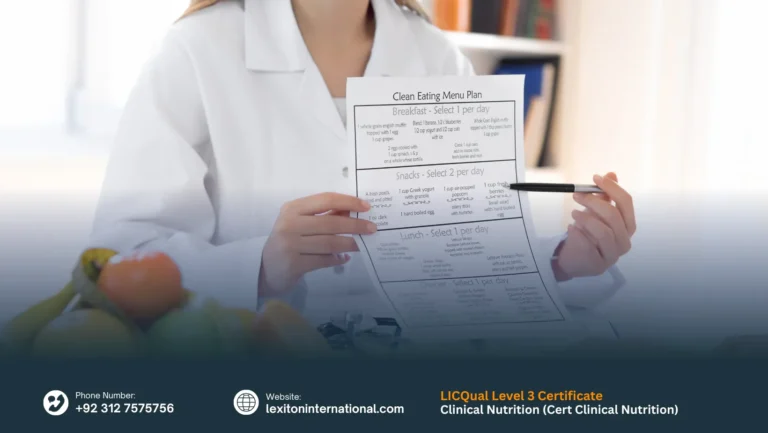
The LICQual Level 3 Certificate in Clinical Dietetics (Cert Clinical Dietetics) is a professional qualification that introduces learners to the basic principles of dietetics within clinical and healthcare environments. The course explains how nutrition plays a key role in maintaining health, preventing illness, and supporting recovery in patients. It provides a clear understanding of how dietary management is used as part of healthcare practice.
This course covers important topics such as therapeutic diets, nutritional screening, diet planning for medical conditions, and the relationship between food and disease management. Learners will understand how different illnesses require specific dietary approaches and how clinical nutrition supports overall treatment plans. It also explains the basic concepts used in clinical dietetics in hospitals and healthcare settings.
The LICQual Level 3 Certificate in Clinical Dietetics develops essential awareness of how diet and nutrition influence patient health outcomes. It focuses on practical knowledge related to dietary care and nutritional support in clinical environments. This qualification helps build a strong understanding of how structured dietary practices contribute to effective healthcare and improved wellbeing in medical settings.
- Age Requirements: Applicants must be 18 years or above at the time of enrollment.
- Professional Experience: No formal work experience is required.
- Educational Background: A minimum of secondary education or equivalent qualification is recommended.
- English Language Proficiency:Learners should have a good command of the English language.
Mandatory Units
Skills You Will Gain
By the end of this course, learners will be able to:
Unit 1: Fundamentals of Clinical Nutrition
Learners will be able to:
- Explain the principles of clinical nutrition and its role in healthcare.
- Analyse the relationship between diet, health, and disease.
- Identify the key factors affecting nutritional status in patients.
- Apply foundational nutrition concepts to support patient care effectively.
Unit 2: Nutrient Metabolism and Dietary Requirements
Learners will be able to:
- Describe the metabolism of macronutrients and micronutrients in the human body.
- Assess dietary requirements for different patient groups based on age, health status, and activity levels.
- Evaluate the impact of nutrient deficiencies or excesses on health outcomes.
- Apply knowledge of nutrient metabolism to inform clinical dietary planning.
Unit 3: Therapeutic Diets and Medical Conditions
Learners will be able to:
- Identify dietary strategies for managing common medical conditions such as diabetes, cardiovascular disease, and gastrointestinal disorders.
- Analyse the role of therapeutic diets in treatment and recovery.
- Develop diet plans tailored to individual patient needs and conditions.
- Apply evidence-based guidelines for safe and effective therapeutic nutrition interventions.
Unit 4: Nutritional Assessment and Care Planning
Learners will be able to:
- Conduct comprehensive nutritional assessments using appropriate tools and techniques.
- Interpret assessment results to identify nutritional risks and deficiencies.
- Develop individualised care plans based on patient nutritional needs and clinical objectives.
- Monitor and adjust dietary plans according to patient progress and outcomes.
Unit 5: Clinical Dietetic Practice and Intervention
Learners will be able to:
- Implement dietetic interventions safely and effectively within clinical settings.
- Communicate dietary guidance clearly to patients and healthcare teams.
- Evaluate the outcomes of nutritional interventions and modify strategies as required.
- Apply practical skills to support optimal patient nutrition and recovery.
Unit 6: Professional Practice, Ethics, and CPD in Clinical Dietetics
Learners will be able to:
- Apply legal, regulatory, and professional standards to ensure safe, ethical, and effective practice.
- Demonstrate professional conduct, ethical decision-making, and confidentiality in clinical dietetic practice.
- Engage in Continuing Professional Development (CPD) to enhance professional skills and knowledge.
- Communicate effectively with patients, caregivers, and colleagues in healthcare environments.
LICQual Level 3 Certificate in Clinical Dietetics (Cert Clinical Dietetics) is designed for learners who are curious about how nutrition directly impacts health, recovery, and overall wellbeing. It provides an opportunity to understand the practical side of clinical dietetics and how dietary choices influence patient care in real healthcare settings. The programme helps learners explore how food and nutrients support healing and improve health outcomes. It also builds awareness of how clinical nutrition is applied in real-world medical environments to enhance patient support and recovery.
Who Is This Course For?
- Individuals interested in understanding how food and nutrients affect human health
- Learners who want to explore diet planning for different medical conditions
- Those aiming to understand nutritional support used in hospitals and clinics
- People working or interested in caregiving and patient support roles
- Learners who want to build awareness of therapeutic and clinical diets
- Anyone interested in the science behind balanced and medical nutrition
- Individuals who wish to develop confidence in basic clinical nutrition concepts
- Those passionate about improving health through evidence-based dietary understanding
LICQual Level 3 Certificate in Clinical Dietetics (Cert Clinical Dietetics) opens the door to meaningful growth in the field of nutrition and healthcare support, where learners can gradually build their understanding of how diet and health are connected in clinical environments. It helps develop a strong foundation in clinical dietetics that can be applied in real healthcare settings. Learners can move forward with confidence into roles where nutritional knowledge is used to support patient care, recovery, and wellbeing. The qualification also strengthens practical awareness, making it easier to contribute effectively within health focused teams and environments.
Future Progression
- Clinical Nutrition Assistant in hospitals and healthcare centres
- Diet Support Assistant in clinics and wellness facilities
- Nutrition Care Support Worker in care homes and community health services Healthcare
- Assistant with focus on dietary and nutritional support
- Food and Nutrition Support Assistant in rehabilitation centres
- Wellness and Dietary Advisor in community health programmes
- Patient Care Support Staff with nutritional responsibilities
- Assistant roles in health-focused NGOs and support organisations
Curious About This Course?