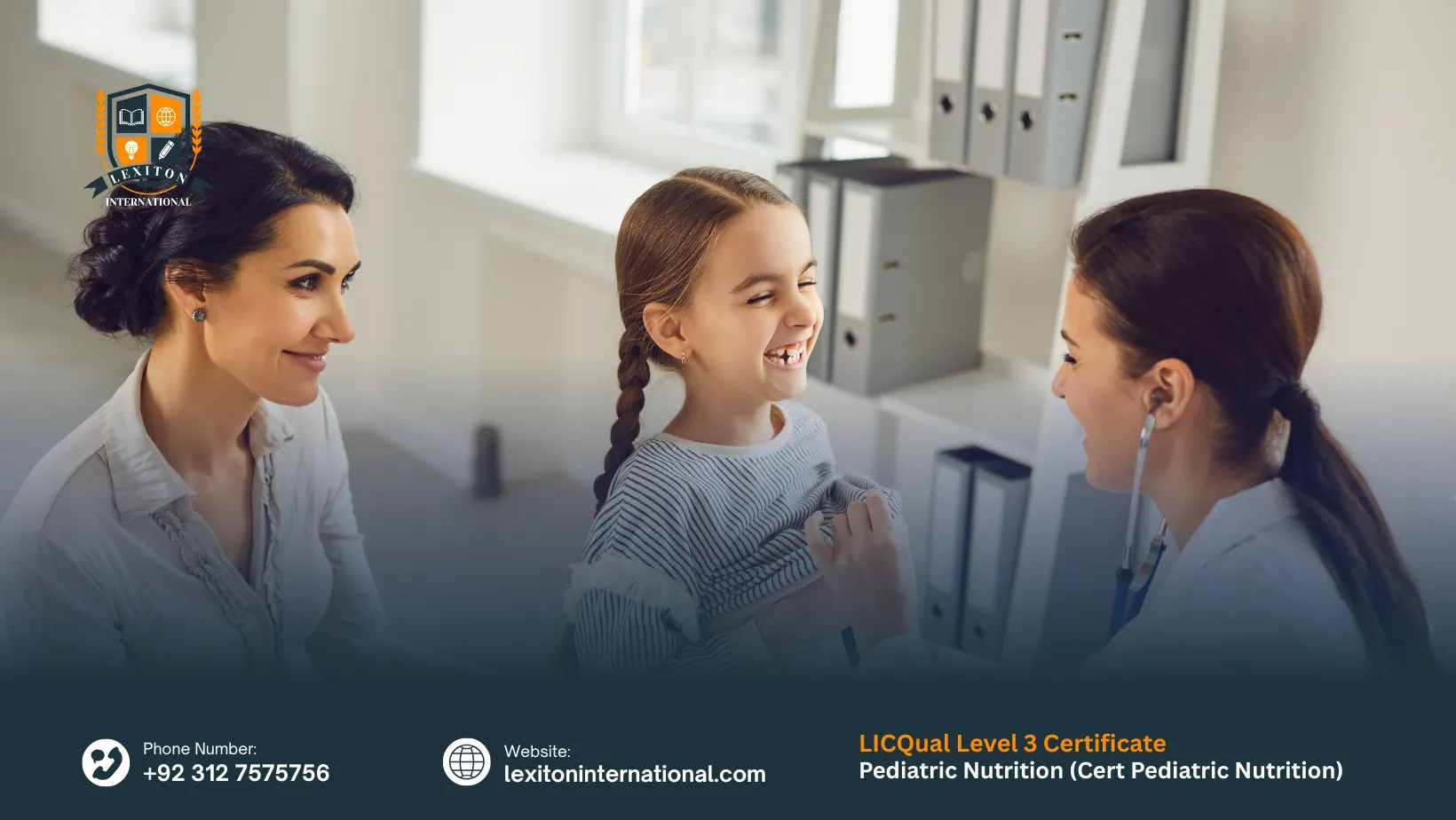
The LICQual Level 3 Certificate in Pediatric Nutrition (Cert Pediatric Nutrition) is a professionally designed qualification that introduces learners to the fundamentals of nutrition for infants, children, and adolescents. The course is aimed at individuals who want to understand how proper nutrition supports healthy growth, development, and overall wellbeing in early life stages. It is suitable for beginners interested in health, nutrition, childcare, and wellness support roles.
This course covers essential topics such as basic nutritional needs of children, macronutrients and micronutrients for growth, hydration, meal planning for different age groups, and common nutritional challenges in pediatrics. Learners will also understand how diet impacts immunity, physical development, and cognitive growth. The program focuses on practical, real-world knowledge that can be applied in childcare, healthcare support, and community nutrition settings.
The LICQual Level 3 Certificate in Pediatric Nutrition prepares learners for roles in childcare centres, health support services, wellness organisations, and nutrition assistance environments. It is ideal for students, caregivers, and health enthusiasts who want to build strong foundational skills in pediatric nutrition. This qualification helps learners develop confidence in supporting healthy eating habits for children and promoting better nutrition practices in everyday life, making it valuable in the global health and childcare sector.
- Age Requirements: Applicants must be 16 years or above at the time of enrollment.
- Professional Experience: No formal work experience is required.
- Educational Background: A basic secondary education or equivalent qualification is recommended.
- English Language Proficiency:Learners should have a good command of the English language.
Mandatory Units
Skills You Will Gain
Unit 1: Fundamentals of Child Growth and Development
Learners will be able to:
- Explain the stages of growth and development from infancy to adolescence.
- Analyse factors affecting physical, cognitive, and emotional development in children.
- Assess growth patterns using standard growth charts and developmental indicators.
- Apply knowledge of child development to support age-appropriate nutritional planning.
Unit 2: Principles of Pediatric Nutrition and Nutrient Requirements
Learners will be able to:
- Demonstrate understanding of essential nutrients required at different childhood stages.
- Evaluate dietary requirements in relation to age, activity level, and health status.
- Analyse the impact of nutrition on growth, immunity, and overall health.
- Apply evidence-based principles to develop balanced dietary strategies for children.
Unit 3: Macronutrients and Micronutrients in Childhood
Learners will be able to:
- Identify the roles of carbohydrates, proteins, fats, vitamins, and minerals in childhood development.
- Recognise the consequences of nutrient deficiencies or excesses in children.
- Evaluate the dietary intake of children and recommend adjustments to meet nutritional needs.
- Apply practical knowledge to design nutrient-optimised meals for different age groups.
Unit 4: Infant Feeding Practices and Weaning
Learners will be able to:
- Explain best practices for breastfeeding, formula feeding, and complementary feeding.
- Assess the nutritional needs of infants during the weaning process.
- Apply guidelines to plan age-appropriate and safe feeding strategies.
- Support caregivers in implementing evidence-based infant feeding practices.
Unit 5: Managing Common Childhood Nutritional Challenges
Learners will be able to:
- Identify common childhood nutritional issues, such as allergies, obesity, and malnutrition.
- Analyse the causes and consequences of nutritional imbalances in children.
- Develop intervention strategies to manage and prevent common nutritional problems.
- Apply critical thinking to provide safe and practical nutritional guidance.
Unit 6: Professional Practice, Ethics, and CPD in Pediatric Nutrition
Learners will be able to:
- Demonstrate professional conduct, ethical decision-making, and confidentiality in pediatric nutrition practice.
- Engage in Continuing Professional Development (CPD) to enhance knowledge and skills.
- Communicate nutritional guidance clearly to caregivers, colleagues, and healthcare teams.
- Apply legal, regulatory, and professional standards to ensure safe and effective practice.
LICQual Level 3 Certificate in Pediatric Nutrition (Cert Pediatric Nutrition) is designed for individuals who want to understand how nutrition shapes the growth, health, and well-being of children from early stages of life. It provides meaningful insight into how food choices influence development and long-term health outcomes.
Who Is This Course For?
- Individuals interested in child health, nutrition, and wellness topics
- People working in childcare or early learning environments
- Learners curious about how diet supports growth and immunity in children
- Those involved in community health or family support services
- Individuals working in healthcare or care-related support roles
- People supporting families in making healthier food choices for children
- Learners interested in understanding dietary needs at different childhood stages
- Anyone passionate about improving children’s overall well-being through nutrition
Completing the LICQual Level 3 Certificate in Pediatric Nutrition (Cert Pediatric Nutrition) opens doors to meaningful opportunities in health, nutrition, and child-focused support environments. It builds a strong understanding of how nutrition impacts early development, helping learners move confidently into practical roles where this knowledge can be applied in real situations.
Future Progression
- Opportunities in childcare nutrition support environments
- Roles in community health awareness and wellbeing programmes
- Work in early learning and educational support settings
- Positions in family support and child development services
- Entry-level roles in health and nutrition advisory support
- Involvement in wellness centres focusing on family health guidance
- Support roles in healthcare and clinic-based environments
- Opportunities in food and nutrition awareness programmes for children
Curious About This Course?