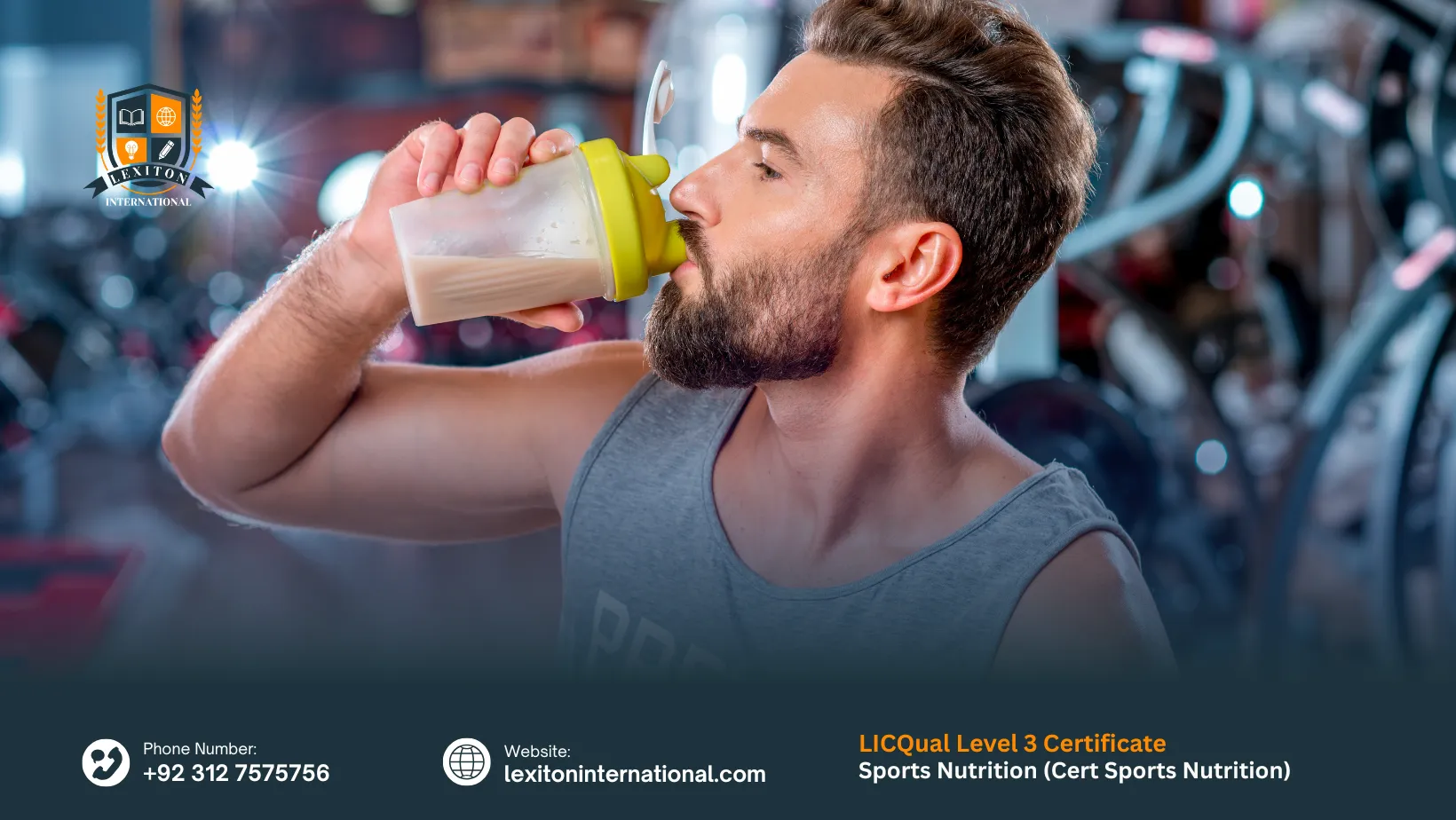
The LICQual Level 3 Certificate in Sports Nutrition (Cert Sports Nutrition) is a professionally designed qualification that provides learners with a solid understanding of nutrition and its role in sports performance, fitness, and overall wellbeing. The course is ideal for individuals who want to develop practical knowledge of healthy eating, energy balance, and nutritional support for active lifestyles. It offers a strong foundation for those interested in the growing sports, fitness, and wellness sector.
This course covers essential topics including macronutrients, micronutrients, hydration, meal planning, weight management, and nutrition for exercise and recovery. Learners will gain an understanding of how dietary choices affect physical performance, endurance, muscle recovery, and general health. The knowledge gained can be applied in a variety of fitness and sports-related environments to support healthy and effective nutrition practices.
The LICQual Level 3 Certificate in Sports Nutrition is suitable for fitness enthusiasts, gym instructors, sports coaches, personal trainers, and individuals seeking to enhance their understanding of nutrition in sport. Upon completion, learners will be equipped with valuable skills to support basic nutritional planning and promote healthier lifestyle choices. This internationally recognised qualification helps learners strengthen their professional profile and expand opportunities within the sports, fitness, and health industries.
- Age Requirements: Applicants must be 16 years or above at the time of enrollment.
- Professional Experience: No formal work experience is required.
- Educational Background: A basic secondary education or equivalent qualification is recommended.
- English Language Proficiency: Learners should have a good command of the English language.
Mandatory Units
Skills You Will Gain
Unit 1: Fundamentals of Human Anatomy and Physiology for Nutrition
Learners will be able to:
- Explain the structure and function of major body systems relevant to nutrition, including digestive, circulatory, and endocrine systems.
- Describe how body systems interact to maintain homeostasis and overall health.
- Analyse the physiological processes affecting nutrient absorption, metabolism, and utilisation.
- Apply anatomical and physiological knowledge to assess nutritional needs in different populations.
Unit 2: Principles of Nutrition Science and Macronutrients
Learners will be able to:
- Demonstrate knowledge of macronutrients (carbohydrates, proteins, fats) and their roles in energy production and body function.
- Evaluate dietary intake in relation to recommended nutrient guidelines.
- Explain energy balance and factors affecting caloric requirements.
- Apply macronutrient principles to develop appropriate dietary plans.
Unit 3: Micronutrients and Their Role in Health and Disease
Learners will be able to:
- Identify essential vitamins and minerals and describe their physiological functions.
- Recognise signs and symptoms of micronutrient deficiencies and excesses.
- Analyse the impact of micronutrients on disease prevention and health maintenance.
- Apply knowledge of micronutrients to support evidence-based dietary recommendations.
Unit 4: Dietary Planning and Nutritional Assessment
Learners will be able to:
- Conduct comprehensive nutritional assessments using appropriate tools and techniques.
- Develop personalised dietary plans for individuals with varying health needs.
- Evaluate the effectiveness of dietary interventions using scientific evidence.
- Apply critical thinking to modify diets based on lifestyle, health status, and clinical requirements.
Unit 5: Clinical Nutrition in Health and Disease Management
Learners will be able to:
- Explain the role of nutrition in the prevention and management of common medical conditions.
- Interpret clinical data to inform nutritional interventions.
- Design dietary strategies to support health outcomes in clinical populations.
- Critically evaluate current research and guidelines in clinical nutrition practice.
Unit 6: Professional Practice, Ethics, and CPD in Nutrition
Learners will be able to:
- Demonstrate professional conduct, ethical decision-making, and confidentiality in nutritional practice.
- Reflect on personal development and engage in Continuing Professional Development (CPD).
- Communicate nutritional information clearly and effectively to clients and colleagues.
- Apply legal, regulatory, and professional standards to ensure safe and effective practice.
LICQual Level 3 Certificate in Sports Nutrition (Cert Sports Nutrition) is designed for individuals who want to understand how nutrition shapes performance, energy, and recovery in active lifestyles. It brings clarity to the science behind food choices and how they directly influence physical output in sports and fitness environments.
Who Is This Course For?
- Individuals interested in understanding how diet supports physical performance and stamina
- People involved in gym training, personal fitness, or recreational sports activities
- Learners who want to understand how daily food choices affect energy levels and recovery
- Those exploring roles linked with health, wellness, or active lifestyle support
- Individuals working in fitness environments who want stronger nutrition awareness
- Anyone curious about structured eating habits for improved physical well-being
- Learners who want to understand hydration, energy balance, and nutrient timing concepts
- People aiming to build confidence in making informed food and lifestyle decisions for active living
Completing the LICQual Level 3 Certificate in Sports Nutrition (Cert Sports Nutrition) opens the door to a wide range of opportunities in fitness, wellness, and performance-focused environments. It helps learners build a strong foundation in nutrition principles that can be applied in real world health and active lifestyle settings.
Future Progression
- Entry-level roles in fitness and gym support environments
- Opportunities in personal training assistant roles with nutrition awareness
- Work in sports clubs or recreational fitness centres
- Roles supporting wellness and lifestyle coaching services
- Positions in community health and fitness programmes
- Opportunities in sports support and athlete care environments
- Involvement in nutrition-focused customer guidance roles
- Roles in health retail or supplement advisory settings
- Development of skills for freelance fitness and nutrition support services
Curious About This Course?