Substance Abuse and Mental Health Level 4 Award
Addiction and substance abuse are complex conditions that affect a person’s physical health, emotional stability, and social functioning. They often involve dependence on drugs, alcohol, or other harmful substances, which can lead to serious mental health challenges such as depression, anxiety, and behavioural changes. Understanding both addiction and mental health is essential for providing effective treatment, recovery support, and long-term care.
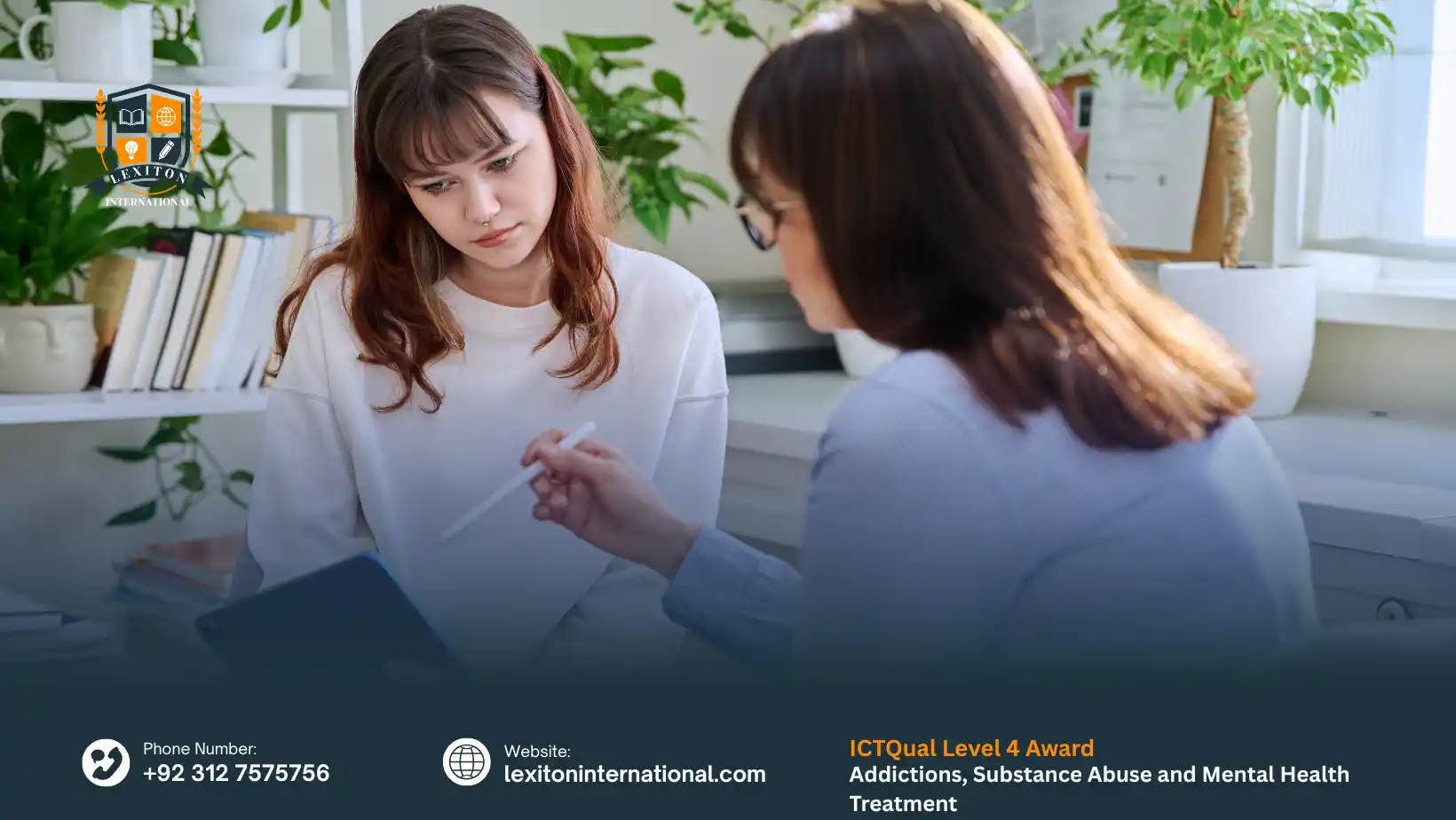
The ICTQual Level 4 Award in Addictions, Substance Abuse and Mental Health Treatment is designed to provide learners with a deeper understanding of addiction-related issues and professional approaches to treatment. The course covers key topics such as causes of addiction, psychological effects, recovery models, relapse prevention, and counselling techniques. Learners will also develop knowledge of ethical practices, communication strategies, and support methods used in healthcare and rehabilitation settings.
This qualification is suitable for individuals who want to build a career in healthcare, counselling, rehabilitation services, or social care sectors. It is also ideal for those who already have basic knowledge and want to advance their understanding of addiction treatment and mental health support. By focusing on both theory and practical application, the course helps learners develop professional skills, improve awareness, and prepare for roles that support individuals affected by addiction and mental health challenges.
- Age Requirements: Learners must be at least 18 years or older at the time of enrollment.
- Professional Experience: Some prior experience in healthcare, social care, counselling, or support work is beneficial but not mandatory. It supports better understanding of course content.
- Educational Background: A Level 3 qualification or equivalent in health, social care, psychology, or related fields is recommended. It helps learners understand advanced concepts more effectively.
- English Language Proficiency: Learners must have a good command of English to engage with course materials, assessments, and technical documentation effectively.
Mandatory Units
Skills You Will Gain
Introduction to Addiction and Mental Health
- Understand the historical development and societal impacts of addiction and mental health disorders.
- Describe the major classifications and diagnostic criteria for addiction and mental health conditions.
- Recognize the prevalence and epidemiology of addiction and mental health disorders globally.
Biopsychosocial Aspects of Addiction
- Explain the biological mechanisms underlying addiction, including neurobiological pathways and genetic predispositions.
- Analyze the psychological factors influencing addictive behaviors, such as stress, trauma, and co-occurring mental health disorders.
- Discuss the social determinants of addiction, including cultural influences, socioeconomic status, and environmental factors.
Treatment Modalities
- Identify pharmacological interventions commonly used in addiction treatment and their mechanisms of action.
- Evaluate the effectiveness of behavioral therapies, such as cognitive-behavioral therapy (CBT), motivational interviewing, and contingency management.
- Apply knowledge of dual diagnosis treatment approaches for individuals with co-occurring substance use and mental health disorders.
Rehabilitation and Recovery
- Outline the principles of rehabilitation in addiction treatment, including stages of change and recovery models.
- Develop relapse prevention strategies and skills to support long-term recovery.
- Utilize community resources and support systems to facilitate successful rehabilitation outcomes.
Ethical and Legal Issues
- Analyze ethical dilemmas in addiction treatment, including confidentiality, informed consent, and boundaries in therapeutic relationships.
- Interpret legal frameworks governing addiction treatment, including laws related to substance use disorders and mental health.
- Advocate for patient rights and apply ethical principles in decision-making within addiction and mental health contexts.
Professional Development
- Implement self-care strategies to prevent burnout and enhance personal well-being as a healthcare professional.
- Engage in continuous professional development activities to stay current with evidence-based practices and advancements in addiction treatment.
- Explore career pathways and opportunities for specialization in addiction and mental health services.
This course is designed for individuals who want to gain advanced knowledge and practical understanding of addiction, substance abuse, and mental health treatment. It is suitable for learners aiming to build or progress their career in healthcare, counselling, rehabilitation, or social care services, as well as those already working in related support roles who want to enhance their expertise.
Who Is this for
- Individuals interested in advanced addiction and mental health studies
- Healthcare and social care workers seeking professional development
- Counsellors and support staff working in rehabilitation services
- Learners aiming to build a career in mental health and recovery support
- Professionals in community health and wellbeing services
- Individuals progressing from Level 3 or similar qualifications
This qualification provides a strong pathway for learners who want to develop deeper understanding and professional skills in addiction and mental health treatment. It helps build confidence, improve practical knowledge, and prepare for advanced roles in care and support services.
After completing the ICTQual Level 4 Award in Addictions, Substance Abuse and Mental Health Treatment, learners can progress into more advanced study routes and professional roles within healthcare, counselling, and mental health services. This qualification builds strong practical and theoretical understanding, supporting learners to move into specialised support and supervisory positions.
Future Progression
- Apply for roles such as senior support worker or rehabilitation practitioner
- Work in hospitals, mental health clinics, and rehabilitation centres
- Develop skills for supervisory roles in addiction and mental health services
- Continue training in psychotherapy, counselling, or clinical mental health practice
- Gain experience leading toward specialist or advanced therapeutic roles
This course provides a strong foundation for long-term career development in addiction and mental health care. It helps learners enhance professional skills, improve job opportunities, and build a clear pathway toward advanced roles in the healthcare and support sector.
Curious About This Course?