
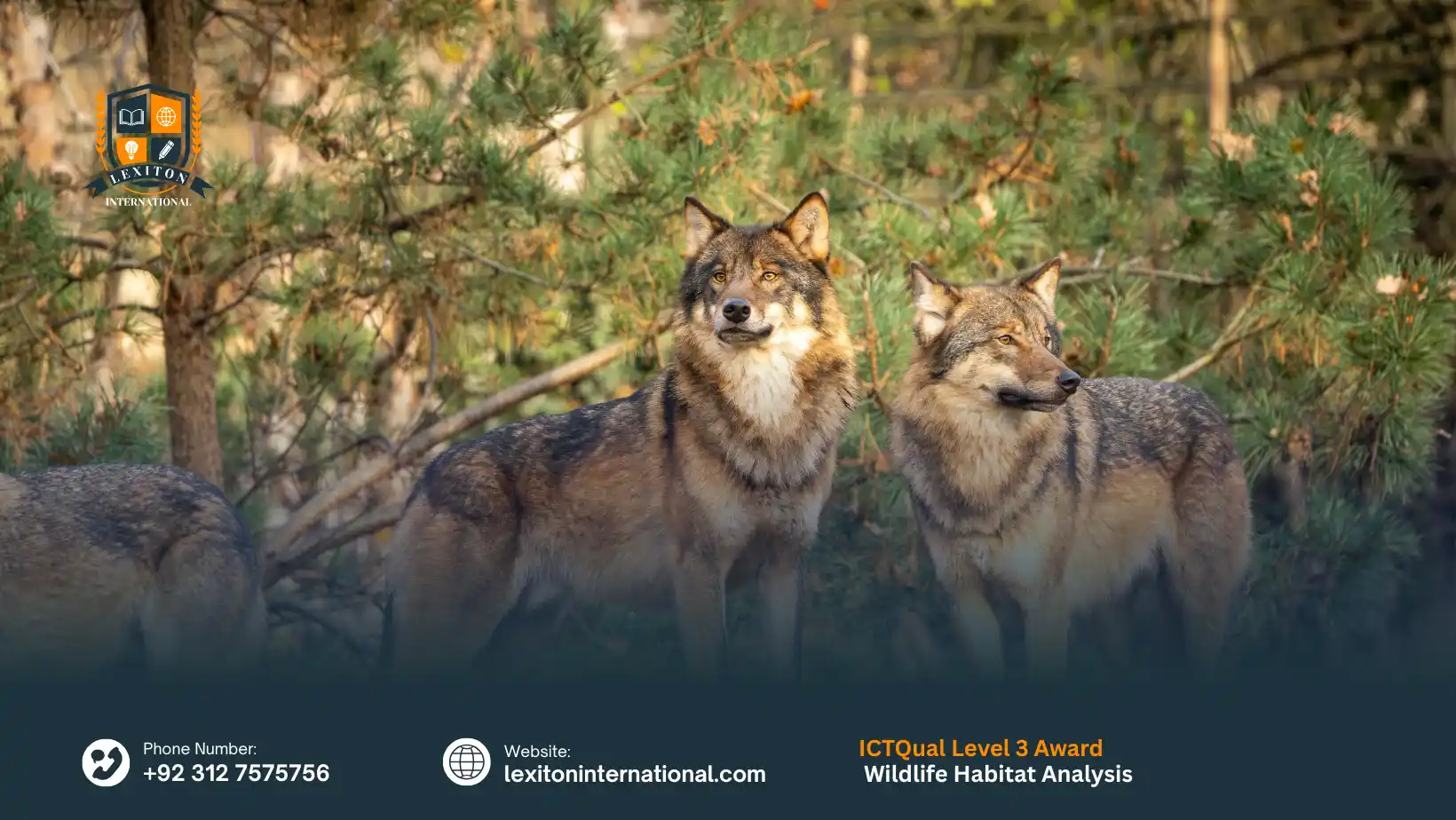
Level 3 Award in Habitat Analysis for Wildlife
Wildlife habitat analysis is the study of natural environments where animals live, grow, and interact with their surroundings. It focuses on understanding different habitats such as forests, grasslands, wetlands, and deserts, and how these environments support various animal species. This field also examines how human activities and environmental changes impact wildlife populations and their natural ecosystems. It plays an important role in conservation, environmental protection, and biodiversity management.
The ICTQual Level 3 Award in Wildlife Habitat Analysis is designed to provide learners with a clear understanding of how to study and evaluate different wildlife habitats. The course covers key topics such as ecosystem structure, habitat types, environmental factors, and methods used to observe and assess wildlife conditions. Learners will also gain knowledge of data collection techniques, field observation skills, and basic environmental analysis used in real-world conservation work.
This qualification prepares learners for entry-level opportunities in wildlife conservation, environmental organisations, and ecological research projects. It also supports further study in environmental science, zoology, or ecology. By focusing on practical learning and real-world applications, the course helps learners develop analytical skills, environmental awareness, and the ability to understand the relationship between animals and their natural habitats.
- Age Requirements: Learners must be at least 16 years or older at the time of enrollment.
- Professional Experience: No previous experience is needed to join this course. It is designed for beginners who want to start learning about wildlife and habitats.
- Educational Background: A basic school-level education or equivalent qualification is suggested. No specific subjects are required, but an interest in nature or science is helpful.
- English Language Proficiency: Learners must have a good command of English to engage with course materials, assessments, and technical documentation effectively.
Mandatory Units
Skills You Will Gain
Applied Habitat Survey Methods
- Apply recognized ecological survey methods to assess wildlife habitats.
- Use appropriate tools and techniques to collect reliable habitat data.
- Demonstrate practical skills in conducting field surveys with accuracy.
- Understand the importance of survey design in ecological research.
Data Collection and Basic Analysis
- Record ecological data systematically using field notes, charts, or digital tools.
- Apply basic statistical methods to interpret habitat data.
- Recognize patterns and trends in biodiversity from collected information.
- Present findings clearly to support conservation decision‑making.
Habitat Management for Local Biodiversity
- Understand principles of habitat management for sustaining local wildlife populations.
- Identify practical strategies for improving and restoring habitats.
- Evaluate the role of community participation in biodiversity protection.
- Apply simple management practices to support sustainable ecosystems.
This course is designed for individuals who are interested in understanding wildlife environments and how different species interact with their natural habitats. It is suitable for learners who want to start a career in environmental studies, conservation, or ecological research, as well as those who simply wish to build knowledge about wildlife and ecosystems.
Who Is this for
• Individuals interested in wildlife and natural environments
• Learners aiming to start a career in conservation or ecology
• Students seeking a foundation in environmental science
• People curious about how animals live in different habitats
• Beginners looking for an entry point into wildlife studies
• Individuals planning to progress into environmental or zoology courses
This qualification provides a strong starting point for anyone interested in wildlife habitat studies. It helps learners gain essential knowledge, build awareness, and prepare for further education or career opportunities in environmental and conservation fields.
After completing the ICTQual Level 3 Award in Wildlife Habitat Analysis, learners can progress into a range of academic and career pathways within environmental science, conservation, and wildlife research. This qualification builds a strong foundation in understanding ecosystems and habitat evaluation, helping learners move toward more advanced studies and practical field-based roles.
Future Progression
• Apply for entry-level roles in conservation projects or environmental organisations
• Explore opportunities in wildlife research and ecological fieldwork
• Develop specialised skills in habitat assessment and biodiversity studies
• Continue studies in zoology, environmental management, or natural resource protection
• Gain practical experience through internships, volunteering, or field research programmes
This course provides a valuable stepping stone for future growth in environmental and wildlife-related careers. It supports learners in enhancing their knowledge, improving career prospects, and building a strong pathway in conservation and habitat analysis.
Curious About This Course?