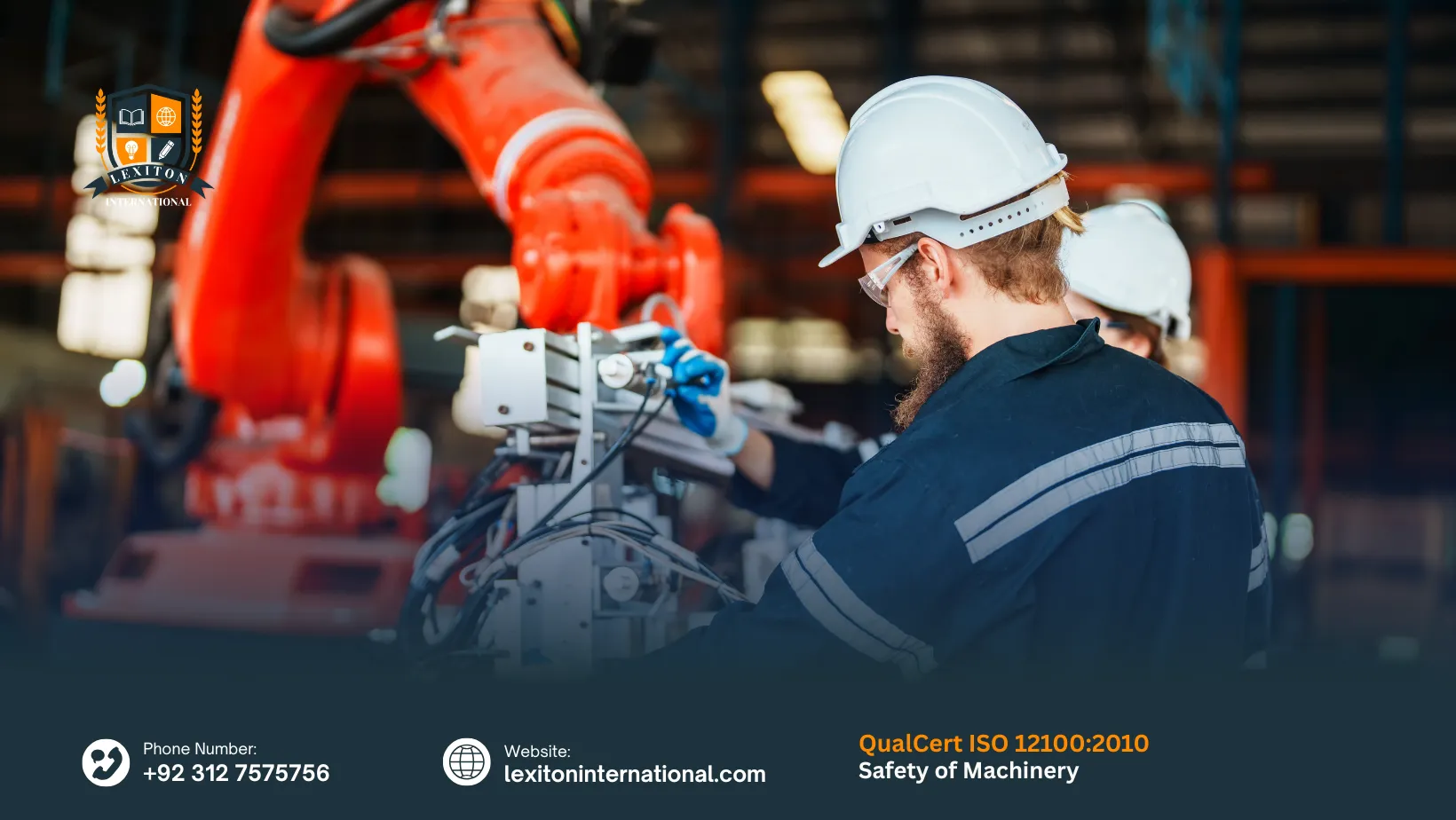
The QualCert ISO 12100:2010 Safety of Machinery Course is a UK-aligned professional qualification designed to provide learners with essential knowledge of machinery safety principles and risk assessment standards. This course focuses on the internationally recognised ISO 12100:2010 standard, which establishes the fundamental principles for the design and safe use of machinery. It is ideal for professionals working in engineering, manufacturing, construction, and industrial safety environments.
The programme covers key areas such as risk assessment, hazard identification, safety design principles, machinery lifecycle safety, and protective measures. Learners will develop a strong understanding of how to evaluate and reduce risks associated with machinery operations. The course also emphasizes the importance of designing safer machines and implementing effective safety strategies in accordance with international standards.
This qualification is suitable for engineers, safety officers, machine operators, maintenance technicians, and compliance professionals. The QualCert ISO 12100:2010 Safety of Machinery Course enhances career prospects in industrial safety, manufacturing, and engineering sectors. It equips learners with practical knowledge and technical expertise required to ensure machinery safety compliance, supporting professional development in both UK and international industries.
To enrol in the QualCert ISO 12100:2010 Safety of Machinery, learners must meet the following entry criteria in line with UK technical training standards:
- Minimum Age: Learners must be at least 18 years old at the time of enrolment due to the technical and safety-focused nature of the course.
- Educational Background: A minimum of secondary school education (GCSE or equivalent) is recommended. A background in engineering, manufacturing, or health and safety is beneficial but not mandatory.
- Language Proficiency: Learners are required to have a good command of English.
- Work Experience: No formal work experience is required.
Mandatory Units
The QualCert ISO 12100:2010 Safety of Machinery is a 30-credit qualification with a Total Qualification Time (TQT) of 180 hours, including 120 Guided Learning Hours (GLH). This program is meticulously crafted to deliver focused and efficient skill development in the field.
Learning Outcomes of QualCert ISO 12100:2010 Safety of Machinery:
1. Risk Assessment and Safety in Machinery Design
By the end of this unit, learners will be able to:
- Conduct comprehensive risk assessments specific to machinery design.
- Identify hazards and evaluate risks associated with machinery operation.
- Apply risk reduction strategies to mitigate identified hazards.
- Integrate safety considerations early in the design process.
2. Principles of Safe Machinery Design and Guarding
By the end of this unit, learners will be able to:
- Understand fundamental principles of designing safe machinery.
- Select and implement appropriate guarding techniques to protect users.
- Balance safety with operational efficiency and functionality.
- Ensure design compliance with relevant safety standards.
3. Implementation of Safety Measures and Risk Reduction
By the end of this unit, learners will be able to:
- Develop and apply effective safety measures in machinery operations.
- Utilize engineering controls and administrative procedures for risk reduction.
- Monitor the effectiveness of implemented safety measures.
- Respond to identified risks with appropriate mitigation actions.
4. Compliance with ISO 12100 and Related Standards
By the end of this unit, learners will be able to:
- Interpret the requirements of ISO 12100:2010 for machinery safety.
- Ensure machinery design and operation comply with applicable standards.
- Prepare documentation to demonstrate regulatory compliance.
- Navigate updates and revisions in safety regulations.
5. Case Studies and Practical Applications in Industry
By the end of this unit, learners will be able to:
- Analyze real-world examples of machinery safety successes and failures.
- Apply lessons learned from case studies to practical situations.
- Develop problem-solving skills related to machinery safety challenges.
- Enhance decision-making through industry best practices.
6. Verification, Validation, and Continuous Improvement of Machinery Safety
By the end of this unit, learners will be able to:
- Perform verification and validation activities for safety systems.
- Monitor safety performance and identify areas for improvement.
- Implement continuous improvement processes based on safety data.
- Promote a culture of ongoing safety enhancement in machinery use.
The QualCert ISO 12100:2010 Safety of Machinery Course is designed for individuals working in or aiming to enter industrial, engineering, and manufacturing environments where machinery safety and risk assessment are essential. It is ideal for learners who want to develop a strong understanding of machinery safety principles and improve workplace risk management practices.
Who Is this for
- Health and safety officers responsible for machinery risk assessment and compliance
- Machine operators working with industrial equipment and production systems
- Mechanical and industrial engineers involved in machinery design and safety
- Maintenance technicians handling equipment inspection and fault prevention
- Production supervisors overseeing manufacturing and operational safety
- Quality assurance and compliance personnel ensuring safety standards
- Entry-level workers seeking careers in engineering or manufacturing sectors
- Safety inspectors conducting machinery safety audits and evaluations
The QualCert ISO 12100:2010 Safety of Machinery Course provides a strong foundation in machinery safety principles and risk assessment standards. Upon completion, learners can progress to industrial safety, mechanical engineering, and health and safety management, enhancing their technical knowledge and career development in safety-critical industries.
Future Progression
- Progression to higher levels in health and safety management and industrial engineering
- Advancement into supervisory roles in manufacturing, production, and machinery operations
- Opportunities in machinery safety inspection and compliance officer positions
- Career development into maintenance supervisor or plant operations coordinator roles
- Pathway to specialised certifications in ISO safety standards and risk assessment systems
- Eligibility for roles in quality assurance and workplace safety auditing
- Progression into leadership positions within engineering and manufacturing sectors
- Strong foundation for further professional development in global industrial safety standards
Curious About This Course?