
Lesson no 4 : Critically evaluate current research in clinical nutrition.
The lesson Critically Evaluate Current Research in Clinical Nutrition is an essential component of the unit Clinical Biochemistry and Nutritional Assessment. It develops the Learner’s ability to examine, interpret and critically assess contemporary scientific research that informs nutritional assessment and clinical practice. In modern healthcare, nutritional decisions should not be based solely on traditional practice, personal opinion or isolated laboratory findings. Instead, effective clinical nutrition requires the careful integration of high-quality research evidence, biochemical data, clinical expertise and individual patient needs.
Clinical nutrition research investigates how nutrients, dietary patterns and nutritional interventions influence human metabolism, biochemical processes, disease development, recovery and long-term health outcomes. Research may include laboratory investigations, observational studies, randomised controlled trials, systematic reviews and meta-analyses. Each type of research provides different forms and levels of evidence. Therefore, healthcare and nutrition professionals must understand how to assess research quality, identify methodological strengths and limitations, and determine whether findings can be applied appropriately to clinical populations.
This lesson focuses on the critical evaluation of current evidence relating to nutritional assessment, biochemical markers and clinical interventions. Learners will explore how research questions are developed, how study designs influence the reliability of findings, and how statistical results should be interpreted within their clinical context. Particular attention is given to concepts such as validity, reliability, bias, confounding variables, sample selection and the practical significance of research outcomes.
The lesson also examines the challenges involved in translating scientific findings into real-world clinical practice. A research study may demonstrate statistically significant results while having limited practical relevance for a particular patient population. Conversely, promising nutritional interventions may require further investigation before they can be recommended as standard clinical practice. Learners will therefore develop the professional judgement needed to distinguish between strong evidence, emerging evidence and unsupported claims.
By the end of this lesson, Learners will be better equipped to evaluate contemporary clinical nutrition research systematically and ethically. They will be able to assess the quality and relevance of scientific evidence, compare conflicting research findings, interpret biochemical and clinical outcomes, and apply evidence-based conclusions to nutritional assessment and intervention planning. These skills are essential for supporting safe, effective and scientifically informed nutritional care in a range of clinical and healthcare settings.
1.Critically Evaluate the Methodological Rigor and Clinical Applicability of Recent Peer-Reviewed Research Focusing on Biochemical Nutritional Interventions
Introduction
Biochemical nutritional interventions are increasingly important within modern clinical nutrition because they aim to influence measurable physiological and metabolic processes through targeted dietary modification, nutrient supplementation, therapeutic feeding or other evidence-based nutritional strategies. These interventions may seek to correct nutrient deficiencies, improve metabolic regulation, reduce inflammation, support organ function or influence biomarkers associated with disease risk.
However, the existence of published research does not automatically mean that an intervention is effective, safe or appropriate for routine clinical practice. Clinical nutrition professionals must critically evaluate the methodological rigor of research before applying its findings to patient care. Methodological rigor refers to the extent to which a study has been designed, conducted, analysed and reported in a way that produces trustworthy and meaningful findings.
This process requires more than simply identifying whether a study reports a statistically significant result. The Learner must examine the research question, study design, sample population, intervention procedures, biochemical measurements, statistical analysis, potential sources of bias and relevance of the findings to real clinical populations. A scientifically well-designed study may still have limited clinical applicability if its participants differ substantially from the patients encountered in practice.
Critical evaluation therefore connects scientific evidence with professional judgement. It enables practitioners to distinguish between promising findings, reliable evidence and conclusions that require further investigation.

Understanding Biochemical Nutritional Interventions
A biochemical nutritional intervention is a planned nutritional strategy intended to influence measurable biological or biochemical processes. Such interventions may involve changes in nutrient intake, dietary composition, feeding methods or the controlled use of nutrients where clinically appropriate.
Examples may include:
Correcting a documented micronutrient deficiency.
Modifying dietary carbohydrate intake to support glycaemic management.
Adjusting protein intake according to specific clinical requirements.
Using enteral nutritional support when oral intake is inadequate.
Applying clinically justified nutrient supplementation.
Modifying dietary fat quality to influence lipid-related biomarkers.
Developing targeted nutritional strategies to address altered metabolic requirements.
Monitoring biochemical responses following a therapeutic nutritional intervention.
The effectiveness of these interventions must be evaluated through appropriate clinical research. A reported change in a laboratory marker alone may not demonstrate meaningful improvement in patient health. The clinical significance, safety and sustainability of the intervention must also be considered.
Key Definitions and Concepts
| Term | Definition | Importance in Critical Evaluation |
|---|---|---|
| Methodological rigor | The quality and scientific strength of the methods used to design, conduct, analyse and report a study | Determines how much confidence can reasonably be placed in the findings |
| Peer-reviewed research | Research evaluated by independent experts before publication | Provides an additional quality check but does not guarantee that a study is free from limitations |
| Biochemical intervention | A nutritional strategy designed to influence measurable biological or metabolic processes | Requires appropriate biochemical and clinical outcome measures |
| Internal validity | The extent to which the observed outcome can reasonably be attributed to the intervention | Helps determine whether the reported effect is likely to be genuine |
| External validity | The extent to which findings can be applied to other populations and settings | Determines clinical applicability beyond the original study |
| Reliability | The consistency and reproducibility of a measurement or research finding | Important when interpreting biomarkers and repeated measurements |
| Bias | A systematic factor that can distort research findings | May lead to inaccurate conclusions about intervention effectiveness |
| Confounding | The influence of another factor that affects the apparent relationship between intervention and outcome | Must be identified and controlled where possible |
| Statistical significance | An indication that an observed result is unlikely to be explained by chance alone under a stated statistical model | Does not automatically demonstrate clinical importance |
| Clinical significance | The practical importance of an intervention for patient health and healthcare decision-making | Essential when translating research into clinical practice |
Methodological Rigor in Clinical Nutrition Research
The Importance of a Clearly Defined Research Question
A rigorous study should begin with a precise and clinically meaningful research question. An unclear research question can result in an intervention that is poorly defined, inappropriate outcomes or conclusions that extend beyond the evidence collected.
A useful research question should clearly identify:
The population being studied.
The nutritional or biochemical intervention.
The relevant comparison or control.
The outcome measures.
The period over which outcomes are assessed.
The clinical context.
For example, a broad question such as whether a nutrient “improves health” is difficult to investigate scientifically. A stronger question would specify the patient group, the nutritional strategy, the biochemical outcome and the duration of follow-up.
A clear research question improves methodological consistency because it guides:
Participant selection.
Intervention design.
Outcome selection.
Data collection.
Statistical analysis.
Interpretation of findings.
Evaluating the Appropriateness of the Study Design
Different research designs provide different levels and types of evidence. The most appropriate design depends on the research question, ethical considerations and practical feasibility.
Randomised Controlled Trials
Randomised controlled trials are often used to evaluate whether an intervention causes a particular outcome. Participants are allocated to different groups using a random process.
Potential strengths include:
Reduced selection bias.
Greater ability to compare intervention effects.
Improved control of known and unknown confounding factors.
Clearer assessment of causal relationships.
However, randomised trials also have limitations:
They may involve highly selected participants.
Strict protocols may differ from normal clinical practice.
Short study periods may not reflect long-term outcomes.
Participant adherence may influence results.
Complex nutritional interventions may be difficult to standardise fully.
Randomisation strengthens a study but does not automatically guarantee high methodological quality. Allocation methods, participant retention, adherence and outcome measurement must also be assessed.
Observational Studies
Observational research investigates relationships without assigning participants to an intervention.
Common forms include:
Cohort studies.
Case-control studies.
Cross-sectional studies.
Longitudinal population studies.
These studies can provide valuable information about long-term dietary patterns and real-world populations. However, they are particularly vulnerable to confounding and measurement error.
For example, an observed association between a dietary pattern and a biochemical outcome may also be influenced by:
Physical activity.
Smoking.
Alcohol consumption.
Medication use.
Socioeconomic circumstances.
Underlying disease.
Total energy intake.
Healthcare access.
Observational findings should therefore be interpreted carefully and should not automatically be treated as proof of causation.
Systematic Reviews and Meta-Analyses
Systematic reviews aim to identify and evaluate relevant studies using a structured and transparent method. Meta-analysis may combine numerical results from multiple studies.
Potential benefits include:
A broader overview of available evidence.
Increased statistical precision when studies are sufficiently comparable.
Identification of consistent or conflicting findings.
Improved understanding of evidence gaps.
However, the quality of a review depends on the quality of the included studies. Combining weak studies does not necessarily create strong evidence.
Important questions include:
Was the search strategy comprehensive?
Were clear inclusion and exclusion criteria used?
Was study quality assessed?
Were different populations appropriately compared?
Were interventions sufficiently similar?
Was statistical heterogeneity considered?
Internal Validity
Internal validity concerns whether the observed outcome is genuinely related to the intervention rather than another factor.
A study has stronger internal validity when it minimises systematic errors.
Important considerations include:
Appropriate randomisation.
Adequate control groups.
Blinding where feasible.
Consistent intervention delivery.
Reliable outcome measurement.
Appropriate handling of missing data.
Control of confounding variables.
In nutritional research, blinding can be particularly challenging. Participants may know which dietary intervention they are receiving, especially when interventions involve major changes in food intake.
Researchers may therefore use alternative strategies, including:
Blinded laboratory analysis.
Standardised outcome assessment.
Objective biochemical measurements.
Comparable attention between study groups.
Predefined analytical procedures.
External Validity and Generalisability
A study can be methodologically strong but still have limited external validity. External validity concerns whether findings can reasonably be applied beyond the original research environment.
The following questions should be considered:
Does the study population resemble the intended clinical population?
Were older adults adequately represented?
Were individuals with multiple conditions included or excluded?
Does the intervention reflect realistic clinical practice?
Is the required level of adherence achievable?
Was the follow-up period sufficient?
For example, a controlled intervention conducted among healthy volunteers may not be directly applicable to medically complex patients.
Evaluating the Quality of Participants and Sampling
Sample Size
Sample size affects the precision and reliability of research findings. A very small study may fail to detect meaningful differences or may produce unstable estimates.
A rigorous study should justify its sample size through appropriate planning.
Important considerations include:
Expected size of the intervention effect.
Variability of the outcome.
Required statistical power.
Expected participant withdrawal.
Number of outcomes being analysed.
A large sample does not automatically guarantee high-quality research. Poor measurement methods or uncontrolled bias can still produce misleading results.
Participant Selection
The characteristics of participants influence both internal and external validity.
Critical questions include:
How were participants recruited?
Were inclusion criteria justified?
Were exclusion criteria appropriate?
Was the sample representative?
Were important clinical subgroups included?
Were baseline characteristics similar between groups?
Excessively restrictive selection criteria can improve experimental control but reduce clinical relevance.
Attrition and Participant Withdrawal
Attrition occurs when participants leave a study before completion. High or unequal withdrawal between groups can introduce bias.
Reasons for withdrawal may include:
Adverse effects.
Poor intervention tolerance.
Lack of adherence.
Disease progression.
Practical difficulties.
Loss to follow-up.
Researchers should report:
The number of participants initially recruited.
The number completing the study.
Reasons for withdrawal.
How missing data were addressed.
Evaluating Nutritional Intervention Quality
Clear Description of the Intervention
A nutritional intervention must be described in sufficient detail to allow understanding and, where appropriate, replication.
A rigorous description should include:
Type of nutritional intervention.
Nutrient composition where relevant.
Amount or intensity.
Duration.
Frequency.
Method of administration.
Dietary restrictions.
Co-interventions.
Adherence monitoring.
Poorly described interventions make it difficult to determine what participants actually received.
Intervention Fidelity
Intervention fidelity refers to whether the intervention was delivered and followed as intended.
For dietary interventions, adherence may be influenced by:
Food preferences.
Cost and availability.
Symptoms.
Cultural dietary patterns.
Motivation.
Physical ability.
Social support.
Researchers may assess adherence using:
Dietary records.
Food frequency methods.
Interview data.
Biomarkers where appropriate.
Product counts.
Feeding records.
Self-reported dietary intake can be affected by recall bias and under-reporting. Therefore, critical evaluation should consider how adherence was measured.
The Importance of an Appropriate Comparator
The comparison group strongly influences interpretation.
Possible comparators include:
Usual care.
Placebo where appropriate.
Standard nutritional treatment.
An alternative intervention.
A controlled dietary pattern.
The comparator should be clinically meaningful. Comparing an intervention with an unrealistic or poorly defined control may limit practical relevance.
Evaluating Biochemical Outcome Measures
Selecting Appropriate Biomarkers
A biochemical outcome should be relevant to the intervention and the research question.
A suitable biomarker should ideally demonstrate:
Biological relevance.
Analytical reliability.
Adequate validity.
Appropriate sensitivity.
Appropriate specificity.
Practical clinical usefulness.
Researchers must avoid selecting numerous outcomes solely to identify statistically significant findings.
Reliability of Laboratory Measurements
Laboratory data may be influenced by analytical and pre-analytical factors.
Potential sources of variation include:
Timing of sample collection.
Fasting status.
Hydration status.
Sample handling.
Storage conditions.
Laboratory methodology.
Acute illness.
Medication use.
A well-designed study should standardise these factors where possible.
Surrogate Outcomes and Clinical Outcomes
A biochemical marker may function as a surrogate outcome rather than a direct patient-centred outcome.
For example, an intervention may improve a laboratory measure without demonstrating improvements in:
Symptoms.
Physical function.
Quality of life.
Hospital outcomes.
Long-term disease risk.
Therefore, an important critical question is whether the biochemical improvement is likely to have meaningful clinical consequences.
Evaluating Bias and Confounding
Common Sources of Bias
Bias can influence the validity of clinical nutrition research.
Important forms include:
Selection bias.
Measurement bias.
Recall bias.
Performance bias.
Detection bias.
Attrition bias.
Reporting bias.
Researchers should use appropriate strategies to minimise these risks.
Confounding Variables
Nutritional research frequently involves complex interacting variables.
Potential confounders include:
Age.
Sex.
Body composition.
Physical activity.
Medication.
Smoking.
Alcohol intake.
Disease severity.
Energy intake.
Socioeconomic circumstances.
A high-quality study should identify important confounders and use suitable methods to address them.
These methods may include:
Randomisation.
Matching.
Stratification.
Statistical adjustment.
Sensitivity analysis.
Statistical Significance Versus Clinical Significance
Understanding Statistical Results
Statistical significance indicates whether an observed difference is unlikely to be explained by random variation according to a specific statistical model. However, it does not determine whether the result is clinically important.
Critical evaluation should consider:
Effect size.
Confidence intervals.
Statistical precision.
Consistency of findings.
Clinical relevance.
A small biochemical change may achieve statistical significance in a very large study while having limited practical value.
Importance of Effect Size
Effect size helps indicate the magnitude of an intervention’s impact.
When evaluating effect size, the Learner should consider:
Is the difference large enough to matter clinically?
Is the outcome meaningful to patients?
Are benefits consistent across participants?
Are potential risks acceptable?
Confidence Intervals
Confidence intervals provide information about the precision of an estimate.
Wide confidence intervals may indicate:
Limited precision.
Small sample size.
High variability.
Uncertainty regarding the true effect.
Narrower confidence intervals generally indicate greater precision, although methodological quality remains important.
Process for Critically Evaluating Recent Peer-Reviewed Research
Step 1: Identify the Research Question
Begin by determining:
What problem is being investigated?
Why is the question clinically important?
Is the research question clearly stated?
Step 2: Examine the Study Design
Assess:
Whether the design is appropriate.
Whether causal conclusions are justified.
Whether control measures are sufficient.
Step 3: Evaluate the Study Population
Consider:
Sample size.
Participant characteristics.
Recruitment methods.
Inclusion and exclusion criteria.
Representativeness.
Step 4: Analyse the Intervention
Determine:
Whether the intervention is clearly defined.
Whether delivery was consistent.
Whether adherence was monitored.
Whether the duration was appropriate.
Step 5: Evaluate the Outcome Measures
Ask:
Are biochemical markers appropriate?
Are measurements reliable?
Are clinically meaningful outcomes included?
Were measurements standardised?
Step 6: Identify Bias and Confounding
Review:
Potential sources of systematic error.
Control of important confounders.
Missing data.
Participant attrition.
Step 7: Interpret the Statistical Findings
Evaluate:
Effect size.
Confidence intervals.
Statistical significance.
Clinical significance.
Consistency with other evidence.
Step 8: Determine Clinical Applicability
Consider:
Patient similarity.
Practical feasibility.
Safety.
Resource requirements.
Long-term sustainability.
Assessing Clinical Applicability
From Research Evidence to Clinical Practice
Clinical applicability concerns whether research findings can appropriately inform patient care.
A clinically useful intervention should be assessed in relation to:
Evidence quality.
Expected benefit.
Potential harm.
Patient characteristics.
Existing treatments.
Patient preferences.
Resource availability.
Evidence should support clinical decision-making rather than replace professional judgement.
Applying Evidence to Individual Patients
An individual patient may differ from research participants in important ways.
Relevant differences may include:
Age.
Disease severity.
Nutritional status.
Medication use.
Organ function.
Functional ability.
Multiple comorbidities.
Therefore, direct application of research findings without individual assessment may be inappropriate.
Practical Examples
Example 1: A Nutrient Supplementation Trial
A recent trial reports that a nutritional supplement improves a biochemical marker after eight weeks.
Critical evaluation should examine:
Whether participants had a confirmed deficiency.
Whether a suitable control group was used.
How adherence was assessed.
Whether laboratory analysis was standardised.
Whether the biochemical improvement was clinically meaningful.
Whether adverse effects occurred.
Whether the findings apply to complex clinical populations.
A statistically significant improvement alone would not automatically justify widespread clinical use.
Example 2: Dietary Intervention for Metabolic Health
A study investigates a dietary pattern intended to improve metabolic biomarkers.
The evaluator should consider:
Whether energy intake differed between groups.
Whether physical activity was controlled.
Whether medication changes occurred.
Whether weight change influenced the results.
Whether the intervention can be sustained outside the research environment.
These factors may influence whether the dietary pattern itself caused the observed biochemical changes.
Example 3: Research in a High-Risk Clinical Population
A study reports improved biochemical outcomes among a selected group of medically stable participants.
Before applying the findings to high-risk patients, the practitioner should assess:
Whether severely ill individuals were excluded.
Whether organ dysfunction was represented.
Whether multiple medications were considered.
Whether the intervention was monitored for adverse effects.
Clinical applicability may therefore be limited despite strong internal validity.
Key Benefits of Critical Evaluation
Critical evaluation supports evidence-based clinical nutrition by helping professionals:
Identify high-quality scientific evidence.
Recognise weak or misleading conclusions.
Understand the limitations of individual studies.
Interpret biochemical outcomes appropriately.
Avoid inappropriate application of interventions.
Improve patient safety.
Support individualised clinical decision-making.
Identify areas requiring further research.
Communicate evidence clearly within multidisciplinary teams.
Common Challenges in Evaluating Current Research
Publication Bias
Research with positive or statistically significant results may be more likely to be published than research reporting no clear effect.
This can create an incomplete picture of intervention effectiveness.
Critical readers should therefore consider:
The total body of evidence.
Unpublished or negative findings where identifiable.
Evidence from systematic reviews.
Selective Outcome Reporting
A study may measure multiple outcomes but emphasise only favourable findings.
Warning signs may include:
Unclear primary outcomes.
Numerous statistical comparisons.
Unexpected emphasis on secondary findings.
Conflicts of Interest
Research funding or professional relationships may influence study design or interpretation.
A conflict of interest does not automatically invalidate research, but transparency is essential.
The evaluator should examine:
Funding sources.
Author declarations.
Role of sponsors.
Independence of data analysis.
Developing Professional Judgement
Critical evaluation is not a mechanical checklist. It requires scientific understanding and professional judgement.
A strong evaluator should be able to:
Recognise methodological strengths.
Identify important limitations.
Distinguish association from causation.
Evaluate the relevance of biochemical outcomes.
Consider patient-centred benefits.
Compare findings with the wider evidence base.
The strongest clinical conclusions usually arise from the integration of multiple sources of evidence rather than reliance on one study.
Conclusion
Critically evaluating recent peer-reviewed research on biochemical nutritional interventions is a fundamental competency within clinical nutrition and nutritional assessment. Methodological rigor determines the extent to which research findings can be considered reliable, while clinical applicability determines whether those findings are relevant to real patient populations and healthcare settings.
A comprehensive evaluation should examine the research question, study design, sample population, intervention procedures, biochemical outcome measures, statistical analysis, potential bias and confounding factors. Learners must also distinguish between statistical significance and genuine clinical importance. An intervention that produces measurable biochemical change may not necessarily improve patient outcomes, while findings obtained under highly controlled conditions may not always translate directly into routine clinical practice.
Effective evidence-based practice requires the integration of high-quality research with biochemical assessment, clinical expertise and individual patient circumstances. By developing the ability to evaluate methodological quality and clinical relevance, Learners can make more informed professional judgements, avoid unsupported conclusions and contribute to safer, more effective nutritional interventions.
Ultimately, critical appraisal strengthens the connection between scientific research and clinical practice. It enables practitioners to use current evidence responsibly while recognising uncertainty, limitations and the continuing need for high-quality research in the evolving field of clinical nutrition.
2.Synthesise Key Findings from Contemporary Clinical Nutrition Studies to Propose Evidence-Based Updates to Standard Biochemical Assessment Protocols
Introduction
Clinical nutrition is a rapidly developing field in which new research continually improves understanding of nutrient metabolism, biochemical assessment, disease-related malnutrition and the relationship between laboratory findings and clinical outcomes. Standard biochemical assessment protocols provide an important framework for evaluating nutritional status, identifying nutrient deficiencies and monitoring the effectiveness of nutritional interventions. However, protocols should not remain static when contemporary research identifies more reliable biomarkers, improved analytical methods, important limitations in existing tests or new evidence concerning the interpretation of biochemical data.
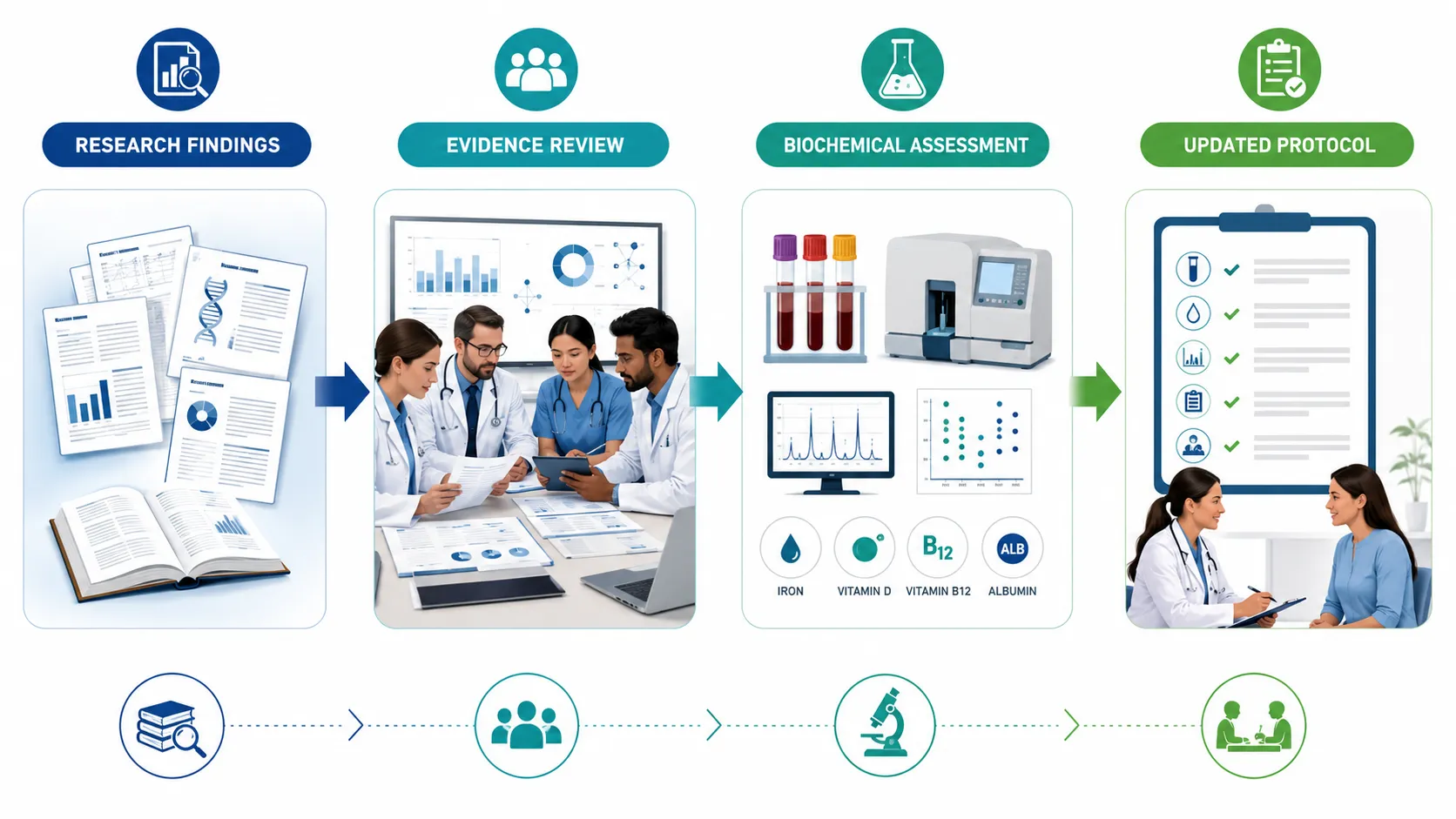
Synthesising research evidence involves more than summarising the findings of individual studies. It requires the systematic integration of evidence from multiple high-quality sources to identify consistent findings, explain conflicting results and determine whether the overall evidence justifies a change in clinical practice. In clinical nutrition, this process may lead to updates in the selection of biomarkers, the timing of laboratory testing, interpretation of reference ranges, identification of confounding factors and integration of biochemical findings with clinical and dietary assessment.
An evidence-based update to a biochemical assessment protocol should therefore be scientifically justified, clinically relevant, feasible and safe. A newly available biomarker should not automatically replace an established test simply because it appears promising in one study. The proposed change must be evaluated against the totality of available evidence, including analytical validity, clinical validity, reliability, cost, accessibility and potential impact on patient outcomes.
This section develops the Learner’s ability to synthesise contemporary clinical nutrition research and translate reliable findings into practical improvements in standard biochemical assessment protocols.
Key Definitions and Concepts
| Term | Definition | Relevance to Biochemical Assessment |
|---|---|---|
| Evidence synthesis | The structured integration of findings from multiple relevant research sources | Helps establish whether findings are consistent and sufficiently robust to inform practice |
| Biochemical assessment protocol | A structured process for selecting, collecting, analysing and interpreting laboratory markers | Supports consistent and clinically appropriate nutritional assessment |
| Biomarker | A measurable biological characteristic that provides information about a physiological or pathological process | May assist in identifying nutrient status, metabolic disturbance or response to intervention |
| Analytical validity | The ability of a laboratory method to accurately and reliably measure the intended biological marker | Essential before a biomarker can be incorporated into routine assessment |
| Clinical validity | The extent to which a test result is meaningfully associated with a clinical condition or nutritional state | Determines whether the marker provides useful clinical information |
| Clinical utility | The extent to which use of a test improves clinical decision-making or patient outcomes | Helps determine whether protocol adoption is justified |
| Reference interval | A range of values derived using a defined reference population and analytical method | Supports interpretation but must be considered alongside clinical context |
| Pre-analytical variation | Variation occurring before laboratory analysis, such as sample timing or handling | Can influence results and lead to inaccurate interpretation |
| Evidence-based protocol | A protocol informed by the best available evidence, clinical expertise and patient needs | Promotes safe and consistent clinical practice |
| Implementation | The process of introducing an evidence-based change into routine clinical practice | Requires training, monitoring and quality assurance |
Understanding Evidence Synthesis in Clinical Nutrition
Moving Beyond Individual Research Studies
A single research study rarely provides sufficient evidence to justify a major change in a standard biochemical assessment protocol. Individual studies may have limitations related to sample size, study population, measurement techniques or duration of follow-up. Findings should therefore be considered within the wider body of evidence.
Evidence synthesis requires the evaluator to identify patterns across multiple studies.
Important questions include:
Do several high-quality studies report similar findings?
Are the study populations comparable?
Were similar biochemical markers used?
Are the laboratory methods consistent?
Do findings apply to the intended clinical population?
Are conflicting results explained by methodological differences?
Has the evidence been evaluated in systematic reviews or clinical guidance?
The purpose is not simply to count how many studies support a particular conclusion. The quality, relevance and methodological rigor of the evidence must also be considered.
The Hierarchy of Evidence
Different forms of research provide different levels of confidence depending on the question being investigated.
Important sources may include:
Randomised controlled trials.
Cohort studies.
Diagnostic accuracy studies.
Systematic reviews.
Meta-analyses.
Clinical practice guidelines.
Laboratory validation studies.
Expert consensus where high-quality evidence is limited.
The most appropriate evidence depends on the proposed protocol change. For example, a diagnostic biomarker may require strong evidence regarding analytical performance and diagnostic accuracy, while an intervention-monitoring protocol may require evidence showing that repeated measurement improves clinical management.
Identifying Key Findings from Contemporary Research
Establishing a Focused Clinical Question
Before reviewing research, the practitioner or research team should define the specific clinical issue requiring evaluation.
A focused question may consider:
The patient population.
The nutritional condition.
The biochemical assessment method.
The proposed new marker or procedure.
The comparison with existing practice.
The desired clinical outcome.
For example, a protocol review may investigate whether a particular biochemical marker provides additional clinically useful information when standard assessment methods are inconclusive.
A clearly defined question prevents unnecessary collection of unrelated research and supports a transparent evidence synthesis process.
Searching for Relevant Evidence
A comprehensive evidence review should use systematic and transparent methods to identify relevant contemporary research.
The search process may involve:
Defining relevant keywords.
Identifying recognised academic databases.
Setting inclusion criteria.
Setting exclusion criteria.
Considering publication dates.
Reviewing reference lists.
Identifying relevant systematic reviews.
Considering the relevance of the clinical population.
The search should aim to identify evidence rather than selectively locate studies that support a predetermined conclusion.
Assessing Research Quality
Once relevant studies have been identified, their methodological quality should be evaluated.
Important criteria include:
Clarity of the research question.
Appropriateness of the study design.
Sample size.
Participant selection.
Control of confounding factors.
Reliability of laboratory methods.
Completeness of outcome reporting.
Statistical analysis.
Potential conflicts of interest.
Relevance to clinical practice.
Studies should not be treated as equally reliable simply because they are peer-reviewed.
Evaluating Biomarkers for Protocol Updates
Analytical Validity
Before introducing a biomarker into a standard protocol, the laboratory method must demonstrate acceptable analytical performance.
Analytical validity includes:
Accuracy.
Precision.
Reproducibility.
Sensitivity.
Specificity of the analytical method.
Standardisation across laboratories.
A biomarker may appear clinically promising but remain unsuitable for widespread implementation if measurement techniques vary substantially between laboratories.
Clinical Validity
Clinical validity concerns whether the biomarker meaningfully reflects the nutritional or metabolic condition being investigated.
Questions include:
Does the marker correlate with the relevant physiological process?
Can it distinguish between normal and abnormal nutritional states?
Does it respond predictably to nutritional change?
Is interpretation affected by inflammation or acute illness?
Does it perform consistently across relevant populations?
A clinically valid marker should provide information that is relevant to the patient’s nutritional assessment rather than merely producing an easily measurable number.
Clinical Utility
Clinical utility is particularly important when considering protocol updates.
A test may be analytically accurate and biologically associated with a condition but still have limited practical value.
Clinical utility considers whether the test:
Changes clinical decision-making.
Improves diagnostic accuracy.
Supports earlier identification of nutritional risk.
Improves monitoring.
Prevents unnecessary interventions.
Contributes to improved patient outcomes.
A protocol should not become unnecessarily complex by including tests that provide little additional value.
Updating the Selection of Biochemical Markers
Limitations of Single-Marker Assessment
Contemporary research increasingly demonstrates that nutritional status is complex and cannot always be accurately represented by one biochemical measurement.
A single marker may be influenced by:
Inflammation.
Hydration status.
Acute illness.
Organ function.
Medication.
Recent dietary intake.
Physiological stress.
Therefore, protocol updates may involve greater use of combined assessment rather than reliance on isolated results.
An integrated biochemical assessment may combine:
Direct nutrient-related markers.
Functional biomarkers.
Markers of inflammation.
Relevant metabolic indicators.
Clinical observations.
Dietary assessment.
Direct and Functional Biomarkers
A direct biomarker may provide information about the concentration or availability of a nutrient-related substance.
A functional biomarker may indicate whether a biological process dependent on that nutrient is operating normally.
Contemporary research may support the use of both approaches when a single measurement provides incomplete information.
For example, a protocol may require the interpretation of a nutrient-related laboratory result alongside evidence of physiological function.
This approach may improve diagnostic interpretation by reducing reliance on one potentially confounded measurement.
Updating Protocols to Address Inflammation
The Influence of the Acute-Phase Response
Inflammation can alter the concentration and distribution of several biochemical markers. Acute illness and physiological stress may therefore complicate nutritional assessment.
A low or high laboratory value should not automatically be interpreted as evidence of nutritional deficiency or adequacy without considering the inflammatory state.
Important factors may include:
Acute infection.
Trauma.
Surgery.
Chronic inflammatory disease.
Severe physiological stress.
A modern assessment protocol may therefore include procedures for identifying circumstances in which interpretation should be cautious.
Evidence-Based Integration of Inflammatory Context
Protocol updates may include:
Recording evidence of acute illness.
Considering relevant inflammatory indicators.
Delaying non-urgent nutritional interpretation when clinically appropriate.
Repeating measurements after physiological stabilisation.
Combining biochemical findings with clinical assessment.
The purpose is not to assume that every abnormal result is caused by inflammation. Instead, the protocol should encourage appropriate interpretation of potential confounding factors.
Updating the Timing of Biochemical Assessment
Importance of Baseline Assessment
Research commonly supports the value of establishing an appropriate baseline before implementing a nutritional intervention.
A baseline assessment may assist in:
Identifying pre-existing abnormalities.
Establishing treatment priorities.
Monitoring change over time.
Evaluating intervention response.
However, baseline measurements should be interpreted in context. A single value obtained during acute physiological instability may not accurately represent long-term nutritional status.
Follow-Up Testing
Repeated testing should have a clear clinical purpose.
Potential reasons include:
Monitoring correction of a confirmed deficiency.
Evaluating response to nutritional support.
Identifying emerging adverse effects.
Assessing changes in metabolic status.
Reviewing high-risk patients.
Routine repetition without a clinical rationale can increase cost and create unnecessary complexity.
An updated protocol should define:
Which patients require monitoring.
Which markers should be repeated.
When reassessment should occur.
What degree of change is clinically meaningful.
When further investigation is required.
Pre-Analytical Factors and Protocol Improvement
Understanding Pre-Analytical Variation
A significant proportion of variation in laboratory results can arise before the analytical stage.
Important pre-analytical factors include:
Timing of blood collection.
Fasting or non-fasting status where relevant.
Recent dietary intake.
Hydration.
Physical activity.
Sample transport.
Sample storage.
Delayed processing.
Contemporary research may identify situations in which standardisation improves the reliability of nutritional biomarkers.
Standardising Sample Collection
A protocol update may therefore specify:
Appropriate preparation requirements.
Consistent sample timing where clinically relevant.
Documentation of acute illness.
Relevant medication information.
Procedures for sample handling.
Standardisation improves comparability between repeated measurements.
Synthesising Conflicting Research Findings
Why Studies May Produce Different Results
Conflicting research findings are common in clinical nutrition.
Differences may result from:
Different study populations.
Different intervention doses.
Variation in dietary assessment.
Different laboratory methods.
Different outcome definitions.
Variation in study duration.
Differences in baseline nutritional status.
The existence of conflicting findings does not necessarily mean that all evidence is unreliable.
The evaluator should investigate why the findings differ.
A Structured Approach to Conflicting Evidence
When evidence conflicts, the following process is useful:
Compare study designs.
Examine differences in participants.
Review laboratory methodologies.
Assess intervention characteristics.
Compare outcome definitions.
Evaluate study quality.
Consider whether findings apply to different clinical contexts.
Identify areas of uncertainty.
A protocol update should not claim greater certainty than the available evidence supports.
From Research Evidence to Protocol Development
Step 1: Identify the Existing Protocol
The current protocol should first be clearly documented.
The review should identify:
Current biomarkers.
Sampling procedures.
Interpretation criteria.
Monitoring intervals.
Clinical decision points.
Known limitations.
Without understanding the existing protocol, it is difficult to determine what specifically requires improvement.
Step 2: Identify the Evidence Gap
The next step is to identify why an update is being considered.
Possible reasons include:
Poor diagnostic sensitivity.
Limited specificity.
New biomarker evidence.
Changes in laboratory technology.
Inconsistent interpretation.
Emerging patient safety concerns.
New clinical populations requiring assessment.
Step 3: Review the Evidence
Relevant evidence should be evaluated systematically.
The process should include:
Recent peer-reviewed studies.
High-quality evidence syntheses.
Relevant clinical guidance.
Laboratory performance data.
Patient outcome evidence.
Step 4: Develop a Proposed Update
The proposed update should clearly state:
What will change.
Why the change is justified.
Which evidence supports the change.
Which patients are affected.
How the change will be implemented.
How outcomes will be monitored.
Step 5: Assess Feasibility
A scientifically strong protocol may still be difficult to implement.
Feasibility considerations include:
Laboratory availability.
Cost.
Staff training.
Turnaround time.
Equipment.
Patient burden.
Step 6: Pilot and Evaluate the Update
Where appropriate, a proposed change should be evaluated before wide implementation.
Pilot evaluation may assess:
Accuracy.
Staff adherence.
Laboratory performance.
Clinical usefulness.
Patient safety.
Unintended consequences.
Practical Examples of Evidence-Based Protocol Updates
Example 1: Moving from Isolated to Integrated Assessment
A clinical service traditionally relies on one biochemical measurement to identify a potential nutritional abnormality.
Contemporary research indicates that the marker can be substantially influenced by acute inflammation.
An evidence-based update may include:
Continued use of the existing marker.
Documentation of inflammatory status.
Use of additional relevant biochemical information.
Greater integration with dietary assessment.
Repeat testing when clinically appropriate.
This approach improves interpretation without automatically discarding an established test.
Example 2: Introducing a New Biomarker
A newly researched biomarker appears to detect nutritional abnormalities earlier than an existing test.
Before inclusion in a standard protocol, the clinical team should evaluate:
Analytical reliability.
Diagnostic performance.
Clinical validity.
Cost.
Laboratory accessibility.
Impact on patient management.
If the biomarker provides little additional clinical information, routine adoption may not be justified.
Example 3: Updating Monitoring Frequency
Research suggests that repeated biochemical testing at very short intervals does not provide useful additional information for clinically stable patients.
A protocol update may therefore:
Reduce unnecessary testing.
Define clinically appropriate reassessment intervals.
Increase monitoring for high-risk patients.
Establish clear triggers for earlier review.
This may improve both efficiency and patient-centred care.
Key Benefits of Evidence-Based Protocol Updates
Evidence-informed updates can provide significant benefits.
Improved Diagnostic Accuracy
Potential benefits include:
More appropriate biomarker selection.
Better recognition of confounding factors.
Reduced reliance on isolated results.
Improved identification of nutritional risk.
Improved Patient Safety
Updated protocols may help:
Reduce inappropriate supplementation.
Identify patients requiring urgent intervention.
Avoid unnecessary testing.
Improve recognition of adverse biochemical changes.
Greater Consistency
Clear protocols can support:
Standardised assessment procedures.
Improved communication.
More consistent interpretation.
Better documentation.
Better Use of Resources
Evidence-based protocols can reduce unnecessary testing by focusing laboratory resources on clinically useful assessments.
Practical Challenges in Updating Assessment Protocols
Resistance to Change
Healthcare professionals may be accustomed to established assessment methods.
Successful implementation requires:
Clear communication.
Education.
Evidence summaries.
Practical training.
Opportunities for feedback.
Resource Limitations
Some advanced biomarkers may not be available in all healthcare settings.
A protocol should therefore be realistic and scalable.
Rapidly Changing Evidence
Clinical nutrition research develops continuously.
Protocols should be reviewed periodically rather than considered permanently complete.
A sustainable review process may include:
Scheduled evidence reviews.
Monitoring of major clinical guidance.
Evaluation of emerging biomarkers.
Review of local outcome data.
The Role of Multidisciplinary Collaboration
Biochemical assessment protocols often involve several professional groups.
Relevant contributors may include:
Clinical nutrition professionals.
Dietitians.
Medical practitioners.
Clinical biochemists.
Laboratory scientists.
Pharmacists.
Specialist nurses.
Collaboration improves protocol quality by ensuring that both scientific and practical issues are considered.
A multidisciplinary protocol review can help identify:
Laboratory limitations.
Clinical workflow issues.
Patient safety concerns.
Interpretation challenges.
Training requirements.
Evaluating the Impact of a Protocol Update
Establishing Outcome Measures
The success of an updated protocol should be evaluated.
Possible indicators include:
Improved diagnostic accuracy.
Reduced unnecessary testing.
Earlier identification of nutritional risk.
Improved clinical decision-making.
Reduction in inappropriate interventions.
Improved patient outcomes where measurable.
Continuous Quality Improvement
Protocol development should be treated as a continuing process.
The cycle may involve:
Identifying a problem.
Reviewing evidence.
Proposing an update.
Implementing the change.
Monitoring outcomes.
Refining the protocol.
This approach ensures that assessment methods remain responsive to new evidence.
Professional Judgement and Ethical Considerations
Avoiding Premature Adoption of New Evidence
Not every new research finding should immediately change clinical practice.
Premature adoption may result in:
Unnecessary testing.
Increased healthcare costs.
Misinterpretation.
Patient anxiety.
Unproven interventions.
Strong professional judgement requires balancing innovation with scientific caution.
Transparency and Evidence Communication
When proposing a protocol update, professionals should clearly communicate:
The strength of the evidence.
Areas of uncertainty.
Expected benefits.
Possible limitations.
Implementation requirements.
This supports accountable and evidence-based decision-making.
A Practical Framework for Learners
When reviewing contemporary research and considering a biochemical protocol update, Learners can apply the following questions:
Evidence Questions
Is the research current and relevant?
Is the methodology scientifically rigorous?
Are the findings consistent across studies?
Are systematic reviews available?
Biomarker Questions
Is the marker analytically reliable?
Does it have clinical validity?
Does it improve clinical decision-making?
Are important confounders recognised?
Implementation Questions
Is the proposed change feasible?
Are appropriate resources available?
Do staff require additional training?
Can outcomes be monitored?
Clinical Questions
Will the update improve patient assessment?
Does it reduce unnecessary intervention?
Does it improve safety?
Is it appropriate for the intended population?
Conclusion
Synthesising key findings from contemporary clinical nutrition research is essential for maintaining effective and evidence-based biochemical assessment protocols. Modern clinical practice should not rely solely on traditional laboratory procedures when new evidence demonstrates important limitations, improved biomarkers or more effective approaches to interpretation and monitoring.
However, evidence-based updating requires more than adopting the newest test or responding to the findings of a single research study. Reliable protocol development depends on systematic evidence synthesis, critical appraisal of methodological quality and careful assessment of analytical validity, clinical validity and clinical utility.
An effective biochemical assessment protocol should recognise the complexity of nutritional status. It should consider the limitations of isolated biomarkers, the influence of inflammation and acute illness, pre-analytical variation and the importance of integrating laboratory findings with dietary, physiological and clinical information.
Contemporary research can support improvements in biomarker selection, testing frequency, sample standardisation and interpretation procedures. Nevertheless, each proposed change must also be evaluated for feasibility, safety, cost and relevance to the intended patient population.
The ultimate objective is to create assessment protocols that are scientifically robust, clinically meaningful and practical within real healthcare environments. Through careful evidence synthesis and critical professional judgement, Learners can contribute to the continuous improvement of biochemical nutritional assessment and support safer, more accurate and more effective clinical nutrition practice.
3.Assess the Potential Methodological Biases and Ethical Limitations Present in Major Epidemiological Studies That Link Biochemical Nutritional Markers to Long-Term Health Outcomes
Introduction
Epidemiological research plays a central role in understanding the relationship between nutrition, biochemical markers and long-term health outcomes. Large population-based studies can provide valuable evidence about associations between nutrient status, metabolic biomarkers, dietary exposures and the future development of chronic diseases such as cardiovascular disease, type 2 diabetes, cancer, osteoporosis and other long-term conditions. However, identifying an association between a biochemical nutritional marker and a health outcome does not automatically demonstrate that one factor directly causes the other.
Critical evaluation is therefore essential. Major epidemiological studies may be affected by methodological biases that influence the accuracy, interpretation and generalisability of their findings. In nutritional epidemiology, these challenges are particularly important because diet is complex, nutrient exposure changes over time, biomarkers can be influenced by multiple physiological factors and long-term health outcomes may develop over many years.
Ethical limitations must also be considered. Research involving human participants, biological samples and long-term health data raises important issues relating to informed consent, privacy, data security, equitable participant selection and the responsible communication of findings. These concerns become increasingly complex when studies combine biochemical data with genetic, clinical and lifestyle information.
This section examines the major methodological biases and ethical limitations that may affect epidemiological studies linking biochemical nutritional markers to long-term health outcomes. Learners will develop the ability to assess research critically, identify potential threats to validity and determine how such limitations should influence the interpretation and application of research findings.

Key Definitions and Concepts
| Term | Definition | Importance in Nutritional Epidemiology |
|---|---|---|
| Epidemiology | The study of the distribution and determinants of health-related conditions within populations | Helps investigate relationships between nutritional exposures and long-term health outcomes |
| Biochemical nutritional marker | A measurable biological substance or characteristic used to provide information about nutrient status or metabolism | May be used to estimate exposure, deficiency, physiological function or disease risk |
| Bias | A systematic error that produces a distorted estimate of a relationship | Can lead to incorrect conclusions about nutrition and health |
| Confounding | Distortion of an observed association caused by another factor related to both exposure and outcome | A major challenge when studying diet and chronic disease |
| Selection bias | Bias arising when participants are selected or retained in a way that makes them unrepresentative | Can reduce the validity and generalisability of findings |
| Measurement error | Inaccuracy in the measurement of an exposure, biomarker or outcome | May weaken, exaggerate or obscure associations |
| Reverse causation | A situation in which an outcome or early disease process influences the exposure being studied | Can make a consequence appear to be a cause |
| Attrition bias | Bias caused by systematic differences between participants who remain in a study and those who withdraw | Particularly important in long-term cohort studies |
| Generalisability | The extent to which findings can reasonably be applied to other populations or settings | Determines the wider clinical usefulness of research |
| Informed consent | A voluntary agreement to participate based on adequate information and understanding | A fundamental ethical requirement |
| Data governance | Systems used to manage the secure, appropriate and responsible use of research data | Essential when handling biological and long-term health information |
Understanding Epidemiological Studies in Clinical Nutrition
The Purpose of Epidemiological Research
Epidemiological studies examine patterns of health and disease within groups of people. In clinical nutrition, they may investigate whether particular biochemical nutritional markers are associated with future health outcomes.
For example, researchers may examine whether:
A marker of nutrient status is associated with future disease risk.
A metabolic biomarker predicts later cardiovascular outcomes.
Long-term nutrient insufficiency is associated with reduced physiological function.
A biochemical profile is associated with mortality.
Changes in a biomarker over time are associated with disease progression.
Large epidemiological studies are valuable because chronic diseases often develop slowly and may require long periods of observation. Experimental trials may not always be practical or ethical for every research question.
Common Epidemiological Study Designs
Different study designs have different strengths and limitations.
Common approaches include:
Cross-sectional studies.
Case-control studies.
Prospective cohort studies.
Retrospective cohort studies.
Longitudinal population studies.
Nested case-control studies.
The study design strongly influences the type of conclusions that can reasonably be drawn.
A cross-sectional study may identify an association between a biomarker and a disease at one point in time, but it may not establish which occurred first.
A prospective cohort study may provide stronger evidence about temporal relationships because biomarker status is measured before the outcome develops. However, even prospective studies remain vulnerable to confounding and other forms of bias.
Major Methodological Biases in Nutritional Epidemiology
Selection Bias
Selection bias occurs when the people included in a study differ systematically from the population the researchers intend to investigate.
This may occur when:
Participants volunteer for research.
Recruitment occurs through specialist healthcare services.
Certain social groups are more likely to participate.
Participants with poorer health are unable to take part.
Recruitment methods exclude remote populations.
Language barriers affect participation.
For example, a long-term nutrition study recruiting mainly health-conscious volunteers may not accurately represent the nutritional behaviours or health risks of the wider population.
Potential Effects of Selection Bias
Selection bias can:
Distort the estimated relationship between biomarkers and disease.
Reduce generalisability.
Underrepresent vulnerable populations.
Produce misleading estimates of nutrient exposure.
Limit the applicability of findings.
Researchers should therefore clearly describe how participants were selected and whether the study population is representative of the intended target population.
Attrition Bias
Long-term epidemiological studies often experience participant loss over time. Participants may withdraw because of illness, relocation, lack of interest or death.
Attrition becomes problematic when those who leave differ systematically from those who remain.
For example, participants with poorer nutritional status or greater disease risk may be more likely to withdraw or become unavailable for follow-up.
Important questions include:
How many participants were lost to follow-up?
Were reasons for withdrawal recorded?
Did attrition differ between population groups?
Were appropriate statistical methods used to address missing data?
High attrition can substantially affect confidence in long-term findings.
Measurement Bias and Biomarker Error
Limitations of Single Biochemical Measurements
A major methodological challenge is the use of a single laboratory measurement to represent long-term nutritional status.
Biochemical markers may fluctuate because of:
Recent dietary intake.
Time of day.
Hydration status.
Physical activity.
Acute illness.
Inflammation.
Medication.
Organ function.
Physiological stress.
A single result may therefore provide only a temporary representation of a dynamic biological process.
Repeated measurements may improve the assessment of long-term exposure or status.
Laboratory Measurement Variation
Biomarker results can also be affected by analytical variation.
Potential sources include:
Different laboratory instruments.
Changes in assay methods.
Calibration differences.
Sample storage conditions.
Delayed analysis.
Batch effects.
Large epidemiological studies may store biological samples for long periods before analysis. This can introduce additional uncertainty if the stability of a biomarker is affected by storage conditions.
Misclassification
Measurement error may result in participants being incorrectly classified.
Examples include:
A nutritionally sufficient person being classified as deficient.
A transient abnormality being treated as a chronic condition.
An inflammation-related change being interpreted as nutrient deficiency.
Misclassification can weaken or distort observed associations.
Confounding in Studies of Nutrition and Health
Understanding Confounding
Confounding occurs when another factor influences both the nutritional exposure or biomarker and the health outcome.
Nutrition is particularly vulnerable to confounding because dietary behaviour is closely related to many aspects of lifestyle and social circumstances.
Potential confounding factors include:
Age.
Sex.
Smoking.
Alcohol consumption.
Physical activity.
Socioeconomic status.
Education.
Existing disease.
Medication use.
Body composition.
For example, a biochemical marker may be associated with a disease outcome, but the relationship may partly reflect differences in physical activity, healthcare access or pre-existing health conditions.
Controlling for Confounding
Researchers may use several strategies to reduce confounding.
These include:
Careful participant selection.
Statistical adjustment.
Stratification.
Matching.
Sensitivity analysis.
Repeated measurements.
Collection of detailed lifestyle data.
However, statistical adjustment cannot completely eliminate confounding when important factors are unmeasured or measured inaccurately.
Residual Confounding
Residual confounding remains after adjustment because:
Variables may be measured imprecisely.
Important confounders may be omitted.
Complex relationships may be incorrectly modelled.
Therefore, a statistically adjusted association should not automatically be interpreted as proof of causation.
Reverse Causation
The Problem of Disease Influencing Biomarkers
Reverse causation occurs when early disease processes influence the biochemical marker rather than the marker influencing disease risk.
This is particularly important in chronic diseases with long pre-clinical phases.
For example:
Undiagnosed disease may alter appetite.
Disease processes may change nutrient metabolism.
Inflammation may influence biomarker concentrations.
Reduced physical activity may affect metabolic indicators.
A study may therefore incorrectly conclude that an altered biomarker contributes to disease development when the developing disease itself caused the biomarker change.
Reducing the Risk of Reverse Causation
Researchers may reduce this problem by:
Using prospective study designs.
Excluding participants with existing disease.
Applying longer follow-up periods.
Conducting sensitivity analyses.
Examining early and late outcomes separately.
These methods reduce risk but may not completely eliminate reverse causation.
Information Bias
Inaccurate Exposure Information
Although biochemical markers provide objective information, many epidemiological studies combine biomarkers with self-reported dietary data.
Self-reported information may be affected by:
Memory limitations.
Social desirability.
Under-reporting.
Over-reporting.
Difficulty estimating portion sizes.
If dietary information is used to interpret biochemical results, errors in both sources may influence conclusions.
Outcome Misclassification
Long-term health outcomes must also be measured accurately.
Potential problems include:
Incomplete medical records.
Differences in diagnostic criteria.
Incorrect cause-of-death classification.
Changes in disease definitions over time.
Outcome misclassification can influence the observed relationship between nutritional markers and health.
Temporal Bias and Changes Over Time
Nutrition Is Not Static
One important limitation of long-term studies is the assumption that baseline nutritional status remains stable.
In reality, people may change:
Their diets.
Supplement use.
Medication.
Physical activity.
Body weight.
Smoking behaviour.
A biomarker measured at the beginning of a ten-year study may not accurately represent status throughout the entire follow-up period.
Updating Exposure Assessment
Contemporary research increasingly supports the value of repeated assessment where feasible.
Repeated measures can help researchers:
Identify changes in nutritional status.
Reduce random variation.
Examine exposure trajectories.
Improve long-term interpretation.
However, repeated testing also increases cost and participant burden.
Publication Bias and Selective Reporting
Understanding Publication Bias
Studies with statistically significant or positive findings may be more likely to be published than studies showing no association.
This can create a distorted scientific literature.
For example, if several studies find no meaningful relationship between a biomarker and disease but remain unpublished, a review of published evidence may overestimate the association.
Selective Outcome Reporting
Researchers may measure multiple biomarkers and outcomes but report only statistically significant results.
This increases the risk of false-positive findings.
Critical appraisal should therefore consider:
Whether the study protocol was pre-specified.
Whether outcomes were clearly defined.
Whether multiple comparisons were addressed.
Whether all major findings were reported.
Multiple Testing and False Discoveries
Large epidemiological studies may analyse:
Numerous nutrients.
Multiple biomarkers.
Several diseases.
Genetic variables.
Lifestyle exposures.
Testing many associations increases the probability that some statistically significant results will occur by chance.
Appropriate statistical procedures may include:
Adjustment for multiple comparisons.
Pre-specified hypotheses.
Replication studies.
Independent validation.
Learners should be cautious when interpreting isolated significant associations from very large datasets.
Ethical Limitations in Epidemiological Nutrition Research
Informed Consent
Participants must receive adequate information before agreeing to take part.
Consent information should address:
The purpose of the research.
Biological sample collection.
Long-term data storage.
Future use of samples.
Data sharing arrangements.
Potential risks.
Withdrawal procedures.
Ethical complexity increases when samples may later be used for research not fully specified at the time of collection.
Broad Consent and Future Research
Long-term biobanks may use broad consent for future scientifically approved research.
Potential concerns include:
Whether participants fully understand future uses.
Whether consent remains meaningful over long periods.
Whether new technologies create uses not anticipated originally.
Strong governance systems are essential.
Privacy and Confidentiality
Sensitivity of Biochemical and Health Data
Biochemical data can reveal information about:
Disease risk.
Nutritional status.
Metabolic health.
Lifestyle patterns.
When combined with genetic or clinical information, the data may become increasingly sensitive.
Research teams must protect confidentiality through:
Secure data systems.
Restricted access.
Appropriate de-identification.
Data governance policies.
Clear data-sharing agreements.
The Limits of Anonymisation
Complete anonymity can be difficult to guarantee in very large datasets containing detailed biological and demographic information.
This creates an ethical obligation to communicate privacy risks realistically rather than promising absolute anonymity.
Equity and Representation
Underrepresentation of Population Groups
Major epidemiological studies may not adequately represent:
Ethnic minority populations.
Older adults.
People with disabilities.
Low-income communities.
Rural populations.
People with complex medical conditions.
This creates both methodological and ethical concerns.
A biomarker reference range developed primarily from one population may not automatically be appropriate for all populations.
Ethical Importance of Inclusive Research
More representative research can:
Improve generalisability.
Reduce health inequalities.
Improve understanding of population variation.
Support more equitable clinical recommendations.
However, inclusion must be meaningful and not merely symbolic.
Ethical Issues in Communicating Risk
Avoiding Overstatement
Researchers and healthcare professionals must avoid communicating observational associations as proven causal relationships.
Overstatement may:
Create unnecessary fear.
Encourage inappropriate supplementation.
Lead to restrictive diets.
Influence public health behaviour without adequate evidence.
Scientific communication should clearly distinguish:
Association.
Prediction.
Mechanistic plausibility.
Causation.
Media Interpretation
Complex epidemiological findings may be simplified by media reporting.
For example, an association between a biochemical marker and disease risk may be incorrectly presented as evidence that changing the marker will prevent disease.
Researchers have a professional responsibility to communicate limitations clearly.
Practical Example: Biomarker and Cardiovascular Outcomes
Consider a large prospective study investigating whether a nutritional biomarker is associated with future cardiovascular events.
The study reports that participants with lower concentrations have a greater incidence of cardiovascular disease.
A critical evaluation should consider:
Was the biomarker measured once or repeatedly?
Were participants already developing disease?
Was inflammation considered?
Were smoking and physical activity adequately measured?
Were socioeconomic factors included?
Did the study demonstrate causation?
Is the association biologically plausible?
Have findings been replicated?
The study may provide valuable evidence of an association but may still be insufficient to prove that changing the biomarker will prevent cardiovascular disease.
Practical Example: Nutritional Status in Older Adults
A long-term study investigates biochemical nutritional markers and mortality among older adults.
Potential challenges include:
Multiple chronic diseases.
Medication use.
Inflammation.
Changes in appetite.
Frailty.
Loss to follow-up.
An abnormal biomarker may reflect underlying illness rather than a direct nutritional cause of mortality.
Therefore, interpretation must account for complex interactions between disease and nutritional status.
A Structured Process for Assessing Methodological Bias
Step 1: Examine the Research Question
Ask:
Is the exposure clearly defined?
Is the biomarker clinically meaningful?
Is the health outcome clearly specified?
Step 2: Evaluate Study Design
Consider:
Whether the design can establish temporal sequence.
The duration of follow-up.
Whether the design is appropriate for the question.
Step 3: Assess Participant Selection
Review:
Recruitment methods.
Inclusion criteria.
Exclusion criteria.
Population characteristics.
Representativeness.
Step 4: Assess Measurement Quality
Evaluate:
Laboratory methods.
Sample handling.
Frequency of measurement.
Biomarker stability.
Outcome assessment.
Step 5: Identify Confounding
Consider whether important factors were:
Identified.
Measured.
Appropriately controlled.
Step 6: Evaluate Statistical Methods
Review:
Adjustment strategies.
Missing-data methods.
Multiple-testing procedures.
Sensitivity analyses.
Step 7: Consider Ethical Standards
Examine:
Consent.
Privacy protection.
Data governance.
Equity.
Communication of findings.
Step 8: Determine Clinical Applicability
Ask:
Can the findings be generalised?
Are they relevant to the intended population?
Is the evidence sufficient to influence clinical practice?
Key Benefits of Critically Assessing Bias and Ethical Limitations
Critical appraisal provides several important benefits.
Improved Interpretation of Research
Learners can:
Distinguish strong evidence from weak evidence.
Recognise the limits of observational research.
Avoid assuming causation from association.
Safer Clinical Decision-Making
Critical assessment helps reduce:
Unnecessary testing.
Inappropriate supplementation.
Overinterpretation of biomarkers.
Use of unproven interventions.
Better Research Development
Understanding bias helps future researchers:
Improve study design.
Select appropriate populations.
Standardise measurements.
Address confounding.
Stronger Ethical Practice
Ethical evaluation promotes:
Respect for participants.
Responsible data management.
Fair participant inclusion.
Honest communication.
Key Methodological and Ethical Warning Signs
When reviewing a major epidemiological study, the following warning signs require careful attention:
Very high loss to follow-up.
A single biomarker measurement used to represent long-term status.
Limited information about laboratory methods.
Inadequate adjustment for important confounders.
Unclear participant recruitment procedures.
Multiple associations without appropriate statistical correction.
Strong causal claims from observational evidence.
Underrepresentation of relevant population groups.
Unclear consent for long-term biological sample use.
Insufficient information about privacy protection.
These issues do not automatically invalidate a study, but they should reduce confidence when they are serious or poorly addressed.
Balancing Strengths and Limitations
A high-quality critical appraisal should not focus only on weaknesses.
Major epidemiological studies may have substantial strengths, including:
Large sample sizes.
Long follow-up periods.
Detailed health records.
Repeated data collection.
Biobank resources.
Advanced statistical analysis.
The appropriate approach is to balance strengths against limitations.
A large sample size cannot automatically correct poor measurement.
Similarly, sophisticated statistical methods cannot fully remove bias caused by unmeasured confounding.
The Difference Between Statistical and Clinical Significance
A large epidemiological study may detect a statistically significant association that has limited clinical importance.
Learners should therefore consider:
Effect size.
Absolute risk.
Clinical relevance.
Confidence intervals.
Reproducibility.
A small statistical association in a very large sample may not justify a major change in clinical nutritional practice.
Recommendations for Improving Future Studies
Future nutritional epidemiology can reduce methodological limitations by adopting stronger research practices.
Recommended approaches include:
Using repeated biomarker measurements where feasible.
Improving standardisation of laboratory methods.
Collecting detailed confounding information.
Pre-registering major hypotheses.
Applying appropriate multiple-testing procedures.
Increasing population diversity.
Improving long-term follow-up.
Reporting missing data transparently.
Replicating major findings.
Combining epidemiological findings with mechanistic and clinical evidence.
Ethical improvements should include:
Clear and understandable consent processes.
Stronger participant engagement.
Transparent data governance.
Robust privacy protection.
Equitable recruitment strategies.
Responsible communication of uncertainty.
Applying Critical Appraisal in Professional Practice
Healthcare and nutrition professionals may encounter research claiming that a biochemical marker predicts a future health condition.
Before applying the finding, professionals should consider:
Evidence Quality
Is the research well designed?
Has the finding been replicated?
Are systematic reviews available?
Bias
Could confounding explain the association?
Is reverse causation possible?
Was the biomarker measured reliably?
Applicability
Does the study population resemble the clinical population?
Are the results clinically meaningful?
Ethics
Were participants appropriately protected?
Are conclusions communicated responsibly?
This structured approach supports evidence-based professional judgement.
Conclusion
Major epidemiological studies provide essential evidence about relationships between biochemical nutritional markers and long-term health outcomes. Their large populations, extended follow-up periods and detailed biological data can provide valuable insights into patterns of nutritional status and disease risk. However, their findings must be interpreted critically because observational research remains vulnerable to methodological bias and ethical limitations.
Selection bias, attrition, measurement error, biomarker variability, confounding, reverse causation and multiple testing can all influence the apparent relationship between nutritional markers and health outcomes. Large sample sizes and advanced statistical methods may strengthen a study, but they cannot automatically eliminate systematic bias.
Ethical considerations are equally important. Long-term nutritional research must protect informed consent, privacy, biological samples and sensitive health information. Researchers must also promote equitable representation and communicate findings without overstating uncertain associations.
The most important principle for Learners is that association does not automatically establish causation. A biochemical nutritional marker may predict future disease risk, reflect an early stage of disease or simply be associated with another underlying factor.
By systematically evaluating methodological rigor and ethical practice, professionals can determine the true strength and clinical relevance of epidemiological evidence. This critical approach supports safer nutritional assessment, responsible interpretation of biochemical data and the development of evidence-based clinical nutrition practice.
4.Conduct a Comprehensive Critical Review of Emerging Diagnostic Technologies Specifically Designed to Measure Novel Biochemical Markers in Clinical Nutrition Practice
Introduction
Clinical nutrition is increasingly supported by advanced diagnostic technologies capable of measuring biochemical markers with greater sensitivity, specificity and analytical depth. Traditional nutritional assessment has often relied on dietary history, anthropometric measurements, clinical examination and standard laboratory tests. While these approaches remain important, they may not always identify early metabolic disruption, subtle nutrient insufficiency or complex interactions between nutrition, inflammation and disease.
Emerging diagnostic technologies aim to address these limitations by enabling the measurement of novel biochemical markers and increasingly detailed biological profiles. Technologies such as advanced mass spectrometry, metabolomics, proteomics, lipidomics, genomics-informed testing, multiplex biomarker platforms, point-of-care diagnostics and digital biosensors are expanding the range of information available to clinical nutrition professionals.
However, technological innovation does not automatically produce clinical value. A novel diagnostic method may demonstrate impressive analytical performance while still having uncertain clinical validity or limited practical usefulness. Before an emerging technology is introduced into clinical nutrition practice, it must be critically evaluated according to the quality of the evidence supporting it, the reliability of its measurements, its clinical relevance, feasibility, cost, ethical implications and potential effect on patient outcomes.
A comprehensive critical review therefore requires more than describing how a technology works. It involves comparing new approaches with established methods, identifying limitations and determining whether a technology provides clinically meaningful information that improves nutritional assessment or management.
This section examines major emerging diagnostic technologies designed to measure novel biochemical markers in clinical nutrition practice. It provides Learners with a structured framework for critically reviewing technological developments and determining their potential role within evidence-based nutritional assessment.

Key Definitions and Concepts
| Term | Definition | Relevance to Clinical Nutrition |
|---|---|---|
| Emerging diagnostic technology | A new or developing method used to detect, measure or interpret biological information | May provide new approaches for assessing nutritional and metabolic status |
| Novel biochemical marker | A recently identified or increasingly applied measurable biological indicator | May improve understanding of nutrient status, metabolism or disease risk |
| Analytical sensitivity | The ability of a method to detect low concentrations of a substance | Important when identifying subtle biochemical changes |
| Analytical specificity | The ability of a test to accurately measure the intended substance without interference | Reduces incorrect interpretation |
| Clinical validity | The degree to which a marker accurately relates to a relevant clinical condition | Determines whether a measurement has diagnostic meaning |
| Clinical utility | The extent to which a test improves clinical decision-making or patient outcomes | Essential when considering implementation |
| Metabolomics | The comprehensive study of small molecules involved in metabolism | May identify metabolic patterns associated with nutritional status |
| Proteomics | The large-scale analysis of proteins and their biological functions | Can provide information about physiological and nutritional processes |
| Lipidomics | The detailed analysis of lipid species and lipid-related pathways | Supports investigation of dietary fat metabolism and metabolic health |
| Multiplex testing | Measurement of multiple biomarkers simultaneously from one sample | May support integrated nutritional assessment |
| Point-of-care testing | Diagnostic testing performed near the patient rather than solely in a central laboratory | Can support rapid clinical decision-making |
| Biomarker validation | The systematic process of establishing that a marker is reliable and clinically meaningful | Required before routine clinical use |
The Changing Role of Diagnostic Technology in Clinical Nutrition
From Conventional Testing to Advanced Biomarker Profiling
Conventional biochemical assessment remains essential in clinical practice. Standard laboratory tests can provide important information about nutrient-related status, metabolic function, organ health and physiological balance.
However, conventional tests may have limitations.
These limitations may include:
Limited sensitivity to early nutritional changes.
Difficulty distinguishing nutritional deficiency from inflammation.
Reliance on single biomarkers.
Delayed detection of metabolic disruption.
Limited information about complex biological pathways.
Emerging technologies attempt to provide a broader and more detailed biological picture.
Potential advantages include:
Detection of multiple biomarkers simultaneously.
Identification of metabolic patterns.
Improved measurement sensitivity.
Greater potential for personalised assessment.
Faster testing in selected clinical settings.
Nevertheless, greater technological complexity can also create new challenges in data interpretation.
Advanced Mass Spectrometry
Principles of Mass Spectrometry
Mass spectrometry is an analytical technology used to identify and quantify molecules according to their physical and chemical characteristics.
In clinical nutrition, advanced mass spectrometry can be used to investigate:
Amino acids.
Fatty acids.
Vitamins and metabolites.
Lipid species.
Small metabolic compounds.
The technology can detect multiple compounds within a complex biological sample.
Potential Benefits
Advanced mass spectrometry may offer:
High analytical sensitivity.
Strong molecular specificity.
Simultaneous analysis of multiple compounds.
Detailed metabolic profiling.
This may help identify biochemical patterns that cannot be detected through a limited single-marker approach.
Critical Limitations
Despite its strengths, mass spectrometry has limitations.
Important considerations include:
High equipment costs.
Specialist expertise.
Complex sample preparation.
Variation between laboratories.
Challenges in standardising methods.
A highly accurate measurement is not automatically a clinically useful measurement. The clinical significance of newly detected metabolites must still be established.
Metabolomics in Nutritional Assessment
Understanding Metabolomics
Metabolomics involves the large-scale analysis of metabolites within biological samples.
Metabolites may reflect:
Nutrient metabolism.
Energy production.
Physiological stress.
Dietary exposure.
Microbial activity.
Metabolomic analysis may therefore provide a detailed picture of metabolic activity.
Targeted and Untargeted Metabolomics
Targeted Metabolomics
Targeted approaches measure predefined metabolites.
Advantages include:
Greater analytical focus.
Easier interpretation.
More established validation.
Untargeted Metabolomics
Untargeted approaches attempt to detect a broad range of metabolites.
Potential benefits include:
Discovery of previously unrecognised markers.
Identification of metabolic signatures.
Exploration of complex pathways.
However, untargeted analysis may produce very large datasets and increase the risk of false discoveries.
Critical Evaluation of Metabolomics
When reviewing metabolomic research, important questions include:
Was the study adequately powered?
Were findings independently replicated?
Were laboratory methods standardised?
Was the clinical population clearly defined?
Were confounding factors considered?
Do identified metabolites improve clinical decisions?
A metabolic signature may be statistically associated with nutritional status but still lack sufficient evidence for routine clinical implementation.
Proteomics and Nutritional Biomarkers
The Role of Proteins
Proteins are involved in:
Transport.
Immune activity.
Enzyme function.
Cellular signalling.
Tissue maintenance.
Proteomic technologies can analyse multiple proteins and identify patterns associated with nutritional or metabolic states.
Potential Clinical Applications
Proteomic profiling may assist research into:
Inflammatory nutritional states.
Muscle metabolism.
Protein-energy imbalance.
Disease-related metabolic disruption.
Important Limitations
Protein concentrations may be influenced by many factors.
These include:
Inflammation.
Acute illness.
Organ dysfunction.
Medication.
Physiological stress.
Therefore, a protein marker should not automatically be interpreted as a direct measure of nutritional status.
A comprehensive review must distinguish between:
Biological association.
Diagnostic accuracy.
Clinical usefulness.
Lipidomics and Advanced Lipid Assessment
Beyond Standard Lipid Measurements
Standard lipid testing provides important clinical information, but emerging lipidomic technologies can analyse a much wider range of lipid species.
These may provide insights into:
Dietary fat metabolism.
Cellular membrane composition.
Metabolic regulation.
Inflammatory pathways.
Potential Advantages
Lipidomics may identify:
Specific lipid patterns.
Changes associated with metabolic dysfunction.
Complex responses to dietary interventions.
Critical Challenges
Major challenges include:
Complex interpretation.
Variation between analytical platforms.
Limited standardisation.
Uncertain clinical thresholds.
A complex lipid profile may contain scientifically interesting information without necessarily improving routine patient management.
Multiplex Biomarker Platforms
Measuring Multiple Markers Simultaneously
Multiplex technology allows multiple biomarkers to be measured from a single sample.
Potential applications include combined assessment of:
Nutrient-related markers.
Metabolic indicators.
Inflammatory signals.
Hormonal factors.
Advantages
Multiplex systems may:
Reduce sample volume requirements.
Increase analytical efficiency.
Support integrated assessment.
Improve understanding of interacting pathways.
Limitations
Important concerns include:
Cross-reactivity.
Variable analytical performance.
Complex quality control.
Interpretation of multiple abnormal results.
Measuring more markers does not necessarily produce a clearer diagnosis. The clinical team must determine which results are genuinely relevant.
Point-of-Care Diagnostic Technologies
Rapid Testing Near the Patient
Point-of-care testing enables selected measurements to be performed close to the patient.
Potential settings include:
Hospitals.
Community clinics.
Emergency services.
Remote healthcare environments.
Potential Benefits
Point-of-care diagnostics may provide:
Rapid results.
Faster clinical decisions.
Improved accessibility.
Reduced delays in selected circumstances.
Critical Limitations
Point-of-care systems may have:
Lower analytical precision than central laboratory methods.
Operator-dependent variation.
Quality assurance challenges.
Limited test ranges.
The clinical benefit of speed must be balanced against the need for reliable and validated results.
Biosensors and Wearable Technologies
Emerging Continuous Monitoring
Biosensors are technologies designed to detect biological signals.
Some emerging approaches aim to monitor physiological variables continuously or repeatedly.
Potential future applications may involve monitoring:
Metabolic changes.
Selected nutrient-related signals.
Physiological responses.
Potential Benefits
Continuous monitoring may:
Identify dynamic changes.
Reduce reliance on isolated measurements.
Support personalised monitoring.
Important Concerns
Current limitations may include:
Limited biomarker range.
Sensor accuracy.
Calibration requirements.
Data overload.
Patient privacy.
Continuous data collection may create more information without necessarily improving clinical understanding.
Microfluidics and Lab-on-a-Chip Technologies
Miniaturised Diagnostic Systems
Microfluidic technologies manipulate very small volumes of biological samples.
Potential advantages include:
Reduced sample requirements.
Faster analysis.
Portability.
Integration of multiple testing steps.
These technologies may be particularly useful in settings where access to large laboratories is limited.
Challenges for Clinical Adoption
Critical questions include:
Are results comparable with standard laboratory methods?
Is the technology sufficiently robust?
Can devices be used reliably by different operators?
Are quality control systems adequate?
Artificial Intelligence and Advanced Data Interpretation
The Challenge of Complex Biomarker Data
Emerging technologies can generate large datasets containing hundreds or thousands of measurements.
Artificial intelligence and machine learning methods may assist in:
Pattern recognition.
Risk prediction.
Classification.
Data integration.
Potential Advantages
Advanced computational systems may identify relationships that are difficult to recognise through conventional analysis.
Potential applications include:
Combining biochemical markers.
Identifying metabolic patterns.
Supporting risk stratification.
Critical Limitations
Artificial intelligence systems may introduce additional concerns.
These include:
Biased training data.
Lack of transparency.
Overfitting.
Limited external validation.
A highly accurate algorithm in one research population may perform poorly in another.
Clinical professionals should therefore avoid treating algorithmic predictions as unquestionable conclusions.
Evaluating Analytical Performance
Sensitivity and Specificity
A critical review should distinguish analytical performance from clinical performance.
Analytical sensitivity concerns the ability to detect low concentrations.
Analytical specificity concerns the ability to measure the intended molecule accurately.
Clinical sensitivity and specificity concern how effectively a test identifies people with or without a relevant condition.
These concepts should not be confused.
Precision and Reproducibility
A diagnostic technology should produce consistent results.
Important questions include:
Does repeated testing produce similar results?
Do different laboratories obtain comparable findings?
Is the technology stable over time?
Poor reproducibility limits clinical usefulness.
Clinical Validation of Novel Biomarkers
From Discovery to Clinical Use
A novel marker should pass through several stages before routine adoption.
A structured pathway may include:
Biological discovery.
Analytical development.
Analytical validation.
Clinical association studies.
Independent replication.
Clinical validation.
Evaluation of clinical utility.
Implementation research.
Skipping these stages increases the risk of premature clinical adoption.
The Importance of Replication
An association discovered in one research study may not appear in another population.
Replication helps determine whether findings are:
Reliable.
Generalisable.
Clinically meaningful.
Clinical Utility and Patient Outcomes
The Central Question
The most important question is not simply whether a technology can measure a novel marker.
The key question is:
Does using this information improve clinical nutritional assessment or patient management?
A technology should demonstrate meaningful benefit.
Potential benefits may include:
Earlier identification of nutritional risk.
Improved diagnostic accuracy.
More appropriate intervention.
Improved monitoring.
Better patient outcomes.
Avoiding Technology-Driven Practice
Healthcare practice should be evidence-driven rather than technology-driven.
The availability of advanced equipment should not automatically determine which tests are used.
Comparing Emerging Technologies with Standard Methods
A Comparative Approach
A critical review should compare a new technology with existing practice.
Important comparison areas include:
Analytical accuracy.
Speed.
Cost.
Accessibility.
Patient burden.
Clinical utility.
Staff training requirements.
When Traditional Testing Remains Preferable
Established tests may remain appropriate when they are:
Reliable.
Affordable.
Clinically validated.
Widely accessible.
A new technology should offer meaningful advantages rather than simply greater technical complexity.
Practical Example: Novel Metabolic Marker
A research group identifies a metabolite associated with early nutritional risk.
Before recommending routine testing, a critical reviewer should ask:
Has the association been replicated?
Is the marker affected by acute illness?
Does it improve assessment beyond existing tests?
Is there a validated clinical threshold?
Would the result change patient management?
Without answers to these questions, the marker should remain primarily a research tool.
Practical Example: Multiplex Assessment in Complex Patients
A hospital introduces a multiplex biomarker platform capable of measuring numerous nutritional and inflammatory markers simultaneously.
The potential benefits include a more integrated assessment.
However, the clinical team must also consider:
Which markers have established clinical value?
How will unexpected abnormalities be managed?
Will additional testing increase unnecessary intervention?
Are staff trained to interpret complex profiles?
This scenario demonstrates that more information can increase both opportunity and complexity.
Ethical Considerations in Emerging Diagnostic Technology
Privacy and Data Protection
Advanced diagnostic technologies may generate extensive biological information.
Data protection requires:
Secure storage.
Controlled access.
Appropriate consent.
Clear governance procedures.
Informed Consent
Patients should understand:
What information is being measured.
Why it is being collected.
How results may be used.
This becomes particularly important when advanced technologies identify unexpected findings.
Equity of Access
Advanced technologies may initially be available only in well-resourced settings.
Potential consequences include:
Unequal access.
Increased health disparities.
Concentration of advanced services in specialist centres.
Clinical innovation should consider equity and accessibility.
Cost-Effectiveness and Resource Allocation
Beyond the Purchase Price
Cost evaluation should consider:
Equipment.
Maintenance.
Reagents.
Staff training.
Data infrastructure.
Interpretation time.
A highly advanced technology may be unsuitable for routine practice if the clinical benefit does not justify the resources required.
Value-Based Assessment
The value of a technology should consider:
Improved outcomes.
Reduced unnecessary testing.
Earlier diagnosis.
Improved treatment decisions.
A Structured Critical Review Process
Step 1: Define the Technology
Identify:
What the technology measures.
How it works.
Which biomarkers it targets.
Step 2: Review Analytical Evidence
Assess:
Accuracy.
Precision.
Sensitivity.
Specificity.
Reproducibility.
Step 3: Review Clinical Evidence
Consider:
Clinical validity.
Study populations.
Replication.
Comparison with existing methods.
Step 4: Assess Clinical Utility
Ask:
Does the test change clinical decisions?
Does it improve patient outcomes?
Step 5: Assess Implementation
Evaluate:
Cost.
Infrastructure.
Staff training.
Accessibility.
Step 6: Consider Ethics
Review:
Consent.
Privacy.
Data governance.
Equity.
Step 7: Form a Balanced Conclusion
Determine whether the technology is:
Ready for routine clinical use.
Suitable for specialist use.
Promising but requiring further research.
Primarily a research technology.
Key Benefits of Emerging Diagnostic Technologies
When appropriately validated, emerging technologies may provide:
Earlier detection of metabolic changes.
More detailed biochemical information.
Integrated multi-marker assessment.
Improved research capability.
Potential support for personalised nutrition.
However, these benefits depend on robust evidence and appropriate interpretation.
Major Limitations and Risks
Learners should remain alert to:
Premature adoption.
Poor standardisation.
Lack of clinical thresholds.
Overinterpretation.
High costs.
Data complexity.
Inequitable access.
Technological sophistication should never replace professional judgement.
Professional Application in Clinical Nutrition
Clinical professionals reviewing a new diagnostic technology should consider three central domains.
Scientific Domain
Is the technology analytically reliable?
Has the biomarker been validated?
Clinical Domain
Does it improve nutritional assessment?
Does it change management?
Practical Domain
Is it affordable and accessible?
Can results be interpreted safely?
Only when these domains align should widespread implementation be considered.
Future Directions in Nutritional Diagnostics
Emerging technologies are likely to continue developing towards:
Greater integration of multiple biomarker types.
Improved automation.
Smaller sample requirements.
Faster analysis.
Advanced computational interpretation.
Potential future developments may support increasingly individualised nutritional assessment. However, future progress must remain guided by scientific validation and ethical practice.
Conclusion
Emerging diagnostic technologies have significant potential to transform the measurement of novel biochemical markers in clinical nutrition practice. Technologies such as mass spectrometry, metabolomics, proteomics, lipidomics, multiplex platforms, biosensors and advanced computational systems can generate detailed information about nutrient metabolism and physiological status.
However, the ability to measure a biomarker does not automatically establish its clinical value. Every emerging technology should be critically reviewed according to analytical validity, clinical validity, clinical utility, reproducibility, feasibility, cost and ethical implications.
The transition from biomarker discovery to routine clinical use requires a structured and evidence-based process. Findings must be replicated, laboratory methods standardised and clinical thresholds carefully validated. Most importantly, the technology must demonstrate that it provides information capable of improving clinical decision-making or patient outcomes.
Learners and professionals should therefore maintain a balanced perspective. Emerging technologies should be welcomed as potential tools for improving nutritional assessment, but innovation should not replace critical thinking. A scientifically sophisticated technology without proven clinical usefulness may remain valuable for research while being unsuitable for routine practice.
The strongest future of clinical nutrition diagnostics will depend on combining technological innovation with rigorous research, multidisciplinary expertise, ethical governance and evidence-based professional judgement. This approach will help ensure that novel biochemical technologies are adopted responsibly and provide genuine value to patients and healthcare systems.
5.Formulate a Scientifically Grounded and Objective Argument Regarding a Highly Debated Topic in Clinical Nutrition Using Current, High-Quality Biochemical Research Data
Introduction
Clinical nutrition contains many highly debated topics in which scientific findings, clinical practice, public opinion and commercial interests do not always align. Questions concerning dietary fats, carbohydrate restriction, protein intake, nutritional supplements, antioxidant therapy, fasting and personalised nutrition often generate strong and sometimes conflicting claims. For healthcare and nutrition professionals, the challenge is not simply to choose a side. The professional responsibility is to formulate a scientifically grounded, balanced and objective argument based on high-quality biochemical research data.
An objective scientific argument requires the careful identification of a clinical question, systematic examination of relevant evidence, critical evaluation of research methodology and accurate interpretation of biochemical mechanisms. It also requires recognition of uncertainty. A strong scientific argument does not exaggerate conclusions or ignore evidence that challenges a preferred position.
Biochemical research is particularly valuable because it can help explain how dietary exposures influence physiological pathways. Biomarkers may provide evidence about inflammation, glucose regulation, lipid metabolism, oxidative stress, nutrient status and organ function. However, biochemical evidence must be interpreted carefully. A statistically significant change in a laboratory marker does not always translate into a meaningful improvement in clinical outcomes.
This section explains how to construct a rigorous argument about a controversial issue in clinical nutrition. It uses the example of highly restrictive carbohydrate diets and metabolic health to demonstrate how biochemical research can be evaluated objectively. The principles discussed can also be applied to other debated areas of clinical nutrition.

Key Definitions and Concepts
| Term | Definition | Importance in Clinical Nutrition |
|---|---|---|
| Scientific argument | A structured conclusion supported by logical reasoning and credible evidence | Helps professionals justify clinical conclusions objectively |
| Biochemical evidence | Data obtained from measurements of biological molecules, pathways or physiological processes | Supports understanding of how diet influences metabolism |
| Biomarker | A measurable biological characteristic associated with a physiological or pathological process | May assist assessment of metabolic response and nutritional status |
| Clinical outcome | A measurable effect on health, function, symptoms or disease | Determines whether biochemical changes have practical importance |
| Mechanistic evidence | Evidence explaining how a biological process may occur | Helps establish biological plausibility |
| Randomised controlled trial | A study that allocates participants to interventions using a controlled design | Can strengthen causal inference |
| Systematic review | A structured evaluation of multiple relevant studies using predefined methods | Can provide a broader assessment of evidence |
| Meta-analysis | Statistical combination of results from multiple studies | May increase precision when studies are sufficiently comparable |
| Confounding | Distortion of an observed relationship by another influencing factor | Can weaken conclusions in observational research |
| Evidence certainty | The degree of confidence that research findings represent the true effect | Supports appropriate strength of recommendations |
| Biological plausibility | The extent to which a proposed effect is consistent with established biological mechanisms | Strengthens interpretation but does not independently prove benefit |
| Scientific uncertainty | Recognition that available evidence may be incomplete, inconsistent or limited | Essential for balanced professional judgement |
Understanding Scientific Debate in Clinical Nutrition
Why Clinical Nutrition Is Frequently Controversial
Nutrition research is complex because dietary exposures are difficult to isolate. People do not consume individual nutrients in complete isolation. Instead, dietary patterns involve combinations of foods, nutrients, eating behaviours and lifestyle factors.
In addition, nutritional effects may vary according to:
Age and physiological status.
Baseline nutritional condition.
Genetic variation.
Physical activity.
Medication use.
Existing disease.
Dietary adherence.
Duration of the intervention.
These factors mean that apparently conflicting research findings may sometimes reflect differences in study populations rather than complete scientific disagreement.
Characteristics of a Highly Debated Topic
A topic is often highly debated when:
Research findings are inconsistent.
Different study designs produce different conclusions.
Mechanistic evidence and clinical outcomes do not fully agree.
Public interest is high.
Commercial interests influence communication.
Simplified media messages exaggerate findings.
The role of the professional is therefore to move beyond slogans and examine the quality of the available evidence.
Selecting an Appropriate Debate for Critical Analysis
The Importance of a Clearly Defined Question
A broad question such as “Are carbohydrates unhealthy?” is too vague for scientific analysis.
A more useful question might be:
How do sustained reductions in dietary carbohydrate intake influence biochemical markers of glucose regulation and cardiovascular risk in adults with metabolic dysfunction?
This question identifies:
The dietary exposure.
The target population.
The biochemical outcomes.
The clinical context.
Developing a Structured Research Question
A useful framework may include:
Population
Who is being considered?
Examples include:
Adults with obesity.
People with type 2 diabetes.
Older adults.
Patients with cardiovascular risk factors.
Intervention or Exposure
What dietary approach is being examined?
Examples include:
Reduced carbohydrate intake.
Increased protein intake.
Specific dietary supplements.
Time-restricted eating.
Comparison
What is the intervention compared with?
Examples include:
Standard dietary care.
A higher-carbohydrate dietary pattern.
Another evidence-based nutritional strategy.
Outcomes
Which results are relevant?
These may include:
Blood glucose.
Long-term glucose markers.
Lipid-related markers.
Blood pressure.
Inflammatory indicators.
Body composition.
Clinical events.
A precise question prevents evidence from being selected selectively to support a predetermined conclusion.
Using Biochemical Research Data
The Value of Biochemical Markers
Biochemical markers can provide measurable evidence about physiological responses to nutrition.
Examples include markers associated with:
Glucose metabolism.
Insulin regulation.
Lipid metabolism.
Inflammation.
Oxidative balance.
Nutrient availability.
These measurements can help explain whether an intervention is producing biological changes consistent with its proposed mechanism.
The Limitation of Biomarker-Based Arguments
A biochemical improvement should not automatically be presented as proof of improved long-term health.
For example, a dietary intervention may:
Improve one metabolic marker.
Have little effect on another.
Produce benefits only in a specific population.
Become difficult to sustain over time.
Therefore, biochemical outcomes should be considered alongside clinical outcomes and safety information.
Hierarchy of Evidence in Clinical Nutrition
Randomised Controlled Trials
Randomised controlled trials are often important for examining causal effects.
Strengths include:
Reduced selection bias.
Defined interventions.
Structured outcome measurement.
Limitations may include:
Short duration.
Limited sample sizes.
Difficulties maintaining dietary adherence.
Reduced applicability to real-world populations.
Observational Studies
Observational research can examine long-term dietary patterns and large populations.
Potential strengths include:
Large sample sizes.
Longer follow-up periods.
Real-world dietary behaviour.
However, important limitations include:
Confounding.
Dietary reporting errors.
Difficulty establishing causation.
Systematic Reviews and Meta-Analyses
These approaches may provide broader evidence by examining multiple studies.
Their quality depends on:
The quality of included studies.
The consistency of interventions.
Appropriate statistical methods.
Transparent inclusion criteria.
A meta-analysis cannot automatically correct poor-quality underlying evidence.
Evaluating Methodological Quality
Key Questions for Critical Appraisal
When reviewing a study, consider:
Was the research question clearly defined?
Was the study design appropriate?
Was the sample sufficiently large?
Were participants appropriately selected?
Was the intervention clearly described?
Was adherence assessed?
Were biochemical measurements reliable?
Were confounding variables considered?
Was the follow-up period adequate?
Sources of Bias
Potential bias may arise from:
Selection methods.
Loss of participants.
Poor dietary measurement.
Selective reporting.
Inadequate adjustment for confounders.
A scientifically grounded argument must examine limitations rather than citing only favourable findings.
Case Study: Reduced-Carbohydrate Diets and Metabolic Health
Why This Topic Is Debated
Reduced-carbohydrate dietary approaches are widely debated because studies have reported potentially beneficial changes in selected metabolic markers, while concerns remain regarding long-term sustainability and possible effects on other aspects of health.
The topic cannot be resolved through statements such as:
“Carbohydrates are harmful.”
“All low-carbohydrate diets are beneficial.”
“One dietary approach works equally for everyone.”
A rigorous argument must consider the quality of evidence and the specific clinical context.
Proposed Biochemical Mechanisms
Reducing carbohydrate intake may alter:
Post-meal glucose exposure.
Insulin secretion.
Hepatic energy metabolism.
Fat utilisation.
Production of alternative energy substrates.
These mechanisms may be biologically relevant, particularly in individuals with altered glucose regulation.
However, biological plausibility does not independently prove long-term clinical superiority.
Analysing Glucose-Related Evidence
Short-Term Biochemical Responses
A reduction in carbohydrate intake may influence:
Fasting glucose.
Post-meal glucose responses.
Measures reflecting longer-term glucose exposure.
The magnitude of change may depend on:
Baseline metabolic status.
Degree of carbohydrate restriction.
Total energy intake.
Weight change.
Medication use.
Critical Interpretation
If an intervention improves a glucose-related marker, the reviewer should ask:
Was the change clinically meaningful?
Was it sustained?
Did medication use change?
Did weight loss contribute to the effect?
These questions prevent overly simple conclusions.
Analysing Lipid-Related Evidence
The Complexity of Lipid Responses
Dietary interventions may influence multiple lipid-related measures.
Potential responses may differ between:
Total circulating lipid concentrations.
Specific lipoprotein-related measures.
Triglyceride-related indicators.
Other lipid characteristics.
Therefore, selecting only one favourable marker can create a misleading argument.
Objective Interpretation
A balanced review should:
Examine the full biochemical profile.
Consider baseline cardiovascular risk.
Avoid treating all lipid markers as biologically identical.
Consider the duration of the intervention.
The Role of Inflammatory Biomarkers
Nutrition and Inflammation
Dietary patterns may influence inflammatory pathways through:
Energy balance.
Adipose tissue activity.
Oxidative stress.
Gut-derived metabolic signals.
Research may measure circulating inflammatory markers to investigate these relationships.
Limitations
Inflammatory markers may be influenced by:
Acute infection.
Injury.
Chronic disease.
Smoking.
Physical activity.
A single measurement should therefore be interpreted cautiously.
Distinguishing Statistical Significance from Clinical Importance
Statistical Significance
A statistically significant result suggests that an observed difference may be unlikely to result from random variation alone.
However, it does not answer whether the difference is clinically important.
Clinical Importance
Clinical relevance depends on:
Magnitude of effect.
Patient characteristics.
Duration.
Safety.
Influence on meaningful health outcomes.
A small change in a laboratory value may achieve statistical significance without producing an important change in patient health.
Constructing an Objective Argument
Step 1: State the Question Clearly
The argument should begin with a focused question.
For example:
What does current biochemical and clinical research indicate about the role of reduced-carbohydrate dietary strategies in adults with impaired glucose regulation?
Step 2: Present the Supporting Evidence
Discuss:
Relevant biochemical findings.
Potential mechanisms.
Evidence from controlled research.
Step 3: Present Evidence That Challenges the Position
An objective argument must also consider:
Inconsistent results.
Long-term uncertainty.
Adherence difficulties.
Population differences.
Step 4: Evaluate the Strength of Evidence
Consider:
Study design.
Sample size.
Duration.
Replication.
Risk of bias.
Step 5: Reach a Proportionate Conclusion
The conclusion should reflect the certainty of the evidence.
Strong evidence may support stronger conclusions.
Limited evidence requires cautious conclusions.
A Practical Framework for Scientific Argumentation
Claim
State the central position clearly.
Example:
Reduced-carbohydrate dietary approaches may improve selected biochemical indicators of glucose regulation in some metabolically vulnerable populations.
Evidence
Provide relevant findings from high-quality research.
Evidence may include:
Controlled trials.
Systematic evidence syntheses.
Biochemical studies.
Mechanism
Explain how the observed effects may occur.
Possible mechanisms should be biologically plausible and consistent with available research.
Counterargument
Identify evidence or limitations that challenge the claim.
Evaluation
Assess the relative strength and limitations of the evidence.
Conclusion
Formulate a balanced professional judgement.
Avoiding Common Errors
Cherry-Picking Evidence
Cherry-picking occurs when a writer selects only studies supporting a preferred conclusion.
This should be avoided by:
Searching broadly.
Including conflicting findings.
Considering systematic evidence.
Confusing Association with Causation
Observational associations do not automatically prove that one factor caused another.
Overstating Mechanistic Evidence
A biochemical mechanism may suggest how an intervention could work, but it does not independently demonstrate improved clinical outcomes.
Ignoring Study Limitations
Every study has limitations.
Professional credibility increases when limitations are openly discussed.
Practical Example: Dietary Antioxidant Supplementation
The Debate
Antioxidant supplementation has generated considerable interest because oxidative stress is associated with many chronic conditions.
A simplified argument might claim:
Oxidative stress contributes to disease; therefore, antioxidant supplements prevent disease.
This reasoning is incomplete.
A More Scientific Evaluation
A rigorous assessment would consider:
Whether supplementation changes biochemical markers.
Whether marker changes translate into clinical benefit.
The dosage used.
The study population.
Potential adverse effects.
The conclusion may therefore be more cautious than the original claim.
Practical Example: High-Protein Diets
A clinician is considering whether a higher-protein nutritional strategy is appropriate for an older adult with reduced muscle mass.
A scientifically grounded argument should consider:
Protein intake requirements.
Renal function.
Overall energy intake.
Muscle function.
Biochemical monitoring.
The decision should be individualised rather than based on a general claim that high-protein diets are universally beneficial.
The Importance of Current Research
Why Recency Matters
Clinical nutrition is continuously developing.
Older studies may:
Use less precise analytical methods.
Apply outdated definitions.
Reflect previous clinical practice.
However, newer research should not automatically be considered better.
Quality remains more important than publication date.
Identifying High-Quality Contemporary Research
Priority should generally be given to:
Well-designed controlled trials.
High-quality systematic reviews.
Transparent methodology.
Adequate statistical analysis.
Independent replication.
Applying Evidence in Professional Practice
Translating Research into Clinical Decisions
Clinical application should consider:
Individual patient needs.
Existing medical conditions.
Biochemical findings.
Patient preferences.
Safety considerations.
Research evidence should inform professional judgement rather than replace it.
The Importance of Multidisciplinary Collaboration
Complex nutritional decisions may require collaboration with:
Medical practitioners.
Registered nutrition professionals.
Laboratory specialists.
Pharmacists.
This is particularly important when biochemical abnormalities may have multiple causes.
Benefits of a Scientifically Grounded Argument
A structured evidence-based approach provides several benefits.
It can help professionals:
Avoid misinformation.
Interpret controversial claims objectively.
Make transparent clinical decisions.
Recognise uncertainty.
Communicate evidence accurately.
It also helps Learners develop:
Critical thinking.
Research literacy.
Analytical reasoning.
Professional judgement.
Key Principles for Learners
When evaluating a controversial topic, remember the following principles:
Define the question precisely.
Use high-quality evidence.
Examine biochemical mechanisms.
Compare multiple study designs.
Consider conflicting findings.
Evaluate clinical relevance.
Recognise uncertainty.
Avoid exaggerated conclusions.
Developing a Balanced Professional Conclusion
A scientifically defensible conclusion should avoid absolute language unless the evidence is exceptionally strong.
Appropriate language may include:
“Current evidence suggests…”
“Research indicates a potential benefit…”
“The findings appear to be stronger in specific populations…”
“Long-term evidence remains limited…”
Such language accurately reflects the nature of scientific evidence.
Advanced Considerations: Evidence Integration
Combining Different Types of Evidence
The strongest argument may integrate:
Biochemical evidence.
Clinical trial findings.
Observational evidence.
Mechanistic research.
Each type of evidence answers different questions.
For example:
Mechanistic research may explain how a dietary factor could act.
Controlled trials may test intervention effects.
Observational studies may examine longer-term population patterns.
Avoiding Overgeneralisation
A finding in one population should not automatically be applied to everyone.
Factors requiring consideration include:
Age.
Disease status.
Baseline nutritional condition.
Medication use.
Lifestyle.
A Model Structure for an Academic Critical Argument
Introduction
Introduce:
The controversial topic.
Its clinical importance.
The central question.
Scientific Background
Explain:
Relevant biochemical pathways.
Key physiological concepts.
Review of Supporting Evidence
Evaluate high-quality research supporting the proposed position.
Review of Conflicting Evidence
Discuss:
Contradictory findings.
Methodological limitations.
Critical Evaluation
Compare:
Study designs.
Population characteristics.
Biomarkers.
Clinical outcomes.
Professional Conclusion
State a balanced conclusion reflecting the overall strength of evidence.
Professional Scenario
A clinical nutrition team is reviewing a proposal to introduce a popular dietary strategy for all patients with metabolic risk.
The proposal is based primarily on studies showing improvements in selected laboratory markers.
Before approving the strategy, the team should evaluate:
The quality of the research.
Whether benefits apply to the intended patient group.
Long-term adherence.
Safety.
Effects on multiple clinical outcomes.
The team should not approve universal implementation solely because a single biomarker improved in short-term research.
This demonstrates the importance of evidence integration and professional judgement.
Conclusion
Formulating a scientifically grounded and objective argument regarding a highly debated topic in clinical nutrition requires more than finding evidence that supports a preferred viewpoint. It requires a systematic evaluation of current, high-quality biochemical research, careful examination of methodology and an honest assessment of uncertainty.
Biochemical research provides valuable information about how nutritional interventions influence physiological pathways. Changes in markers related to glucose regulation, lipid metabolism, inflammation and other biological processes can strengthen understanding of potential dietary effects. However, biochemical changes must always be interpreted within the wider clinical context.
A strong scientific argument integrates mechanistic evidence with findings from controlled trials, observational research and evidence syntheses. It evaluates both supporting and conflicting evidence, identifies methodological weaknesses and distinguishes statistical significance from genuine clinical importance.
The most reliable professional conclusions are proportionate to the quality and certainty of available evidence. In clinical nutrition, absolute claims are rarely appropriate when research remains incomplete or heterogeneous. Instead, practitioners should communicate what is known, what remains uncertain and which populations are most likely to benefit from a particular intervention.
By developing the ability to construct balanced, evidence-based arguments, Learners can evaluate controversial nutritional claims more effectively and apply current biochemical research responsibly. This skill supports high-quality clinical decision-making, reduces the risk of misinformation and ensures that nutritional practice remains grounded in scientific evidence, ethical responsibility and professional judgement.
6.Translate Complex Scientific Findings from Advanced Clinical Nutrition Research into Practical, Easy-to-Understand Biochemical Guidelines for Allied Healthcare Professionals
Introduction
Advanced clinical nutrition research generates a large and increasingly complex body of scientific information. Research studies may investigate molecular pathways, metabolic biomarkers, inflammatory mediators, nutrient interactions, microbiome activity, metabolomic profiles and the biochemical effects of dietary interventions. Although these findings can improve clinical knowledge, they are often presented in highly technical language that may be difficult for allied healthcare professionals to interpret and apply consistently in everyday practice.
Translating scientific research into practical biochemical guidance is therefore an essential professional skill. Translation does not mean oversimplifying science until important meaning is lost. Instead, it involves identifying the clinically relevant findings, assessing the quality and certainty of the evidence, explaining the underlying biochemical principles clearly and converting them into safe, actionable guidance appropriate to the professional role and clinical setting.
Allied healthcare professionals may contribute to nutritional care in a range of environments, including hospitals, rehabilitation services, community care, care homes and multidisciplinary clinical teams. Their responsibilities may include observing patients, recognising nutritional risk, supporting prescribed nutritional interventions, monitoring relevant changes and communicating concerns to appropriately qualified professionals.
To perform these responsibilities effectively, allied healthcare professionals need guidance that connects complex biochemical information with practical clinical actions. For example, understanding that inflammation can alter the interpretation of certain nutritional biomarkers is more useful when it is translated into a practical principle: laboratory results should be interpreted alongside the patient’s clinical condition and evidence of inflammation rather than being considered in isolation.
This section explores a systematic approach to translating advanced clinical nutrition research into practical biochemical guidelines. It examines evidence appraisal, scientific communication, guideline development, professional boundaries, implementation processes and workplace applications.
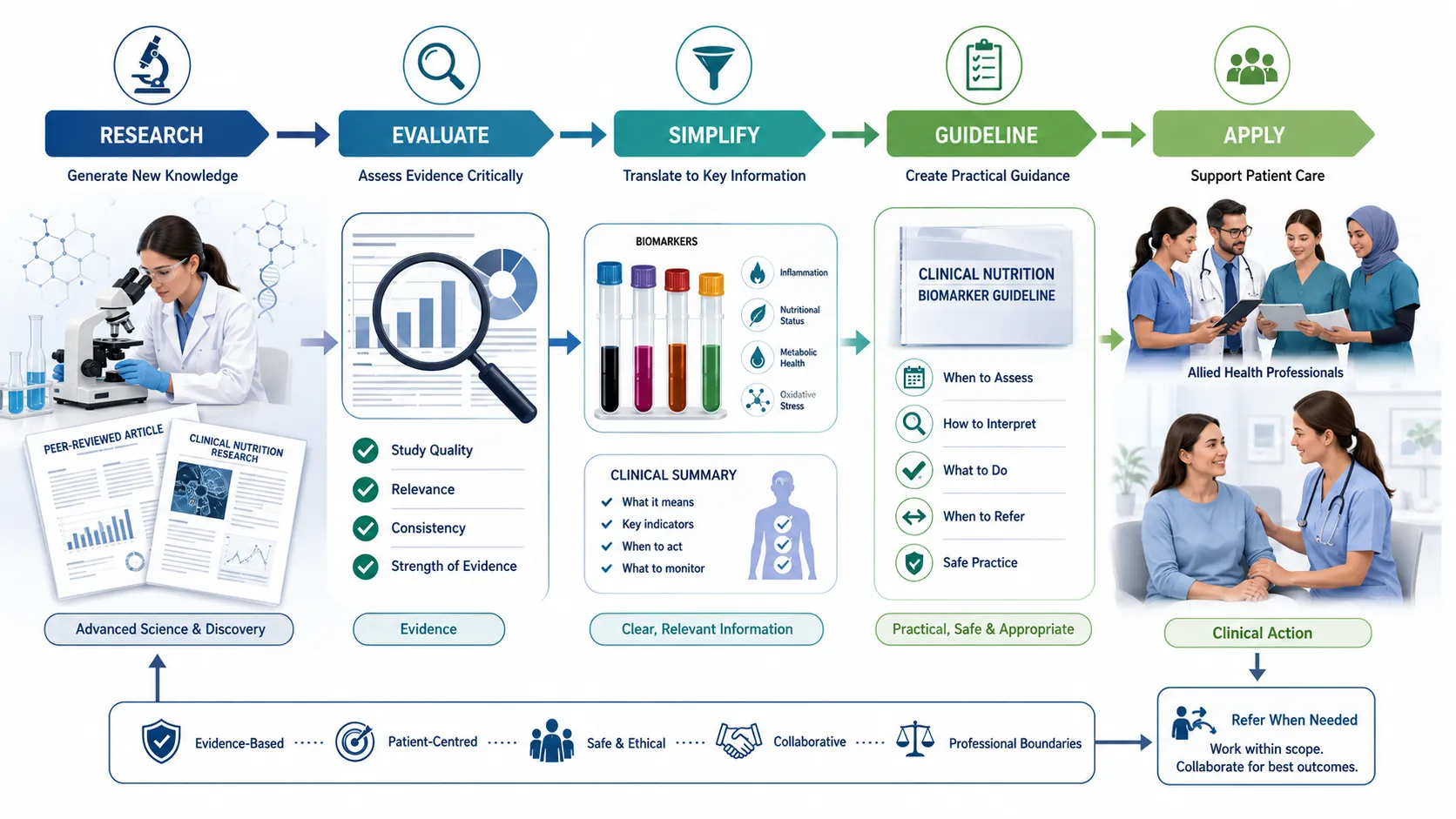
Key Definitions and Concepts
| Term | Definition | Practical Relevance |
|---|---|---|
| Knowledge translation | The process of converting scientific evidence into information that can be understood and applied in practice | Helps research inform real clinical decisions |
| Biochemical guideline | A structured set of evidence-informed principles for interpreting or responding to biochemical information | Supports consistent and safe practice |
| Biomarker | A measurable biological characteristic associated with a physiological or pathological process | Provides information about nutritional or metabolic status |
| Clinical applicability | The extent to which research findings can be used in real healthcare settings | Determines practical usefulness |
| Evidence certainty | The level of confidence that a research finding represents a true and reliable effect | Guides the strength of recommendations |
| Clinical pathway | A structured sequence of actions supporting consistent care | Helps professionals apply evidence systematically |
| Implementation | The process of introducing evidence or guidance into routine practice | Connects research with healthcare delivery |
| Scope of practice | The professional responsibilities and limits associated with a healthcare role | Protects patient safety |
| Referral | The process of directing a patient to an appropriately qualified professional | Ensures complex problems receive specialist assessment |
| Monitoring | Repeated observation or measurement used to assess change over time | Supports evaluation of nutritional interventions |
| Clinical judgement | The application of evidence, professional knowledge and patient information to a specific situation | Prevents rigid application of general guidance |
The Importance of Translating Clinical Nutrition Research
The Gap Between Research and Practice
Scientific research is frequently written for researchers, laboratory specialists and highly specialised clinicians. Research publications may contain:
Complex statistical analysis.
Advanced biochemical terminology.
Detailed laboratory methodologies.
Multiple biomarker measurements.
Uncertain or conflicting findings.
These features are necessary for scientific accuracy but can create a gap between research and routine clinical practice.
Allied healthcare professionals may need to understand:
What the research means.
Which findings are clinically relevant.
What action is appropriate.
When specialist advice is required.
Effective translation closes the gap between scientific discovery and practical patient care.
Why Simplification Must Remain Scientifically Accurate
Poor translation can create two major risks.
The first is excessive complexity, where professionals cannot understand or apply the evidence.
The second is excessive simplification, where important scientific limitations disappear.
Effective guidance should therefore be:
Clear.
Accurate.
Evidence-informed.
Relevant to practice.
Appropriate to professional responsibilities.
Understanding the Needs of Allied Healthcare Professionals
Different Professionals Require Different Levels of Detail
Not every healthcare professional requires the same depth of biochemical knowledge.
A laboratory specialist may require detailed information about analytical methodology, while a rehabilitation professional may primarily need to understand the clinical implications of a result.
Guidance should therefore be adapted to the intended audience.
Relevant factors include:
Professional role.
Level of training.
Clinical environment.
Responsibility for decision-making.
Access to specialist support.
Core Information Required in Practice
Allied healthcare professionals may benefit from guidance that explains:
What a biomarker represents.
Why it may change.
What factors may affect interpretation.
What clinical observations are relevant.
When abnormal findings require escalation.
This approach converts complex science into practical professional knowledge.
A Systematic Process for Translating Research
Step 1: Identify the Clinical Problem
Translation should begin with a real clinical question.
For example:
How should healthcare professionals use biochemical information when identifying possible nutritional risk?
A clear problem helps determine which research findings are relevant.
Important questions include:
Who will use the guidance?
Which patients are involved?
What decision must be supported?
What level of evidence is required?
Step 2: Identify High-Quality Research
Priority should generally be given to:
Well-designed clinical studies.
High-quality systematic reviews.
Evidence-based guidelines.
Research with transparent methodology.
However, the publication of a study in a scientific journal does not automatically mean that its conclusions should become clinical guidance.
The evidence must first be critically evaluated.
Step 3: Assess Research Quality
A practical evidence review should consider:
Study design.
Sample size.
Participant characteristics.
Intervention quality.
Outcome measurement.
Duration of follow-up.
Potential bias.
These factors influence the confidence that can be placed in the findings.
Step 4: Identify the Clinically Relevant Finding
A research article may contain many results.
The translator should identify:
The primary finding.
The magnitude of the effect.
The patient population.
The clinical relevance.
This prevents professionals from becoming overwhelmed by unnecessary information.
Step 5: Explain the Biochemical Principle
The next step is to describe the relevant biology clearly.
For example:
A biochemical marker may change because nutrient availability, inflammation, organ function or metabolic activity has changed.
This explanation is more useful than simply presenting a laboratory value without context.
Step 6: Convert the Finding into Practical Action
Scientific findings should be translated into practical questions such as:
What should the professional observe?
What information should be recorded?
When should results be reviewed?
When is referral appropriate?
Step 7: Include Safety Boundaries
Every guideline should clearly identify:
What professionals can do.
What requires specialist assessment.
Which situations require urgent escalation.
Translating Biochemical Complexity into Clear Language
Use of Plain but Accurate Terminology
Complex terms should be explained without losing scientific meaning.
For example:
Technical expression:
Metabolic dysregulation may alter circulating concentrations of nutrient-related biomarkers.
Practical explanation:
Changes in metabolism can affect blood test results, so laboratory findings should be interpreted alongside the patient’s overall clinical condition.
The second explanation remains scientifically meaningful while being easier to understand.
Principles for Clear Communication
Effective biochemical guidance should:
Use short definitions.
Explain unfamiliar terms.
Connect markers with physiological processes.
Avoid unnecessary jargon.
Use practical examples.
Interpreting Biomarkers in Context
The Danger of Isolated Interpretation
A laboratory value should rarely be interpreted without considering the wider clinical picture.
Relevant factors may include:
Recent dietary intake.
Acute illness.
Chronic disease.
Inflammation.
Medication.
Hydration.
Organ function.
A single abnormal result may have several possible explanations.
Practical Guideline
A useful principle for allied healthcare professionals is:
Consider laboratory information as one component of a wider nutritional and clinical assessment.
This does not require every professional to diagnose the cause of an abnormality. It encourages appropriate observation and communication.
Translating Research on Inflammation and Nutrition
Scientific Principle
Inflammation can alter metabolic pathways and influence the concentrations of some biochemical markers.
This means that a marker may reflect:
Nutritional status.
Inflammatory activity.
A combination of both.
Practical Translation
A guideline might state:
Review nutritional indicators alongside the patient’s current illness.
Consider whether acute or chronic inflammation may influence interpretation.
Escalate unexpected or complex results to an appropriate clinician.
This approach translates biochemical complexity into practical action.
Translating Research on Glucose Regulation
Advanced Scientific Findings
Research into glucose metabolism may involve:
Hormonal regulation.
Cellular glucose uptake.
Insulin sensitivity.
Long-term metabolic adaptation.
Practical Biochemical Guidance
For routine clinical support, the information may be translated into:
Monitor prescribed biochemical results over time.
Record relevant dietary and clinical changes.
Recognise that illness and medication may influence glucose regulation.
Report significant or unexpected changes.
The goal is not for every professional to independently diagnose metabolic disease.
Translating Research on Lipid Metabolism
Complex Scientific Background
Lipid metabolism involves multiple pathways and different lipid particles.
Research findings may identify changes in several biochemical measures.
Practical Translation
Allied healthcare guidance may emphasise:
Follow the overall clinical plan.
Consider the patient’s broader cardiovascular risk.
Avoid interpreting individual lipid results in isolation.
Support prescribed dietary interventions.
Escalate significant changes for clinical review.
Translating Research on Micronutrient Status
The Complexity of Nutrient Biomarkers
Micronutrient assessment can be complicated because biomarker levels may be affected by:
Inflammation.
Storage status.
Recent intake.
Absorption.
Organ function.
Practical Guidance
Healthcare professionals should understand that:
A normal result does not always exclude nutritional problems.
An abnormal result may require confirmation or further investigation.
Clinical symptoms and dietary history remain important.
Developing Practical Biochemical Guidelines
Characteristics of an Effective Guideline
A useful guideline should be:
Evidence-based.
Clearly written.
Clinically relevant.
Regularly reviewed.
Appropriate to professional roles.
A Simple Guideline Structure
A practical document may include:
Purpose
What problem does the guideline address?
Key Biochemical Principle
What scientific concept should professionals understand?
Clinical Relevance
Why does the information matter?
Practical Actions
What should professionals do?
Escalation Criteria
When should specialist advice be sought?
Using Decision-Support Frameworks
Why Structured Decision Support Is Useful
Complex scientific information can be difficult to apply under time pressure.
Decision-support frameworks may improve consistency.
A simple structure can include:
Recognise → Review → Record → Respond → Refer
Recognise
Identify possible signs of nutritional or metabolic concern.
Review
Consider available clinical and biochemical information.
Record
Document relevant observations accurately.
Respond
Follow the appropriate care plan within the professional role.
Refer
Escalate concerns requiring specialist assessment.
Practical Example: A Complex Laboratory Profile
A patient in a rehabilitation setting has:
Reduced appetite.
Recent illness.
Weight loss.
Several altered laboratory results.
An allied healthcare professional should not attempt to independently diagnose every biochemical abnormality.
A practical response would include:
Recognising nutritional risk.
Reviewing the available information.
Recording dietary concerns.
Monitoring relevant observations.
Communicating concerns to the clinical team.
This demonstrates safe knowledge translation.
Evidence Certainty and Recommendation Strength
Not All Research Supports the Same Level of Action
A strong recommendation should generally require stronger evidence than a preliminary research observation.
Research findings may be:
Well established.
Moderately supported.
Emerging.
Uncertain.
Practical Communication
Guidelines should use language that reflects evidence certainty.
Examples include:
“Should be considered where strong evidence supports practice.”
“May be appropriate in selected circumstances.”
“Further evidence is required before routine implementation.”
This reduces the risk of presenting uncertain findings as established clinical facts.
The Role of Clinical Guidelines
Combining Research and Professional Consensus
Clinical guidelines may integrate:
Research evidence.
Expert interpretation.
Safety considerations.
Implementation issues.
They can help convert large amounts of scientific information into structured recommendations.
However, guidelines should not be followed without thought.
Professionals should still consider:
Patient characteristics.
Local procedures.
Scope of practice.
Benefits of Practical Biochemical Guidance
Clear evidence-informed guidance can provide:
Improved consistency.
Better communication.
Increased confidence.
Safer escalation.
Reduced misunderstanding.
For patients, potential benefits include:
Earlier recognition of nutritional concerns.
More coordinated care.
Improved monitoring.
Common Barriers to Implementation
Information Overload
Healthcare professionals may receive large amounts of scientific information.
This can make it difficult to identify what is important.
Limited Training
Some professionals may have limited formal education in advanced biochemistry.
Guidance should therefore be designed at an appropriate educational level.
Time Pressure
Busy clinical environments may limit the ability to read lengthy research publications.
Practical summaries and decision-support tools can help.
Inconsistent Local Procedures
Different healthcare settings may use different:
Laboratory systems.
Reference ranges.
Escalation pathways.
Guidance must therefore be adapted appropriately.
Using Tables, Algorithms and Visual Aids
Why Visual Tools Improve Understanding
Complex processes can be easier to understand when information is presented through:
Flowcharts.
Tables.
Decision pathways.
Checklists.
A visual tool should support understanding rather than replace clinical judgement.
Example of a Practical Biochemical Decision Process
Identify nutritional concern.
Review available clinical information.
Check whether biochemical data are available.
Consider relevant influencing factors.
Document findings.
Follow the care plan.
Escalate when required.
Professional Boundaries and Scope of Practice
Understanding Professional Limits
Allied healthcare professionals must understand that interpreting research does not automatically provide authority to diagnose or prescribe treatment.
Responsibilities depend on:
Professional registration.
Training.
Competence.
Local policy.
Safe Practice Principles
Professionals should:
Work within their competence.
Follow organisational procedures.
Seek supervision where necessary.
Refer complex cases appropriately.
This is particularly important when dealing with:
Severe nutritional abnormalities.
Complex laboratory findings.
Multiple comorbidities.
Practical Scenario: Implementing New Research
A research review suggests that a combination of biochemical markers may help identify nutritional risk earlier than one standard measurement.
A healthcare organisation wishes to introduce this approach.
A responsible implementation process should include:
Reviewing the evidence quality.
Assessing laboratory capability.
Developing clear protocols.
Training relevant staff.
Defining referral procedures.
Monitoring outcomes.
Research should not be implemented immediately without considering feasibility and safety.
Communicating Findings Within Multidisciplinary Teams
The Importance of Clear Communication
Different professionals may understand scientific terminology differently.
Effective communication should:
Present relevant information clearly.
Avoid unnecessary jargon.
Identify uncertainty.
Explain the clinical concern.
Example of Professional Communication
Instead of stating:
The patient’s metabolic profile demonstrates complex biochemical dysregulation.
A clearer communication might be:
The available results show several metabolic changes that should be reviewed alongside the patient’s reduced dietary intake and recent illness.
This provides useful context without overstating certainty.
Monitoring the Effectiveness of Guidelines
Why Evaluation Is Necessary
Guidelines should not be considered permanently correct after implementation.
Their effectiveness should be reviewed.
Possible evaluation measures include:
Staff understanding.
Consistency of practice.
Appropriate referral rates.
Clinical outcomes.
Feedback from healthcare teams.
Continuous Improvement
Guidelines should be updated when:
New high-quality evidence becomes available.
Laboratory methods change.
Clinical practice develops.
Critical Thinking When Applying Research
Questions Allied Healthcare Professionals Should Ask
Before applying a research finding, consider:
Was the research high quality?
Does the study population resemble the patients being supported?
Is the finding clinically meaningful?
Does local guidance support the approach?
Is the action within my professional role?
These questions encourage safe and reflective practice.
Practical Examples of Research Translation
Example 1: Inflammation
Scientific finding:
Inflammatory processes may influence selected nutritional biomarkers.
Practical guideline:
Interpret results alongside evidence of illness or inflammation.
Avoid relying on one marker alone.
Escalate complex findings.
Example 2: Multiple Biomarkers
Scientific finding:
Combining biomarkers may provide a more detailed metabolic picture.
Practical guideline:
Review the complete clinical profile.
Do not focus exclusively on one laboratory value.
Communicate patterns requiring specialist review.
Example 3: Nutritional Monitoring
Scientific finding:
Repeated measurements may provide more useful information than isolated results.
Practical guideline:
Monitor trends where clinically appropriate.
Record relevant changes.
Report significant deterioration or unexpected patterns.
Key Principles for Effective Knowledge Translation
The following principles should guide the development of biochemical guidance:
Start with high-quality evidence.
Critically evaluate research limitations.
Identify clinically meaningful findings.
Explain biochemical principles clearly.
Connect evidence with practical action.
Respect professional boundaries.
Include escalation procedures.
Review and update guidance regularly.
Advanced Considerations: From Research Data to Practice Recommendations
Evidence Does Not Automatically Become Guidance
The translation pathway should include several stages:
Research discovery.
Independent evaluation.
Evidence synthesis.
Clinical interpretation.
Guideline development.
Professional education.
Implementation.
Monitoring.
Each stage provides an opportunity to identify weaknesses before widespread practice changes occur.
The Importance of Context
A research finding may be valid but difficult to implement because of:
Cost.
Technology requirements.
Limited laboratory access.
Workforce limitations.
Therefore, practical guidelines should consider both scientific evidence and real-world feasibility.
Developing Educational Resources for Allied Healthcare Professionals
Useful Educational Approaches
Training resources may include:
Short evidence summaries.
Case studies.
Practical scenarios.
Decision trees.
Interactive workshops.
These methods can improve the ability to apply complex scientific information.
The Role of Case-Based Learning
Case studies help connect theory with practice.
For example, a Learner may review:
A patient’s dietary history.
Clinical symptoms.
Selected biochemical results.
The task can then focus on:
Identifying concerns.
Explaining relevant biochemical principles.
Determining appropriate professional action.
Conclusion
Translating complex scientific findings from advanced clinical nutrition research into practical biochemical guidelines is an essential process for improving evidence-informed healthcare practice. Scientific research may provide detailed information about metabolic pathways, biomarkers and nutritional interventions, but this information must be critically evaluated and carefully communicated before it can be applied safely.
Effective knowledge translation requires the identification of high-quality evidence, assessment of methodological strengths and limitations and determination of clinical relevance. Complex biochemical mechanisms should then be explained in clear language without losing scientific accuracy.
Practical guidelines should connect evidence with professional action. They should explain what a finding means, why it matters, what observations are relevant and when concerns should be escalated. Guidance must also respect professional scope of practice and recognise that complex diagnostic decisions may require specialist assessment.
The most effective biochemical guidelines are clear, evidence-based, clinically relevant and regularly updated. They should support allied healthcare professionals without encouraging them to act beyond their competence. Structured processes, decision-support tools, case-based education and multidisciplinary communication can all help transform complex research findings into meaningful clinical practice.
Ultimately, the goal is not simply to make science easier to read. The goal is to ensure that high-quality scientific knowledge is understood accurately and used responsibly to support patient care. By developing strong knowledge translation skills, allied healthcare professionals can contribute more effectively to nutritional assessment, monitoring and multidisciplinary clinical decision-making while maintaining the highest standards of evidence-based and patient-centred practice.