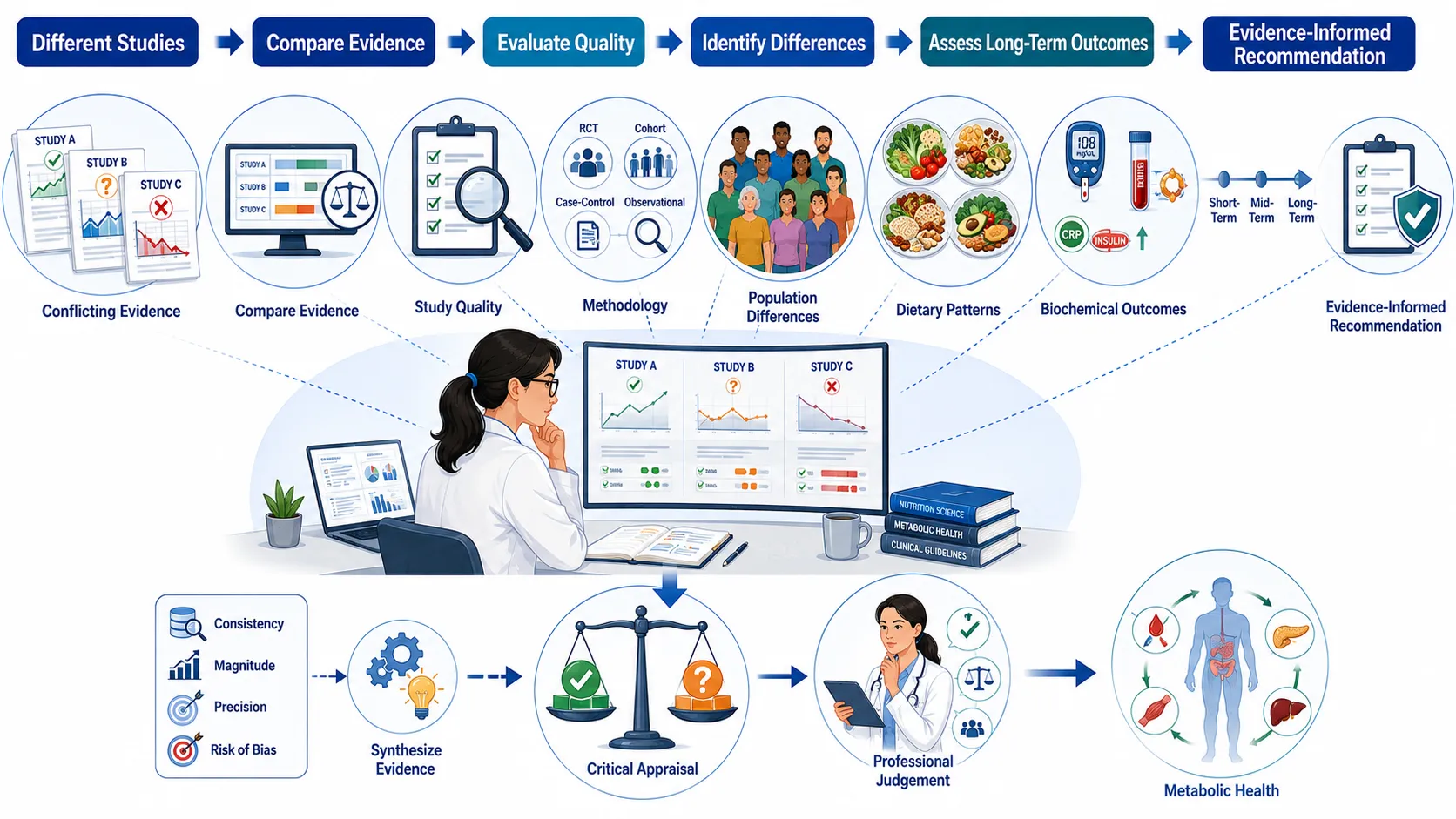
Lesson no 4 : Critically assess research evidence to inform professional practice.
Introduction
The ability to critically assess research evidence is an essential competency for informed and effective professional practice. In clinical, healthcare, nutrition, and other professional settings, practitioners are required to make decisions based not only on experience and established procedures but also on reliable, current, and high-quality research evidence. This lesson, Critically Assess Research Evidence to Inform Professional Practice, develops the knowledge and analytical skills required to evaluate research systematically and apply appropriate findings to real-world professional decision-making.
Learners will explore how to identify credible research sources, assess the quality and relevance of evidence, and distinguish between strong and weak research methodologies. The lesson examines important concepts such as research validity, reliability, bias, sample selection, ethical considerations, statistical interpretation, and the clinical or professional applicability of research findings. Learners will also develop the ability to compare different types of evidence, including experimental studies, observational research, systematic reviews, and other evidence-based sources.
A central focus of the lesson is the translation of research findings into professional practice. High-quality evidence must be interpreted within the context of individual circumstances, organisational requirements, professional standards, and practical limitations. Learners will therefore consider how research evidence can support decision-making while recognising that a single study should rarely be viewed in isolation.
The lesson also encourages critical reflection and professional judgement. Learners will examine potential conflicts of interest, limitations in research design, and the risks of applying findings without considering their relevance to the intended population or practice setting. Through practical examples and evidence-based scenarios, Learners will strengthen their ability to question assumptions, evaluate competing claims, and reach balanced conclusions.
By completing this lesson, Learners will be better prepared to use research evidence responsibly, support professional recommendations with credible information, and contribute to continuous improvement within their area of practice. These skills are fundamental to maintaining high standards of professional competence and ensuring that decisions are informed by robust, relevant, and ethically sound evidence.
1.Critically Assessing the Validity, Reliability and Methodology of Clinical Trials Investigating Novel Biochemical Treatments for Advanced Metabolic Disorders
The critical assessment of clinical trials is a fundamental professional skill in evidence-based practice. Advanced metabolic disorders, including complex forms of type 2 diabetes, severe obesity and metabolic syndrome, are associated with multiple biochemical abnormalities involving glucose regulation, lipid metabolism, insulin signalling, inflammation, oxidative stress and energy metabolism. As new biochemical treatments are developed, healthcare and allied health professionals must be able to determine whether research evidence is sufficiently robust, reliable and clinically relevant to inform professional practice.
A clinical trial may report promising outcomes, but the findings should not automatically be accepted as evidence of effective treatment. The quality of the research depends on the appropriateness of its methodology, the validity and reliability of its measurements, the selection of participants, the management of bias, the statistical analysis and the relevance of the outcomes to real clinical practice. Critical assessment therefore involves asking structured questions about how the study was designed, conducted, analysed and reported.
This section provides a systematic framework for evaluating recent clinical trials investigating novel biochemical treatments for advanced metabolic disorders.

Key Definitions and Concepts
| Term | Definition | Importance in Critical Assessment |
|---|---|---|
| Validity | The extent to which a study accurately measures or demonstrates what it claims to investigate | Determines whether conclusions are credible |
| Internal validity | The degree to which observed outcomes can reasonably be attributed to the intervention | Helps identify the influence of bias and confounding |
| External validity | The extent to which findings can be applied to other populations or settings | Determines clinical applicability |
| Reliability | The consistency and reproducibility of measurements or findings | Supports confidence in research results |
| Methodology | The overall design, procedures and methods used to conduct a study | Determines the scientific strength of the evidence |
| Randomisation | The allocation of participants to groups using a process designed to minimise selection bias | Improves comparability between groups |
| Blinding | Keeping participants, researchers or outcome assessors unaware of treatment allocation where appropriate | Reduces performance and assessment bias |
| Control group | A comparison group used to evaluate whether observed changes are associated with the intervention | Supports causal interpretation |
| Confounding | The influence of an additional factor that may distort the relationship between intervention and outcome | Can weaken the accuracy of conclusions |
| Statistical significance | An assessment of whether an observed difference is unlikely to be due to chance alone | Does not automatically demonstrate clinical importance |
| Clinical significance | The practical importance of a treatment effect for patient health and professional practice | Supports meaningful decision-making |
Understanding the Purpose of Critical Assessment
Why Novel Treatments Require Careful Evaluation
Novel biochemical treatments may target highly specific metabolic pathways. For example, an intervention may aim to improve insulin sensitivity, alter lipid metabolism, reduce inflammatory signalling or influence mitochondrial function. The biological mechanism may appear scientifically plausible, but biological plausibility alone does not prove clinical effectiveness.
Professional practice should therefore distinguish between:
A theoretical biochemical mechanism.
A favourable laboratory finding.
A statistically significant trial result.
A clinically meaningful patient outcome.
A treatment that is sufficiently supported for wider professional application.
A treatment may improve a biochemical marker without producing meaningful improvements in symptoms, functional ability or long-term health outcomes. Conversely, a clinically useful intervention may have modest effects on a single biomarker while contributing to broader metabolic improvement.
Critical assessment helps Learners avoid accepting conclusions solely because a study is recent, published in a scientific journal or reports statistically significant results.
The Core Questions of Critical Appraisal
When reviewing a clinical trial, the following questions should guide professional judgement:
What was the main research question?
Was the study design appropriate for answering that question?
Were the participants representative of the intended clinical population?
Was treatment allocation conducted appropriately?
Was there a suitable comparison group?
Were outcome measurements valid and reliable?
Were important confounding factors considered?
Was the sample size adequate?
Were the results analysed appropriately?
Are the findings clinically meaningful?
Can the results reasonably inform professional practice?
What limitations reduce confidence in the conclusions?
Assessing Research Validity
Internal Validity
Internal validity concerns whether the observed effects can reasonably be attributed to the intervention rather than to bias, chance or external influences.
A well-designed trial should minimise alternative explanations for the results. For example, if a novel biochemical treatment improves blood glucose regulation, the researcher must consider whether the improvement resulted from the intervention itself or from differences in dietary intake, physical activity, medication adherence or baseline disease severity.
Important threats to internal validity include:
Selection bias.
Inadequate randomisation.
Unequal baseline characteristics.
Poor treatment adherence.
Differential loss to follow-up.
Measurement bias.
Inadequate blinding.
Uncontrolled lifestyle changes.
Selective reporting of favourable outcomes.
Evaluating Randomisation
Randomisation is particularly important when comparing a novel treatment with another intervention or standard care. Proper random allocation helps reduce systematic differences between groups.
However, Learners should not assume that the word randomised automatically confirms high-quality methodology.
Critical questions include:
Was the method of randomisation clearly described?
Was allocation concealed from those recruiting participants?
Were groups similar at baseline?
Was the randomisation process appropriate for the sample size?
Were important clinical characteristics balanced?
For example, a trial investigating a treatment for severe insulin resistance may be weakened if one group contains participants with substantially more advanced disease at baseline.
Construct Validity
Construct validity concerns whether the variables and measurements genuinely represent the concepts being investigated.
A study may claim to measure metabolic improvement but rely on only one isolated laboratory marker. Metabolic health is complex and may involve multiple indicators.
Researchers should clearly justify:
Why specific biomarkers were selected.
Whether the biomarkers are accepted indicators of the targeted pathway.
Whether laboratory procedures were standardised.
Whether the timing of measurements was appropriate.
Whether physiological factors that influence biomarker variation were considered.
A single biochemical measurement may not provide a complete representation of a complex metabolic condition.
External Validity
External validity addresses whether research findings can be applied beyond the participants included in the trial.
A highly controlled clinical trial may demonstrate strong internal validity but have limited external validity if participants differ substantially from those encountered in routine practice.
Consider the following factors:
Age range of participants.
Sex distribution.
Severity of metabolic disease.
Presence of multiple comorbidities.
Medication use.
Ethnic and population diversity.
Dietary and lifestyle characteristics.
Healthcare setting.
For example, a treatment studied only in a narrowly selected group may not automatically be appropriate for individuals with multiple metabolic conditions.
Assessing Reliability
Meaning of Reliability in Clinical Research
Reliability refers to consistency. A reliable measurement should produce reasonably consistent results when repeated under similar conditions.
In biochemical clinical trials, reliability may relate to:
Laboratory testing procedures.
Biomarker measurement.
Data collection methods.
Clinical assessment tools.
Outcome evaluation.
Consistency between assessors.
Poor reliability can create uncertainty even when a study appears methodologically sophisticated.
Laboratory Measurement Reliability
Biochemical trials depend heavily on accurate laboratory data. Learners should consider whether:
Validated analytical methods were used.
Equipment was calibrated appropriately.
Laboratory procedures were standardised.
Samples were collected under consistent conditions.
Appropriate quality-control procedures were followed.
Repeated measurements were considered where necessary.
Biomarkers may fluctuate because of physiological variation. Factors such as dietary intake, fasting status, physical activity, acute illness and medication use may influence results.
A reliable trial should attempt to standardise important measurement conditions.
Reproducibility of Findings
A single study should rarely be considered definitive. Reliability at the broader evidence level also concerns whether similar findings are reproduced by independent researchers.
Professionals should consider:
Whether similar trials report comparable results.
Whether findings have been replicated.
Whether systematic evidence supports the conclusion.
Whether results are consistent across populations.
Reproducibility strengthens confidence that an observed result is not unique to one research setting.
Critically Evaluating Clinical Trial Methodology
Selecting an Appropriate Study Design
The research question should determine the study design.
Randomised controlled trials are often used to investigate the efficacy and safety of interventions because they can provide strong evidence regarding causal relationships when conducted appropriately.
However, different questions require different methodologies.
Common designs include:
Randomised controlled trials.
Controlled clinical trials.
Crossover studies.
Cohort studies.
Observational studies.
Systematic reviews.
Meta-analyses.
A strong critical appraisal considers whether the chosen design is appropriate rather than assuming that every design has equal evidential strength.
The Research Question and Study Objectives
A clearly formulated research question should identify:
The target population.
The intervention.
The comparison.
The relevant outcomes.
Unclear research objectives may lead to inappropriate outcome selection and selective interpretation.
A high-quality trial should distinguish between primary and secondary outcomes before data collection begins.
Participant Selection
Participant selection has major implications for both validity and applicability.
Key considerations include:
Inclusion criteria.
Exclusion criteria.
Recruitment methods.
Sample representativeness.
Baseline metabolic characteristics.
Disease severity.
Existing treatments.
Excessively restrictive criteria may produce a highly controlled sample that does not reflect routine clinical populations.
Sample Size and Statistical Power
A small trial may fail to detect meaningful differences even when an intervention has a real effect. Conversely, a very large trial may identify statistically significant differences that are too small to be clinically meaningful.
Critical appraisal should examine:
Whether a sample size calculation was conducted.
Whether the study had adequate statistical power.
Whether participant losses reduced the effective sample size.
Whether subgroup analyses were adequately powered.
Sample size should be considered alongside effect size and confidence intervals.
Evaluating Intervention Quality
Clear Description of the Intervention
A novel biochemical treatment should be described clearly enough to allow evaluation and replication.
The trial should specify:
Treatment composition.
Dose or intensity.
Frequency.
Duration.
Administration procedures.
Monitoring requirements.
Co-interventions.
Poorly described interventions limit reproducibility and practical application.
Adherence and Treatment Fidelity
A treatment can only be evaluated accurately if participants receive it as intended.
Researchers should monitor:
Treatment adherence.
Missed doses.
Withdrawal.
Protocol deviations.
Changes in concurrent medication.
Lifestyle modifications.
Failure to assess adherence may make it difficult to determine whether poor outcomes reflect treatment failure or inadequate treatment exposure.
The Importance of Control Groups
Why Comparison Matters
Without an appropriate comparison group, it may be difficult to determine whether improvement resulted from the intervention.
Changes may occur because of:
Natural disease variation.
Regression towards the mean.
Increased clinical attention.
Lifestyle changes.
Placebo effects.
Concurrent treatment.
A control group provides an important reference point.
Possible comparisons include:
Placebo.
Standard care.
Existing treatment.
Alternative intervention.
The suitability of the control depends on the research question and ethical considerations.
Assessing Bias in Clinical Trials
Selection Bias
Selection bias occurs when participants entering different groups differ systematically.
Appropriate randomisation and allocation concealment can reduce this risk.
Performance Bias
Performance bias may occur when groups receive different care apart from the intervention being studied.
For example, participants receiving a novel treatment may also receive more intensive lifestyle counselling.
Detection Bias
Detection bias occurs when knowledge of treatment allocation influences outcome assessment.
Blinding can help reduce this risk where practical and ethical.
Attrition Bias
Attrition bias can arise when participants withdraw from the study and losses differ between groups.
Critical questions include:
How many participants withdrew?
Why did they withdraw?
Did withdrawal differ between groups?
Were missing data managed appropriately?
Reporting Bias
Researchers may selectively report outcomes that appear favourable.
Professionals should consider whether:
All planned outcomes were reported.
Primary outcomes were clearly identified.
Unfavourable findings were discussed.
Safety outcomes received adequate attention.
Interpreting Statistical Results
Statistical Significance and Clinical Importance
Statistical significance does not automatically mean that an intervention provides an important clinical benefit.
A critical assessment should consider:
Effect size.
Confidence intervals.
Baseline risk.
Absolute change.
Duration of benefit.
Patient-centred outcomes.
For example, a small reduction in a biochemical marker may reach statistical significance but have limited practical importance.
Confidence Intervals
Confidence intervals provide information about the uncertainty surrounding an estimated effect.
A narrow confidence interval generally indicates greater precision than a wide interval.
Learners should consider:
The size of the estimated effect.
The range of plausible values.
Whether the interval includes clinically unimportant effects.
Whether uncertainty limits professional confidence.
Assessing Clinical Applicability
From Research Evidence to Professional Practice
Even a well-designed clinical trial should not be transferred automatically into practice.
Professional applicability depends on:
Patient characteristics.
Disease severity.
Treatment feasibility.
Safety.
Resource availability.
Existing clinical guidance.
Patient preferences.
Monitoring capacity.
Research evidence should inform professional judgement rather than replace it.
Evaluating Safety
Novel biochemical treatments should be assessed for both benefits and harms.
Safety assessment should include:
Adverse events.
Serious adverse events.
Biochemical abnormalities.
Drug interactions.
Nutrient interactions.
Long-term risks.
Effects in vulnerable populations.
Short trials may provide limited information about long-term safety.
A Step-by-Step Critical Assessment Process
Step 1: Identify the Research Question
Begin by identifying:
What condition is being investigated?
What treatment is being tested?
What comparison is used?
What outcomes are measured?
Step 2: Examine the Study Design
Assess whether the design is appropriate for evaluating the intervention.
Consider:
Randomisation.
Control groups.
Blinding.
Follow-up period.
Sample size.
Step 3: Assess Participant Characteristics
Determine whether participants are comparable to the intended professional population.
Review:
Baseline characteristics.
Disease severity.
Comorbidities.
Existing treatments.
Step 4: Evaluate Measurement Quality
Consider whether laboratory and clinical outcomes are valid and reliable.
Review:
Biomarker selection.
Standardisation.
Timing of measurements.
Quality-control procedures.
Step 5: Identify Potential Bias
Systematically examine:
Selection bias.
Performance bias.
Detection bias.
Attrition bias.
Reporting bias.
Step 6: Interpret Results Critically
Do not rely solely on statistical significance.
Evaluate:
Effect size.
Confidence intervals.
Clinical importance.
Safety outcomes.
Step 7: Consider Applicability
Determine whether findings can reasonably inform professional practice.
Consider:
Population relevance.
Feasibility.
Risks.
Existing evidence.
Individual patient needs.
Practical Example: Evaluating a Hypothetical Trial
Consider a hypothetical trial investigating a novel biochemical treatment designed to improve insulin sensitivity in individuals with advanced metabolic dysfunction.
The researchers recruit 120 participants and randomly assign them to either the novel treatment or standard care for six months. The primary outcome is improvement in a validated marker of glucose regulation.
A critical appraisal should examine the following:
Strengths
Randomised allocation may reduce selection bias.
A standard-care comparison supports interpretation.
The study identifies a primary outcome.
The intervention duration allows assessment over several months.
Potential Limitations
The sample may be too small to detect uncommon adverse events.
Six months may not establish long-term effectiveness.
Dietary changes could influence results.
Participants with multiple comorbidities may have been excluded.
A biochemical improvement may not demonstrate broader clinical benefit.
The appropriate conclusion would not simply be that the treatment works. A critical evaluator would conclude that the trial may provide useful evidence while recognising methodological and clinical limitations.
Practical Workplace Applications
Reviewing New Evidence Before Changing Practice
Professionals may encounter new studies through journals, professional publications or clinical discussions.
Before changing practice, they should:
Identify the source of the evidence.
Assess study quality.
Review methodology.
Examine safety findings.
Compare findings with wider evidence.
Consider existing professional guidance.
Supporting Evidence-Based Discussions
Critical appraisal enables professionals to explain why a particular study should or should not influence practice.
This may involve discussing:
Strength of evidence.
Limitations.
Clinical relevance.
Population applicability.
Uncertainty.
Working Within a Multidisciplinary Team
Different professionals may interpret research from different perspectives.
A collaborative discussion may consider:
Biochemical evidence.
Clinical outcomes.
Nutritional implications.
Pharmacological considerations.
Patient safety.
Key Benefits of Critical Assessment
Developing strong critical assessment skills provides important professional benefits.
Benefits for Professional Practice
Supports evidence-based decision-making.
Reduces reliance on unsupported claims.
Improves interpretation of scientific literature.
Strengthens professional judgement.
Supports safer implementation of innovation.
Encourages continuous professional development.
Benefits for Patient and Service Outcomes
Promotes safer treatment decisions.
Helps identify ineffective interventions.
Supports individualised care.
Encourages consideration of benefits and risks.
Reduces inappropriate application of research findings.
Benefits for Research Interpretation
Learners become better able to distinguish between:
Strong and weak methodology.
Statistical and clinical significance.
Association and causation.
Reliable and unreliable measurement.
Generalisable and narrowly applicable findings.
Common Errors to Avoid
Accepting Conclusions Without Reviewing Methods
The abstract or conclusion may present results positively while important methodological weaknesses are found elsewhere in the paper.
Always examine:
Study design.
Participants.
Intervention methods.
Outcomes.
Statistical analysis.
Limitations.
Confusing Statistical Significance With Clinical Value
A statistically significant result may be too small to produce a meaningful benefit.
Consider the magnitude and practical importance of the effect.
Overgeneralising Results
Findings from one population should not automatically be applied to all individuals.
Consider population differences and clinical complexity.
Ignoring Safety Evidence
Effectiveness alone is insufficient.
Novel treatments must be evaluated for:
Short-term harms.
Long-term risks.
Interactions.
Monitoring requirements.
Relying on a Single Study
Professional practice should consider the wider evidence base whenever possible.
One study may provide useful information, but replication and consistency strengthen confidence.
Developing Advanced Critical Judgement
Advanced critical assessment requires more than identifying a list of methodological strengths and weaknesses. It requires evaluating how those features influence confidence in the final conclusions.
For example, a study may use randomisation but have high participant dropout. Another study may have a large sample but measure outcomes using methods of limited clinical relevance.
The evaluator must ask:
How serious is each limitation?
Could the limitation change the conclusion?
Does the overall evidence remain convincing?
What level of uncertainty remains?
Is additional research required?
This balanced approach prevents both uncritical acceptance and automatic rejection of research evidence.
Integrating Multiple Sources of Evidence
Professional decisions should ideally consider multiple forms of evidence.
These may include:
High-quality clinical trials.
Systematic reviews.
Meta-analyses.
Clinical guidance.
Laboratory evidence.
Professional expertise.
Individual patient circumstances.
No single source should automatically dominate every professional decision.
Summary
Critically assessing recent clinical trials investigating novel biochemical treatments for advanced metabolic disorders requires a structured examination of validity, reliability and methodology. Professionals must evaluate whether the research question is clear, whether the study design is appropriate, whether participants are representative, whether measurements are accurate and whether potential sources of bias have been adequately controlled.
High-quality critical appraisal also requires careful interpretation of statistical findings. Statistical significance should be distinguished from clinical importance, and promising biochemical outcomes should be considered alongside patient safety, long-term effects and real-world applicability.
A systematic process involving the evaluation of study design, participant selection, intervention quality, measurement reliability, bias, statistical analysis and clinical relevance enables Learners to make balanced evidence-based judgements. These skills are essential for translating research findings responsibly into professional practice.
Ultimately, critical assessment supports informed decision-making by ensuring that novel treatments are not adopted simply because they are new or scientifically interesting. Instead, professional practice should be guided by robust evidence, sound methodology, careful interpretation and appropriate consideration of individual clinical circumstances.
2: Synthesise Key Findings from Comprehensive Systematic Reviews to Formulate Updated, Evidence-Based Nutritional Guidelines for Professional Clinical Practice
The ability to synthesise evidence from comprehensive systematic reviews is a fundamental competency for professionals working in clinical nutrition, metabolic health, and healthcare practice. Systematic reviews bring together findings from multiple relevant studies using transparent and structured methods. When conducted rigorously, they can provide a broader and more reliable understanding of whether a nutritional intervention is effective, safe, clinically meaningful, and applicable to different patient populations.
However, professional practice should not rely on the conclusions of a systematic review without critical evaluation. Reviews may differ in methodological quality, included populations, intervention types, outcome measures, and risk of bias. Therefore, healthcare professionals must be able to interpret the totality of evidence, assess its certainty, identify areas of agreement and uncertainty, and translate findings into practical nutritional guidance.
This section explores the process of moving from systematic review evidence to updated, evidence-based nutritional guidelines. It emphasises critical appraisal, evidence synthesis, professional judgement, patient-centred care, implementation, monitoring, and continuous guideline review.

Key Definitions and Concepts
| Term | Definition | Importance in Professional Clinical Practice |
|---|---|---|
| Systematic Review | A structured review that uses predefined methods to identify, select, appraise and synthesise relevant research studies. | Provides a comprehensive overview of available evidence. |
| Meta-analysis | A statistical technique that combines numerical results from multiple comparable studies. | Can improve precision when studies are sufficiently similar. |
| Evidence Synthesis | The process of combining findings from multiple research sources to develop an overall interpretation. | Supports informed and balanced decision-making. |
| Risk of Bias | The possibility that flaws in study design, conduct or reporting have systematically distorted results. | Helps determine confidence in reported findings. |
| Heterogeneity | Variation between studies in participants, interventions, methods or outcomes. | Affects whether findings can reasonably be combined. |
| Certainty of Evidence | The degree of confidence that the estimated effect reflects the true effect. | Supports appropriate strength of recommendations. |
| Clinical Applicability | The extent to which research findings can be applied to a particular healthcare population or setting. | Prevents inappropriate generalisation. |
| Evidence-Based Guideline | A structured recommendation developed using research evidence, clinical expertise and patient considerations. | Guides consistent and defensible professional practice. |
| Recommendation Strength | The degree to which a guideline supports a particular intervention or action. | Helps professionals understand how firmly guidance should be applied. |
| Patient-Centred Care | Care that incorporates individual needs, preferences, circumstances and values. | Ensures guidelines are adapted safely to the individual. |
Understanding the Role of Systematic Reviews in Nutritional Guideline Development
Why Systematic Reviews Are Important
Individual studies can provide useful information, but a single study rarely provides sufficient evidence to establish a universal clinical recommendation. Studies may have small samples, short follow-up periods, different methodologies or findings that conflict with other research.
Systematic reviews attempt to address this problem by examining the available body of evidence using a planned and reproducible approach. A well-conducted review can identify patterns that may not be visible when studies are considered individually.
Systematic reviews can help professionals to:
- identify the overall direction of evidence;
- compare findings across multiple populations;
- examine consistency between studies;
- identify important evidence gaps;
- assess the safety of interventions;
- determine whether reported benefits are clinically meaningful;
- evaluate the certainty of the evidence;
- support the development of professional recommendations.
The Difference Between Collecting Evidence and Synthesising Evidence
Simply reading several studies is not the same as conducting evidence synthesis. Evidence synthesis requires a structured approach to comparing and interpreting findings.
A professional should consider:
- What question was the review designed to answer?
- Which studies were included?
- Which populations were represented?
- Were the interventions sufficiently similar?
- Which outcomes were measured?
- How was study quality assessed?
- Were the findings consistent?
- Are the conclusions justified by the data?
A systematic review may contain a large amount of research, but the number of studies alone does not determine the quality of the evidence.
Formulating a Clear Clinical Question Before Reviewing Evidence
The Importance of Structured Questions
Before using systematic review findings to update nutritional guidance, professionals should clearly define the clinical problem.
A structured question prevents evidence from being interpreted too broadly or applied to the wrong population.
One commonly used framework considers:
Population
Who is the guidance intended for?
Examples include:
- adults with type 2 diabetes;
- individuals with obesity;
- older adults at nutritional risk;
- patients with chronic kidney disease;
- individuals receiving enteral nutrition.
Intervention
What nutritional strategy is being considered?
Examples include:
- dietary energy modification;
- increased dietary fibre;
- altered carbohydrate distribution;
- Mediterranean-style dietary patterns;
- protein optimisation;
- micronutrient supplementation where clinically indicated.
Comparison
What is the intervention compared with?
Possible comparisons include:
- standard dietary advice;
- usual care;
- another dietary pattern;
- placebo supplementation;
- no structured intervention.
Outcomes
Which outcomes are clinically important?
These may include:
- biochemical markers;
- body composition;
- symptom improvement;
- functional outcomes;
- disease progression;
- medication requirements;
- adverse effects;
- quality of life.
Practical Example
Consider the following clinical question:
In adults with type 2 diabetes, do structured dietary interventions that improve overall dietary quality and energy balance improve glycaemic markers and cardiovascular risk factors compared with usual dietary advice?
This question is more useful than simply asking:
Does diet help diabetes?
The structured question identifies the population, intervention, comparison and relevant outcomes.
Assessing the Methodological Quality of Systematic Reviews
A Systematic Review Is Not Automatically High Quality
The term “systematic review” does not guarantee methodological rigour. Poorly designed reviews can produce misleading conclusions.
Professionals should critically examine how the review was conducted.
Important questions include:
- Was there a clearly defined research question?
- Was a protocol developed before the review began?
- Was the literature search comprehensive?
- Were multiple databases searched?
- Were inclusion and exclusion criteria clearly defined?
- Was study selection performed systematically?
- Was the risk of bias of included studies assessed?
- Were methods appropriate for combining results?
- Were conflicts of interest reported?
Common Indicators of Methodological Strength
A stronger review generally demonstrates:
- transparent eligibility criteria;
- comprehensive search methods;
- clear documentation of study selection;
- independent assessment where appropriate;
- systematic risk-of-bias evaluation;
- justified analytical methods;
- transparent reporting of limitations.
Common Warning Signs
Professionals should exercise caution when a review:
- searches only a limited number of sources;
- provides unclear inclusion criteria;
- does not assess study quality;
- selectively reports favourable findings;
- combines highly dissimilar studies without explanation;
- presents strong recommendations from uncertain evidence.
Understanding Heterogeneity in Clinical Nutrition Research
What Is Heterogeneity?
Heterogeneity refers to differences between studies.
In clinical nutrition, heterogeneity is particularly common because nutritional interventions are complex and difficult to standardise.
Differences may occur in:
- participant age;
- disease severity;
- baseline nutritional status;
- medication use;
- dietary patterns;
- intervention intensity;
- duration of follow-up;
- adherence levels;
- outcome measurement.
Types of Heterogeneity
Clinical Heterogeneity
This relates to differences in patients or interventions.
For example:
- one study includes newly diagnosed diabetes;
- another includes patients with longstanding complications;
- one intervention is intensive;
- another consists of a single educational session.
Methodological Heterogeneity
This relates to differences in research design.
Examples include:
- randomised trials;
- observational studies;
- blinded interventions;
- open-label interventions.
Statistical Heterogeneity
This occurs when study results vary more than would reasonably be expected by chance.
Why Heterogeneity Matters
Combining studies that answer substantially different questions can produce a misleading average result.
Professionals should therefore ask:
- Are these studies sufficiently comparable?
- Does the average effect apply to all populations?
- Are some subgroups responding differently?
- Could differences in adherence explain inconsistent results?
Synthesising Findings Beyond Statistical Significance
Statistical Significance Is Not the Only Consideration
A statistically significant result does not automatically mean that the intervention produces a meaningful clinical benefit.
For example, a large study may detect a very small difference in a biochemical marker that has limited practical importance.
Clinical interpretation should consider:
- magnitude of effect;
- baseline risk;
- absolute benefit;
- duration of benefit;
- patient burden;
- safety;
- feasibility;
- cost and resource requirements.
Clinical Significance
Clinical significance refers to whether a change is meaningful for health outcomes or patient care.
A professional guideline should avoid recommendations based solely on whether a result meets a statistical threshold.
Questions to Ask During Interpretation
- How large was the observed effect?
- Was the effect consistent?
- Was the outcome clinically important?
- Did the intervention improve patient-relevant outcomes?
- Was the intervention sustainable?
- Were adverse effects adequately reported?
Evaluating the Certainty of the Evidence
Why Evidence Certainty Matters
Different evidence findings deserve different levels of confidence.
A recommendation based on consistent, well-conducted studies may be stronger than one based on small, inconsistent or indirect studies.
Factors that may reduce confidence include:
- high risk of bias;
- inconsistent findings;
- indirect populations or interventions;
- imprecise estimates;
- suspected publication bias.
Applying Evidence Certainty to Recommendations
A useful distinction is between:
Strong Recommendations
These may be appropriate when evidence is relatively consistent and the balance of benefits and risks is clear.
Conditional Recommendations
These may be appropriate when:
- evidence is uncertain;
- patient preferences vary;
- interventions may not suit all populations;
- important implementation factors remain unclear.
A conditional recommendation does not mean that the intervention is ineffective. It means that professional judgement and individual assessment are especially important.
From Evidence Synthesis to Guideline Development
A Structured Guideline Development Process
The process should move through clear stages rather than jumping directly from a review conclusion to a clinical recommendation.
A structured process includes:
- Define the clinical problem.
- Identify relevant systematic reviews.
- Critically assess review quality.
- Examine the included primary evidence.
- Assess consistency and heterogeneity.
- Evaluate the certainty of findings.
- Consider benefits and potential harms.
- Assess clinical applicability.
- Incorporate patient values and preferences.
- Draft recommendations.
- Review recommendations with relevant professionals.
- Establish monitoring and review procedures.
Why Professional Consensus May Be Required
Nutritional guidance often involves complex decisions that cannot be resolved through research data alone.
Professional consensus may be necessary to consider:
- practical implementation;
- service capacity;
- cultural dietary patterns;
- accessibility;
- patient education needs;
- safeguarding;
- professional scope of practice.
Incorporating Biochemical Evidence into Nutritional Guidelines
The Role of Biochemical Markers
Biochemical markers can help identify:
- nutritional deficiencies;
- metabolic disturbances;
- treatment responses;
- potential safety concerns.
However, laboratory data should not normally be interpreted in isolation.
A comprehensive approach considers:
- laboratory findings;
- symptoms;
- dietary assessment;
- medical history;
- medication use;
- physical assessment;
- functional status.
Principles for Biochemical Monitoring
Updated nutritional guidance should clearly state:
- which markers may be relevant;
- when testing is appropriate;
- how results should be interpreted;
- potential limitations of the test;
- when repeat testing may be needed.
Important Professional Considerations
Biochemical values may be influenced by:
- acute illness;
- inflammation;
- hydration status;
- medication;
- laboratory variation;
- physiological differences;
- timing of sample collection.
Therefore, a guideline should avoid presenting a single laboratory value as the sole basis for a complex nutritional diagnosis.
Developing Recommendations for Personalised Care
Population Guidance Versus Individual Care
Guidelines usually provide recommendations for populations or groups. Individual patients may require modifications.
Personalisation should consider:
- age;
- nutritional status;
- disease severity;
- comorbidities;
- medication;
- cultural preferences;
- food availability;
- financial circumstances;
- ability to prepare food;
- personal treatment goals.
Example
A systematic review may support increased dietary fibre intake for improving metabolic health in an appropriate population.
However, individual application may need modification for a patient with:
- gastrointestinal intolerance;
- altered bowel function;
- specific medical restrictions;
- reduced food intake.
The evidence informs the recommendation, while professional assessment determines how it is applied.
Translating Evidence Into Practical Nutritional Guidance
Recommendations Must Be Actionable
A scientifically correct recommendation is of limited value if it cannot be implemented in practice.
Professional guidance should clearly explain:
- who the recommendation applies to;
- the intended objective;
- the intervention approach;
- monitoring requirements;
- safety considerations;
- circumstances requiring referral.
Features of a High-Quality Guideline
An effective nutritional guideline should be:
- evidence-based;
- clearly written;
- clinically relevant;
- feasible;
- adaptable;
- transparent about uncertainty;
- regularly reviewed.
Practical Framework for Writing an Evidence-Based Recommendation
Step 1: State the Clinical Issue
Clearly define the health problem.
Example:
Adults with metabolic disease may require structured nutritional strategies to support improvement in relevant biochemical and physiological outcomes.
Step 2: Summarise the Evidence
The evidence summary should include:
- overall direction of findings;
- consistency of evidence;
- important limitations;
- relevant safety findings.
Step 3: Define the Target Population
Specify:
- age group;
- disease characteristics;
- nutritional considerations;
- exclusions where appropriate.
Step 4: Develop the Recommendation
The recommendation should explain:
- what should be considered;
- under which circumstances;
- how individualisation should occur.
Step 5: Include Monitoring Requirements
Appropriate monitoring may involve:
- relevant biochemical markers;
- dietary intake;
- symptoms;
- body composition where clinically relevant;
- treatment adherence;
- adverse effects.
Step 6: Define Escalation Criteria
Guidelines should identify situations requiring:
- medical review;
- specialist dietetic input;
- laboratory reassessment;
- multidisciplinary management.
Key Benefits of Using Systematic Review Evidence
The structured use of systematic review evidence can provide several benefits.
Benefits for Healthcare Professionals
- supports more defensible decision-making;
- reduces reliance on isolated studies;
- improves awareness of evidence limitations;
- promotes consistency across practice;
- supports continuing professional development.
Benefits for Patients
- encourages interventions supported by research;
- improves transparency;
- supports individualised care;
- may reduce unnecessary interventions;
- promotes structured monitoring.
Benefits for Healthcare Organisations
- supports standardisation;
- assists quality improvement;
- promotes efficient use of resources;
- helps identify evidence gaps.
Common Challenges in Nutritional Evidence Synthesis
Challenge 1: Complex Interventions
Dietary interventions involve multiple interacting factors.
A dietary pattern may influence:
- energy intake;
- fibre intake;
- micronutrient intake;
- meal timing;
- food quality.
This makes it difficult to attribute an outcome to one isolated component.
Challenge 2: Adherence
Reported effectiveness may depend heavily on adherence.
A highly controlled intervention may produce benefits that are difficult to reproduce in routine practice.
Professionals should consider:
- whether participants received intensive support;
- whether foods were provided;
- whether adherence was measured;
- whether the intervention is realistic outside research.
Challenge 3: Short Follow-Up
Some nutritional studies are relatively short.
Short-term improvements may not demonstrate:
- long-term sustainability;
- persistent biochemical benefit;
- effects on disease complications.
Challenge 4: Conflicting Findings
Different reviews may reach different conclusions.
This may result from:
- different inclusion criteria;
- updated evidence;
- different analytical methods;
- different outcome definitions.
The most recent review is not automatically the best review.
Practical Example: Updating a Metabolic Nutrition Protocol
Imagine a healthcare service reviewing its nutritional guidance for adults with metabolic dysfunction.
The professional team identifies several systematic reviews examining dietary strategies.
Evidence Review Stage
The team evaluates:
- methodological quality;
- patient populations;
- intervention characteristics;
- biochemical outcomes;
- safety.
Synthesis Stage
The team observes that:
- some evidence supports improvements in metabolic markers;
- intervention effects vary between individuals;
- adherence influences outcomes;
- long-term evidence is more limited for some approaches.
Guideline Development Stage
The team develops guidance that:
- promotes assessment before intervention;
- prioritises sustainable dietary improvement;
- requires individualisation;
- includes appropriate biochemical monitoring;
- recognises medication-related considerations.
This approach is more responsible than adopting a rigid diet solely because one study reported favourable results.
Scenario-Based Example: Conflicting Systematic Reviews
A clinical practitioner finds two systematic reviews examining the same nutritional intervention.
Review A reports substantial benefits.
Review B reports uncertain effects.
The appropriate response is not to automatically select the more favourable conclusion.
The practitioner should investigate:
- publication dates;
- included studies;
- methodological quality;
- populations;
- outcome measures;
- risk-of-bias assessments.
Professional Decision-Making Steps
- Compare the review questions.
- Identify differences in included evidence.
- Assess methodological quality.
- Determine whether newer evidence was included.
- Consider relevance to the clinical population.
- Avoid overstating certainty.
The Role of Patient Values and Preferences
Evidence Does Not Replace Patient Choice
Evidence-based practice integrates more than research evidence.
Clinical decisions should also consider:
- professional expertise;
- patient values;
- individual circumstances.
Examples of Patient-Centred Considerations
A patient may have:
- cultural dietary practices;
- financial limitations;
- strong food preferences;
- difficulties preparing meals;
- concerns about dietary restriction.
A guideline should therefore support shared decision-making rather than impose a single rigid approach.
Multidisciplinary Collaboration in Guideline Development
Why Collaboration Is Important
Complex nutritional care may involve multiple professionals.
Relevant expertise may include:
- medical assessment;
- dietetic practice;
- laboratory interpretation;
- pharmacy;
- nursing;
- specialist clinical services.
Benefits of Collaboration
Multidisciplinary input can:
- improve safety;
- identify implementation challenges;
- prevent contradictory advice;
- support integrated care.
Monitoring the Impact of Updated Guidelines
Guidelines Should Be Evaluated After Implementation
Publishing guidance does not guarantee that practice will improve.
Healthcare organisations should monitor:
- adherence to recommendations;
- patient outcomes;
- safety incidents;
- implementation barriers;
- professional feedback.
A Continuous Improvement Cycle
A useful process is:
- Identify evidence.
- Develop guidance.
- Implement guidance.
- Monitor outcomes.
- Identify problems.
- Update practice.
- Review new evidence.
This recognises that evidence-based practice is an ongoing process.
Establishing Review and Update Procedures
Why Guidelines Must Be Reviewed
Clinical nutrition research develops continuously.
Guidance may require revision when:
- important new evidence emerges;
- safety concerns are identified;
- diagnostic methods change;
- population needs change.
A Review Framework Should Include
- scheduled review dates;
- criteria for urgent updates;
- responsibility for evidence surveillance;
- documentation of changes;
- communication of revised guidance.
Practical Checklist for Professionals
Before using systematic review evidence to change nutritional practice, ask:
- Is the review methodologically robust?
- Is the evidence relevant to my clinical population?
- Are the findings consistent?
- What is the certainty of the evidence?
- Are the effects clinically meaningful?
- What are the potential harms?
- Is the intervention feasible?
- Does the recommendation respect patient preferences?
- How will outcomes be monitored?
- When should the guidance be reviewed?
Common Errors to Avoid
Treating All Reviews as Equal
Reviews vary substantially in quality.
Focusing Only on Positive Findings
Balanced interpretation requires examination of benefits, harms and uncertainty.
Ignoring Heterogeneity
An average result may conceal important differences between populations.
Overgeneralising Results
Evidence from one population may not apply to another.
Confusing Association With Causation
Observational evidence may identify relationships without proving that one factor directly causes another.
Ignoring Implementation
An intervention that works under highly controlled conditions may be difficult to implement routinely.
Advanced Considerations for Professional Practice
Balancing Standardisation and Flexibility
Guidelines should create consistency without preventing appropriate individualisation.
A balanced approach provides:
- standard assessment principles;
- evidence-based intervention options;
- clear safety boundaries;
- flexibility for individual circumstances.
Recognising Evidence Gaps
Professionals should clearly identify when evidence is insufficient.
Appropriate language may include:
- evidence remains limited;
- findings are inconsistent;
- further high-quality research is required;
- individual clinical assessment is essential.
This is more scientifically responsible than making unsupported claims.
Summary of Key Learning Points
The synthesis of systematic review evidence is a structured professional process rather than a simple exercise in selecting favourable research findings.
Key principles include:
- Systematic reviews provide valuable evidence but must be critically appraised.
- Methodological quality influences confidence in conclusions.
- Heterogeneity is particularly important in clinical nutrition research.
- Statistical significance should be distinguished from clinical significance.
- Recommendations should reflect the certainty and consistency of evidence.
- Biochemical findings should be interpreted alongside clinical assessment.
- Guidelines should support individualised and patient-centred care.
- Multidisciplinary collaboration improves complex guideline development.
- Implementation and monitoring are essential.
- Nutritional guidance should be reviewed as new evidence emerges.
Conclusion
Synthesising findings from comprehensive systematic reviews is an essential component of evidence-based professional practice in clinical nutrition. High-quality systematic reviews can provide valuable insights into the effectiveness and safety of nutritional interventions, but their findings must be interpreted carefully within the context of methodological quality, heterogeneity, evidence certainty and clinical applicability.
The development of updated nutritional guidelines requires more than summarising research results. Professionals must critically evaluate the evidence, determine its relevance to the intended population, consider benefits and potential harms, and translate complex findings into practical recommendations. Equally important is the recognition that population-level evidence must be integrated with clinical expertise and individual patient circumstances.
A robust evidence-based guideline should therefore be transparent, clinically relevant, adaptable and regularly reviewed. By systematically synthesising research findings and applying sound professional judgement, healthcare professionals can strengthen nutritional practice, support safer clinical decision-making and promote interventions that are both scientifically informed and responsive to individual needs.
3.Evaluate the Methodological Strengths and Inherent Weaknesses of Emerging Academic Research Regarding the Practical Biochemical Management of Severe Obesity
Severe obesity is a complex chronic condition involving substantial alterations in energy metabolism, adipose tissue biology, insulin signalling, lipid metabolism, inflammation, endocrine regulation and cellular function. Emerging academic research increasingly examines the biochemical mechanisms underlying severe obesity and evaluates interventions designed to improve metabolic health. These interventions may include dietary strategies, pharmacological approaches, behavioural interventions, metabolic surgery and multidisciplinary clinical management.
However, the value of research evidence depends not only on the reported outcomes but also on the quality of the methodology used to generate those findings. Healthcare professionals must therefore evaluate research critically before applying conclusions to clinical practice. A study may report statistically significant improvements in body weight, blood glucose or lipid markers while still having limitations related to participant selection, sample size, study duration, measurement techniques or real-world applicability.
Critical evaluation enables professionals to distinguish between robust evidence and findings that require cautious interpretation. In the practical biochemical management of severe obesity, this process is particularly important because individual metabolic responses can vary substantially.

Understanding Severe Obesity in Biochemical Research
Severe obesity is generally associated with excessive adipose tissue accumulation accompanied by an increased risk of metabolic dysfunction and other health complications. From a biochemical perspective, severe obesity is not simply a consequence of excess energy intake. It may involve complex disturbances affecting multiple physiological systems.
Important biochemical changes may include:
Reduced insulin sensitivity
Increased hepatic glucose production
Altered lipid metabolism
Elevated circulating triglycerides
Changes in lipoprotein concentrations
Chronic low-grade inflammation
Dysregulated adipokine production
Increased oxidative stress
Altered mitochondrial function
Changes in appetite-regulating hormones
Disturbances in energy expenditure
Emerging research investigates how these processes interact and how clinical interventions may modify them. The quality of this research determines how confidently findings can be translated into professional practice.
The Importance of Methodological Evaluation
Methodology refers to the systematic approach used to design, conduct, analyse and report research. A strong methodology increases confidence that observed outcomes are genuinely related to the intervention being studied.
Methodological evaluation should consider:
The research question
The study design
Participant selection
Sample size
Intervention characteristics
Control or comparison groups
Biochemical measurement methods
Duration of follow-up
Statistical analysis
Sources of bias
Confounding variables
Ethical considerations
Clinical applicability
A critical evaluator should avoid assuming that all published research has equal evidential value. Publication in an academic journal does not automatically guarantee that findings are reliable or directly applicable to every clinical setting.
Key Concepts Used in Research Evaluation
Validity
Validity concerns whether a study accurately measures or investigates what it claims to investigate.
Two particularly important forms are:
Internal Validity
Internal validity concerns whether the observed outcome is likely to have resulted from the intervention rather than from bias, confounding or another factor.
For example, if a dietary intervention is associated with improved insulin sensitivity, researchers must consider whether the improvement resulted from:
The dietary intervention itself
Weight reduction
Increased physical activity
Medication changes
Improved adherence to medical treatment
Changes in sleep or lifestyle
Strong internal validity improves confidence in causal interpretation.
External Validity
External validity concerns whether findings can reasonably be applied to populations and settings beyond the study sample.
A study involving highly motivated adults attending a specialist metabolic clinic may not automatically apply to:
Older adults with multiple comorbidities
Individuals from different ethnic populations
Patients receiving routine primary care
Individuals with limited access to specialist services
People experiencing socioeconomic barriers
Reliability
Reliability refers to the consistency and reproducibility of research measurements.
Biochemical measurements should produce comparable results when conditions are appropriately standardised. Unreliable laboratory measurements can weaken otherwise well-designed research.
Reliability may be affected by:
Laboratory instrument variation
Differences between laboratories
Sample handling procedures
Fasting status
Time of sample collection
Biological variation
Assay sensitivity
Assay specificity
Bias
Bias is a systematic error that can distort research findings.
Common forms include:
Selection bias
Measurement bias
Recall bias
Attrition bias
Publication bias
Performance bias
Detection bias
Identifying possible bias is a fundamental part of critical appraisal.
Major Research Designs Used in Severe Obesity Research
Different research designs answer different questions. No single research design is suitable for every clinical or biochemical question.
| Research Design | Definition | Major Strength | Key Limitation | Practical Application |
|---|---|---|---|---|
| Randomised controlled trial | Participants are randomly assigned to intervention or comparison groups | Strong potential for causal inference | May have limited real-world applicability | Testing dietary or therapeutic interventions |
| Cohort study | Participants are followed over time to observe outcomes | Examines long-term associations | Vulnerable to confounding | Studying obesity and future metabolic outcomes |
| Cross-sectional study | Variables are measured at a single point in time | Efficient for identifying associations | Cannot establish temporal causation | Exploring relationships between biomarkers |
| Case-control study | Individuals with an outcome are compared with those without it | Useful for investigating uncommon outcomes | Recall and selection bias may occur | Investigating metabolic complications |
| Systematic review | Evidence from multiple studies is systematically assessed | Provides broad evidence synthesis | Quality depends on included studies | Supporting evidence-based practice |
| Meta-analysis | Statistical results from multiple studies are combined | May improve statistical power | Heterogeneity may complicate conclusions | Estimating overall intervention effects |
Randomised Controlled Trials
Randomised controlled trials are frequently considered strong designs for evaluating interventions because random allocation can reduce systematic differences between groups.
In severe obesity research, a trial may compare:
A structured dietary intervention
Standard dietary advice
A pharmacological treatment
A combined lifestyle programme
Randomisation helps reduce the likelihood that pre-existing differences explain the outcome.
Methodological Strengths
Important strengths include:
Improved control of confounding variables
Greater potential for causal conclusions
Clearly defined intervention protocols
Direct comparison between groups
Standardised outcome measurement
Potential use of blinding
Inherent Weaknesses
However, randomised trials also have limitations.
These may include:
High financial cost
Limited study duration
Participant dropout
Difficulty maintaining dietary adherence
Challenges in blinding dietary interventions
Highly selected participants
Artificial research conditions
A participant may follow a dietary protocol closely during a short clinical trial but struggle to maintain the same behaviour for several years.
Observational Research
Observational studies are particularly useful for investigating long-term relationships that may be difficult or unethical to study experimentally.
For example, researchers may examine associations between:
Severe obesity and insulin resistance
Dietary patterns and lipid profiles
Adiposity and inflammatory biomarkers
Weight change and long-term cardiovascular risk
Strengths of Observational Studies
Observational research can provide:
Large population samples
Long follow-up periods
Real-world evidence
Information about naturally occurring exposures
Opportunities to study diverse populations
Weaknesses of Observational Studies
A major challenge is confounding.
Individuals who follow a particular dietary pattern may also differ in:
Physical activity
Smoking behaviour
Income
Education
Healthcare access
Medication use
Sleep patterns
Therefore, an observed association may not necessarily represent a direct biochemical cause-and-effect relationship.
Methodological Strength: Use of Objective Biochemical Markers
One important strength of modern obesity research is the increasing use of objective biochemical measurements.
Researchers may assess:
Fasting glucose
Glycated haemoglobin
Insulin concentrations
Lipid profiles
Triglycerides
Liver enzymes
Inflammatory markers
Hormonal indicators
Markers of oxidative stress
Objective biomarkers may provide more reliable evidence than self-reported symptoms alone.
Advantages of Biochemical Assessment
Biochemical markers can:
Identify metabolic abnormalities
Monitor changes over time
Support early detection of complications
Evaluate intervention responses
Provide objective outcome measures
However, a biochemical result should rarely be interpreted in isolation.
Limitations of Biomarkers
A biomarker may be influenced by multiple physiological factors.
For example:
Acute illness may influence inflammatory markers
Recent exercise may affect metabolic measurements
Medication use may alter biochemical results
Liver dysfunction may influence lipid metabolism
Fasting status may affect glucose and lipid values
Therefore, a change in a laboratory marker does not automatically demonstrate that a specific intervention directly caused the change.
Sample Size and Statistical Power
Sample size is a major methodological consideration.
A small study may fail to detect a genuine effect because it lacks statistical power. Conversely, a very large study may identify statistically significant differences that have little clinical importance.
Researchers should therefore distinguish between:
Statistical significance
Clinical significance
Statistical Significance
Statistical significance indicates that an observed result is unlikely to be explained by random variation according to a specified statistical model.
However, statistical significance does not necessarily mean that the effect is meaningful for patient care.
Clinical Significance
Clinical significance considers whether the size of the observed effect produces a meaningful improvement in health or function.
For example, a small improvement in a laboratory value may be statistically significant but may not substantially reduce disease risk.
Questions for Critical Evaluation
When reviewing sample size and statistical power, consider:
Was a sample size calculation performed?
Was the study sufficiently powered?
Were confidence intervals reported?
Was the effect size clinically meaningful?
Were multiple outcomes tested?
Was there a risk of false-positive findings?
Participant Selection and Population Representativeness
Emerging obesity research often involves specialist clinical populations. This can improve the precision of research but may reduce generalisability.
Strengths of Carefully Selected Samples
A well-defined sample can:
Reduce clinical heterogeneity
Improve measurement consistency
Enable focused analysis
Clarify specific biochemical mechanisms
Weaknesses of Narrow Samples
However, overly restrictive inclusion criteria may exclude individuals commonly seen in clinical practice.
Research may exclude people with:
Multiple chronic diseases
Complex medication use
Mental health challenges
Advanced age
Pregnancy
Organ dysfunction
As a result, the study population may be healthier or more homogeneous than real-world patients with severe obesity.
Practical Professional Implication
Healthcare professionals should ask:
Does the study population resemble the patient population to whom the findings will be applied?
This question is essential when translating research into professional practice.
Measurement of Body Composition and Adiposity
A significant methodological challenge in obesity research is the measurement of adiposity.
Body mass alone does not provide a complete description of metabolic risk.
Common Measurements
Research may use:
Body mass index
Waist circumference
Waist-to-height ratio
Body composition analysis
Imaging techniques
Assessment of visceral adipose tissue
Strengths of Advanced Measurements
More detailed methods may help researchers distinguish between:
Subcutaneous adipose tissue
Visceral adipose tissue
Lean mass
Fat mass
This is important because individuals with similar body mass may have different metabolic risk profiles.
Methodological Weakness
Different research studies may use different measurement methods, making direct comparison difficult.
For example:
One study may use body mass index alone
Another may measure waist circumference
A third may use advanced body composition imaging
These methodological differences contribute to heterogeneity across research findings.
Confounding in Biochemical Obesity Research
Confounding occurs when another variable influences both the exposure and the outcome.
Consider a study examining whether a particular dietary intervention improves insulin sensitivity.
Potential confounders include:
Weight loss
Physical activity
Medication changes
Sleep improvement
Reduced alcohol intake
Smoking cessation
If these factors are not adequately measured or controlled, the intervention effect may be overestimated or underestimated.
Strategies Used to Reduce Confounding
Researchers may use:
Randomisation
Matching
Stratification
Multivariable statistical adjustment
Sensitivity analysis
However, statistical adjustment cannot always eliminate confounding completely.
Residual Confounding
Residual confounding occurs when confounding remains despite attempts to control for it.
This is particularly important in nutritional research because dietary behaviours are complex and difficult to measure perfectly.
Dietary Assessment: A Major Research Challenge
Accurately measuring food intake is one of the most difficult aspects of nutritional research.
Common assessment methods include:
Food diaries
Food frequency questionnaires
Twenty-four-hour dietary recalls
Digital dietary monitoring systems
Strengths of Modern Dietary Assessment
Emerging technologies can improve data collection through:
Smartphone applications
Digital photographs
Automated nutrient analysis
Repeated dietary recording
Weaknesses
Despite technological improvements, several problems remain:
Under-reporting of food intake
Recall errors
Social desirability bias
Difficulty estimating portion sizes
Changes in eating behaviour during monitoring
Individuals with severe obesity may experience particular challenges related to stigma and under-reporting. Researchers must therefore interpret self-reported dietary data carefully.
Duration of Follow-Up
Short-term biochemical improvements may not predict long-term success.
A dietary intervention may initially improve:
Blood glucose regulation
Triglyceride levels
Insulin sensitivity
However, long-term maintenance may depend on:
Adherence
Sustainability
Food access
Social support
Psychological factors
Medication changes
Strength of Long-Term Research
Long-term follow-up provides information about:
Sustainability
Weight maintenance
Metabolic progression
Delayed complications
Safety
Weakness of Short-Term Studies
Short-duration studies may overestimate practical effectiveness because early results may not persist.
Professionals should therefore distinguish between:
Short-term efficacy
Long-term effectiveness
Adherence and Intervention Fidelity
Intervention fidelity refers to whether an intervention was delivered and followed as intended.
In obesity research, poor adherence can make an effective intervention appear ineffective.
Important Adherence Factors
Researchers should consider:
Dietary compliance
Medication adherence
Attendance at clinical appointments
Physical activity participation
Accuracy of self-monitoring
Strengths of Objective Adherence Measures
Where possible, researchers may use:
Biomarkers
Digital monitoring
Medication records
Repeated assessments
These methods can complement self-reported adherence.
Practical Limitation
Highly intensive monitoring may improve adherence during a study but may not be feasible in routine clinical practice.
This creates a difference between:
Research efficacy
Real-world effectiveness
Strengths of Emerging Research Technologies
Emerging research increasingly uses advanced technologies to improve biochemical understanding.
Examples include:
Metabolomic profiling
Proteomic analysis
Advanced genetic analysis
Continuous metabolic monitoring
Digital health technologies
Advanced imaging
These approaches may identify patterns that are not visible through traditional laboratory testing.
Potential Benefits
Advanced technologies may:
Improve patient stratification
Identify metabolic subtypes
Support personalised interventions
Detect early biochemical changes
Improve understanding of disease mechanisms
Important Limitations
However, new technologies also create challenges.
These include:
High cost
Limited accessibility
Complex interpretation
Lack of standardised reference values
Risk of overdiagnosis
Uncertain clinical utility
A biomarker may be scientifically interesting without yet being useful for routine clinical decision-making.
Critical Appraisal of Research Findings
A structured approach helps professionals evaluate emerging research consistently.
Step 1: Examine the Research Question
The research question should be:
Clear
Relevant
Specific
Clinically meaningful
A vague research question may produce difficult-to-interpret findings.
Step 2: Assess the Study Design
Consider whether the design is appropriate for the question.
For example:
Randomised trials are useful for intervention efficacy
Cohort studies are useful for long-term associations
Mechanistic studies help explain biological pathways
Step 3: Review the Participant Population
Ask:
How many participants were included?
How were they selected?
Were important demographic groups represented?
Did participants have relevant comorbidities?
Step 4: Evaluate the Intervention
Consider:
Was the intervention clearly defined?
Was adherence measured?
Was the duration appropriate?
Was the comparison group suitable?
Step 5: Review Biochemical Outcomes
Ask:
Were biomarkers clinically relevant?
Were laboratory methods standardised?
Were repeated measurements used?
Were pre-analytical variables controlled?
Step 6: Analyse Bias and Confounding
Consider possible:
Selection bias
Measurement bias
Attrition bias
Confounding
Reporting bias
Step 7: Evaluate Clinical Relevance
The final question should be:
Will these findings improve practical patient care?
A statistically sophisticated study may still have limited clinical applicability.
Practical Example: Evaluating a Dietary Intervention Study
Imagine a clinical trial involving individuals with severe obesity and insulin resistance.
The study compares:
A structured reduced-energy dietary programme
Standard dietary advice
After six months, the intervention group demonstrates improved fasting glucose and triglyceride concentrations.
Methodological Strengths
The study may have:
Random allocation
A comparison group
Standardised laboratory testing
Clearly defined intervention procedures
Repeated biochemical assessments
Potential Weaknesses
However, critical evaluation may identify:
A small sample size
High participant dropout
Short follow-up
Self-reported dietary adherence
Limited participant diversity
Therefore, the appropriate conclusion is not simply that the intervention is universally effective.
A more balanced conclusion would be that the findings provide supportive evidence of biochemical benefit within the studied population, while further research is required to establish long-term effectiveness and broader applicability.
Comparing Efficacy and Effectiveness
This distinction is essential in professional practice.
Efficacy
Efficacy refers to how well an intervention performs under controlled research conditions.
Effectiveness
Effectiveness refers to how well an intervention performs in routine clinical practice.
An intervention may demonstrate high efficacy but moderate effectiveness because real-world patients may face:
Limited resources
Variable motivation
Complex medical conditions
Different cultural dietary patterns
Competing health priorities
Professional judgement is required when translating evidence into practice.
Strengths of Emerging Academic Research
Emerging research on the biochemical management of severe obesity has several important strengths.
Increasing Precision
Modern research increasingly recognises that severe obesity is biologically heterogeneous.
This supports:
More personalised assessment
Better patient stratification
Targeted intervention strategies
Greater Use of Objective Data
The use of biochemical markers and advanced technologies can improve understanding of metabolic change.
Improved Evidence Synthesis
Systematic reviews and meta-analyses can combine findings from multiple studies.
Potential benefits include:
Increased statistical power
Broader evidence assessment
Identification of consistent findings
Growing Focus on Multidisciplinary Care
Research increasingly evaluates obesity management as a combination of:
Nutritional strategies
Medical treatment
Behavioural support
Physical activity
Long-term monitoring
This approach better reflects the complexity of clinical practice.
Inherent Weaknesses in Emerging Research
Despite progress, important limitations remain.
Heterogeneity
Research studies may differ substantially in:
Participant characteristics
Definitions of severe obesity
Intervention protocols
Outcome measures
Follow-up duration
This makes direct comparison challenging.
Short Study Duration
Many studies cannot assess outcomes over several decades.
Funding and Publication Bias
Research may be influenced by:
Commercial interests
Selective publication
Preference for positive results
Critical readers should consider funding sources and conflicts of interest.
Limited Representation
Some population groups remain underrepresented in clinical research.
Complexity of Human Metabolism
Human metabolic systems are highly interconnected. A change in one pathway may influence several others.
Therefore, simplistic conclusions should be avoided.
Applying Research Evidence to Professional Practice
Evidence should inform professional judgement rather than replace it.
Healthcare professionals should integrate:
Research evidence
Biochemical data
Clinical assessment
Patient preferences
Medical history
Safety considerations
A Practical Evidence-to-Practice Process
Identify the Clinical Problem
Define the relevant metabolic issue clearly.
Examples include:
Insulin resistance
Dyslipidaemia
Altered glucose regulation
Metabolic inflammation
Review the Best Available Evidence
Prioritise:
High-quality systematic reviews
Well-designed clinical trials
Relevant clinical guidelines
Assess Applicability
Determine whether the research population is comparable to the individual receiving care.
Consider Biochemical Monitoring
Relevant markers may be monitored according to the clinical context and professional protocols.
Evaluate Outcomes Over Time
Clinical management should consider:
Biochemical changes
Physiological outcomes
Functional improvements
Intervention adherence
Safety
Key Benefits of Critical Research Evaluation
Critically evaluating research improves professional practice in several ways.
Key benefits include:
Reducing inappropriate adoption of weak evidence
Improving patient safety
Supporting evidence-based decision-making
Identifying research gaps
Improving interpretation of biochemical findings
Supporting personalised clinical approaches
Distinguishing statistical significance from clinical importance
Encouraging ongoing professional development
Professional Judgement in Complex Cases
Consider a patient with severe obesity who presents with:
Elevated fasting glucose
Increased triglycerides
Reduced insulin sensitivity
Elevated inflammatory markers
A healthcare professional should not automatically select an intervention based on one research study.
A more rigorous approach involves:
Reviewing the quality of available evidence
Assessing the patient’s biochemical profile
Considering medical comorbidities
Reviewing current treatments
Identifying potential safety issues
Applying appropriate professional and clinical guidance
Monitoring the response over time
The objective is to use evidence critically and responsibly rather than applying research findings mechanically.
Common Errors When Interpreting Obesity Research
Learners and professionals should avoid several common errors.
Confusing Association With Causation
An association between a biomarker and an outcome does not automatically prove causation.
Overvaluing a Single Study
Individual studies should be interpreted within the wider body of evidence.
Ignoring Study Limitations
All research has limitations that may influence interpretation.
Focusing Only on Statistical Significance
Clinical importance must also be considered.
Assuming Population Findings Apply to Every Individual
Individual metabolic responses may differ substantially.
Ignoring Intervention Feasibility
An intervention must be practical and sustainable within the relevant clinical environment.
A Structured Checklist for Evaluating Emerging Research
When reviewing academic research regarding the biochemical management of severe obesity, learners should systematically ask:
Is the research question clinically relevant?
Is the study design appropriate?
Was the sample size sufficient?
Were participants representative?
Was the intervention clearly described?
Was there an appropriate comparison group?
Were biochemical measurements reliable?
Were confounding factors considered?
Was the follow-up period adequate?
Was participant adherence measured?
Were adverse outcomes reported?
Are the results statistically significant?
Are the results clinically meaningful?
Can the findings be applied to routine practice?
Conclusion
Emerging academic research provides increasingly sophisticated insights into the biochemical management of severe obesity. Advances in laboratory science, metabolic assessment and clinical research design have improved understanding of insulin resistance, lipid dysregulation, inflammation, adipose tissue dysfunction and other metabolic processes. Well-designed research can support the development of more precise and evidence-based approaches to clinical management.
However, emerging research also contains inherent methodological limitations. Small or selective samples, short follow-up periods, dietary measurement errors, confounding, participant dropout and limited real-world applicability can all influence conclusions. Even advanced biochemical technologies may have uncertain clinical utility until their reliability, standardisation and practical value are established.
For this reason, healthcare professionals and advanced learners must develop strong critical appraisal skills. Research evidence should be evaluated according to methodological quality, validity, reliability, relevance and clinical applicability. No single study should be interpreted in isolation or applied mechanically to every patient.
Effective professional practice requires the integration of high-quality research evidence with appropriate biochemical assessment, clinical expertise, patient-specific factors and ongoing monitoring. By systematically evaluating both the strengths and weaknesses of emerging academic research, professionals can make more informed, responsible and scientifically grounded decisions regarding the practical biochemical management of severe obesity.
4.Translate Highly Complex Biochemical Data from Contemporary Academic Studies into Practical, Actionable, and Safe Dietary Strategies for Direct Clinical Patient Care
Contemporary research in clinical nutrition generates large volumes of complex biochemical information. Academic studies may report changes in glucose metabolism, insulin sensitivity, lipid transport, inflammatory signalling, oxidative stress, mitochondrial activity, gut-derived metabolites and hormonal regulation. Although such findings are scientifically valuable, they do not automatically translate into clear actions that can be applied safely in direct patient care.
Healthcare professionals must therefore develop the ability to interpret biochemical evidence and convert it into practical nutritional strategies that are appropriate to an individual’s clinical condition. This process requires more than understanding laboratory values. It involves evaluating the quality of the evidence, identifying clinically meaningful findings, considering the patient’s wider biochemical and physiological profile, recognising potential risks, and selecting realistic dietary actions.
Translation of evidence into practice is particularly important in the management of severe obesity and metabolic disorders. Patients may present with multiple biochemical abnormalities, including impaired glucose regulation, insulin resistance, dyslipidaemia, altered liver metabolism and chronic inflammation. A safe nutritional strategy must therefore address the overall clinical picture rather than focusing narrowly on a single biomarker.
This section examines how highly complex biochemical data from contemporary academic research can be systematically interpreted and translated into safe, evidence-informed and practical dietary strategies for direct clinical patient care.

The Meaning of Translational Practice in Clinical Nutrition
Translational practice refers to the process of moving scientific knowledge from research settings into practical clinical application. In nutrition, this means converting biochemical mechanisms and research findings into actions that can support assessment, planning, intervention and monitoring.
The process can be represented as:
Research evidence → Biochemical interpretation → Clinical relevance → Patient assessment → Dietary strategy → Monitoring and review
A major challenge is that research findings are often expressed in technical language and statistical measurements. For example, an academic study may report changes in insulin signalling pathways or circulating metabolic markers without explaining exactly what a healthcare professional should recommend to an individual patient.
Effective translation therefore requires the professional to ask:
What does the biochemical finding actually indicate?
Is the result clinically meaningful?
How strong is the research evidence?
Does the finding apply to the patient population?
What dietary factors may influence the relevant pathway?
What risks must be considered?
How will the intervention be monitored?
Key Definitions and Concepts
Biochemical Data
Biochemical data refers to measurable information concerning chemical processes and substances within the body. In clinical nutrition research, these may include markers associated with glucose metabolism, lipid metabolism, inflammation and nutritional status.
Examples may include:
Fasting glucose
Glycated haemoglobin
Insulin concentrations
Triglycerides
Cholesterol fractions
Liver-related biochemical markers
Inflammatory markers
Indicators of oxidative stress
Biochemical data provides useful information, but individual results must be interpreted within the appropriate clinical context.
Biomarker
A biomarker is a measurable biological characteristic that may provide information about a physiological, pathological or metabolic process.
A useful biomarker may help professionals to:
Identify metabolic dysfunction
Monitor changes over time
Assess responses to interventions
Estimate risk
Support clinical decision-making
However, biomarkers are not always specific to one condition. A single abnormal value may have several possible explanations.
Clinical Relevance
Clinical relevance refers to the practical importance of a research finding for patient care.
A result may be statistically significant without producing a sufficiently meaningful improvement to justify a change in clinical practice.
Evidence Translation
Evidence translation is the structured process of converting research findings into practical recommendations while considering:
Evidence quality
Clinical guidelines
Patient safety
Individual circumstances
Practical feasibility
A Framework for Translating Biochemical Research into Dietary Practice
The translation of complex research findings should follow a systematic process rather than relying on isolated laboratory results.
| Stage | Key Question | Professional Action | Practical Outcome |
|---|---|---|---|
| Evidence appraisal | How reliable is the research? | Assess study quality and relevance | Appropriate confidence in findings |
| Biochemical interpretation | What does the marker represent? | Understand the underlying pathway | Accurate metabolic interpretation |
| Clinical correlation | Does the finding relate to the patient’s condition? | Review symptoms, history and results | Patient-specific understanding |
| Dietary planning | Which nutritional factors may influence the pathway? | Select evidence-informed strategies | Practical dietary intervention |
| Safety assessment | Could the strategy create harm? | Consider medicines and comorbidities | Reduced clinical risk |
| Monitoring | Is the intervention producing benefit? | Review relevant outcomes over time | Ongoing improvement and adjustment |
This framework helps prevent the inappropriate use of research findings and supports a structured approach to patient-centred nutritional care.
Step One: Critically Appraise the Research Evidence
Before translating research into clinical practice, professionals must evaluate the quality of the academic evidence.
Not all research findings should immediately influence dietary recommendations.
Important Questions When Reviewing Research
Professionals should examine:
The type of study conducted
The number of participants
Participant characteristics
The duration of the intervention
The presence of a comparison group
The quality of biochemical measurements
The size of the reported effect
Potential sources of bias
Conflicts of interest
Clinical relevance
Why Evidence Quality Matters
A small short-term study may identify an interesting biochemical effect but may not provide enough evidence to support widespread clinical application.
For example, a study may report that a particular dietary modification improves a metabolic biomarker over several weeks. Before applying this approach routinely, professionals should consider:
Whether the improvement was clinically meaningful
Whether participants maintained the strategy
Whether adverse effects occurred
Whether the findings were reproduced elsewhere
Evidence Should Be Considered Collectively
A strong clinical decision should ideally be informed by the wider evidence base.
Relevant sources may include:
High-quality systematic reviews
Well-designed clinical studies
Established professional guidance
Relevant clinical protocols
A single study can contribute to knowledge but rarely provides the complete basis for universal dietary practice.
Step Two: Understand the Underlying Biochemical Pathway
Complex biochemical data becomes more useful when professionals understand the physiological process represented by the measurement.
Glucose Metabolism
Glucose regulation involves coordinated activity between several organs and tissues.
Important components include:
Insulin secretion
Hepatic glucose production
Skeletal muscle glucose uptake
Adipose tissue metabolism
Hormonal regulation
Research findings related to glucose metabolism should therefore not be interpreted as isolated numbers.
Lipid Metabolism
Lipid-related biochemical data may reflect:
Dietary intake
Hepatic metabolism
Adipose tissue activity
Insulin sensitivity
Physical activity
Medication use
An abnormal lipid result may therefore require broader clinical interpretation.
Inflammatory Processes
Research may investigate inflammatory biomarkers associated with metabolic dysfunction.
However, inflammation can be influenced by many factors, including:
Acute illness
Chronic disease
Tissue injury
Physical activity
Medication
A professional should avoid assuming that one elevated inflammatory marker identifies a specific nutritional problem.
Step Three: Convert Population Findings into Patient-Specific Information
Academic research generally reports findings from groups of participants. Clinical practice involves individual patients.
This difference is extremely important.
Population-Level Evidence
Research may conclude that an intervention is associated with average improvement in a particular biomarker.
However:
Not every participant will respond equally
Some patients may experience minimal benefit
Some may experience adverse effects
Individual circumstances may limit feasibility
Patient-Specific Assessment
Before applying a strategy, professionals should consider:
Medical history
Current diagnosis
Relevant laboratory findings
Medication use
Dietary habits
Food preferences
Cultural practices
Functional ability
Socioeconomic circumstances
The objective is not simply to copy a research intervention but to adapt evidence appropriately.
Step Four: Identify Clinically Meaningful Biochemical Priorities
Patients with severe obesity may have several biochemical abnormalities at the same time.
For example, a patient may demonstrate:
Altered glucose regulation
Elevated triglycerides
Reduced insulin sensitivity
Indicators of hepatic metabolic dysfunction
Attempting to address every laboratory value independently may create an unnecessarily complicated plan.
Prioritisation Principles
Professionals should consider:
Which abnormalities present the greatest clinical concern?
Which findings are persistent?
Which results may be influenced by temporary factors?
Which pathways can be addressed safely?
Which outcomes should be monitored first?
Avoiding Single-Biomarker Thinking
One of the most important principles of clinical biochemical interpretation is avoiding excessive focus on a single laboratory value.
A more comprehensive assessment considers:
Patterns across multiple markers
Trends over time
Symptoms and clinical findings
Relevant medications
Lifestyle factors
Translating Glucose-Related Evidence into Dietary Strategies
Research on glucose metabolism often investigates how dietary composition influences glycaemic regulation and insulin demand.
Practical Translation Principles
Evidence may support the importance of considering:
Overall dietary quality
Carbohydrate distribution
Fibre-rich food choices
Meal patterns
Degree of food processing
Energy balance
The appropriate strategy should be individualised according to clinical assessment and relevant professional guidance.
Example of Translation
Complex research finding: An intervention is associated with improved post-meal glucose regulation and improved insulin sensitivity.
Clinical interpretation: The dietary pattern may reduce rapid fluctuations in blood glucose and improve overall metabolic control.
Practical strategy: A clinician may work with the patient to develop a structured eating pattern that emphasises appropriate food quality, suitable carbohydrate choices and consistent meal planning.
The professional should not assume that one dietary pattern is universally appropriate.
Translating Lipid Research into Dietary Strategies
Research concerning lipid metabolism may investigate relationships between dietary patterns and changes in triglycerides or other lipid-related markers.
Important Dietary Considerations
Potential areas of nutritional assessment include:
Overall dietary energy intake
Quality and sources of dietary fats
Fibre intake
Degree of food processing
Pattern of alcohol consumption where clinically relevant
Overall dietary pattern
Practical Application
A dietary strategy should be:
Realistic
Culturally appropriate
Sustainable
Consistent with the patient’s wider clinical needs
Changes should be evaluated over time rather than judged after a single measurement.
Translating Inflammation Research into Practical Care
Contemporary research increasingly examines the relationship between dietary patterns, adipose tissue dysfunction and chronic low-grade inflammation.
Key Translational Challenge
Inflammation is complex and cannot usually be managed through a simplistic approach focused on one food or supplement.
Research findings should be interpreted in the context of:
Overall dietary quality
Adiposity
Physical activity
Sleep
Chronic disease
Medication use
Practical Strategy Development
Evidence-informed care may focus on improving overall dietary quality rather than promoting unsupported claims regarding individual foods.
Potential areas include:
Increasing dietary variety where appropriate
Improving overall nutrient density
Supporting sustainable dietary patterns
Reducing reliance on highly processed food patterns
The precise intervention must remain within the individual’s clinical requirements and professional scope of practice.
Safety as a Central Component of Evidence Translation
An intervention that appears effective in research may not be safe for every patient.
Safety assessment should therefore occur before and during dietary implementation.
Key Safety Considerations
Professionals should review:
Existing medical diagnoses
Medication use
Relevant laboratory abnormalities
Organ function where clinically relevant
Risk of nutrient deficiency
Risk of inadequate energy intake
Ability to follow the intervention safely
Why Rapid Changes Require Caution
Significant dietary modifications may alter:
Energy intake
Blood glucose patterns
Hydration
Nutrient intake
Medication requirements
Therefore, complex or high-risk clinical changes require appropriate multidisciplinary oversight.
The Role of Interdisciplinary Collaboration
Complex biochemical data often requires interpretation from more than one healthcare discipline.
Depending on the clinical context, care may involve:
Medical practitioners
Dietitians
Pharmacists
Nurses
Laboratory professionals
Other allied healthcare professionals
Benefits of Collaboration
Multidisciplinary working can:
Improve patient safety
Reduce conflicting advice
Support appropriate interpretation of laboratory findings
Identify medication-related concerns
Improve continuity of care
No single professional should operate beyond their knowledge, competence or scope of practice.
Developing Actionable Dietary Strategies
A practical dietary strategy must convert scientific knowledge into clear actions that the patient can understand and implement.
Characteristics of an Actionable Strategy
An effective strategy should be:
Specific
Evidence-informed
Safe
Realistic
Individualised
Measurable
Adaptable
From Theory to Action
A complex recommendation such as:
Improve metabolic flexibility through dietary modification.
is difficult for many patients to apply directly.
A more actionable approach involves collaboratively identifying specific dietary behaviours that align with the overall clinical plan.
Key Components of Practical Planning
A plan may address:
Meal structure
Food selection
Portion awareness
Dietary consistency
Nutrient adequacy
Practical shopping and preparation
The level of detail should reflect the patient’s needs, health literacy and clinical complexity.
Communicating Complex Biochemistry to Patients
A major professional skill is the ability to communicate scientific information clearly without oversimplifying it inaccurately.
Principles of Effective Communication
Professionals should:
Use clear language
Explain the purpose of monitoring
Avoid unnecessary technical terminology
Encourage questions
Check patient understanding
Avoid exaggerated promises
Example
Instead of saying:
Your metabolic signalling pathways are dysregulated.
A more understandable explanation may be:
Some of your test results suggest that your body is not responding to insulin as effectively as it should. We can use this information, alongside your overall health assessment, to guide appropriate dietary and lifestyle support.
This approach maintains scientific accuracy while improving understanding.
Practical Example: Translating Complex Data into a Dietary Plan
Consider a patient with severe obesity whose assessment identifies:
Persistent impairment in glucose regulation
Elevated triglycerides
Evidence suggesting reduced insulin sensitivity
The professional reviews relevant research and determines that evidence supports a structured, sustainable approach to improving overall dietary quality and metabolic control.
Step-by-Step Translation
Step 1: Review the Evidence
The professional considers:
Study quality
Population relevance
Intervention safety
Consistency of findings
Step 2: Interpret the Biochemical Pattern
The focus is on the overall metabolic pattern rather than one isolated value.
Step 3: Conduct Individual Assessment
The assessment considers:
Current dietary habits
Medication use
Lifestyle
Practical barriers
Step 4: Develop a Realistic Strategy
The intervention focuses on achievable dietary changes aligned with the wider clinical plan.
Step 5: Monitor
Relevant outcomes are reviewed over time.
This demonstrates how scientific findings move from research into patient-centred practice.
Monitoring the Effects of Dietary Strategies
Translation does not end when a dietary strategy is created.
Interventions require monitoring to determine whether they are:
Effective
Safe
Sustainable
Potential Monitoring Areas
Depending on the clinical context, monitoring may include:
Relevant biochemical markers
Clinical symptoms
Physiological measures
Dietary adherence
Functional outcomes
Patient-reported experience
Importance of Trends
Single laboratory measurements can be affected by biological variation.
Where appropriate, trends over time provide more meaningful information.
A professional should therefore consider:
Baseline measurements
Follow-up measurements
Consistency of testing conditions
Magnitude of change
Methodological Limitations When Translating Research
Research findings must be applied cautiously because several limitations may affect translation.
Population Differences
The research sample may not resemble the individual receiving care.
Intervention Differences
The patient may not be able to follow the intervention exactly as it was studied.
Measurement Differences
Laboratory methods may vary between research and clinical settings.
Duration Differences
Short-term research findings may not predict long-term outcomes.
Practical Barriers
Patients may face:
Financial limitations
Limited food availability
Time constraints
Cultural barriers
Physical limitations
These factors affect the real-world success of an intervention.
Common Errors in Translating Biochemical Research
Professionals should avoid several common mistakes.
Overinterpreting a Single Study
One study should rarely determine clinical practice independently.
Treating Biomarkers as Diagnoses
A laboratory marker provides information but must be interpreted alongside clinical assessment.
Applying Population Averages to Every Patient
Individual responses may differ.
Ignoring Safety
A dietary intervention may interact with existing medical treatment.
Using Complex Language Without Clear Action
Scientific understanding must eventually be translated into meaningful patient guidance.
Promoting Unproven Biochemical Claims
Emerging research should not be presented as established clinical fact before sufficient evidence exists.
Key Benefits of Effective Evidence Translation
The ability to translate biochemical research into clinical dietary practice offers several benefits.
For Patients
Potential benefits include:
Clearer understanding of health information
More individualised nutritional support
Improved engagement with care
Safer interventions
For Professionals
Benefits include:
Stronger evidence-based decision-making
Improved critical thinking
Better interdisciplinary communication
Increased confidence in interpreting research
For Healthcare Services
Effective translation can support:
Consistent professional practice
More appropriate use of clinical evidence
Improved quality of nutritional care
A Structured Process for Professional Practice
The following process can support safe translation.
Identify
Identify the biochemical issue or clinical question.
Investigate
Review relevant high-quality research and professional guidance.
Interpret
Understand what the biochemical data represents.
Individualise
Assess whether the evidence applies to the patient.
Implement
Develop a practical and safe strategy.
Monitor
Evaluate biochemical and clinical outcomes over time.
Modify
Adapt the strategy when evidence, patient response or clinical circumstances require change.
Professional and Ethical Responsibilities
Professionals translating research into patient care have important responsibilities.
These include:
Working within professional competence
Recognising the limits of available evidence
Avoiding unsupported therapeutic claims
Communicating uncertainty honestly
Prioritising patient safety
Seeking specialist advice when required
Respecting patient preferences
Ethical evidence translation requires honesty about what is known and what remains uncertain.
Developing Critical Competence in Learners
Learners should develop the ability to move beyond memorising laboratory values.
Competent practice requires learners to:
Interpret biochemical patterns
Evaluate research methodology
Identify clinically meaningful evidence
Recognise uncertainty
Consider individual patient factors
Communicate complex information clearly
Support safe nutritional decision-making
The objective is not to turn every biochemical research finding into a dietary rule. Instead, learners should develop the judgement necessary to determine when evidence is sufficiently robust, relevant and safe to inform practice.
Summary of Core Principles
When translating highly complex biochemical research into dietary strategies, professionals should remember the following principles:
Research quality should be evaluated before findings are applied.
Biochemical markers should be interpreted within wider physiological and clinical contexts.
Statistical significance does not automatically demonstrate clinical importance.
Population-level evidence requires individual adaptation.
Dietary strategies should be practical, measurable and sustainable.
Patient safety must remain central throughout implementation.
Complex cases may require multidisciplinary collaboration.
Monitoring is essential to evaluate effectiveness and safety.
Emerging findings should be communicated with appropriate caution.
Professional judgement is essential when translating evidence into practice.
Conclusion
Contemporary academic research provides increasingly complex information about biochemical mechanisms relevant to severe obesity and metabolic health. Advances in metabolic science have improved understanding of glucose regulation, insulin sensitivity, lipid metabolism, inflammation and other interconnected physiological processes. However, complex biochemical findings have limited value in direct patient care unless they can be interpreted accurately and translated responsibly.
Effective evidence translation requires a structured process. Professionals must critically appraise research, understand the biochemical significance of reported findings, determine their clinical relevance and consider whether they apply to the individual patient. Only then can research evidence inform practical dietary strategies.
Safe dietary care must also recognise that laboratory values and research findings do not exist independently of the patient. Medical history, medication use, comorbidities, lifestyle, preferences and practical circumstances all influence the appropriateness of an intervention.
The most effective approach is therefore not to apply complex scientific findings mechanically. Instead, healthcare professionals should integrate high-quality evidence with biochemical assessment, clinical judgement, patient-centred communication and ongoing monitoring.
By developing the ability to translate complex academic research into practical, actionable and safe dietary strategies, professionals can bridge the gap between scientific discovery and direct clinical care. This competency supports evidence-informed practice, strengthens professional decision-making and contributes to safer, more individualised nutritional management.