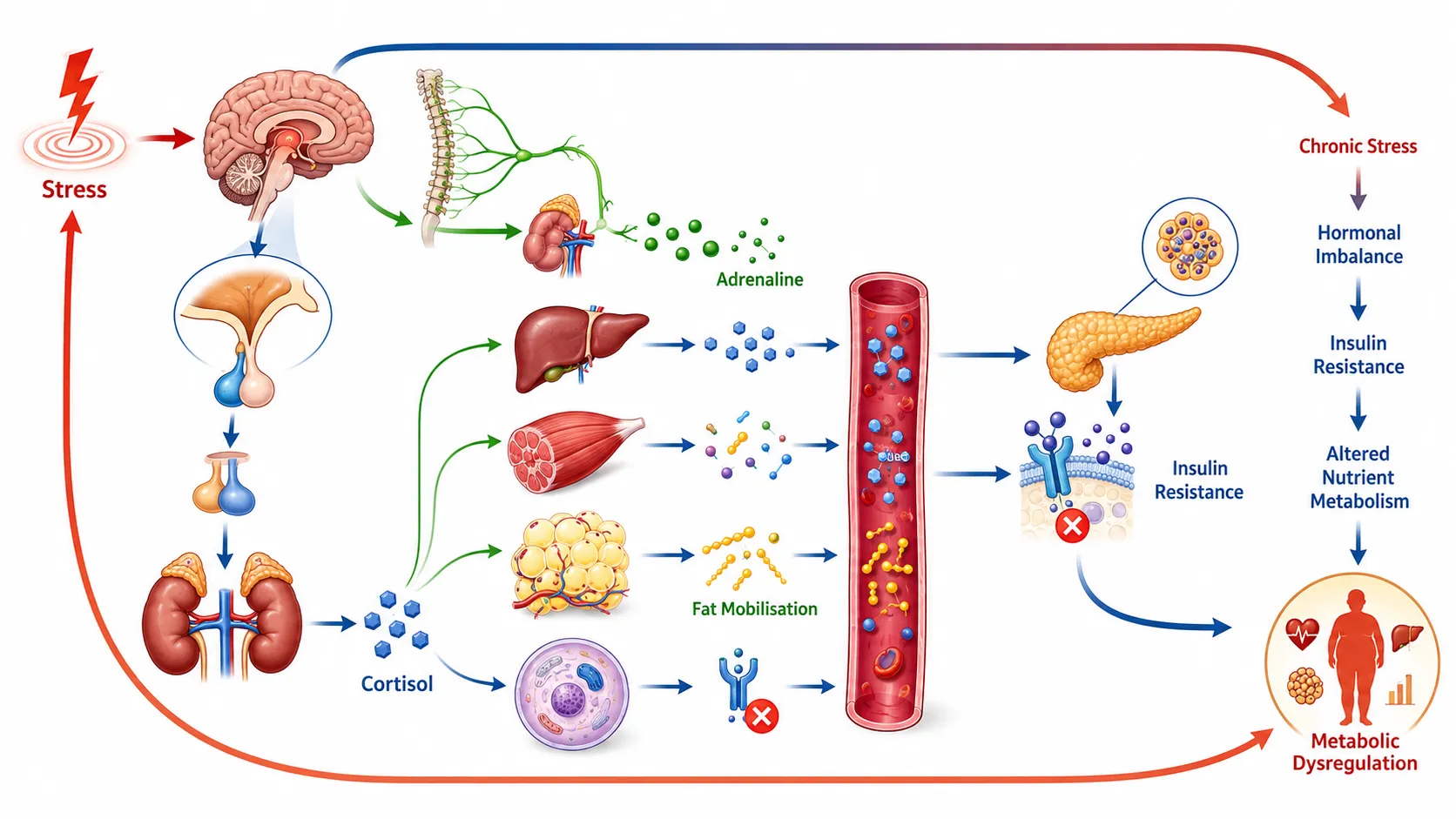
Lesson no 3: Evaluate hormonal and biochemical regulation of nutrient metabolism.
Introduction
The lesson, “Evaluate Hormonal and Biochemical Regulation of Nutrient Metabolism,” explores the complex regulatory systems that control how the human body processes, stores, mobilises and utilises nutrients to maintain metabolic homeostasis. Nutrient metabolism is not a series of isolated biochemical reactions; rather, it is a highly integrated process regulated by hormones, enzymes, cellular signalling pathways and feedback mechanisms. Understanding these regulatory processes is essential for explaining how the body responds to changing nutritional conditions, including the fed state, fasting, prolonged energy restriction, physical activity and periods of metabolic stress.
This lesson examines the major hormones involved in nutrient metabolism, including insulin, glucagon, cortisol, adrenaline and other regulatory signals that influence carbohydrate, lipid and protein metabolism. Learners will explore how these hormones coordinate metabolic activity in key tissues such as the liver, skeletal muscle and adipose tissue. Particular attention is given to the biochemical mechanisms through which hormonal signals regulate enzyme activity, gene expression, substrate availability and cellular energy production.
The lesson also investigates the relationship between hormonal regulation and major metabolic pathways. Learners will examine how insulin promotes nutrient uptake and storage following food intake, while glucagon and other counter-regulatory hormones support the mobilisation of energy during fasting or increased physiological demand. These processes demonstrate how the body maintains relatively stable blood glucose concentrations while ensuring that cells have access to appropriate energy substrates.
A critical aspect of the lesson is the evaluation of biochemical regulation at the molecular and cellular levels. This includes the role of enzymes, cofactors, allosteric regulation, phosphorylation and feedback inhibition in controlling the rate and direction of metabolic reactions. Learners will develop an understanding of how these mechanisms respond to changes in nutrient availability and hormonal signalling to prevent excessive energy expenditure or inappropriate nutrient storage.
The lesson further considers how disruptions in hormonal and biochemical regulation can contribute to metabolic dysfunction. Conditions involving impaired insulin signalling, abnormal hormone secretion or altered enzyme activity can significantly affect nutrient utilisation and long-term metabolic health. By analysing biochemical data, physiological responses and relevant scenarios, Learners will strengthen their ability to interpret complex interactions between hormones and metabolic pathways.
Throughout the lesson, emphasis is placed on the integration of theoretical knowledge with practical and professional application. Learners will evaluate nutritional and physiological situations, assess the effects of changing hormonal environments and apply biochemical principles to explain metabolic outcomes. This provides a strong foundation for advanced study in nutrition, physiology, biochemistry, healthcare and related scientific disciplines.
By the end of this lesson, Learners will be able to critically evaluate how hormonal signals and biochemical mechanisms work together to regulate nutrient metabolism. They will develop a deeper understanding of metabolic flexibility, energy balance and physiological adaptation, enabling them to interpret the complex regulatory processes that support human health and respond to changing nutritional and environmental demands.
1.Critically Evaluate the Primary Biochemical Mechanisms by Which Endocrine Hormones Control and Adjust the Metabolism of Major Dietary Nutrients
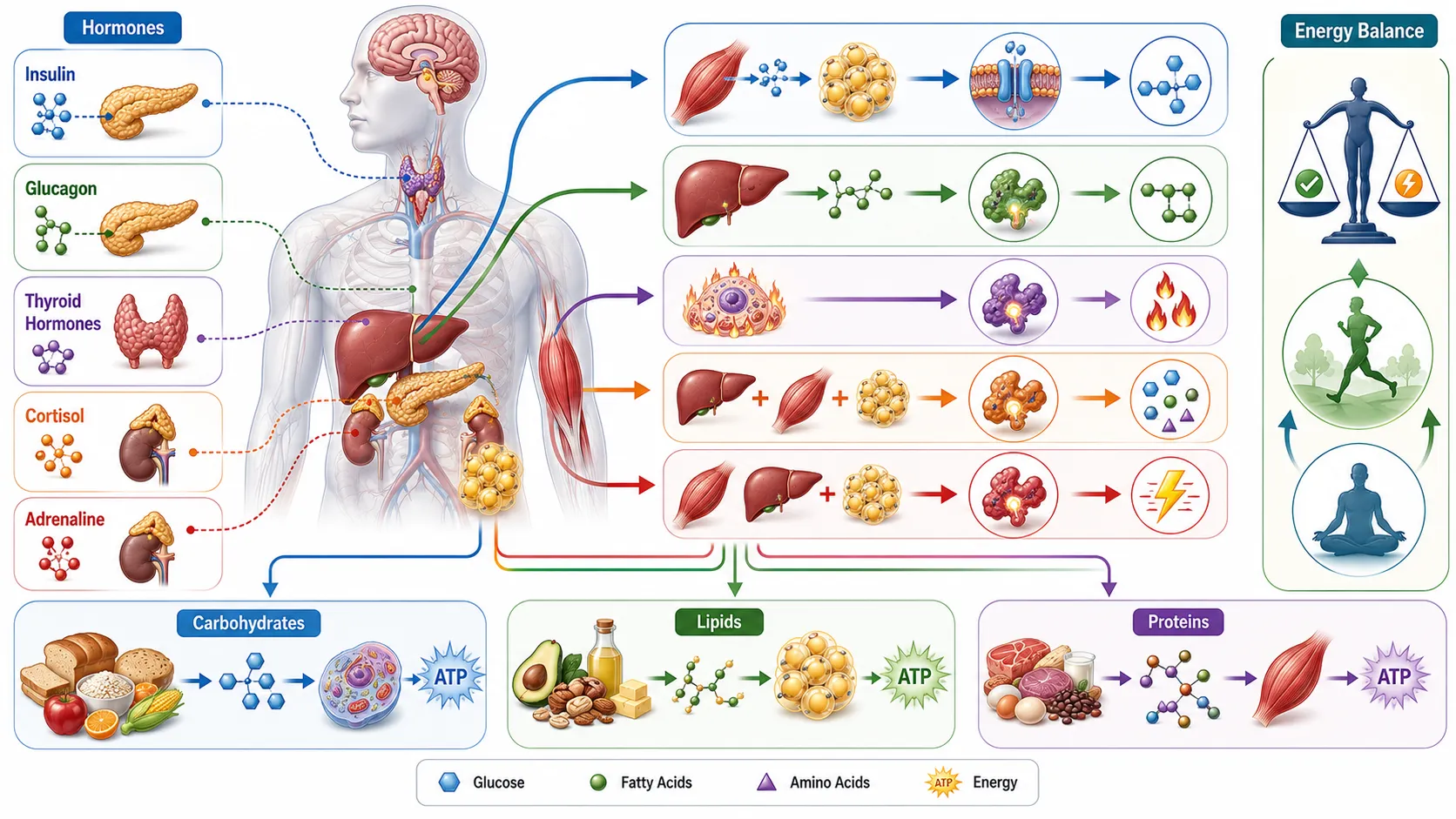
Endocrine hormones play a central role in maintaining metabolic homeostasis by coordinating the uptake, storage, mobilisation and utilisation of nutrients. The metabolism of carbohydrates, lipids and proteins must continuously adapt to changes in food intake, fasting, physical activity, stress and overall energy demand. This adaptation is achieved through an integrated network of hormonal signals, cellular receptors, intracellular signalling pathways and enzyme-regulatory mechanisms.
The primary endocrine hormones involved in nutrient metabolism include insulin, glucagon, adrenaline, cortisol and growth hormone. These hormones do not act independently. Instead, their relative concentrations, receptor sensitivity and interactions determine the metabolic response of tissues. The liver, skeletal muscle, adipose tissue and other metabolically active organs respond differently according to their specific receptors, enzyme systems and physiological roles.
A critical understanding of hormonal regulation requires examination beyond the simple statement that one hormone “lowers” or “raises” blood glucose. Hormones influence metabolism through biochemical mechanisms such as receptor binding, second-messenger signalling, protein phosphorylation and dephosphorylation, allosteric enzyme regulation, changes in membrane transport and altered gene expression.
Key Definitions and Concepts
Understanding endocrine control of metabolism requires familiarity with several fundamental biochemical concepts.
Endocrine Hormone
An endocrine hormone is a chemical messenger released by an endocrine gland or specialised tissue into the bloodstream. It travels to target cells and produces a biological response by binding to specific receptors.
Key characteristics include:
Release into the circulation.
Action on distant target tissues.
Dependence on specific hormone receptors.
Regulation through feedback mechanisms.
Effects that may be rapid or long-term.
Metabolic Homeostasis
Metabolic homeostasis refers to the maintenance of a relatively stable internal metabolic environment despite changes in nutrient intake and energy expenditure.
This involves regulation of:
Blood glucose concentration.
Fatty acid availability.
Amino acid utilisation.
Energy storage.
ATP production.
Nitrogen metabolism.
Long-term energy balance.
Hormonal Signalling
Hormonal signalling is the process through which a hormone communicates with a target cell. The hormone binds to a receptor and initiates biochemical events that modify cellular activity.
The general sequence can be represented as:
Hormone Release → Circulation → Receptor Binding → Intracellular Signal → Enzyme or Gene Regulation → Metabolic Response
Metabolic Flexibility
Metabolic flexibility is the ability of the body to adjust fuel utilisation according to nutrient availability and physiological demand.
For example:
After a carbohydrate-rich meal, the body increases glucose utilisation and storage.
During fasting, the body increases mobilisation of stored fuels.
During prolonged exercise, carbohydrate and lipid metabolism are adjusted according to intensity and duration.
Major Hormones and Their Primary Metabolic Functions
The regulation of nutrient metabolism depends on the coordinated activity of several hormones. Each hormone has distinct biochemical effects, although significant interaction occurs between hormonal systems.
| Hormone | Primary Source | Major Metabolic Role | Key Biochemical Effects |
|---|---|---|---|
| Insulin | Pancreatic beta cells | Promotes nutrient storage and utilisation | Increases glucose uptake, glycogen synthesis, lipogenesis and protein synthesis |
| Glucagon | Pancreatic alpha cells | Mobilises energy during fasting | Promotes glycogen breakdown, gluconeogenesis and fuel mobilisation |
| Adrenaline | Adrenal medulla | Supports rapid energy availability | Stimulates glycogen breakdown and lipolysis |
| Cortisol | Adrenal cortex | Supports metabolic adaptation to prolonged stress | Influences gluconeogenesis, protein metabolism and substrate mobilisation |
| Growth hormone | Pituitary gland | Supports growth and alters nutrient utilisation | Influences protein synthesis and lipid mobilisation |
This table provides a useful summary, but the metabolic effects of these hormones depend heavily on tissue type, nutritional state and the interaction of other regulatory mechanisms.
Insulin as a Central Regulator of Nutrient Storage and Utilisation
Insulin is one of the most important anabolic hormones involved in nutrient metabolism. It is released primarily in response to increased nutrient availability, particularly following a meal containing carbohydrates.
Its major metabolic purpose is to coordinate the use and storage of nutrients when they are readily available.
Biochemical Mechanism of Insulin Action
Insulin acts by binding to a specific receptor located on the surface of target cells. The insulin receptor is associated with intracellular signalling processes that activate a cascade of biochemical events.
The sequence broadly involves:
Insulin binding to its receptor.
Activation of intracellular signalling proteins.
Modification of enzyme activity.
Changes in nutrient transporter activity.
Alteration of metabolic pathway activity.
Longer-term effects on gene expression.
A particularly important consequence of insulin signalling is the regulation of glucose transport in insulin-responsive tissues.
Insulin and Cellular Glucose Uptake
In skeletal muscle and adipose tissue, insulin promotes the movement of glucose transport proteins towards the cell membrane. This increases the ability of these cells to take up glucose from the bloodstream.
The metabolic sequence is:
Increased Blood Glucose → Insulin Release → Receptor Activation → Intracellular Signalling → Increased Glucose Transport → Cellular Metabolism or Storage
This process is essential because glucose must enter cells before it can participate in many intracellular metabolic pathways.
Insulin and Carbohydrate Metabolism
Insulin promotes the use and storage of glucose.
Major effects include:
Increased cellular glucose uptake.
Increased glycolysis in appropriate tissues.
Increased glycogen synthesis.
Reduced glycogen breakdown under typical fed-state conditions.
Reduced hepatic glucose production.
Stimulation of Glycogenesis
Glycogenesis is the process through which glucose is converted into glycogen for storage.
Insulin supports glycogen formation particularly in:
The liver.
Skeletal muscle.
The biochemical significance of glycogen storage is that it provides a rapidly accessible carbohydrate reserve.
The liver uses glycogen primarily to support systemic glucose regulation, whereas skeletal muscle glycogen provides a local energy reserve for muscle activity.
Regulation Through Phosphorylation
Many metabolic enzymes are controlled through the addition or removal of phosphate groups.
Insulin commonly promotes metabolic conditions that favour:
Enzyme activation associated with nutrient storage.
Enzyme deactivation associated with unnecessary fuel mobilisation.
This demonstrates an important biochemical principle: hormones can regulate metabolism rapidly without requiring the immediate synthesis of new enzymes.
Insulin and Lipid Metabolism
Insulin has important effects on lipid storage and fatty acid metabolism.
When energy intake exceeds immediate requirements, insulin contributes to the storage of excess energy.
Key actions include:
Promoting fatty acid synthesis under suitable metabolic conditions.
Supporting triglyceride formation.
Reducing unnecessary mobilisation of stored fatty acids.
Encouraging energy storage within adipose tissue.
Lipogenesis
Lipogenesis refers to the synthesis of fatty acids and related storage molecules from available metabolic substrates.
A simplified sequence is:
Excess Nutrient Availability → Increased Insulin Signalling → Increased Biosynthetic Activity → Fatty Acid and Triglyceride Formation → Energy Storage
This process demonstrates how carbohydrate metabolism and lipid metabolism are biochemically interconnected.
Insulin and Protein Metabolism
Insulin also supports anabolic protein metabolism.
Its effects include:
Promoting amino acid uptake in relevant tissues.
Supporting protein synthesis.
Reducing excessive protein breakdown when energy and nutrients are available.
Protein metabolism differs from carbohydrate and lipid metabolism because the body does not possess a specialised storage form equivalent to glycogen or adipose triglyceride for excess amino acids.
Therefore, hormonal regulation of protein metabolism must balance:
Protein synthesis.
Tissue maintenance.
Amino acid utilisation.
Nitrogen disposal.
Glucagon and the Regulation of Fasting Metabolism
Glucagon generally acts to support energy availability when circulating nutrients are reduced.
Its physiological importance becomes particularly apparent during:
Fasting.
Overnight food deprivation.
Reduced carbohydrate availability.
Increased requirements for maintaining blood glucose.
Primary Biochemical Actions of Glucagon
Glucagon acts particularly on the liver to alter metabolic pathway activity.
Major actions include:
Stimulation of glycogen mobilisation.
Support for gluconeogenesis.
Adjustment of hepatic nutrient processing.
Promotion of metabolic conditions that maintain circulating glucose availability.
Glycogenolysis
Glycogenolysis is the breakdown of stored glycogen.
During fasting, reduced insulin signalling and increased counter-regulatory hormonal activity favour mobilisation rather than storage.
The sequence is:
Reduced Nutrient Availability → Increased Glucagon Influence → Activation of Glycogen Breakdown → Release of Glucose from Hepatic Stores → Support of Blood Glucose Homeostasis
This process is particularly important during the early stages of fasting.
Gluconeogenesis
When glycogen availability becomes reduced, the body can synthesise glucose from selected non-carbohydrate precursors.
This process is known as gluconeogenesis.
Potential precursors include:
Lactate.
Glycerol.
Certain amino acid-derived carbon skeletons.
Glucagon contributes to metabolic conditions that favour glucose production during reduced carbohydrate availability.
Critical Evaluation of Glucagon Action
Glucagon should not be considered simply the “opposite” of insulin in every tissue and circumstance.
A more accurate interpretation is that:
Insulin and glucagon have different primary physiological priorities.
Their effects depend on tissue-specific receptor expression.
Other hormones may modify the final metabolic response.
Enzyme activity and substrate availability influence pathway direction.
Therefore, hormonal regulation must be interpreted as a dynamic network rather than a simple two-hormone switch.
Adrenaline and Rapid Metabolic Adaptation
Adrenaline supports the rapid availability of metabolic fuel during situations requiring an immediate increase in energy supply.
These situations may include:
Acute physical activity.
Sudden physiological stress.
Increased energy demand.
Biochemical Mechanisms of Adrenaline Action
Adrenaline commonly acts through membrane receptors that activate intracellular second-messenger systems.
A major signalling mechanism involves changes in intracellular messenger concentrations that activate protein kinases.
This can result in:
Rapid phosphorylation of metabolic enzymes.
Increased glycogen breakdown.
Increased mobilisation of fatty acids.
Rapid adjustment of energy substrate availability.
Adrenaline and Glycogen Metabolism
In skeletal muscle, adrenaline can promote the mobilisation of glycogen to support local ATP production.
The pathway can be summarised as:
Adrenaline Signal → Receptor Activation → Second Messenger Formation → Enzyme Activation → Glycogen Breakdown → Glucose-Derived Energy Production
This is particularly important because hormonal regulation can rapidly modify enzyme activity without waiting for changes in gene expression.
Adrenaline and Lipid Mobilisation
Adrenaline can also contribute to the mobilisation of stored lipid.
The general process includes:
Hormonal stimulation of adipose tissue.
Activation of enzymes involved in triglyceride breakdown.
Release of fatty acids.
Transport of fatty acids to energy-demanding tissues.
Oxidation of fatty acids where metabolically appropriate.
This response contributes to metabolic flexibility during changing physiological demands.
Cortisol and Long-Term Metabolic Adaptation
Cortisol is a steroid hormone with important effects on metabolism, particularly during prolonged physiological stress.
Unlike some rapid peptide hormone responses, steroid hormones can exert significant effects through changes in gene expression.
Mechanism of Cortisol Action
Because cortisol is lipid-soluble, it can enter cells and interact with intracellular receptors.
The general process is:
Cortisol Entry into Cell → Receptor Binding → Regulation of Gene Transcription → Altered Protein and Enzyme Production → Modified Metabolic Capacity
This mechanism illustrates the difference between:
Rapid regulation of existing enzymes.
Longer-term regulation involving altered protein synthesis.
Metabolic Effects of Cortisol
Cortisol contributes to the regulation of:
Glucose metabolism.
Protein turnover.
Amino acid availability.
Energy substrate mobilisation.
Its effects can help maintain metabolic function during prolonged physiological challenges.
However, persistent dysregulation may contribute to adverse metabolic outcomes.
This highlights an important principle:
A hormone may be physiologically beneficial during short-term adaptation but potentially harmful when chronically elevated or poorly regulated.
Growth Hormone and Nutrient Metabolism
Growth hormone contributes to metabolic regulation in addition to its role in growth and tissue development.
Its metabolic effects may include:
Support for protein synthesis.
Influence on lipid mobilisation.
Modification of carbohydrate utilisation.
Growth hormone demonstrates that endocrine regulation is not organised into completely isolated pathways. Hormones involved in growth, stress and energy metabolism can have overlapping biochemical effects.
Hormonal Regulation of Carbohydrate Metabolism
Carbohydrate metabolism is tightly regulated because glucose availability is essential for many physiological functions.
Major Regulatory Processes
Hormones influence:
Glucose uptake.
Glycolysis.
Glycogenesis.
Glycogenolysis.
Gluconeogenesis.
Hepatic glucose output.
The direction of these processes depends on nutritional state.
The Fed State
After food intake, the metabolic environment generally favours:
Increased nutrient uptake.
Increased glucose utilisation.
Glycogen storage.
Biosynthetic processes.
Reduced mobilisation of stored fuels.
The Fasted State
During fasting, metabolic priorities change towards:
Maintaining blood glucose.
Mobilising stored energy.
Increasing the availability of alternative fuels.
Conserving glucose where appropriate.
Practical Example: Post-Meal Metabolic Regulation
Consider an individual who consumes a meal rich in carbohydrates.
The likely sequence is:
Digested carbohydrate increases circulating glucose.
Pancreatic endocrine responses adjust.
Insulin signalling increases.
Glucose uptake increases in insulin-responsive tissues.
Glycogen synthesis may increase.
Excess energy may be directed towards storage pathways.
This scenario demonstrates how a change in nutrient availability produces a coordinated endocrine and biochemical response.
Hormonal Regulation of Lipid Metabolism
Lipid metabolism must be carefully regulated because lipids provide an important long-term energy reserve.
Hormonal control influences:
Lipogenesis.
Lipolysis.
Fatty acid transport.
Fatty acid oxidation.
Triglyceride storage.
Fed-State Lipid Metabolism
When energy availability is high, the metabolic environment may favour:
Storage of energy.
Triglyceride synthesis.
Reduced mobilisation of stored fat.
Insulin is particularly important in promoting conditions associated with energy storage.
Fasted-State Lipid Metabolism
During reduced nutrient availability, the metabolic environment shifts towards mobilisation.
This may involve:
Breakdown of stored triglycerides.
Release of fatty acids.
Increased use of fatty acids by appropriate tissues.
Preservation of limited glucose availability.
Critical Evaluation
The use of lipids as metabolic fuel depends on more than hormone concentration alone.
Important factors include:
Duration of fasting.
Exercise intensity.
Tissue energy demand.
Mitochondrial capacity.
Carbohydrate availability.
Individual metabolic health.
Therefore, accurate metabolic evaluation requires consideration of the complete physiological context.
Hormonal Regulation of Protein Metabolism
Protein metabolism is regulated to maintain structural and functional tissues while providing metabolic flexibility.
Anabolic Regulation
Under conditions of nutrient availability, hormonal signals can support:
Amino acid uptake.
Protein synthesis.
Tissue repair.
Cellular growth.
Catabolic Regulation
During prolonged energy restriction or physiological stress, protein breakdown may increase.
This can provide amino acids for:
Glucose production.
Synthesis of essential proteins.
Other metabolic requirements.
However, excessive protein breakdown may have adverse consequences for lean tissue maintenance.
Nitrogen Metabolism
Amino acid metabolism differs from carbohydrate and lipid metabolism because amino acids contain nitrogen.
When amino acids are degraded:
The amino group must be managed safely.
Nitrogen-containing compounds require biochemical processing.
The liver plays a major role in converting toxic nitrogen into safer waste products.
Hormonal regulation therefore influences both:
Carbon skeleton utilisation.
Nitrogen disposal.
Biochemical Mechanisms of Hormonal Metabolic Regulation
Hormones regulate nutrient metabolism through several interconnected biochemical mechanisms.
Receptor Specificity
A hormone affects a cell only when the appropriate receptor and signalling machinery are present.
This explains why the same hormone may produce different effects in:
Liver tissue.
Skeletal muscle.
Adipose tissue.
Other organs.
Second-Messenger Systems
Many hormones act through intracellular signalling molecules.
These systems can:
Amplify hormonal signals.
Produce rapid responses.
Activate or inhibit enzymes.
Coordinate multiple metabolic pathways.
Protein Phosphorylation
Protein phosphorylation involves the addition of phosphate groups to proteins, often changing enzyme activity.
This can result in:
Enzyme activation.
Enzyme inhibition.
Changes in metabolic pathway rate.
Rapid adaptation to physiological conditions.
Dephosphorylation
Dephosphorylation removes phosphate groups and can reverse or modify regulatory effects.
Together, phosphorylation and dephosphorylation allow rapid metabolic control.
Allosteric Regulation
Although not exclusively hormonal, allosteric regulation works alongside endocrine signalling.
An enzyme may be regulated when a molecule binds to a site other than its active site.
This allows metabolism to respond directly to changes in:
ATP availability.
ADP levels.
AMP levels.
Metabolic intermediates.
Regulation of Gene Expression
Some hormonal effects occur over longer periods by influencing gene transcription and protein synthesis.
This may alter:
Enzyme quantity.
Transport protein production.
Metabolic capacity.
Long-term tissue adaptation.
The Integrated Control of Fed and Fasted States
The most important principle in endocrine regulation is integration.
The body must continuously assess:
Nutrient availability.
Energy requirements.
Hormonal signals.
Tissue demands.
Existing energy stores.
Major Features of the Fed State
The fed state generally involves:
Increased nutrient availability.
Increased insulin influence.
Enhanced nutrient utilisation.
Increased glycogen storage.
Increased biosynthetic activity.
Reduced dependence on stored energy reserves.
Major Features of the Fasted State
The fasted state generally involves:
Reduced circulating nutrient input.
Increased mobilisation of stored fuels.
Maintenance of essential blood glucose availability.
Increased reliance on lipid-derived energy in appropriate tissues.
Increased metabolic flexibility.
Comparison of Metabolic Priorities
A useful comparison includes:
Fed state: uptake, utilisation and storage.
Early fasting: glycogen mobilisation and glucose maintenance.
Prolonged fasting: increased reliance on stored lipid and alternative fuel pathways.
These stages are not completely separate. Instead, metabolism changes gradually according to the duration and severity of nutrient restriction.
Practical and Professional Applications
Understanding hormonal regulation has significant relevance in nutrition, healthcare and scientific practice.
Nutritional Assessment
Professionals may consider:
Meal patterns.
Macronutrient intake.
Energy balance.
Physical activity.
Indicators of metabolic dysfunction.
Relevant biochemical measurements.
Understanding hormonal regulation helps explain why individuals may respond differently to similar dietary patterns.
Exercise and Performance
During physical activity, hormonal and biochemical systems adjust nutrient availability.
Important considerations include:
Exercise duration.
Exercise intensity.
Glycogen availability.
Fatty acid mobilisation.
Recovery nutrition.
Fasting and Energy Restriction
During periods of reduced energy intake, the body undergoes predictable but highly individual metabolic adaptations.
These may include:
Reduced insulin signalling.
Increased mobilisation of energy stores.
Changes in glucose production.
Increased lipid utilisation.
Potential changes in protein metabolism.
Workplace Scenario
A nutrition professional is reviewing the metabolic needs of an individual who performs physically demanding work but frequently skips meals.
An appropriate biochemical evaluation would consider:
Variability in glucose availability.
Glycogen utilisation.
Hormonal responses to fasting.
Increased mobilisation of stored energy.
Timing and composition of meals.
Overall energy requirements.
The professional should avoid evaluating only total calorie intake because metabolic timing and physiological demand may also influence nutrient utilisation.
Critical Evaluation of Hormonal Interactions
A major limitation of simplified metabolic models is the assumption that each hormone controls a single pathway.
In reality:
Multiple hormones act simultaneously.
Hormones can have tissue-specific effects.
Nutrient concentrations influence enzyme activity directly.
Neural signals may interact with endocrine responses.
Metabolic intermediates provide additional feedback.
Physiological state determines the overall response.
Key Principles for Critical Evaluation
When evaluating hormonal regulation, consider:
Which hormone concentration has changed?
Which tissue is being examined?
What receptors are present?
Which intracellular signalling pathway is activated?
Which enzymes are modified?
What nutrients are currently available?
Is the individual in a fed, fasted or stressed state?
What is the duration of the physiological condition?
These questions promote a more advanced and scientifically accurate interpretation.
Key Benefits of Understanding Hormonal Metabolic Regulation
A detailed understanding of endocrine control provides several academic and professional benefits.
Learners can:
Explain how the body maintains metabolic homeostasis.
Interpret the difference between fed and fasted metabolism.
Understand how hormones regulate enzyme activity.
Analyse the interaction between carbohydrate, lipid and protein pathways.
Evaluate biochemical responses to exercise and fasting.
Interpret metabolic data more effectively.
Recognise how hormonal dysregulation may contribute to metabolic disturbance.
Apply biochemical principles to nutrition and healthcare scenarios.
Summary
The endocrine regulation of nutrient metabolism is a complex and highly coordinated biochemical process. Insulin, glucagon, adrenaline, cortisol and growth hormone contribute to the continuous adjustment of carbohydrate, lipid and protein metabolism according to nutrient availability and physiological demand. Their actions are mediated through specific receptors and intracellular signalling mechanisms that regulate enzyme activity, membrane transport, phosphorylation, gene expression and substrate mobilisation.
Insulin generally supports nutrient uptake, utilisation and storage during periods of nutrient abundance, whereas glucagon and other counter-regulatory hormones support energy mobilisation when nutrient availability decreases. Adrenaline enables rapid metabolic responses to immediate energy demands, while cortisol contributes to longer-term metabolic adaptation. These hormones interact with cellular biochemical mechanisms rather than functioning as isolated switches.
A critical evaluation of nutrient metabolism must therefore recognise that metabolic pathways are interconnected, tissue-specific and continuously responsive to changes in hormonal and nutritional conditions. By understanding these regulatory mechanisms, Learners can more accurately analyse metabolic adaptation, interpret physiological scenarios and apply biochemical knowledge to advanced study and professional practice in nutrition, healthcare and related scientific disciplines.
2.Analyse the Specific Physiological Roles of Insulin, Glucagon, and Other Key Regulatory Hormones in Maintaining Strict Cellular Energy Balance
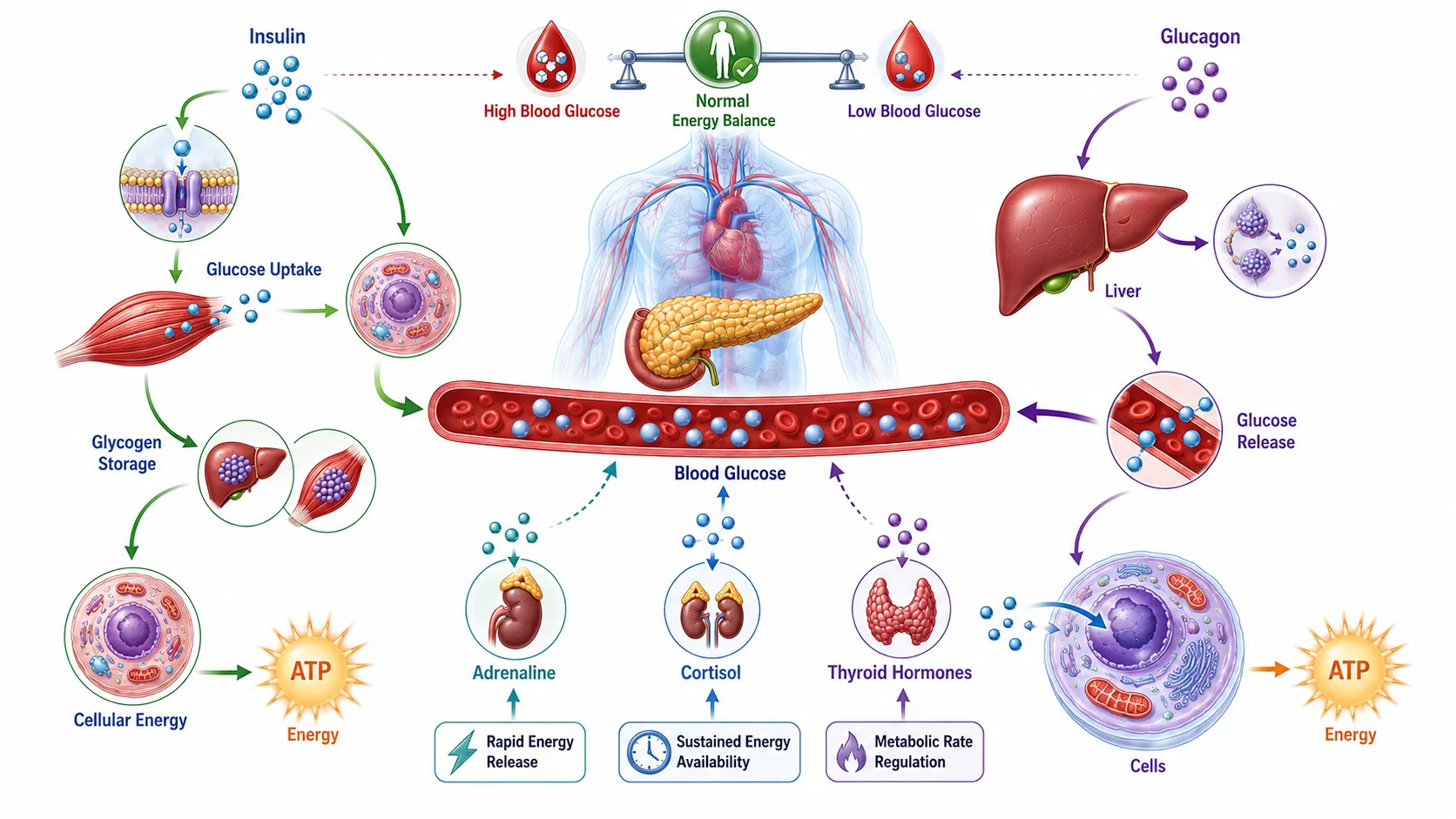
Cellular energy balance is essential for the survival, growth and normal functioning of the human body. Every cell requires a continuous supply of energy to support processes such as membrane transport, protein synthesis, muscle contraction, nerve signalling, cellular repair and biosynthetic activity. However, nutrient availability is not constant. Food intake occurs intermittently, physical activity changes energy demand, and periods of fasting or physiological stress require the body to adjust the use of available fuels. Hormonal regulation provides one of the most important mechanisms through which these changing conditions are coordinated.
Insulin, glucagon and several other regulatory hormones continuously influence the availability, uptake, storage and mobilisation of carbohydrates, lipids and proteins. Their collective action helps maintain a balance between energy intake, energy storage and energy expenditure. At the cellular level, hormonal signals influence nutrient transport, enzyme activity, mitochondrial metabolism, gene expression and the production of adenosine triphosphate (ATP).
Strict cellular energy balance does not mean that energy metabolism remains unchanged. Instead, it refers to the ability of cells and tissues to maintain an appropriate balance between energy supply and energy demand despite changing physiological conditions. This requires metabolic flexibility, hormonal coordination and continuous biochemical feedback.
Key Definitions and Concepts
Before analysing individual hormones, it is important to understand several key concepts associated with energy regulation.
Cellular Energy Balance
Cellular energy balance refers to the relationship between energy available to a cell and the energy required to perform cellular functions.
A stable balance requires:
Adequate nutrient availability.
Efficient nutrient transport.
Appropriate mitochondrial activity.
Continuous ATP generation.
Regulation of energy-consuming processes.
Adjustment to changing physiological demand.
When energy demand exceeds immediate nutrient availability, cells and tissues must access stored fuels or alter metabolic pathways.
ATP and Cellular Energy
ATP is the principal molecule used for immediate energy transfer within cells. Nutrients are metabolised through interconnected pathways that ultimately support ATP production.
Major dietary energy sources include:
Carbohydrates.
Lipids.
Proteins.
These nutrients differ in their storage capacity, metabolic pathways and speed of utilisation. Hormones help determine which substrate is preferentially used under different physiological conditions.
Metabolic Homeostasis
Metabolic homeostasis refers to the maintenance of stable internal conditions through coordinated physiological and biochemical regulation.
It includes control of:
Blood glucose.
Energy substrate availability.
Fat storage and mobilisation.
Amino acid metabolism.
ATP production.
Tissue energy supply.
Counter-Regulatory Hormones
Counter-regulatory hormones act to oppose or balance some of the effects of insulin, particularly during fasting, exercise or physiological stress.
Important examples include:
Glucagon.
Adrenaline.
Cortisol.
Growth hormone.
Their combined effects help prevent an inadequate supply of metabolic fuel during periods of reduced nutrient intake or increased energy demand.
Major Hormones Involved in Cellular Energy Balance
The regulation of energy metabolism involves several hormones with complementary and sometimes opposing physiological functions.
| Hormone | Primary Source | Main Physiological Role | Major Effect on Energy Balance |
|---|---|---|---|
| Insulin | Pancreatic beta cells | Promotes nutrient uptake and storage | Supports energy utilisation and storage after food intake |
| Glucagon | Pancreatic alpha cells | Maintains fuel availability during fasting | Promotes hepatic glucose production and fuel mobilisation |
| Adrenaline | Adrenal medulla | Supports rapid energy availability | Increases mobilisation of carbohydrate and lipid fuels |
| Cortisol | Adrenal cortex | Supports adaptation to prolonged stress | Influences glucose production and substrate mobilisation |
| Growth hormone | Anterior pituitary | Supports growth and alters fuel use | Promotes lipid mobilisation and influences protein metabolism |
| Thyroid hormones | Thyroid gland | Regulate metabolic activity | Influence basal metabolic rate and energy expenditure |
These hormones work within an integrated endocrine system. Their effects depend on their concentration, timing, tissue sensitivity and interaction with local biochemical conditions.
Insulin and the Maintenance of Cellular Energy Balance
Insulin is one of the most important hormones regulating the transition between nutrient availability and energy storage. It is released primarily by pancreatic beta cells in response to increased nutrient availability, especially after carbohydrate consumption.
The central physiological purpose of insulin is to ensure that nutrients entering the bloodstream can be effectively utilised or stored.
Insulin Release and Nutrient Availability
Following a meal, digestion and absorption increase the concentration of nutrients in the circulation.
The general sequence is:
Food Intake → Nutrient Digestion → Nutrient Absorption → Increased Blood Nutrients → Pancreatic Response → Insulin Release
Insulin signalling then helps coordinate the metabolic response of tissues.
Important outcomes include:
Increased glucose uptake in insulin-responsive tissues.
Increased glycogen formation.
Increased nutrient utilisation.
Promotion of lipid storage under energy-surplus conditions.
Support for protein synthesis.
Insulin and Glucose Uptake
Skeletal muscle and adipose tissue are important targets of insulin.
Insulin can stimulate intracellular signalling pathways that increase the availability of glucose transport proteins at the cell surface. This improves the ability of cells to take up glucose from the bloodstream.
The physiological importance of this process includes:
Providing cells with an energy substrate.
Supporting ATP production.
Reducing excessive circulating glucose.
Allowing glucose to be stored when immediate energy demand is low.
Practical Example
A Learner consumes a carbohydrate-rich meal before a period of rest.
The likely metabolic sequence includes:
Digestion produces absorbable glucose.
Blood glucose concentration rises.
Insulin secretion increases.
Skeletal muscle and adipose tissue increase glucose uptake.
Glucose is used for immediate energy or stored.
Excess energy may contribute to longer-term storage pathways.
This demonstrates how insulin links nutrient availability to cellular energy management.
Insulin and Glycogen Storage
When glucose is available in excess of immediate requirements, insulin promotes conditions favourable to glycogen synthesis.
Glycogen provides a relatively accessible carbohydrate reserve.
The main storage sites are:
Liver.
Skeletal muscle.
The physiological roles differ between these tissues.
Liver Glycogen
Liver glycogen contributes to the maintenance of systemic glucose availability.
During periods between meals:
Liver glycogen can be mobilised.
The liver helps support blood glucose regulation.
Hormonal changes influence the balance between storage and release.
Muscle Glycogen
Muscle glycogen primarily provides a local energy reserve.
It is particularly important during:
Physical activity.
Sustained muscle contraction.
Increased energy demand.
Insulin supports glycogen replenishment when carbohydrate availability is adequate.
Insulin and Lipid Metabolism
Insulin also plays a major role in controlling energy storage as lipid.
When energy availability is high, the body may convert excess energy into storage molecules.
Insulin supports:
Lipid synthesis under appropriate metabolic conditions.
Triglyceride formation.
Energy storage in adipose tissue.
Reduced unnecessary mobilisation of stored fatty acids.
This is important because lipid stores provide a concentrated and long-term energy reserve.
Insulin and Protein Metabolism
Protein metabolism also contributes to cellular energy balance, although proteins are not primarily specialised energy-storage molecules.
Insulin supports anabolic processes by promoting conditions favourable to:
Amino acid uptake.
Protein synthesis.
Tissue maintenance.
Cellular growth.
When adequate energy and nutrients are available, insulin can reduce the need for excessive protein breakdown.
Glucagon and Energy Availability During Fasting
Glucagon plays a major role in maintaining energy substrate availability when nutrient intake is reduced.
It is released primarily by pancreatic alpha cells.
Glucagon is particularly important during:
Overnight fasting.
Reduced carbohydrate intake.
Extended periods between meals.
Conditions requiring maintenance of blood glucose.
Primary Role of Glucagon
The primary physiological role of glucagon is not simply to “increase blood glucose.” A more complete interpretation is that glucagon helps coordinate the metabolic transition from nutrient storage towards fuel mobilisation.
Its major actions occur in the liver.
Glucagon can support:
Glycogen breakdown.
Glucose production through gluconeogenesis.
Altered hepatic nutrient processing.
Maintenance of circulating energy substrates.
Glucagon and Glycogenolysis
During early fasting, liver glycogen provides an important source of glucose.
The sequence can be represented as:
Reduced Nutrient Intake → Reduced Insulin Influence → Increased Glucagon Activity → Glycogen Breakdown → Increased Hepatic Glucose Availability
This helps maintain energy availability for tissues that require or preferentially utilise glucose.
Glucagon and Gluconeogenesis
As fasting continues and glycogen stores become less available, glucose can be synthesised from selected non-carbohydrate precursors.
These include:
Lactate.
Glycerol.
Certain amino acid-derived carbon skeletons.
Glucagon contributes to the metabolic environment that supports hepatic glucose production.
Critical Evaluation of Glucagon
It is scientifically inaccurate to assume that glucagon produces identical effects in every tissue.
Its actions depend on:
Receptor distribution.
Tissue-specific enzyme systems.
Nutritional state.
Other circulating hormones.
Substrate availability.
Therefore, glucagon should be understood as part of an integrated regulatory network.
The Insulin-to-Glucagon Relationship
One of the most important principles in metabolic regulation is the changing relationship between insulin and glucagon.
Rather than considering only the absolute concentration of each hormone, metabolic regulation is influenced by their relative balance.
Fed State
Following food intake:
Insulin influence generally increases.
Glucagon influence may decrease relative to insulin.
Nutrient uptake increases.
Energy storage pathways become more active.
Fuel mobilisation is generally reduced.
Fasted State
During fasting:
Insulin influence decreases.
Counter-regulatory hormonal effects become relatively more important.
Stored fuels are mobilised.
Hepatic glucose production is supported.
Metabolic flexibility increases.
Why the Hormonal Balance Matters
The insulin-to-glucagon relationship helps determine whether metabolism is directed towards:
Storage.
Utilisation.
Mobilisation.
New glucose production.
This balance is a central mechanism for maintaining energy availability across changing nutritional states.
Adrenaline and Rapid Energy Regulation
Adrenaline plays an important role when the body requires a rapid increase in energy availability.
It is particularly relevant during:
Acute exercise.
Sudden physical activity.
Immediate physiological stress.
Rapid increases in energy demand.
Biochemical Signalling Mechanism
Adrenaline binds to specific receptors on target cells.
This can activate intracellular second-messenger systems that produce rapid changes in enzyme activity.
The general sequence is:
Adrenaline → Receptor Activation → Intracellular Messenger → Protein Kinase Activation → Enzyme Modification → Fuel Mobilisation
This mechanism allows the body to respond rapidly without depending solely on new protein synthesis.
Adrenaline and Carbohydrate Availability
Adrenaline can stimulate metabolic processes that increase the availability of carbohydrate-derived fuel.
In skeletal muscle, this supports local energy production during increased activity.
Key effects may include:
Increased glycogen mobilisation.
Increased glycolytic activity under appropriate conditions.
Increased availability of substrates for ATP production.
Adrenaline and Lipid Mobilisation
Adrenaline can also promote the mobilisation of stored lipids.
The process broadly involves:
Hormonal stimulation of adipose tissue.
Activation of enzymes involved in triglyceride breakdown.
Release of fatty acids.
Transport of fatty acids to tissues.
Oxidation when energy demand and cellular capacity permit.
Practical Scenario
A physically active worker suddenly performs intense manual activity after several hours of limited food intake.
The body must rapidly coordinate:
Existing glucose availability.
Muscle glycogen mobilisation.
Fatty acid mobilisation.
Increased ATP production.
Adrenaline contributes to this rapid metabolic adjustment.
Cortisol and Longer-Term Energy Adaptation
Cortisol plays an important role in metabolic adaptation during prolonged physiological stress.
Unlike peptide hormones such as insulin and glucagon, cortisol is a steroid hormone and can influence cellular activity through intracellular receptors.
Mechanism of Cortisol Action
The general process involves:
Cortisol Entry into Cell → Intracellular Receptor Binding → Altered Gene Expression → Changes in Enzyme and Protein Production → Modified Metabolic Capacity
This mechanism can produce longer-term changes in metabolism.
Physiological Roles of Cortisol
Cortisol can influence:
Glucose metabolism.
Protein turnover.
Amino acid availability.
Energy substrate mobilisation.
During short-term physiological adaptation, these effects can support energy availability.
However, chronic elevation or dysregulation may contribute to metabolic disturbance.
Critical Principle
Hormonal effects must be evaluated according to:
Intensity.
Duration.
Physiological context.
Interaction with other hormones.
A short-term adaptive response may not produce the same outcome when maintained chronically.
Growth Hormone and Energy Substrate Regulation
Growth hormone contributes to energy balance while also supporting growth and tissue development.
Its metabolic effects can include:
Support for protein synthesis.
Promotion of lipid mobilisation.
Altered carbohydrate utilisation.
Growth hormone illustrates that endocrine regulation involves overlapping physiological roles rather than completely isolated systems.
Growth Hormone and Protein Metabolism
Growth and tissue repair require the coordinated use of amino acids.
Growth hormone contributes to conditions that support:
Tissue growth.
Protein synthesis.
Cellular repair.
This helps maintain the structural and functional capacity of the body.
Growth Hormone and Lipid Use
Growth hormone can influence the mobilisation and utilisation of lipid-derived fuels.
This may help preserve other substrates during particular physiological states.
Thyroid Hormones and Basal Energy Expenditure
Thyroid hormones influence the overall rate of metabolic activity in many tissues.
Their effects are particularly relevant to:
Basal metabolic rate.
Oxygen utilisation.
Mitochondrial activity.
Heat production.
General energy expenditure.
Physiological Significance
Cells must balance energy production with energy demand.
Thyroid hormones influence the rate at which many metabolic processes operate.
Changes in thyroid hormone activity can therefore affect:
Total energy expenditure.
Nutrient utilisation.
Thermogenesis.
Overall metabolic activity.
Hormonal Regulation of Carbohydrate Energy Balance
Carbohydrate metabolism is closely regulated because glucose availability must be maintained within an appropriate physiological range.
Hormonal regulation influences:
Cellular glucose uptake.
Glycolysis.
Glycogenesis.
Glycogenolysis.
Gluconeogenesis.
Hepatic glucose release.
The Fed State
After food intake, the metabolic environment generally favours:
Increased glucose uptake.
Increased glucose utilisation.
Glycogen storage.
Reduced reliance on stored energy.
Increased anabolic activity.
Insulin is a major regulator of this state.
Early Fasting
During the period between meals:
Insulin influence decreases.
Glucagon becomes relatively more important.
Liver glycogen can support blood glucose.
Stored energy begins to contribute more significantly.
Prolonged Fasting
During prolonged nutrient restriction:
Glycogen availability decreases.
Glucose production becomes increasingly important.
Lipid mobilisation increases.
Some tissues increase reliance on alternative fuels.
Protein metabolism may contribute substrates when required.
Hormonal Regulation of Lipid Energy Balance
Lipids provide a major source of long-term energy storage.
Hormones regulate the balance between:
Lipid storage.
Lipid mobilisation.
Fatty acid transport.
Fatty acid oxidation.
Storage Conditions
When nutrient availability exceeds immediate energy demand:
Insulin supports storage pathways.
Triglyceride synthesis may increase.
Adipose tissue stores excess energy.
Mobilisation Conditions
During fasting or increased energy demand:
Insulin influence decreases.
Counter-regulatory signals become more significant.
Stored triglycerides are mobilised.
Fatty acids become available to energy-demanding tissues.
Critical Evaluation
Fat mobilisation does not automatically mean that all released fatty acids will immediately be oxidised.
Actual utilisation depends on:
Tissue energy demand.
Mitochondrial capacity.
Oxygen availability.
Hormonal environment.
Duration of activity or fasting.
This distinction is important when analysing metabolic data.
Hormonal Regulation of Protein and Amino Acid Metabolism
Proteins serve primarily structural, functional and regulatory roles, but amino acids can also contribute to energy metabolism.
Hormonal regulation helps balance:
Protein synthesis.
Protein degradation.
Amino acid availability.
Nitrogen disposal.
Anabolic Conditions
When energy and nutrients are available:
Insulin supports protein synthesis.
Growth-related hormonal signals support tissue development.
Amino acids can be incorporated into body proteins.
Catabolic Conditions
During prolonged energy restriction or physiological stress:
Protein breakdown may increase.
Amino acids may become available for metabolic processes.
Nitrogen must be processed safely.
Carbon skeletons may enter energy-producing pathways.
Importance of Nitrogen Balance
Nitrogen balance provides an important indication of the relationship between nitrogen intake and nitrogen loss.
A balanced assessment considers:
Dietary protein intake.
Tissue protein turnover.
Physiological stress.
Energy availability.
Hormonal status.
Cellular Mechanisms Linking Hormones to Energy Balance
Hormones regulate metabolism through several major biochemical mechanisms.
Receptor Binding
A hormone must interact with an appropriate receptor to produce its biological effect.
Receptor distribution determines:
Which cells respond.
How strongly they respond.
Which signalling pathways are activated.
Second-Messenger Systems
Many hormones act through intracellular signalling molecules.
These systems can:
Amplify the hormonal signal.
Produce rapid metabolic changes.
Activate protein kinases.
Modify enzyme activity.
Protein Phosphorylation
Phosphorylation changes the activity of many proteins and enzymes.
Hormonal signalling can therefore rapidly alter:
Glycogen metabolism.
Lipid mobilisation.
Glucose utilisation.
Other metabolic processes.
Gene Expression
Some hormones produce longer-term changes by regulating gene expression.
This can alter:
Enzyme quantity.
Transport protein availability.
Metabolic capacity.
Cellular adaptation.
Feedback Regulation
Hormonal systems are controlled by feedback mechanisms.
For example, changes in nutrient availability can influence hormone release, while hormonal action subsequently modifies nutrient concentrations.
This creates a dynamic regulatory loop.
Integrated Regulation During Exercise
Exercise provides a useful example of strict cellular energy regulation.
During physical activity, energy demand increases rapidly.
The hormonal response may involve:
Increased adrenaline activity.
Changes in insulin influence.
Increased mobilisation of stored fuels.
Increased muscle glucose utilisation.
Increased fatty acid availability during prolonged activity.
Exercise Intensity Matters
Different forms of exercise create different metabolic demands.
Higher-intensity activity may involve greater reliance on rapidly available carbohydrate-derived fuel.
During prolonged lower-intensity activity:
Lipid-derived energy may contribute increasingly.
Hormonal regulation supports continued fuel availability.
Metabolic flexibility becomes particularly important.
Practical Example: Post-Meal Energy Regulation
Consider an individual who consumes a balanced meal containing carbohydrates, proteins and lipids.
The physiological sequence may include:
Nutrients are digested and absorbed.
Circulating nutrient concentrations increase.
Endocrine responses adjust to nutrient availability.
Insulin signalling supports nutrient uptake.
Glucose may be used immediately or stored.
Amino acids support protein synthesis.
Excess energy may contribute to lipid storage.
Cellular ATP requirements continue to determine immediate fuel utilisation.
This example demonstrates that energy balance depends on the coordination of multiple metabolic processes rather than a single hormone.
Practical Example: Overnight Fasting
During an overnight fast:
No new dietary nutrients enter the circulation.
Insulin influence gradually decreases.
Glucagon and other regulatory mechanisms support fuel availability.
Liver glycogen contributes to glucose maintenance.
Lipid mobilisation gradually becomes more important.
Metabolic pathways adjust to preserve essential cellular function.
The transition is gradual and highly regulated.
Workplace and Professional Applications
Understanding hormonal energy regulation is valuable in several professional areas.
Nutritional Assessment
A professional may assess:
Meal timing.
Energy intake.
Macronutrient distribution.
Physical activity.
Fasting patterns.
Indicators of metabolic dysfunction.
This helps provide a more complete interpretation of nutrient utilisation.
Healthcare Settings
Healthcare professionals may need to understand how:
Illness changes energy requirements.
Physiological stress alters hormonal regulation.
Nutrient intake influences metabolic responses.
Hormonal disturbances affect energy balance.
Sports and Exercise Environments
Professionals working with physically active individuals may consider:
Carbohydrate availability.
Glycogen status.
Duration of activity.
Recovery nutrition.
Energy requirements.
Example Scenario
A healthcare team evaluates an individual experiencing prolonged reduced food intake during recovery from a physically demanding condition.
A comprehensive assessment should consider:
Reduced insulin signalling associated with limited nutrient intake.
Increased reliance on stored energy.
Possible changes in protein metabolism.
Hormonal responses to physiological stress.
The need to restore appropriate nutrient availability safely.
This demonstrates the importance of evaluating the whole metabolic environment.
Key Benefits of Understanding Hormonal Energy Regulation
A detailed understanding of hormonal control provides several important benefits.
Learners can:
Explain how the body maintains energy availability.
Differentiate between fed and fasted metabolic states.
Analyse the physiological roles of insulin and glucagon.
Understand the contribution of stress-related hormones.
Interpret changes in carbohydrate, lipid and protein metabolism.
Evaluate exercise-related metabolic adaptation.
Apply biochemical knowledge to nutrition and healthcare scenarios.
Develop stronger clinical and scientific reasoning skills.
Critical Analysis of Hormonal Integration
A high-level understanding of energy regulation requires recognition that hormonal actions are not isolated.
Several factors influence the final metabolic response.
Nutrient Availability
The amount and type of nutrients available influence:
Hormone secretion.
Enzyme activity.
Substrate selection.
Energy storage.
Tissue-Specific Responses
Different tissues respond differently because they have:
Different hormone receptors.
Different enzyme systems.
Different physiological functions.
Different energy requirements.
Time Course of Hormonal Action
Hormones differ in the speed of their effects.
Some responses are rapid and involve:
Enzyme phosphorylation.
Transporter activation.
Second-messenger signalling.
Other responses occur more slowly through:
Changes in gene expression.
Enzyme synthesis.
Long-term cellular adaptation.
Interaction Between Hormones
The final metabolic response depends on hormonal interaction.
For example:
Insulin may favour nutrient storage.
Glucagon may support fuel mobilisation.
Adrenaline may rapidly increase energy availability.
Cortisol may influence longer-term substrate mobilisation.
Thyroid hormones influence overall metabolic activity.
Therefore, analysing one hormone in isolation may provide an incomplete explanation.
Summary
Insulin, glucagon and other regulatory hormones play essential physiological roles in maintaining strict cellular energy balance. Insulin primarily coordinates nutrient uptake, utilisation and storage during periods of nutrient availability, while glucagon supports energy substrate availability during fasting. Adrenaline enables rapid metabolic adaptation to increased energy demand, cortisol contributes to longer-term metabolic responses, growth hormone influences protein and lipid metabolism, and thyroid hormones affect the overall rate of energy expenditure.
These hormones regulate metabolism through receptor-mediated signalling, second messengers, phosphorylation, enzyme modification and changes in gene expression. Their actions influence the metabolism of carbohydrates, lipids and proteins while ensuring that cells receive appropriate energy substrates under changing physiological conditions.
The maintenance of cellular energy balance is therefore a dynamic and integrated process. The body continuously adjusts metabolic activity according to food intake, fasting, physical activity, stress and tissue-specific energy requirements. Understanding these hormonal relationships enables Learners to interpret complex metabolic processes, evaluate physiological scenarios and apply advanced biochemical knowledge within nutrition, healthcare, scientific and professional contexts.
3.Assess How Short-Term Dietary Changes and Long-Term Nutritional Habits Directly Influence the Hormonal Regulation of Nutrient Storage and Mobilisation
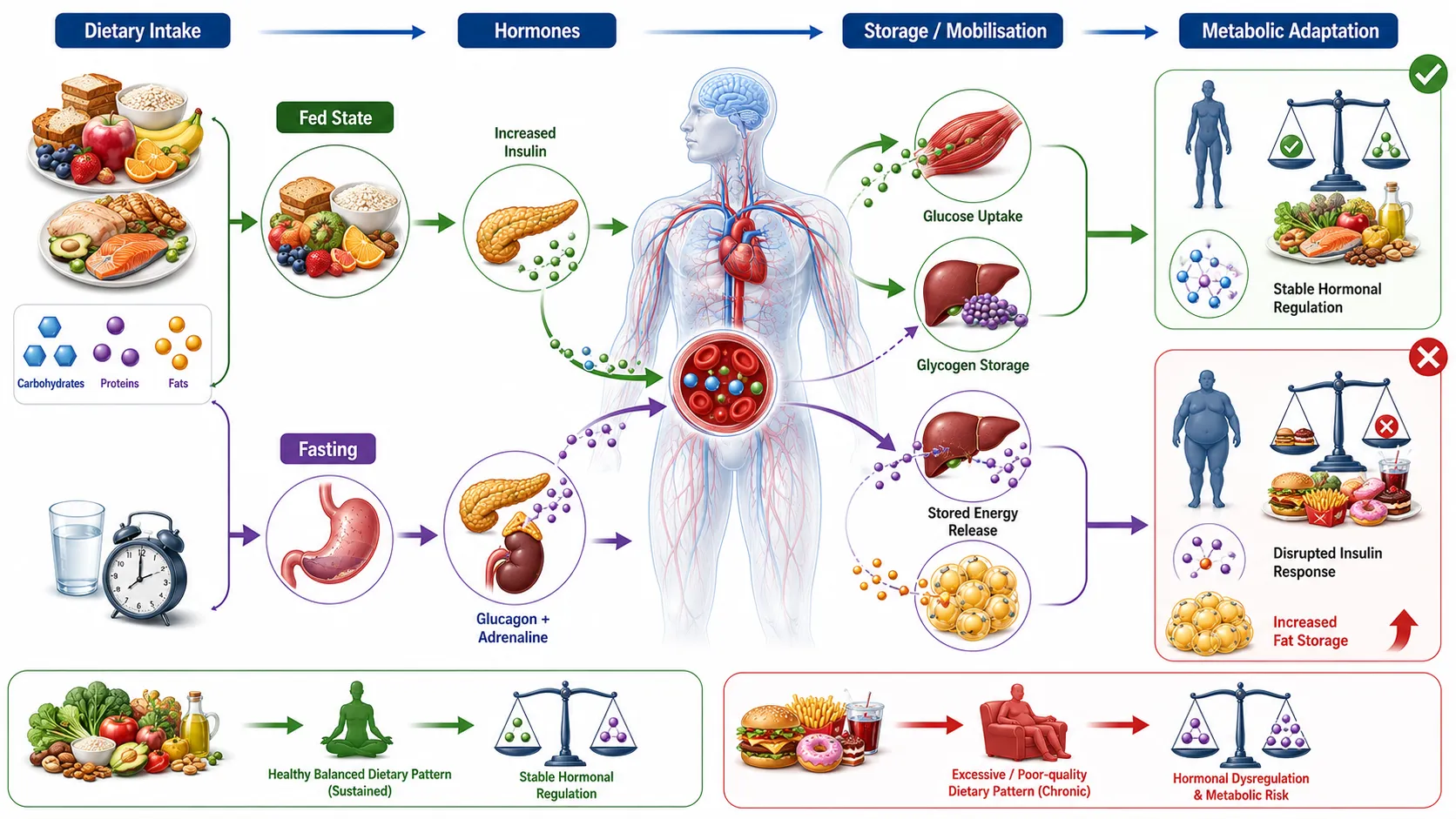
The hormonal regulation of nutrient storage and mobilisation is highly responsive to dietary intake. The human body must continuously adapt to changes in nutrient availability, meal composition, meal timing and total energy intake. Short-term dietary changes can produce rapid alterations in hormone secretion and metabolic activity within minutes or hours, whereas long-term nutritional habits can gradually influence hormone sensitivity, body composition, metabolic flexibility and the efficiency of nutrient storage and mobilisation.
Nutrient storage and mobilisation are essential components of metabolic homeostasis. Following food intake, the body must determine how much incoming energy should be used immediately and how much should be stored for future requirements. During fasting, exercise or reduced food availability, stored energy must be mobilised in a controlled manner. Hormones including insulin, glucagon, adrenaline, cortisol, growth hormone and thyroid hormones contribute to these adjustments.
A comprehensive assessment of dietary influences therefore requires more than simply identifying whether an individual consumes carbohydrates, proteins or lipids. It requires consideration of the quantity, quality, timing and long-term pattern of nutrient intake, together with physical activity, energy balance and individual metabolic characteristics.
Key Definitions and Concepts
Understanding the relationship between diet and hormonal regulation requires familiarity with several core concepts.
Nutrient Storage
Nutrient storage refers to the biochemical processes through which excess energy or nutrients are retained for later use.
The principal forms of energy storage include:
Glycogen stored mainly in the liver and skeletal muscle.
Triglycerides stored primarily in adipose tissue.
Proteins contained within functional and structural body tissues.
The body has limited capacity to store carbohydrate as glycogen but a much greater capacity to store energy as triglycerides.
Nutrient Mobilisation
Nutrient mobilisation refers to the release of stored energy substrates when immediate dietary intake does not meet physiological demand.
Mobilisation may involve:
Breakdown of liver glycogen.
Release of glucose into the circulation.
Breakdown of triglycerides.
Release of fatty acids from adipose tissue.
Increased utilisation of amino acids under specific catabolic conditions.
Short-Term Dietary Changes
Short-term dietary changes are temporary alterations in food intake that influence metabolism over minutes, hours or days.
Examples include:
Consuming a carbohydrate-rich meal.
Skipping a meal.
Undertaking a short period of fasting.
Increasing protein intake for several days.
Consuming a high-fat meal.
Changing meal timing.
These changes can rapidly alter hormonal signalling.
Long-Term Nutritional Habits
Long-term nutritional habits refer to consistent patterns of dietary intake maintained over weeks, months or years.
They may influence:
Body composition.
Insulin sensitivity.
Adipose tissue distribution.
Hormonal responsiveness.
Energy expenditure.
Metabolic flexibility.
Metabolic Flexibility
Metabolic flexibility is the capacity of the body to adjust fuel selection according to nutrient availability and energy demand.
A metabolically flexible system can efficiently shift between:
Carbohydrate utilisation after meals.
Glycogen utilisation during increased activity.
Fat oxidation during prolonged fasting or lower-intensity activity.
Major Dietary Influences on Hormonal Regulation
The hormonal response to food depends on several dietary characteristics.
| Dietary Factor | Major Hormonal Response | Effect on Storage and Mobilisation | Physiological Significance |
|---|---|---|---|
| Carbohydrate-rich meal | Increased insulin response | Promotes glucose uptake and glycogen storage | Supports post-meal energy management |
| Prolonged fasting | Reduced insulin and relative increase in glucagon activity | Promotes glycogen and lipid mobilisation | Maintains energy availability |
| High-protein intake | Influences insulin and glucagon responses | Supports amino acid metabolism and protein turnover | Helps regulate nutrient handling |
| High-fat energy intake | Influences storage and substrate use | Can increase lipid storage during sustained energy surplus | Provides concentrated energy |
| Chronic energy surplus | Persistent storage-promoting signals | Increases long-term energy storage | May alter metabolic regulation |
| Chronic energy restriction | Increased reliance on stored fuels | Promotes mobilisation but may alter adaptive energy expenditure | Supports survival during limited intake |
| Irregular meal timing | Variable hormonal patterns | May affect nutrient handling depending on context | Can influence metabolic organisation |
| Balanced long-term intake | More stable hormonal regulation | Supports appropriate storage and mobilisation | Helps maintain metabolic homeostasis |
Short-Term Dietary Changes and Immediate Hormonal Responses
Short-term dietary changes can alter metabolism rapidly because the endocrine system responds continuously to changing nutrient concentrations.
Following food consumption, the body must process incoming nutrients and coordinate their distribution.
The general sequence is:
Food Intake → Digestion → Absorption → Change in Circulating Nutrients → Hormonal Response → Enzyme Regulation → Nutrient Utilisation or Storage
During periods without food intake, the direction changes:
Reduced Nutrient Intake → Reduced Storage Signals → Counter-Regulatory Hormonal Activity → Stored Fuel Mobilisation → Continued Energy Supply
The Hormonal Response to a Carbohydrate-Rich Meal
Carbohydrate consumption commonly produces an increase in circulating glucose after digestion and absorption. The endocrine system responds by adjusting insulin secretion.
Insulin supports the movement and processing of glucose within the body.
Key short-term effects include:
Increased glucose uptake by insulin-responsive tissues.
Increased glycogen synthesis when capacity is available.
Increased glucose utilisation for ATP production.
Reduced unnecessary hepatic glucose output.
Reduced mobilisation of stored fatty acids under appropriate conditions.
The magnitude of the response can depend on:
Amount of carbohydrate consumed.
Rate of digestion.
Food structure.
Fibre content.
Presence of other macronutrients.
Individual insulin sensitivity.
Practical Example: Rapid Post-Meal Response
Consider an individual who consumes a meal containing rapidly digestible carbohydrates after several hours without food.
The likely sequence includes:
Carbohydrates are digested into absorbable sugars.
Glucose enters the circulation.
Pancreatic insulin secretion increases.
Insulin-responsive tissues increase glucose uptake.
Glucose is used to produce ATP.
Surplus glucose may contribute to glycogen restoration.
Mobilisation of some stored fuels is reduced.
This demonstrates the rapid transition from a mobilisation-oriented state towards a storage-oriented state.
Short-Term Fasting and Hormonal Mobilisation
When food intake stops temporarily, the body must maintain energy availability using internal reserves.
The immediate metabolic priority is not to eliminate all stored energy but to regulate its controlled release.
Early Fasting
During early fasting:
Insulin secretion generally decreases.
Glucagon becomes relatively more influential.
Liver glycogen becomes an important glucose source.
Energy mobilisation gradually increases.
The body shifts from using recently absorbed nutrients towards using stored substrates.
Glycogen Mobilisation
The liver contains glycogen that can contribute to the maintenance of circulating glucose.
The process can be simplified as:
Reduced Dietary Glucose → Hormonal Adjustment → Hepatic Glycogen Breakdown → Increased Glucose Availability
Muscle glycogen has a different physiological role because it primarily supports local muscle energy requirements.
Lipid Mobilisation During Longer Food Restriction
As the period without food extends, stored triglycerides become increasingly important.
Hormonal changes contribute to:
Activation of lipolytic processes.
Release of fatty acids.
Increased fatty acid transport.
Greater reliance on lipid oxidation in appropriate tissues.
The degree of lipid utilisation depends on:
Duration of fasting.
Physical activity.
Energy requirements.
Hormonal environment.
Individual metabolic characteristics.
The Role of Meal Timing in Hormonal Regulation
Meal timing can influence the pattern of hormonal exposure across the day.
The body does not respond to nutrients in isolation from time and behavioural patterns. Feeding and fasting cycles influence the transition between storage and mobilisation.
Regular Feeding Patterns
Consistent meal timing may support predictable metabolic transitions between:
Post-meal nutrient storage.
Inter-meal energy utilisation.
Overnight mobilisation of stored fuels.
Potential advantages include:
More predictable nutrient availability.
Coordinated feeding and fasting periods.
Easier matching of intake with energy demand.
Irregular Meal Patterns
Highly irregular food intake may produce variable hormonal responses.
Possible effects can include:
Larger differences between feeding and fasting periods.
Unpredictable nutrient availability.
Altered appetite-related responses.
Changes in energy intake behaviour.
However, irregularity alone does not automatically determine metabolic health. Total dietary quality, energy balance, sleep, activity and individual characteristics must also be considered.
Macronutrient Composition and Hormonal Responses
Different macronutrients stimulate different physiological responses.
Carbohydrates
Carbohydrates have a major influence on post-meal glucose and insulin dynamics.
Important factors include:
Type of carbohydrate.
Amount consumed.
Digestive rate.
Fibre content.
Food matrix.
Combined intake with protein and fat.
A rapidly absorbed carbohydrate source may produce a different metabolic response from a carbohydrate-rich whole food containing substantial fibre.
Proteins
Protein consumption influences amino acid availability and several hormonal responses.
Protein intake contributes to:
Protein synthesis.
Tissue maintenance.
Enzyme production.
Hormone production.
Amino acid metabolism.
Short-term metabolic effects may include changes in both insulin and glucagon signalling depending on the nutritional context.
Key Considerations
The metabolic response to protein depends on:
Amino acid composition.
Total protein intake.
Energy balance.
Carbohydrate intake.
Physical activity.
Individual physiological requirements.
Lipids
Dietary lipids provide concentrated energy and contribute to structural and regulatory functions.
The hormonal response to lipid intake depends on:
Quantity of dietary fat.
Type of fatty acids.
Total energy intake.
Meal composition.
Duration of the dietary pattern.
Lipids can contribute to long-term energy storage when energy intake consistently exceeds expenditure.
Energy Surplus and Storage-Promoting Hormonal Patterns
A short-term increase in energy intake does not necessarily produce long-term metabolic dysfunction. The body is capable of storing additional nutrients and adjusting energy utilisation.
However, sustained energy surplus can gradually alter metabolic regulation.
Acute Energy Surplus
Following a single high-energy meal:
Nutrient availability increases.
Insulin and other post-meal signals respond.
Glycogen storage may increase.
Some nutrients may be oxidised.
Excess energy may be directed towards storage.
The body can manage temporary changes without necessarily producing long-term metabolic consequences.
Chronic Energy Surplus
When energy intake consistently exceeds energy expenditure, long-term storage may increase.
Potential physiological changes include:
Increased adipose tissue mass.
Changes in adipose tissue signalling.
Altered insulin responsiveness.
Increased metabolic demand on nutrient-processing systems.
Changes in circulating lipid metabolism.
Critical Assessment
Chronic energy surplus should not be assessed only by examining a single hormone concentration.
A comprehensive evaluation should consider:
Body composition.
Energy expenditure.
Physical activity.
Dietary quality.
Duration of energy surplus.
Tissue-specific insulin sensitivity.
Genetic and environmental factors.
Long-Term Nutritional Habits and Insulin Sensitivity
One of the most significant long-term influences of dietary patterns is their potential effect on insulin sensitivity.
Insulin sensitivity describes how effectively target tissues respond to insulin.
Appropriate Insulin Sensitivity Supports
Efficient glucose uptake.
Appropriate regulation of hepatic glucose production.
Coordinated nutrient storage.
Reduced need for excessive insulin secretion.
Factors Associated with Long-Term Changes
Long-term metabolic patterns may be influenced by:
Sustained energy imbalance.
Changes in adipose tissue mass.
Physical inactivity.
Dietary composition.
Sleep patterns.
Chronic stress.
Genetic susceptibility.
Diet is therefore one important component of a broader metabolic environment.
Practical Scenario
An individual consistently consumes energy beyond their physiological requirements while maintaining very low physical activity.
Over time, assessment may identify:
Increased energy storage.
Changes in body composition.
Greater metabolic demand for nutrient regulation.
Potential alterations in insulin responsiveness.
A professional assessment should avoid assuming that one food or nutrient alone is responsible. The entire long-term pattern must be evaluated.
Long-Term Nutritional Habits and Glucagon-Mediated Mobilisation
Long-term dietary habits can also influence how effectively the body transitions into periods of nutrient mobilisation.
The capacity to move between storage and mobilisation depends partly on metabolic flexibility.
A balanced long-term metabolic pattern supports the ability to:
Store energy when nutrients are available.
Access glycogen when required.
Mobilise fatty acids during reduced intake.
Adjust fuel use during exercise.
Reduced Metabolic Flexibility
Reduced flexibility may make it more difficult for the body to efficiently shift between fuel sources.
Potential influences include:
Long-term physical inactivity.
Chronic energy imbalance.
Altered insulin responsiveness.
Changes in mitochondrial function.
Changes in body composition.
This demonstrates why dietary assessment should consider not only what is consumed but how the body adapts over time.
Dietary Fibre and Hormonal Regulation
Dietary fibre can influence nutrient absorption patterns and post-meal metabolic responses.
Fibre-rich foods may influence:
Rate of carbohydrate absorption.
Post-meal glucose patterns.
Gastrointestinal function.
Satiety-related signalling.
Interactions with the gut microbiome.
Physiological Importance
A slower and more gradual nutrient absorption pattern may produce different hormonal responses compared with rapidly absorbed nutrients.
However, the effect depends on:
Type of fibre.
Total dietary composition.
Food processing.
Individual gastrointestinal function.
The Gut and Appetite-Related Hormonal Signals
The gastrointestinal system contributes actively to hormonal regulation.
Food entering the digestive system stimulates signals that influence:
Appetite.
Satiety.
Gastric emptying.
Insulin release.
Nutrient utilisation.
These signals provide an important link between dietary behaviour and endocrine regulation.
Key Functional Effects
Gastrointestinal hormonal signals can help coordinate:
The rate of nutrient delivery.
Post-meal insulin responses.
Appetite regulation.
Energy intake.
This demonstrates that nutrient storage and mobilisation are influenced by more than pancreatic hormones alone.
Long-Term Dietary Quality and Hormonal Health
The quality of a long-term dietary pattern can influence the metabolic environment.
A nutritionally balanced pattern generally provides:
Adequate essential nutrients.
Appropriate energy intake.
Sufficient dietary fibre.
A variety of nutrient sources.
Macronutrients matched to physiological requirements.
Potential Benefits
Appropriate long-term dietary habits may support:
More stable energy regulation.
Healthy body composition.
Appropriate nutrient storage.
Effective mobilisation during fasting or activity.
Improved metabolic flexibility.
Critical Perspective
No single dietary pattern is universally appropriate for every individual.
Nutritional requirements depend on:
Age.
Physical activity.
Physiological state.
Health status.
Energy expenditure.
Cultural dietary practices.
Individual metabolic characteristics.
Professional nutritional strategies should therefore be individualised.
Prolonged Energy Restriction and Hormonal Adaptation
Long-term energy restriction can produce significant hormonal and metabolic adaptations.
Initially, reduced energy intake increases reliance on stored substrates.
However, prolonged restriction may also influence:
Resting energy expenditure.
Appetite regulation.
Thyroid hormone activity.
Stress-related hormonal responses.
Protein turnover.
Adaptive Energy Regulation
The body may adjust energy expenditure when nutrient availability remains reduced.
This demonstrates an important physiological principle: the metabolic response to dietary restriction is dynamic rather than constant.
Nutritional Assessment Considerations
When evaluating prolonged energy restriction, professionals should consider:
Duration of restriction.
Severity of energy deficit.
Protein intake.
Micronutrient adequacy.
Physical activity.
Changes in body composition.
Dietary Habits and Adipose Tissue as an Endocrine Organ
Adipose tissue is not simply an inactive storage location.
It has endocrine and metabolic functions that influence whole-body energy regulation.
Changes in adipose tissue quantity and distribution can influence:
Hormonal signalling.
Appetite regulation.
Inflammatory processes.
Lipid mobilisation.
Insulin responsiveness.
Long-Term Energy Storage
When energy intake consistently exceeds expenditure:
Excess energy becomes available.
Storage pathways become repeatedly activated.
Adipose tissue stores additional triglycerides.
Adipose tissue characteristics may gradually change.
Metabolic signalling may be altered.
This highlights the connection between long-term dietary habits and endocrine regulation.
Hormonal Regulation During Exercise and Dietary Change
Physical activity changes the hormonal context of nutrient metabolism.
The effect of a dietary change should therefore be interpreted alongside energy expenditure.
Exercise Following Food Intake
After a meal, exercise may increase:
Muscle energy demand.
Glucose uptake by muscle.
Glycogen utilisation.
ATP turnover.
Exercise During Reduced Food Intake
When exercise occurs during fasting or limited nutrient intake:
Stored fuels become increasingly important.
Hormonal mobilisation signals support substrate availability.
The relative contribution of carbohydrate and lipid fuels depends on intensity and duration.
Practical Example
An endurance athlete temporarily increases carbohydrate intake before a prolonged activity period.
The potential physiological purpose includes:
Supporting glycogen availability.
Increasing accessible carbohydrate stores.
Providing fuel for sustained energy demand.
The effectiveness depends on:
Activity type.
Duration.
Individual requirements.
Total dietary pattern.
Assessing Short-Term Dietary Changes
A structured assessment of short-term dietary effects should consider several stages.
Step 1: Identify the Dietary Change
Determine:
What changed?
How much changed?
When did the change occur?
How long has it continued?
Step 2: Identify the Main Nutrient Response
Assess whether the change primarily affects:
Glucose availability.
Amino acid availability.
Lipid availability.
Total energy availability.
Step 3: Predict Hormonal Changes
Consider likely changes involving:
Insulin.
Glucagon.
Appetite-related signals.
Adrenaline during increased energy demand.
Cortisol during prolonged physiological stress.
Step 4: Assess Storage and Mobilisation
Evaluate whether the metabolic state is likely to favour:
Glycogen storage.
Lipid storage.
Glucose utilisation.
Glycogen mobilisation.
Lipid mobilisation.
Step 5: Consider Individual Context
The response may differ according to:
Physical activity.
Body composition.
Health status.
Duration of dietary change.
Baseline dietary pattern.
Assessing Long-Term Nutritional Habits
Long-term assessment requires a broader approach.
Important Assessment Areas
A comprehensive evaluation may include:
Total energy intake over time.
Macronutrient distribution.
Food quality and dietary diversity.
Meal timing.
Dietary consistency.
Physical activity.
Body composition.
Relevant biochemical indicators where appropriate.
Why Long-Term Patterns Matter
A single meal produces a temporary metabolic response.
A repeated dietary pattern can gradually influence:
Hormonal sensitivity.
Storage capacity.
Metabolic flexibility.
Body composition.
Energy expenditure.
This distinction is essential when assessing nutritional outcomes.
Practical Scenario: Short-Term High-Carbohydrate Intake
A physically active individual temporarily increases carbohydrate intake before an event requiring prolonged energy expenditure.
The expected hormonal and metabolic effects may include:
Increased insulin signalling after carbohydrate consumption.
Increased glucose uptake.
Increased glycogen synthesis when storage capacity is available.
Greater availability of carbohydrate-derived energy.
The professional assessment should consider whether the dietary strategy matches the planned activity.
Practical Scenario: Prolonged High-Energy Intake
An office-based worker maintains a high-energy dietary pattern for several years while remaining physically inactive.
Potential long-term consequences may include:
Increased energy storage.
Increased adipose tissue mass.
Changes in metabolic signalling.
Increased demand on insulin-mediated regulation.
Potential reduction in metabolic flexibility.
The appropriate response requires a comprehensive assessment rather than focusing on a single nutrient.
Practical Scenario: Intermittent Meal Skipping
An individual frequently skips meals and then consumes very large meals later in the day.
The assessment should consider:
Duration of fasting periods.
Hormonal transitions between mobilisation and storage.
Total energy intake.
Nutrient quality.
Appetite regulation.
Individual activity patterns.
The outcome may vary considerably depending on the overall dietary and lifestyle context.
Key Benefits of Understanding Dietary Effects on Hormonal Regulation
A detailed understanding of this topic enables Learners to:
Explain the hormonal response to feeding and fasting.
Differentiate between short-term and long-term metabolic adaptation.
Assess the effect of carbohydrate, protein and lipid intake.
Understand the relationship between energy surplus and storage.
Analyse how fasting promotes nutrient mobilisation.
Evaluate the importance of meal timing.
Apply metabolic principles to exercise and workplace scenarios.
Develop evidence-based nutritional strategies.
Critical Evaluation of Cause and Effect
When analysing the influence of diet on hormones, it is important to avoid overly simple conclusions.
A dietary factor may influence hormonal regulation, but the final physiological outcome depends on multiple interacting variables.
Important Influencing Factors
These include:
Total energy balance.
Macronutrient composition.
Food processing.
Dietary fibre.
Meal timing.
Physical activity.
Sleep.
Stress.
Body composition.
Genetic variation.
Duration of exposure.
Correlation and Causation
Changes observed alongside a dietary pattern do not automatically prove that a single dietary component caused the hormonal change.
A robust assessment should:
Identify potential mechanisms.
Consider alternative explanations.
Examine duration and consistency.
Evaluate individual characteristics.
Interpret evidence within its physiological context.
Integrating Storage and Mobilisation Across Nutritional States
The body continuously alternates between periods of nutrient storage and nutrient mobilisation.
Following Food Intake
The general metabolic direction is:
Nutrient Availability → Hormonal Storage Signals → Cellular Uptake → Immediate Utilisation → Glycogen or Lipid Storage
Between Meals
The general transition is:
Reduced Nutrient Availability → Decreased Insulin Influence → Increased Relative Mobilisation Signals → Use of Stored Substrates
During Prolonged Fasting
The metabolic sequence increasingly involves:
Reduced Glycogen Availability → Increased Lipid Mobilisation → Greater Reliance on Alternative Energy Sources → Conservation of Essential Functions
During Long-Term Nutritional Adaptation
Repeated dietary behaviour can gradually influence:
Hormonal sensitivity.
Fuel preference.
Energy storage.
Metabolic flexibility.
Physiological adaptation.
Professional and Workplace Applications
Knowledge of hormonal nutrient regulation is relevant to a range of professional environments.
Nutrition and Dietary Planning
Professionals can use this knowledge to assess:
Meal composition.
Timing of nutrient intake.
Energy requirements.
Exercise demands.
Long-term dietary patterns.
Healthcare and Clinical Support
Healthcare settings may require consideration of:
Changes in nutrient intake during illness.
Effects of prolonged reduced appetite.
Altered energy requirements.
Metabolic responses to recovery.
Sports and Performance
Exercise professionals may evaluate:
Carbohydrate availability.
Recovery nutrition.
Energy intake before prolonged activity.
Long-term nutritional habits.
Public Health
Understanding long-term nutritional patterns can support strategies addressing:
Energy imbalance.
Dietary quality.
Physical inactivity.
Metabolic health.
Summary
Short-term dietary changes and long-term nutritional habits directly influence the hormonal regulation of nutrient storage and mobilisation. Short-term changes, such as consuming a carbohydrate-rich meal or entering a fasting period, can rapidly alter the balance between insulin, glucagon and other regulatory signals. These hormonal changes determine whether nutrients are primarily directed towards immediate energy production, glycogen storage, lipid storage or mobilisation of existing energy reserves.
Long-term dietary habits can produce more gradual adaptations affecting insulin sensitivity, body composition, adipose tissue function, metabolic flexibility and overall energy regulation. Persistent energy surplus may increase long-term nutrient storage, while prolonged energy restriction can stimulate mobilisation and adaptive changes in energy expenditure.
A comprehensive assessment must consider not only the amount of food consumed but also macronutrient composition, food quality, meal timing, duration of dietary exposure, physical activity and individual metabolic characteristics. The endocrine system responds dynamically to these factors, allowing the body to shift between fed, fasted, active and energy-restricted states.
For Learners studying hormonal and biochemical regulation of nutrient metabolism, understanding these relationships provides a strong foundation for analysing dietary patterns, predicting metabolic responses and applying biochemical knowledge to nutrition, healthcare, physical activity and professional practice.
4.Investigate the Biochemical Consequences of Hormonal Resistance or Endocrine Dysfunction on Overall Nutrient Metabolism and Long-Term Physiological Health
Hormonal regulation is essential for maintaining nutrient metabolism and physiological homeostasis. Hormones act as biochemical messengers that coordinate the uptake, storage, mobilisation and utilisation of carbohydrates, lipids and proteins. When hormone signalling functions effectively, the body can respond appropriately to changing nutritional conditions, such as food intake, fasting, physical activity, stress and illness. However, hormonal resistance or endocrine dysfunction can disrupt these carefully regulated processes and produce significant biochemical consequences.
Hormonal resistance occurs when target tissues become less responsive to a hormone despite its continued presence in the circulation. Endocrine dysfunction may involve inadequate hormone production, excessive hormone production, abnormal hormone release, impaired receptor activity or disruption of intracellular signalling pathways. These abnormalities can alter nutrient handling at the cellular, tissue and whole-body levels.
The consequences are often interconnected. For example, impaired insulin signalling can affect glucose uptake, glycogen synthesis and lipid metabolism simultaneously. Likewise, dysfunction involving thyroid hormones, cortisol or growth hormone can influence energy expenditure, protein turnover, lipid mobilisation and carbohydrate metabolism. Over time, persistent endocrine disturbances may contribute to metabolic dysregulation and long-term physiological complications.
A critical investigation of these processes requires an understanding of normal hormonal signalling, the mechanisms that produce hormonal resistance or dysfunction, the resulting biochemical changes and the potential consequences for long-term health.
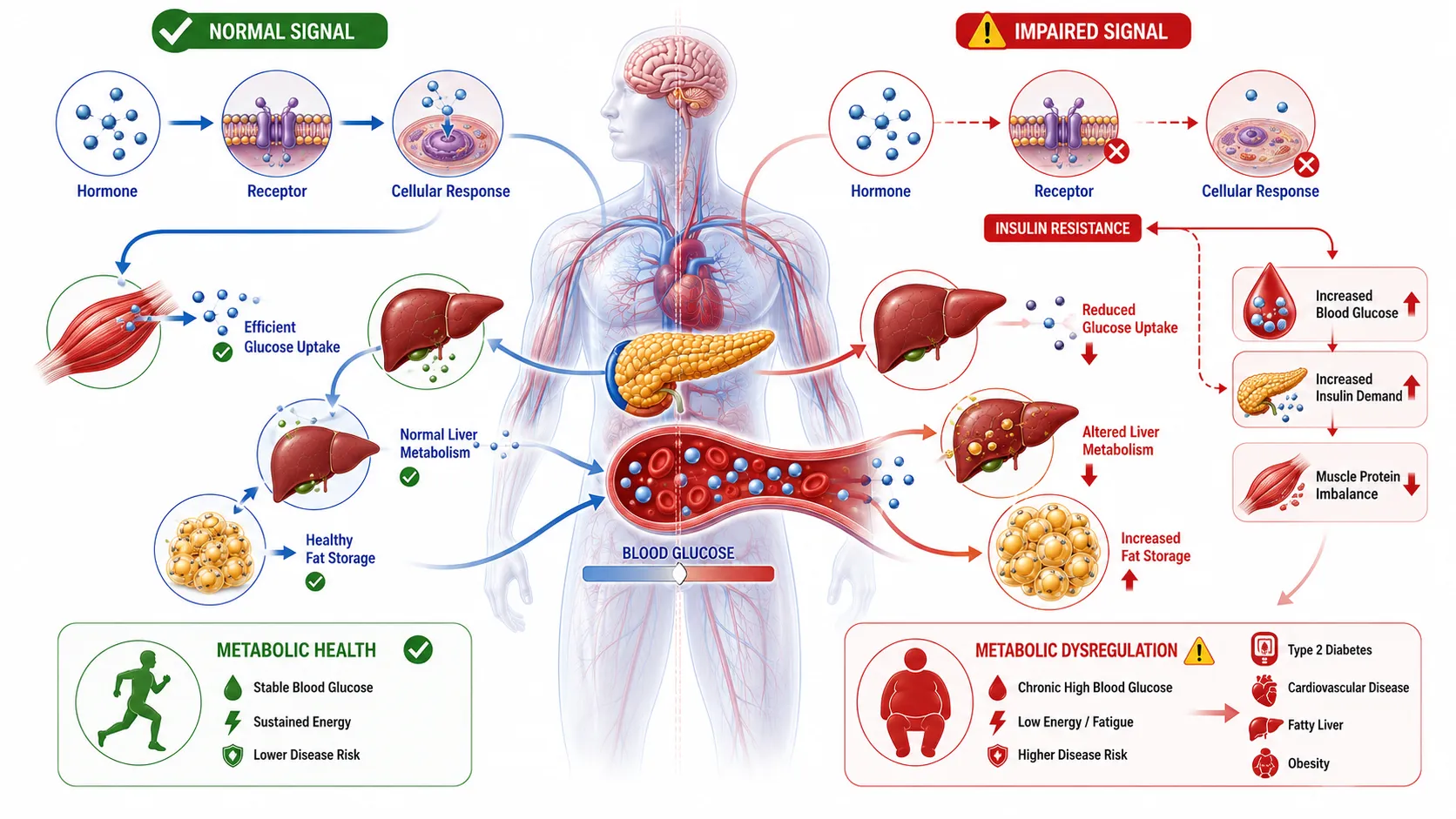
Key Definitions and Concepts
Hormonal Resistance
Hormonal resistance is a reduced biological response of target cells or tissues to a hormone that would normally produce a specific physiological effect.
The resistance may occur because of:
Reduced hormone receptor number.
Altered receptor structure or function.
Defective intracellular signalling.
Chronic exposure to excessive hormonal stimulation.
Changes in cellular metabolism.
Inflammatory signalling.
Altered lipid accumulation within tissues.
Hormonal resistance does not always mean that the hormone is absent. In many cases, hormone concentrations may remain normal or even increase because the body attempts to compensate for reduced tissue responsiveness.
Endocrine Dysfunction
Endocrine dysfunction refers to abnormal hormone production, secretion, regulation or action that disrupts normal physiological processes.
It may involve:
Hormone deficiency.
Hormone excess.
Abnormal feedback regulation.
Receptor dysfunction.
Impaired hormone conversion.
Altered hormone clearance.
Disrupted endocrine gland function.
Nutrient Metabolism
Nutrient metabolism refers to the biochemical processes involved in the digestion, absorption, transport, utilisation, storage and mobilisation of nutrients.
The principal metabolic functions include:
Glucose utilisation and storage.
Glycogen synthesis and breakdown.
Fatty acid synthesis and oxidation.
Triglyceride storage and mobilisation.
Protein synthesis and degradation.
Amino acid metabolism.
ATP production.
Metabolic Homeostasis
Metabolic homeostasis is the maintenance of relatively stable internal energy and nutrient conditions despite changes in food intake and energy expenditure.
Hormonal regulation allows the body to adjust continuously between:
Fed states.
Post-absorptive states.
Fasting states.
Exercise states.
Stress responses.
Major Hormonal Disturbances and Their Metabolic Consequences
| Hormonal Disturbance | Primary Biochemical Change | Effect on Nutrient Metabolism | Potential Long-Term Consequence |
|---|---|---|---|
| Insulin resistance | Reduced cellular insulin response | Impaired glucose uptake and altered lipid metabolism | Persistent metabolic dysregulation |
| Insulin deficiency | Reduced insulin-mediated signalling | Reduced glucose utilisation and increased nutrient mobilisation | Severe disruption of energy metabolism |
| Glucagon dysregulation | Altered hepatic metabolic signalling | Abnormal glucose production and fuel mobilisation | Disturbed blood glucose regulation |
| Thyroid hormone dysfunction | Altered metabolic rate and enzyme activity | Changes in carbohydrate, lipid and protein turnover | Long-term changes in energy balance |
| Cortisol excess | Prolonged catabolic and glucose-regulating effects | Increased protein breakdown and altered glucose metabolism | Tissue and metabolic dysfunction |
| Growth hormone dysfunction | Altered tissue growth and substrate use | Changes in protein and lipid metabolism | Abnormal body composition and metabolism |
| Leptin resistance | Impaired energy-balance signalling | Altered appetite and energy regulation | Persistent energy imbalance |
| Receptor or signalling defects | Reduced cellular hormonal response | Impaired coordination of nutrient pathways | Multi-system metabolic disruption |
Normal Hormonal Regulation of Nutrient Metabolism
Before investigating dysfunction, it is important to understand the normal physiological role of hormonal regulation.
Following food intake, nutrient concentrations increase in the circulation. Hormonal responses help tissues determine whether nutrients should be:
Used immediately for energy.
Stored for later use.
Converted into other metabolic substrates.
Transported to tissues with greater energy requirements.
During fasting or increased energy demand, hormonal signals promote the mobilisation of stored substrates.
The General Metabolic Cycle
The relationship between hormones and nutrient metabolism can be represented as:
Food Intake → Nutrient Absorption → Hormonal Response → Cellular Signalling → Nutrient Utilisation and Storage
During fasting:
Reduced Nutrient Availability → Hormonal Adjustment → Mobilisation of Stored Nutrients → Energy Production
This coordinated process depends on effective communication between endocrine glands, circulating hormones, receptors and intracellular biochemical pathways.
Insulin Resistance and Its Biochemical Consequences
Insulin resistance is one of the most important examples of hormonal resistance affecting nutrient metabolism.
Under normal conditions, insulin contributes to the regulation of:
Glucose uptake.
Glycogen synthesis.
Lipid metabolism.
Protein metabolism.
Hepatic glucose production.
When tissues become resistant to insulin, these processes may become less effectively coordinated.
Normal Insulin Signalling
Insulin binds to receptors on responsive cells and initiates intracellular signalling pathways.
The simplified sequence is:
Insulin Release → Insulin Receptor Activation → Intracellular Signalling → Metabolic Enzyme Regulation → Nutrient Uptake and Storage
In skeletal muscle, insulin signalling helps regulate glucose uptake and glycogen synthesis.
In the liver, insulin contributes to the regulation of glucose production and nutrient storage.
In adipose tissue, insulin influences lipid storage and suppresses excessive mobilisation under appropriate nutritional conditions.
Biochemical Mechanisms of Insulin Resistance
Insulin resistance can involve disturbances at several stages.
Receptor-Level Changes
Possible changes include:
Reduced receptor availability.
Altered receptor activity.
Changes in receptor sensitivity.
Post-Receptor Signalling Defects
Even when insulin binds successfully, the intracellular signalling process may be impaired.
Potential consequences include:
Reduced glucose transporter activity.
Reduced glycogen synthesis.
Altered enzyme regulation.
Reduced suppression of hepatic glucose production.
Lipid Accumulation in Non-Adipose Tissues
Excess lipid accumulation in tissues such as skeletal muscle and the liver may interfere with normal metabolic signalling.
This can contribute to:
Altered insulin responsiveness.
Changes in mitochondrial function.
Disrupted intracellular signalling.
Effects on Carbohydrate Metabolism
Insulin resistance can reduce the ability of some tissues to respond efficiently to circulating insulin.
Potential effects include:
Reduced glucose uptake by skeletal muscle.
Reduced glycogen synthesis.
Continued hepatic glucose production.
Increased demand for insulin secretion.
The body may initially compensate by increasing insulin production.
This compensatory sequence may be described as:
Reduced Insulin Response → Increased Insulin Secretion → Temporary Compensation → Progressive Metabolic Strain
Effects on Lipid Metabolism
Insulin resistance also affects lipid metabolism.
Potential biochemical changes include:
Altered triglyceride storage.
Increased release of fatty acids from adipose tissue.
Increased delivery of fatty acids to the liver.
Changes in lipoprotein metabolism.
Increased lipid accumulation in non-adipose tissues.
These changes demonstrate that insulin resistance is not only a disorder of carbohydrate metabolism.
Effects on Protein Metabolism
Insulin contributes to the regulation of protein metabolism.
When metabolic regulation is disturbed, potential consequences may include:
Altered amino acid uptake.
Changes in protein synthesis.
Changes in protein breakdown.
Altered tissue maintenance.
The exact effect depends on the severity and overall hormonal environment.
Compensatory Hyperinsulinaemia
When tissues respond less effectively to insulin, the endocrine system may attempt to maintain metabolic stability by increasing insulin secretion.
This is known as compensatory hyperinsulinaemia.
The Compensatory Process
Insulin sensitivity decreases.
Target tissues respond less effectively.
Blood glucose regulation becomes more difficult.
Pancreatic insulin secretion increases.
Higher insulin concentrations temporarily support metabolic control.
Limitations of Compensation
Compensation may not remain effective indefinitely.
Over time:
Metabolic regulation may become increasingly difficult.
The demand for insulin production may increase.
Multiple nutrient pathways may become disrupted.
This demonstrates the importance of early assessment and long-term metabolic monitoring.
Leptin Resistance and Energy Regulation
Leptin is involved in the communication of energy storage status to regulatory systems within the body.
Adipose tissue contributes to leptin production, allowing information about stored energy to participate in appetite and energy regulation.
Normal Leptin Function
Leptin signalling contributes to:
Regulation of appetite.
Energy expenditure.
Long-term energy balance.
Communication between adipose tissue and the central nervous system.
Leptin Resistance
Leptin resistance occurs when regulatory systems become less responsive to leptin signalling.
Potential consequences include:
Impaired perception of energy sufficiency.
Altered appetite regulation.
Reduced effectiveness of normal energy-balance signals.
Difficulty maintaining appropriate long-term energy balance.
Biochemical Significance
Leptin resistance demonstrates that nutrient metabolism involves communication between multiple organs.
The pathway can be simplified as:
Adipose Tissue → Leptin Signal → Central Regulation → Appetite and Energy Response
When this communication is impaired, the regulation of energy intake and expenditure may become disrupted.
Thyroid Hormone Dysfunction and Nutrient Metabolism
Thyroid hormones have a major influence on metabolic activity.
They contribute to the regulation of:
Basal metabolic rate.
Energy expenditure.
Carbohydrate turnover.
Lipid metabolism.
Protein turnover.
Reduced Thyroid Hormone Activity
Reduced thyroid hormone activity may be associated with:
Reduced metabolic activity.
Changes in energy expenditure.
Altered lipid processing.
Changes in carbohydrate metabolism.
The precise physiological effects depend on the degree and duration of dysfunction.
Increased Thyroid Hormone Activity
Excessive thyroid hormone activity can increase metabolic activity and nutrient turnover.
Potential consequences include:
Increased energy expenditure.
Increased carbohydrate utilisation.
Increased lipid mobilisation.
Increased protein turnover.
Critical Assessment
Thyroid dysfunction demonstrates that nutrient metabolism is closely connected to overall energy expenditure.
A dietary assessment should therefore consider whether changes in body weight or nutrient utilisation are influenced by:
Dietary intake.
Physical activity.
Endocrine activity.
Underlying physiological conditions.
Cortisol Dysregulation and Nutrient Metabolism
Cortisol contributes to the body’s response to physiological stress.
In appropriate amounts and circumstances, cortisol helps support energy availability.
However, prolonged dysregulation may alter nutrient metabolism.
Effects of Cortisol on Carbohydrate Metabolism
Cortisol can influence:
Glucose production.
Tissue glucose utilisation.
Energy availability during stress.
Persistent elevation may contribute to altered metabolic regulation.
Effects on Protein Metabolism
Prolonged cortisol activity can promote catabolic processes in certain tissues.
Potential effects include:
Increased protein breakdown.
Increased availability of amino acids.
Changes in tissue maintenance.
Altered nitrogen metabolism.
Effects on Lipid Metabolism
Cortisol can also influence lipid mobilisation and distribution.
The final metabolic outcome depends on interactions with:
Insulin.
Physical activity.
Energy intake.
Duration of hormonal exposure.
Growth Hormone Dysfunction
Growth hormone has important roles in growth, tissue metabolism and nutrient utilisation.
It influences:
Protein metabolism.
Lipid mobilisation.
Tissue growth.
Energy metabolism.
Growth Hormone and Protein Metabolism
Growth hormone supports processes associated with tissue growth and protein metabolism.
Dysfunction may therefore contribute to:
Changes in lean body mass.
Altered protein turnover.
Changes in tissue repair.
Growth Hormone and Lipid Metabolism
Growth hormone can influence lipid mobilisation.
Altered signalling may affect:
Fat storage.
Fat mobilisation.
Body composition.
Glucagon Dysregulation
Glucagon contributes to the regulation of nutrient mobilisation, particularly during periods of reduced food availability.
It acts primarily on the liver to support appropriate substrate availability.
Normal Glucagon-Related Functions
Glucagon contributes to:
Glycogen breakdown.
Glucose production.
Metabolic adaptation during fasting.
Consequences of Dysregulation
Abnormal glucagon signalling may contribute to:
Excessive or insufficient hepatic glucose output.
Disturbed fasting metabolism.
Impaired coordination between feeding and fasting states.
The relationship between insulin and glucagon is particularly important.
Hormonal Balance
Normal metabolic regulation requires appropriate coordination rather than the isolated action of one hormone.
A simplified relationship is:
Fed State → Greater Insulin Influence → Nutrient Storage and Utilisation
Fasted State → Reduced Insulin Influence and Greater Counter-Regulatory Activity → Nutrient Mobilisation
Disruption of this balance can alter overall metabolic homeostasis.
Mechanisms That Produce Hormonal Resistance
Hormonal resistance may develop through multiple interconnected mechanisms.
Chronic Hormonal Stimulation
Continuous exposure to elevated hormonal signals may reduce tissue responsiveness in some circumstances.
Potential adaptive changes include:
Receptor downregulation.
Altered signalling efficiency.
Changes in intracellular feedback systems.
Chronic Energy Surplus
Persistent excess energy intake may contribute to changes in:
Adipose tissue function.
Lipid distribution.
Cellular nutrient handling.
Hormonal responsiveness.
Inflammation
Inflammatory signalling can interfere with metabolic pathways.
Potential effects include:
Altered receptor signalling.
Changes in insulin action.
Changes in tissue metabolism.
Oxidative Stress
Oxidative stress may affect cellular structures and signalling molecules.
Potential consequences include:
Altered mitochondrial function.
Disrupted cellular signalling.
Reduced metabolic efficiency.
Genetic Factors
Genetic variation may influence:
Hormone receptor function.
Hormone production.
Enzyme activity.
Intracellular signalling pathways.
Endocrine Dysfunction and Carbohydrate Metabolism
Hormonal dysfunction can disrupt several aspects of carbohydrate metabolism simultaneously.
Potential Consequences
These may include:
Altered glucose uptake.
Abnormal hepatic glucose production.
Reduced glycogen synthesis.
Excessive glycogen mobilisation.
Changes in glucose oxidation.
Clinical Assessment Perspective
When analysing altered carbohydrate metabolism, professionals may consider:
Fasting glucose patterns.
Post-meal glucose responses.
Indicators of insulin activity.
Long-term glucose regulation markers.
Dietary intake.
Physical activity.
Laboratory results should always be interpreted within the broader clinical context.
Endocrine Dysfunction and Lipid Metabolism
Lipid metabolism is strongly influenced by hormonal regulation.
Several hormones contribute to the balance between lipid storage and mobilisation.
Storage-Promoting Signals
During periods of nutrient abundance, hormonal signals support:
Triglyceride synthesis.
Storage of fatty acids.
Reduced unnecessary mobilisation.
Mobilisation-Promoting Signals
During fasting or increased energy demand, hormonal conditions support:
Lipolysis.
Fatty acid release.
Fat oxidation.
Consequences of Dysfunction
Hormonal disturbances may result in:
Excessive lipid storage.
Impaired lipid mobilisation.
Increased circulating fatty acids.
Abnormal lipid distribution.
Ectopic lipid accumulation.
These changes can influence other metabolic pathways, including insulin signalling.
Endocrine Dysfunction and Protein Metabolism
Protein metabolism is also regulated by the hormonal environment.
Hormones influence:
Amino acid uptake.
Protein synthesis.
Protein degradation.
Tissue maintenance.
Hormonal Deficiency or Excess
Depending on the specific hormone involved, dysfunction may contribute to:
Reduced protein synthesis.
Increased protein breakdown.
Loss of lean tissue.
Changes in nitrogen balance.
Long-Term Significance
Persistent disruption of protein metabolism may affect:
Muscle function.
Tissue repair.
Physical capacity.
Overall body composition.
Mitochondrial Function and Hormonal Dysfunction
Mitochondria play a central role in cellular energy production.
Hormonal signals influence nutrient availability and metabolic enzyme activity, while mitochondrial function determines how effectively many substrates can be oxidised.
Potential Consequences of Dysfunction
Hormonal disturbances may be associated with:
Reduced metabolic flexibility.
Altered fatty acid oxidation.
Changes in ATP production.
Increased oxidative stress.
This relationship illustrates the connection between endocrine signalling and cellular energy metabolism.
Long-Term Physiological Consequences
Persistent hormonal resistance or endocrine dysfunction can affect multiple organ systems.
Effects on Energy Balance
Potential consequences include:
Increased energy storage.
Reduced energy expenditure.
Altered appetite regulation.
Changes in fuel utilisation.
Effects on Body Composition
Long-term metabolic dysregulation may influence:
Adipose tissue mass.
Lean body mass.
Fat distribution.
Tissue metabolic activity.
Effects on Cardiovascular and Metabolic Function
Persistent disturbances in glucose and lipid regulation may influence long-term physiological health.
Potential concerns include:
Altered lipid profiles.
Changes in vascular metabolism.
Increased metabolic stress.
Chronic energy imbalance.
Effects on Skeletal Muscle
Hormonal dysfunction may influence:
Glucose uptake.
Protein turnover.
Energy production.
Physical performance.
Effects on Liver Metabolism
The liver is a central organ for nutrient processing.
Hormonal dysregulation may alter:
Glycogen metabolism.
Glucose production.
Lipid synthesis.
Fatty acid oxidation.
Amino acid metabolism.
Practical Scenario: Insulin Resistance
A middle-aged individual reports low physical activity and has maintained a long-term pattern of excess energy intake.
A biochemical assessment suggests reduced insulin responsiveness.
The potential metabolic sequence may be:
Energy intake consistently exceeds expenditure.
Adipose tissue storage increases.
Tissue lipid handling changes.
Insulin signalling becomes less efficient.
The pancreas increases insulin secretion.
Nutrient metabolism becomes increasingly dysregulated.
Key Assessment Considerations
A professional should consider:
Dietary history.
Physical activity.
Body composition.
Family history.
Relevant biochemical data.
Duration of metabolic changes.
The assessment should not attribute the condition to one dietary component alone.
Practical Scenario: Thyroid Hormone Dysfunction
An individual experiences persistent changes in energy levels and body weight without a major reported change in food intake.
A professional assessment may consider whether altered metabolic rate could contribute to the observed changes.
Relevant factors include:
Changes in energy expenditure.
Nutrient utilisation.
Physical activity.
Dietary intake.
Hormonal function.
This scenario demonstrates the importance of distinguishing dietary causes from endocrine causes.
Practical Scenario: Prolonged Physiological Stress
An individual experiences prolonged occupational stress combined with irregular sleep and inconsistent dietary habits.
The hormonal environment may influence:
Appetite.
Food intake patterns.
Glucose regulation.
Protein metabolism.
Energy storage.
A comprehensive assessment should recognise the interaction between nutritional behaviour and physiological stress.
Investigative Approaches to Hormonal and Metabolic Dysfunction
A systematic investigation requires multiple forms of evidence.
Step 1: Assess Clinical and Dietary History
Important information may include:
Long-term dietary patterns.
Recent dietary changes.
Meal timing.
Physical activity.
Changes in body weight.
Sleep patterns.
Stress exposure.
Relevant symptoms.
Step 2: Evaluate Relevant Biochemical Indicators
Depending on the clinical context, assessment may include indicators relating to:
Glucose regulation.
Lipid metabolism.
Hormonal activity.
Liver function.
Nutritional status.
Step 3: Examine Hormonal Relationships
A single laboratory value may not provide a complete understanding.
Assessment should consider:
Hormone concentration.
Target tissue response.
Feedback regulation.
Associated metabolic indicators.
Step 4: Assess Nutrient Metabolism
Evaluate whether dysfunction is primarily affecting:
Carbohydrate metabolism.
Lipid metabolism.
Protein metabolism.
Multiple interconnected pathways.
Step 5: Consider Long-Term Physiological Effects
The assessment should identify potential effects on:
Body composition.
Energy balance.
Tissue function.
Cardiometabolic health.
Physical capacity.
Critical Interpretation of Hormonal Data
Hormonal concentrations must be interpreted carefully.
A normal or elevated hormone concentration does not necessarily indicate normal hormone action.
For example:
High hormone concentration may represent compensation for resistance.
Low hormone concentration may indicate reduced production.
Normal concentration may still occur alongside receptor dysfunction.
Important Principles
When interpreting hormonal data:
Consider the clinical context.
Examine related biochemical markers.
Consider feedback mechanisms.
Avoid relying on a single result.
Evaluate changes over time where appropriate.
The Importance of Feedback Mechanisms
Many endocrine systems operate through feedback regulation.
A simplified feedback process is:
Hormone Release → Physiological Effect → Feedback Signal → Adjustment of Further Hormone Release
Dysfunction may occur when:
Hormone production is inappropriate.
Feedback signals are impaired.
Receptors do not respond normally.
Target tissues become resistant.
Why Feedback Matters
Feedback mechanisms prevent excessive or insufficient hormonal action under normal conditions.
When feedback becomes disrupted, metabolic instability may develop.
Nutritional Strategies and Hormonal Metabolism
Nutrition can influence the metabolic environment in which hormones function.
Appropriate nutritional strategies may support metabolic regulation through:
Balanced energy intake.
Appropriate macronutrient distribution.
Adequate dietary fibre.
Nutrient-rich food choices.
Consistent dietary patterns where appropriate.
Matching nutrient intake with physical activity.
Important Professional Principle
Nutrition should not be presented as a replacement for medical assessment or treatment when endocrine dysfunction is suspected.
Professional practice should involve:
Recognition of metabolic concerns.
Appropriate evidence-based nutritional support within scope of practice.
Referral to qualified healthcare professionals when required.
Key Benefits of Understanding Hormonal Resistance and Endocrine Dysfunction
Understanding this area enables Learners to:
Explain the relationship between hormones and nutrient metabolism.
Identify the biochemical consequences of hormonal resistance.
Differentiate between hormone deficiency, excess and resistance.
Analyse the effects of endocrine dysfunction on carbohydrates, lipids and proteins.
Understand the role of feedback mechanisms.
Interpret metabolic changes using a systems-based approach.
Apply knowledge to clinical and professional scenarios.
Recognise the importance of long-term physiological monitoring.
Professional Application in Nutritional and Healthcare Practice
Knowledge of hormonal dysfunction supports effective professional judgement.
Nutritional Assessment
Practitioners may need to consider whether unusual metabolic patterns could involve:
Dietary imbalance.
Hormonal dysfunction.
Reduced tissue responsiveness.
Changes in energy expenditure.
Individualised Planning
Nutritional approaches should consider:
Individual energy requirements.
Physical activity.
Body composition.
Long-term dietary habits.
Relevant medical guidance.
Interdisciplinary Collaboration
Complex endocrine disorders may require collaboration between:
Medical professionals.
Dietitians.
Nutrition specialists.
Laboratory professionals.
Exercise professionals.
This multidisciplinary approach supports safe and comprehensive care.
Critical Comparison: Hormone Deficiency, Hormone Excess and Hormone Resistance
These conditions produce different biochemical patterns.
Hormone Deficiency
Hormone deficiency occurs when insufficient hormone is available.
Typical consequences may include:
Reduced stimulation of target pathways.
Reduced metabolic activity associated with that hormone.
Compensatory changes in related systems.
Hormone Excess
Hormone excess occurs when hormonal activity is greater than physiologically required.
Possible consequences include:
Excessive stimulation of metabolic pathways.
Disruption of normal feedback systems.
Increased metabolic strain.
Hormone Resistance
Hormone resistance occurs when the hormone is present but target tissues respond inadequately.
Possible consequences include:
Compensatory increases in hormone secretion.
Reduced metabolic efficiency.
Progressive disruption of nutrient regulation.
Understanding these differences is essential for accurate biochemical interpretation.
Integrated Case Analysis
Consider an individual with the following characteristics:
Long-term sedentary behaviour.
Persistent excess energy intake.
Increasing adipose tissue mass.
Altered fasting metabolic indicators.
Evidence suggesting reduced tissue responsiveness to insulin.
A comprehensive biochemical interpretation may identify several interconnected processes.
Stage 1: Energy Imbalance
Energy intake consistently exceeds energy expenditure.
Stage 2: Increased Energy Storage
Excess energy is increasingly stored, particularly within adipose tissue.
Stage 3: Altered Metabolic Signalling
Changes in tissue nutrient handling may influence insulin responsiveness.
Stage 4: Compensatory Hormonal Response
The body may increase insulin secretion to maintain metabolic regulation.
Stage 5: Broader Metabolic Consequences
Over time, altered carbohydrate and lipid metabolism may become increasingly interconnected.
This case demonstrates why hormonal dysfunction should be investigated as a systems-level process rather than an isolated biochemical abnormality.
Summary
Hormonal resistance and endocrine dysfunction can produce profound biochemical consequences for nutrient metabolism and long-term physiological health. Hormones regulate the uptake, utilisation, storage and mobilisation of carbohydrates, lipids and proteins. When hormone production, receptor activity or intracellular signalling becomes disrupted, multiple metabolic pathways may be affected simultaneously.
Insulin resistance provides a major example of how reduced hormonal responsiveness can impair glucose regulation while also affecting lipid and protein metabolism. Other endocrine disturbances involving glucagon, thyroid hormones, cortisol, growth hormone and leptin can alter energy expenditure, substrate mobilisation, appetite regulation, protein turnover and body composition.
The long-term consequences of persistent hormonal dysfunction may extend across multiple physiological systems, affecting metabolic flexibility, energy balance, tissue function and overall health. These outcomes are influenced by the interaction between dietary intake, physical activity, body composition, genetic factors and the duration of hormonal disturbance.
A robust investigation should therefore combine dietary assessment, physiological understanding and careful interpretation of biochemical and hormonal information. Learners must recognise that hormone concentration alone does not always indicate effective hormone action. Receptor responsiveness, intracellular signalling, feedback regulation and tissue-specific metabolism must also be considered.
By applying a systematic and critical approach, professionals can better understand how hormonal resistance and endocrine dysfunction disrupt nutrient metabolism and contribute to long-term physiological consequences. This knowledge provides an essential foundation for evidence-based nutritional assessment, professional decision-making and appropriate interdisciplinary practice.
5.Synthesise Clinical Evidence to Thoroughly Explain the Biochemical Feedback Loops That Exist Between Circulating Nutrient Levels and Hormonal Secretion
The regulation of nutrient metabolism depends on continuous communication between circulating nutrient concentrations and the endocrine system. The human body must maintain essential nutrients, particularly glucose, fatty acids and amino acids, within physiologically appropriate ranges while ensuring that tissues receive sufficient energy and building materials. This regulation is achieved through complex biochemical feedback loops in which changes in nutrient availability stimulate hormonal secretion, and the resulting hormones alter nutrient utilisation, storage or mobilisation. The altered nutrient concentration then provides further feedback to the endocrine system.
These feedback loops are essential for metabolic homeostasis. They operate across multiple timescales, from rapid responses occurring within minutes after nutrient absorption to longer-term adaptations associated with prolonged fasting, chronic energy surplus or persistent dietary patterns. Clinical evidence from metabolic assessment, endocrine research and physiological observation demonstrates that nutrient concentrations and hormonal responses are closely interconnected rather than operating as separate processes.
The relationship can be represented as a continuous regulatory cycle:
Change in Circulating Nutrient Level → Nutrient Detection → Hormonal Secretion → Target Tissue Response → Altered Nutrient Concentration → Feedback to Regulatory Systems
This section examines the major biochemical feedback loops between nutrients and hormones, including glucose-insulin regulation, glucagon-mediated nutrient mobilisation, lipid-related signalling, amino acid regulation, gastrointestinal hormone responses and longer-term energy-balance feedback systems.
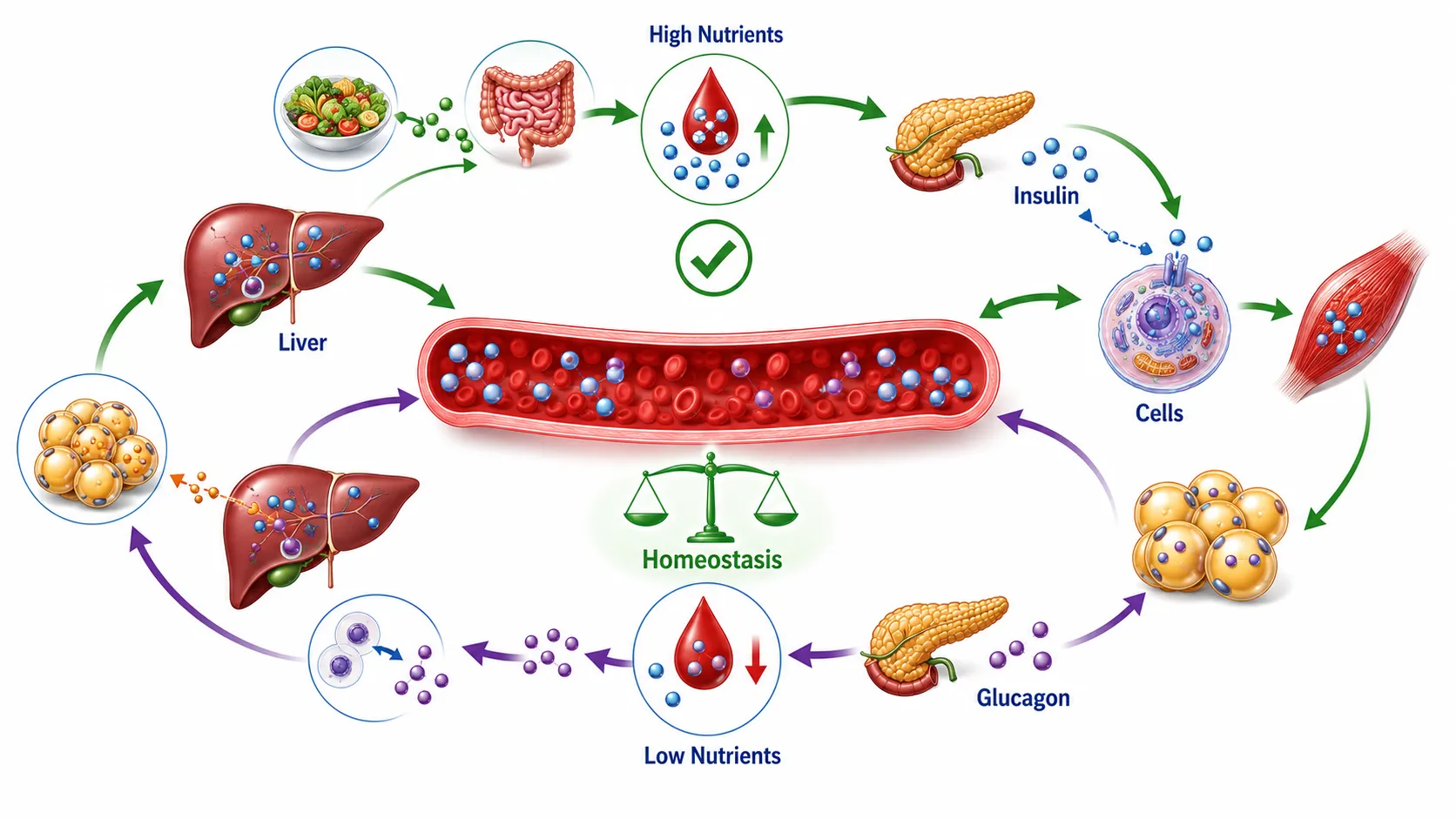
Key Definitions and Concepts
Circulating Nutrient Levels
Circulating nutrient levels refer to the concentrations of metabolically important substances present in the blood and other body fluids.
These may include:
Glucose.
Amino acids.
Fatty acids.
Triglyceride-derived lipid components.
Ketone bodies.
Other metabolic intermediates.
Changes in circulating nutrient concentrations provide important information about current nutrient availability.
Hormonal Secretion
Hormonal secretion is the controlled release of chemical messengers from endocrine cells or glands into the circulation.
Hormones involved in nutrient regulation include:
Insulin.
Glucagon.
Incretin hormones.
Leptin.
Ghrelin.
Cortisol.
Adrenaline.
Growth hormone.
Thyroid hormones.
Each hormone has specific actions, but many operate within interconnected regulatory networks.
Feedback Loop
A feedback loop is a regulatory process in which the result of a physiological action influences the original stimulus.
In nutrient metabolism, feedback may occur when:
A nutrient level changes.
The change stimulates hormonal secretion.
The hormone alters nutrient metabolism.
The nutrient level moves towards a different state.
The altered nutrient level modifies further hormone secretion.
Negative Feedback
Negative feedback occurs when a physiological response opposes the original disturbance.
For example:
Increased Blood Glucose → Increased Insulin Secretion → Increased Glucose Uptake → Reduced Blood Glucose → Reduced Insulin Stimulation
Negative feedback is essential for maintaining metabolic stability.
Positive or Amplifying Processes
Some physiological responses can temporarily amplify metabolic activity. However, nutrient and endocrine regulation is predominantly organised around mechanisms that prevent excessive deviation from physiological balance.
Major Nutrient-Hormone Feedback Loops
| Circulating Change | Primary Hormonal Response | Major Biochemical Action | Feedback Outcome |
|---|---|---|---|
| Increased blood glucose | Increased insulin secretion | Promotes glucose uptake and storage | Glucose concentration moves towards baseline |
| Reduced blood glucose | Reduced insulin and increased glucagon influence | Promotes hepatic nutrient mobilisation | Glucose availability is supported |
| Increased amino acid availability | Changes in insulin and glucagon secretion | Regulates amino acid and glucose metabolism | Nutrient utilisation is coordinated |
| Increased dietary fat and energy availability | Changes in insulin and gut-derived signals | Influences nutrient storage and satiety | Energy intake and storage signals are adjusted |
| Reduced energy availability | Increased counter-regulatory signalling | Promotes mobilisation of stored fuels | Energy substrates become available |
| Increased adipose energy stores | Altered leptin signalling | Communicates long-term energy status | Appetite and energy regulation are influenced |
| Nutrients in the gastrointestinal tract | Release of gastrointestinal hormones | Influences insulin response and digestive processes | Nutrient delivery and utilisation are coordinated |
The Fundamental Principle of Nutrient-Hormone Feedback
The endocrine system continuously receives information about nutrient availability.
This information may arise from:
Direct detection of nutrients by endocrine cells.
Neural signals from the gastrointestinal tract.
Changes in cellular energy status.
Signals from adipose tissue.
Metabolic products generated during nutrient utilisation.
Hormonal secretion then modifies metabolic activity in target tissues.
The General Feedback Sequence
A typical nutrient-hormone feedback loop includes five stages:
A nutrient concentration changes.
The change is detected by specialised cells or regulatory systems.
A hormone is released or its secretion is modified.
Target tissues alter metabolic activity.
The nutrient concentration changes and provides feedback.
This process is continuous rather than occurring as a single isolated event.
Glucose and Insulin: A Primary Negative Feedback Loop
The relationship between blood glucose and insulin is one of the clearest examples of nutrient-mediated hormonal regulation.
Following carbohydrate digestion and absorption, glucose enters the bloodstream. Rising glucose concentrations stimulate specialised pancreatic cells to increase insulin secretion.
Step-by-Step Biochemical Process
The process can be summarised as:
Carbohydrate Intake → Digestion → Glucose Absorption → Increased Blood Glucose → Pancreatic Detection → Insulin Release
Insulin then influences multiple tissues.
Key effects include:
Increased glucose uptake by insulin-responsive tissues.
Increased glycogen synthesis.
Increased glucose utilisation.
Reduced unnecessary hepatic glucose production.
Support for nutrient storage during the fed state.
As glucose is removed from the circulation or utilised, the original stimulus for high insulin secretion decreases.
Negative Feedback Sequence
Increased Glucose → Increased Insulin → Increased Cellular Glucose Handling → Reduced Glucose Stimulus → Adjustment of Insulin Secretion
This system helps prevent prolonged elevation of circulating glucose.
Clinical Evidence and Interpretation
Clinical assessment of glucose regulation may examine:
Fasting glucose.
Post-meal glucose responses.
Long-term indicators of glucose exposure.
Insulin concentrations where clinically appropriate.
Patterns of insulin responsiveness.
The interpretation of these markers should consider the relationship between hormone concentration and hormone effectiveness.
For example:
Increased insulin may represent an appropriate post-meal response.
Persistently elevated insulin in some contexts may reflect compensation for reduced tissue responsiveness.
Normal glucose values do not necessarily indicate identical underlying metabolic mechanisms in every individual.
Glucose, Insulin and Glucagon: Reciprocal Regulation
Glucose regulation depends on the coordinated activity of more than one hormone.
Insulin is generally associated with nutrient availability and storage-oriented metabolism, while glucagon contributes to nutrient mobilisation, particularly during reduced food availability.
Fed State
Following nutrient intake:
Blood glucose increases.
Insulin secretion generally increases.
Glucagon activity is relatively reduced in many physiological contexts.
Glycogen synthesis is supported.
Glucose utilisation increases.
Fasting State
During reduced nutrient availability:
Insulin secretion decreases.
The relative influence of glucagon increases.
Hepatic glycogen mobilisation supports glucose availability.
Additional metabolic pathways contribute during prolonged fasting.
Feedback Relationship
The balance between insulin and glucagon allows the body to shift between storage and mobilisation.
Fed State:
Nutrient Availability → Insulin-Dominant Signalling → Utilisation and Storage
Fasting State:
Reduced Nutrient Availability → Reduced Insulin Influence + Increased Mobilisation Signals → Release of Stored Substrates
Importance of Hormonal Ratios
The metabolic effect of a hormone is influenced not only by its absolute concentration but also by the surrounding hormonal environment.
Therefore, interpretation should consider:
Insulin concentration.
Glucagon activity.
Nutrient availability.
Physiological state.
Energy demand.
Amino Acids and Hormonal Secretion
Amino acids also influence endocrine regulation.
Following protein digestion, amino acids enter the circulation and contribute to several metabolic processes.
Changes in amino acid availability may influence:
Insulin secretion.
Glucagon secretion.
Protein synthesis.
Amino acid uptake.
Nitrogen metabolism.
Why Dual Hormonal Responses Are Important
Protein consumption may influence both insulin and glucagon because amino acid metabolism requires coordinated regulation.
A simplified response may involve:
Protein Intake → Increased Circulating Amino Acids → Hormonal Adjustment → Amino Acid Utilisation and Metabolic Coordination
This coordinated response helps support nutrient metabolism while maintaining appropriate glucose availability.
Protein and Metabolic Balance
The hormonal response to protein depends on:
Type and quantity of protein.
Amino acid composition.
Presence of carbohydrate.
Energy status.
Individual metabolic characteristics.
Therefore, a single hormonal response should not be assumed for all protein-containing meals.
Lipid Availability and Hormonal Regulation
Circulating lipid availability also interacts with hormonal systems.
Dietary fats and stored triglycerides provide a major energy reserve.
Hormonal regulation determines whether lipid substrates are primarily:
Stored.
Transported.
Mobilised.
Oxidised.
Fed-State Lipid Regulation
Following energy intake, the hormonal environment generally supports nutrient storage when energy requirements have been met.
Potential processes include:
Fatty acid uptake.
Triglyceride synthesis.
Storage in adipose tissue.
Fasting-State Lipid Regulation
When nutrient availability decreases:
Insulin signalling generally decreases.
Mobilisation-promoting signals become relatively more influential.
Triglycerides may undergo lipolysis.
Fatty acids enter the circulation.
Tissues can increase reliance on fat oxidation.
Lipid Feedback
The concentration of circulating fatty acids and other lipid-related signals can influence metabolic pathways and tissue responses.
Persistent changes in lipid availability may contribute to altered:
Insulin responsiveness.
Energy utilisation.
Cellular signalling.
Adipose Tissue and Long-Term Hormonal Feedback
Adipose tissue is an important metabolic and endocrine organ.
It stores energy but also produces signalling molecules that communicate information about long-term energy status.
Leptin as a Long-Term Energy Signal
Leptin is associated with the amount and functional state of adipose tissue.
A simplified feedback pathway is:
Increased Energy Stores → Adipose Tissue Signalling → Leptin Release → Central Energy Regulation → Changes in Appetite and Energy Expenditure
Physiological Purpose
This system contributes to the long-term regulation of:
Energy intake.
Appetite.
Energy expenditure.
Body energy stores.
Leptin Resistance
In some circumstances, increased leptin concentrations may not produce an equivalent physiological response.
This illustrates an important principle:
High Hormone Concentration ≠ Guaranteed Effective Hormonal Action
The effectiveness of a feedback loop depends on:
Hormone production.
Hormone transport.
Receptor function.
Intracellular signalling.
Tissue responsiveness.
Gastrointestinal Nutrient Sensing and Hormonal Feedback
The gastrointestinal tract plays an active role in nutrient-hormone regulation.
Nutrients entering the digestive tract stimulate specialised cells to release hormones that influence digestion, appetite and nutrient metabolism.
Nutrient Detection in the Gut
The gastrointestinal system can detect:
Carbohydrates.
Amino acids.
Fatty acids.
This detection contributes to hormonal signalling that coordinates the body’s response to food.
Major Functional Effects
Gastrointestinal hormones may influence:
Insulin secretion.
Gastric emptying.
Appetite.
Satiety.
Digestive secretions.
The Incretin Effect
Certain gastrointestinal hormones contribute to the insulin response following oral nutrient intake.
The simplified process is:
Oral Nutrient Intake → Gastrointestinal Hormonal Release → Enhanced Insulin Response → Improved Coordination of Post-Meal Metabolism
This demonstrates that hormonal responses to nutrients involve communication between the digestive and endocrine systems.
Nutrient Levels and Appetite Hormones
Nutrient availability also interacts with appetite regulation.
Hormones involved in appetite and satiety help coordinate food-seeking behaviour with current and long-term energy status.
Ghrelin and Hunger-Related Signalling
Ghrelin is associated with hunger-related signalling and can change in relation to meal patterns and energy availability.
Its physiological role contributes to:
Appetite regulation.
Meal initiation.
Communication between nutritional status and the central nervous system.
Satiety-Related Signals
Following food intake, several physiological signals contribute to the sensation of fullness.
These signals may be influenced by:
Meal volume.
Nutrient composition.
Gastrointestinal activity.
Energy density.
Feedback Significance
Appetite regulation provides a behavioural component of nutrient homeostasis.
The broader sequence is:
Reduced Energy Availability → Hunger-Related Signals → Increased Motivation to Eat → Nutrient Intake → Satiety Signals → Reduced Immediate Food-Seeking Behaviour
Counter-Regulatory Hormones and Nutrient Mobilisation
When circulating nutrient availability falls, the body activates mechanisms that support continued energy supply.
These involve several counter-regulatory hormones.
Important Hormonal Responses
Depending on the physiological situation, the body may increase the influence of:
Glucagon.
Adrenaline.
Cortisol.
Growth hormone.
Their General Functions
These signals can contribute to:
Mobilisation of stored fuels.
Maintenance of circulating glucose.
Increased fatty acid availability.
Adaptation to stress and increased energy demand.
Example: Exercise
During exercise:
Muscle energy demand increases.
Stored and circulating nutrients are utilised.
Hormonal regulation supports substrate availability.
Fuel mobilisation adjusts to exercise intensity and duration.
The precise response depends on the individual’s nutritional status and level of physical activity.
Fasting and Progressive Hormonal Adaptation
Fasting provides a clear example of dynamic feedback regulation.
The hormonal response changes as fasting continues.
Early Fasting
During early fasting:
Insulin secretion decreases.
Hepatic glycogen contributes to glucose availability.
Glucagon-mediated processes become increasingly important.
Prolonged Fasting
As fasting continues:
Glycogen availability becomes more limited.
Lipid mobilisation increases.
Fatty acid oxidation becomes increasingly important.
Alternative energy substrates may increase.
Feedback Principle
The body continuously adjusts hormone secretion according to:
Remaining nutrient stores.
Circulating substrate levels.
Tissue energy requirements.
This is a dynamic adaptation rather than a fixed sequence.
The Role of the Liver in Nutrient-Hormone Feedback
The liver is a central metabolic organ that receives and processes nutrient and hormonal signals.
It contributes to:
Glycogen storage.
Glycogen breakdown.
Glucose production.
Lipid metabolism.
Amino acid metabolism.
Hepatic Nutrient Sensing
The liver responds to changes in:
Glucose availability.
Hormonal signals.
Fatty acid availability.
Amino acid metabolism.
Integrated Regulation
The liver acts as a metabolic buffer.
Following food intake:
Nutrient Delivery → Hepatic Processing → Storage or Metabolic Conversion
During fasting:
Hormonal Signals → Hepatic Mobilisation → Maintenance of Nutrient Availability
Cellular Energy Status and Hormonal Feedback
Hormonal regulation interacts with the energy status of individual cells.
Cells continuously monitor the availability of:
ATP.
Glucose-derived substrates.
Fatty acids.
Amino acids.
Energy-Sensing Systems
When cellular energy availability changes, intracellular regulatory systems adjust metabolic pathways.
These systems can influence:
Nutrient oxidation.
Nutrient synthesis.
Energy conservation.
Cellular growth processes.
Interaction with Hormones
Hormonal signals provide whole-body information, while intracellular energy sensors provide local information.
Together, they coordinate:
Whole-Body Nutritional Status + Local Cellular Energy Status → Appropriate Metabolic Response
Feedback Loops During Energy Surplus
Chronic energy surplus can alter the normal operation of nutrient-hormone feedback loops.
Initial Response
When energy intake increases:
Nutrient availability rises.
Storage-promoting pathways become active.
Insulin and other post-meal signals increase appropriately.
Long-Term Adaptation
Persistent excess energy availability may contribute to:
Increased adipose tissue storage.
Changes in adipose endocrine signalling.
Altered tissue responsiveness.
Changes in appetite regulation.
Critical Consideration
The development of metabolic dysfunction is not explained by energy intake alone.
Other influencing factors include:
Physical activity.
Genetics.
Sleep.
Stress.
Dietary composition.
Duration of exposure.
Feedback Loops During Energy Restriction
Energy restriction also alters nutrient-hormone interactions.
Initial Response
Reduced food intake may produce:
Reduced insulin secretion.
Increased reliance on stored substrates.
Increased mobilisation of fatty acids.
Longer-Term Adaptation
Persistent energy restriction may also influence:
Appetite-related signals.
Energy expenditure.
Thyroid-related metabolic activity.
Protein metabolism.
Adaptive Purpose
These changes may help the body conserve energy and maintain essential physiological functions.
Clinical Evidence in Feedback Loop Assessment
Clinical evidence helps explain how nutrient and hormone concentrations interact under different physiological conditions.
Dynamic Rather Than Static Assessment
A single laboratory result provides only a limited view.
More comprehensive assessment may involve examining:
Fasting values.
Post-meal responses.
Changes over time.
Relationships between multiple biomarkers.
Clinical symptoms.
Dietary patterns.
Example: Glucose Assessment
A fasting glucose value provides information about one metabolic state.
A post-meal assessment may reveal different aspects of:
Glucose handling.
Insulin secretion.
Tissue responsiveness.
Importance of Context
The same biochemical value may have different implications depending on:
Timing of food intake.
Physical activity.
Fasting duration.
Medication.
Health status.
Hormonal environment.
Practical Scenario: Post-Meal Feedback Regulation
A Learner is asked to analyse the physiological response following a mixed meal containing carbohydrates, protein and lipids.
The likely sequence includes:
Digestion releases absorbable nutrients.
Glucose and amino acids enter the circulation.
Gastrointestinal nutrient sensing occurs.
Hormonal signals are released.
Insulin secretion increases in response to nutrient availability.
Tissues increase nutrient utilisation and storage.
Circulating nutrient concentrations gradually change.
Hormonal stimulation adjusts accordingly.
This scenario illustrates the integrated nature of nutrient-hormone feedback.
Practical Scenario: Overnight Fasting
An individual consumes their evening meal and then does not eat overnight.
During the fasting period:
Absorbed nutrients gradually decline.
Insulin secretion decreases.
Hepatic nutrient mobilisation supports glucose availability.
Lipid mobilisation gradually contributes to energy supply.
Hormonal responses continue to adjust according to nutrient status.
The body therefore transitions smoothly between fed and fasted states through feedback regulation.
Practical Scenario: Reduced Hormonal Sensitivity
An individual has evidence of reduced tissue responsiveness to insulin.
The potential feedback sequence may involve:
Reduced Cellular Response → Higher Demand for Insulin → Increased Hormonal Secretion → Temporary Compensation
Over time, further changes may affect:
Glucose regulation.
Lipid metabolism.
Energy storage.
This demonstrates how a feedback system can compensate initially but become increasingly challenged when the underlying disturbance persists.
Synthesising Evidence Across Multiple Feedback Systems
A complete understanding of nutrient metabolism requires integration of multiple systems.
Short-Term Regulation
Short-term feedback involves:
Blood glucose.
Insulin.
Glucagon.
Gastrointestinal hormones.
Immediate nutrient availability.
Medium-Term Regulation
Medium-term responses involve:
Glycogen availability.
Lipid mobilisation.
Changes in energy demand.
Exercise-related hormonal responses.
Long-Term Regulation
Long-term feedback involves:
Adipose tissue signalling.
Leptin.
Appetite regulation.
Energy expenditure.
Body composition.
These timescales overlap and influence one another.
Key Benefits of Understanding Nutrient-Hormone Feedback Loops
Understanding biochemical feedback loops enables Learners to:
Explain how nutrient concentrations regulate hormone secretion.
Describe negative feedback mechanisms.
Analyse the interaction between insulin and glucagon.
Understand how amino acids influence hormonal responses.
Explain the role of gastrointestinal hormones.
Evaluate long-term energy-balance signalling.
Interpret biochemical results within physiological context.
Apply theoretical knowledge to clinical scenarios.
Critical Thinking: Why Feedback Loops Are Not Always Simple
Feedback loops are often presented as simple linear pathways, but real physiological regulation is more complex.
Multiple Hormones Can Respond Simultaneously
A single meal can influence:
Insulin.
Glucagon.
Gastrointestinal hormones.
Appetite-related signals.
Different Tissues Respond Differently
The same hormone may produce different metabolic effects in:
Liver tissue.
Skeletal muscle.
Adipose tissue.
The central nervous system.
Nutrient Levels Are Continuously Changing
Nutrient concentrations fluctuate due to:
Food intake.
Exercise.
Fasting.
Stress.
Sleep.
Illness.
Therefore, hormone secretion is dynamic and context-dependent.
Common Errors in Interpreting Nutrient-Hormone Feedback
Assuming One Hormone Controls All Metabolism
Nutrient regulation involves multiple endocrine signals.
Interpreting Hormone Concentration Without Considering Sensitivity
A high hormone concentration may indicate compensation rather than increased effectiveness.
Ignoring Meal Timing
Fasting and post-meal measurements may represent different physiological states.
Ignoring Long-Term Adaptation
Short-term hormonal responses may differ from changes produced by prolonged dietary habits.
Treating Nutrients as Independent
Carbohydrates, proteins and lipids can influence overlapping hormonal and metabolic pathways.
Professional Applications
Nutritional Assessment
Professionals can apply feedback-loop knowledge when evaluating:
Meal responses.
Fasting adaptation.
Energy balance.
Nutrient distribution.
Long-term dietary habits.
Clinical Interpretation
Healthcare professionals may use biochemical information to assess relationships between:
Nutrient concentrations.
Hormonal responses.
Tissue metabolism.
Physiological symptoms.
Sports and Exercise
Understanding feedback regulation helps explain:
Fuel mobilisation during exercise.
Post-exercise nutrient utilisation.
Glycogen restoration.
Adaptation to fasting or prolonged activity.
Education and Professional Training
Learners can use these concepts to:
Interpret case studies.
Analyse laboratory information.
Explain metabolic processes.
Develop evidence-based conclusions.
Summary
Biochemical feedback loops between circulating nutrient levels and hormonal secretion are fundamental to nutrient metabolism and metabolic homeostasis. Changes in glucose, amino acids, fatty acids and long-term energy stores provide information that influences endocrine activity. Hormones then act on target tissues to regulate nutrient uptake, utilisation, storage and mobilisation.
The glucose-insulin feedback loop demonstrates a classic negative feedback mechanism in which increased blood glucose stimulates insulin secretion, promoting glucose handling and contributing to a reduction in the original stimulus. Glucagon and other counter-regulatory hormones provide complementary mechanisms that support nutrient availability during fasting and increased energy demand.
Protein-derived amino acids, circulating lipids and nutrients detected within the gastrointestinal tract also influence hormonal secretion. Long-term energy stores communicate through endocrine signals such as leptin, linking adipose tissue with appetite and energy regulation.
Clinical evidence demonstrates that these systems must be interpreted dynamically. Hormone concentration alone does not necessarily indicate effective hormone action, and nutrient levels must be considered alongside tissue responsiveness, feedback regulation, dietary patterns and physiological state.
By synthesising evidence across glucose regulation, amino acid metabolism, lipid mobilisation, gastrointestinal signalling and long-term energy balance, Learners can develop a comprehensive understanding of how nutrient availability and hormonal secretion continuously regulate one another. This knowledge is essential for interpreting metabolic processes, analysing clinical scenarios and applying biochemical principles to nutrition, healthcare and professional practice.