
Lesson no 3 : Develop evidence-based nutritional strategies for clinical practice.
This lesson, Develop Evidence-Based Nutritional Strategies for Clinical Practice, provides Learners with the knowledge and analytical skills required to design, evaluate and apply nutritional strategies within a range of clinical settings. Modern clinical nutrition requires more than simply recommending healthy foods. Effective nutritional care must be based on high-quality scientific evidence, accurate assessment of individual needs, sound clinical judgement and continuous monitoring of outcomes.
Throughout this lesson, Learners will explore how evidence from scientific research, clinical guidelines, laboratory findings and nutritional assessments can be translated into practical dietary strategies. Particular attention is given to the process of identifying nutritional priorities, assessing patient-specific risk factors and selecting interventions that are appropriate, safe and achievable. Learners will also consider how age, physiological condition, disease status, medication use, lifestyle and cultural dietary practices can influence nutritional requirements and treatment outcomes.
The lesson examines the principles of evidence-based practice, including the critical appraisal of research evidence and the appropriate use of clinical guidelines. Learners will develop an understanding of how different forms of evidence can support decision-making while recognising the limitations of general recommendations when managing complex individual cases. This supports the development of personalised and patient-centred nutritional strategies.
A key focus is the practical application of nutrition science in clinical situations. Learners will consider how nutritional interventions may support the prevention and management of nutrient deficiencies, metabolic disturbances and other nutrition-related health concerns. They will also examine the importance of setting realistic nutritional goals, monitoring progress and modifying interventions when outcomes do not meet expectations.
The lesson further emphasises professional responsibility and multidisciplinary practice. Effective clinical nutritional care often requires communication and collaboration between healthcare and nutrition professionals. Learners will therefore develop skills in interpreting relevant clinical information, communicating evidence-based recommendations and recognising when additional specialist assessment or referral may be required.
By the end of this lesson, Learners will be better equipped to critically evaluate nutritional evidence and translate it into structured, practical and clinically appropriate strategies. These skills are essential for supporting safe, effective and individualised nutritional care across healthcare, clinical and professional practice environments.
1.Develop Targeted, Evidence-Based Nutritional Intervention Plans to Safely Correct Specific Biochemical Imbalances Identified Through Clinical Laboratory Testing
Developing a targeted nutritional intervention plan requires the careful integration of clinical laboratory findings, nutritional science, individual patient circumstances and evidence-based practice. A biochemical imbalance identified through laboratory testing should not automatically lead to a standard dietary recommendation. Instead, the practitioner must interpret the result within the wider clinical context, identify potential underlying causes, assess the severity and significance of the imbalance, and select an intervention that is safe, appropriate and measurable.
Clinical laboratory testing provides important information about nutrient status, metabolic function, hydration, inflammation and other physiological processes. However, laboratory values represent only one component of nutritional assessment. An effective intervention plan should also consider dietary intake, clinical history, physical signs and symptoms, medication use, existing medical conditions and relevant lifestyle factors. The overall objective is to correct or improve an identified imbalance while avoiding unnecessary supplementation, nutrient toxicity, inappropriate dietary restriction or delayed referral for medical assessment.
This section explains the principles, processes and practical considerations involved in designing evidence-based nutritional intervention plans for biochemical imbalances.
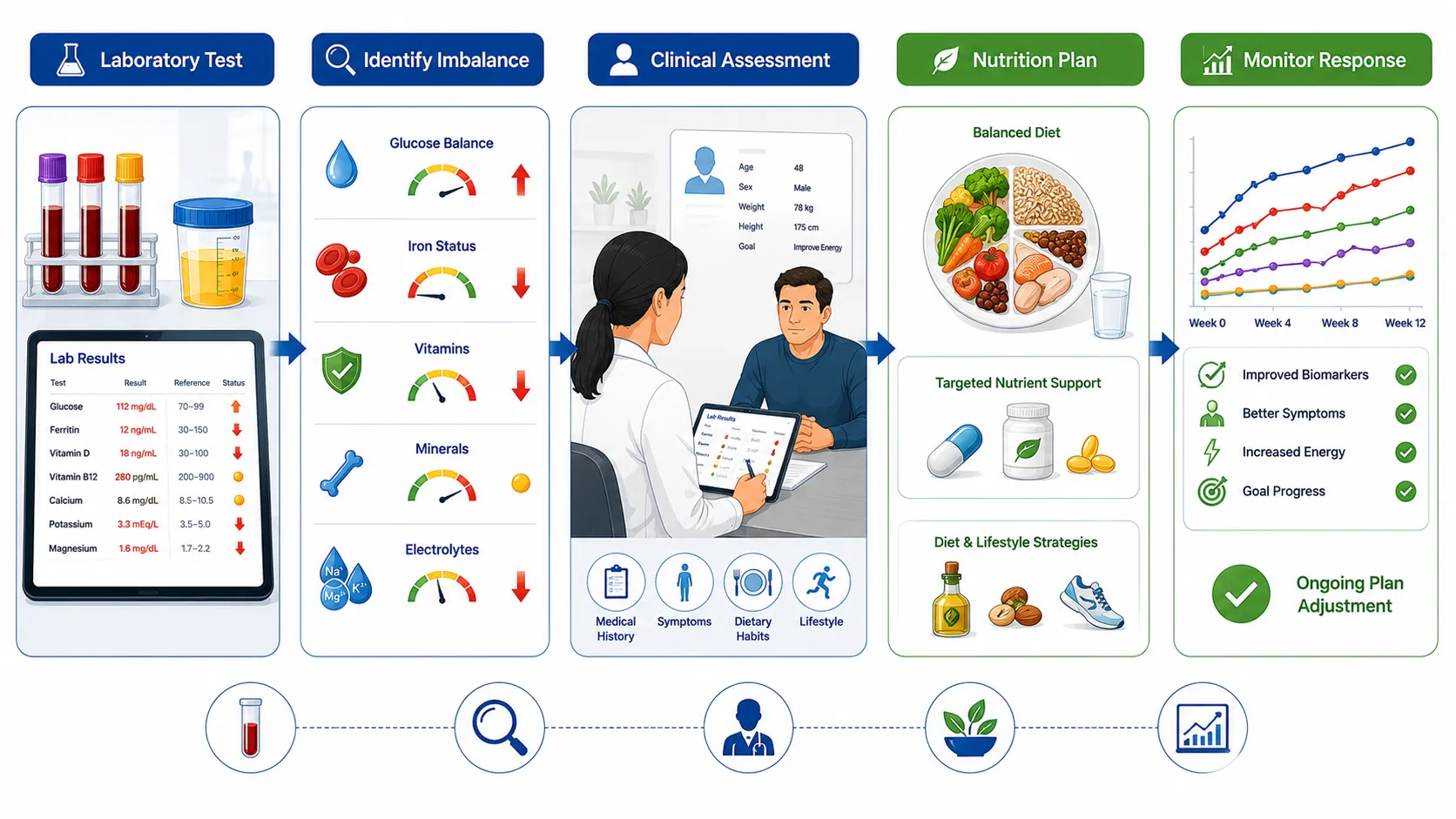
Understanding Biochemical Imbalances in Clinical Nutrition
A biochemical imbalance occurs when the concentration, availability, metabolism or physiological regulation of a nutrient or related substance falls outside the range required for normal biological function. Such imbalances may involve deficiencies, excesses, altered electrolyte status, impaired metabolic regulation or changes caused by underlying disease.
Biochemical findings must be interpreted carefully because an abnormal laboratory value does not always represent a nutritional deficiency or excess. Acute illness, inflammation, hydration status, organ dysfunction, medication use and recent dietary intake may influence laboratory measurements.
Key considerations include:
Whether the laboratory result represents a persistent or temporary change.
Whether the result is consistent with the patient’s symptoms.
Whether other laboratory markers support the same interpretation.
Whether inflammation or acute illness may influence the measurement.
Whether dietary intake or supplement use explains the result.
Whether medication may alter nutrient absorption, metabolism or excretion.
Whether an underlying clinical condition requires medical management.
Whether the individual belongs to a high-risk population.
The purpose of a nutritional intervention is therefore not simply to change a laboratory number. The aim is to support physiological function by addressing an appropriately identified nutritional need.
Key Definitions and Concepts
| Term | Definition | Relevance to Nutritional Intervention |
|---|---|---|
| Biochemical imbalance | An abnormality in the concentration, availability or regulation of a biologically important substance | Provides a possible target for further assessment and intervention |
| Biomarker | A measurable biological characteristic used to assess physiological or nutritional status | Helps identify, monitor and evaluate nutritional concerns |
| Nutritional deficiency | An insufficient availability of a nutrient to support normal physiological function | May require dietary improvement, supplementation or further clinical investigation |
| Nutrient excess | An intake or concentration of a nutrient that may contribute to adverse physiological effects | Requires careful investigation of dietary and supplement exposure |
| Evidence-based practice | The integration of relevant scientific evidence, professional judgement and individual circumstances | Supports safe and appropriate nutritional decision-making |
| Clinical correlation | Interpretation of laboratory findings alongside symptoms, history and physiological information | Reduces the risk of acting on isolated laboratory results |
| Targeted intervention | An intervention designed to address a clearly identified nutritional or biochemical need | Improves precision and reduces unnecessary dietary changes |
| Monitoring | Planned reassessment of clinical and biochemical outcomes over time | Determines whether an intervention is effective and safe |
The Importance of Evidence-Based Nutritional Intervention
Evidence-based nutritional practice combines three essential elements: the best available scientific evidence, professional expertise and the individual circumstances of the patient. This approach recognises that a recommendation supported by research may still require modification to account for a person’s clinical condition, nutritional status, food preferences and practical circumstances.
A high-quality intervention plan should not rely solely on popular dietary trends or general assumptions. Instead, recommendations should be linked to the identified biochemical concern and supported by appropriate nutritional knowledge.
Evidence-based planning involves:
Identifying the clinical or nutritional problem accurately.
Reviewing relevant laboratory findings.
Considering recognised clinical guidance and established nutritional principles.
Assessing the quality and relevance of available evidence.
Evaluating the benefits and potential risks of intervention.
Considering individual tolerance and dietary preferences.
Establishing measurable goals.
Monitoring outcomes and adjusting the plan when appropriate.
Evidence should be applied proportionately. A mild abnormality with no symptoms may require a different response from a severe or persistent abnormality associated with significant clinical symptoms.
Sources of Evidence Used in Nutritional Planning
Nutritional decisions may be informed by several forms of evidence.
These include:
Clinical practice guidelines.
Systematic reviews and evidence syntheses.
High-quality clinical research.
Established nutritional reference values.
Laboratory reference information.
Clinical assessment findings.
Dietary assessment data.
Professional judgement within the practitioner’s scope of practice.
No single source should automatically override all other information. Effective decision-making requires the appropriate integration of evidence.
A Systematic Process for Developing a Nutritional Intervention Plan
A structured process improves consistency and reduces the risk of overlooking important clinical factors. The intervention should progress from assessment to interpretation, planning, implementation and monitoring.
Step 1: Identify and Verify the Biochemical Concern
The first stage is to identify the laboratory finding that requires assessment. The practitioner should determine exactly what has been measured and what the result may indicate.
Important questions include:
Which biomarker is abnormal?
What biological process does the biomarker represent?
Is the abnormality mild, moderate or potentially severe?
Is the result isolated or part of a wider pattern?
Is there a previous result for comparison?
Were there pre-test factors that may have affected the result?
Does the laboratory provide relevant interpretative information?
A laboratory result should be reviewed for reliability before it becomes the foundation of a nutritional intervention.
Step 2: Establish Clinical Context
Clinical context determines whether the laboratory result has practical significance. A low or high concentration may have different implications depending on the patient’s physiological condition.
Relevant information may include:
Age and life stage.
Current symptoms.
Medical history.
Dietary history.
Recent changes in food intake.
Supplement use.
Medication use.
Hydration status.
Physical activity.
Recent illness or infection.
Gastrointestinal function.
Known metabolic or organ-related conditions.
Previous laboratory trends.
For example, a biomarker associated with nutrient status may be altered during inflammation. In such circumstances, interpreting the value without considering inflammatory or clinical information could lead to an inappropriate conclusion.
Step 3: Determine the Likely Cause of the Imbalance
An intervention is more effective when it addresses the cause rather than only the laboratory abnormality.
Potential causes of nutritional or biochemical imbalance include inadequate intake, excessive intake, impaired absorption, altered metabolism, increased physiological requirements, excessive losses or medication-related effects.
Common Causes to Investigate
Inadequate Dietary Intake
Inadequate intake may result from:
Limited dietary variety.
Food insecurity.
Restrictive dietary patterns.
Poor appetite.
Difficulty preparing food.
Swallowing difficulties.
Reduced access to nutrient-rich foods.
Impaired Absorption
A person may consume an apparently adequate diet but still have altered nutrient status because of reduced absorption.
Possible factors include:
Gastrointestinal disturbances.
Conditions affecting digestive function.
Altered gastrointestinal anatomy.
Interactions between nutrients.
Medication-related changes.
Increased Physiological Requirements
Nutrient requirements may change because of:
Growth.
Pregnancy or other physiological states.
Increased metabolic demand.
Recovery from illness.
Increased physical demands.
Increased Losses or Altered Excretion
Biochemical imbalance may also occur because nutrients are lost or excreted differently.
Relevant considerations include:
Gastrointestinal losses.
Altered renal handling.
Excessive fluid losses.
Medication-related changes.
Excessive Supplementation
Nutritional interventions must consider whether the individual is already taking supplements. High-dose or multiple products may contribute to excessive intake.
The practitioner should establish:
The name of each supplement.
The dose.
Frequency of use.
Duration of use.
Whether multiple products contain the same nutrient.
Step 4: Formulate Clear Nutritional Goals
Once the problem and likely causes have been assessed, clear goals should be established. Goals should focus on physiological improvement rather than simply attempting to produce a particular laboratory value.
Effective goals are:
Specific.
Relevant to the identified problem.
Safe.
Realistic.
Measurable.
Subject to review.
Examples of goals may include:
Improving dietary intake of identified nutrient-rich foods.
Correcting an inadequate dietary pattern.
Supporting appropriate nutrient balance.
Reducing unnecessary excessive supplement exposure.
Improving adherence to an agreed nutritional plan.
Supporting gradual improvement in relevant biochemical indicators.
Goals should be individualised. A plan that is nutritionally appropriate but impossible for the individual to follow is unlikely to produce sustained benefit.
Designing the Targeted Nutritional Strategy
The nutritional strategy should match the identified need. The intervention may involve food-based changes, structured meal planning, modification of supplement use or referral for additional clinical assessment.
Food-First Approaches
Where appropriate and clinically suitable, improving the overall diet can provide a sustainable foundation for nutritional intervention.
Food-based strategies may:
Improve the intake of multiple nutrients simultaneously.
Support broader dietary quality.
Encourage sustainable behavioural changes.
Provide fibre and other beneficial food components.
Reduce reliance on unnecessary supplements.
Examples of practical strategies include:
Increasing dietary variety.
Including nutrient-dense foods.
Improving meal regularity.
Addressing barriers to adequate food intake.
Adjusting food choices to improve nutrient availability.
Combining appropriate foods within balanced meals.
A food-first strategy should not delay necessary medical treatment when laboratory abnormalities are clinically significant.
Supplementation Within Appropriate Professional Boundaries
Supplementation may be considered when dietary measures alone are insufficient, when requirements are increased or when an appropriately qualified healthcare professional determines that supplementation is indicated.
Safe planning requires attention to:
The reason for supplementation.
Existing dietary intake.
Other supplements being used.
Potential interactions.
The risk of excessive intake.
Relevant laboratory monitoring.
Duration and review arrangements.
Unnecessary high-dose supplementation can create additional biochemical problems. Therefore, more supplementation does not necessarily produce better nutritional outcomes.
Dietary Modification for Excess or Toxicity Risk
When laboratory evidence and clinical assessment suggest excessive nutrient exposure, the strategy may focus on identifying and reducing unnecessary sources.
The process may include:
Reviewing supplement labels.
Identifying duplicate products.
Assessing fortified foods.
Reviewing prescribed or medically supervised products.
Considering relevant dietary exposures.
Seeking appropriate medical assessment where necessary.
The intervention should be proportionate to the severity of the concern.
Integrating Clinical Laboratory Testing Into Intervention Planning
Laboratory testing provides objective information, but nutritional intervention should not be based on numbers alone. Interpretation requires an understanding of biological variation and analytical limitations.
Principles for Using Laboratory Data Safely
A practitioner should:
Confirm the identity and relevance of the biomarker.
Review the laboratory reference information provided.
Consider the timing of the test.
Examine related biomarkers.
Identify potential confounding factors.
Compare results with previous measurements where available.
Correlate findings with symptoms and dietary information.
Recognise when findings require referral.
Understanding Patterns Rather Than Isolated Values
A single laboratory result can provide useful information, but patterns are often more informative.
For example, a nutritional concern may be supported by:
Multiple related biomarkers.
Consistent symptoms.
A relevant dietary history.
Persistent changes over time.
Evidence of altered physiological function.
Conversely, an isolated abnormality may require confirmation before significant dietary changes are introduced.
Practical Framework for an Intervention Plan
A structured intervention plan can be organised into several components.
Assessment
The assessment stage should document:
Relevant laboratory findings.
Clinical history.
Dietary intake.
Symptoms.
Medical conditions.
Medication use.
Supplement use.
Potential risk factors.
Interpretation
The practitioner should determine:
The likely significance of the findings.
Whether the result is supported by additional evidence.
Possible causes of the imbalance.
Whether the finding may be influenced by another physiological process.
Intervention
The intervention should specify:
Dietary changes.
Practical food choices.
Meal or intake strategies.
Any appropriately supervised supplementation considerations.
Education and self-management support.
Monitoring
The monitoring plan should identify:
What outcomes will be reviewed.
Which symptoms will be monitored.
Whether dietary adherence will be assessed.
Whether follow-up laboratory testing is clinically appropriate.
When the intervention should be reviewed.
Practical Example: Developing a Targeted Intervention
Consider an individual who presents with persistent fatigue and laboratory findings suggesting a possible nutrient-related concern. A poor-quality intervention would immediately recommend a high-dose supplement without further assessment.
A stronger approach would involve the following process.
First, the practitioner reviews the laboratory findings and considers whether related markers support the initial interpretation. The person’s symptoms, dietary pattern, supplement use and medical history are then assessed.
The practitioner may identify that the individual has limited dietary variety and frequently skips meals. However, other factors may also require consideration, including inflammation, medication use or impaired absorption.
A targeted plan could include:
Improving the regularity of meals.
Increasing the intake of relevant nutrient-containing foods.
Addressing barriers to food preparation.
Reviewing existing supplement use.
Monitoring symptoms.
Arranging appropriate reassessment within the relevant clinical pathway.
The key principle is that the intervention responds to the complete assessment rather than to one laboratory number in isolation.
Individualisation of Nutritional Interventions
Individuals respond differently to dietary interventions. A plan should therefore be adapted to personal circumstances.
Factors Requiring Individual Consideration
Important factors include:
Age.
Physiological requirements.
Existing medical conditions.
Allergies or intolerances.
Cultural dietary practices.
Religious food preferences.
Economic circumstances.
Food access.
Cooking ability.
Health literacy.
Motivation.
Previous dietary habits.
Individualisation improves the practicality and acceptability of the intervention.
Patient-Centred Planning
Patient-centred planning involves working collaboratively with the individual rather than simply issuing instructions.
Effective communication should:
Explain the purpose of the intervention.
Use understandable language.
Avoid unnecessary technical terminology.
Discuss realistic dietary changes.
Encourage questions.
Identify barriers to implementation.
Support informed decision-making.
Monitoring the Effectiveness of the Intervention
An intervention plan should include a clear monitoring process. Without follow-up, it may be impossible to determine whether the strategy has improved nutritional status.
Monitoring may involve:
Changes in dietary intake.
Changes in symptoms.
Functional improvements.
Relevant laboratory trends.
Adherence to the plan.
Tolerance of dietary modifications.
Potential adverse effects.
Why Monitoring Is Essential
Monitoring provides several important benefits:
It identifies whether the intervention is producing the intended outcome.
It detects potential adverse effects.
It supports timely adjustment.
It improves accountability.
It prevents unnecessarily prolonged interventions.
It helps distinguish effective strategies from ineffective ones.
A plan should be modified when evidence indicates that the original approach is not achieving its objectives.
Evaluating Safety and Potential Risks
Safety is a fundamental principle of clinical nutritional intervention. Even apparently simple dietary changes can be inappropriate for some individuals.
Potential risks include:
Excessive nutrient intake.
Unnecessary dietary restriction.
Nutrient interactions.
Medication interactions.
Delayed medical diagnosis.
Misinterpretation of laboratory findings.
Failure to recognise an underlying clinical condition.
Safety Checklist
Before implementing a targeted intervention, consider:
Is the laboratory interpretation sufficiently supported?
Is the intervention within the practitioner’s scope of practice?
Could the dietary change create a new nutritional problem?
Is the individual taking relevant medication?
Is there a risk associated with supplementation?
Are symptoms severe or worsening?
Is referral required?
Professional Collaboration and Referral
Complex biochemical imbalances may require multidisciplinary management. Nutritional professionals should recognise the limits of their role and work appropriately with other healthcare practitioners.
Referral may be necessary when:
Laboratory abnormalities are severe.
Symptoms suggest significant illness.
There is possible nutrient toxicity.
The underlying cause is unclear.
There is suspected malabsorption.
Organ dysfunction may influence nutritional status.
The individual requires medical treatment beyond nutritional intervention.
Professional collaboration can improve the safety and quality of care by integrating nutritional, medical and laboratory expertise.
Benefits of Targeted Evidence-Based Nutritional Intervention
When appropriately designed, targeted nutritional strategies offer several advantages.
Key benefits include:
More precise responses to identified nutritional concerns.
Reduced reliance on generic dietary advice.
Improved safety through evidence-based decision-making.
Greater consideration of individual needs.
Better use of laboratory and clinical information.
Improved monitoring of outcomes.
Reduced risk of unnecessary supplementation.
Greater opportunity to address underlying dietary causes.
Improved communication between members of the healthcare team.
The greatest benefit comes from using nutrition as part of a comprehensive and appropriately coordinated approach to health.
Common Challenges in Developing Intervention Plans
Clinical nutritional planning is not always straightforward. Several challenges can affect interpretation and implementation.
Challenge: Conflicting Laboratory Results
Different biomarkers may appear inconsistent.
Appropriate responses include:
Reviewing analytical and biological variation.
Examining the timing of each test.
Considering inflammation and acute illness.
Reviewing related biomarkers.
Seeking further clinical interpretation when required.
Challenge: Poor Adherence
An intervention may be scientifically appropriate but difficult to follow.
Possible solutions include:
Simplifying recommendations.
Prioritising the most important changes.
Setting gradual goals.
Providing practical meal examples.
Identifying barriers.
Reviewing progress regularly.
Challenge: Overreliance on Supplements
Some individuals may assume supplements can replace dietary quality.
Educational priorities include:
Explaining the role of whole dietary patterns.
Reviewing duplicate supplement products.
Discussing the risks of unnecessary high doses.
Supporting appropriate professional guidance.
Applying Critical Thinking to Nutritional Intervention Planning
Critical thinking is essential when working with laboratory data and nutritional recommendations. Practitioners should question assumptions and evaluate the quality of the available evidence.
Useful critical questions include:
What exactly does this biomarker measure?
What alternative explanations could account for this result?
Is the finding supported by other evidence?
Does the dietary history explain the imbalance?
Could medication or disease influence the result?
What are the risks of intervention?
How will effectiveness be measured?
When should the plan be changed or stopped?
This analytical approach helps prevent oversimplified conclusions.
Key Steps in Developing an Evidence-Based Intervention Plan
The overall process can be summarised as follows:
Identify the relevant biochemical abnormality.
Verify the quality and clinical relevance of the laboratory data.
Assess related biomarkers and laboratory patterns.
Obtain a detailed dietary and clinical history.
Review symptoms and physical findings.
Identify medications and supplements.
Consider inflammation, hydration and metabolic status.
Determine possible underlying causes.
Review relevant evidence and clinical guidance.
Establish clear and realistic nutritional goals.
Select safe and targeted dietary strategies.
Consider supplementation only where appropriate and within professional boundaries.
Educate the individual about the purpose of the intervention.
Establish a monitoring and review process.
Modify the strategy according to outcomes.
Refer for further clinical assessment when necessary.
Conclusion
Developing targeted, evidence-based nutritional intervention plans requires a structured and clinically responsible approach. Laboratory testing can provide valuable evidence of biochemical imbalance, but results should never be interpreted in isolation. Effective nutritional planning depends on the integration of laboratory findings with dietary intake, symptoms, clinical history, physiological status and relevant scientific evidence.
A high-quality intervention begins by identifying the likely significance and cause of the biochemical concern. The practitioner can then establish realistic goals and select dietary strategies that are safe, practical and appropriate to the individual’s circumstances. Food-based improvements, careful review of supplementation and ongoing monitoring all play important roles in supporting nutritional health.
The most effective clinical nutritional strategies are not simply designed to normalise laboratory values. They aim to improve nutritional adequacy, support physiological function, address relevant underlying causes and minimise the risk of harm. Through critical interpretation, evidence-based decision-making, individualised planning and appropriate professional collaboration, Learners can develop the skills required to construct nutritional interventions that are scientifically justified, clinically relevant and responsive to individual needs.
2.Critically Evaluate How Existing Clinical Guidelines and Biochemical Evidence Inform the Creation of Personalised Dietary Strategies for Long-Term Chronic Disease Management
Long-term chronic disease management requires nutritional strategies that are scientifically justified, clinically appropriate and tailored to the individual. General healthy eating advice can provide a useful foundation, but people living with chronic conditions often have different metabolic characteristics, nutritional requirements, treatment regimens, symptoms and risks. For this reason, effective dietary management requires the careful integration of existing clinical guidelines, biochemical evidence, clinical assessment and individual circumstances.
Clinical guidelines provide structured recommendations based on the evaluation of available scientific evidence. Biochemical evidence provides objective information about physiological and metabolic processes occurring within the individual. When these sources are considered together, healthcare and nutrition professionals can develop more informed dietary strategies for supporting long-term health and disease management.
However, neither clinical guidelines nor laboratory data should be applied mechanically. Guidelines are generally designed for populations or defined patient groups, while biochemical results can vary according to illness, medication, hydration, inflammation, laboratory methodology and individual biological differences. Critical evaluation is therefore essential.
This section examines how clinical guidance and biochemical evidence can be integrated to develop personalised dietary strategies, while recognising the limitations, uncertainties and professional responsibilities associated with long-term chronic disease management.
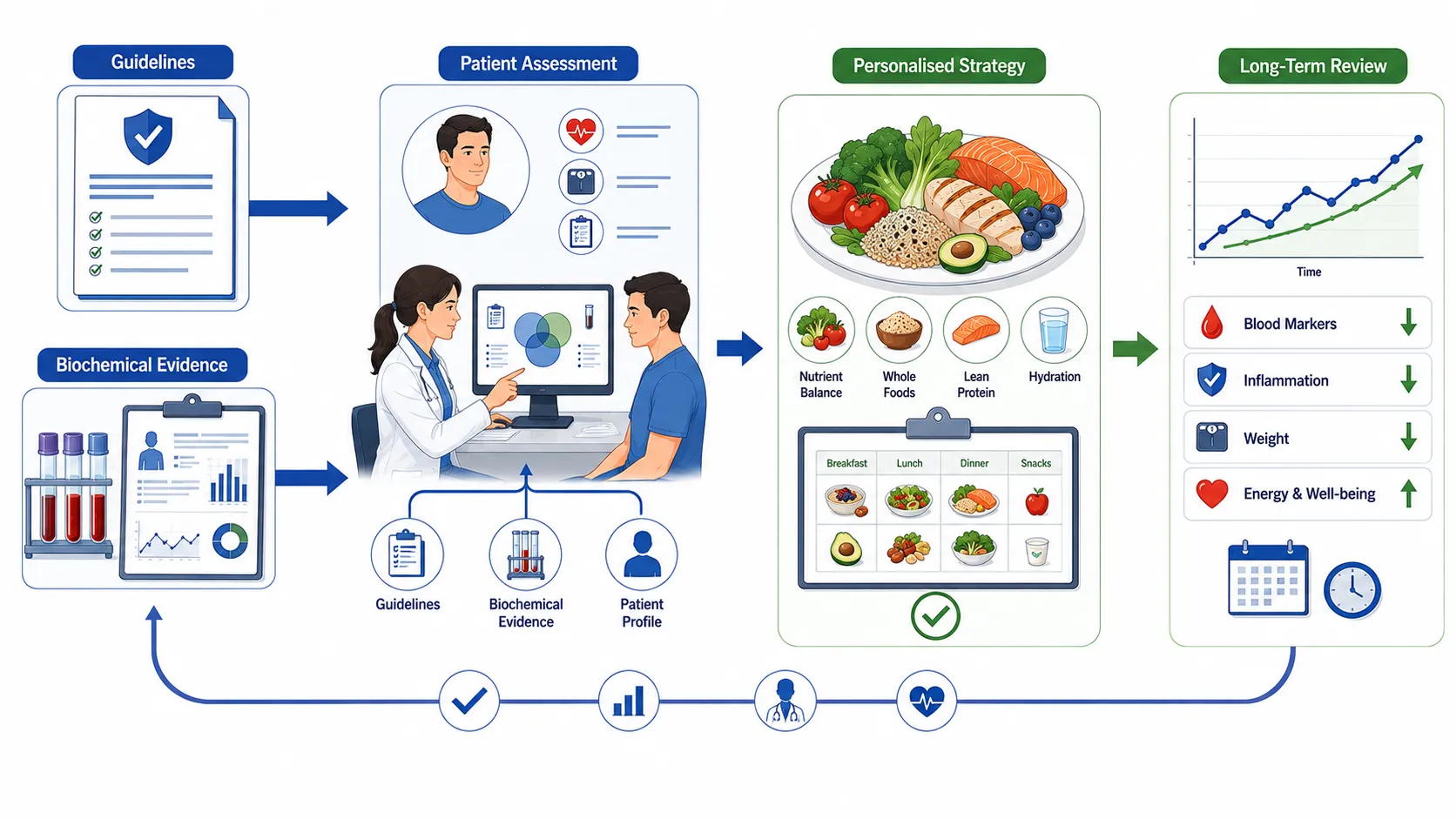
Understanding Long-Term Chronic Disease Management
Chronic diseases are long-term conditions that may require ongoing monitoring and sustained lifestyle or clinical management. Nutritional care can play an important supportive role in many chronic conditions because dietary patterns influence nutrient intake, metabolism, body composition and several physiological processes.
Long-term nutritional management focuses on maintaining appropriate nutritional status and supporting health outcomes over an extended period.
Key objectives may include:
Supporting adequate nutrient intake.
Reducing nutritional risk.
Managing relevant metabolic abnormalities.
Supporting healthy body composition where appropriate.
Improving dietary quality.
Reducing excessive intake of nutrients associated with identified clinical risks.
Supporting adherence to medically appropriate treatment plans.
Improving quality of life.
Monitoring changes in nutritional and biochemical status.
A personalised strategy should recognise that chronic disease management is dynamic. Nutritional needs may change as the condition progresses, treatment changes, physical activity varies or new clinical findings emerge.
The Meaning of Personalised Dietary Strategies
A personalised dietary strategy is an individualised plan developed using relevant scientific evidence and information about the person’s health, nutritional status, preferences and practical circumstances.
Personalisation does not mean creating an entirely unique scientific rule for every person. Instead, it involves adapting evidence-based principles to individual needs.
A personalised strategy may consider:
Clinical diagnosis.
Disease severity.
Relevant laboratory findings.
Nutritional status.
Dietary intake.
Symptoms.
Medication use.
Food preferences.
Cultural practices.
Religious dietary requirements.
Allergies or intolerances.
Physical activity.
Economic circumstances.
Food availability.
Ability to prepare meals.
Motivation and readiness for change.
The aim is to ensure that recommendations are both clinically appropriate and practically achievable.
Key Definitions and Concepts
| Term | Definition | Application in Personalised Dietary Management |
|---|---|---|
| Clinical guideline | A systematically developed recommendation designed to support healthcare decision-making | Provides an evidence-based framework for nutritional and clinical care |
| Biochemical evidence | Objective information obtained from laboratory testing about physiological or metabolic processes | Helps identify relevant abnormalities and monitor responses |
| Personalised nutrition | Adaptation of nutritional recommendations to individual characteristics and needs | Supports practical and patient-centred dietary strategies |
| Biomarker | A measurable biological characteristic indicating a physiological or metabolic state | Assists assessment, monitoring and clinical interpretation |
| Chronic disease management | Ongoing care designed to manage long-term health conditions and reduce complications | Requires regular review and adaptation of nutritional strategies |
| Clinical correlation | Interpretation of laboratory findings alongside symptoms, history and other clinical information | Prevents overreliance on isolated laboratory values |
| Evidence-based practice | Integration of scientific evidence, professional judgement and individual circumstances | Supports safe and informed nutritional decision-making |
| Monitoring | Repeated assessment of relevant outcomes over time | Determines whether dietary strategies remain effective and appropriate |
The Role of Clinical Guidelines in Nutritional Strategy Development
Clinical guidelines are important because they provide structured recommendations developed through the evaluation of scientific evidence. They can help practitioners identify established priorities and avoid nutritional advice based solely on opinion, trends or unsupported assumptions.
Guidelines may address:
Overall dietary patterns.
Nutrient adequacy.
Relevant metabolic risk factors.
Weight management where clinically appropriate.
Monitoring requirements.
Disease-specific nutritional concerns.
Lifestyle considerations.
Referral and multidisciplinary care.
Benefits of Using Clinical Guidelines
Clinical guidelines provide several advantages.
They can:
Promote consistency in clinical practice.
Support evidence-based decision-making.
Reduce reliance on unsupported dietary claims.
Identify recognised risk factors.
Provide structured recommendations for monitoring.
Support communication within multidisciplinary teams.
Help practitioners remain within accepted professional standards.
Guidelines should therefore provide a starting framework for intervention planning.
Limitations of Clinical Guidelines
Guidelines are not a substitute for professional judgement. They are often based on population-level evidence and may not address every individual circumstance.
Potential limitations include:
Differences between study populations and individual patients.
Variation in disease severity.
Coexisting health conditions.
Differences in medication use.
Cultural and socioeconomic factors.
Limited evidence for specific subgroups.
Changes in scientific evidence over time.
A practitioner should therefore ask whether the recommendation is appropriate for the individual rather than applying it automatically.
Understanding Biochemical Evidence in Chronic Disease Management
Biochemical evidence can provide objective information about nutritional and metabolic processes. Laboratory testing may help identify changes that are not immediately visible through dietary assessment alone.
Biochemical information may contribute to the assessment of:
Nutrient availability.
Metabolic regulation.
Glucose-related control.
Lipid-related patterns.
Electrolyte balance.
Organ-related influences on metabolism.
Inflammatory activity.
Potential nutrient excess or deficiency.
The value of laboratory evidence depends on accurate interpretation.
Why Biochemical Data Must Be Interpreted Critically
An abnormal laboratory result does not automatically establish a nutritional diagnosis.
Results may be influenced by:
Acute illness.
Inflammation.
Hydration status.
Recent dietary intake.
Recent exercise.
Medication use.
Supplementation.
Biological variation.
Laboratory methodology.
Organ function.
For example, a biochemical value may reflect an acute physiological response rather than a long-term nutritional problem. Therefore, repeated measurements and related clinical information may be required.
Integrating Clinical Guidelines and Biochemical Evidence
The most effective personalised dietary strategies use guidelines and biochemical evidence as complementary sources of information.
Clinical guidelines answer questions such as:
What interventions are generally supported by evidence?
Which dietary patterns are considered appropriate?
What risks require monitoring?
When is specialist referral recommended?
Biochemical evidence helps answer:
What is occurring physiologically in this individual?
Is there evidence of a relevant metabolic disturbance?
Has nutritional status changed?
Is the current intervention producing measurable effects?
The integration process requires systematic reasoning.
A Practical Integration Framework
A structured approach may involve the following stages:
Review the chronic condition and relevant clinical guidance.
Identify the individual’s primary nutritional priorities.
Review relevant laboratory and biochemical evidence.
Assess the quality and limitations of laboratory data.
Obtain dietary and lifestyle information.
Identify symptoms and functional concerns.
Consider medication and supplement use.
Determine whether laboratory findings support the identified priorities.
Adapt guideline recommendations to individual circumstances.
Develop realistic dietary goals.
Establish a monitoring plan.
Review outcomes and modify the strategy.
Step 1: Define the Clinical and Nutritional Problem
The first step is to establish what requires management.
The practitioner should consider:
What chronic condition is present?
What is the current clinical status?
Are there relevant complications?
Which nutritional factors are most important?
Are there symptoms affecting food intake?
Is nutritional status adequate?
The nutritional strategy should address clearly identified priorities rather than attempting to change every aspect of the diet simultaneously.
Prioritising Nutritional Concerns
Priorities may include:
Correcting inadequate intake.
Improving overall dietary quality.
Addressing excessive intake.
Supporting metabolic control.
Managing symptoms that affect eating.
Preventing nutritional deterioration.
Supporting long-term adherence.
Prioritisation improves practicality and prevents the individual from becoming overwhelmed by unnecessary dietary restrictions.
Step 2: Review Relevant Clinical Guidelines
Not every guideline is equally relevant to every case. The practitioner should critically evaluate the guideline before using it.
Important questions include:
What population does the guideline address?
How current is the evidence?
What outcomes were prioritised?
Are recommendations strong or conditional?
Does the individual’s condition match the guideline population?
Are there relevant coexisting conditions?
The practitioner should avoid selecting guidance simply because it is convenient or familiar.
Evaluating the Quality of Guideline Recommendations
Critical appraisal should consider:
The quality of underlying evidence.
The relevance of the population studied.
The consistency of research findings.
The balance between benefits and risks.
Practical feasibility.
Potential conflicts of interest.
Evidence-based practice requires understanding both the strengths and limitations of recommendations.
Step 3: Analyse Relevant Biochemical Findings
Laboratory findings should be selected according to clinical relevance. Ordering or interpreting unnecessary tests may increase confusion and lead to inappropriate interventions.
Relevant questions include:
What does the biomarker measure?
Is the result clinically meaningful?
Is the result part of a broader pattern?
Has the value changed over time?
Are there potential confounding factors?
Does the finding correlate with symptoms?
Looking for Patterns
A single abnormal result may have limited meaning. A combination of findings can provide stronger evidence.
For example, a meaningful pattern may involve:
Persistent biochemical abnormalities.
Related clinical symptoms.
A dietary pattern consistent with the abnormality.
Repeated laboratory findings.
Relevant changes in physiological function.
Pattern recognition is therefore an essential component of personalised nutritional assessment.
Step 4: Conduct a Comprehensive Dietary Assessment
Laboratory evidence cannot explain the entire dietary context.
A dietary assessment should investigate:
Meal frequency.
Food variety.
Portion patterns.
Intake of nutrient-rich foods.
Intake of highly processed foods where relevant.
Fluid intake.
Alcohol intake where clinically relevant.
Supplement use.
Recent dietary changes.
Food avoidance.
Assessment should also identify practical barriers.
Common barriers include:
Financial limitations.
Poor appetite.
Limited cooking facilities.
Shift work.
Limited nutrition knowledge.
Cultural preferences.
Physical limitations.
A scientifically correct plan may fail if these factors are ignored.
Step 5: Personalise the Dietary Strategy
Once the evidence has been reviewed, recommendations should be adapted to the individual.
Principles of Personalisation
Personalised strategies should be:
Evidence-based.
Safe.
Clinically relevant.
Practical.
Culturally appropriate.
Financially realistic.
Sustainable.
Measurable.
The strategy should focus on achievable changes rather than perfection.
Example of Personalisation
Two individuals may have similar biochemical findings but require different interventions.
One person may have limited food access and irregular meals. Another may have adequate food access but consume a highly repetitive dietary pattern. A single standard meal plan would not necessarily address both situations.
Personalisation requires identifying the specific barriers and causes affecting each individual.
Long-Term Dietary Patterns Versus Short-Term Dietary Changes
Chronic disease management requires attention to sustained dietary patterns rather than temporary interventions.
Short-term dietary changes may improve certain biomarkers temporarily, but long-term health management depends on whether the strategy can be maintained.
Sustainable planning should consider:
Food preferences.
Family eating patterns.
Cultural traditions.
Cooking skills.
Work schedules.
Cost.
Access to suitable foods.
The most restrictive plan is not always the most effective plan.
Monitoring Biochemical and Clinical Outcomes
A personalised strategy should include planned monitoring.
Monitoring may involve:
Relevant laboratory trends.
Dietary adherence.
Symptoms.
Functional status.
Body composition where clinically appropriate.
Treatment tolerance.
Quality of life.
Why Repeated Monitoring Matters
Chronic disease management changes over time.
Repeated monitoring can:
Identify improvement.
Detect deterioration.
Evaluate adherence.
Identify adverse effects.
Determine whether the intervention remains appropriate.
Support timely modification.
A dietary plan should not be considered permanently correct simply because it was appropriate at the beginning.
Practical Example: Using Evidence to Personalise Long-Term Dietary Management
Consider an individual with a chronic metabolic condition who presents with biochemical findings indicating an ongoing metabolic concern.
The practitioner should not simply provide a generic diet sheet.
A structured approach would include:
Reviewing relevant clinical guidance.
Examining the individual’s laboratory trends.
Assessing dietary intake.
Reviewing medication use.
Identifying physical activity patterns.
Exploring barriers to dietary change.
Setting practical goals.
Monitoring relevant outcomes.
The dietary strategy might prioritise improved meal regularity, increased dietary quality and adjustment of specific food patterns associated with the identified metabolic concern.
The intervention should then be reviewed according to changes in clinical and biochemical evidence.
The Importance of Multidisciplinary Collaboration
Long-term chronic disease management often requires collaboration.
Relevant professionals may contribute expertise relating to:
Medical diagnosis.
Medication management.
Laboratory interpretation.
Nutritional care.
Behavioural support.
Physical rehabilitation.
Nutritional recommendations should complement rather than conflict with the wider clinical management plan.
Benefits of Collaborative Practice
Collaboration can:
Improve patient safety.
Reduce contradictory advice.
Support more comprehensive assessment.
Improve communication.
Facilitate appropriate referral.
Address complex barriers to dietary change.
Critical Evaluation of Biochemical Evidence
Biochemical evidence is valuable but should not be treated as infallible.
Analytical Limitations
Laboratory testing may be influenced by:
Measurement variation.
Sample handling.
Testing methodology.
Reference interval differences.
Biological Limitations
Biological results may vary because of:
Hydration.
Acute illness.
Inflammation.
Exercise.
Food intake.
Time of sampling.
Interpretative Limitations
A laboratory result may indicate an association without establishing the cause.
Therefore:
Correlation does not always establish causation.
One abnormal value may not represent chronic disease progression.
Normal values do not always exclude every nutritional concern.
Laboratory findings should be interpreted within the wider clinical picture.
Balancing Standardisation and Personalisation
A major challenge is balancing guideline-based consistency with individualised care.
Excessive standardisation may ignore important personal differences. Excessive personalisation without evidence may lead to unsupported or unsafe recommendations.
The most appropriate approach is evidence-informed adaptation.
This means:
Use guidelines as a scientific framework.
Assess individual circumstances.
Adapt recommendations where justified.
Document the rationale for significant modifications.
Monitor outcomes.
Key Benefits of Personalised Evidence-Based Strategies
Appropriately developed personalised strategies can provide several benefits.
They may:
Improve relevance to the individual.
Support greater dietary adherence.
Address specific biochemical concerns.
Reduce unnecessary dietary restrictions.
Improve the monitoring of outcomes.
Support long-term sustainability.
Encourage patient involvement.
Improve communication between healthcare professionals.
The benefits depend on the quality of assessment and the appropriateness of the intervention.
Ethical and Professional Considerations
Nutritional recommendations should be delivered responsibly.
Important considerations include:
Working within professional competence.
Avoiding unsupported health claims.
Respecting patient autonomy.
Protecting confidential health information.
Recognising the limits of laboratory interpretation.
Making appropriate referrals.
Communicating uncertainty honestly.
Practitioners should not present dietary interventions as guaranteed cures for chronic conditions.
Informed Decision-Making
Individuals should understand:
Why a dietary change is being recommended.
What outcomes are expected.
What limitations exist.
How progress will be monitored.
When further clinical assessment may be required.
Shared decision-making can improve engagement and adherence.
Common Challenges in Long-Term Dietary Management
Challenge: Conflicting Evidence
Research findings may not always agree.
The practitioner should:
Consider the quality of evidence.
Examine whether populations differ.
Avoid relying on a single study.
Follow established evidence-based guidance where appropriate.
Update practice as evidence develops.
Challenge: Conflicting Laboratory Results
Laboratory findings may appear inconsistent.
Possible responses include:
Reviewing trends.
Checking related biomarkers.
Considering physiological factors.
Investigating potential analytical variation.
Seeking additional clinical interpretation.
Challenge: Poor Long-Term Adherence
Even effective dietary recommendations may fail if they are difficult to maintain.
Strategies to improve adherence include:
Setting small achievable goals.
Prioritising important changes.
Using familiar foods.
Providing practical alternatives.
Reviewing progress regularly.
Addressing barriers without judgement.
A Structured Decision-Making Process
The following process can guide personalised strategy development:
Identify the chronic condition and nutritional priorities.
Review relevant clinical guidance.
Assess the quality and applicability of the evidence.
Analyse relevant biochemical findings.
Consider symptoms and clinical history.
Conduct a dietary assessment.
Identify individual barriers and preferences.
Establish realistic goals.
Develop targeted dietary recommendations.
Explain the rationale clearly.
Implement the strategy.
Monitor biochemical and clinical outcomes.
Modify the plan when necessary.
Refer to appropriate professionals when required.
Applying Professional Judgement
Professional judgement is particularly important when evidence does not provide a simple answer.
The practitioner may need to decide:
Which recommendations should be prioritised.
Whether a laboratory finding is clinically meaningful.
Whether dietary change alone is appropriate.
Whether supplementation requires further supervision.
Whether referral is required.
Good judgement should be transparent and based on documented reasoning rather than assumption.
Practical Workplace Application
In a clinical environment, a nutrition professional may receive a referral for a person with a chronic condition and several laboratory abnormalities.
An evidence-based workflow would include:
Initial Review
Confirm the reason for referral.
Review available clinical information.
Identify relevant laboratory data.
Assessment
Obtain dietary information.
Review medication and supplement use.
Assess symptoms and nutritional risks.
Identify practical barriers.
Evidence Review
Consult relevant clinical guidance.
Determine which recommendations apply.
Consider the limitations of available evidence.
Strategy Development
Prioritise key dietary goals.
Develop practical recommendations.
Agree realistic actions with the individual.
Follow-Up
Review dietary adherence.
Assess relevant symptoms.
Monitor clinically appropriate outcomes.
Modify the plan as needed.
This process supports consistent and patient-centred practice.
Critical Questions for Learners
When developing a personalised dietary strategy, Learners should ask:
What is the quality of the evidence supporting this recommendation?
Does the clinical guideline apply to this individual?
What do the biochemical findings actually measure?
Are there factors that could influence the laboratory result?
Is the finding persistent?
Does the dietary history support the proposed interpretation?
What intervention is likely to be practical and sustainable?
What are the potential risks?
How will effectiveness be monitored?
When should the strategy be changed?
These questions encourage analytical thinking rather than automatic application of recommendations.
Conclusion
Clinical guidelines and biochemical evidence provide essential foundations for the development of personalised dietary strategies for long-term chronic disease management. Guidelines offer structured, evidence-informed recommendations, while biochemical findings provide valuable information about individual physiological and metabolic status. Neither source should be used in isolation.
Effective practice requires critical evaluation of the relevance, quality and limitations of both forms of evidence. Laboratory results must be interpreted alongside clinical history, symptoms, dietary intake and other physiological factors. Similarly, guideline recommendations must be adapted carefully to account for individual circumstances, preferences and practical limitations.
A successful personalised dietary strategy is therefore evidence-based, clinically relevant, safe and sustainable. It should establish clear priorities, involve realistic dietary changes and include a structured process for monitoring outcomes. Long-term management also requires flexibility because nutritional and biochemical needs can change over time.
By combining high-quality clinical guidance with careful interpretation of biochemical evidence, practitioners can develop more precise and patient-centred nutritional strategies. This approach supports informed professional judgement, improves the relevance of dietary recommendations and contributes to safer and more effective long-term chronic disease management.
3.Design Comprehensive Nutritional Support Protocols, Including Appropriate Enteral and Parenteral Feeding Strategies, Based on a Patient’s Specific Biochemical Requirements
Nutritional support is an essential component of clinical care for patients who are unable to meet their nutritional requirements through normal oral intake or who require specialised nutritional intervention because of complex disease, impaired gastrointestinal function or significant metabolic disturbance. The design of a comprehensive nutritional support protocol requires systematic assessment, careful interpretation of biochemical data, appropriate selection of feeding routes and continuous monitoring.
Enteral nutrition and parenteral nutrition are specialised clinical interventions. Their use must be based on a thorough understanding of the patient’s physiological condition, nutritional status, gastrointestinal function, metabolic requirements and clinical risks. Biochemical findings provide important evidence that helps healthcare professionals identify nutritional deficits, metabolic instability, fluid and electrolyte disturbances and changes that may influence the composition and delivery of nutritional support.
A high-quality nutritional support protocol should not be treated as a fixed feeding prescription. It is a dynamic clinical plan that must be reviewed and adjusted as the patient’s condition changes. Appropriate nutritional support aims to provide sufficient energy, protein, fluids, electrolytes, vitamins, minerals and other essential nutrients while minimising avoidable complications.
This section examines the principles, processes and professional considerations involved in designing comprehensive nutritional support protocols based on individual biochemical requirements.
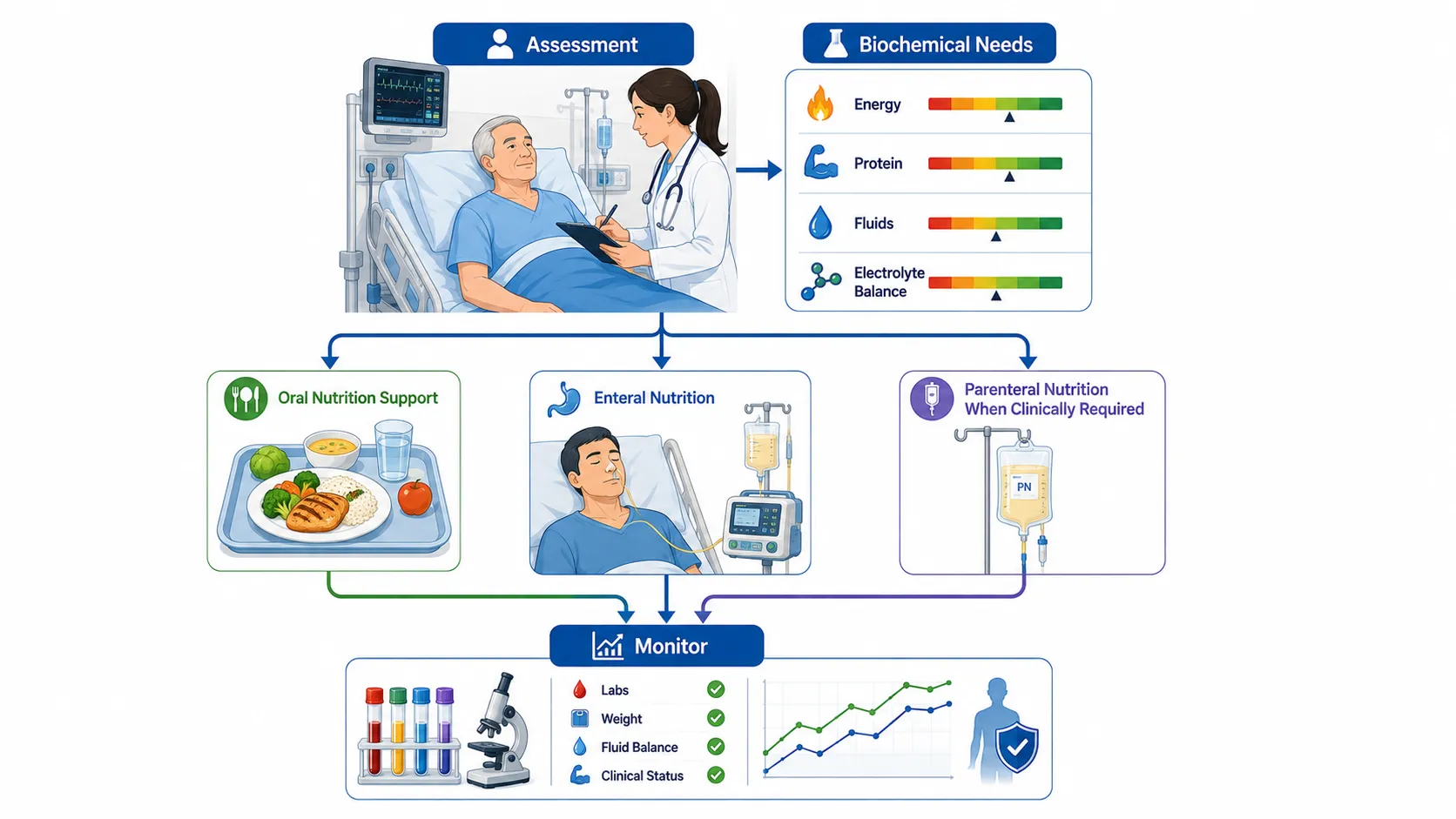
Understanding Clinical Nutritional Support
Clinical nutritional support refers to the provision of nutrients using specialised methods when normal oral intake is insufficient, unsafe or inappropriate for meeting the patient’s nutritional needs.
The principal methods include:
Optimising oral nutritional intake.
Oral nutritional supplementation where clinically appropriate.
Enteral nutrition.
Parenteral nutrition.
The choice of intervention depends on the patient’s clinical assessment rather than convenience alone.
The Primary Principles of Nutritional Support
A comprehensive protocol should follow several fundamental principles:
Assess the patient’s nutritional and clinical status.
Identify the cause of inadequate nutritional intake.
Evaluate gastrointestinal function.
Review relevant biochemical data.
Estimate nutritional requirements using appropriate clinical methods.
Select the safest suitable feeding route.
Introduce nutritional support at an appropriate rate.
Monitor tolerance and metabolic response.
Modify the protocol according to changing clinical needs.
Work within an appropriate multidisciplinary framework.
The overall principle is to use the least invasive and most physiologically appropriate method capable of meeting the patient’s requirements.
Key Definitions and Concepts
| Term | Definition | Clinical Relevance |
|---|---|---|
| Nutritional support | Provision of nutrients through specialised clinical strategies when normal intake is inadequate | Helps prevent or manage malnutrition and nutritional deterioration |
| Enteral nutrition | Delivery of nutritionally complete feed directly into the gastrointestinal tract through a feeding tube | Appropriate when the gastrointestinal tract is functional but oral intake is inadequate or unsafe |
| Parenteral nutrition | Intravenous delivery of nutrients that bypasses the gastrointestinal tract | Considered when the gastrointestinal tract cannot adequately support nutritional needs |
| Biochemical assessment | Evaluation of laboratory markers relating to metabolism, organ function and nutrient balance | Guides nutritional planning and monitoring |
| Electrolyte | A mineral substance involved in fluid balance, nerve signalling and cellular function | Requires careful monitoring during nutritional support |
| Metabolic tolerance | The body’s ability to process and utilise delivered nutrients safely | Helps determine feeding composition and rate |
| Refeeding risk | Risk of significant metabolic and electrolyte disturbances after nutritional intake is reintroduced | Requires careful assessment and monitoring |
| Fluid balance | Relationship between fluid intake, distribution and output | Influences feeding volume and clinical monitoring |
The Importance of Biochemical Assessment
Biochemical assessment provides objective information about physiological processes that may influence nutritional support.
Relevant laboratory findings may help evaluate:
Electrolyte balance.
Glucose regulation.
Renal function.
Liver function.
Hydration status.
Acid-base balance.
Inflammatory activity.
Protein and metabolic status.
Micronutrient concerns where testing is clinically indicated.
Biochemical information should be interpreted in context. An isolated abnormal value should not automatically determine the entire nutritional prescription.
Why Biochemical Requirements Vary Between Patients
Patients receiving nutritional support can have significantly different metabolic needs.
Factors influencing requirements include:
Acute illness.
Chronic disease.
Organ dysfunction.
Infection and inflammation.
Recent surgery.
Trauma.
Malnutrition.
Fluid losses.
Medication.
Previous nutritional intake.
Changes in body composition.
For this reason, a standard feeding approach may not be appropriate for every patient.
Comprehensive Patient Assessment Before Feeding
The first stage in designing a nutritional support protocol is a structured patient assessment.
Clinical History
Relevant information may include:
Underlying diagnosis.
Duration of inadequate intake.
Recent weight changes.
Appetite history.
Swallowing ability.
Gastrointestinal symptoms.
Previous nutritional interventions.
Medication history.
Relevant medical conditions.
Nutritional Assessment
The assessment should investigate:
Current food and fluid intake.
Duration of reduced intake.
Body weight history.
Changes in body composition where appropriate.
Clinical signs of nutritional deterioration.
Functional ability.
Biochemical Assessment
Relevant tests may include markers associated with:
Electrolytes.
Glucose.
Renal function.
Hepatic function.
Mineral balance.
Hydration.
Acid-base status.
The exact investigations depend on the clinical situation and established local protocols.
Selecting the Appropriate Route of Nutritional Support
The selection of feeding route is one of the most important clinical decisions.
The practitioner should determine:
Can the patient eat safely?
Is oral intake sufficient?
Is the gastrointestinal tract functional?
Is enteral access possible and appropriate?
Are there contraindications to enteral feeding?
Is parenteral nutrition clinically indicated?
Oral Nutrition as the First Consideration
When safe and adequate, oral intake is generally the most natural route for nutritional provision.
Strategies may include:
Food fortification.
Increased meal frequency.
Texture modification when clinically appropriate.
Oral nutritional supplements.
Symptom management.
Individualised dietary counselling.
If oral intake remains insufficient, further nutritional support may be required.
Enteral Nutrition
Enteral nutrition involves delivering nutrients directly into the gastrointestinal tract through a feeding tube.
When Enteral Nutrition May Be Considered
Enteral nutrition may be appropriate when:
Oral intake is inadequate.
Swallowing is unsafe or impaired.
The patient cannot consume sufficient nutrients orally.
The gastrointestinal tract remains sufficiently functional.
Nutritional requirements cannot otherwise be met.
Types of Enteral Access
The choice of feeding access depends on clinical circumstances and anticipated duration of feeding.
Examples include access through:
The nose into the stomach.
The nose into the small intestine.
Direct access into the stomach.
Direct access into the small intestine.
The selection of access route requires appropriate clinical assessment and procedural expertise.
Advantages of Enteral Nutrition
Potential advantages include:
Utilisation of the gastrointestinal tract.
Delivery of nutrients through a physiological route.
Potential maintenance of gastrointestinal function.
More direct alignment with normal digestion than intravenous nutrition.
However, enteral feeding can also involve complications and requires careful monitoring.
Designing an Enteral Feeding Protocol
An enteral feeding protocol should specify:
The clinical indication.
The feeding route.
The selected formula where appropriate.
The feeding schedule.
The method of administration.
The initial delivery rate.
The progression plan.
Fluid requirements.
Monitoring requirements.
Actions to take if complications occur.
Methods of Enteral Feed Administration
Enteral feeds may be delivered according to clinical requirements using methods such as:
Continuous administration.
Intermittent administration.
Scheduled administration.
The appropriate method depends on patient tolerance, clinical status and feeding location.
Monitoring Enteral Feeding Tolerance
Monitoring may include:
Gastrointestinal symptoms.
Hydration.
Fluid balance.
Feeding tolerance.
Relevant biochemical findings.
Clinical status.
Nutritional progress.
Potential concerns requiring clinical review may include:
Persistent gastrointestinal intolerance.
Changes in fluid balance.
Significant biochemical abnormalities.
Evidence of feeding-related complications.
Parenteral Nutrition
Parenteral nutrition provides nutrients intravenously and bypasses the gastrointestinal tract.
It is a specialised intervention requiring careful planning and monitoring.
When Parenteral Nutrition May Be Considered
Parenteral nutrition may be considered when:
The gastrointestinal tract is not functioning adequately.
Enteral nutrition cannot provide sufficient nutrition.
Enteral feeding is not clinically appropriate.
Severe gastrointestinal dysfunction prevents adequate nutrient absorption.
The decision should be based on comprehensive clinical assessment.
Components of Parenteral Nutrition
A parenteral formulation may contain:
Carbohydrate.
Amino acids.
Lipid.
Electrolytes.
Vitamins.
Trace elements.
Water.
The composition should be tailored to clinical requirements and relevant biochemical findings.
Comparing Enteral and Parenteral Nutrition
| Factor | Enteral Nutrition | Parenteral Nutrition |
|---|---|---|
| Route | Gastrointestinal tract | Intravenous circulation |
| Gastrointestinal function | Requires adequate function | Used when function is inadequate or inaccessible |
| Nutrient delivery | Through a feeding tube | Through a vascular access device |
| Clinical objective | Provide nutrition using the digestive system | Provide nutrition when gastrointestinal feeding is insufficient or unsuitable |
| Monitoring priorities | Tolerance, hydration and biochemical response | Metabolic control, catheter-related risks and biochemical response |
| Complexity | Depends on route and patient condition | Generally requires specialised formulation and monitoring |
| Individualisation | Feed type and delivery adjusted to patient needs | Nutrient composition adjusted to biochemical and clinical requirements |
Using Biochemical Findings to Guide Nutritional Support
Biochemical evidence can influence multiple elements of nutritional support.
Electrolyte Requirements
Electrolytes play essential roles in:
Cellular activity.
Fluid balance.
Neuromuscular function.
Cardiac function.
Significant abnormalities may require correction and close monitoring before or during nutritional support.
Relevant concerns may include disturbances involving:
Sodium.
Potassium.
Phosphate.
Magnesium.
Calcium.
The nutritional protocol should account for current values, clinical trends and the underlying cause of abnormalities.
Glucose Regulation
Glucose monitoring is important because both illness and nutritional support can affect glucose metabolism.
Factors influencing glucose response include:
Stress physiology.
Diabetes.
Infection.
Medication.
The composition and rate of nutritional delivery.
A protocol should therefore include appropriate monitoring and multidisciplinary management of clinically significant abnormalities.
Renal Function
Impaired renal function may influence:
Fluid management.
Electrolyte handling.
Protein metabolism.
Mineral balance.
Nutritional support should therefore consider current renal status rather than relying on a generic formula.
Hepatic Function
Liver dysfunction may influence:
Nutrient metabolism.
Lipid processing.
Glucose regulation.
Protein synthesis.
The clinical significance of abnormal findings should be assessed carefully in collaboration with the wider healthcare team.
Determining Energy and Protein Requirements
Energy and protein requirements should be estimated using appropriate clinical assessment methods.
Requirements are influenced by:
Age.
Body size.
Body composition.
Disease severity.
Inflammation.
Physical activity.
Recovery stage.
Avoiding Overfeeding and Underfeeding
Both inadequate and excessive nutritional provision can create clinical problems.
Underfeeding may contribute to:
Loss of lean tissue.
Poor recovery.
Continued nutritional deterioration.
Overfeeding may contribute to:
Metabolic stress.
Difficulties with glucose regulation.
Increased metabolic burden.
The nutritional protocol should therefore aim for appropriate rather than simply maximum nutrient delivery.
Fluid Requirements and Biochemical Balance
Fluid provision is a major component of nutritional support.
A patient’s requirements may be affected by:
Fever.
Vomiting.
Diarrhoea.
Renal dysfunction.
Cardiac dysfunction.
Excessive losses.
Oedema.
Fluid provided through nutritional support should be considered alongside:
Intravenous fluids.
Oral intake.
Medications.
Other clinical sources.
Fluid Monitoring
Relevant monitoring may include:
Intake and output.
Body weight trends.
Clinical hydration assessment.
Relevant biochemical values.
A comprehensive protocol should avoid considering nutritional fluid in isolation.
Refeeding Risk and Metabolic Safety
Patients who have experienced prolonged inadequate intake may develop significant metabolic disturbances when nutritional intake is restarted.
This requires careful clinical assessment before initiating or substantially increasing nutritional support.
Key Principles of Safe Reintroduction
The clinical team may need to:
Identify patients at increased nutritional risk.
Review relevant biochemical values.
Introduce nutrition cautiously when indicated.
Monitor metabolic response.
Correct clinically significant abnormalities according to established clinical procedures.
The precise management approach should follow appropriate clinical guidelines and local protocols.
Developing an Individualised Nutritional Support Plan
A complete plan should include clear clinical objectives.
Step 1: Identify the Nutritional Problem
Examples include:
Inadequate oral intake.
Impaired swallowing.
Malabsorption.
Increased nutritional requirements.
Significant gastrointestinal dysfunction.
Step 2: Establish Biochemical Priorities
Review:
Relevant laboratory findings.
Trends over time.
Possible causes of abnormalities.
Urgency of correction.
Step 3: Assess Gastrointestinal Function
Determine whether:
Oral intake is possible.
Enteral feeding is feasible.
Parenteral nutrition is required.
Step 4: Select the Appropriate Feeding Strategy
The strategy should consider:
Clinical indication.
Safety.
Duration of support.
Expected nutrient requirements.
Practical feasibility.
Step 5: Determine Nutritional Composition
The protocol should address:
Energy provision.
Protein provision.
Carbohydrate considerations.
Lipid provision.
Fluid.
Electrolytes.
Vitamins and trace elements.
Step 6: Establish Monitoring
Monitoring should define:
Which biochemical values are relevant.
How clinical tolerance will be assessed.
When the plan should be reviewed.
What findings require escalation.
Practical Scenario: Enteral Feeding
Consider a patient with prolonged inadequate oral intake caused by impaired swallowing but with a functional gastrointestinal tract.
A comprehensive assessment may identify:
Significant reduction in food intake.
Increased nutritional risk.
The need for alternative nutrient delivery.
Relevant biochemical abnormalities requiring monitoring.
The clinical team may determine that enteral nutrition is appropriate.
The protocol could include:
Confirmation of appropriate feeding access.
Selection of a suitable enteral formula.
Careful introduction of feeding.
Monitoring of tolerance.
Review of fluid balance.
Ongoing biochemical monitoring.
The feeding plan should be adjusted according to the patient’s clinical response.
Practical Scenario: Parenteral Nutrition
Consider a patient with severe gastrointestinal dysfunction and an inability to absorb sufficient nutrients through the gastrointestinal tract.
The assessment may identify:
Inadequate nutrient absorption.
Persistent inability to meet requirements enterally.
Complex biochemical needs.
Parenteral nutrition may then be considered by the specialist clinical team.
The protocol may require:
Individualised nutrient composition.
Appropriate vascular access.
Careful metabolic monitoring.
Assessment of fluid requirements.
Monitoring for complications.
The plan should be reviewed frequently because biochemical requirements can change during illness and recovery.
The Role of the Multidisciplinary Team
Comprehensive nutritional support should involve appropriate healthcare professionals.
Depending on the clinical setting, the team may include:
Medical practitioners.
Dietitians.
Specialist nutrition support professionals.
Nurses.
Pharmacists.
Laboratory professionals.
Each professional contributes specific expertise.
Importance of Communication
Effective communication helps ensure:
Consistency of feeding plans.
Timely response to biochemical changes.
Appropriate adjustment of nutritional support.
Reduced risk of conflicting interventions.
Clear documentation is essential.
Documentation of Nutritional Support Protocols
A protocol should clearly record:
Clinical indication.
Nutritional assessment findings.
Relevant biochemical information.
Selected feeding route.
Nutritional objectives.
Planned nutrient delivery.
Monitoring requirements.
Review schedule.
Escalation criteria.
Documentation improves continuity of care and supports clinical accountability.
Benefits of Individualised Nutritional Support Protocols
A well-designed protocol can:
Support adequate nutrient delivery.
Address specific biochemical concerns.
Improve monitoring.
Reduce inappropriate feeding.
Support multidisciplinary decision-making.
Improve continuity of care.
Facilitate timely adjustment.
The protocol should remain adaptable rather than rigid.
Common Challenges in Nutritional Support
Challenge: Rapidly Changing Biochemical Results
In acute illness, biochemical findings may change rapidly.
Appropriate responses include:
Reviewing laboratory trends.
Assessing the wider clinical situation.
Communicating changes to the relevant clinical team.
Adjusting the nutritional plan when clinically justified.
Challenge: Gastrointestinal Intolerance
Some patients may experience poor tolerance of enteral feeding.
Assessment may involve consideration of:
Feeding method.
Delivery rate.
Formula characteristics.
Underlying gastrointestinal condition.
Persistent concerns require appropriate clinical review.
Challenge: Complex Fluid Requirements
Fluid needs may be complicated by organ dysfunction or abnormal fluid losses.
The nutritional protocol should:
Consider all sources of fluid.
Monitor clinical status.
Integrate relevant biochemical information.
Be reviewed regularly.
Challenge: Multiple Nutritional Problems
A patient may have several abnormalities simultaneously.
The practitioner should:
Prioritise urgent concerns.
Avoid attempting unsafe correction without appropriate supervision.
Coordinate care with relevant specialists.
Critical Evaluation of Enteral and Parenteral Strategies
Neither enteral nor parenteral nutrition should automatically be considered superior in every situation.
The appropriate strategy depends on:
Gastrointestinal function.
Clinical stability.
Nutritional requirements.
Expected duration of support.
Biochemical status.
Risks associated with each method.
Professional Decision-Making Questions
Before selecting a feeding strategy, the healthcare team should ask:
Can nutritional needs be met orally?
Is the gastrointestinal tract functional?
What does the biochemical profile indicate?
Are there immediate metabolic risks?
What is the safest appropriate route?
How will the patient be monitored?
When should the strategy be modified?
These questions promote systematic clinical reasoning.
Ethical and Professional Responsibilities
Nutritional support involves significant clinical responsibility.
Healthcare professionals should:
Work within their scope of practice.
Follow established clinical guidelines and local procedures.
Protect patient confidentiality.
Communicate risks clearly.
Document clinical decisions.
Seek specialist advice when required.
Complex nutritional support should not be managed through generic assumptions.
Quality Assurance and Safety
Healthcare organisations should support safe nutritional care through:
Evidence-based protocols.
Staff competency development.
Clear escalation procedures.
Appropriate laboratory monitoring.
Multidisciplinary review.
Regular audit.
Quality assurance helps identify areas where nutritional support procedures can be improved.
Practical Checklist for Protocol Development
When designing a comprehensive nutritional support protocol, consider the following:
Patient Assessment
What is the primary clinical problem?
What is the patient’s nutritional status?
How long has intake been inadequate?
What symptoms affect eating or absorption?
Biochemical Assessment
Which abnormalities are clinically relevant?
Are findings persistent or temporary?
Are there electrolyte concerns?
What is the metabolic trend?
Feeding Route
Is oral nutrition sufficient?
Is enteral feeding appropriate?
Is parenteral nutrition clinically necessary?
Nutritional Composition
Are energy requirements estimated appropriately?
Is protein provision suitable?
Are fluids considered?
Are electrolyte and micronutrient needs monitored?
Monitoring
What biochemical markers require follow-up?
How will tolerance be assessed?
When will the protocol be reviewed?
What findings require escalation?
Conclusion
Designing comprehensive nutritional support protocols requires the integration of nutritional assessment, biochemical evidence, clinical reasoning and multidisciplinary practice. The appropriate use of enteral and parenteral nutrition depends primarily on the patient’s ability to meet nutritional requirements orally and the functional capacity of the gastrointestinal tract.
Biochemical assessment plays a central role in identifying metabolic disturbances, monitoring physiological responses and informing the individualisation of nutrient, fluid and electrolyte provision. However, laboratory findings must always be interpreted within the wider clinical context because illness, inflammation, medication and other factors can influence biochemical results.
Enteral nutrition can provide an appropriate method of nutritional support when the gastrointestinal tract is sufficiently functional but oral intake is inadequate or unsafe. Parenteral nutrition provides an alternative when gastrointestinal feeding is impossible, insufficient or clinically unsuitable. Both strategies require careful planning, monitoring and regular reassessment.
A high-quality nutritional support protocol should clearly define the clinical indication, nutritional objectives, feeding strategy, monitoring requirements and criteria for review. It should also remain flexible because a patient’s biochemical and clinical requirements can change over time.
Ultimately, safe and effective nutritional support depends on systematic assessment, evidence-based decision-making and appropriate professional collaboration. By linking biochemical requirements to carefully designed enteral or parenteral feeding strategies, healthcare teams can provide more precise, responsive and patient-centred nutritional care.
4.Justify the Clinical Use of Specific Therapeutic Supplements to Safely and Effectively Manipulate Compromised Biochemical Pathways in Vulnerable Patient Populations
Therapeutic supplementation is an important component of clinical nutritional practice when a patient has an identified nutrient deficiency, impaired nutrient absorption, increased physiological requirement or a compromised biochemical pathway that cannot be adequately addressed through normal dietary intake alone. The clinical use of supplements, however, requires considerably more than selecting a product because it is commonly associated with a particular health outcome.
In vulnerable patient populations, inappropriate supplementation may produce adverse effects, interact with medicines, mask underlying disease or worsen an existing biochemical imbalance. For this reason, the use of therapeutic supplements must be justified through systematic clinical reasoning, relevant biochemical evidence, established clinical guidance and ongoing monitoring.
A biochemical pathway consists of interconnected reactions through which the body produces energy, synthesises essential molecules, removes metabolic products and maintains cellular function. Many nutrients act as substrates, cofactors, coenzymes or regulatory components within these pathways. When a nutrient is deficient, excessive or poorly utilised, normal biochemical activity may become compromised.
Therapeutic supplementation may therefore be used to restore a deficient substrate, support an impaired enzymatic process or correct a clinically significant nutritional imbalance. The objective is not simply to increase nutrient intake but to address a clearly identified physiological requirement safely and effectively.
This section explores how specific therapeutic supplements may be clinically justified, how biochemical pathways can guide decision-making, and why vulnerable populations require particularly careful assessment and monitoring.
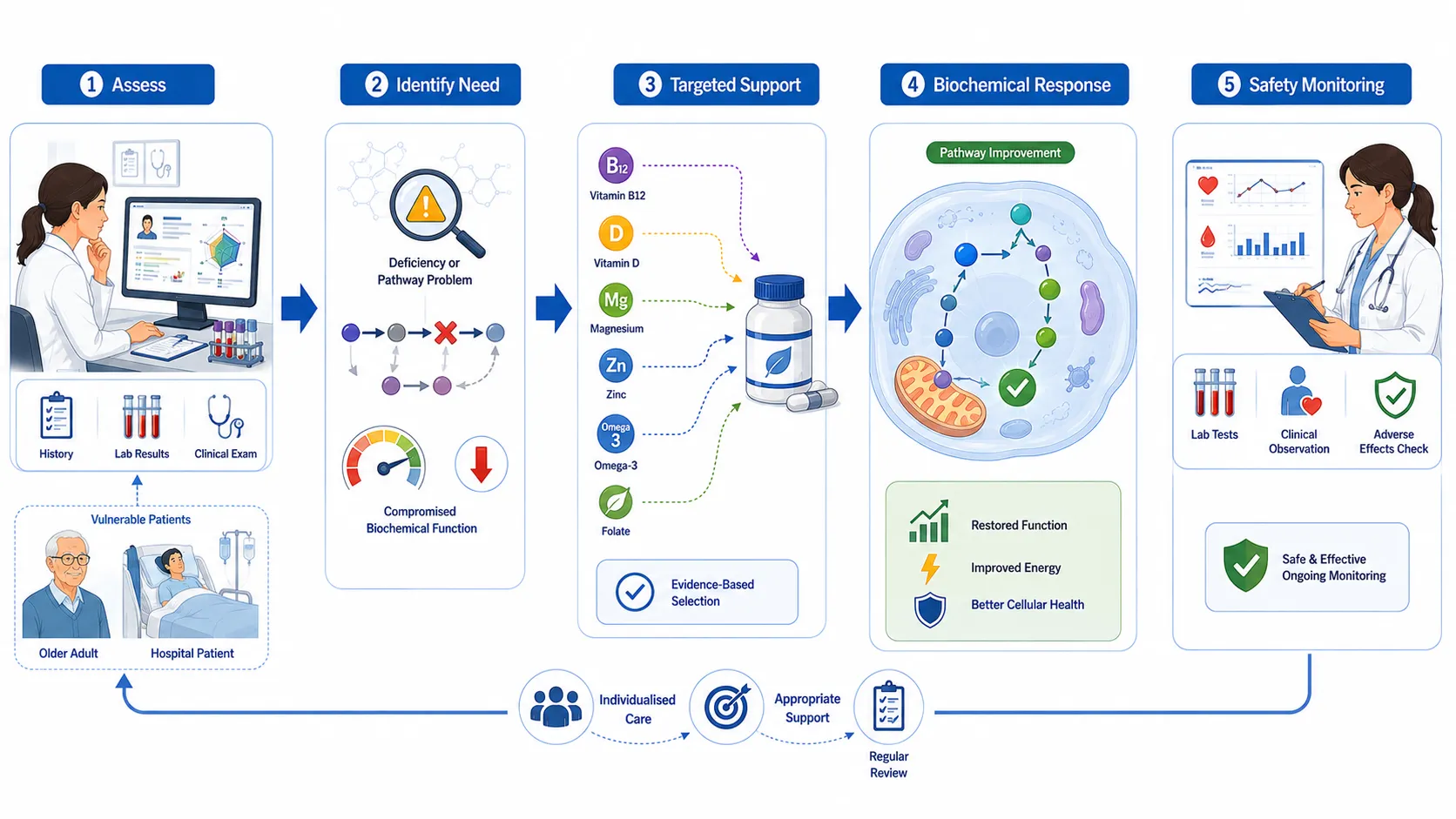
Understanding Therapeutic Supplementation
Therapeutic supplementation refers to the targeted use of vitamins, minerals or other clinically appropriate nutritional substances to address an identified nutritional or biochemical requirement.
It differs from general supplementation because the decision should be based on a defined clinical rationale.
A therapeutic supplement may be considered when there is evidence of:
A confirmed nutritional deficiency.
A clinically significant biochemical abnormality.
Impaired nutrient absorption.
Increased physiological requirements.
Restricted nutrient intake associated with clinical risk.
A condition affecting nutrient metabolism.
A treatment that alters nutrient balance.
The intervention should have a clear objective and a plan for monitoring response.
General Principles of Therapeutic Supplementation
The safe use of therapeutic supplements should be guided by the following principles:
Identify the specific clinical problem.
Establish a biochemical or nutritional rationale.
Assess the likely cause of the abnormality.
Select an appropriate intervention.
Consider contraindications and interactions.
Use an appropriate route and formulation.
Monitor clinical and biochemical outcomes.
Review the need for continued supplementation.
Supplementation should not replace investigation of an underlying cause when further clinical assessment is required.
Key Definitions and Concepts
| Term | Definition | Clinical Application |
|---|---|---|
| Therapeutic supplementation | Targeted provision of a nutritional substance for a defined clinical purpose | Used to address identified nutritional or biochemical requirements |
| Biochemical pathway | A sequence of linked chemical reactions occurring within cells or tissues | Helps explain how nutrients influence physiological function |
| Cofactor | A non-protein substance required for the activity of certain enzymes | Some vitamins and minerals support enzyme-dependent reactions |
| Coenzyme | An organic molecule that assists enzyme-mediated reactions | Often derived from essential nutrients |
| Nutrient deficiency | An insufficient availability of a nutrient to support normal physiological function | May require dietary improvement, supplementation or further treatment |
| Bioavailability | The proportion of a nutrient that can be absorbed and utilised | Influences the expected effectiveness of a supplement |
| Therapeutic monitoring | Assessment of response and safety during an intervention | Helps determine whether supplementation should continue or change |
| Vulnerable population | A group with increased risk of harm because of physiological, clinical or social factors | Requires greater caution and individual assessment |
The Relationship Between Nutrients and Biochemical Pathways
Nutrients participate in numerous physiological reactions. They may function as:
Energy substrates.
Enzyme cofactors.
Structural components.
Precursors for biologically active compounds.
Regulators of cellular processes.
Contributors to fluid and electrolyte balance.
A deficiency can affect one or more stages within a pathway.
A Simplified Biochemical Model
A typical pathway may involve:
A substrate entering a biochemical reaction.
An enzyme catalysing the reaction.
A vitamin- or mineral-dependent cofactor supporting enzyme activity.
Formation of an intermediate product.
Further reactions producing a final physiological outcome.
If an essential cofactor is unavailable, the efficiency of the pathway may decline. In some situations, correcting the deficiency can help restore normal pathway activity.
However, not every biochemical abnormality results from nutrient deficiency. Enzyme defects, organ dysfunction, medication effects and inflammatory processes may also contribute.
Why Clinical Justification Is Essential
The presence of symptoms alone is not always sufficient justification for therapeutic supplementation.
Similar symptoms can have multiple causes.
For example, fatigue may be associated with:
Inadequate nutritional intake.
Anaemia.
Inflammation.
Sleep disturbance.
Chronic illness.
Medication effects.
Other metabolic conditions.
Providing a supplement without appropriate assessment may delay identification of the true cause.
Clinical Justification Should Consider
A strong justification generally includes:
Relevant symptoms or clinical findings.
Dietary assessment.
Biochemical evidence where clinically appropriate.
Medical history.
Medication history.
Evidence of impaired absorption or increased requirements.
Established clinical guidance.
Assessment of potential risks.
This approach improves both safety and effectiveness.
Identifying Compromised Biochemical Pathways
The first stage is to determine which physiological process may be affected.
This requires interpretation of the wider clinical picture.
Step 1: Identify the Clinical Problem
The healthcare professional should establish:
What symptoms or clinical findings are present?
Is there evidence of nutritional inadequacy?
Is there a confirmed biochemical abnormality?
Is the problem acute or chronic?
Step 2: Review Relevant Laboratory Evidence
Laboratory data may provide information relating to:
Nutrient availability.
Enzyme-related processes.
Metabolic activity.
Electrolyte balance.
Organ function.
The result should be interpreted alongside other evidence.
Step 3: Determine the Likely Mechanism
The clinician should consider whether the abnormality may result from:
Reduced dietary intake.
Malabsorption.
Increased losses.
Increased physiological demand.
Altered metabolism.
Medication effects.
Step 4: Identify the Appropriate Intervention
Possible approaches may include:
Dietary modification.
Oral supplementation.
Alternative routes of nutrient administration.
Medical treatment of the underlying cause.
Multidisciplinary management.
Supplementation should be selected only when it is clinically justified.
Categories of Therapeutic Supplements
Vitamin-Based Supplementation
Vitamins may support:
Enzyme activity.
Energy metabolism.
Cellular maintenance.
Blood cell production.
Tissue repair.
The clinical decision should consider:
Evidence of deficiency.
Severity of deficiency.
Ability to absorb the nutrient.
Potential interaction with medicines.
Appropriate monitoring.
Mineral-Based Supplementation
Minerals contribute to:
Electrolyte regulation.
Bone-related processes.
Enzyme activity.
Oxygen transport.
Neuromuscular function.
Examples of clinical concerns may involve altered levels or utilisation of:
Iron.
Calcium.
Magnesium.
Potassium.
Zinc.
Mineral supplementation can be particularly complex because excessive intake may also cause harm.
Electrolyte Support
Electrolytes are essential for:
Fluid balance.
Nerve signalling.
Muscle function.
Cardiac electrical activity.
Therapeutic correction should be undertaken using appropriate clinical procedures, particularly in patients with significant abnormalities.
Specialised Nutritional Compounds
Certain clinical situations may involve specialised nutritional preparations designed to support specific requirements.
Their use should be based on:
Clinical indication.
Evidence of benefit.
Patient safety.
Established protocols.
Not all commercially marketed supplements have sufficient evidence for therapeutic use.
Vulnerable Patient Populations
Vulnerable populations may have increased sensitivity to nutritional interventions or greater risk of complications.
Examples may include:
Older adults.
Infants and children.
Pregnant individuals.
Patients with renal impairment.
Patients with hepatic dysfunction.
Individuals with gastrointestinal disorders.
Patients receiving multiple medicines.
Critically ill patients.
Individuals with severe malnutrition.
Why Vulnerability Changes Clinical Decision-Making
A supplement that is relatively safe for one population may present greater risks in another.
Factors requiring consideration include:
Reduced renal excretion.
Altered liver metabolism.
Impaired gastrointestinal absorption.
Polypharmacy.
Altered body composition.
Increased sensitivity to fluid or electrolyte changes.
For this reason, vulnerable populations require individualised assessment.
Clinical Assessment Before Supplementation
Before initiating therapeutic supplementation, the healthcare professional should conduct a structured assessment.
Clinical History
Important information includes:
Current diagnosis.
Previous medical conditions.
Duration of symptoms.
Previous nutritional problems.
Gastrointestinal symptoms.
Medication history.
Supplement use.
Dietary Assessment
The assessment should investigate:
Food intake.
Dietary restrictions.
Food avoidance.
Recent dietary changes.
Appetite.
Access to food.
Biochemical Assessment
Relevant biochemical information may include:
Markers related to the suspected deficiency.
Related metabolic markers.
Organ function.
Electrolyte balance.
Risk Assessment
The practitioner should ask:
Is supplementation necessary?
Could dietary intervention be sufficient?
Is there a risk of excessive intake?
Are there potential interactions?
Is specialist involvement required?
Selecting the Appropriate Supplement
Selection involves more than choosing a nutrient.
Important considerations include:
The specific nutrient required.
The chemical formulation.
The route of administration.
Expected absorption.
The patient’s ability to tolerate the preparation.
Clinical urgency.
Bioavailability
Bioavailability influences how effectively a nutrient can be absorbed and utilised.
Factors affecting bioavailability include:
The nutrient formulation.
Gastrointestinal function.
Food intake.
Interactions with other substances.
Disease state.
A theoretically appropriate supplement may have limited clinical benefit if the patient cannot absorb or utilise it effectively.
Route of Administration
The route should be selected according to the patient’s condition.
Potential routes may include:
Oral administration.
Enteral administration.
Clinically supervised non-oral administration.
The choice depends on:
Gastrointestinal function.
Severity of deficiency.
Clinical urgency.
Absorption capacity.
The route should be determined within appropriate professional and clinical protocols.
Dose Selection and Safety
Dose selection is a critical aspect of therapeutic supplementation.
The objective is to provide an amount appropriate to the clinical indication while reducing the risk of excessive exposure.
Factors Affecting Dose Selection
These include:
Severity of deficiency.
Age.
Body size.
Organ function.
Absorption.
Existing dietary intake.
Other supplements.
Medication interactions.
Dose requirements should follow appropriate evidence-based clinical guidance and prescribing or professional protocols where applicable.
Practical Example: Correcting an Identified Nutritional Deficiency
Consider a vulnerable patient presenting with reduced dietary intake and laboratory findings consistent with a nutritional deficiency.
A structured process would involve:
Confirming the clinical relevance of the result.
Reviewing dietary intake.
Assessing possible causes.
Considering whether absorption is impaired.
Selecting an evidence-based intervention.
Establishing a monitoring plan.
The supplement should not be viewed as the entire treatment. The underlying reason for the deficiency should also be investigated.
Therapeutic Supplements and Enzyme Function
Many biochemical reactions depend on enzymes.
Some nutrients contribute to enzyme activity as cofactors or coenzymes.
A simplified sequence may involve:
Nutrient intake.
Nutrient absorption.
Transport to tissues.
Conversion into a biologically active form.
Participation in enzyme-mediated reactions.
Production of physiological effects.
A disruption at any stage may reduce effectiveness.
Therefore, simply increasing nutrient intake may not always restore pathway function.
Monitoring the Response to Supplementation
Monitoring is essential because the clinical response may differ from the expected response.
Monitoring May Include
Relevant laboratory results.
Clinical symptoms.
Dietary intake.
Functional status.
Evidence of adverse effects.
The frequency and type of monitoring depend on the clinical situation.
Possible Outcomes
The patient may demonstrate:
Biochemical improvement.
Clinical improvement.
No significant response.
Development of adverse effects.
Each outcome requires interpretation.
A lack of response may indicate:
Poor adherence.
Inadequate absorption.
Incorrect diagnosis.
Continued nutrient losses.
An alternative underlying condition.
Therapeutic Supplementation as Part of a Wider Strategy
Supplements should usually be integrated into a broader nutritional plan.
A comprehensive strategy may include:
Dietary improvement.
Symptom management.
Treatment of underlying disease.
Medication review.
Monitoring.
Education.
The goal is to address the cause and consequences of nutritional imbalance.
Critical Evaluation of Evidence
Not all supplements have the same level of scientific support.
Before recommending a therapeutic intervention, practitioners should evaluate:
The quality of available research.
The relevance of the evidence to the patient.
The magnitude of expected benefit.
The potential risks.
The reliability of the supplement source.
Hierarchy of Evidence
Evidence may include:
Systematic reviews.
Controlled clinical trials.
Observational studies.
Mechanistic research.
Expert consensus.
Different forms of evidence provide different levels of certainty.
Mechanistic evidence showing that a nutrient participates in a biochemical pathway does not automatically prove that high-dose supplementation will improve clinical outcomes.
The Importance of Avoiding Over-Supplementation
More is not always better.
Excessive supplementation may lead to:
Toxicity.
Electrolyte disturbances.
Medication interactions.
Increased metabolic burden.
Masking of other conditions.
Therapeutic interventions should therefore be targeted and reviewed regularly.
Drug–Nutrient and Nutrient–Nutrient Interactions
Supplements may interact with:
Prescription medicines.
Over-the-counter medicines.
Other nutritional supplements.
Certain foods.
Interactions may alter:
Absorption.
Metabolism.
Excretion.
Therapeutic effectiveness.
A complete medication and supplement history is therefore essential.
Ethical Considerations
The use of therapeutic supplements involves important ethical responsibilities.
Healthcare professionals should:
Avoid unsupported claims.
Explain expected benefits realistically.
Discuss possible risks.
Respect patient autonomy.
Protect confidential information.
Work within professional competence.
Informed Decision-Making
Patients should understand:
Why supplementation is recommended.
What biochemical or clinical problem is being addressed.
What monitoring is required.
What symptoms or concerns should be reported.
Clear communication supports safe participation in care.
Professional Boundaries and Scope of Practice
Not every practitioner is authorised to diagnose, prescribe or manage complex supplementation.
Professionals must recognise when referral is required.
Referral may be necessary when:
Severe biochemical abnormalities are identified.
There is significant organ dysfunction.
Complex medication interactions are suspected.
The diagnosis remains uncertain.
The patient does not respond to intervention.
Working within professional boundaries is essential for patient safety.
Common Clinical Challenges
Challenge: Symptoms Without Clear Biochemical Evidence
Symptoms may suggest a nutritional problem, but laboratory evidence may be inconclusive.
The practitioner should:
Review the dietary history.
Consider alternative explanations.
Avoid assuming deficiency.
Seek further clinical assessment when appropriate.
Challenge: Persistent Abnormality Despite Supplementation
If a biochemical abnormality persists, possible explanations include:
Poor absorption.
Continued losses.
Inadequate adherence.
Incorrect interpretation.
Underlying disease.
Increasing the supplement without reassessment may be inappropriate.
Challenge: Multiple Supplements
Patients may already use several products.
The practitioner should:
Document all products.
Identify duplication.
Consider cumulative intake.
Review interaction risks.
A Systematic Clinical Decision-Making Process
The following structured approach can support clinical reasoning:
Stage 1: Identify the Problem
What biochemical pathway may be compromised?
What evidence supports this conclusion?
Stage 2: Investigate the Cause
Is intake inadequate?
Is absorption impaired?
Are losses increased?
Is metabolism altered?
Stage 3: Evaluate the Evidence
Is supplementation supported by clinical guidance?
What benefits are realistically expected?
Stage 4: Assess Patient Risk
Is the patient vulnerable to adverse effects?
Are there medication interactions?
Stage 5: Select the Intervention
Which supplement is appropriate?
Which route is suitable?
What monitoring is required?
Stage 6: Monitor and Review
Is the biochemical marker improving?
Are symptoms changing?
Are adverse effects occurring?
Is continued supplementation necessary?
Workplace Application Scenario
A healthcare professional working with an older patient identifies poor dietary intake and a laboratory pattern suggesting a possible nutritional deficiency.
The professional should not immediately recommend multiple supplements.
Instead, an appropriate process would include:
Reviewing the patient’s clinical history.
Examining medication use.
Assessing dietary intake.
Evaluating relevant laboratory findings.
Identifying possible absorption problems.
Considering evidence-based interventions.
Consulting the appropriate clinical team.
A targeted intervention can then be monitored and adjusted.
Key Benefits of Evidence-Based Therapeutic Supplementation
When appropriately justified, therapeutic supplementation can:
Correct clinically significant nutrient deficits.
Support impaired nutrient-dependent pathways.
Improve nutritional adequacy.
Support recovery and physiological function.
Provide targeted intervention when dietary intake alone is insufficient.
These benefits depend on appropriate patient selection and monitoring.
Key Limitations
Therapeutic supplementation also has limitations.
It cannot always:
Correct the underlying disease.
Compensate for severe malabsorption without specialised management.
Replace comprehensive nutritional care.
Guarantee improvement in clinical outcomes.
Critical evaluation is therefore essential.
Practical Checklist for Learners
Before supporting a therapeutic supplementation strategy, consider:
Assessment
What is the identified clinical problem?
Is there biochemical evidence?
What is the likely cause?
Evidence
Is the intervention supported by reliable evidence?
Does relevant clinical guidance support its use?
Safety
Is the patient vulnerable to adverse effects?
Are there medication interactions?
Is excessive intake possible?
Intervention
What nutrient is required?
Is the selected formulation appropriate?
Is the route suitable?
Monitoring
Which outcomes will be monitored?
When should the intervention be reviewed?
What findings require referral or escalation?
Conclusion
The clinical use of therapeutic supplements should be based on systematic assessment, biochemical reasoning and high-quality evidence. Nutrients can support important biochemical pathways by acting as substrates, cofactors, coenzymes and regulatory components. When these pathways are compromised because of clinically significant nutritional inadequacy, carefully selected supplementation may provide an effective therapeutic strategy.
However, supplementation is not automatically appropriate simply because a nutrient is involved in a biological process. The healthcare professional must establish whether a deficiency, impaired absorption, increased requirement or other clinically relevant problem exists. Laboratory evidence should be interpreted alongside dietary intake, symptoms, medical history, medication use and the wider clinical context.
Vulnerable patient populations require particularly careful consideration because organ dysfunction, altered metabolism, multiple medications and reduced physiological reserve can increase the risk of adverse outcomes. Appropriate supplement selection, route of administration, safety assessment and ongoing monitoring are therefore essential.
A robust clinical approach involves identifying the compromised pathway, investigating its likely cause, evaluating relevant evidence, selecting an appropriate intervention and monitoring the response. Supplements should form part of a wider strategy that addresses dietary intake and underlying clinical factors.
Ultimately, therapeutic supplementation should be targeted, evidence-based and regularly reviewed. By applying systematic clinical reasoning and respecting professional boundaries, healthcare practitioners can justify the use of specific supplements more safely and effectively while supporting the biochemical and nutritional needs of vulnerable patient populations.
5.Formulate a Structured Monitoring Framework to Systematically Evaluate the Biochemical and Physiological Efficacy of Applied Nutritional Strategies Over Time
Nutritional strategies implemented in clinical practice should not be regarded as one-time interventions. Whether the strategy involves dietary modification, therapeutic supplementation, enteral nutrition, parenteral nutrition or a combination of approaches, its effectiveness must be monitored systematically. A structured monitoring framework enables healthcare and nutrition professionals to determine whether an intervention is achieving its intended biochemical and physiological objectives while identifying potential risks, adverse effects or the need for modification.
The purpose of monitoring is not simply to repeat laboratory tests. Effective monitoring integrates biochemical evidence, physiological observations, dietary information, functional outcomes and the individual’s clinical circumstances. This allows practitioners to evaluate both whether a nutritional strategy is producing measurable change and whether that change is clinically meaningful.
A structured framework should therefore establish a baseline, define measurable objectives, select appropriate indicators, determine monitoring intervals, interpret trends and support evidence-based adjustments. Monitoring must also recognise that biochemical improvement does not always immediately produce functional improvement and that individual laboratory results should not be interpreted in isolation.

The Importance of Systematic Nutritional Monitoring
A nutritional intervention may initially appear appropriate based on clinical assessment and laboratory evidence, but the patient’s response can vary considerably. Differences in absorption, metabolism, adherence, disease progression, medication use and physiological reserve can influence outcomes.
Systematic monitoring helps to answer key clinical questions:
Is the nutritional strategy achieving its intended objective?
Are relevant biochemical markers improving, stabilising or worsening?
Is the patient’s physiological condition changing?
Is the intervention being tolerated?
Are adverse effects or new risks developing?
Does the nutritional plan require adjustment?
Has the original nutritional objective been achieved?
Without structured follow-up, practitioners may continue ineffective interventions or fail to identify emerging complications.
Key Definitions and Concepts
| Term | Definition | Relevance to Nutritional Monitoring |
|---|---|---|
| Monitoring framework | A structured system for collecting, reviewing and interpreting outcomes over time | Ensures nutritional interventions are evaluated consistently |
| Baseline assessment | Initial measurement of clinical, dietary, biochemical and physiological status | Provides a reference point for later comparison |
| Biochemical efficacy | The extent to which an intervention produces the intended changes in measurable biological markers | Helps assess metabolic and nutritional response |
| Physiological efficacy | The extent to which an intervention improves body function or physiological status | Demonstrates whether biochemical changes have practical significance |
| Outcome indicator | A measurable variable used to evaluate progress | May include laboratory values, symptoms or functional measures |
| Trend analysis | Evaluation of changes across multiple measurements over time | More informative than relying on a single result |
| Monitoring interval | The planned period between assessments | Should reflect clinical risk and expected response |
| Therapeutic target | A predefined objective for the intervention | Guides evaluation and clinical decision-making |
| Reassessment | A systematic review of the patient’s condition and intervention | Determines whether continuation or modification is required |
Principles of an Effective Monitoring Framework
A monitoring framework should be structured, proportionate and clinically relevant. Collecting excessive data without a clear purpose can create confusion, while inadequate monitoring may fail to detect important changes.
The framework should follow several core principles.
Monitoring Should Be Goal-Oriented
Every nutritional strategy should begin with a clearly defined objective.
For example, the purpose may be to:
Correct a confirmed nutrient deficiency.
Improve inadequate nutritional intake.
Restore biochemical balance.
Support metabolic stability.
Improve tolerance to nutritional support.
Prevent further nutritional deterioration.
Support recovery and functional capacity.
The monitoring indicators selected should directly relate to the intended objective.
Monitoring Should Be Individualised
A single monitoring schedule is not suitable for every patient.
The framework should consider:
The patient’s age.
Clinical diagnosis.
Severity of nutritional risk.
Type of nutritional intervention.
Existing biochemical abnormalities.
Organ function.
Medication use.
Ability to attend follow-up.
A clinically stable individual may require a different monitoring frequency from a high-risk patient receiving intensive nutritional support.
Monitoring Should Evaluate Trends
A single laboratory result provides only a snapshot.
Repeated measurements can demonstrate:
Improvement.
Deterioration.
Stability.
Unexpected fluctuation.
Trend analysis allows the practitioner to assess whether observed changes are consistent with the intervention and the patient’s wider clinical condition.
Establishing a Baseline
The first stage of the monitoring framework is establishing an accurate baseline.
Without baseline information, it becomes difficult to determine whether subsequent changes are meaningful.
Components of a Baseline Assessment
A comprehensive baseline may include:
Relevant clinical history.
Dietary intake.
Current nutritional status.
Anthropometric information where appropriate.
Relevant laboratory findings.
Physiological observations.
Functional status.
Medication and supplement history.
The information collected should relate to the intervention being planned.
Why Baseline Data Matters
Baseline information allows the practitioner to:
Identify the severity of the initial problem.
Define realistic therapeutic objectives.
Select appropriate monitoring indicators.
Compare future measurements.
Identify pre-existing abnormalities.
A weak baseline may lead to inaccurate conclusions regarding treatment effectiveness.
Defining Clear Monitoring Objectives
Monitoring should be linked to specific and measurable objectives.
A poorly defined objective such as “improve nutrition” is difficult to evaluate.
A structured objective should identify:
What is expected to change?
Which indicator will demonstrate change?
Over what period will progress be reviewed?
What degree of change is clinically meaningful?
Examples of Monitoring Objectives
Depending on the clinical context, objectives may include:
Improvement in a relevant biochemical marker.
Stabilisation of an electrolyte imbalance.
Improved dietary intake.
Reduction in symptoms associated with nutritional inadequacy.
Improved tolerance to enteral feeding.
Prevention of further nutritional decline.
The exact target should always reflect appropriate clinical guidance and the individual patient’s circumstances.
Selecting Biochemical Indicators
Biochemical monitoring can provide valuable information regarding nutrient availability, metabolic activity and physiological response.
However, the selection of markers should be purposeful.
Appropriate Selection of Biochemical Markers
Practitioners should consider:
What pathway is being assessed?
Does the marker directly reflect the nutritional problem?
Is the marker influenced by inflammation or disease?
How quickly is the marker expected to change?
What factors may interfere with interpretation?
Relevant biochemical categories may include:
Nutrient-related markers.
Electrolytes.
Indicators of metabolic regulation.
Markers relevant to organ function.
Blood-related indices.
No single marker should automatically be considered a complete measure of nutritional status.
Understanding the Difference Between Biochemical and Physiological Outcomes
Biochemical improvement and physiological improvement are related but distinct concepts.
A laboratory value may improve before the patient experiences functional improvement. Conversely, a patient may report improved wellbeing even when a laboratory marker has changed only slightly.
Biochemical Outcomes May Include
Changes in nutrient-related laboratory markers.
Improved metabolic balance.
Stabilisation of electrolyte levels.
Improvement in selected metabolic indicators.
Physiological Outcomes May Include
Improved physical function.
Improved energy or activity tolerance.
Improved gastrointestinal tolerance.
Improved hydration status.
Reduced clinical symptoms associated with the nutritional problem.
Both types of outcomes should be considered where relevant.
Monitoring Dietary Intake and Adherence
An intervention cannot be evaluated accurately if the practitioner does not understand whether it is actually being followed.
Dietary monitoring may examine:
Food intake.
Meal patterns.
Nutritional restrictions.
Supplement use.
Tolerance of recommended foods.
Barriers to adherence.
Common Barriers to Adherence
Patients may experience:
Poor appetite.
Financial limitations.
Gastrointestinal discomfort.
Difficulty preparing food.
Cultural or personal dietary preferences.
Complex intervention plans.
Identifying barriers can explain why expected biochemical improvement has not occurred.
Determining Monitoring Frequency
Monitoring frequency should be based on risk and clinical need.
Assessments should occur frequently enough to identify important changes without unnecessary testing.
Factors Affecting Monitoring Frequency
These include:
Severity of the biochemical abnormality.
Clinical stability.
Type of nutritional intervention.
Risk of rapid deterioration.
Potential adverse effects.
Expected speed of physiological response.
High-risk situations may require closer clinical monitoring than stable long-term nutritional strategies.
General Monitoring Stages
A structured framework may include:
Baseline assessment.
Early response review.
Ongoing progress monitoring.
Formal reassessment.
Long-term maintenance review.
The timing should be determined by relevant clinical procedures and the individual situation.
Developing a Structured Monitoring Process
A practical monitoring framework can be organised into sequential stages.
Stage 1: Identify the Nutritional Problem
The practitioner should clearly document:
The nutritional concern.
Relevant biochemical findings.
Associated symptoms.
Potential underlying causes.
This creates the foundation for monitoring.
Stage 2: Define the Intervention
The plan should state:
What nutritional strategy is being used?
What is the intended purpose?
What outcomes are expected?
The intervention may involve:
Dietary modification.
Therapeutic supplementation.
Enteral nutritional support.
Parenteral nutritional support.
Combined nutritional approaches.
Stage 3: Establish Baseline Indicators
Relevant baseline measures should be documented before or at the beginning of the intervention where possible.
Indicators may include:
Relevant laboratory results.
Dietary intake.
Clinical observations.
Functional measures.
Stage 4: Establish Monitoring Indicators
Each indicator should have a clear purpose.
A monitoring plan may include:
Biochemical indicators.
Physiological observations.
Clinical symptoms.
Dietary adherence.
Functional outcomes.
Safety indicators.
Stage 5: Set Review Points
The framework should specify:
When early review will occur.
When laboratory monitoring is required.
When the intervention will be formally reassessed.
Stage 6: Interpret Results
The practitioner should compare:
Current findings with baseline.
Changes across time.
Biochemical results with clinical observations.
Expected outcomes with actual outcomes.
Stage 7: Modify or Continue the Plan
Possible decisions include:
Continue the current strategy.
Modify dietary recommendations.
Adjust nutritional support according to appropriate clinical protocols.
Investigate poor response.
Refer for specialist assessment.
Interpreting Trends Rather Than Isolated Results
One of the most important principles of monitoring is the interpretation of change over time.
A single abnormal result may be influenced by:
Biological variation.
Hydration status.
Acute illness.
Laboratory variation.
Recent dietary intake.
Medication effects.
Repeated measurements may provide a more reliable picture.
Questions to Ask During Trend Analysis
Is the change consistent across multiple measurements?
Does the change correspond with the intervention?
Has the patient’s clinical condition changed?
Are there possible confounding factors?
Is the change clinically significant?
Trend analysis supports more reliable clinical judgement.
Monitoring the Safety of Nutritional Strategies
Effectiveness is only one component of successful nutritional care.
A strategy must also be safe.
Safety monitoring may involve:
Observing for adverse symptoms.
Reviewing medication interactions.
Monitoring relevant biochemical parameters.
Identifying excessive nutrient intake.
Assessing tolerance to nutritional support.
Warning Signs Requiring Review
Potential concerns may include:
Unexpected biochemical deterioration.
New gastrointestinal symptoms.
Signs of intolerance.
Unexpected physiological changes.
Failure to respond to intervention.
The appropriate response depends on the patient’s clinical circumstances and professional scope of practice.
Practical Example: Monitoring a Targeted Nutritional Strategy
Consider a patient who begins a nutritional strategy after assessment identifies inadequate intake and a relevant biochemical abnormality.
A structured monitoring framework may include the following.
Baseline
The practitioner records:
Dietary intake.
Relevant laboratory data.
Symptoms.
Medical history.
Current medication and supplements.
Intervention
The patient receives an evidence-based nutritional strategy designed to address the identified problem.
Early Review
The practitioner assesses:
Whether the patient understands the plan.
Whether the strategy is being followed.
Whether adverse effects have occurred.
Whether tolerance is acceptable.
Ongoing Review
Relevant biochemical and physiological indicators are reviewed over time.
Formal Reassessment
The practitioner determines:
Whether the objective has been achieved.
Whether the strategy remains necessary.
Whether modification is required.
This process ensures that nutritional care remains responsive rather than static.
Monitoring Complex Nutritional Support
Patients receiving complex nutritional support may require monitoring across several domains.
Clinical Monitoring
This may involve assessment of:
Symptoms.
Hydration.
Gastrointestinal tolerance.
Functional status.
Biochemical Monitoring
Relevant monitoring may include:
Metabolic indicators.
Electrolyte balance.
Markers related to organ function.
Nutritional Monitoring
This may include:
Actual nutritional intake.
Estimated nutritional requirements.
Tolerance of the nutritional strategy.
Complex cases require coordinated multidisciplinary care.
The Role of Multidisciplinary Teams
Nutritional monitoring may involve different healthcare professionals depending on the clinical environment.
A multidisciplinary approach may include:
Medical professionals.
Dietitians.
Nurses.
Clinical laboratory professionals.
Pharmacists.
Each professional contributes specific expertise.
Benefits of Collaborative Monitoring
Collaboration can:
Improve interpretation of complex data.
Identify medication-related issues.
Support safe nutritional intervention.
Improve continuity of care.
Reduce the risk of fragmented decision-making.
Effective communication between professionals is essential.
Using Documentation to Support Monitoring
Accurate documentation is a fundamental component of the framework.
The monitoring record should clearly describe:
Baseline findings.
Nutritional objectives.
Intervention details.
Monitoring indicators.
Review dates.
Clinical decisions.
Changes to the plan.
Documentation supports continuity and accountability.
Evaluating Biochemical Efficacy
Biochemical efficacy refers to whether the intervention produces the intended changes in relevant measurable biological indicators.
Evaluation should consider:
The magnitude of change.
The direction of change.
The consistency of the trend.
The clinical relevance of the result.
A statistically measurable change is not always clinically meaningful.
Therefore, biochemical outcomes should be interpreted within the wider patient context.
Evaluating Physiological Efficacy
Physiological efficacy considers whether the intervention produces meaningful effects on body function or health status.
Relevant outcomes may include:
Improved functional capacity.
Improved symptom control.
Improved nutritional tolerance.
Improved physiological stability.
The selected measures should relate directly to the patient’s original nutritional problem.
When an Intervention Is Not Working
A lack of improvement should trigger systematic reassessment rather than automatic continuation.
The practitioner should consider:
Intervention Factors
Is the strategy appropriate?
Is the intervention being followed?
Is the formulation or method appropriate?
Patient Factors
Is absorption impaired?
Has the patient’s disease progressed?
Are medications influencing nutrient metabolism?
Assessment Factors
Was the original problem correctly identified?
Are the selected monitoring markers appropriate?
Are confounding variables affecting interpretation?
This structured approach helps identify the cause of poor response.
Decision-Making Based on Monitoring Findings
Monitoring results should lead to appropriate clinical decisions.
If the Patient Is Improving
The practitioner may:
Continue the intervention.
Continue monitoring.
Consider progression towards maintenance where appropriate.
If Improvement Is Limited
The practitioner should:
Review adherence.
Reassess dietary intake.
Examine potential confounding factors.
Consider whether further assessment is required.
If the Patient Deteriorates
The practitioner should:
Identify possible adverse effects.
Review the intervention urgently where necessary.
Follow appropriate escalation procedures.
Seek specialist input.
Monitoring must therefore be linked to action.
Key Benefits of a Structured Monitoring Framework
A well-designed framework provides several advantages.
Improved Patient Safety
Systematic review helps identify:
Adverse effects.
Deterioration.
New biochemical abnormalities.
Better Clinical Decision-Making
Monitoring provides evidence for:
Continuing an intervention.
Modifying a strategy.
Stopping ineffective approaches.
More Personalised Care
The patient’s actual response can guide future decisions.
Improved Resource Use
Targeted monitoring helps avoid unnecessary continuation of ineffective interventions.
Stronger Professional Accountability
Clear documentation demonstrates that decisions are based on systematic evidence.
Common Limitations and Challenges
Monitoring nutritional strategies can be affected by several limitations.
Biological Variability
Laboratory values naturally fluctuate.
A small change may not necessarily reflect a genuine therapeutic effect.
Confounding Clinical Conditions
Acute illness, inflammation and organ dysfunction can influence biochemical findings.
Adherence Uncertainty
Reported adherence may not always reflect actual intake.
Delayed Physiological Response
Some outcomes may require time before meaningful change becomes visible.
These limitations reinforce the importance of repeated assessment and professional judgement.
Quality Indicators for an Effective Monitoring Framework
A high-quality framework should be:
Clear.
Individualised.
Evidence-based.
Measurable.
Clinically relevant.
Safe.
Adaptable.
Properly documented.
Questions for Evaluating Framework Quality
Does every monitoring indicator have a clear purpose?
Are baseline data available?
Are review intervals appropriate?
Are both efficacy and safety assessed?
Are decisions based on trends?
Are responsibilities clearly defined?
Practical Framework for Learners
A useful monitoring cycle can be remembered as:
Assess
Identify the nutritional problem.
Establish baseline findings.
Plan
Define objectives.
Select interventions and indicators.
Implement
Apply the nutritional strategy.
Educate the patient.
Monitor
Collect biochemical and physiological data.
Review dietary adherence and tolerance.
Evaluate
Compare findings with baseline.
Analyse trends.
Adjust
Continue, modify, escalate or discontinue the strategy as appropriate.
This cycle promotes continuous improvement.
Workplace Scenario
A clinical nutrition team introduces a structured dietary and supplementation strategy for a patient with a documented nutritional imbalance.
At the first follow-up, one laboratory value has changed only slightly. The patient, however, reports improved dietary intake and improved tolerance to meals.
The team should avoid making a decision based solely on the single laboratory result.
An appropriate approach would include:
Comparing the result with baseline.
Reviewing the expected timeframe for biochemical response.
Considering biological variability.
Assessing other physiological outcomes.
Reviewing adherence.
The team can then determine whether continued monitoring is appropriate.
Advanced Considerations in Monitoring
In complex clinical environments, monitoring may involve large amounts of information.
Practitioners should prioritise data that directly support clinical decision-making.
Avoiding Data Overload
An effective framework does not require measuring every available variable.
Instead, the practitioner should select indicators that are:
Relevant.
Reliable.
Clinically interpretable.
Linked to the intervention objective.
This improves the quality of decision-making.
Integrating Patient-Reported Outcomes
Patient-reported information can provide valuable evidence.
Patients may report changes in:
Appetite.
Energy.
Gastrointestinal comfort.
Ability to follow the nutritional plan.
Perceived functional capacity.
These outcomes should complement rather than replace objective assessment where objective monitoring is clinically required.
Ethical and Professional Responsibilities
Monitoring involves the collection and management of sensitive health information.
Professionals must:
Maintain confidentiality.
Document accurately.
Communicate findings clearly.
Work within professional competence.
Escalate concerns appropriately.
Patients should understand the purpose of monitoring and the importance of attending follow-up assessments.
Summary of the Monitoring Framework
An effective monitoring framework includes the following essential elements:
Clear identification of the nutritional problem.
Comprehensive baseline assessment.
Defined biochemical and physiological objectives.
Selection of relevant outcome indicators.
Appropriate monitoring intervals.
Trend-based interpretation.
Safety surveillance.
Documentation and communication.
Evidence-based adjustment of the intervention.
Conclusion
Formulating a structured monitoring framework is essential for evaluating the biochemical and physiological efficacy of nutritional strategies over time. Nutritional interventions should not be implemented without a clear plan for determining whether they are effective, safe and appropriate for the individual patient.
A robust framework begins with an accurate baseline and clearly defined therapeutic objectives. It then identifies relevant biochemical, physiological, dietary and functional indicators that can demonstrate progress. Monitoring intervals should be proportionate to the patient’s clinical condition, the type of intervention and the potential risks involved.
The interpretation of results should focus on patterns and trends rather than isolated measurements. Biochemical findings must also be considered alongside physiological outcomes, dietary adherence, symptoms and changes in the wider clinical condition. A laboratory improvement is valuable, but its full clinical significance should be considered within the context of the patient’s overall health.
When an intervention does not produce the expected response, systematic reassessment is required. Practitioners should investigate adherence, absorption, disease progression, confounding factors and the appropriateness of the original strategy before making further decisions.
Ultimately, effective nutritional monitoring follows a continuous cycle of assessment, planning, implementation, monitoring, evaluation and adjustment. This approach supports patient safety, improves clinical decision-making and helps ensure that nutritional strategies remain evidence-based, individualised and responsive to changing biochemical and physiological needs.
6.Adapt Standard Evidence-Based Nutritional Interventions to Safely Accommodate Complex Patient Scenarios Involving Multiple Biochemical Disorders and Medical Comorbidities
Standard evidence-based nutritional interventions provide an essential foundation for clinical practice. However, many patients do not present with a single nutritional deficiency or isolated biochemical abnormality. Complex clinical populations may have multiple biochemical disorders, chronic diseases, acute medical conditions, altered organ function, medication-related nutritional effects and changing physiological requirements. In these circumstances, a standard nutritional intervention may require careful adaptation to ensure that it remains safe, effective and appropriate.
Adapting an intervention does not mean abandoning evidence-based practice. Instead, it involves applying established evidence while considering the individual patient’s complete biochemical, physiological and clinical profile. The practitioner must balance competing nutritional priorities, identify potential risks and avoid interventions that improve one biochemical abnormality while worsening another condition.
For example, a patient may simultaneously experience impaired glucose regulation, altered electrolyte balance, reduced renal function and inadequate nutritional intake. A general dietary strategy designed for one problem may not be suitable without modification because changes in macronutrient intake, fluid intake, mineral provision or supplementation may affect the other conditions.
This section examines how healthcare and nutrition professionals can adapt standard nutritional strategies for patients with complex needs while maintaining evidence-based decision-making, patient safety and appropriate professional boundaries.
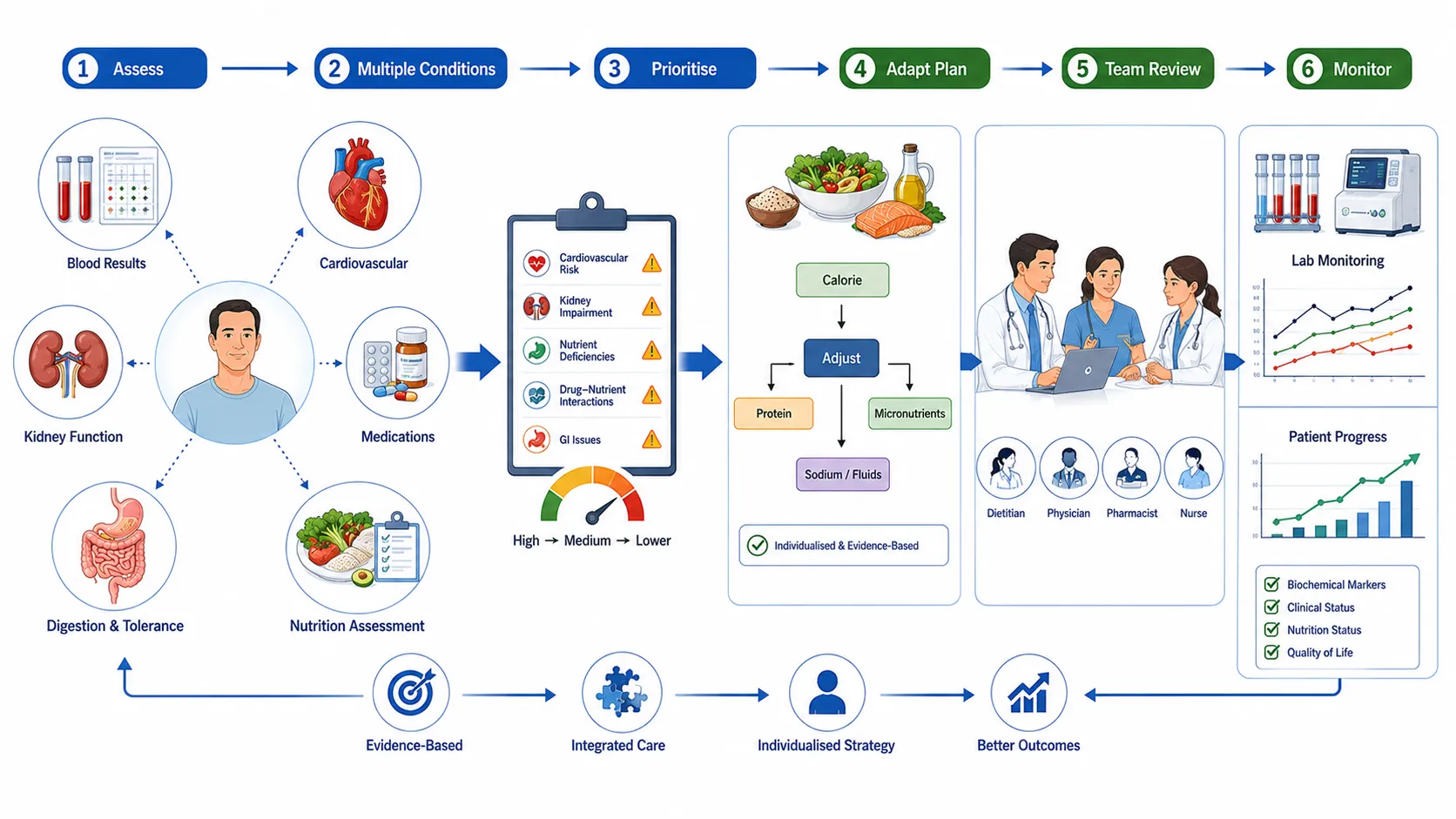
Understanding Complex Patient Scenarios
A complex patient scenario occurs when multiple interacting health factors influence nutritional assessment or intervention.
These factors may include:
Multiple biochemical abnormalities.
Chronic medical conditions.
Acute illness.
Reduced renal function.
Hepatic dysfunction.
Gastrointestinal disorders.
Impaired nutrient absorption.
Multiple medications.
Increased nutritional requirements.
Reduced functional capacity.
Complexity increases when the management of one condition influences another.
Why Standard Interventions May Require Adaptation
Standard nutritional recommendations are often developed for relatively defined clinical populations. Individual patients may differ because of:
Disease severity.
Multiple diagnoses.
Organ dysfunction.
Age-related physiological changes.
Medication interactions.
Different levels of nutritional risk.
Therefore, interventions should be adapted using professional judgement and relevant clinical evidence.
Key Definitions and Concepts
| Term | Definition | Relevance to Complex Nutritional Care |
|---|---|---|
| Evidence-based intervention | A strategy informed by the best available evidence, professional expertise and patient circumstances | Provides the starting point for nutritional planning |
| Comorbidity | The presence of one or more additional medical conditions alongside a primary condition | May alter nutritional requirements and treatment priorities |
| Biochemical disorder | A clinically significant disturbance in a biochemical process or measurable biological balance | May require targeted monitoring and intervention |
| Individualisation | Adaptation of care to the specific needs and risks of the patient | Helps make standard interventions clinically appropriate |
| Clinical prioritisation | The process of determining which problems require the most urgent attention | Supports safe decision-making when multiple issues are present |
| Contraindication | A factor that makes an intervention potentially unsafe or unsuitable | Prevents inappropriate nutritional recommendations |
| Multidisciplinary care | Collaborative management involving professionals with different expertise | Supports complex assessment and intervention |
| Risk–benefit assessment | Comparison of expected benefits against possible harms | Essential when adapting interventions |
The Principles of Individualised Nutritional Adaptation
Individualised nutritional care should follow a structured process rather than relying solely on personal preference or intuition.
Core Principles
Effective adaptation should:
Begin with comprehensive assessment.
Identify all clinically relevant conditions.
Prioritise immediate safety concerns.
Use current evidence appropriately.
Consider biochemical interactions.
Review medication effects.
Establish realistic nutritional goals.
Monitor response over time.
Involve relevant specialists.
The aim is to create a coherent nutritional strategy rather than separate, potentially conflicting plans for each diagnosis.
Comprehensive Assessment of the Complex Patient
Before adapting an intervention, practitioners must understand the patient’s complete clinical situation.
A narrow assessment focused on only one nutrient or one laboratory value may lead to unsafe recommendations.
Clinical History
A detailed history may include:
Primary medical diagnosis.
Additional medical conditions.
Previous nutritional problems.
Recent illness.
Gastrointestinal symptoms.
Surgical history.
Medication history.
Previous response to nutritional interventions.
Dietary Assessment
The practitioner should assess:
Current food intake.
Appetite.
Dietary restrictions.
Food preferences.
Cultural considerations.
Use of supplements.
Ability to prepare or access food.
Biochemical Assessment
Relevant biochemical information may include indicators relating to:
Metabolic regulation.
Electrolyte balance.
Nutrient status.
Organ function.
Laboratory results should be interpreted in the wider clinical context.
Functional Assessment
Complex patients may also require assessment of:
Mobility.
Ability to eat independently.
Swallowing difficulties.
Cognitive or physical limitations.
Ability to follow nutritional advice.
Identifying Interactions Between Conditions
The most important challenge in complex nutritional care is understanding how conditions interact.
An intervention that is beneficial for one disorder may create risks for another.
Examples of Potential Interactions
Dietary modification for metabolic control may unintentionally reduce overall energy intake.
Increased nutrient provision may be unsuitable when organ function is significantly impaired.
Supplementation may interact with prescribed medicines.
Fluid strategies may require modification when fluid balance is clinically compromised.
The practitioner must therefore evaluate the entire intervention rather than focusing on a single outcome.
Clinical Prioritisation
When several problems are present, not all issues have equal urgency.
A structured prioritisation process should identify:
Immediate Concerns
These may involve:
Significant biochemical instability.
Severe nutritional deterioration.
Inability to tolerate nutrition.
Rapid clinical decline.
Short-Term Priorities
These may include:
Correcting clinically relevant nutritional inadequacy.
Improving nutritional intake.
Stabilising physiological function.
Long-Term Priorities
These may include:
Supporting sustainable dietary patterns.
Reducing nutritional risk.
Supporting long-term disease management.
Prioritisation prevents complex care plans from becoming unrealistic or contradictory.
Applying Evidence to Individual Circumstances
Evidence-based practice does not mean applying guidelines mechanically.
Guidelines provide important recommendations, but the practitioner must consider whether they apply directly to the patient.
Questions to Consider
Does the patient resemble the population represented in the evidence?
Are there additional conditions that change the expected benefit?
Are there contraindications?
Are there safety concerns?
Clinical evidence should be combined with professional judgement and individual assessment.
Adapting Macronutrient Strategies
Macronutrient recommendations may need modification when patients have multiple medical conditions.
Energy Provision
Energy needs may be influenced by:
Acute illness.
Reduced activity.
Increased metabolic demand.
Existing malnutrition.
Obesity with nutritional inadequacy.
The objective should be to provide an appropriate nutritional strategy based on assessment rather than applying a uniform approach.
Protein Considerations
Protein requirements may vary according to:
Nutritional status.
Physiological stress.
Organ function.
Age.
Recovery needs.
In complex cases, recommendations may require specialist assessment because the balance between nutritional support and medical considerations can be challenging.
Carbohydrate Considerations
Carbohydrate strategies may require adaptation when patients have:
Altered glucose regulation.
Reduced appetite.
High energy needs.
Variable nutritional intake.
The focus should be on overall dietary quality and metabolic response rather than simplistic elimination of a single macronutrient.
Fat Considerations
Fat intake may need review when patients experience:
Malabsorption.
Altered lipid metabolism.
Gastrointestinal intolerance.
The appropriate strategy depends on the underlying mechanism.
Adapting Micronutrient Strategies
Micronutrient interventions require careful assessment because both deficiency and excessive intake may cause harm.
Principles of Safe Micronutrient Adaptation
The practitioner should:
Confirm the clinical rationale.
Review dietary intake.
Consider laboratory evidence where appropriate.
Assess organ function.
Identify existing supplements.
Consider medication interactions.
Micronutrient interventions should be targeted rather than automatically combining multiple products.
Therapeutic Supplementation in Complex Cases
Supplements may be useful when dietary strategies alone are insufficient.
However, complex patients require careful consideration.
Before Recommending a Supplement
Consider:
Is there evidence of deficiency or increased requirement?
Could the supplement worsen another condition?
Is absorption impaired?
Is the patient already using a similar product?
Are there medication interactions?
A supplement should have a defined therapeutic purpose and monitoring plan.
Managing Multiple Biochemical Disorders
Multiple biochemical abnormalities should not be treated as unrelated laboratory findings.
The practitioner should examine whether they share an underlying cause.
Step 1: Identify All Significant Abnormalities
Document:
The abnormal result.
Severity.
Direction of change.
Relevant clinical symptoms.
Step 2: Look for Connections
Consider whether abnormalities may be related to:
Inadequate intake.
Malabsorption.
Organ dysfunction.
Medication effects.
Acute illness.
Step 3: Prioritise Safety
Identify which abnormality requires urgent attention.
Step 4: Develop an Integrated Strategy
Avoid creating separate interventions that conflict.
Step 5: Monitor the Whole System
Monitor relevant outcomes to ensure that improving one parameter does not worsen another.
Medication–Nutrition Interactions
Many complex patients use multiple medications.
Medicines may influence:
Appetite.
Gastrointestinal function.
Nutrient absorption.
Metabolism.
Electrolyte balance.
A medication review is therefore essential.
Key Professional Actions
The practitioner should:
Obtain an accurate medication history.
Record over-the-counter products.
Identify existing supplements.
Consult appropriate professionals regarding interactions.
Medication-related decisions should remain within appropriate professional scope.
The Role of Organ Function
Renal and hepatic function can substantially influence nutritional planning.
Renal Considerations
Reduced renal function may alter:
Fluid handling.
Electrolyte balance.
Nutrient excretion.
Nutritional interventions may therefore require adaptation and specialist input.
Hepatic Considerations
Hepatic dysfunction may influence:
Nutrient metabolism.
Storage of certain nutrients.
Protein synthesis.
Energy metabolism.
A standard dietary intervention may require modification according to the patient’s clinical condition.
Gastrointestinal Disorders and Nutritional Adaptation
Gastrointestinal disorders can affect:
Appetite.
Digestion.
Nutrient absorption.
Food tolerance.
Assessment Considerations
The practitioner should consider:
Symptoms.
Food tolerance.
Evidence of malabsorption.
Changes in bowel function.
Previous gastrointestinal procedures.
Nutritional strategies may need to focus on tolerance, nutrient density and appropriate methods of nutritional delivery.
Adapting Interventions for Older Adults
Older adults may have:
Reduced appetite.
Multiple medications.
Chronic diseases.
Reduced mobility.
Increased risk of malnutrition.
Key Adaptations
A nutritional strategy may need to consider:
Practical meal preparation.
Food texture.
Appetite changes.
Ability to shop.
Social support.
Complex interventions should remain realistic and achievable.
Adapting Interventions During Acute Illness
Acute illness can significantly alter:
Metabolic requirements.
Appetite.
Fluid balance.
Biochemical markers.
Laboratory findings during acute illness may not always represent long-term nutritional status.
Practitioners should therefore distinguish between acute physiological responses and persistent nutritional problems.
Important Considerations
The timing of laboratory measurements.
The presence of inflammation.
Changes in hydration.
Rapid changes in clinical status.
Acute cases often require close multidisciplinary management.
Developing an Integrated Nutritional Care Plan
An integrated care plan brings together all relevant findings.
The plan should include:
Problem Identification
What nutritional problems are present?
What biochemical abnormalities require attention?
What medical conditions influence the plan?
Prioritised Goals
Goals should be:
Realistic.
Clinically relevant.
Measurable.
Intervention Strategy
The plan may include:
Dietary modification.
Food-based nutritional support.
Therapeutic supplementation where clinically justified.
Specialised nutritional support when required.
Monitoring
The plan should define:
Which biochemical indicators will be monitored.
Which physiological outcomes will be assessed.
When reassessment will occur.
Practical Example: A Patient With Multiple Comorbidities
Consider a patient with:
Reduced appetite.
Multiple biochemical abnormalities.
Chronic medical conditions.
Several prescribed medicines.
A standard nutritional plan focusing only on one laboratory result may be inappropriate.
A safer approach would involve:
Completing a comprehensive assessment.
Reviewing the relationship between the abnormalities.
Identifying urgent risks.
Reviewing medication and supplement use.
Establishing realistic nutritional priorities.
Involving relevant specialists.
Monitoring biochemical and physiological responses.
This integrated approach reduces the risk of contradictory interventions.
Multidisciplinary Decision-Making
Complex cases frequently require collaboration.
Different professionals may contribute expertise in:
Medical diagnosis.
Nutrition.
Medication management.
Laboratory interpretation.
Nursing care.
Benefits of Multidisciplinary Care
A multidisciplinary approach can:
Improve patient safety.
Identify interactions between treatments.
Support accurate interpretation.
Improve continuity of care.
Reduce conflicting recommendations.
Clear communication is essential.
Monitoring Adapted Interventions
Adaptation is not a final step. The modified intervention must also be evaluated.
Monitoring Should Assess
Biochemical response.
Physiological response.
Nutritional intake.
Treatment tolerance.
Adverse effects.
Key Monitoring Questions
Is the intervention producing the expected benefit?
Are other conditions remaining stable?
Has a new risk emerged?
Does the intervention remain appropriate?
The monitoring plan should be adjusted as the patient’s condition changes.
Managing Conflicting Nutritional Priorities
Complex patients may have recommendations that appear to conflict.
The practitioner should avoid applying each recommendation independently.
A Structured Approach
Identify the Conflict
Determine exactly which recommendations are inconsistent.
Assess Clinical Importance
Identify which concern presents the greatest immediate risk.
Examine the Evidence
Review relevant guidance for patients with multiple conditions.
Develop a Compromise Strategy
Create a plan that balances safety and nutritional adequacy.
Monitor the Outcome
Review whether the compromise is achieving the intended objectives.
Ethical Considerations
Complex nutritional decision-making involves ethical responsibilities.
Professionals should:
Avoid unsupported interventions.
Respect patient preferences.
Provide understandable information.
Avoid unnecessary restrictions.
Recognise professional limitations.
Patient autonomy should be balanced with clinical safety.
Communicating Complex Nutritional Plans
Complex plans can be difficult for patients to understand.
Clear communication should focus on:
The most important priorities.
Practical actions.
Reasons for major recommendations.
Signs that require further advice.
Strategies for Improving Understanding
Use:
Simple language.
Written summaries.
Prioritised instructions.
Follow-up discussions.
An overly complicated plan may reduce adherence.
Common Errors in Complex Nutritional Care
Treating Laboratory Results in Isolation
A laboratory result should not automatically determine the intervention without clinical context.
Applying Multiple Guidelines Without Integration
Following several separate guidelines can produce conflicting recommendations.
Overusing Supplements
Multiple supplements may increase the risk of duplication and interactions.
Ignoring Patient Capacity
A theoretically ideal plan may fail if the patient cannot follow it.
Failing to Monitor Change
Complex patients may deteriorate or develop new needs.
Regular reassessment is essential.
Key Benefits of Adapting Evidence-Based Interventions
Appropriate adaptation can provide:
Improved patient safety.
More relevant nutritional care.
Better management of competing priorities.
Reduced risk of inappropriate supplementation.
Improved treatment adherence.
More personalised clinical decision-making.
Adaptation allows evidence-based care to remain practical in real-world clinical situations.
A Structured Adaptation Framework
Learners can use the following six-stage framework.
Assess
Collect comprehensive information regarding:
Nutritional status.
Biochemical findings.
Medical conditions.
Medication use.
Analyse
Identify:
Relationships between conditions.
Potential conflicts.
Underlying causes.
Prioritise
Determine:
Immediate risks.
Short-term goals.
Long-term objectives.
Adapt
Modify standard interventions according to:
Clinical evidence.
Patient safety.
Individual requirements.
Implement
Apply the plan clearly and appropriately.
Monitor
Evaluate:
Biochemical response.
Physiological outcomes.
Safety.
Adherence.
This framework promotes systematic professional decision-making.
Scenario-Based Application
A patient has inadequate dietary intake, a chronic medical condition affecting metabolism and laboratory findings showing more than one biochemical abnormality.
The practitioner considers a standard intervention for each problem separately.
However, applying all interventions without integration could lead to:
Excessive dietary restrictions.
Conflicting nutritional advice.
Increased risk of poor adherence.
Potential biochemical complications.
A better approach is to conduct an integrated assessment and establish a hierarchy of priorities.
The practitioner should:
Identify immediate risks.
Determine shared underlying causes.
Review current treatments.
Adapt the nutritional plan.
Establish a coordinated monitoring strategy.
Professional Boundaries and Referral
Complex cases may exceed the competence or scope of an individual practitioner.
Referral or specialist involvement may be necessary when:
Significant biochemical instability is present.
Severe malnutrition is suspected.
Organ dysfunction complicates nutritional management.
Medication interactions require specialist assessment.
The patient fails to respond as expected.
Recognising when additional expertise is required is a key aspect of professional practice.
Quality Assurance in Complex Nutritional Care
A high-quality adapted intervention should be:
Evidence-informed.
Individualised.
Safe.
Clearly documented.
Monitored regularly.
Documentation Should Include
Identified nutritional problems.
Relevant comorbidities.
Biochemical considerations.
Rationale for adaptations.
Monitoring arrangements.
Referral decisions where appropriate.
Accurate documentation supports continuity of care.
Practical Checklist for Learners
Before adapting a standard nutritional intervention, ask:
Assessment
What medical conditions are present?
What biochemical abnormalities are clinically relevant?
Are any findings urgent?
Interactions
Could treatment for one condition worsen another?
Are medications affecting nutritional status?
Adaptation
Which components of the standard intervention require modification?
Is specialist input needed?
Safety
Are there contraindications?
Is there a risk of excessive nutrient intake?
Monitoring
What outcomes will demonstrate success?
How will adverse effects be identified?
Advanced Clinical Reasoning
Complex nutritional care requires practitioners to move beyond simple cause-and-effect thinking.
A patient may not have one nutritional problem with one direct solution. Instead, multiple physiological systems may interact.
Effective professional judgement requires the ability to:
Integrate multiple data sources.
Identify relationships between conditions.
Recognise uncertainty.
Prioritise patient safety.
Modify interventions as new information becomes available.
Clinical decisions should remain flexible because complex patient conditions can change over time.
Conclusion
Adapting standard evidence-based nutritional interventions for patients with multiple biochemical disorders and medical comorbidities is an essential aspect of advanced clinical nutritional practice. Standard recommendations provide valuable guidance, but complex patients require a more individualised approach that considers the interaction between nutritional needs, biochemical abnormalities, medical conditions, medications and physiological function.
The process begins with comprehensive assessment and careful interpretation of clinical and biochemical information. Practitioners must identify interactions between conditions, recognise competing nutritional priorities and establish a clear hierarchy of clinical needs. Interventions should then be adapted using relevant evidence and professional judgement.
A successful strategy does not simply combine multiple recommendations. Instead, it integrates them into one coherent plan that is safe, practical and responsive to the patient’s overall condition. Medication review, assessment of organ function, evaluation of gastrointestinal tolerance and consideration of functional capacity are all important components.
Complex nutritional interventions must also be monitored systematically. Practitioners should evaluate biochemical trends, physiological outcomes, nutritional intake and potential adverse effects. When the patient’s condition changes, the intervention should be reassessed and adapted accordingly.
Multidisciplinary collaboration is particularly important when multiple medical conditions interact. Recognising professional boundaries and seeking specialist input when necessary helps protect patient safety and improves the quality of care.
Ultimately, adapting nutritional interventions requires structured assessment, clinical prioritisation, evidence-based reasoning, careful monitoring and effective communication. By applying these principles, healthcare and nutrition professionals can provide more appropriate and individualised nutritional strategies for patients whose complex biochemical disorders and medical comorbidities make standard interventions insufficient or potentially unsafe.