
Lesson no 2 : Interpret laboratory tests and biomarkers for nutrient deficiencies and imbalances.
Introduction
The ability to interpret laboratory tests and biomarkers is essential for accurately identifying nutrient deficiencies, nutritional imbalances and underlying metabolic disturbances. In modern clinical and nutritional practice, laboratory findings provide valuable objective evidence about how the body absorbs, transports, stores, utilises and regulates essential nutrients. However, individual laboratory results should not be interpreted in isolation. Accurate assessment requires an understanding of biochemical principles, physiological processes, clinical history and the factors that may influence biomarker values.
This lesson, Interpret Laboratory Tests and Biomarkers for Nutrient Deficiencies and Imbalances, develops the Learner’s ability to understand and critically evaluate commonly used laboratory investigations in nutritional assessment. Learners will explore how blood, urine and other biological measurements can provide evidence of deficiencies or imbalances involving vitamins, minerals, proteins, lipids, carbohydrates and other essential nutrients. The lesson also examines the relationship between laboratory biomarkers and the physiological functions they represent.
A major focus is placed on recognising the difference between direct and indirect biomarkers. Some tests provide information about the concentration of a nutrient or its metabolites, while others reflect the functional consequences of inadequate nutrient availability. Learners will develop the ability to interpret these findings within a wider clinical context and identify factors that may affect reliability, including inflammation, infection, hydration status, medication use, organ dysfunction and recent dietary intake.
The lesson also introduces systematic approaches for analysing laboratory data. Learners will examine reference ranges, trends over time and patterns involving multiple biomarkers rather than relying solely on isolated results. This approach supports more accurate identification of early nutritional deterioration and helps distinguish between true nutrient deficiency, altered metabolism and disease-related biochemical changes.
Practical clinical scenarios will be used to strengthen analytical and professional judgement. Learners will consider how laboratory findings can be integrated with dietary information, physical signs, symptoms and relevant clinical history to develop logical explanations for possible nutritional problems. Emphasis is placed on recognising uncertainty, avoiding premature conclusions and understanding when further investigation or specialist input may be required.
By the end of this lesson, Learners will have developed a stronger understanding of the role of laboratory testing in nutritional assessment. They will be better prepared to interpret complex biomarker patterns, recognise potential nutrient deficiencies and imbalances, and apply biochemical evidence responsibly within clinical, research and professional nutritional contexts. This knowledge provides an important foundation for evidence-based nutritional assessment and effective decision-making.
1.Critically Interpret Complex Blood and Urine Laboratory Profiles to Accurately Identify Specific Biochemical Markers of Nutrient Deficiencies and Toxicities
Laboratory assessment is a fundamental component of advanced nutritional and clinical evaluation. Blood and urine profiles provide measurable biochemical evidence that can help identify nutrient deficiencies, excessive nutrient exposure, altered nutrient metabolism and potential toxicity. However, the interpretation of laboratory findings requires more than simply comparing a numerical result with a reference range. A critical interpretation considers the physiological role of the biomarker, the biological specimen used, analytical limitations, the individual’s clinical condition and the interaction between multiple laboratory findings.
Nutrient concentrations may change because of inadequate dietary intake, poor absorption, increased physiological requirements, abnormal distribution, altered metabolism, increased losses or excessive supplementation. Similarly, an apparently abnormal laboratory value may reflect inflammation, dehydration, kidney dysfunction, liver disease, medication effects or temporary metabolic adaptation rather than a true deficiency or toxicity. Therefore, complex laboratory profiles should be interpreted systematically and in conjunction with clinical and nutritional information.
This section develops the Learner’s ability to interpret blood and urine laboratory data critically, identify meaningful biochemical patterns and distinguish probable nutrient deficiency from toxicity or other physiological disturbances.
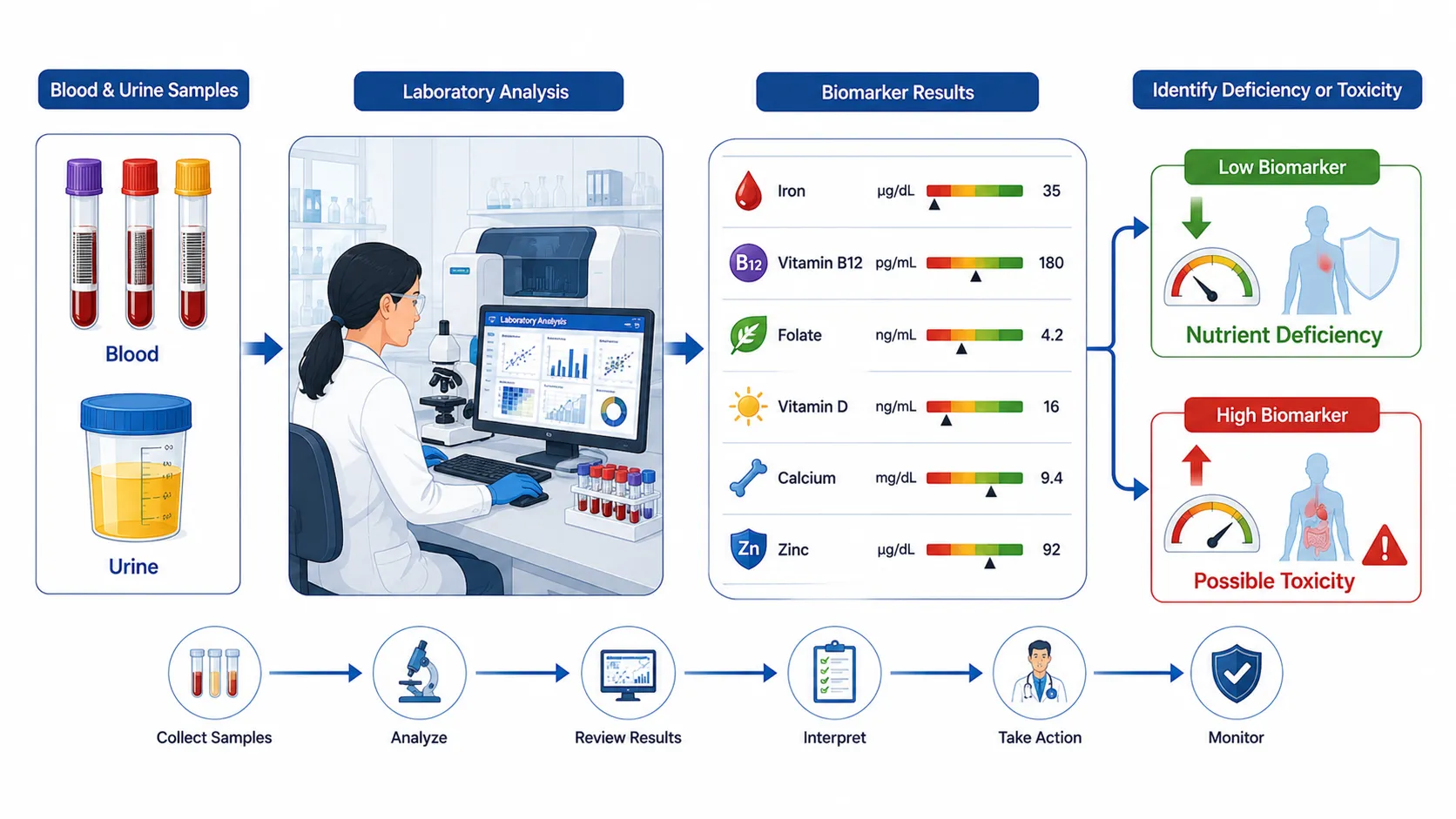
Understanding the Purpose of Blood and Urine Laboratory Profiles
Blood and urine are commonly used biological specimens because they provide different forms of information about nutritional physiology.
Blood testing may provide evidence about:
Circulating nutrient concentrations.
Nutrient transport proteins.
Functional enzyme activity.
Metabolic intermediates.
Storage-related biomarkers.
Organ function affecting nutrient metabolism.
Inflammatory processes influencing biomarker interpretation.
Electrolyte balance.
Indicators of excessive nutrient exposure.
Urine testing may provide information about:
Nutrient excretion.
Water-soluble vitamin metabolites.
Mineral losses.
Renal handling of nutrients.
Metabolic waste products.
Exposure to potentially toxic substances.
Hydration status.
Changes in nutrient conservation mechanisms.
A single specimen therefore provides only part of the overall clinical picture. Blood may indicate what is currently circulating or being transported, whereas urine may indicate what is being eliminated or conserved.
The Importance of Critical Interpretation
Critical interpretation means evaluating the meaning and limitations of laboratory evidence rather than accepting a result as an automatic diagnosis.
A critical assessor should ask:
What does this biomarker physiologically represent?
Is the biomarker a direct or indirect indicator of nutrient status?
Does the result represent recent intake, circulating availability, tissue storage or functional activity?
Could inflammation influence the value?
Could hydration alter the measured concentration?
Is kidney or liver function affecting the result?
Is the result consistent with the individual’s symptoms?
Do other biomarkers support the same interpretation?
Is there evidence of a trend over time?
Could supplementation or medication explain the finding?
The ability to ask these questions reduces the risk of overdiagnosis and inappropriate nutritional conclusions.
Key Definitions and Concepts
Nutrient Biomarker
A nutrient biomarker is a measurable biological characteristic that provides information about nutrient exposure, status, metabolism or physiological function.
Biomarkers may be measured in:
Blood.
Plasma.
Serum.
Urine.
Red blood cells.
Other biological tissues or fluids where clinically appropriate.
Nutrient Deficiency
Nutrient deficiency occurs when the availability of an essential nutrient is insufficient to support normal physiological function. Deficiency may result from inadequate intake, impaired absorption, increased requirements, excessive losses or altered metabolism.
Nutrient Toxicity
Nutrient toxicity refers to harmful physiological effects caused by excessive exposure to a nutrient or related compound. Toxicity may result from excessive supplementation, concentrated products, impaired excretion or abnormal accumulation.
Reference Range
A reference range is a statistical interval derived from a defined reference population. A value outside a reference range does not automatically establish disease, while a value within the range does not always exclude an emerging nutritional problem.
Biological Variation
Biological variation refers to natural differences in laboratory values between individuals and within the same individual over time.
Important sources include:
Age.
Sex.
Genetic variation.
Dietary intake.
Physical activity.
Hydration.
Circadian rhythms.
Acute illness.
Chronic disease.
Pre-Analytical Factors
Pre-analytical factors are conditions occurring before laboratory analysis that may influence the reliability of results.
Examples include:
Fasting status.
Recent food intake.
Exercise.
Time of sample collection.
Sample handling.
Delayed processing.
Haemolysis.
Improper specimen storage.
Table: Important Concepts in Blood and Urine Nutritional Assessment
| Term or Marker Category | Definition | Key Concept for Interpretation | Practical Importance |
|---|---|---|---|
| Direct biomarker | Measures a nutrient or closely related compound | May reflect recent circulating availability rather than total body stores | Useful when interpreted with other evidence |
| Functional biomarker | Measures a physiological consequence of nutrient availability | Can identify impaired biological function | May reveal deficiency before severe clinical signs |
| Storage marker | Reflects estimated nutrient reserves | May be influenced by inflammation or disease | Supports assessment of longer-term status |
| Blood concentration | Amount of a substance circulating in blood | Influenced by transport, hydration and homeostasis | Does not always equal tissue stores |
| Urinary excretion | Amount of a substance eliminated in urine | Reflects intake, renal handling and conservation | Helps assess losses and excessive exposure |
| Toxicity marker | Indicates excessive exposure or harmful accumulation | Must be interpreted with dose history and organ function | Supports identification of potential nutrient excess |
| Reference range | Expected interval in a reference population | Not an absolute boundary between health and disease | Requires clinical interpretation |
| Trend analysis | Comparison of results over time | Rate and direction of change may be clinically important | Helps identify deterioration or improvement |
Principles of Interpreting Blood Biomarkers
Circulating Concentration Does Not Always Equal Nutritional Status
One of the most important principles in nutritional biochemistry is that circulating concentration may not accurately represent total body stores.
The body uses regulatory mechanisms to maintain physiological stability. As a result, blood concentrations of certain nutrients may remain relatively stable despite declining tissue reserves.
For example, the body may:
Mobilise nutrients from storage sites.
Reduce urinary losses.
Alter intestinal absorption.
Change transport protein activity.
Modify cellular utilisation.
Prioritise essential physiological functions.
Therefore, a normal circulating concentration should not automatically exclude early nutritional deterioration.
Direct and Functional Biomarkers
Direct biomarkers measure the nutrient itself or a closely related metabolite. Functional biomarkers assess the consequences of nutrient availability on metabolic pathways or enzyme activity.
Direct biomarkers may help identify:
Current nutrient availability.
Recent exposure.
Severe depletion.
Excessive circulating concentrations.
Functional biomarkers may help identify:
Altered enzyme activity.
Disturbed metabolic pathways.
Accumulation of metabolic intermediates.
Physiological consequences of deficiency.
A stronger assessment often combines both approaches where appropriate.
The Role of Transport Proteins
Some nutrients circulate in blood attached to specialised transport proteins. Changes in these proteins can influence measured nutrient concentrations.
Transport protein levels may be affected by:
Liver function.
Inflammation.
Protein-energy malnutrition.
Hormonal changes.
Kidney disease.
Acute illness.
A low circulating nutrient concentration may therefore reflect altered transport rather than inadequate dietary intake alone.
Interpreting Urine Biomarkers
Urinary Excretion and Nutrient Balance
Urine provides important information about the relationship between nutrient intake, metabolism and renal handling.
The kidneys regulate the elimination and conservation of many substances. When nutrient availability is limited, the body may reduce urinary losses. When intake is excessive, urinary excretion may increase.
However, interpretation is complex because urinary concentration can be affected by:
Hydration.
Renal function.
Timing of collection.
Recent nutrient intake.
Medication use.
Hormonal regulation.
Spot Urine Versus Timed Collection
Different urine collection methods provide different types of information.
A spot urine sample:
Is convenient.
Provides information at a specific point in time.
May be strongly influenced by hydration.
May require adjustment using appropriate measures of urine concentration.
A timed urine collection:
Can estimate total excretion over a defined period.
May provide more information about total losses.
Requires accurate collection procedures.
Can be affected by incomplete sample collection.
The method used should always be considered before interpreting the result.
Urinary Conservation
Reduced urinary excretion does not always mean that nutritional status is adequate. In some circumstances, the body conserves a nutrient because availability is reduced.
This means that:
Low urinary output may represent physiological conservation.
High urinary output may indicate excessive intake or reduced renal reabsorption.
Interpretation requires comparison with blood findings and clinical circumstances.
A Systematic Process for Interpreting Complex Laboratory Profiles
Step 1: Establish the Clinical Question
Before interpreting a profile, identify why the test was performed.
Possible clinical questions include:
Is a nutrient deficiency likely?
Is there evidence of excessive nutrient exposure?
Is absorption impaired?
Are nutrient losses increased?
Is a metabolic pathway disrupted?
Is organ dysfunction influencing nutritional status?
Are laboratory changes consistent with the patient’s symptoms?
The clinical question guides the selection and interpretation of relevant biomarkers.
Step 2: Review Patient and Clinical Information
Laboratory data should be interpreted alongside relevant background information.
Important information includes:
Age.
Sex.
Medical history.
Current symptoms.
Dietary pattern.
Supplement use.
Medication history.
Gastrointestinal symptoms.
Kidney function.
Liver function.
Inflammatory conditions.
Recent illness.
Hydration status.
Step 3: Check Pre-Analytical Conditions
Before reaching a clinical conclusion, consider whether the sample may have been affected by collection or handling conditions.
Check:
Whether fasting was required.
Time of collection.
Recent supplementation.
Recent physical activity.
Sample quality.
Collection completeness.
Storage conditions.
Step 4: Identify Abnormal and Borderline Findings
Review the entire profile rather than focusing only on one clearly abnormal result.
Identify:
Values above the reference range.
Values below the reference range.
Borderline findings.
Unexpected combinations.
Changes compared with previous results.
Borderline values may become more significant when supported by symptoms or other biomarkers.
Step 5: Identify Physiological Patterns
The next step is to group related findings.
For example, consider whether the profile suggests:
Reduced nutrient availability.
Increased nutrient losses.
Impaired absorption.
Altered storage.
Excessive intake.
Organ dysfunction.
Inflammation.
Metabolic adaptation.
Pattern recognition is often more informative than isolated-value interpretation.
Step 6: Consider Confounding Factors
Potential confounders include:
Inflammation.
Infection.
Dehydration.
Fluid overload.
Pregnancy.
Medication.
Organ dysfunction.
Acute stress.
Recent supplementation.
These factors can change biomarker concentrations independently of nutritional status.
Step 7: Develop a Reasoned Interpretation
The final interpretation should clearly distinguish:
What is directly supported by the evidence.
What is strongly suspected.
What remains uncertain.
What alternative explanations are possible.
Whether further investigation is required.
Professional interpretation should avoid overstating certainty.
Identifying Biochemical Patterns of Nutrient Deficiency
Early Deficiency
Early deficiency may occur before obvious clinical symptoms develop. The body may compensate by changing absorption, metabolism or nutrient conservation.
Possible early indicators include:
Altered functional biomarkers.
Changing metabolic intermediates.
Declining trends over time.
Increased physiological conservation.
Borderline biochemical values combined with risk factors.
Established Deficiency
As deficiency progresses, more consistent abnormalities may become evident.
Potential findings include:
Reduced circulating availability.
Altered storage-related biomarkers.
Functional impairment.
Metabolic disruption.
Clinical symptoms.
Reduced physical function.
Severe Deficiency
Severe deficiency may produce widespread physiological consequences.
Possible effects include:
Impaired enzyme activity.
Altered tissue function.
Reduced immune competence.
Neurological symptoms.
Haematological changes.
Muscular weakness.
The severity of laboratory abnormalities should always be interpreted in relation to the individual’s overall condition.
Identifying Biochemical Evidence of Nutrient Toxicity
Understanding Nutrient Excess
Nutrients are essential, but excessive exposure may cause physiological harm. Toxicity is particularly relevant when high-dose supplements or concentrated nutritional products are used.
Potential sources include:
High-dose supplementation.
Multiple products containing the same nutrient.
Incorrect dosing.
Reduced renal excretion.
Impaired metabolism.
Long-term excessive intake.
Laboratory Indicators of Potential Toxicity
Potential indicators include:
Excessively elevated circulating concentrations.
Increased urinary excretion.
Abnormal organ function markers.
Disturbed electrolyte balance.
Altered metabolic pathways.
However, elevated concentration alone does not always confirm clinical toxicity. The dose, duration of exposure and symptoms must also be considered.
The Importance of Dose and Duration
A critical evaluation should consider:
How much of the nutrient has been consumed?
For how long?
Is exposure from food, supplements or both?
Is the nutrient normally tightly regulated?
Does the patient have impaired excretion?
Are there symptoms consistent with excessive exposure?
Key Benefits of Comprehensive Laboratory Interpretation
Accurate interpretation of blood and urine profiles provides several professional benefits.
It can:
Support earlier identification of nutritional deterioration.
Identify possible nutrient deficiencies.
Detect patterns consistent with excessive exposure.
Improve understanding of metabolic disturbances.
Support monitoring of nutritional interventions.
Identify the effects of organ dysfunction.
Reduce reliance on single measurements.
Improve evidence-based clinical reasoning.
Support appropriate referral and further investigation.
Practical Example: Suspected Impaired Absorption
A patient reports:
Persistent gastrointestinal discomfort.
Reduced energy levels.
Unintentional dietary restriction.
Intermittent diarrhoea.
A laboratory assessment may show a pattern of abnormalities affecting several nutrients.
A systematic interpretation should consider:
Whether the dietary intake is inadequate.
Whether gastrointestinal dysfunction is affecting absorption.
Whether inflammation is influencing the biomarkers.
Whether urinary findings suggest increased nutrient losses.
Whether organ function is contributing to altered metabolism.
The correct approach is not simply to label each low result as an independent dietary deficiency. A common underlying physiological mechanism may explain multiple abnormalities.
Practical Example: Possible Excessive Supplement Exposure
An individual uses several nutritional supplements simultaneously. Laboratory findings show elevated concentrations of a nutrient-related biomarker.
The assessment should investigate:
The exact products being used.
The dose from each product.
Total daily exposure.
Duration of use.
Kidney and liver function.
Presence of relevant symptoms.
Urinary excretion patterns where appropriate.
A high result may indicate recent supplementation rather than established toxicity. However, persistent elevation combined with clinical evidence may require further assessment.
Practical Example: Interpreting Conflicting Results
A patient has a low concentration of a circulating nutrient marker but also has significant inflammation.
Possible explanations include:
True nutrient deficiency.
Redistribution during inflammation.
Altered transport protein concentrations.
Increased physiological utilisation.
A combination of factors.
The most appropriate response is to review additional biomarkers, assess the inflammatory context and evaluate dietary and clinical evidence before reaching a conclusion.
Common Errors in Laboratory Interpretation
Relying on a Single Biomarker
One of the most common errors is assuming that one result provides a complete assessment of nutritional status.
Potential problems include:
Biological variation.
Analytical variation.
Acute physiological changes.
Effects of inflammation.
Altered hydration.
A more reliable approach uses multiple relevant sources of evidence.
Ignoring Clinical Context
Laboratory values should never be separated entirely from the patient’s condition.
Ignoring clinical context may result in:
Misclassification of deficiency.
Failure to identify disease-related changes.
Inappropriate supplementation.
Misinterpretation of toxicity.
Treating Reference Ranges as Absolute Diagnostic Boundaries
A reference range is an important guide, but it is not a complete diagnostic tool.
A result may be:
Within the range but declining.
Borderline but clinically significant.
Outside the range because of a temporary physiological factor.
Abnormal because of disease rather than nutrient intake.
Overlooking Supplement Use
Supplementation can significantly influence laboratory profiles.
A complete assessment should document:
Product names.
Nutrient content.
Dose.
Frequency.
Duration.
Combination products.
Professional and Clinical Decision-Making
Working Within Professional Scope
Laboratory interpretation must be performed within appropriate professional competence and organisational responsibilities.
Professionals should:
Recognise the limits of their expertise.
Avoid presenting uncertain findings as confirmed diagnoses.
Follow relevant clinical procedures.
Seek specialist input where necessary.
Communicate findings accurately.
Recognising When Further Investigation Is Required
Further investigation may be appropriate when:
Results are inconsistent.
Multiple abnormalities are present.
There is evidence of possible toxicity.
Symptoms are severe or progressive.
Organ dysfunction may be present.
The cause of the abnormality remains unclear.
Communicating Laboratory Findings Clearly
Effective communication should distinguish between observation and interpretation.
For example:
Observation:
The laboratory profile shows several biochemical values outside the expected range.
Interpretation:
The pattern may suggest altered nutrient availability or metabolism.
Professional conclusion:
Further clinical assessment is required to determine the underlying cause.
This approach avoids overstating what laboratory evidence can prove independently.
Practical Checklist for Learners
When interpreting a complex blood or urine laboratory profile, consider the following:
Identify the clinical question.
Check the specimen type.
Understand what each biomarker represents.
Review reference information.
Identify abnormal and borderline results.
Compare current findings with previous results.
Look for related physiological patterns.
Consider dietary intake.
Review supplement exposure.
Assess gastrointestinal symptoms.
Consider inflammation and acute illness.
Review kidney and liver function.
Consider hydration status.
Evaluate possible medication effects.
Distinguish deficiency from altered metabolism.
Consider excessive exposure and toxicity.
Identify uncertainty.
Determine whether further assessment is needed.
Summary
The interpretation of complex blood and urine laboratory profiles is a sophisticated process requiring knowledge of biochemistry, physiology, nutrition and clinical reasoning. Laboratory biomarkers can provide important evidence about nutrient availability, metabolism, storage, utilisation, losses and excessive exposure. However, no individual test should normally be interpreted as a complete representation of nutritional health.
Blood biomarkers may provide information about circulating nutrients, transport systems, metabolic activity and physiological function. Urine biomarkers can provide additional evidence about nutrient excretion, conservation, renal handling and excessive exposure. The strongest interpretation integrates both forms of evidence with dietary history, symptoms, supplement use, organ function and other relevant clinical information.
A systematic approach enables Learners to identify meaningful biochemical patterns, recognise the limitations of individual markers and distinguish possible nutrient deficiency from toxicity, inflammation, altered metabolism or organ dysfunction. By developing these critical interpretation skills, Learners can make more logical, evidence-based and professionally responsible assessments of complex nutritional laboratory data.
2.Evaluate the Clinical Significance of Fluctuating Biomarker Levels in Relation to Dynamic Changes in an Individual’s Dietary Intake and Metabolic State
Biomarkers are measurable biological indicators that provide valuable information about nutritional status, metabolic activity, physiological regulation and potential disease processes. In clinical nutrition and biochemistry, laboratory values are often interpreted as if they represent a fixed state. In reality, many biomarkers fluctuate continuously in response to dietary intake, fasting, physical activity, hydration, hormonal activity, stress, illness and changes in metabolic demand.
The ability to evaluate these fluctuations is therefore essential for accurate nutritional assessment. A laboratory value obtained at one moment represents a biological measurement within a dynamic system rather than a permanent description of an individual’s health. Clinically meaningful interpretation requires an understanding of why a biomarker changes, how rapidly it responds to dietary exposure and whether the observed change reflects normal biological variation, nutritional adaptation or an emerging pathological process.
This section explores the clinical significance of fluctuating biomarker levels and develops a systematic approach for relating laboratory findings to changes in dietary intake and metabolic state.
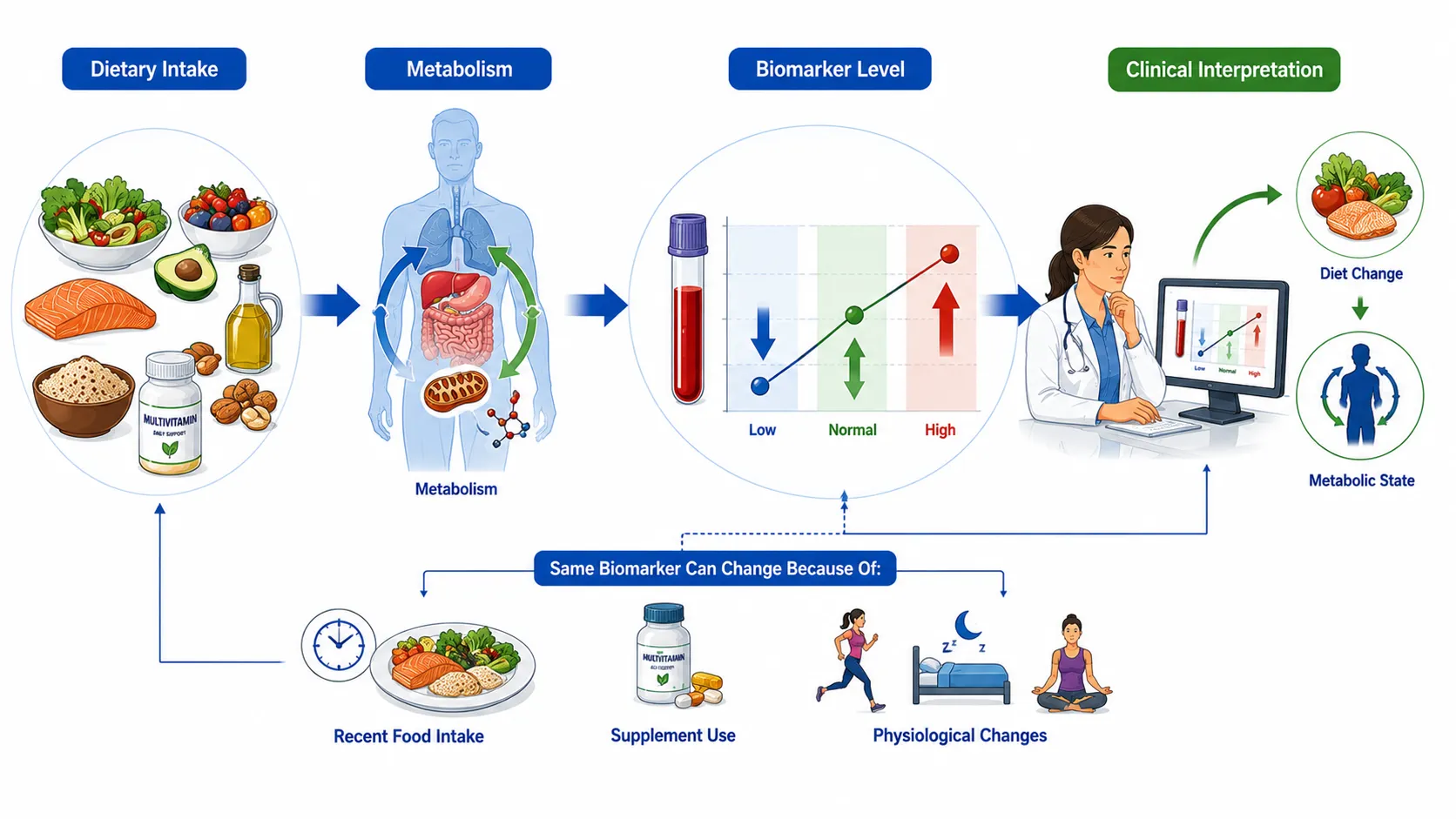
Understanding Biomarker Fluctuation
Biomarker fluctuation refers to changes in the measured concentration or activity of a biological indicator over time. These changes may occur naturally or in response to internal and external influences.
Fluctuations can occur over:
Minutes.
Hours.
Days.
Weeks.
Months.
Longer periods depending on the biomarker and physiological process.
Some biomarkers respond rapidly to recent dietary intake, while others reflect longer-term nutrient exposure or tissue status. Understanding this difference is critical when evaluating nutritional laboratory results.
Dynamic Nature of Human Metabolism
Human metabolism is continuously adapting to changing conditions. The body adjusts nutrient absorption, transport, storage, utilisation and excretion in order to maintain physiological balance.
Dynamic influences include:
Recent food intake.
Fasting.
Meal composition.
Total energy intake.
Macronutrient distribution.
Micronutrient intake.
Hydration.
Physical activity.
Sleep patterns.
Psychological and physiological stress.
Acute illness.
Chronic disease.
Hormonal changes.
Medication use.
A biomarker may therefore change even when an individual’s underlying nutritional status has not substantially changed.
Key Definitions and Concepts
Biomarker
A biomarker is a measurable biological characteristic that provides information about a normal biological process, nutritional exposure, physiological function or pathological condition.
Biological Variation
Biological variation describes the natural differences in laboratory values:
Between different individuals.
Within the same individual over time.
This variation must be distinguished from clinically important change.
Intra-Individual Variation
Intra-individual variation refers to changes occurring within the same person across repeated measurements.
These changes may be influenced by:
Daily dietary variation.
Activity level.
Hormonal rhythms.
Hydration.
Acute physiological stress.
Homeostasis
Homeostasis is the body’s ability to maintain internal stability despite changes in the external environment or nutrient intake.
Homeostatic regulation may temporarily maintain blood concentrations even when nutrient stores are changing.
Metabolic State
Metabolic state refers to the current physiological condition governing how nutrients are used, stored and mobilised.
Examples include:
Fed state.
Post-absorptive state.
Fasting state.
Prolonged energy restriction.
Exercise recovery.
Acute illness.
Catabolic stress.
Table: Factors Affecting Biomarker Fluctuation and Clinical Interpretation
| Factor | Effect on Biomarkers | Clinical Significance | Interpretation Consideration |
|---|---|---|---|
| Recent food intake | May temporarily increase circulating nutrients and metabolites | Reflects acute exposure rather than long-term status | Review fasting and meal timing |
| Fasting | Changes substrate availability and metabolic hormone activity | May reveal metabolic adaptation | Consider duration of fasting |
| Hydration | Can concentrate or dilute blood and urine values | May create apparent changes without altered body stores | Assess fluid balance |
| Physical activity | Alters energy metabolism and substrate utilisation | Can temporarily change several metabolic markers | Consider recent exercise |
| Acute illness | Alters inflammation and nutrient distribution | May mimic or conceal deficiency | Interpret with clinical context |
| Inflammation | Influences transport and storage-related proteins | Can distort nutritional biomarkers | Review inflammatory status |
| Supplement use | May produce temporary elevations | May reflect recent intake rather than body sufficiency | Record dose and timing |
| Kidney function | Alters elimination of metabolites and nutrients | Can change circulating and urinary levels | Assess renal context |
| Hormonal variation | Changes nutrient metabolism and fluid balance | May contribute to predictable variation | Consider physiological state |
Types of Biomarkers According to Their Response Time
Rapid-Response Biomarkers
Some biomarkers change quickly following dietary intake or metabolic transitions.
These may reflect:
Recent nutrient exposure.
Acute substrate availability.
Immediate metabolic responses.
Hormonal regulation.
Rapid-response biomarkers can be useful for evaluating short-term physiological effects, but they may not represent long-term nutritional status.
Intermediate-Response Biomarkers
Other biomarkers change over days or weeks.
They may reflect:
Repeated dietary exposure.
Changes in metabolic regulation.
Altered nutrient availability.
Developing nutritional imbalance.
These biomarkers may be particularly useful for monitoring nutritional interventions.
Long-Term Biomarkers
Some indicators provide information about longer-term nutritional exposure or physiological status.
They may reflect:
Tissue reserves.
Longer-term metabolic regulation.
Sustained dietary patterns.
Cumulative physiological changes.
However, even longer-term markers can be influenced by disease, inflammation and individual biological variation.
The Relationship Between Dietary Intake and Biomarker Levels
Acute Dietary Effects
The timing of food intake can have a substantial influence on laboratory findings.
After a meal, the body enters a fed state characterised by:
Increased nutrient absorption.
Increased circulating substrates.
Hormonal responses to food intake.
Increased nutrient storage activity.
Altered metabolic pathway activity.
The magnitude and duration of these changes depend on:
Meal size.
Macronutrient composition.
Nutrient bioavailability.
Digestive efficiency.
Individual metabolic characteristics.
A laboratory result collected shortly after a meal may therefore differ substantially from a fasting measurement.
Fasting and Post-Absorptive Changes
During fasting, the body adjusts to reduced external nutrient availability.
Important metabolic adaptations may include:
Mobilisation of stored energy.
Changes in substrate utilisation.
Increased reliance on endogenous fuel sources.
Hormonal adjustments.
Altered nutrient conservation.
Therefore, fasting measurements should be interpreted according to the duration and purpose of the fast.
Repeated Dietary Patterns
Long-term dietary habits may gradually influence biomarkers associated with nutrient availability and metabolism.
Sustained dietary changes can influence:
Nutrient stores.
Lipid metabolism.
Glucose regulation.
Protein metabolism.
Mineral balance.
Metabolic enzyme activity.
The clinical significance of a changing biomarker is often greater when the change is consistent across repeated measurements.
Understanding Metabolic State
The Fed State
The fed state occurs following nutrient intake and is characterised by active digestion, absorption and nutrient storage.
Biochemical features may include:
Increased circulating dietary substrates.
Increased insulin-mediated metabolic activity.
Enhanced glycogen synthesis.
Increased nutrient utilisation.
A result measured during this state may reflect recent dietary exposure.
The Post-Absorptive State
The post-absorptive state develops when nutrients from the most recent meal are no longer being actively absorbed to the same extent.
The body increasingly relies on:
Stored carbohydrate.
Fat metabolism.
Endogenous nutrient mobilisation.
Laboratory interpretation should recognise that values measured in this state may differ from post-meal measurements.
Prolonged Fasting and Energy Restriction
During prolonged energy restriction, the body may adapt through metabolic conservation and changes in substrate use.
Potential changes include:
Altered energy expenditure.
Increased mobilisation of stored fuels.
Changes in protein metabolism.
Increased reliance on alternative energy pathways.
These adaptations may influence laboratory biomarkers without necessarily indicating a primary nutrient deficiency.
Catabolic States
Illness, injury and other physiological stressors can create a catabolic metabolic state.
Potential consequences include:
Increased protein breakdown.
Altered nutrient distribution.
Increased metabolic requirements.
Changes in fluid balance.
Inflammatory responses.
In these situations, abnormal nutritional biomarkers may reflect the underlying disease process as well as nutritional status.
A Systematic Procedure for Evaluating Fluctuating Biomarkers
Step 1: Confirm the Analytical Context
Before interpreting a change, confirm that the measurements are comparable.
Consider:
Was the same laboratory method used?
Were samples collected under similar conditions?
Was fasting status consistent?
Were collection times similar?
Was specimen handling appropriate?
An apparent change may sometimes reflect analytical rather than biological variation.
Step 2: Review the Timing of Measurements
The timing of laboratory tests can significantly influence interpretation.
Record:
Date and time of collection.
Time since the last meal.
Recent supplement intake.
Recent physical activity.
Duration of fasting.
This information provides essential context.
Step 3: Assess Dietary Changes
Identify whether the individual has recently changed:
Total food intake.
Energy intake.
Macronutrient intake.
Vitamin intake.
Mineral intake.
Supplement use.
Alcohol consumption.
Fluid intake.
The timing of dietary changes should be compared with the timing of biomarker fluctuations.
Step 4: Evaluate the Metabolic State
Determine whether the individual was:
Fed.
Fasting.
Physically active.
Recovering from exercise.
Acutely unwell.
Under metabolic stress.
Experiencing weight loss.
Recovering from illness.
Step 5: Look for Related Biomarker Changes
One biomarker should rarely be interpreted in complete isolation.
Ask whether related markers show:
A similar direction of change.
A contradictory pattern.
Evidence of altered organ function.
Evidence of inflammation.
Evidence of altered hydration.
A coherent pattern increases confidence in the interpretation.
Step 6: Compare Trends Rather Than Single Values
Repeated measurements may reveal whether a fluctuation is:
Temporary.
Progressive.
Stable.
Cyclical.
Clinically significant.
Trend analysis is particularly valuable when monitoring nutritional interventions.
Step 7: Determine Clinical Significance
The key question is whether the change is likely to influence health, nutritional management or further assessment.
Consider:
Magnitude of change.
Rate of change.
Duration of change.
Associated symptoms.
Related laboratory findings.
Underlying health conditions.
Clinical Significance of Short-Term Biomarker Changes
Temporary Changes Following Food Intake
An individual may show temporary changes in circulating metabolic markers after consuming a large meal.
This does not necessarily indicate:
Chronic metabolic dysfunction.
Long-term nutritional excess.
Persistent disease.
The interpretation should account for:
Meal timing.
Meal composition.
Standard laboratory preparation requirements.
Changes Following Supplement Use
High-dose supplements may temporarily elevate certain circulating nutrient concentrations.
A critical assessment should determine:
The supplement dose.
Timing of the last dose.
Frequency of use.
Duration of supplementation.
A temporary elevation following supplementation should be distinguished from sustained excessive exposure.
Changes Following Exercise
Physical activity can alter metabolic demand and biochemical processes.
Potential effects include changes in:
Energy substrates.
Fluid distribution.
Protein metabolism.
Electrolyte balance.
Recent strenuous activity should therefore be documented before interpreting certain laboratory profiles.
Hydration and Biomarker Concentration
Haemoconcentration
Reduced body water can increase the apparent concentration of substances in blood.
This may create an impression of elevation even when total body content has not increased.
Potential causes include:
Reduced fluid intake.
Excessive fluid loss.
Prolonged exercise.
Gastrointestinal fluid loss.
Haemodilution
Increased plasma volume can reduce the apparent concentration of certain biomarkers.
This does not always represent reduced total nutrient stores.
Urinary Dilution
Urine concentration is strongly influenced by hydration.
A highly concentrated urine sample may contain higher measured concentrations simply because there is less water.
Therefore, urinary biomarkers should be interpreted in relation to:
Fluid intake.
Collection method.
Renal function.
Appropriate indicators of urine concentration.
The Role of Homeostatic Regulation
The body does not allow all circulating nutrients to rise and fall directly in proportion to dietary intake.
Homeostatic mechanisms may involve:
Altered intestinal absorption.
Increased or decreased renal excretion.
Mobilisation from stores.
Changes in transport proteins.
Hormonal regulation.
Altered tissue uptake.
This means a stable blood concentration may occasionally conceal significant changes in:
Tissue reserves.
Dietary intake.
Physiological demand.
Conversely, a changing blood value may reflect regulatory adjustment rather than a true change in total body nutrient status.
Practical Example: Sudden Change in Dietary Intake
An individual begins a restrictive diet and significantly reduces overall food intake.
Over time, laboratory monitoring may show changes in several biomarkers.
A systematic interpretation should consider:
The duration of dietary restriction.
The degree of energy reduction.
Changes in protein intake.
Micronutrient density.
Weight change.
Hydration.
Symptoms.
The clinician should examine whether the biomarker changes represent early nutritional adaptation or clinically significant depletion.
Practical Example: Fluctuating Biomarkers During Supplementation
A person begins taking a high-dose nutritional supplement. A subsequent blood test shows an increased nutrient-related biomarker.
Possible explanations include:
Recent supplement absorption.
Improved nutrient availability.
Temporary post-dose elevation.
Sustained excessive exposure.
The correct interpretation requires information about the timing of the dose relative to blood collection.
A single elevated measurement should not automatically be interpreted as toxicity.
Practical Example: Acute Illness
A patient with reduced dietary intake develops an acute inflammatory illness.
Laboratory biomarkers may change because of:
Reduced food intake.
Increased metabolic requirements.
Inflammatory redistribution.
Altered transport proteins.
Fluid shifts.
The laboratory profile may therefore be difficult to interpret as a simple nutritional deficiency.
The most appropriate approach is to:
Evaluate the inflammatory state.
Review dietary history.
Assess trends over time.
Consider functional indicators.
Reassess after the acute condition changes where appropriate.
Practical Example: Progressive Metabolic Change
Repeated laboratory measurements over several months demonstrate a gradual change in metabolic biomarkers.
Although each individual result may remain close to the reference interval, the trend may be clinically important.
Trend analysis can identify:
Gradual deterioration.
Response to dietary intervention.
Changes in metabolic regulation.
Emerging nutritional imbalance.
This demonstrates why longitudinal assessment may be more informative than isolated testing.
Benefits of Evaluating Biomarker Trends
Trend-based assessment can:
Identify early physiological change.
Reduce overreliance on isolated results.
Support monitoring of dietary interventions.
Distinguish temporary variation from persistent abnormalities.
Improve personalised nutritional assessment.
Support earlier clinical decision-making.
Identify the direction and rate of metabolic change.
Common Challenges in Interpretation
Confusing Recent Intake with Long-Term Status
A major challenge is assuming that a recent dietary effect represents long-term nutritional health.
A rapidly changing biomarker may primarily reflect:
The most recent meal.
A supplement dose.
Short-term fasting.
Ignoring Within-Person Variation
An individual’s laboratory values naturally fluctuate.
A small change may be:
Biologically normal.
Analytically insignificant.
Related to hydration.
Related to collection timing.
The clinical importance of the change must be assessed rather than assumed.
Comparing Non-Standardised Samples
Comparing a fasting sample with a non-fasting sample may produce misleading conclusions.
For meaningful trend analysis, testing conditions should be standardised where possible.
Overinterpreting a Reference Range
A result inside a reference range may still be important when:
It is progressively declining.
It differs substantially from the individual’s usual baseline.
Symptoms and other findings support concern.
Similarly, a mild result outside a reference range may not always indicate serious disease.
Professional Application in Nutritional Practice
Professionals involved in nutritional assessment should apply a structured and evidence-based approach.
Key responsibilities include:
Obtaining an accurate dietary history.
Recording supplement use.
Understanding laboratory preparation requirements.
Identifying relevant metabolic influences.
Recognising analytical limitations.
Reviewing multiple biomarkers.
Monitoring trends where appropriate.
Recognising when specialist interpretation is required.
Developing a Dynamic Nutritional Assessment Strategy
A dynamic approach recognises that nutritional status changes over time.
An effective strategy may involve:
Initial Assessment
Collect:
Clinical history.
Dietary information.
Relevant laboratory data.
Supplement history.
Physical observations.
Establishment of a Baseline
Where appropriate, establish baseline measurements under consistent conditions.
Nutritional Intervention
Introduce appropriate evidence-based dietary changes within professional scope.
Monitoring
Repeat relevant assessments at clinically appropriate intervals.
Evaluate:
Direction of biomarker change.
Magnitude of response.
Symptoms.
Dietary adherence.
Changes in metabolic state.
Reassessment
Adjust interpretation when new information becomes available.
Critical Thinking Questions for Learners
When evaluating fluctuating biomarkers, ask:
Is this a true biological change?
Could recent dietary intake explain the result?
Was the individual fasting?
Has hydration changed?
Was the person physically active before testing?
Has supplementation recently changed?
Is there evidence of acute illness or inflammation?
Are related biomarkers changing in the same direction?
Does the trend persist?
Is the change clinically meaningful?
Key Points for Practice
Remember the following principles:
Biomarkers are dynamic rather than static.
One laboratory value provides a limited snapshot.
Recent dietary intake can affect rapidly responsive biomarkers.
Fasting and feeding produce different metabolic states.
Hydration can alter measured concentrations.
Acute illness can significantly change nutritional biomarkers.
Homeostatic regulation may conceal declining nutrient stores.
Trends over time are often more informative than isolated results.
Clinical context is essential.
Interpretation should acknowledge uncertainty.
Summary
The clinical evaluation of fluctuating biomarker levels requires an understanding of the dynamic relationship between dietary intake, metabolism and physiological regulation. Biomarkers can change rapidly in response to meals, fasting, supplementation, exercise, hydration and acute illness. Other biomarkers change more slowly and may provide information about sustained dietary exposure, metabolic adaptation or longer-term nutritional status.
A clinically meaningful interpretation therefore requires more than identifying whether a result is above or below a reference range. The Learner must consider when the sample was collected, what the individual had consumed, their current metabolic state, hydration, physical activity, health status and the behaviour of related biomarkers.
Trend analysis is particularly valuable because it helps distinguish temporary biological variation from sustained physiological change. Repeated measurements collected under comparable conditions can provide important evidence about the direction, magnitude and persistence of metabolic responses.
By applying systematic reasoning, integrating laboratory findings with dietary and clinical information, and recognising the limitations of individual measurements, Learners can evaluate biomarker fluctuations more accurately. This approach supports evidence-based nutritional assessment, improves professional judgement and reduces the risk of reaching inappropriate conclusions from isolated laboratory values.
3.Differentiate Between Acute Physiological Stress Responses and Chronic Nutritional Imbalances Using Advanced Biochemical Laboratory Data
Advanced biochemical laboratory data can provide valuable evidence about an individual’s metabolic and nutritional condition. However, interpreting abnormal laboratory findings requires careful clinical reasoning because similar biochemical changes may arise from very different physiological processes. One of the most important challenges is differentiating between an acute physiological stress response and a chronic nutritional imbalance.
Acute physiological stress occurs when the body responds rapidly to events such as infection, injury, surgery, severe inflammation, burns, trauma or other major physiological challenges. These events can temporarily alter metabolism, hormone activity, nutrient distribution and laboratory biomarker concentrations. In contrast, chronic nutritional imbalance generally develops gradually because of sustained inadequate, excessive or poorly balanced nutrient intake, impaired absorption, increased nutrient losses or long-term metabolic dysfunction.
The distinction is clinically important. A laboratory abnormality observed during acute illness may not accurately represent the individual’s usual nutritional status. Similarly, attributing a persistent biochemical abnormality solely to acute stress may delay the identification of a genuine nutritional problem. Advanced interpretation therefore requires the integration of laboratory trends, clinical history, inflammatory markers, metabolic indicators, dietary information and repeated measurements.
This section develops the Learner’s ability to use biochemical laboratory evidence to distinguish short-term physiological adaptation from sustained nutritional imbalance.
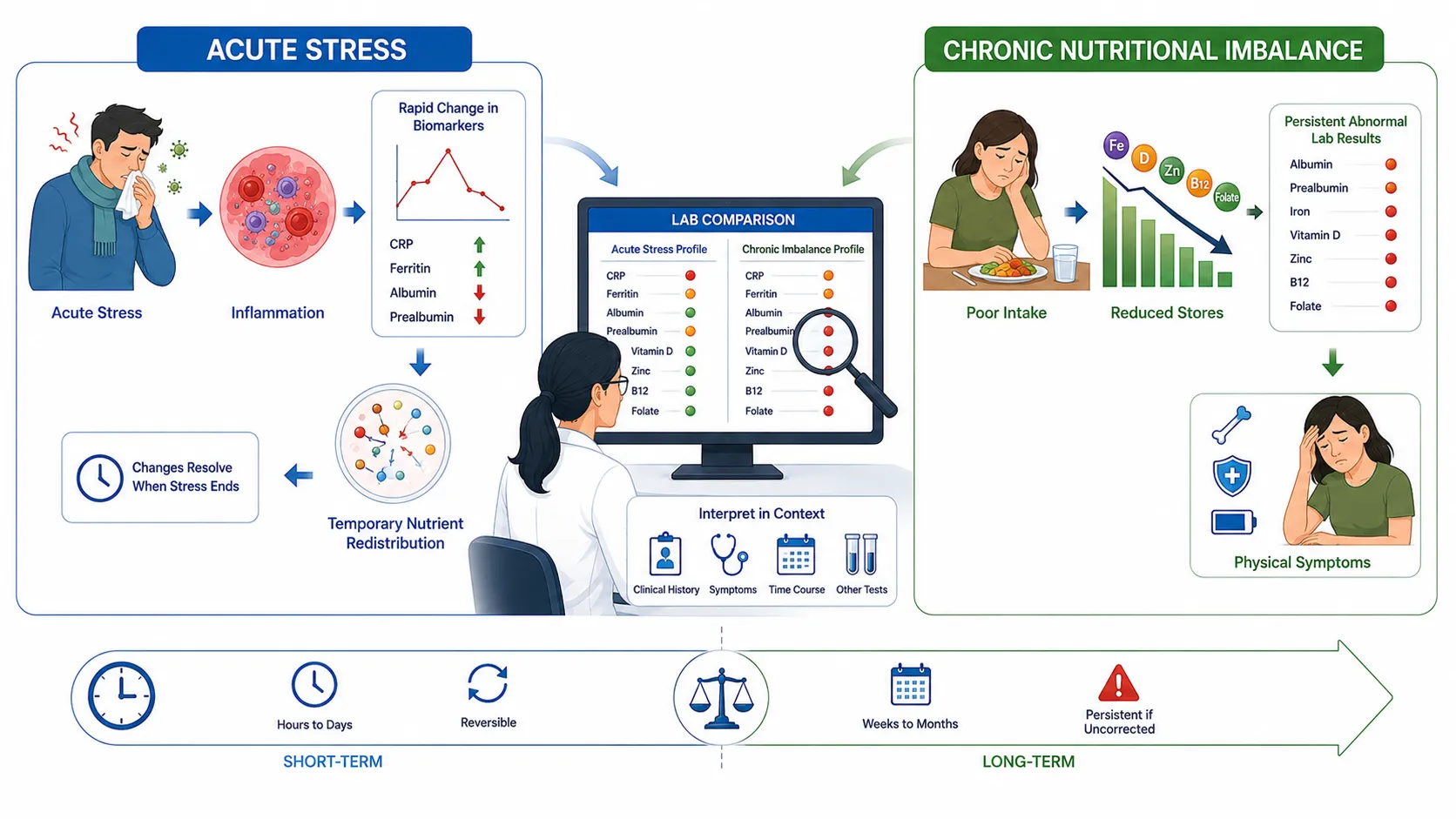
Understanding Acute Physiological Stress
Acute physiological stress is a rapid and coordinated response designed to protect the body and maintain essential functions during a significant challenge.
Common causes include:
Acute infection.
Major inflammation.
Physical trauma.
Surgery.
Severe burns.
Acute organ dysfunction.
Major blood loss.
Severe psychological or physiological stress.
During acute stress, the body changes how it uses and distributes nutrients. The primary objective is survival and maintenance of critical physiological functions rather than long-term nutritional balance.
Major Features of the Acute Stress Response
Acute stress commonly involves:
Activation of stress hormones.
Increased energy requirements.
Altered glucose metabolism.
Increased protein breakdown.
Changes in lipid mobilisation.
Redistribution of micronutrients.
Increased inflammatory activity.
Altered fluid balance.
Changes in liver protein production.
These changes can significantly influence laboratory results.
Understanding Chronic Nutritional Imbalance
Chronic nutritional imbalance develops over a longer period. It may involve insufficient intake, excessive intake or an inappropriate balance of nutrients relative to physiological requirements.
Common contributing factors include:
Long-term restrictive dietary patterns.
Poor dietary quality.
Persistent excessive energy intake.
Malabsorption.
Chronic gastrointestinal disorders.
Long-term alcohol misuse.
Increased nutrient losses.
Long-term medication effects.
Chronic disease.
Prolonged increased nutritional requirements.
Unlike acute stress, chronic nutritional imbalance usually produces biochemical patterns that develop gradually and may persist over repeated assessments.
Major Features of Chronic Nutritional Imbalance
Chronic imbalance may be associated with:
Gradual depletion of nutrient stores.
Persistent changes in functional biomarkers.
Altered body composition.
Long-term metabolic adaptation.
Sustained changes in nutrient utilisation.
Progressive changes in laboratory trends.
Recurrent clinical symptoms.
Key Definitions and Concepts
Acute Phase Response
The acute phase response is a systemic physiological reaction to inflammation, infection or tissue injury. It can alter the production, distribution and concentration of several proteins and nutrients.
Catabolism
Catabolism is the breakdown of complex molecules and body tissues to release energy or provide metabolic substrates.
Anabolism
Anabolism refers to metabolic processes that build and store complex molecules and tissues.
Nutrient Redistribution
Nutrient redistribution occurs when the body moves nutrients between blood, tissues and storage compartments in response to physiological demands.
Inflammation
Inflammation is a biological response involving immune and biochemical processes that can influence nutrient metabolism and laboratory biomarkers.
Homeostatic Adaptation
Homeostatic adaptation refers to physiological adjustments that help maintain internal stability during changes in nutrient availability or metabolic demand.
Table: Differentiating Acute Stress Responses and Chronic Nutritional Imbalances
| Feature | Acute Physiological Stress | Chronic Nutritional Imbalance | Interpretation |
|---|---|---|---|
| Onset | Rapid | Gradual | Consider timing of symptoms and illness |
| Duration | Hours to days or weeks | Weeks to months or longer | Persistent abnormalities suggest chronic processes |
| Main trigger | Infection, trauma or acute inflammation | Sustained dietary or metabolic disturbance | Review clinical and dietary history |
| Hormonal response | Rapid activation of stress pathways | Longer-term metabolic adaptation | Assess the clinical context |
| Protein metabolism | Often increased breakdown | May show progressive depletion or adaptation | Compare repeated measurements |
| Nutrient distribution | Frequently altered by inflammation | May reflect reduced stores or chronic excess | Avoid relying on one circulating value |
| Inflammatory markers | Often elevated | May be normal unless disease coexists | Interpret nutritional markers alongside inflammation |
| Laboratory trend | May change rapidly | Usually persistent or progressive | Trend analysis is essential |
| Response to recovery | May normalise as acute illness resolves | Often remains abnormal without intervention | Repeat assessment after recovery |
Why Laboratory Results Change During Acute Stress
Hormonal Activation
Acute stress activates several hormonal systems that alter metabolism.
These responses may involve increased activity of hormones associated with:
Energy mobilisation.
Glucose regulation.
Protein breakdown.
Fat mobilisation.
Fluid regulation.
The body prioritises the availability of energy and metabolic substrates for essential organs and immune activity.
Increased Energy Demand
Acute illness can increase metabolic demand. The body may require additional energy to support:
Immune responses.
Tissue repair.
Increased body temperature.
Cardiovascular activity.
Respiratory effort.
This increased demand can alter circulating metabolic biomarkers.
Protein Breakdown
During significant stress, protein catabolism may increase to provide amino acids for essential processes.
Amino acids may be used for:
Immune protein synthesis.
Tissue repair.
Production of acute-phase proteins.
Glucose production in specific metabolic conditions.
Therefore, biochemical indicators associated with protein metabolism may change rapidly during acute illness.
The Acute Phase Response and Nutritional Biomarkers
Positive and Negative Acute-Phase Proteins
During inflammation, the liver alters the production of various proteins.
Some proteins increase during the acute-phase response, while others decrease.
This is important because certain laboratory markers used in nutritional assessment may be affected by inflammatory processes rather than nutrient intake alone.
A critical interpretation should therefore consider:
Evidence of inflammation.
Severity of acute illness.
Changes in liver protein production.
Fluid balance.
Clinical symptoms.
Nutrient Redistribution During Inflammation
Inflammation can change the movement and availability of nutrients.
Possible mechanisms include:
Movement of nutrients from circulation into tissues.
Altered transport protein concentrations.
Changes in cellular uptake.
Increased utilisation by immune cells.
Changes in renal conservation.
A reduced circulating nutrient concentration may therefore not always indicate depleted total body stores.
Advanced Biochemical Markers Used in Assessment
Inflammatory Markers
Inflammatory markers help establish whether an acute physiological process may be influencing nutritional laboratory findings.
Their clinical value includes:
Providing evidence of systemic inflammation.
Supporting interpretation of altered protein markers.
Identifying potential confounding effects.
Helping distinguish acute illness from stable nutritional conditions.
However, inflammation alone does not exclude the presence of genuine nutritional deficiency.
Markers of Protein Metabolism
Biochemical data related to protein metabolism may provide evidence about:
Tissue breakdown.
Protein turnover.
Nitrogen balance.
Liver synthetic activity.
Metabolic stress.
Interpretation should consider whether changes are acute or persistent.
Glucose and Energy Metabolism Markers
Changes in metabolic biomarkers can reflect:
Recent food intake.
Fasting.
Acute stress.
Long-term metabolic dysfunction.
A single measurement must therefore be interpreted alongside the individual’s metabolic state.
Lipid-Related Markers
Lipid biomarkers may be influenced by:
Dietary intake.
Fasting status.
Acute inflammation.
Hormonal changes.
Long-term metabolic patterns.
Persistent abnormalities are generally more informative about chronic metabolic imbalance than isolated changes during acute illness.
Electrolyte and Fluid-Related Markers
Acute illness can significantly influence fluid and electrolyte balance.
Potential influences include:
Dehydration.
Fluid administration.
Vomiting.
Diarrhoea.
Kidney dysfunction.
Hormonal changes.
An abnormal concentration may therefore represent altered water balance rather than a true change in total body nutrient content.
A Systematic Process for Differentiation
Step 1: Establish the Timeline
The first question is when the abnormality developed.
Determine:
When symptoms began.
Whether an acute illness is present.
When dietary changes occurred.
Whether weight change has been gradual or rapid.
Whether previous laboratory results are available.
A rapid change following acute illness is more likely to involve a stress response, although chronic nutritional problems may coexist.
Step 2: Review Clinical Evidence of Acute Stress
Look for evidence such as:
Fever.
Infection.
Recent surgery.
Trauma.
Acute inflammation.
Hospital admission.
Significant tissue injury.
The presence of these factors increases the likelihood that acute metabolic responses are affecting laboratory data.
Step 3: Review Inflammatory Context
Evaluate whether inflammatory activity may be influencing the profile.
Consider:
Relevant inflammatory biomarkers.
Clinical signs of infection.
Severity of illness.
Changes in organ function.
Nutritional biomarkers should be interpreted cautiously when significant inflammation is present.
Step 4: Examine Dietary History
A detailed dietary assessment can identify long-term nutritional risks.
Review:
Usual food intake.
Recent dietary changes.
Energy intake.
Protein intake.
Food variety.
Restrictive diets.
Supplement use.
Gastrointestinal symptoms.
A sustained inadequate intake supports the possibility of chronic nutritional imbalance.
Step 5: Compare Multiple Biomarkers
Complex biochemical interpretation should identify patterns rather than isolated abnormalities.
Assess whether changes occur across:
Nutrient-related biomarkers.
Inflammatory indicators.
Metabolic markers.
Protein metabolism markers.
Organ function indicators.
A coherent pattern provides stronger evidence than one isolated value.
Step 6: Analyse the Trend
Trend analysis is one of the most useful methods for differentiation.
Ask:
Was the biomarker previously normal?
Did it change suddenly?
Has it been abnormal for months?
Is it improving as acute illness resolves?
Is the abnormality becoming progressively worse?
Rapid changes that normalise with recovery may indicate acute physiological adaptation. Persistent changes may indicate chronic nutritional or metabolic imbalance.
Characteristics of Acute Biochemical Changes
Acute physiological stress often produces:
Rapid changes in laboratory values.
Evidence of inflammation.
Increased metabolic demand.
Altered fluid distribution.
Increased protein turnover.
Temporary nutrient redistribution.
Changes associated with the severity of illness.
These abnormalities may improve when:
Infection resolves.
Inflammation decreases.
Tissue injury heals.
Normal metabolic conditions return.
Characteristics of Chronic Nutritional Changes
Chronic nutritional imbalance more commonly produces:
Persistent abnormalities.
Gradual deterioration.
Evidence of reduced or excessive dietary exposure.
Changes in nutrient stores.
Functional impairment.
Progressive metabolic changes.
These abnormalities may remain present even after an unrelated acute illness resolves.
Practical Example: Acute Infection Versus Nutrient Deficiency
A patient develops a severe infection and laboratory testing shows changes in nutrient-related biomarkers.
The incorrect approach would be to assume immediately that the abnormal values prove dietary deficiency.
A more appropriate process is to:
Identify the acute infection.
Assess inflammatory activity.
Review previous laboratory data.
Examine dietary history.
Consider nutrient redistribution.
Repeat assessment when clinically appropriate.
If the abnormality resolves with recovery, acute stress may have been the major influence. If it persists, chronic nutritional problems should be investigated.
Practical Example: Long-Term Restrictive Diet
An individual has followed a highly restrictive diet for many months.
The person reports:
Persistent fatigue.
Reduced food variety.
Unintentional weight loss.
Reduced physical capacity.
Laboratory findings show gradual changes across several nutrient-related and metabolic markers.
The evidence supporting chronic nutritional imbalance includes:
Long duration.
Consistent dietary risk.
Persistent symptoms.
Progressive laboratory changes.
Lack of a major acute stress event.
This pattern differs from a sudden laboratory change during an acute illness.
Practical Example: Acute Dehydration
A patient experiences significant fluid loss due to an acute gastrointestinal illness.
Laboratory concentrations may appear elevated because of reduced plasma volume.
The critical interpretation should recognise:
The acute onset.
Fluid loss.
Clinical evidence of dehydration.
The possibility of haemoconcentration.
Following restoration of fluid balance, repeat measurements may differ substantially.
The initial result should therefore not automatically be interpreted as evidence of chronic nutrient excess.
Practical Example: Coexisting Acute and Chronic Problems
An important clinical reality is that acute stress and chronic nutritional imbalance can occur simultaneously.
For example, an older patient may have:
Long-term inadequate dietary intake.
Chronic weight loss.
Reduced nutrient reserves.
The patient then develops an acute infection.
Laboratory interpretation becomes complex because:
Chronic deficiency may already exist.
Acute inflammation may alter biomarker concentrations.
Increased metabolic demand may worsen nutritional deterioration.
The most accurate interpretation integrates both processes rather than assuming only one explanation.
The Role of Repeated Testing
Repeated testing is valuable because it helps establish whether abnormalities are transient or persistent.
During Acute Illness
Monitoring may help identify:
Rapid metabolic changes.
Progression of physiological stress.
Response to treatment.
Changes in fluid balance.
After Recovery
Follow-up assessment may clarify:
Whether nutritional abnormalities persist.
Whether biomarkers return towards baseline.
Whether further nutritional investigation is required.
During Nutritional Intervention
Repeated testing may help evaluate:
Improvement in biochemical status.
Response to dietary modification.
Ongoing nutrient imbalance.
Possible excessive exposure.
Key Benefits of Accurate Differentiation
The ability to distinguish acute stress from chronic nutritional imbalance can:
Improve diagnostic reasoning.
Reduce inappropriate nutritional conclusions.
Prevent unnecessary supplementation.
Support earlier identification of persistent nutritional problems.
Improve interpretation of complex laboratory profiles.
Assist with appropriate monitoring.
Support evidence-based clinical decisions.
Common Interpretation Errors
Assuming Every Low Biomarker Represents Deficiency
This is a common error during acute illness.
A low concentration may result from:
Inflammation.
Redistribution.
Altered transport.
Fluid changes.
Increased utilisation.
Ignoring the Duration of Abnormality
Time is a critical diagnostic clue.
A laboratory abnormality should be considered in relation to:
When it first appeared.
How rapidly it changed.
Whether it persists.
Ignoring Inflammatory Status
Failure to consider inflammation can lead to inaccurate nutritional assessment.
Relevant evidence should be reviewed before interpreting sensitive nutritional biomarkers.
Relying on One Laboratory Result
A single result provides only a snapshot.
More reliable interpretation may require:
Related biomarkers.
Repeated measurements.
Clinical history.
Dietary information.
Assuming Acute Illness Excludes Chronic Malnutrition
Acute illness and chronic nutritional imbalance can coexist.
The presence of inflammation should not automatically prevent further nutritional assessment.
Advanced Pattern Recognition
Pattern Suggesting Predominantly Acute Stress
A profile may suggest acute physiological stress when there is:
Sudden onset of abnormal findings.
Clear evidence of infection or injury.
Increased inflammatory activity.
Rapid metabolic changes.
Significant fluid shifts.
Improvement with clinical recovery.
Pattern Suggesting Predominantly Chronic Imbalance
A profile may suggest chronic nutritional imbalance when there is:
Long-term dietary inadequacy or excess.
Persistent abnormalities.
Progressive changes over time.
Evidence of altered nutrient stores.
Chronic symptoms.
Lack of a major acute trigger.
Pattern Suggesting Combined Processes
Combined processes should be considered when:
Chronic dietary risk exists.
Acute illness is present.
Laboratory abnormalities are severe.
Previous results show persistent concerns.
Professional Decision-Making and Scope of Practice
Laboratory interpretation should always be performed within appropriate professional competence.
Professionals should:
Recognise uncertainty.
Avoid diagnosing beyond their scope.
Follow organisational procedures.
Document relevant clinical information.
Seek specialist support when necessary.
Complex cases may require input from:
Medical practitioners.
Clinical biochemists.
Dietitians.
Other appropriately qualified healthcare professionals.
A Practical Interpretation Framework
When advanced biochemical data are available, use the following framework.
Identify
Identify:
The abnormal biomarkers.
The severity of changes.
Related laboratory findings.
Contextualise
Determine:
Current illness.
Inflammatory status.
Dietary intake.
Hydration.
Medication.
Recent procedures or trauma.
Compare
Compare:
Current results with previous results.
Related biomarkers.
Results before and after acute illness.
Classify
Consider whether the pattern is:
Predominantly acute.
Predominantly chronic.
Mixed.
Uncertain.
Confirm
Where appropriate:
Repeat testing.
Obtain additional biomarkers.
Review clinical progress.
Seek specialist interpretation.
Key Learning Points
Learners should remember that:
Acute stress can rapidly alter nutrient-related biomarkers.
Chronic nutritional imbalance usually develops gradually.
Inflammation can change nutrient distribution and transport.
Hydration can significantly influence laboratory concentrations.
A single abnormal value rarely provides a complete nutritional diagnosis.
Repeated measurements are valuable for identifying trends.
Dietary history is essential for assessing chronic nutritional risk.
Acute illness and chronic nutritional imbalance may coexist.
Advanced interpretation requires pattern recognition.
Professional judgement should acknowledge uncertainty.
Summary
Differentiating between acute physiological stress responses and chronic nutritional imbalances is an essential skill in advanced nutritional and biochemical assessment. Acute stress produces rapid metabolic and inflammatory changes that can temporarily alter nutrient concentrations, protein metabolism, energy regulation and fluid balance. These changes may mimic or conceal genuine nutritional abnormalities.
Chronic nutritional imbalance develops over longer periods and is more likely to produce persistent or progressive changes associated with sustained inadequate or excessive nutrient exposure, altered absorption, increased losses or long-term metabolic dysfunction.
Accurate interpretation requires a systematic approach that considers the timeline of illness, dietary history, inflammatory status, metabolic state, hydration, multiple related biomarkers and changes over time. Trend analysis is particularly valuable because it helps distinguish temporary physiological adaptation from sustained biochemical disturbance.
The most effective clinical reasoning does not rely on a single laboratory result. Instead, it integrates biochemical evidence with clinical observations and nutritional information. Learners who develop this approach will be better prepared to interpret complex laboratory data, recognise the limitations of individual biomarkers and make evidence-based judgements regarding nutritional status and metabolic health.
4.Apply Current Evidence-Based Guidelines to Accurately Correlate Specific Diagnostic Laboratory Test Results with Corresponding Physical Symptoms of Nutrient Deficiency
Accurate identification of nutrient deficiencies requires more than recognising an abnormal laboratory value or observing a physical symptom in isolation. Effective nutritional assessment depends on the ability to correlate biochemical evidence with clinical presentation, dietary history, physiological status and current evidence-based guidelines. This integrated approach helps healthcare and nutrition professionals distinguish between a confirmed nutrient deficiency, a possible deficiency, a functional impairment and a laboratory abnormality caused by another physiological condition.
Nutrient deficiencies can affect multiple body systems. A deficiency may first produce subtle biochemical changes before physical symptoms become apparent. In other situations, a person may develop noticeable symptoms while laboratory findings remain difficult to interpret because of inflammation, infection, medication use, organ dysfunction or recent dietary changes. Therefore, the correlation between laboratory results and symptoms must be based on a structured and evidence-informed process.
Evidence-based guidelines provide frameworks for selecting appropriate tests, interpreting reference ranges, considering clinical risk factors and determining when further assessment is required. However, laboratory thresholds should not be interpreted mechanically. Reference ranges may differ between laboratories, and the clinical significance of a result depends on the individual’s age, sex, physiological condition, medical history and other relevant factors.
This section develops the Learner’s ability to apply evidence-based principles when connecting diagnostic laboratory findings with the physical manifestations of nutrient deficiencies.
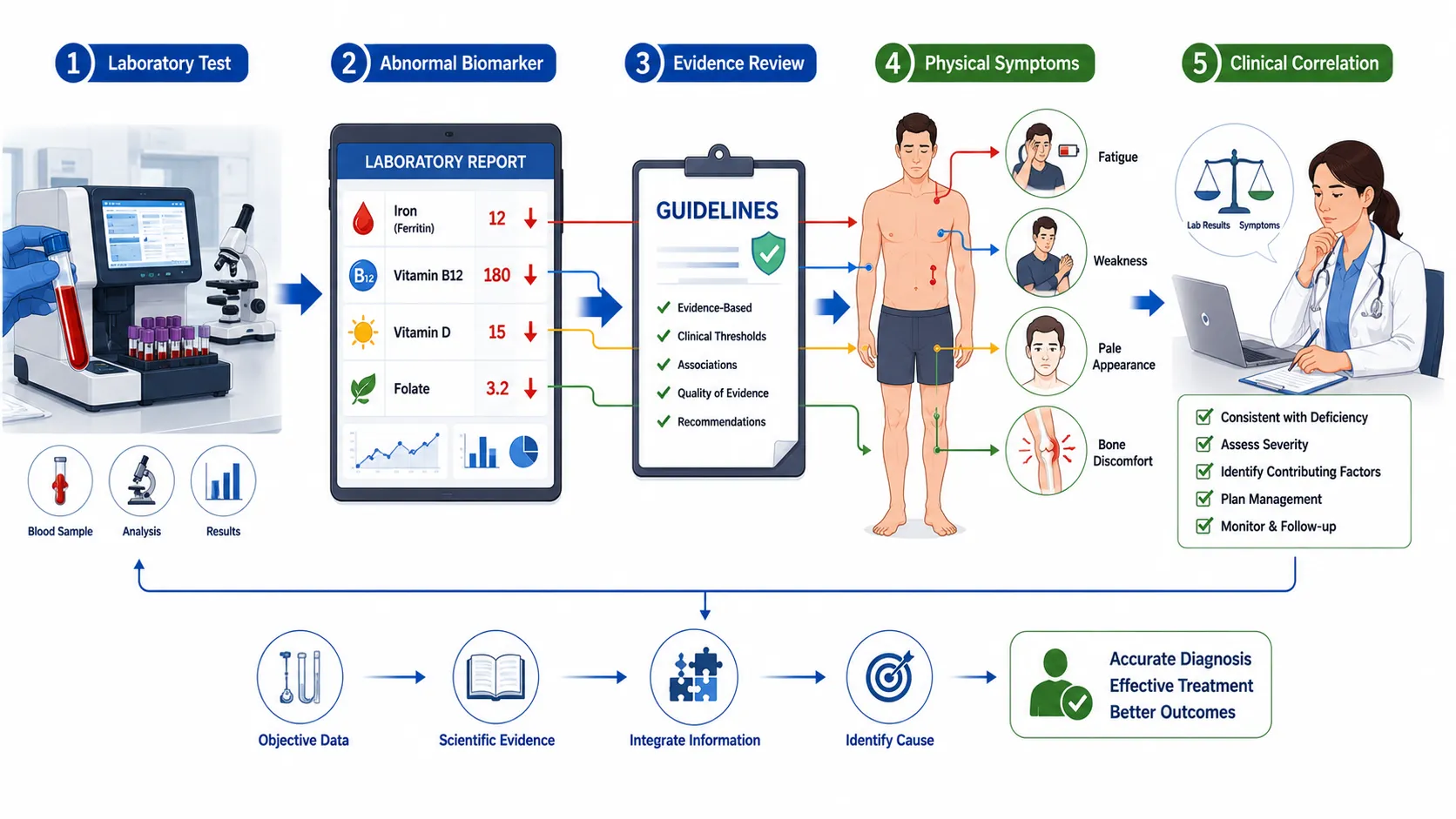
The Importance of Correlating Laboratory Findings and Physical Symptoms
Laboratory testing provides objective biochemical information, whereas physical symptoms provide evidence of how a possible deficiency may be affecting physiological function. Neither source of information should normally be interpreted entirely independently.
A comprehensive assessment integrates:
Laboratory test results.
Physical signs and symptoms.
Dietary history.
Medical history.
Medication history.
Physiological requirements.
Inflammatory status.
Relevant evidence-based guidance.
Repeat measurements where appropriate.
For example, a laboratory result suggesting altered iron status should be considered alongside symptoms such as fatigue, reduced exercise tolerance or pallor, as well as factors such as inflammation, blood loss and dietary intake.
Why Symptoms Alone Are Not Sufficient
Many symptoms associated with nutrient deficiencies are non-specific.
Fatigue, weakness and poor concentration may occur because of:
Inadequate nutrient intake.
Sleep deprivation.
Infection.
Psychological stress.
Endocrine disorders.
Chronic disease.
Medication effects.
Therefore, symptoms should raise clinical suspicion rather than automatically confirm a nutrient deficiency.
Why Laboratory Results Alone Are Not Sufficient
An abnormal laboratory result may be influenced by factors other than nutritional status.
These include:
Acute inflammation.
Infection.
Dehydration.
Fluid overload.
Recent supplementation.
Medication use.
Liver dysfunction.
Kidney dysfunction.
Pregnancy.
Differences in laboratory methodology.
The most reliable approach combines biochemical and clinical evidence.
Key Definitions and Concepts
Nutrient Deficiency
A nutrient deficiency occurs when the availability of an essential nutrient is insufficient to support normal physiological function.
Deficiency may develop because of:
Inadequate intake.
Poor absorption.
Increased physiological requirements.
Increased nutrient losses.
Impaired metabolism.
Long-term medication effects.
Biomarker
A biomarker is a measurable biological characteristic used to provide information about physiological, pathological or nutritional processes.
Examples include biomarkers related to:
Nutrient concentration.
Storage status.
Metabolic function.
Tissue activity.
Inflammation.
Clinical Correlation
Clinical correlation is the process of interpreting laboratory findings in relation to symptoms, physical examination findings, history and other relevant evidence.
Functional Deficiency
A functional deficiency occurs when a nutrient is insufficiently available for normal physiological processes, even when interpretation of circulating concentrations is complex.
Reference Range
A reference range represents the expected distribution of results in a defined reference population using a specific laboratory method.
A result outside a reference range does not automatically establish:
Disease.
Nutrient deficiency.
Clinical severity.
Clinical interpretation is still required.
Table: Correlating Common Nutrient-Related Laboratory Findings with Physical Symptoms
| Nutritional area | Relevant laboratory assessment | Possible physical symptoms | Important interpretation considerations |
|---|---|---|---|
| Iron status | Iron-related biomarkers and full blood assessment | Fatigue, pallor, reduced exercise tolerance | Inflammation and blood loss may influence interpretation |
| Vitamin B12 status | B12-related biochemical markers and functional indicators | Fatigue, neurological changes, altered sensation | Symptoms may develop gradually and require careful assessment |
| Folate status | Folate-related laboratory markers | Fatigue, weakness and signs associated with impaired cell production | Dietary intake and medication history should be reviewed |
| Vitamin D status | Vitamin D-related circulating biomarker | Bone discomfort, muscle weakness in significant deficiency | Seasonal exposure and individual risk factors may influence status |
| Calcium regulation | Calcium and related regulatory markers | Muscle symptoms or neuromuscular disturbance in significant imbalance | Total concentration may require contextual interpretation |
| Magnesium status | Magnesium-related biochemical assessment | Muscle symptoms, weakness or altered neuromuscular function | Circulating levels may not always reflect total body stores |
| Zinc status | Zinc-related laboratory assessment | Impaired wound healing and altered immune function | Infection and inflammation can affect circulating values |
| Protein-energy status | Multiple biochemical and clinical indicators | Muscle wasting, weakness and reduced functional capacity | No single protein marker should be used alone |
Evidence-Based Assessment Principles
Use Appropriate Diagnostic Tests
The first principle is selecting a laboratory test that is relevant to the suspected deficiency.
The selection process should consider:
The nutrient being investigated.
The clinical question.
The individual’s symptoms.
The expected physiological mechanism.
Test sensitivity and specificity.
Potential confounding factors.
For example, when investigating a suspected deficiency, the most appropriate assessment may involve more than one laboratory marker.
Apply Current Professional Guidance
Evidence-based guidelines should support decisions regarding:
Which tests to request.
How results should be interpreted.
Which risk groups require assessment.
When repeat testing is appropriate.
When referral is necessary.
Guidelines should be used alongside professional judgement because individual circumstances may vary.
Consider the Clinical Context
Before connecting a laboratory result to a symptom, consider:
Is the individual acutely unwell?
Is inflammation present?
Has the person recently changed their diet?
Are supplements being used?
Is there evidence of malabsorption?
Is there increased nutrient loss?
Are physiological requirements increased?
Context can substantially change the meaning of a laboratory result.
A Systematic Process for Correlating Results with Symptoms
Step 1: Identify the Presenting Symptoms
Begin by documenting the person’s symptoms accurately.
Important information includes:
Type of symptom.
Severity.
Duration.
Frequency.
Progression.
Impact on daily function.
Symptoms should be described rather than immediately attributed to a nutritional cause.
Step 2: Identify Relevant Nutrient Deficiencies
Consider which nutrient deficiencies could plausibly affect the observed physiological system.
For example:
Persistent fatigue may justify consideration of several nutritional and non-nutritional causes.
Neurological symptoms may require investigation of nutrients involved in nervous system function.
Bone-related symptoms may require consideration of nutrients involved in mineral metabolism.
The purpose is to develop a logical differential assessment rather than making assumptions.
Step 3: Select Appropriate Laboratory Data
Review laboratory tests that provide meaningful evidence for the clinical question.
Consider whether the result reflects:
Current circulating availability.
Nutrient storage.
Functional activity.
Downstream physiological consequences.
A combination of markers may provide more useful information than a single measurement.
Step 4: Compare the Result with Relevant Guidance
Interpret the result using:
Laboratory-specific reference information.
Current evidence-based recommendations.
The individual’s clinical characteristics.
Appropriate decision thresholds where applicable.
Do not apply one universal threshold without considering the testing method and clinical context.
Step 5: Assess Consistency Between Symptoms and Biochemistry
Ask whether the laboratory finding is physiologically consistent with the symptoms.
Consider:
Does the nutrient have a known role related to the symptom?
Is the biochemical abnormality sufficiently significant?
Could another condition explain the symptom?
Are related biomarkers consistent with the same pattern?
A strong correlation usually requires multiple supporting pieces of evidence.
Step 6: Investigate Alternative Explanations
Professional interpretation requires consideration of other possible causes.
These may include:
Acute illness.
Chronic disease.
Medication effects.
Endocrine disorders.
Organ dysfunction.
Lifestyle factors.
This reduces the risk of incorrectly attributing all symptoms to a nutrient deficiency.
Step 7: Monitor and Reassess
Where appropriate, repeat assessment can help determine whether:
The laboratory abnormality persists.
Symptoms improve.
Nutritional intervention is effective.
Another cause should be investigated.
Iron-Related Findings and Physical Symptoms
Iron is required for several important physiological processes, including those related to oxygen transport and cellular metabolism.
Possible Symptoms Associated with Impaired Iron Status
Depending on severity and cause, symptoms may include:
Persistent tiredness.
Reduced exercise tolerance.
Weakness.
Pallor.
Shortness of breath during exertion.
Reduced concentration.
These symptoms are not specific to iron-related problems and should therefore be interpreted with laboratory evidence.
Laboratory Correlation
A comprehensive assessment may consider:
Iron-related storage markers.
Transport-related indicators.
Full blood assessment findings.
Evidence of inflammation.
Critical Interpretation
A biochemical pattern must be interpreted carefully because inflammation can alter some iron-related biomarkers.
A strong clinical assessment therefore considers:
Symptoms.
Laboratory pattern.
Inflammatory status.
Dietary intake.
Potential blood loss.
Medical history.
Vitamin B12-Related Findings and Physical Symptoms
Vitamin B12 is involved in important metabolic and neurological processes.
Possible Physical Manifestations
Potential symptoms may include:
Persistent fatigue.
Weakness.
Reduced concentration.
Neurological symptoms.
Altered sensation.
Balance difficulties in significant or prolonged impairment.
Not every individual will experience the same symptoms.
Laboratory Correlation
Assessment may involve:
A relevant circulating measurement.
Functional biochemical markers where clinically indicated.
Related blood findings.
Important Clinical Principle
A normal or borderline laboratory result should not automatically override significant clinical concerns. Conversely, a laboratory abnormality should not automatically explain all neurological symptoms.
Further assessment may be necessary when:
Symptoms are significant.
Results are discordant.
Risk factors are present.
Functional markers provide additional information.
Folate-Related Findings and Physical Symptoms
Folate contributes to processes involving cellular metabolism and cell production.
Possible Symptoms
Possible manifestations may include:
Fatigue.
Weakness.
Reduced physical capacity.
Symptoms associated with impaired cell production.
Assessment Considerations
A complete evaluation should consider:
Dietary intake.
Laboratory findings.
Relevant blood parameters.
Medication history.
Possible malabsorption.
A single result should be interpreted within the wider biochemical pattern.
Vitamin D-Related Findings and Physical Symptoms
Vitamin D has important roles in mineral regulation and musculoskeletal health.
Possible Symptoms in Significant Deficiency
Physical manifestations may include:
Muscle weakness.
Musculoskeletal discomfort.
Reduced physical function.
Some individuals with low laboratory values may have few or no obvious symptoms.
Correlation Principles
Assessment should consider:
Laboratory evidence.
Dietary sources.
Sunlight exposure.
Seasonal variation.
Age.
Skin exposure factors.
Medical risk factors.
The severity of symptoms does not always correspond perfectly with a single laboratory value.
Calcium and Mineral Regulation
Calcium-related symptoms require careful interpretation because calcium regulation involves multiple interacting systems.
Possible Symptoms of Significant Disturbance
Depending on the nature and severity of the imbalance, symptoms may involve:
Muscle activity.
Neuromuscular function.
Altered sensation.
Key Interpretation Principles
Laboratory interpretation may require consideration of:
Related regulatory hormones.
Protein status.
Kidney function.
Vitamin D status.
Magnesium status.
This demonstrates why a single nutrient-related measurement should rarely be interpreted without considering the broader physiological pathway.
Magnesium and Neuromuscular Symptoms
Magnesium contributes to numerous enzymatic and physiological processes.
Possible Clinical Features
Significant imbalance may be associated with:
Muscle symptoms.
Weakness.
Neuromuscular disturbance.
Challenges in Interpretation
Circulating measurements may not always provide a complete representation of total body magnesium status.
Therefore, assessment may require consideration of:
Dietary intake.
Gastrointestinal losses.
Kidney function.
Medication use.
Related electrolyte abnormalities.
Zinc and Physical Function
Zinc contributes to numerous biological processes, including immune function and tissue repair.
Possible Signs Associated with Deficiency
Potential features may include:
Delayed wound healing.
Changes affecting tissue integrity.
Altered immune function.
Interpretation Considerations
Laboratory concentrations may be affected by:
Inflammation.
Infection.
Recent intake.
Physiological stress.
Clinical correlation is therefore essential.
Protein-Energy Malnutrition and Clinical Symptoms
Protein-energy malnutrition may affect:
Muscle mass.
Strength.
Functional capacity.
Recovery from illness.
Physical Indicators
Possible clinical findings include:
Muscle wasting.
Reduced strength.
Reduced functional ability.
Unintentional weight loss.
Laboratory Interpretation
Biochemical markers may be influenced by:
Inflammation.
Liver function.
Hydration.
Acute illness.
For this reason, biochemical data should be integrated with physical and functional assessment rather than used as the sole diagnostic method.
The Importance of Symptom Patterns
A single symptom may have many possible causes. A pattern of symptoms may provide more useful information.
Example of Pattern Recognition
Consider an individual with:
Persistent fatigue.
Reduced exercise tolerance.
Long-term restrictive dietary intake.
Consistent abnormalities across relevant laboratory markers.
The combined evidence may provide stronger support for a nutritional explanation than fatigue alone.
Pattern-Based Assessment Should Include
Duration of symptoms.
Severity.
Progression.
Dietary risk.
Laboratory findings.
Functional impact.
Alternative diagnoses.
Practical Clinical Scenario 1: Persistent Fatigue
A person reports persistent fatigue and reduced physical performance.
The assessment process should include:
A detailed symptom history.
Dietary assessment.
Review of relevant laboratory findings.
Consideration of inflammatory status.
Review of other possible medical causes.
The correct approach is not to assume that fatigue proves a specific nutrient deficiency.
Instead, the Learner should establish whether there is a physiologically plausible and evidence-supported relationship.
Practical Clinical Scenario 2: Neurological Symptoms
An individual reports altered sensation and progressive neurological symptoms.
Laboratory data show a possible abnormality involving a nutrient important to neurological function.
A professional assessment should:
Review the severity and duration of symptoms.
Examine the full laboratory profile.
Consider functional biochemical evidence where appropriate.
Review dietary and absorption risk factors.
Consider alternative neurological causes.
Escalate appropriately within professional scope.
This scenario demonstrates that laboratory interpretation must be combined with clinical urgency and professional judgement.
Practical Clinical Scenario 3: Musculoskeletal Symptoms
An individual experiences muscle weakness and musculoskeletal discomfort.
Laboratory testing identifies a possible nutrient-related abnormality.
The assessment should consider:
Duration of symptoms.
Physical activity.
Dietary intake.
Relevant laboratory biomarkers.
Mineral regulation.
Other medical explanations.
A direct cause-and-effect relationship should only be concluded when supported by sufficient evidence.
Key Benefits of an Evidence-Based Correlation Approach
A structured approach provides several important benefits.
It can:
Improve diagnostic accuracy.
Reduce inappropriate assumptions.
Support early identification of nutritional risk.
Improve selection of relevant laboratory tests.
Support personalised nutritional assessment.
Reduce unnecessary supplementation.
Improve communication between healthcare professionals.
Support appropriate monitoring and referral.
Common Errors When Correlating Tests and Symptoms
Error 1: Treating Symptoms as Proof
Symptoms should raise suspicion but do not independently confirm deficiency.
Error 2: Treating One Laboratory Value as a Complete Diagnosis
Single results may be affected by temporary physiological factors.
Error 3: Ignoring Inflammation
Inflammation can significantly influence nutrient-related biomarkers.
Error 4: Ignoring Dietary History
A laboratory result should be considered alongside evidence of actual nutrient exposure and intake patterns.
Error 5: Ignoring Medication Use
Some medications can influence:
Nutrient absorption.
Metabolism.
Excretion.
Laboratory measurements.
Error 6: Failing to Consider Alternative Causes
Symptoms may result from multiple overlapping conditions.
Error 7: Overlooking Persistent Symptoms
Persistent or progressive symptoms may require further investigation even when an initial explanation appears plausible.
Applying Evidence-Based Guidelines in Professional Practice
Evidence-based practice combines three important components:
The best available scientific evidence.
Professional expertise.
Individual clinical circumstances and needs.
In nutritional laboratory interpretation, this means professionals should not apply guidelines without considering the individual.
A Professional Decision-Making Process
The professional should:
Identify the clinical problem.
Review symptoms and physical findings.
Identify relevant nutritional risks.
Select or review appropriate laboratory tests.
Interpret results according to current evidence.
Identify potential confounding factors.
Correlate biochemical and clinical findings.
Consider alternative explanations.
Determine whether monitoring, intervention or referral is appropriate.
Reassess outcomes.
Reliability and Limitations of Laboratory Testing
Pre-Analytical Factors
Results may be influenced before the sample reaches the analyser.
Important factors include:
Timing of collection.
Recent food intake.
Fasting status where relevant.
Sample handling.
Hydration status.
Analytical Factors
Laboratory methodology may influence:
Measurement precision.
Comparability between laboratories.
Reference ranges.
Biological Variation
Biological values can change naturally over time.
Factors include:
Daily variation.
Dietary changes.
Physical activity.
Acute illness.
Hormonal status.
These limitations reinforce the importance of interpreting results as part of a wider assessment.
Advanced Clinical Reasoning
Advanced interpretation requires the Learner to move beyond the question:
“Is this laboratory result abnormal?”
The more useful questions are:
Is the result clinically meaningful?
Does it fit the symptom pattern?
Is there a plausible biological mechanism?
Are related biomarkers consistent?
Could acute illness explain the finding?
Is there evidence of sustained nutritional risk?
Are there alternative explanations?
Is repeat testing required?
This approach supports more accurate and defensible professional judgement.
Integrating Physical Examination with Biochemical Data
Physical examination findings can provide important supporting evidence.
Relevant observations may include:
General appearance.
Muscle strength.
Functional capacity.
Skin and tissue condition.
Evidence of muscle loss.
Signs of impaired physical performance.
Physical findings should be assessed appropriately within professional scope and organisational procedures.
The strongest assessment combines:
Objective laboratory data.
Reported symptoms.
Physical findings.
Dietary history.
Clinical context.
When Results and Symptoms Do Not Match
Sometimes laboratory results and symptoms appear inconsistent.
For example:
Symptoms may be significant while a laboratory result is borderline.
A laboratory abnormality may be present without obvious symptoms.
Multiple conditions may produce similar symptoms.
When this occurs, professionals should avoid forcing a conclusion.
Appropriate actions may include:
Reviewing the clinical history.
Checking for confounding factors.
Examining related biomarkers.
Repeating testing when appropriate.
Seeking specialist advice.
Summary of Key Principles
When correlating diagnostic laboratory tests with physical symptoms, remember:
Laboratory data and symptoms must be interpreted together.
Symptoms are often non-specific.
A single abnormal laboratory value rarely provides a complete diagnosis.
Current evidence-based guidelines support, but do not replace, professional judgement.
Reference ranges may vary according to laboratory methods.
Inflammation and acute illness can alter nutritional biomarkers.
Dietary history provides essential contextual information.
Multiple related biomarkers may provide stronger evidence than one result.
Trend analysis can distinguish temporary changes from persistent problems.
Alternative explanations must always be considered.
Complex cases may require multidisciplinary assessment or specialist referral.
Conclusion
Applying current evidence-based guidelines to correlate diagnostic laboratory results with physical symptoms is a fundamental skill in nutritional assessment. Nutrient deficiencies can produce a wide range of biochemical and clinical manifestations, but neither laboratory values nor symptoms should be interpreted in isolation.
A reliable assessment begins with a clear understanding of the individual’s symptoms, medical history and nutritional risk factors. Appropriate laboratory tests are then interpreted using current evidence, laboratory-specific information and relevant physiological principles. The results must be evaluated alongside possible confounding factors such as inflammation, hydration, medication use and acute illness.
Effective clinical reasoning requires the recognition of patterns. A meaningful conclusion is strengthened when symptoms, dietary risk, laboratory findings and physiological mechanisms support the same explanation. When evidence is inconsistent, uncertainty should be acknowledged and further assessment considered.
By applying a systematic and evidence-based approach, Learners can improve the accuracy of nutritional assessment, recognise the limitations of individual biomarkers and make more informed professional judgements regarding nutrient deficiencies and imbalances.
5.Critically Discuss the Physiological Limitations, Potential Interferences, and False Positive Rates Associated with Common Biochemical Tests Used in Nutritional Diagnostics
Biochemical testing is a fundamental component of nutritional diagnostics. Laboratory tests can provide valuable information about nutrient exposure, circulating concentrations, body stores, metabolic activity and physiological consequences of nutritional deficiencies or excesses. However, no biochemical test is completely independent of physiological variation, analytical limitations or external influences. A laboratory result must therefore be interpreted critically rather than accepted as definitive evidence of nutritional status.
Common biochemical tests used in nutritional assessment may be affected by acute illness, inflammation, hydration, organ function, medication use, recent dietary intake, supplementation and laboratory methodology. In addition, biological variation between individuals means that the same laboratory value may not have identical clinical significance in every person. These factors can produce misleading results, including false positives and false negatives.
A false positive occurs when a test result suggests that a condition or abnormality is present when it is not truly present. In nutritional diagnostics, a false positive may lead to unnecessary supplementation, inappropriate dietary restriction, anxiety, repeat testing or further clinical investigation. Understanding why false positives occur is therefore essential for safe and evidence-based practice.
This section critically examines the limitations of commonly used biochemical tests, the physiological and analytical factors that interfere with results, and the importance of interpreting laboratory findings within a wider clinical and nutritional context.
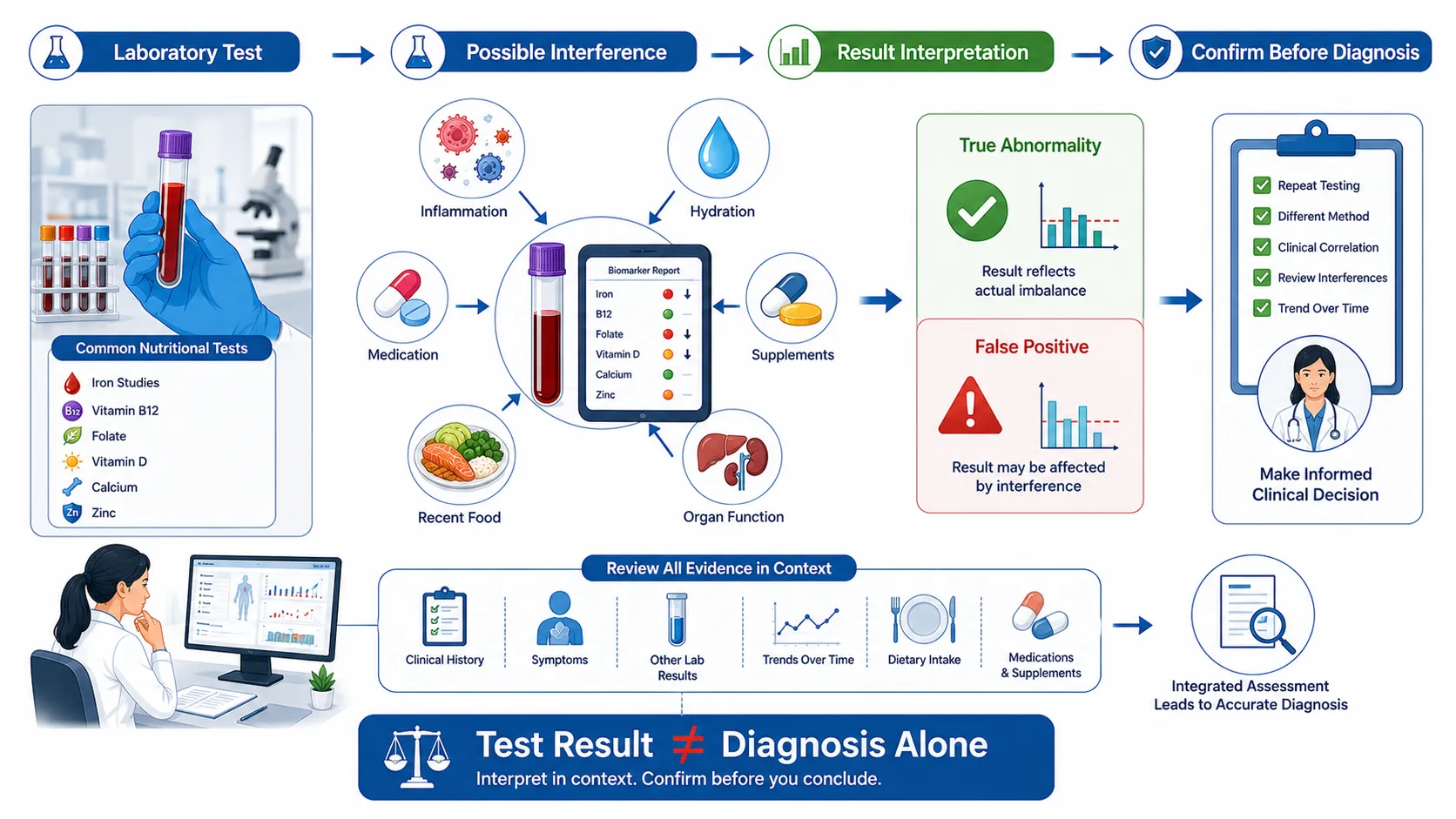
The Role of Biochemical Testing in Nutritional Diagnostics
Biochemical testing can support the assessment of:
Current nutrient availability.
Nutrient storage.
Functional nutrient status.
Metabolic consequences of deficiency.
Potential nutrient excess or toxicity.
Physiological responses to dietary intervention.
Changes over time.
However, laboratory data represent only one part of nutritional assessment.
A complete assessment may also require:
Dietary history.
Clinical history.
Physical symptoms.
Physical examination findings.
Anthropometric information.
Functional assessment.
Review of medication use.
Consideration of inflammation and disease.
Key Definitions and Concepts
Analytical Limitation
An analytical limitation is a restriction associated with the measurement process itself. It may relate to the testing method, equipment, assay sensitivity, specificity or laboratory procedures.
Physiological Limitation
A physiological limitation occurs when normal or abnormal biological processes influence a laboratory result independently of the individual’s actual nutritional status.
Interference
An interference is a factor that alters the accuracy or interpretation of a laboratory measurement.
Interferences may be:
Physiological.
Pre-analytical.
Analytical.
Pharmacological.
Dietary.
False Positive
A false positive occurs when a laboratory test incorrectly identifies an abnormality or condition.
False Negative
A false negative occurs when a laboratory test fails to identify an abnormality that is genuinely present.
Sensitivity
Sensitivity describes a test’s ability to correctly identify individuals who have the condition being investigated.
Specificity
Specificity describes a test’s ability to correctly identify individuals who do not have the condition.
Positive Predictive Value
Positive predictive value describes the probability that an individual with a positive test result genuinely has the condition.
Importantly, predictive value is influenced by the prevalence of the condition in the population being tested.
Table: Common Limitations and Interferences in Nutritional Biochemical Testing
| Test category | Common limitation | Potential interference | Risk of misleading interpretation |
|---|---|---|---|
| Iron-related markers | Influenced by inflammation and physiological change | Infection, chronic disease and altered protein metabolism | May incorrectly suggest adequate or inadequate stores |
| Vitamin B12-related tests | Single circulating values may not reflect functional status fully | Supplementation, assay variation and physiological differences | Borderline results may be overinterpreted |
| Folate-related markers | Can reflect recent intake as well as longer-term status | Recent supplementation and dietary changes | Temporary changes may be mistaken for stable status |
| Vitamin D-related tests | Biological and seasonal variation | Supplement use, assay differences and seasonal exposure | Results may differ between methods and time periods |
| Calcium-related tests | Influenced by protein binding and regulatory systems | Protein changes, hydration and endocrine factors | Total concentration may not represent biologically active fraction |
| Magnesium-related tests | Circulating concentration may not reflect total body stores | Fluid shifts, renal function and medication use | Deficiency may be missed or underestimated |
| Zinc-related tests | Sensitive to acute physiological changes | Infection, inflammation and recent dietary intake | Low levels may not always indicate depleted stores |
| Protein-related markers | Strongly influenced by illness and inflammation | Fluid balance and liver function | May be incorrectly used as direct nutritional indicators |
Physiological Limitations in Nutritional Testing
Homeostatic Regulation
The human body actively regulates many nutrient concentrations.
This means that circulating levels may remain within a normal range even when nutrient stores are declining.
Homeostatic regulation may involve:
Hormonal control.
Renal conservation.
Changes in intestinal absorption.
Release from body stores.
Redistribution between tissues.
Therefore, a normal blood concentration does not always exclude early nutritional deficiency.
Nutrient Redistribution
During illness or physiological stress, nutrients may move between:
Blood.
Liver.
Muscle.
Bone.
Adipose tissue.
Immune cells.
A change in circulating concentration may therefore reflect redistribution rather than a true change in total body stores.
Acute Inflammation
Inflammation is one of the most important physiological factors affecting nutritional biomarkers.
During an inflammatory response:
Protein production patterns may change.
Nutrient transport may be altered.
Nutrients may be redistributed.
Metabolic demand may increase.
Fluid balance may change.
As a result, some nutritional biomarkers may become difficult to interpret accurately.
Hydration Status
Laboratory concentrations depend partly on the volume of fluid in which substances are measured.
Dehydration may cause:
Apparent increases in concentration.
Haemoconcentration.
Misleadingly elevated values.
Fluid overload may cause:
Dilution of circulating substances.
Apparent reductions in concentration.
Therefore, an abnormal concentration does not necessarily indicate a proportional change in total body nutrient content.
Pre-Analytical Interferences
Pre-analytical factors occur before the laboratory measurement itself.
Recent Food Intake
Recent meals may influence several biochemical measurements.
The effect depends on:
The nutrient being measured.
Timing of the meal.
Meal composition.
Individual metabolism.
Relevant considerations may include:
Whether fasting is required.
Timing of the last meal.
Recent alcohol intake.
Recent nutritional supplements.
Supplement Use
Supplementation can temporarily alter circulating concentrations.
This may create a misleading impression of long-term nutritional adequacy.
For example, a recent supplement dose may:
Increase circulating nutrient concentration.
Fail to reflect tissue stores.
Mask an underlying absorption problem.
A detailed supplement history is therefore essential.
Timing of Sample Collection
Biological concentrations can vary according to:
Time of day.
Recent physical activity.
Food intake.
Stress.
Sleep.
Comparing results collected under very different conditions may therefore be difficult.
Physical Activity
Strenuous exercise can influence:
Muscle metabolism.
Fluid distribution.
Energy metabolism.
Inflammatory activity.
A laboratory result collected immediately after intense exercise may not represent the individual’s usual physiological state.
Sample Handling
Errors can occur if samples are:
Delayed.
Incorrectly stored.
Contaminated.
Exposed to unsuitable temperatures.
Poor sample handling can alter the reliability of laboratory results.
Analytical Interferences
Assay Differences
Different laboratories may use different analytical methods.
As a result:
Results may not be directly interchangeable.
Reference ranges may differ.
Decision thresholds may require method-specific interpretation.
Professionals should therefore avoid comparing results from different methods without considering analytical context.
Cross-Reactivity
Some laboratory assays may detect substances that are structurally similar to the target analyte.
This may produce:
Incorrectly elevated results.
Incorrectly reduced results.
Misclassification of nutritional status.
Measurement Precision
No laboratory measurement is perfectly exact.
Repeated measurements of the same sample may show small differences because of:
Instrument variation.
Reagent variation.
Normal analytical uncertainty.
A minor difference between two results may not necessarily represent a clinically meaningful physiological change.
Understanding False Positive Results
A false positive result can occur for several reasons.
Testing a Low-Risk Population
When a condition is uncommon in the population being tested, even a relatively accurate test may produce positive results that do not represent true disease or deficiency.
This is because positive predictive value depends on:
Test specificity.
Test sensitivity.
Prevalence of the condition.
Therefore, indiscriminate screening can increase the likelihood of clinically misleading positive findings.
Borderline Results
Values close to a decision threshold may be particularly difficult to interpret.
Small differences may result from:
Biological variation.
Analytical variation.
Sample conditions.
A borderline abnormality should therefore not automatically be treated as confirmation of a nutritional disorder.
Temporary Physiological Changes
A temporary physiological event may cause an abnormal result.
Examples include:
Acute illness.
Dehydration.
Recent intense exercise.
Short-term dietary changes.
Recent supplementation.
If the underlying nutritional status is normal, the abnormal result may effectively function as a false positive for nutritional deficiency or excess.
False Positive Rates and Clinical Interpretation
The false positive rate is related to a test’s specificity and the population being assessed.
A test with imperfect specificity will occasionally identify an abnormality in individuals who do not truly have the condition.
Factors That Can Increase Practical False Positives
These include:
Testing without a clear clinical indication.
Screening very low-risk populations.
Using one biomarker alone.
Ignoring inflammation.
Ignoring recent supplementation.
Applying inappropriate reference ranges.
Overinterpreting minor deviations.
Reducing False Positive Interpretation
A professional can reduce the risk by:
Testing according to appropriate clinical indications.
Using evidence-based assessment pathways.
Reviewing related biomarkers.
Considering pre-test probability.
Repeating unexpected results where appropriate.
Reviewing symptoms and dietary history.
Limitations of Iron-Related Biochemical Tests
Iron status is complex because different biomarkers reflect different physiological processes.
Key Interpretation Challenges
Iron-related results may be influenced by:
Inflammation.
Infection.
Chronic disease.
Blood loss.
Recent intake.
Altered protein metabolism.
A single iron-related marker may therefore be insufficient to establish the complete nutritional picture.
Critical Interpretation Approach
Assessment should consider:
Storage-related information.
Transport-related information.
Relevant blood findings.
Inflammatory context.
Symptoms.
Dietary history.
Practical Example
A person with acute inflammation has a laboratory pattern that appears inconsistent with their long-term dietary history.
A critical approach would:
Avoid immediate conclusions.
Review inflammatory markers.
Examine additional related tests.
Consider repeat assessment after recovery.
Limitations of Vitamin B12 Testing
A single circulating measurement may not always fully represent functional availability.
Potential Challenges
Interpretation may be complicated by:
Borderline values.
Recent supplementation.
Differences in laboratory assays.
Physiological variation.
Clinical Implications
A result should be interpreted alongside:
Symptoms.
Dietary intake.
Absorption risk.
Relevant functional biomarkers where appropriate.
Potential False Positive Scenario
An isolated borderline abnormal result in an individual without symptoms or risk factors may require careful confirmation before a definitive conclusion is made.
Limitations of Folate Testing
Folate-related measurements can be influenced by recent dietary intake.
Important Factors
Results may change according to:
Recent consumption of folate-rich foods.
Supplement use.
Short-term dietary changes.
Timing of testing.
Therefore, a result may not always represent longer-term nutritional exposure.
Critical Interpretation
Professionals should consider:
Dietary pattern over time.
Relevant clinical findings.
Related laboratory markers.
Medication history.
Limitations of Vitamin D Testing
Vitamin D-related results can vary for several reasons.
Biological Variation
Variation may occur because of:
Seasonal sunlight exposure.
Geographic location.
Skin exposure.
Dietary intake.
Supplement use.
Analytical Variation
Different laboratory methods may produce differences in results.
Therefore:
Results should be interpreted using appropriate laboratory information.
Changes over time should be compared cautiously if different methods are used.
Limitations of Calcium Testing
Calcium exists in different forms within the body.
A total circulating measurement may not always provide a complete representation of biologically active calcium.
Potential Influences
Interpretation may be affected by:
Protein concentration.
Hydration.
Kidney function.
Hormonal regulation.
Vitamin D status.
Professional Implication
An unexpected result may require consideration of related physiological measurements rather than immediate attribution to dietary calcium intake.
Limitations of Magnesium Testing
Magnesium presents a particular challenge because the majority of body magnesium is not located in the circulating blood compartment.
Implications
A circulating measurement may:
Remain within range despite reduced body stores.
Change because of fluid shifts.
Be affected by renal handling.
Therefore, normal circulating findings should not always be interpreted as definitive evidence of optimal magnesium status when clinical risk is significant.
Limitations of Zinc Testing
Zinc concentrations can be influenced by acute physiological processes.
Potential Interferences
These include:
Infection.
Inflammation.
Physiological stress.
Recent dietary intake.
Risk of False Interpretation
A reduced circulating value during acute illness may reflect redistribution rather than chronic dietary deficiency.
This demonstrates the importance of considering:
Clinical status.
Inflammatory evidence.
Dietary history.
Repeat measurements.
Protein-Related Markers and Nutritional Assessment
Some protein-related laboratory markers have historically been associated with nutritional assessment. However, they may be strongly influenced by non-nutritional processes.
Important Influences
These include:
Acute inflammation.
Liver function.
Kidney losses.
Fluid status.
Acute illness.
Therefore, they should not be used as isolated diagnostic proof of protein-energy malnutrition.
Better Assessment Approach
Protein-energy status should be assessed using a combination of:
Dietary history.
Weight change.
Muscle assessment.
Functional capacity.
Clinical condition.
Relevant biochemical evidence.
Medication-Related Interferences
Medications can affect nutritional laboratory results through several mechanisms.
They may influence:
Nutrient absorption.
Metabolism.
Excretion.
Distribution.
Laboratory assay performance.
A complete assessment should therefore include a medication review.
Important Professional Questions
Ask:
Has a new medicine recently been started?
Has the dosage changed?
Is the medicine known to influence nutrient metabolism?
Could the medicine affect the laboratory measurement?
Organ Dysfunction as a Confounding Factor
Kidney Function
The kidneys regulate the concentration and excretion of many substances.
Impaired kidney function may alter:
Mineral balance.
Nutrient excretion.
Metabolic waste products.
A laboratory abnormality may therefore reflect altered organ handling rather than dietary exposure alone.
Liver Function
The liver plays an important role in:
Nutrient metabolism.
Protein synthesis.
Storage.
Transport.
Liver dysfunction can alter multiple nutritional biomarkers independently of dietary intake.
Practical Example: The Importance of Context
A patient presents with:
Acute infection.
Reduced appetite for several days.
Abnormal nutrient-related laboratory results.
An inappropriate approach would be to diagnose multiple chronic nutrient deficiencies based only on the laboratory report.
A more appropriate approach would include:
Assessing inflammatory status.
Reviewing previous laboratory results.
Evaluating dietary intake before illness.
Considering acute nutrient redistribution.
Repeating relevant tests when clinically appropriate.
Practical Example: Supplement-Related Interference
An individual begins taking a high-dose nutritional supplement shortly before laboratory testing.
The circulating concentration appears increased.
However, this does not necessarily demonstrate:
Long-term adequate nutrient stores.
Normal nutrient absorption.
Resolution of an underlying deficiency.
A professional should document:
Type of supplement.
Dose.
Frequency.
Duration.
Timing of the last dose.
Practical Example: Borderline Abnormal Result
A person has a laboratory result slightly outside the stated reference range but has:
No relevant symptoms.
No significant dietary risk.
No history suggesting deficiency.
Possible explanations include:
Biological variation.
Analytical variation.
Temporary physiological change.
The result may require:
Review.
Repeat testing.
Correlation with other evidence.
Immediate treatment based solely on one borderline value may not always be appropriate.
Key Benefits of Understanding Test Limitations
Critical awareness of biochemical test limitations can:
Improve diagnostic accuracy.
Reduce false positive conclusions.
Prevent unnecessary treatment.
Support more appropriate test selection.
Improve patient safety.
Reduce unnecessary healthcare costs.
Support evidence-based nutritional interventions.
Improve multidisciplinary communication.
A Systematic Procedure for Evaluating Unexpected Results
Step 1: Verify the Result
Consider:
Is the result technically plausible?
Is it consistent with related biomarkers?
Could a laboratory error have occurred?
Step 2: Review Pre-Analytical Factors
Check:
Recent food intake.
Fasting status.
Supplement use.
Exercise.
Timing of collection.
Sample handling.
Step 3: Review Physiological Factors
Consider:
Acute illness.
Inflammation.
Hydration.
Pregnancy.
Organ function.
Step 4: Review Medications
Identify medicines that may influence:
Nutrient metabolism.
Nutrient absorption.
Laboratory results.
Step 5: Assess Clinical Correlation
Determine whether the laboratory finding is consistent with:
Symptoms.
Dietary history.
Physical findings.
Risk factors.
Step 6: Consider Repeat or Additional Testing
Where appropriate:
Repeat the measurement.
Review related biomarkers.
Assess the individual after recovery from acute illness.
Critical Thinking Questions for Learners
When reviewing a nutritional laboratory result, the Learner should ask:
What exactly does this test measure?
Does it represent intake, circulation, storage or function?
What physiological factors could influence it?
Could inflammation explain the result?
Could hydration affect the concentration?
Has recent supplementation altered the result?
Are related biomarkers consistent?
What is the individual’s pre-test probability?
Could this be a false positive?
These questions support more accurate interpretation.
The Importance of Pre-Test Probability
Pre-test probability refers to the likelihood that an individual has a condition before testing.
A person with:
Relevant symptoms.
Significant dietary risk.
Malabsorption.
Persistent laboratory abnormalities.
may have a higher pre-test probability of deficiency than a healthy individual without symptoms or risk factors.
Testing should therefore be guided by a clear clinical question whenever possible.
Evidence-Based Use of Multiple Biomarkers
One method of improving interpretation is to combine multiple sources of evidence.
A comprehensive assessment may integrate:
Direct nutrient measurements.
Functional biomarkers.
Inflammatory indicators.
Organ function tests.
Clinical symptoms.
Dietary assessment.
This reduces dependence on a single potentially misleading measurement.
Quality Assurance in Nutritional Diagnostics
Reliable laboratory interpretation also depends on quality systems.
Important components include:
Standardised sample collection.
Appropriate laboratory methodology.
Internal quality control.
External quality assessment.
Clear reference information.
Professionals should understand that laboratory quality assurance improves reliability but does not eliminate biological and clinical interpretation challenges.
Professional Judgement and Scope of Practice
Biochemical test interpretation can be complex and should be undertaken within professional competence.
Professionals should:
Recognise uncertainty.
Avoid overdiagnosis.
Document relevant confounding factors.
Follow evidence-based procedures.
Refer complex cases appropriately.
Specialist involvement may be required when results are:
Highly abnormal.
Inconsistent.
Clinically complex.
Associated with significant symptoms.
Key Learning Points
The following principles are essential:
No biochemical test is completely free from limitations.
A laboratory value may not directly represent total body nutrient status.
Homeostatic regulation can mask early deficiency.
Inflammation can alter nutritional biomarkers.
Hydration can change measured concentrations.
Recent food intake and supplementation may influence results.
Different assays may produce different values.
Borderline results require careful interpretation.
False positive findings can occur even with accurate tests.
Pre-test probability influences the meaning of a positive result.
Multiple biomarkers may improve diagnostic confidence.
Laboratory findings should always be correlated with clinical and dietary evidence.
Conclusion
Common biochemical tests provide essential information for nutritional diagnostics, but their results must be interpreted with a critical understanding of physiological limitations, potential interferences and false positive findings. A laboratory measurement is not simply a direct representation of nutritional status. It may be influenced by homeostatic regulation, inflammation, acute illness, hydration, organ function, medication use, recent dietary intake and analytical methodology.
False positive interpretations can lead to unnecessary concern, inappropriate supplementation and avoidable clinical investigations. The risk increases when tests are used without appropriate clinical indications, when borderline results are overinterpreted or when isolated biomarkers are considered without wider clinical context.
The most reliable approach to nutritional diagnostics combines biochemical evidence with clinical symptoms, dietary history, physical findings and current evidence-based guidance. Professionals should understand what each test measures, recognise factors that can interfere with results and use repeated testing or additional biomarkers where appropriate.
By applying critical reasoning to biochemical data, Learners can improve diagnostic accuracy, reduce misleading conclusions and support safer, more effective nutritional assessment and intervention.
6.Synthesise Multiple Streams of Laboratory Biomarker Data to Construct a Comprehensive and Accurate Diagnostic Profile for Patients Presenting with Complex Nutritional Imbalances
Complex nutritional imbalances rarely present through a single abnormal laboratory result. A patient may have multiple interacting nutrient deficiencies, altered metabolic pathways, chronic inflammation, organ dysfunction, medication-related changes or physiological stress responses that influence laboratory findings simultaneously. For this reason, effective nutritional diagnostics require the ability to synthesise multiple streams of biomarker data into a coherent and clinically meaningful diagnostic profile.
Synthesising laboratory data involves more than listing abnormal values. It requires the systematic integration of biochemical findings with physiological knowledge, clinical history, dietary information and relevant physical signs. The professional must identify patterns, distinguish primary abnormalities from secondary effects, recognise possible laboratory interferences and evaluate whether apparently conflicting results can be explained by underlying biological processes.
This process is particularly important in patients with complex nutritional imbalances, including those with chronic disease, malabsorption, inflammatory conditions, prolonged inadequate intake, altered metabolic demands or multiple dietary restrictions. In such cases, isolated interpretation of individual biomarkers may lead to incomplete or misleading conclusions.
The purpose of this section is to develop a structured approach for combining multiple laboratory biomarker streams to construct an accurate nutritional diagnostic profile. The focus is on pattern recognition, clinical reasoning, biomarker integration, identification of confounding factors and evidence-based professional judgement.
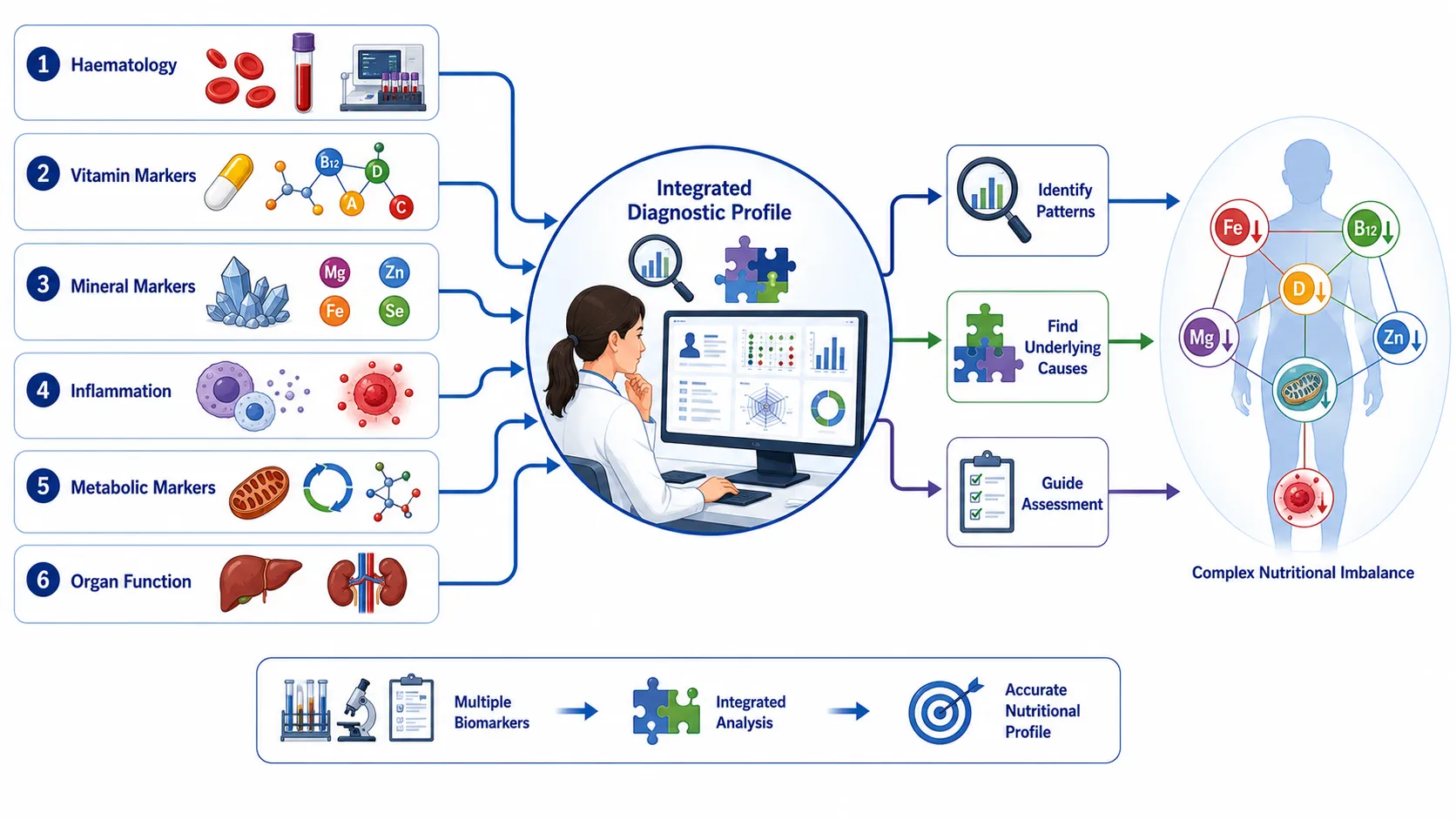
Understanding the Meaning of Data Synthesis in Nutritional Diagnostics
Data synthesis is the process of bringing together information from different sources to develop a more complete understanding of a clinical problem.
In nutritional assessment, relevant sources may include:
Blood biochemical tests.
Urine laboratory profiles.
Haematological findings.
Markers of inflammation.
Electrolyte measurements.
Vitamin-related biomarkers.
Mineral-related biomarkers.
Protein and metabolic markers.
Organ function tests.
Hormonal indicators where clinically relevant.
Dietary intake information.
Clinical history.
Physical examination findings.
The objective is not simply to identify every abnormal result. Instead, the objective is to determine how the findings relate to each other.
A comprehensive diagnostic profile should answer several important questions:
Which abnormalities are likely to be clinically significant?
Which biomarkers support the same underlying pattern?
Which results may be influenced by inflammation or acute illness?
Could organ dysfunction explain the findings?
Are there signs of acute or chronic nutritional imbalance?
Is there evidence of impaired nutrient absorption, utilisation or storage?
Are multiple abnormalities connected through a common metabolic pathway?
What additional information is required before reaching a conclusion?
Key Definitions and Concepts
Biomarker
A biomarker is a measurable biological characteristic that provides information about a physiological, pathological or nutritional process.
In nutritional diagnostics, biomarkers may indicate:
Nutrient exposure.
Nutrient availability.
Body stores.
Metabolic function.
Functional consequences of deficiency.
Physiological stress.
Biomarker Panel
A biomarker panel is a group of laboratory tests interpreted together to investigate a specific physiological or clinical issue.
Data Synthesis
Data synthesis is the structured integration of multiple sources of information to produce a coherent and evidence-based conclusion.
Diagnostic Profile
A diagnostic profile is an organised summary of laboratory, clinical and nutritional findings that describes the patient’s likely physiological and nutritional status.
Pattern Recognition
Pattern recognition involves identifying meaningful relationships between multiple laboratory results rather than interpreting each value independently.
Confounding Factor
A confounding factor is a variable that may influence a laboratory result and create an alternative explanation for an observed abnormality.
Functional Biomarker
A functional biomarker provides information about whether a nutrient-dependent physiological or biochemical process is functioning normally.
Direct Biomarker
A direct biomarker measures the concentration of a nutrient or related substance more directly.
Secondary Abnormality
A secondary abnormality is a laboratory change caused by another underlying condition rather than representing the primary nutritional problem.
Table: Major Biomarker Streams Used in Comprehensive Nutritional Diagnostic Profiles
| Biomarker stream | Main purpose | Examples of information provided | Important interpretation considerations |
|---|---|---|---|
| Haematological data | Evaluates blood cell characteristics | Possible patterns associated with nutrient-related disturbances | Inflammation, blood loss and chronic disease may influence findings |
| Vitamin biomarkers | Assesses nutrient availability or status | Possible vitamin insufficiency or altered utilisation | Recent supplements may temporarily alter results |
| Mineral and electrolyte data | Evaluates mineral balance and regulation | Altered mineral availability and fluid-related changes | Hydration and kidney function may affect concentrations |
| Protein-related markers | Provides information about protein metabolism and physiological state | Changes in synthesis, transport or loss | Inflammation and organ dysfunction may be major confounders |
| Inflammatory biomarkers | Identifies acute or chronic inflammatory activity | Context for interpreting other nutritional tests | May indicate altered nutrient redistribution |
| Metabolic markers | Assesses energy and substrate metabolism | Evidence of altered metabolic regulation | Recent food intake and acute stress can influence results |
| Organ function tests | Identifies factors affecting nutrient handling | Liver and kidney influences on metabolism | Abnormal results may mimic nutritional imbalance |
| Urine biomarkers | Provides information about excretion and metabolic products | Nutrient loss or altered metabolic handling | Hydration and collection quality are important |
Why Single Biomarkers Are Often Insufficient
A single abnormal laboratory result may have multiple possible explanations. For example, a reduced circulating nutrient concentration could result from:
Inadequate dietary intake.
Impaired absorption.
Increased physiological demand.
Altered tissue distribution.
Increased urinary loss.
Acute inflammation.
Medication effects.
Organ dysfunction.
Therefore, interpreting one result in isolation can create diagnostic uncertainty.
A more reliable approach involves determining whether other findings support the same explanation.
For example, the professional may examine:
Related nutrient markers.
Functional indicators.
Inflammatory status.
Blood cell characteristics.
Organ function.
Clinical symptoms.
When several independent findings support the same physiological interpretation, diagnostic confidence may increase.
The Principles of Integrated Biomarker Interpretation
Principle 1: Establish the Clinical Question
Laboratory interpretation should begin with a clear question.
Examples include:
Is there evidence of a nutritional deficiency?
Is the imbalance acute or chronic?
Is nutrient absorption potentially impaired?
Could inflammation be affecting biomarker interpretation?
Is there evidence of excessive nutrient exposure?
Without a defined clinical question, broad laboratory panels may produce incidental findings that are difficult to interpret.
Principle 2: Identify the Primary Abnormalities
The next step is to identify results that require attention.
These may include:
Values outside the laboratory reference range.
Significant changes from previous results.
Borderline values supported by symptoms.
Patterns across multiple related tests.
However, an abnormal result should not automatically be classified as clinically significant.
The professional should ask:
How large is the deviation?
Is the result consistent with other findings?
Could biological variation explain it?
Is there evidence of a persistent trend?
Principle 3: Group Biomarkers by Physiological System
Instead of reviewing results randomly, biomarkers should be organised into physiological groups.
Useful categories include:
Haematology.
Inflammation.
Vitamin status.
Mineral status.
Protein metabolism.
Energy metabolism.
Liver function.
Kidney function.
Urinary findings.
Grouping results helps the professional identify relationships that may otherwise be missed.
A Step-by-Step Process for Synthesising Laboratory Data
Step 1: Confirm Data Quality
Before interpreting physiology, confirm that the data are reliable.
Review:
Patient identification.
Sample type.
Sample collection conditions.
Fasting status where relevant.
Supplement use.
Recent dietary intake.
Sample handling.
Timing of collection.
Poor-quality data can lead to inaccurate conclusions regardless of the quality of subsequent interpretation.
Step 2: Identify Significant Outliers
Review the laboratory profile for:
Markedly abnormal values.
Unexpected findings.
Rapid changes from previous results.
Clusters of related abnormalities.
Prioritise results that are:
Clinically significant.
Consistent with symptoms.
Supported by additional biomarkers.
Step 3: Examine Relationships Between Results
The central purpose of synthesis is to identify relationships.
Ask:
Do several results suggest the same deficiency?
Does inflammation explain altered nutrient distribution?
Does organ dysfunction explain the abnormality?
Are multiple nutrients affected simultaneously?
Could a common absorption problem explain several findings?
Step 4: Assess Inflammatory Context
Inflammation can influence the interpretation of many nutritional biomarkers.
The professional should consider:
Is there evidence of acute inflammation?
Could nutrient redistribution be occurring?
Could transport proteins be altered?
Are abnormal nutrient concentrations secondary to illness?
Ignoring inflammation may lead to inaccurate classification of nutritional status.
Step 5: Evaluate Organ Function
Liver and kidney function are particularly important.
The liver influences:
Nutrient storage.
Protein synthesis.
Metabolism.
Transport.
The kidneys influence:
Mineral regulation.
Nutrient excretion.
Fluid balance.
Metabolic waste removal.
Abnormal organ function may therefore alter nutritional biomarkers without reflecting dietary intake directly.
Step 6: Integrate Dietary and Clinical Evidence
Laboratory findings should be compared with:
Dietary history.
Duration of reduced intake.
Weight history.
Gastrointestinal symptoms.
Medication use.
Physical symptoms.
Chronic disease history.
This step transforms laboratory data into clinically meaningful information.
Direct and Functional Biomarkers
Direct Biomarkers
Direct biomarkers attempt to measure a nutrient or nutrient-related concentration.
Potential advantages include:
Clear quantitative measurement.
Useful baseline information.
Ability to monitor change.
Potential limitations include:
Short-term dietary influence.
Redistribution during illness.
Limited reflection of tissue stores.
Functional Biomarkers
Functional biomarkers examine the consequences of altered nutrient availability.
They may indicate:
Impaired enzyme activity.
Altered metabolic pathways.
Changes in physiological function.
Combining direct and functional biomarkers can strengthen interpretation.
Why Both Types May Be Valuable
A direct measurement may indicate availability, while a functional marker may provide evidence about biological consequences.
Together, they may answer:
Is the nutrient concentration altered?
Is there evidence that physiological function is affected?
Identifying Patterns of Multiple Nutrient Imbalances
Complex nutritional problems may involve more than one nutrient.
Possible reasons include:
Poor overall dietary intake.
Malabsorption.
Restrictive diets.
Chronic gastrointestinal conditions.
Increased physiological requirements.
Prolonged illness.
A professional should therefore avoid assuming that one confirmed deficiency explains every symptom.
Pattern-Based Assessment
When multiple abnormalities are present, consider:
Whether they share a common absorption pathway.
Whether they are linked to the same dietary pattern.
Whether inflammation is influencing several results.
Whether medication use contributes to multiple changes.
Distinguishing Primary and Secondary Abnormalities
One of the most important aspects of laboratory synthesis is determining whether a result represents a primary nutritional problem or a secondary physiological consequence.
Primary Nutritional Abnormality
A primary abnormality may be associated with:
Inadequate intake.
Poor absorption.
Increased requirements.
Excessive losses.
Secondary Abnormality
A secondary abnormality may result from:
Inflammation.
Organ dysfunction.
Acute illness.
Fluid imbalance.
Medication effects.
Critical Questions
Ask:
Is the nutrient abnormality consistent with dietary risk?
Is there a disease process that could explain it?
Are related biomarkers showing the same pattern?
Is the finding persistent?
The Importance of Trends Rather Than Isolated Results
A single measurement represents one point in time.
Repeated measurements can reveal:
Improvement.
Deterioration.
Stability.
Temporary physiological variation.
Trend analysis is particularly valuable when managing:
Long-term nutritional interventions.
Chronic illness.
Malabsorption.
Complex dietary changes.
Example of Trend Interpretation
A patient has a borderline laboratory value on one occasion.
On repeat assessment:
The value remains stable.
Related biomarkers are normal.
The patient has no symptoms.
This may suggest biological variation rather than progressive deficiency.
In contrast, progressive deterioration across several related biomarkers may provide stronger evidence of a developing nutritional problem.
Practical Example: Complex Nutritional Imbalance During Chronic Illness
A patient with chronic illness presents with:
Reduced appetite.
Unintentional weight loss.
Fatigue.
Multiple abnormal laboratory findings.
A simplistic approach would interpret every abnormal nutrient result as a direct dietary deficiency.
A synthesised approach would examine:
Inflammatory biomarkers.
Organ function.
Haematological data.
Protein metabolism.
Dietary history.
Duration of reduced intake.
The professional may then identify a combination of:
Reduced intake.
Increased physiological stress.
Inflammation-related biomarker changes.
This provides a more accurate diagnostic profile than isolated interpretation.
Practical Example: Suspected Malabsorption Pattern
A patient reports:
Persistent gastrointestinal symptoms.
Reduced tolerance of certain foods.
Progressive fatigue.
Laboratory data show multiple nutrient-related abnormalities.
The professional should consider whether the findings indicate:
Multiple unrelated dietary deficiencies.
or:
A common process affecting nutrient absorption.
Relevant steps include:
Reviewing which nutrients are affected.
Examining gastrointestinal history.
Assessing related functional markers.
Reviewing weight change.
Considering appropriate clinical referral.
The purpose is to identify the underlying mechanism rather than simply replacing individual nutrients without further investigation.
Practical Example: Conflicting Laboratory Results
A patient has:
A low circulating nutrient concentration.
A normal functional marker.
Evidence of acute inflammation.
The results appear contradictory.
Possible explanations may include:
Temporary nutrient redistribution.
Inflammation-related transport changes.
Analytical variation.
The professional should avoid immediately diagnosing a chronic deficiency.
Instead, appropriate action may include:
Reviewing inflammatory status.
Checking previous results.
Repeating relevant testing when clinically appropriate.
Managing Conflicting Biomarker Data
Conflicting findings are common in complex nutritional diagnostics.
A Structured Approach
When results disagree:
Confirm analytical validity.
Review pre-analytical conditions.
Identify physiological differences between biomarkers.
Assess inflammation.
Review organ function.
Examine the clinical context.
Consider repeat testing.
Important Principle
Conflicting data do not necessarily mean that one test is incorrect.
Different biomarkers may measure:
Different biological compartments.
Different stages of nutrient metabolism.
Short-term versus longer-term processes.
Availability versus function.
Building a Comprehensive Diagnostic Profile
A comprehensive profile should be organised systematically.
Domain 1: Nutritional Intake and Exposure
Review:
Overall dietary pattern.
Restricted foods.
Recent dietary changes.
Supplement use.
Duration of inadequate intake.
Domain 2: Clinical Presentation
Review:
Symptoms.
Physical signs.
Weight change.
Functional ability.
Gastrointestinal symptoms.
Domain 3: Core Laboratory Findings
Organise:
Haematology.
Metabolic results.
Vitamin markers.
Mineral markers.
Urine findings.
Domain 4: Confounding Factors
Identify:
Inflammation.
Infection.
Organ dysfunction.
Hydration changes.
Medication effects.
Domain 5: Integrated Interpretation
Develop a conclusion explaining:
Most likely abnormalities.
Supporting evidence.
Uncertainty.
Additional information required.
Diagnostic Reasoning Framework
A useful reasoning structure is:
Observation
What abnormalities are present?
Interpretation
What could each abnormality mean?
Integration
How do the findings relate to one another?
Contextualisation
How do symptoms, diet and clinical history affect interpretation?
Conclusion
What explanation is best supported by the available evidence?
Action
What should be monitored, investigated or referred appropriately?
This structure promotes systematic clinical reasoning.
Avoiding Common Errors in Biomarker Synthesis
Error 1: Treating Every Abnormal Result Independently
This can lead to fragmented and inaccurate conclusions.
Better practice is to search for relationships.
Error 2: Ignoring Inflammation
Inflammation may alter multiple biomarkers simultaneously.
Ignoring it may lead to false nutritional diagnoses.
Error 3: Ignoring Supplement Use
Recent supplementation can change circulating measurements.
A laboratory value may therefore not represent long-term status.
Error 4: Overreliance on Reference Ranges
Reference ranges provide useful information but do not replace clinical judgement.
A value:
Within range may still require interpretation.
Slightly outside range may not always indicate disease.
Error 5: Ignoring Biological Variation
Normal variation occurs between individuals and over time.
Small changes should not automatically be considered clinically meaningful.
Benefits of Multi-Stream Laboratory Data Synthesis
An integrated approach provides several advantages.
Improved Diagnostic Accuracy
Multiple sources of evidence can reduce reliance on a single potentially misleading test.
Better Identification of Underlying Causes
Pattern recognition may identify:
Poor intake.
Malabsorption.
Increased losses.
Altered metabolism.
Reduced Risk of False Positive Diagnosis
Considering confounders reduces the risk of misclassifying temporary physiological changes as nutritional disorders.
More Targeted Intervention
A comprehensive profile can support more appropriate nutritional planning.
Improved Monitoring
Integrated baseline data provide a stronger foundation for evaluating changes over time.
Professional Applications in Clinical Practice
Multi-stream laboratory interpretation is relevant to professionals working in:
Clinical nutrition.
Dietetic practice.
Medical laboratories.
Primary care.
Hospital care.
Community health.
Specialist nutritional services.
Workplace Scenario
A healthcare professional receives a laboratory report containing several abnormal nutrient-related values.
The professional should not simply:
List each deficiency.
Recommend multiple supplements automatically.
Instead, the professional should:
Group related biomarkers.
Identify possible confounders.
Review the clinical history.
Assess dietary intake.
Determine whether results indicate a common underlying cause.
Work within professional scope of practice.
Communicating Complex Laboratory Findings
Laboratory synthesis must also be communicated clearly.
A professional diagnostic summary should include:
Confirmed Findings
Clearly state findings strongly supported by multiple sources of evidence.
Probable Findings
Identify conclusions that are likely but require continued monitoring.
Uncertain Findings
Explain where results are conflicting or potentially affected by confounding factors.
Recommended Next Steps
Where appropriate, identify:
Repeat testing.
Additional assessment.
Dietary review.
Clinical referral.
Clear communication prevents overconfidence and supports safe decision-making.
A Practical Diagnostic Profile Template
A structured diagnostic profile may include the following components.
Patient Context
Relevant medical history.
Dietary pattern.
Medication use.
Symptoms.
Laboratory Summary
Major abnormalities.
Relevant normal findings.
Changes over time.
Physiological Interpretation
Possible mechanisms.
Relationships between biomarkers.
Potential confounders.
Nutritional Assessment
Likely deficiencies or imbalances.
Evidence supporting each conclusion.
Degree of certainty.
Clinical Considerations
Further testing required.
Monitoring needs.
Referral requirements.
Advanced Interpretation: Linking Biomarkers to Biological Pathways
Advanced nutritional assessment requires an understanding of pathways rather than isolated substances.
For example, a nutrient may influence:
Enzyme activity.
Hormonal regulation.
Energy metabolism.
Cell growth.
Protein synthesis.
When several biomarkers relate to the same pathway, their combined interpretation may provide stronger evidence than individual results.
Pathway-Based Questions
Ask:
Which metabolic pathway links these results?
Is there evidence of impaired substrate availability?
Is enzyme function likely affected?
Could organ dysfunction disrupt this pathway?
This approach strengthens analytical reasoning.
Quality and Reliability Considerations
Reliable diagnostic synthesis depends on recognising the quality of the evidence.
Consider:
Was the sample collected correctly?
Is the test method reliable?
Is the result reproducible?
Are there previous results for comparison?
Are multiple findings internally consistent?
Confidence should be greater when:
Results are reproducible.
Multiple biomarkers support the same conclusion.
Findings are clinically consistent.
Key Practical Skills for Learners
To synthesise complex nutritional laboratory data effectively, Learners should develop the ability to:
Organise laboratory results systematically.
Identify clinically significant abnormalities.
Recognise biomarker patterns.
Distinguish direct and functional markers.
Assess inflammatory context.
Evaluate organ function.
Identify possible laboratory interferences.
Integrate dietary information.
Recognise uncertainty.
Avoid overdiagnosis.
Communicate evidence-based conclusions.
Professional Judgement in Complex Cases
Professional judgement is essential when evidence is incomplete or conflicting.
A high-quality interpretation should avoid statements that imply certainty when the evidence is limited.
Appropriate professional language may include:
The findings are consistent with.
The pattern may suggest.
Further assessment is required to determine.
Interpretation should consider the presence of.
The result should be interpreted alongside.
This approach supports accurate and responsible clinical communication.
Key Learning Points
The following principles summarise effective laboratory biomarker synthesis:
Complex nutritional imbalances require multi-stream assessment.
Single biomarkers rarely provide a complete diagnostic picture.
Laboratory findings should be grouped by physiological system.
Pattern recognition is essential for identifying underlying mechanisms.
Direct and functional biomarkers may provide complementary information.
Inflammation can substantially affect nutritional biomarker interpretation.
Organ function may alter nutrient concentrations independently of dietary intake.
Supplement use and recent dietary intake should be documented.
Trends over time may be more informative than isolated results.
Conflicting results should be investigated systematically.
Clinical history and symptoms are essential for contextual interpretation.
Professional judgement should recognise uncertainty and scope of practice.
Conclusion
Synthesising multiple streams of laboratory biomarker data is an advanced and essential skill in nutritional diagnostics. Patients with complex nutritional imbalances may present with numerous laboratory abnormalities that cannot be accurately understood through isolated interpretation. Effective assessment requires the integration of haematological findings, vitamin and mineral biomarkers, metabolic indicators, inflammatory markers, organ function tests, urinary data and relevant clinical information.
A comprehensive diagnostic profile should identify meaningful patterns, distinguish primary nutritional abnormalities from secondary physiological effects and recognise the influence of confounding factors such as inflammation, hydration, medication use and organ dysfunction. Direct nutrient measurements should be interpreted alongside functional biomarkers where appropriate, while repeated measurements can help distinguish persistent abnormalities from temporary biological variation.
The strongest diagnostic conclusions are those supported by multiple, internally consistent sources of evidence and aligned with the patient’s dietary history, symptoms and clinical presentation. Where data conflict, the professional should investigate the reasons rather than selecting one result without critical analysis.
By applying a structured, pathway-based and evidence-informed approach to biomarker synthesis, Learners can construct more comprehensive and accurate diagnostic profiles, reduce the risk of misleading conclusions and support safer, more effective nutritional assessment within appropriate professional and clinical practice.