
Lesson no 2 : Analyse nutrigenomics and nutrigenetics data.
This lesson introduces Learners to the scientific principles and practical approaches used to analyse nutrigenomics and nutrigenetics data. Nutrigenomics examines how dietary nutrients and bioactive food compounds influence gene expression and molecular pathways, while nutrigenetics explores how inherited genetic variations affect an individual’s response to nutrients, foods and dietary patterns. Together, these closely related fields contribute to a deeper understanding of personalised nutrition and the complex relationship between diet, genes and health.
Learners will explore the types of genetic and molecular data commonly used in nutritional research, including genetic variants, gene expression patterns and relevant biochemical indicators. The lesson develops the ability to interpret such information critically rather than treating individual genetic findings as isolated or definitive answers. Particular attention is given to understanding how genetic variation may influence nutrient metabolism, absorption, transport and utilisation.
The lesson also examines the importance of combining genomic information with dietary, physiological and environmental evidence. Learners will consider the limitations of genetic testing, the challenges of interpreting complex datasets and the ethical responsibilities associated with the use of genetic information. By analysing research findings and practical scenarios, Learners will develop the skills required to evaluate evidence, identify meaningful patterns and avoid unsupported conclusions.
By the end of this lesson, Learners will have a stronger understanding of how nutrigenomics and nutrigenetics data can support scientific research and inform evidence-based approaches to personalised nutrition. The knowledge gained will help Learners critically assess the relationship between genetic variation, dietary exposure and individual health outcomes within appropriate scientific and professional boundaries.
1.Critically Evaluate the Distinct Diagnostic Methodologies and Laboratory Techniques Utilised to Collect and Process Complex Nutrigenomics Data
Nutrigenomics is an interdisciplinary field that investigates how nutrients, dietary patterns and bioactive food compounds influence gene expression, molecular pathways and physiological function. The generation of reliable nutrigenomics data requires much more than simply collecting a biological sample and identifying a genetic marker. It involves a carefully controlled sequence of diagnostic methodologies, laboratory techniques, quality assurance procedures, computational processes and critical interpretation.
A central challenge in nutrigenomics is that nutritional exposures are highly variable and biological responses are dynamic. Gene expression may differ according to tissue type, time of sampling, recent food intake, age, physiological state, medication use and environmental exposures. Therefore, the selection and evaluation of diagnostic methodologies must consider both the scientific question and the limitations of the available techniques.
This section critically evaluates the principal methodologies used to collect, process and interpret complex nutrigenomics data. It examines biological sampling, genetic and genomic analysis, transcriptomics, epigenomics, proteomics and metabolomics, together with laboratory quality control and data integration.
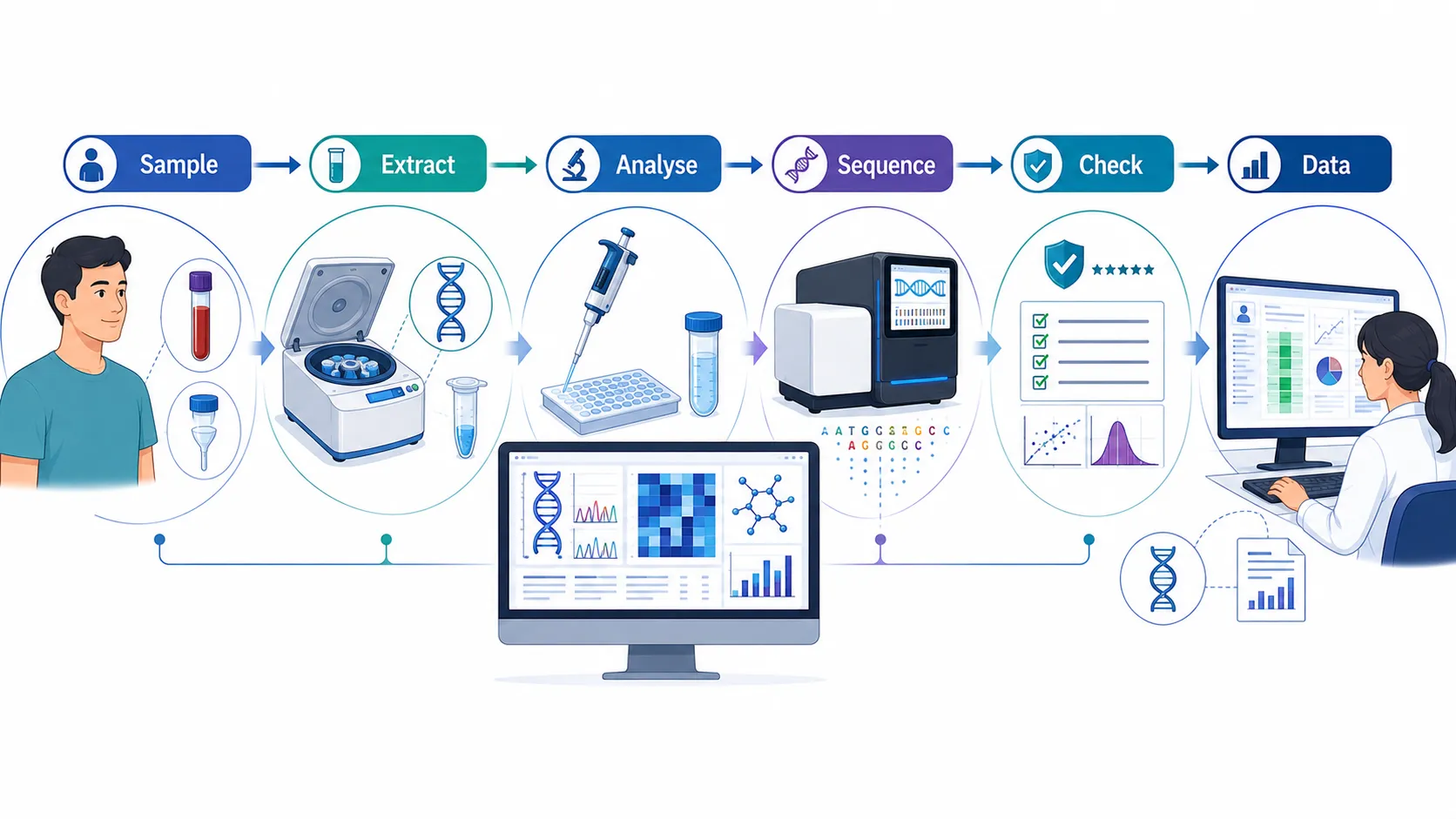
Key Definitions and Concepts
| Term | Definition | Relevance to Nutrigenomics |
|---|---|---|
| Nutrigenomics | The study of how nutrients and dietary components influence gene expression and molecular processes. | Helps explain molecular responses to dietary exposure. |
| Nutrigenetics | The study of how genetic variation influences an individual’s response to nutrients and diet. | Supports investigation of differences between individuals. |
| Genomics | The study of the complete genetic material of an organism. | Provides information about genetic variation and genomic structure. |
| Transcriptomics | The large-scale study of RNA transcripts produced by cells or tissues. | Identifies changes in gene expression associated with dietary factors. |
| Epigenomics | The study of genome-wide epigenetic modifications that influence gene activity. | Examines mechanisms such as DNA methylation and chromatin regulation. |
| Proteomics | The large-scale analysis of proteins and their functions. | Investigates functional molecular responses beyond RNA expression. |
| Metabolomics | The comprehensive analysis of small molecules and metabolic products. | Provides information about biochemical responses to diet. |
| Biomarker | A measurable biological characteristic associated with a biological process or exposure. | May support assessment of nutrient exposure or physiological response. |
| Quality Control | Procedures used to maintain the accuracy and reliability of laboratory data. | Reduces analytical error and improves confidence in results. |
| Bioinformatics | The use of computational methods to organise, analyse and interpret biological data. | Essential for processing large nutrigenomics datasets. |
Understanding the Diagnostic Framework in Nutrigenomics
Nutrigenomics research commonly follows a multi-stage diagnostic framework. Each stage can introduce uncertainty or error if procedures are poorly designed. Critical evaluation therefore requires an understanding of the complete pathway from research question to final interpretation.
A typical workflow includes:
Defining the nutritional or biological question.
Selecting an appropriate study population.
Assessing dietary exposure.
Choosing relevant biological samples.
Collecting and preserving specimens.
Extracting DNA, RNA, proteins or metabolites.
Applying laboratory analytical techniques.
Conducting quality control.
Processing raw data computationally.
Performing statistical analysis.
Integrating molecular and nutritional information.
Interpreting findings within biological and clinical context.
The quality of the final conclusion cannot exceed the quality of the weakest stage in this process. For example, highly advanced sequencing technology cannot compensate for inaccurate dietary exposure assessment or poorly preserved biological samples.
The Importance of Matching Methodology to the Research Question
Different nutrigenomics questions require different laboratory approaches. A study investigating whether a nutrient influences gene expression requires a different methodology from a study examining inherited genetic variants.
Before selecting a technique, researchers should consider:
What biological mechanism is being investigated?
Is the aim to measure inherited genetic variation or dynamic molecular change?
Which tissue is most biologically relevant?
Is the expected response immediate or long term?
Is the nutrient exposure acute or habitual?
What level of molecular detail is required?
What resources and analytical expertise are available?
Can the findings be reproduced and independently validated?
Critical Principle
A technically sophisticated method is not automatically the most appropriate method. Methodological suitability depends on the relationship between the technique and the research objective.
Biological Sample Collection in Nutrigenomics Research
Biological sample collection is one of the most important stages of nutrigenomics analysis. The selected sample must provide meaningful information about the biological process under investigation.
Common biological materials include:
Whole blood.
Plasma.
Serum.
Saliva.
Buccal cells.
Urine.
Faecal samples.
Adipose tissue.
Skeletal muscle tissue.
Liver tissue in specialised research settings.
Cultured cells.
Blood-Based Sampling
Blood is widely used because it is relatively accessible and can provide multiple forms of molecular information. Depending on the preparation process, blood samples may be used for DNA extraction, RNA analysis, protein measurement and metabolite profiling.
Potential advantages include:
Relatively standardised collection procedures.
Accessibility in clinical research.
Ability to measure multiple biomarkers.
Potential for repeated sampling.
Established laboratory processing methods.
However, blood does not necessarily reflect molecular processes occurring in every organ. Gene expression patterns in circulating blood cells may differ substantially from those in the liver, skeletal muscle or intestinal tissue.
Therefore, researchers must avoid assuming that a blood-based molecular result represents the entire body.
Saliva and Buccal Cell Sampling
Saliva and buccal samples are commonly used for DNA collection because they are less invasive than blood sampling.
Their advantages include:
Simple collection procedures.
Improved acceptability for some participants.
Suitability for large population studies.
Reduced need for specialised clinical collection.
Limitations include:
Variable DNA quality.
Potential contamination.
Differences in cellular composition.
Limited suitability for certain transcriptomic analyses.
These methods may be highly useful for inherited genetic analysis but may be less appropriate when tissue-specific gene expression is the primary focus.
Tissue-Specific Sampling
Certain nutrigenomics investigations require tissue-specific information. For example, skeletal muscle may be relevant when studying exercise and nutrient metabolism, whereas intestinal tissue may be relevant when examining nutrient absorption.
Tissue sampling may provide:
Greater biological specificity.
Direct information about local molecular processes.
Improved understanding of tissue-dependent responses.
However, invasive procedures raise additional challenges:
Ethical considerations.
Participant burden.
Limited sample availability.
Higher costs.
Difficulties with repeated measurements.
Timing of Sample Collection
The timing of biological sampling can significantly influence nutrigenomics data. Nutrient-responsive genes may change their expression over minutes, hours or longer periods.
Important considerations include:
Fasting versus fed state.
Time since the most recent meal.
Time of day.
Duration of dietary intervention.
Physical activity before sampling.
Acute illness or inflammation.
Medication use.
A poorly timed sample may fail to detect a genuine biological response.
Dietary Exposure Assessment as a Diagnostic Methodology
Nutrigenomics data must be interpreted alongside information about dietary exposure. Laboratory data alone cannot always determine whether observed molecular patterns are related to a specific nutrient.
Common dietary assessment methods include:
Food frequency questionnaires.
Food diaries.
24-hour dietary recalls.
Dietary records.
Structured dietary interviews.
Controlled feeding interventions.
Food Frequency Questionnaires
Food frequency questionnaires are designed to estimate habitual dietary patterns over an extended period.
Their benefits include:
Practical use in large studies.
Ability to investigate long-term dietary patterns.
Relatively low participant burden.
Their limitations include:
Recall bias.
Estimation errors.
Difficulty assessing portion size.
Variation in food composition.
Inaccurate reporting.
Controlled Dietary Interventions
Controlled interventions can provide stronger evidence regarding dietary exposure because researchers may standardise the nutrient or food intervention.
Advantages include:
Greater control of exposure.
Clearer timing of intervention.
Improved ability to investigate mechanisms.
Reduced uncertainty regarding intake.
Limitations include:
High cost.
Difficulty maintaining adherence.
Limited duration.
Potential differences between controlled conditions and real-life dietary behaviour.
Combining Dietary and Biomarker Data
A stronger approach may combine reported dietary information with objective biomarkers.
For example, researchers may assess:
Reported nutrient intake.
Blood nutrient concentrations.
Relevant metabolites.
Molecular responses.
This approach can improve the interpretation of nutritional exposure but does not eliminate all uncertainty.
DNA Extraction and Genetic Analysis
DNA analysis is central to nutrigenetics and can also support broader nutrigenomics research.
DNA must first be extracted from an appropriate biological sample. The extraction process aims to isolate DNA of sufficient purity and quantity for downstream analysis.
Key Steps in DNA Processing
The general process may involve:
Collection of the biological specimen.
Cell disruption.
Removal of proteins and contaminants.
Isolation of DNA.
Purification.
Quantification.
Quality assessment.
Storage.
Preparation for genetic analysis.
Poor DNA quality can affect the reliability of downstream analysis.
Common DNA Quality Considerations
Laboratories may assess:
DNA concentration.
Purity.
Molecular integrity.
Evidence of contamination.
Suitability for the selected analytical platform.
Genetic Variant Analysis
Genetic testing may investigate specific variants associated with nutrient metabolism.
Common approaches include:
Targeted genotyping.
Single nucleotide polymorphism analysis.
DNA microarrays.
Targeted sequencing.
Whole-genome sequencing in specialised research.
Single Nucleotide Polymorphisms
A single nucleotide polymorphism, often abbreviated as SNP, is a common type of genetic variation involving a difference at a single position in the DNA sequence.
Some variants may influence:
Enzyme activity.
Nutrient transport.
Receptor function.
Metabolic pathways.
Individual responses to dietary exposure.
However, the presence of a genetic variant does not automatically determine an individual’s health outcome or ideal diet.
Critical Evaluation of Genetic Testing
Genetic findings should be interpreted carefully because:
Many traits are influenced by multiple genes.
Environmental factors modify biological outcomes.
Dietary exposure varies over time.
Associations may differ between populations.
A statistical association does not necessarily prove causation.
Individual variants may have small effects.
Transcriptomics and Gene Expression Analysis
Transcriptomics investigates RNA molecules produced by cells. Because gene expression is dynamic, transcriptomic analysis can help researchers examine how dietary exposure influences cellular activity.
The Role of RNA
DNA contains genetic information, whereas RNA molecules are produced when specific genes are expressed.
The simplified relationship can be represented as:
DNA → RNA → Protein → Biological Function
Nutritional factors may influence regulatory processes that affect RNA production.
RNA Collection and Processing
RNA is generally more fragile than DNA and requires careful handling.
Important procedures include:
Rapid sample stabilisation.
Prevention of degradation.
Controlled storage.
RNA extraction.
Purity assessment.
Integrity testing.
Major Transcriptomic Techniques
Common methods include:
Reverse transcription quantitative polymerase chain reaction.
Microarray analysis.
RNA sequencing.
Quantitative PCR
Quantitative PCR can be used to measure selected gene transcripts.
Benefits include:
High sensitivity.
Relatively targeted analysis.
Useful validation method.
Suitable for examining specific genes.
Limitations include:
Limited breadth compared with genome-wide methods.
Requires prior selection of targets.
RNA Sequencing
RNA sequencing can provide broad information about transcript abundance.
Potential benefits include:
Genome-wide analysis.
Detection of known and novel transcripts.
High analytical depth.
Ability to investigate complex expression patterns.
Challenges include:
Large data volume.
Computational requirements.
Cost.
Complex statistical analysis.
Risk of false discoveries when many genes are tested.
Epigenomic Methodologies
Epigenomics examines molecular modifications that influence gene regulation without necessarily altering the underlying DNA sequence.
Important areas include:
DNA methylation.
Histone modification.
Chromatin accessibility.
Non-coding RNA regulation.
DNA Methylation Analysis
DNA methylation commonly involves the addition of a methyl group to specific DNA regions.
Researchers may use techniques such as:
Targeted methylation analysis.
Array-based methylation profiling.
Sequencing-based approaches.
Chemical conversion methods used to distinguish methylated and unmethylated DNA.
Critical Considerations
Methylation data must be interpreted cautiously because:
Patterns may differ between tissues.
Cell populations within a sample may vary.
Age may influence methylation.
Environmental exposures may contribute.
Observed differences may not demonstrate causation.
Histone Modification Analysis
Histone proteins help organise DNA into chromatin. Chemical modifications to histones may influence how accessible particular genomic regions are to regulatory machinery.
Laboratory investigation may involve specialised methods designed to identify:
Protein-DNA interactions.
Histone-associated modifications.
Chromatin accessibility patterns.
These techniques can provide important mechanistic information but often require advanced laboratory and computational expertise.
Proteomics in Nutrigenomics
Gene expression does not always correspond directly to protein abundance or protein activity. Proteomics therefore provides an additional level of analysis.
Proteomic techniques investigate:
Protein identity.
Protein abundance.
Protein modification.
Protein interactions.
Functional activity.
Mass Spectrometry
Mass spectrometry is widely used in advanced proteomic analysis.
The general workflow may include:
Protein extraction.
Sample preparation.
Separation of protein components.
Instrument-based measurement.
Computational identification.
Quantitative analysis.
Potential benefits include:
Broad molecular profiling.
Identification of multiple proteins.
Investigation of pathway-level responses.
Limitations include:
Complex sample preparation.
Technical variability.
Large computational requirements.
Difficulty detecting low-abundance proteins.
Metabolomics and Nutrient-Responsive Metabolic Profiles
Metabolomics investigates small molecules produced or modified during metabolic processes.
These molecules may include:
Amino acids.
Organic acids.
Lipid metabolites.
Carbohydrate-related metabolites.
Products of microbial metabolism.
Metabolomics is particularly valuable because metabolites may provide a relatively direct indication of current biochemical activity.
Major Metabolomic Technologies
Common approaches include:
Mass spectrometry.
Nuclear magnetic resonance spectroscopy.
Targeted and Untargeted Metabolomics
Targeted Metabolomics
Targeted analysis measures predefined compounds.
Benefits include:
High analytical specificity.
Quantitative measurement.
Clear focus on selected pathways.
Untargeted Metabolomics
Untargeted approaches aim to detect a broad range of measurable molecular features.
Benefits include:
Discovery potential.
Identification of unexpected patterns.
Broad pathway exploration.
Challenges include:
Complex data processing.
Difficulty identifying unknown compounds.
High risk of spurious associations without appropriate statistical controls.
Quality Control and Laboratory Validation
Quality control is essential throughout the nutrigenomics workflow. Complex molecular technologies can generate large amounts of data, but large data volume does not guarantee accuracy.
Laboratory quality procedures may include:
Standard operating procedures.
Sample tracking systems.
Instrument calibration.
Positive controls.
Negative controls.
Replicate measurements.
Reference materials.
Contamination monitoring.
Data audit procedures.
Pre-Analytical Quality Control
Pre-analytical factors occur before laboratory measurement.
Examples include:
Incorrect sample collection.
Delayed processing.
Improper storage.
Temperature variation.
Sample mislabelling.
Contamination.
These factors can introduce systematic error before the analytical process begins.
Analytical Quality Control
Analytical quality control focuses on the performance of laboratory procedures.
Important considerations include:
Accuracy.
Precision.
Sensitivity.
Specificity.
Reproducibility.
Detection limits.
Post-Analytical Quality Control
After laboratory measurement, researchers must evaluate:
Data completeness.
Outliers.
Batch effects.
Missing values.
Technical variation.
Statistical assumptions.
Bioinformatics and Complex Data Processing
Modern nutrigenomics studies may generate thousands or millions of data points. Bioinformatics is required to process, organise and interpret these datasets.
Common Bioinformatics Processes
These may include:
Raw data assessment.
Sequence alignment.
Feature identification.
Data normalisation.
Quality filtering.
Statistical modelling.
Pathway analysis.
Data visualisation.
Data Normalisation
Different samples may vary because of technical rather than biological reasons. Normalisation methods attempt to reduce unwanted variation.
Without appropriate normalisation:
False differences may appear.
Genuine biological signals may be obscured.
Comparisons between samples may be unreliable.
Batch Effects
A batch effect occurs when systematic differences arise because samples were processed under different technical conditions.
Potential causes include:
Different laboratory dates.
Different instrument runs.
Different reagent batches.
Different operators.
Batch effects can sometimes be mistaken for genuine biological differences.
Integrating Multi-Omics Data
One of the most advanced areas of nutrigenomics involves combining multiple datasets.
These may include:
Genomic data.
Transcriptomic data.
Epigenomic data.
Proteomic data.
Metabolomic data.
Dietary information.
Clinical measurements.
This approach is often described as multi-omics integration.
Why Multi-Omics Integration Is Valuable
A single dataset provides only one perspective.
For example:
A genetic variant may indicate potential biological susceptibility.
RNA data may show whether a gene is actively expressed.
Protein data may indicate functional output.
Metabolite data may reflect current biochemical activity.
Clinical data may show physiological consequences.
When interpreted together, these datasets can provide a more comprehensive understanding.
Challenges of Multi-Omics Analysis
Despite its potential benefits, multi-omics analysis presents significant difficulties.
These include:
Different measurement scales.
Missing data.
Large computational demands.
Complex statistical relationships.
Difficulty distinguishing correlation from causation.
Risk of overfitting analytical models.
Practical Example: Evaluating a Nutrient-Responsive Pathway
Consider a research team investigating whether a dietary intervention influences one-carbon metabolism and related molecular regulatory processes.
The researchers may follow this approach:
Stage 1: Assess Dietary Exposure
The team records:
Habitual dietary intake.
Relevant supplement use.
Intervention adherence.
Stage 2: Collect Biological Samples
Samples may be collected:
Before intervention.
During the intervention period.
After the intervention.
Stage 3: Measure Relevant Biomarkers
The laboratory may assess:
Selected nutrient concentrations.
Metabolic intermediates.
Relevant gene expression markers.
Stage 4: Examine Molecular Processes
Depending on the research question, investigators may analyse:
DNA methylation patterns.
Gene expression.
Enzyme-related markers.
Stage 5: Integrate the Findings
Researchers compare:
Dietary exposure.
Biomarker changes.
Molecular data.
Clinical or physiological outcomes.
The final interpretation should not rely on one measurement alone.
Evaluating the Strengths and Limitations of Laboratory Techniques
A critical evaluator must recognise that every technique has strengths and limitations.
Key Questions for Critical Evaluation
When reviewing a nutrigenomics methodology, consider:
Was the biological sample appropriate?
Was dietary exposure measured accurately?
Was the technique suitable for the research question?
Were appropriate controls used?
Was the sample size adequate?
Were technical and biological replicates considered?
Were confounding variables addressed?
Was the statistical analysis appropriate?
Can the findings be reproduced?
Are the conclusions stronger than the available evidence?
Common Methodological Limitations
Important limitations include:
Small sample sizes.
Short intervention periods.
Inaccurate dietary reporting.
Tissue mismatch.
Technical variability.
Population-specific findings.
Multiple statistical comparisons.
Publication bias.
Overinterpretation of associations.
Diagnostic Methodologies in Clinical and Research Contexts
Although nutrigenomics has potential applications in personalised nutrition, clinical translation requires caution.
A molecular finding should not automatically result in a dietary prescription.
Professional interpretation should consider:
The strength of scientific evidence.
The clinical relevance of the result.
The individual’s nutritional status.
Existing health information.
Environmental and lifestyle factors.
Safety considerations.
Ethical and data protection responsibilities.
Professional Applications
Nutrigenomics methodologies may contribute to:
Nutritional research.
Population health studies.
Investigation of nutrient-responsive pathways.
Development of biomarkers.
Research into personalised nutrition.
However, responsible application requires recognition of scientific uncertainty.
Ethical Considerations in Nutrigenomics Data Collection
Genomic and molecular data are sensitive forms of personal information.
Researchers and professionals must consider:
Informed consent.
Confidentiality.
Secure data storage.
Appropriate data access.
Communication of uncertain findings.
Avoidance of misleading health claims.
Informed Consent
Participants should understand:
What samples are being collected.
What analyses will be performed.
How their data will be used.
Whether samples may be stored.
What limitations apply to the findings.
Key Benefits of Robust Nutrigenomics Methodologies
When properly designed and critically interpreted, nutrigenomics methodologies can provide several important benefits.
These include:
Improved understanding of nutrient-responsive molecular pathways.
Identification of biological variation between individuals.
Development of more precise research questions.
Integration of nutrition with molecular biology.
Discovery of potential biomarkers.
Better understanding of diet-related physiological mechanisms.
Support for future evidence-based personalised nutrition research.
Summary of Key Learning Points
Nutrigenomics data collection and processing involve a complex interaction between nutritional science, laboratory medicine, molecular biology and computational analysis.
The most important principles include:
The research question should determine the methodology.
Biological sample selection must reflect the process being investigated.
Dietary exposure assessment is essential for meaningful interpretation.
DNA, RNA, proteins and metabolites provide different types of information.
Laboratory quality control is essential at every stage.
Bioinformatics is required to manage complex molecular datasets.
Multi-omics approaches can provide broader biological understanding.
Associations should not automatically be interpreted as causal relationships.
Genetic and molecular findings require careful professional interpretation.
Ethical management of biological and genetic data is essential.
Conclusion
Critically evaluating diagnostic methodologies and laboratory techniques in nutrigenomics requires an understanding of both scientific potential and methodological limitations. Modern technologies can generate extensive information about genetic variation, gene expression, epigenetic regulation, proteins and metabolites, but the value of these data depends on the quality of sample collection, laboratory processing, computational analysis and interpretation.
A robust nutrigenomics investigation begins with a clearly defined biological question and uses methods appropriate to that question. It combines accurate assessment of dietary exposure with carefully selected biological samples, validated laboratory techniques and rigorous quality control. Advanced approaches such as transcriptomics, epigenomics, proteomics and metabolomics can provide complementary perspectives, while bioinformatics enables the processing and integration of complex datasets.
Most importantly, Learners should develop the ability to evaluate evidence critically. A sophisticated laboratory result does not automatically establish causation or justify an immediate clinical recommendation. Meaningful conclusions require consideration of biological context, methodological quality, statistical reliability and the broader body of scientific evidence. By applying these principles, Learners can develop a strong foundation for analysing complex nutrigenomics data responsibly and professionally.
2.Interpret Advanced Genetic Screening Reports to Identify and Explain Specific Single Nucleotide Polymorphisms (SNPs) Directly Relevant to Human Nutrient Metabolism
Advanced genetic screening has created new opportunities to investigate how inherited genetic variation may influence nutrient metabolism, absorption, transport, utilisation and physiological response to dietary intake. One of the most commonly studied forms of genetic variation is the single nucleotide polymorphism (SNP). Understanding how to interpret SNP information is an important skill within nutrigenetics and nutrigenomics because genetic reports often contain complex technical terminology, numerical identifiers, genotype information and predicted biological associations.
However, interpreting a genetic screening report requires critical thinking. The presence of a particular SNP does not automatically diagnose a nutritional deficiency, predict disease with certainty or establish that an individual requires a specific dietary intervention. Human nutrient metabolism is influenced by multiple genes, dietary intake, age, physiological condition, environmental exposures, lifestyle and interactions between biological systems.
This section develops the knowledge required to interpret advanced genetic screening reports responsibly and systematically. It explains how SNPs are identified, how genotype data are presented, how genetic variants may influence nutrient-related pathways and how scientific evidence should be evaluated before drawing conclusions.
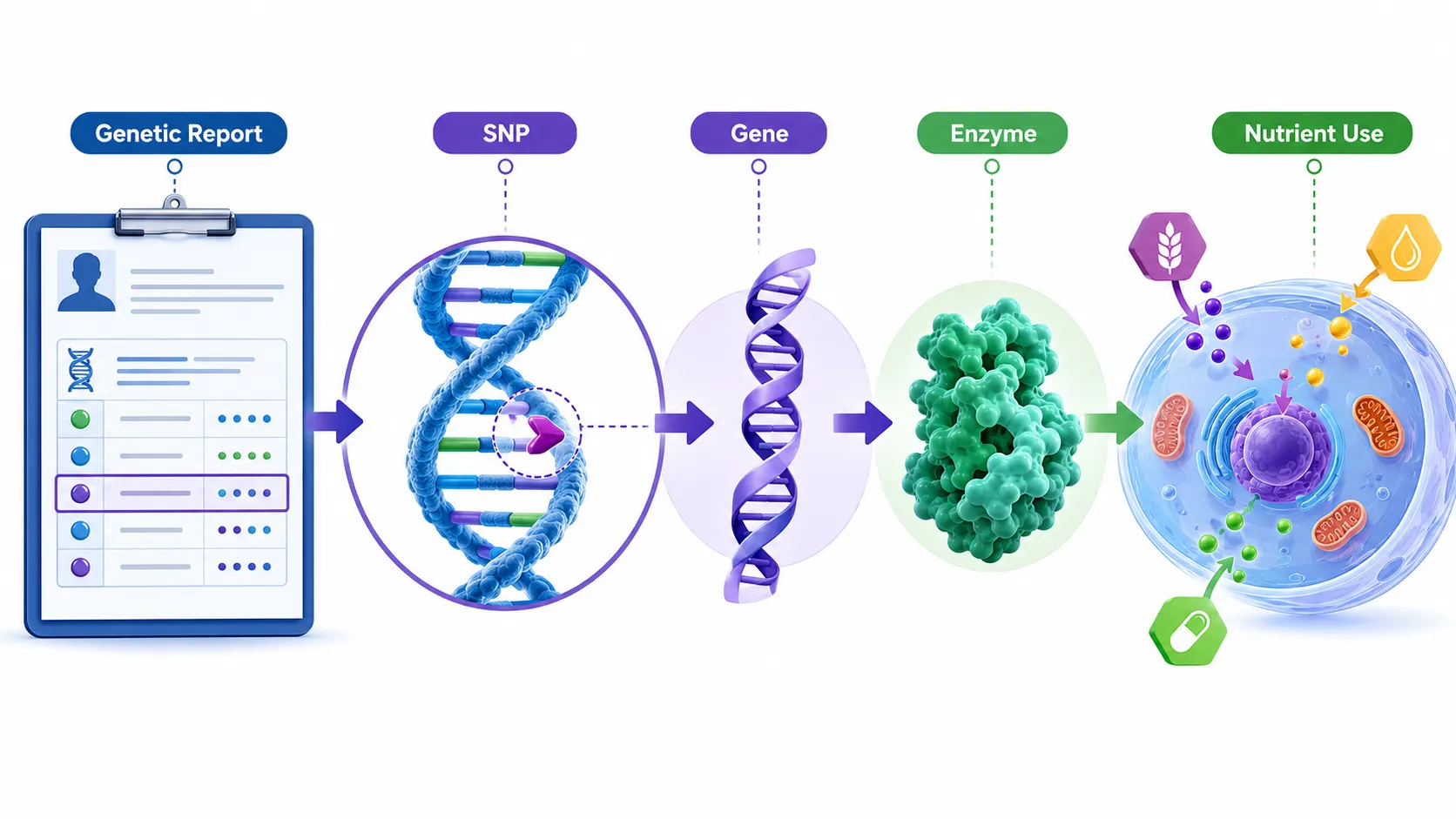
Key Definitions and Concepts
| Term | Definition | Relevance to Nutrient Metabolism |
|---|---|---|
| Single Nucleotide Polymorphism (SNP) | A common variation involving a change at one nucleotide position in the DNA sequence. | May influence enzymes, receptors or transport proteins involved in nutrient metabolism. |
| Allele | One of the alternative forms of a genetic variant at a particular genomic location. | Different alleles may be associated with different biological responses. |
| Genotype | The combination of alleles present at a specific genetic location. | Used to describe an individual’s genetic variation. |
| Homozygous | Having two identical alleles at a specific genetic position. | May influence the magnitude of a variant-related biological effect. |
| Heterozygous | Having two different alleles at a specific genetic position. | May produce an intermediate or variable biological effect. |
| Gene | A DNA sequence containing information involved in the production or regulation of functional biological molecules. | Genes encode proteins involved in metabolic pathways. |
| Enzyme | A biological catalyst that accelerates chemical reactions. | Genetic variation may influence enzyme activity in nutrient metabolism. |
| Nutrient Transporter | A protein that assists the movement of nutrients across cellular membranes. | SNPs may influence nutrient absorption or distribution. |
| Genotype–Phenotype Relationship | The relationship between genetic variation and observable biological characteristics. | Helps explain why genetic variants do not always produce identical outcomes. |
| Penetrance | The extent to which a genetic variation is associated with an observable characteristic. | Explains why a variant may not produce the same effect in every individual. |
| Gene–Environment Interaction | The influence of environmental factors on the biological effects of genetic variation. | Diet can modify how certain genetic variations are expressed. |
Understanding the Structure of a Genetic Screening Report
Genetic screening reports may contain extensive information that can appear difficult to interpret. A structured approach is necessary to avoid focusing only on isolated results.
A report may include:
The individual’s sample identification code.
The laboratory method used.
The genes or genomic regions analysed.
SNP identification numbers.
Genomic coordinates.
Reference and alternative alleles.
Genotype results.
Quality metrics.
Variant classification.
Scientific interpretation.
Limitations of the test.
References to supporting research.
Common SNP Identification Systems
Many SNPs are identified using an “rs” number, often called a reference SNP identification number.
For example:
rs000000
rs123456
rs987654
The “rs” identifier is a reference label used to identify a specific variant location within recognised genetic databases.
However, the rs number alone does not explain the biological significance of a variant. Interpretation requires additional information about:
The gene or genomic region.
The alleles involved.
The molecular consequence.
The relevant metabolic pathway.
The strength of scientific evidence.
Genotype Reporting
A genetic report may display a genotype such as:
AA
AG
GG
CC
CT
TT
These letters represent nucleotides found at the relevant position.
The four DNA nucleotides are:
Adenine (A).
Cytosine (C).
Guanine (G).
Thymine (T).
An individual inherits genetic material from both biological parents, meaning that two alleles are generally reported for an autosomal SNP.
The Fundamental Biology of Single Nucleotide Polymorphisms
A SNP represents variation at a single position within the DNA sequence. Although the change involves only one nucleotide, its biological consequences can range from negligible to functionally significant.
For example, a SNP may occur:
Within a protein-coding region.
Within a regulatory region.
Within an intron.
Near a gene.
In a region with no currently established function.
The location of the SNP is therefore important when interpreting its potential significance.
SNPs Within Protein-Coding Regions
Some SNPs may alter the sequence of amino acids used to build a protein.
Possible consequences include:
No change in the protein sequence.
A change in one amino acid.
Altered protein stability.
Altered enzyme activity.
Reduced or increased functional activity.
Not every coding-region SNP produces a meaningful physiological effect.
Regulatory SNPs
Some SNPs may influence how strongly a gene is expressed rather than changing the protein itself.
Potential mechanisms include effects on:
Transcription factor binding.
Regulatory sequences.
RNA processing.
Gene expression levels.
A change in gene expression may influence the amount of a particular metabolic enzyme or transport protein produced by a cell.
The Relationship Between SNPs and Nutrient Metabolism
Human nutrient metabolism involves a large network of genes and proteins. These proteins may function as:
Digestive enzymes.
Metabolic enzymes.
Nutrient transporters.
Receptors.
Binding proteins.
Regulatory molecules.
Transcription factors.
Genetic variation may therefore influence multiple stages of nutrient metabolism.
Major Stages Potentially Influenced by Genetic Variation
SNPs may be associated with differences in:
Nutrient digestion.
Intestinal absorption.
Transport through the bloodstream.
Cellular uptake.
Intracellular metabolism.
Storage.
Excretion.
Regulation of metabolic pathways.
Important Principle
A SNP should not be interpreted independently of the wider metabolic pathway.
A meaningful interpretation should ask:
Which gene contains or is associated with the variant?
What does the relevant gene normally do?
Which metabolic pathway involves the encoded protein?
Is the variant known to influence protein function or gene expression?
What level of evidence supports the association?
Are dietary and environmental factors also important?
A Systematic Process for Interpreting Genetic Screening Reports
A structured process improves accuracy and reduces the risk of overinterpretation.
Step 1: Confirm the Quality of the Report
Before interpreting a SNP, the reliability of the laboratory result must be considered.
Important questions include:
What analytical method was used?
Was the laboratory quality-controlled?
Was the genotype call considered reliable?
Was the sample of adequate quality?
Were quality assurance procedures applied?
Potential laboratory methods include:
SNP microarrays.
Targeted genotyping.
Polymerase chain reaction-based methods.
Targeted sequencing.
Next-generation sequencing.
Different techniques have different strengths and limitations.
Step 2: Identify the Variant Correctly
The Learner should identify:
The SNP reference number.
The chromosome location.
The reference allele.
The alternative allele.
The reported genotype.
The associated gene, where applicable.
Care must be taken because genetic reports may use different genome reference builds or strand orientations.
Step 3: Identify the Gene and Its Biological Function
The next stage is to determine the normal role of the relevant gene.
Questions include:
What protein does the gene encode?
Where is the protein expressed?
What biological pathway is involved?
Does the protein influence nutrient metabolism directly or indirectly?
Step 4: Determine the Potential Functional Consequence
The interpretation should distinguish between:
A known functional effect.
A possible association.
An uncertain finding.
A variant with limited evidence.
A report should not describe every SNP as functionally important.
Step 5: Evaluate the Evidence
Evidence should be assessed according to:
Study design.
Population size.
Replication.
Biological plausibility.
Consistency between studies.
Effect size.
Relevance to the individual population.
Step 6: Consider the Individual’s Nutritional Context
Genetic information should be integrated with:
Dietary intake.
Clinical assessment.
Biochemical measurements.
Lifestyle factors.
Physiological condition.
SNPs and Folate-Related Metabolism
Folate metabolism provides an important example of how genetic variation can be investigated within a nutrient-related pathway.
Folate participates in biochemical processes involved in one-carbon metabolism. This network contributes to reactions associated with:
Nucleotide synthesis.
Amino acid metabolism.
Methyl group transfer.
Cellular growth and division.
Genetic Variation and Enzyme Activity
Some genetic variants associated with enzymes in one-carbon metabolism have been studied for their potential influence on enzyme efficiency and metabolic markers.
A critical interpretation should consider:
The specific genotype.
Folate intake.
Other B-vitamin status.
Relevant biochemical markers.
Population characteristics.
Key Learning Point
The presence of a nutrient-related genetic variant does not automatically prove that a person has inadequate nutrient status.
A complete assessment should combine genetic information with appropriate nutritional and biochemical evidence.
SNPs and Vitamin Metabolism
Genetic variation may influence pathways involved in the metabolism of vitamins.
Potential areas of investigation include:
Vitamin activation.
Transport proteins.
Receptor function.
Enzyme-dependent utilisation.
Storage and mobilisation.
Vitamin D as a Pathway Example
Vitamin D metabolism involves multiple stages, including:
Dietary intake or skin synthesis.
Transport through the bloodstream.
Conversion into different metabolites.
Interaction with cellular receptors.
Genetic variation has been investigated in genes associated with:
Transport.
Activation enzymes.
Receptor activity.
Metabolic regulation.
However, vitamin status is also strongly influenced by:
Sunlight exposure.
Dietary intake.
Supplement use.
Skin characteristics.
Age.
Body composition.
Health status.
Therefore, a genetic report cannot replace direct measurement of appropriate clinical biomarkers where such testing is indicated.
SNPs and Lipid Metabolism
Lipid metabolism is influenced by numerous genes that regulate:
Lipid transport.
Lipoprotein metabolism.
Fatty acid processing.
Cholesterol regulation.
Cellular uptake.
Genetic screening reports may identify variants associated with differences in lipid-related biomarkers or metabolic responses.
Critical Interpretation
A variant associated with altered lipid metabolism should be considered alongside:
Blood lipid measurements.
Dietary pattern.
Physical activity.
Body composition.
Other genetic factors.
Relevant health history.
Potential Misinterpretation
It is incorrect to assume that one lipid-related SNP determines whether a particular dietary pattern is suitable for an individual.
Most metabolic traits are polygenic, meaning that multiple genetic factors contribute to the overall biological outcome.
SNPs and Carbohydrate Metabolism
Carbohydrate metabolism involves genes associated with:
Glucose transport.
Insulin signalling.
Glycogen metabolism.
Energy production.
Enzymatic regulation.
Certain genetic variants may be associated with differences in glucose regulation or metabolic susceptibility.
However, glucose metabolism is strongly influenced by:
Total dietary intake.
Carbohydrate quality.
Physical activity.
Sleep.
Stress.
Body composition.
Hormonal status.
Therefore, SNP information should be interpreted as one possible component of a complex biological system.
SNPs and Iron Metabolism
Iron metabolism requires tightly controlled mechanisms because both inadequate and excessive iron availability can affect physiological function.
Relevant genetic pathways may involve:
Intestinal absorption.
Transport proteins.
Storage mechanisms.
Regulatory signalling.
A genetic variant may provide information about possible variation in iron handling, but it cannot independently establish an individual’s current iron status.
Appropriate assessment may require biochemical information such as:
Haemoglobin.
Ferritin.
Transferrin-related measures.
Other clinically relevant indicators.
Understanding Genotype, Phenotype and Biological Variability
One of the most important concepts in interpreting genetic reports is the distinction between genotype and phenotype.
Genotype
Genotype refers to the genetic variant or combination of alleles present.
Phenotype
Phenotype refers to observable biological characteristics.
A particular genotype may not produce the same phenotype in every person.
This variability can result from:
Different dietary exposures.
Environmental conditions.
Other genetic variants.
Age.
Hormonal factors.
Physical activity.
Disease processes.
Epigenetic regulation.
Gene–Environment Interaction
A gene–environment interaction occurs when the biological effect associated with a genetic variant depends partly on environmental conditions.
Diet is one important environmental factor.
For example, a variant may have a stronger or weaker association with a metabolic outcome depending on nutrient availability.
Homozygous and Heterozygous Genotypes
A report may describe a person as homozygous or heterozygous for a particular SNP.
Homozygous
A homozygous genotype contains two copies of the same allele at the relevant location.
Examples may include:
AA.
GG.
CC.
Heterozygous
A heterozygous genotype contains two different alleles.
Examples may include:
AG.
CT.
Critical Interpretation
The biological effect of being homozygous or heterozygous cannot be assumed without evidence.
Possible patterns may include:
Additive effects.
Dominant effects.
Recessive effects.
No measurable functional effect.
The inheritance pattern and functional consequence must be supported by scientific evidence.
Understanding Risk Alleles and Protective Alleles
Some reports use terms such as:
Risk allele.
Protective allele.
Favourable genotype.
Unfavourable genotype.
These terms require careful interpretation.
Limitations of Risk Language
A “risk allele” generally does not mean that an outcome will definitely occur.
Instead, it may indicate that:
A statistical association has been identified.
The association may apply only to certain populations.
The effect size may be small.
Environmental factors may modify the association.
Professional Communication
It is generally more accurate to explain:
The observed association.
The strength of the evidence.
The potential biological mechanism.
The limitations of prediction.
This avoids deterministic interpretations of genetic information.
Practical Example: Interpreting a Hypothetical SNP Report
Consider a hypothetical report showing:
Gene: Nutrient Metabolism Gene X
Variant: rs123456
Genotype: AG
Reported Association: Possible variation in enzyme activity.
A responsible interpretation would follow several steps.
Step 1: Identify the Result
The report identifies a heterozygous genotype containing:
One A allele.
One G allele.
Step 2: Investigate Gene Function
The evaluator determines:
What metabolic process Gene X influences.
Which nutrient-related pathway is involved.
Step 3: Examine Functional Evidence
The next question is whether the variant:
Changes protein structure.
Influences gene expression.
Has no established functional consequence.
Step 4: Evaluate Research Evidence
The evaluator considers:
Number of studies.
Population characteristics.
Replication.
Magnitude of association.
Step 5: Integrate Other Information
The interpretation may then consider:
Dietary intake.
Relevant blood biomarkers.
Physiological findings.
The conclusion should be cautious and evidence-based.
Common Technologies Used to Detect SNPs
Advanced genetic screening reports may be generated using several laboratory technologies.
SNP Microarrays
Microarrays can analyse a large number of predefined genetic variants simultaneously.
Advantages include:
High-throughput analysis.
Relatively efficient processing.
Useful for population studies.
Established analytical methods.
Limitations include:
Focus on predefined variants.
Limited ability to identify completely new variants.
Dependence on the quality of the reference array.
Polymerase Chain Reaction-Based Genotyping
PCR-based techniques may be used to identify specific known variants.
Benefits include:
Targeted analysis.
Relatively rapid processing.
Useful for validation.
Limitations include:
Limited number of variants analysed simultaneously.
Requires prior knowledge of the target.
DNA Sequencing
Sequencing methods determine the nucleotide sequence of DNA.
Potential approaches include:
Targeted sequencing.
Gene panel sequencing.
Whole-exome sequencing.
Whole-genome sequencing.
Advantages include:
Greater depth of genetic information.
Ability to identify known and potentially novel variants.
Challenges include:
Complex interpretation.
Large data volume.
Detection of variants with uncertain significance.
Variants of Uncertain Significance
Not every detected variant has a known biological meaning.
A variant may be classified as having uncertain significance when:
Functional evidence is limited.
Research findings are inconsistent.
The variant is rare.
The biological effect is unknown.
Professional Principle
A variant of uncertain significance should not be used as the sole basis for a major nutritional or clinical conclusion.
Further evidence may be required.
Evaluating Scientific Evidence for Nutrient-Related SNPs
Not all genetic associations have equal scientific strength.
A critical evaluator should examine the quality of evidence.
Stronger Evidence May Include
Large and well-designed studies.
Replication in independent populations.
Consistent findings.
Clear biological mechanisms.
Appropriate statistical analysis.
Relevant functional studies.
Weaker Evidence May Include
Small sample sizes.
Single unreplicated studies.
Conflicting findings.
Unclear biological mechanisms.
Overstated conclusions.
The Importance of Population Differences
Genetic variant frequencies may differ between populations.
A SNP association identified in one population may not have the same effect in another population.
Factors that may contribute include:
Genetic ancestry.
Population structure.
Dietary differences.
Environmental exposures.
Differences in healthcare and lifestyle.
Therefore, researchers and professionals should consider whether published evidence is applicable to the population being studied.
Integrating SNP Data with Nutritional Assessment
Genetic information is most meaningful when interpreted alongside other relevant evidence.
A comprehensive assessment may include:
Dietary history.
Food intake patterns.
Anthropometric measurements.
Biochemical markers.
Physiological measurements.
Lifestyle information.
Relevant genetic findings.
Example of an Integrated Assessment
Suppose a genetic report identifies a variant associated with altered nutrient metabolism.
The professional should ask:
Is dietary intake adequate?
Is the nutrient status supported by laboratory data?
Is there evidence of altered physiological function?
Are other environmental factors involved?
Does high-quality research support a meaningful interaction?
This approach is more reliable than making decisions based on genotype alone.
Key Benefits of SNP Interpretation in Nutritional Research
When used responsibly, SNP analysis can support scientific understanding of individual biological variation.
Potential benefits include:
Improved investigation of nutrient-related metabolic pathways.
Identification of potential gene–nutrient interactions.
Development of personalised nutrition research.
Improved understanding of metabolic diversity.
Identification of potential biomarkers.
Generation of new research hypotheses.
Limitations and Challenges of Genetic Screening Reports
Despite their value, genetic screening reports have important limitations.
Major Challenges Include
Complex polygenic traits.
Small effect sizes for many SNPs.
Limited replication of some findings.
Population-specific associations.
Gene–environment interactions.
Differences between laboratory platforms.
Uncertain clinical significance.
Risk of deterministic interpretation.
Critical Warning
Genetic information describes biological variation and potential associations. It should not be presented as an absolute prediction of nutritional needs or health outcomes.
Ethical and Professional Considerations
Genetic information is sensitive personal data.
Professionals handling genetic screening information should consider:
Confidentiality.
Informed consent.
Secure data storage.
Appropriate professional competence.
Clear communication of limitations.
Avoidance of exaggerated claims.
Communicating Results to Different Audiences
Scientific communication may include:
SNP identifiers.
Allele frequencies.
Statistical associations.
Molecular mechanisms.
Communication with non-specialist audiences should focus on:
Clear explanation.
Appropriate uncertainty.
Practical context.
Avoidance of unnecessary technical language.
Practical Interpretation Checklist
When interpreting a SNP relevant to nutrient metabolism, use the following checklist:
Variant Identification
Confirm the SNP identification number.
Confirm the reported genotype.
Check the reference and alternative alleles.
Confirm the genomic location.
Biological Relevance
Identify the associated gene.
Understand the normal gene function.
Identify the relevant metabolic pathway.
Assess whether a functional mechanism is established.
Evidence Evaluation
Review the quality of supporting studies.
Consider replication.
Examine effect size.
Consider population relevance.
Distinguish association from causation.
Nutritional Integration
Review dietary exposure.
Consider relevant biomarkers.
Assess physiological context.
Avoid conclusions based on a SNP alone.
Applied Scenario: Nutrigenetics Report in a Research Setting
A research team is investigating variation in nutrient metabolism among a group of adults. Genetic screening identifies several SNPs associated with enzymes, transport proteins and receptors.
The team should not simply classify participants as having “good” or “bad” genes.
Instead, researchers should:
Verify data quality.
Confirm variant identification.
Review scientific databases and literature.
Identify biological pathways.
Compare genetic findings with dietary information.
Measure relevant biochemical outcomes.
Use appropriate statistical methods.
Consider confounding factors.
Report uncertainty.
Appropriate Conclusion
A well-designed conclusion may state that a genetic variant is associated with a measurable difference under specific research conditions.
An inappropriate conclusion would claim that the variant alone determines an individual’s optimal diet.
Summary of Key Learning Points
The interpretation of advanced genetic screening reports requires systematic analysis and critical judgement.
The key principles are:
A SNP is a variation at a single nucleotide position.
Genotype information must be interpreted in the context of gene function.
SNPs may influence enzymes, transporters, receptors or regulatory mechanisms.
Many nutrient-related traits are influenced by multiple genes.
Genetic variation does not automatically determine nutritional status.
Homozygous and heterozygous genotypes may have different effects, depending on the biological mechanism.
Genetic associations should be evaluated according to the quality of scientific evidence.
Population differences may influence the relevance of genetic findings.
SNP information should be integrated with dietary and biochemical data.
Variants of uncertain significance require cautious interpretation.
Genetic reports should not be used to make unsupported deterministic claims.
Ethical handling and clear communication are essential.
Conclusion
Advanced genetic screening reports provide valuable information about inherited genetic variation and can support the investigation of individual differences in nutrient metabolism. Single nucleotide polymorphisms may influence metabolic enzymes, nutrient transport proteins, receptors and regulatory pathways, creating potential differences in how individuals process and respond to dietary components.
However, accurate interpretation requires much more than identifying a genotype. The evaluator must understand the biological function of the relevant gene, the metabolic pathway involved, the potential functional consequence of the variant and the quality of supporting scientific evidence. Genetic findings must also be interpreted alongside dietary intake, biochemical measurements and broader physiological factors.
A critical approach recognises that most nutritional traits are complex and influenced by multiple genetic and environmental factors. The presence of a SNP may indicate a potential biological association, but it does not automatically establish nutrient deficiency, disease or an individualised dietary requirement.
By applying a structured interpretation process, evaluating scientific evidence carefully and integrating genetic data with broader nutritional assessment, Learners can develop the professional skills required to analyse nutrigenetics information responsibly. This evidence-based approach supports meaningful research and helps prevent the overinterpretation of complex genetic data within the evolving field of personalised nutrition.
3.Apply Appropriate Bioinformatics Tools to Accurately Extract Clinically Relevant Physiological Patterns from Large-Scale Nutritional Genomics Datasets
Nutritional genomics generates large and highly complex datasets that cannot be interpreted effectively through manual observation alone. Modern research may produce information from thousands of genes, millions of genetic variants, extensive dietary records, biochemical biomarkers and multiple physiological measurements. Bioinformatics provides the computational methods, analytical tools and data-management approaches required to transform these large datasets into meaningful scientific information.
Within nutritional genomics, the primary purpose of bioinformatics is not simply to process data. Its wider purpose is to identify biologically meaningful patterns, investigate relationships between nutrients and genes, detect changes in molecular pathways and support the interpretation of potential physiological consequences. This requires a systematic process that combines data cleaning, quality assessment, statistical analysis, biological annotation, pathway analysis and critical evaluation.
A clinically relevant pattern should also be distinguished from a statistically significant result. A computational analysis may identify a measurable association between a nutrient-related variable and a genetic or molecular marker, but the result may have limited physiological importance. Therefore, effective bioinformatics practice requires both technical competence and scientific judgement.
This section explains how appropriate bioinformatics tools can be applied to large-scale nutritional genomics datasets to extract reliable and clinically relevant physiological patterns. It examines data types, computational workflows, quality control, statistical methods, pathway analysis, visualisation, multi-omics integration and the critical interpretation of findings.
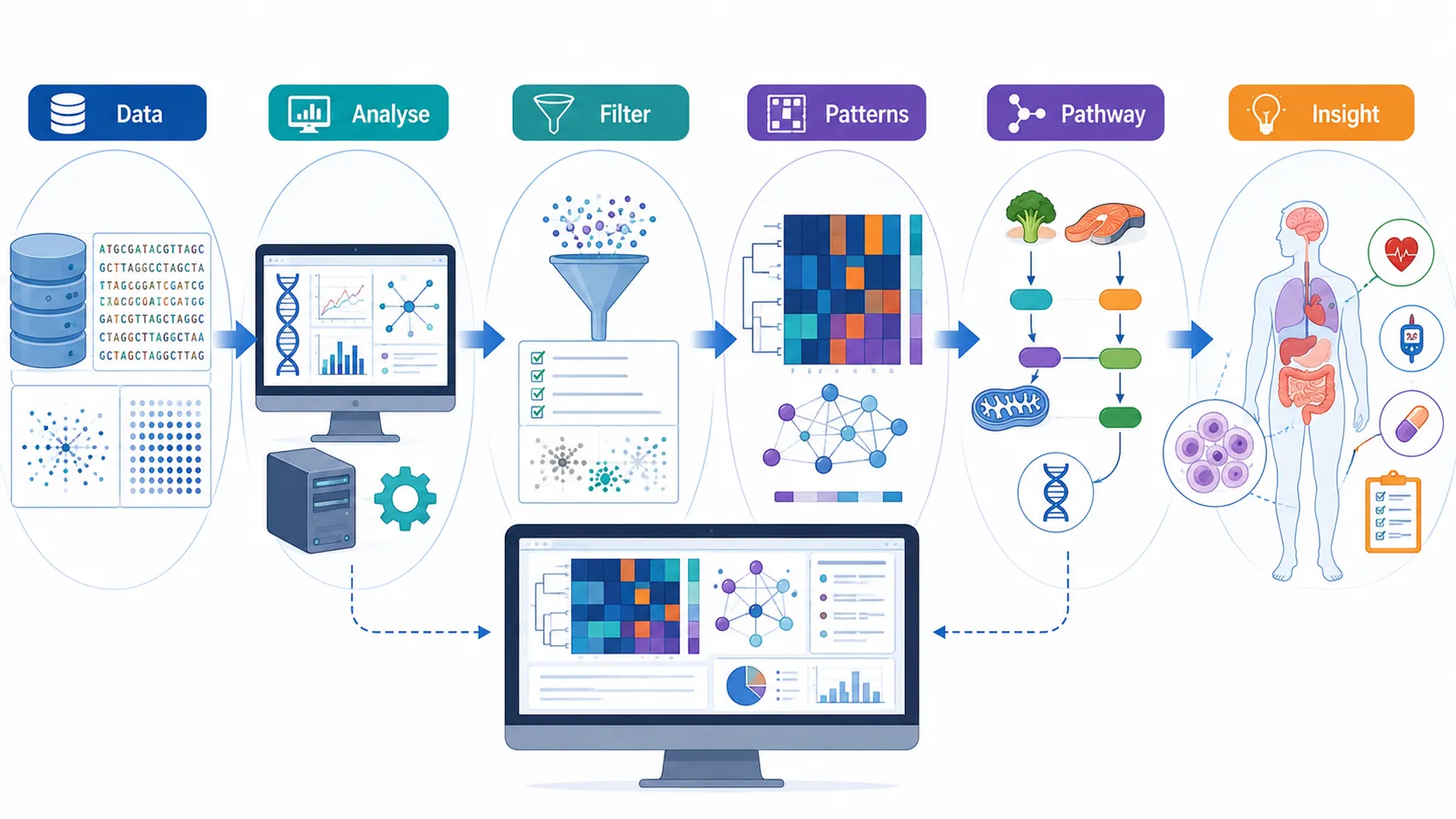
Key Definitions and Concepts
| Term | Definition | Relevance to Nutritional Genomics |
|---|---|---|
| Bioinformatics | The application of computational tools and analytical methods to biological data. | Enables the processing and interpretation of large nutritional genomics datasets. |
| Dataset | A structured collection of related data. | May contain genomic, dietary, biochemical or clinical information. |
| Genomics | The study of an organism’s complete genetic material. | Supports the investigation of genetic variation related to nutrient metabolism. |
| Transcriptomics | The large-scale study of RNA and gene expression. | Identifies nutrient-responsive changes in gene activity. |
| Multi-omics | The integrated analysis of multiple biological data layers. | Provides a broader understanding of nutrient-related physiological processes. |
| Data Normalisation | A computational process used to reduce unwanted technical variation. | Improves the comparability of samples. |
| Quality Control | Procedures used to identify errors and unreliable data. | Protects against inaccurate biological conclusions. |
| Differential Analysis | A method used to identify meaningful differences between groups or conditions. | Can identify molecular responses associated with dietary exposure. |
| Pathway Analysis | The investigation of biological pathways represented by groups of genes or molecules. | Helps translate molecular findings into physiological mechanisms. |
| Biomarker | A measurable biological characteristic associated with a biological process. | Supports the connection between molecular patterns and physiological outcomes. |
| Clinical Relevance | The practical importance of a finding for understanding or managing human health. | Prevents overinterpretation of statistically significant but unimportant results. |
Understanding Large-Scale Nutritional Genomics Data
Large-scale nutritional genomics datasets may contain information collected from different scientific and clinical sources. The structure, scale and complexity of these data can vary considerably.
A single research project may include:
Genetic variant information.
Gene expression data.
DNA methylation data.
Protein measurements.
Metabolite profiles.
Dietary intake records.
Anthropometric measurements.
Clinical laboratory results.
Physiological measurements.
Lifestyle information.
The challenge is to determine how these different sources of information relate to one another.
Major Types of Nutritional Genomics Data
Genomic Data
Genomic datasets may include:
Single nucleotide polymorphisms.
Insertions and deletions.
Structural genetic variants.
Genomic coordinates.
Genotype information.
These datasets can be extremely large because each individual may have information recorded for hundreds of thousands or millions of genetic locations.
Transcriptomic Data
Transcriptomic datasets measure RNA expression.
They may help identify:
Genes responding to dietary exposure.
Changes in metabolic activity.
Alterations in inflammatory pathways.
Tissue-specific molecular responses.
Epigenomic Data
Epigenomic datasets may investigate:
DNA methylation.
Histone-related modifications.
Chromatin accessibility.
Regulatory RNA activity.
These data can help researchers investigate mechanisms through which nutritional and environmental exposures influence gene regulation.
Metabolomic Data
Metabolomic analysis may produce measurements for many small molecules associated with nutrient metabolism.
Examples include:
Amino acids.
Fatty acid derivatives.
Organic acids.
Carbohydrate-related metabolites.
Products associated with microbial metabolism.
The Need for Bioinformatics
Large datasets present several challenges.
Researchers must manage:
High data volume.
Multiple data formats.
Missing information.
Technical variation.
Biological variation.
Statistical complexity.
Multiple comparisons.
Without appropriate computational methods, meaningful patterns may remain hidden within the data.
The Bioinformatics Workflow in Nutritional Genomics
A structured bioinformatics workflow helps ensure that analysis is systematic and reproducible.
A typical workflow includes:
Defining the research or clinical question.
Collecting and organising data.
Performing initial quality assessment.
Cleaning and filtering data.
Normalising measurements.
Identifying biological features.
Performing statistical analysis.
Annotating significant findings.
Conducting pathway and network analysis.
Integrating physiological and clinical data.
Visualising patterns.
Validating important findings.
Interpreting clinical relevance.
Defining the Analytical Question
Bioinformatics analysis should begin with a clearly defined question.
Examples include:
Which genes show altered expression following a dietary intervention?
Which genetic variants are associated with differences in nutrient metabolism?
Which metabolic pathways are associated with a specific dietary pattern?
Can a molecular pattern predict a physiological response?
A poorly defined question may result in unnecessary analysis and an increased risk of identifying meaningless associations.
Important Planning Questions
Before analysis, researchers should determine:
What is the primary biological outcome?
Which dataset is required?
What comparison will be made?
What confounding factors should be considered?
What constitutes a clinically meaningful result?
How will findings be validated?
Data Collection, Organisation and Management
Before sophisticated analysis begins, datasets must be organised carefully.
Large-scale nutritional genomics projects may receive information from:
Sequencing facilities.
Clinical laboratories.
Dietary assessment systems.
Research databases.
Electronic data collection platforms.
Each source may use a different data format.
Common Data Management Activities
These include:
Assigning unique sample identifiers.
Standardising variable names.
Checking data formats.
Recording metadata.
Linking biological and clinical records.
Maintaining secure storage.
The Importance of Metadata
Metadata are descriptive information about the dataset.
Examples include:
Sample collection date.
Biological sample type.
Laboratory method.
Sequencing platform.
Dietary intervention group.
Age group.
Fasting status.
Without adequate metadata, it may be impossible to determine whether observed differences are biological or technical.
Data Quality Control
Quality control is one of the most important stages of bioinformatics analysis.
Poor-quality data can produce misleading patterns even when advanced computational methods are used.
Initial Quality Assessment
Researchers may investigate:
Missing values.
Duplicate records.
Unusual measurements.
Sequencing quality.
Sample contamination.
Unexpected genotype patterns.
Inconsistent sample identifiers.
Genomic Quality Control
For SNP and genotype data, quality checks may include:
Genotype call rates.
Sample call rates.
Variant missingness.
Allele frequency patterns.
Unexpected relatedness.
Sample duplication.
Population structure.
Why Quality Control Matters
Consider a dataset containing genetic information from several laboratories. If one laboratory produces systematically different measurements, the analysis may incorrectly identify laboratory-related variation as a biological pattern.
Quality control helps reduce this risk.
Common Quality Control Procedures
Researchers may:
Remove low-quality samples.
Exclude unreliable variants.
Investigate outliers.
Identify duplicated records.
Assess technical consistency.
Document all exclusion decisions.
Data Cleaning and Pre-Processing
Raw biological data are rarely ready for immediate interpretation.
Pre-processing transforms raw measurements into a form suitable for analysis.
Data Cleaning May Include
Removing duplicate records.
Correcting formatting errors.
Identifying missing values.
Filtering unreliable measurements.
Standardising units.
Checking data ranges.
Handling Missing Data
Missing data are common in nutritional and clinical research.
Possible causes include:
Incomplete questionnaires.
Failed laboratory measurements.
Insufficient sample material.
Participant withdrawal.
Researchers must determine whether missing information is:
Random.
Systematic.
Related to participant characteristics.
Improper handling of missing data can introduce bias.
Data Normalisation
Normalisation aims to reduce unwanted variation between samples.
Technical factors may influence measurements independently of true biology.
Potential sources of variation include:
Different laboratory batches.
Instrument performance.
Sample preparation methods.
Sequencing depth.
Reagent variation.
Example
Suppose two groups of samples are processed on different dates. A difference observed between the groups may result from laboratory conditions rather than the nutritional intervention.
Normalisation helps researchers account for such variation.
Key Benefits of Normalisation
Appropriate normalisation can:
Improve sample comparability.
Reduce technical bias.
Improve statistical reliability.
Reveal genuine biological patterns.
However, inappropriate normalisation may remove genuine biological variation. The selected method must therefore match the data type and research design.
Bioinformatics Tools for Genomic Data
Different bioinformatics tools are designed for different analytical purposes.
Genome Browsers
Genome browsers allow researchers to explore genomic regions visually.
They can help identify:
Gene locations.
Variant positions.
Regulatory regions.
Nearby genomic features.
Genome browsers are particularly useful when interpreting the possible biological context of a genetic variant.
Variant Annotation Tools
Variant annotation tools help convert raw genomic coordinates into biologically meaningful information.
They may provide information about:
Associated genes.
Variant location.
Potential functional consequence.
Protein-coding changes.
Known biological associations.
Genotype Data Analysis Software
Specialised software can support:
Quality control.
Allele frequency analysis.
Association testing.
Population structure analysis.
The choice of software depends on the research question and dataset.
Bioinformatics Tools for Gene Expression Data
Gene expression datasets require specialised processing methods.
The workflow may differ depending on whether data originate from:
RNA sequencing.
Microarrays.
Targeted gene expression assays.
General Processing Steps
For RNA sequencing, common analytical stages may include:
Raw sequence quality assessment.
Removal of poor-quality sequence information.
Alignment or mapping.
Quantification of RNA transcripts.
Normalisation.
Differential expression analysis.
Differential Gene Expression
Differential expression analysis compares gene activity between groups or conditions.
For example:
Before versus after a dietary intervention.
High versus low nutrient exposure.
Different physiological groups.
The analysis may identify genes showing statistically measurable changes.
However, statistical significance alone does not establish physiological importance.
Statistical Analysis and Pattern Detection
Bioinformatics uses statistical methods to identify patterns that may not be visible through simple observation.
Common Analytical Approaches
These may include:
Regression analysis.
Correlation analysis.
Cluster analysis.
Principal component analysis.
Classification models.
Machine learning methods.
Each method answers a different type of question.
Principal Component Analysis
Principal component analysis, often abbreviated as PCA, is a method used to simplify complex datasets.
It can help researchers:
Identify major sources of variation.
Detect clustering patterns.
Identify potential outliers.
Visualise relationships between samples.
Example
A PCA plot may reveal that samples separate according to:
Dietary intervention.
Biological sex.
Laboratory batch.
Population group.
The researcher must then determine whether the observed pattern has biological or technical origins.
Cluster Analysis
Cluster analysis groups observations according to similarity.
In nutritional genomics, clustering may identify:
Groups of genes with similar expression patterns.
Participants with similar metabolic profiles.
Nutrient-response patterns.
Critical Consideration
A cluster represents a computational pattern. It does not automatically represent a clinically meaningful biological category.
Further interpretation is required.
Machine Learning in Nutritional Genomics
Machine learning can be used to identify complex relationships within large datasets.
Potential applications include:
Pattern classification.
Biomarker discovery.
Response prediction.
Identification of interacting variables.
Possible Benefits
Machine learning may:
Analyse large numbers of variables.
Identify non-linear relationships.
Detect complex combinations of factors.
Important Limitations
Machine learning models may:
Overfit the training dataset.
Perform poorly in new populations.
Identify correlations without causal meaning.
Be difficult to interpret.
Therefore, models should be validated using independent data where possible.
Biological Annotation of Computational Results
Once a computational analysis identifies important genes or variants, the next step is to determine what they mean biologically.
Annotation links numerical results to biological knowledge.
Biological Annotation May Include
Gene names.
Protein functions.
Cellular locations.
Known metabolic roles.
Associated pathways.
This step is essential because a list of statistically significant genes does not automatically explain a physiological process.
Pathway Analysis
Pathway analysis examines whether identified genes or molecules are connected through recognised biological processes.
Nutrient-Related Pathways May Include
Carbohydrate metabolism.
Lipid metabolism.
Amino acid metabolism.
Vitamin metabolism.
Oxidative stress responses.
Hormonal signalling.
Inflammatory pathways.
Why Pathway Analysis Is Valuable
Suppose a study identifies modest changes in multiple genes involved in the same metabolic pathway.
Individually, each gene may appear to have limited importance. Together, however, the pattern may suggest a coordinated physiological response.
Pathway Analysis Process
The process may involve:
Identifying significant molecular features.
Mapping them to recognised genes or metabolites.
Comparing the list with known pathways.
Testing whether particular pathways are overrepresented.
Interpreting the results within physiological context.
Network Analysis
Biological systems operate as interconnected networks rather than isolated pathways.
Network analysis may investigate relationships between:
Genes.
Proteins.
Metabolites.
Nutrients.
Physiological variables.
Potential Benefits
Network analysis can help:
Identify highly connected biological features.
Investigate regulatory relationships.
Detect pathway interactions.
Understand system-level responses.
However, a network connection may represent a statistical or database-derived relationship rather than direct biological causation.
Integrating Nutritional and Genomic Data
The most important objective in nutritional genomics is often to connect molecular findings with dietary exposure and physiological outcomes.
A complete dataset may contain:
Dietary Data → Molecular Data → Physiological Data
Bioinformatics can help investigate these relationships.
Example of Data Integration
A researcher investigates the effects of a dietary pattern.
The dataset includes:
Nutrient intake information.
Genetic variants.
Gene expression data.
Blood biomarkers.
Body composition.
The analysis may investigate whether:
Dietary exposure is associated with molecular changes.
Genetic variation modifies the response.
Molecular changes are associated with physiological outcomes.
This provides a more complete understanding than analysing each dataset separately.
Multi-Omics Analysis
Multi-omics analysis integrates multiple levels of biological information.
A simplified sequence may be represented as:
Genome → Epigenome → Transcriptome → Proteome → Metabolome → Physiological Outcome
Each level provides different information.
Genomics
Provides information about inherited variation.
Epigenomics
Provides information about regulatory modifications.
Transcriptomics
Provides information about gene activity.
Proteomics
Provides information about functional proteins.
Metabolomics
Provides information about current biochemical activity.
Physiological Data
Provides information about observable biological outcomes.
Challenges of Multi-Omics Integration
Researchers must address:
Different measurement scales.
Different sample sizes.
Missing values.
Time differences between measurements.
Complex biological interactions.
Appropriate computational methods are required to integrate these layers meaningfully.
Identifying Clinically Relevant Physiological Patterns
A major objective of analysis is to distinguish potentially useful physiological patterns from random statistical findings.
Clinical relevance may depend on whether a pattern:
Is biologically plausible.
Is consistently observed.
Is associated with measurable physiological outcomes.
Is reproducible.
Provides information beyond existing measurements.
Statistical Significance Versus Clinical Relevance
A result may be statistically significant but have a very small physiological effect.
For example, a large dataset may detect a minor difference in gene expression that has no meaningful effect on health.
Conversely, a clinically important pattern may require further investigation even if initial statistical evidence is limited.
Questions for Evaluating Clinical Relevance
Researchers should ask:
Is the effect size meaningful?
Is there biological plausibility?
Is the finding reproducible?
Does it relate to a physiological mechanism?
Is it associated with measurable outcomes?
Could it improve scientific understanding?
Correcting for Multiple Comparisons
Large-scale genomics analyses may test thousands or millions of features.
This increases the probability of identifying statistically significant findings by chance.
Multiple Testing Problem
If a researcher performs a very large number of statistical tests, some may appear significant even when no genuine relationship exists.
Statistical correction methods are therefore used to control the likelihood of false-positive findings.
Importance for Nutritional Genomics
Without appropriate correction:
False associations may be reported.
Nutrient-related mechanisms may be incorrectly proposed.
Research findings may fail to replicate.
Data Visualisation
Visualisation helps researchers communicate complex patterns clearly.
Common visualisation methods include:
Scatter plots.
Heat maps.
PCA plots.
Volcano plots.
Pathway diagrams.
Network diagrams.
Heat Maps
Heat maps can display patterns across many genes or samples.
They may help identify:
Groups with similar expression profiles.
Clusters of related genes.
Differences between experimental conditions.
Volcano Plots
Volcano plots may display:
Magnitude of change.
Statistical significance.
They can help identify molecular features that demonstrate both measurable change and strong statistical evidence.
Principles of Effective Visualisation
Visualisations should:
Have clear labels.
Avoid unnecessary complexity.
Represent uncertainty appropriately.
Use consistent scales.
Support accurate interpretation.
Practical Scenario: Analysing a Nutritional Genomics Dataset
A research group investigates whether a dietary intervention influences metabolic regulation.
The study collects:
Dietary intake data.
Blood samples.
Genetic information.
Gene expression data.
Metabolic biomarkers.
Stage 1: Organise the Data
Researchers create a structured dataset using consistent identifiers.
They verify:
Participant codes.
Sample dates.
Intervention groups.
Data completeness.
Stage 2: Perform Quality Control
They identify:
Low-quality biological samples.
Technical outliers.
Missing information.
Stage 3: Normalise Data
The team applies appropriate procedures to reduce technical variation.
Stage 4: Analyse Molecular Patterns
They investigate:
Genes showing altered expression.
Clusters of similar responses.
Relationships with nutrient exposure.
Stage 5: Conduct Pathway Analysis
The identified genes are examined to determine whether they are associated with:
Energy metabolism.
Lipid processing.
Cellular signalling.
Stage 6: Integrate Clinical Data
Researchers compare molecular findings with:
Blood biomarkers.
Physiological measurements.
Stage 7: Evaluate Clinical Relevance
The team asks whether the molecular pattern:
Is biologically plausible.
Has a meaningful effect size.
Is consistent with physiological data.
Reproducibility and Validation
Bioinformatics findings should not be accepted automatically after one analysis.
Reproducibility is essential.
Important Validation Approaches
Researchers may use:
Independent datasets.
Technical replication.
Biological replication.
Alternative laboratory methods.
External population studies.
Internal Validation
Internal validation investigates whether a result remains reliable within the study data.
External Validation
External validation investigates whether the pattern is also observed in a different population or dataset.
External validation is particularly important when developing predictive models.
Common Sources of Error in Bioinformatics Analysis
Bioinformatics analysis can produce misleading results if methodological weaknesses are not addressed.
Common Errors Include
Poor sample quality.
Incorrect data labels.
Inadequate normalisation.
Failure to correct for multiple testing.
Ignoring population structure.
Overfitting predictive models.
Misinterpreting correlation as causation.
Overstating clinical significance.
Preventive Strategies
Researchers should:
Use documented workflows.
Maintain detailed analytical records.
Apply quality control.
Validate important results.
Use appropriate statistical methods.
Consult biological expertise.
Report limitations clearly.
Ethical and Data Protection Considerations
Nutritional genomics datasets may contain sensitive genetic and health information.
Responsible data management should include:
Secure storage.
Controlled access.
Appropriate consent procedures.
De-identification where appropriate.
Clear data governance.
Responsible Use of Computational Results
Researchers should avoid:
Overstating predictive ability.
Making unsupported clinical claims.
Treating genetic associations as deterministic.
Communicating uncertain findings as established facts.
Key Benefits of Bioinformatics in Nutritional Genomics
When applied appropriately, bioinformatics offers significant benefits.
Scientific Benefits
Bioinformatics can:
Process extremely large datasets efficiently.
Identify complex molecular patterns.
Integrate multiple biological data types.
Support pathway-level interpretation.
Generate new research hypotheses.
Clinical and Physiological Benefits
It may support:
Improved understanding of nutrient metabolism.
Identification of potential biomarkers.
Investigation of biological variation.
Development of future precision nutrition research.
Educational Benefits
For Learners, understanding bioinformatics develops the ability to:
Interpret complex scientific datasets.
Evaluate computational evidence critically.
Connect molecular results with physiology.
Recognise the limitations of data-driven conclusions.
Recommended Step-by-Step Analytical Procedure
A robust nutritional genomics analysis can follow this sequence:
Step 1: Define the Question
Clearly identify the nutrient-related physiological problem.
Step 2: Select Appropriate Data
Choose genomic, transcriptomic, metabolomic or integrated datasets according to the research objective.
Step 3: Perform Quality Control
Identify unreliable samples and measurements.
Step 4: Clean and Standardise
Correct formatting problems and manage missing information.
Step 5: Normalise
Reduce unwanted technical variation.
Step 6: Perform Statistical Analysis
Apply appropriate methods to investigate associations and patterns.
Step 7: Correct for Multiple Testing
Reduce the risk of false-positive findings.
Step 8: Annotate Results
Connect computational findings with genes, proteins and biological functions.
Step 9: Perform Pathway Analysis
Investigate whether identified features contribute to recognised physiological pathways.
Step 10: Integrate Clinical Data
Compare molecular findings with biochemical and physiological measurements.
Step 11: Validate Findings
Test important patterns using independent evidence.
Step 12: Interpret Critically
Distinguish between statistical association, biological plausibility and clinical relevance.
Summary of Key Learning Points
The accurate extraction of clinically relevant physiological patterns from nutritional genomics datasets requires both computational expertise and critical scientific judgement.
The most important principles are:
Large-scale nutritional genomics data require specialised bioinformatics methods.
Data quality must be assessed before interpretation.
Cleaning and normalisation are essential for reducing technical bias.
Different tools are required for genomic, transcriptomic and multi-omics datasets.
Statistical significance does not automatically establish clinical importance.
Pathway analysis helps connect molecular findings with physiological mechanisms.
Multi-omics integration provides a broader understanding of biological responses.
Machine learning can identify complex patterns but requires careful validation.
Multiple testing increases the risk of false-positive results.
Data visualisation supports effective interpretation and communication.
Reproducibility is essential before findings are considered reliable.
Genetic and molecular data must be integrated with dietary and physiological information.
Ethical management of sensitive biological data is essential.
Conclusion
Bioinformatics plays an essential role in modern nutritional genomics by transforming large and complex molecular datasets into interpretable biological information. It enables researchers to investigate relationships between diet, genes, molecular pathways and physiological outcomes that would otherwise be difficult to identify.
However, the effective use of bioinformatics requires a systematic workflow. Data must first be carefully organised, quality controlled, cleaned and normalised before statistical analysis is undertaken. Computational results must then be annotated and interpreted through pathway analysis, biological knowledge and relevant clinical evidence.
The most important professional skill is the ability to distinguish between a computational pattern and a genuinely meaningful physiological finding. A statistically significant association may not be clinically important, while an apparently promising molecular pattern requires validation before it can support broader conclusions.
By applying appropriate bioinformatics tools, integrating multiple sources of evidence and maintaining a critical approach to interpretation, Learners can develop the knowledge and analytical competence required to extract reliable physiological insights from large-scale nutritional genomics datasets. This approach provides an essential foundation for advanced research in nutrigenomics, nutrigenetics, molecular nutrition and the future development of evidence-based precision nutrition.
4.Critically Discuss the Ethical, Legal, and Social Implications Associated with Utilising a Patient’s Personal Genetic Data for Targeted Nutritional Interventions
The use of personal genetic data in nutrition represents an important development in modern healthcare, nutritional science and personalised medicine. Advances in nutrigenomics and nutrigenetics increasingly allow researchers and healthcare professionals to investigate how genetic variation may influence nutrient metabolism, dietary requirements, food responses and susceptibility to certain nutrition-related conditions. This information may support the development of more targeted nutritional interventions that consider individual biological characteristics rather than relying exclusively on general population recommendations.
However, the use of genetic information also raises significant ethical, legal and social questions. Genetic data are fundamentally different from many other forms of health information because they may reveal information not only about an individual but also about biological relatives. Genetic information may remain relevant throughout a person’s life and may generate findings that extend beyond the original purpose of testing.
Professionals working with nutritional genomics data must therefore balance scientific opportunity with individual autonomy, privacy, confidentiality, fairness and social responsibility. The ability to identify a genetic variant associated with nutrient metabolism does not automatically justify collecting, sharing or using that information for dietary decision-making.
This section critically examines the ethical, legal and social implications of using personal genetic information to support targeted nutritional interventions. It explores informed consent, privacy, data protection, clinical validity, discrimination, health inequalities, psychological effects, professional responsibility and the limitations of commercial genetic testing.
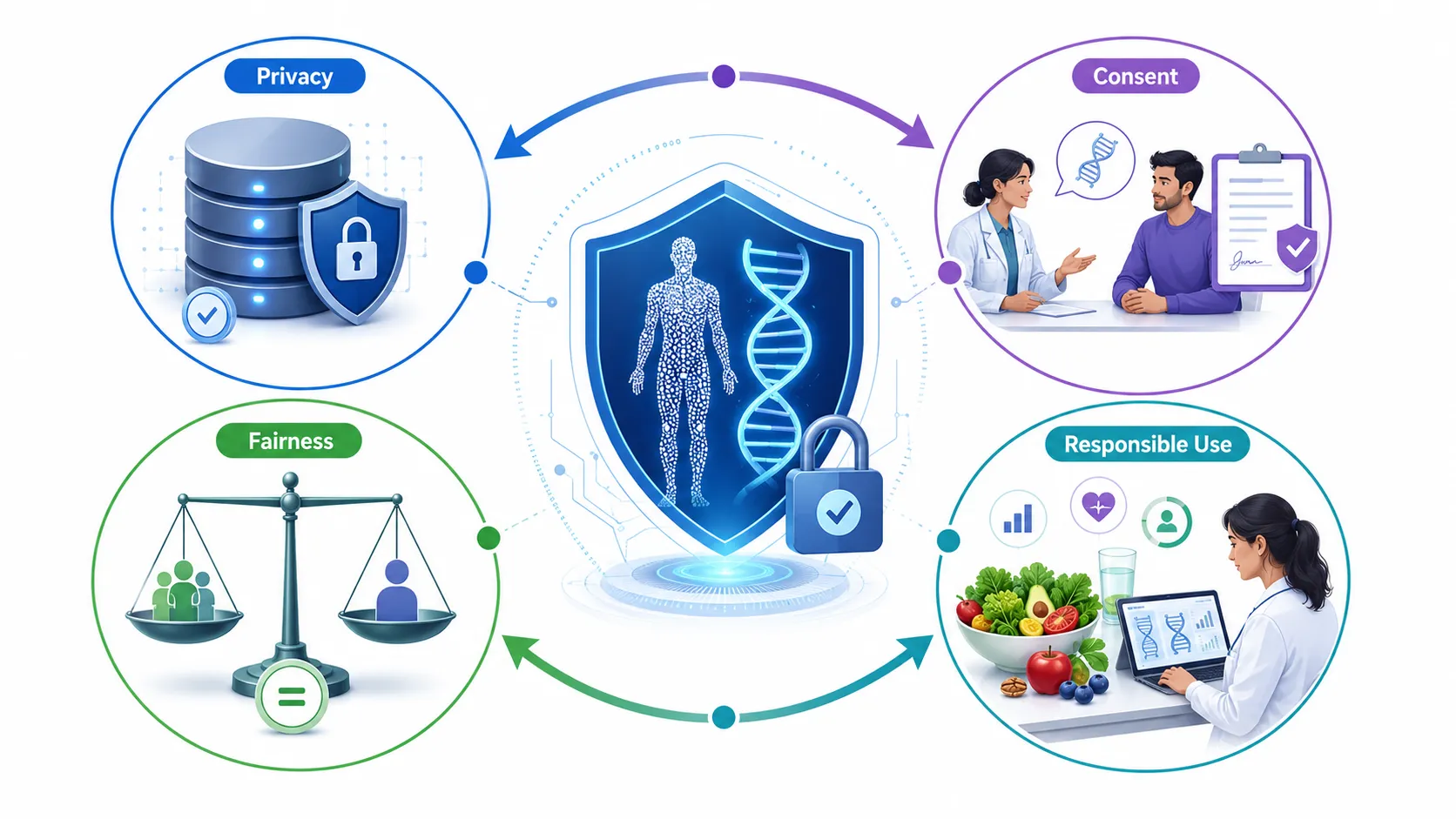
Key Definitions and Concepts
| Term | Definition | Relevance to Targeted Nutrition |
|---|---|---|
| Genetic data | Information relating to inherited or acquired genetic characteristics | May identify variations associated with nutrient metabolism or physiological responses |
| Nutrigenetics | Study of how genetic variation influences an individual’s response to nutrients and dietary patterns | May support personalised dietary recommendations |
| Nutrigenomics | Study of how nutrients and dietary compounds influence gene expression and biological pathways | Helps investigate diet–gene interactions |
| Informed consent | Voluntary agreement based on adequate understanding of a procedure and its consequences | Required before collecting or using genetic information |
| Genetic privacy | Protection of an individual’s genetic information from inappropriate access or disclosure | Reduces risks of misuse and discrimination |
| Confidentiality | Professional duty to protect private information | Essential when handling sensitive genomic records |
| Clinical validity | Degree to which a genetic finding accurately relates to a clinical or physiological outcome | Determines whether a finding is meaningful for nutritional practice |
| Clinical utility | Evidence that using information produces a meaningful improvement in decision-making or outcomes | Important before recommending a genetic-based intervention |
| Genetic discrimination | Unfair treatment based on genetic characteristics or perceived genetic risk | A potential social consequence of genetic testing |
| Data minimisation | Collecting only the information necessary for a defined purpose | Reduces unnecessary exposure of sensitive genetic information |
Understanding the Ethical Foundations of Genetic-Based Nutritional Practice
Respect for Autonomy
Autonomy refers to an individual’s right to make informed decisions about their own body and personal information. In the context of nutritional genomics, autonomy means that individuals should have meaningful control over whether their genetic data are collected, analysed, stored and used.
A person should not feel pressured to undergo genetic testing simply because personalised nutrition is presented as scientifically advanced. Individuals must understand that genetic testing is optional and that conventional evidence-based nutritional assessment may remain appropriate in many situations.
Respecting autonomy requires professionals to ensure that individuals understand:
Why genetic testing is being considered.
What type of genetic information will be analysed.
How the results may influence nutritional recommendations.
The limitations of current scientific knowledge.
Whether unexpected findings may occur.
Who will have access to the information.
How long the data will be stored.
Whether the information may be used for research.
Autonomy is weakened when consent is obtained through highly technical language that the individual cannot realistically understand. Therefore, professionals must communicate complex genetic concepts clearly and proportionately.
Beneficence
Beneficence requires professionals to act in ways that are intended to benefit the individual. A targeted nutritional intervention should therefore have a reasonable scientific basis and should aim to improve health, nutritional status or clinical decision-making.
For example, a professional may investigate whether a genetic variation influences the metabolism of a specific nutrient. However, the existence of a genetic association alone does not necessarily demonstrate that changing the person’s diet will produce a measurable health benefit.
A responsible approach requires consideration of:
The strength of the scientific evidence.
The magnitude of the genetic effect.
The individual’s clinical condition.
Existing dietary patterns.
Biochemical assessment results.
Environmental and lifestyle influences.
Potential benefits of the proposed intervention.
Non-Maleficence
Non-maleficence is the principle of avoiding unnecessary harm. Genetic information can create harm even when no physical procedure causes injury.
Potential harms may include:
Unnecessary anxiety about genetic risk.
Misinterpretation of a low-risk genetic variant.
Inappropriate dietary restriction.
Excessive use of nutritional supplements.
Financial exploitation through unsupported commercial testing.
Stigmatisation.
Unauthorised disclosure of genetic information.
A practitioner should therefore avoid presenting genetic results as deterministic. Most complex nutrition-related outcomes are influenced by multiple genes, dietary factors, physical activity, environmental exposures and other physiological variables.
Justice and Fairness
Justice requires fair access to healthcare and protection from discrimination. Personalised nutrition should not become a system in which only individuals with substantial financial resources can access advanced assessment and tailored support.
Important questions include:
Who can afford genetic testing?
Are genetic databases representative of diverse populations?
Are recommendations equally valid across different ancestry groups?
Could commercial services increase health inequalities?
Are certain communities being excluded from genomic research?
A scientifically advanced service is not automatically socially equitable.
Informed Consent for Genetic Data Collection
Why Genetic Consent Requires Special Attention
Consent for genetic testing must go beyond obtaining a signature. Genetic information can have long-term implications and may reveal information that was not originally anticipated.
Before testing, an individual should receive information about:
The purpose of the assessment.
The type of sample required.
The genes or variants being investigated.
The possible outcomes of testing.
The scientific limitations of interpretation.
The possibility of uncertain findings.
Data storage arrangements.
Research use of samples or data.
Rights relating to withdrawal or future use, where applicable.
The person should have sufficient opportunity to ask questions before making a decision.
Specific and Broad Consent
Different models of consent may be used depending on the context.
Specific Consent
Specific consent relates to a clearly defined purpose. For example, an individual may consent to genetic analysis for a particular investigation related to nutrient metabolism.
Potential advantages include:
Greater clarity.
Stronger control over data use.
Improved understanding of purpose.
Reduced risk of unexpected secondary use.
Limitations may include the need to obtain further consent if new research purposes emerge.
Broad Consent
Broad consent may allow genetic information to be used for future research within defined conditions.
Potential benefits include:
Supporting long-term research.
Enabling future scientific analysis.
Reducing repeated administrative procedures.
However, ethical concerns include:
Whether individuals fully understand future uses.
Whether future research can be predicted.
Whether consent remains meaningful over long periods.
A balanced approach requires transparency about how data may be used in the future.
Privacy and Confidentiality of Genetic Information
Why Genetic Privacy Is Particularly Important
Genetic information may be highly sensitive because it can reveal biological characteristics, inherited traits and potential susceptibility to particular conditions.
Unlike a temporary measurement, such as a single blood glucose result, genetic information may remain relevant throughout an individual’s lifetime.
Potential privacy risks include:
Unauthorised access to genomic databases.
Cybersecurity breaches.
Inappropriate sharing between organisations.
Commercial use without meaningful consent.
Re-identification of supposedly anonymised data.
Healthcare organisations must therefore establish robust systems for data governance.
Practical Measures for Protecting Genetic Data
Appropriate safeguards may include:
Encryption of electronic records.
Restricted access based on professional roles.
Strong authentication procedures.
Secure data storage systems.
Clear retention periods.
Audit trails showing who accessed information.
Procedures for responding to data breaches.
Staff training in confidentiality and information governance.
Data protection should be considered at the design stage rather than added after a genetic service has been established.
Legal Considerations in the Use of Genetic Data
Data Protection Responsibilities
Personal genetic information is generally treated as highly sensitive personal data under modern data protection frameworks. Organisations must have a lawful basis for processing information and must implement appropriate safeguards.
Professionals and organisations should consider:
Why the information is necessary.
Whether the amount of data collected is proportionate.
How long it will be retained.
Who will access it.
Whether it will be transferred internationally.
Whether it may be used for research.
The principle of data minimisation is particularly important. Collecting extensive genomic information simply because technology allows it may not be ethically or legally justified.
Professional Accountability
Healthcare and nutrition professionals must work within their professional competence.
A practitioner should not:
Diagnose a genetic condition without appropriate authority or expertise.
Overstate the meaning of a genetic variant.
Recommend treatment outside their scope of practice.
Ignore contradictory clinical evidence.
Present experimental findings as established clinical facts.
Where specialist interpretation is required, appropriate referral or multidisciplinary collaboration should be considered.
Clinical Validity and Scientific Limitations
Genetic Association Does Not Always Mean Clinical Usefulness
One of the most important challenges in personalised nutrition is distinguishing scientific association from clinically useful evidence.
A research study may identify a statistical association between a genetic variant and a nutrient-related outcome. However, this does not automatically mean that testing for that variant will improve dietary recommendations.
A critical evaluation should consider:
Study population size.
Population diversity.
Replication of findings.
Effect size.
Biological plausibility.
Consistency between studies.
Interaction with environmental factors.
Evidence from intervention studies.
Clinical Utility
Clinical utility asks whether using genetic information improves outcomes.
For example, if a genetic test identifies a small variation in nutrient metabolism but the recommended dietary advice remains identical to standard evidence-based guidance, the practical value of testing may be limited.
Genetic information should add meaningful value rather than simply increasing the complexity or cost of nutritional assessment.
The Risk of Genetic Determinism
Understanding Genetic Determinism
Genetic determinism is the mistaken belief that genes alone completely determine health outcomes.
This perspective is particularly problematic in nutrition because dietary and metabolic outcomes are influenced by multiple factors.
These include:
Food intake.
Physical activity.
Sleep.
Stress.
Age.
Gut microbiome composition.
Socioeconomic conditions.
Medication use.
Existing disease.
Environmental exposures.
A genetic variant may influence susceptibility or response without guaranteeing a particular outcome.
Communicating Risk Appropriately
Professionals should use language that reflects uncertainty and probability.
Appropriate communication may include:
“This variant may be associated with…”
“The evidence suggests a possible influence…”
“This result should be interpreted alongside clinical findings…”
“Genetic information represents one component of the overall assessment…”
Professionals should avoid statements such as:
“This gene means you must avoid this food.”
“Your DNA proves this diet will work.”
“You are genetically unable to process this nutrient.”
Such statements may oversimplify complex biological processes.
Social Implications of Personalised Nutrition
Access and Health Inequality
Genetic testing and advanced nutritional services may be expensive. If personalised nutrition becomes widely promoted as superior to conventional care, individuals with limited financial resources may experience additional disadvantage.
Potential inequalities include:
Unequal access to genetic testing.
Limited access to specialist interpretation.
Differences in digital literacy.
Underrepresentation of some populations in research.
Reduced relevance of genetic algorithms for diverse groups.
A responsible healthcare system should avoid creating the impression that effective nutritional support is available only through expensive genomic testing.
Cultural Considerations
Diet is strongly connected to culture, family traditions, religion, geography and personal identity.
A genetically informed recommendation that ignores cultural dietary practices may be difficult to implement or ethically inappropriate.
For example, a nutritional intervention should consider:
Traditional foods.
Religious dietary requirements.
Food availability.
Household income.
Cooking facilities.
Family eating patterns.
Personalisation should therefore involve the whole person rather than focusing exclusively on genetic information.
Psychological Implications of Genetic Results
Anxiety and Perceived Vulnerability
Some individuals may experience anxiety when informed that they possess a genetic variant associated with increased susceptibility to a nutrition-related condition.
The psychological impact may include:
Increased worry.
Altered self-image.
Fear about future health.
Excessive dietary monitoring.
Unnecessary food avoidance.
The way results are communicated can significantly influence psychological outcomes.
False Reassurance
Genetic information can also create false reassurance. An individual may incorrectly assume that the absence of a particular genetic risk means that lifestyle factors are unimportant.
For example, a person might believe that they can maintain an unhealthy dietary pattern because they do not possess a commonly discussed genetic variant.
Professionals must explain that:
Genetic testing rarely captures all risk.
Environmental factors remain important.
Health outcomes are multifactorial.
Regular nutritional assessment may still be necessary.
Genetic Discrimination and Stigmatisation
Understanding Genetic Discrimination
Genetic discrimination occurs when an individual receives unfair treatment because of their genetic information or perceived inherited risk.
Concerns may arise in relation to:
Employment.
Insurance.
Education.
Financial services.
Social relationships.
Although legal protections vary between jurisdictions, the ethical responsibility to prevent discriminatory use of genetic information remains important.
Family Implications
Genetic information may have implications for biological relatives.
A result obtained from one individual may suggest that relatives share certain genetic characteristics.
This raises difficult questions:
Does the individual have a responsibility to inform relatives?
Does a healthcare professional have a responsibility to warn family members?
How should confidentiality be balanced against potential health benefits to relatives?
These questions require careful consideration of professional guidance, applicable law and the specific clinical context.
Commercial Direct-to-Consumer Genetic Testing
The Growth of Commercial Genetic Nutrition Services
Commercial companies increasingly offer genetic testing directly to consumers and may claim to provide personalised dietary recommendations based on DNA.
Potential advantages include:
Increased public interest in health.
Greater accessibility.
Convenience.
Opportunities for individuals to learn about genetics.
However, important limitations exist.
Critical Concerns
Potential concerns include:
Variable scientific quality.
Limited clinical validation.
Simplified interpretation.
Marketing claims that exceed evidence.
Lack of professional counselling.
Unclear data-sharing arrangements.
Secondary commercial use of genetic information.
A genetic report may appear highly scientific while providing recommendations based on limited evidence.
Professionals should encourage critical evaluation of:
The scientific evidence supporting each recommendation.
The qualifications of those interpreting the results.
The transparency of the company’s data policies.
Whether the findings have recognised clinical significance.
Integrating Genetic Information into a Nutritional Assessment
A Holistic Assessment Model
Genetic information should normally be interpreted as one component of a broader assessment.
A comprehensive assessment may include:
Medical history.
Dietary assessment.
Anthropometric measurements.
Biochemical markers.
Clinical signs and symptoms.
Medication history.
Lifestyle factors.
Family history.
Genetic information where relevant and appropriately validated.
This integrated approach reduces the risk of over-reliance on a single source of information.
Step-by-Step Professional Process
A structured process may include:
Step 1: Identify the Clinical or Nutritional Question
The practitioner should first determine whether genetic information is genuinely relevant.
Key questions include:
What problem is being investigated?
Is genetic testing likely to provide additional information?
Is there an established evidence base?
Step 2: Evaluate Evidence and Suitability
Before testing, assess:
Scientific validity.
Potential clinical utility.
Individual circumstances.
Potential benefits and harms.
Step 3: Obtain Appropriate Consent
The individual should understand:
The purpose of testing.
Potential findings.
Limitations.
Data handling procedures.
Step 4: Collect and Process Data Securely
The process should follow established quality and data protection procedures.
Step 5: Interpret Results in Context
Results should be considered alongside other information.
A professional should avoid making conclusions based solely on genotype.
Step 6: Develop an Evidence-Based Intervention
The intervention should be:
Scientifically justified.
Proportionate.
Safe.
Practical.
Culturally appropriate.
Regularly reviewed.
Step 7: Monitor Outcomes
Relevant outcomes may include:
Biochemical markers.
Dietary adherence.
Symptoms.
Nutritional status.
Functional outcomes.
Practical Scenario: Genetic Variation and Nutrient Metabolism
Consider an adult receiving a commercial genetic report suggesting that they possess a variant associated with altered metabolism of a particular nutrient.
The individual immediately decides to purchase several high-dose supplements.
A responsible practitioner should not automatically accept the commercial recommendation.
The assessment should consider:
Whether the genetic association is scientifically well established.
Whether the individual has biochemical evidence of deficiency.
Whether symptoms are present.
Whether dietary intake is inadequate.
Whether medication or disease influences nutrient status.
Whether supplementation may create adverse effects.
The most appropriate intervention may involve dietary assessment and biochemical testing rather than immediate high-dose supplementation.
This scenario demonstrates the importance of clinical judgement and evidence-based practice.
Practical Scenario: Use of Genetic Data in Research
A research organisation collects genetic samples to investigate nutrient metabolism. Several years later, researchers wish to use the samples for a new research project involving a different health outcome.
Key ethical questions include:
Did the original consent cover secondary research?
Were participants informed about future data use?
Can individuals withdraw their data?
Are the samples adequately protected?
Is additional ethical approval required?
This example demonstrates that ethical responsibility continues beyond the initial collection of genetic data.
Benefits of Ethical and Responsible Genetic Data Use
When appropriately governed, genetic information may contribute to improved nutritional science and personalised healthcare.
Potential benefits include:
Improved understanding of individual variability.
More precise investigation of nutrient metabolism.
Identification of biologically relevant pathways.
Support for research into diet-related conditions.
Development of more targeted interventions.
Improved understanding of gene–environment interactions.
However, these benefits depend on scientific quality, ethical governance and professional competence.
Professional Responsibilities in Nutrigenomics Practice
Professionals working with genetic information should demonstrate several key competencies.
Scientific Competence
They should understand:
Basic molecular genetics.
Gene–nutrient interactions.
Statistical association.
Clinical validity.
Clinical utility.
Limitations of genomic evidence.
Ethical Competence
They should be able to:
Respect autonomy.
Support informed decision-making.
Protect confidentiality.
Recognise potential harms.
Address conflicts of interest.
Communication Competence
Professionals should communicate findings:
Clearly.
Accurately.
Without exaggeration.
At an appropriate level of complexity.
With appropriate explanation of uncertainty.
Interdisciplinary Collaboration
Complex cases may require collaboration between:
Nutrition professionals.
Medical practitioners.
Genetic specialists.
Laboratory scientists.
Researchers.
Data protection specialists.
No single professional should exceed their recognised scope of practice.
Critical Evaluation of the Future of Personalised Nutrition
The future of targeted nutrition is likely to involve increasingly complex datasets combining genetic, biochemical, dietary, microbiome and lifestyle information.
This development may create opportunities for more sophisticated predictive models. However, it also raises additional concerns.
Future systems must address:
Algorithmic bias.
Data ownership.
Artificial intelligence transparency.
Commercial exploitation.
International data transfer.
Unequal representation in research.
Long-term consent.
Scientific innovation should therefore develop alongside ethical and legal safeguards.
The central question is not simply whether genetic information can be used to personalise nutrition, but whether its use is scientifically justified, proportionate, safe and beneficial for the individual.
Key Points for Critical Practice
When evaluating the use of personal genetic data for nutritional interventions, professionals should remember that:
Genetic information is highly sensitive and requires strong protection.
Informed consent must be meaningful rather than purely administrative.
Genetic associations do not automatically justify dietary interventions.
Clinical validity and clinical utility must be assessed separately.
Genetic findings should not be interpreted deterministically.
Nutritional outcomes are influenced by genes, environment and behaviour.
Commercial genetic testing may have important scientific limitations.
Personalised nutrition must consider social and cultural circumstances.
Genetic information may have implications for biological relatives.
Professionals must remain within their scope of competence.
Data collection should be proportionate and necessary.
Genetic-based interventions should be monitored and reviewed.
Conclusion
The use of a patient’s personal genetic data for targeted nutritional interventions represents a significant opportunity for advancing nutritional science and improving understanding of individual biological variation. Nutrigenomics and nutrigenetics may help explain why individuals respond differently to nutrients and dietary patterns, potentially supporting more precise approaches to nutritional assessment.
Nevertheless, genetic information should never be treated as a simple instruction manual for diet. The interpretation of genetic data requires careful consideration of scientific validity, clinical utility, individual circumstances and the broader biological environment. Ethical principles such as autonomy, beneficence, non-maleficence and justice provide an essential framework for responsible practice.
Legal and professional responsibilities relating to privacy, confidentiality, data protection and informed consent are equally important. Genetic information may create risks of discrimination, anxiety, social inequality and commercial exploitation if it is used without adequate safeguards.
The most responsible approach is therefore evidence-based, person-centred and multidisciplinary. Genetic information should be integrated with dietary assessment, biochemical evidence, clinical findings and lifestyle factors rather than used in isolation. By applying robust ethical standards and critical scientific judgement, professionals can support the responsible development of targeted nutritional interventions while protecting the rights, dignity and wellbeing of individuals.
5.Analyse Raw Nutrigenetic Data Profiles to Scientifically Predict an Individual’s Physiological Response and Tolerance to Specific Dietary Adjustments
Nutrigenetics investigates how inherited genetic variation may influence an individual’s physiological response to nutrients, foods and dietary patterns. Advances in genetic screening and bioinformatics have made it possible to generate increasingly detailed nutrigenetic profiles containing information about genetic variants that may influence nutrient metabolism, digestion, absorption, transport, utilisation and physiological regulation. However, the presence of genetic data does not automatically provide a direct or certain prediction about how an individual will respond to a dietary change.
The scientific analysis of raw nutrigenetic data requires a structured and evidence-based process. Raw genetic information must first be quality checked, accurately interpreted and connected with reliable scientific evidence. The resulting findings must then be considered alongside phenotype, biochemical measurements, dietary intake, health status, lifestyle and environmental influences.
The purpose of analysing a nutrigenetic profile is therefore not to create deterministic dietary rules. Instead, it is to estimate whether certain genetic characteristics may influence the probability, magnitude or direction of an individual’s response to a dietary adjustment.
For example, a genetic variant may influence an enzyme involved in nutrient metabolism. This may contribute to differences in how efficiently some individuals process a nutrient. However, the physiological outcome may also depend on the amount consumed, the food matrix, age, health status, medication use and other genetic factors.
This section explains how raw nutrigenetic data can be analysed systematically to predict physiological responses and tolerance to dietary adjustments while recognising uncertainty, limitations and the importance of evidence-based interpretation.
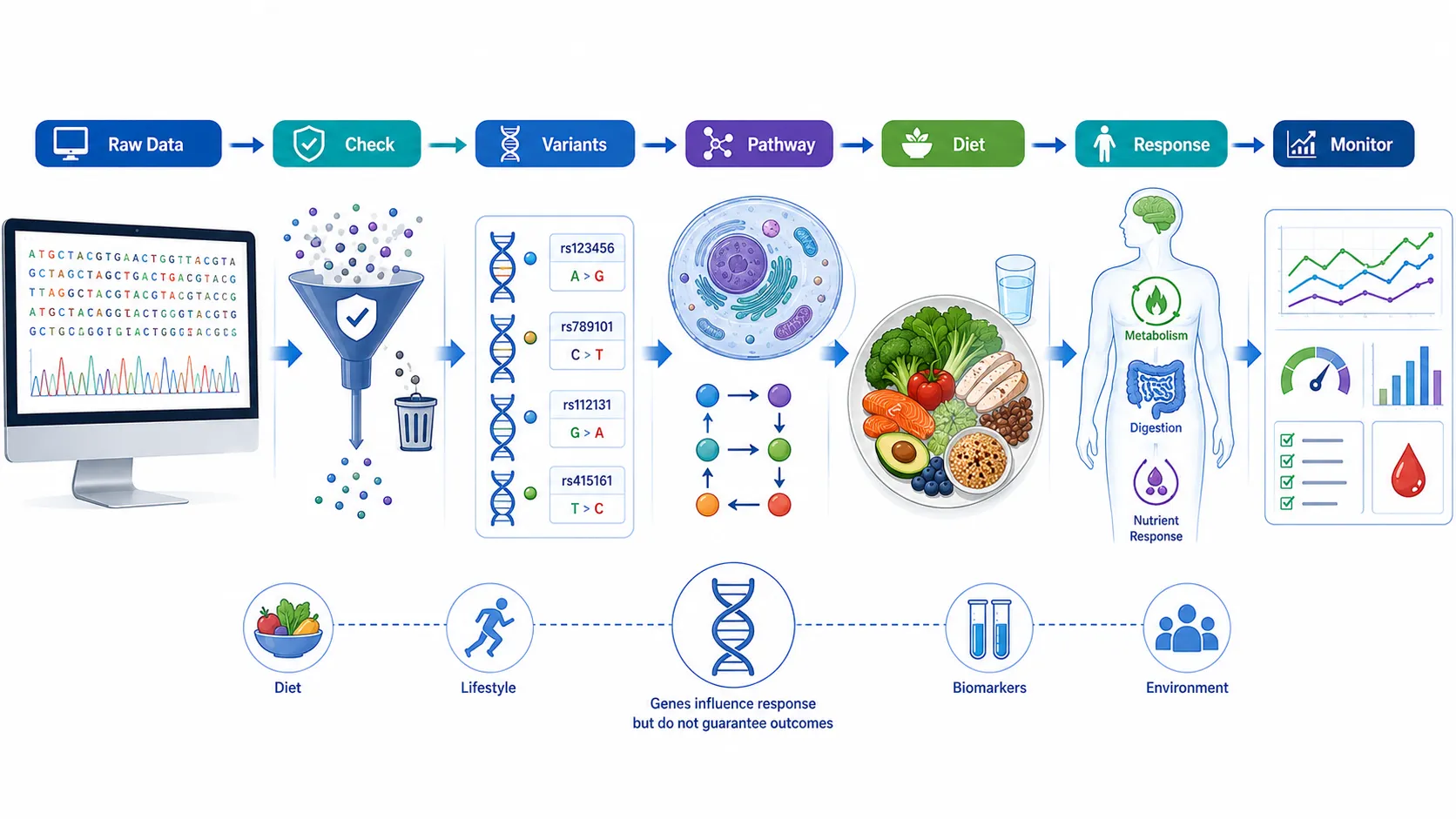
Key Definitions and Concepts
| Term | Definition | Relevance to Nutrigenetic Analysis |
|---|---|---|
| Nutrigenetics | The study of how genetic variation influences individual responses to nutrients and dietary patterns | Supports investigation of biological differences in dietary response |
| Raw genetic data | Unprocessed information generated directly from genetic testing technologies | Requires quality control and scientific interpretation |
| Genotype | The genetic composition or variant combination present at a specific location | May influence biological processes relevant to nutrient metabolism |
| Phenotype | An observable characteristic influenced by genes and environmental factors | Helps determine whether a genetic finding has a measurable physiological effect |
| SNP | A single nucleotide polymorphism involving variation at one DNA position | Commonly analysed in nutrigenetic research |
| Genetic variant | A difference in DNA sequence between individuals | May influence protein function, gene regulation or metabolism |
| Gene–diet interaction | A situation in which genetic variation influences the response to dietary exposure | Central concept in personalised nutrition |
| Physiological response | A measurable biological reaction to a stimulus or intervention | May include changes in metabolism, biomarkers or symptoms |
| Dietary tolerance | The ability to consume or adjust dietary components without undesirable physiological effects | Can be influenced by multiple biological and environmental factors |
| Effect size | The magnitude of an observed relationship or biological effect | Helps determine practical significance |
| Clinical validity | The extent to which a genetic variant is reliably associated with a physiological outcome | Essential before applying genetic information |
| Predictive uncertainty | The degree of limitation associated with forecasting an outcome | Prevents deterministic interpretation of genetic findings |
Understanding Raw Nutrigenetic Data
Raw nutrigenetic data usually consist of large numbers of genetic markers recorded from a biological sample such as saliva or blood. The information may be generated using technologies such as genotyping arrays or sequencing platforms.
The raw output may contain:
Sample identification information.
Genetic marker identifiers.
Chromosomal locations.
Reference alleles.
Alternative alleles.
Genotype calls.
Quality scores.
Missing genotype information.
Raw data are not the same as a completed clinical interpretation. Before any nutritional conclusion is considered, the data must undergo technical and scientific evaluation.
Why Raw Data Cannot Be Interpreted Immediately
A raw file may contain hundreds of thousands of genetic variants. Most of these variants will have:
No established nutritional significance.
Uncertain biological effects.
Very small effect sizes.
Limited evidence of clinical relevance.
Therefore, effective analysis requires filtering and prioritisation.
The scientific process should focus on variants that have:
Reliable technical measurement.
Appropriate quality indicators.
Relevant biological functions.
Reproducible scientific evidence.
Potential relevance to the dietary question being investigated.
The Difference Between Genetic Potential and Physiological Reality
One of the most important concepts in nutrigenetics is that genotype does not equal phenotype.
A genetic variant may create a biological tendency, but the actual physiological response depends on many interacting factors.
These include:
Dietary intake.
Nutrient dose.
Food matrix.
Age.
Sex.
Physical activity.
Body composition.
Gut microbiome activity.
Health conditions.
Medication use.
Other genetic variants.
Environmental exposures.
For this reason, nutrigenetic analysis should be understood as a method for estimating possible biological responses rather than guaranteeing outcomes.
Example
Suppose an individual possesses a genetic variant associated with altered activity of an enzyme involved in nutrient metabolism.
The actual physiological impact may vary depending on:
How much of the nutrient is consumed.
Whether the nutrient is consumed with other foods.
The individual’s current nutritional status.
The activity of alternative metabolic pathways.
The presence of additional genetic variants.
A scientifically responsible conclusion may therefore state that the individual may demonstrate an altered response under certain conditions rather than claiming that a specific response will definitely occur.
Step 1: Define the Dietary Adjustment and Physiological Question
Nutrigenetic analysis should begin with a specific question.
Examples include:
How might an individual respond to increased dietary fibre?
Is there evidence suggesting altered tolerance to a particular dietary component?
Could genetic variation influence the metabolism of a specific nutrient?
Might an individual’s genetic profile modify their physiological response to a change in macronutrient intake?
A poorly defined question can lead to unnecessary analysis of irrelevant genetic markers.
Key Questions Before Analysis
The analyst should identify:
What dietary adjustment is being considered?
What physiological response is relevant?
Which biological pathway is involved?
Which genetic factors have established evidence?
What other clinical information is required?
A targeted question improves scientific accuracy.
Step 2: Perform Technical Quality Control
Before interpreting genetic information, data quality must be assessed.
Quality control helps identify unreliable results that could produce incorrect conclusions.
Important Quality Indicators
The analyst may examine:
Genotype call rate.
Missing data frequency.
Sample contamination.
Duplicate samples.
Unexpected genetic patterns.
Platform-specific quality metrics.
Consistency between reported and recorded information.
Why Quality Control Is Essential
If a genotype call is incorrect, any subsequent nutritional interpretation may also be incorrect.
Quality control therefore protects against:
False-positive associations.
Incorrect dietary recommendations.
Misclassification of genetic variants.
Unnecessary anxiety.
Common Quality Control Actions
Depending on the dataset, analysts may:
Exclude low-quality markers.
Remove unreliable samples.
Investigate missing data.
Compare duplicate measurements.
Verify sample identification.
Apply platform-specific filters.
Step 3: Identify Nutritionally Relevant Genetic Variants
After technical quality assessment, the next stage is to identify variants that may be relevant to nutrient metabolism or dietary response.
The selection should be based on scientific evidence rather than commercial popularity.
Relevant Biological Categories May Include
Enzymes involved in nutrient digestion.
Transport proteins.
Receptors.
Metabolic enzymes.
Hormonal signalling pathways.
Vitamin and mineral metabolism.
Lipid metabolism.
Carbohydrate metabolism.
Amino acid metabolism.
Evidence-Based Prioritisation
A variant should ideally be evaluated according to:
Strength of association.
Number of supporting studies.
Replication across populations.
Biological plausibility.
Effect size.
Quality of study design.
Relevance to the individual being assessed.
Step 4: Interpret the Genotype
A genetic marker may occur in different forms.
An individual may carry:
Two copies of one allele.
Two copies of another allele.
One copy of each allele.
The interpretation depends on the biological context.
Important Considerations
The analyst must understand:
Which allele is being reported.
Which genome reference is used.
Whether strand orientation has been verified.
Whether the variant has established functional significance.
Incorrect interpretation of allele orientation can result in an entirely incorrect conclusion.
Avoiding Oversimplification
A genotype should not be interpreted as:
Gene Variant → Guaranteed Dietary Outcome
A more appropriate conceptual model is:
Genetic Variant + Dietary Exposure + Biological Context → Possible Physiological Response
Step 5: Link the Variant to a Biological Pathway
A nutrigenetic finding becomes more meaningful when it is linked to a known biological mechanism.
For example, the analysis may consider:
Genetic Variant → Altered Protein Function → Modified Metabolic Activity → Potential Physiological Difference
The pathway should be biologically plausible and supported by evidence.
Questions for Pathway Analysis
The analyst should ask:
Which gene is involved?
What protein does it encode?
Where is the protein active?
Which metabolic pathway is affected?
What nutrient-related process may be influenced?
Is the physiological effect established?
This process prevents genetic findings from being interpreted in isolation.
Step 6: Assess the Strength of Scientific Evidence
Not all genetic associations have the same level of reliability.
A critical analysis should consider the quality of the evidence.
Stronger Evidence May Include
Replicated findings.
Large population studies.
Systematic reviews.
Well-designed intervention studies.
Functional laboratory evidence.
Weaker Evidence May Include
Single small studies.
Unreplicated findings.
Associations without biological explanation.
Commercial claims without transparent evidence.
Key Evaluation Criteria
Consider:
Sample size.
Study design.
Population characteristics.
Statistical correction.
Effect size.
Replication.
Biological mechanism.
Step 7: Integrate Genetic Information with Phenotypic Data
Genetic information becomes more useful when considered alongside observable physiological data.
Relevant information may include:
Blood biomarkers.
Nutrient status.
Clinical symptoms.
Dietary intake.
Anthropometric data.
Metabolic measurements.
Example of Integrated Interpretation
A genetic profile may suggest a possible difference in nutrient metabolism.
The analyst should then ask:
Is there biochemical evidence supporting altered metabolism?
Does the individual have relevant symptoms?
Is dietary intake appropriate?
Are there environmental explanations?
This approach is stronger than relying on genetics alone.
Predicting Physiological Responses to Dietary Adjustments
Prediction involves estimating how a person may respond to a specific change.
A prediction should be:
Evidence-based.
Probabilistic.
Biologically plausible.
Open to monitoring and revision.
Types of Physiological Response
Dietary adjustments may influence:
Blood glucose regulation.
Lipid metabolism.
Vitamin status.
Mineral utilisation.
Energy metabolism.
Hormonal responses.
Gastrointestinal function.
The predicted response should be clearly defined before analysis.
Analysing Nutrient Metabolism
Carbohydrate-Related Responses
Genetic variation may influence processes associated with:
Carbohydrate digestion.
Glucose transport.
Insulin signalling.
Glycogen metabolism.
However, carbohydrate response is also strongly influenced by:
Meal composition.
Fibre content.
Physical activity.
Body composition.
Energy balance.
Therefore, a single genetic variant should not be used to determine a complete dietary pattern.
Lipid-Related Responses
Nutrigenetic research may investigate variation related to:
Lipid transport.
Fatty acid metabolism.
Cholesterol regulation.
A dietary response may also depend on:
Type of dietary fat.
Total energy intake.
Physical activity.
Existing metabolic health.
Protein and Amino Acid Responses
Genetic differences may influence:
Amino acid metabolism.
Enzyme activity.
Nitrogen processing.
However, protein requirements and tolerance remain influenced by health status, physiological demands and total dietary context.
Assessing Dietary Tolerance
Dietary tolerance refers to how well an individual can adapt to or consume a particular dietary component.
Tolerance is not determined exclusively by genetics.
Factors Influencing Tolerance
These include:
Digestive enzyme activity.
Gastrointestinal health.
Microbiome composition.
Immune responses.
Nutrient dose.
Frequency of exposure.
Food processing.
Psychological factors.
A genetic finding may provide one possible explanation but should not automatically be treated as the primary cause.
A Scientific Framework for Prediction
A useful framework is:
Stage 1: Genetic Evidence
Identify reliable and relevant variants.
Stage 2: Functional Interpretation
Determine whether the variant has a plausible biological effect.
Stage 3: Dietary Exposure
Define the specific dietary change.
Stage 4: Physiological Context
Consider current health and metabolic status.
Stage 5: Prediction
Estimate the likely direction of response.
Stage 6: Monitoring
Measure the actual response.
Stage 7: Adjustment
Modify the dietary intervention if required.
This demonstrates that personalised nutrition is an iterative process rather than a one-time genetic calculation.
Practical Scenario: Predicting Response to a Dietary Change
Consider an individual who wishes to make a significant adjustment to their dietary pattern.
The available information includes:
Raw genetic data.
A dietary record.
Basic biochemical measurements.
Anthropometric information.
Step 1: Define the Objective
The objective may be to improve a specific metabolic outcome.
Step 2: Analyse Data Quality
The genetic dataset is checked for reliable genotype calls.
Step 3: Identify Relevant Variants
Only variants supported by appropriate evidence are prioritised.
Step 4: Review Biological Mechanisms
The selected variants are mapped to relevant metabolic pathways.
Step 5: Integrate Phenotypic Information
Current physiological measurements are considered.
Step 6: Develop a Prediction
The professional may conclude that the individual could demonstrate a particular response to the dietary adjustment.
Step 7: Monitor
The predicted response is tested through appropriate follow-up measurements.
The actual response is more informative than relying exclusively on the prediction.
The Role of Biomarkers in Prediction
Biomarkers help determine whether a predicted genetic tendency is reflected in current physiology.
Relevant biomarkers may include:
Measures of nutrient status.
Metabolic markers.
Indicators of lipid metabolism.
Indicators of carbohydrate regulation.
Markers of inflammation.
Benefits of Biomarker Integration
Combining genetic and biochemical information can:
Improve contextual interpretation.
Identify current physiological status.
Support monitoring.
Reduce over-reliance on genetic prediction.
Gene–Environment Interactions
A major principle in nutrigenetics is that genes operate within an environment.
The same genotype may produce different physiological outcomes under different conditions.
Environmental Factors Include
Dietary pattern.
Physical activity.
Smoking.
Sleep.
Stress.
Medication.
Environmental exposures.
This means that genetic risk or response is often conditional.
Conceptual Example
Genotype + High Exposure → Response A
Same Genotype + Low Exposure → Response B
Therefore, prediction must consider exposure.
Gene–Gene Interactions
Many physiological characteristics are polygenic.
This means they may be influenced by numerous genetic variants.
Limitations of Single-Gene Interpretation
A single genetic marker may:
Explain only a small proportion of variation.
Interact with other variants.
Have different effects in different populations.
Therefore, complex dietary recommendations should not normally be based on one isolated SNP.
Statistical Models and Predictive Analysis
Large nutrigenetic datasets may use computational methods to investigate patterns.
Possible approaches include:
Regression models.
Association analysis.
Polygenic scores.
Machine learning.
Regression Analysis
Regression can investigate whether genetic variation is associated with differences in a physiological measurement.
Polygenic Approaches
Multiple genetic variants may be combined to estimate cumulative biological influence.
However, such scores must be:
Validated.
Population appropriate.
Interpreted cautiously.
Machine Learning
Machine learning may identify complex patterns but has important limitations.
Potential risks include:
Overfitting.
Limited interpretability.
Bias.
Poor external validation.
Distinguishing Association from Causation
One of the most important analytical skills is recognising that association does not automatically prove causation.
A genetic variant may appear associated with a dietary response because of:
Population structure.
Linked genetic variation.
Environmental factors.
Statistical chance.
Therefore, strong conclusions require multiple sources of evidence.
A Critical Evaluation Should Ask
Is the association replicated?
Is there a plausible mechanism?
Is the effect consistent?
Has the result been independently validated?
Does intervention evidence support the prediction?
Common Errors in Raw Nutrigenetic Data Analysis
Error 1: Treating Every SNP as Clinically Important
Most genetic variants have limited or uncertain clinical relevance.
Error 2: Ignoring Data Quality
Poor-quality genotype calls can invalidate the analysis.
Error 3: Ignoring Effect Size
A statistically significant association may have minimal practical importance.
Error 4: Overlooking Environmental Factors
Dietary response is influenced by much more than genotype.
Error 5: Using Commercial Claims as Scientific Evidence
Commercial reports should be critically evaluated against independent research.
Error 6: Making Deterministic Predictions
Genetic information generally supports probability-based conclusions rather than certainty.
Practical Benefits of Appropriate Nutrigenetic Analysis
When performed responsibly, nutrigenetic analysis may contribute to:
Improved understanding of biological variation.
Better identification of potential gene–diet interactions.
More targeted research questions.
Improved monitoring strategies.
Development of future precision nutrition approaches.
However, potential benefit should always be balanced against scientific uncertainty.
Professional Procedure for Analysing a Nutrigenetic Profile
A robust procedure includes the following steps:
Step 1: Establish the Purpose
Clearly define the dietary or physiological question.
Step 2: Verify Data Quality
Assess the reliability of the raw genetic information.
Step 3: Select Relevant Markers
Prioritise variants with appropriate scientific evidence.
Step 4: Confirm Variant Interpretation
Verify allele orientation, genome reference and biological context.
Step 5: Review Scientific Evidence
Assess clinical validity and effect size.
Step 6: Map Biological Pathways
Determine how the variant may influence nutrient-related physiology.
Step 7: Integrate Other Data
Include dietary, biochemical and clinical information.
Step 8: Develop a Probabilistic Prediction
Describe possible responses rather than guaranteed outcomes.
Step 9: Plan a Safe Dietary Adjustment
Ensure that any intervention remains evidence-based and appropriate.
Step 10: Monitor Outcomes
Measure the actual physiological response.
Step 11: Reassess
Adjust the interpretation and intervention based on observed outcomes.
Key Benefits of a Structured Predictive Approach
A structured approach can:
Improve scientific rigour.
Reduce interpretation errors.
Prevent exaggerated claims.
Support personalised monitoring.
Encourage evidence-based decision-making.
Integrate genotype and phenotype.
Most importantly, it recognises that an individual’s actual response should remain central to nutritional decision-making.
Ethical Considerations During Predictive Analysis
Genetic prediction must also be approached ethically.
Professionals should:
Protect genetic privacy.
Obtain appropriate consent.
Avoid unnecessary testing.
Communicate uncertainty clearly.
Avoid discriminatory assumptions.
Remain within professional competence.
Genetic predictions should not be used to label an individual as biologically incapable of achieving a particular health outcome.
Communicating Predictions to Individuals
Communication should be clear and balanced.
Appropriate Language
Professionals may state:
“Your genetic profile suggests a possible difference in response.”
“This finding may influence how we monitor your response.”
“The available evidence does not guarantee a particular outcome.”
“We should interpret this result alongside your current biochemical data.”
Language to Avoid
Professionals should avoid statements such as:
“Your DNA proves that this diet will work.”
“You cannot tolerate this nutrient because of your genes.”
“This genetic result guarantees a metabolic problem.”
Accurate communication protects individuals from misunderstanding.
Key Points for Learners
Learners should understand that effective nutrigenetic prediction involves:
Checking the quality of raw data.
Identifying scientifically relevant variants.
Understanding genotype and biological function.
Assessing evidence strength.
Considering effect size.
Integrating phenotype and biomarkers.
Recognising gene–environment interactions.
Avoiding deterministic conclusions.
Monitoring actual physiological responses.
The most scientifically responsible approach is:
Raw Data → Quality Control → Variant Selection → Biological Interpretation → Evidence Review → Clinical Context → Probabilistic Prediction → Monitoring → Adjustment
Conclusion
Analysing raw nutrigenetic data profiles to predict physiological responses to dietary adjustments requires far more than identifying a genetic variant and assigning a dietary recommendation. Raw genetic information must undergo quality assessment, careful interpretation and evidence-based prioritisation before it can contribute meaningfully to nutritional decision-making.
The relationship between genotype and dietary response is complex. Genetic variants may influence nutrient metabolism, enzyme activity, transport mechanisms and physiological regulation, but these effects interact with environmental exposure, dietary patterns, health status and numerous other biological factors.
For this reason, nutrigenetic prediction should be probabilistic rather than deterministic. The most reliable approach integrates genetic findings with dietary assessment, biochemical biomarkers, clinical information and direct monitoring of physiological outcomes.
A structured workflow allows professionals and researchers to move from raw data towards scientifically defensible predictions while recognising uncertainty and avoiding exaggerated claims. Ultimately, the value of nutrigenetic analysis lies not in promising perfectly personalised diets, but in improving understanding of biological variation and supporting more informed, evidence-based nutritional research and practice.
6.Synthesise Potentially Conflicting Findings from Multi-Omics Datasets to Draw Valid, Evidence-Based Conclusions Regarding Cellular Nutrient Utilisation
The study of cellular nutrient utilisation has become increasingly sophisticated through the development of multi-omics technologies. Rather than examining a single biological layer in isolation, multi-omics research combines information from several molecular levels, including genomics, epigenomics, transcriptomics, proteomics, metabolomics and, where relevant, microbiomics. This integrated approach can provide a more comprehensive understanding of how cells detect, transport, metabolise and utilise nutrients.
However, multi-omics datasets frequently produce findings that appear inconsistent or contradictory. A genetic variant may suggest altered nutrient metabolism, while transcriptomic data show no significant change in gene expression. Similarly, messenger RNA levels may increase without a corresponding increase in protein abundance, or a protein may be abundant while metabolic activity remains unchanged. These apparent conflicts are not necessarily errors. They may reflect the complexity of biological regulation, differences in timing, technical variation, tissue specificity or compensatory mechanisms.
The ability to synthesise conflicting findings is therefore an advanced analytical skill. Researchers and professionals must avoid selecting only the evidence that supports an expected conclusion. Instead, they must critically assess the quality, relevance, timing and biological meaning of each dataset before integrating the findings into a coherent interpretation.
This section explains the principles, processes and analytical frameworks required to synthesise potentially conflicting multi-omics findings and draw valid, evidence-based conclusions regarding cellular nutrient utilisation.
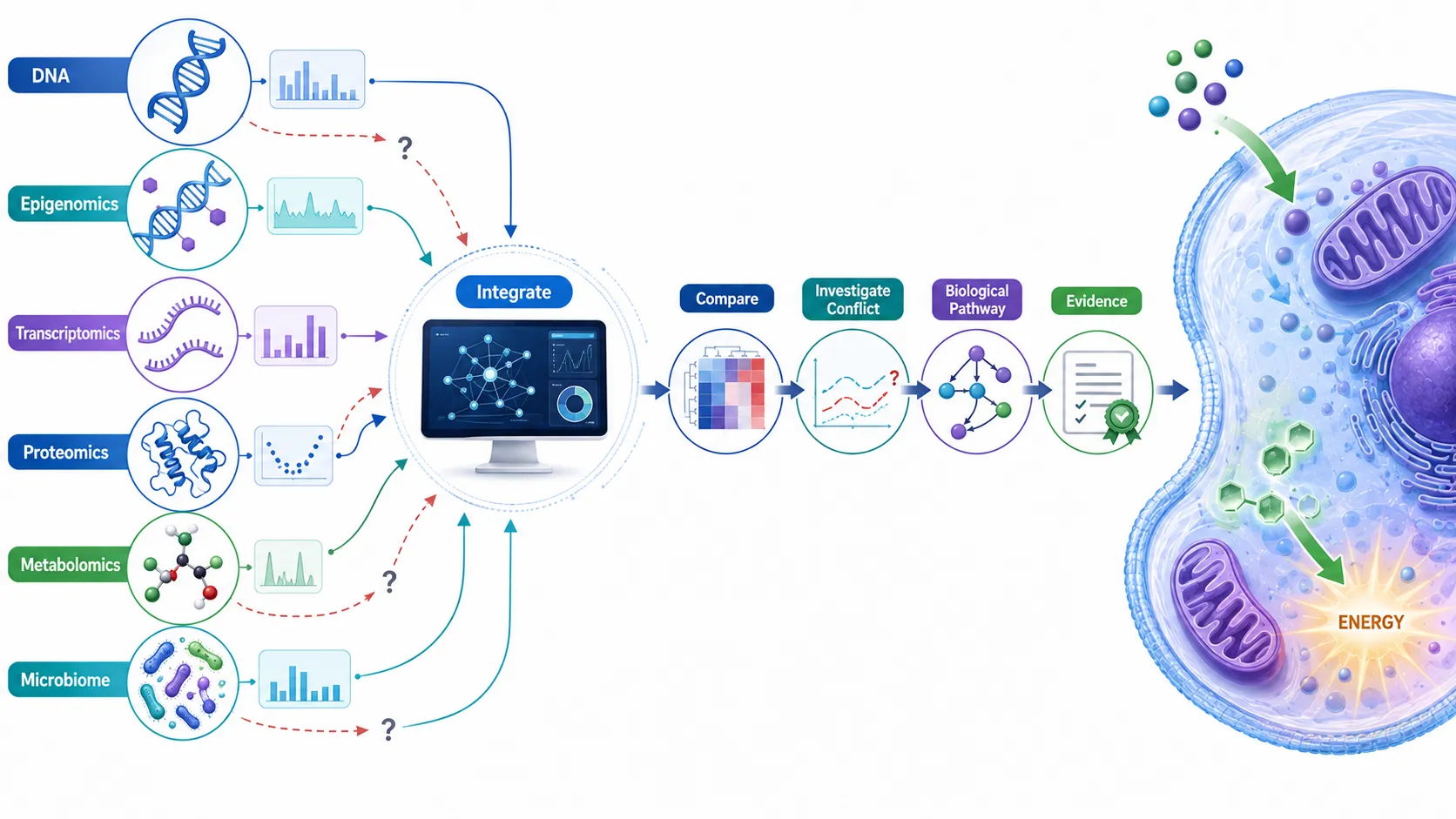
Key Definitions and Concepts
| Term | Definition | Relevance to Cellular Nutrient Utilisation |
|---|---|---|
| Multi-omics | The integrated study of multiple molecular data layers within a biological system | Provides a broader understanding of nutrient-related cellular processes |
| Genomics | The study of the complete genetic information of an organism | Identifies inherited variants that may influence nutrient metabolism |
| Epigenomics | The study of heritable and dynamic molecular mechanisms that regulate gene activity without changing DNA sequence | Explains how nutrition and environment may modify gene regulation |
| Transcriptomics | The analysis of RNA transcripts produced within cells or tissues | Indicates which genes are actively being expressed |
| Proteomics | The large-scale study of proteins and their abundance or modification | Provides information about functional cellular machinery |
| Metabolomics | The analysis of small molecules and metabolic products within a biological system | Offers a direct indication of metabolic activity and nutrient utilisation |
| Microbiomics | The study of microbial communities and their functional activity | Helps explain microbial influences on nutrient availability and metabolism |
| Cellular nutrient utilisation | The processes through which cells transport, transform and use nutrients for energy, growth and regulation | The central physiological outcome being investigated |
| Data integration | The process of combining information from multiple datasets to generate a unified interpretation | Required to understand complex biological relationships |
| Biological discordance | A situation in which molecular measurements appear inconsistent across different biological levels | May reveal regulation, compensation or time-dependent effects |
| Technical variation | Differences caused by laboratory procedures, instruments or analytical methods | Can create apparent conflicts that are not biologically meaningful |
| Confounding | A factor that influences both an exposure and an outcome, potentially distorting interpretation | Must be considered before drawing causal conclusions |
| Evidence synthesis | The systematic integration and critical evaluation of multiple sources of evidence | Supports valid conclusions from complex datasets |
Understanding Multi-Omics in Nutritional Science
Cellular nutrient utilisation cannot be fully understood by measuring a single biological variable. Nutrient metabolism involves a sequence of interconnected processes.
A nutrient-related physiological pathway may include:
Dietary Exposure → Digestion → Absorption → Transport → Cellular Uptake → Gene Regulation → Protein Activity → Metabolic Conversion → Physiological Outcome
Different omics technologies measure different stages of this pathway.
For example:
Genomics may identify inherited variants associated with an enzyme.
Epigenomics may reveal altered regulation of the gene encoding that enzyme.
Transcriptomics may show changes in RNA production.
Proteomics may measure the abundance of the enzyme.
Metabolomics may demonstrate whether metabolic products have actually changed.
These datasets provide complementary rather than identical information.
Why Multiple Omics Layers Are Important
Each molecular layer answers a different question.
Genomic data may help answer:
What biological potential does the individual possess?
Are relevant genetic variants present?
Transcriptomic data may help answer:
Which genes are actively expressed?
Proteomic data may help answer:
Are the relevant proteins present?
Have proteins undergone regulatory modification?
Metabolomic data may help answer:
What is happening to nutrients at the metabolic level?
Which pathways appear active or disrupted?
Therefore, conclusions regarding nutrient utilisation are usually strongest when multiple forms of evidence converge.
Why Conflicting Findings Occur
Conflicting findings are common in biological research because cellular systems are dynamic rather than linear.
A simple assumption might be:
DNA → RNA → Protein → Metabolite
However, biological regulation is more complex.
The relationship may involve:
Feedback regulation.
Post-transcriptional modification.
Protein degradation.
Enzyme activation or inhibition.
Cellular compartmentalisation.
Nutrient availability.
Hormonal regulation.
Microbiome activity.
Therefore, an increase at one molecular level does not automatically produce an increase at the next level.
Common Sources of Apparent Conflict
Potential causes include:
Differences in biological timing.
Tissue-specific gene expression.
Variation between individuals.
Differences in measurement technologies.
Sample handling errors.
Statistical variation.
Small sample sizes.
Biological compensation.
A critical analyst must determine whether the conflict is technical, statistical or biologically meaningful.
Conflict Between Genomic and Functional Data
Genomic information provides important information about biological potential, but it does not always predict current cellular activity.
Example
An individual may possess a genetic variant associated with altered activity of a nutrient-metabolising enzyme.
However:
The gene may not be actively expressed in the sampled tissue.
Another pathway may compensate.
Environmental conditions may alter the functional effect.
The effect size may be small.
Therefore, genomic evidence alone should not be treated as proof of altered nutrient utilisation.
Key Principle
Genetic Potential Does Not Always Equal Current Physiological Activity
Genomic findings should therefore be integrated with functional datasets.
Conflict Between Transcriptomics and Proteomics
One of the most common apparent conflicts occurs when RNA and protein measurements do not correspond.
For example:
Gene expression may increase.
Protein abundance may remain unchanged.
Alternatively:
RNA levels may decrease.
Protein levels may remain stable.
Why Does This Occur?
Protein abundance is influenced by more than RNA production.
Important processes include:
RNA stability.
Translational efficiency.
Protein folding.
Protein degradation.
Post-translational modification.
A cell may produce additional RNA but delay translation into protein.
Similarly, a stable protein may remain present even after RNA production decreases.
Analytical Implication
Transcriptomic findings should not automatically be interpreted as evidence of functional metabolic change.
The analyst should investigate whether:
Protein abundance changed.
Protein activity changed.
Relevant metabolites changed.
Conflict Between Protein Abundance and Enzyme Activity
The presence of a protein does not necessarily indicate that it is active.
An enzyme may be abundant but metabolically inactive.
Enzyme Activity Can Be Influenced By
Cofactor availability.
Nutrient availability.
pH.
Temperature.
Hormonal signals.
Phosphorylation.
Inhibitory molecules.
Practical Example
A metabolic enzyme may be present at high concentration, but the absence of an essential micronutrient cofactor may limit its activity.
Therefore:
High Protein Abundance ≠ High Metabolic Flux
Functional activity must be assessed using appropriate metabolic measurements.
Conflict Between Proteomics and Metabolomics
Proteomic data may suggest that a metabolic pathway is active, while metabolomic data show accumulation of a substrate.
This may indicate:
A metabolic bottleneck.
Enzyme inhibition.
Insufficient cofactors.
Impaired transport.
Excess nutrient supply.
Example
A nutrient-metabolising enzyme may be abundant, but the substrate may accumulate.
Possible explanations include:
The enzyme is inactive.
A downstream pathway is blocked.
The nutrient is entering the cell faster than it can be processed.
The apparent conflict may therefore provide valuable information about pathway dysfunction.
The Importance of Biological Timing
Different molecular processes operate at different speeds.
A Dietary Intervention May Produce
Minutes to Hours
Changes in metabolite concentrations.
Hormonal responses.
Enzyme activation.
Hours to Days
Changes in gene transcription.
Altered protein synthesis.
Days to Weeks
Changes in protein abundance.
Cellular adaptation.
Weeks to Months
Longer-term metabolic adaptation.
Epigenetic changes.
If datasets are collected at different times, they may appear contradictory even when they accurately reflect the same biological process.
Key Questions About Timing
Analysts should ask:
When was each sample collected?
How long after dietary exposure was the measurement taken?
Are molecular changes expected to occur simultaneously?
Could one dataset represent an earlier or later stage?
Time is therefore a critical variable in multi-omics synthesis.
Tissue and Cellular Specificity
Different tissues perform different metabolic functions.
The same gene may be:
Highly active in one tissue.
Moderately active in another.
Inactive in a third.
For example, nutrient metabolism differs significantly between:
Liver tissue.
Skeletal muscle.
Adipose tissue.
Intestinal tissue.
Brain tissue.
Implications for Data Interpretation
A result obtained from blood cells may not directly represent metabolic activity in the liver or skeletal muscle.
Therefore, analysts must consider:
Sample source.
Tissue relevance.
Cellular composition.
Physiological function of the tissue.
A Structured Framework for Multi-Omics Data Synthesis
A systematic approach helps prevent premature conclusions.
Step 1: Define the Biological Question
The first step is to establish a clear research question.
Examples include:
How does a dietary intervention influence cellular glucose utilisation?
Which molecular mechanisms explain altered lipid metabolism?
Is reduced nutrient utilisation caused by impaired transport or enzyme activity?
A clear question prevents unnecessary analysis.
Step 2: Understand What Each Dataset Measures
The analyst should identify:
What biological layer is represented?
What technology was used?
What outcome was measured?
What are the limitations?
For example:
Genomics measures DNA variation.
Transcriptomics measures RNA abundance.
Proteomics measures proteins.
Metabolomics measures metabolites.
These measurements should not be treated as interchangeable.
Step 3: Conduct Quality Assessment
Before integrating datasets, data quality must be evaluated.
Important factors include:
Sample quality.
Missing data.
Batch effects.
Instrument variation.
Normalisation methods.
Outliers.
Poor-quality data may create false biological conflicts.
Step 4: Standardise the Data
Different omics datasets use different scales and units.
Data may therefore require:
Normalisation.
Transformation.
Scaling.
Batch correction.
The objective is not to make datasets identical but to make integrated analysis scientifically meaningful.
Step 5: Identify Patterns Within Each Dataset
Each dataset should first be analysed independently.
The analyst may investigate:
Differential gene expression.
Protein abundance.
Metabolite concentration.
Pathway enrichment.
This establishes the evidence before integration.
Step 6: Identify Areas of Convergence
Convergence occurs when multiple datasets support a similar conclusion.
For example:
A relevant gene is highly expressed.
The associated protein is increased.
Metabolites indicate increased pathway activity.
This provides stronger evidence of altered nutrient utilisation.
Step 7: Identify Areas of Discordance
Discordant results should not be ignored.
The analyst should investigate:
Whether the datasets were collected at different times.
Whether different tissues were analysed.
Whether regulation occurs after transcription.
Whether technical error is possible.
Step 8: Map Findings onto Biological Pathways
Individual molecular results should be mapped onto recognised pathways.
This may reveal relationships that are not visible when datasets are analysed separately.
Levels of Evidence in Multi-Omics Interpretation
Not all findings contribute equally to a final conclusion.
A useful evidence hierarchy considers:
Stronger Evidence
Replicated findings.
Multiple omics layers showing convergence.
Strong biological plausibility.
Independent validation.
Functional experiments.
Moderate Evidence
Consistent findings across related datasets.
Reasonable mechanistic explanation.
Appropriate statistical support.
Weaker Evidence
Isolated associations.
Small effect sizes.
No replication.
Limited biological explanation.
A conclusion should reflect the actual strength of evidence.
Evidence Integration for Cellular Nutrient Utilisation
The central question is often:
Is the nutrient being effectively utilised by the cell?
This requires assessment of multiple processes.
Stage 1: Nutrient Availability
The nutrient must be available.
Relevant evidence may include:
Dietary intake.
Circulating concentrations.
Extracellular metabolites.
Stage 2: Cellular Transport
The nutrient must enter the cell.
Relevant data may include:
Transporter gene expression.
Transporter protein abundance.
Functional transport measurements.
Stage 3: Metabolic Processing
The nutrient must be transformed through metabolic pathways.
Relevant evidence may include:
Enzyme activity.
Protein expression.
Intermediate metabolites.
Stage 4: Cellular Outcome
The pathway must produce a functional result.
Possible outcomes include:
Energy production.
Biosynthesis.
Storage.
Signalling.
Practical Scenario: Conflicting Multi-Omics Results
Consider a research project investigating cellular utilisation of a nutrient following a dietary intervention.
The results show:
Increased expression of a nutrient transporter gene.
No increase in transporter protein.
Increased extracellular nutrient concentration.
No increase in intracellular metabolic products.
Initial Interpretation
The increased gene expression alone may suggest increased transport capacity.
However, the remaining findings challenge this interpretation.
Critical Analysis
Possible explanations include:
The RNA increase has not yet resulted in protein synthesis.
Protein translation is limited.
The transporter is being degraded.
The dietary intervention occurred too recently.
The cell is attempting to compensate for limited nutrient uptake.
Evidence-Based Conclusion
The most appropriate conclusion is not that nutrient uptake has increased.
A more valid conclusion is:
The cells demonstrate a transcriptional response associated with nutrient transport, but current protein and metabolomic evidence does not confirm increased functional nutrient utilisation.
This conclusion accurately represents the complete evidence.
Practical Scenario: Apparent Contradiction Reveals Compensation
Consider another situation in which:
A metabolic gene has reduced expression.
Protein levels remain stable.
Metabolite levels remain normal.
A simplistic interpretation might describe reduced metabolism.
However, the stable protein and metabolite profile suggest compensation.
Possible Explanation
The cell may:
Maintain protein stability.
Increase enzyme efficiency.
Activate an alternative pathway.
Therefore, the correct conclusion may be that transcriptional change has occurred without measurable impairment of nutrient utilisation.
The Role of Metabolomics in Functional Interpretation
Metabolomics often provides important evidence because metabolites are closely connected to current biochemical activity.
However, metabolomic data also require careful interpretation.
An Increased Metabolite May Indicate
Increased production.
Reduced utilisation.
Impaired transport.
Reduced downstream conversion.
Therefore, metabolite concentration alone does not automatically indicate pathway activity.
Importance of Metabolic Flux
Metabolic flux refers to the rate at which molecules move through a pathway.
A static metabolite concentration may not accurately reflect flux.
Two individuals may have the same metabolite concentration but different rates of nutrient utilisation.
Therefore, advanced studies may integrate:
Metabolite concentrations.
Stable isotope tracing.
Enzyme activity.
Gene expression.
Network-Based Integration
Cellular metabolism operates through interconnected networks.
Network analysis can help identify:
Key regulatory nodes.
Metabolic bottlenecks.
Interacting pathways.
Clusters of related molecular changes.
Benefits of Network Analysis
It can:
Reduce oversimplification.
Reveal relationships between datasets.
Identify central biological processes.
Support systems-level interpretation.
However, network findings must still be validated.
Statistical Integration of Multi-Omics Data
Different analytical strategies may be used to integrate datasets.
Common Approaches Include
Correlation analysis.
Multivariate analysis.
Pathway enrichment.
Network modelling.
Machine learning.
Latent variable models.
Important Statistical Considerations
Analysts must consider:
Multiple testing.
Sample size.
Missing data.
Overfitting.
External validation.
A statistically complex model is not automatically scientifically valid.
Avoiding Confirmation Bias
Confirmation bias occurs when an analyst focuses primarily on evidence supporting an expected conclusion.
In multi-omics research, this may lead to selective interpretation.
Strategies to Reduce Bias
Researchers should:
Predefine research questions.
Apply consistent quality criteria.
Report conflicting findings.
Consider alternative explanations.
Validate important results independently.
Conflicting evidence should be treated as information rather than inconvenience.
Distinguishing Technical Conflict from Biological Conflict
A major analytical challenge is determining whether disagreement between datasets reflects biology or error.
Technical Conflict May Result From
Sample degradation.
Batch effects.
Instrument differences.
Poor normalisation.
Laboratory contamination.
Biological Conflict May Result From
Post-transcriptional regulation.
Feedback mechanisms.
Time-dependent adaptation.
Cellular compensation.
Tissue differences.
The distinction is essential before drawing conclusions.
Key Benefits of Multi-Omics Synthesis
Appropriate integration can provide:
A broader understanding of nutrient utilisation.
Improved identification of biological mechanisms.
Detection of metabolic compensation.
Better identification of pathway bottlenecks.
More accurate interpretation of complex physiology.
It also reduces dependence on isolated biomarkers.
Practical Procedure for Resolving Conflicting Findings
When conflicting findings are identified, the following procedure can be used.
Step 1: Verify Data Quality
Check whether technical error could explain the difference.
Step 2: Compare Sampling Conditions
Review:
Timing.
Tissue source.
Participant characteristics.
Dietary conditions.
Step 3: Assess Biological Hierarchy
Determine whether the datasets measure different stages of regulation.
Step 4: Examine Effect Size
Consider whether statistically significant differences are physiologically meaningful.
Step 5: Review Biological Pathways
Map the findings onto known metabolic mechanisms.
Step 6: Consider Alternative Explanations
Develop more than one plausible interpretation.
Step 7: Seek Independent Validation
Use additional experiments or datasets.
Step 8: State the Conclusion Proportionately
The final conclusion should reflect the certainty of the evidence.
Practical Example of Evidence Synthesis
Suppose a dietary intervention is being evaluated for its influence on cellular energy metabolism.
Dataset 1: Genomics
A variant associated with altered metabolic regulation is identified.
Dataset 2: Transcriptomics
Expression of several metabolic genes increases.
Dataset 3: Proteomics
Most corresponding proteins remain unchanged.
Dataset 4: Metabolomics
Metabolic products suggest only a modest increase in pathway activity.
Evidence Synthesis
The integrated interpretation may be:
Genetic variation may influence metabolic potential.
Transcriptional activity suggests an early cellular response.
Limited protein changes indicate incomplete functional translation.
Metabolomic evidence suggests a modest physiological effect.
Valid Conclusion
The intervention appears to stimulate molecular regulatory responses, but the current evidence supports only a modest change in functional nutrient utilisation.
This conclusion is stronger than selecting the transcriptomic evidence alone.
The Importance of Replication
A single multi-omics experiment may generate interesting findings, but important conclusions should ideally be replicated.
Replication may involve:
Independent participants.
Different populations.
Alternative laboratories.
Different analytical technologies.
Why Replication Matters
It helps determine whether a finding represents:
A genuine biological effect.
Statistical variation.
Technical artefact.
Population-specific variation.
Communicating Complex Multi-Omics Findings
Complex findings must be communicated accurately.
Effective Communication Should
Distinguish observation from interpretation.
Explain uncertainty.
Identify conflicting evidence.
Avoid exaggerated claims.
Clearly describe evidence strength.
Example of Appropriate Communication
“The integrated datasets demonstrate evidence of altered transcriptional regulation. However, the absence of consistent protein-level changes limits confidence that cellular nutrient utilisation has changed substantially.”
This is more scientifically accurate than claiming that metabolism has definitely increased.
Ethical and Professional Considerations
Multi-omics data can contain sensitive biological information.
Professionals must consider:
Data privacy.
Secure storage.
Appropriate consent.
Responsible data sharing.
Transparent reporting.
Analysts should also remain within their professional scope when translating research findings into clinical contexts.
Key Analytical Principles for Learners
Learners should remember the following principles:
No single omics dataset provides a complete explanation of cellular metabolism.
Genetic variation indicates biological potential, not guaranteed physiological behaviour.
RNA abundance does not always predict protein abundance.
Protein abundance does not always predict enzyme activity.
Metabolite concentration does not always indicate metabolic flux.
Biological timing can explain apparent contradictions.
Tissue specificity must be considered.
Conflicting findings should be investigated rather than ignored.
Evidence strength should determine the confidence of the conclusion.
Functional validation is essential for strong claims.
Summary of the Multi-Omics Synthesis Process
A robust analytical pathway can be represented as:
Define Question → Assess Data Quality → Analyse Individual Omics Layers → Identify Convergence → Investigate Conflict → Map Biological Pathways → Consider Timing and Tissue → Integrate Evidence → Validate Findings → Draw Proportionate Conclusions
This process supports scientific rigour and reduces the risk of overinterpretation.
Conclusion
Synthesising potentially conflicting findings from multi-omics datasets is essential for developing an accurate understanding of cellular nutrient utilisation. Genomics, epigenomics, transcriptomics, proteomics and metabolomics each measure different dimensions of biological activity. Consequently, apparent disagreement between datasets is not automatically evidence of poor research quality. It may reveal important biological processes such as delayed protein synthesis, post-transcriptional regulation, metabolic compensation or pathway bottlenecks.
A valid evidence-based conclusion requires systematic quality assessment, careful examination of timing and tissue specificity, biological pathway mapping and critical evaluation of effect size and scientific evidence. The strongest conclusions are generally supported by convergence across multiple relevant data layers and, where possible, independent functional validation.
Importantly, conflicting results should not be selectively ignored. They should be investigated as potentially meaningful evidence. By distinguishing technical artefacts from genuine biological discordance and integrating findings proportionately, researchers can develop more reliable explanations of how cells acquire, process and utilise nutrients.
Ultimately, multi-omics synthesis supports a systems-level understanding of human nutrition. It enables learners, researchers and professionals to move beyond isolated genetic or biochemical findings and develop evidence-based conclusions that reflect the true complexity of cellular nutrient metabolism.