
Lesson no 2 : Analyse enzymatic pathways relevant to nutrition.
Introduction
Enzymatic pathways are fundamental to human nutrition and metabolism because they control the chemical reactions through which nutrients are digested, absorbed, transformed, stored and utilised by the body. This lesson, Analyse Enzymatic Pathways Relevant to Nutrition, introduces Learners to the essential principles of enzyme action and the interconnected metabolic pathways that influence the utilisation of carbohydrates, proteins, lipids, vitamins and other nutritionally important compounds. A strong understanding of these pathways is essential for analysing how dietary intake is converted into energy, structural components and biologically active molecules.
Enzymes are specialised biological catalysts that accelerate metabolic reactions without being permanently consumed. Their activity is influenced by several factors, including substrate availability, temperature, pH, enzyme concentration, cofactors, inhibitors and regulatory mechanisms. Within nutritional biochemistry, enzymes play a central role in processes such as carbohydrate digestion and glycolysis, fatty acid metabolism, protein turnover, amino acid metabolism and the synthesis and breakdown of important biomolecules.
This lesson examines how individual enzymatic reactions are organised into complex pathways. Learners will explore the relationship between enzymes, substrates, products and metabolic intermediates and will analyse how pathways are regulated to maintain metabolic balance. Particular attention is given to the integration of anabolic and catabolic processes and the ways in which nutrient availability, hormonal signals and cellular energy requirements influence enzyme activity.
The lesson also develops the ability to interpret enzymatic pathways in nutritional and physiological contexts. Learners will consider how variations in enzyme activity can affect nutrient metabolism, energy production and the availability of essential biological molecules. Scientific and nutritional data may be used to examine normal metabolic regulation and to identify factors that can contribute to altered enzymatic function.
By the end of this lesson, Learners will have developed a more advanced understanding of how enzymatic pathways connect dietary nutrients with cellular metabolism and human physiological function. They will be able to analyse key metabolic processes, evaluate regulatory mechanisms and interpret the nutritional significance of enzyme-controlled reactions. This knowledge provides an important foundation for further study in nutritional biochemistry, metabolism, human physiology and evidence-based nutritional science.
1.Critically Analyse the Kinetics and Regulatory Mechanisms of Key Enzymes Directly Involved in Nutritional Digestion and Absorption
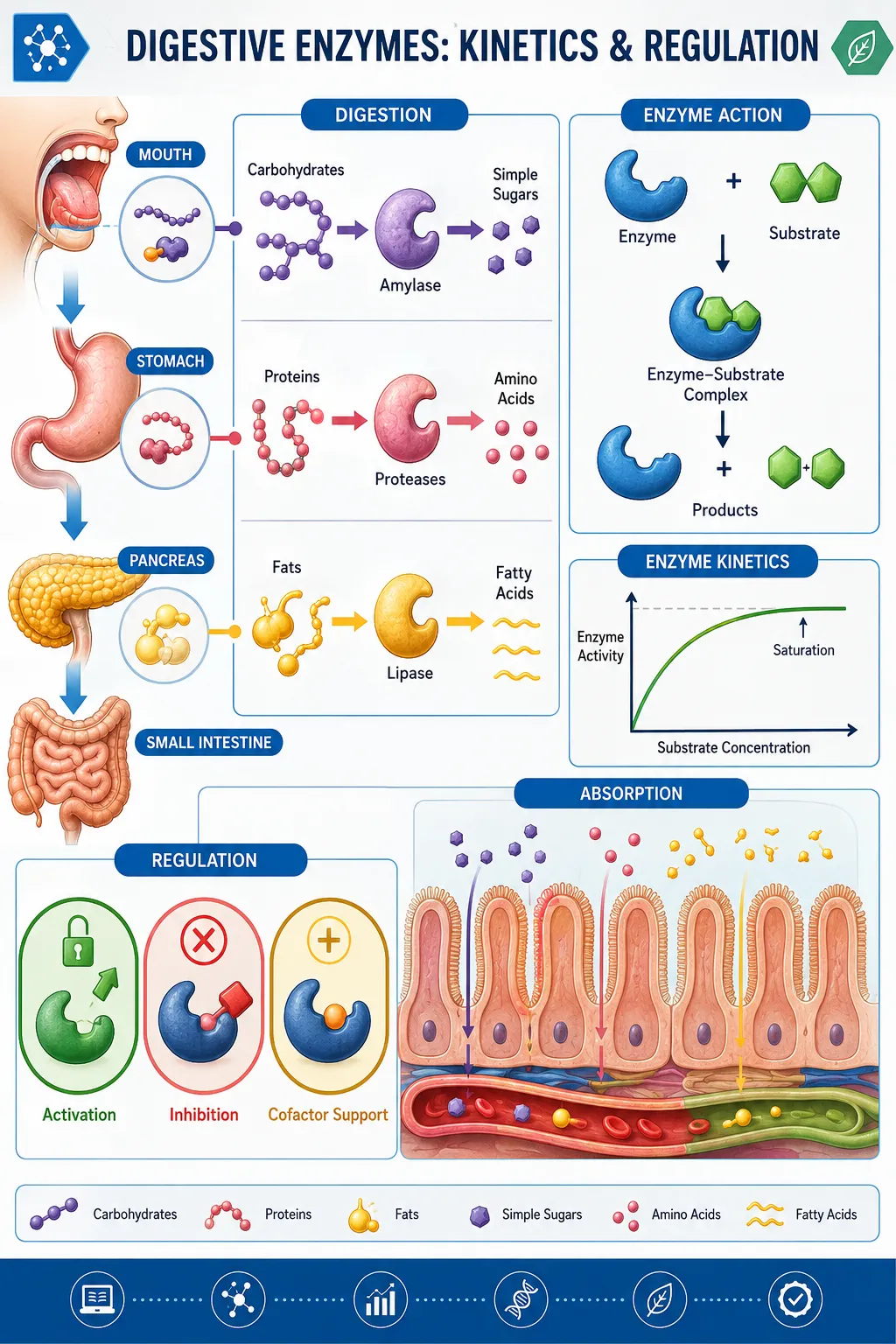
Enzymes involved in nutritional digestion and absorption are essential biological catalysts that convert complex dietary substances into smaller molecules that can be transported across the gastrointestinal tract and utilised by the body. The efficiency of these processes depends not only on the presence of appropriate enzymes but also on enzyme kinetics, substrate availability, environmental conditions, physiological regulation and the coordinated interaction between different regions of the digestive system.
A critical analysis of digestive enzyme function requires an understanding of how rapidly enzymes catalyse reactions, how their activity changes as substrate concentration varies and how the body regulates enzyme secretion and activation. Nutritional digestion is therefore not simply a sequence of chemical breakdown reactions. It is a highly regulated process in which the nervous system, endocrine signals, gastrointestinal environment and cellular mechanisms work together to ensure that nutrients are processed efficiently.
This section examines the kinetics and regulation of key enzymes involved in the digestion and absorption of carbohydrates, proteins and lipids. It also considers the nutritional significance of enzyme activity and the consequences of altered enzymatic function.
Key Definitions and Concepts
| Term | Definition | Nutritional Significance |
|---|---|---|
| Enzyme kinetics | The study of the rate of enzyme-catalysed reactions and factors that influence reaction speed | Helps explain how efficiently dietary nutrients are digested |
| Substrate | The molecule upon which an enzyme acts | Dietary carbohydrates, proteins and lipids act as substrates |
| Active site | The specific region of an enzyme where the substrate binds and the reaction occurs | Determines enzyme specificity |
| Vmax | The maximum rate of an enzyme-catalysed reaction when the enzyme is saturated with substrate | Indicates the maximum digestive capacity under defined conditions |
| Km | The substrate concentration associated with half of the maximum reaction rate in simple Michaelis–Menten systems | Can help describe enzyme-substrate interaction characteristics |
| Competitive inhibition | Reduced enzyme activity caused by a competing molecule occupying or competing for the active site | May influence nutrient digestion or drug–nutrient interactions |
| Allosteric regulation | Regulation of enzyme activity through binding at a site other than the active site | Allows metabolic activity to respond to physiological needs |
| Zymogen | An inactive precursor of an enzyme that requires activation | Protects tissues from inappropriate enzyme activity |
| Cofactor | A non-protein component required for some enzyme functions | Vitamins and minerals may support enzyme activity |
| Feedback regulation | Regulation in which products or downstream signals influence earlier stages of a pathway | Helps prevent unnecessary or excessive metabolic activity |
Understanding Enzyme Kinetics in Nutritional Digestion
The Relationship Between Enzymes and Dietary Substrates
Enzyme kinetics provides a framework for understanding how digestive reactions respond to changing nutritional conditions. After a meal, the concentration of dietary substrates within the gastrointestinal tract may increase substantially. Digestive enzymes interact with these substrates, forming temporary enzyme–substrate complexes that allow chemical bonds to be broken efficiently.
A simplified representation is:
Enzyme + Substrate ⇌ Enzyme–Substrate Complex → Enzyme + Product
The rate at which products are generated depends on several factors. At low substrate concentrations, an increase in substrate availability commonly increases the reaction rate because more enzyme active sites can interact with substrate molecules. As substrate concentration continues to rise, a point may be reached at which a large proportion of available enzyme active sites are occupied. The reaction then approaches its maximum achievable rate under those conditions.
Key kinetic principles include:
Enzymes accelerate reactions by reducing activation energy.
Enzymes are not permanently consumed during the reaction.
Reaction rates depend on enzyme and substrate availability.
Different enzymes demonstrate different catalytic characteristics.
Digestive conditions influence how effectively enzymes interact with substrates.
Enzyme concentration may become a limiting factor when substrate availability is high.
Reaction products and regulatory signals may influence subsequent enzyme activity.
Michaelis–Menten Principles
The Michaelis–Menten model is commonly used to describe the relationship between substrate concentration and enzyme reaction rate under defined experimental conditions. Although the digestive system is more complex than a simplified laboratory system, the model provides important conceptual insight.
The maximum reaction velocity, known as Vmax, represents the point at which increasing substrate concentration no longer substantially increases reaction rate because the available enzyme population is approaching saturation.
The Km value is commonly used as a kinetic parameter related to the substrate concentration associated with half-maximal reaction velocity in a simple Michaelis–Menten model. It should be interpreted carefully and within the conditions under which it was measured.
In nutritional biochemistry, kinetic analysis is useful because it helps explain:
Why digestive capacity may be limited under certain conditions.
How changes in enzyme concentration influence nutrient processing.
Why some substrates may be processed more rapidly than others.
How inhibitors or environmental changes affect reaction rates.
Why physiological regulation is necessary to coordinate digestion with nutrient intake.
Regulation of Digestive Enzyme Activity
Why Digestive Enzymes Require Regulation
Digestive enzymes must be active at the correct time and location. Unregulated secretion or activation could be inefficient or potentially damaging to surrounding tissues. The body therefore regulates digestive enzymes through multiple overlapping mechanisms.
Regulation occurs at several levels:
Neural stimulation.
Hormonal signalling.
Enzyme synthesis and secretion.
Zymogen activation.
Changes in pH.
Substrate availability.
Product-mediated effects.
Interaction with cofactors and other molecules.
This coordinated regulation ensures that digestive capacity can respond to the quantity and composition of food entering the gastrointestinal system.
Zymogen Activation as a Protective Regulatory Mechanism
Many enzymes involved in protein digestion are produced as inactive precursors called zymogens. This is particularly important because proteolytic enzymes are capable of breaking peptide bonds and could damage cells if activated inappropriately.
The general sequence involves:
Synthesis of an inactive enzyme precursor.
Storage or secretion of the precursor.
Transport to the appropriate digestive location.
Activation under suitable physiological conditions.
Controlled catalytic action on dietary proteins.
This process provides both protection and regulation. Enzyme activity can be restricted until the enzyme reaches an environment where protein digestion is required.
Carbohydrate-Digesting Enzymes
Salivary Amylase and the Initial Stage of Carbohydrate Digestion
Carbohydrate digestion begins before food reaches the stomach. Salivary amylase contributes to the initial breakdown of certain complex carbohydrates. Its activity depends on the availability of suitable carbohydrate substrates and the environmental conditions of the oral cavity.
The nutritional importance of salivary amylase includes:
Initiating the digestion of dietary starch.
Producing smaller carbohydrate fragments.
Beginning nutrient processing during mastication.
Demonstrating the importance of digestive location and environmental conditions.
The activity of salivary amylase changes as food moves through the gastrointestinal tract. Changes in acidity can alter the enzyme’s functional environment, illustrating that enzyme activity cannot be understood independently from physiological conditions.
Pancreatic Amylase
Pancreatic amylase continues the digestion of complex carbohydrates within the small intestine. Its action demonstrates the importance of coordinated secretion and intestinal conditions.
Following the arrival of partially digested food in the small intestine:
Digestive signals stimulate appropriate secretory responses.
Pancreatic secretions enter the intestinal environment.
Pancreatic amylase acts on suitable carbohydrate substrates.
Smaller carbohydrate products are generated.
Further enzymes complete the production of absorbable monosaccharides.
The effectiveness of pancreatic amylase depends on factors such as:
Enzyme concentration.
Substrate availability.
Intestinal pH.
Mixing of digestive contents.
Appropriate pancreatic secretion.
Coordination with downstream brush-border enzymes.
Brush-Border Enzymes and Final Carbohydrate Digestion
The intestinal brush border contains enzymes that contribute to the final stages of carbohydrate digestion. These enzymes convert specific disaccharides and oligosaccharides into smaller absorbable monosaccharides.
Examples include enzymes involved in the digestion of:
Lactose.
Sucrose.
Maltose and related carbohydrate fragments.
These enzymes are particularly important because absorption generally requires nutrients to be converted into suitable transportable forms.
Practical Example: Variation in Lactase Activity
Lactase provides an important example of how enzyme activity can influence nutritional tolerance and nutrient handling. Lactase contributes to the breakdown of lactose into smaller sugars that can be absorbed.
If lactase activity is reduced:
Lactose may remain undigested.
The carbohydrate can reach more distal regions of the intestine.
Microbial fermentation may increase.
Gastrointestinal symptoms may occur in susceptible individuals.
Dietary management may need to consider individual tolerance.
This example demonstrates that nutrient intake alone does not guarantee equivalent nutrient processing. Enzyme availability and activity can significantly influence the physiological response to food.
Protein-Digesting Enzymes
The Importance of Proteolytic Enzyme Regulation
Proteins must be broken down into smaller peptides and amino acids before absorption and subsequent metabolic use. Proteolytic enzymes require particularly careful regulation because their catalytic activity involves the breakdown of proteins.
Important principles include:
Proteases may be secreted as inactive precursors.
Activation occurs in appropriate digestive environments.
Multiple enzymes act sequentially.
Different proteases have different substrate specificities.
Final digestion involves coordinated action within the intestinal environment.
Gastric Protease Activity
The stomach provides a specialised environment for the initial stages of protein digestion. The interaction between acid secretion and protease activity demonstrates an important principle of enzyme regulation: the activity of one digestive component can depend upon the environment created by another.
Key processes include:
Protein-containing food enters the stomach.
Gastric secretory activity contributes to the digestive environment.
Appropriate proteolytic enzymes become active.
Dietary proteins begin to break into smaller peptide fragments.
The rate and extent of digestion depend on several factors, including meal composition, protein structure, gastric conditions and the efficiency of enzyme activity.
Pancreatic Proteases
The small intestine receives several proteolytic enzymes from the pancreas, often in inactive precursor forms. These enzymes are activated through coordinated physiological mechanisms.
Their functions include:
Further breakdown of large peptide fragments.
Production of smaller peptides.
Contribution to amino acid availability.
Support for efficient nutrient absorption.
The use of multiple enzymes provides an advantage because proteins contain diverse peptide bonds and structural arrangements. A combination of proteolytic activities can therefore support more complete digestion.
Critical Analysis of Protease Kinetics
Protease activity is influenced by:
Protein concentration.
Accessibility of peptide bonds.
Enzyme concentration.
pH conditions.
Temperature.
Presence of inhibitors.
Interaction with other digestive enzymes.
The structure of dietary proteins may influence how easily enzymes gain access to cleavage sites. Food processing, cooking and other preparation methods can alter protein structure and therefore influence digestibility.
This demonstrates that enzyme kinetics in nutrition is influenced not only by the enzyme itself but also by the physical and chemical characteristics of the food matrix.
Lipid-Digesting Enzymes
The Special Challenges of Lipid Digestion
Lipids differ from carbohydrates and proteins because many dietary lipids are poorly soluble in aqueous environments. Effective digestion therefore requires physical and chemical processes that increase the accessibility of lipids to enzymes.
Lipid digestion involves:
Mechanical mixing.
Emulsification processes.
Enzyme activity at lipid–water interfaces.
Formation of smaller lipid products.
Transport of products towards absorptive surfaces.
Pancreatic Lipase
Pancreatic lipase is a key enzyme involved in the digestion of dietary triglycerides. Its activity illustrates the importance of enzyme access to substrates.
Because lipids form hydrophobic droplets, the rate of digestion depends partly on the available surface area. Processes that disperse large lipid masses into smaller droplets can increase the surface available for enzymatic action.
Important factors influencing lipid digestion include:
The amount and composition of dietary fat.
Surface area of lipid droplets.
Availability of appropriate digestive secretions.
Intestinal mixing.
Enzyme concentration.
Coordination with other molecules that support lipid digestion.
Kinetic Considerations in Lipid Digestion
Lipid enzyme kinetics differ from simple reactions involving freely dissolved substrates. The substrate is frequently located at an interface rather than evenly distributed throughout an aqueous solution.
This means that lipid digestion can be influenced by:
Interfacial surface area.
Emulsification efficiency.
Accessibility of triglyceride molecules.
Presence of molecules that influence enzyme binding.
Gastrointestinal movement and mixing.
A critical understanding of lipid digestion therefore requires consideration of physical food structure as well as molecular enzyme kinetics.
Environmental Factors Influencing Digestive Enzyme Kinetics
The Role of pH
Every enzyme has structural and chemical characteristics that influence the conditions under which it functions effectively. Changes in pH can alter the charge of amino acid residues and affect substrate binding or catalytic activity.
Different digestive regions provide different chemical environments.
For example:
The oral cavity supports the activity of specific enzymes.
The stomach provides an acidic environment.
The small intestine provides conditions suitable for different groups of digestive enzymes.
The body therefore regulates digestion partly by controlling the environment in which enzymes function.
Temperature
Human enzymes generally function within a relatively narrow physiological temperature range. Significant temperature variation can influence reaction rates and, at extreme levels, enzyme structure.
From a nutritional perspective, normal body temperature supports stable enzymatic activity. However, experimental studies of enzyme kinetics must control temperature carefully because reaction rates can change substantially when temperature varies.
Enzyme and Substrate Concentration
Increasing enzyme concentration may increase the capacity for substrate processing when sufficient substrate is available. Increasing substrate concentration may increase reaction rate until other limiting factors become significant.
Important considerations include:
High substrate concentration does not guarantee unlimited digestion.
Enzyme saturation can limit reaction speed.
Secretion rates influence enzyme availability.
Gastrointestinal transit time may affect the duration of enzyme–substrate interaction.
Food structure can influence substrate accessibility.
Mechanisms of Enzyme Regulation
Allosteric Regulation
Some enzymes can be regulated when molecules bind to sites other than the active site. This binding can alter enzyme structure and either increase or decrease catalytic activity.
Allosteric regulation provides several advantages:
Rapid response to changing metabolic conditions.
Integration of multiple cellular signals.
Fine control of pathway activity.
Prevention of unnecessary resource expenditure.
Although many detailed examples of allosteric control are associated with intracellular metabolic pathways, the principle is essential for understanding how enzyme activity can respond dynamically to nutritional and metabolic conditions.
Competitive and Non-Competitive Inhibition
Enzyme inhibitors can influence reaction kinetics through different mechanisms.
Competitive inhibition generally involves competition between an inhibitor and substrate for interaction with the enzyme. The effect on reaction behaviour depends on the concentration of substrate and the characteristics of the enzyme–inhibitor interaction.
Other inhibitory mechanisms may reduce catalytic activity through interactions that do not simply involve direct competition for the active site.
From a nutritional and scientific perspective, enzyme inhibition is relevant to:
Drug–nutrient interactions.
Naturally occurring food compounds.
Experimental enzyme analysis.
Regulation of metabolic pathways.
Development of therapeutic strategies.
Nutritional Cofactors and Enzyme Function
The Importance of Vitamins and Minerals
Some enzymes require additional non-protein components to function effectively. These may include metal ions or organic molecules derived from dietary nutrients.
Nutritionally important cofactors can support:
Electron transfer reactions.
Molecular group transfer.
Structural stabilisation.
Catalytic activity.
Energy metabolism.
The relationship between nutrition and enzyme activity is therefore bidirectional. Enzymes process nutrients, while certain nutrients contribute to the effective functioning of enzymes.
Key concepts include:
Inadequate nutrient availability may influence enzyme-dependent processes.
Cofactors may be required for specific reactions.
Nutritional status can affect metabolic capacity.
The consequences of reduced cofactor availability depend on the affected pathways.
The Relationship Between Digestion and Absorption
Digestion as Preparation for Absorption
Digestion and absorption are closely connected but distinct processes. Digestion involves the physical and chemical breakdown of food, while absorption involves the movement of suitable molecules across the intestinal barrier.
Digestive enzymes support absorption by producing molecules of an appropriate size and form.
For example:
Complex carbohydrates are broken into smaller sugars.
Proteins are broken into amino acids and small peptides.
Lipids are processed into smaller lipid components suitable for transport and absorption.
Enzymatic Activity and Nutrient Bioavailability
Nutrient bioavailability refers broadly to the extent to which nutrients from food become available for physiological use. Enzymatic digestion is one factor that can influence this process.
Factors affecting bioavailability include:
Enzyme activity.
Food structure.
Nutrient chemical form.
Interactions between dietary components.
Gastrointestinal conditions.
Individual physiological variation.
A food may contain a substantial quantity of a nutrient, but the amount available for absorption can depend on how effectively digestive processes release and transform that nutrient.
Practical Applications and Professional Contexts
Application in Nutritional Assessment
Understanding enzyme kinetics helps professionals interpret why individuals may respond differently to similar dietary patterns.
For example, a nutritional assessment may consider:
Digestive tolerance.
Meal composition.
Food processing.
Individual variation.
Physiological state.
Potential interactions affecting nutrient utilisation.
A scientifically responsible assessment should avoid assuming that a dietary symptom is caused by one enzyme without appropriate evidence. Multiple physiological and dietary factors may contribute.
Application in Food Science
Food processing can influence enzyme accessibility and nutrient digestibility.
Examples include:
Cooking may alter protein structure.
Grinding may increase food surface area.
Processing can modify starch accessibility.
Emulsification can influence lipid digestion.
These changes may affect how quickly digestive enzymes interact with food substrates.
Application in Scientific Research
Researchers studying digestive enzymes may investigate:
Reaction velocity.
Substrate concentration.
Enzyme concentration.
pH effects.
Temperature effects.
Inhibitor activity.
Cofactor requirements.
Professional research requires controlled methodology because changes in experimental conditions can influence kinetic measurements.
Critical Evaluation of Enzyme Activity Data
Avoiding Oversimplified Conclusions
A common analytical error is to interpret a single measure of enzyme activity as a complete explanation for nutritional or metabolic function. Enzyme activity must be interpreted within a broader biological context.
Critical evaluation should consider:
The method used to measure enzyme activity.
Sample handling and analytical quality.
Physiological conditions.
Nutrient intake.
Timing of food consumption.
Individual variation.
Related metabolic indicators.
Interpreting Enzyme Activity in Context
An observed change in enzyme activity may reflect:
Normal physiological adaptation.
Changes in substrate availability.
Altered nutritional status.
Environmental conditions.
Experimental variation.
A potential functional abnormality requiring further investigation.
Therefore, professional judgement requires distinguishing between what data directly demonstrate and what they merely suggest.
Key Benefits of Understanding Enzyme Kinetics and Regulation
A strong understanding of digestive enzyme kinetics and regulation provides several academic and professional benefits.
Learners can develop the ability to:
Explain how enzymes control nutrient breakdown.
Analyse factors influencing digestive reaction rates.
Interpret the significance of substrate concentration.
Understand enzyme saturation and catalytic capacity.
Evaluate the importance of pH and physiological environment.
Explain the role of zymogen activation.
Analyse carbohydrate, protein and lipid digestion.
Understand the importance of cofactors.
Relate enzyme function to nutrient bioavailability.
Apply scientific reasoning when interpreting enzyme-related data.
Integrated Example: Analysing a Mixed Meal
Consider an individual consuming a meal containing starch, protein and dietary fat. Digestion requires coordinated activity across multiple digestive locations.
The overall process may involve:
Mechanical breakdown of food.
Initial enzymatic processing of carbohydrates.
Acid-mediated changes within the stomach.
Activation and action of proteolytic enzymes.
Delivery of pancreatic enzymes to the small intestine.
Continued carbohydrate breakdown.
Protein hydrolysis into smaller peptides and amino acids.
Physical processing of dietary lipids.
Lipase-mediated breakdown of triglycerides.
Production of absorbable nutrient molecules.
Transport across the intestinal epithelium.
Distribution of absorbed nutrients for metabolism or storage.
The efficiency of this process depends on more than the presence of individual enzymes. It requires appropriate timing, secretion, activation, environmental conditions, substrate accessibility and coordination between physiological systems.
Summary
The kinetics and regulation of digestive enzymes provide a fundamental basis for understanding how the human body processes nutrients. Enzymes involved in carbohydrate, protein and lipid digestion operate within specialised physiological environments and are regulated through coordinated mechanisms involving secretion, activation, substrate availability and chemical conditions.
Kinetic principles such as reaction velocity, enzyme saturation and substrate concentration help explain the capacity and limitations of digestive processes. Regulatory mechanisms, including zymogen activation, hormonal signalling, environmental control and molecular interactions, ensure that enzymatic activity occurs efficiently and appropriately.
A critical understanding of nutritional enzyme pathways also requires recognition that digestion and absorption are interconnected processes influenced by food structure, nutrient composition, individual variation and physiological context. Enzyme activity should therefore be analysed as part of an integrated nutritional and metabolic system rather than as an isolated chemical reaction.
By applying these principles, Learners can develop advanced analytical skills for examining digestive processes, interpreting enzyme-related scientific information and understanding the molecular mechanisms that connect dietary intake with nutrient absorption and human metabolism.
2.Evaluate the Critical Impact of Essential Vitamins and Minerals Functioning as Cofactors and Coenzymes Within Major Metabolic Pathways
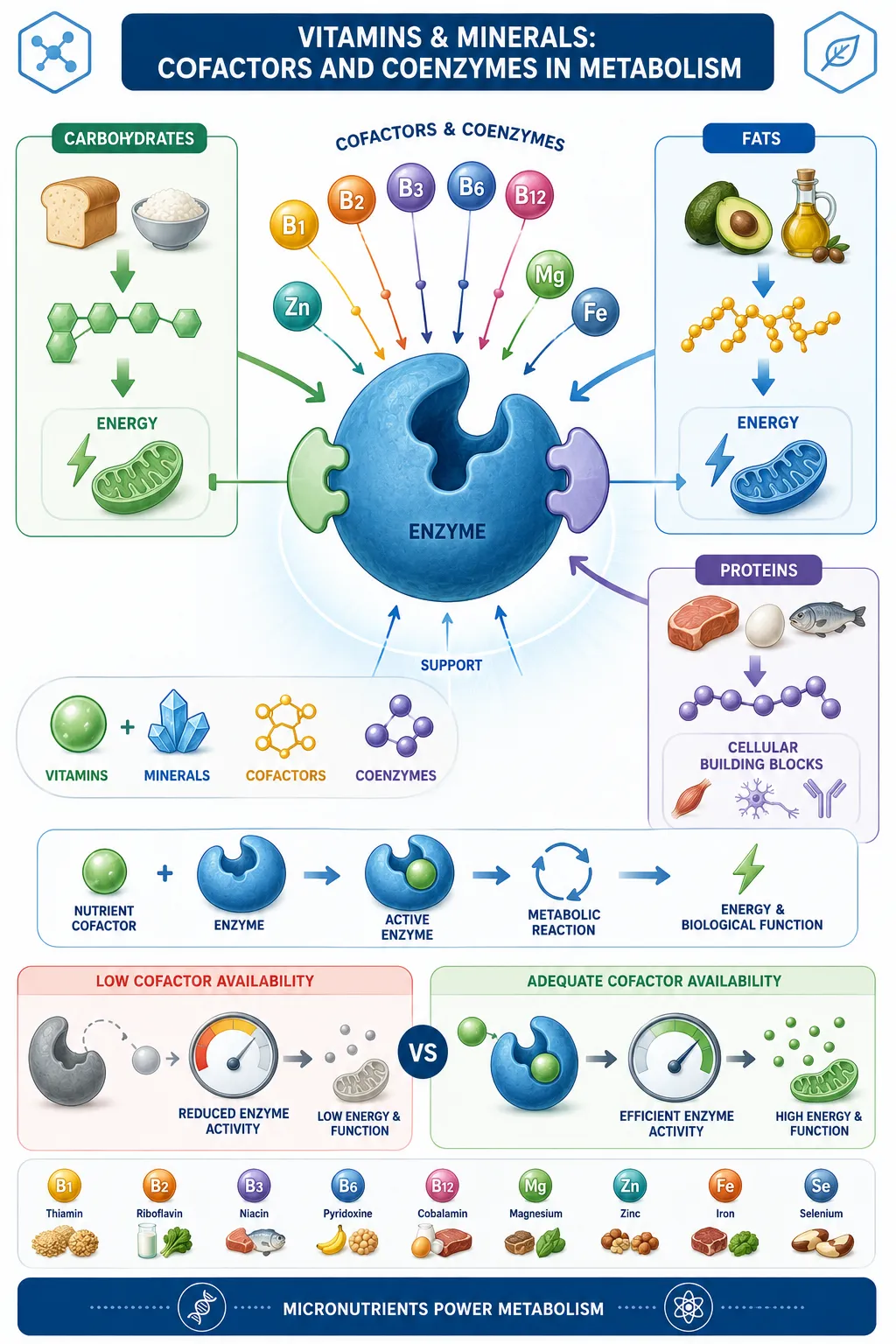
Essential vitamins and minerals play a fundamental role in human metabolism because many are required for enzymes and metabolic proteins to function effectively. Although vitamins and minerals do not generally provide energy in the same way as carbohydrates, proteins and fats, they are critically involved in the biochemical processes that release, transfer, store and utilise energy. Their importance lies in their ability to function as cofactors, coenzymes, structural components or regulatory elements within major metabolic pathways.
A critical evaluation of these nutrients requires more than identifying which vitamin or mineral is associated with a particular enzyme. It involves understanding how nutrient availability influences enzyme activity, how cofactors participate in chemical reactions, how deficiencies or imbalances can disrupt interconnected pathways and why the physiological consequences may extend beyond a single metabolic reaction.
This section examines the biochemical significance of essential vitamins and minerals within carbohydrate, lipid, protein and energy metabolism. It also considers the principles of cofactor function, the consequences of inadequate availability and the importance of evaluating nutrient-related metabolic changes within a wider physiological context.
Key Definitions and Concepts
| Term | Definition | Metabolic Significance |
|---|---|---|
| Cofactor | A non-protein component required by some enzymes for normal catalytic activity | Supports or enables specific biochemical reactions |
| Coenzyme | An organic molecule, often derived from a vitamin, that assists enzyme-catalysed reactions | Transfers electrons, atoms or functional groups between reactions |
| Apoenzyme | The protein component of an enzyme that requires an additional component for full activity | May have limited or no catalytic activity without its required cofactor |
| Holoenzyme | The complete catalytically active enzyme complex, including its necessary cofactor or coenzyme | Represents the functional form of some enzymes |
| Prosthetic group | A tightly bound non-protein component associated with an enzyme or protein | Can contribute directly to catalytic activity |
| Metalloenzyme | An enzyme containing a metal ion that contributes to its structure or catalytic function | Demonstrates the importance of minerals in metabolism |
| Coenzyme precursor | A nutrient that can be converted into a functional coenzyme | Many B vitamins act in this capacity |
| Bioavailability | The extent to which an ingested nutrient becomes available for physiological use | Influences whether a nutrient can effectively support metabolic function |
| Enzyme saturation | A state in which increasing substrate concentration no longer substantially increases reaction rate under defined conditions | Helps explain limitations in metabolic capacity |
| Metabolic pathway | A coordinated sequence of enzyme-controlled reactions that converts one molecule into another | Connects nutrient intake with energy production and cellular function |
Understanding Cofactors and Coenzymes in Human Metabolism
Why Enzymes Require Additional Components
Many enzymes consist primarily of proteins, but some require additional chemical components to perform their catalytic roles effectively. These components may be inorganic, such as mineral ions, or organic, such as coenzymes derived from vitamins.
The interaction between enzymes and cofactors is essential because the protein structure alone may not always provide the chemical properties necessary for a specific reaction. Cofactors can participate in electron transfer, stabilise charged intermediates, assist substrate binding or facilitate the movement of functional groups.
The relationship can be described conceptually as:
Apoenzyme + Required Cofactor → Functional Holoenzyme
This relationship highlights an important nutritional principle: an adequate supply of macronutrients does not automatically guarantee efficient metabolism if essential micronutrients required for key enzymatic processes are insufficient.
Key functions of cofactors and coenzymes include:
Supporting electron transfer reactions.
Assisting the transfer of chemical groups.
Stabilising enzyme structure.
Participating in oxidation-reduction reactions.
Supporting ATP-related reactions.
Facilitating amino acid metabolism.
Supporting nucleic acid synthesis.
Enabling efficient utilisation of carbohydrates, fats and proteins.
Cofactors as Metabolic Connectors
Cofactors are particularly important because metabolic pathways are interconnected. A nutrient-derived coenzyme may participate in multiple reactions rather than supporting only one isolated process.
For example, a coenzyme involved in oxidation-reduction reactions may support:
Carbohydrate metabolism.
Fatty acid metabolism.
Amino acid metabolism.
Cellular energy production.
This interconnectedness means that inadequate availability of a required vitamin or mineral can influence multiple physiological processes simultaneously.
B-Complex Vitamins as Coenzyme Precursors
Thiamine and Carbohydrate Metabolism
Thiamine, also known as vitamin B1, is converted into metabolically active forms that function as coenzymes in important reactions involving carbohydrate metabolism and energy production.
Thiamine-dependent reactions are particularly relevant to processes that connect glycolytic products with subsequent oxidative pathways.
Its metabolic importance includes:
Supporting reactions involved in carbohydrate utilisation.
Contributing to energy-yielding metabolism.
Supporting the processing of specific carbon-containing intermediates.
Participating in pathways associated with nervous system energy requirements.
A reduction in the availability of thiamine-derived coenzymes can affect the efficiency of reactions that depend on them. However, metabolic consequences should be evaluated in relation to overall nutritional status, physiological demand and other relevant factors.
Riboflavin and Electron Transfer
Riboflavin, or vitamin B2, contributes to the formation of coenzymes that participate in oxidation-reduction reactions. These coenzymes are important because energy metabolism frequently involves the controlled transfer of electrons.
Electron transfer reactions are central to:
Oxidative energy metabolism.
Fatty acid oxidation.
Amino acid metabolism.
Mitochondrial energy production.
The key principle is that nutrients are not simply broken down directly into ATP in one reaction. Energy is transferred through a sequence of controlled reactions, many of which depend upon molecules capable of carrying electrons.
Riboflavin-derived coenzymes therefore support metabolic flexibility by participating in multiple biochemical pathways.
Niacin and Cellular Energy Transfer
Niacin, or vitamin B3, contributes to the formation of important coenzymes involved in oxidation-reduction reactions and cellular energy metabolism.
These coenzymes are involved in:
Glycolytic reactions.
Oxidative metabolism.
Lipid metabolism.
Amino acid pathways.
Cellular redox balance.
The importance of niacin-derived coenzymes demonstrates that energy metabolism depends on the ability of cells to capture and transfer electrons in a controlled manner.
A critical point is that the availability of a coenzyme precursor is only one factor influencing metabolic activity. Enzyme concentration, substrate availability, oxygen availability and cellular energy demand also influence overall pathway function.
Pantothenic Acid and Acyl Group Transfer
Pantothenic acid, or vitamin B5, contributes to the formation of coenzyme A and related metabolic systems involved in the transfer of acyl groups.
Acyl group transfer is important in:
Fatty acid metabolism.
Energy metabolism.
The processing of carbohydrate-derived intermediates.
The synthesis of biologically important molecules.
Coenzyme A functions as a metabolic carrier that helps transport and transfer carbon-containing groups between reactions.
This provides an important example of how a vitamin-derived molecule can act as a bridge between multiple pathways.
Vitamin B6 and Amino Acid Metabolism
The Role of Pyridoxine-Derived Coenzymes
Vitamin B6 contributes to the formation of coenzymes that are particularly important in amino acid metabolism. Amino acids can undergo numerous chemical transformations, including the transfer or removal of amino groups.
Vitamin B6-dependent reactions contribute to:
Amino acid transformation.
Nitrogen metabolism.
The synthesis of selected biological molecules.
Interconversion between amino acid-related compounds.
Amino acid metabolism is highly interconnected with carbohydrate and lipid metabolism. Carbon skeletons derived from amino acids can enter broader metabolic pathways, while nitrogen-containing groups require appropriate processing.
Critical Nutritional Significance
The importance of vitamin B6 illustrates that protein intake and protein utilisation are not identical concepts. A diet may provide amino acids, but the effective processing and transformation of these molecules depends upon functional enzyme systems and appropriate coenzyme availability.
Key implications include:
Nutrient metabolism depends on both macronutrient and micronutrient availability.
Amino acid pathways require coordinated enzyme activity.
Vitamin-derived coenzymes support molecular transformation rather than directly supplying energy.
Altered coenzyme availability can influence multiple nitrogen-related reactions.
Folate and Vitamin B12 in One-Carbon Metabolism
Folate as a Carrier of One-Carbon Units
Folate participates in metabolic systems that involve the transfer of one-carbon units. These reactions are important for the synthesis and transformation of biologically significant molecules.
Folate-dependent processes contribute to:
Nucleic acid-related synthesis.
Amino acid metabolism.
Cellular growth and division.
One-carbon transfer reactions.
Because rapidly dividing cells require substantial synthetic activity, adequate function of these pathways is important for normal cellular processes.
Vitamin B12 and Metabolic Integration
Vitamin B12 participates in specific enzymatic reactions that contribute to metabolic integration and the processing of particular molecular intermediates.
The relationship between vitamin B12 and folate demonstrates an important principle: metabolic pathways frequently depend on interactions between multiple micronutrients.
A disruption affecting one nutrient can therefore influence the apparent function of another pathway.
Critical considerations include:
Nutrients may have interconnected metabolic roles.
A single biochemical marker may not fully explain pathway function.
Interpretation should consider multiple indicators.
Nutritional assessment should account for physiological context.
Vitamin C and Enzyme-Related Functions
Vitamin C as a Reducing Agent and Cofactor
Vitamin C has several biochemical functions, including participation in selected enzyme-dependent reactions and contribution to antioxidant-related processes.
Its metabolic roles include:
Supporting specific hydroxylation reactions.
Contributing to collagen-related biochemical processes.
Supporting the maintenance of appropriate chemical states for certain molecules.
Participating in antioxidant defence systems.
Vitamin C demonstrates that not all cofactors are primarily involved in ATP production. Some support structural, regulatory or protective biochemical functions that are equally important for normal physiology.
Vitamin K and Enzymatic Modification
Vitamin K contributes to specific enzyme-dependent modification processes that affect selected proteins.
Its importance demonstrates that:
Vitamins can support highly specialised enzymatic reactions.
Cofactor functions extend beyond energy metabolism.
Nutritional biochemistry includes regulatory and structural processes as well as nutrient oxidation.
Minerals as Essential Enzyme Cofactors
Magnesium and ATP-Dependent Metabolism
Magnesium is one of the most important mineral cofactors in cellular metabolism. ATP is frequently associated with magnesium within biological systems, and many enzyme reactions involving phosphate transfer depend upon appropriate magnesium availability.
Magnesium contributes to:
ATP-related reactions.
Enzyme activation.
Carbohydrate metabolism.
Protein synthesis.
Nucleic acid-related processes.
Cellular ion regulation.
The relationship between magnesium and ATP highlights an important biochemical principle: the presence of ATP alone does not fully describe the functional capacity of ATP-dependent reactions.
Zinc and Enzyme Structure
Zinc contributes to the function of numerous enzymes and proteins. It can support catalytic activity, structural stability and regulatory functions.
Zinc-related functions include:
Supporting enzyme structure.
Participating in catalytic reactions.
Contributing to protein-related processes.
Supporting cellular regulation.
A critical evaluation of zinc function requires recognition that its role varies between enzymes. In some cases, zinc contributes directly to catalysis; in others, it helps maintain structural integrity.
Iron and Oxidative Metabolism
Iron plays an important role in proteins involved in electron transfer and oxygen-related processes.
Its metabolic importance includes:
Supporting electron transfer systems.
Contributing to oxidative energy metabolism.
Participating in oxygen-related biochemical functions.
Supporting specialised enzyme systems.
Iron demonstrates the importance of minerals in energy metabolism because electron transfer processes depend upon carefully organised molecular systems capable of handling electrons safely and efficiently.
Calcium as a Regulatory Mineral
Calcium is widely recognised for its structural role, but it also functions as an important intracellular signalling ion.
In metabolic regulation, calcium can contribute to:
Activation of signalling pathways.
Regulation of selected enzymes.
Coordination of cellular responses.
Adaptation to changing physiological demands.
This illustrates that minerals may act not only as static cofactors but also as dynamic regulatory signals.
Selenium and Antioxidant Enzyme Systems
Selenium contributes to specialised proteins involved in antioxidant and redox-related processes.
These systems are important because normal metabolism generates reactive chemical species. Cells therefore require mechanisms that maintain appropriate redox balance.
Selenium-related functions contribute to:
Protection against excessive oxidative stress.
Redox regulation.
Maintenance of selected antioxidant enzyme systems.
The nutritional significance of selenium should be understood in terms of balance. Both inadequate and excessive exposure can be physiologically significant.
Major Metabolic Pathways and Micronutrient Dependence
Glycolysis and Related Energy Pathways
Glycolysis involves a sequence of enzyme-controlled reactions that process glucose into smaller metabolic intermediates.
Although not every glycolytic enzyme requires a vitamin-derived coenzyme, the pathway is integrated with broader reactions that depend on micronutrient-derived cofactors.
Micronutrients support surrounding processes such as:
Transfer of glycolytic products into oxidative pathways.
Electron transfer.
ATP-related reactions.
Regulation of metabolic flux.
A critical evaluation therefore recognises that nutritional metabolism should not be divided into completely independent pathways.
The Citric Acid Cycle
The citric acid cycle is a central metabolic pathway that connects the metabolism of carbohydrates, lipids and amino acids.
Its efficiency depends upon:
Functional enzymes.
Appropriate substrate availability.
Coenzyme systems.
Mineral-dependent reactions.
Adequate cellular conditions.
The cycle acts as a metabolic hub because intermediates can be used for both energy-related and biosynthetic purposes.
Oxidative Phosphorylation
Oxidative phosphorylation involves the transfer of electrons through specialised molecular systems, ultimately contributing to ATP production.
Several micronutrients are relevant to these processes because they support:
Electron carrier systems.
Enzyme structure.
Redox reactions.
ATP-related processes.
The overall process demonstrates why adequate micronutrient status is important for energy metabolism even though vitamins and minerals themselves are not primary caloric fuels.
Fatty Acid Metabolism
Fatty acids can be broken down to provide energy or incorporated into complex biological structures.
Micronutrient-dependent systems contribute to:
Acyl group transfer.
Oxidation-reduction reactions.
Mitochondrial metabolism.
Electron transfer.
The interaction between lipid metabolism and coenzyme systems demonstrates that dietary fat utilisation depends on multiple enzyme-controlled processes.
Amino Acid Metabolism
Amino acid metabolism requires numerous enzyme-controlled transformations.
Important processes include:
Transfer of amino groups.
Removal of nitrogen-containing groups.
Transformation of carbon skeletons.
Synthesis of specialised biological compounds.
Vitamin-derived coenzymes, particularly those associated with amino acid transformations, are therefore essential for the integration of protein metabolism with broader cellular metabolism.
The Process of Cofactor-Dependent Enzyme Function
Step 1: Nutrient Intake
Essential vitamins and minerals must first be obtained from appropriate dietary sources, with some nutrients also influenced by endogenous synthesis or other physiological processes.
Important considerations include:
Dietary composition.
Nutrient chemical form.
Food preparation.
Interactions with other nutrients.
Individual physiological requirements.
Step 2: Digestion and Release
Micronutrients must be released from food matrices and processed within the gastrointestinal system.
Factors influencing this stage may include:
Food structure.
Digestive efficiency.
Interaction with other dietary components.
Gastrointestinal conditions.
Step 3: Absorption
The nutrient must cross the intestinal barrier and enter appropriate transport systems.
Absorption may depend upon:
Transport proteins.
Solubility.
Dietary interactions.
Physiological condition.
Nutrient concentration.
Step 4: Transport and Cellular Uptake
Following absorption, vitamins and minerals may be transported through the body and delivered to tissues.
The nutrient may then:
Enter cells.
Bind to transport proteins.
Be stored.
Be converted into an active form.
Participate in metabolic reactions.
Step 5: Conversion Into an Active Cofactor or Coenzyme
Many vitamins require biochemical transformation before they become metabolically active.
The active form may then:
Bind temporarily to an enzyme.
Act as a mobile molecular carrier.
Participate directly in a reaction.
Support electron transfer.
Facilitate group transfer.
Step 6: Integration Into Metabolic Pathways
The activated nutrient supports specific enzyme-controlled reactions that are connected to wider metabolic networks.
This may influence:
Energy production.
Biosynthesis.
Cellular maintenance.
Molecular repair.
Nutrient utilisation.
Critical Impact of Micronutrient Deficiency on Metabolism
Reduced Enzyme Efficiency
When an essential cofactor is insufficient, the activity of dependent enzymes may be affected.
Potential consequences include:
Reduced reaction efficiency.
Accumulation of metabolic intermediates.
Reduced production of downstream molecules.
Altered pathway regulation.
Compensatory metabolic responses.
However, the relationship between nutrient intake and enzyme activity is not always linear. Enzyme systems may have different degrees of sensitivity to changes in nutrient availability.
Metabolic Bottlenecks
A metabolic bottleneck occurs when the capacity of one stage of a pathway limits the overall flow through the system.
Cofactor availability can contribute to bottlenecks when:
A required coenzyme is insufficient.
Enzyme activity becomes limited.
A critical intermediate accumulates.
Downstream product formation decreases.
This concept is particularly useful when analysing interconnected metabolic pathways.
Interconnected Consequences
Because pathways share intermediates and regulatory mechanisms, altered activity in one pathway can influence others.
For example:
Reduced energy metabolism may affect biosynthetic capacity.
Altered amino acid metabolism may influence other molecular systems.
Changes in redox balance may affect multiple enzymes.
Reduced ATP-related activity may influence cellular transport.
Therefore, a critical evaluation must consider system-wide effects rather than focusing exclusively on one reaction.
Practical Examples in Nutritional Biochemistry
Example 1: A Diet Low in Micronutrient Diversity
Consider an individual whose diet provides adequate energy and macronutrients but has limited dietary diversity.
Potential concerns may include:
Reduced availability of selected coenzyme precursors.
Altered efficiency of certain metabolic reactions.
Effects on energy-related pathways.
Changes in protein and amino acid metabolism.
A professional evaluation would not assume a specific deficiency without evidence. Appropriate assessment would consider dietary history, relevant biochemical data and physiological signs.
Example 2: Increased Metabolic Demand
During periods of increased physiological demand, the activity of certain metabolic pathways may increase.
This may result in:
Greater turnover of metabolic intermediates.
Increased demand for enzyme-controlled reactions.
Greater importance of adequate nutritional intake.
Changes in nutrient utilisation.
The relationship between demand and nutrient requirement is complex and depends on the nutrient, physiological state and duration of increased demand.
Example 3: Laboratory Interpretation
A researcher identifies altered activity in an enzyme-dependent metabolic pathway.
A critical analysis should consider:
Availability of the required cofactor.
Enzyme concentration.
Genetic and regulatory factors.
Substrate concentration.
Sample quality.
Related metabolic indicators.
This approach prevents oversimplified conclusions based on one measurement.
Key Benefits of Understanding Vitamins and Minerals as Metabolic Cofactors
An advanced understanding of cofactors and coenzymes enables Learners to:
Explain why micronutrients are essential for metabolism.
Distinguish between energy-providing nutrients and metabolic facilitators.
Analyse how vitamins support electron and group transfer.
Evaluate the role of minerals in enzyme function.
Understand interactions between carbohydrate, lipid and protein metabolism.
Interpret the consequences of altered cofactor availability.
Recognise metabolic pathways as interconnected systems.
Apply scientific reasoning to nutritional data.
Avoid oversimplified conclusions about nutrient function.
Relate nutritional status to biochemical processes.
Critical Considerations and Limitations
More Is Not Always Better
An essential nutrient is required within an appropriate physiological range. Excessive intake does not necessarily increase enzyme activity indefinitely.
Important principles include:
Enzymes have finite catalytic capacities.
Cofactor binding sites may become saturated.
Excessive intake may have adverse consequences.
Nutrient interactions can influence absorption and utilisation.
Individual Variation
The metabolic response to nutrient intake can vary due to:
Dietary patterns.
Age and physiological state.
Gastrointestinal function.
Genetic variation.
Medication use.
Existing nutritional status.
Overall health and metabolic demand.
For this reason, general biochemical knowledge should be applied carefully when interpreting individual situations.
The Importance of Evidence-Based Interpretation
Scientific assessment should distinguish between:
Established biochemical function.
Plausible metabolic effects.
Individual clinical interpretation.
A nutrient’s role as a cofactor does not automatically mean that additional supplementation will improve metabolism in an individual with adequate status.
Integrated Case Scenario
Consider a Learner analysing the metabolism of an individual whose dietary intake is sufficient in calories but consistently low in micronutrient-rich foods.
The analysis should proceed systematically.
First, consider which metabolic pathways may depend on vitamins or minerals that could be inadequately supplied.
Second, evaluate the potential consequences for:
Electron transfer.
ATP-related reactions.
Amino acid transformation.
Acyl group transfer.
Cellular redox balance.
Third, recognise that dietary information alone cannot confirm altered enzyme function.
Further assessment may require:
Detailed dietary evaluation.
Consideration of physiological status.
Appropriate laboratory information.
Assessment of relevant symptoms or functional indicators.
Finally, conclusions should remain evidence-based and proportionate to the available information.
This scenario demonstrates professional judgement in nutritional biochemistry. The objective is not to identify a single nutrient as the explanation for every metabolic change but to evaluate the interconnected relationship between nutrient availability, cofactor function and metabolic pathway activity.
Summary
Essential vitamins and minerals have a critical influence on human metabolism because many function as cofactors, coenzymes, structural components or regulatory elements within enzyme-controlled pathways. Vitamins, particularly members of the B-complex group, frequently serve as precursors to coenzymes involved in electron transfer, acyl group transfer, amino acid metabolism and other essential reactions. Minerals such as magnesium, zinc, iron, calcium and selenium contribute to ATP-related processes, enzyme structure, electron transfer, cellular signalling and redox regulation.
The importance of these micronutrients extends beyond individual reactions. Major metabolic pathways are interconnected, meaning that altered cofactor availability can influence carbohydrate, lipid and protein metabolism simultaneously. Deficiency or imbalance may contribute to reduced enzyme efficiency, metabolic bottlenecks and altered pathway regulation, although these effects must always be evaluated within the wider context of nutrient status and physiological conditions.
A critical understanding of cofactors and coenzymes enables Learners to analyse metabolism as an integrated system. It supports the evaluation of nutritional data, scientific research and metabolic processes while encouraging evidence-based interpretation and avoiding simplistic assumptions.
Through this knowledge, Learners can better understand how essential micronutrients connect dietary intake with enzyme activity, cellular energy production, molecular synthesis and the maintenance of normal human physiological function.
3.Interpret Complex Biochemical Data to Determine the Efficiency of Specific Enzymatic Reactions Under Varying Nutritional States
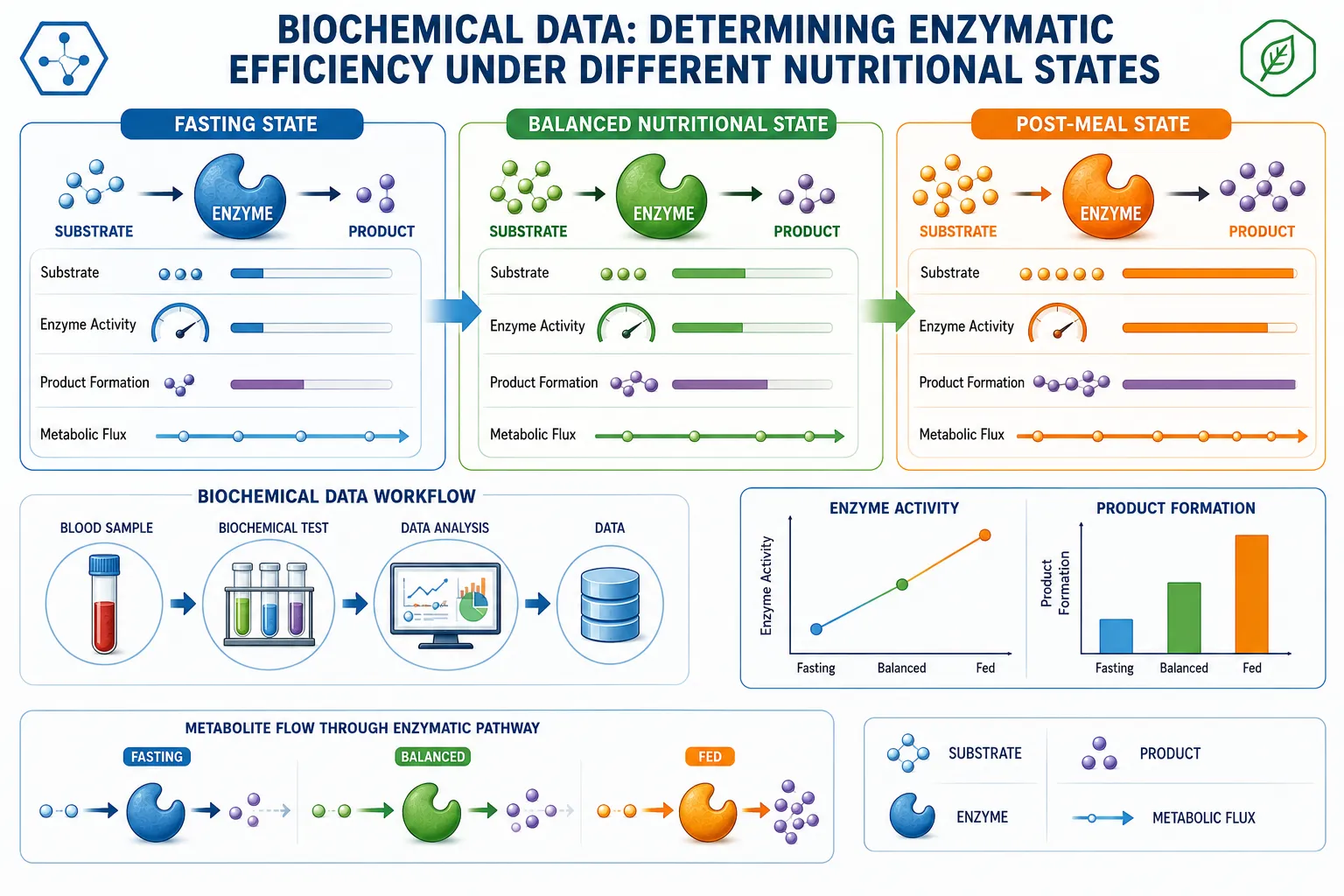
The interpretation of biochemical data is an essential advanced skill in nutritional biochemistry. Enzymatic reactions do not occur under fixed and unchanging conditions. Their efficiency can vary according to nutrient availability, substrate concentration, cofactor status, hormonal regulation, cellular energy requirements and the physiological state of the individual. To determine how efficiently a specific enzymatic reaction is functioning, Learners must be able to analyse numerical data, biochemical patterns, reaction rates and metabolic indicators within their appropriate nutritional and physiological context.
Nutritional states such as the fed state, post-absorptive state, prolonged fasting, energy restriction and increased nutrient availability can alter the flow of metabolites through enzymatic pathways. These changes are often adaptive and should not automatically be interpreted as abnormal. A critical approach is therefore required to distinguish between normal metabolic adaptation, altered enzyme efficiency, methodological variation and potential metabolic dysfunction.
This section develops the knowledge and analytical skills required to interpret complex biochemical information. It examines the indicators used to assess enzymatic reactions, the influence of nutritional states on metabolism and the systematic procedures used to evaluate reaction efficiency.
Key Definitions and Concepts
| Term | Definition | Importance in Biochemical Interpretation |
|---|---|---|
| Enzyme activity | The rate at which an enzyme catalyses the conversion of substrate into product under defined conditions | Provides information about catalytic performance |
| Reaction velocity | The speed at which a biochemical reaction proceeds | Allows comparison of enzymatic efficiency between conditions |
| Substrate concentration | The amount of molecule available for enzyme action | Can influence reaction rate and pathway flux |
| Product formation | The quantity or rate at which a reaction product is generated | Helps assess whether a reaction is progressing effectively |
| Metabolic flux | The rate of movement of metabolites through a metabolic pathway | Indicates how actively a pathway is operating |
| Vmax | The maximum reaction velocity achieved under defined conditions when enzyme sites are effectively saturated | Indicates maximum catalytic capacity in a given system |
| Km | A kinetic parameter describing the substrate concentration associated with half-maximal velocity in a simple Michaelis–Menten system | Helps characterise enzyme–substrate behaviour |
| Nutritional state | The physiological condition associated with nutrient availability and energy balance | Influences enzyme regulation and pathway activity |
| Biomarker | A measurable biological characteristic used to provide information about physiological or biochemical processes | Supports interpretation of metabolic activity |
| Rate-limiting step | A reaction that substantially influences the overall rate of a pathway under particular conditions | Important when evaluating pathway control |
Understanding Enzymatic Efficiency
What Is Meant by Enzymatic Efficiency?
Enzymatic efficiency refers broadly to how effectively an enzyme catalyses its specific reaction under particular biological conditions. It should not be interpreted as a single universal measurement. The apparent efficiency of an enzymatic reaction may depend on several variables, including the amount of active enzyme, substrate availability, cofactor availability and environmental conditions.
When analysing biochemical data, efficiency may be evaluated through indicators such as:
Reaction velocity.
Rate of substrate disappearance.
Rate of product formation.
Comparison with reference or control conditions.
Changes in metabolite concentrations.
Enzyme kinetic parameters.
Overall metabolic pathway activity.
A high concentration of an enzyme does not necessarily mean that the reaction is proceeding efficiently. Similarly, a low reaction rate does not automatically indicate enzyme dysfunction because substrate availability may be limited or the pathway may be physiologically downregulated.
The Difference Between Enzyme Quantity and Enzyme Activity
A critical distinction must be made between measuring how much enzyme is present and measuring how actively it is functioning.
Enzyme quantity may reflect:
Gene expression.
Protein synthesis.
Cellular enzyme content.
Release of enzymes from particular tissues.
Enzyme activity reflects the functional capacity of the enzyme under the conditions of measurement.
Differences may occur because:
An enzyme may be present but inactive.
A required cofactor may be unavailable.
An inhibitor may be present.
The substrate concentration may be insufficient.
Environmental conditions may be unsuitable.
Regulatory modifications may alter activity.
Therefore, the interpretation of biochemical data requires careful consideration of what exactly has been measured.
Major Nutritional States and Their Metabolic Characteristics
The Fed State
The fed state occurs after nutrient absorption following food consumption. Circulating nutrients become more readily available, and metabolic pathways respond to changes in substrate supply and hormonal signalling.
General characteristics may include:
Increased availability of glucose and other nutrients.
Increased processing of absorbed substrates.
Enhanced energy storage processes under appropriate conditions.
Increased activity in pathways associated with nutrient utilisation.
Changes in enzyme activity through regulatory mechanisms.
When interpreting biochemical data in the fed state, an increase in product formation may reflect increased substrate availability rather than an intrinsic improvement in the enzyme itself.
The Post-Absorptive State
The post-absorptive state develops as direct nutrient absorption decreases after a meal. The body increasingly relies on stored fuels to maintain energy supply.
Metabolic characteristics may include:
Reduced availability of recently absorbed nutrients.
Greater reliance on endogenous energy stores.
Changes in enzyme regulation.
Altered substrate preference in different tissues.
Data obtained during this state should not be directly compared with fed-state data without considering the different physiological conditions.
Prolonged Fasting
During prolonged fasting, metabolic priorities change further. The body adapts by modifying substrate use and conserving critical resources.
Potential changes include:
Increased reliance on stored energy substrates.
Changes in fatty acid mobilisation.
Altered activity of pathways associated with glucose production.
Increased utilisation of alternative energy sources by certain tissues.
The efficiency of an enzyme reaction during fasting should therefore be interpreted in relation to the metabolic objective of the fasting state.
Energy Restriction
Energy restriction can produce metabolic changes that depend on its severity and duration. Enzyme activity may adapt to changes in nutrient supply.
Factors requiring consideration include:
Duration of reduced energy intake.
Macronutrient composition.
Micronutrient availability.
Physiological energy demand.
Existing nutritional status.
A reduction in pathway activity may represent an adaptive response rather than a direct failure of enzyme function.
High Nutrient Availability
Periods of increased nutrient availability may increase the supply of substrates to metabolic pathways. However, increased intake does not always result in proportionally increased reaction rates.
Potential limiting factors include:
Enzyme saturation.
Cofactor availability.
Cellular transport capacity.
Feedback regulation.
Hormonal signals.
Energy requirements.
This demonstrates why biochemical data must be interpreted using systems-level reasoning.
Biochemical Data Used to Evaluate Enzymatic Reactions
Substrate Concentration Data
Measuring substrate concentration can provide important information, but a high substrate concentration can have several possible explanations.
For example, substrate accumulation may suggest:
Increased substrate supply.
Reduced utilisation.
Reduced downstream enzyme activity.
Altered transport.
Feedback regulation.
A low substrate concentration may indicate:
Rapid utilisation.
Reduced production.
Limited dietary supply.
Increased conversion into another metabolite.
Therefore, substrate concentration alone rarely provides a complete explanation.
Product Formation Data
Product measurements can help determine whether a reaction is producing expected outputs.
An increase in product formation may result from:
Increased enzyme activity.
Greater substrate availability.
Increased enzyme concentration.
Reduced downstream product utilisation.
A decrease in product concentration may result from:
Reduced production.
Increased downstream utilisation.
Changes in transport.
Increased removal or excretion.
Critical interpretation therefore requires comparison between substrate and product patterns.
Time-Course Data
Time-course analysis measures biochemical changes over a defined period. It is particularly useful for evaluating reaction velocity.
A simplified analysis may involve:
Measuring substrate concentration at baseline.
Measuring concentration at multiple time points.
Determining the rate of change.
Comparing conditions.
Evaluating whether changes are consistent with the expected pathway.
Time-course data can help distinguish between:
Rapid initial reactions.
Gradual substrate utilisation.
Delayed responses.
Plateau effects.
Changes associated with enzyme saturation.
Interpreting Enzyme Kinetic Data
Reaction Velocity and Substrate Concentration
In simplified enzyme systems, reaction velocity can be assessed across a range of substrate concentrations.
At lower substrate concentrations:
Additional substrate may increase reaction velocity.
More enzyme–substrate interactions may occur.
As substrate concentration rises:
The rate may continue to increase.
The increase may become progressively smaller.
The reaction may approach a maximum velocity.
This pattern provides useful information about catalytic capacity.
Interpreting Vmax
Vmax represents the maximum reaction velocity observed under defined experimental conditions when the enzyme population is effectively saturated with substrate.
A difference in apparent Vmax between samples may reflect:
Different amounts of active enzyme.
Changes in enzyme expression.
Enzyme inactivation.
Experimental conditions.
Differences in cellular capacity.
A lower Vmax should not automatically be attributed to nutritional deficiency without additional evidence.
Interpreting Km
Km is a useful kinetic parameter in appropriate experimental models. However, it should not be interpreted as a direct universal measure of enzyme affinity without considering the specific system and conditions.
Changes in apparent kinetic parameters may result from:
Enzyme variants.
Regulatory molecules.
Inhibitors.
Experimental methodology.
Environmental conditions.
Critical scientific interpretation therefore requires understanding the limitations of simplified models.
A Systematic Procedure for Analysing Complex Biochemical Data
Step 1: Identify the Nutritional State
Before interpreting any biochemical result, determine the physiological context.
Key questions include:
Was the individual recently fed?
How long had fasting continued?
Was energy intake restricted?
Was nutrient intake unusually high?
Was physical activity increased?
Were there relevant physiological demands?
Without this information, biochemical interpretation may be misleading.
Step 2: Identify the Enzyme or Pathway Being Investigated
Determine:
The specific enzyme.
Its substrate.
Its product.
Required cofactors.
Cellular location.
Regulatory mechanisms.
Position within the wider pathway.
This creates the biochemical framework for interpretation.
Step 3: Examine the Type of Data
Determine whether the data represent:
Enzyme concentration.
Enzyme activity.
Substrate concentration.
Product concentration.
Metabolite ratios.
Gene expression.
Time-course measurements.
Different types of data answer different questions.
Step 4: Compare With an Appropriate Reference
Meaningful interpretation requires comparison.
Possible references include:
A baseline measurement.
A control group.
A defined physiological state.
A previous measurement from the same system.
Comparisons should be valid and made under appropriately similar conditions.
Step 5: Examine Patterns Rather Than Isolated Values
Complex biochemical interpretation should focus on relationships.
Analyse:
Substrate and product together.
Changes over time.
Related pathways.
Cofactor status.
Hormonal context.
Nutritional state.
Patterns are often more informative than one isolated result.
Step 6: Consider Alternative Explanations
Professional judgement requires asking whether multiple explanations are possible.
Potential explanations may include:
Altered enzyme activity.
Different substrate availability.
Changes in enzyme expression.
Nutritional adaptation.
Measurement variation.
Changes in downstream pathways.
This step is essential for avoiding unsupported conclusions.
Practical Example: Carbohydrate Metabolism
Scenario
A research investigation compares a specific carbohydrate-processing enzyme pathway in two groups. One group is assessed after a period of fasting, while the other is assessed after consuming a carbohydrate-containing meal.
The fed group demonstrates:
Higher substrate availability.
Increased concentrations of certain pathway intermediates.
Increased product formation over an early measurement period.
The fasting group demonstrates:
Lower circulating dietary substrate availability.
Greater reliance on stored metabolic resources.
Different pathway activity patterns.
Interpretation
It would be incorrect to conclude immediately that the enzyme is inherently more efficient in the fed group.
The differences may reflect:
Greater substrate availability.
Hormonal regulation.
Increased pathway activation.
Different metabolic priorities.
A stronger analysis would distinguish between:
Increased reaction flux.
Increased intrinsic enzyme catalytic efficiency.
Increased enzyme quantity.
Normal physiological adaptation.
Practical Example: Cofactor Availability
Scenario
A biochemical system demonstrates reduced product formation despite adequate substrate concentration.
Possible explanations include:
Reduced active enzyme concentration.
Inadequate cofactor availability.
Presence of an inhibitor.
Unfavourable environmental conditions.
Altered enzyme regulation.
Analytical Approach
The investigation should consider:
Whether the required cofactor is available.
Whether enzyme activity changes when the cofactor is provided under experimental conditions.
Whether the enzyme concentration is altered.
Whether inhibitory molecules are present.
Whether the reaction conditions are appropriate.
This illustrates the importance of systematic rather than assumption-based interpretation.
Nutritional States and Metabolic Flux
Understanding Metabolic Flux
Metabolic flux refers to the rate at which metabolites move through a pathway. Concentration and flux are related but are not identical.
A metabolite concentration may remain relatively stable even when pathway activity is high if production and utilisation occur at similar rates.
Conversely:
A metabolite may accumulate when production exceeds utilisation.
A metabolite may decrease when utilisation exceeds production.
Stable concentration does not necessarily mean low pathway activity.
This distinction is essential when interpreting complex biochemical data.
Factors Influencing Metabolic Flux
Metabolic flux can be influenced by:
Substrate supply.
Enzyme activity.
Cofactor availability.
Hormonal regulation.
Cellular energy status.
Product feedback.
Transport processes.
Therefore, changes in flux should be interpreted within the context of the entire metabolic network.
Hormonal Regulation and Enzymatic Responses
Hormones as Metabolic Signals
Hormonal signals help coordinate nutrient metabolism across tissues. They influence enzyme activity through mechanisms that may include changes in:
Enzyme phosphorylation state.
Enzyme synthesis.
Substrate transport.
Cellular signalling.
Metabolic pathway activation.
Nutritional states influence hormonal environments, which can subsequently alter enzyme activity.
Importance for Data Interpretation
If two biochemical samples are collected under different hormonal conditions, differences in enzymatic activity may reflect normal regulatory responses.
For example, the interpretation should consider:
Nutrient intake before testing.
Timing of sample collection.
Physiological state.
Tissue being studied.
Failure to account for these factors can lead to inaccurate conclusions.
Evaluating Data Quality
Analytical Reliability
Before interpreting biochemical data, the quality of the measurement must be evaluated.
Important factors include:
Calibration of analytical instruments.
Sample storage.
Timing of measurement.
Temperature control.
Reagent quality.
Replicate measurements.
A result cannot be considered biologically meaningful if its analytical reliability is uncertain.
Biological Variation
Individuals naturally demonstrate variation in biochemical measurements.
Potential sources include:
Dietary differences.
Time of day.
Physical activity.
Physiological condition.
Genetic variation.
Short-term metabolic adaptation.
Professional interpretation should therefore avoid treating every deviation as evidence of dysfunction.
Common Errors in Biochemical Interpretation
Confusing Concentration With Activity
A common mistake is assuming that a higher enzyme concentration always means greater pathway activity.
This may be incorrect because:
The enzyme may be inactive.
Cofactors may be limited.
Substrate may be unavailable.
An inhibitor may be present.
Ignoring Nutritional Context
Comparing data without considering whether an individual was fed or fasting can produce misleading conclusions.
Important questions include:
When was the last meal consumed?
What was the meal composition?
Was energy intake restricted?
Was physical activity performed?
Assuming One Cause
Complex biochemical changes frequently have multiple possible explanations.
A professional approach should:
Identify possible mechanisms.
Evaluate supporting evidence.
Avoid overinterpretation.
State limitations clearly.
Application to Nutritional Research
Designing an Investigation
A study investigating enzymatic efficiency under different nutritional states should clearly define:
The enzyme or pathway.
The nutritional conditions.
The measurement method.
The timing of samples.
Relevant control conditions.
Potential confounding variables.
Comparing Nutritional Conditions
A controlled investigation might compare:
Fed and fasting states.
Different carbohydrate availability levels.
Different protein intake conditions.
Different lipid availability conditions.
The objective is not simply to identify which condition produces the highest value but to understand why biochemical responses differ.
Key Benefits of Advanced Biochemical Data Interpretation
Developing competence in biochemical data interpretation enables Learners to:
Analyse enzymatic reaction rates accurately.
Distinguish enzyme activity from enzyme concentration.
Evaluate substrate and product relationships.
Interpret kinetic parameters appropriately.
Recognise the impact of nutritional state.
Understand metabolic adaptation.
Assess metabolic flux.
Identify alternative explanations for biochemical changes.
Evaluate data quality and limitations.
Apply evidence-based professional judgement.
Scenario-Based Analysis: Comparing Three Nutritional States
Consider an investigation examining the activity of a nutrient-related metabolic pathway under three conditions.
Condition A: Recently Fed
The data indicate:
High substrate availability.
Increased pathway intermediates.
Increased early product formation.
Condition B: Overnight Fast
The data indicate:
Reduced direct dietary substrate availability.
Altered pathway activity.
Greater use of endogenous resources.
Condition C: Prolonged Energy Restriction
The data indicate:
Sustained changes in substrate availability.
Adaptive modification of pathway activity.
Increased importance of alternative energy pathways.
Critical Interpretation
The pathway should not be judged using the same expectation under all three conditions.
The analysis should consider:
What metabolic objective is present?
Which substrates are available?
Which enzymes are expected to be activated or downregulated?
Are the observed changes adaptive?
Does the evidence indicate reduced catalytic capacity?
This scenario demonstrates that enzymatic efficiency is a context-dependent concept.
Integrating Multiple Sources of Evidence
A robust interpretation should combine several forms of information.
Useful evidence may include:
Enzyme activity measurements.
Substrate concentrations.
Product concentrations.
Cofactor availability.
Hormonal information.
Nutritional intake data.
Time-course measurements.
Related metabolic markers.
No single measurement should automatically be considered definitive when analysing a complex metabolic system.
Key Concepts for Professional Interpretation
When interpreting complex biochemical data, remember the following principles:
Define the nutritional state before interpreting results.
Identify exactly what was measured.
Analyse substrate and product relationships.
Consider reaction rates and metabolic flux.
Distinguish adaptation from dysfunction.
Evaluate cofactor requirements.
Examine regulatory influences.
Assess analytical reliability.
Consider biological variation.
Avoid conclusions that exceed the available evidence.
Summary
Interpreting complex biochemical data to determine the efficiency of enzymatic reactions requires advanced analytical and scientific reasoning. Enzyme activity is influenced by substrate concentration, enzyme availability, cofactor status, environmental conditions, hormonal regulation and the wider nutritional state.
The fed, post-absorptive and fasting states each produce distinct metabolic conditions. Differences in reaction rates between these states may represent appropriate physiological adaptation rather than reduced or increased intrinsic enzyme efficiency. For this reason, data must always be interpreted within their nutritional and physiological context.
A systematic approach involves identifying the nutritional state, defining the enzyme and pathway, examining the type of data, comparing appropriate references, analysing patterns and considering alternative explanations. Substrate concentration, product formation, kinetic parameters and metabolic flux should be integrated rather than interpreted independently.
Advanced competence in biochemical interpretation enables Learners to evaluate complex metabolic information with greater accuracy. It supports evidence-based analysis in nutritional biochemistry, scientific research and professional practice while reducing the risk of oversimplified conclusions.
By understanding how nutritional states influence enzymatic pathways, Learners can more effectively interpret biochemical evidence and determine whether observed changes reflect altered catalytic efficiency, changing substrate supply, regulatory adaptation or other metabolic processes.
4.Investigate How Genetic Variations in Enzyme Production and Activity Affect an Individual’s Nutritional Requirements and Long-Term Metabolic Health
Human metabolism is influenced by the interaction between genetic factors, nutrition, lifestyle and the environment. Although individuals share many fundamental metabolic pathways, genetic variations can influence how efficiently specific enzymes are produced, activated, regulated or maintained. These variations may affect the digestion, absorption, transport and metabolism of nutrients and can contribute to differences in nutritional responses between individuals.
The investigation of genetic variation in enzymatic activity is an important area of nutritional biochemistry because it helps explain why people may respond differently to similar foods or nutrient intakes. However, genetic variation should not be viewed as a simple determinant of nutritional destiny. Most metabolic outcomes arise through complex interactions between multiple genes, dietary patterns, physical activity, physiological status and environmental factors.
This section examines how genetic variation can influence enzyme production and activity, how these differences may affect nutritional requirements and how altered enzymatic pathways can contribute to long-term metabolic health. It also develops a critical and evidence-based approach to interpreting genetic and nutritional information.
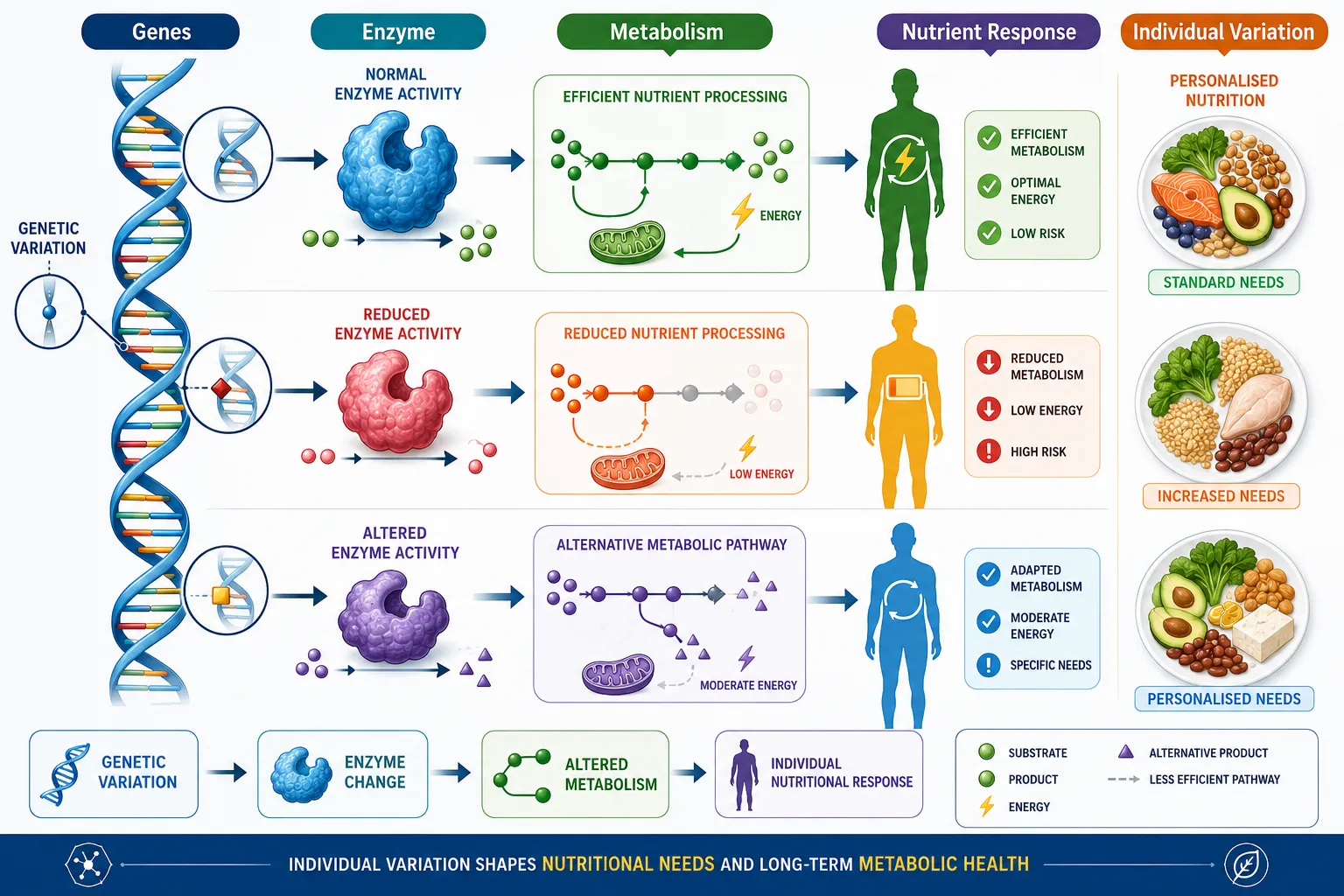
Key Definitions and Concepts
| Term | Definition | Relevance to Nutritional Biochemistry |
|---|---|---|
| Gene | A segment of genetic material containing information that contributes to the production or regulation of biological molecules | Can influence enzyme structure or expression |
| Genetic variation | A difference in DNA sequence between individuals | May alter enzyme production, structure or activity |
| Variant | A specific difference in genetic sequence | May have little, moderate or substantial functional effect |
| Enzyme expression | The process through which genetic information contributes to the production of an enzyme | Influences the quantity of enzyme available |
| Enzyme activity | The ability of an enzyme to catalyse a biochemical reaction | Directly affects pathway function |
| Polymorphism | A relatively common genetic variation within a population | Can contribute to differences in nutrient metabolism |
| Nutrigenetics | The study of how genetic variation influences responses to nutrients and dietary patterns | Supports investigation of individual metabolic differences |
| Nutrigenomics | The study of how nutrients and dietary patterns influence gene expression and biological processes | Examines nutrition-to-gene interactions |
| Phenotype | Observable characteristics resulting from genetic and environmental influences | Represents the functional outcome of multiple factors |
| Gene–environment interaction | The way genetic factors and environmental conditions influence each other’s effects | Important when evaluating long-term metabolic health |
Understanding the Relationship Between Genes and Enzymes
From Genetic Information to Functional Enzyme
Genes contain biological information that contributes to the production of proteins, including enzymes. The process through which genetic information contributes to enzyme production involves several stages.
A simplified sequence is:
Genetic Information → Transcription → RNA Processing → Translation → Protein Formation → Enzyme Folding and Modification → Functional Enzyme
Changes at any stage can influence the final amount or function of an enzyme.
Genetic variations may affect:
The quantity of enzyme produced.
The amino acid sequence of the enzyme.
The shape of the active site.
Enzyme stability.
Cellular localisation.
Regulatory responsiveness.
Interaction with cofactors.
Rate of enzyme degradation.
The metabolic effect of a genetic variation depends on the specific enzyme and pathway involved. Some variations have little measurable effect, while others may significantly alter the handling of particular nutrients.
Enzyme Structure and Genetic Variation
The structure of an enzyme is essential to its function. Genetic variations that change the amino acid sequence may alter protein folding or the properties of the active site.
Possible consequences include:
Reduced substrate binding.
Altered catalytic activity.
Reduced enzyme stability.
Increased or decreased sensitivity to regulatory molecules.
Altered interaction with cofactors.
Changes in enzyme degradation.
It is important to recognise that a genetic variant does not automatically produce a harmful effect. Many variations are functionally neutral, while others may only influence metabolism under specific nutritional or environmental conditions.
Types of Genetic Variation Affecting Enzyme Function
Variations Affecting Enzyme Production
Some genetic differences influence the amount of enzyme produced rather than changing the enzyme’s structure.
These variations may affect:
Transcriptional regulation.
RNA stability.
Protein synthesis.
Cellular enzyme concentration.
A reduced amount of an otherwise normal enzyme can influence the maximum capacity of a metabolic pathway.
Potential consequences include:
Reduced maximum reaction capacity.
Greater sensitivity to high substrate loads.
Altered metabolic adaptation.
Changes in nutrient processing under particular conditions.
Variations Affecting Catalytic Activity
Some variants alter the structure of an enzyme and change how efficiently it catalyses a reaction.
Possible effects include:
Reduced reaction velocity.
Altered kinetic properties.
Changes in substrate specificity.
Reduced catalytic stability.
Modified cofactor interactions.
The physiological importance of such changes depends on whether alternative pathways or compensatory mechanisms are available.
Variations Affecting Enzyme Regulation
Enzymes are regulated through multiple mechanisms. Genetic variation can influence how an enzyme responds to cellular signals.
Potential effects include altered responses to:
Hormonal signals.
Nutrient availability.
Feedback inhibition.
Cellular energy status.
Regulatory proteins.
This can affect how effectively metabolism adapts to changes between fed and fasting states.
Genetic Variation and Carbohydrate Metabolism
Lactase Persistence and Lactose Digestion
One well-recognised example of genetic variation affecting nutritional metabolism involves the regulation of lactase activity.
Lactase is an enzyme located at the intestinal brush border that contributes to the digestion of lactose. Genetic differences can influence whether lactase activity remains relatively high beyond early life or declines with age.
Where lactase activity declines, an individual may have a reduced capacity to digest substantial amounts of lactose.
Potential consequences include:
Greater amounts of undigested lactose reaching the large intestine.
Increased microbial fermentation.
Individual variation in gastrointestinal tolerance.
Differences in preferred dairy consumption patterns.
This example demonstrates that genetic variation can influence the processing of a specific dietary component.
However, an important critical point is that reduced lactase activity does not automatically mean that every dairy product must be avoided. Individual tolerance, portion size and the composition of the food can influence dietary response.
Genetic Differences and Glucose Metabolism
Glucose metabolism involves numerous enzymes, transport proteins and regulatory pathways. Genetic variation can influence components of these systems.
Possible areas of influence include:
Enzyme activity.
Hormonal signalling.
Glucose transport.
Cellular energy sensing.
Storage pathways.
Because glucose metabolism is highly complex, a single genetic variation often provides only limited information about an individual’s overall metabolic response.
A critical investigation should therefore consider:
Multiple genetic factors.
Dietary pattern.
Physical activity.
Body composition.
Physiological status.
Other metabolic indicators.
Genetic Variation and Lipid Metabolism
Enzymes Involved in Fatty Acid Processing
Lipid metabolism depends on enzymes involved in:
Lipid digestion.
Fatty acid activation.
Fatty acid oxidation.
Lipid synthesis.
Lipid transport.
Storage and mobilisation.
Genetic differences may influence the activity or regulation of these processes.
Potential metabolic consequences include differences in:
Lipid utilisation.
Response to dietary fat composition.
Storage of energy.
Metabolic adaptation during fasting.
However, individual responses cannot generally be predicted from one genetic variant alone.
Gene–Diet Interaction
A gene–diet interaction occurs when the effect of a dietary factor differs according to genetic characteristics.
For example, two individuals may consume similar dietary patterns but demonstrate different biochemical responses because of differences in:
Enzyme activity.
Nutrient transport.
Hormonal regulation.
Lipid processing.
This concept is central to personalised nutrition research but must be applied carefully. Evidence for meaningful dietary changes based on individual genetic results varies substantially between genetic markers and clinical contexts.
Genetic Variation and Protein Metabolism
Amino Acid Processing
Protein metabolism requires enzymes capable of:
Removing amino groups.
Transferring nitrogen-containing groups.
Processing carbon skeletons.
Synthesising specialised compounds.
Genetic variations affecting these enzymes can alter the processing of specific amino acids or related metabolic intermediates.
Potential effects may include:
Altered tolerance to particular metabolic loads.
Accumulation of specific intermediates.
Increased dependence on alternative pathways.
Modified nutritional management requirements in certain conditions.
The Importance of Individualised Assessment
Some inherited metabolic conditions can substantially alter how specific nutrients or metabolites are processed. In such situations, specialised clinical assessment and evidence-based nutritional management may be required.
A responsible analysis should recognise that:
Not all genetic variations require dietary intervention.
Significant inherited metabolic conditions require professional assessment.
Nutritional management must be based on reliable evidence.
Genetic information should not be interpreted in isolation.
Genetic Variations and Cofactor Requirements
Enzyme–Cofactor Interactions
Some genetic variations may influence how efficiently an enzyme interacts with its required cofactor.
This can potentially affect:
Enzyme stability.
Catalytic activity.
Cofactor binding.
Sensitivity to changes in nutrient availability.
In some specific biochemical situations, altered enzyme properties may influence the relationship between nutrient availability and metabolic function.
However, this does not mean that increasing the intake of a vitamin or mineral will automatically correct genetically influenced enzyme differences.
Key considerations include:
The degree of functional impairment.
Existing nutritional status.
The biochemical mechanism involved.
Evidence supporting intervention.
Potential risks associated with excessive intake.
How Genetic Variations May Influence Nutritional Requirements
Increased or Altered Nutrient Demand
A genetic variation may influence nutrient handling in a way that alters functional requirements under particular circumstances.
Potential mechanisms include:
Reduced enzymatic efficiency.
Increased loss of metabolic intermediates.
Reduced nutrient conversion.
Greater dependence on alternative pathways.
However, the concept of an increased nutritional requirement should be used carefully. A genetic difference does not automatically justify increased nutrient intake beyond established evidence-based recommendations.
Altered Nutrient Tolerance
Some genetic differences may influence tolerance to particular dietary components.
Potential examples include differences in:
Lactose digestion.
Specific amino acid metabolism.
Responses to certain bioactive compounds.
The appropriate nutritional response depends on:
Functional evidence.
Individual symptoms.
Nutritional adequacy.
Availability of alternative foods.
Differences in Nutrient Conversion
Some nutrients require conversion into active metabolic forms. Genetic variation may influence enzymes involved in these conversion processes.
This may affect:
Availability of active metabolites.
Pathway efficiency.
Individual biochemical responses.
A critical assessment should distinguish between altered conversion and complete nutritional deficiency.
Long-Term Metabolic Health
Genetic Variation Is One Part of Metabolic Risk
Long-term metabolic health is influenced by numerous factors.
These include:
Genetic characteristics.
Dietary pattern.
Physical activity.
Sleep and recovery.
Physiological ageing.
Environmental exposures.
Socioeconomic conditions.
Access to appropriate healthcare.
Genetic variation may contribute to susceptibility, but susceptibility is not the same as certainty.
Metabolic Resilience and Adaptation
The human body has multiple mechanisms that help maintain metabolic stability.
These may include:
Alternative metabolic pathways.
Changes in enzyme expression.
Hormonal regulation.
Storage and mobilisation of nutrients.
Changes in substrate utilisation.
The impact of a genetic variation may therefore vary according to the individual’s overall physiological resilience and environmental conditions.
Cumulative Effects Over Time
Long-term metabolic health may be influenced by repeated interactions between:
Nutrient intake.
Enzyme activity.
Energy balance.
Lifestyle behaviours.
Genetic susceptibility.
Small differences in metabolic regulation may become more significant when combined with long-term environmental factors.
Investigative Approaches to Genetic Variation
Step 1: Define the Enzyme and Pathway
An investigation should first identify:
The enzyme of interest.
The reaction it catalyses.
Its substrate and products.
Required cofactors.
Its tissue or cellular location.
Its regulatory mechanisms.
This establishes the biochemical context.
Step 2: Identify the Genetic Variation
The genetic investigation should determine:
The location of the variation.
Whether it affects a coding or regulatory region.
Whether its functional effect is established.
The quality of available scientific evidence.
Not every detected genetic variant has a known functional consequence.
Step 3: Assess Functional Effects
Possible approaches may include:
Measuring enzyme activity.
Analysing metabolic products.
Comparing pathway flux.
Investigating protein expression.
Reviewing established functional evidence.
The purpose is to connect genetic information with measurable biological function.
Step 4: Evaluate Nutritional Context
Relevant information includes:
Dietary intake.
Nutrient status.
Meal patterns.
Relevant symptoms.
Physiological demands.
Genetic findings without nutritional context provide an incomplete basis for interpretation.
Step 5: Consider Long-Term Outcomes
A broader assessment may evaluate:
Metabolic biomarkers.
Long-term dietary patterns.
Physiological changes.
Lifestyle factors.
Family and clinical history where appropriate.
Step 6: Apply Evidence-Based Conclusions
Professional interpretation should clearly distinguish between:
Established genetic effects.
Probable associations.
Uncertain findings.
Speculative conclusions.
This approach is essential for responsible nutritional practice.
Practical Example: Investigating Lactase Activity
Initial Observation
An individual reports gastrointestinal symptoms after consuming certain lactose-containing foods.
A biochemical and nutritional investigation may consider:
Timing of symptoms.
Quantity consumed.
Type of food.
Individual tolerance.
Possible lactase activity.
Possible Genetic Contribution
Genetic variation may influence the persistence or decline of lactase expression.
However, genetic information alone may not fully predict the individual’s dietary response.
Other relevant factors include:
Amount of lactose consumed.
Food matrix.
Gut microbial activity.
Individual sensitivity.
Nutritional Implications
A balanced approach may involve:
Evaluating individual tolerance.
Considering nutrient adequacy.
Avoiding unnecessary dietary restriction.
Using evidence-based strategies where appropriate.
This example demonstrates how genetic information can inform investigation without becoming the sole basis for dietary decisions.
Practical Example: Enzyme Variation and Cofactor Interaction
Consider a hypothetical enzyme variant with reduced stability when cofactor availability is low.
An investigation may explore:
Whether enzyme activity changes with different cofactor concentrations.
Whether the effect occurs under physiological conditions.
Whether increased nutrient intake changes functional outcomes.
Whether other regulatory factors are involved.
A professional conclusion would require evidence rather than assuming that high-dose nutrient intake is beneficial.
Key Benefits of Understanding Genetic Variation in Nutritional Biochemistry
This area of study enables Learners to:
Understand how genes contribute to enzyme production.
Analyse how variants may influence enzyme activity.
Explain differences in nutrient processing.
Evaluate gene–diet interactions.
Recognise the limitations of genetic prediction.
Investigate the relationship between genotype and phenotype.
Understand individual variation in nutritional response.
Apply evidence-based reasoning to personalised nutrition.
Avoid deterministic interpretations of genetic information.
Evaluate long-term metabolic health using a systems approach.
Critical Limitations of Genetic-Based Nutritional Interpretation
One Variant Rarely Explains the Whole Metabolic Picture
Complex metabolic traits are frequently influenced by many genetic and environmental factors.
Therefore:
A single variant may have only a small effect.
Multiple pathways may compensate.
Environmental conditions can modify outcomes.
Gene expression can change over time.
Association Does Not Always Demonstrate Causation
A scientific association between a genetic marker and a nutritional outcome does not necessarily prove that the variant directly causes the observed effect.
Critical evaluation should consider:
Study design.
Population characteristics.
Biological plausibility.
Reproducibility.
Functional evidence.
Ethical and Professional Considerations
Genetic information is sensitive and should be interpreted responsibly.
Important considerations include:
Privacy and confidentiality.
Informed decision-making.
Avoidance of unnecessary anxiety.
Appropriate professional referral where required.
Clear communication of uncertainty.
Nutritional advice based on genetic information should not overstate the predictive power of current evidence.
Scenario-Based Investigation
Scenario
Two individuals consume broadly similar diets and have comparable energy intake. However, biochemical analysis shows differences in the handling of a specific nutrient-derived metabolite.
A genetic investigation identifies variation in an enzyme-related gene in one individual.
Critical Analysis
The Learner should investigate:
Whether the variant has an established functional effect.
Whether enzyme activity differs.
Whether cofactor availability is adequate.
Whether dietary intake differs in meaningful ways.
Whether other metabolic pathways compensate.
The appropriate conclusion may be that the genetic variation is a possible contributing factor rather than a definitive explanation.
Professional Judgement
A strong evidence-based conclusion should:
Describe the observed biochemical pattern.
Identify plausible mechanisms.
State the limitations of the evidence.
Avoid claiming certainty where evidence is incomplete.
Recommend further assessment when appropriate.
Integrating Genetics, Nutrition and Metabolic Health
The most effective approach to understanding individual nutritional variation is integrative.
A complete analysis may combine:
Genetic information.
Enzyme activity data.
Metabolite measurements.
Dietary assessment.
Nutrient status.
Lifestyle information.
Long-term metabolic indicators.
This approach recognises that the relationship between genes and nutrition is dynamic rather than fixed.
Nutrients can influence metabolic pathways, while genetic factors can influence how some individuals respond to those nutrients. The observable outcome results from the interaction between these factors over time.
Summary
Genetic variations can influence enzyme production, structure, activity and regulation, thereby contributing to individual differences in nutrient digestion, absorption and metabolism. These variations may affect catalytic efficiency, substrate processing, cofactor interactions and the body’s capacity to adapt to changing nutritional conditions.
Examples such as genetic influences on lactase activity demonstrate how variation in enzyme expression can affect the handling of specific dietary components. More broadly, genetic differences may contribute to individual variation in carbohydrate, lipid and protein metabolism.
However, genetic variation should not be interpreted as a deterministic explanation for nutritional requirements or long-term health. Metabolic outcomes arise through complex interactions between genes, diet, lifestyle, physiological status and environmental conditions. A single genetic variant often provides limited predictive information when considered independently.
A systematic investigation should define the relevant enzyme and pathway, evaluate the functional significance of the genetic variation, examine biochemical evidence, consider nutritional context and assess long-term metabolic factors. This evidence-based approach supports responsible interpretation while avoiding oversimplified claims.
By understanding the interaction between genetic variation, enzyme function and nutrition, Learners can develop advanced skills for investigating individual metabolic differences and evaluating how these differences may contribute to nutritional requirements and long-term metabolic health.
5.Critically Discuss the Biochemical and Physiological Consequences of Specific Enzyme Inhibitions or Deficiencies on Overall Nutritional Status
Enzymes are essential biological catalysts that enable metabolic reactions to occur at rates compatible with life. They participate in the digestion of food, absorption and utilisation of nutrients, energy production, synthesis of biological molecules and removal or transformation of metabolic products. When an enzyme is inhibited, reduced in activity or deficient, the consequences may extend beyond a single biochemical reaction. Depending on the enzyme involved, disruption can affect nutrient availability, metabolic balance, tissue function and long-term nutritional status.
An enzyme deficiency may arise from genetic variation, impaired enzyme synthesis, tissue damage, nutritional inadequacy, developmental factors or other physiological influences. Enzyme inhibition may occur when a substance interferes with normal enzyme function. The effect may be temporary or prolonged and may range from mild metabolic adaptation to substantial disruption of nutrient processing.
A critical understanding of enzyme inhibition and deficiency requires more than identifying a blocked reaction. Learners must examine the accumulation of substrates, reduction in product formation, activation of alternative pathways and the physiological consequences that follow. Nutritional status must also be considered broadly, including dietary intake, digestion, absorption, transport, cellular utilisation, storage and metabolic demand.
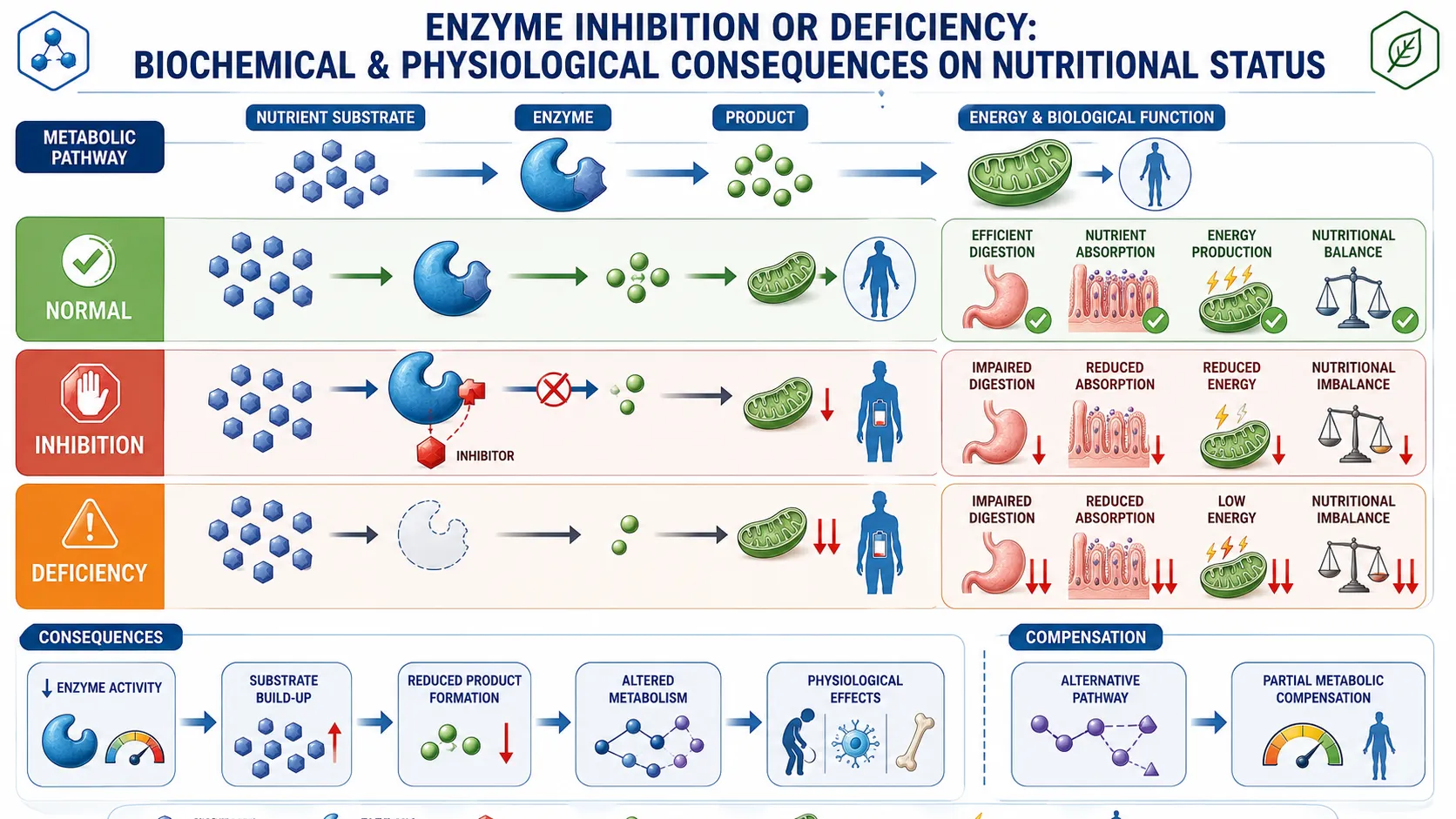
Key Definitions and Concepts
| Term | Definition | Nutritional and Physiological Significance |
|---|---|---|
| Enzyme inhibition | A reduction in enzyme activity caused by interaction with an inhibitory substance or regulatory factor | Can reduce the rate of nutrient-related metabolic reactions |
| Enzyme deficiency | Reduced quantity or functional activity of an enzyme | May impair digestion, metabolism or utilisation of specific nutrients |
| Competitive inhibition | Inhibition in which a molecule competes with a substrate for interaction with an enzyme | May reduce reaction rates depending on substrate availability and conditions |
| Non-competitive inhibition | Inhibition in which enzyme activity is reduced through interaction that does not simply involve competition at the substrate-binding site | Can reduce catalytic capacity under defined conditions |
| Irreversible inhibition | Persistent loss of enzyme function caused by a strong or permanent inhibitory interaction | May have prolonged metabolic consequences until functional enzyme is restored |
| Substrate accumulation | An increase in the concentration of a molecule before a disrupted metabolic step | May alter pathway balance or lead to alternative metabolic processing |
| Product deficiency | Reduced formation of a molecule normally produced by an enzymatic reaction | May impair downstream biochemical and physiological functions |
| Metabolic compensation | Adaptation through alternative pathways or regulatory mechanisms | Can reduce the impact of partial enzyme dysfunction |
| Nutrient bioavailability | The proportion of a nutrient that becomes available for absorption and physiological use | Can be affected by digestive and metabolic enzyme function |
| Nutritional status | The overall state resulting from nutrient intake, absorption, utilisation, storage and physiological requirements | May be affected by chronic enzymatic dysfunction |
Understanding Enzyme Inhibition and Enzyme Deficiency
The Difference Between Inhibition and Deficiency
Although enzyme inhibition and enzyme deficiency may both reduce the rate of a biochemical reaction, they are not identical.
Enzyme inhibition usually refers to a reduction in the activity of an enzyme that is present. The enzyme molecule may still exist, but its ability to catalyse a reaction is reduced under particular conditions.
Enzyme deficiency generally refers to insufficient functional enzyme activity. This may occur because:
The enzyme is produced in reduced quantities.
The enzyme structure is altered.
The enzyme is unstable.
The enzyme is incorrectly processed.
The enzyme is unable to function effectively.
The enzyme is absent or substantially reduced in specific tissues.
The biochemical consequences depend on the severity and duration of reduced activity.
The Importance of Residual Enzyme Activity
A complete absence of enzyme activity may have very different consequences from a partial reduction.
Residual activity may allow:
Continued but slower substrate processing.
Partial maintenance of metabolic pathways.
Greater tolerance under low metabolic demand.
Compensation through alternative mechanisms.
However, a partially functional enzyme system may become insufficient when:
Nutrient intake increases.
Metabolic demand rises.
Cofactor availability falls.
Another metabolic stressor occurs.
Therefore, enzyme-related nutritional consequences are often dependent on both enzyme capacity and physiological circumstances.
Biochemical Consequences of Enzyme Dysfunction
Reduced Reaction Velocity
The most direct effect of enzyme inhibition or deficiency is a reduction in reaction velocity.
When an enzyme normally catalyses:
Substrate → Product
reduced enzyme activity may result in:
Increased Substrate → Reduced Product Formation
The consequences may extend to the entire pathway.
Potential effects include:
Slower nutrient breakdown.
Reduced production of metabolic intermediates.
Altered energy availability.
Disruption of downstream reactions.
Changes in cellular signalling.
The effect depends on whether the reaction represents a major control point within the pathway.
Substrate Accumulation
When an enzyme cannot process its substrate efficiently, the substrate may accumulate.
Accumulation can have several consequences:
Increased movement into alternative pathways.
Feedback effects on earlier reactions.
Changes in osmotic balance in some contexts.
Altered cellular signalling.
Production of secondary metabolites.
However, substrate accumulation does not always occur because the body may reduce substrate production or increase its removal through alternative mechanisms.
Product Deficiency
Reduced product formation may be equally important.
A product may normally function as:
An energy source.
A structural molecule.
A signalling molecule.
A precursor for another pathway.
A component of cellular maintenance.
Reduced production can therefore affect multiple physiological systems.
Major Types of Enzyme Inhibition
Competitive Inhibition
Competitive inhibition occurs when an inhibitory molecule competes with the normal substrate for access to an enzyme interaction site.
The biochemical effect may depend on:
Concentration of the inhibitor.
Concentration of the substrate.
Properties of the enzyme.
Conditions of the reaction.
From a nutritional perspective, understanding competitive inhibition helps explain why interactions between dietary compounds, drugs or metabolites may influence particular biochemical reactions.
Key features include:
Reduced effective substrate interaction under certain conditions.
Potential changes in apparent reaction behaviour.
Possible reduction in pathway activity.
Non-Competitive and Allosteric Inhibition
Some inhibitors reduce enzyme activity through interactions that alter enzyme function without simply competing with the substrate.
These interactions may:
Alter enzyme structure.
Change catalytic activity.
Reduce effective reaction capacity.
Modify regulatory responses.
This form of inhibition is important because increasing substrate concentration may not fully restore normal catalytic activity.
Irreversible Inhibition
Irreversible inhibition involves persistent loss of functional enzyme activity.
Potential consequences may include:
Sustained reduction in pathway capacity.
Requirement for new enzyme synthesis.
Prolonged metabolic disturbance.
The physiological impact depends on how rapidly the body can replace the affected enzyme and whether alternative pathways are available.
Enzyme Deficiencies Affecting Nutrient Digestion
Carbohydrate-Digesting Enzyme Deficiency
Digestive enzymes contribute to the breakdown of complex carbohydrates into smaller molecules that can be absorbed or further processed.
Reduced digestive enzyme activity may result in incomplete digestion of particular carbohydrate components.
Possible consequences include:
Increased quantities of undigested material in the intestine.
Altered microbial fermentation.
Production of gases and other fermentation products.
Changes in gastrointestinal tolerance.
Reduced availability of specific digestion products.
The nutritional effect depends on the dietary importance of the affected carbohydrate and the availability of alternative nutrient sources.
Lactase Deficiency as an Illustrative Example
Lactase contributes to the digestion of lactose in the small intestine.
When lactase activity is reduced, lactose may remain incompletely digested and reach the large intestine.
Potential physiological consequences include:
Increased microbial fermentation.
Production of gases.
Changes in intestinal water movement.
Individual variation in gastrointestinal symptoms.
The nutritional consequences may arise indirectly if an individual restricts dairy foods without replacing important nutrients from other dietary sources.
A critical nutritional assessment should therefore consider:
Individual lactose tolerance.
Overall dietary quality.
Availability of suitable alternatives.
Calcium and protein intake from the broader diet.
Reduced lactase activity does not automatically mean that all dairy-containing foods must be completely excluded.
Enzyme Deficiencies Affecting Lipid Digestion
The Role of Lipid-Digesting Enzymes
Dietary lipids require appropriate digestion before many lipid components can be efficiently absorbed.
Enzymatic processes contribute to:
Breaking down complex dietary lipids.
Producing absorbable lipid components.
Supporting the formation of structures involved in lipid transport.
Reduced digestive enzyme activity may impair the efficient processing of dietary fat.
Potential consequences include:
Reduced lipid absorption.
Altered energy availability.
Reduced availability of essential fatty acids.
Impaired absorption of fat-soluble vitamins.
Nutritional Consequences of Impaired Lipid Processing
Chronic impairment of lipid digestion can influence nutritional status beyond dietary fat intake.
Potential concerns include reduced availability of:
Vitamin A.
Vitamin D.
Vitamin E.
Vitamin K.
Essential fatty acids.
The severity depends on the degree of digestive impairment and the individual’s overall dietary intake.
Enzyme Dysfunction and Protein Metabolism
Protein Digestion
Proteins require enzymatic breakdown into smaller peptides and amino acids before absorption and metabolic use.
Reduced activity in relevant digestive processes may affect:
Availability of absorbable amino acids.
Nitrogen balance.
Availability of amino acid substrates for synthesis.
The body possesses multiple overlapping mechanisms for protein digestion, meaning that impairment of a single enzyme does not always result in complete failure of protein utilisation.
Metabolic Enzyme Deficiencies
Beyond digestion, enzymes are essential for the transformation of amino acids and nitrogen-containing compounds.
Disruption of these pathways can result in:
Accumulation of metabolic intermediates.
Reduced production of downstream compounds.
Increased dependence on alternative pathways.
Certain inherited metabolic conditions illustrate how major reductions in specific enzyme activity can substantially alter nutritional management requirements. Such conditions require specialised clinical assessment rather than general dietary assumptions.
The Role of Enzyme Inhibition in Nutrient Utilisation
Inhibition of Metabolic Enzymes
An enzyme involved in nutrient metabolism may be inhibited after the nutrient has already been absorbed.
The consequences can include:
Reduced conversion into usable metabolic forms.
Altered energy production.
Increased storage of certain substrates.
Reduced synthesis of important molecules.
Therefore, adequate nutrient intake does not guarantee adequate nutrient utilisation.
Nutritional status depends on the full sequence:
Intake → Digestion → Absorption → Transport → Cellular Uptake → Enzymatic Processing → Physiological Utilisation
Disruption at any stage may influence the final biological outcome.
Nutrient–Enzyme Interactions
Certain nutrients may influence enzyme function by acting as:
Cofactors.
Coenzymes.
Structural components.
Regulatory molecules.
A lack of a required nutrient can indirectly reduce enzyme function even when the enzyme protein itself is normal.
This creates an important distinction between:
Primary enzyme deficiency.
Secondary reduction in enzyme activity caused by inadequate cofactor availability.
Cofactor Deficiency and Reduced Enzyme Function
Vitamins and Coenzymes
Many enzymes require vitamin-derived coenzymes to function effectively.
When cofactor availability is inadequate, metabolic reactions may slow even if the enzyme itself is structurally normal.
Possible consequences include:
Reduced energy metabolism.
Altered amino acid processing.
Reduced synthesis of biological molecules.
Changes in redox reactions.
The biochemical impact depends on:
Severity of nutrient inadequacy.
Duration.
Existing nutrient stores.
Individual metabolic demand.
Minerals as Enzyme Cofactors
Minerals can also contribute to enzyme structure and function.
Inadequate mineral availability may affect:
Catalytic activity.
Enzyme stability.
Molecular binding.
Cellular regulation.
However, excessive supplementation is not an appropriate universal solution. Nutritional interventions should be based on evidence of need and an understanding of physiological requirements.
Physiological Consequences of Enzyme Dysfunction
Reduced Energy Production
Many metabolic enzymes contribute directly or indirectly to the production of ATP.
Reduced activity in an important energy pathway may affect:
Cellular energy availability.
Capacity for biosynthesis.
Tissue maintenance.
Physiological performance.
The body may compensate by:
Increasing use of alternative substrates.
Altering hormonal signals.
Changing metabolic flux.
Reducing energy-demanding processes.
Effects on Growth and Tissue Maintenance
Nutrients are required for:
Protein synthesis.
Cell turnover.
Tissue repair.
Structural maintenance.
If enzyme dysfunction reduces nutrient availability or utilisation over a prolonged period, tissue maintenance may be affected.
Potential consequences depend on:
The nutrient involved.
The degree of impairment.
Duration of dysfunction.
Physiological life stage.
Effects on the Nervous System
The nervous system has substantial energy and nutrient requirements. Some enzyme-related metabolic disturbances can affect the availability or processing of compounds required for normal cellular function.
Potential mechanisms include:
Reduced energy generation.
Accumulation of metabolic intermediates.
Altered synthesis of biological molecules.
Such effects require careful clinical and scientific interpretation because neurological outcomes may have many possible causes.
Long-Term Consequences for Nutritional Status
Dietary Restriction as a Secondary Consequence
Sometimes the greatest nutritional consequence of enzyme dysfunction is not direct nutrient malabsorption but unnecessary or poorly managed dietary restriction.
For example, avoiding a broad food group may reduce intake of:
Protein.
Vitamins.
Minerals.
Dietary fibre.
Other nutritionally valuable components.
Therefore, dietary management should aim to:
Address the specific metabolic issue.
Maintain nutritional adequacy.
Avoid unnecessary restriction.
Chronic Malabsorption
When enzyme dysfunction substantially impairs digestion or absorption over time, chronic nutritional consequences may develop.
Possible outcomes include:
Reduced energy availability.
Deficiencies of specific micronutrients.
Altered body composition.
Reduced physiological reserves.
The nature of the consequences depends on the affected nutrient.
Metabolic Compensation
Alternative Pathways
The human metabolic system is highly interconnected. When one enzymatic pathway is impaired, alternative processes may partially compensate.
Compensation may involve:
Alternative enzymes.
Alternative substrates.
Changes in pathway flux.
Increased enzyme expression.
Altered nutrient storage and mobilisation.
Limits of Compensation
Compensation is not unlimited.
It may become insufficient when:
Enzyme activity is severely reduced.
Nutrient demand increases.
Dietary conditions change.
Additional metabolic stress occurs.
The severity of physiological consequences is therefore influenced by the balance between impairment and compensatory capacity.
Investigating Enzyme Deficiency or Inhibition
Step 1: Identify the Affected Enzyme
A systematic investigation begins by determining:
The enzyme involved.
Its normal function.
Its substrate.
Its products.
Its cofactors.
Its location.
This establishes the biochemical foundation for analysis.
Step 2: Determine the Nature of the Dysfunction
The next question is whether the problem involves:
Reduced enzyme production.
Altered enzyme structure.
Temporary inhibition.
Persistent inhibition.
Cofactor inadequacy.
Reduced tissue expression.
Different mechanisms may require different approaches to investigation.
Step 3: Examine Biochemical Evidence
Relevant evidence may include:
Enzyme activity.
Substrate concentrations.
Product concentrations.
Metabolic intermediates.
Nutrient biomarkers.
Patterns are generally more informative than isolated results.
Step 4: Assess Nutritional Consequences
The investigation should examine:
Dietary intake.
Nutrient absorption.
Nutrient utilisation.
Dietary restrictions.
Evidence of nutritional inadequacy.
This prevents a purely biochemical interpretation from overlooking the individual’s overall nutritional status.
Step 5: Consider Alternative Explanations
Reduced enzyme activity can result from multiple causes.
Possible explanations include:
Genetic variation.
Nutrient deficiency.
Tissue damage.
Physiological adaptation.
Exposure to inhibitory substances.
Analytical variation.
Professional judgement requires consideration of these alternatives.
Practical Scenario: Reduced Digestive Enzyme Activity
Scenario
An individual experiences persistent gastrointestinal discomfort after consuming a particular nutrient-containing food.
Biochemical investigation suggests reduced activity of an enzyme involved in processing that dietary component.
Potential Biochemical Consequences
The Learner should consider:
Whether the substrate remains incompletely digested.
Whether the substrate reaches other regions of the digestive tract.
Whether microbial metabolism increases.
Whether alternative metabolic products are formed.
Nutritional Consequences
The investigation should also assess:
Whether the individual has restricted important foods.
Whether nutrient intake remains adequate.
Whether suitable alternatives are available.
This scenario demonstrates the need to connect molecular events with nutritional outcomes.
Practical Scenario: Metabolic Enzyme Inhibition
Scenario
A biochemical investigation identifies reduced activity of an enzyme involved in a cellular energy pathway following exposure to an inhibitory factor.
The data demonstrate:
Reduced product formation.
Increased concentration of an upstream intermediate.
Altered energy-related metabolic markers.
Critical Analysis
The Learner should investigate:
The mechanism of inhibition.
Whether the inhibition is reversible.
Whether alternative pathways compensate.
The duration of exposure.
The nutritional and physiological consequences.
A high-quality conclusion should avoid assuming that one biochemical measurement explains the entire physiological outcome.
Critical Thinking: Why Enzyme Dysfunction Does Not Always Equal Nutrient Deficiency
A person may consume an adequate quantity of a nutrient but still demonstrate impaired utilisation because of enzymatic dysfunction.
Conversely, reduced enzyme activity may not always cause nutritional deficiency if:
Alternative enzymes compensate.
The nutrient is obtained in a different form.
Metabolic demand is low.
Dietary intake exceeds minimum requirements.
Therefore, the relationship between enzyme activity and nutritional status is dynamic.
The following principle is important:
Adequate Intake Does Not Always Guarantee Adequate Utilisation, and Reduced Enzyme Activity Does Not Always Produce Immediate Nutritional Deficiency.
Key Benefits of Understanding Enzyme Inhibition and Deficiency
A detailed understanding of enzyme dysfunction enables Learners to:
Explain how reduced enzyme activity affects metabolic pathways.
Identify substrate accumulation and product deficiency.
Distinguish inhibition from enzyme deficiency.
Evaluate digestive consequences.
Assess effects on nutrient utilisation.
Understand cofactor-dependent enzyme activity.
Recognise metabolic compensation.
Connect biochemical disruption with physiological outcomes.
Evaluate long-term nutritional implications.
Apply critical and evidence-based professional judgement.
Professional and Scientific Interpretation
Avoiding Oversimplification
Enzyme-related metabolic changes should not be interpreted through a single-cause model.
A reduced reaction rate may result from:
Reduced enzyme concentration.
Inhibition.
Reduced substrate availability.
Cofactor deficiency.
Physiological regulation.
Therefore, conclusions should be based on multiple sources of evidence.
Importance of Context
Biochemical results must be interpreted according to:
Nutritional state.
Dietary intake.
Physiological condition.
Duration of symptoms or metabolic changes.
Relevant laboratory information.
A result obtained during fasting may have a different meaning from the same result obtained after a nutrient-rich meal.
Evidence-Based Nutritional Decision-Making
The most appropriate nutritional approach should:
Identify the underlying biochemical mechanism.
Consider the severity of impairment.
Evaluate overall nutritional adequacy.
Avoid unnecessary dietary restrictions.
Recognise when specialised assessment is required.
Integrated View of Enzyme Dysfunction and Nutritional Health
The consequences of enzyme inhibition or deficiency can be understood as a sequence of interconnected events:
Reduced Enzyme Activity → Altered Reaction Rate → Substrate Accumulation or Reduced Product Formation → Altered Pathway Function → Cellular Adaptation → Physiological Effects → Potential Nutritional Consequences
The exact outcome depends on the affected pathway and the body’s ability to compensate.
For example:
A digestive enzyme defect may primarily affect nutrient breakdown.
A metabolic enzyme defect may alter cellular nutrient utilisation.
A cofactor deficiency may affect multiple enzymes simultaneously.
An inhibitor may temporarily alter pathway activity.
Understanding these differences is essential for accurate nutritional analysis.
Summary
Specific enzyme inhibitions and deficiencies can have important biochemical and physiological consequences for nutritional status. Reduced enzyme activity may decrease reaction velocity, lead to substrate accumulation, reduce product formation and alter the function of wider metabolic pathways.
The consequences can range from impaired digestion and nutrient absorption to altered cellular energy production and changes in the synthesis or breakdown of biological molecules. Examples involving carbohydrate, lipid and protein metabolism demonstrate that enzyme dysfunction can influence both nutrient availability and nutrient utilisation.
Cofactor inadequacy may also reduce enzyme function even when the enzyme itself is structurally normal. This highlights the close relationship between micronutrient status and metabolic activity.
However, the physiological impact of enzyme dysfunction depends on the degree of impairment, nutritional state, metabolic demand and availability of compensatory pathways. Reduced enzyme activity does not always result in immediate nutritional deficiency, and adequate nutrient intake does not always guarantee effective utilisation.
A critical investigation should identify the affected enzyme, determine the mechanism of dysfunction, examine biochemical patterns, assess nutritional consequences and consider alternative explanations. This systematic approach enables Learners to connect molecular and cellular mechanisms with broader physiological and nutritional outcomes.
By developing a critical understanding of enzyme inhibition and deficiency, Learners can evaluate complex metabolic situations, interpret biochemical evidence more accurately and apply evidence-based reasoning to the assessment of overall nutritional status.
6.Apply Advanced Biochemical Models to Accurately Predict the Physiological Outcomes of Altered Enzymatic Pathways Resulting from Targeted Dietary Interventions
Advanced nutritional biochemistry requires more than understanding individual enzymes and metabolic pathways. It requires the ability to integrate biochemical knowledge into predictive models that explain how changes in nutrient intake may alter enzymatic activity, metabolic flux and physiological outcomes. Targeted dietary interventions can modify substrate availability, cofactor supply, hormonal signalling and cellular energy status. These changes may influence the activity of specific enzymes and consequently alter the behaviour of wider metabolic networks.
Biochemical models provide structured frameworks for investigating these relationships. They may range from simplified pathway diagrams and enzyme kinetic models to more complex systems that integrate multiple metabolic reactions. Their purpose is not to guarantee an exact prediction of every individual response. Instead, they help Learners develop evidence-based predictions by connecting dietary inputs with molecular events and measurable physiological outcomes.
A targeted dietary intervention may involve changing the quantity, timing or composition of nutrient intake. Such changes can alter the availability of substrates entering metabolic pathways and influence regulatory mechanisms. For example, changes in carbohydrate availability can modify the activity and flux of carbohydrate-related pathways, while changes in vitamin or mineral availability may influence enzymes that depend on those nutrients as cofactors.
The ability to apply advanced biochemical models therefore requires scientific reasoning, critical evaluation and an understanding of biological variation. Predictions should always be presented as context-dependent and should consider the limitations of the available evidence.
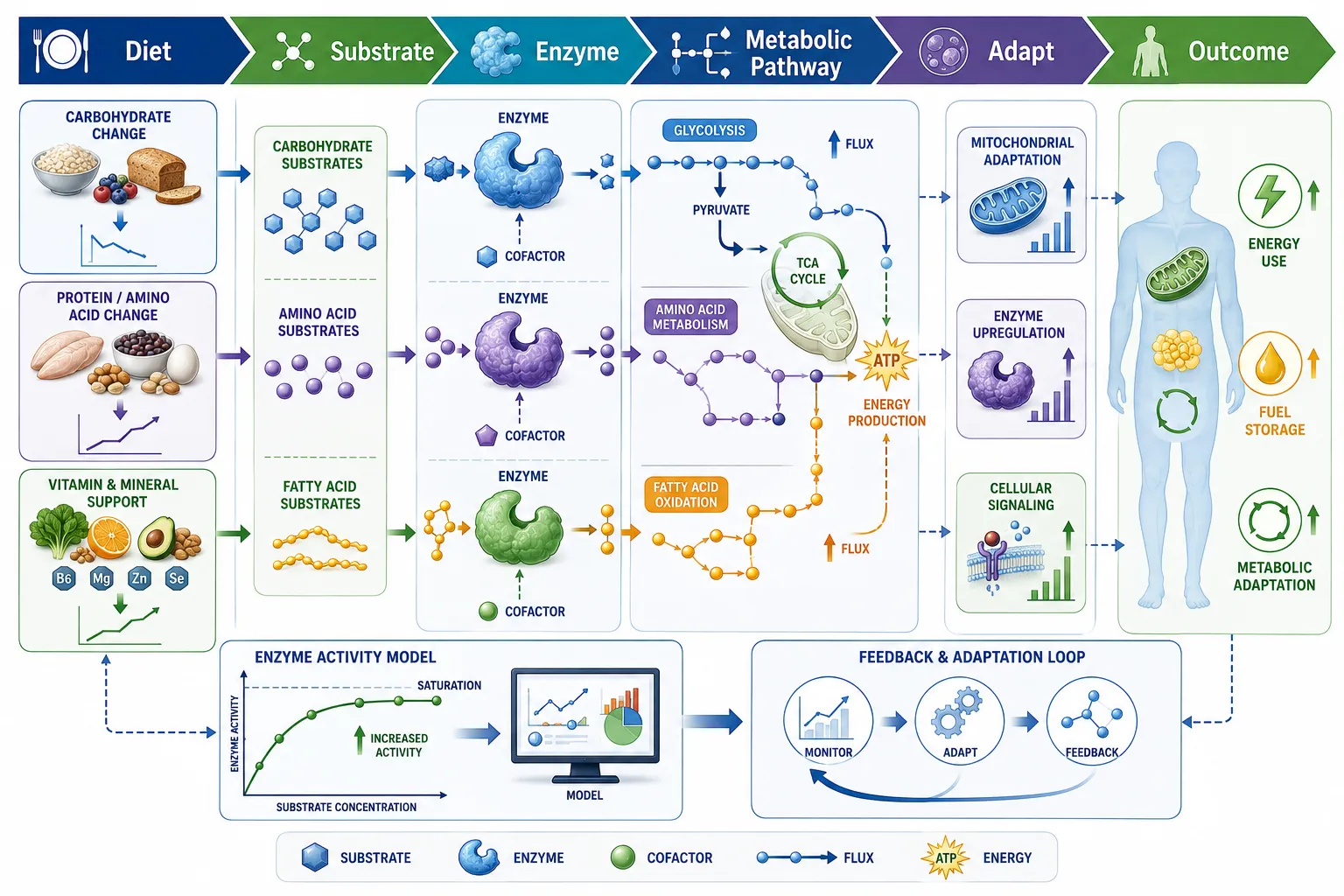
Key Definitions and Concepts
| Term | Definition | Importance in Predictive Nutritional Biochemistry |
|---|---|---|
| Biochemical model | A structured representation of biochemical reactions and relationships | Helps predict how metabolic systems may respond to change |
| Metabolic pathway | A sequence of interconnected enzyme-controlled reactions | Explains the movement and transformation of metabolites |
| Metabolic flux | The rate at which metabolites move through a metabolic pathway | Indicates changes in pathway activity |
| Enzyme kinetics | The study of the relationship between enzyme activity and factors such as substrate concentration | Supports prediction of changes in reaction rates |
| Dietary intervention | A planned modification to dietary intake or nutrient exposure | Can alter substrates, cofactors and metabolic regulation |
| Substrate availability | The amount of a molecule accessible for enzymatic processing | Influences reaction rate and pathway flux |
| Cofactor | A non-protein component required by certain enzymes for normal activity | Links micronutrient availability with enzyme function |
| Metabolic adaptation | A physiological adjustment to changes in nutrient availability or energy demand | Influences long-term responses to dietary interventions |
| Systems biology | An approach that examines interactions within complex biological networks | Supports integrated prediction across multiple pathways |
| Physiological outcome | A measurable effect on body function resulting from biological processes | Connects biochemical changes with whole-body responses |
Understanding Biochemical Prediction
From Dietary Change to Physiological Outcome
A targeted dietary intervention does not act directly on the body as a single isolated event. Its effects occur through a sequence of biochemical and physiological processes.
A simplified predictive sequence is:
Dietary Intervention → Change in Nutrient Availability → Altered Substrate or Cofactor Supply → Enzyme Response → Change in Metabolic Flux → Cellular Adaptation → Physiological Outcome
Each stage may influence the final response.
For example, increasing the availability of a nutrient may not automatically increase the activity of every related enzyme. The pathway may be limited by:
Enzyme concentration.
Cofactor availability.
Transport capacity.
Hormonal regulation.
Feedback inhibition.
Cellular energy demand.
Therefore, advanced prediction requires consideration of the entire system rather than assuming a direct one-to-one relationship between nutrient intake and physiological effect.
The Difference Between Prediction and Certainty
Biochemical models can improve scientific prediction, but they do not remove biological uncertainty.
Individual responses may differ because of:
Genetic variation.
Age and physiological status.
Baseline nutritional status.
Physical activity.
Existing metabolic adaptation.
Medication or other external influences.
Differences in dietary patterns.
A scientifically sound prediction therefore uses language such as:
May increase.
Is expected to influence.
Could contribute to.
Is consistent with.
May be associated with.
This reflects the complexity of biological systems and prevents unsupported conclusions.
Major Types of Biochemical Models
Pathway Models
A pathway model represents a sequence of metabolic reactions.
For example:
Nutrient A → Intermediate B → Intermediate C → Final Product
Each arrow represents one or more enzyme-controlled processes.
Pathway models can help Learners identify:
Entry points for nutrients.
Rate-controlling reactions.
Branch points.
Alternative metabolic pathways.
Potential sites of regulation.
These models are particularly useful when predicting how a dietary intervention may alter the movement of metabolites.
Enzyme Kinetic Models
Enzyme kinetic models examine the relationship between:
Substrate concentration.
Enzyme concentration.
Reaction velocity.
Product formation.
Under simplified conditions, increasing substrate concentration may increase reaction velocity until the catalytic capacity of the enzyme system becomes limiting.
Important concepts include:
Reaction velocity.
Apparent maximum reaction capacity.
Substrate-dependent changes in reaction rate.
Enzyme saturation.
These models help explain why increasing dietary intake may produce a diminishing metabolic response once a pathway approaches its effective capacity.
Metabolic Flux Models
Metabolic flux models focus on the movement of metabolites through pathways rather than examining individual metabolite concentrations alone.
This distinction is important because:
A stable metabolite concentration may occur during high pathway activity.
A metabolite may accumulate when production exceeds utilisation.
A low concentration may reflect rapid utilisation rather than reduced production.
Flux analysis therefore provides a more dynamic view of metabolic function.
Systems-Level Models
Systems-level approaches integrate multiple pathways and regulatory processes.
They may consider:
Nutrient availability.
Enzyme activity.
Hormonal regulation.
Cellular energy status.
Tissue-specific metabolism.
This approach is particularly useful because a dietary intervention may influence several interconnected pathways simultaneously.
Step-by-Step Procedure for Applying a Biochemical Model
Step 1: Define the Dietary Intervention
The intervention must first be clearly described.
Relevant variables include:
Which nutrient is changing?
Is intake increasing or decreasing?
Is the intervention short-term or long-term?
Is nutrient timing relevant?
Does the intervention change overall energy intake?
A poorly defined intervention cannot produce a meaningful prediction.
Step 2: Identify the Relevant Enzymatic Pathway
The next step is to identify:
The major enzymes involved.
The substrates entering the pathway.
The products produced.
Required cofactors.
Regulatory mechanisms.
Major tissues involved.
This establishes the biological basis of the model.
Step 3: Identify the Primary Metabolic Variable
The intervention may primarily alter:
Substrate availability.
Cofactor availability.
Energy intake.
Hormonal signalling.
Metabolic demand.
Identifying the primary variable helps prevent unnecessary complexity.
Step 4: Predict Changes in Enzyme Activity
The analysis should consider whether the intervention is expected to influence enzyme activity through:
Increased substrate exposure.
Reduced substrate availability.
Increased cofactor supply.
Feedback regulation.
Hormonal signalling.
Changes in enzyme expression.
The predicted direction of change should be justified by biochemical principles.
Step 5: Predict Changes in Metabolic Flux
The next stage is to evaluate how changes in enzyme activity may affect pathway flux.
Questions include:
Will more substrate enter the pathway?
Is another reaction likely to become limiting?
Will metabolites be redirected into storage?
Will an alternative pathway become more active?
Step 6: Connect Biochemical Changes With Physiology
The final stage is to predict physiological consequences.
Possible outcomes may include changes in:
Energy availability.
Fuel storage.
Substrate utilisation.
Tissue metabolic activity.
Adaptation to nutritional conditions.
The prediction should remain proportional to the available evidence.
Modelling the Effects of Carbohydrate Availability
Increased Carbohydrate Availability
A dietary pattern containing increased carbohydrate availability may increase the supply of glucose-related substrates after digestion and absorption.
A simplified model may be:
Increased Carbohydrate Intake → Increased Substrate Availability → Altered Enzymatic Flux → Increased Cellular Processing or Storage
Possible metabolic responses include:
Increased utilisation of carbohydrate-derived substrates.
Increased storage when energy requirements are adequately met.
Altered regulation of pathways involved in energy metabolism.
However, the magnitude of the response depends on:
Existing energy requirements.
Physical activity.
Hormonal environment.
Tissue-specific demand.
Reduced Carbohydrate Availability
Reducing carbohydrate availability may alter the relative contribution of other substrates to energy metabolism.
Potential adaptations include:
Increased mobilisation of stored substrates.
Changes in enzymatic pathway regulation.
Increased use of alternative energy-producing pathways.
A predictive model must consider the duration of reduced intake because short-term and long-term adaptations may differ.
Modelling the Effects of Protein and Amino Acid Availability
Increased Amino Acid Availability
Protein digestion increases the availability of amino acids for metabolic use.
Biochemical models may predict effects on:
Protein synthesis.
Amino acid oxidation.
Nitrogen metabolism.
Production of specialised compounds.
However, protein synthesis is not determined by amino acid availability alone.
Other factors include:
Cellular energy status.
Hormonal signals.
Tissue demand.
Availability of all required amino acids.
Therefore, a high intake of one nutrient does not necessarily produce a proportional increase in synthesis.
Reduced Amino Acid Availability
When availability of particular amino acids is reduced, metabolic systems may adapt by:
Altering protein turnover.
Prioritising essential physiological functions.
Modifying amino acid utilisation.
Long-term effects depend on the severity and duration of inadequate intake.
Modelling the Effects of Dietary Lipid Changes
Changes in Lipid Availability
Dietary lipids can influence the supply of fatty acids and other lipid-derived molecules.
A biochemical prediction may examine:
Enzymatic digestion.
Transport.
Storage.
Oxidation.
Synthesis.
The physiological response depends on overall energy balance and metabolic requirements.
Predicting Changes in Fatty Acid Oxidation
When carbohydrate availability is reduced or energy demand changes, the body may increase reliance on stored lipid-derived substrates.
A simplified pathway prediction is:
Increased Demand for Alternative Fuel → Increased Fatty Acid Availability → Increased Entry Into Oxidative Pathways → Increased Energy Production
However, this process depends on:
Transport capacity.
Enzyme availability.
Mitochondrial function.
Physiological adaptation.
Cofactor-Based Biochemical Models
The Role of Vitamins and Minerals
Many enzymes require cofactors or coenzymes.
A targeted dietary intervention that improves an inadequate supply of a required nutrient may support the activity of relevant enzymes.
A simplified model may be:
Improved Cofactor Availability → Improved Enzyme Functional Capacity → More Effective Metabolic Processing
However, this relationship is most meaningful when cofactor availability was previously limiting.
Increasing intake above physiological requirements does not necessarily continue to increase enzyme activity.
Critical Interpretation
A model should therefore distinguish between:
Correcting inadequate availability.
Providing sufficient availability.
Excessive intake beyond functional requirements.
This distinction is essential for evidence-based nutritional reasoning.
Feedback Regulation in Predictive Models
Negative Feedback
Many metabolic pathways are regulated through feedback mechanisms.
When sufficient product accumulates, it may reduce the activity of an earlier pathway step.
This can:
Prevent excessive metabolite production.
Maintain metabolic stability.
Reduce unnecessary energy expenditure.
A predictive model must therefore account for the possibility that increased nutrient availability may activate feedback mechanisms.
Feed-Forward Regulation
Some metabolic systems also respond to increased substrate availability by preparing downstream pathways for greater metabolic activity.
Potential outcomes include:
Increased pathway coordination.
Improved processing capacity.
Temporary increases in metabolic flux.
The actual response depends on the specific biochemical system.
Hormonal Integration
Hormones as Regulatory Signals
Dietary interventions can alter the hormonal environment, which may influence enzymatic pathways.
Hormonal signals can affect:
Enzyme phosphorylation.
Gene expression.
Substrate transport.
Energy storage.
Fuel mobilisation.
Therefore, a model focused only on nutrient concentration may fail to predict the full physiological response.
Tissue-Specific Responses
Different tissues may respond differently to the same dietary intervention.
For example:
The liver may regulate nutrient distribution.
Skeletal muscle may alter substrate utilisation according to activity.
Adipose tissue may alter energy storage or mobilisation.
The brain maintains particular energy requirements.
Advanced modelling should therefore consider tissue-specific metabolism.
Practical Example: Predicting the Effect of Improved Cofactor Availability
Scenario
A dietary intervention improves the intake of a micronutrient that contributes to the function of a group of metabolic enzymes.
Biochemical Model
The prediction may follow:
Previously Limited Cofactor → Improved Cofactor Availability → Increased Functional Enzyme Activity → Improved Pathway Capacity
Critical Evaluation
The Learner must investigate:
Whether the nutrient was previously limiting.
Which enzymes require the nutrient.
Whether enzyme activity is actually expected to increase.
Whether another factor limits the pathway.
Predicted Physiological Outcome
If cofactor limitation was genuinely affecting metabolic function, possible outcomes may include improved efficiency of relevant metabolic processes.
However, the model should not claim that additional intake will continuously increase metabolic performance beyond normal physiological capacity.
Practical Example: Altering Dietary Substrate Availability
Scenario
A targeted dietary intervention temporarily reduces the availability of a major energy-providing nutrient.
Predicted Biochemical Response
The model may predict:
Reduced flux through pathways primarily dependent on that substrate.
Increased mobilisation of stored energy.
Greater contribution from alternative fuels.
Changes in regulatory enzyme activity.
Predicted Physiological Response
Possible outcomes may include:
Altered fuel utilisation.
Changes in energy substrate availability.
Metabolic adaptation over time.
The response may differ between:
Resting and active conditions.
Short-term and long-term intervention.
Individuals with different metabolic characteristics.
Advanced Modelling of Metabolic Networks
Why Single-Pathway Models Are Limited
Human metabolism consists of interconnected pathways.
A change in one pathway may affect:
Substrate availability for another pathway.
Production of signalling molecules.
Cofactor demand.
Energy balance.
For this reason, single-enzyme predictions may not accurately represent whole-body physiology.
Network-Based Thinking
A systems approach asks:
What enters the network?
Where are major branch points?
Which reactions are rate-sensitive?
What alternative pathways exist?
How is the pathway regulated?
This supports more realistic prediction.
Metabolic Control and Rate-Limiting Processes
Control Is Often Distributed
It is an oversimplification to assume that one enzyme always controls the entire metabolic pathway.
Control may be distributed among:
Multiple enzymes.
Transport processes.
Hormonal signals.
Substrate supply.
The degree of control can also change according to nutritional conditions.
Identifying Potential Control Points
When applying a biochemical model, examine:
Highly regulated enzymes.
Irreversible or strongly directional reactions.
Transport limitations.
Cofactor availability.
Feedback mechanisms.
This improves the accuracy of predictions.
Using Time in Biochemical Prediction
Short-Term Responses
Short-term dietary changes may primarily influence:
Substrate concentrations.
Hormonal signals.
Reversible enzyme regulation.
Long-Term Responses
Longer-term interventions may also influence:
Enzyme expression.
Cellular adaptation.
Tissue substrate preferences.
Storage capacity.
Therefore, the time scale of the intervention must be included in the model.
Evaluating Model Assumptions
Every biochemical model is based on assumptions.
Possible assumptions include:
Enzyme concentration remains stable.
Cofactors are sufficient.
Environmental conditions remain constant.
No competing pathway changes occur.
Real biological systems frequently violate these assumptions.
A critical evaluation should identify:
Which assumptions are reasonable.
Which assumptions may limit prediction.
What additional data would improve the model.
Practical Scenario: Comparing Two Dietary Interventions
Intervention A
A dietary strategy increases the availability of a specific metabolic substrate.
Intervention B
A dietary strategy improves the availability of a cofactor required for the pathway.
Predicted Differences
Intervention A may primarily influence:
Substrate supply.
Initial reaction velocity.
Short-term pathway flux.
Intervention B may primarily influence:
Functional capacity of cofactor-dependent enzymes.
Pathway efficiency when the cofactor was limiting.
Critical Conclusion
The interventions should not be assumed to produce identical physiological outcomes because they influence different components of the biochemical system.
Data Required to Improve Predictions
Advanced prediction should ideally integrate multiple forms of evidence.
Useful information may include:
Dietary intake records.
Nutrient status indicators.
Enzyme activity measurements.
Substrate concentrations.
Product concentrations.
Metabolic biomarkers.
Time-course data.
Physical activity information.
The integration of several data sources produces a stronger prediction than reliance on a single measurement.
Key Benefits of Advanced Biochemical Modelling
Applying biochemical models enables Learners to:
Predict the effects of dietary interventions systematically.
Understand relationships between nutrients and enzyme activity.
Analyse metabolic pathways as interconnected systems.
Evaluate changes in metabolic flux.
Identify potential control points.
Connect molecular events with physiological outcomes.
Consider individual biological variation.
Evaluate assumptions and limitations.
Develop evidence-based nutritional reasoning.
Common Errors in Predicting Physiological Outcomes
Assuming More Nutrient Always Means More Enzyme Activity
This is incorrect because enzyme activity may be limited by:
Saturation.
Cofactor availability.
Feedback inhibition.
Enzyme concentration.
Ignoring Metabolic Adaptation
The body’s response to a dietary intervention may change over time.
An immediate response may differ substantially from a response observed after several weeks.
Focusing on One Pathway Only
A dietary change can influence multiple metabolic systems simultaneously.
Predictions should therefore consider:
Alternative pathways.
Tissue interactions.
Hormonal regulation.
Treating Models as Exact Representations
Models simplify reality.
A scientifically responsible approach recognises that:
Predictions contain uncertainty.
Individual variation exists.
New evidence may modify conclusions.
Professional Application of Predictive Biochemical Models
Nutritional Research
Biochemical models can help researchers:
Develop hypotheses.
Identify measurable outcomes.
Predict metabolic responses.
Compare dietary strategies.
Clinical and Professional Settings
In appropriate professional contexts, biochemical understanding can support the interpretation of nutritional and metabolic information.
However, complex clinical conditions require appropriate qualified assessment and should not be managed solely through simplified biochemical models.
Education and Training
For postgraduate Learners, advanced modelling develops:
Analytical thinking.
Scientific reasoning.
Data interpretation skills.
Understanding of complex metabolic systems.
A Structured Framework for Prediction
The following framework can be applied to most targeted dietary interventions:
Define
Identify:
The dietary change.
The nutrient involved.
The intervention duration.
Map
Identify:
Relevant enzymes.
Metabolic pathways.
Cofactors.
Regulatory signals.
Model
Predict:
Changes in substrate availability.
Changes in enzyme activity.
Changes in metabolic flux.
Integrate
Consider:
Hormonal regulation.
Tissue-specific metabolism.
Alternative pathways.
Individual variation.
Predict
Describe:
Likely biochemical effects.
Possible physiological outcomes.
Degree of uncertainty.
Evaluate
Compare predictions with:
Measured biochemical data.
Physiological indicators.
Existing scientific evidence.
This structured process supports systematic and evidence-based analysis.
Integrated Example: Dietary Intervention and Metabolic Prediction
Consider a targeted intervention designed to modify the availability of a nutrient involved in energy metabolism.
Stage 1: Dietary Input
The intervention changes the quantity or timing of nutrient intake.
Stage 2: Biochemical Response
The model investigates:
Increased or reduced substrate availability.
Effects on relevant enzymes.
Cofactor requirements.
Stage 3: Pathway Response
Potential changes may include:
Increased pathway flux.
Reduced activity in competing pathways.
Increased storage or mobilisation.
Stage 4: Physiological Outcome
The predicted outcomes may involve:
Changes in fuel utilisation.
Altered energy availability.
Metabolic adaptation.
Stage 5: Critical Evaluation
The final prediction should consider:
Individual variation.
Duration of intervention.
Baseline nutritional status.
Evidence limitations.
Summary
Advanced biochemical models provide valuable frameworks for predicting how targeted dietary interventions may alter enzymatic pathways and influence physiological outcomes. Dietary changes can modify substrate availability, cofactor supply, hormonal regulation and cellular energy status. These factors can influence enzyme activity and metabolic flux, producing effects that extend from individual biochemical reactions to whole-body physiology.
Accurate prediction requires more than examining a single enzyme. Learners must consider interconnected pathways, metabolic control points, feedback mechanisms, tissue-specific responses and physiological adaptation. Enzyme kinetic models, pathway models, metabolic flux analysis and systems-level approaches provide complementary methods for understanding these relationships.
A structured approach begins by defining the dietary intervention and identifying the relevant biochemical pathway. The next steps involve predicting changes in substrate or cofactor availability, evaluating enzyme responses, assessing metabolic flux and connecting these changes with potential physiological outcomes.
Importantly, biochemical predictions should not be treated as guarantees. Individual responses can vary according to genetic characteristics, baseline nutritional status, lifestyle, metabolic adaptation and other physiological factors. Models also rely on assumptions that may not fully represent the complexity of human metabolism.
By applying advanced biochemical models critically and systematically, Learners can develop the ability to predict likely physiological outcomes of altered enzymatic pathways while recognising uncertainty and biological variation. This competency supports advanced study in nutritional biochemistry, metabolic research and evidence-based nutritional practice.