
Lesson No 1: Quality Control for Electrical Components and Systems
Quality Control (QC) for electrical components and systems is a critical part of electrical engineering quality management, ensuring that electrical products, equipment, and installations meet required standards for safety, performance, reliability, and compliance. QA/QC Electrical Engineers apply structured inspection, testing, and verification methods to evaluate the condition and functionality of electrical components throughout manufacturing, installation, and operational stages.
This lesson introduces learners to the key principles of electrical quality control, including component inspection, defect identification, testing procedures, quality documentation, and corrective action processes. Effective QC practices help identify potential failures, improve electrical system reliability, reduce safety risks, and ensure that electrical components comply with approved specifications, industry standards, and project requirements.
From a professional QA/QC Electrical Engineering perspective, quality control involves continuous monitoring and evaluation of electrical systems from material selection to final approval. Learners will develop practical knowledge of how engineers maintain product quality, verify electrical performance, manage non-conformities, and apply quality procedures across industries such as construction, manufacturing, power systems, and industrial automation.
1. Apply Quality Control Practices to Monitor and Control the Quality of Electrical Components, Systems, and Assemblies
Introduction to Quality Control Practices in Electrical Engineering
Quality Control (QC) is a systematic process used in electrical engineering to monitor, inspect, test, and verify that electrical components, systems, and assemblies meet defined quality, safety, and performance requirements. In professional electrical environments, QA/QC Electrical Engineers apply quality control practices to ensure that materials, manufacturing processes, installation activities, and final electrical systems comply with approved specifications, technical standards, and project requirements.
Electrical components and systems are critical elements in industries such as construction, manufacturing, energy, automation, and infrastructure. Any defect, incorrect assembly, or performance failure can affect operational reliability and create safety risks. Quality control provides a structured approach to identify problems early, prevent failures, and maintain consistent product and system performance.
For QA/QC Electrical Engineers, effective quality control involves more than final inspection. It includes continuous monitoring throughout the complete lifecycle of electrical products and systems, from incoming material inspection and component verification to testing, commissioning, and final acceptance. This lesson explains the principles, procedures, and practical applications of quality control practices used to maintain high-quality electrical components, systems, and assemblies.
Understanding Quality Control in Electrical QA/QC
Definition of Quality Control
Quality Control is a set of operational techniques and activities used to verify that electrical products, components, and systems meet specified quality requirements. QC focuses on detecting defects, measuring performance, and ensuring that completed work complies with approved standards.
In electrical engineering, quality control includes:
Inspection of electrical materials and components.
Testing of electrical performance.
Verification of assembly quality.
Identification of defects and non-conformities.
Implementation of corrective actions.
Documentation of quality results.
Quality Control works as a verification process that provides evidence that electrical systems are safe, reliable, and suitable for their intended application.
Role of Quality Control in Electrical Systems
Electrical quality control ensures that every stage of development and installation follows approved procedures.
The main objectives of QC include:
Maintaining consistent electrical product quality.
Preventing failures during operation.
Ensuring compliance with specifications.
Reducing rework and repair costs.
Improving electrical safety.
Supporting customer and regulatory requirements.
A strong QC system helps organisations achieve reliable electrical performance while reducing risks associated with defective components or poor installation practices.
Quality Control Practices for Electrical Components
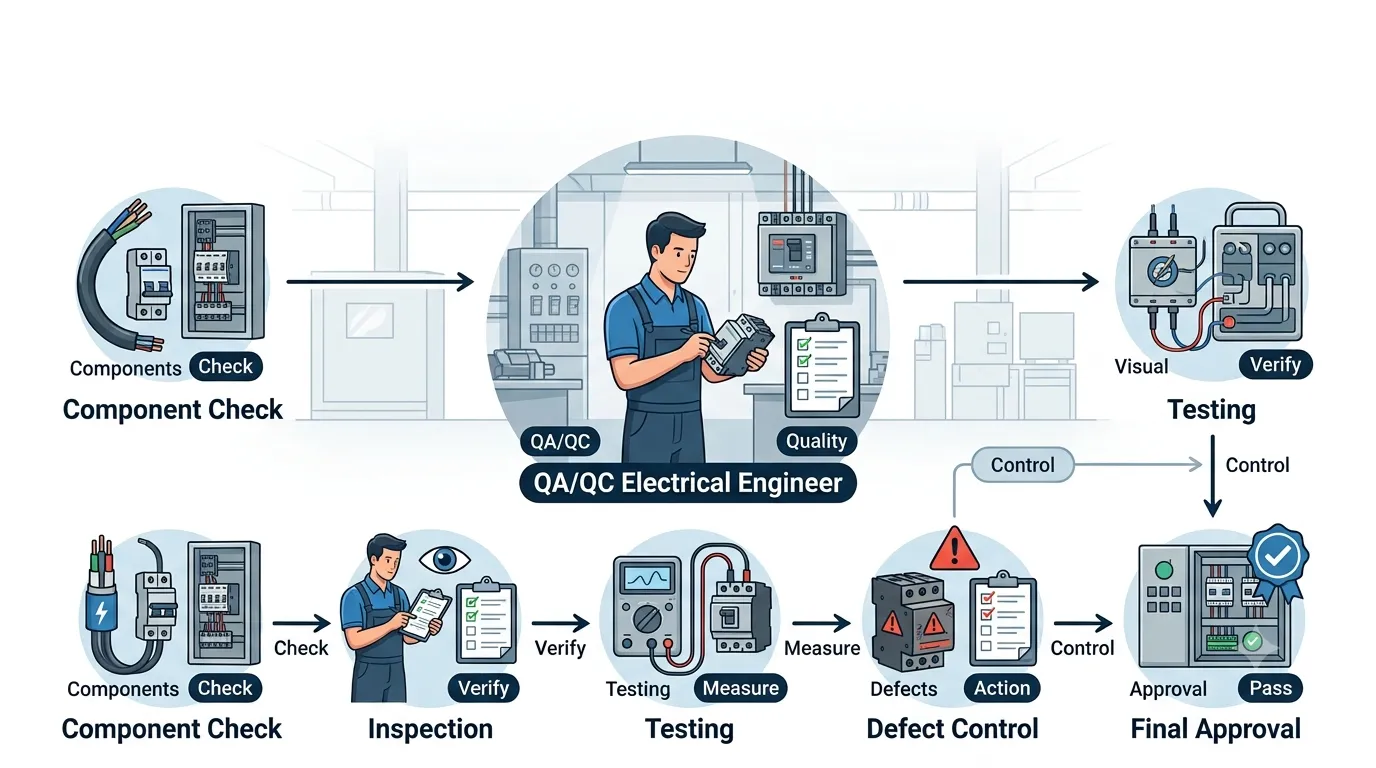
Incoming Material Inspection
Incoming material inspection is the first quality control activity performed when electrical components arrive at a project site or manufacturing facility. QA/QC engineers verify that supplied materials meet approved requirements before they are accepted for use.
Inspection activities include:
Checking component specifications.
Verifying supplier documentation.
Confirming certification requirements.
Inspecting physical condition.
Checking identification labels.
Examples of electrical components inspected during incoming quality control include:
Cables.
Switchgear.
Circuit breakers.
Transformers.
Control panels.
Electrical accessories.
Proper incoming inspection prevents unsuitable materials from entering the production or installation process.
Component Quality Verification
Electrical components must be verified to ensure they meet required technical and performance criteria. QA/QC engineers evaluate whether components are suitable for their intended application.
Component verification includes:
Reviewing technical datasheets.
Checking ratings and specifications.
Confirming compatibility with system requirements.
Performing inspection tests.
For example, a circuit breaker must be checked for correct voltage rating, current capacity, and protective functionality before installation.
Assembly Quality Control
Electrical assemblies require careful monitoring to ensure all components are correctly installed and connected. Poor assembly practices can result in electrical faults, reduced performance, and safety hazards.
Assembly quality control focuses on:
Correct component installation.
Proper wiring connections.
Cable routing quality.
Terminal tightening.
Identification marking.
QA/QC engineers use inspection checklists and testing procedures to verify assembly accuracy.
Electrical Inspection and Testing Procedures
Visual Inspection
Visual inspection is one of the most common quality control techniques used in electrical engineering. It allows engineers to identify visible defects before detailed testing begins.
Visual inspection activities include:
Checking physical damage.
Confirming correct installation.
Inspecting cable conditions.
Verifying component positioning.
Checking labels and markings.
Visual inspection helps detect problems that may affect electrical performance or safety.
Electrical Testing
Electrical testing provides measurable evidence of system performance and reliability. QA/QC engineers use testing equipment to verify that electrical components operate according to requirements.
Common electrical tests include:
Voltage testing.
Continuity testing.
Insulation resistance testing.
Earth resistance testing.
Functional testing.
Testing confirms that electrical systems perform safely under expected operating conditions.
Quality Control Procedures for Electrical Assemblies
A structured quality control procedure ensures that electrical assemblies meet project requirements.
Quality Planning
Before inspection activities begin, QA/QC engineers establish:
Inspection requirements.
Testing methods.
Acceptance criteria.
Documentation procedures.
Quality planning ensures that inspection activities are organised and consistent.
Inspection and Monitoring
During production or installation, engineers monitor:
Workmanship quality.
Component installation.
Testing activities.
Compliance with specifications.
Regular monitoring helps identify problems before final approval.
Defect Identification and Control
When defects are identified, QA/QC engineers record and manage them through formal procedures.
Defect control includes:
Identifying the problem.
Recording non-conformities.
Investigating causes.
Implementing corrective actions.
Verifying improvements.
Final Quality Verification
Before system approval, final verification confirms that:
All inspections are completed.
Testing results meet requirements.
Documentation is available.
Corrective actions are closed.
Quality Control Activities and Their Applications
| Quality Control Activity | Purpose | Electrical Application |
|---|---|---|
| Material Inspection | Verify quality of incoming components | Checking cables, panels, and equipment |
| Visual Inspection | Identify visible defects | Installation and assembly checks |
| Electrical Testing | Confirm system performance | Voltage, insulation, and continuity testing |
| Documentation Review | Maintain quality evidence | Test reports and inspection records |
| Corrective Action | Resolve identified issues | Repair and verification process |
Monitoring Quality Performance of Electrical Systems
Continuous monitoring allows QA/QC engineers to maintain electrical quality throughout the system lifecycle.
Monitoring activities include:
Reviewing inspection results.
Analysing testing data.
Tracking defects.
Evaluating performance trends.
Improving procedures.
Performance monitoring helps organisations identify repeated issues and improve future electrical projects.
Practical Example: Quality Control of an Electrical Control Panel
Workplace Scenario
A manufacturing facility is installing a new electrical control panel for automated production equipment. Before operation, the QA/QC team must ensure that the panel meets safety and performance requirements.
Quality Control Activities
The QA/QC Electrical Engineer performs:
Incoming inspection of panel components.
Verification of wiring connections.
Visual inspection of assembly quality.
Electrical performance testing.
Identified Issue
During inspection, the engineer discovers incorrect cable identification and a loose terminal connection.
Corrective Action
The team:
Records the non-conformance.
Corrects the wiring issue.
Performs retesting.
Updates quality documentation.
Final Outcome
After corrective actions, the control panel passes inspection and testing requirements. The quality control process ensures safe operation, improved reliability, and compliance with project specifications.
Case Study: Improving Electrical System Reliability Through Quality Control
Background
An industrial company experienced repeated failures in electrical assemblies after installation. Investigation showed that inconsistent inspection practices were affecting product quality.
Quality Investigation
The QA/QC team reviewed:
Inspection records.
Testing procedures.
Assembly processes.
Defect reports.
The investigation identified weaknesses in:
Material verification.
Assembly inspection.
Testing documentation.
Improvement Actions
The company introduced:
Standardised inspection procedures.
Improved testing checklists.
Additional quality checkpoints.
Better defect tracking systems.
Results
The improved QC system achieved:
Reduced electrical failures.
Improved assembly quality.
Better compliance performance.
Increased operational reliability.
Case Study Conclusion
This case demonstrates the importance of applying effective quality control practices in electrical engineering. Continuous inspection, testing, and monitoring allow QA/QC professionals to identify risks early, improve system performance, and maintain reliable electrical operations.
Key Benefits of Quality Control Practices in Electrical Engineering
Effective quality control provides significant advantages, including:
Improved electrical safety.
Increased equipment reliability.
Reduced defects and failures.
Better compliance with standards.
Improved installation quality.
Reduced maintenance requirements.
Enhanced customer confidence.
Better documentation and traceability.
Improved project performance.
Support for continuous improvement.
Industry Applications of Electrical Quality Control
Quality control practices are applied across multiple electrical engineering sectors.
Construction Industry
Applications include:
Building electrical installations.
Power distribution systems.
Electrical commissioning.
Manufacturing Industry
Applications include:
Electrical equipment production.
Control panel assembly.
Component testing.
Energy Sector
Applications include:
Power generation systems.
Electrical infrastructure.
Renewable energy installations.
Industrial Automation
Applications include:
Automated machinery.
Control systems.
Industrial electrical assemblies.
Conclusion
Applying quality control practices to electrical components, systems, and assemblies is essential for maintaining safety, reliability, and compliance in electrical engineering projects. QA/QC Electrical Engineers use inspection methods, testing procedures, monitoring activities, and documentation systems to ensure that electrical products and installations meet required standards.
For learners studying the LICQual Level 3 Certificate in Quality Control and Quality Assurance (QA/QC) in Electrical Engineering, understanding quality control practices provides the foundation required to support professional electrical quality management. These skills enable learners to identify defects, verify performance, manage corrective actions, and contribute to the successful delivery of reliable electrical systems.
2. Implement Quality Checks and Inspections at Different Stages of Production to Prevent Defects and Ensure Reliability and Safety
Introduction to Production Quality Checks in Electrical QA/QC
Quality checks and inspections during electrical production are essential activities used to ensure that electrical components, assemblies, and systems meet required standards of safety, reliability, and performance. In electrical manufacturing and assembly environments, QA/QC Electrical Engineers apply inspection procedures at different production stages to identify defects early, prevent failures, and ensure that finished products comply with approved specifications.
Production quality control is a preventive approach rather than only a final checking activity. By performing inspections during material receiving, component assembly, manufacturing processes, testing, and final approval stages, organisations can detect problems before they become major quality issues. This approach reduces rework, improves production efficiency, and supports the delivery of reliable electrical products.
For QA/QC Electrical Engineers, implementing inspection checkpoints throughout production ensures that every stage of manufacturing follows controlled procedures. This lesson explains how quality checks are planned, performed, documented, and evaluated to maintain electrical product safety and reliability in professional engineering environments.
Understanding Production Quality Control in Electrical Engineering
Definition of Production Quality Checks
Production quality checks are systematic inspection and verification activities performed during the manufacturing or assembly process to confirm that electrical products meet specified requirements.
These checks focus on:
- Material quality.
- Component accuracy.
- Assembly workmanship.
- Electrical performance.
- Safety compliance.
Quality checks help identify deviations from approved requirements before the final product is completed.
Importance of Inspections During Production
Inspection during production allows QA/QC teams to monitor quality continuously rather than waiting until the final stage.
The main benefits include:
- Early identification of defects.
- Reduced production errors.
- Improved product reliability.
- Prevention of safety risks.
- Better compliance with specifications.
- Reduced repair and replacement costs.
A controlled inspection process ensures that electrical products are manufactured consistently and perform safely during operation.
Stages of Quality Checks During Electrical Production
Electrical production involves multiple stages where inspection activities are required. Each stage has specific quality objectives.
Stage 1: Incoming Material Inspection
Incoming inspection is performed when electrical materials and components are received from suppliers.
The purpose is to verify that materials meet approved requirements before entering production.
QA/QC engineers inspect:
- Component specifications.
- Manufacturer certificates.
- Physical condition.
- Quantity and identification.
- Compliance documentation.
Common materials checked include:
- Electrical cables.
- Circuit breakers.
- Switchgear components.
- Control devices.
- Electronic components.
Practical Example
Before assembling an electrical control panel, the QA/QC engineer verifies that circuit breakers have the correct voltage and current ratings according to project requirements.
Stage 2: Component Inspection
Component inspection ensures that individual electrical parts are suitable before assembly.
Inspection activities include:
- Checking component dimensions.
- Verifying specifications.
- Inspecting physical condition.
- Confirming approved supplier details.
Component inspection prevents defective parts from affecting final product quality.
Stage 3: Assembly Inspection
During assembly, QA/QC engineers monitor the installation and connection of electrical components.
Assembly inspections focus on:
- Correct component placement.
- Proper wiring connections.
- Cable routing.
- Terminal tightening.
- Labelling accuracy.
Poor assembly practices can lead to:
- Electrical faults.
- Reduced performance.
- Safety hazards.
Regular inspection ensures that assembly activities follow approved procedures.
Stage 4: In-Process Quality Inspection
In-process inspection occurs while manufacturing activities are ongoing. This allows engineers to identify problems before completing the product.
QA/QC engineers monitor:
- Manufacturing steps.
- Installation procedures.
- Workmanship quality.
- Process compliance.
Benefits of in-process inspection include:
- Faster defect detection.
- Reduced waste.
- Improved process control.
Stage 5: Electrical Testing and Performance Verification
After assembly, electrical testing confirms whether the product operates according to requirements.
Common tests include:
- Continuity testing.
- Insulation resistance testing.
- Voltage testing.
- Functional testing.
- Safety verification.
Testing ensures that electrical products are safe and reliable before final approval.
Stage 6: Final Inspection and Approval
Final inspection is performed before product release or system commissioning.
The QA/QC engineer verifies:
- Completed inspection records.
- Test results.
- Product condition.
- Compliance documents.
Final approval confirms that the electrical product meets quality requirements.
Electrical Production Inspection Methods
Visual Inspection
Visual inspection is one of the first quality checks performed during production.
It helps identify:
- Damaged components.
- Incorrect assembly.
- Poor workmanship.
- Missing labels.
Visual inspections are simple but effective for detecting visible quality issues.
Dimensional Inspection
Dimensional inspection verifies that components and assemblies meet required physical measurements.
It ensures:
- Correct component fitting.
- Proper alignment.
- Accurate installation.
Electrical Testing Inspection
Electrical testing verifies operational performance.
Testing methods include:
- Measuring voltage levels.
- Checking insulation resistance.
- Testing circuit continuity.
- Verifying equipment operation.
Documentation Inspection
Documentation checks ensure that quality records are complete.
Documents include:
- Inspection reports.
- Test certificates.
- Calibration records.
- Non-conformance reports.
Quality Check Process During Production
| Production Stage | Quality Check Activity | Purpose |
|---|---|---|
| Material Receiving | Component verification | Ensure approved materials are used |
| Assembly Stage | Wiring and installation inspection | Prevent assembly defects |
| Manufacturing Process | In-process monitoring | Identify problems early |
| Testing Stage | Electrical performance testing | Verify safety and functionality |
| Final Approval | Complete quality review | Confirm product compliance |
Quality Control Procedures for Preventing Defects
Inspection Planning
Before production begins, QA/QC engineers develop inspection plans.
Inspection planning includes:
- Defining inspection points.
- Selecting testing methods.
- Establishing acceptance criteria.
- Preparing checklists.
A well-planned inspection system ensures consistent quality monitoring.
Use of Inspection Checklists
Inspection checklists help engineers complete quality checks systematically.
They include:
- Required inspection activities.
- Acceptance requirements.
- Verification points.
- Approval signatures.
Checklists reduce human error and improve documentation accuracy.
Defect Identification and Management
When defects are discovered, they must be controlled through formal procedures.
The process includes:
- Recording the defect.
- Investigating the cause.
- Correcting the issue.
- Verifying the solution.
Common production defects include:
- Incorrect wiring.
- Damaged components.
- Poor connections.
- Failed electrical tests.
Corrective and Preventive Actions
Corrective actions resolve existing quality problems, while preventive actions reduce the chance of future failures.
Actions may include:
- Repairing defective components.
- Improving production procedures.
- Updating inspection methods.
- Providing additional training.
Role of QA/QC Electrical Engineers During Production Inspections
QA/QC Electrical Engineers are responsible for maintaining quality throughout production.
Their responsibilities include:
Monitoring Production Activities
Engineers:
- Observe manufacturing processes.
- Verify compliance with procedures.
- Identify quality risks.
Conducting Inspections
They perform:
- Visual checks.
- Measurement verification.
- Electrical testing.
Reviewing Quality Records
They ensure:
- Inspection reports are complete.
- Test results are accurate.
- Defects are documented.
Approving Completed Products
Before release, engineers verify that:
- Requirements are achieved.
- Testing is completed.
- Quality documentation is available.
Practical Example: Inspection of Electrical Control Panel Production
Workplace Scenario
A company manufactures electrical control panels for industrial automation systems. The QA/QC department is responsible for ensuring product reliability before delivery.
Quality Checks Implemented
During production, engineers perform:
Material inspection:
- Verify components.
- Check certificates.
- Confirm specifications.
Assembly inspection:
- Check wiring.
- Verify connections.
- Inspect component placement.
Testing inspection:
- Perform insulation testing.
- Conduct functional checks.
- Verify electrical performance.
Identified Defect
During final testing, the QA/QC engineer identifies an incorrect wiring connection.
Corrective Action
The team:
- Records the defect.
- Corrects the wiring.
- Performs retesting.
- Updates quality records.
Final Result
The control panel passes inspection and is approved for delivery.
Case Study: Reducing Electrical Product Defects Through Production Inspections
Background
An electrical equipment manufacturer experienced customer complaints due to product failures after delivery. The company reviewed its quality control process to identify improvement opportunities.
Investigation
The QA/QC team analysed:
- Production records.
- Inspection reports.
- Customer feedback.
- Testing results.
The investigation found that inspections were mainly performed at the final stage, allowing defects to continue through production.
Improvement Actions
The company introduced:
- Incoming material inspections.
- Assembly checkpoints.
- In-process quality monitoring.
- Additional electrical testing.
Results
The improved inspection system achieved:
- Reduced product defects.
- Improved manufacturing consistency.
- Better customer satisfaction.
- Increased electrical safety.
Case Study Conclusion
This case demonstrates the importance of implementing quality checks at multiple production stages. Early inspection and continuous monitoring help organisations prevent defects, improve reliability, and maintain high electrical quality standards.
Key Benefits of Production Quality Checks and Inspections
Effective production inspections provide:
- Improved electrical safety.
- Reduced manufacturing defects.
- Increased product reliability.
- Better compliance performance.
- Lower repair costs.
- Improved production efficiency.
- Stronger quality documentation.
- Enhanced customer confidence.
- Reduced operational risks.
- Continuous quality improvement.
Industry Applications of Electrical Production Quality Control
Quality checks and inspections are widely used in:
Electrical Manufacturing
Applications include:
- Control panel production.
- Electrical equipment assembly.
- Component manufacturing.
Construction Projects
Applications include:
- Electrical installation inspection.
- System commissioning.
- Compliance verification.
Energy Industry
Applications include:
- Power equipment inspection.
- Electrical system testing.
- Reliability verification.
Industrial Automation
Applications include:
- Machine control systems.
- Automation panels.
- Electrical assembly checks.
Conclusion
Implementing quality checks and inspections at different stages of electrical production is essential for preventing defects, improving reliability, and ensuring safety. QA/QC Electrical Engineers use systematic inspection methods, testing procedures, and documentation practices to control quality from material selection to final approval.
For learners of the LICQual Level 3 Certificate in Quality Control and Quality Assurance (QA/QC) in Electrical Engineering, understanding production quality control processes provides practical skills required to support effective electrical quality management. These practices enable professionals to identify defects early, maintain compliance, and contribute to the successful delivery of safe and reliable electrical systems.
3. Learn to Develop and Execute Quality Control Plans, Including Sampling, Monitoring, and Corrective Actions for Electrical Products
Introduction to Quality Control Plans in Electrical QA/QC
A Quality Control Plan (QCP) is an essential document used by QA/QC Electrical Engineers to define how electrical products, components, and systems will be inspected, tested, monitored, and controlled throughout production and installation processes. A well-developed quality control plan provides a structured approach for maintaining product quality, identifying defects, verifying compliance, and ensuring that electrical products meet approved specifications and safety requirements.
In electrical engineering environments, quality control plans are used to establish inspection points, testing methods, acceptance criteria, sampling procedures, responsibilities, and corrective action processes. These plans help organisations move from reactive defect correction to proactive quality management by identifying potential risks before they affect product performance or safety.
For QA/QC Electrical Engineers, developing and executing quality control plans requires technical understanding of electrical components, manufacturing processes, testing procedures, and quality standards. This lesson explains how quality control plans are created, how sampling and monitoring activities are performed, and how corrective actions are implemented to improve electrical product reliability.
Understanding Quality Control Plans in Electrical Engineering
Definition of a Quality Control Plan
A Quality Control Plan is a documented procedure that describes the inspection, testing, monitoring, and corrective action activities required to ensure that electrical products meet specified quality requirements.
A quality control plan normally defines:
- Inspection stages.
- Testing requirements.
- Sampling methods.
- Acceptance criteria.
- Responsible personnel.
- Documentation requirements.
- Corrective action procedures.
The purpose of a quality control plan is to maintain consistent quality throughout the product lifecycle.
Importance of Quality Control Plans
Quality control plans help organisations manage electrical product quality by providing clear inspection and monitoring processes.
Key objectives include:
- Preventing defects.
- Ensuring compliance with specifications.
- Improving production consistency.
- Reducing quality risks.
- Supporting customer requirements.
- Maintaining safety standards.
A structured QCP ensures that every critical quality activity is planned and controlled.
Elements of an Electrical Quality Control Plan
A quality control plan for electrical products includes several important elements.
Product and Process Information
The plan identifies:
- Electrical product details.
- Manufacturing processes.
- Critical components.
- Quality requirements.
Examples include:
- Control panels.
- Circuit protection devices.
- Electrical assemblies.
- Power equipment.
Inspection and Testing Requirements
The QCP defines what inspections and tests must be completed.
Examples include:
- Visual inspection.
- Dimensional checks.
- Electrical testing.
- Functional verification.
- Safety testing.
Acceptance Criteria
Acceptance criteria define the conditions required for approval.
They include:
- Approved measurement limits.
- Performance requirements.
- Testing standards.
- Customer specifications.
Responsibilities and Authority
A quality control plan identifies responsible personnel.
Responsibilities may include:
- QA/QC Electrical Engineer.
- Inspection technician.
- Production supervisor.
- Testing personnel.
Clear responsibilities prevent confusion during quality activities.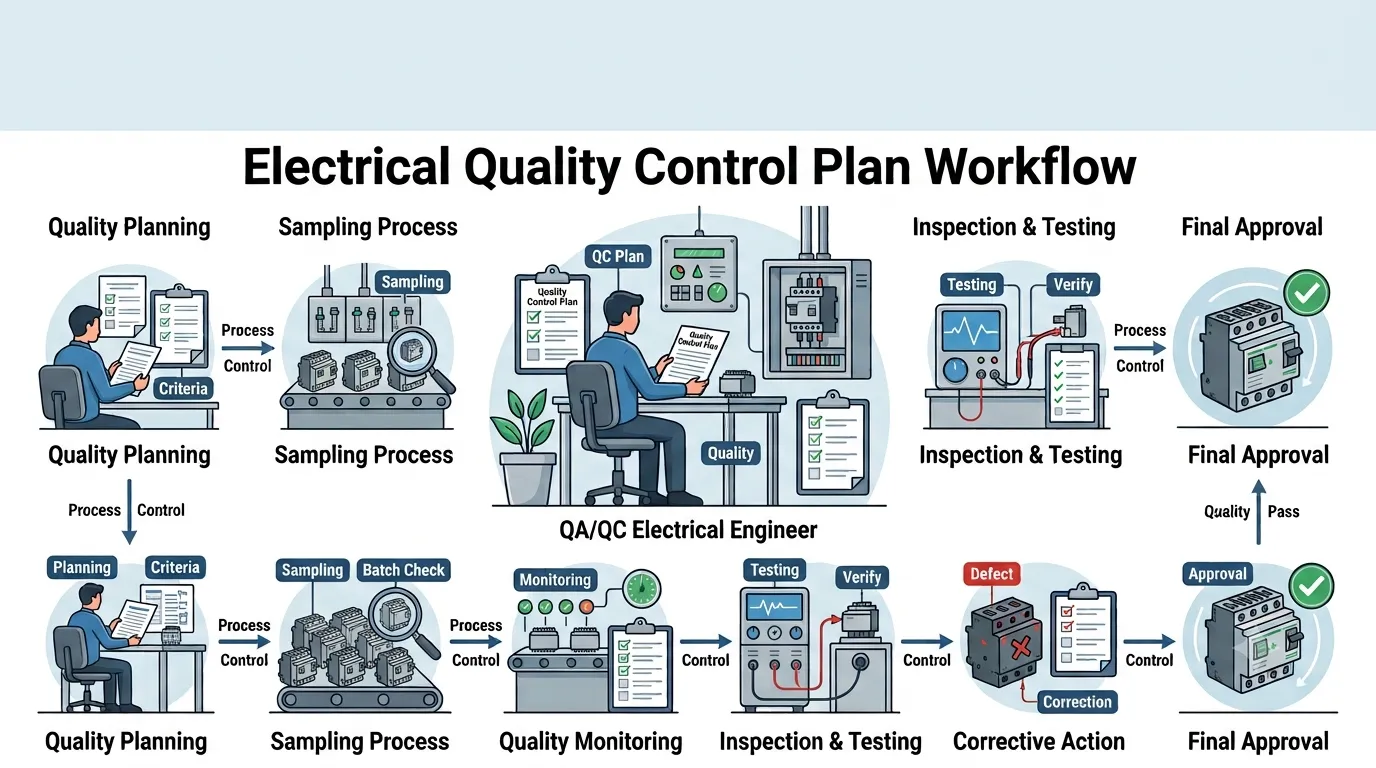
Sampling Methods in Electrical Quality Control
Sampling is the process of selecting a representative number of electrical products or components for inspection and testing.
Sampling allows organisations to evaluate quality efficiently without testing every single item.
Purpose of Sampling
Sampling helps to:
- Reduce inspection time.
- Control production quality.
- Identify defect trends.
- Improve decision-making.
Sampling is especially useful in large-scale electrical manufacturing where complete inspection may not be practical.
Types of Sampling Methods
Random Sampling
Random sampling involves selecting products without a specific pattern.
Applications include:
- Batch inspections.
- Component verification.
- Production monitoring.
Benefits:
- Reduces selection bias.
- Provides representative results.
Inspection Based Sampling
This method focuses on specific quality risks or critical components.
Examples:
- High-voltage components.
- Safety-critical equipment.
- Protective devices.
Acceptance Sampling
Acceptance sampling determines whether a production batch should be accepted or rejected based on inspection results.
It considers:
- Number of defects.
- Product quantity.
- Quality limits.
Monitoring Activities in Electrical Quality Control Plans
Monitoring ensures that electrical production processes remain under control.
QA/QC Electrical Engineers monitor:
- Production activities.
- Inspection results.
- Testing performance.
- Defect rates.
Process Monitoring
Process monitoring checks whether manufacturing activities follow approved procedures.
Activities include:
- Reviewing assembly processes.
- Checking workmanship quality.
- Monitoring component installation.
Performance Monitoring
Performance monitoring evaluates whether electrical products continue to meet requirements.
It includes:
- Testing electrical output.
- Reviewing operating performance.
- Analysing failure trends.
Quality Data Monitoring
Quality data helps engineers identify improvement opportunities.
Data sources include:
- Inspection reports.
- Test results.
- Defect records.
- Customer feedback.
Electrical Inspection and Testing Within Quality Control Plans
Inspection and testing activities are essential parts of executing a quality control plan.
Visual Inspection
Visual inspection verifies physical quality.
Engineers check:
- Component condition.
- Wiring arrangement.
- Labels and markings.
- Assembly quality.
Electrical Testing
Electrical testing confirms product performance.
Common tests include:
- Insulation resistance testing.
- Continuity testing.
- Voltage testing.
- Functional testing.
Documentation Review
Documentation verification ensures that quality evidence is complete.
Records include:
- Test certificates.
- Inspection reports.
- Calibration records.
- Approval documents.
Quality Control Plan Execution Process
| Quality Control Activity | Purpose | Electrical Product Application |
|---|---|---|
| Inspection Planning | Define quality requirements | Electrical assemblies and components |
| Sampling Inspection | Evaluate production quality | Batch testing of electrical products |
| Process Monitoring | Maintain manufacturing control | Panel and equipment production |
| Electrical Testing | Verify performance and safety | Functional and safety checks |
| Corrective Action | Remove defects | Repair and process improvement |
Corrective Actions in Electrical Quality Control
Corrective action is a systematic process used to eliminate the cause of identified quality problems.
It ensures that defects are not repeated in future production.
Corrective Action Process
Step 1: Identify the Problem
The QA/QC team records:
- Defect details.
- Affected product.
- Quality impact.
Step 2: Investigate Root Cause
Engineers analyse:
- Production processes.
- Component quality.
- Testing methods.
Step 3: Implement Solution
Actions may include:
- Repairing defective products.
- Replacing components.
- Improving procedures.
- Updating inspection methods.
Step 4: Verify Effectiveness
The team confirms that:
- Corrective actions worked.
- Product quality improved.
- Requirements are achieved.
Role of QA/QC Electrical Engineers in Quality Control Plans
QA/QC Electrical Engineers play a key role in developing and implementing quality control plans.
Their responsibilities include:
Developing Quality Requirements
Engineers define:
- Inspection criteria.
- Testing procedures.
- Quality checkpoints.
Managing Inspection Activities
They supervise:
- Sampling inspections.
- Production checks.
- Testing activities.
Reviewing Quality Data
Engineers analyse:
- Defect information.
- Testing results.
- Production trends.
Managing Corrective Actions
They ensure:
- Problems are documented.
- Root causes are identified.
- Improvements are verified.
Practical Example: Quality Control Plan for Electrical Control Panels
Workplace Scenario
An electrical manufacturer produces control panels for industrial automation systems. The company develops a quality control plan to ensure product reliability before delivery.
Quality Control Plan Activities
The plan includes:
Incoming inspection:
- Verify electrical components.
- Check supplier certificates.
Assembly monitoring:
- Inspect wiring.
- Verify component installation.
Testing:
- Perform insulation testing.
- Conduct functional checks.
Sampling:
- Inspect selected production units.
- Analyse defect trends.
Identified Quality Issue
Sampling inspection identifies incorrect terminal connections in some panels.
Corrective Action
The company:
- Reviews assembly procedures.
- Provides technician training.
- Updates inspection checkpoints.
- Performs additional verification.
Final Outcome
The improved quality control plan reduces defects and improves product reliability.
Case Study: Implementing a Quality Control Plan in Electrical Manufacturing
Background
A company producing electrical distribution equipment experienced inconsistent product quality and increased customer complaints.
Investigation
The QA/QC department reviewed:
- Existing inspection procedures.
- Production records.
- Defect reports.
The investigation found:
- Lack of structured sampling.
- Limited process monitoring.
- Delayed corrective actions.
Improvement Strategy
The company introduced:
- A detailed quality control plan.
- Defined inspection stages.
- Sampling procedures.
- Improved corrective action tracking.
Results
The organisation achieved:
- Reduced production defects.
- Improved electrical safety.
- Better compliance performance.
- Increased customer satisfaction.
Case Study Conclusion
This case demonstrates the importance of quality control planning in electrical engineering. A properly developed QCP allows organisations to control production quality, identify risks early, and implement effective improvements.
Key Benefits of Quality Control Plans for Electrical Products
Developing and executing quality control plans provides several advantages:
- Improved product reliability.
- Reduced electrical defects.
- Better production control.
- Increased safety performance.
- Improved compliance.
- Efficient inspection processes.
- Better documentation.
- Reduced rework costs.
- Enhanced customer confidence.
- Continuous quality improvement.
Industry Applications of Electrical Quality Control Plans
Quality control plans are widely applied in:
Electrical Manufacturing
Applications include:
- Component production.
- Electrical assemblies.
- Control equipment manufacturing.
Construction Industry
Applications include:
- Electrical installation quality control.
- Testing and commissioning.
- Compliance verification.
Energy Sector
Applications include:
- Power equipment inspection.
- Electrical system monitoring.
- Reliability improvement.
Industrial Automation
Applications include:
- Control panel production.
- Machine electrical systems.
- Automation equipment testing.
Conclusion
Developing and executing quality control plans is a fundamental skill for QA/QC Electrical Engineers responsible for maintaining electrical product quality. Through effective planning, sampling, monitoring, inspection, testing, and corrective actions, organisations can prevent defects and ensure electrical systems operate safely and reliably.
For learners of the LICQual Level 3 Certificate in Quality Control and Quality Assurance (QA/QC) in Electrical Engineering, understanding quality control plans provides practical knowledge required to support professional electrical quality management. These practices enable engineers to control production processes, improve product performance, and maintain compliance with industry requirements.