
Lesson no 1 : Investigate gene–nutrient interactions and epigenetic influences.
The lesson Investigate Gene–Nutrient Interactions and Epigenetic Influences explores the complex relationship between nutrition, genetic variation, and the regulation of gene activity. Learners examine how nutrients and dietary patterns can influence molecular processes, including gene expression, cellular signalling, and metabolic function. The lesson also introduces the principles of nutrigenetics and nutrigenomics, highlighting how genetic differences may affect an individual’s response to specific nutrients and dietary interventions.
A key focus is epigenetics, which examines changes in gene activity that occur without altering the underlying DNA sequence. Learners explore how factors such as diet, nutrient availability, and environmental influences may contribute to epigenetic mechanisms, including DNA methylation and modifications to chromatin-associated proteins. By investigating these interactions, Learners develop a deeper understanding of how nutrition may influence health, disease risk, and long-term physiological outcomes at the molecular level.
The knowledge gained from this lesson supports the critical evaluation of personalised nutrition and evidence-based approaches to dietary guidance. It also develops the analytical skills required to interpret scientific evidence relating to gene–nutrient interactions and apply molecular nutrition concepts within clinical, research, and professional contexts.
1.Critically Explain the Fundamental Molecular Mechanisms by Which Specific Dietary Nutrients Interact with the Human Genome to Influence Gene Regulation
Understanding how dietary nutrients interact with the human genome is a central area of molecular nutrition. Nutrients do far more than provide energy and structural materials. Many nutrients and nutrient-derived molecules participate directly or indirectly in molecular signalling pathways that influence gene expression, cellular adaptation, metabolism, growth, repair and long-term health. The relationship between diet and the genome is therefore dynamic rather than passive.
Gene regulation refers to the processes through which cells control when, where and to what extent particular genes are expressed. Although most cells contain essentially the same DNA sequence, different cell types perform specialised functions because different sets of genes are activated or suppressed. Dietary factors can influence these regulatory processes through several mechanisms, including interactions with transcription factors, regulation of cellular signalling pathways, changes in epigenetic marks, effects on non-coding RNA and alterations in metabolite availability.
This section critically examines the principal molecular mechanisms through which specific nutrients influence gene regulation. It also considers the biological significance, practical applications and limitations of current knowledge in gene–nutrient interactions.
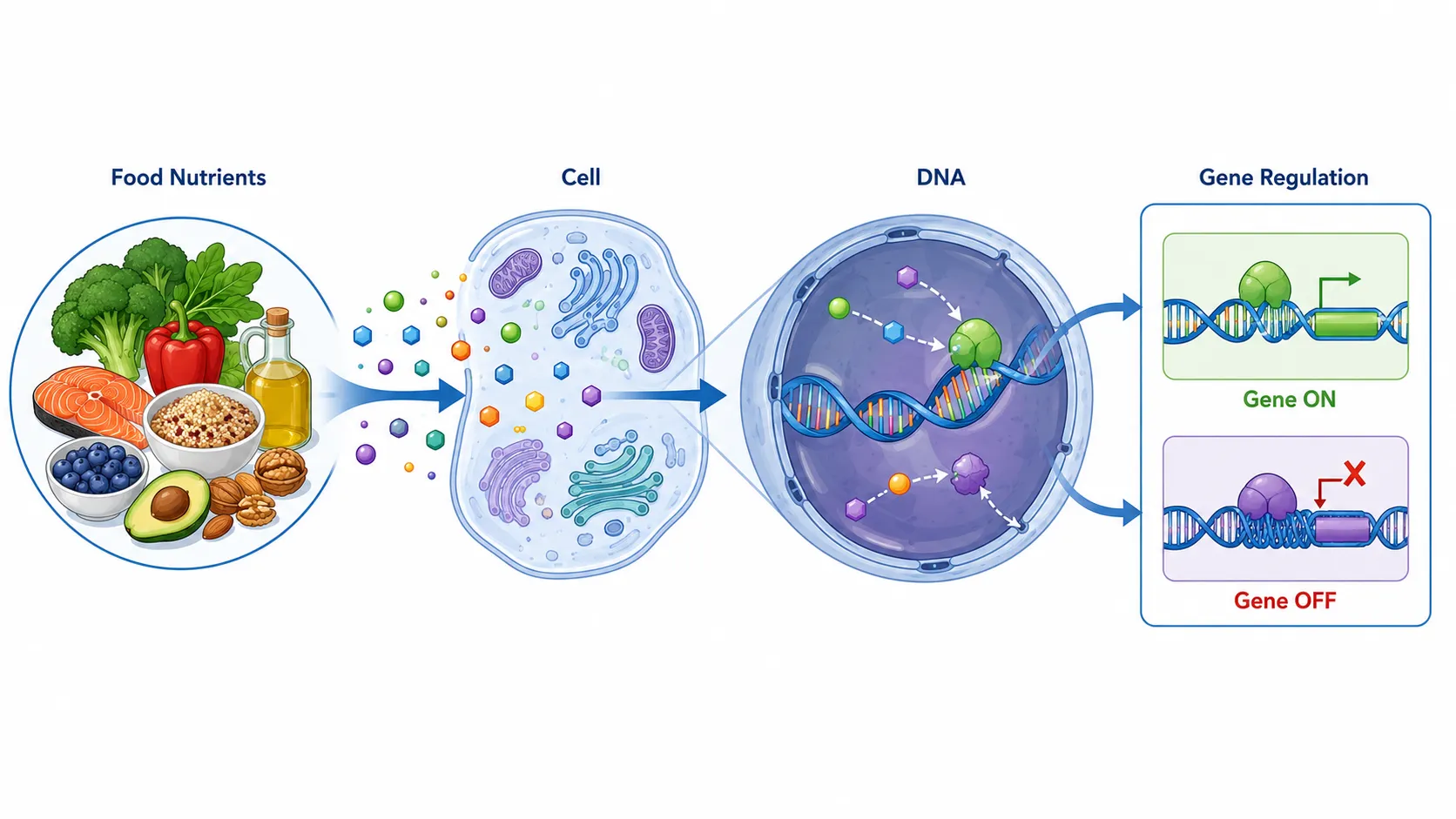
Key Definitions and Concepts
| Term | Definition | Relevance to Gene–Nutrient Interaction |
|---|---|---|
| Genome | The complete set of genetic material contained within an organism | Provides the DNA sequence containing genes and regulatory regions |
| Gene expression | The process through which genetic information is used to produce a functional RNA or protein product | Can be influenced by nutrients and nutrient-derived signals |
| Gene regulation | Control of the timing, location and level of gene expression | Connects environmental and dietary factors with cellular responses |
| Nutrigenomics | The study of how nutrients and dietary patterns influence gene expression and biological pathways | Explains molecular responses to nutrition |
| Nutrigenetics | The study of how genetic variation influences an individual’s response to nutrients | Helps explain differences between individuals |
| Transcription factor | A regulatory protein that binds to DNA and influences transcription | Can be activated or inhibited by nutrient-related signals |
| Epigenetics | Heritable or stable changes in gene activity that occur without changing the DNA sequence | Provides mechanisms through which diet may influence gene activity |
| DNA methylation | The addition of methyl groups to specific DNA regions | Can influence accessibility and transcription of genes |
| Cellular signalling | Molecular communication processes that coordinate cellular responses | Nutrients can act as signals or modify signalling pathways |
| Metabolite | A small molecule produced or used during metabolism | Some metabolites influence enzymes involved in gene regulation |
The Genome as a Nutrient-Responsive Biological System
The human genome is often described as a relatively stable blueprint because the DNA sequence remains largely unchanged throughout an individual’s lifetime. However, the activity of genes is highly responsive to internal and external conditions. Cells continuously receive information about nutrient availability, energy status, hormones, environmental exposures and physiological stress. These signals are translated into molecular responses that can alter gene expression.
Dietary nutrients contribute to this communication network in several ways. They may act as direct ligands for regulatory proteins, provide substrates for biochemical reactions, alter the concentration of signalling molecules or influence the activity of enzymes responsible for modifying DNA and chromatin.
The relationship can be represented as a broad molecular sequence:
Dietary Intake → Digestion and Absorption → Nutrient Availability → Cellular Sensing → Molecular Signalling → Gene Regulation → Protein Expression → Physiological Response
This sequence demonstrates that the influence of nutrition on gene regulation usually involves multiple intermediate stages.
Important Principles of Nutrient–Genome Interaction
Several principles help explain why gene–nutrient relationships are complex:
Nutrients rarely influence a single gene in isolation.
A nutrient may affect multiple molecular pathways simultaneously.
Gene responses may vary between different tissues.
The effect of a nutrient depends on dose and biological availability.
Timing and duration of exposure can influence molecular responses.
Genetic variation may alter individual responsiveness.
Nutrient interactions can modify the effect of other dietary components.
Cellular energy status can influence nutrient-sensitive regulatory pathways.
Environmental and lifestyle factors may interact with dietary influences.
Changes in gene expression do not always produce immediate clinical effects.
These principles are important when critically evaluating scientific claims about nutrition and genetic regulation.
Nutrients as Molecular Signals
The Concept of Nutrient Sensing
Cells must continuously determine whether sufficient nutrients and energy are available. This process is known as nutrient sensing. Specialised proteins and signalling systems detect changes in glucose, fatty acids, amino acids and other metabolites.
When nutrient availability changes, cellular sensors can activate signalling pathways that influence:
Transcription.
Protein synthesis.
Energy production.
Cell growth.
Cellular repair.
Storage of nutrients.
Mobilisation of energy reserves.
Stress responses.
Nutrient sensing therefore provides an important connection between dietary intake and the regulation of the genome.
Nutrients as Direct or Indirect Signalling Molecules
Some nutrients or nutrient-derived molecules can influence regulatory proteins directly. Others exert indirect effects by changing cellular metabolism.
For example:
Certain fatty acids can interact with nuclear regulatory proteins.
Glucose availability can influence carbohydrate-responsive signalling.
Amino acid availability can influence pathways associated with protein synthesis and cellular growth.
Vitamin-derived molecules can participate in regulatory systems.
Mineral availability can affect enzymes and transcription-related proteins.
The same nutrient may therefore have both metabolic and regulatory functions.
Transcription Factors and Nutrient-Dependent Gene Regulation
What Are Transcription Factors?
Transcription factors are proteins that influence whether specific genes are transcribed into RNA. They typically recognise particular DNA sequences located in regulatory regions associated with genes.
The general process can be described as follows:
A cellular signal is generated.
The signal activates or modifies a regulatory protein.
The regulatory protein interacts with DNA.
Transcriptional machinery is recruited or inhibited.
RNA production increases or decreases.
The RNA may subsequently be translated into protein.
Cellular function changes.
Nutrients can influence several stages of this process.
Nutrient-Sensitive Transcriptional Regulation
Nutrient-sensitive transcription factors allow cells to adapt gene expression according to metabolic conditions. For example, changes in carbohydrate or lipid availability may influence the expression of genes involved in:
Glucose utilisation.
Fatty acid metabolism.
Lipid storage.
Cholesterol regulation.
Energy production.
Cellular differentiation.
This mechanism is biologically valuable because nutrient availability is not constant. The body must respond differently after food intake, during fasting, exercise and periods of prolonged energy restriction.
Critical Considerations
Although nutrient-responsive transcription factors are important, their activity should not be interpreted in isolation. A change in one regulatory protein may influence a network of genes, and the final physiological outcome depends on interactions with hormones, metabolites and other regulatory systems.
Therefore:
Increased gene expression does not always mean improved health.
Reduced expression of a gene is not automatically harmful.
Tissue-specific effects may differ.
Short-term molecular responses may not predict long-term outcomes.
Experimental findings may not always translate directly to humans.
Fatty Acids and Regulation of Gene Expression
Fatty Acids as Regulatory Molecules
Fatty acids are commonly recognised as energy sources and structural components of cell membranes. However, they can also participate in molecular signalling and gene regulation.
Certain fatty acids or their derivatives can interact with nuclear receptors and other regulatory proteins. These interactions may alter the expression of genes involved in lipid metabolism, energy utilisation and cellular adaptation.
The broad pathway is:
Dietary Lipid → Digestion → Fatty Acid Absorption → Cellular Uptake → Molecular Sensing → Regulatory Protein Activation → Altered Gene Expression
Potential Regulatory Effects
Fatty acid-related signalling may influence genes involved in:
Fatty acid oxidation.
Lipid synthesis.
Lipid transport.
Cellular energy balance.
Inflammatory signalling.
Membrane-related processes.
The exact response depends on the type of fatty acid, tissue, metabolic state and wider dietary context.
Practical Example
Consider a situation in which a dietary change modifies the pattern of fatty acids available to liver cells. The altered cellular lipid environment may influence regulatory proteins involved in lipid metabolism. As a result, the expression of selected metabolic genes may change, contributing to altered handling of fats.
However, it would be scientifically inaccurate to conclude that a single dietary fatty acid automatically controls a specific health outcome. Human metabolism involves multiple interacting pathways.
Carbohydrates, Glucose Availability and Gene Regulation
Glucose as Both Fuel and Signal
Glucose is a major metabolic fuel, but its availability can also provide information about nutritional status. Cells respond differently when glucose availability is high or low.
Changes in carbohydrate intake and glucose metabolism may influence molecular pathways associated with:
Glucose uptake.
Glycolysis.
Glycogen metabolism.
Lipid synthesis.
Energy storage.
Cellular adaptation.
Cellular Response to Changing Glucose Availability
When nutrient availability increases after eating, the body coordinates metabolic responses through nutrient signals and hormonal regulation. These responses can influence transcriptional activity.
A simplified process is:
Carbohydrates are consumed.
Digestive processes produce absorbable sugars.
Glucose enters the circulation.
Cells detect changes in nutrient availability.
Hormonal and intracellular signals are activated.
Regulatory proteins influence metabolic gene expression.
Cells adjust nutrient utilisation and storage.
Critical Interpretation
The effect of carbohydrate intake on gene regulation cannot be separated entirely from factors such as:
Total energy intake.
Insulin signalling.
Physical activity.
Existing metabolic health.
Duration of dietary exposure.
Food composition.
Individual genetic variation.
Therefore, molecular responses should be interpreted within the complete physiological context.
Amino Acids and Molecular Regulation
Amino Acids as Nutritional Signals
Amino acids are required for protein synthesis, but they also provide information about nutrient availability. Cells can detect amino acid concentrations and adjust processes related to growth, protein synthesis and metabolic adaptation.
Amino acid availability may influence:
Protein synthesis.
Cellular growth.
Enzyme production.
Stress responses.
Autophagy-related processes.
Nitrogen metabolism.
The Link Between Amino Acids and Protein Synthesis
When sufficient amino acids are available, cells may activate molecular pathways that support protein production. When availability is limited, cells may activate adaptive responses designed to conserve resources and maintain survival.
The regulatory process can involve:
Detection of amino acid availability.
Activation or inhibition of signalling pathways.
Changes in translation.
Altered transcription of selected genes.
Adjustment of cellular metabolic activity.
Practical Significance
Understanding amino acid sensing is relevant to:
Nutritional assessment.
Muscle metabolism.
Recovery and adaptation.
Clinical nutrition.
Metabolic research.
However, increased amino acid intake does not automatically produce unlimited increases in protein synthesis. Responses depend on physiological need, total dietary pattern, activity level and cellular regulation.
Vitamins as Regulators of Molecular Function
Vitamins Beyond Their Classical Roles
Many vitamins act primarily as coenzymes or precursors of biologically active molecules. Some vitamin-derived compounds can influence molecular systems involved in gene regulation.
Vitamins may contribute to gene regulation by:
Supporting enzyme activity.
Participating in one-carbon metabolism.
Influencing the production of regulatory molecules.
Supporting antioxidant defence.
Contributing to cellular differentiation pathways.
Affecting DNA and chromatin-associated processes.
Vitamin-Derived Regulatory Molecules
Some vitamin-derived molecules can interact with intracellular receptors that influence transcription. The activated receptor complex can interact with regulatory regions associated with specific genes.
The simplified mechanism is:
Vitamin-Derived Molecule → Receptor Binding → Receptor Activation → DNA Interaction → Altered Transcription → Cellular Response
This demonstrates how a nutrient-derived compound may influence gene activity through receptor-mediated regulation.
Critical Perspective
Vitamin-related gene regulation is influenced by several factors:
Nutritional status.
Receptor availability.
Tissue type.
Genetic variation.
Interaction with other signalling pathways.
For this reason, molecular evidence alone should not be used to support excessive supplementation without appropriate evidence and professional assessment.
Minerals and Molecular Gene Regulation
Minerals contribute to a wide range of biochemical processes. Although they do not provide energy, they may support enzymes, structural proteins and regulatory systems.
Molecular Roles of Minerals
Minerals can contribute to:
Enzyme activation.
DNA synthesis and repair.
Antioxidant systems.
Cellular signalling.
Protein structure.
Transcription-related processes.
Deficiency or imbalance may disrupt the activity of molecular systems and indirectly alter patterns of gene expression.
Mechanistic Example
If a mineral is required as a cofactor for an enzyme involved in cellular regulation, insufficient availability may reduce enzyme activity. This may alter metabolite concentrations or signalling pathways, which can subsequently influence gene expression.
The relationship is therefore often indirect:
Mineral Availability → Enzyme Function → Metabolic Change → Cellular Signalling → Gene Regulation
Epigenetic Mechanisms and Nutrient Availability
Understanding Epigenetic Regulation
Epigenetic regulation refers to molecular processes that influence gene activity without changing the underlying DNA sequence. These mechanisms help explain why genetically similar cells can perform different functions.
Major epigenetic processes include:
DNA methylation.
Histone modification.
Chromatin remodelling.
Regulation by non-coding RNA.
Nutritional factors may influence these processes by affecting the availability of substrates, cofactors and metabolites required for regulatory reactions.
DNA Methylation
DNA methylation involves the addition of methyl groups to specific DNA regions. Patterns of methylation can influence how accessible particular genes are to transcriptional machinery.
Nutrients involved in one-carbon metabolism may contribute to biochemical systems associated with methyl group transfer.
The general sequence is:
Dietary nutrients provide metabolic substrates.
Nutrient metabolism contributes to one-carbon pathways.
Methyl-group availability is influenced.
DNA methylation enzymes use relevant molecular substrates.
Methylation patterns may influence gene accessibility.
Gene expression patterns may change.
Histone Modification
DNA is organised around proteins called histones. Chemical modifications to these proteins can influence chromatin structure and gene accessibility.
Nutritional metabolism may affect the availability of molecules used by enzymes responsible for histone modification.
Potential outcomes include:
Increased accessibility of selected genes.
Reduced accessibility of selected genes.
Altered transcriptional activity.
Changes in cellular phenotype.
Critical Considerations in Epigenetic Nutrition
Epigenetic mechanisms are often discussed in relation to diet, but interpretation requires caution.
Important considerations include:
Epigenetic changes may be tissue-specific.
Not every dietary exposure causes stable epigenetic change.
Association does not prove direct causation.
Epigenetic marks can be influenced by multiple environmental factors.
The clinical significance of small molecular changes may be uncertain.
Therefore, claims about “switching genes on or off” through individual foods are often oversimplified.
Non-Coding RNA and Dietary Influences
The Role of Non-Coding RNA
Not all RNA molecules are translated into proteins. Some non-coding RNAs regulate gene expression by influencing RNA stability, translation or other molecular processes.
Dietary factors may indirectly influence cellular environments that affect non-coding RNA activity.
These mechanisms can contribute to regulation of:
Protein production.
Cellular differentiation.
Metabolic adaptation.
Stress responses.
Simplified Regulatory Process
Nutrient Environment → Cellular Signalling → Non-Coding RNA Regulation → RNA Activity → Protein Production → Cellular Response
This represents another layer of complexity in gene–nutrient interactions.
Cellular Signalling Pathways as Links Between Diet and the Genome
From Nutrient Detection to Gene Expression
Most nutrients do not physically bind directly to DNA. Instead, they influence molecular signalling systems that communicate nutritional conditions to the nucleus.
Important stages include:
Nutrient detection.
Receptor activation.
Enzyme activity.
Signal transduction.
Protein modification.
Nuclear signalling.
Transcriptional regulation.
Why Signalling Pathways Matter
Signalling pathways allow cells to respond rapidly to changes in:
Energy availability.
Nutrient concentrations.
Hormonal signals.
Cellular stress.
Oxygen availability.
These pathways integrate information from multiple sources before influencing gene activity.
Critical Importance of Integration
A single nutrient signal may produce different outcomes depending on other signals present at the same time.
For example, the same nutrient concentration may be interpreted differently when:
Energy stores are high.
Energy stores are depleted.
Stress hormones are elevated.
Inflammatory signals are present.
Physical activity has altered metabolic demand.
This demonstrates why molecular nutrition requires systems-level thinking.
The Role of One-Carbon Metabolism
Definition and Importance
One-carbon metabolism consists of interconnected biochemical pathways involved in transferring single-carbon units between molecules. These reactions contribute to essential cellular functions, including processes associated with methylation.
Certain dietary nutrients contribute to these pathways and may therefore influence molecular reactions related to DNA and other cellular components.
Key Biological Functions
One-carbon metabolism contributes to:
Methyl-group transfer.
Nucleotide synthesis.
Cellular growth.
DNA-related processes.
Amino acid metabolism.
Nutritional Relevance
Adequate nutrient availability supports the biochemical pathways involved in one-carbon metabolism. Long-term nutritional inadequacy may alter the efficiency of these pathways and potentially influence molecular regulation.
However, nutrient supplementation does not necessarily produce predictable improvements in gene regulation if an individual already has adequate nutritional status.
Gene–Nutrient Interactions and Genetic Variation
Individual Differences in Nutritional Response
People do not always respond to the same dietary exposure in the same way. Genetic variation may influence:
Nutrient absorption.
Enzyme activity.
Nutrient metabolism.
Receptor function.
Transport processes.
Regulatory responses.
This area is studied within nutrigenetics.
Nutrigenetics and Nutrigenomics
Although closely related, these concepts have different primary focuses.
Nutrigenetics examines:
How genetic variation influences nutritional response.
Why individuals may metabolise nutrients differently.
How inherited differences can affect nutrient requirements.
Nutrigenomics examines:
How nutrients influence gene expression.
How dietary patterns affect molecular pathways.
How nutrition interacts with genomic function.
Together, these disciplines contribute to the development of personalised and precision approaches to nutrition.
Step-by-Step Process of Nutrient-Influenced Gene Regulation
Stage 1: Dietary Consumption
The process begins when food and nutrients are consumed. The nutritional composition of the diet determines which compounds become available for digestion and absorption.
Key influences include:
Macronutrient composition.
Micronutrient content.
Food matrix.
Meal timing.
Total energy intake.
Stage 2: Digestion and Absorption
Dietary components are broken down into absorbable forms and transported into the body.
Examples include:
Carbohydrates becoming monosaccharides.
Proteins producing amino acids and small peptides.
Lipids producing absorbable lipid components.
Vitamins and minerals entering specialised transport systems.
Stage 3: Circulation and Tissue Delivery
Absorbed nutrients enter circulation directly or indirectly and become available to different tissues.
Their distribution depends on:
Blood flow.
Transport proteins.
Hormonal regulation.
Cellular demand.
Tissue-specific uptake mechanisms.
Stage 4: Cellular Uptake and Sensing
Cells detect nutrient availability using specialised molecular systems.
The cell may respond by:
Activating metabolic enzymes.
Changing signalling pathways.
Modifying transcription factors.
Adjusting protein synthesis.
Stage 5: Molecular Signal Transmission
Signals generated by nutrient sensing are transmitted through molecular pathways.
These pathways may involve:
Protein phosphorylation.
Second messengers.
Enzyme activation.
Receptor signalling.
Changes in metabolite concentrations.
Stage 6: Nuclear Regulation
Signals can influence regulatory proteins that interact with the nucleus.
Possible effects include:
Activation of transcription.
Repression of transcription.
Chromatin modification.
Changes in RNA regulation.
Stage 7: Altered Protein Expression
Changes in transcription can alter the amount of RNA and subsequently the production of specific proteins.
These proteins may include:
Enzymes.
Transporters.
Receptors.
Structural proteins.
Regulatory proteins.
Stage 8: Physiological Adaptation
The final outcome may involve changes in:
Energy metabolism.
Nutrient storage.
Cellular growth.
Tissue repair.
Metabolic flexibility.
Practical Examples of Gene–Nutrient Interactions
Example 1: Altered Dietary Fatty Acid Availability
A change in dietary lipid composition can alter the fatty acids available within cells. These molecules may influence regulatory pathways associated with lipid metabolism.
Potential sequence:
Dietary fats are consumed.
Lipids are digested and absorbed.
Fatty acids reach target tissues.
Cellular regulatory proteins detect lipid-related signals.
Expression of selected metabolic genes changes.
Lipid handling may be modified.
Example 2: Nutrient Availability and Methylation Processes
Nutrients involved in one-carbon metabolism contribute to pathways that support methyl-group transfer.
Potential sequence:
Relevant nutrients are consumed.
Metabolic pathways process these nutrients.
Methyl-donor availability is influenced.
Enzymatic methylation reactions are supported.
Molecular regulation may be affected.
Example 3: Amino Acid Availability
When cellular amino acid availability changes, nutrient-sensitive pathways may alter protein synthesis and cellular adaptation.
Possible outcomes include:
Changes in protein production.
Modification of growth-related pathways.
Activation of nutrient-conservation mechanisms.
Key Benefits of Understanding Nutrient–Genome Interactions
Knowledge of molecular nutrition provides important scientific and professional benefits.
Scientific Benefits
Improves understanding of cellular responses to diet.
Supports research into mechanisms underlying nutrition-related disease.
Helps explain differences in individual nutritional responses.
Strengthens the biological basis of nutritional science.
Clinical and Professional Benefits
Supports evidence-based nutritional assessment.
Encourages individualised rather than overly general interpretation.
Helps professionals understand molecular mechanisms underlying dietary effects.
Supports the development of targeted research questions.
Educational Benefits
Learners develop the ability to:
Connect nutrition with molecular biology.
Interpret complex biological pathways.
Evaluate scientific claims critically.
Distinguish between association and causation.
Understand the principles of personalised nutrition.
Workplace and Research Applications
Clinical Nutrition
Healthcare and nutrition professionals may use molecular knowledge to better understand why individuals show different metabolic responses.
Applications may include:
Interpretation of biochemical findings.
Assessment of nutrient-related risk.
Development of evidence-based dietary strategies.
Consideration of individual biological variation.
Biomedical Research
Researchers investigate molecular mechanisms to identify how nutrients influence:
Gene expression.
Cellular metabolism.
Disease pathways.
Physiological adaptation.
Public Health Nutrition
Molecular findings may eventually contribute to improved understanding of population health. However, public health recommendations must be based on a broad evidence base rather than isolated molecular observations.
Personalised Nutrition
Gene–nutrient research contributes to interest in personalised nutrition. Potential applications include:
Identifying differences in nutrient metabolism.
Investigating variable responses to dietary interventions.
Developing more individualised research approaches.
However, personalised nutrition should not be presented as universally precise or guaranteed. Scientific evidence continues to develop, and genetic information represents only one component of nutritional assessment.
Critical Evaluation of Current Challenges
Complexity of Human Biology
Human gene regulation is influenced by numerous interacting factors. It is therefore difficult to isolate the effect of a single nutrient.
Relevant influences include:
Genetics.
Age.
Dietary pattern.
Physical activity.
Medication use.
Environmental exposure.
Metabolic health.
Microbiome activity.
Limitations of Experimental Models
Laboratory and cell studies can provide valuable mechanistic information. However, findings from isolated cells may not always predict responses in the complete human body.
Critical questions include:
Was the nutrient concentration physiologically realistic?
Does the experimental model represent human biology?
Were the effects observed in relevant tissues?
Are the findings reproducible?
Association Versus Causation
An observed relationship between dietary intake and gene expression does not automatically demonstrate that the nutrient caused the change.
Alternative explanations may include:
Confounding dietary factors.
Lifestyle differences.
Underlying health status.
Genetic variation.
Measurement limitations.
Avoiding Genetic Determinism
Genetic information should not be interpreted as an unavoidable prediction of health outcomes. Genes interact continuously with environmental and behavioural factors.
A more accurate model is:
Genetic Background + Diet + Lifestyle + Environment + Physiological State → Health-Related Outcomes
Professional Judgement in Molecular Nutrition
Professionals interpreting gene–nutrient evidence should apply scientific caution.
Good professional practice includes:
Evaluating the quality of evidence.
Considering the biological plausibility of findings.
Avoiding exaggerated claims.
Recognising individual variation.
Distinguishing experimental evidence from clinical evidence.
Considering the complete dietary pattern.
Communicating uncertainty appropriately.
Questions for Critical Evaluation
When reviewing research on nutrient-related gene regulation, consider:
What specific nutrient was investigated?
What molecular mechanism was proposed?
Was the effect observed in humans?
Was the study population relevant?
Was the nutrient exposure realistic?
Were other variables controlled?
Is the effect biologically meaningful?
Has the finding been independently replicated?
Summary of Key Learning Points
The interaction between nutrients and the human genome represents a complex network of molecular processes rather than a simple direct relationship. Dietary nutrients and nutrient-derived metabolites can influence gene regulation through transcription factors, cellular signalling pathways, epigenetic mechanisms and changes in metabolic substrate availability.
Key points include:
Gene expression determines how genetic information is functionally used within cells.
Nutrients can act as molecular signals as well as metabolic substrates.
Transcription factors provide an important mechanism linking nutritional signals with gene activity.
Fatty acids, glucose-related signals and amino acids can influence nutrient-responsive pathways.
Vitamins and minerals support molecular processes involved in cellular regulation.
Epigenetic mechanisms provide additional pathways through which nutritional conditions may influence gene activity.
One-carbon metabolism is important for biochemical processes associated with methyl-group transfer.
Genetic variation can contribute to differences in individual nutritional responses.
Nutrigenomics investigates how nutrients influence genomic activity.
Nutrigenetics investigates how genetic variation influences responses to nutrients.
Molecular findings must be interpreted within the wider physiological and clinical context.
Association between diet and gene activity does not automatically establish causation.
Personalised nutrition requires careful scientific evaluation and should not rely on genetic information alone.
Conclusion
Specific dietary nutrients influence human biology through an extensive network of molecular interactions that connect nutrient availability with cellular sensing, signalling pathways, transcriptional control and epigenetic regulation. Rather than directly changing the DNA sequence, nutrients commonly influence how existing genetic information is accessed and used by cells.
A critical understanding of these mechanisms is essential for modern molecular nutrition. It enables Learners to explain how carbohydrates, lipids, amino acids, vitamins and minerals can contribute to molecular regulation while recognising the importance of dose, tissue specificity, genetic variation and wider physiological conditions.
The study of gene–nutrient interactions also provides a foundation for understanding nutrigenomics, nutrigenetics and personalised nutrition. However, responsible interpretation requires caution. Molecular mechanisms can demonstrate biological plausibility, but strong clinical conclusions require consistent and high-quality evidence.
By critically examining the pathways through which nutrients interact with regulatory systems, Learners can develop the scientific knowledge and analytical skills needed to evaluate modern research and apply molecular nutrition concepts appropriately within academic, clinical and research contexts.
2.Analyse Complex Laboratory Data to Determine the Direct Physiological Effects of Bioactive Food Compounds on DNA Methylation and Histone Modification
Introduction
Bioactive food compounds can influence human health through mechanisms that extend beyond their traditional nutritional functions. Certain dietary components and naturally occurring compounds can interact with molecular pathways involved in gene regulation, including DNA methylation and histone modification. These processes are central components of epigenetic regulation and can influence whether particular genes are more or less actively expressed without changing the underlying DNA sequence.
The ability to analyse complex laboratory data in this area requires an integrated understanding of nutrition, molecular biology, biochemistry, physiology and research methodology. Laboratory findings may include measurements of nutrient exposure, metabolite concentrations, DNA methylation patterns, histone marks, gene expression, protein abundance and physiological outcomes. A meaningful interpretation must therefore move beyond identifying whether a laboratory value has increased or decreased. The Learner must consider the biological pathway linking dietary exposure to molecular change and, ultimately, to a measurable physiological effect.
This section develops the knowledge and analytical skills required to evaluate these relationships critically. It explores the principal epigenetic mechanisms, relevant laboratory techniques, approaches to interpreting complex datasets, common challenges and practical examples involving bioactive food compounds.
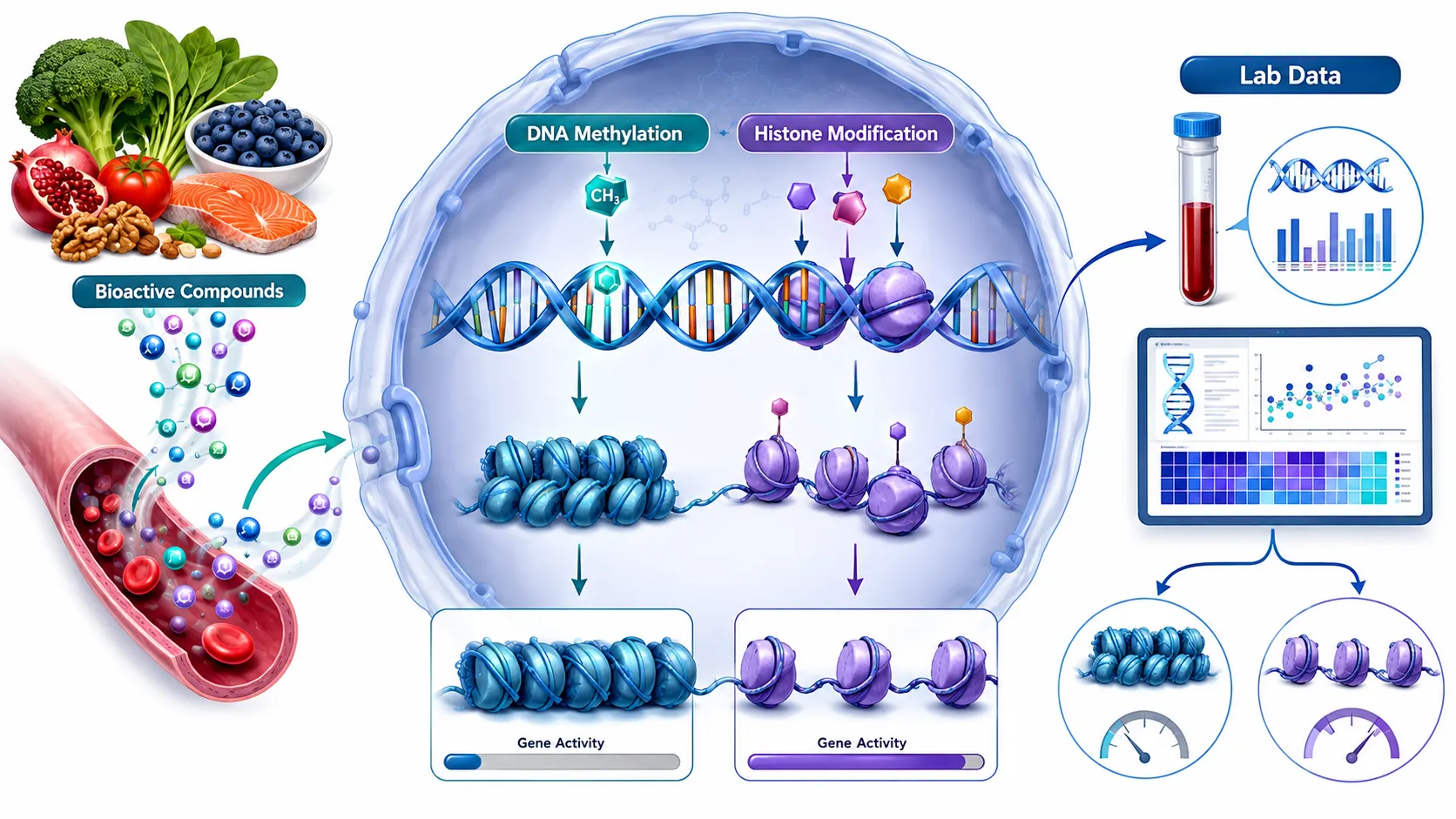
Key Definitions and Concepts
| Term | Definition | Importance in Laboratory Analysis |
|---|---|---|
| Bioactive food compound | A component of food that may influence biological processes beyond providing basic energy or essential nutrients | May affect signalling pathways, enzyme activity and gene regulation |
| Epigenetics | The study of potentially reversible changes in gene regulation that occur without altering the DNA sequence | Provides a framework for understanding diet–gene interactions |
| DNA methylation | The addition of a methyl group to DNA, commonly at cytosine residues in CpG sites | Can influence gene accessibility and transcription |
| Histone modification | A chemical alteration to histone proteins, including acetylation and methylation | Influences chromatin structure and gene expression |
| Chromatin | The complex of DNA and associated proteins within the nucleus | Determines the accessibility of genes to transcriptional machinery |
| Gene expression | The process through which genetic information is used to produce functional RNA or protein | Helps connect epigenetic changes with physiological function |
| Epigenetic biomarker | A measurable molecular feature associated with epigenetic regulation | Can be used to investigate biological responses |
| One-carbon metabolism | A network of biochemical reactions involved in transferring single-carbon units | Provides substrates required for methylation reactions |
| Histone acetylation | Addition of acetyl groups to histone proteins | Often associated with increased chromatin accessibility |
| Physiological outcome | A measurable effect on normal body function | Helps determine the biological significance of molecular findings |
1. Understanding the Molecular Relationship Between Diet and Epigenetic Regulation
1.1 Bioactive Food Compounds as Molecular Signals
Food contains a wide range of compounds capable of interacting with cellular systems. Some compounds provide structural materials or energy, whereas others can influence receptors, enzymes, signalling molecules and transcriptional processes. Bioactive compounds may affect epigenetic regulation either directly or indirectly.
The general biological pathway can be understood as:
Dietary Exposure → Digestion and Absorption → Cellular Uptake → Metabolic Transformation → Interaction with Molecular Targets → Epigenetic Change → Altered Gene Expression → Physiological Response
Each stage must be considered when analysing laboratory evidence. For example, the presence of a compound in a food does not automatically demonstrate that it reaches a target tissue at a biologically meaningful concentration.
Important analytical questions include:
- Was the compound consumed in a measurable amount?
- Was it absorbed successfully?
- Did it undergo metabolic transformation?
- Was the active compound or metabolite detected in the relevant tissue?
- Did it interact with a known molecular target?
- Was an epigenetic change observed?
- Was gene expression altered?
- Did the molecular alteration correspond with a physiological outcome?
1.2 Direct and Indirect Epigenetic Effects
Bioactive compounds may influence epigenetic processes through different mechanisms.
Direct mechanisms may include:
- Interaction with enzymes involved in DNA methylation.
- Influence on histone-modifying enzymes.
- Modulation of chromatin-associated proteins.
- Alteration of transcription factor activity.
- Effects on cellular signalling pathways linked to gene regulation.
Indirect mechanisms may include:
- Changing the availability of methyl donors.
- Altering cellular energy metabolism.
- Influencing oxidative stress.
- Modifying inflammatory signalling.
- Changing gut microbial metabolism.
- Affecting the production of metabolites involved in epigenetic regulation.
A critical analysis should distinguish between these possibilities. An observed association between a dietary compound and DNA methylation does not automatically prove a direct interaction with the DNA methylation machinery.
2. DNA Methylation as a Major Epigenetic Mechanism
2.1 Fundamental Principles of DNA Methylation
DNA methylation generally involves the addition of a methyl group to specific cytosine residues. In humans, this frequently occurs at cytosine–phosphate–guanine sites, commonly called CpG sites.
The functional consequences depend on several factors, including:
- The location of the methylated site.
- The type of cell being studied.
- The developmental stage.
- The surrounding chromatin environment.
- The specific gene involved.
- Interactions with other regulatory mechanisms.
Therefore, it is scientifically inaccurate to assume that increased DNA methylation always produces the same biological outcome.
2.2 The Biochemical Basis of Methyl Group Availability
DNA methylation depends on biochemical systems that provide methyl groups for cellular reactions. One-carbon metabolism is particularly important because it links nutrient metabolism with methylation capacity.
Nutrients associated with these pathways include:
- Folate.
- Vitamin B12.
- Vitamin B6.
- Choline.
- Methionine.
- Other dietary factors influencing intermediary metabolism.
The biochemical process involves the generation and transfer of one-carbon units that support methylation reactions.
A simplified pathway is:
Dietary Nutrients → One-Carbon Metabolism → Methyl Donor Availability → DNA Methylation Reactions → Gene Regulatory Effects
However, laboratory interpretation must remain cautious. Increased intake of a nutrient involved in one-carbon metabolism does not necessarily produce a proportional increase in DNA methylation across all genes.
2.3 Analysing DNA Methylation Data
DNA methylation data may be generated using several laboratory approaches.
Common analytical methods include:
- Bisulphite-based sequencing.
- Targeted methylation analysis.
- Methylation arrays.
- Pyrosequencing.
- Methylation-sensitive assays.
Each technique provides different levels of information.
Key questions when interpreting methylation data include:
- Which genomic regions were analysed?
- Was the analysis targeted or genome-wide?
- What was the sample type?
- How many biological samples were included?
- Was the observed difference statistically significant?
- Was the magnitude of change biologically meaningful?
- Were confounding variables controlled?
- Was the result associated with altered gene expression?
2.4 Physiological Significance of Methylation Changes
A statistically significant change in DNA methylation is not automatically physiologically important. To establish biological relevance, researchers should examine the wider molecular and physiological context.
Evidence becomes stronger when the following pattern is observed:
- A defined dietary exposure occurs.
- The relevant compound or metabolite is biologically available.
- A reproducible methylation change is detected.
- Gene expression changes in a biologically consistent direction.
- Protein function is altered.
- A measurable physiological effect follows.
This integrated approach helps distinguish isolated molecular observations from changes with wider biological significance.
3. Histone Modification and Chromatin Regulation
3.1 The Role of Histones
DNA is packaged within the cell nucleus through its association with proteins called histones. These proteins help organise DNA into chromatin.
Histones can undergo chemical modifications that influence how tightly or loosely DNA is packaged.
Major histone modifications include:
- Acetylation.
- Methylation.
- Phosphorylation.
- Ubiquitination.
- Other specialised chemical changes.
These modifications can influence the accessibility of DNA to proteins involved in transcription and gene regulation.
3.2 Histone Acetylation
Histone acetylation is regulated by enzymes that add or remove acetyl groups.
The principal regulatory groups include:
Histone acetyltransferases
These enzymes add acetyl groups to histone proteins.
Potential consequences include:
- Changes in chromatin structure.
- Increased accessibility of selected genomic regions.
- Altered transcriptional activity.
Histone deacetylases
These enzymes remove acetyl groups from histones.
Their activity may influence:
- Chromatin compaction.
- Transcriptional regulation.
- Cellular adaptation.
- Metabolic responses.
Bioactive food compounds and their metabolites may influence pathways associated with these enzymes.
3.3 Histone Methylation
Histone methylation is more complex because its biological effect depends heavily on the specific amino acid residue and the type of methylation involved.
Histone methylation may be associated with:
- Increased transcriptional activity.
- Reduced transcriptional activity.
- Chromatin organisation.
- Cellular differentiation.
- Long-term regulation of gene activity.
Therefore, laboratory reports should identify the specific histone mark rather than simply stating that “histone methylation increased”.
3.4 Analysing Histone Modification Data
Laboratory techniques used to study histone modifications may include:
- Chromatin immunoprecipitation.
- Chromatin sequencing approaches.
- Mass spectrometry.
- Immunoblotting.
- Immunoassays.
The interpretation of results should consider:
- The specific histone modification measured.
- The genomic location.
- The antibody or analytical method used.
- The quality of experimental controls.
- Whether changes occur globally or at specific genes.
- The relationship with transcriptional activity.
4. Major Bioactive Food Compounds Relevant to Epigenetic Regulation
4.1 Polyphenolic Compounds
Polyphenolic compounds occur naturally in many plant foods. Their potential biological effects have been investigated in relation to:
- Cellular signalling.
- Oxidative stress regulation.
- Inflammatory pathways.
- Enzyme activity.
- Gene expression.
- Epigenetic regulation.
Examples of dietary sources include:
- Fruits.
- Vegetables.
- Tea.
- Cocoa-containing foods.
- Herbs.
- Spices.
When interpreting research, it is important to recognise that a compound studied in isolated laboratory conditions may behave differently when consumed as part of a complex food.
4.2 Sulphur-Containing Bioactive Compounds
Certain foods contain sulphur-containing compounds that may influence enzyme systems and cellular defence pathways.
Potential biological actions include:
- Modulation of detoxification systems.
- Influence on oxidative stress pathways.
- Effects on cellular signalling.
- Possible interactions with chromatin-regulating processes.
The physiological effect depends on:
- Dose.
- Bioavailability.
- Metabolism.
- Tissue distribution.
- Individual characteristics.
4.3 Microbial Metabolites Derived From Dietary Components
The gastrointestinal microbiome can transform dietary components into metabolites that interact with human physiology.
This creates an extended pathway:
Dietary Component → Microbial Metabolism → Bioactive Metabolite → Intestinal Absorption → Systemic Circulation → Cellular Target → Epigenetic or Metabolic Response
This pathway demonstrates why dietary exposure cannot always be interpreted independently of gastrointestinal and microbial factors.
4.4 Nutrients Supporting Methylation Pathways
Certain nutrients contribute to biochemical pathways involved in one-carbon metabolism.
Their physiological relevance includes:
- Supporting methyl group transfer.
- Maintaining metabolic homeostasis.
- Contributing to normal cellular function.
- Participating in nucleotide metabolism.
However, interpretation requires caution because both insufficient and excessive nutrient exposure may disrupt metabolic balance.
5. A Systematic Process for Analysing Complex Laboratory Data
5.1 Step 1: Define the Research Question
The first step is to establish precisely what is being investigated.
A strong research question should identify:
- The dietary compound or nutrient.
- The biological system.
- The molecular target.
- The outcome of interest.
For example:
Does exposure to a defined bioactive food compound influence a specific epigenetic marker and corresponding physiological pathway in a defined population?
A vague question produces vague interpretation.
5.2 Step 2: Identify the Type of Laboratory Data
Complex studies may contain several data layers.
These may include:
- Dietary intake information.
- Plasma nutrient concentrations.
- Urinary metabolites.
- DNA methylation data.
- Histone modification data.
- RNA expression data.
- Protein measurements.
- Enzyme activity.
- Clinical biomarkers.
- Physiological measurements.
Each data type answers a different question.
5.3 Step 3: Assess Data Quality
Before interpreting biological meaning, the quality of the data should be evaluated.
Important considerations include:
- Sample size.
- Laboratory method.
- Calibration.
- Analytical sensitivity.
- Reproducibility.
- Missing data.
- Quality-control procedures.
- Biological variability.
Poor-quality data can produce misleading conclusions even when sophisticated analytical methods are used.
5.4 Step 4: Compare With an Appropriate Reference
Laboratory findings require context.
Possible comparisons include:
- Baseline versus follow-up.
- Intervention versus control.
- Exposed versus non-exposed groups.
- Healthy versus pathological groups.
- High versus low dietary intake groups.
The comparison must be appropriate to the research design.
5.5 Step 5: Identify Molecular Patterns
The analysis should look for patterns rather than isolated measurements.
For example:
- Does methylation change at multiple biologically related genes?
- Does the histone pattern support the observed transcriptional response?
- Does gene expression change consistently?
- Are protein levels altered in the expected direction?
- Is there a measurable physiological response?
5.6 Step 6: Establish Biological Plausibility
A proposed mechanism should fit established biochemical knowledge.
A plausible interpretation considers:
- Known metabolic pathways.
- Enzyme function.
- Cellular location.
- Tissue specificity.
- Timing of exposure.
- Dose-response relationships.
5.7 Step 7: Link Molecular Findings to Physiology
The final stage is to determine whether molecular changes have physiological importance.
Potential physiological outcomes may involve:
- Energy metabolism.
- Inflammatory signalling.
- Cellular differentiation.
- Oxidative defence.
- Metabolic regulation.
- Tissue function.
A strong conclusion integrates all levels of evidence rather than relying on a single biomarker.
6. Interpreting Multi-Omics Data
6.1 What Is Multi-Omics Analysis?
Modern research increasingly combines different categories of biological information.
These may include:
- Genomics.
- Epigenomics.
- Transcriptomics.
- Proteomics.
- Metabolomics.
- Microbiome analysis.
The purpose is to develop a more complete understanding of biological systems.
6.2 Integrating Multiple Data Layers
Consider the following hypothetical sequence:
- A dietary intervention changes exposure to a bioactive compound.
- A metabolite of that compound increases in circulation.
- DNA methylation changes at a selected regulatory region.
- RNA expression of a related gene changes.
- Protein activity changes.
- A physiological biomarker improves.
This sequence provides stronger mechanistic evidence than any single observation.
Key principles of integration include:
- Examining temporal relationships.
- Checking biological consistency.
- Identifying correlations cautiously.
- Avoiding assumptions of causation.
- Considering alternative explanations.
7. Practical Example: Analysing an Epigenetic Nutrition Dataset
Scenario
A research team investigates whether a dietary intervention rich in selected plant-derived bioactive compounds influences metabolic regulation.
The laboratory dataset contains:
- Dietary intake records.
- Plasma metabolite concentrations.
- DNA methylation measurements.
- Histone acetylation markers.
- Gene expression data.
- Blood-based metabolic indicators.
Step-by-Step Interpretation
Step 1: Confirm dietary exposure
The analyst first determines whether the intervention group actually consumed the intended dietary components.
Relevant information may include:
- Food records.
- Compliance assessments.
- Biomarkers of exposure.
Step 2: Examine bioavailability
The next question is whether metabolites associated with the dietary compounds are detected.
This helps establish a biological connection between intake and internal exposure.
Step 3: Assess epigenetic findings
The analyst evaluates:
- Which CpG sites changed.
- The size of the methylation change.
- Statistical reliability.
- Whether changes occurred consistently.
Step 4: Evaluate histone markers
The findings are examined to determine whether chromatin-related changes support the proposed mechanism.
Step 5: Compare gene expression
The analyst investigates whether genes associated with the altered epigenetic regions show changes in transcription.
Step 6: Assess physiological markers
Finally, the researcher evaluates whether the molecular pattern corresponds with a measurable physiological response.
Critical Conclusion
A robust conclusion would avoid claiming that the dietary intervention “reprogrammed the genome”. A more scientifically appropriate interpretation would state that the findings may indicate an association between dietary exposure, altered molecular regulatory markers and changes in physiological pathways, while recognising the limitations of the study.
8. Distinguishing Association From Causation
8.1 The Importance of Causal Reasoning
One of the most important skills in laboratory interpretation is distinguishing association from causation.
For example:
Observation: Individuals with higher intake of a particular food have different DNA methylation patterns.
This observation does not automatically demonstrate that the food caused the methylation pattern.
Other factors may contribute, including:
- Age.
- Physical activity.
- Overall dietary pattern.
- Medication use.
- Environmental exposure.
- Genetic variation.
- Disease status.
- Cell-type composition.
8.2 Stronger Evidence for Causation
Evidence becomes more convincing when studies demonstrate:
- A clearly defined exposure.
- Appropriate control conditions.
- Temporal sequencing.
- Dose-response relationships.
- Mechanistic plausibility.
- Reproducibility.
- Consistent physiological outcomes.
8.3 Common Analytical Errors
Learners should avoid:
- Treating correlation as proof of causation.
- Overinterpreting small molecular changes.
- Ignoring biological variability.
- Assuming all methylation changes have the same effect.
- Ignoring tissue specificity.
- Generalising laboratory findings directly to whole populations.
- Confusing statistical significance with physiological importance.
9. Physiological Effects of Epigenetic Changes
9.1 From Molecular Change to Cellular Function
Epigenetic regulation can influence the production of RNA and proteins involved in normal cellular processes.
Potentially affected processes include:
- Cellular metabolism.
- Cell differentiation.
- Stress responses.
- Inflammatory signalling.
- Tissue maintenance.
- Energy regulation.
The pathway may be represented as:
Bioactive Exposure → Molecular Target → Epigenetic Modification → Gene Regulation → Protein Function → Cellular Response → Physiological Effect
9.2 Tissue-Specific Responses
An important principle is that the same dietary exposure may produce different effects in different tissues.
Factors influencing tissue-specific responses include:
- Local enzyme expression.
- Nutrient uptake.
- Metabolic activity.
- Cellular differentiation.
- Existing epigenetic patterns.
Therefore, findings from blood cells should not automatically be assumed to represent changes occurring in every organ.
9.3 Timing and Duration
The timing of exposure can influence biological responses.
Important variables include:
- Acute versus long-term intake.
- Developmental stage.
- Duration of intervention.
- Frequency of exposure.
- Baseline nutritional status.
A short-term molecular change may not necessarily represent a stable long-term physiological adaptation.
10. Benefits of Advanced Laboratory Data Analysis
Developing competence in analysing complex molecular nutrition data offers several academic and professional benefits.
Key Benefits for Learners
- Develops advanced biochemical reasoning.
- Strengthens interpretation of scientific literature.
- Supports evidence-based nutritional decision-making.
- Improves understanding of molecular physiology.
- Encourages critical evaluation of research claims.
- Builds competence in analysing complex datasets.
- Supports progression into research and advanced clinical fields.
Benefits for Research and Practice
Effective analysis can help researchers:
- Identify potential biological mechanisms.
- Develop hypotheses for further investigation.
- Select meaningful biomarkers.
- Improve intervention design.
- Understand individual biological variation.
- Translate molecular findings into physiological research questions.
11. Practical Framework for Learners
A Six-Stage Interpretation Framework
Stage 1: Identify the Exposure
Determine:
- What compound was investigated?
- What was the dose?
- What was the duration?
- Was the exposure measured accurately?
Stage 2: Confirm Biological Availability
Assess:
- Absorption.
- Circulating metabolites.
- Tissue exposure where available.
Stage 3: Examine Epigenetic Evidence
Review:
- DNA methylation.
- Histone modifications.
- Chromatin-related markers.
Stage 4: Investigate Functional Consequences
Analyse:
- RNA expression.
- Protein expression.
- Enzyme activity.
Stage 5: Assess Physiological Outcomes
Consider:
- Metabolic biomarkers.
- Cellular function.
- Organ-related indicators.
- Relevant clinical measurements.
Stage 6: Formulate a Balanced Conclusion
The conclusion should clearly distinguish between:
- Observation.
- Association.
- Biological plausibility.
- Mechanistic evidence.
- Proven causation.
12. Applying Critical Thinking to Laboratory Results
Example Analytical Questions
When presented with a complex dataset, the Learner should ask:
- What exactly was measured?
- How reliable is the analytical method?
- What is the comparison group?
- Is the change statistically reliable?
- Is the effect biologically meaningful?
- Is there a plausible biochemical mechanism?
- Does gene expression support the epigenetic finding?
- Is the physiological outcome consistent?
- Are there possible confounding factors?
- Can the result be generalised?
Professional Interpretation Principles
A high-quality interpretation should be:
- Evidence-based.
- Biochemically plausible.
- Scientifically cautious.
- Transparent about limitations.
- Linked to physiological outcomes.
- Supported by multiple data sources where possible.
13. Practical Scenario: Evaluating Conflicting Results
A laboratory study reports the following findings:
- Increased intake of a dietary bioactive compound.
- Detectable circulating metabolites.
- A small change in DNA methylation.
- No significant change in gene expression.
- No measurable physiological change.
Appropriate Interpretation
The results suggest that the dietary exposure may be associated with a measurable molecular change. However, the absence of corresponding changes in gene expression or physiology means that the functional significance remains uncertain.
The correct professional approach is not to dismiss the methylation result completely, but also not to exaggerate its importance.
Further investigation may be required to examine:
- Longer exposure duration.
- Different doses.
- Other tissues.
- Alternative molecular targets.
- Individual variability.
14. Key Points for Professional and Academic Practice
Learners analysing molecular nutrition research should remember the following principles:
- Epigenetic regulation does not change the underlying DNA sequence.
- DNA methylation and histone modification are context-dependent.
- Food compounds may act directly or indirectly on epigenetic pathways.
- Bioavailability is essential when evaluating physiological relevance.
- One biomarker rarely provides a complete biological explanation.
- Multi-layered data can strengthen mechanistic interpretation.
- Correlation does not establish causation.
- Tissue specificity must be considered.
- Statistical significance and biological significance are not identical.
- Physiological conclusions should be proportionate to the available evidence.
Conclusion
Analysing complex laboratory data to determine the physiological effects of bioactive food compounds on DNA methylation and histone modification requires an integrated understanding of molecular nutrition, biochemistry, epigenetics and human physiology. The analytical process should begin with the assessment of dietary exposure and biological availability before examining molecular targets and epigenetic changes. DNA methylation and histone modifications must be interpreted within their specific genomic, cellular and physiological contexts.
The strongest scientific conclusions arise when multiple forms of evidence converge. A biologically meaningful interpretation may connect dietary exposure with measurable metabolites, epigenetic alterations, changes in gene expression, modified protein activity and relevant physiological outcomes. At the same time, professional judgement requires careful recognition of uncertainty, confounding factors and the distinction between association and causation.
By applying a systematic analytical framework, Learners can develop the advanced skills required to interpret complex molecular datasets responsibly. This competence supports critical engagement with contemporary nutritional research and provides an important foundation for understanding how dietary exposures may interact with molecular regulatory systems to influence human health.
3.Synthesise Current Scientific Literature to Explain How Maternal and Early-Life Nutrition Exert Long-Lasting Epigenetic Effects on Human Growth and Development
Introduction
Maternal and early-life nutrition plays a fundamental role in human growth, development and long-term health. The period extending from preconception through pregnancy, infancy and early childhood represents a particularly sensitive stage of biological development. During these periods, cells divide rapidly, tissues differentiate and major physiological systems are established. Nutritional conditions experienced during early development can therefore influence not only immediate growth but also the molecular regulation of biological processes across later stages of life.
One important mechanism through which early nutritional exposures may exert long-lasting effects is epigenetic regulation. Epigenetic mechanisms influence gene activity without changing the underlying DNA sequence. These mechanisms include DNA methylation, histone modification, chromatin remodelling and regulation by non-coding RNA. During early development, epigenetic patterns are extensively established and reorganised as cells become specialised. Nutrient availability and the maternal metabolic environment may influence biochemical pathways that support these regulatory processes.
The scientific literature examining maternal nutrition, developmental programming and epigenetics has expanded considerably. However, the evidence must be interpreted critically. Human development is influenced by genetics, maternal health, environmental exposures, socioeconomic conditions and postnatal lifestyle, as well as nutrition. Therefore, the existence of an association between maternal diet and an epigenetic marker does not automatically prove that a particular nutrient caused a later health outcome.
This section synthesises the key scientific concepts and evidence relating to maternal and early-life nutrition, developmental programming and long-lasting epigenetic regulation. It examines potential molecular mechanisms, stages of vulnerability, physiological consequences, research evidence and practical applications.
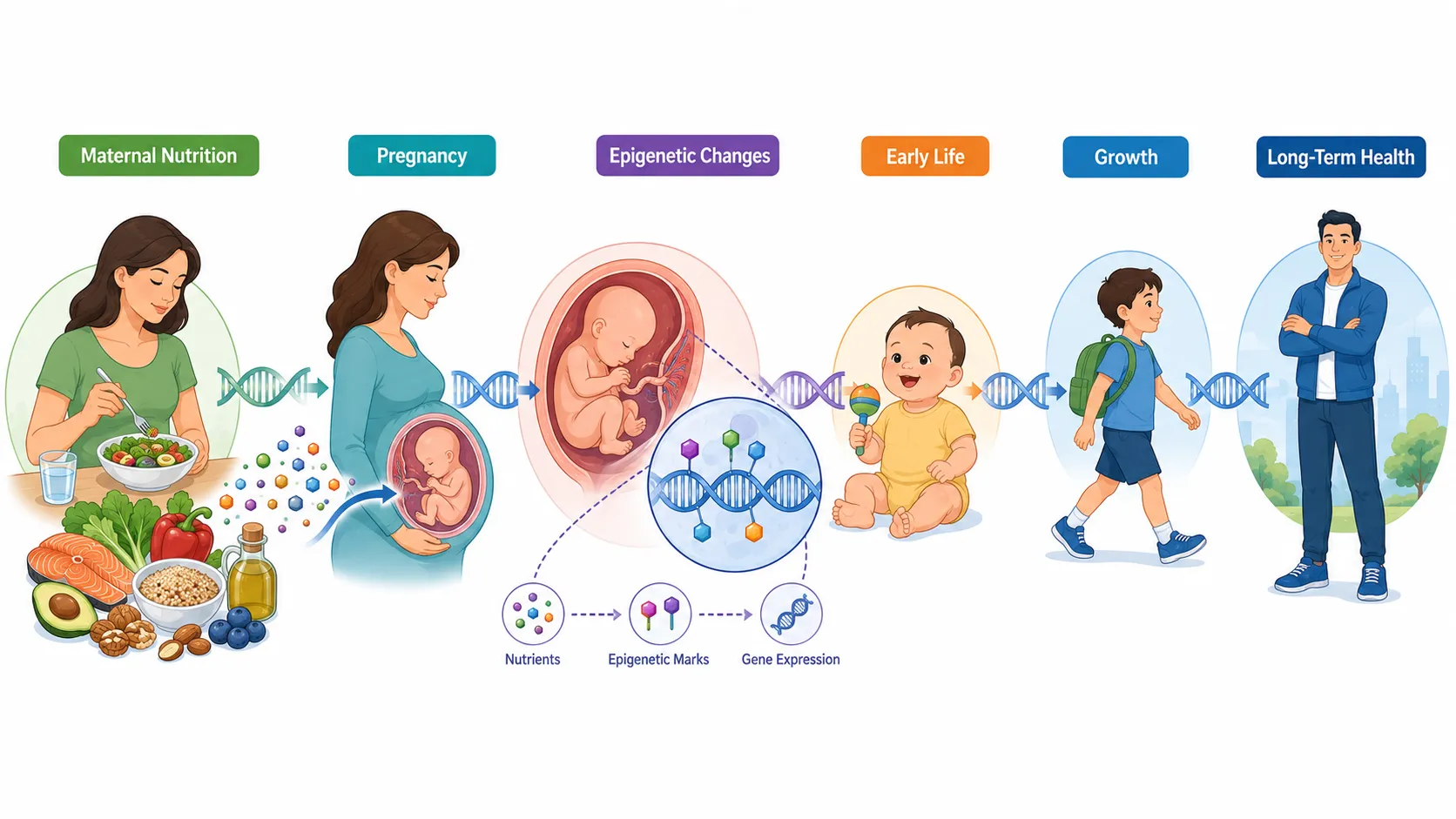
Key Definitions and Concepts
| Term | Definition | Relevance to Maternal and Early-Life Nutrition |
|---|---|---|
| Maternal nutrition | The nutritional status, dietary intake and metabolic environment of the mother before and during pregnancy | Influences the environment in which fetal development occurs |
| Early-life nutrition | Nutritional exposure during fetal development, infancy and early childhood | May influence growth, organ development and metabolic programming |
| Developmental programming | The process through which early environmental conditions influence long-term biological structure and function | Provides a framework for understanding lasting nutritional effects |
| Epigenetics | Regulation of gene activity without alteration of the DNA sequence | Provides possible mechanisms linking early nutrition with long-term outcomes |
| DNA methylation | Addition of methyl groups to DNA at specific regulatory sites | May influence gene accessibility and transcription |
| Histone modification | Chemical modification of histone proteins associated with DNA | Can alter chromatin structure and gene expression |
| One-carbon metabolism | A network of biochemical reactions involved in the transfer of one-carbon units | Supports biochemical processes involved in methylation |
| Critical developmental window | A period during which developing tissues are particularly sensitive to environmental influences | Explains why timing of nutrition is important |
| Fetal programming | Long-term physiological adaptation arising from conditions experienced during fetal development | May influence later metabolic and developmental characteristics |
| Phenotypic plasticity | The ability of an organism to develop different characteristics in response to environmental conditions | Helps explain developmental adaptation to nutritional environments |
1. The Developmental Origins of Health and Disease
1.1 Understanding Developmental Programming
The developmental origins of health and disease concept proposes that conditions experienced during early development can influence health and physiological function across the lifespan. This does not mean that early nutritional exposure determines an individual’s future health with certainty. Instead, it suggests that developing biological systems may adapt to the nutritional and environmental conditions present during sensitive periods.
During fetal and early postnatal development, the body undergoes rapid biological change. Major organs and systems are formed, including:
The nervous system.
The cardiovascular system.
The endocrine system.
The immune system.
The digestive system.
Skeletal and muscular tissues.
Metabolic regulatory pathways.
Because these systems are developing rapidly, changes in nutrient availability may influence how cells differentiate and how tissues adapt.
1.2 The Relationship Between Early Nutrition and Long-Term Adaptation
The basic developmental sequence can be represented as:
Maternal Nutritional Environment → Fetal Nutrient Exposure → Cellular Sensing → Molecular Adaptation → Epigenetic Regulation → Tissue Development → Long-Term Physiological Function
This model helps explain why researchers investigate nutritional influences during pregnancy and infancy.
However, the pathway is not linear in every individual. Multiple biological and environmental influences operate simultaneously.
Key Principles of Developmental Programming
Early development contains periods of heightened biological sensitivity.
Nutritional exposures may influence molecular regulatory processes.
The same nutritional exposure may have different effects at different developmental stages.
Genetic variation can influence individual responses.
Postnatal nutrition and lifestyle can modify developmental outcomes.
Epigenetic changes may be tissue-specific.
Not all molecular changes produce clinically significant effects.
Long-term health outcomes result from multiple interacting factors.
2. Critical Developmental Windows
2.1 Preconception Nutrition
Nutritional status before conception may influence maternal metabolic health and the biological environment present during early embryonic development.
Important nutritional considerations include:
Adequate energy availability.
Micronutrient status.
Protein intake.
One-carbon nutrient availability.
Overall dietary quality.
Early embryonic development involves rapid cellular division and molecular reorganisation. Therefore, nutritional conditions before pregnancy may contribute to the environment experienced during the earliest stages of development.
2.2 Pregnancy
Pregnancy represents one of the most important periods of developmental sensitivity. Maternal physiology undergoes substantial changes to support fetal growth.
Maternal nutrition influences:
Energy availability.
Substrate delivery to the fetus.
Maternal metabolic regulation.
Placental function.
Fetal tissue development.
The developing fetus depends on the maternal–placental environment for the supply of many nutrients.
2.3 Infancy
After birth, nutrition continues to influence rapid growth and maturation. The infant experiences major physiological adaptations involving:
Digestive development.
Immune maturation.
Brain development.
Microbiome establishment.
Metabolic regulation.
Nutritional exposures during infancy may therefore contribute to long-term physiological patterns.
2.4 Early Childhood
Early childhood remains an important period of growth and developmental plasticity.
Relevant influences include:
Dietary diversity.
Energy balance.
Micronutrient adequacy.
Protein quality.
Food patterns.
Gut microbial development.
Why Timing Matters
The effect of nutrition depends not only on what is consumed but also on when exposure occurs.
For example:
A nutrient requirement may be particularly important during rapid tissue formation.
A metabolic disturbance may have greater consequences during organ development.
The same dietary exposure may have different effects in infancy and adulthood.
3. Epigenetic Reprogramming During Early Development
3.1 The Dynamic Nature of Early Epigenetic Regulation
Early development involves extensive molecular reorganisation. Cells must progressively develop specialised functions while maintaining the same basic genetic information.
Epigenetic mechanisms contribute to this process by helping regulate:
Which genes are active.
Which genes are suppressed.
How cells differentiate.
How tissues acquire specialised functions.
During development, epigenetic patterns can be established and modified as cells respond to developmental signals.
3.2 Major Epigenetic Mechanisms
The principal mechanisms include:
DNA methylation
DNA methylation can influence the accessibility and activity of selected genomic regions.
Histone modification
Chemical changes to histones may alter chromatin organisation and gene accessibility.
Chromatin remodelling
Structural changes in chromatin can influence whether transcriptional machinery can access particular genes.
Non-coding RNA regulation
Certain RNA molecules can influence gene expression and protein production without being translated into proteins.
These mechanisms do not function independently. They form an interconnected regulatory network.
4. Maternal Nutrition and DNA Methylation
4.1 One-Carbon Metabolism
One-carbon metabolism provides biochemical pathways involved in transferring one-carbon units between molecules. These pathways are relevant to processes that support methylation reactions.
Nutrients associated with one-carbon metabolism include:
Folate.
Vitamin B12.
Vitamin B6.
Choline.
Methionine.
These nutrients contribute to interconnected biochemical reactions rather than acting independently.
4.2 Potential Mechanism
A simplified pathway can be represented as:
Maternal Dietary Intake → Nutrient Absorption → One-Carbon Metabolism → Methyl Group Availability → DNA Methylation Processes → Regulation of Developmental Genes
This pathway provides biological plausibility for investigating maternal nutrition and epigenetic outcomes.
4.3 Critical Interpretation
It is important to avoid assuming that increased intake of methyl-related nutrients will automatically produce beneficial increases in DNA methylation.
The relationship depends on:
Baseline nutritional status.
Dose.
Nutrient interactions.
Genetic variation.
Maternal metabolism.
Tissue type.
Developmental timing.
Both nutrient deficiency and metabolic imbalance may disrupt normal physiological processes.
5. Histone Modification and Early Nutritional Exposure
5.1 Histones in Development
Histones help package DNA and regulate chromatin accessibility. Their modification contributes to developmental gene regulation.
Major forms of modification include:
Acetylation.
Methylation.
Phosphorylation.
Other chemical alterations.
The effects depend on the specific histone residue and molecular context.
5.2 Nutritional Influence on Histone Modification
Maternal and early-life nutrition may influence histone modification indirectly through changes in:
Cellular energy status.
Metabolite availability.
Enzyme activity.
Oxidative stress.
Hormonal signalling.
Nutrients and dietary metabolites may therefore contribute to the biochemical environment in which chromatin-regulating enzymes operate.
5.3 The Role of Metabolic Intermediates
Cellular metabolism produces molecules that may act as substrates or cofactors for enzymes involved in chromatin regulation.
This creates an important connection:
Nutritional Status → Cellular Metabolism → Metabolite Availability → Chromatin-Regulating Enzyme Activity → Histone Modification → Gene Regulation
This model demonstrates the close relationship between metabolism and epigenetic regulation.
6. Maternal Energy Balance and Developmental Adaptation
6.1 Nutritional Excess and the Maternal Metabolic Environment
Excessive energy intake and metabolic dysregulation during pregnancy may alter the maternal physiological environment.
Potential changes include:
Altered glucose regulation.
Changes in lipid metabolism.
Modified hormonal signalling.
Increased inflammatory activity.
Changes in nutrient delivery.
These factors may influence fetal development.
6.2 Nutritional Restriction and Developmental Responses
Inadequate nutrient availability can also affect developmental physiology. The developing organism may respond by adapting energy utilisation and growth patterns.
Possible adaptations include:
Changes in nutrient allocation.
Altered metabolic activity.
Modified endocrine signalling.
Changes in tissue growth.
These responses may be beneficial in the short term by supporting survival under limited resource conditions. However, a mismatch between early developmental conditions and later environmental conditions may contribute to altered metabolic risk.
6.3 The Developmental Mismatch Concept
A simplified example is:
Early Environment: Limited Nutrient Availability → Developmental Adaptation for Resource Conservation → Later Environment: High Energy Availability → Potential Metabolic Mismatch
This concept provides a theoretical framework rather than a deterministic prediction for individual health.
7. Maternal Diet and Placental Function
7.1 The Placenta as a Biological Interface
The placenta plays a central role in regulating exchange between maternal and fetal environments.
Its functions include:
Nutrient transfer.
Gas exchange.
Hormonal activity.
Metabolic regulation.
Communication between maternal and fetal systems.
The placenta is not simply a passive transport structure. It actively responds to physiological and nutritional conditions.
7.2 Potential Nutritional Influences
Maternal nutritional status may influence:
Placental nutrient transport.
Metabolic activity.
Hormonal signalling.
Vascular function.
Molecular regulatory pathways.
Changes in placental function may therefore influence the nutrients and signals reaching the developing fetus.
7.3 Epigenetic Regulation Within the Placenta
Researchers investigate placental epigenetic markers because they may provide information about the biological environment experienced during pregnancy.
However, interpretation requires caution because placental tissue is complex and may not directly represent epigenetic patterns in other fetal tissues.
8. Early-Life Nutrition and the Developing Brain
8.1 Nutritional Requirements for Brain Development
The brain undergoes extensive growth and development before and after birth. Adequate nutritional support is required for processes such as:
Neuronal growth.
Synapse formation.
Myelination.
Neurotransmitter synthesis.
Energy metabolism.
Nutritional influences may interact with molecular pathways involved in neural development.
8.2 Epigenetic Regulation in Neural Development
Gene regulation is essential for the controlled development of neural cells.
Epigenetic mechanisms contribute to:
Cell differentiation.
Neural connectivity.
Developmental timing.
Cellular specialisation.
Early nutritional conditions may influence the metabolic and molecular environment in which these processes occur.
8.3 Critical Perspective
It is important not to overstate the ability of individual foods or supplements to improve genetic or epigenetic outcomes in brain development.
Brain development is influenced by:
Genetics.
Overall nutrition.
Health status.
Environmental stimulation.
Social conditions.
Exposure to toxins.
Sleep and stress.
9. Early Nutrition and Metabolic Programming
9.1 Development of Metabolic Systems
The regulation of glucose, lipid and energy metabolism develops through coordinated interactions between organs and hormones.
Important tissues include:
Liver.
Skeletal muscle.
Adipose tissue.
Pancreas.
Brain.
Early nutritional conditions may influence how these systems develop and respond to future nutritional environments.
9.2 Potential Epigenetic Pathways
Researchers investigate whether early nutritional exposures influence molecular regulation of genes associated with:
Insulin signalling.
Glucose metabolism.
Lipid metabolism.
Energy storage.
Appetite regulation.
The proposed pathway may involve:
Early Nutritional Exposure → Epigenetic Modification → Altered Gene Regulation → Metabolic Adaptation
However, long-term outcomes remain dependent on many later-life influences.
10. The Role of Breastfeeding and Infant Nutrition
10.1 Breastfeeding as a Complex Biological Exposure
Human milk contains more than energy and essential nutrients. It provides a complex mixture of biological components that may contribute to infant development.
These include:
Proteins.
Lipids.
Carbohydrates.
Immune-related components.
Bioactive molecules.
The composition of human milk can vary between individuals and across stages of lactation.
10.2 Potential Influence on Developmental Regulation
Early feeding patterns may influence:
Growth.
Metabolic adaptation.
Immune development.
Gut microbiome establishment.
Researchers continue to investigate how these processes may interact with epigenetic regulation.
10.3 Complementary Feeding
As infants begin consuming a wider range of foods, nutrient exposure becomes more diverse.
Appropriate complementary nutrition supports:
Growth.
Micronutrient adequacy.
Dietary development.
Gastrointestinal maturation.
The quality and diversity of early dietary patterns may contribute to the long-term development of healthy nutritional behaviours.
11. The Gut Microbiome and Early-Life Epigenetics
11.1 Establishment of the Early Microbiome
The gut microbiome develops substantially during infancy and early childhood. Its composition is influenced by:
Early feeding.
Dietary transitions.
Environmental exposure.
Host biology.
11.2 Microbial Metabolites
Microorganisms can metabolise dietary components and produce biologically active metabolites.
The pathway can be represented as:
Dietary Components → Microbial Metabolism → Metabolite Production → Interaction With Host Cells → Molecular Signalling → Potential Epigenetic Regulation
This creates an additional mechanism through which diet may influence molecular biology.
11.3 Importance of Research Interpretation
Microbiome research is complex because microbial composition varies significantly between individuals.
Important factors include:
Diet.
Age.
Geography.
Medication exposure.
Host genetics.
Environmental conditions.
Therefore, microbiome findings should be interpreted carefully.
12. Evidence From Human and Experimental Research
12.1 Observational Human Studies
Observational research can investigate associations between maternal diet and later biological outcomes.
Potential strengths include:
Study of real populations.
Long-term follow-up.
Identification of population-level patterns.
Limitations include:
Dietary measurement error.
Confounding variables.
Difficulty establishing causation.
Variation in biological samples.
12.2 Controlled Intervention Studies
Intervention studies can provide stronger evidence about specific nutritional exposures.
Important considerations include:
Ethical suitability.
Participant adherence.
Intervention duration.
Appropriate controls.
Biological outcome measures.
12.3 Experimental Models
Animal and laboratory studies can investigate molecular mechanisms under controlled conditions.
Advantages include:
Greater experimental control.
Detailed tissue analysis.
Investigation of mechanisms difficult to study in humans.
Limitations include:
Differences between species.
Differences in dietary exposure.
Limited direct generalisation to human populations.
12.4 Synthesising Different Types of Evidence
A strong scientific conclusion considers multiple evidence sources.
A useful hierarchy of reasoning involves:
Mechanistic plausibility.
Experimental evidence.
Human observational evidence.
Controlled human research.
Replication across populations.
No single study should normally be treated as definitive.
13. Practical Examples of Developmental Nutritional Programming
Example 1: Maternal Micronutrient Status
A pregnant individual has inadequate intake of nutrients involved in essential metabolic pathways.
The possible biological sequence may involve:
Reduced nutrient availability.
Changes in maternal metabolism.
Altered placental nutrient environment.
Effects on fetal cellular processes.
Potential changes in molecular regulatory systems.
However, the exact outcome will depend on the severity, duration and timing of nutritional inadequacy.
Example 2: Maternal Metabolic Dysregulation
A maternal metabolic environment characterised by altered glucose and lipid regulation may influence fetal nutrient exposure.
Possible pathways include:
Altered circulating nutrient levels.
Changes in hormonal signals.
Modified placental transport.
Fetal metabolic adaptation.
Changes in developmental signalling.
Example 3: Early Dietary Diversity
During early childhood, dietary diversity contributes to exposure to a broad range of nutrients and food-derived compounds.
Potential benefits include:
Improved nutrient adequacy.
Support for normal growth.
Development of healthy dietary patterns.
Support for gastrointestinal microbial diversity.
The relationship between dietary diversity and specific epigenetic outcomes remains an area requiring continued research.
14. Key Benefits of Understanding Maternal and Early-Life Epigenetics
Benefits for Learners
Understanding this field helps Learners:
Connect nutrition with developmental biology.
Explain mechanisms of developmental programming.
Evaluate epigenetic evidence critically.
Understand the importance of timing in nutrition.
Interpret complex scientific literature.
Benefits for Healthcare and Nutrition Practice
Knowledge of developmental nutrition can support:
Preventive health approaches.
Appropriate nutritional education.
Recognition of vulnerable developmental periods.
Evidence-based maternal and infant nutrition guidance.
Benefits for Research
Research in this area may contribute to:
Identification of biological mechanisms.
Development of improved biomarkers.
Better understanding of developmental risk.
More targeted nutritional interventions.
15. A Systematic Framework for Synthesising Scientific Literature
Step 1: Define the Nutritional Exposure
Identify:
The nutrient or dietary pattern.
Timing of exposure.
Dose or level of intake.
Duration.
Step 2: Identify the Developmental Stage
Determine whether the research concerns:
Preconception.
Early pregnancy.
Late pregnancy.
Infancy.
Early childhood.
Step 3: Examine the Molecular Mechanism
Evaluate evidence relating to:
DNA methylation.
Histone modification.
Non-coding RNA.
Chromatin regulation.
Step 4: Assess Functional Evidence
Determine whether epigenetic findings correspond with:
Gene expression.
Protein function.
Metabolic changes.
Physiological outcomes.
Step 5: Evaluate Study Quality
Consider:
Study design.
Sample size.
Measurement accuracy.
Confounding factors.
Reproducibility.
Step 6: Develop a Balanced Conclusion
A high-quality conclusion should distinguish between:
Established evidence.
Biological plausibility.
Emerging findings.
Areas of uncertainty.
16. Challenges and Limitations in Current Research
16.1 Tissue Specificity
Epigenetic patterns vary between tissues.
A blood sample may not accurately represent changes occurring in:
Brain tissue.
Liver.
Muscle.
Placenta.
This creates challenges when interpreting human research.
16.2 Cellular Heterogeneity
Biological samples may contain multiple cell types. Differences in cell composition can influence epigenetic measurements.
Researchers must therefore consider whether an observed difference reflects:
A true molecular change.
Differences in cell populations.
Technical variation.
16.3 Long-Term Follow-Up
Many developmental effects may emerge over years or decades. Long-term research is expensive and methodologically challenging.
16.4 Confounding Factors
Maternal nutrition is closely associated with many other influences, including:
Socioeconomic circumstances.
Healthcare access.
Physical activity.
Stress.
Environmental exposure.
Overall health.
These factors can make causal interpretation difficult.
16.5 Avoiding Deterministic Conclusions
Early nutritional exposure may influence developmental pathways, but it does not necessarily determine future disease.
Later influences can modify health trajectories through:
Improved nutrition.
Physical activity.
Healthcare.
Environmental changes.
Lifestyle adaptation.
17. Critical Thinking and Professional Judgement
When reviewing literature on maternal nutrition and epigenetics, Learners should ask:
Was the study conducted in humans or experimental models?
What developmental stage was examined?
How was nutrition measured?
Which epigenetic mechanism was investigated?
Was gene expression also measured?
Were physiological outcomes assessed?
Were confounding factors controlled?
Is the proposed mechanism biologically plausible?
Has the finding been replicated?
Common Errors to Avoid
Learners should avoid:
Assuming all epigenetic changes are permanent.
Treating association as causation.
Assuming one nutrient controls one gene.
Ignoring postnatal environmental influences.
Generalising findings from experimental models directly to humans.
Overstating the predictive value of epigenetic biomarkers.
18. Summary of Key Learning Points
Maternal and early-life nutrition can influence the biological environment during periods of rapid growth and development. Scientific research suggests that epigenetic mechanisms may provide one pathway through which early nutritional exposures contribute to long-term physiological adaptation.
The key principles include:
Early development contains sensitive periods of biological plasticity.
Maternal nutrition influences the metabolic environment experienced by the developing fetus.
Epigenetic regulation includes DNA methylation, histone modification and non-coding RNA activity.
One-carbon metabolism provides biochemical support for methylation processes.
Cellular metabolites connect nutrient metabolism with chromatin regulation.
The placenta actively regulates communication between maternal and fetal environments.
Early nutrition contributes to metabolic, immune and neurological development.
The gut microbiome may generate metabolites that influence host molecular pathways.
Human evidence must be interpreted alongside experimental research.
Long-term outcomes are influenced by both early and later-life environments.
Epigenetic findings require careful interpretation because effects may be tissue-specific and context-dependent.
Conclusion
Maternal and early-life nutrition represents an important influence on human growth and development because nutritional conditions interact with rapidly developing biological systems during sensitive developmental periods. Current scientific literature provides increasing evidence that dietary exposures may influence molecular regulatory pathways, including DNA methylation and histone modification. These epigenetic mechanisms offer biologically plausible pathways through which early nutritional environments may contribute to long-term physiological adaptation.
The relationship between nutrition and epigenetic programming is, however, highly complex. Nutrients interact with genetics, metabolism, hormonal regulation, placental function, environmental conditions and postnatal lifestyle. Therefore, individual nutrients should not be presented as simple switches that permanently activate or deactivate specific genes.
A rigorous synthesis of scientific literature requires the integration of mechanistic evidence, experimental research, human observational studies and controlled interventions. The strongest conclusions are those supported by consistent evidence across multiple levels of biological investigation.
By understanding the principles of developmental programming and epigenetic regulation, Learners can critically evaluate how maternal and early-life nutrition may influence growth, metabolic adaptation and long-term health. This knowledge provides an essential foundation for advanced study in molecular nutrition, developmental biology, genomics, public health and evidence-based nutritional practice.
4.Evaluate Specific Clinical Case Studies to Accurately Map the Intricate Biochemical Pathways Linking Routine Dietary Intake to Targeted Epigenetic Alterations
Introduction
The relationship between routine dietary intake and epigenetic regulation represents one of the most important areas of molecular nutrition. Food provides not only energy and structural nutrients but also a wide range of molecules that influence cellular metabolism, signalling pathways and gene regulation. Through digestion and absorption, dietary components are converted into metabolites that enter biochemical pathways capable of influencing DNA methylation, histone modification, chromatin structure and non-coding RNA activity.
Clinical case studies provide a valuable method for examining these relationships because they connect theoretical biochemical mechanisms with realistic human situations. A case study may involve an individual with a specific dietary pattern, nutritional deficiency, metabolic disturbance or exposure to bioactive food compounds. The Learner can then systematically trace the pathway from dietary intake to digestion, absorption, metabolism, cellular signalling and potential epigenetic alteration.
However, mapping these pathways requires careful scientific judgement. The presence of a particular dietary pattern does not automatically prove that it caused a specific epigenetic change. Human biology is influenced by genetics, age, health status, medication use, physical activity, environmental exposures and many other factors. Therefore, clinical case evaluation must distinguish between direct evidence, biological plausibility and speculative conclusions.
This section examines how specific clinical scenarios can be used to map the complex biochemical pathways linking everyday nutrition with epigenetic regulation. It focuses on systematic evaluation, molecular mechanisms, interpretation of laboratory findings, practical examples and critical appraisal of evidence.
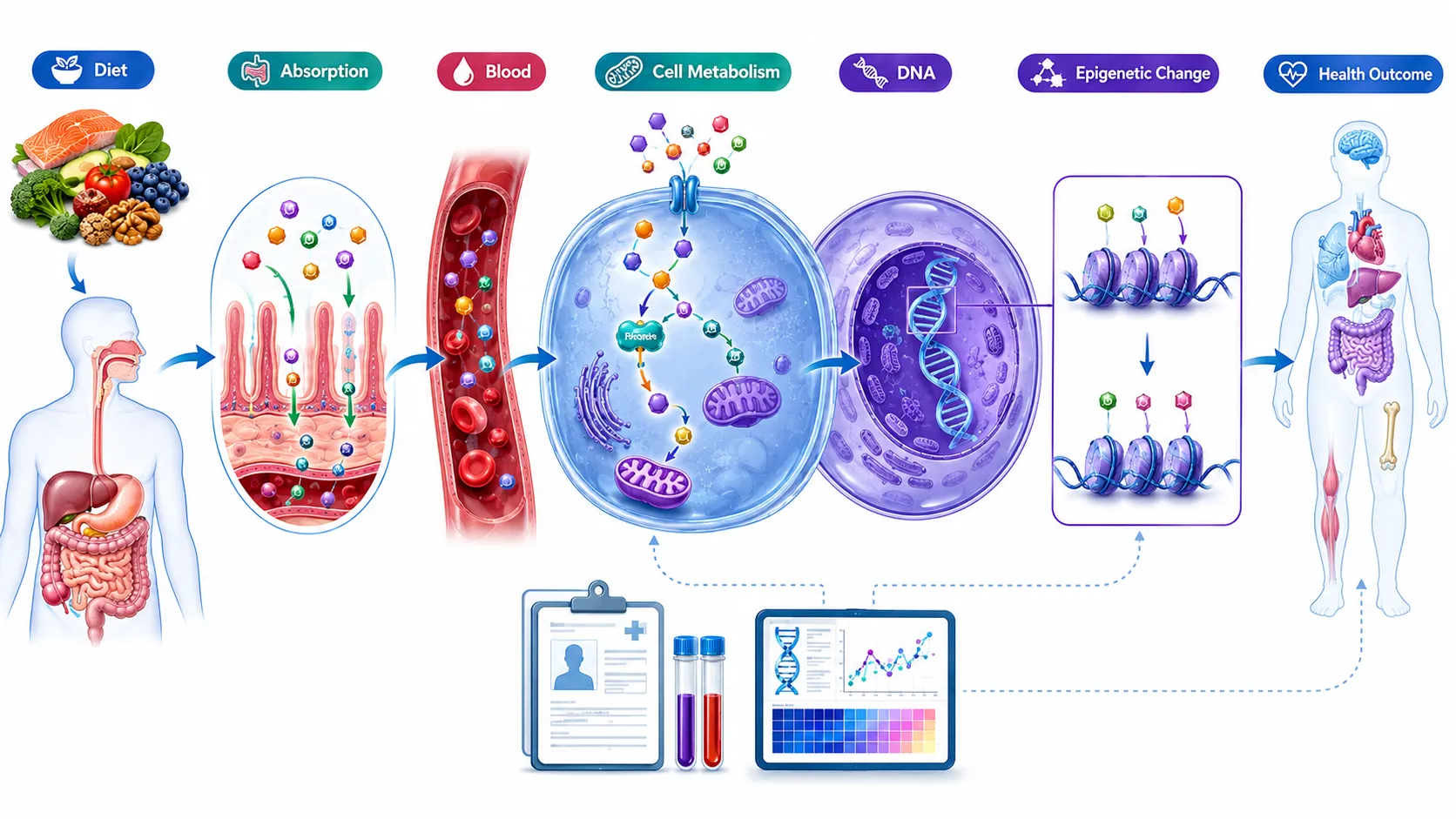
Key Definitions and Concepts
| Term | Definition | Importance in Clinical Case Evaluation |
|---|---|---|
| Dietary exposure | The intake of a nutrient, food component or dietary pattern | Represents the starting point for biochemical pathway analysis |
| Bioavailability | The proportion of a nutrient or compound that becomes available for absorption and physiological use | Determines whether dietary components can influence cellular pathways |
| Metabolite | A molecule produced or used during metabolism | Can act as a substrate, cofactor or signalling molecule in epigenetic processes |
| DNA methylation | The addition of methyl groups to specific DNA regions | May influence gene transcription depending on biological context |
| Histone modification | Chemical alteration of histone proteins associated with DNA | Can influence chromatin accessibility and gene regulation |
| One-carbon metabolism | Interconnected biochemical reactions involved in the transfer of one-carbon units | Supports methylation-related biochemical processes |
| Epigenetic biomarker | A measurable molecular feature associated with epigenetic regulation | May assist research and clinical interpretation |
| Clinical phenotype | Observable characteristics or physiological outcomes in an individual | Connects molecular findings with functional health effects |
| Biological plausibility | The extent to which a proposed mechanism is consistent with established biological knowledge | Helps assess whether a proposed diet–epigenetic pathway is credible |
| Confounding factor | An external factor that may influence both exposure and outcome | Must be considered before concluding causation |
1. Understanding the Diet-to-Epigenome Pathway
1.1 The Fundamental Biochemical Sequence
A dietary component cannot normally influence the epigenome directly while remaining unchanged within food. It must first enter the biological system and interact with metabolic processes.
A simplified pathway is:
Dietary Intake → Digestion → Absorption → Circulation → Cellular Uptake → Metabolism → Metabolite or Signal Production → Epigenetic Enzyme Activity → Epigenetic Alteration → Gene Regulation → Physiological Effect
Each stage must be evaluated separately when analysing a clinical case.
The pathway begins with dietary exposure. The amount, frequency and duration of nutrient intake may influence the concentration of relevant compounds available to the body. Digestion then releases nutrients and bioactive compounds from the food matrix. Following absorption, these compounds may enter the bloodstream or lymphatic system and reach target tissues.
Within cells, dietary molecules may be transformed into metabolites. Some metabolites can provide substrates or cofactors for enzymes involved in epigenetic regulation. Others may influence intracellular signalling pathways that alter the expression or activity of chromatin-regulating enzymes.
Key Components of the Diet-to-Epigenome Pathway
Type of food consumed.
Quantity of dietary exposure.
Frequency of consumption.
Food preparation and processing.
Digestive release of bioactive compounds.
Intestinal absorption.
Transport through blood or lymph.
Cellular uptake.
Metabolic transformation.
Interaction with signalling pathways.
Modification of epigenetic enzyme activity.
Changes in gene regulation.
Potential physiological consequences.
1.2 Why Clinical Mapping Is Complex
The same nutrient may produce different biological effects in different individuals.
For example, individual variation may result from:
Genetic differences.
Age.
Sex.
Baseline nutritional status.
Gut microbiome composition.
Existing disease.
Medication use.
Physical activity.
Total dietary pattern.
Therefore, clinical case studies should not be interpreted using a simple one-nutrient-to-one-gene model.
2. A Systematic Method for Evaluating Clinical Case Studies
2.1 Step 1: Define the Clinical Question
The first stage is to identify the precise question being investigated.
Examples include:
Could inadequate folate intake influence methylation-related metabolism?
How might a high-energy dietary pattern alter metabolic signalling?
Could dietary fibre influence microbial metabolites associated with chromatin regulation?
How might long-term dietary patterns influence inflammatory pathways and gene regulation?
The clinical question should be specific and biologically relevant.
2.2 Step 2: Assess Dietary Exposure
A comprehensive dietary assessment should examine more than a single nutrient.
Relevant information may include:
Daily food intake.
Meal patterns.
Dietary diversity.
Supplement use.
Alcohol consumption where relevant.
Consumption of highly processed foods.
Fruit and vegetable intake.
Fibre intake.
Protein quality.
Fat composition.
Duration of the dietary pattern.
A short-term dietary record may not accurately represent long-term nutritional exposure.
2.3 Step 3: Identify Relevant Biochemical Pathways
The next stage is to determine which metabolic pathways may connect the dietary exposure with epigenetic regulation.
Examples include:
One-carbon metabolism.
Acetyl-CoA metabolism.
Short-chain fatty acid production.
Oxidative stress pathways.
Inflammatory signalling.
Hormonal regulation.
Cellular energy sensing.
2.4 Step 4: Examine Available Clinical Data
Relevant clinical information may include:
Blood nutrient concentrations.
Metabolic markers.
Inflammatory markers.
Liver function indicators.
Glucose measurements.
Lipid profiles.
Genetic information where appropriate.
Epigenetic research measurements.
2.5 Step 5: Map the Proposed Molecular Mechanism
The mechanism should be presented as a logical sequence rather than an unsupported assumption.
For example:
Low Dietary Folate → Reduced Availability of Folate-Dependent One-Carbon Units → Altered Methyl Donor Metabolism → Potential Changes in DNA Methylation Processes
The use of terms such as potential and may influence is important unless direct causal evidence exists.
3. Clinical Case Study 1: Folate Intake and One-Carbon Metabolism
3.1 Case Scenario
Consider an adult presenting with a dietary history characterised by limited intake of folate-rich foods. The individual consumes few leafy vegetables, legumes and fortified foods. Laboratory assessment suggests a nutritional pattern requiring further investigation.
The clinical question is whether reduced dietary availability of folate-related nutrients could influence biochemical pathways involved in methylation.
3.2 Mapping the Dietary Pathway
The pathway may be represented as:
Low Intake of Folate-Rich Foods → Reduced Dietary Folate Availability → Intestinal Absorption → Participation in One-Carbon Metabolism → Influence on Methyl Group Transfer Reactions → Potential Effects on DNA Methylation
Folate participates in interconnected metabolic pathways responsible for transferring one-carbon units.
Other nutrients associated with these pathways include:
Vitamin B12.
Vitamin B6.
Choline.
Methionine.
3.3 Biochemical Interpretation
One-carbon metabolism supports the production and transfer of molecular groups involved in methylation reactions. The biochemical system is highly interconnected.
Important considerations include:
Folate status is not the only determinant of methylation capacity.
Multiple nutrients contribute to the pathway.
Genetic variation can influence metabolic enzymes.
Severe deficiency and marginal intake may have different consequences.
Tissue-specific effects may occur.
Clinical Evaluation Points
A professional evaluation should assess:
Dietary folate intake.
Overall dietary quality.
Relevant blood markers.
Vitamin B12 status.
Medication use.
Gastrointestinal conditions affecting absorption.
Genetic factors where clinically relevant.
Practical Learning Point
A Learner should avoid concluding:
“Low folate intake causes a specific gene to switch off.”
A more scientifically appropriate interpretation is:
“Inadequate availability of nutrients involved in one-carbon metabolism may alter biochemical conditions supporting methylation reactions, although the specific epigenetic consequences depend on biological context.”
4. Clinical Case Study 2: High-Energy Dietary Intake and Metabolic Signalling
4.1 Case Scenario
Consider an individual with a long-term dietary pattern characterised by frequent consumption of energy-dense foods and low physical activity. Clinical findings indicate altered metabolic regulation.
The evaluation focuses on how chronic nutritional excess may influence metabolic pathways associated with gene regulation.
4.2 From Dietary Energy to Cellular Metabolism
The pathway may include:
High Energy Intake → Increased Nutrient Availability → Altered Glucose and Lipid Metabolism → Changes in Hormonal and Cellular Signalling → Metabolic Stress → Altered Activity of Regulatory Enzymes → Potential Epigenetic Adaptation
Persistent nutrient excess can influence cellular metabolism.
Potential processes include:
Increased glucose availability.
Increased lipid storage.
Altered insulin signalling.
Changes in mitochondrial activity.
Increased oxidative stress.
Inflammatory signalling.
4.3 Acetyl-CoA and Histone Acetylation
Acetyl-CoA is an important metabolic molecule involved in energy metabolism and biosynthetic processes. It also has relevance to histone acetylation because acetyl groups are used in biochemical reactions involving histone-modifying enzymes.
A simplified conceptual pathway is:
Dietary Macronutrients → Cellular Metabolism → Acetyl-CoA Availability → Histone Acetylation Processes → Changes in Chromatin Accessibility
This does not mean that consuming additional energy automatically causes predictable increases in histone acetylation across all tissues.
The outcome depends on:
Cell type.
Enzyme activity.
Cellular energy state.
Hormonal environment.
Duration of exposure.
Key Clinical Considerations
When evaluating such a case, assess:
Body composition.
Dietary pattern.
Physical activity.
Glucose regulation.
Lipid profile.
Inflammatory indicators.
Liver function.
5. Clinical Case Study 3: Dietary Fibre, the Microbiome and Histone Regulation
5.1 Case Scenario
An individual consumes a dietary pattern low in whole grains, legumes, fruits and vegetables. The diet provides relatively low amounts of fermentable fibre.
The clinical question concerns how dietary fibre may indirectly influence host molecular pathways through microbial metabolism.
5.2 The Microbial Metabolic Pathway
The sequence can be mapped as:
Dietary Fibre → Arrival in the Large Intestine → Microbial Fermentation → Production of Short-Chain Fatty Acids → Absorption and Cellular Signalling → Interaction With Regulatory Pathways → Potential Influence on Histone Modification
Certain dietary fibres are metabolised by intestinal microorganisms.
Important short-chain fatty acids include:
Acetate.
Propionate.
Butyrate.
These metabolites can have multiple physiological functions.
5.3 Butyrate and Epigenetic Regulation
Butyrate is of particular interest in molecular nutrition because it can influence cellular signalling and may affect enzymes involved in histone regulation.
A conceptual pathway is:
Fibre Intake → Microbial Fermentation → Butyrate Production → Cellular Interaction → Modification of Histone-Regulating Enzyme Activity → Potential Changes in Gene Expression
Critical Interpretation
The response to dietary fibre varies according to:
Type of fibre.
Quantity consumed.
Existing microbiome composition.
Gastrointestinal health.
Overall diet.
Therefore, identical fibre intake may not produce identical metabolic or epigenetic effects in all individuals.
Practical Example
A clinician or nutrition professional reviewing this case should avoid relying only on total fibre intake.
The assessment should also consider:
Sources of fibre.
Dietary diversity.
Gastrointestinal symptoms.
Long-term dietary patterns.
Relevant clinical conditions.
6. Clinical Case Study 4: Dietary Bioactive Compounds and Histone Modification
6.1 Case Scenario
A clinical research participant regularly consumes a diet rich in plant-derived foods containing bioactive compounds. Researchers investigate whether metabolites derived from these foods interact with molecular pathways involved in gene regulation.
6.2 Bioactive Food Compounds
Bioactive compounds are substances found in foods that may have biological effects beyond their basic nutritional contribution.
Examples include compounds derived from:
Fruits.
Vegetables.
Tea.
Cocoa.
Herbs and spices.
Whole grains.
These compounds undergo digestion and metabolism before interacting with human cells.
6.3 Mapping the Pathway
A simplified sequence is:
Plant Food Intake → Digestion → Absorption or Microbial Transformation → Circulating Metabolites → Cellular Signalling → Interaction With Regulatory Enzymes → Potential Epigenetic Effects
The original compound present in food may not be the same molecule that reaches the target tissue.
This is an important consideration in clinical interpretation.
Key Questions for Learners
When evaluating evidence, ask:
Was the compound absorbed?
Was it metabolised before reaching target tissues?
What concentration reached the cells?
Is the experimental dose comparable to normal dietary intake?
Was the effect demonstrated in humans?
7. Clinical Case Study 5: Maternal Nutrition and Developmental Epigenetics
7.1 Case Scenario
Consider a pregnant individual with an overall dietary pattern that may not meet recommended nutritional requirements for several key micronutrients.
The evaluation examines how maternal nutritional status may influence the fetal developmental environment.
7.2 Maternal-to-Fetal Biochemical Pathway
The pathway may be represented as:
Maternal Dietary Intake → Maternal Digestion and Metabolism → Maternal Circulation → Placental Transport and Regulation → Fetal Nutrient Exposure → Cellular Development → Epigenetic Regulation
The placenta plays an active role in this pathway.
It influences:
Nutrient transport.
Hormonal signalling.
Metabolic communication.
Fetal exposure to maternal physiological conditions.
7.3 Critical Evaluation
Maternal diet does not directly control the fetal epigenome in a simple or predictable manner.
Important factors include:
Maternal nutritional status before pregnancy.
Pregnancy stage.
Placental function.
Maternal metabolic health.
Genetic factors.
Environmental exposures.
Potential Long-Term Areas of Investigation
Research examines possible relationships with:
Growth patterns.
Metabolic regulation.
Immune development.
Cardiovascular physiology.
Neurological development.
These relationships require careful interpretation because many factors influence long-term health.
8. Clinical Case Study 6: Oxidative Stress, Diet and Epigenetic Regulation
8.1 Case Scenario
An individual presents with a dietary pattern low in nutrient-dense foods and high in heavily processed energy sources. Clinical assessment suggests the presence of metabolic stress.
The evaluation investigates the relationship between diet, oxidative stress and molecular regulation.
8.2 Biochemical Pathway
A possible pathway is:
Dietary Pattern → Altered Metabolic Processing → Increased Reactive Molecular Species → Oxidative Stress → Cellular Damage and Signalling → Influence on Epigenetic Regulatory Enzymes → Altered Gene Regulation
Oxidative stress occurs when the balance between reactive molecular species and protective systems becomes disrupted.
8.3 Why Oxidative Stress Matters
Oxidative processes may influence:
DNA integrity.
Protein function.
Lipid structures.
Cellular signalling.
Enzyme activity.
These changes can interact with molecular mechanisms involved in epigenetic regulation.
Critical Clinical Interpretation
Oxidative stress cannot be accurately assessed solely by asking about antioxidant food intake.
A comprehensive evaluation should consider:
Dietary pattern.
Smoking status.
Physical activity.
Chronic disease.
Environmental exposures.
Relevant laboratory findings.
9. Laboratory Data Used in Diet–Epigenetic Case Studies
9.1 Nutritional Biomarkers
Laboratory assessments may provide information about nutritional status.
Examples include measurements related to:
Vitamins.
Minerals.
Protein status.
Lipid metabolism.
Glucose regulation.
A single biomarker should rarely be interpreted in isolation.
9.2 Metabolic Biomarkers
Metabolic assessment may include:
Blood glucose.
Glycated markers.
Lipid concentrations.
Metabolic intermediates.
Liver-related indicators.
These measurements help identify biochemical environments associated with dietary exposure.
9.3 Epigenetic Measurements
Research studies may investigate:
DNA methylation patterns.
Histone modifications.
Chromatin accessibility.
Non-coding RNA expression.
These methods are primarily research tools and require specialist interpretation.
Important Principles for Data Interpretation
Learners should:
Compare results with appropriate reference information.
Consider biological variation.
Evaluate sample type.
Examine laboratory methodology.
Avoid overinterpreting small molecular differences.
Connect molecular findings with functional outcomes.
10. Mapping a Complete Clinical Case: A Structured Procedure
Step 1: Identify the Dietary Pattern
Document:
Foods regularly consumed.
Frequency of intake.
Portion patterns.
Supplement use.
Long-term dietary habits.
Step 2: Identify the Nutritional Exposure
Determine the key exposure.
Examples:
Low folate intake.
High saturated fat intake.
Low dietary fibre intake.
High refined carbohydrate intake.
Reduced dietary diversity.
Step 3: Identify Relevant Nutrient Metabolism
Trace:
Digestion.
Absorption.
Transport.
Cellular uptake.
Metabolic transformation.
Step 4: Identify the Molecular Intermediate
Examples may include:
Methyl-group donors.
Acetyl-CoA.
Short-chain fatty acids.
Reactive molecular species.
Hormonal signals.
Step 5: Identify the Potential Epigenetic Mechanism
Determine whether the proposed pathway involves:
DNA methylation.
Histone modification.
Chromatin remodelling.
Non-coding RNA.
Step 6: Assess Functional Consequences
Ask whether evidence demonstrates changes in:
Gene expression.
Protein production.
Cellular function.
Physiological outcomes.
Step 7: Evaluate Alternative Explanations
Consider:
Genetics.
Medication.
Physical activity.
Environmental exposure.
Disease status.
Measurement error.
11. Key Benefits of Using Clinical Case Studies
Benefits for Academic Learning
Clinical cases help Learners:
Connect theory with realistic situations.
Understand complex molecular pathways.
Develop analytical skills.
Apply biochemical knowledge.
Interpret scientific evidence.
Benefits for Professional Practice
Case-based learning supports:
Structured clinical reasoning.
Evidence-based decision-making.
Improved nutritional assessment.
Recognition of individual variability.
Benefits for Research Literacy
Learners become better able to:
Interpret molecular nutrition studies.
Evaluate causation.
Recognise limitations.
Assess biological plausibility.
12. Common Errors When Mapping Diet to Epigenetic Change
12.1 Assuming Direct Causation
A common error is:
Dietary exposure → Epigenetic difference
without examining intermediate biological steps.
A stronger analysis considers:
Diet → Absorption → Metabolism → Cellular Environment → Molecular Mechanism → Epigenetic Marker
12.2 Ignoring Dose and Duration
The biological effect of a dietary exposure may depend on:
Amount consumed.
Frequency.
Duration.
Baseline nutritional status.
12.3 Ignoring Food Matrices
Nutrients are consumed within foods, not usually as isolated molecules.
The food matrix can influence:
Digestion.
Absorption.
Metabolism.
Bioavailability.
12.4 Assuming All Epigenetic Changes Are Harmful
Epigenetic regulation is a normal and essential biological process.
An observed epigenetic difference is not automatically:
Pathological.
Permanent.
Clinically significant.
12.5 Ignoring Tissue Specificity
An epigenetic measurement from blood may not reflect molecular regulation in another tissue.
13. Practical Workplace and Clinical Applications
Nutrition Assessment
A nutrition professional can use structured pathway mapping to understand:
Potential nutritional deficiencies.
Dietary contributors to metabolic dysfunction.
Relevant biochemical measurements.
Research Practice
Researchers can use the framework to:
Develop hypotheses.
Select biomarkers.
Identify confounding variables.
Interpret molecular findings.
Health Education
Complex molecular concepts can be communicated using a simple sequence:
Food → Nutrient → Metabolism → Cell Signal → Gene Regulation
This approach can improve understanding without oversimplifying scientific evidence.
14. Advanced Critical Evaluation of Causality
14.1 Association Versus Causation
An association between diet and DNA methylation does not automatically establish that diet caused the molecular change.
To evaluate causality, consider:
Temporal sequence.
Biological plausibility.
Dose-response relationships.
Experimental evidence.
Consistency across studies.
Replication.
14.2 Reverse Causation
In some clinical situations, disease may alter dietary intake.
For example:
Disease → Appetite Change → Dietary Change
rather than:
Dietary Change → Disease
This possibility must be considered.
14.3 Confounding
A dietary pattern may be associated with other behaviours.
For example, a person with high fruit and vegetable intake may also:
Exercise regularly.
Avoid smoking.
Have greater healthcare access.
These factors may influence health outcomes independently.
15. Integrating Multiple Case Studies
The strongest understanding develops when individual cases are compared.
Comparative Analysis Framework
Learners can compare:
The dietary exposure.
Primary biochemical pathway.
Key metabolite.
Proposed epigenetic mechanism.
Evidence strength.
Potential physiological consequence.
Comparative Examples
Folate-related case:
Diet → One-carbon metabolism → Methyl-group transfer → DNA methylation processes.
Fibre-related case:
Fibre → Microbiome fermentation → Short-chain fatty acids → Histone-regulating pathways.
Energy excess case:
Excess energy → Metabolic dysregulation → Cellular signalling → Potential chromatin regulation changes.
Maternal nutrition case:
Maternal diet → Placental environment → Fetal development → Developmental epigenetic regulation.
This comparison demonstrates that different dietary exposures may converge on related molecular systems through distinct biochemical routes.
16. Developing Professional Judgement
A scientifically responsible conclusion should clearly distinguish between three levels of evidence.
Established Evidence
Evidence supported by multiple high-quality studies and recognised biochemical mechanisms.
Biologically Plausible Evidence
Mechanisms that are scientifically credible but require additional human research.
Emerging Evidence
Preliminary findings requiring replication and further investigation.
Professional Conclusion Framework
A strong conclusion may state:
“The dietary exposure is biologically capable of influencing metabolic pathways associated with epigenetic regulation. However, the available clinical evidence should be interpreted in the context of individual variability, confounding factors, tissue specificity and the distinction between molecular association and demonstrated clinical causation.”
This type of conclusion demonstrates advanced academic and professional judgement.
17. Summary of Key Learning Points
Routine dietary intake can influence the molecular environment of cells through digestion, absorption and metabolism. Clinical case studies provide a useful framework for tracing these relationships from food consumption to potential epigenetic regulation.
The major principles include:
Dietary exposure is only the starting point of the pathway.
Nutrients must be digested, absorbed and metabolised.
Metabolites can influence cellular signalling and enzyme activity.
One-carbon metabolism is relevant to methylation processes.
Acetyl-CoA links cellular metabolism with histone acetylation processes.
Dietary fibre can influence host biology through microbial metabolites.
Maternal nutrition may influence developmental molecular environments.
Oxidative and metabolic stress can interact with epigenetic regulatory systems.
Laboratory findings must be interpreted within clinical context.
Association does not automatically demonstrate causation.
Epigenetic findings may be tissue-specific and context-dependent.
High-quality case evaluation requires consideration of alternative explanations.
Conclusion
Evaluating clinical case studies that link routine dietary intake with targeted epigenetic alterations requires an integrated understanding of nutrition, digestion, metabolism, molecular biology and evidence-based clinical reasoning. The pathway from food to gene regulation is complex and involves multiple stages, including nutrient bioavailability, metabolic transformation, cellular signalling and interaction with enzymes that regulate chromatin and DNA.
Clinical case studies are particularly valuable because they allow Learners to map theoretical biochemical mechanisms onto realistic situations. A systematic evaluation begins with careful dietary assessment and progresses through nutrient metabolism, identification of molecular intermediates, assessment of potential epigenetic mechanisms and critical interpretation of laboratory and research evidence.
Examples involving folate and one-carbon metabolism, dietary fibre and microbial metabolites, energy excess and metabolic signalling, plant-derived bioactive compounds, maternal nutrition and oxidative stress demonstrate that dietary influences on epigenetic regulation may occur through several interconnected pathways. Nevertheless, scientific conclusions must remain proportionate to the available evidence.
A high-quality academic or clinical evaluation does not assume that a dietary exposure directly determines gene activity. Instead, it investigates whether the exposure is biologically plausible, whether relevant metabolic intermediates are present, whether molecular changes have been demonstrated and whether alternative explanations have been adequately considered.
By applying this structured approach, Learners can develop the advanced analytical skills required to interpret clinical nutrition research, evaluate epigenetic evidence and understand the intricate biochemical relationships between routine dietary intake, cellular metabolism and human gene regulation.
5.Critically Discuss the Reversibility of Diet-Induced Epigenetic Changes and Their Broader Implications for Restoring Long-Term Metabolic Health
Introduction
Diet-induced epigenetic changes represent an important area of molecular nutrition because they provide a potential biological mechanism through which environmental exposures, including dietary patterns, can influence gene expression without altering the underlying DNA sequence. Epigenetic regulation involves several interconnected processes, including DNA methylation, histone modification, chromatin remodelling and regulation by non-coding RNA. These mechanisms help determine which genes are active or inactive in particular cells and tissues.
Diet provides many of the substrates, cofactors and bioactive compounds that influence these regulatory systems. For example, nutrients involved in one-carbon metabolism can affect the availability of methyl groups required for DNA and histone methylation, while bioactive compounds found in plant foods may influence enzymes responsible for histone modification. Consequently, long-term dietary habits may contribute to epigenetic patterns associated with inflammation, lipid metabolism, glucose regulation, oxidative stress and energy balance.
An important scientific question is whether diet-induced epigenetic changes are reversible. The answer is complex. Some epigenetic alterations appear to be dynamic and responsive to changes in nutrition and lifestyle, whereas others may persist for long periods, particularly when they occur during sensitive developmental stages or become stabilised through long-term biological adaptation. Reversibility may therefore depend on the tissue involved, the type of epigenetic modification, the duration and intensity of the original exposure, genetic variation, age and the presence of disease.
Understanding the potential reversibility of epigenetic regulation has important implications for long-term metabolic health. It supports the principle that nutritional interventions may not simply address current nutrient intake but may also influence molecular pathways involved in disease progression and physiological recovery.
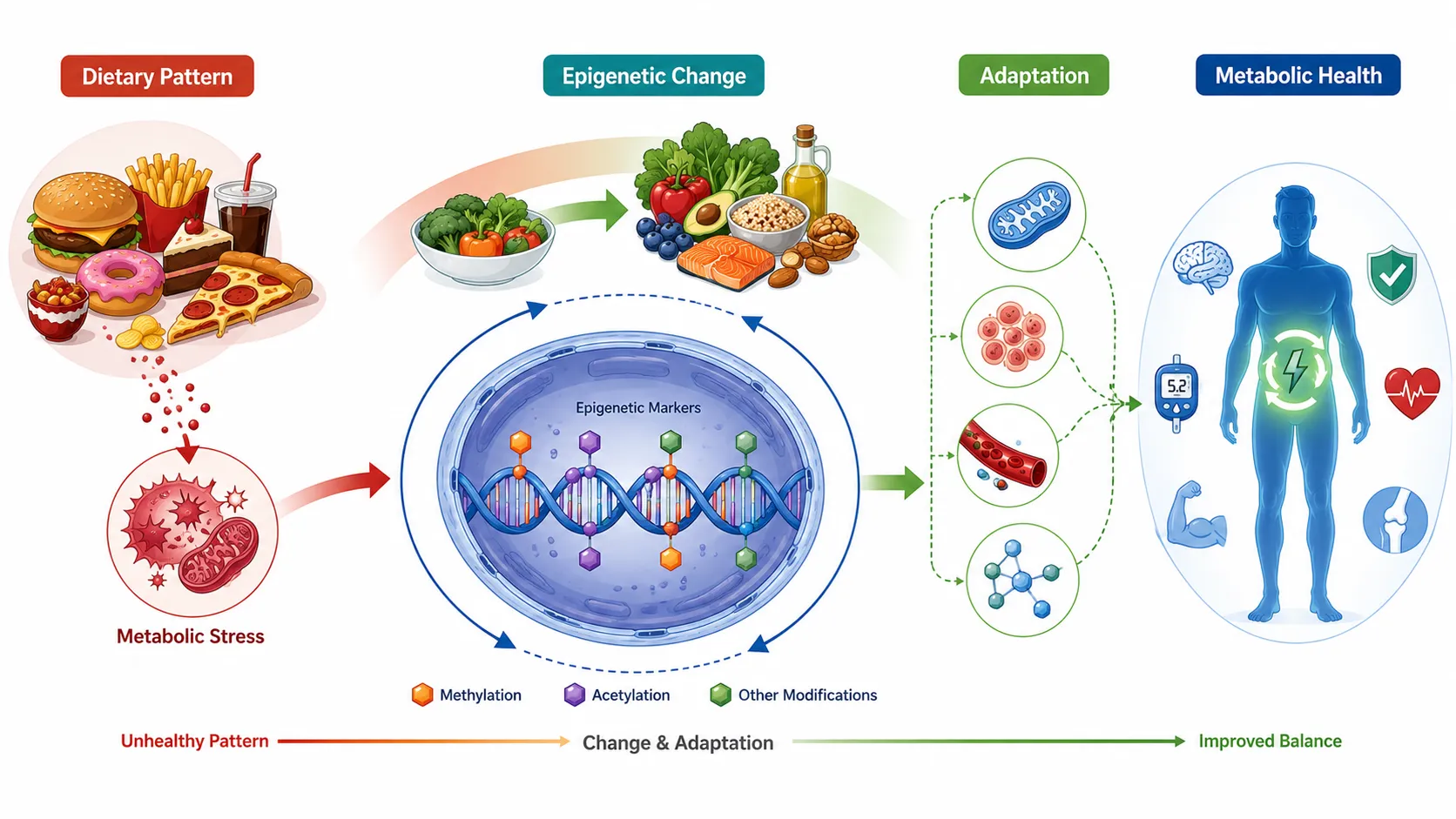
Key Definitions and Concepts
| Term | Definition | Relevance to Diet and Metabolic Health |
|---|---|---|
| Epigenetics | The study of changes in gene regulation that occur without changing the DNA sequence. | Explains how environmental factors, including diet, can influence gene activity. |
| DNA methylation | The addition of methyl groups to specific regions of DNA. | Can alter gene expression and is influenced by one-carbon nutrient metabolism. |
| Histone modification | Chemical changes to histone proteins around which DNA is organised. | Can make genes more or less accessible for transcription. |
| Epigenetic plasticity | The capacity of epigenetic marks to change in response to environmental influences. | Supports the possibility that some diet-induced changes may be modified. |
| Epigenetic memory | The persistence of epigenetic patterns after the original environmental exposure has changed. | May explain why some metabolic effects continue despite dietary improvement. |
| One-carbon metabolism | A network of biochemical reactions that supplies methyl groups for essential cellular processes. | Links nutrients such as folate and related cofactors to methylation processes. |
| Metabolic health | The effective regulation of energy, glucose, lipid and other metabolic processes. | May be influenced by gene regulation and lifestyle exposures. |
| Nutritional intervention | A planned dietary strategy designed to improve physiological or clinical outcomes. | May influence metabolic pathways and potentially responsive epigenetic processes. |
The Principle of Epigenetic Plasticity
Epigenetic regulation is not completely fixed. Cells must respond to changes in their environment, developmental requirements and physiological demands. This adaptability is known as epigenetic plasticity. It allows patterns of gene regulation to respond to internal and external signals, including nutrient availability, energy status, physical activity and exposure to metabolic stress.
However, plasticity does not mean that every epigenetic change can be easily reversed. Some modifications are transient, whereas others may become more stable over time. A short-term dietary change may produce temporary alterations in metabolic signalling, while prolonged nutritional exposure may contribute to more persistent regulatory adaptations.
Important features of epigenetic plasticity include:
The ability of cells to respond to changing nutrient availability.
The modification of gene expression without changing DNA sequence.
The involvement of multiple regulatory mechanisms rather than a single pathway.
Differences between tissues such as liver, muscle, adipose tissue and intestinal tissue.
Variation between individuals due to genetics and previous environmental exposure.
Greater sensitivity during particular developmental periods.
Potential interaction between diet, physical activity, stress and other lifestyle factors.
Why Diet Can Influence Epigenetic Regulation
Diet supplies more than energy and structural nutrients. It provides molecules that participate directly or indirectly in biochemical reactions associated with gene regulation.
Nutritional status can influence:
The availability of methyl-group donors.
The activity of enzymes involved in DNA methylation.
The availability of cofactors required for metabolic reactions.
Oxidative and inflammatory signalling.
Cellular energy status.
Hormonal regulation.
The production of metabolites by the gut microbiome.
Cellular signalling pathways that communicate nutritional status to the nucleus.
A diet that consistently provides adequate and balanced nutrition may support normal metabolic regulation. In contrast, long-term nutritional imbalance may contribute to altered metabolic signalling and physiological stress. These changes can interact with epigenetic regulatory mechanisms.
One-Carbon Metabolism and Methylation
One-carbon metabolism is particularly important when discussing diet and epigenetics. This network of biochemical reactions supports the transfer of one-carbon units required for several essential cellular processes, including methylation reactions.
Nutrients associated with these pathways include:
Folate.
Vitamin B12.
Vitamin B6.
Choline.
Methionine.
Other dietary components involved in related metabolic pathways.
The relationship between nutrient intake and DNA methylation is not necessarily simple or linear. Increasing the intake of a nutrient does not automatically produce a predictable improvement in methylation across all tissues and genes. The biological response depends on nutritional status, genetic variation, tissue requirements and the wider metabolic environment.
This demonstrates an important principle for nutritional practice: more is not always better. Effective interventions should be based on assessed need and evidence rather than assuming that excessive intake of a nutrient will automatically correct molecular dysfunction.
DNA Methylation and Potential Reversibility
DNA methylation is one of the most widely studied epigenetic mechanisms. It commonly involves the addition of a methyl group to cytosine at particular regions of DNA. Depending on the genomic location and biological context, methylation may influence gene activity.
Diet-induced changes in DNA methylation may occur through:
Altered availability of methyl-group donors.
Changes in enzyme activity.
Oxidative stress.
Inflammation.
Hormonal signalling.
Changes in cellular metabolism.
Interactions with microbiome-derived metabolites.
Some methylation patterns may change when environmental conditions improve. For example, a change in dietary quality may alter metabolic conditions that previously promoted inflammation or excessive energy storage.
However, several factors may limit reversibility:
Long duration of previous exposure.
Age-related biological changes.
Tissue-specific differences.
Underlying genetic variation.
Established disease processes.
Developmental timing.
Persistence of inflammation or oxidative stress.
Therefore, nutritional intervention should not be viewed as a guaranteed mechanism for completely resetting epigenetic regulation. Instead, it may contribute to modifying responsive pathways and improving the physiological environment in which gene regulation occurs.
Histone Modifications and Dietary Responsiveness
Histones are proteins that help organise DNA within the cell nucleus. Chemical modifications to histones can influence how tightly or loosely DNA is packaged. This can affect the accessibility of genes to the cellular machinery responsible for transcription.
Important forms of histone modification include:
Acetylation.
Methylation.
Phosphorylation.
Ubiquitination.
These modifications are dynamic and depend on the activity of specialised enzymes. Nutritional status can influence the metabolites and cofactors required for some of these processes.
For example, cellular energy metabolism can affect the availability of metabolic intermediates involved in enzyme regulation. Certain food-derived compounds may also interact with signalling pathways that influence histone-modifying enzymes.
This provides a possible explanation for why changes in dietary patterns may influence gene expression over time.
Histone Acetylation and Metabolic Regulation
Histone acetylation is often associated with increased chromatin accessibility, although the biological outcome depends on the specific genomic location and cellular context.
Metabolic factors can influence acetylation through:
Cellular energy availability.
Acetyl-group metabolism.
Enzyme activity.
Redox balance.
Nutrient-sensitive signalling pathways.
The potential reversibility of histone modifications may make them particularly relevant to nutritional interventions. Nevertheless, the effects remain complex because the same dietary intervention may produce different responses in different tissues.
Non-Coding RNA and Nutritional Regulation
Non-coding RNAs are RNA molecules that do not primarily function as templates for protein production but can regulate gene expression.
Dietary patterns and metabolic conditions may influence:
MicroRNA expression.
RNA-mediated regulation of metabolic genes.
Inflammatory signalling.
Lipid metabolism.
Insulin-related pathways.
Cellular responses to oxidative stress.
Changes in non-coding RNA activity may represent another mechanism through which nutritional interventions influence metabolic regulation.
Key considerations include:
Responses may differ between individuals.
Effects may depend on the duration of dietary exposure.
Multiple pathways may change simultaneously.
Non-coding RNA responses may reflect disease activity rather than directly cause disease.
Clinical interpretation requires careful assessment of evidence.
Reversibility Does Not Mean Complete Biological Resetting
A critical discussion must distinguish between improvement and complete reversal. A nutritional intervention may improve metabolic health even when previous epigenetic changes are not completely eliminated.
For example, an individual may improve dietary quality and experience:
Better glucose regulation.
Improved lipid metabolism.
Reduced inflammatory activity.
Improved nutrient status.
Better energy balance.
Improved cardiovascular risk factors.
These improvements may occur through multiple physiological mechanisms. It would be scientifically inaccurate to assume that every benefit is caused exclusively by epigenetic reversal.
Therefore, an evidence-based interpretation should recognise that:
Epigenetic mechanisms are one component of metabolic regulation.
Nutritional effects are multi-factorial.
Improvements in biomarkers do not automatically prove epigenetic causation.
Molecular associations do not always establish direct cause and effect.
Long-term outcomes require continued monitoring.
Factors That Determine Whether Epigenetic Changes May Be Reversible
Duration of Dietary Exposure
Short-term nutritional changes may produce different effects from long-term dietary patterns. Prolonged exposure to an unhealthy metabolic environment may contribute to more stable biological adaptations.
Important considerations include:
Length of nutritional imbalance.
Severity of metabolic disturbance.
Duration of inflammation.
Presence of obesity-related metabolic dysfunction.
Age at which exposure occurred.
Developmental Timing
Early life represents a particularly important period for epigenetic programming. During development, cells are rapidly differentiating and establishing long-term patterns of gene expression.
Sensitive periods include:
Pre-conception.
Pregnancy.
Foetal development.
Infancy.
Early childhood.
Nutritional exposures during these periods may have long-lasting consequences because they occur while fundamental physiological systems are developing.
However, the concept of developmental programming should not be interpreted as biological determinism. Later-life nutrition and lifestyle may still influence health outcomes even when early exposures have created long-term vulnerabilities.
Tissue-Specific Differences
Epigenetic patterns differ between tissues because cells perform different physiological functions.
For example:
The liver plays a central role in nutrient processing and metabolic regulation.
Skeletal muscle is important for glucose uptake and energy utilisation.
Adipose tissue contributes to energy storage and endocrine signalling.
The intestine influences nutrient absorption and communication with the microbiome.
The brain regulates appetite, energy balance and neuroendocrine responses.
An epigenetic change observed in one tissue cannot automatically be assumed to occur in another tissue.
Genetic Variation
Individual genetic differences may influence how a person responds to dietary exposure. Genetic variation can affect:
Nutrient metabolism.
Enzyme activity.
Hormonal signalling.
Inflammatory responses.
Susceptibility to metabolic disease.
This supports the principle that nutritional interventions should consider individual variability rather than assuming that one approach will produce identical molecular responses in every person.
The Role of Metabolic Memory
Metabolic memory describes the persistence of biological effects after the original metabolic environment has improved. This concept is relevant when considering chronic exposure to abnormal glucose levels, inflammation or other metabolic stressors.
Potential mechanisms include:
Persistent changes in gene regulation.
Oxidative stress.
Inflammatory signalling.
Cellular damage.
Long-lasting changes in tissue function.
The existence of metabolic memory demonstrates why early intervention can be important. Preventing prolonged metabolic dysfunction may be easier than completely reversing its long-term consequences.
Dietary Patterns and Long-Term Epigenetic Health
The focus should not be placed exclusively on isolated nutrients. Human diets consist of complex food matrices, nutrient interactions and long-term dietary patterns.
A metabolically supportive dietary pattern may emphasise:
A wide variety of minimally processed foods.
Adequate fruit and vegetable intake.
Appropriate sources of dietary fibre.
Balanced protein intake.
Suitable sources of unsaturated fats.
Adequate vitamins and minerals.
Appropriate energy intake.
Reduced dependence on highly processed foods.
The potential benefits include:
Improved nutrient adequacy.
Support for normal metabolic pathways.
Improved dietary fibre intake.
Potential support for gut microbiome diversity.
Improved energy balance.
Reduction of some metabolic stressors.
The Gut Microbiome as a Mediator
The gut microbiome provides an important connection between diet and host physiology. Dietary components that reach the large intestine can be metabolised by microorganisms, producing compounds that may influence intestinal and systemic signalling.
The microbiome may influence:
Energy metabolism.
Immune regulation.
Intestinal barrier function.
Production of microbial metabolites.
Communication between the gut and other organs.
Some microbial metabolites may interact with pathways involved in epigenetic regulation. This creates a potential chain of interaction:
Dietary Pattern → Gut Microbiome → Microbial Metabolites → Cellular Signalling → Gene Regulation → Metabolic Function
This pathway demonstrates that dietary effects on epigenetics may occur indirectly as well as directly.
Physical Activity and Epigenetic Adaptation
Diet should not be considered in isolation. Physical activity influences energy metabolism and may interact with molecular regulatory pathways.
Regular physical activity can contribute to:
Improved insulin sensitivity.
Increased energy expenditure.
Improved skeletal muscle metabolism.
Changes in mitochondrial activity.
Altered metabolic signalling.
The combination of nutritional improvement and physical activity may therefore provide a more comprehensive approach to restoring metabolic health than either intervention alone.
Practical Example: Improving an Unhealthy Dietary Pattern
Consider an adult with a long history of:
Excessive consumption of highly processed foods.
Low dietary fibre intake.
High energy intake.
Sedentary behaviour.
Increasing body fat accumulation.
Evidence of impaired metabolic regulation.
A comprehensive intervention could include:
Assessing current dietary intake.
Evaluating relevant biochemical markers.
Identifying nutrient inadequacies.
Establishing realistic dietary improvements.
Increasing fibre-rich food intake where appropriate.
Supporting balanced energy intake.
Encouraging regular physical activity.
Monitoring metabolic indicators over time.
The expected objective is not to claim that a specific epigenetic mark will definitely be erased. Instead, the intervention aims to improve the metabolic environment and support physiological pathways that contribute to long-term health.
Practical Example: Nutritional Deficiency and Molecular Function
Consider an individual with inadequate intake or impaired utilisation of nutrients involved in essential metabolic pathways.
A systematic approach should include:
Identification of symptoms and clinical concerns.
Assessment of dietary intake.
Appropriate laboratory investigation.
Identification of the underlying cause.
Development of a targeted nutritional strategy.
Monitoring of biochemical and clinical outcomes.
The intervention should address the cause rather than simply focusing on the theoretical possibility of modifying epigenetic regulation.
Key Benefits of Understanding Epigenetic Reversibility
A sophisticated understanding of epigenetic reversibility provides several important benefits.
For Clinical Nutrition
Encourages early intervention.
Supports personalised approaches.
Recognises individual biological variation.
Promotes long-term monitoring.
Avoids simplistic nutrient-based assumptions.
For Public Health
Highlights the importance of healthy dietary environments.
Supports nutrition during sensitive developmental periods.
Encourages prevention of long-term metabolic dysfunction.
Demonstrates the potential value of sustained lifestyle improvement.
For Research
Supports investigation of biological mechanisms.
Encourages longitudinal studies.
Promotes integration of nutrition, genomics and metabolomics.
Helps distinguish association from causation.
Critical Evaluation of Current Scientific Challenges
Although the field of nutritional epigenetics is promising, several scientific challenges remain.
Establishing Causation
One of the greatest difficulties is determining whether an epigenetic change directly causes a disease or simply reflects an existing physiological condition.
For example:
Disease may alter epigenetic regulation.
Epigenetic alterations may contribute to disease progression.
Both may result from a third factor such as inflammation.
Therefore, observational associations should not automatically be interpreted as proof of causation.
Measuring Epigenetic Changes
Research findings can vary because of:
Differences in laboratory methods.
Variation in tissues studied.
Differences in participant populations.
Small sample sizes.
Short follow-up periods.
Variation in dietary assessment methods.
These limitations must be considered when interpreting claims about dietary reversal of epigenetic changes.
The Problem of Tissue Accessibility
Many important metabolic tissues are difficult to sample directly. Researchers may therefore analyse accessible tissues such as blood cells.
However, epigenetic patterns in blood may not fully represent changes occurring in:
Liver tissue.
Skeletal muscle.
Adipose tissue.
The brain.
Specific intestinal regions.
This creates an important limitation when translating research findings into clinical recommendations.
Individual Variation in Response
Two individuals following the same dietary intervention may experience different outcomes because of differences in:
Genetics.
Baseline nutritional status.
Age.
Metabolic health.
Microbiome composition.
Physical activity.
Medication use.
Environmental exposures.
For this reason, personalised assessment remains important.
A Systematic Framework for Supporting Long-Term Metabolic Health
A professional approach should follow a structured process.
Step 1: Comprehensive Assessment
Collect relevant information relating to:
Dietary intake.
Medical history.
Lifestyle.
Physical activity.
Relevant biochemical indicators.
Medication use.
Family history where appropriate.
Step 2: Identify Metabolic Priorities
Determine the primary concerns, such as:
Poor glycaemic regulation.
Abnormal lipid metabolism.
Nutritional deficiency.
Inflammation.
Excess energy intake.
Inadequate dietary diversity.
Step 3: Develop an Evidence-Based Intervention
The intervention should:
Address identified needs.
Be realistic and sustainable.
Consider cultural and personal factors.
Avoid unnecessary supplementation.
Be appropriate to the individual’s clinical context.
Step 4: Monitor Outcomes
Relevant monitoring may include:
Dietary adherence.
Clinical symptoms.
Body composition where appropriate.
Biochemical indicators.
Functional outcomes.
Step 5: Review and Adjust
Interventions should be modified according to:
Response to treatment.
New clinical information.
Changes in lifestyle.
Individual preferences.
Evidence of benefit or limited effectiveness.
Broader Implications for Long-Term Metabolic Health
The potential reversibility of some diet-induced epigenetic changes offers an important message: biological systems retain a degree of adaptability throughout life. Although early exposures and long-term habits may influence metabolic risk, later interventions can still produce meaningful physiological benefits.
The broader implications include:
Prevention remains preferable to prolonged metabolic dysfunction.
Early nutritional support may have long-term benefits.
Sustained dietary change is more meaningful than short-term interventions alone.
Epigenetic mechanisms should be considered alongside genetics, environment and lifestyle.
Personalised nutrition may become increasingly important as scientific understanding develops.
Molecular findings must be translated cautiously into clinical practice.
Professional and Ethical Considerations
Professionals communicating information about nutritional epigenetics should avoid exaggerated claims. Statements suggesting that a particular food or supplement can permanently “switch genes on or off” are often oversimplified.
Professional practice should emphasise:
Evidence-based communication.
Clear distinction between established findings and emerging research.
Individual assessment.
Appropriate referral when medical investigation is required.
Avoidance of unsupported genetic or epigenetic claims.
Recognition of uncertainty and scientific limitations.
Key Points for Learners
The most important principles to understand are:
Epigenetic changes influence gene regulation without altering the DNA sequence.
Diet can influence epigenetic regulation directly and indirectly.
DNA methylation, histone modification and non-coding RNA are important mechanisms.
Some diet-related epigenetic changes may demonstrate plasticity.
Not all epigenetic alterations are equally reversible.
Developmental timing can influence the persistence of biological effects.
Long-term metabolic dysfunction may create forms of biological or metabolic memory.
Nutritional interventions can improve health even without completely reversing every molecular alteration.
Diet interacts with physical activity, the microbiome, genetics and environmental factors.
Claims about epigenetic reversal should be evaluated critically.
Individual responses to dietary interventions can vary substantially.
Long-term, sustainable improvements are generally more meaningful than short-term dietary changes.
Conclusion
The reversibility of diet-induced epigenetic changes is a complex and evolving area of molecular nutrition. Current scientific understanding indicates that epigenetic regulation possesses a degree of plasticity, allowing some molecular patterns to respond to changes in nutrition, metabolic conditions and lifestyle. However, reversibility is not universal, immediate or guaranteed. The persistence of epigenetic effects may depend on developmental timing, duration of exposure, tissue specificity, genetic variation and the presence of established metabolic disease.
From a metabolic health perspective, the greatest value of this field lies in understanding how nutrition interacts with broader systems of biological regulation. Evidence-based dietary interventions may improve the metabolic environment, reduce physiological stress, support normal biochemical pathways and potentially influence responsive mechanisms of gene regulation.
A critical and professionally responsible interpretation avoids the oversimplified claim that diet can simply erase previous biological damage. Instead, it recognises that sustained improvements in dietary quality, physical activity and overall lifestyle can support meaningful physiological adaptation. The study of nutritional epigenetics therefore strengthens the understanding that metabolic health is dynamic, multi-factorial and influenced by the continuous interaction between genes, nutrients, environment and behaviour.
6.Investigate the Essential Role of Specific Micronutrients Functioning as Critical Cofactors in the Enzymes Responsible for Maintaining Overall Epigenetic Stability
Introduction
Epigenetic stability refers to the ability of cells to establish, maintain and appropriately modify patterns of gene regulation without changing the underlying DNA sequence. This stability is essential for normal cellular differentiation, tissue function, growth, development and adaptation to environmental conditions. Epigenetic mechanisms include DNA methylation, histone modification, chromatin remodelling and regulation by non-coding RNA. These processes are controlled by complex networks of enzymes that require suitable biochemical conditions to function effectively.
Micronutrients play an important role in supporting these biochemical systems. Vitamins and minerals may function as cofactors, coenzymes, metabolic precursors or essential components of enzymes involved in reactions that influence the epigenome. In particular, nutrients involved in one-carbon metabolism, cellular energy metabolism and redox regulation can affect the availability of substrates and cofactors required by epigenetic enzymes.
The relationship between micronutrients and epigenetic regulation should, however, be interpreted carefully. A micronutrient does not usually control one epigenetic mechanism in isolation. Nutrients operate within interconnected biochemical pathways, and their effects depend on dose, bioavailability, tissue distribution, genetic variation, age, physiological status and interactions with other nutrients. Both deficiency and excessive intake may disturb normal metabolic regulation.
This section investigates the essential functions of specific micronutrients in supporting enzymes and metabolic pathways associated with epigenetic stability. It examines key concepts, biochemical mechanisms, practical examples, assessment procedures and the broader importance of micronutrient adequacy for long-term health.
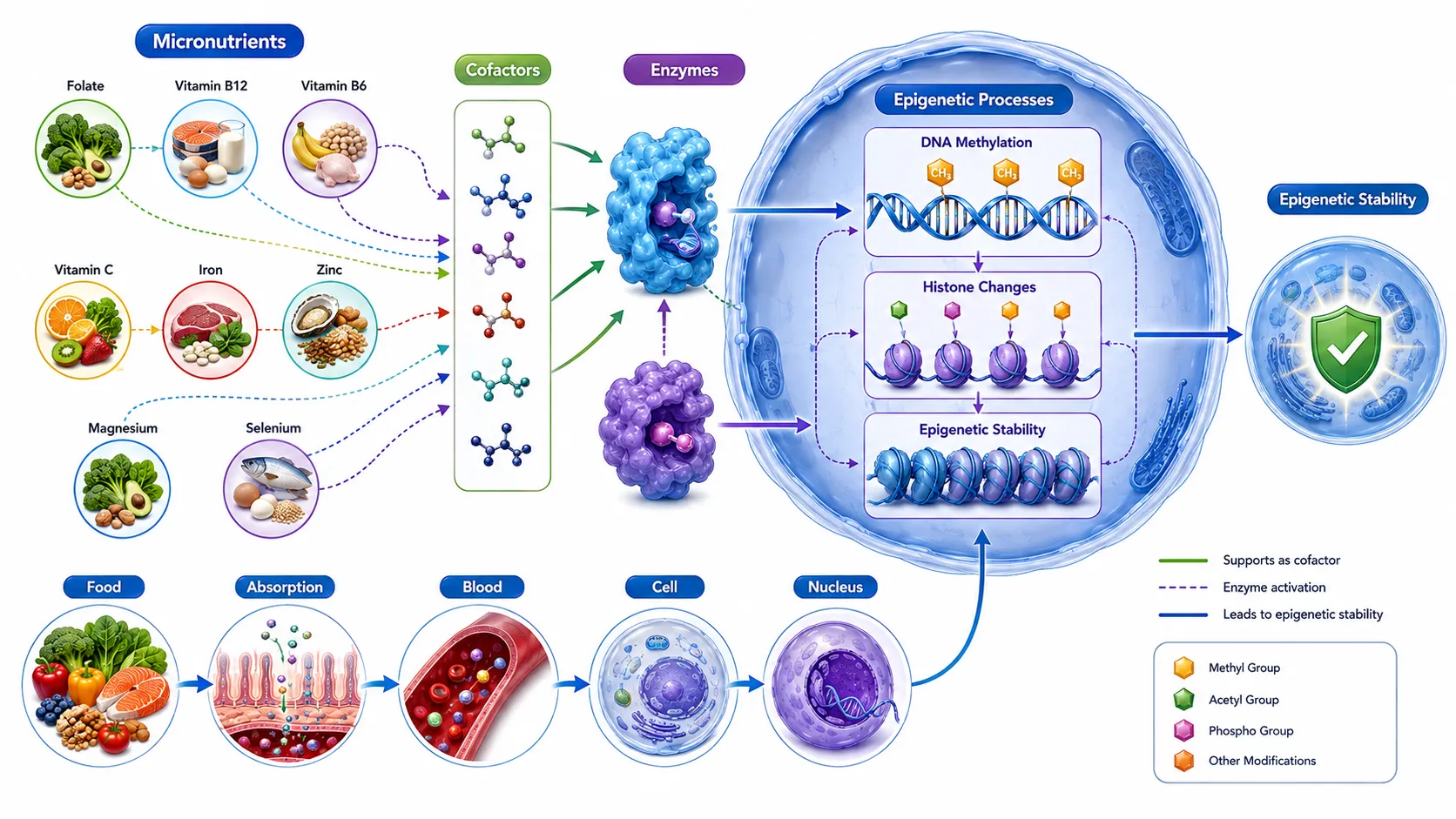
Key Definitions and Concepts
| Term | Definition | Importance for Epigenetic Stability |
|---|---|---|
| Micronutrient | A vitamin or mineral required in relatively small amounts for normal physiological function. | Supports enzyme activity, metabolic pathways and cellular regulation. |
| Cofactor | A non-protein component required for an enzyme to perform its biological function. | Enables specific enzymes to catalyse biochemical reactions. |
| Coenzyme | An organic molecule, often derived from a vitamin, that assists enzymatic reactions. | Supports metabolic reactions involved in cellular regulation. |
| Epigenetic stability | The maintenance of appropriate and controlled patterns of epigenetic regulation. | Supports normal gene expression and cellular identity. |
| DNA methylation | The addition of methyl groups to specific DNA regions. | Influences gene regulation depending on genomic and cellular context. |
| Histone modification | Chemical alteration of histone proteins associated with DNA. | Influences chromatin structure and accessibility. |
| One-carbon metabolism | A network of reactions transferring one-carbon units between molecules. | Supports methylation-related biochemical processes. |
| Methyl donor | A molecule capable of contributing a methyl group to another biochemical reaction. | Provides material required for methylation reactions. |
| Oxidative stress | A disruption of the balance between reactive molecular species and protective systems. | May influence DNA integrity and epigenetic enzyme activity. |
| Bioavailability | The proportion of a nutrient that is absorbed and available for physiological use. | Determines whether dietary intake can effectively support cellular pathways. |
1. Understanding the Relationship Between Micronutrients and Epigenetic Stability
1.1 Why Epigenetic Enzymes Require Nutritional Support
Enzymes are biological catalysts that accelerate and regulate chemical reactions within the body. Many enzymes cannot function effectively using their protein structure alone. They require additional molecules or ions, known as cofactors or coenzymes.
Micronutrients contribute to enzyme function by:
Participating directly in catalytic reactions.
Supporting the transfer of chemical groups.
Stabilising enzyme structure.
Assisting electron transfer reactions.
Supporting energy metabolism.
Maintaining cellular redox balance.
Acting as precursors to biologically active coenzymes.
Epigenetic enzymes are also dependent on the wider metabolic environment. Their activity may be influenced by the availability of substrates, cofactors and metabolic intermediates.
The relationship can be represented as:
Dietary Intake → Digestion → Absorption → Micronutrient Availability → Cellular Uptake → Cofactor or Coenzyme Formation → Enzyme Activity → Epigenetic Regulation
This pathway demonstrates that dietary intake alone does not determine cellular availability. Digestion, absorption, transport and metabolism must also be considered.
1.2 The Importance of Balanced Micronutrient Status
Both insufficient and excessive nutrient exposure can potentially disrupt normal physiology.
Adequate micronutrient status supports:
Normal enzyme activity.
Efficient nutrient metabolism.
DNA maintenance.
Cellular energy production.
Antioxidant defence systems.
Appropriate cellular signalling.
Potential causes of inadequate micronutrient availability include:
Poor dietary diversity.
Restrictive dietary patterns.
Malabsorption.
Increased physiological requirements.
Chronic gastrointestinal conditions.
Drug–nutrient interactions.
Excessive alcohol consumption.
Increased metabolic demands.
A professional assessment should therefore focus on nutritional adequacy rather than assuming that high-dose supplementation will improve epigenetic regulation.
2. Folate and One-Carbon Metabolism
2.1 The Role of Folate
Folate is a water-soluble B vitamin that plays an important role in one-carbon metabolism. Folate-derived compounds participate in reactions that transfer one-carbon units required for several essential cellular processes.
One-carbon metabolism is relevant to:
Nucleotide synthesis.
Amino acid metabolism.
Cellular growth.
Methylation-related reactions.
Folate therefore has indirect relevance to epigenetic regulation because it contributes to the biochemical network that supports the generation and transfer of methyl groups.
2.2 Folate and Methylation Pathways
A simplified conceptual pathway is:
Dietary Folate → Absorption → Cellular Folate Metabolism → One-Carbon Transfer Reactions → Methyl-Group Metabolism → Methylation Processes
This process is highly interconnected and depends on other nutrients.
Important interacting factors include:
Vitamin B12.
Vitamin B6.
Choline.
Methionine.
Riboflavin.
Key Learning Points
Folate does not independently determine DNA methylation.
One-carbon metabolism involves multiple nutrients.
The effects of folate depend on existing nutritional status.
Genetic variation may influence folate metabolism.
Excessive supplementation is not equivalent to improved epigenetic health.
3. Vitamin B12 as a Critical Cofactor
3.1 Biochemical Function
Vitamin B12 functions as an essential cofactor in specific metabolic reactions. It is particularly important within pathways involving the metabolism of one-carbon units.
One important function is its role in reactions associated with methionine metabolism. These pathways are linked to the generation of molecules involved in methyl-group transfer.
A simplified pathway is:
Vitamin B12 Availability → Enzyme-Supported Methionine Metabolism → Methyl Donor Production → Methylation Reactions
Vitamin B12 deficiency can therefore affect interconnected metabolic processes.
3.2 Relationship With Folate
Folate and vitamin B12 have a closely connected biochemical relationship.
Both are important for:
Normal cellular metabolism.
One-carbon transfer reactions.
Nucleotide synthesis.
Methylation-related pathways.
An imbalance in one component can influence the wider pathway.
Practical Assessment Considerations
When evaluating possible nutritional inadequacy, relevant considerations may include:
Dietary intake.
Gastrointestinal absorption.
Supplement use.
Relevant biochemical markers.
Medication use.
Age-related absorption changes.
4. Vitamin B6 and Enzymatic Regulation
4.1 Role in Amino Acid and One-Carbon Metabolism
Vitamin B6 is converted into an active coenzyme form that supports numerous enzymatic reactions, particularly those involving amino acid metabolism.
Its functions are relevant to:
Amino acid transformation.
Neurotransmitter metabolism.
Haem synthesis.
Pathways connected with one-carbon metabolism.
Vitamin B6 contributes to metabolic networks that help maintain the balance of compounds involved in methyl-group metabolism.
4.2 Importance for Homocysteine Metabolism
Vitamin B6 participates in pathways that contribute to the metabolism of homocysteine.
Disturbance in these pathways may be associated with altered biochemical conditions.
However, an elevated biomarker should not automatically be attributed to a single nutrient deficiency. Interpretation requires consideration of:
Vitamin status.
Kidney function.
Genetics.
Medication use.
Overall metabolic health.
5. Riboflavin and Flavin-Dependent Enzymes
5.1 Riboflavin as a Precursor of Coenzymes
Riboflavin contributes to the formation of coenzymes involved in oxidation–reduction reactions.
These coenzymes support:
Cellular energy metabolism.
Electron transfer.
Enzymatic activity within metabolic pathways.
Riboflavin has relevance to epigenetic stability because metabolic pathways involved in methyl-group regulation require efficient enzymatic coordination.
5.2 Interactions With One-Carbon Metabolism
Certain enzymes associated with folate-related pathways require flavin-derived cofactors.
This demonstrates that micronutrient effects are interconnected.
A deficiency in one nutrient may therefore influence:
Enzyme efficiency.
Metabolic intermediate concentrations.
Availability of related cofactors.
Wider cellular metabolic balance.
6. Choline and Methyl-Group Metabolism
6.1 Choline as an Essential Nutrient
Choline contributes to several physiological processes, including:
Cell membrane structure.
Neurotransmitter synthesis.
Lipid metabolism.
Methyl-group metabolism.
Choline-derived metabolic pathways can provide alternative routes involved in methyl-group transfer.
6.2 Choline and Epigenetic Regulation
The conceptual relationship can be represented as:
Dietary Choline → Absorption → Metabolic Conversion → Contribution to Methyl-Group Pathways → Support for Methylation Reactions
Choline is particularly relevant because it illustrates the connection between nutrient metabolism, lipid metabolism and molecular regulation.
Important Considerations
The effects of choline depend on:
Dietary intake.
Physiological requirements.
Genetic variation.
Interactions with folate-related pathways.
Overall nutritional status.
7. Methionine and Methyl Donor Availability
7.1 Methionine as an Amino Acid
Methionine is an essential amino acid obtained from dietary protein. It participates in metabolic pathways involved in methyl-group transfer.
Through metabolic conversion, methionine contributes to the formation of a major cellular methyl donor used in numerous methylation reactions.
7.2 Methylation and Metabolic Balance
The pathway can be simplified as:
Dietary Protein → Methionine → Cellular Metabolism → Methyl Donor Formation → Methyl Transfer Reactions
However, increasing dietary methionine intake does not necessarily produce proportionally beneficial epigenetic effects.
The body regulates:
Amino acid metabolism.
Methyl-group availability.
Enzyme activity.
Nutrient utilisation.
This demonstrates the importance of metabolic balance.
8. Vitamin C and Epigenetic Enzyme Function
8.1 Vitamin C Beyond Antioxidant Activity
Vitamin C is widely recognised for its antioxidant functions, but it also has roles in supporting specific enzyme systems.
Certain enzymes involved in the modification of DNA and histones require suitable cofactors and cellular conditions to function effectively.
Vitamin C may support the activity of some enzymes involved in oxidative modification processes associated with DNA demethylation pathways.
8.2 Potential Role in DNA Demethylation
DNA methylation patterns can be actively modified through enzyme-mediated processes.
A simplified conceptual pathway is:
Vitamin C Availability → Support for Specific Enzyme Activity → Oxidative DNA Modification Processes → DNA Demethylation Pathways
This illustrates an important principle: micronutrients may support not only the establishment of epigenetic marks but also processes involved in their modification.
Critical Interpretation
The presence of vitamin C in the diet does not mean that consuming high doses will selectively reverse harmful DNA methylation patterns.
The physiological response depends on:
Cellular requirements.
Tissue concentration.
Enzyme availability.
Existing nutritional status.
9. Iron and Epigenetic Enzymes
9.1 Iron as an Enzyme Cofactor
Iron is an essential mineral involved in multiple biochemical processes.
Its functions include support for:
Oxygen transport.
Electron transfer.
Energy metabolism.
Specific enzyme systems.
Certain enzymes associated with DNA and histone modification require metal ions, including iron, for catalytic activity.
9.2 Iron and DNA Demethylation-Related Processes
Some enzymes involved in oxidative DNA modification require iron-dependent catalytic activity.
Therefore, iron availability may influence:
Enzyme efficiency.
Cellular oxygen-related metabolism.
Molecular regulatory pathways.
Important Clinical Considerations
Both low and excessive iron status may have harmful consequences.
Professional assessment should consider:
Dietary intake.
Iron storage indicators.
Inflammation.
Blood loss.
Gastrointestinal absorption.
Iron supplementation should not be recommended solely on the assumption that it will improve epigenetic stability.
10. Zinc and Chromatin Regulation
10.1 Zinc as a Structural and Catalytic Cofactor
Zinc is involved in a wide range of enzymatic and structural functions.
It contributes to:
Enzyme activity.
Protein structure.
DNA-binding proteins.
Cellular signalling.
Immune regulation.
Many proteins involved in gene regulation contain zinc-dependent structural components.
10.2 Zinc and Gene Regulation
Zinc may influence epigenetic stability through:
Support for DNA-binding proteins.
Regulation of enzyme activity.
Contribution to antioxidant defence.
Maintenance of cellular structure.
Potential consequences of inadequate zinc availability may include disturbances in:
Cellular growth.
Immune function.
DNA maintenance.
Protein synthesis.
11. Magnesium and Cellular Energy Metabolism
11.1 Magnesium as a Universal Enzyme Cofactor
Magnesium participates in hundreds of enzymatic reactions and is particularly important in reactions involving ATP.
ATP-dependent processes are essential for:
Cellular energy transfer.
Enzyme activation.
DNA-related processes.
Chromatin regulation.
11.2 Magnesium and Epigenetic Stability
Magnesium does not act as a direct regulator of every epigenetic enzyme. However, adequate magnesium status supports the wider metabolic environment required for effective cellular function.
Magnesium contributes to:
Energy metabolism.
Nucleic acid stability.
Enzymatic reactions.
Electrolyte regulation.
This illustrates that epigenetic stability depends not only on specialised methylation enzymes but also on overall cellular metabolic health.
12. Selenium and Redox Regulation
12.1 Selenium-Dependent Enzymes
Selenium is incorporated into specialised proteins involved in antioxidant and redox processes.
Redox balance is important because excessive oxidative stress may influence:
DNA integrity.
Cellular signalling.
Enzyme function.
Inflammatory pathways.
12.2 Selenium and Molecular Stability
Adequate selenium status supports biological systems that help manage oxidative processes.
Potential functions include:
Supporting antioxidant enzyme activity.
Contributing to redox regulation.
Supporting cellular protection.
However, selenium has a relatively narrow range between adequate and excessive intake in some contexts. Therefore, unnecessary high-dose supplementation may create additional risks.
13. Copper and Enzyme Function
Copper is required for several enzymes involved in:
Electron transport.
Antioxidant defence.
Connective tissue metabolism.
Cellular energy production.
Copper contributes indirectly to epigenetic stability by supporting the metabolic and redox systems required for healthy cellular function.
A deficiency or excess of copper may disrupt:
Enzyme activity.
Oxidative balance.
Cellular metabolism.
14. Micronutrient Interactions and Epigenetic Networks
14.1 Why Single-Nutrient Thinking Is Inadequate
A major limitation in nutritional interpretation is focusing on one nutrient while ignoring the wider biochemical network.
For example:
Folate + Vitamin B12 + Vitamin B6 + Riboflavin + Choline + Methionine
may all contribute to interconnected metabolic pathways.
The effect of one nutrient can depend partly on the availability of another.
Important Nutrient Interaction Principles
Cofactors support specific enzymes.
Metabolic pathways share intermediates.
Nutrients compete or cooperate within biochemical systems.
Deficiency may affect multiple pathways simultaneously.
Excessive supplementation may disrupt metabolic balance.
15. The Role of Bioavailability
15.1 Dietary Intake Does Not Equal Cellular Availability
The amount of a nutrient consumed is not always equal to the amount available to cells.
The pathway includes:
Food Source → Food Matrix → Digestion → Absorption → Transport → Tissue Distribution → Cellular Uptake → Metabolic Activation
Each stage can influence nutrient availability.
Factors Affecting Bioavailability
Food processing.
Nutrient chemical form.
Presence of other dietary components.
Gastrointestinal health.
Age.
Medication use.
Genetic factors.
Therefore, dietary assessment must be combined with clinical and biochemical information when appropriate.
16. Micronutrient Deficiency and Potential Epigenetic Instability
16.1 Consequences of Deficiency
Micronutrient deficiency can influence:
Enzyme efficiency.
Cellular energy production.
DNA maintenance.
Redox balance.
Methyl-group metabolism.
However, it is important to distinguish between:
Biochemical plausibility.
Experimental findings.
Demonstrated clinical outcomes.
Not every micronutrient deficiency produces a clearly identifiable epigenetic signature in routine clinical practice.
Possible Consequences of Long-Term Inadequacy
Reduced metabolic efficiency.
Altered cellular signalling.
Increased vulnerability to oxidative stress.
Impaired nutrient-dependent enzyme activity.
Disruption of normal physiological adaptation.
17. A Systematic Process for Investigating Micronutrients and Epigenetic Stability
Step 1: Identify the Relevant Micronutrient
Determine whether the nutrient acts primarily as:
A cofactor.
A coenzyme precursor.
A metabolic substrate.
A structural component.
A redox regulator.
Step 2: Identify the Relevant Enzyme
Ask:
Which enzyme requires the nutrient?
What biochemical reaction does the enzyme catalyse?
What is the consequence of reduced activity?
Step 3: Trace the Metabolic Pathway
Map:
Nutrient → Absorption → Cellular Availability → Enzyme Activation → Biochemical Reaction → Molecular Regulatory Process
Step 4: Identify the Epigenetic Connection
Determine whether the pathway relates to:
DNA methylation.
DNA demethylation processes.
Histone modification.
Chromatin regulation.
RNA-mediated regulation.
Step 5: Assess Clinical Relevance
Evaluate:
Nutritional status.
Symptoms.
Relevant laboratory markers.
Dietary pattern.
Medical history.
Step 6: Develop an Evidence-Based Response
Appropriate strategies may include:
Improving dietary diversity.
Correcting confirmed nutritional inadequacy.
Addressing malabsorption where clinically relevant.
Monitoring response.
Referring to an appropriate healthcare professional when necessary.
18. Practical Case Example: Multi-Nutrient Inadequacy
Consider an individual with:
Limited dietary diversity.
Low intake of vegetables.
Low intake of nutrient-rich protein sources.
Persistent gastrointestinal symptoms.
Signs requiring further nutritional assessment.
A narrow approach might focus only on one vitamin.
A more appropriate assessment would consider:
Overall dietary intake.
Potential malabsorption.
Multiple micronutrient status.
Gastrointestinal health.
Relevant biochemical pathways.
The potential pathway could involve:
Restricted Diet → Reduced Micronutrient Intake → Lower Availability of Multiple Cofactors → Altered Enzyme Activity → Metabolic Disturbance → Potential Effects on Molecular Regulation
The key professional principle is to investigate the underlying cause rather than automatically recommending multiple supplements.
19. Practical Case Example: Supporting One-Carbon Metabolism
Consider an individual whose dietary pattern suggests inadequate intake of several nutrients involved in one-carbon metabolism.
A systematic assessment may include:
Dietary evaluation.
Relevant clinical history.
Assessment of vitamin status where appropriate.
Consideration of gastrointestinal function.
Identification of medication-related effects.
The intervention may focus on:
Improving dietary quality.
Increasing appropriate food sources.
Correcting confirmed deficiencies.
Monitoring biochemical outcomes.
The expected benefit is improved nutritional adequacy and support for normal metabolic pathways rather than a guaranteed correction of a particular epigenetic mark.
20. Key Benefits of Adequate Micronutrient Status
Benefits for Cellular Function
Adequate micronutrient availability supports:
Normal enzyme activity.
Energy production.
DNA maintenance.
Cellular growth.
Protein synthesis.
Benefits for Metabolic Regulation
Micronutrient adequacy contributes to:
Efficient nutrient metabolism.
Normal one-carbon metabolism.
Redox balance.
Hormonal function.
Cellular signalling.
Benefits for Epigenetic Stability
Appropriate nutritional status may help maintain:
Normal methylation-related metabolism.
Enzyme systems involved in chromatin regulation.
Cellular responses to environmental changes.
DNA maintenance processes.
21. Limitations and Challenges in Current Research
Difficulty Establishing Direct Causation
A micronutrient may be associated with an epigenetic change without directly causing it.
Possible explanations include:
Disease-related metabolic changes.
Dietary pattern differences.
Genetic variation.
Environmental exposures.
Tissue-Specific Effects
Micronutrient effects may vary between:
Blood cells.
Liver.
Muscle.
Adipose tissue.
Brain tissue.
Findings from one tissue cannot always be generalised.
Dose and Safety Considerations
More micronutrients do not automatically produce better outcomes.
Important principles include:
Correct deficiencies appropriately.
Avoid unnecessary high-dose supplementation.
Consider interactions between nutrients.
Monitor clinically relevant cases.
22. Key Points for Learners
The most important principles are:
Micronutrients support numerous enzymes involved in cellular metabolism.
Some micronutrients function directly as cofactors or coenzyme precursors.
Folate, vitamin B12, vitamin B6 and riboflavin contribute to interconnected one-carbon metabolic pathways.
Choline and methionine are relevant to methyl-group metabolism.
Vitamin C and iron can support specific enzyme systems involved in epigenetic modification pathways.
Zinc contributes to proteins and enzymes involved in gene regulation.
Magnesium supports energy-dependent cellular reactions.
Selenium contributes to redox-regulating enzyme systems.
Micronutrients function within interconnected networks.
Dietary intake does not always equal cellular availability.
Bioavailability and absorption influence nutrient function.
Both deficiency and excessive intake may disrupt normal physiology.
Epigenetic stability depends on the overall metabolic environment.
Clinical interpretation requires evidence-based assessment.
Conclusion
Specific micronutrients play essential roles in supporting the biochemical systems responsible for maintaining cellular and epigenetic stability. Vitamins and minerals can function as enzyme cofactors, coenzyme precursors, metabolic intermediates or regulators of cellular redox balance. Their influence on epigenetic regulation occurs through interconnected pathways rather than through isolated nutrient-to-gene relationships.
Nutrients involved in one-carbon metabolism, including folate, vitamin B12, vitamin B6 and riboflavin, contribute to biochemical networks associated with methyl-group metabolism. Choline and methionine provide further connections between dietary intake and methylation-related pathways. Other micronutrients, including vitamin C, iron, zinc, magnesium and selenium, support enzyme systems, cellular energy metabolism, DNA maintenance and redox regulation that contribute to the broader environment required for stable gene regulation.
A critical understanding of this subject requires recognition that adequate nutrition supports normal physiological function, but excessive supplementation does not necessarily improve epigenetic outcomes. Nutrient effects depend on bioavailability, interactions with other nutrients, genetic variation, tissue requirements and overall health status.
For professional practice and advanced academic study, the most appropriate approach is therefore systematic and evidence-based: identify the relevant nutrient, determine its biochemical function, investigate the enzyme or pathway involved, assess nutritional status and evaluate clinical relevance before proposing an intervention. This approach enables Learners to understand how micronutrients contribute to the complex molecular systems that support epigenetic stability and long-term metabolic health.