
Lesson No 1: Introduction to Quality Control and Quality Assurance in Electrical
Quality Control (QC) and Quality Assurance (QA) are essential practices in electrical engineering that ensure electrical systems, components, installations, and processes achieve the required levels of safety, reliability, efficiency, and performance. In modern electrical industries, maintaining quality is critical because electrical failures can result in equipment damage, operational disruptions, safety risks, and increased maintenance costs. Effective QA/QC practices help engineers identify potential issues, control processes, and ensure compliance with technical specifications and industry requirements.
This lesson introduces learners to the fundamental concepts and principles of Quality Control and Quality Assurance within the electrical engineering field. It explains the role of QA/QC professionals, the difference between preventive quality assurance and inspection-based quality control, and how quality management systems are applied throughout electrical projects. Learners will explore quality planning, inspection procedures, testing methods, documentation control, and compliance practices used to maintain high standards in electrical engineering operations.
By understanding the principles of electrical QA/QC, learners will develop a strong foundation for supporting quality activities in electrical installations, equipment testing, maintenance operations, and engineering projects. This knowledge will help learners understand how professional quality practices improve electrical system reliability, prevent defects, and contribute to safe and successful engineering outcomes.
Quality Control (QC) and Quality Assurance (QA) are essential practices in electrical engineering that ensure electrical systems, components, installations, and processes achieve the required levels of safety, reliability, efficiency, and performance. In modern electrical industries, maintaining quality is critical because electrical failures can result in equipment damage, operational disruptions, safety risks, and increased maintenance costs. Effective QA/QC practices help engineers identify potential issues, control processes, and ensure compliance with technical specifications and industry requirements.
This lesson introduces learners to the fundamental concepts and principles of Quality Control and Quality Assurance within the electrical engineering field. It explains the role of QA/QC professionals, the difference between preventive quality assurance and inspection-based quality control, and how quality management systems are applied throughout electrical projects. Learners will explore quality planning, inspection procedures, testing methods, documentation control, and compliance practices used to maintain high standards in electrical engineering operations.
By understanding the principles of electrical QA/QC, learners will develop a strong foundation for supporting quality activities in electrical installations, equipment testing, maintenance operations, and engineering projects. This knowledge will help learners understand how professional quality practices improve electrical system reliability, prevent defects, and contribute to safe and successful engineering outcomes.
1. Understand the Core Principles and Concepts of Quality Control (QC) and Quality Assurance (QA) in Electrical Engineering
Introduction to Quality Control and Quality Assurance in Electrical Engineering
Quality Control (QC) and Quality Assurance (QA) are essential components of engineering quality management systems that ensure electrical products, components, installations, and processes meet required safety, performance, and reliability standards. In electrical engineering environments, quality management is critical because electrical systems directly affect operational safety, equipment efficiency, and the overall performance of industrial, commercial, and infrastructure projects.
From a QA/QC Engineering perspective, Quality Assurance focuses on preventing quality issues by establishing effective procedures, standards, and controlled processes, while Quality Control focuses on detecting and correcting defects through inspection, testing, measurement, and verification activities. Together, QA and QC create a structured approach that ensures electrical engineering work is completed according to approved specifications, customer requirements, and industry standards.
In modern engineering industries, electrical quality management is applied across various sectors, including construction, manufacturing, power generation, automation, renewable energy, and industrial maintenance. QA/QC professionals play an important role in ensuring that electrical materials, equipment, and systems are safe, reliable, and compliant with technical requirements.
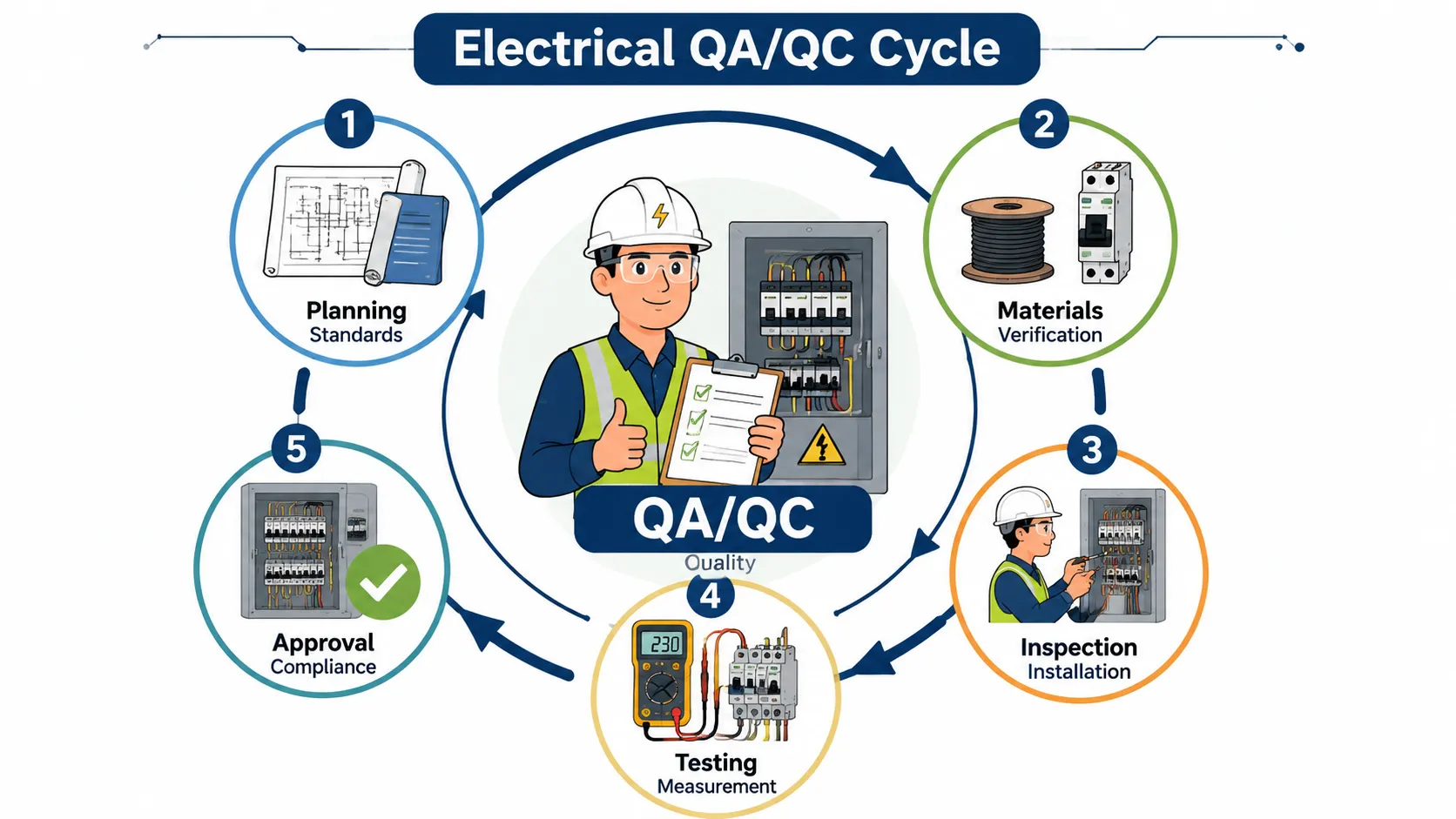
Definition of Quality Assurance (QA) in Electrical Engineering
Meaning of Quality Assurance
Quality Assurance is a planned and systematic approach used to ensure that engineering processes are properly designed, controlled, and implemented to prevent defects before they occur.
In electrical engineering, QA focuses on establishing a framework that ensures:
- Correct procedures are followed.
- Approved materials are used.
- Electrical standards are maintained.
- Installation activities follow specifications.
- Quality risks are identified early.
Quality Assurance is considered a preventive approach because it aims to eliminate potential problems through effective planning and process control.
Key Principles of Quality Assurance
Important QA principles include:
- Quality planning before project execution.
- Development of inspection and testing procedures.
- Control of technical documents and drawings.
- Selection of approved suppliers and materials.
- Compliance with electrical standards.
- Continuous improvement of processes.
For example, before installing an electrical distribution system, a QA process ensures that approved drawings, specifications, installation procedures, and material requirements are reviewed and controlled.
Definition of Quality Control (QC) in Electrical Engineering
Meaning of Quality Control
Quality Control is the practical process of inspecting, testing, and evaluating electrical components, systems, and activities to confirm that they meet specified requirements.
QC activities are performed during and after electrical work to identify:
- Defects.
- Installation errors.
- Performance issues.
- Non-compliance conditions.
Quality Control provides measurable evidence that electrical systems and components achieve the required quality standards.
Key Principles of Quality Control
Quality Control involves:
- Inspection of electrical installations.
- Testing of electrical equipment.
- Verification of measurements.
- Identification of defects.
- Recording inspection results.
- Implementing corrective actions.
Examples of electrical QC activities include:
- Testing cable insulation resistance.
- Checking electrical connections.
- Verifying equipment ratings.
- Inspecting control panels.
- Confirming installation accuracy.
Difference Between Quality Assurance and Quality Control
Understanding the difference between QA and QC is important for electrical engineering professionals because both activities support different stages of quality management.
| Aspect | Quality Assurance (QA) | Quality Control (QC) |
|---|---|---|
| Definition | A preventive approach that controls processes to avoid defects | A corrective approach that identifies defects through inspection and testing |
| Main Focus | Process improvement and prevention | Product and installation verification |
| Activities | Quality planning, procedures, audits, documentation control | Testing, inspection, measurement, defect identification |
| Timing | Before and during project activities | During and after production or installation |
| Objective | Prevent quality problems | Detect and correct quality problems |
Role of QA/QC Professionals in Electrical Engineering
QA/QC professionals are responsible for maintaining quality standards throughout electrical engineering activities. Their role involves planning, monitoring, inspecting, testing, and improving electrical processes.
Responsibilities of QA/QC Engineers
Key responsibilities include:
- Reviewing electrical drawings and specifications.
- Preparing quality inspection plans.
- Monitoring installation activities.
- Verifying electrical materials and components.
- Conducting inspections and tests.
- Recording quality results.
- Managing non-conformities.
- Supporting corrective and preventive actions.
QA/QC engineers ensure that electrical systems comply with:
- Project requirements.
- Technical specifications.
- Safety regulations.
- Engineering standards.
Quality Assurance Process in Electrical Engineering
Step 1: Quality Planning
The first stage involves establishing quality requirements before electrical work begins.
Activities include:
- Reviewing project specifications.
- Identifying quality risks.
- Preparing inspection plans.
- Defining testing requirements.
Step 2: Document Control
Proper document management ensures that teams use accurate and approved information.
Controlled documents include:
- Electrical drawings.
- Technical specifications.
- Testing procedures.
- Inspection checklists.
Step 3: Process Monitoring
During electrical activities, QA professionals monitor whether approved procedures are followed.
Monitoring includes:
- Installation methods.
- Material handling.
- Safety requirements.
- Workmanship standards.
Step 4: Continuous Improvement
QA systems encourage improvement through:
- Quality audits.
- Performance reviews.
- Corrective actions.
- Lessons learned.
Quality Control Process in Electrical Engineering
Step 1: Inspection of Materials
Before installation, electrical materials must be checked to confirm compliance.
Inspection activities include:
- Checking manufacturer certificates.
- Verifying product specifications.
- Inspecting physical condition.
- Confirming ratings and approvals.
Step 2: Electrical Testing
Testing confirms that electrical systems operate correctly.
Common tests include:
- Insulation resistance testing.
- Continuity testing.
- Earth resistance testing.
- Voltage testing.
- Functional testing.
Step 3: Defect Identification
QC engineers identify problems such as:
- Incorrect wiring.
- Damaged components.
- Poor connections.
- Equipment failure.
Step 4: Corrective Action
When defects are identified, corrective actions are implemented.
Examples include:
- Repairing faulty installations.
- Replacing damaged components.
- Adjusting installation methods.
- Repeating inspections.
Practical Example: Quality Control of Electrical Installation
Workplace Scenario
A construction company was installing an electrical power distribution system for an industrial facility. The project required high reliability because the electrical system would support critical equipment.
QA Activities
The quality team completed:
- Review of electrical drawings.
- Approval of installation procedures.
- Verification of material specifications.
- Preparation of inspection plans.
QC Activities
During installation, inspectors performed:
- Cable inspection.
- Connection verification.
- Insulation resistance testing.
- Functional testing.
Quality Issue Identified
During inspection, the QC team identified incorrect cable termination in one section of the installation.
Corrective Action
The team:
- Repaired the connection.
- Conducted additional testing.
- Updated inspection records.
Outcome
The improved quality process ensured:
- Safe electrical operation.
- Compliance with project requirements.
- Reduced risk of future failures.
Case Study: Preventing Electrical System Failure Through QA/QC
Background
A manufacturing facility experienced repeated failures in electrical control panels, causing production interruptions.
Investigation Process
The QA/QC team reviewed:
- Inspection reports.
- Maintenance records.
- Installation procedures.
Root Cause Identified
The investigation found:
- Incorrect component selection.
- Insufficient inspection during installation.
Corrective Actions
The company implemented:
- Improved material verification.
- Additional inspection checkpoints.
- Updated quality procedures.
Results
The improvements achieved:
- Reduced electrical failures.
- Increased equipment reliability.
- Improved production efficiency.
Case Study Conclusion
This case demonstrates that effective QA prevents quality problems by controlling processes, while QC identifies issues before they become serious operational failures. Both systems are necessary for maintaining reliable electrical engineering performance.
Key Benefits of Applying QA and QC Principles
Effective QA/QC practices provide significant benefits, including:
- Improved electrical system safety.
- Reduced equipment failures.
- Increased reliability and performance.
- Better compliance with engineering standards.
- Reduced repair and maintenance costs.
- Improved project quality.
- Enhanced customer confidence.
- Better documentation and traceability.
- Increased operational efficiency.
- Support for continuous improvement.
Industry Applications of Electrical QA/QC Practices
QA/QC principles are applied across multiple industries, including:
Construction Industry
Applications include:
- Electrical installation inspection.
- Testing of building electrical systems.
- Compliance verification.
Manufacturing Industry
Applications include:
- Electrical equipment testing.
- Control panel inspection.
- Production quality monitoring.
Power Generation Sector
Applications include:
- Electrical system reliability checks.
- Equipment performance testing.
- Safety verification.
Renewable Energy Industry
Applications include:
- Solar system inspections.
- Wind energy electrical testing.
- Power system quality control.
Conclusion
Understanding the core principles of Quality Control and Quality Assurance is essential for maintaining safe, reliable, and efficient electrical engineering systems. QA provides a preventive framework by controlling processes, while QC verifies that materials, installations, and equipment meet required standards through inspection and testing.
For electrical engineering professionals, applying QA/QC principles helps prevent defects, improve system performance, and ensure compliance with technical requirements. By developing strong knowledge of quality planning, inspection procedures, testing methods, and corrective actions, learners can contribute effectively to professional electrical engineering projects and quality management systems.
2. Recognize the Role of QA/QC in Improving Product Quality, Safety, and Compliance in Electrical Systems and Components
Introduction to the Role of QA/QC in Electrical Engineering
Quality Assurance (QA) and Quality Control (QC) play a critical role in ensuring that electrical systems, components, and products achieve the required standards of quality, safety, reliability, and regulatory compliance. In electrical engineering, even minor quality issues can lead to equipment failures, operational interruptions, electrical hazards, and safety risks. Therefore, effective QA/QC practices are essential throughout the complete lifecycle of electrical products and systems, from design and material selection to installation, testing, and final operation.
From the perspective of a QA/QC Electrical Engineer, Quality Assurance focuses on establishing controlled processes that prevent defects, while Quality Control verifies that electrical components and systems meet defined requirements through inspection, measurement, and testing activities. Together, QA/QC systems help organisations produce reliable electrical products, maintain workplace safety, and comply with technical specifications, customer requirements, and international electrical standards.
In modern electrical engineering industries, QA/QC practices are applied across sectors such as electrical manufacturing, construction, power generation, renewable energy, automation, telecommunications, and industrial maintenance. Proper implementation of quality procedures ensures that electrical systems perform safely, efficiently, and consistently throughout their operational life.
Understanding Quality Assurance (QA) in Electrical Systems
Definition of Quality Assurance
Quality Assurance is a systematic approach used to prevent quality problems by establishing effective processes, procedures, and management controls before defects occur.
In electrical engineering, QA ensures that:
Electrical designs follow approved requirements.
Correct materials and components are selected.
Installation procedures are properly controlled.
Testing methods are defined before implementation.
Quality standards are maintained throughout the project.
QA focuses on process improvement and prevention rather than only identifying problems after they occur.
Key QA Activities in Electrical Engineering
Quality Assurance activities include:
Developing quality plans.
Reviewing electrical specifications.
Controlling technical documents.
Approving suppliers and materials.
Establishing inspection procedures.
Conducting quality audits.
Monitoring project processes.
A strong QA system reduces risks by ensuring that electrical work is performed using approved methods and controlled procedures.
Understanding Quality Control (QC) in Electrical Systems
Definition of Quality Control
Quality Control is the process of inspecting, testing, and verifying electrical systems, components, and installations to confirm they meet specified quality requirements.
QC activities provide measurable evidence that electrical products and systems are safe, functional, and compliant.
Key QC Activities in Electrical Engineering
Quality Control includes:
Inspection of electrical components.
Testing of electrical equipment.
Verification of installation quality.
Measurement of electrical parameters.
Identification of defects.
Recording inspection results.
Implementing corrective actions.
Examples of QC activities include:
Checking cable installation.
Testing electrical insulation resistance.
Inspecting control panels.
Verifying equipment connections.
Role of QA/QC in Improving Product Quality
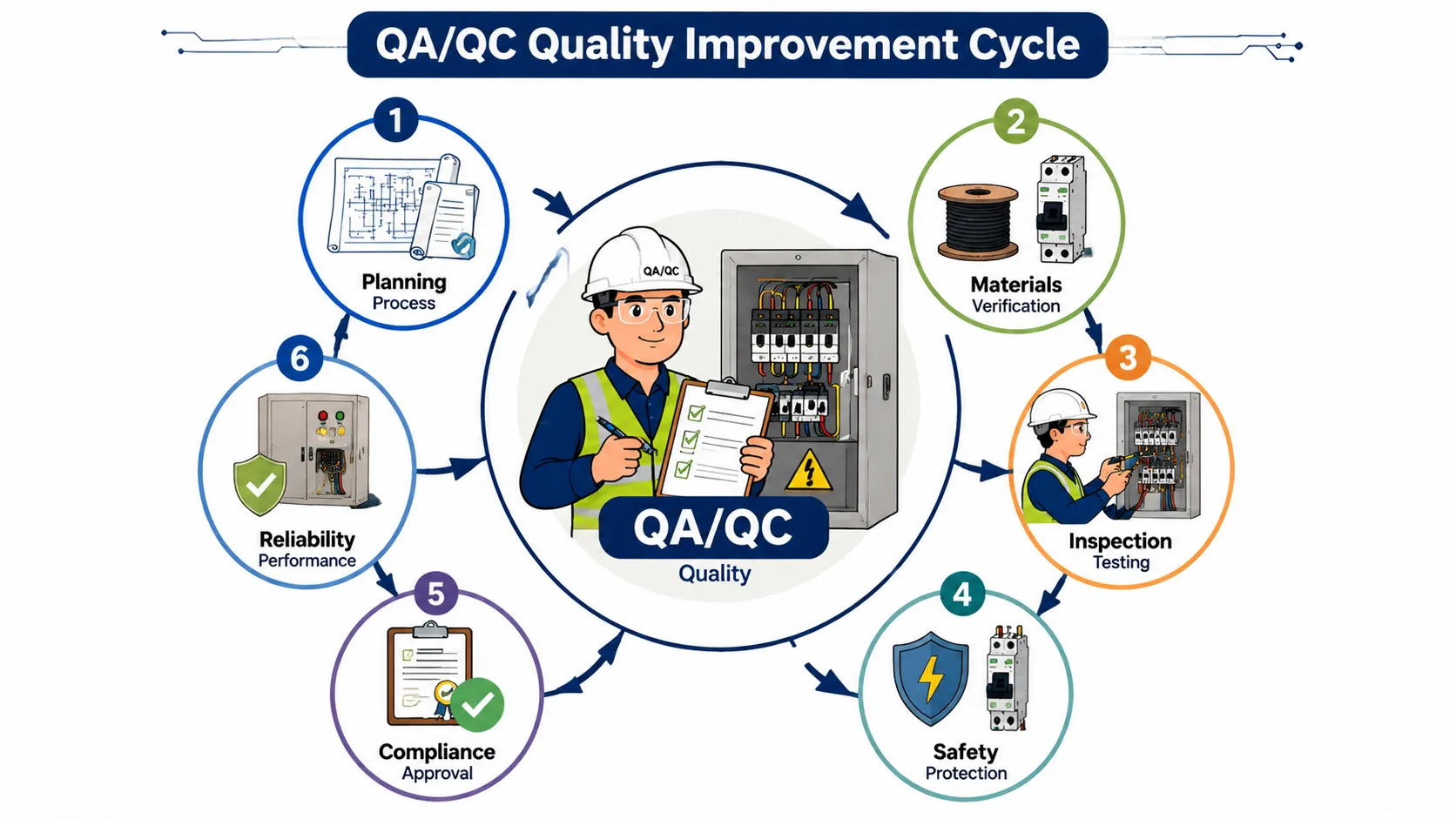
Electrical product quality depends on the reliability, performance, and durability of components and systems. QA/QC practices ensure that electrical products are manufactured and installed according to defined requirements.
Effective QA/QC improves product quality by:
Ensuring correct material selection.
Controlling manufacturing processes.
Detecting defects early.
Improving installation accuracy.
Maintaining consistent performance.
Quality Improvement Through Material Control
Electrical components such as cables, switches, transformers, circuit breakers, and control devices must meet specific quality requirements.
QA/QC engineers verify:
Material specifications.
Manufacturer certifications.
Component ratings.
Product compliance documents.
Proper material control prevents problems such as:
Component overheating.
Electrical failures.
Reduced equipment lifespan.
Safety hazards.

Role of QA/QC in Improving Electrical Safety
Electrical safety is one of the most important objectives of quality management. Poor-quality electrical systems can create risks including:
Electric shock.
Short circuits.
Fire hazards.
Equipment damage.
System failures.
QA/QC procedures help prevent these risks by ensuring electrical systems are properly designed, installed, and tested.
Safety Control Measures
QA/QC professionals support electrical safety through:
Inspection of installation practices.
Verification of protective devices.
Testing of electrical circuits.
Checking grounding systems.
Confirming compliance with safety requirements.
Electrical testing activities include:
Insulation resistance testing.
Continuity testing.
Earth resistance testing.
Functional testing.
Voltage verification.
Role of QA/QC in Ensuring Compliance
Importance of Compliance in Electrical Engineering
Electrical systems must comply with approved specifications, safety requirements, and industry standards. Compliance ensures that electrical products and installations meet acceptable levels of safety and performance.
QA/QC engineers support compliance by:
Reviewing technical requirements.
Monitoring project activities.
Maintaining inspection records.
Verifying test results.
Ensuring approved procedures are followed.
Common Compliance Areas
Electrical QA/QC focuses on:
Electrical design requirements.
Installation standards.
Equipment specifications.
Testing procedures.
Documentation requirements.
Electrical Inspection and Testing Processes
Inspection Process
Electrical inspection is performed to verify that systems and components meet quality expectations.
The inspection process includes:
Step 1: Review Requirements
Engineers review:
Electrical drawings.
Specifications.
Project standards.
Manufacturer information.
Step 2: Visual Inspection
Visual inspection identifies visible issues such as:
Damaged components.
Incorrect installation.
Poor connections.
Physical defects.
Step 3: Measurement and Testing
Testing confirms electrical performance.
Common tests include:
Insulation resistance testing.
Continuity testing.
Voltage testing.
Equipment performance testing.
Step 4: Documentation and Reporting
Inspection results are recorded through:
Inspection reports.
Test certificates.
Non-conformance reports.
Quality records.
Quality Control Procedures for Electrical Components
QA/QC procedures ensure that electrical components operate safely and effectively.
Important procedures include:
Incoming material inspection.
Component verification.
Installation inspection.
Electrical testing.
Final quality approval.
Example Quality Control Checks
For electrical cables:
Check cable type.
Verify insulation condition.
Confirm voltage rating.
For electrical panels:
Inspect wiring arrangement.
Verify component installation.
Perform functional testing.
For transformers:
Check specifications.
Test performance.
Verify safety requirements.
QA/QC Impact on Electrical Product Performance
QA/QC practices directly influence electrical system performance by ensuring:
Reliable operation.
Reduced failures.
Longer service life.
Improved energy efficiency.
Better maintenance performance.
A properly controlled electrical system provides stable operation and reduces unexpected downtime.
QA/QC Contribution to Electrical Engineering Quality Management
| QA/QC Area | Definition | Quality Impact | Electrical Application |
|---|---|---|---|
| Material Control | Verification of electrical materials and components | Prevents defective products | Cable and equipment inspection |
| Process Control | Monitoring electrical installation and production activities | Ensures consistent quality | Panel manufacturing and installation |
| Testing and Inspection | Measuring and verifying electrical performance | Detects faults and defects | Insulation and functional testing |
| Documentation Control | Managing quality records and reports | Supports traceability and compliance | Inspection reports and certificates |
| Corrective Actions | Resolving identified quality issues | Prevents repeated failures | Repair and improvement activities |
Practical Example: QA/QC Control of Electrical Distribution System
Workplace Scenario
A construction company was installing an electrical distribution system for a commercial building. The project required high reliability because the electrical system would support lighting, equipment, and safety systems.
QA Activities
The QA team:
Reviewed electrical drawings.
Approved installation procedures.
Verified component specifications.
Prepared inspection plans.
QC Activities
The QC team performed:
Cable inspections.
Connection checks.
Insulation resistance testing.
Functional testing.
Quality Issue Identified
During inspection, the team identified incorrect cable connections in one section of the system.
Corrective Action
The issue was resolved by:
Correcting the connection.
Repeating electrical tests.
Updating inspection records.
Result
The QA/QC process achieved:
Improved electrical safety.
Reliable system performance.
Compliance with project requirements.
Reduced risk of future failures.
Case Study: Improving Electrical Equipment Reliability Through QA/QC
Background
An industrial facility experienced frequent failures in electrical control equipment, causing production delays.
Investigation
The QA/QC team analysed:
Maintenance records.
Equipment testing results.
Installation procedures.
Root Cause
The investigation identified:
Incorrect component selection.
Insufficient quality checks during installation.
Improvement Actions
The company implemented:
Improved supplier verification.
Additional inspection stages.
Enhanced testing procedures.
Results
The improvements resulted in:
Reduced equipment failures.
Increased operational reliability.
Improved safety performance.
Case Study Conclusion
This case demonstrates that effective QA/QC systems help identify risks before they become operational problems. Through proper inspection, testing, and process control, electrical organisations can improve reliability, safety, and compliance.
Key Benefits of Effective QA/QC in Electrical Engineering
Implementing strong QA/QC practices provides several advantages:
Improved electrical product quality.
Increased system safety.
Reduced equipment failures.
Better compliance with standards.
Improved operational reliability.
Reduced maintenance costs.
Enhanced customer confidence.
Improved documentation and traceability.
Increased project efficiency.
Support for continuous improvement.
Industry Applications of Electrical QA/QC Practices
QA/QC principles are widely applied in:
Electrical Construction Projects
Building electrical installations.
Power distribution systems.
Electrical commissioning.
Manufacturing Industries
Electrical equipment production.
Control panel manufacturing.
Component testing.
Energy Sector
Power generation systems.
Renewable energy installations.
Electrical grid equipment.
Industrial Maintenance
Equipment inspection.
Fault prevention.
Performance verification.
Conclusion
QA/QC plays a vital role in improving the quality, safety, and compliance of electrical systems and components. Quality Assurance establishes controlled processes that prevent defects, while Quality Control verifies that electrical products and installations meet required standards through inspection and testing.
For electrical engineering professionals, understanding QA/QC principles is essential for maintaining reliable systems, preventing failures, and ensuring safe operation. By applying effective quality procedures, inspection methods, and compliance practices, organisations can achieve higher performance, improved safety, and long-term reliability in electrical engineering applications.
3. Develop an Understanding of the Difference Between QA and QC and Their Contribution to Electrical Product Quality Throughout the Production Process
Introduction to QA and QC in Electrical Engineering Production
Quality Assurance (QA) and Quality Control (QC) are two essential elements of electrical engineering quality management that work together to ensure electrical products, components, and systems achieve the required levels of safety, reliability, performance, and compliance. Although both approaches aim to improve quality, they perform different functions throughout the production process. Understanding the difference between QA and QC enables electrical engineering professionals to apply the correct quality methods at each stage of manufacturing, installation, testing, and final approval.
In electrical engineering industries, product quality depends on controlled processes, accurate specifications, effective inspections, and reliable testing procedures. QA focuses on preventing defects by improving processes, while QC focuses on identifying defects through inspection and verification activities. A successful electrical manufacturing or installation project requires both approaches because prevention and detection are equally important for achieving consistent quality outcomes.
From the perspective of a QA/QC Electrical Engineer, QA establishes the framework that ensures electrical products are designed, manufactured, and installed using approved procedures, while QC provides evidence that the final products meet required technical and performance standards. Together, QA and QC support continuous improvement, reduce failures, and improve customer confidence in electrical systems and components.
Understanding Quality Assurance (QA) in Electrical Engineering
Definition of Quality Assurance
Quality Assurance is a systematic and planned approach used to ensure that processes involved in electrical product development and production are controlled, consistent, and capable of producing quality results.
QA is a preventive quality management method because it aims to identify potential risks before they create defects. Instead of focusing only on the final product, QA evaluates the complete production process, including planning, material selection, manufacturing methods, documentation, and operational procedures.
In electrical engineering production environments, QA ensures that:
- Approved manufacturing procedures are followed.
- Electrical designs meet project requirements.
- Suitable materials and components are selected.
- Production processes are controlled.
- Quality standards are maintained.
Key QA Activities in Electrical Product Production
Quality Assurance activities include:
- Preparing quality management plans.
- Reviewing electrical specifications.
- Establishing manufacturing procedures.
- Approving suppliers and materials.
- Controlling technical documentation.
- Conducting internal quality audits.
- Monitoring production processes.
- Implementing process improvement methods.
For example, during the production of an electrical control panel, QA ensures that approved drawings, wiring standards, component specifications, and assembly procedures are established before manufacturing begins.
Understanding Quality Control (QC) in Electrical Engineering
Definition of Quality Control
Quality Control is the process of inspecting, testing, and measuring electrical products and components to confirm that they meet specified quality requirements.
QC is a detection-based approach because it identifies defects, errors, and non-conformities after or during production activities. QC activities provide practical evidence that electrical products are safe, functional, and compliant with required specifications.
Key QC Activities in Electrical Product Production
Quality Control activities include:
- Incoming material inspection.
- Component verification.
- Visual inspection.
- Electrical testing.
- Performance testing.
- Dimensional checks.
- Defect identification.
- Final product inspection.
Examples of QC activities include:
- Testing cable insulation resistance.
- Checking circuit board connections.
- Verifying electrical equipment ratings.
- Inspecting control panel wiring.
Difference Between Quality Assurance and Quality Control
Although QA and QC have the same overall objective of improving quality, their methods and responsibilities are different.
| Comparison Area | Quality Assurance (QA) | Quality Control (QC) |
|---|---|---|
| Main Purpose | Prevent defects before they occur | Identify and correct defects |
| Approach | Process-focused | Product-focused |
| Timing | Before and during production | During and after production |
| Main Activities | Planning, procedures, audits, process control | Inspection, testing, measurement, verification |
| Responsibility | Ensuring correct processes are followed | Ensuring final products meet requirements |
| Example | Creating electrical testing procedures | Performing electrical tests on products |
How QA Contributes to Electrical Product Quality
Process Prevention and Quality Improvement
QA improves electrical product quality by controlling the processes used to manufacture and assemble electrical components. A well-designed QA system reduces the possibility of errors by ensuring that every production stage follows approved procedures.
QA contributes to quality improvement through:
- Better production planning.
- Standardised working procedures.
- Supplier quality management.
- Employee training.
- Risk identification.
- Continuous improvement.
Material and Component Control
Electrical product quality depends heavily on the quality of materials and components used during production. QA systems ensure that only approved materials are used.
QA activities include:
- Reviewing supplier certifications.
- Checking material specifications.
- Confirming component ratings.
- Maintaining material traceability.
For example, when producing electrical cables, QA verifies conductor materials, insulation specifications, and manufacturing requirements before production starts.
How QC Contributes to Electrical Product Quality
Inspection and Testing During Production
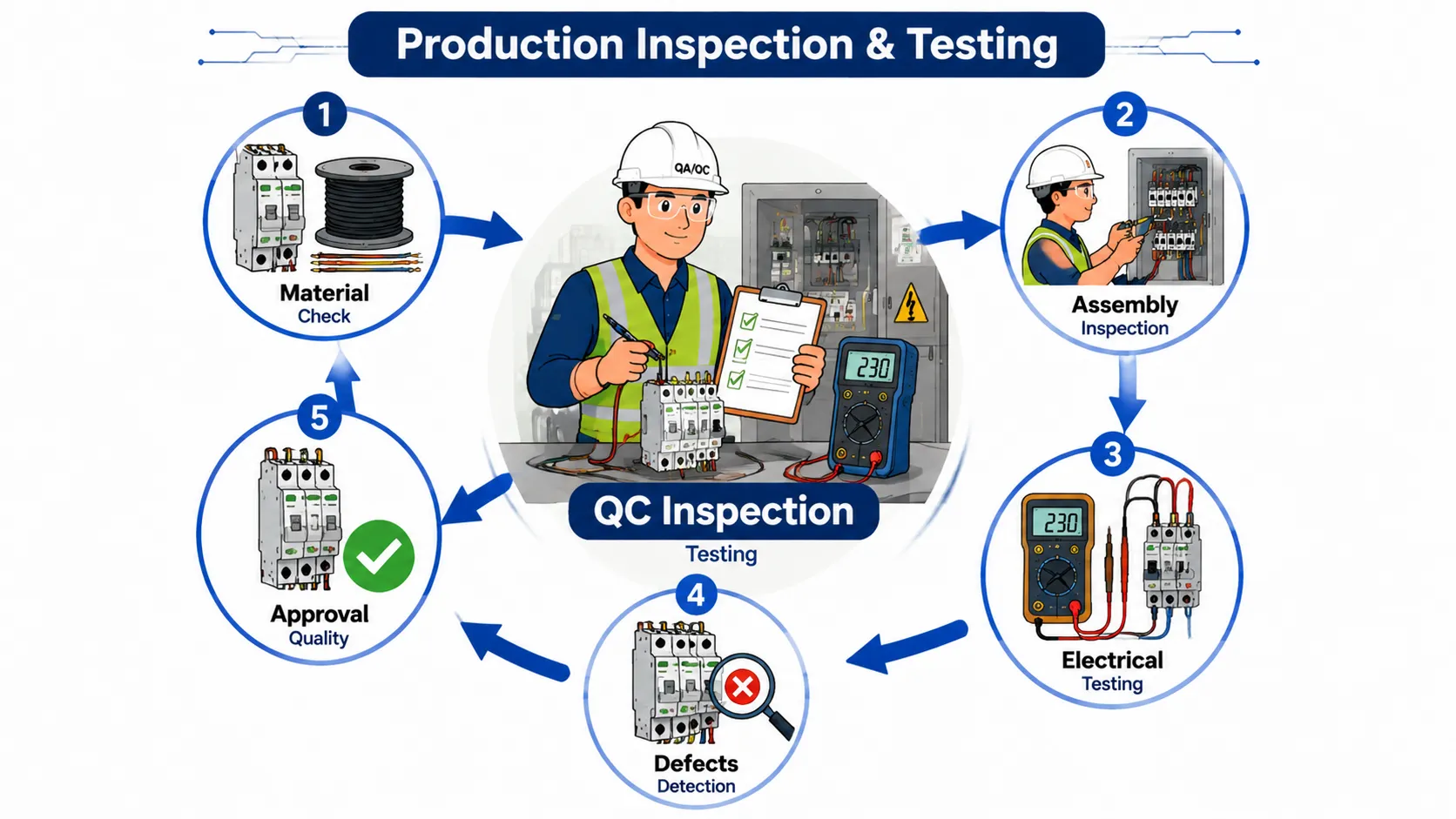
QC ensures that electrical products continue to meet quality requirements during manufacturing. Inspectors and engineers perform checks at different production stages to identify issues early.
QC activities include:
- Inspecting assembly processes.
- Testing electrical performance.
- Measuring component characteristics.
- Recording inspection results.
Electrical Testing Procedures
Electrical testing is a major QC activity used to verify product performance and safety.
Common electrical tests include:
Insulation Resistance Testing
This test evaluates the quality of insulation materials and identifies possible leakage risks.
Continuity Testing
This confirms that electrical connections are complete and correctly installed.
Functional Testing
This verifies whether electrical equipment operates according to design requirements.
Voltage Testing
This ensures electrical components can operate safely under specified voltage conditions.
QA and QC Contribution Throughout the Production Process
Electrical product quality is maintained through different stages of production where QA and QC activities work together.
Stage 1: Design and Planning
QA activities:
- Review electrical requirements.
- Establish quality procedures.
- Identify potential risks.
QC activities:
- Review design accuracy.
- Verify technical details.
Stage 2: Material Selection
QA activities:
- Approve suppliers.
- Control material requirements.
QC activities:
- Inspect incoming materials.
- Verify component specifications.
Stage 3: Manufacturing and Assembly
QA activities:
- Monitor production procedures.
- Ensure process compliance.
QC activities:
- Inspect assembly quality.
- Perform operational tests.
Stage 4: Final Testing and Approval
QA activities:
- Review quality records.
- Confirm process compliance.
QC activities:
- Perform final inspections.
- Verify product performance.
Practical Example: QA and QC in Electrical Control Panel Manufacturing
Workplace Scenario
An electrical manufacturing company produces industrial control panels used in automated production systems. The company requires high-quality products because failures can stop industrial operations.
QA Approach
The QA team establishes:
- Approved manufacturing procedures.
- Component selection requirements.
- Wiring standards.
- Testing procedures.
Before production begins, QA verifies that all processes are properly controlled.
QC Approach
During manufacturing, QC engineers perform:
- Visual inspections.
- Wiring checks.
- Electrical continuity tests.
- Functional performance tests.
Quality Issue Identified
During testing, QC inspectors identify incorrect wiring connections inside one control panel.
Corrective Action
The issue is corrected by:
- Repairing wiring connections.
- Repeating electrical tests.
- Updating inspection records.
Result
The combined QA and QC approach ensures:
- Improved product reliability.
- Reduced electrical failures.
- Compliance with specifications.
- Increased customer satisfaction.
Case Study: Improving Electrical Equipment Reliability Through QA and QC
Background
A company producing industrial electrical equipment experienced repeated product failures after delivery. Customers reported overheating issues and unexpected equipment shutdowns.
Investigation Process
The QA/QC team analysed:
- Production procedures.
- Inspection reports.
- Testing results.
- Material records.
Root Cause Identification
The investigation discovered:
- Inconsistent assembly procedures.
- Insufficient testing during production.
- Incorrect component verification.
Improvement Actions
The company introduced:
- Improved QA procedures.
- Additional QC inspection points.
- Enhanced electrical testing requirements.
Results
After implementing improvements:
- Product failures decreased.
- Equipment reliability increased.
- Customer complaints reduced.
- Production quality improved.
Case Study Conclusion
This case demonstrates that QA prevents problems by improving production processes, while QC detects issues through inspection and testing. Both systems are necessary to achieve reliable electrical products and maintain long-term quality performance.
Key Benefits of Integrating QA and QC in Electrical Engineering
Effective integration of QA and QC provides several benefits:
- Improved electrical product reliability.
- Reduced manufacturing defects.
- Increased safety performance.
- Better compliance with standards.
- Improved production efficiency.
- Reduced repair and warranty costs.
- Enhanced customer confidence.
- Improved traceability of quality records.
- Stronger continuous improvement practices.
- Increased operational reliability.
Industry Applications of QA and QC in Electrical Engineering
QA and QC principles are applied in many electrical engineering sectors, including:
Electrical Manufacturing
Applications include:
- Control panel production.
- Electrical equipment assembly.
- Component testing.
Construction and Installation
Applications include:
- Building electrical systems.
- Power distribution installations.
- Electrical commissioning.
Power and Energy Sector
Applications include:
- Transformer manufacturing.
- Power system testing.
- Renewable energy installations.
Industrial Automation
Applications include:
- Control systems.
- Electrical machinery.
- Automated production equipment.
Conclusion
Understanding the difference between Quality Assurance and Quality Control is essential for electrical engineering professionals involved in production, installation, and testing activities. QA focuses on preventing defects by controlling processes, while QC focuses on identifying defects through inspection and testing.
Together, QA and QC create a complete quality management approach that improves electrical product reliability, safety, and compliance. By applying effective quality procedures, inspection methods, and testing processes, electrical engineers can ensure that products meet technical requirements and perform safely throughout their operational life.