
Lesson no 1 : Explain the molecular and cellular basis of human metabolism.
Introduction
Human metabolism is the foundation of life, encompassing the complex network of chemical reactions that enables cells and tissues to obtain energy, synthesise essential molecules, maintain internal balance and support normal physiological function. Understanding the molecular and cellular basis of human metabolism is essential in advanced nutritional biochemistry because nutrients are continuously processed, transformed and utilised through highly regulated biochemical pathways.
At the molecular level, metabolism involves the interaction of biomolecules such as carbohydrates, lipids, proteins and nucleic acids. These molecules are broken down, converted and synthesised through interconnected metabolic reactions. Enzymes play a central role by acting as biological catalysts that control the speed and direction of biochemical reactions. Energy released during catabolic processes is captured primarily in the form of adenosine triphosphate (ATP), which provides energy for numerous cellular activities, including biosynthesis, transport, movement and cell signalling.
At the cellular level, metabolism is organised within specialised structures known as organelles. The cytoplasm, mitochondria, endoplasmic reticulum and other cellular components provide distinct environments for different metabolic processes. For example, glycolysis occurs within the cytoplasm, while many stages of aerobic energy production take place within the mitochondria. This organisation allows cells to regulate metabolic activities efficiently and respond to changing energy and nutrient demands.
Human metabolism is also controlled through complex regulatory mechanisms. Hormones, enzymes, cellular signalling pathways and gene expression influence how nutrients are stored, released and utilised. The body continuously adjusts metabolic activity according to factors such as food intake, fasting, physical activity, stress and overall physiological requirements. These regulatory processes help maintain homeostasis and ensure that cells receive an appropriate supply of energy and essential substrates.
This lesson introduces Learners to the molecular and cellular principles underlying human metabolism. By exploring the structure and function of key biomolecules, metabolic pathways, cellular organelles and regulatory mechanisms, Learners will develop a stronger understanding of how the human body converts nutrients into energy and biological components. This knowledge provides an essential foundation for studying nutritional biochemistry, metabolic health, disease mechanisms and the relationship between diet and human physiological function.
1.Critically Explain the Structural Components of Human Cells and Their Specific Functions Within Complex Metabolic Processes
Human cells are highly organised biological systems in which specialised structural components work together to maintain life. Each cell contains a range of organelles, membranes, molecules and structural elements that perform distinct but interconnected functions. From a metabolic perspective, cellular structure is inseparable from cellular function. The location, composition and interaction of cellular components determine where metabolic reactions occur, how substances are transported, how energy is produced and how biochemical pathways are regulated.
Metabolism refers to the complete network of chemical reactions that occur within living cells. These reactions include catabolic processes, which break down complex molecules to release energy, and anabolic processes, which use energy to synthesise complex molecules required for growth, repair and cellular maintenance. Human metabolism depends on the coordinated activity of multiple cellular structures rather than the isolated action of a single organelle.
A critical understanding of cell structure therefore requires more than identifying individual organelles. It involves analysing how structural organisation creates specialised metabolic environments, allows biochemical reactions to occur efficiently and enables cells to respond to changes in nutrient availability and physiological demand.
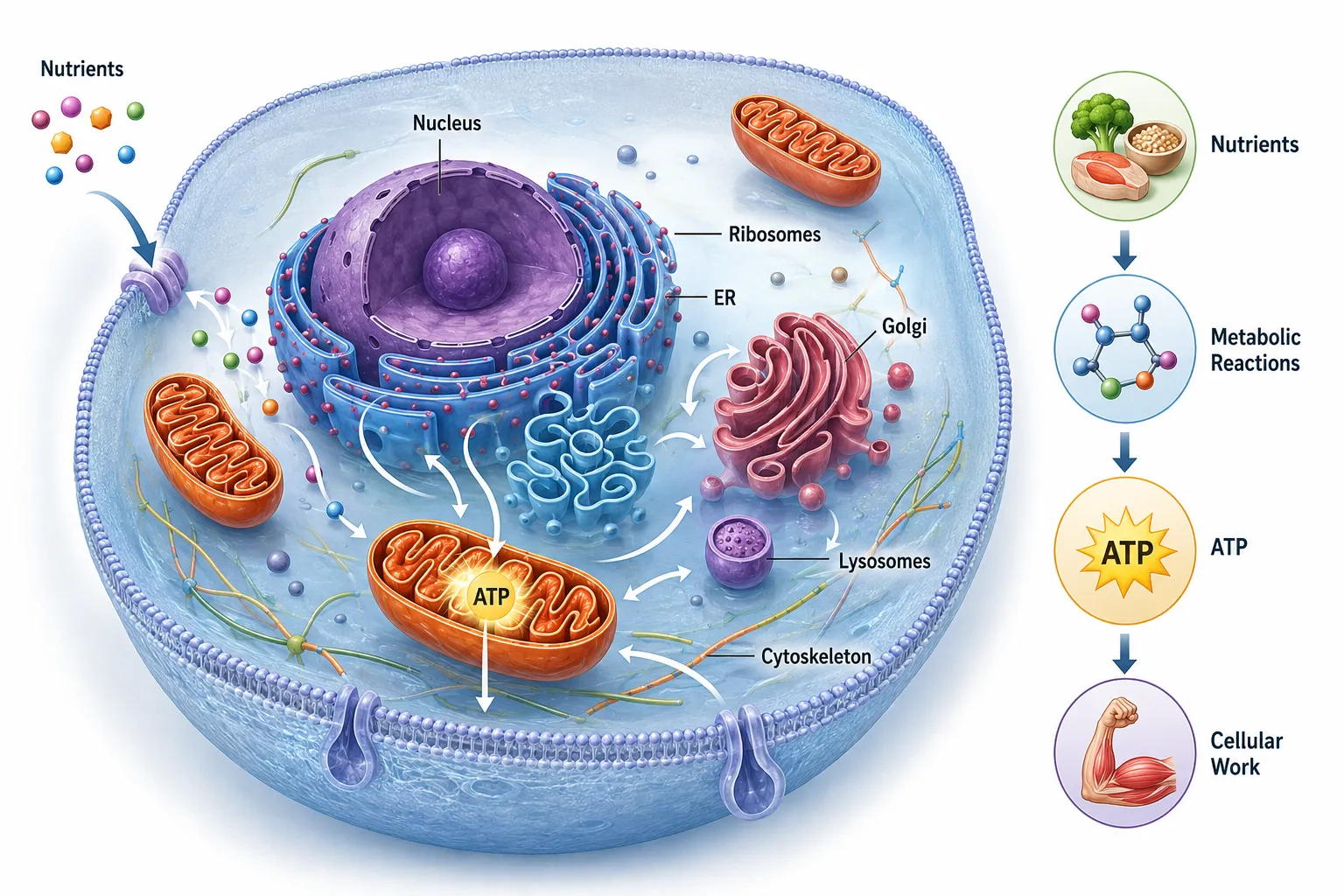
Key Structural Components of Human Cells
The major structural components involved in human cellular metabolism include:
The plasma membrane
Cytoplasm and cytosol
Nucleus
Mitochondria
Ribosomes
Endoplasmic reticulum
Golgi apparatus
Lysosomes
Peroxisomes
Cytoskeleton
Cellular vesicles
The nucleolus and nuclear envelope
Each of these structures contributes directly or indirectly to metabolic regulation, molecular transport, energy production, biosynthesis or cellular homeostasis.
Table: Key Human Cell Structures and Their Metabolic Functions
| Structural Component | Definition | Primary Function | Importance in Metabolism |
|---|---|---|---|
| Plasma membrane | A selectively permeable boundary surrounding the cell | Controls movement of substances and receives signals | Regulates nutrient uptake, waste removal and cellular communication |
| Cytosol | Fluid portion of the cytoplasm containing dissolved molecules | Provides a medium for biochemical reactions | Site of important pathways including glycolysis |
| Nucleus | Membrane-bound organelle containing genetic material | Controls gene expression and cellular activities | Regulates production of enzymes and proteins involved in metabolism |
| Mitochondria | Double-membrane organelles associated with energy production | Produces ATP through aerobic pathways | Central site of oxidative metabolism and energy generation |
| Ribosomes | Molecular structures responsible for protein synthesis | Translate genetic information into proteins | Produce metabolic enzymes and structural proteins |
| Endoplasmic reticulum | Membrane network involved in protein and lipid processing | Synthesises and transports biological molecules | Supports protein synthesis, lipid metabolism and detoxification |
| Golgi apparatus | Organelle that modifies and packages molecules | Processes and distributes proteins and lipids | Supports secretion and intracellular molecular transport |
| Lysosomes | Vesicles containing digestive enzymes | Break down cellular materials | Recycle biomolecules and support nutrient recovery |
| Peroxisomes | Enzyme-containing organelles involved in oxidation | Break down specific fatty acids and toxins | Contribute to lipid metabolism and oxidative regulation |
| Cytoskeleton | Network of protein filaments supporting cell structure | Maintains shape and enables movement | Supports intracellular transport of metabolic materials |
The Plasma Membrane: The Metabolic Interface Between the Cell and Its Environment
The plasma membrane forms the outer boundary of the human cell and provides a critical interface between the internal cellular environment and the extracellular environment. It is primarily composed of a phospholipid bilayer containing proteins, cholesterol and carbohydrate-containing molecules.
Its selective permeability is essential for metabolism because cells must carefully regulate the substances that enter and leave. Nutrients such as glucose, amino acids, fatty acids, ions and water must be transported across the membrane through specialised mechanisms.
The plasma membrane performs several important metabolic functions:
Regulates the entry of nutrients required for energy production.
Controls the removal of metabolic waste products.
Contains transport proteins that facilitate movement of specific molecules.
Houses receptors that respond to hormones and signalling molecules.
Helps maintain ionic balance and membrane potential.
Supports communication between cells and their environment.
For example, glucose cannot freely cross the phospholipid bilayer in significant amounts. Instead, specialised glucose transporters facilitate its movement into cells. Once inside the cell, glucose can enter metabolic pathways such as glycolysis.
This demonstrates an important principle: metabolism begins before many biochemical reactions occur inside the cell. The ability of a cell to acquire nutrients depends on membrane structure and transport mechanisms.
Critical Perspective on Membrane Function
The plasma membrane should not be viewed merely as a protective barrier. It is an active metabolic structure that responds dynamically to hormonal signals and changing nutrient conditions.
For example:
Insulin can influence the movement of glucose transporters to the cell membrane in certain tissues.
Ion channels regulate the movement of sodium, potassium and calcium, which influence cellular processes.
Receptor proteins activate intracellular signalling pathways that alter enzyme activity.
Membrane composition can influence the movement and function of embedded proteins.
Therefore, disturbances in membrane transport or receptor function can contribute to metabolic dysfunction. A cell may contain sufficient nutrients in the surrounding environment but still experience metabolic impairment if transport processes are disrupted.
The Cytoplasm and Cytosol: The Medium for Essential Metabolic Reactions
The cytoplasm includes the material located between the plasma membrane and the nucleus. Within it is the cytosol, a fluid environment containing water, ions, proteins, enzymes and dissolved metabolic intermediates.
The cytosol is a major site of biochemical activity. Although some metabolic reactions occur within specialised organelles, many essential processes take place in the cytosolic environment.
Important cytosolic processes include:
Glycolysis
Parts of amino acid metabolism
Fatty acid synthesis
Protein synthesis through free ribosomes
Storage and mobilisation of certain metabolic intermediates
Cellular signalling processes
Glycolysis provides a particularly important example. During glycolysis, glucose is converted through a sequence of enzyme-controlled reactions into pyruvate. This process generates a limited amount of ATP and produces molecules that can enter additional metabolic pathways.
The location of glycolysis in the cytosol is metabolically significant because it allows cells to begin extracting energy from glucose without requiring direct involvement of mitochondria.
Practical Example: Cytosolic Energy Production
During periods when oxygen availability is limited, cells may rely more heavily on anaerobic pathways associated with cytosolic metabolism. Pyruvate can be converted into lactate under specific physiological conditions.
This demonstrates how the cellular location of metabolic pathways provides flexibility. The cell can adapt its biochemical activity according to environmental and physiological conditions.
The cytosol should therefore be understood as an active and highly regulated biochemical environment rather than simply a fluid that fills the cell.
The Nucleus: Genetic Regulation of Metabolic Activity
The nucleus is the primary site of genetic material within most human cells. It contains DNA organised into chromosomes and is surrounded by a double-layered nuclear envelope.
Although the nucleus is not generally the main site of energy production, it has a fundamental role in regulating metabolism because genes provide instructions for producing proteins, including metabolic enzymes, transporters and receptors.
The nucleus contributes to metabolic regulation by:
Controlling gene expression.
Directing the synthesis of metabolic enzymes.
Regulating the production of transport proteins.
Responding to hormonal and cellular signals.
Supporting cellular adaptation to nutritional conditions.
Controlling the expression of proteins involved in growth and repair.
A metabolic pathway depends on the presence and activity of specific enzymes. Since enzyme production is influenced by gene expression, changes in nuclear activity can alter the metabolic capacity of a cell.
Gene Expression and Nutritional Conditions
Nutritional status can influence cellular gene expression. Changes in nutrient availability may affect signalling pathways that ultimately influence which genes are activated or suppressed.
For example, prolonged changes in dietary intake may influence the expression of genes associated with:
Lipid metabolism
Glucose regulation
Energy storage
Cellular stress responses
Protein synthesis
This relationship between nutrients and gene expression forms an important foundation for advanced nutritional biochemistry.
Mitochondria: The Central Organelles of Aerobic Energy Metabolism
Mitochondria are among the most important organelles involved in human metabolism. They are often described as the primary sites of aerobic ATP production because they contain specialised structures and enzymes that support energy-generating pathways.
A mitochondrion has:
An outer membrane
An intermembrane space
An inner membrane
Cristae, which increase membrane surface area
A mitochondrial matrix
The structural organisation of mitochondria is directly related to their metabolic function.
The matrix contains enzymes involved in important metabolic processes, including the citric acid cycle. The inner membrane contains components of the electron transport chain and ATP-producing machinery.
Major Metabolic Functions of Mitochondria
Mitochondria contribute to:
Oxidation of metabolic fuels.
Production of ATP.
Processing of pyruvate-derived molecules.
The citric acid cycle.
Electron transport and oxidative phosphorylation.
Parts of fatty acid metabolism.
Regulation of cellular signalling and programmed cell death.
The process of aerobic energy production illustrates the importance of structural compartmentalisation. Different stages of metabolism occur in different mitochondrial regions.
For example:
Metabolic intermediates enter the mitochondrial matrix.
Enzyme-controlled reactions generate high-energy electron carriers.
Electrons are transferred through protein complexes located in the inner mitochondrial membrane.
Energy released during electron transfer contributes to the generation of a proton gradient.
ATP synthase uses this gradient to support ATP production.
This process demonstrates how cellular structure creates specialised conditions necessary for complex biochemical reactions.
Critical Evaluation of Mitochondrial Function
Mitochondria are not simply passive energy-producing structures. Their activity changes according to cellular energy requirements, nutrient availability and physiological conditions.
Mitochondrial dysfunction can affect:
Energy availability
Glucose metabolism
Lipid metabolism
Cellular stress responses
Tissue function
Cells with high energy requirements, such as muscle and certain nerve cells, often contain substantial numbers of mitochondria. This demonstrates the relationship between cellular structure and physiological function.
Ribosomes: Protein Synthesis and Metabolic Enzyme Production
Ribosomes are molecular structures responsible for protein synthesis. They read genetic instructions carried by messenger RNA and assemble amino acids into proteins.
This function is essential for metabolism because most metabolic pathways depend on enzymes, and enzymes are generally proteins.
Ribosomes contribute to metabolism through the production of:
Metabolic enzymes
Hormone-related proteins
Membrane transport proteins
Cellular receptors
Structural proteins
Regulatory proteins
Without continuous protein synthesis, cells would be unable to replace damaged enzymes or adapt their metabolic activity to changing conditions.
Ribosomes may be:
Free within the cytosol
Attached to the rough endoplasmic reticulum
Their location often relates to the type and destination of proteins being produced.
The Endoplasmic Reticulum: A Centre for Molecular Synthesis and Processing
The endoplasmic reticulum is an extensive network of membranes within the cell. It is divided into two major forms: rough endoplasmic reticulum and smooth endoplasmic reticulum.
The rough endoplasmic reticulum contains ribosomes and is primarily associated with the synthesis and initial processing of proteins.
The smooth endoplasmic reticulum does not contain ribosomes and performs important functions in lipid metabolism, detoxification and other specialised processes.
Rough Endoplasmic Reticulum
The rough endoplasmic reticulum is involved in:
Synthesis of proteins destined for membranes.
Production of proteins for secretion.
Initial folding and modification of proteins.
Quality control of newly synthesised proteins.
Smooth Endoplasmic Reticulum
The smooth endoplasmic reticulum contributes to:
Lipid synthesis
Phospholipid production
Cholesterol-related metabolism
Detoxification processes
Calcium storage in specialised cells
The endoplasmic reticulum therefore plays a major role in both anabolic metabolism and cellular maintenance.
Practical Example: Lipid Metabolism
Cells require lipids for membrane formation, signalling and energy storage. The smooth endoplasmic reticulum contains enzymes that participate in the synthesis and modification of specific lipid molecules.
This illustrates how organelles create specialised environments that allow different types of metabolism to occur efficiently.
The Golgi Apparatus: Modification, Sorting and Distribution
The Golgi apparatus is a membrane-bound organelle responsible for modifying, sorting and packaging proteins and lipids.
Molecules produced in the endoplasmic reticulum may be transported to the Golgi apparatus, where they undergo further processing before being delivered to their final destinations.
Key functions include:
Modification of proteins
Modification of certain lipids
Sorting of cellular products
Packaging into vesicles
Supporting secretion
Directing molecules to specific organelles
The Golgi apparatus is metabolically important because biochemical products must often be transported to precise cellular locations.
For example, an enzyme is only useful if it reaches the compartment in which it is required. The Golgi apparatus contributes to this organisational efficiency.
Lysosomes: Cellular Digestion and Metabolic Recycling
Lysosomes are membrane-bound structures containing enzymes capable of breaking down a wide range of biological molecules.
They support cellular metabolism through the degradation and recycling of:
Proteins
Lipids
Carbohydrates
Damaged cellular components
Unnecessary molecular structures
This recycling process is important because cells can recover useful molecular components rather than continuously relying on the synthesis of entirely new materials.
Lysosomes contribute to cellular homeostasis by helping maintain a balance between synthesis, breakdown and recycling.
Autophagy and Metabolic Adaptation
Autophagy is a process through which cells identify and recycle damaged or unnecessary cellular components. Lysosomes play a major role in the breakdown of materials delivered through this process.
During periods of nutrient limitation, cellular recycling mechanisms can become particularly important for maintaining essential resources.
Key benefits of lysosomal recycling include:
Recovery of amino acids and other molecular components.
Removal of damaged structures.
Maintenance of cellular quality.
Support for adaptation during metabolic stress.
Peroxisomes: Oxidation and Metabolic Protection
Peroxisomes are small organelles containing enzymes involved in oxidation reactions. They contribute to specialised aspects of lipid metabolism and cellular detoxification.
Important functions include:
Breakdown of particular fatty acids.
Oxidation of specific metabolic compounds.
Processing of reactive molecules.
Contribution to lipid-related biochemical pathways.
Peroxisomes contain enzymes that help manage hydrogen peroxide and other reactive products generated during metabolic activity.
Their function highlights an important metabolic challenge: energy-producing and oxidative reactions can generate potentially harmful reactive molecules. Cells therefore require specialised systems to control oxidative stress.
The Cytoskeleton: Structural Support and Intracellular Organisation
The cytoskeleton is a dynamic network of protein filaments that provides structural support and contributes to cellular organisation.
Its major components include:
Microfilaments
Intermediate filaments
Microtubules
Although often associated with cell shape and movement, the cytoskeleton also supports metabolic organisation by enabling intracellular transport.
It assists with:
Movement of vesicles.
Positioning of organelles.
Transport of molecular materials.
Maintenance of cellular architecture.
Cell division and structural adaptation.
For example, metabolic products packaged into vesicles may need to move from one part of the cell to another. Cytoskeletal structures provide pathways and support systems that facilitate this movement.
Cellular Compartmentalisation and the Efficiency of Metabolism
One of the most important principles in cellular biochemistry is compartmentalisation. Different metabolic reactions occur in different cellular locations.
This organisation provides several advantages.
Prevention of Interference Between Reactions
Different pathways may require different chemical conditions. Separating them into specialised compartments helps prevent unwanted interactions.
Increased Metabolic Efficiency
Enzymes and substrates can be concentrated within specific regions, increasing the likelihood of productive biochemical interactions.
Improved Regulation
Cells can independently regulate processes occurring in different compartments.
Protection from Harmful Reactions
Some metabolic reactions generate reactive or potentially damaging products. Compartmentalisation helps limit their effects.
Examples of compartmentalised metabolism include:
Glycolysis occurring primarily in the cytosol.
Major stages of aerobic ATP production occurring within mitochondria.
Protein processing occurring in the endoplasmic reticulum and Golgi apparatus.
Molecular degradation occurring within lysosomes.
Specific oxidative reactions occurring within peroxisomes.
Integration of Cellular Structures During Complex Metabolic Processes
Complex metabolism requires communication between organelles. A metabolic pathway may begin in one cellular compartment and continue in another.
Consider the overall utilisation of glucose:
Glucose enters the cell through membrane transport proteins.
Glycolysis begins in the cytosol.
Pyruvate may enter mitochondria under appropriate conditions.
Mitochondrial pathways process metabolic intermediates.
ATP is produced and distributed for cellular work.
The nucleus regulates the expression of enzymes required for these pathways.
Ribosomes synthesise metabolic proteins.
Membrane receptors respond to hormones that influence glucose utilisation.
This example demonstrates that metabolism is a coordinated cellular system rather than a collection of isolated chemical reactions.
Practical Example: Metabolic Response to Nutrient Intake
Following the intake of a carbohydrate-containing meal, several cellular structures participate in nutrient processing.
The sequence may involve:
Increased availability of glucose in the extracellular environment.
Hormonal signals influencing cellular responses.
Activation or increased availability of membrane transport mechanisms.
Entry of glucose into appropriate cells.
Cytosolic metabolism through glycolysis.
Further processing of metabolic products in mitochondria.
Regulation of enzyme production through gene expression.
Storage or utilisation of energy depending on physiological requirements.
This example demonstrates how cellular structures interact dynamically during normal metabolism.
Key Concepts for Critical Understanding
A critical understanding of human cell structure and metabolism should recognise the following principles:
Structure and function are closely interconnected.
Organelles create specialised metabolic environments.
Metabolism requires communication between multiple cellular components.
Enzymes provide specificity and control within biochemical pathways.
Membrane transport determines nutrient accessibility.
Mitochondria play a central role in aerobic energy production but do not operate independently.
The nucleus regulates long-term metabolic capacity through gene expression.
Cellular recycling systems support resource efficiency and homeostasis.
Metabolic activity changes according to nutrient availability and physiological demand.
Dysfunction in a single cellular component can influence wider metabolic networks.
Summary
The structural components of human cells form an integrated system that supports complex metabolic activity. The plasma membrane regulates the movement of nutrients and signalling molecules, while the cytosol provides an environment for essential biochemical pathways. The nucleus controls the genetic information required for the production of metabolic proteins, and ribosomes synthesise the enzymes that drive biochemical reactions.
Mitochondria are central to aerobic energy metabolism and ATP production, while the endoplasmic reticulum and Golgi apparatus support the synthesis, processing and distribution of proteins and lipids. Lysosomes contribute to molecular breakdown and recycling, whereas peroxisomes support specialised oxidative and lipid-related processes. The cytoskeleton maintains structural organisation and facilitates the movement of organelles and molecular materials within the cell.
Critically, these structures do not function in isolation. Human metabolism depends on cellular compartmentalisation, molecular transport, biochemical communication and coordinated regulation. Understanding these relationships provides an essential foundation for advanced nutritional biochemistry, enabling Learners to analyse how nutrients are processed at the molecular level and how disturbances in cellular function may influence metabolism, health and disease.
2.Evaluate How Molecular Signalling Pathways Regulate Metabolic Responses and Energy Distribution at the Cellular Level
Molecular signalling pathways are essential regulatory systems that enable human cells to detect changes in their internal and external environments and respond appropriately. At the cellular level, metabolism cannot operate efficiently through biochemical reactions alone. Cells must continuously receive, interpret and respond to signals that indicate nutrient availability, energy status, hormonal activity, stress and changing physiological requirements.
Molecular signalling provides the communication network that connects these signals with specific metabolic responses. Through receptors, signalling molecules, enzymes, protein modifications and changes in gene expression, cells can increase or reduce energy production, promote nutrient storage, stimulate the breakdown of stored fuels or alter the use of carbohydrates, lipids and proteins.
Energy distribution is particularly important because the human body must maintain an adequate supply of energy for essential cellular functions. Cells therefore require sophisticated mechanisms to determine when energy should be produced, stored or conserved. Molecular signalling pathways coordinate these decisions and ensure that metabolic activity is adapted to the current physiological state.
A critical evaluation of molecular signalling demonstrates that metabolic regulation is highly integrated. No major signalling pathway functions entirely independently. Instead, multiple pathways interact, sometimes reinforcing one another and sometimes producing opposing effects. This complexity allows cells to respond precisely to changes in nutrient availability and energy demand.
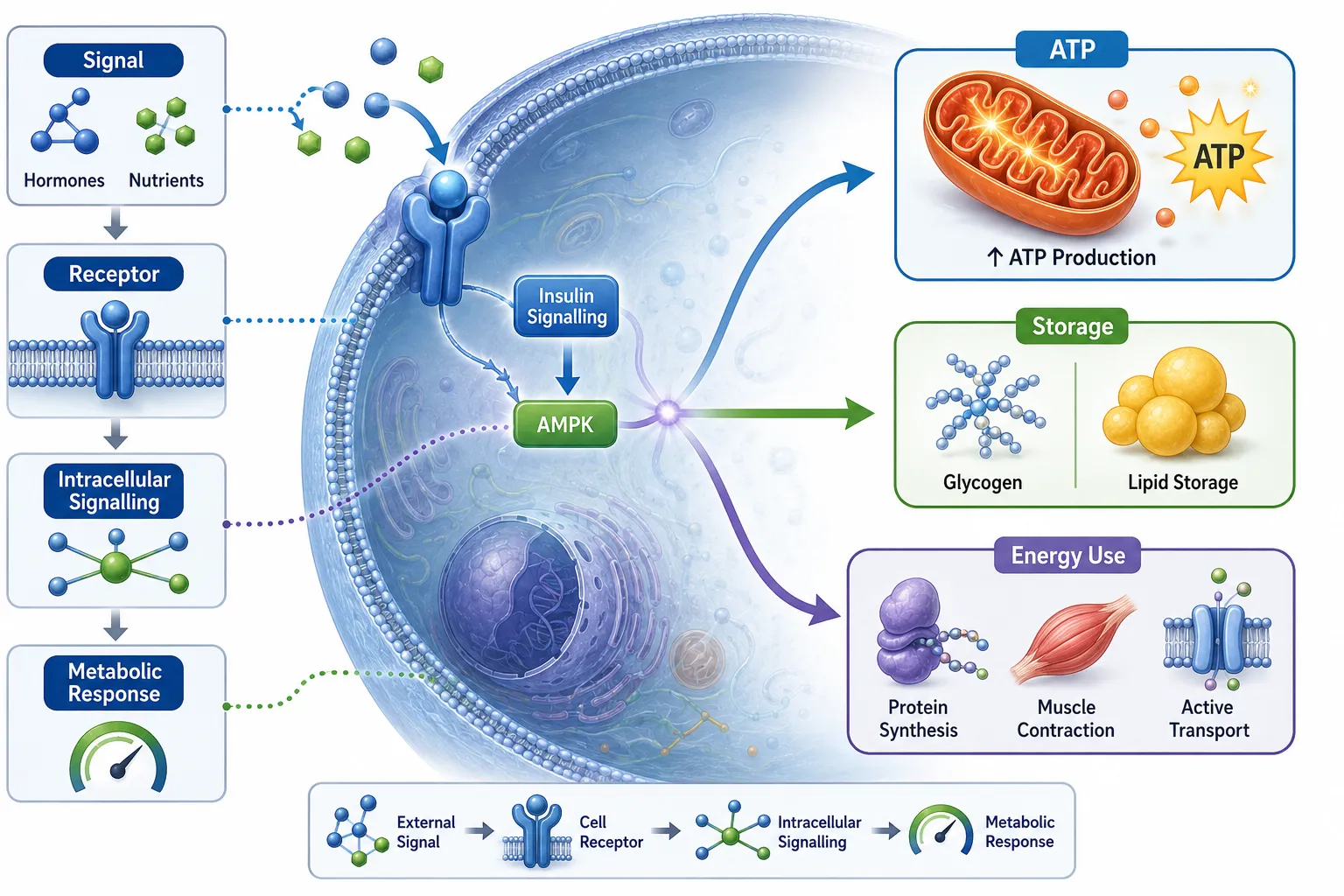
Key Concepts in Molecular Signalling and Metabolic Regulation
Several fundamental concepts are required to understand how signalling pathways regulate metabolism.
A signalling molecule carries information from one cell or environment to another cellular target.
A receptor recognises a specific signalling molecule and initiates a cellular response.
Signal transduction refers to the sequence of molecular events that converts an external or internal signal into a biological response.
A second messenger is an intracellular molecule that helps transmit and amplify a signal.
Protein phosphorylation involves the addition of a phosphate group to a protein, often altering its activity.
Metabolic regulation refers to the control of biochemical pathways according to cellular and physiological requirements.
Energy sensing is the ability of cells to detect changes in the availability or use of energy.
Energy distribution refers to the allocation and utilisation of energy-producing substrates according to cellular demand.
Homeostasis is the maintenance of relatively stable internal physiological conditions.
Molecular signalling allows these processes to occur rapidly or over longer periods. Some signals produce immediate changes by modifying existing enzymes, while others produce longer-term effects by changing gene expression and protein synthesis.
Table: Major Molecular Signalling Pathways and Their Roles in Metabolic Regulation
| Signalling Pathway | Key Definition | Primary Metabolic Role | Typical Cellular Response |
|---|---|---|---|
| Insulin signalling | Hormone-mediated pathway activated primarily in response to nutrient availability | Promotes nutrient uptake, utilisation and storage | Increased glucose uptake and anabolic activity |
| Glucagon-related signalling | Hormonal signalling associated with reduced nutrient availability | Supports mobilisation of stored energy | Increased release and production of glucose |
| AMPK pathway | Cellular energy-sensing pathway activated during low energy availability | Conserves energy and promotes ATP-producing processes | Increased catabolism and reduced energy-consuming synthesis |
| mTOR pathway | Nutrient-sensitive pathway regulating growth and biosynthesis | Promotes anabolic metabolism when resources are sufficient | Increased protein synthesis and cellular growth |
| PI3K/Akt pathway | Intracellular signalling pathway linked to growth and metabolism | Supports nutrient utilisation and survival responses | Enhanced glucose metabolism and anabolic signalling |
| cAMP signalling | Second messenger system activated by several hormones | Regulates enzyme activity and fuel mobilisation | Increased breakdown of stored energy in appropriate tissues |
| Calcium signalling | Intracellular signalling mechanism using calcium ions | Connects cellular activity with metabolic demand | Regulation of enzymes and energy-producing pathways |
| Stress-responsive signalling | Pathways activated by cellular stress | Supports adaptation and survival | Altered metabolism and protective responses |
The General Process of Molecular Signal Transduction
Molecular signalling follows a series of coordinated steps. Although individual pathways differ, many share common principles.
A typical signalling process begins when a cell detects a stimulus. The stimulus may be a hormone, nutrient, neurotransmitter, growth factor or change in cellular energy status.
The general process includes:
Signal detection.
Receptor activation.
Intracellular signal transduction.
Signal amplification.
Activation or inhibition of target molecules.
Changes in enzyme activity or gene expression.
Metabolic response.
Termination or regulation of the signal.
This sequence allows relatively small changes in the extracellular environment to produce significant metabolic effects within a cell.
Signal Detection
Cells contain specialised receptors that recognise particular signals. Some receptors are located on the plasma membrane because the signalling molecule cannot easily enter the cell. Other receptors are located inside the cell when signalling molecules can cross cellular membranes.
Important receptor types include:
Cell-surface receptors.
G-protein-coupled receptors.
Enzyme-linked receptors.
Intracellular receptors.
Ion channel-linked receptors.
The type of receptor influences the nature and speed of the cellular response.
Signal Amplification
A major advantage of signalling pathways is amplification. One activated receptor may initiate a sequence of reactions that activates many intracellular molecules.
This provides several benefits:
A small hormonal signal can produce a substantial response.
Cells can respond rapidly to changing conditions.
Metabolic pathways can be coordinated efficiently.
Responses can be adjusted according to signal intensity.
However, amplification also requires careful regulation. Excessive or prolonged signalling may contribute to metabolic dysfunction.
Insulin Signalling and the Regulation of Nutrient Utilisation
Insulin signalling is one of the most important mechanisms involved in metabolic regulation. It communicates information about nutrient availability and contributes to the coordinated utilisation and storage of metabolic fuels.
Following nutrient intake, particularly after a meal containing carbohydrates, the availability of glucose increases. Insulin-related signalling helps appropriate cells respond to this nutrient-rich state.
At the cellular level, insulin binds to a specialised receptor located on the plasma membrane. Receptor activation initiates a series of intracellular signalling events.
Important consequences of insulin signalling include:
Increased glucose uptake in responsive tissues.
Increased utilisation of glucose for energy.
Promotion of glycogen synthesis.
Support for lipid synthesis under appropriate conditions.
Promotion of protein synthesis.
Reduction of certain pathways involved in fuel mobilisation.
One major intracellular pathway associated with insulin signalling involves PI3K and Akt.
The PI3K/Akt Pathway
The phosphoinositide 3-kinase and protein kinase Akt pathway plays an important role in coordinating nutrient availability with cellular metabolism, survival and growth.
Following activation, this pathway can influence:
Glucose transport.
Enzyme activity.
Glycogen metabolism.
Protein synthesis.
Cell survival.
Communication with other metabolic pathways.
A key feature of the PI3K/Akt pathway is its ability to connect external hormonal signals with intracellular metabolic responses.
Practical Example: Glucose Uptake
In certain tissues, insulin signalling promotes the movement of glucose transport proteins towards the plasma membrane.
The general sequence involves:
Insulin interacts with its receptor.
Intracellular signalling proteins are activated.
The PI3K/Akt pathway contributes to signal transmission.
Glucose transport mechanisms are regulated.
Glucose entry into the cell increases.
The glucose may be used for immediate energy production or stored.
This example demonstrates that molecular signalling regulates not only metabolic enzymes but also the availability of metabolic substrates.
Glucagon and cAMP Signalling During Reduced Nutrient Availability
When nutrient availability is reduced, the body must adjust its metabolic strategy. Rather than promoting energy storage, signalling mechanisms support the mobilisation and production of fuels required to maintain essential functions.
Glucagon-related signalling is particularly important in the regulation of metabolic responses during periods of fasting or reduced food availability.
A major mechanism associated with this type of signalling involves cyclic adenosine monophosphate, commonly known as cAMP.
The general process may involve:
Hormone interaction with a membrane receptor.
Activation of intracellular signalling proteins.
Production of cAMP.
Activation of protein kinases.
Phosphorylation of target enzymes.
Changes in metabolic activity.
Importance of Protein Phosphorylation
Protein phosphorylation is a rapid regulatory mechanism. A phosphate group is added to a target protein by a protein kinase, potentially changing the protein’s shape and activity.
Phosphorylation can:
Activate an enzyme.
Inhibit an enzyme.
Alter protein interactions.
Change cellular location of a protein.
Influence downstream signalling.
This mechanism is particularly valuable when cells require rapid metabolic adjustment.
AMPK: The Cellular Energy Sensor
AMP-activated protein kinase, commonly known as AMPK, is a major cellular energy-sensing system. It is activated when the cellular energy balance indicates that ATP availability is relatively low compared with energy demand.
AMPK functions as a metabolic regulator that helps the cell restore energy balance.
When cellular energy is limited, AMPK can promote pathways that generate ATP while reducing processes that require substantial energy.
Key effects of AMPK activation include:
Promotion of energy-producing pathways.
Increased utilisation of available fuels.
Support for fatty acid oxidation.
Regulation of glucose metabolism.
Reduction of energy-consuming biosynthetic processes.
Adaptation to metabolic stress.
The Logic of AMPK Regulation
Cells must continuously balance ATP production and ATP consumption. If energy consumption exceeds production for an extended period, essential cellular functions may be affected.
AMPK provides a mechanism for responding to this imbalance.
The basic metabolic principle is:
Low cellular energy → AMPK activation → increased energy production and conservation → restoration of energy balance
This pathway demonstrates how cells can regulate metabolism independently of immediate hormonal signals.
Practical Example: AMPK During Increased Energy Demand
During sustained physical activity, muscle cells may experience increased ATP consumption.
This can lead to:
Increased breakdown of ATP.
Changes in cellular energy indicators.
Activation of energy-sensing pathways.
Increased activity of pathways that generate ATP.
Greater utilisation of available metabolic fuels.
Reduction of selected energy-consuming processes.
This response helps align metabolic activity with increased cellular demand.
mTOR Signalling and Anabolic Metabolism
The mechanistic target of rapamycin, commonly known as mTOR, is a nutrient-sensitive signalling pathway associated with cellular growth, protein synthesis and anabolic metabolism.
Unlike AMPK, which is strongly associated with responses to energy limitation, mTOR activity is generally promoted when nutrients and energy are sufficiently available.
mTOR contributes to:
Protein synthesis.
Cellular growth.
Biosynthetic activity.
Nutrient-responsive metabolic regulation.
Coordination of growth signals with resource availability.
The pathway helps prevent excessive anabolic activity when the cell lacks sufficient resources.
Critical Relationship Between AMPK and mTOR
AMPK and mTOR provide an important example of opposing but coordinated metabolic priorities.
When energy availability is low:
AMPK activity may increase.
Energy conservation becomes a priority.
Certain anabolic processes may be reduced.
When nutrient and energy availability are sufficient:
mTOR-related signalling may be promoted.
Protein synthesis and cellular growth can increase.
Anabolic processes may become more favourable.
This relationship demonstrates that metabolism is regulated through balance rather than through a single pathway operating continuously.
The Regulation of Carbohydrate Metabolism Through Molecular Signalling
Carbohydrate metabolism requires continuous adjustment because glucose is an important metabolic fuel but excessive or insufficient circulating glucose can disrupt physiological homeostasis.
Molecular signalling regulates several stages of carbohydrate metabolism.
These include:
Glucose transport into cells.
Glycolysis.
Glycogen synthesis.
Glycogen breakdown.
Glucose production.
Oxidation of glucose-derived molecules.
Different signals produce different metabolic outcomes depending on the physiological condition.
In a Nutrient-Rich State
The cellular response may include:
Increased glucose uptake.
Increased glycolytic activity in appropriate cells.
Increased glycogen synthesis.
Promotion of anabolic pathways.
During Reduced Nutrient Availability
The response may shift towards:
Mobilisation of stored glucose.
Conservation of glucose for essential tissues.
Increased use of alternative fuels by some cells.
Regulation of glucose production pathways.
The ability to switch between these metabolic states is essential for energy distribution.
Regulation of Lipid Metabolism
Lipids provide an important source of energy and are also required for membrane structure, signalling and other biological functions.
Molecular signalling regulates whether lipids are:
Synthesised.
Stored.
Mobilised.
Transported.
Oxidised for energy.
In a nutrient-rich state, signalling mechanisms may support lipid synthesis and storage. During increased energy demand or reduced nutrient availability, pathways may promote the mobilisation and oxidation of stored fatty acids.
AMPK plays an important role in promoting metabolic responses associated with energy generation, while nutrient-responsive anabolic pathways can influence lipid synthesis.
Critical Importance of Balance
Both excessive lipid storage and inadequate energy reserves can create physiological challenges.
Effective molecular regulation allows the body to:
Store energy during periods of availability.
Mobilise energy during periods of demand.
Protect essential cellular functions.
Adapt to changes in nutritional intake.
Molecular Signalling and Protein Metabolism
Protein metabolism is also regulated through molecular signalling. Proteins must be synthesised for cellular structure, enzymes, receptors and numerous physiological functions.
Protein synthesis is energy-intensive and therefore requires careful regulation.
Signalling pathways can influence:
Amino acid utilisation.
Protein synthesis.
Protein breakdown.
Cellular growth.
Tissue repair.
The mTOR pathway is particularly relevant to the regulation of protein synthesis because it integrates information regarding nutrient availability and cellular growth signals.
When resources are adequate, anabolic signalling may support increased protein synthesis. During energy limitation, the cell may reduce energy-intensive biosynthetic activity and prioritise essential functions.
Energy Distribution Between Cellular Processes
Cells do not distribute energy equally among all processes at all times. Energy allocation is prioritised according to immediate needs.
Essential functions may include:
Maintenance of ion gradients.
Cellular repair.
Protein turnover.
Membrane transport.
Biosynthesis.
Muscle contraction in specialised cells.
Neural signalling.
Cell division.
Molecular signalling helps determine which processes receive metabolic resources.
Cellular Energy Prioritisation
During periods of adequate energy availability, cells may allocate resources towards:
Growth.
Biosynthesis.
Storage.
Cellular repair.
Production of new proteins.
During energy limitation, cells may prioritise:
ATP production.
Maintenance of essential ion gradients.
Preservation of cellular integrity.
Reduction of non-essential energy expenditure.
Mobilisation of stored metabolic fuels.
This adaptive prioritisation is essential for cellular survival.
Calcium Signalling and Metabolic Regulation
Calcium ions are important intracellular signalling molecules. Changes in intracellular calcium concentration can activate enzymes and signalling proteins involved in numerous cellular functions.
Calcium signalling contributes to:
Muscle contraction.
Enzyme regulation.
Cellular communication.
Energy metabolism.
Mitochondrial responses.
In metabolically active cells, calcium signals can help coordinate cellular activity with energy production.
For example, increased cellular activity may be associated with changes in calcium signalling that influence mitochondrial metabolism and ATP generation.
Signal Integration: Why Metabolic Regulation Is Not Controlled by One Pathway
A major principle in advanced biochemistry is signal integration. A cell may receive multiple signals simultaneously.
For example, a cell may receive information about:
Nutrient availability.
Hormonal activity.
Energy status.
Oxygen availability.
Physical stress.
Growth requirements.
The final metabolic response depends on how these signals interact.
A cell must therefore evaluate multiple forms of information before adjusting its metabolic activity.
Example of Integrated Signalling
Consider a cell experiencing low energy availability but receiving a growth-related signal.
The cell may face competing instructions:
Growth signalling may encourage anabolic activity.
Low energy signalling may encourage conservation.
Energy-sensing pathways can limit certain growth-promoting activities until adequate energy becomes available.
This demonstrates the importance of regulatory hierarchy and pathway interaction.
Cross-Talk Between Signalling Pathways
Cross-talk refers to communication and interaction between different signalling pathways.
Cross-talk provides several advantages:
Prevents contradictory metabolic responses.
Coordinates short-term and long-term regulation.
Allows adaptation to complex physiological conditions.
Improves efficiency of energy use.
However, cross-talk also increases biological complexity. A disturbance in one pathway can influence several others.
Important examples include interactions between:
AMPK and mTOR.
Insulin and PI3K/Akt.
Calcium and mitochondrial signalling.
Hormonal signalling and gene expression.
Nutrient sensing and protein synthesis.
Short-Term and Long-Term Metabolic Regulation
Molecular signalling regulates metabolism over different timescales.
Short-Term Regulation
Short-term responses often involve:
Activation or inhibition of enzymes.
Protein phosphorylation.
Opening or closing of ion channels.
Changes in membrane transport.
Release of stored molecules.
These mechanisms allow rapid responses within seconds or minutes.
Long-Term Regulation
Long-term metabolic adaptation may involve:
Changes in gene expression.
Increased or reduced enzyme production.
Alterations in organelle function.
Cellular structural adaptation.
Changes in protein synthesis.
These responses may occur over hours or longer.
The ability to regulate metabolism at different timescales provides flexibility and stability.
Practical Example: Cellular Response Following a Meal
Following food intake, nutrient availability increases and cells receive signals indicating that energy substrates are available.
The metabolic response may include:
Detection of hormonal and nutrient signals.
Activation of relevant cell-surface receptors.
Stimulation of intracellular signalling pathways.
Increased transport of nutrients into appropriate cells.
Increased utilisation of glucose and other substrates.
Promotion of energy storage where appropriate.
Stimulation of anabolic processes when sufficient resources are available.
Adjustment of gene expression for longer-term metabolic adaptation.
This coordinated response prevents unnecessary mobilisation of stored energy when nutrients are readily available.
Practical Example: Cellular Response During Fasting
During fasting, nutrient availability decreases and the metabolic priorities of the body change.
The response may involve:
Reduced stimulation of nutrient-storage pathways.
Increased mobilisation of stored energy.
Greater reliance on lipid-derived fuels in appropriate tissues.
Activation of energy-sensing mechanisms.
Reduction of selected anabolic processes.
Conservation of glucose for tissues with specific requirements.
At the cellular level, these responses are coordinated through hormonal signals, second messengers and intracellular energy sensors.
Molecular Signalling and Metabolic Dysfunction
When molecular signalling pathways become disrupted, cells may lose the ability to regulate nutrient use and energy distribution effectively.
Potential consequences may include disturbances in:
Glucose utilisation.
Lipid metabolism.
Energy production.
Protein synthesis.
Cellular growth.
Responses to nutrient availability.
For example, reduced responsiveness to insulin-related signalling may affect glucose uptake and metabolic regulation in certain tissues.
Similarly, impaired mitochondrial communication or abnormal energy sensing can influence the cell’s capacity to respond to changing energy demands.
Critical Evaluation of Dysfunction
Metabolic disorders rarely result from the failure of a single isolated process. They often involve complex interactions between:
Genetic factors.
Nutritional patterns.
Hormonal regulation.
Cellular signalling.
Environmental influences.
Physical activity.
Organ function.
This complexity highlights why molecular signalling must be evaluated as an interconnected regulatory network.
Key Benefits of Understanding Molecular Signalling in Nutritional Biochemistry
A detailed understanding of molecular signalling provides several academic and professional benefits.
It enables Learners to:
Explain how cells detect nutrient availability.
Analyse the regulation of glucose and lipid metabolism.
Understand the relationship between energy status and cellular responses.
Evaluate how hormones influence intracellular pathways.
Explain the role of AMPK in energy sensing.
Analyse the role of mTOR in anabolic metabolism.
Understand how protein phosphorylation regulates metabolic enzymes.
Evaluate the interaction between signalling pathways.
Apply biochemical principles to nutritional and metabolic health.
Critically assess the molecular basis of metabolic dysfunction.
Key Principles for Evaluating Molecular Metabolic Regulation
When evaluating a molecular signalling pathway, it is important to consider more than its individual function.
A critical evaluation should examine:
What activates the pathway?
Which receptor or molecular sensor detects the signal?
What intracellular messengers are involved?
Which proteins or enzymes are modified?
How does the pathway influence ATP production or consumption?
Does it promote catabolism or anabolism?
How does it interact with other signalling pathways?
What happens when the pathway is excessively activated or impaired?
Does the response differ between tissues?
Is the effect immediate or dependent on changes in gene expression?
These questions help develop a deeper understanding of metabolic regulation.
Summary
Molecular signalling pathways provide the communication systems through which human cells regulate metabolism and energy distribution. Signals from hormones, nutrients and changes in cellular energy status are detected by receptors and molecular sensors. These signals are then converted into coordinated biochemical responses through intracellular pathways.
Insulin-related signalling and the PI3K/Akt pathway support nutrient utilisation and anabolic metabolism, while glucagon-related signalling and cAMP mechanisms help coordinate responses during reduced nutrient availability. AMPK acts as a major cellular energy sensor, promoting energy-producing processes when ATP availability is challenged. In contrast, mTOR supports anabolic activity, protein synthesis and cellular growth when nutrients and energy are sufficient.
The regulation of metabolism depends on the integration of these pathways. Cells must balance energy production with energy consumption, nutrient storage with fuel mobilisation, and anabolic growth with energy conservation. Cross-talk between signalling systems allows cells to interpret multiple sources of information and produce an appropriate metabolic response.
Understanding these molecular mechanisms is fundamental to advanced nutritional biochemistry. It enables Learners to evaluate how nutrients influence cellular signalling, how energy is allocated between competing processes and how disturbances in signalling networks may contribute to metabolic dysfunction. The study of molecular signalling therefore provides an essential link between nutritional intake, cellular metabolism and human physiological health.
3.Diagram and Interpret Complex Cellular Metabolic Cycles to Accurately Illustrate Energy Production, Storage, and Consumption
Cellular metabolism consists of a highly integrated network of biochemical pathways that enable human cells to obtain, transform, store and consume energy. These pathways do not operate as isolated reactions. Instead, they form interconnected metabolic cycles in which the products of one reaction may become the substrates for another. Understanding these relationships requires the ability to diagram metabolic processes clearly and interpret how energy moves through the cell.
The ability to construct and interpret metabolic diagrams is particularly important in advanced nutritional biochemistry because visual representations help explain complex biochemical relationships that may be difficult to understand through written descriptions alone. A metabolic diagram can demonstrate the movement of nutrients, the location of reactions within the cell, the role of enzymes and coenzymes, the production of ATP and the relationship between anabolic and catabolic pathways.
Energy production, storage and consumption are three closely connected dimensions of cellular metabolism. Cells must generate energy from nutrients, store surplus energy when availability exceeds immediate demand and mobilise stored energy when demand increases or nutrient intake decreases. These processes are regulated through interconnected pathways involving carbohydrates, lipids and, under specific conditions, proteins.
A critical interpretation of cellular metabolic cycles therefore requires Learners to understand not only the individual steps within a pathway but also the direction of metabolic flow, the exchange of energy-rich molecules and the regulatory mechanisms that determine which pathway is dominant under different physiological conditions.
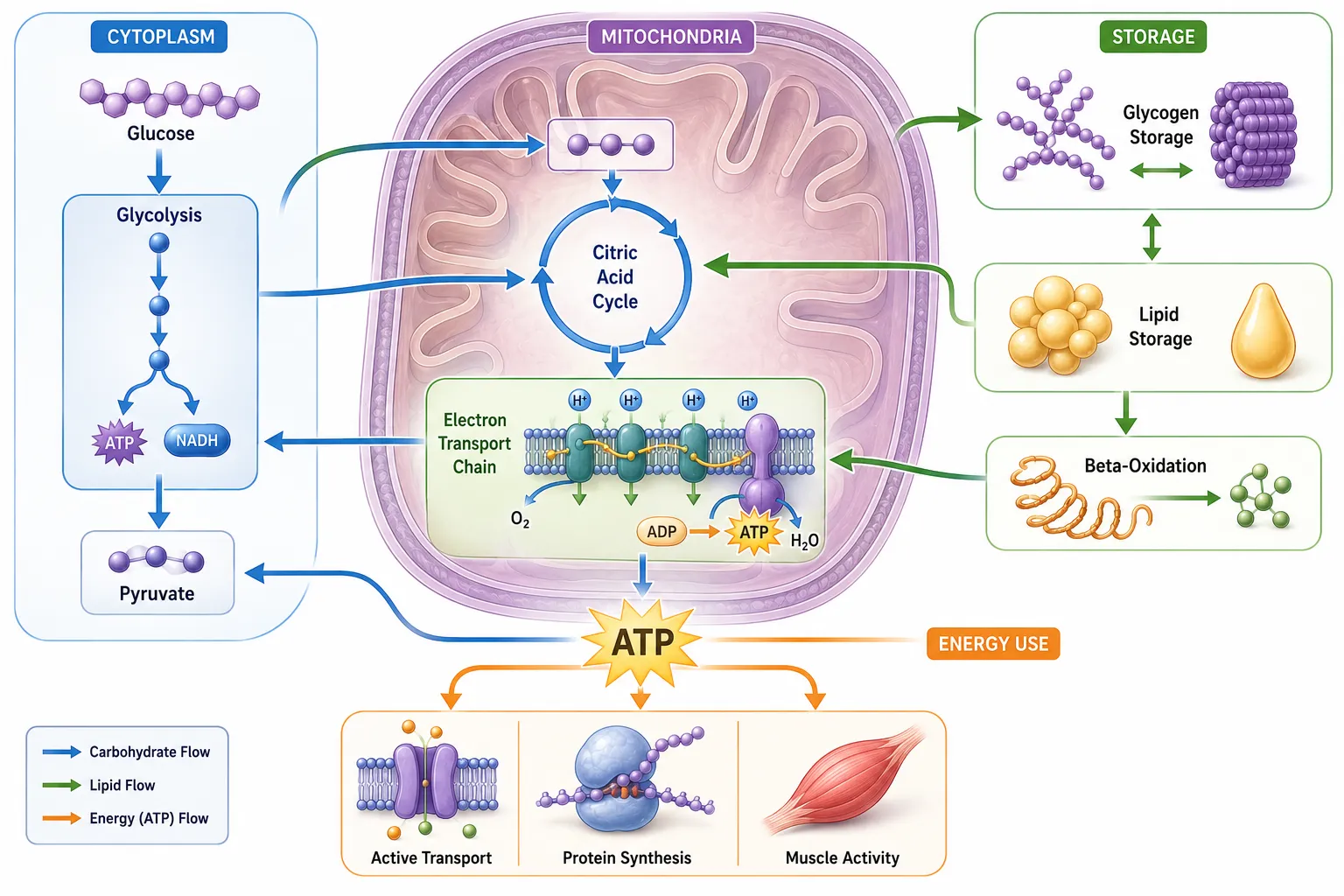
Key Concepts in Cellular Metabolic Cycles
Several concepts are essential when diagramming and interpreting cellular metabolism.
Metabolic pathway: a sequence of enzyme-controlled biochemical reactions.
Metabolic cycle: a series of reactions in which one or more components are regenerated.
Catabolism: the breakdown of complex molecules into simpler molecules, generally releasing energy.
Anabolism: the synthesis of complex molecules from simpler components, requiring energy.
ATP: the principal energy-carrying molecule used by cells.
NADH and FADH₂: electron-carrying molecules that transfer energy to oxidative pathways.
Metabolic intermediate: a molecule produced during one stage of a pathway and used in another.
Substrate: a molecule acted upon during an enzyme-controlled reaction.
Oxidation: loss of electrons from a molecule.
Reduction: gain of electrons by a molecule.
Energy coupling: the use of energy released by one process to drive another process.
Metabolic integration: the coordination of multiple pathways to maintain cellular energy balance.
Table: Major Cellular Metabolic Pathways and Their Roles in Energy Management
| Metabolic Pathway or Cycle | Definition | Main Cellular Location | Primary Role in Energy Metabolism |
|---|---|---|---|
| Glycolysis | Multi-step pathway that converts glucose into pyruvate | Cytosol | Produces ATP and electron carriers from glucose |
| Pyruvate oxidation | Process converting pyruvate into acetyl-CoA | Mitochondrial matrix | Links glycolysis with the citric acid cycle |
| Citric acid cycle | Cyclic pathway that oxidises acetyl-derived molecules | Mitochondrial matrix | Produces electron carriers and metabolic intermediates |
| Electron transport chain | Series of protein complexes transferring electrons | Inner mitochondrial membrane | Supports formation of a proton gradient for ATP production |
| Oxidative phosphorylation | ATP production driven by an electrochemical gradient | Inner mitochondrial membrane | Generates a substantial proportion of ATP during aerobic metabolism |
| Glycogenesis | Synthesis of glycogen from glucose | Cytosol | Stores excess glucose for later use |
| Glycogenolysis | Breakdown of glycogen | Cytosol | Mobilises stored carbohydrate |
| Lipogenesis | Synthesis of fatty acids and other lipids | Mainly cytosol and associated cellular systems | Supports long-term energy storage |
| Beta-oxidation | Breakdown of fatty acids into acetyl-derived units | Primarily mitochondrial matrix | Produces energy-rich molecules for ATP generation |
The Importance of Metabolic Diagrams in Advanced Biochemistry
Metabolic pathways involve numerous molecules, enzymes and energy-transfer reactions. A written explanation may describe these processes, but a diagram provides an additional level of understanding by showing how the components are connected.
A well-designed metabolic diagram can illustrate:
The starting substrate.
Intermediate molecules.
The sequence of reactions.
Direction of metabolic flow.
Enzyme-controlled stages.
ATP consumption.
ATP production.
Production and use of electron carriers.
Cellular location of reactions.
Connections between different pathways.
Regulatory points.
For advanced study, diagrams should not be treated as simple illustrations to memorise. They should be interpreted as functional models of cellular activity.
A Learner should be able to ask:
Where does the pathway begin and end?
Which steps release energy?
Which steps require energy?
Which products connect to other pathways?
How does the pathway change when energy availability changes?
Which reactions are likely to be tightly regulated?
What happens to the pathway when oxygen availability is altered?
These questions transform metabolic diagrams from static images into analytical tools.
Principles for Constructing an Accurate Metabolic Diagram
When diagramming a complex metabolic cycle, clarity and scientific accuracy are essential.
A useful procedure includes the following steps:
Identify the major pathway or cycle.
Define the starting substrate.
Identify the main products.
Establish the direction of metabolic flow.
Show important intermediate molecules.
Indicate where ATP is consumed.
Indicate where ATP is generated.
Identify electron carriers such as NADH and FADH₂.
Show the cellular location of each major stage.
Connect the pathway to related metabolic processes.
Identify major regulatory points where appropriate.
Add a concise interpretation explaining the biological significance.
The complexity of a diagram should match its purpose. An introductory diagram may show only the major stages, while an advanced diagram may include regulatory enzymes, transport processes and molecular intermediates.
ATP: The Central Energy Currency of the Cell
A central feature of most metabolic diagrams is ATP, or adenosine triphosphate. ATP functions as an immediate energy-transfer molecule that supports numerous cellular processes.
ATP is continuously produced and consumed rather than stored in large quantities for long periods.
Cells use ATP to support:
Active transport across membranes.
Protein synthesis.
Muscle contraction.
Biosynthetic reactions.
Cellular signalling.
Maintenance of ion gradients.
DNA and RNA synthesis.
Cellular repair and maintenance.
The general energy relationship can be represented conceptually as:
Energy from nutrients → metabolic reactions → ATP production → cellular work
When ATP is used, it is converted into lower-energy forms such as ADP and inorganic phosphate. Energy-producing pathways then contribute to the regeneration of ATP.
This constant ATP cycle links energy production directly with energy consumption.
Diagramming the ATP–ADP Cycle
A simplified conceptual diagram can be represented as:
Nutrients and stored fuels
↓
Catabolic pathways release usable energy
↓
ADP + phosphate → ATP
↓
ATP powers cellular work
↓
ATP → ADP + phosphate
↓
Energy-producing pathways regenerate ATP
This cycle illustrates an important principle: ATP is not the original source of energy. The energy stored in ATP is derived from the transformation of energy-containing nutrients and metabolic fuels.
Glycolysis: The Initial Stage of Glucose Energy Metabolism
Glycolysis is a major metabolic pathway that occurs in the cytosol. It converts glucose into smaller molecules through a sequence of enzyme-controlled reactions.
The pathway is particularly important because it can provide energy relatively rapidly and does not require the direct involvement of mitochondria for its initial stages.
A simplified diagram is:
Glucose
↓
Energy investment phase
↓
Phosphorylated intermediates
↓
Energy generation phase
↓
Pyruvate
During the pathway:
ATP is initially invested.
Glucose is converted through multiple intermediate stages.
ATP is generated.
NADH is produced.
Pyruvate is formed.
Interpretation of Glycolysis
Glycolysis demonstrates the principle of energy investment and energy return.
The early stages require an input of energy. This investment prepares the glucose molecule for subsequent reactions. Later stages release sufficient energy to produce ATP and electron carriers.
Key points include:
Glycolysis occurs in the cytosol.
It provides a direct route for glucose utilisation.
It produces pyruvate, which can enter additional pathways.
It generates ATP through direct metabolic reactions.
It produces NADH, which can contribute to further energy production under aerobic conditions.
The Metabolic Fate of Pyruvate
Pyruvate represents an important metabolic junction. Its fate depends on cellular conditions and metabolic requirements.
Under appropriate aerobic conditions:
Glucose → Glycolysis → Pyruvate → Mitochondrial processing → Acetyl-CoA
The acetyl-derived molecule can then enter the citric acid cycle.
Under conditions in which oxidative metabolism is limited, pyruvate may follow alternative pathways.
This demonstrates a key principle of metabolic flexibility: the same metabolic intermediate can have different destinations depending on cellular conditions.
Pyruvate Oxidation: Connecting Glycolysis to the Citric Acid Cycle
Pyruvate oxidation occurs primarily within the mitochondrial matrix. It provides a metabolic link between cytosolic glucose metabolism and mitochondrial energy production.
The general sequence can be represented as:
Pyruvate
↓
Transport into mitochondria
↓
Oxidative conversion
↓
Acetyl-CoA + electron carrier products
↓
Entry into the citric acid cycle
This process is important because acetyl-CoA serves as a central metabolic intermediate.
Acetyl-CoA can be derived from:
Carbohydrate metabolism.
Fat metabolism.
Specific amino acid pathways.
Therefore, it represents an important point of metabolic integration.
The Citric Acid Cycle: A Central Metabolic Hub
The citric acid cycle, also known as the tricarboxylic acid cycle, is a cyclic sequence of reactions located primarily in the mitochondrial matrix.
It is one of the most important examples of a true metabolic cycle because certain components are regenerated as the cycle progresses.
A simplified representation is:
Acetyl-CoA
↓
Combines with an acceptor molecule
↓
Series of oxidation and rearrangement reactions
↓
Production of electron carriers and metabolic intermediates
↓
Regeneration of the original acceptor molecule
The cycle does not produce the largest amount of ATP directly. Its major contribution is the generation of NADH and FADH₂, which carry high-energy electrons to the electron transport chain.
Key Products of the Citric Acid Cycle
The cycle contributes to:
Production of NADH.
Production of FADH₂.
Limited direct energy generation.
Production of carbon dioxide.
Generation of intermediates used in other metabolic pathways.
Why the Citric Acid Cycle Is a Metabolic Hub
The cycle connects carbohydrate, lipid and protein metabolism.
For example:
Carbohydrates can produce acetyl-CoA.
Fatty acids can produce acetyl-derived molecules.
Certain amino acids can enter the cycle at different points.
This makes the cycle a central point of metabolic integration.
Diagramming the Citric Acid Cycle
An accurate conceptual diagram should show:
Entry of acetyl-CoA.
Combination with an acceptor molecule.
Formation of intermediate compounds.
Oxidation reactions.
Production of NADH and FADH₂.
Release of carbon dioxide.
Regeneration of the acceptor molecule.
The circular nature of the diagram is important because it illustrates the regeneration of the molecule required to accept a new acetyl group.
The Electron Transport Chain: Converting Electron Energy Into a Proton Gradient
The electron transport chain is located within the inner mitochondrial membrane. It consists of a series of protein complexes that transfer electrons from NADH and FADH₂.
A simplified diagram is:
NADH / FADH₂
↓
Electron transport complexes
↓
Energy released during electron transfer
↓
Movement of protons across the membrane
↓
Proton gradient
The electron transport chain does not directly produce ATP through simple substrate-level reactions. Instead, it establishes an electrochemical gradient.
This illustrates a sophisticated form of energy transformation.
Oxidative Phosphorylation and ATP Synthesis
Oxidative phosphorylation uses the proton gradient created by electron transport to support ATP production.
The general sequence is:
Electron transport
↓
Proton gradient formation
↓
Proton movement through ATP synthase
↓
ATP production
ATP synthase is a molecular system that uses the energy stored in the proton gradient to support the formation of ATP.
This process demonstrates several important biochemical principles:
Energy can be converted from one form to another.
Cellular membranes are essential for maintaining gradients.
Electron transfer can be coupled with ATP production.
Mitochondrial structure directly supports metabolic function.
Integrating Glycolysis, the Citric Acid Cycle and Oxidative Phosphorylation
These pathways are best understood as an integrated sequence rather than separate topics.
A conceptual metabolic diagram is:
This integrated diagram illustrates the progressive extraction and transformation of energy from glucose.
Glycogen Storage: Short- to Medium-Term Carbohydrate Energy Reserve
When glucose availability exceeds immediate metabolic requirements, some cells can convert glucose into glycogen.
This process is known as glycogenesis.
A simplified diagram is:
Glycogen provides a relatively accessible form of carbohydrate storage.
Important features include:
It allows storage of glucose-derived energy.
It can be mobilised when energy is required.
Its role differs between tissues.
It supports metabolic flexibility.
Glycogenolysis: Mobilisation of Stored Carbohydrate
When energy requirements increase or nutrient availability decreases, stored glycogen may be broken down through glycogenolysis.
The general process is:
Glycogen
↓
Enzymatic breakdown
↓
Glucose-containing intermediates
↓
Entry into energy-producing pathways
This pathway demonstrates how energy storage and energy consumption are connected.
A metabolic diagram should clearly distinguish between:
Storage pathways.
Mobilisation pathways.
Energy-producing pathways.
Lipid Storage and Long-Term Energy Management
Lipids provide an important form of long-term energy storage. When energy availability is greater than immediate requirements, excess energy can contribute to lipid synthesis and storage.
The general conceptual pathway is:
Lipids are particularly effective for energy storage because they contain substantial chemical energy.
Benefits of Lipid Energy Storage
Lipid storage:
Provides a concentrated energy reserve.
Supports long-term energy availability.
Allows energy to be mobilised during prolonged demand.
Reduces the need for continuous reliance on dietary intake.
However, energy storage must remain appropriately regulated. Excessive or dysregulated accumulation can alter metabolic homeostasis.
Beta-Oxidation: Converting Fatty Acids Into Usable Energy
When cells require energy from stored or available fatty acids, beta-oxidation can break down fatty acids into smaller acetyl-derived units.
A simplified diagram is:
This pathway illustrates how lipid metabolism becomes integrated with central mitochondrial energy metabolism.
Comparing Carbohydrate and Lipid Energy Pathways
Although carbohydrates and lipids follow different initial pathways, both can contribute to common energy-producing systems.
Carbohydrate pathway:
Glucose → Glycolysis → Pyruvate → Acetyl-CoA → Citric acid cycle
Lipid pathway:
Fatty acids → Beta-oxidation → Acetyl-derived units → Citric acid cycle
Both can ultimately contribute electron carriers to the electron transport chain.
This convergence demonstrates the integrated nature of metabolism.
Protein and Amino Acid Contributions to Energy Metabolism
Proteins are not generally the preferred primary source of energy under normal conditions because they perform important structural and functional roles. However, amino acids can contribute to energy metabolism under specific physiological circumstances.
Amino acid metabolism may involve:
Removal or transfer of nitrogen-containing groups.
Conversion of carbon skeletons.
Entry into central metabolic pathways.
Contribution to glucose-related or citric acid cycle pathways.
This demonstrates that metabolism is highly interconnected.
A simplified concept is:
Energy Consumption: Where Does Cellular ATP Go?
Metabolic diagrams should not focus exclusively on ATP production. ATP is valuable because it supports cellular work.
Major forms of ATP consumption include:
Active membrane transport.
Protein synthesis.
DNA replication.
RNA synthesis.
Muscle contraction.
Cellular movement.
Biosynthesis of lipids and carbohydrates.
Maintenance of cellular structures.
Repair and recycling processes.
The relationship can be represented as:
Diagramming Energy Consumption
A useful energy-distribution diagram may place ATP at the centre and show major processes receiving energy:
ATP
↙ ↓ ↘
↙ ↓ ↘
This type of diagram demonstrates that energy production is meaningful only when connected to energy use.
Energy Balance at the Cellular Level
Cellular energy balance can be understood as the relationship between energy availability and energy consumption.
When energy production exceeds immediate consumption:
ATP production is maintained.
Energy may be stored.
Anabolic pathways may increase.
Cellular growth and biosynthesis may be supported.
When energy demand exceeds immediate availability:
Stored fuels may be mobilised.
Catabolic pathways may increase.
Energy-consuming activities may be regulated.
Cells may prioritise essential functions.
This balance is constantly adjusted rather than remaining fixed.
The Role of Metabolic Intermediates
Metabolic intermediates connect different pathways and allow nutrients to be redirected according to cellular requirements.
A single intermediate may:
Continue through its current pathway.
Enter another metabolic pathway.
Be converted into a storage molecule.
Be used for biosynthesis.
This flexibility is essential for metabolic adaptation.
For example, acetyl-CoA may serve as:
A substrate for energy-producing pathways.
A component in lipid-related synthesis.
A connection point between carbohydrate and lipid metabolism.
Practical Example: Energy Metabolism After a Carbohydrate-Rich Meal
Following a carbohydrate-rich meal, glucose availability may increase.
A simplified metabolic sequence may involve:
Glucose enters responsive cells.
Some glucose is used immediately for ATP production.
Glycolysis converts glucose into pyruvate.
Pyruvate may enter mitochondrial pathways.
ATP is produced according to cellular requirements.
Excess glucose may contribute to glycogen synthesis.
Continued energy surplus may support conversion into lipid-related storage pathways.
This example demonstrates that the metabolic fate of a nutrient depends on energy demand and storage capacity.
Practical Example: Energy Metabolism During Prolonged Reduced Food Intake
During prolonged periods of reduced nutrient intake, the metabolic priorities change.
The sequence may involve:
Reduced reliance on newly absorbed nutrients.
Mobilisation of stored carbohydrate.
Increased utilisation of lipid-derived fuels.
Greater importance of energy conservation.
Adaptation of metabolic pathways to maintain essential ATP production.
A diagram of this process should show the movement from energy stores towards central energy-producing pathways.
How to Interpret Complex Metabolic Diagrams Critically
Critical interpretation requires more than identifying arrows and molecules.
Learners should analyse:
Direction of Metabolic Flow
Determine whether the pathway represents:
Breakdown of a fuel.
Synthesis of a molecule.
Storage of energy.
Mobilisation of stored energy.
Energy Input and Output
Identify:
Where ATP is consumed.
Where ATP is generated.
Where electron carriers are produced.
Where energy is transferred between molecules.
Cellular Location
Determine whether the process occurs in:
Cytosol.
Mitochondrial matrix.
Inner mitochondrial membrane.
Other specialised cellular compartments.
Connections Between Pathways
Identify where:
Carbohydrate metabolism connects with lipid metabolism.
Amino acid metabolism enters central pathways.
Storage pathways connect with energy mobilisation.
Common Errors When Diagramming Metabolic Pathways
Complex metabolic diagrams can become inaccurate when important relationships are oversimplified.
Common errors include:
Treating pathways as completely independent.
Failing to identify the cellular location.
Showing ATP production without identifying its source.
Ignoring electron carriers.
Confusing energy storage with immediate ATP production.
Presenting all pathways as active simultaneously at the same level.
Omitting regulatory points.
Assuming all cells use fuels in identical ways.
A high-quality diagram should simplify complexity without creating scientific inaccuracies.
Key Benefits of Diagramming Cellular Metabolism
The ability to diagram metabolic cycles provides several educational and analytical benefits.
It helps Learners to:
Visualise complex biochemical relationships.
Understand the sequence of metabolic reactions.
Identify connections between pathways.
Analyse energy transformation.
Recognise the difference between energy production and storage.
Understand ATP cycling.
Interpret the role of mitochondria.
Evaluate metabolic adaptation.
Communicate biochemical concepts clearly.
Apply theoretical knowledge to nutritional and physiological contexts.
The Integrated Cellular Energy Map
A comprehensive conceptual map of cellular metabolism can be represented as:
Dietary and Stored Nutrients
↓
Carbohydrates → Glucose → Glycolysis
Lipids → Fatty Acids → Beta-Oxidation
Proteins → Amino Acids → Metabolic Intermediates
↓
Central Metabolic Intermediates
↓
Acetyl-CoA and Related Pathways
↓
Citric Acid Cycle
↓
NADH and FADH₂
↓
Electron Transport Chain
↓
Proton Gradient
↓
ATP Production
↓
Energy Consumption
↙ ↓ ↘
At the same time, when energy availability exceeds demand:
Excess Nutrients
↓
Glycogen Storage and Lipid Storage
This integrated map demonstrates the continuous relationship between energy intake, energy transformation, energy storage and energy consumption.
Summary
Complex cellular metabolic cycles provide the biochemical foundation for energy production, storage and consumption. Glycolysis initiates the breakdown of glucose within the cytosol, while pyruvate processing and the citric acid cycle connect nutrient metabolism with mitochondrial energy production. NADH and FADH₂ transfer energy to the electron transport chain, where electron movement supports the formation of a proton gradient used for ATP synthesis.
Energy is not always used immediately. Excess nutrients can contribute to glycogen and lipid storage, providing reserves that can later be mobilised when energy demand increases. Fatty acids can enter beta-oxidation, while amino acid carbon skeletons may also contribute to central metabolic pathways under appropriate conditions.
The accurate diagramming and interpretation of these processes requires an understanding of pathway direction, cellular location, energy transfer, metabolic intermediates and pathway integration. A strong metabolic diagram does more than display biochemical reactions; it illustrates how the human cell continuously balances energy production, storage and consumption.
For Learners studying advanced nutritional biochemistry, the ability to interpret complex metabolic cycles provides a powerful framework for understanding how nutrients are transformed into usable energy, how surplus energy is stored and how cellular processes are prioritised according to changing physiological demands.
4.Analyse the Physiological Impact of Cellular Metabolic Variations on an Individual’s Overall Human Energy Balance
Human energy balance is a dynamic physiological process influenced by the relationship between energy intake, energy expenditure, energy storage and cellular metabolic activity. Although energy balance is often expressed simply as the relationship between calories consumed and calories expended, the underlying biological processes are considerably more complex. Every tissue and organ contains cells with specialised metabolic functions, and variations in cellular metabolism can influence how efficiently nutrients are converted into energy, stored as biological reserves or used to support physiological activity.
Cellular metabolism is not identical in every individual or tissue. Differences in mitochondrial activity, enzyme expression, hormone sensitivity, nutrient availability, physical activity, body composition, age and environmental conditions can influence how cells manage energy. These metabolic variations can alter the overall balance between energy acquisition and energy expenditure.
A detailed analysis of human energy balance therefore requires consideration of events occurring at several levels. At the molecular level, enzymes regulate chemical reactions. At the cellular level, organelles convert nutrients into ATP and other metabolic products. At the tissue level, cells specialise in functions such as energy storage, movement or neural activity. At the whole-body level, these processes collectively influence energy expenditure, body composition and physiological homeostasis.
Understanding these relationships is essential in nutritional biochemistry because dietary nutrients do not affect the body through a single pathway. Their physiological effects depend on how cells detect, absorb, process, store and utilise available substrates.
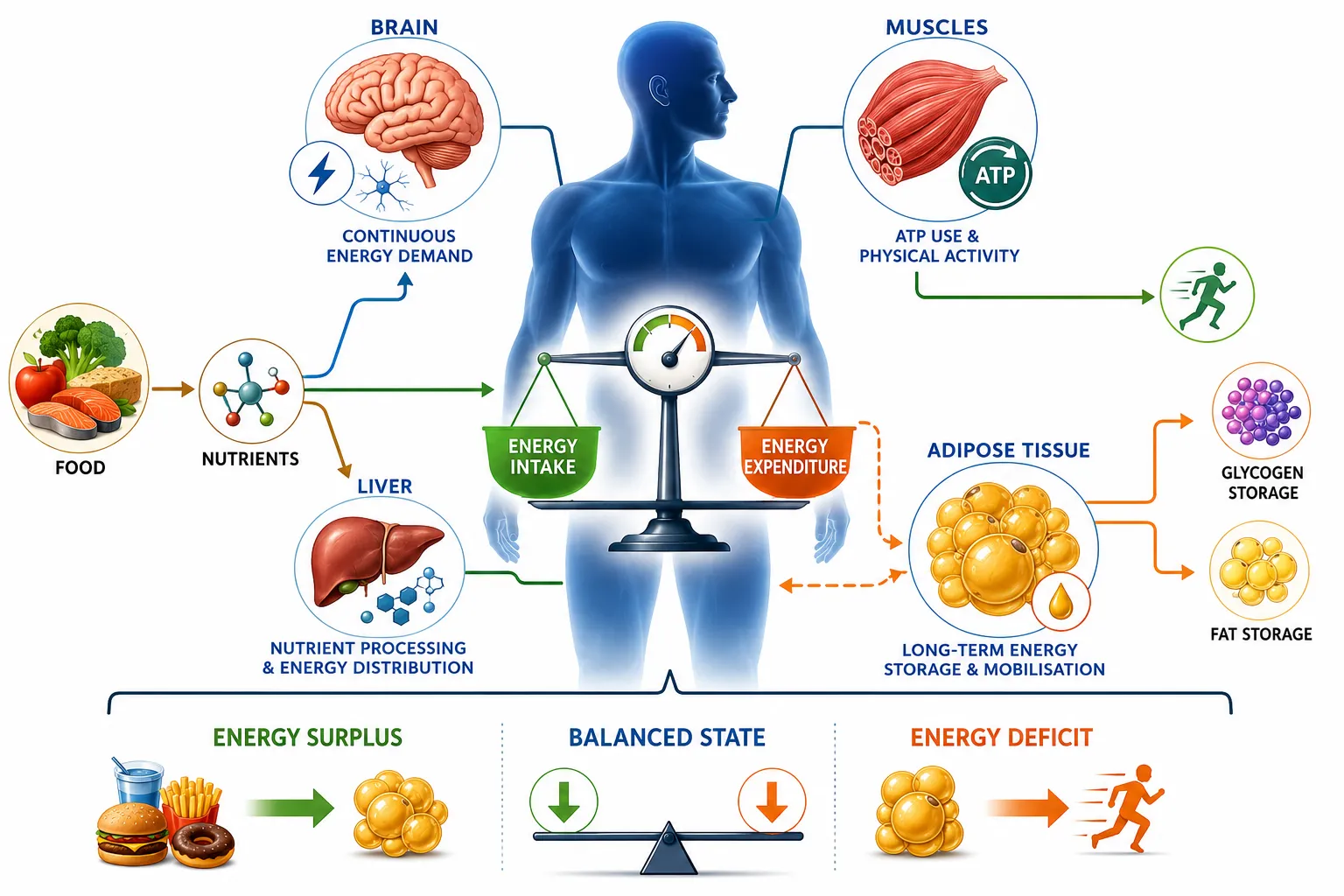
Understanding Human Energy Balance
Human energy balance describes the relationship between energy entering the body and energy leaving or being utilised by the body.
A simplified representation is:
Energy Balance = Energy Intake − Energy Expenditure
However, this expression does not fully explain the biological complexity involved. Energy intake must first be digested, absorbed and transported before it becomes available to cells. Similarly, energy expenditure includes multiple physiological processes that depend on cellular metabolism.
The major components include:
Energy intake from food and beverages.
Basal or resting energy expenditure.
Physical activity-related energy expenditure.
Energy used for digestion and nutrient processing.
Energy required for growth, repair and adaptation.
Energy stored in glycogen and adipose tissue.
Energy used during immune and stress responses.
The balance between these components changes continuously.
Table: Key Factors Influencing Cellular Metabolism and Whole-Body Energy Balance
| Factor | Definition | Cellular Metabolic Impact | Physiological Effect on Energy Balance |
|---|---|---|---|
| Mitochondrial function | Capacity of mitochondria to support oxidative metabolism | Influences ATP production and substrate oxidation | May affect energy utilisation and physical capacity |
| Hormonal signalling | Chemical communication regulating metabolism | Alters nutrient uptake, storage and mobilisation | Coordinates whole-body responses to feeding and fasting |
| Muscle mass | Amount of metabolically active skeletal muscle tissue | Increases capacity for substrate utilisation | Influences resting and activity-related energy expenditure |
| Adipose tissue activity | Metabolic function of fat-storing tissues | Regulates lipid storage and mobilisation | Influences long-term energy reserves |
| Physical activity | Muscular movement requiring energy | Increases ATP demand and substrate oxidation | Raises total energy expenditure |
| Nutrient availability | Supply of carbohydrates, fats, proteins and micronutrients | Determines substrate availability for metabolic pathways | Influences fuel selection and storage |
| Enzyme activity | Efficiency and regulation of metabolic enzymes | Alters the rate of biochemical reactions | Influences how rapidly substrates are processed |
| Cellular energy sensing | Detection of ATP availability and energy stress | Regulates catabolic and anabolic pathways | Supports adaptation to changing energy demand |
Cellular Metabolism as the Foundation of Whole-Body Energy Balance
Energy balance begins at the cellular level because cells are the sites where nutrients are transformed into usable biological energy. Carbohydrates, lipids and proteins provide chemical energy, but this energy must be processed through metabolic pathways before it can support cellular work.
Cells use metabolic pathways to:
Produce ATP.
Generate heat.
Synthesize biological molecules.
Store surplus nutrients.
Mobilise stored fuels.
Maintain ion gradients.
Support movement and contraction.
Repair and replace cellular components.
The combined activity of billions of cells determines the overall energy requirements of the human body.
Why Cellular Metabolic Variation Matters
Cells differ substantially in their metabolic demands.
For example:
Skeletal muscle cells require large quantities of ATP during contraction.
Neurons require continuous energy to maintain ion gradients and signalling.
Adipocytes specialise in energy storage and mobilisation.
Liver cells play a major role in coordinating nutrient metabolism.
Immune cells may alter their metabolism significantly during activation.
Therefore, changes in the metabolic activity of one tissue can influence overall physiological energy requirements.
Energy Intake and Cellular Substrate Availability
Energy intake provides the substrates required for cellular metabolism. The major energy-containing nutrients include carbohydrates, lipids and proteins.
Following digestion and absorption, nutrients become available for cellular use.
The general sequence is:
Food intake
↓
Digestion
↓
Absorption
↓
Transport through the body
↓
Cellular uptake
↓
Metabolic processing
The availability of nutrients influences which metabolic pathways are activated.
Effects of Increased Nutrient Availability
When energy-containing nutrients are readily available, cells may:
Increase glucose utilisation.
Replenish glycogen stores.
Support protein synthesis.
Increase lipid synthesis under conditions of sustained surplus.
Promote anabolic processes.
Reduce mobilisation of some stored fuels.
Effects of Reduced Nutrient Availability
When nutrient availability decreases, cells may:
Mobilise glycogen.
Increase fatty acid utilisation.
Reduce selected anabolic activities.
Activate energy-conserving pathways.
Prioritise essential cellular functions.
These adaptations demonstrate the flexibility of cellular metabolism.
Mitochondrial Variations and Energy Expenditure
Mitochondria play a central role in aerobic energy metabolism. Variations in mitochondrial number, structure, enzyme activity and efficiency can influence how cells process energy-containing substrates.
Mitochondrial activity can vary according to:
Tissue type.
Physical activity.
Energy demand.
Nutritional status.
Cellular adaptation.
Age-related physiological changes.
Environmental conditions.
Cells with high and continuous energy requirements often contain substantial mitochondrial populations.
Physiological Consequences of Mitochondrial Variation
Changes in mitochondrial metabolic capacity can influence:
ATP availability.
Exercise tolerance.
Substrate oxidation.
Heat production.
Recovery from increased energy demand.
Cellular adaptation to physical activity.
A highly metabolically active tissue may oxidise larger quantities of substrates to meet its energy requirements, contributing to overall energy expenditure.
Metabolic Efficiency and Human Energy Balance
Metabolic efficiency refers broadly to how effectively cells convert available substrates into usable energy and biological work.
Energy transformation is not perfectly efficient. During metabolic processes, some energy is released as heat.
This has important physiological significance.
Energy derived from nutrients may be directed towards:
ATP production.
Biosynthesis.
Mechanical work.
Transport processes.
Heat generation.
The proportion of energy directed towards these processes can vary depending on tissue type and physiological conditions.
Critical Analysis of Efficiency
Greater metabolic efficiency does not automatically mean better health. Biological systems require a balance between efficient energy use and the ability to generate heat, respond to stress and adapt to changing demands.
For example:
Excessive inefficiency may reduce the availability of ATP for essential processes.
Altered efficiency may change energy expenditure.
Adaptive heat production can contribute to temperature regulation.
Therefore, metabolic efficiency must be interpreted within a broader physiological context.
Hormonal Regulation and Variations in Energy Distribution
Hormones provide essential communication between organs and tissues. They help coordinate the distribution of energy-containing substrates throughout the body.
Important metabolic hormones include those involved in:
Glucose regulation.
Appetite and satiety.
Energy storage.
Fuel mobilisation.
Stress responses.
Growth and tissue maintenance.
At the cellular level, hormonal signals influence:
Nutrient transport.
Enzyme activity.
Gene expression.
ATP production.
Glycogen metabolism.
Lipid mobilisation.
Protein synthesis.
Insulin Sensitivity and Energy Balance
Insulin-related signalling influences how responsive certain cells are to changes in nutrient availability.
Variations in insulin sensitivity can influence:
Cellular glucose uptake.
Glycogen synthesis.
Lipid metabolism.
Energy storage.
Nutrient partitioning.
When cells respond effectively to metabolic signals, nutrient utilisation can be coordinated efficiently.
However, altered responsiveness can influence how nutrients are distributed and processed.
Practical Example
After consuming a carbohydrate-containing meal:
Glucose becomes available in the bloodstream.
Hormonal signals communicate nutrient availability.
Responsive cells increase glucose uptake.
Glucose may be used immediately for ATP production.
Some glucose may be stored as glycogen.
Sustained excess energy may contribute to longer-term storage.
The effectiveness of these processes influences whole-body energy handling.
AMPK and Cellular Adaptation to Energy Stress
AMPK is an important cellular energy sensor that responds to changes in energy availability.
When energy is limited, AMPK can promote metabolic adaptations that support ATP restoration.
These adaptations may include:
Increased activity of energy-producing pathways.
Greater utilisation of available metabolic fuels.
Reduction of selected energy-consuming processes.
Support for metabolic flexibility.
At the whole-body level, the activity of energy-sensing mechanisms contributes to the ability of tissues to adapt to changes in physical activity and nutrient availability.
Muscle Metabolism and Energy Expenditure
Skeletal muscle represents a major contributor to whole-body energy expenditure because it has substantial metabolic activity and requires significant energy during movement.
Muscle cells use several energy systems depending on the intensity and duration of activity.
These include:
Immediate ATP utilisation.
Phosphagen-related energy systems.
Carbohydrate metabolism.
Aerobic oxidative metabolism.
Fatty acid oxidation.
The relative contribution of each system changes according to physiological demand.
Effects of Increased Physical Activity
When physical activity increases:
ATP consumption rises.
Muscle cells increase energy production.
Glycogen may be utilised.
Glucose uptake may increase.
Fatty acid oxidation may contribute to energy supply.
Mitochondrial activity may increase.
These cellular changes contribute directly to increased whole-body energy expenditure.
Muscle Mass and Resting Energy Requirements
Muscle tissue contributes to resting metabolic activity. Variations in muscle mass can therefore influence an individual’s overall energy requirements.
A greater amount of metabolically active tissue may influence:
Baseline energy utilisation.
Capacity for glucose disposal.
Physical work capacity.
Total daily energy expenditure.
However, energy expenditure is influenced by many factors, and muscle mass should not be viewed as the sole determinant.
Other important influences include:
Organ metabolic activity.
Physical activity.
Body size.
Hormonal regulation.
Age.
Nutritional status.
Adipose Tissue and Long-Term Energy Storage
Adipose tissue is specialised for the storage and mobilisation of energy.
Its functions include:
Storage of triglycerides.
Release of fatty acids when energy is required.
Production of signalling molecules.
Participation in whole-body metabolic regulation.
Adipose tissue is therefore not simply inactive storage material. It is metabolically and hormonally active.
Energy Storage in Adipose Tissue
When energy intake consistently exceeds energy expenditure, surplus energy may be stored.
The general process is:
Energy surplus
↓
Increased availability of metabolic substrates
↓
Storage pathways become active
↓
Triglyceride accumulation in adipose tissue
This is a physiological energy-storage response.
Lipid Mobilisation During Energy Deficit
When energy intake is insufficient to meet expenditure, stored energy can be mobilised.
The general sequence may include:
Reduced nutrient availability or increased energy demand
↓
Metabolic and hormonal signalling
↓
Mobilisation of stored fatty acids
↓
Transport to metabolically active tissues
↓
Oxidation for energy production
This demonstrates how cellular metabolic variation influences whole-body adaptation.
The Liver as a Central Metabolic Regulator
The liver plays a major role in coordinating nutrient metabolism and energy distribution.
Liver cells participate in:
Glycogen storage.
Glycogen mobilisation.
Glucose production.
Lipid metabolism.
Amino acid processing.
Production of metabolic intermediates.
Because of these functions, variations in hepatic metabolism can influence the availability of energy substrates for other tissues.
Example of Energy Distribution
During changing nutritional conditions, the liver helps coordinate whether nutrients are:
Stored.
Released.
Converted.
Used to support the energy requirements of other tissues.
This demonstrates that whole-body energy balance depends on communication between metabolically specialised organs.
The Brain and Continuous Energy Demand
The brain has substantial and continuous energy requirements. Neural cells depend on a consistent supply of metabolic substrates to support signalling and maintenance of ion gradients.
Energy is required for:
Action potential generation.
Neurotransmitter processes.
Ion transport.
Cellular maintenance.
Biosynthesis.
Variations in nutrient availability and systemic metabolism can therefore influence brain energy metabolism.
The brain illustrates an important principle: energy distribution is not simply based on which tissue has the greatest storage capacity. The body must prioritise energy delivery according to physiological necessity.
Resting Energy Expenditure and Cellular Activity
Resting energy expenditure represents the energy required to support essential physiological processes when the body is not engaged in significant physical activity.
This includes energy used for:
Breathing.
Circulation.
Neural function.
Temperature regulation.
Cellular maintenance.
Protein turnover.
Ion transport.
Different tissues contribute differently to resting energy expenditure.
Highly metabolically active organs may consume substantial energy despite representing a relatively small proportion of total body mass.
This demonstrates why body composition alone cannot fully explain metabolic rate.
The Thermic Effect of Food
Energy is required to digest, absorb, transport and metabolise nutrients.
This is commonly described as the thermic effect of food.
Cellular processes involved include:
Enzyme activity.
Active transport.
Nutrient conversion.
Protein synthesis.
Storage processes.
The energy cost of processing nutrients can vary depending on the composition and quantity of food consumed.
This provides another example of how cellular metabolic activity contributes to total energy expenditure.
Metabolic Variations During Physical Activity
Physical activity creates substantial changes in cellular energy demand.
The intensity and duration of activity influence fuel selection.
During Short, High-Intensity Activity
Cells may depend more heavily on rapidly available energy systems.
Metabolic characteristics can include:
Rapid ATP turnover.
High demand for immediate energy.
Increased utilisation of carbohydrate-related pathways.
Rapid activation of energy-producing enzymes.
During Prolonged Activity
Cells may increasingly depend on aerobic metabolism.
This may involve:
Greater mitochondrial ATP production.
Increased fatty acid oxidation.
Continued carbohydrate utilisation.
Enhanced oxygen-dependent metabolism.
The ability to switch between fuel sources is known as metabolic flexibility.
Metabolic Flexibility and Physiological Adaptation
Metabolic flexibility refers to the capacity of cells and tissues to adjust fuel utilisation according to changing conditions.
An adaptable metabolic system can:
Use glucose effectively when carbohydrate availability is high.
Mobilise stored fuels when intake decreases.
Increase ATP production during physical activity.
Reduce energy expenditure during periods of limited availability.
Shift between carbohydrate and lipid oxidation.
This flexibility is important for maintaining physiological stability.
Cellular Variations During Energy Surplus
An energy surplus occurs when energy intake exceeds total energy expenditure over time.
At the cellular level, the body may respond by:
Increasing nutrient storage.
Replenishing glycogen.
Increasing lipid synthesis.
Supporting anabolic processes.
Altering hormonal and nutrient signalling.
The physiological outcome depends on:
Magnitude of the surplus.
Duration.
Physical activity.
Tissue metabolic capacity.
Individual metabolic characteristics.
Cellular Variations During Energy Deficit
An energy deficit occurs when energy expenditure exceeds available energy intake over time.
The body may respond through:
Mobilisation of glycogen.
Increased utilisation of fatty acids.
Changes in hormone signalling.
Reduced activity of selected energy-consuming processes.
Adaptations in resting energy expenditure.
These responses demonstrate that energy balance is dynamic rather than static.
Adaptive Changes in Energy Expenditure
The human body can adapt metabolically to sustained changes in energy availability.
During prolonged energy restriction, physiological adaptation may involve:
Changes in energy expenditure.
Alterations in hormone levels.
Increased efficiency in energy utilisation.
Changes in physical activity patterns.
Adjustments in fuel mobilisation.
Similarly, sustained increases in physical activity can produce adaptations such as:
Increased mitochondrial capacity in relevant tissues.
Improved oxidative capacity.
Changes in enzyme activity.
Improved ability to use metabolic fuels.
These adaptations show that cellular metabolism is responsive to long-term environmental conditions.
Individual Variability in Human Energy Balance
Two individuals with similar dietary intake may not necessarily experience identical physiological responses.
Individual variation may be influenced by:
Genetic characteristics.
Age.
Body composition.
Muscle mass.
Physical activity patterns.
Hormonal status.
Sleep patterns.
Environmental conditions.
Nutritional history.
Metabolic health.
At the cellular level, these factors can influence enzyme activity, mitochondrial function, nutrient transport and hormonal responsiveness.
Practical Example: Two Individuals With Different Activity Levels
Consider two individuals with broadly similar energy intake.
Individual A performs regular physically demanding activity, while Individual B has a predominantly sedentary routine.
Individual A may experience:
Greater muscular ATP demand.
Increased energy expenditure.
Greater utilisation of carbohydrate and lipid fuels.
Increased metabolic activity during movement.
Individual B may experience:
Lower activity-related ATP demand.
Lower total energy expenditure.
Greater proportion of energy directed towards maintenance and storage.
This example demonstrates why energy intake must be considered alongside energy expenditure and cellular metabolic demand.
Practical Example: Adaptation to Endurance Training
Repeated endurance activity can produce cellular adaptations in skeletal muscle.
Potential adaptations include:
Increased mitochondrial density.
Improved oxidative enzyme activity.
Enhanced capacity for fatty acid utilisation.
Improved energy production during sustained activity.
These cellular changes may influence:
Exercise capacity.
Fuel selection.
Energy expenditure during activity.
Recovery from prolonged exercise.
This example illustrates the direct relationship between cellular adaptation and whole-body physiological function.
Key Benefits of Analysing Cellular Metabolic Variations
Understanding cellular metabolic variations enables Learners to:
Explain the biochemical basis of human energy balance.
Analyse the relationship between nutrient intake and cellular metabolism.
Evaluate factors affecting energy expenditure.
Understand differences between carbohydrate and lipid utilisation.
Explain metabolic adaptation to feeding and fasting.
Analyse the role of muscle and adipose tissue.
Evaluate the importance of mitochondrial function.
Understand metabolic flexibility.
Interpret individual differences in energy requirements.
Apply nutritional biochemistry to real physiological contexts.
Critical Considerations When Analysing Energy Balance
A scientifically sound analysis of energy balance should avoid oversimplification.
Important considerations include:
Energy Balance Is Dynamic
Energy intake and expenditure change throughout the day.
Factors that fluctuate include:
Meal timing.
Physical activity.
Hormonal signals.
Cellular energy demand.
Nutrient availability.
Different Tissues Have Different Metabolic Roles
The body is not metabolically uniform.
For example:
Muscle is highly responsive to physical activity.
Adipose tissue specialises in energy storage.
The liver coordinates nutrient processing.
The brain requires continuous energy support.
Cellular and Whole-Body Regulation Are Interconnected
Changes in one tissue can influence others through:
Hormones.
Metabolic substrates.
Neural signals.
Inflammatory mediators.
Changes in energy availability.
An Integrated Model of Human Energy Balance
Human energy balance can be represented as an integrated system:
Energy Intake
↓
Digestion and Absorption
↓
Circulating Nutrients
↓
Cellular Uptake and Metabolic Regulation
↙ ↓ ↘
Immediate ATP Production
Glycogen Storage
Lipid Storage
↓
Cellular Energy Consumption
↙ ↓ ↘
Resting Functions
Physical Activity
Growth and Repair
When energy demand increases:
Stored Energy
↓
Mobilisation of Metabolic Fuels
↓
Cellular Oxidation
↓
ATP Production
This model demonstrates that energy balance is determined by continuous communication between nutrient intake, cellular metabolism, tissue function and physiological demand.
Summary
Cellular metabolic variations have a significant influence on an individual’s overall human energy balance. Mitochondrial function, enzyme activity, hormonal responsiveness, nutrient availability and tissue-specific metabolism determine how effectively cells produce, store and utilise energy.
Whole-body energy balance is shaped by the combined metabolic activity of specialised tissues and organs. Skeletal muscle increases energy demand during physical activity, adipose tissue provides long-term energy storage, the liver coordinates nutrient processing and distribution, and the brain requires a continuous supply of metabolic energy.
Variations in cellular metabolism influence whether nutrients are immediately oxidised for ATP production, stored as glycogen or converted into longer-term energy reserves. During energy deficit, cells adapt by mobilising stored fuels and adjusting energy-consuming processes. During energy surplus, metabolic pathways support storage and anabolic activity.
A comprehensive analysis of energy balance must therefore move beyond the simple comparison of energy intake and expenditure. It must consider the molecular and cellular processes that determine how energy is transformed, distributed and consumed throughout the human body.
For Learners studying advanced nutritional biochemistry, understanding these variations provides an essential foundation for analysing the relationship between cellular metabolism, nutritional intake, physical activity, physiological adaptation and long-term human energy balance.
5.Critically Discuss the Dynamic Interaction Between Various Cellular Organelles During the Synthesis and Breakdown of Biological Molecules
Human cells are highly organised yet continuously changing biological systems in which specialised organelles interact to support the synthesis, modification, transport, utilisation, breakdown and recycling of biological molecules. These interactions are essential for maintaining cellular metabolism, growth, repair and homeostasis. No major metabolic process occurs entirely independently. Instead, the synthesis and breakdown of carbohydrates, lipids, proteins and nucleic acids depend on coordinated communication between multiple cellular structures.
The dynamic interaction between organelles is particularly important because cells must constantly adjust their metabolic activities according to nutrient availability, energy demand, hormonal signals and environmental conditions. During periods of nutrient abundance, cells may prioritise anabolic processes such as protein synthesis, lipid production and energy storage. During nutrient limitation or increased energy demand, catabolic processes become increasingly important, promoting the breakdown of stored molecules and the recycling of cellular components.
The organisation of cellular metabolism into different organelles provides several advantages. Compartmentalisation separates incompatible biochemical reactions, concentrates enzymes and substrates, protects the cell from potentially harmful reactions and allows individual pathways to be regulated independently. However, compartmentalisation also creates a requirement for communication. Molecules, metabolic intermediates and signals must move efficiently between cellular compartments.
A critical discussion of organelle interaction therefore requires an understanding of both specialisation and integration. Each organelle performs specific functions, but the overall metabolic outcome depends on cooperation between the nucleus, ribosomes, endoplasmic reticulum, Golgi apparatus, mitochondria, lysosomes, peroxisomes, plasma membrane and cytoskeletal transport systems.
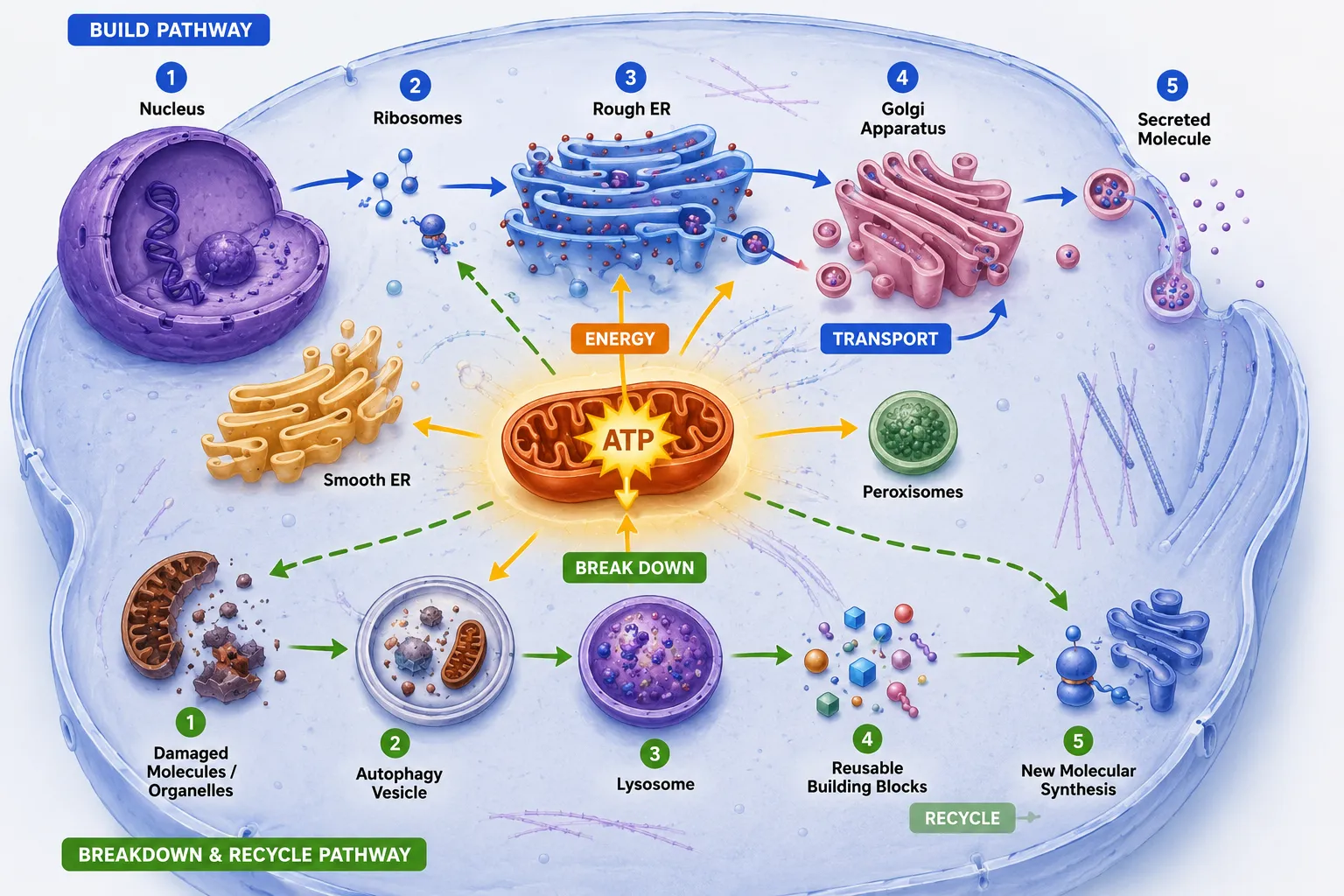
Key Concepts in Organelle Interaction and Molecular Metabolism
Several concepts are central to understanding the relationship between cellular organelles and metabolism.
Organelle: a specialised structure within a cell that performs particular biological functions.
Compartmentalisation: the separation of cellular processes into specialised regions.
Anabolism: the synthesis of complex molecules from simpler components.
Catabolism: the breakdown of complex molecules into simpler components.
Biosynthesis: the production of biological molecules through enzyme-controlled reactions.
Intracellular transport: movement of molecules and materials within the cell.
Vesicular transport: movement of molecules enclosed within membrane-bound vesicles.
Protein trafficking: the controlled movement of proteins to their correct cellular locations.
Autophagy: a cellular process that delivers damaged or unnecessary components for degradation and recycling.
Metabolic integration: coordination of multiple pathways and organelles to maintain cellular function.
Homeostasis: maintenance of a stable internal cellular environment.
These concepts emphasise that the cell is not simply a collection of independent structures. It functions as an integrated metabolic network.
Table: Major Cellular Organelles and Their Roles in the Synthesis and Breakdown of Biological Molecules
| Organelle or Cellular Structure | Definition | Primary Role in Synthesis | Primary Role in Breakdown or Recycling |
|---|---|---|---|
| Nucleus | Membrane-bound compartment containing genetic material | Regulates gene expression for enzyme and protein production | Controls genes involved in catabolic and recycling pathways |
| Ribosomes | Molecular structures responsible for protein synthesis | Assemble amino acids into proteins | Produce enzymes required for molecular degradation |
| Rough endoplasmic reticulum | Membrane network containing ribosomes | Synthesises and processes many proteins | Supports quality control and removal of improperly processed proteins |
| Smooth endoplasmic reticulum | Membrane network without ribosomes | Supports lipid synthesis and specialised metabolism | Participates in detoxification and lipid-related metabolic processing |
| Golgi apparatus | Organelle that modifies, sorts and packages molecules | Processes and distributes proteins and lipids | Directs enzymes and materials to lysosomal pathways |
| Mitochondria | Energy-producing organelles with specialised membranes | Provides ATP for biosynthesis and produces metabolic intermediates | Oxidises nutrient-derived molecules to release usable energy |
| Lysosomes | Enzyme-containing organelles for intracellular digestion | Recycles molecular components for future synthesis | Break down proteins, lipids and damaged cellular structures |
| Peroxisomes | Organelles containing oxidative enzymes | Contribute to specialised lipid synthesis | Oxidise specific fatty acids and metabolic compounds |
| Plasma membrane | Selectively permeable boundary of the cell | Regulates uptake of nutrients used for biosynthesis | Supports export of waste and uptake of materials for processing |
| Cytoskeleton | Protein network supporting cellular organisation | Enables intracellular transport of biosynthetic products | Supports movement of vesicles carrying materials for degradation |
Cellular Compartmentalisation: The Foundation of Organised Metabolism
Cellular compartmentalisation allows complex biochemical processes to occur simultaneously without unnecessary interference. Different organelles maintain different chemical environments, concentrations of enzymes and specific transport mechanisms.
For example:
Protein synthesis occurs through ribosomes and the endoplasmic reticulum.
Lipid synthesis involves specialised enzymes associated with the smooth endoplasmic reticulum.
Aerobic energy metabolism is concentrated within mitochondria.
Intracellular digestion occurs primarily within lysosomes.
Specific oxidative reactions occur within peroxisomes.
This organisation improves metabolic efficiency, but it also requires constant coordination.
A molecule produced in one compartment may require further modification in another. Similarly, a damaged cellular component may need to be transported across several stages before it can be broken down and recycled.
The Nucleus: Coordinating the Molecular Blueprint for Cellular Metabolism
The nucleus acts as a major regulatory centre because it contains the genetic information required to direct the synthesis of proteins, enzymes and regulatory molecules.
The nucleus influences molecular metabolism by controlling:
Transcription of genes.
Production of messenger RNA.
Expression of metabolic enzymes.
Production of transport proteins.
Regulation of anabolic pathways.
Regulation of catabolic pathways.
Cellular responses to nutrient availability.
The nucleus does not directly synthesise most proteins. Instead, it provides the genetic instructions that are translated by ribosomes.
Dynamic Regulation of Gene Expression
Gene expression changes according to cellular requirements.
For example, changes in:
Nutrient availability.
Hormonal signals.
Energy status.
Cellular stress.
Developmental requirements.
may influence which genes become more or less active.
This enables cells to adapt their metabolic capacity over time.
Ribosomes: The Molecular Machinery of Protein Synthesis
Ribosomes convert genetic information into proteins through the process of translation.
Proteins produced by ribosomes include:
Metabolic enzymes.
Structural proteins.
Membrane transporters.
Receptors.
Signalling proteins.
Digestive enzymes.
Regulatory molecules.
The relationship between ribosomes and other organelles is critical because proteins often require processing, transport or modification after synthesis.
Free and Bound Ribosomes
Ribosomes can be found:
Free within the cytosol.
Attached to the rough endoplasmic reticulum.
This location influences the destination of newly synthesised proteins.
Free ribosomes commonly produce proteins that function within the cytosol or are transported to particular intracellular locations. Ribosomes associated with the rough endoplasmic reticulum contribute to the production of proteins that enter the secretory pathway or become associated with cellular membranes.
The Rough Endoplasmic Reticulum: Protein Synthesis and Quality Control
The rough endoplasmic reticulum is closely associated with protein synthesis because it contains membrane-bound ribosomes.
Following synthesis, proteins may enter the internal space of the endoplasmic reticulum, where they undergo:
Folding.
Initial modification.
Assembly with other protein components.
Quality control.
Preparation for transport.
Correct protein folding is essential because protein structure strongly influences biological function.
Protein Quality Control
Cells must identify proteins that are incorrectly folded or damaged.
Quality-control processes can:
Retain improperly folded proteins.
Attempt to support correct folding.
Target persistently defective proteins for degradation.
This illustrates the close relationship between synthesis and breakdown. Cells do not simply produce molecules; they continuously evaluate their quality.
The Smooth Endoplasmic Reticulum: Lipid Synthesis and Metabolic Processing
The smooth endoplasmic reticulum is an important site for lipid-related metabolic activity.
It contributes to:
Phospholipid synthesis.
Cholesterol-related metabolism.
Production of specialised lipid molecules.
Membrane formation.
Detoxification processes.
Calcium storage in specialised cells.
Lipids synthesised through endoplasmic reticulum-associated pathways may later be transported to other organelles or incorporated into cellular membranes.
Dynamic Interaction With Other Organelles
The smooth endoplasmic reticulum interacts metabolically with:
The Golgi apparatus for lipid processing and transport.
Mitochondria for specialised lipid metabolism.
Peroxisomes for selected oxidative pathways.
The plasma membrane for membrane renewal.
These interactions demonstrate that lipid metabolism is distributed across several cellular compartments.
The Golgi Apparatus: Processing, Sorting and Molecular Distribution
The Golgi apparatus receives proteins and lipids from the endoplasmic reticulum and performs further processing.
Its functions include:
Modification of proteins.
Modification of lipids.
Sorting molecules.
Packaging materials into vesicles.
Directing molecules to specific destinations.
Supporting secretion.
The Golgi apparatus acts as an important distribution centre.
A molecule may be directed towards:
The plasma membrane.
A secretory vesicle.
Another intracellular compartment.
A lysosome.
The Importance of Correct Molecular Targeting
A protein may be produced correctly but still fail to perform its function if it is delivered to the wrong cellular location.
Therefore, effective metabolism depends on:
Accurate molecular identification.
Appropriate packaging.
Correct transport.
Delivery to the required destination.
This demonstrates why organelle communication is essential for functional metabolism.
Mitochondria: Energy Production and Metabolic Integration
Mitochondria provide a substantial proportion of the ATP required to support energy-demanding cellular processes.
ATP produced through mitochondrial metabolism supports:
Protein synthesis.
Lipid synthesis.
Active transport.
Molecular repair.
Cellular movement.
Maintenance of ion gradients.
Mitochondria therefore provide energy that enables other organelles to perform anabolic functions.
Mitochondria in Molecular Breakdown
Mitochondria are also major sites of catabolic metabolism.
They participate in the processing of:
Carbohydrate-derived intermediates.
Fatty acid-derived molecules.
Selected amino acid intermediates.
The products of these reactions contribute to the generation of ATP.
The Relationship Between Mitochondria and the Endoplasmic Reticulum
Mitochondria and the endoplasmic reticulum maintain close functional relationships.
Their interactions can support:
Lipid exchange.
Calcium signalling.
Energy regulation.
Cellular stress responses.
The physical and functional proximity of these structures demonstrates that organelles may form coordinated networks rather than remaining completely separate.
Critical Significance
The interaction between the endoplasmic reticulum and mitochondria helps coordinate energy availability with biosynthetic activity.
For example:
The endoplasmic reticulum requires energy for protein and lipid synthesis.
Mitochondria contribute ATP.
Changes in calcium signalling can influence mitochondrial metabolism.
Cellular stress affecting protein processing can alter mitochondrial activity.
Therefore, disruption in one organelle may have consequences for another.
Lysosomes: The Central Organelles of Intracellular Breakdown and Recycling
Lysosomes contain specialised enzymes that break down biological molecules.
They participate in the degradation of:
Proteins.
Lipids.
Carbohydrates.
Nucleic acid components.
Damaged organelles.
Unnecessary cellular materials.
The resulting smaller molecules can often be released and reused by the cell.
Lysosomal Recycling
Lysosomal activity supports metabolic efficiency by recovering:
Amino acids.
Fatty acid components.
Simple sugars.
Other reusable molecular materials.
These components may then re-enter biosynthetic pathways.
This demonstrates a fundamental principle of cellular economy: breakdown products can become substrates for future synthesis.
Autophagy: Connecting Organelle Breakdown With Cellular Renewal
Autophagy is a highly regulated process through which cells identify, isolate and transport damaged or unnecessary components for degradation.
The general process can involve:
Recognition of damaged or unnecessary material.
Enclosure of the material within a specialised membrane structure.
Transport towards lysosomal systems.
Fusion with degradative compartments.
Enzymatic breakdown.
Release and recycling of useful molecular components.
Autophagy is important during:
Nutrient limitation.
Cellular stress.
Removal of damaged organelles.
Normal cellular maintenance.
Critical Role in Metabolism
During nutrient scarcity, recycling processes can provide internal sources of molecular building blocks.
For example:
Proteins can provide amino acids.
Lipid-containing structures can provide lipid components.
Damaged organelles can be removed and their materials recycled.
Autophagy therefore connects catabolism directly with future anabolic activity.
Peroxisomes: Specialised Oxidation and Lipid Metabolism
Peroxisomes contain enzymes involved in specialised oxidative processes.
They contribute to:
Breakdown of specific fatty acids.
Oxidation of selected metabolic compounds.
Management of reactive metabolic products.
Specialised lipid metabolism.
Peroxisomal metabolism complements mitochondrial metabolism.
Interaction Between Peroxisomes and Mitochondria
Certain metabolic substrates may be processed through multiple stages involving both organelles.
Conceptually:
Complex lipid substrate
↓
Initial specialised processing
↓
Intermediate products
↓
Further mitochondrial metabolism
↓
Energy production
This demonstrates that metabolic pathways may cross organelle boundaries.
The Plasma Membrane: Controlling Molecular Entry and Exit
The plasma membrane regulates the movement of molecules between the cell and its environment.
It controls:
Nutrient uptake.
Ion movement.
Waste removal.
Receptor-mediated signalling.
Endocytosis.
Exocytosis.
The plasma membrane therefore provides the starting point for many metabolic processes.
Nutrient Uptake and Biosynthesis
Cells require external materials for molecular synthesis.
Examples include:
Amino acids for protein synthesis.
Glucose for energy and biosynthetic pathways.
Fatty acids for lipid metabolism.
Minerals and cofactors for enzyme activity.
Transport mechanisms determine whether these materials become available to intracellular organelles.
Endocytosis and the Internalisation of Biological Molecules
Endocytosis allows cells to internalise selected materials from the extracellular environment.
The general process may include:
Recognition of an extracellular molecule.
Membrane invagination.
Formation of an internal vesicle.
Transport through intracellular compartments.
Processing or delivery to lysosomal systems.
This provides a direct connection between the plasma membrane, vesicular systems and lysosomes.
Vesicular Transport: Connecting Cellular Compartments
Vesicles are membrane-bound structures that transport molecules between organelles.
They are essential for communication between:
Endoplasmic reticulum and Golgi apparatus.
Golgi apparatus and plasma membrane.
Golgi apparatus and lysosomes.
Plasma membrane and internal degradative systems.
Vesicular transport involves:
Formation of transport vesicles.
Molecular selection.
Movement through the cytoplasm.
Recognition of the target compartment.
Membrane fusion.
Delivery of molecular contents.
This system ensures that molecules are delivered accurately.
The Cytoskeleton: The Intracellular Transport Network
The cytoskeleton provides structural organisation and supports the movement of organelles and vesicles.
It contributes to:
Maintenance of cell shape.
Positioning of organelles.
Vesicle transport.
Cellular movement.
Cell division.
Motor proteins interact with cytoskeletal structures to move molecular cargo to appropriate destinations.
Practical Example
A protein may follow the sequence:
Nucleus
↓ genetic instruction
Ribosome
↓ protein synthesis
Rough endoplasmic reticulum
↓ folding and processing
Transport vesicle
↓
Golgi apparatus
↓ modification and sorting
Secretory or target vesicle
↓
Plasma membrane or specialised organelle
This pathway demonstrates the coordinated interaction of several cellular structures.
Carbohydrate Metabolism Across Cellular Compartments
Carbohydrate metabolism illustrates the importance of organelle interaction.
Glucose metabolism involves several locations.
Cytosolic Stage
Glycolysis occurs primarily in the cytosol.
The process:
Breaks down glucose.
Produces pyruvate.
Generates a limited amount of ATP.
Produces electron carriers.
Mitochondrial Stage
Under aerobic conditions, metabolic intermediates may enter mitochondria.
Further processes contribute to:
Oxidative metabolism.
Production of electron carriers.
ATP generation.
Storage and Mobilisation
Other cellular systems regulate:
Glycogen synthesis.
Glycogen breakdown.
Transport of glucose.
Hormonal responses.
Therefore, carbohydrate metabolism is a coordinated cellular network.
Lipid Synthesis and Breakdown: A Multi-Organelle Process
Lipid metabolism provides an especially clear example of organelle cooperation.
Lipid-related processes can involve:
Cytosolic enzymes.
Smooth endoplasmic reticulum.
Mitochondria.
Peroxisomes.
Lipid storage structures.
Plasma membrane transport systems.
During Energy Abundance
Cells may prioritise:
Lipid synthesis.
Triglyceride formation.
Energy storage.
Membrane lipid production.
During Energy Demand
Cells may shift towards:
Mobilisation of stored fatty acids.
Transport of fatty acids.
Oxidative processing.
ATP production.
This demonstrates how anabolic and catabolic priorities change dynamically.
Protein Synthesis, Turnover and Degradation
Protein metabolism is not limited to synthesis.
Cells continuously balance:
Protein synthesis
with
Protein degradation
Protein turnover is necessary because proteins may:
Become damaged.
Lose functional activity.
Become unnecessary.
Require replacement.
The process involves interaction between:
Nucleus.
Ribosomes.
Endoplasmic reticulum.
Cytosol.
Lysosomes and other degradative systems.
Why Protein Breakdown Is Necessary
Protein degradation provides several benefits:
Removes damaged proteins.
Prevents accumulation of dysfunctional molecules.
Recycles amino acids.
Allows rapid adaptation to changing metabolic conditions.
Supports cellular quality control.
Nucleic Acid Components and Cellular Recycling
Cells also synthesise and recycle components required for nucleic acids.
The nucleus plays a central role in DNA and RNA organisation, while the cytoplasm and other cellular systems contribute to nucleotide metabolism and molecular processing.
The synthesis and breakdown of nucleic acid components require:
Energy.
Enzymes.
Molecular transport.
Regulation of precursor availability.
This further illustrates the interconnected nature of cellular metabolism.
Dynamic Interaction During Nutrient Abundance
When nutrients are abundant, cellular metabolism may favour anabolic activity.
The coordinated response may involve:
Increased nutrient uptake through the plasma membrane.
Increased ATP production.
Increased protein synthesis by ribosomes.
Increased processing within the endoplasmic reticulum.
Increased lipid synthesis.
Increased Golgi-mediated distribution.
Replenishment of cellular structures.
The exact response varies according to cell type and physiological requirements.
Dynamic Interaction During Nutrient Limitation
During nutrient limitation, cellular priorities may change.
Possible responses include:
Reduced energy-intensive biosynthesis.
Increased mobilisation of stored substrates.
Greater reliance on catabolic pathways.
Increased recycling of damaged components.
Activation of autophagy.
Increased utilisation of available metabolic intermediates.
This illustrates that organelle interaction is dynamic rather than fixed.
Practical Example: Synthesis and Secretion of a Protein
The synthesis of a protein destined for secretion demonstrates extensive organelle cooperation.
The process may involve:
Activation of the relevant gene within the nucleus.
Production of messenger RNA.
Transport of messenger RNA to ribosomes.
Protein synthesis on rough endoplasmic reticulum-associated ribosomes.
Protein folding and initial processing.
Transport to the Golgi apparatus.
Further modification and sorting.
Packaging into a vesicle.
Cytoskeletal transport.
Fusion with the plasma membrane.
Release from the cell.
This example demonstrates that successful synthesis depends on multiple organelles functioning in sequence.
Practical Example: Breakdown and Recycling of a Damaged Organelle
The breakdown of a damaged cellular structure may involve:
Detection of cellular damage.
Identification of the component for removal.
Enclosure within a specialised membrane structure.
Transport towards a lysosome.
Fusion with the lysosomal compartment.
Enzymatic degradation.
Release of reusable molecular components.
Re-entry of these components into metabolic pathways.
This process demonstrates the direct connection between cellular breakdown and future synthesis.
Key Benefits of Dynamic Organelle Interaction
The coordinated interaction between organelles provides several important benefits.
It enables cells to:
Maintain efficient metabolic organisation.
Separate incompatible biochemical reactions.
Produce ATP efficiently.
Synthesise complex biological molecules.
Transport molecules accurately.
Remove damaged cellular components.
Recycle valuable molecular materials.
Adapt to nutrient availability.
Respond to metabolic stress.
Maintain cellular homeostasis.
Critical Evaluation: Organelles Are Interdependent
A critical perspective recognises that organelles cannot be understood completely in isolation.
For example:
The nucleus provides instructions for proteins needed by mitochondria.
Ribosomes synthesise mitochondrial and lysosomal proteins.
The endoplasmic reticulum supplies proteins and lipids for cellular membranes.
The Golgi apparatus directs enzymes to lysosomes.
Mitochondria provide energy for biosynthesis and transport.
Lysosomes recycle materials that can support future synthesis.
Peroxisomes complement mitochondrial metabolic processes.
The cytoskeleton enables efficient intracellular movement.
This interdependence means that dysfunction in one organelle may influence the wider cellular network.
Organellar Communication and Cellular Homeostasis
Cellular homeostasis depends on continuous communication between organelles.
Communication may involve:
Direct physical contact.
Transport of metabolites.
Vesicular movement.
Calcium signalling.
Energy status signals.
Protein trafficking.
Changes in gene expression.
These mechanisms allow the cell to coordinate metabolic priorities.
Critical Considerations When Analysing Organelle Interaction
When analysing organelle cooperation, several questions should be considered.
What Molecule Is Being Processed?
Determine whether the process involves:
Carbohydrates.
Lipids.
Proteins.
Nucleic acid components.
Which Organelles Are Directly Involved?
Identify:
The site of synthesis.
The site of modification.
The transport pathway.
The site of breakdown.
The location of recycling.
What Energy Is Required?
Consider:
ATP requirements.
Mitochondrial contribution.
Energy-consuming transport processes.
How Is the Process Regulated?
Evaluate:
Hormonal signals.
Cellular energy status.
Gene expression.
Nutrient availability.
Stress responses.
An Integrated Model of Cellular Molecular Metabolism
The synthesis and breakdown of biological molecules can be represented conceptually as an integrated cycle:
Nucleus
↓ genetic regulation
Ribosomes
↓ protein synthesis
Endoplasmic Reticulum
↓ processing and molecular synthesis
Golgi Apparatus
↓ modification and distribution
Target Cellular Location
↓ utilisation
Damaged or Unnecessary Molecules
↓ recognition
Autophagic and Vesicular Systems
↓
Lysosomes
↓ breakdown
Reusable Molecular Components
↓
Cytosolic and Biosynthetic Pathways
↓
New Biological Molecules
Mitochondria provide ATP and metabolic intermediates throughout this process, while peroxisomes contribute specialised oxidative functions and the cytoskeleton supports intracellular transport.
Summary
The synthesis and breakdown of biological molecules depend on dynamic interaction between multiple cellular organelles. The nucleus regulates the genetic instructions required for metabolic proteins, ribosomes synthesise proteins and the endoplasmic reticulum supports protein and lipid processing. The Golgi apparatus modifies and distributes molecules, while the cytoskeleton and vesicular systems provide essential transport pathways.
Mitochondria support both catabolic metabolism and ATP production, supplying energy for biosynthesis, transport and cellular maintenance. Lysosomes play a central role in molecular breakdown and recycling, while autophagy connects the removal of damaged cellular components with the recovery of useful molecular building blocks. Peroxisomes complement other organelles through specialised oxidative and lipid-related metabolic functions.
The key principle is that cellular organelles are specialised but deeply interdependent. Anabolic and catabolic processes are continuously coordinated according to nutrient availability, energy demand and cellular condition. During nutrient abundance, cells may prioritise synthesis and storage, whereas nutrient limitation can increase mobilisation, degradation and recycling.
For advanced nutritional biochemistry, understanding this dynamic organelle network provides an essential framework for analysing how cells construct biological molecules, obtain energy from their breakdown, recycle valuable materials and maintain metabolic homeostasis.
6.Assess Clinical or Scientific Data to Effectively Differentiate Between Normal and Abnormal Cellular Metabolic Functions
The assessment of clinical and scientific data is fundamental to understanding cellular metabolism and identifying variations that may indicate altered physiological or pathological processes. Cellular metabolic function involves a complex network of biochemical reactions responsible for energy production, nutrient utilisation, molecular synthesis, waste removal and cellular maintenance. Under normal physiological conditions, these processes are tightly regulated to maintain homeostasis. However, changes in enzyme activity, nutrient availability, hormone signalling, mitochondrial function or cellular structure can alter metabolic behaviour.
The ability to differentiate between normal and abnormal cellular metabolic function requires more than identifying whether a laboratory value falls inside or outside a reference interval. Clinical and scientific data must be interpreted within an appropriate biological context. Factors such as age, nutritional status, physical activity, medication use, sample collection conditions and analytical methodology may influence measured results.
At an advanced level, Learners must develop the ability to assess multiple forms of evidence, recognise patterns, identify potential sources of variation and critically evaluate whether observed metabolic changes represent normal physiological adaptation or potentially abnormal cellular function. This process involves integrating biochemical measurements with an understanding of molecular pathways, tissue-specific metabolism and whole-body physiology.
It is also important to recognise the limits of interpretation. Laboratory and scientific findings can support investigation and understanding, but an isolated biochemical result should not automatically be treated as a definitive diagnosis. Clinical interpretation requires appropriate professional judgement and, where relevant, correlation with validated clinical assessment and other evidence.
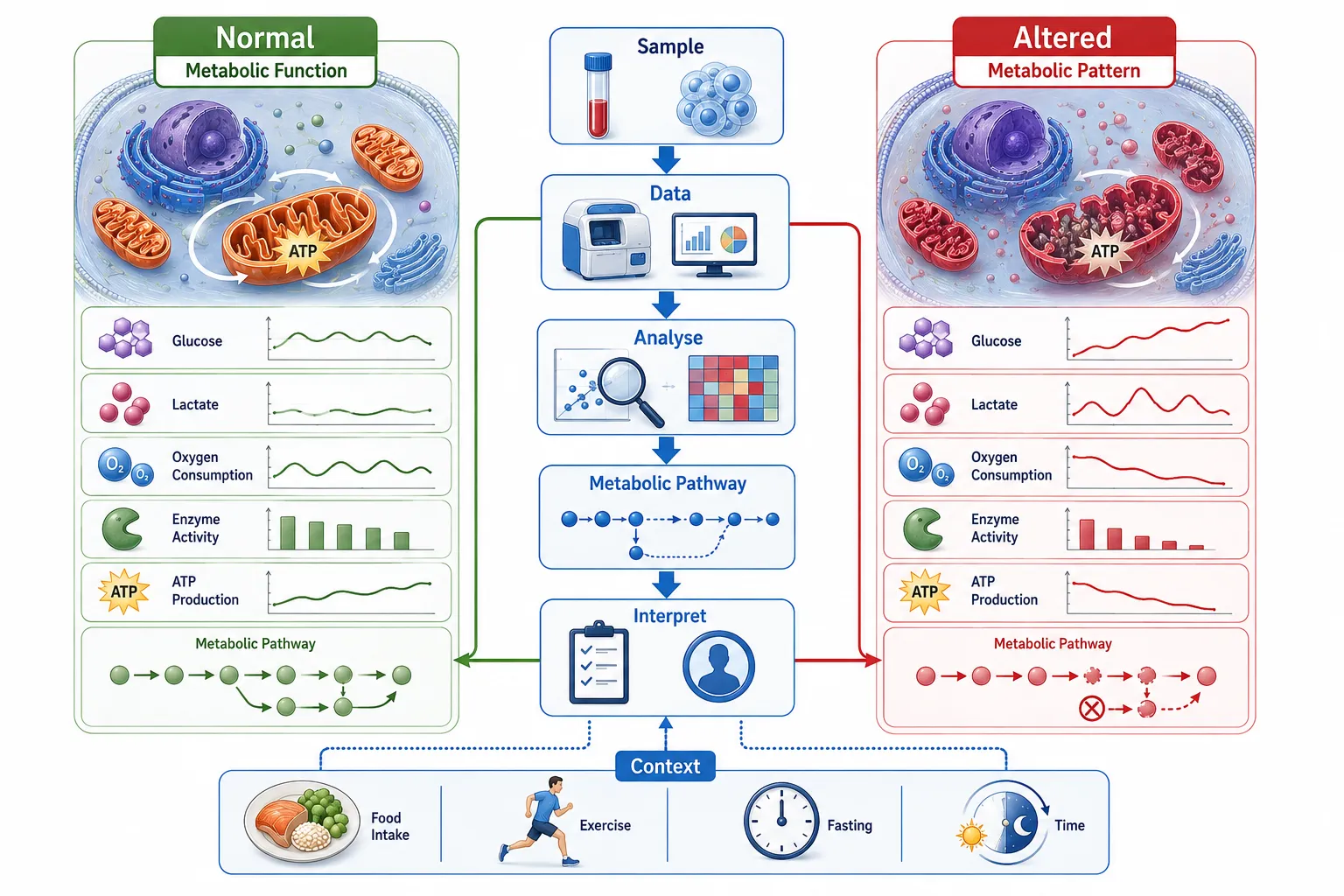
Understanding Normal and Abnormal Cellular Metabolism
Normal cellular metabolism refers to the coordinated biochemical activity through which cells produce energy, synthesise essential molecules, respond to environmental changes and maintain internal stability.
Normal metabolic function generally involves:
Appropriate production and utilisation of ATP.
Controlled nutrient uptake.
Effective enzyme activity.
Balanced anabolic and catabolic processes.
Functional mitochondrial activity.
Appropriate responses to hormonal signals.
Effective removal or recycling of metabolic products.
Maintenance of cellular redox balance.
Abnormal cellular metabolism occurs when one or more components of these systems become altered beyond expected physiological adaptation.
Potential causes include:
Genetic variation affecting metabolic enzymes.
Nutrient deficiency or excess.
Altered hormonal regulation.
Mitochondrial dysfunction.
Reduced oxygen availability.
Cellular injury.
Toxic exposure.
Inflammation and physiological stress.
Changes in organ function.
The distinction between normal adaptation and abnormal function is therefore essential.
Table: Key Clinical and Scientific Indicators Used to Assess Cellular Metabolic Function
| Indicator | Definition | Potential Information About Normal Function | Possible Significance of an Abnormal Pattern |
|---|---|---|---|
| Blood glucose | Concentration of circulating glucose | Indicates availability and regulation of a major metabolic substrate | May indicate altered glucose regulation when interpreted with relevant evidence |
| Lactate | Product associated with specific metabolic conditions | Can change temporarily during increased metabolic demand | Persistent or unexpected elevation may require investigation in context |
| ATP-related measurements | Indicators used in experimental metabolic research | Reflect aspects of cellular energy availability | Alterations may suggest changes in energy production or utilisation |
| Oxygen consumption | Measurement of cellular or tissue oxygen use | Provides information about oxidative metabolism | Altered patterns may indicate changes in mitochondrial or tissue metabolic activity |
| Carbon dioxide production | Product of oxidative metabolism | Reflects aspects of substrate oxidation | Variation may indicate altered metabolic activity or fuel utilisation |
| Lipid profile markers | Measurements related to circulating lipids | Provide information about lipid transport and metabolism | Unusual patterns may indicate altered lipid handling |
| Enzyme activity | Measurement of enzyme-mediated biochemical activity | Indicates functioning of specific metabolic pathways | Altered activity may suggest pathway disruption or cellular injury |
| Ketone-related measurements | Indicators of altered fuel utilisation | May rise during normal metabolic adaptation to reduced carbohydrate availability | Unexpected patterns require interpretation within nutritional and clinical context |
| Amino acid patterns | Concentrations of amino acids or metabolites | Reflect protein metabolism and nutrient utilisation | Abnormal profiles may indicate altered metabolic processing |
| Redox-related markers | Indicators associated with oxidation and reduction balance | Support assessment of cellular oxidative processes | Marked imbalance may suggest metabolic or oxidative stress |
The Importance of Reference Intervals and Biological Context
Clinical measurements are often compared with reference intervals. These intervals provide a framework for determining whether a result is broadly consistent with values observed in a defined reference population.
However, reference intervals have limitations.
A value within a reference interval does not always guarantee optimal or unchanged cellular function, and a value outside an interval does not automatically confirm disease.
Interpretation should consider:
The individual’s baseline characteristics.
The reason for testing.
Recent food intake.
Fasting status.
Physical activity.
Time of sample collection.
Analytical variation.
Biological variation.
Changes over time.
Other related measurements.
Critical Principle
A single measurement provides a snapshot, whereas metabolism is dynamic.
For this reason, trends and patterns can sometimes provide more useful information than an isolated value.
Types of Data Used to Assess Cellular Metabolism
Assessment of cellular metabolic function may involve several forms of evidence.
Clinical Biochemistry Data
This may include measurements associated with:
Glucose metabolism.
Lipid metabolism.
Protein metabolism.
Acid-base balance.
Electrolyte regulation.
Enzyme activity.
Molecular and Genetic Data
Scientific assessment may investigate:
Gene expression.
Enzyme-related genetic variation.
Protein expression.
Molecular signalling pathways.
Cellular and Experimental Data
Research studies may assess:
ATP production.
Mitochondrial respiration.
Oxygen consumption.
Substrate utilisation.
Enzyme kinetics.
Cellular growth.
Imaging and Functional Studies
In specialised settings, scientific and clinical investigation may also examine:
Tissue metabolic activity.
Organ structure.
Cellular or mitochondrial characteristics.
The most reliable interpretation often involves combining different forms of evidence.
Establishing a Baseline for Normal Metabolic Function
Before abnormality can be identified, it is necessary to understand the characteristics of normal metabolism.
Normal cellular metabolism involves continuous adjustment.
For example:
Energy production increases during physical activity.
Glucose utilisation changes after eating.
Fat oxidation may increase during prolonged periods without food.
Protein synthesis can increase during growth and repair.
Metabolic rate may change during environmental adaptation.
These changes may be physiologically normal.
Therefore, abnormality should not be defined simply as change. Instead, the change must be assessed in relation to its context, magnitude, duration and physiological consequences.
Assessing Glucose Metabolism
Glucose is a major metabolic substrate, and its regulation provides valuable information about cellular and whole-body metabolism.
Assessment may consider:
Circulating glucose concentration.
Changes after nutrient intake.
Markers of longer-term glucose exposure.
Hormonal indicators associated with glucose regulation.
Tissue responsiveness to metabolic signals.
Normal Physiological Response
Following carbohydrate consumption:
Glucose is digested and absorbed.
Circulating glucose availability increases.
Metabolic signalling pathways respond.
Appropriate tissues increase glucose uptake.
Glucose is used for ATP production or storage.
Concentrations gradually adjust towards the individual’s normal physiological range.
This represents a dynamic metabolic response rather than a static condition.
Abnormal Patterns
Potentially abnormal patterns may involve:
Persistently altered glucose regulation.
Inappropriate responses to nutrient intake.
Altered cellular responsiveness to regulatory signals.
Disruption of glucose uptake or utilisation.
However, meaningful interpretation requires multiple data points and appropriate clinical context.
Assessing Lactate and Cellular Energy Metabolism
Lactate is an important metabolite that can provide information about cellular metabolic conditions.
Its concentration may increase temporarily during situations involving:
Intense physical activity.
Increased glycolytic activity.
Changes in oxygen availability.
Altered metabolic demand.
An elevated measurement is therefore not automatically evidence of abnormal cellular metabolism.
Critical Interpretation
A meaningful assessment should consider:
The timing of sample collection.
Recent exercise.
Tissue oxygen delivery.
Overall physiological condition.
Associated biochemical findings.
Whether the change is temporary or persistent.
This demonstrates the importance of distinguishing normal adaptation from potentially abnormal metabolic disturbance.
Mitochondrial Function and Scientific Assessment
Mitochondria play a central role in oxidative energy metabolism. Scientific assessment of mitochondrial function may examine the capacity of cells to use oxygen and produce energy.
Common areas of investigation include:
Oxygen consumption.
Electron transport activity.
ATP generation.
Mitochondrial membrane function.
Production of metabolic intermediates.
Normal Mitochondrial Adaptation
Mitochondrial activity can increase when ATP demand rises.
For example, during sustained physical activity:
ATP consumption increases.
Oxygen utilisation rises.
Electron transport activity increases.
Oxidative metabolism supports continued energy production.
This is a normal adaptive response.
Potentially Abnormal Patterns
Scientific evidence may suggest altered mitochondrial function when there is:
Unexpected reduction in oxidative capacity.
Inadequate ATP production relative to cellular demand.
Persistent disruption of electron transfer processes.
Unusual accumulation of metabolic intermediates.
Such findings require careful investigation because multiple factors may influence mitochondrial measurements.
Enzyme Activity as a Marker of Metabolic Function
Enzymes control the rate of metabolic reactions.
Assessment of enzyme activity can provide information about:
Metabolic pathway function.
Cellular injury.
Nutrient-related processes.
Organ-specific metabolic activity.
Changes in enzyme activity may result from:
Altered gene expression.
Nutrient availability.
Cofactor deficiency.
Cellular stress.
Tissue injury.
Inherited enzyme variation.
Understanding Enzyme Data
A measured change in enzyme activity should be interpreted alongside:
The specific enzyme.
Its normal tissue distribution.
The analytical method used.
Other biochemical markers.
The individual’s physiological state.
This prevents oversimplified conclusions.
Lipid Metabolism and Scientific Data Interpretation
Lipids perform multiple biological functions, including:
Long-term energy storage.
Membrane formation.
Signalling.
Hormone-related functions.
Assessment of lipid metabolism may involve measuring circulating markers associated with lipid transport and utilisation.
Normal Variation in Lipid Metabolism
Lipid metabolism can change according to:
Recent food intake.
Physical activity.
Energy balance.
Hormonal signalling.
Nutritional composition.
During prolonged energy demand, cells may increase the mobilisation and oxidation of fatty acids.
Potentially Abnormal Patterns
Abnormal lipid handling may involve:
Altered transport of lipids.
Excessive accumulation of metabolic intermediates.
Reduced ability to utilise specific lipid substrates.
Persistent changes in storage and mobilisation patterns.
Again, interpretation requires consideration of the complete metabolic profile.
Assessing Protein and Amino Acid Metabolism
Protein metabolism involves continuous synthesis and breakdown.
The balance between these processes is influenced by:
Dietary protein availability.
Energy intake.
Physical activity.
Growth and repair.
Hormonal signals.
Physiological stress.
Scientific assessment may examine:
Amino acid concentrations.
Nitrogen-related metabolites.
Protein turnover.
Enzyme activity.
Normal Protein Turnover
Healthy cells continuously:
Synthesise new proteins.
Repair damaged proteins.
Break down unnecessary proteins.
Recycle amino acids.
This turnover is essential for metabolic adaptation.
Potentially Abnormal Changes
Altered patterns may include:
Unexpected accumulation of metabolic products.
Changes in amino acid utilisation.
Impaired enzyme activity.
Excessive cellular breakdown.
These findings should be interpreted as part of a broader scientific or clinical assessment.
Assessing Acid-Base Balance and Cellular Metabolism
Cellular metabolism produces substances that can influence acid-base status.
Changes in:
Carbon dioxide production.
Organic acid formation.
Renal regulation.
Respiratory function.
can influence physiological acid-base balance.
Abnormal acid-base patterns may provide important evidence about changes in metabolism, but they must be assessed alongside respiratory and other physiological factors.
Key Assessment Considerations
When interpreting acid-base-related data, consider:
pH.
Carbon dioxide-related measurements.
Bicarbonate-related measurements.
Lactate and other metabolic indicators.
Clinical and physiological context.
These measurements can provide complementary evidence regarding metabolic function.
The Role of Metabolic Pathway Mapping
Pathway mapping is a valuable scientific approach for identifying where metabolic disruption may occur.
A simplified procedure includes:
Identify the abnormal metabolite.
Determine where it is normally produced.
Identify the enzyme responsible for its next metabolic step.
Examine related upstream and downstream metabolites.
Consider whether the pathway connects with other systems.
Evaluate possible regulatory influences.
Compare findings with normal physiological patterns.
This method allows Learners to move from an isolated measurement towards a pathway-based interpretation.
Example of Metabolic Pattern Analysis
Consider a scientific observation in which:
A metabolic substrate is elevated.
A downstream product is reduced.
Enzyme activity associated with the conversion is lower than expected.
A pathway-based interpretation may suggest:
The substrate is being produced or supplied.
Its conversion to the next product may be reduced.
Enzyme activity may be a relevant factor.
Additional data are required to identify the underlying reason.
This approach is more scientifically robust than simply stating that the elevated substrate is abnormal.
Differentiating Physiological Adaptation From Abnormal Function
One of the most important analytical skills is distinguishing normal metabolic adaptation from dysfunction.
Characteristics of Normal Adaptation
Normal adaptation often has the following features:
A clear physiological trigger.
Predictable metabolic direction.
Temporary or regulated change.
Appropriate return towards baseline.
No evidence of significant cellular injury.
Examples include:
Increased oxygen consumption during exercise.
Increased glucose utilisation after eating.
Increased lipid utilisation during prolonged fasting.
Temporary changes in lactate following intense activity.
Characteristics That May Suggest Abnormal Function
Potentially abnormal patterns may include:
Changes without an appropriate physiological explanation.
Persistent deviation from expected patterns.
Progressive worsening over time.
Evidence of impaired cellular energy production.
Accumulation of potentially harmful metabolic products.
Inconsistent responses to normal regulatory signals.
These features should prompt further investigation rather than automatic conclusions.
Data Quality: A Critical Requirement for Accurate Assessment
The quality of scientific and clinical data strongly affects interpretation.
Potential sources of error include:
Incorrect sample collection.
Delayed sample processing.
Inappropriate storage conditions.
Analytical variation.
Instrument calibration issues.
Biological variation.
Incomplete participant information.
A high-quality assessment should therefore begin with the question:
Is the data reliable enough to interpret?
Step-by-Step Procedure for Assessing Metabolic Data
A systematic approach improves analytical accuracy.
Step 1: Define the Metabolic Question
Identify what is being investigated.
Examples include:
Energy production.
Glucose utilisation.
Lipid metabolism.
Mitochondrial activity.
Enzyme function.
Step 2: Review Data Quality
Check:
Sample conditions.
Measurement method.
Timing.
Potential confounding factors.
Analytical reliability.
Step 3: Establish the Physiological Context
Consider:
Nutritional status.
Recent physical activity.
Fasting or feeding state.
Age and body composition.
Current physiological stress.
Step 4: Compare With Appropriate Reference Information
Use:
Validated reference intervals.
Baseline values where available.
Published scientific standards.
Relevant control groups.
Step 5: Identify Patterns
Look for:
Consistent increases.
Consistent decreases.
Changes in related metabolites.
Time-dependent trends.
Differences between tissues or experimental groups.
Step 6: Map the Findings to a Metabolic Pathway
Determine:
Where the affected molecules are produced.
Where they are used.
Which enzymes are involved.
Which organelles participate.
What regulatory signals may influence the pathway.
Step 7: Consider Alternative Explanations
Avoid assuming a single cause.
Potential explanations may include:
Normal physiological adaptation.
Nutritional variation.
Analytical error.
Medication effects.
Altered organ function.
Cellular metabolic dysfunction.
Step 8: Form a Balanced Conclusion
The conclusion should clearly distinguish:
What the data demonstrate.
What the data suggest.
What remains uncertain.
What additional evidence would be required.
Practical Example: Exercise-Related Metabolic Change
Consider an individual who completes high-intensity exercise before biochemical assessment.
Potential findings may include:
Increased energy demand.
Increased glycolytic activity.
Temporary changes in lactate.
Increased oxygen consumption.
Altered substrate utilisation.
These changes may be entirely consistent with normal physiological adaptation.
A critical assessor should therefore avoid interpreting exercise-related metabolic variation without considering:
Exercise intensity.
Duration.
Time between activity and testing.
Recovery status.
Practical Example: Comparing Two Scientific Cell Samples
Imagine two groups of cultured cells.
Group A demonstrates:
Stable ATP-related measurements.
Expected oxygen consumption.
Balanced substrate utilisation.
Group B demonstrates:
Reduced oxidative activity.
Altered ATP-related measurements.
Accumulation of selected metabolic intermediates.
A scientific assessment should not immediately label Group B as diseased.
Instead, the analysis should consider:
Whether experimental conditions were identical.
Whether cell viability differed.
Whether nutrient supply was comparable.
Whether oxygen availability differed.
Whether the pattern was reproducible.
Which metabolic pathways could explain the observations.
This demonstrates the importance of scientific rigour.
Practical Example: Fasting and Fuel Utilisation
During a period of reduced food intake, metabolic data may show changes in fuel utilisation.
Potential physiological changes include:
Reduced dependence on recently absorbed glucose.
Increased mobilisation of stored energy.
Greater reliance on lipid-derived substrates.
Changes in ketone-related metabolism.
These changes may represent a normal metabolic adaptation.
The key analytical question is not simply whether a value has changed but whether the pattern is appropriate for the physiological condition.
Using Multiple Biomarkers for Stronger Interpretation
A single biomarker often provides limited information.
For stronger interpretation, related data may be assessed together.
For example, evaluation of energy metabolism might consider:
Glucose-related markers.
Lactate.
Oxygen utilisation.
Carbon dioxide production.
ATP-related measurements.
Enzyme activity.
Combining evidence can help identify relationships between different metabolic pathways.
Benefits of Multi-Parameter Analysis
Using multiple related measurements can:
Improve pattern recognition.
Reduce overreliance on isolated results.
Identify pathway relationships.
Support stronger scientific conclusions.
Improve differentiation between adaptation and dysfunction.
However, additional measurements do not automatically guarantee better interpretation. Data must remain relevant, reliable and scientifically justified.
The Importance of Time-Series Data
Metabolism changes continuously.
Repeated measurements can provide information about:
Recovery.
Adaptation.
Progression.
Response to interventions.
Stability of metabolic patterns.
For example:
Single measurement: provides a snapshot.
Repeated measurements: may reveal a trend.
This distinction is particularly important when assessing dynamic metabolic responses.
Critical Thinking When Assessing Scientific Literature
Scientific data may also be obtained from published studies.
When reviewing research, Learners should consider:
Study design.
Sample size.
Participant characteristics.
Experimental controls.
Measurement techniques.
Statistical analysis.
Potential confounding variables.
Reproducibility.
Biological relevance.
A statistically significant finding may not always have major physiological importance.
Similarly, a biologically meaningful effect may require further evidence before strong conclusions can be drawn.
Key Questions for Critical Evaluation
When assessing metabolic data, ask:
What exactly was measured?
How was it measured?
Is the measurement reliable?
What is the expected physiological pattern?
What factors could explain variation?
Is the change temporary or persistent?
Are related metabolic pathways also altered?
Is there evidence of cellular dysfunction?
What alternative explanations are possible?
These questions support objective and evidence-based analysis.
Common Errors in Metabolic Data Interpretation
Several errors can weaken scientific assessment.
Overinterpreting a Single Result
A single abnormal value may result from:
Biological variation.
Temporary physiological change.
Analytical variation.
Ignoring Physiological Context
Failure to consider:
Exercise.
Food intake.
Fasting.
Stress.
Time of collection.
may result in inaccurate interpretation.
Confusing Association With Causation
Two metabolic changes may occur together without one directly causing the other.
Ignoring Data Quality
Poor-quality measurements can produce misleading conclusions.
Treating Reference Intervals as Absolute Boundaries
Reference intervals support interpretation but do not replace critical scientific judgement.
Key Benefits of Accurate Metabolic Assessment
The ability to assess clinical and scientific metabolic data enables Learners to:
Differentiate normal adaptation from potential dysfunction.
Understand the relationship between biomarkers and metabolic pathways.
Identify patterns across multiple measurements.
Evaluate mitochondrial and enzyme-related function.
Interpret nutrient utilisation.
Assess changes in energy metabolism.
Recognise limitations in laboratory data.
Apply critical thinking to scientific research.
Communicate evidence-based conclusions.
An Integrated Framework for Differentiating Normal and Abnormal Metabolism
A comprehensive assessment can be represented as:
Reliable Data Collection
↓
Physiological Context
↓
Reference and Baseline Comparison
↓
Pattern Recognition
↓
Metabolic Pathway Mapping
↓
Evaluation of Normal Adaptation
↓
Consideration of Alternative Explanations
↓
Assessment of Potential Dysfunction
↓
Evidence-Based Conclusion
This framework encourages systematic rather than assumption-based interpretation.
Ethical and Professional Considerations
Learners working with clinical or scientific metabolic data must recognise the boundaries of their role and competence.
Important principles include:
Protecting confidentiality.
Using validated data sources.
Avoiding unsupported diagnostic claims.
Clearly communicating uncertainty.
Referring to appropriately qualified healthcare professionals when clinical interpretation exceeds professional competence.
Scientific and nutritional knowledge can support understanding of metabolic function, but formal diagnosis and clinical management require appropriate professional assessment.
Summary
Assessing clinical and scientific data to differentiate between normal and abnormal cellular metabolic function requires a systematic and critical approach. Normal metabolism is dynamic, and many biochemical changes represent appropriate physiological adaptation to food intake, fasting, exercise, growth or changing energy demand.
Effective assessment therefore requires more than comparing a laboratory value with a reference interval. Learners must evaluate data quality, physiological context, biological variation, trends over time and relationships between multiple metabolic indicators.
Important areas of assessment include glucose metabolism, lipid and protein utilisation, enzyme activity, mitochondrial function, oxygen consumption and metabolic intermediates. Mapping these findings onto known biochemical pathways helps identify whether observed changes are consistent with expected physiological responses or may indicate altered cellular function.
A robust assessment also considers alternative explanations and avoids drawing conclusions from isolated findings. By combining scientific evidence with knowledge of molecular pathways, cellular organelles, energy metabolism and whole-body physiology, Learners can develop a deeper understanding of how normal cellular function is maintained and how abnormal metabolic patterns may be recognised.
For advanced nutritional biochemistry, this analytical ability is essential for interpreting scientific evidence responsibly, understanding individual metabolic variation and applying biochemical knowledge to complex physiological questions.